Horror Series Review: Salem’s Lot (by Tobe Hooper & Paul Monash)


“Open the window, Mark.” — Danny Glick

A town doesn’t have to look sinister to be hiding something rotten. That idea gives Tobe Hooper’s 1979 Salem’s Lot much of its staying power. Sure, there’s a creepy old house overlooking the neighborhood, but the real trouble settles into places that should feel reassuring: bedrooms, family homes, and familiar streets. Adapted from Stephen King’s novel, the miniseries turns an ordinary community into a feeding ground without losing sight of what made it ordinary in the first place. It’s uneven, occasionally stiff, and unmistakably a television production, yet its best moments deliver the sort of unease that expensive effects can’t guarantee.

The story begins with novelist Ben Mears, played by David Soul, returning to Jerusalem’s Lot, Maine. He’s drawn back partly by disturbing memories of the Marsten House, a property that seems to concentrate the town’s darkness. Unfortunately, antiques dealer Richard Straker and his mysterious partner, Kurt Barlow, have taken an interest in the place, too. Their arrival coincides with disappearances, illnesses, and deaths that suggest something worse than local bad luck. It’s familiar vampire territory, but familiarity works in its favor. We recognize the warning signs while the characters struggle to explain them away, creating tension between what the audience suspects and what the town will believe.

Hooper takes his time getting everyone into position, which is both a strength and a frustration. The early stretches contain plenty of conversation and everyday business before the supernatural threat becomes impossible to ignore. Some scenes could move faster, and a few supporting characters seem more interesting in principle than in practice. Still, the buildup matters. King’s novel isn’t simply about a vampire turning up; it’s about an entire town becoming vulnerable to him. The miniseries cannot reproduce the book’s full social landscape, but it establishes enough relationships and routines to make the destruction feel like more than a body count.

The town also isn’t an innocent paradise suddenly spoiled by an outside monster. Secrets, resentments, and unpleasant impulses already exist beneath its respectable surface. The vampires don’t invent those weaknesses so much as exploit them. This is an important part of King’s novel to preserve, and the adaptation gets the idea across even when individual subplots feel abbreviated. The Marsten House may be the obvious symbol of evil, but it doesn’t exist in isolation. Its presence above the town suggests a darkness everyone can see and would rather leave alone. That indifference makes the setting more interesting than a collection of unsuspecting victims.

Soul provides a steady center as Ben, even if his restrained performance sometimes borders on flatness. He’s convincing as a man returning to unfinished emotional business, and his seriousness keeps the increasingly bizarre events grounded. There’s little danger of him making the material feel campy. His reserve occasionally creates distance, though, especially when the story needs a stronger emotional response. Ben works best as an observer forced into action, someone whose interest in haunted history becomes considerably less comfortable once it stops behaving like material for a book. Soul conveys that shift more effectively than the warmer aspects of the character.

The romance with Susan Norton, played by Bonnie Bedelia, is less satisfying. Their relationship offers a glimpse of the life Ben might build in town, giving him something to move toward rather than simply something to investigate. That’s useful, but the scenes don’t always generate enough warmth to make the possibility compelling. Bedelia brings an appealing directness to Susan, yet the relationship can feel emotionally hurried even when the surrounding story moves slowly. You understand why it belongs without becoming invested in every exchange. A stronger connection would have given the supernatural threat a more painful personal dimension.

Lance Kerwin makes a livelier impression as Mark Petrie, a horror-loving kid whose interests become unexpectedly practical. Mark could have been a convenient walking instruction manual, but Kerwin gives him enough vulnerability to avoid that trap. He recognizes the danger without becoming immune to it. There’s also something satisfying about a character who takes the evidence seriously rather than endlessly refusing to accept it. His imagination helps him understand the situation, but it doesn’t make everything manageable. That distinction captures something essential about King’s treatment of childhood: knowing what the monster is can help you survive, but it won’t stop you from being terrified.

James Mason is the cast’s great weapon. As Straker, he brings such controlled unpleasantness that a polite conversation can feel like a threat. His calm suggests someone completely comfortable with things everyone else would find horrifying. Is he being dismissive, quietly amused, or openly contemptuous? Often, the answer seems to be all three. Mason gives the production authority whenever he appears, making civilized behavior look like something a predator has learned to imitate. He’s particularly effective because he doesn’t strain for menace. The performance lets us sense the cruelty beneath the manners without constantly dragging it into view.

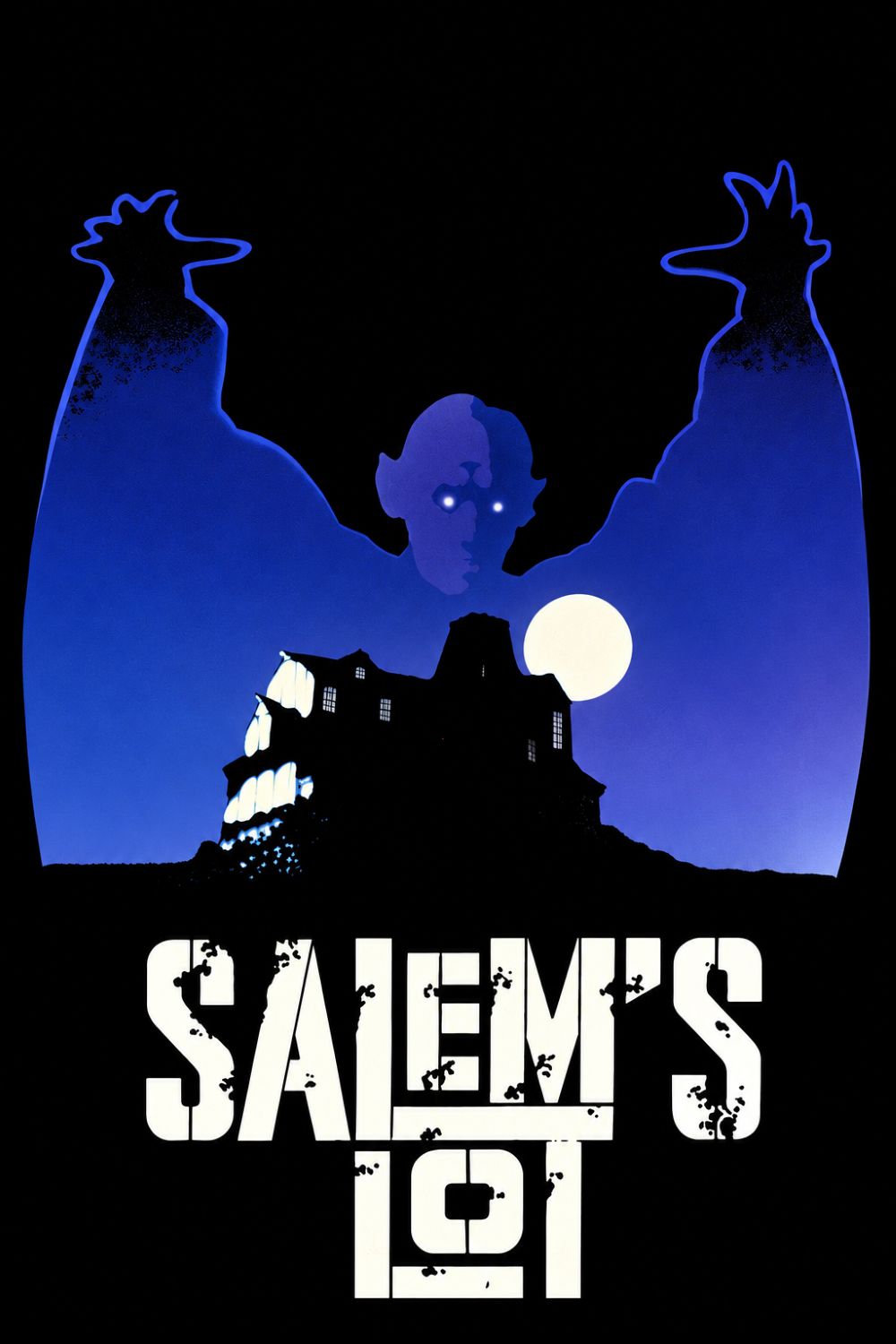
That elegance becomes especially important because Barlow departs sharply from the novel. King’s vampire can speak, manipulate, and present a recognizable personality. Hooper and actor Reggie Nalder instead give us a largely silent creature, leaving Straker to handle the smooth conversation. Readers who miss the original Barlow have a fair argument: something is lost when an articulate villain becomes primarily a physical menace. Onscreen, though, the decision pays off. With his bald head, pointed ears, and jutting teeth, this Barlow recalls Nosferatu rather than a charming drawing-room vampire. He looks fundamentally unwelcome, and Hooper limits his appearances enough to keep that impression potent.

Even so, Barlow isn’t responsible for the miniseries’ most haunting imagery. That honor belongs to the children floating outside bedroom windows. These sequences create a nasty collision of recognition and wrongness: the face is familiar, but its position, movement, and expression are not. The glass offers protection, yet the request to be let inside makes that protection uncertain. Hooper turns the instinct to welcome someone you know into something dangerous. The possibility that affection might defeat caution makes these scenes more troubling than a straightforward attack. They threaten not only physical safety but the trust that makes a home feel secure.

The windows themselves are wonderfully simple horror devices. They let the characters see the danger while leaving them exposed to its attention. A wall would conceal it; an open doorway would admit it. The glass suspends the scene between those possibilities, stretching out the question of whether the barrier will hold. Mist and unnatural movement complete the effect without requiring elaborate explanations. Almost everyone understands the feeling of being awake in a dark room, looking toward a window and wishing something more substantial separated inside from outside. Hooper takes that common vulnerability and gives it a face.

Moments like these make the television restrictions feel less like a handicap than a challenge Hooper knows how to use. Without relying on graphic violence, he builds horror through faces, shadows, sound, and timing. The production doesn’t always escape its limitations: some exchanges feel conventional, transitions can be abrupt, and the pacing occasionally stalls. But the ordinary interiors also help establish the world being invaded. These look like rooms where people eat dinner, argue, and sleep. The adaptation sacrifices some of the novel’s complexity, thinning supporting characters and narrowing the town’s communal collapse, yet preserves the frightening contrast between everyday surroundings and impossible events.

What finally makes Salem’s Lot worth returning to isn’t perfect fidelity or flawless pacing. It’s the way Hooper understands what the vampires take away before they take anyone’s life: the ability to trust familiar surroundings and familiar faces. King explores that collapse more deeply, but the miniseries preserves its central nightmare with remarkable force. Its quieter stretches give the horror somewhere recognizable to live, and its strongest images make that recognition uncomfortable. By the end, the town’s comforting routines have become part of the trap. For a production working within network television’s boundaries, that’s an impressive achievement—and a more lasting scare than extra blood would have provided.
Review: Frank Herbert’s Children of Dune


“To know the future is to be trapped by it.” — Leto II Atreides

Children of Dune is one of those sci-fi miniseries that feels a little rough around the edges, but still manages to hit with real ambition, atmosphere, and a lot more emotional weight than its modest TV budget might suggest. It is based on Frank Herbert’s Dune Messiah and Children of Dune, aired on the Sci Fi Channel in 2003 as a three-part miniseries, and it serves as a continuation of the 2000 Frank Herbert’s Dune adaptation.

What makes this version stand out is that it doesn’t just try to retell a story about desert politics and giant worms. It digs into legacy, prophecy, religious fanaticism, and the terrifying cost of being treated like a messiah. That sounds heavy, and it is, but the miniseries keeps moving with enough drama, betrayals, and strange mythic energy that it rarely feels static.

The opening section works especially well because it immediately reminds you that Paul Atreides’ victory was never a clean one. By the time the story gets going, his empire is already rotting from the inside, and the series makes a strong case that power on Arrakis is always poisoned by something, whether it is politics, faith, or the sand itself. The shift from Paul’s once-legendary rise to the unraveling of the world around his children gives the story a tragic tone that fits Herbert’s universe perfectly.

A big reason the miniseries works is that it understands Dune is not really about flashy action, even though it has some. It is about ideas, and this adaptation is willing to spend time on them. The show’s best material comes from the way it frames religion as both weapon and trap, especially once the myth of Muad’Dib starts consuming the people who worshiped him. That theme gives the whole thing a haunted feeling, like everyone is living inside a prophecy they do not fully understand.

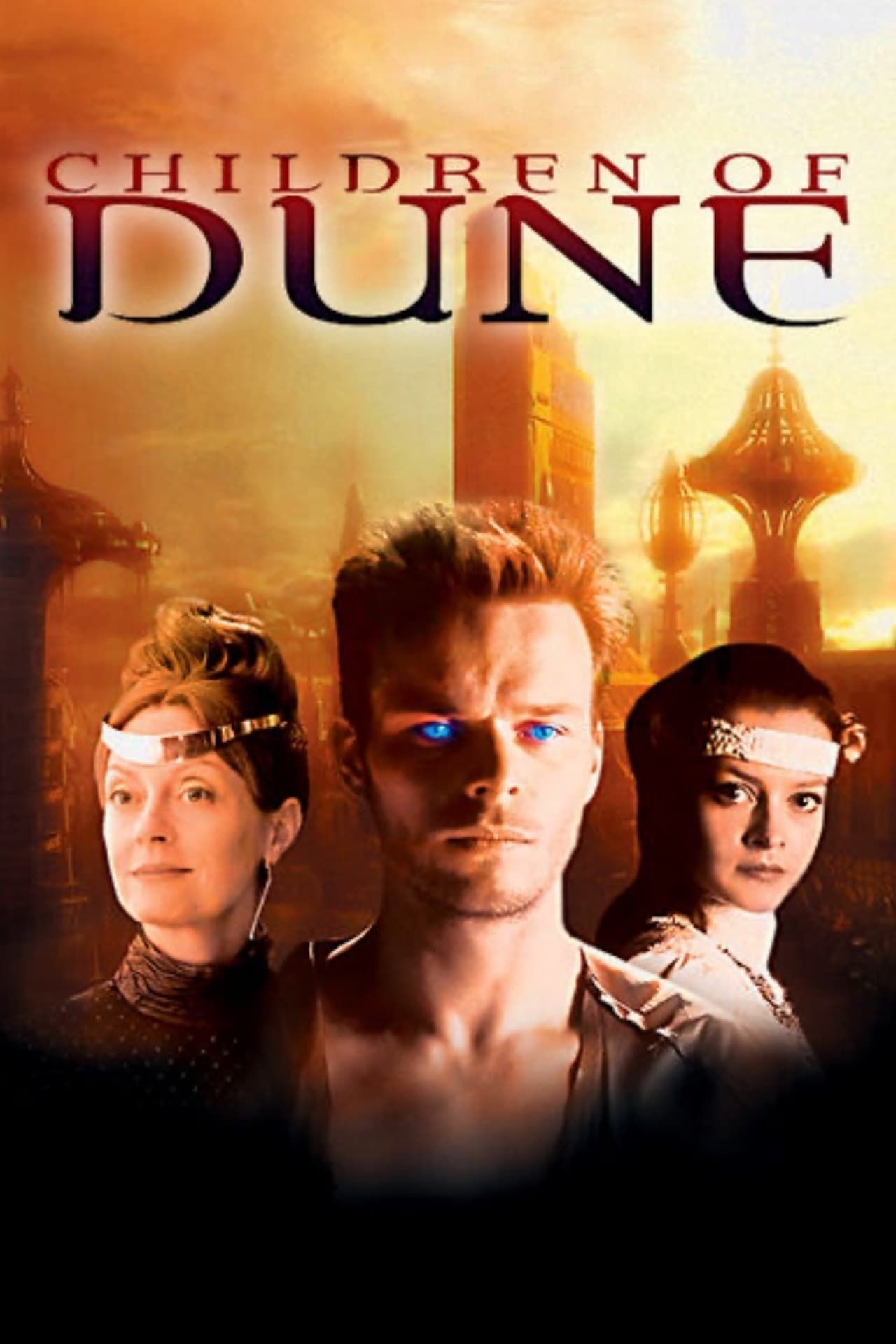
The cast does a lot of heavy lifting, too. Alec Newman brings a wounded, exhausted quality to Paul that fits the role well, and his scenes carry real sadness because he feels like a man who has seen too far and cannot unsee it. Jessica Brooks, James McAvoy, and Julie Cox all help ground the family drama, while Susan Sarandon brings a cold intensity that gives the political side of the story some bite. Even when the dialogue gets stiff, the actors usually sell the material better than the script itself does.

One of the most interesting choices in Children of Dune is how it treats the twins, Leto II and Ghanima, as more than just plot devices. Their importance is obvious from the beginning, but the series gradually builds them into the real center of gravity. That works because the story is partly about inheritance, and these kids are inheriting not just a throne, but a nightmare of destiny, expectation, and manipulation. The series knows that the most dangerous thing in this universe is not a blade or a bomb, but a future someone insists is already written.

The production design is another area where the miniseries earns a lot of goodwill. It has that early-2000s TV look, sure, and some effects are clearly limited by the era, but the sets, costumes, and overall visual imagination give it a strong sense of place. Arrakis feels harsh and ceremonial at the same time, which is exactly what it should feel like. The costumes also help sell the political divide between factions, making the whole thing look more like a living empire than a generic sci-fi stage.

There are moments where the miniseries feels very theatrical, almost to a fault. Characters occasionally deliver lines with so much seriousness that the show risks sounding like it is declaring its themes instead of dramatizing them. That said, this is also part of the charm. Children of Dune is not embarrassed by its own scale or its own weirdness, and that confidence helps it pull off material that could easily have collapsed under a more self-conscious approach.

The pacing is mostly solid across the three parts, though it does have the usual miniseries issue of compressing a very large story into a limited runtime. Because it covers most of Dune Messiah in the first installment and then adapts Children of Dune in the later parts, some transitions feel abrupt and some developments move faster than they probably should. Still, the adaptation largely keeps its focus, and it is impressive how much story it packs in without turning into total chaos.

If there is a weakness here, it is that the miniseries can sometimes feel like it is working harder to explain the mythology than to make you feel it. Herbert’s world is notoriously dense, and this version does not always smooth that out for viewers who are not already familiar with the books. A newcomer could easily feel like they have been dropped into the middle of a dynastic collapse with very little hand-holding. But for a follow-up to Frank Herbert’s Dune, that density is more of a feature than a bug.

The best compliment I can give Children of Dune is that it respects the seriousness of its material without becoming completely lifeless. It has the courage to be grand, strange, and a little mournful all at once. Even when the execution is uneven, the miniseries understands that the heart of this saga is not a simple battle for power. It is the burden of seeing the future and realizing it may be worse than the present.

As a sequel, it improves on the sense of scale and emotional consequence from the earlier adaptation. It feels less like an introduction to a universe and more like the tragic fallout of one. That makes it a more satisfying watch for viewers who want Dune to feel like an epic family tragedy instead of just a sand-covered political thriller. The fact that it does this on TV, with all the limitations that implies, makes the achievement even more impressive.

In the end, Children of Dune is a flawed but memorable miniseries that succeeds because it commits to its own strange seriousness. It may not be sleek, and it may not always be easy to follow, but it has ideas, mood, and a genuine sense of doom that suits Herbert’s universe. For fans of the books, it is one of the more interesting screen adaptations because it is willing to lean into the philosophical and tragic side of the saga rather than sanding it down into something safer. For everyone else, it is still a fascinating piece of early-2000s sci-fi television that swings bigger than most shows of its era.

Miss You After Goodbye, ReelShort Film, Dir. Ruixi Royce Gao


Happy New Year! I am always on the cutting edge of everything that is both terrible or great. Over Horrorthon, I reviewed A LOT of AI generated short films. I believe that we not far out to seeing a total change in how films are made. We are also seeing a change in how films are consumed- especially terrible ones. Reel Shortz and Dramabox (Dramabox might be a pirate outfit) is part of that transition. Reel Shortz is a Chinese company where they make TERRIBLE movies and break them up into bits and charge tokens that you buy with real money to keep watching the story. How you watch the film is just as different as how you pay for it: it’s designed to be watched on your phone- no letterbox. It sounds stupid, but stupid can make money- Just look at Francis Beto.

Does this sound like Temu Warner Bros.? Yes it does and YES IT IS! Also, if the title “Miss You After Goodbye” sounds like google translate- it is! The movie is terrible from the p@rn quality acting to the clunky/stupid dialogue, but they generated 700 Million in 2025; so, we will see A LOT more of this! I’m not saying whether I watched this film by buying their tokens or saw it on dailymotion, but I did watch it and howled with laughter at the unintentional comedy while I was on the elliptical!
With this lead up, you’re wondering how bad was this film? Oh, this film made Birdemic look like a masterpiece.

The plot is that Neil Wade an astrophysicist/astronaut marries his mentor’s daughter, Keira Thorne for five years, in exchange for his college tuition. His mentor believed that Keira needed a husband because her boyfriend broke up with her and she was sad. Keira does not know this transaction took place and marries Neil and treats him like garbage from day one. For some reason, he wears this outfit from 18th Century Cobblers Weekly – Ed Gein collection.

Neil falls for Keira, but she is so awful that he leaves her and accepts a mission to mars with NASX. Yes, NASX!

The main villain of the story is Simon who is Keira’s first love. Simon looks like what China believes our villains look like.

Keira does not believe that Neil has left her for real. She does not understand that Neil is not some boring house husband! No, Neil’s a ROCKETMAN!!!

Yes, Neil is the next Neil Armstrong! The first man to set foot on Mars, but no one knows what he looks like, which is both normal and possible. Keira keeps looking for Neil on Earth, but he’s gone Far…. Far… Away… Chirpy Chirpy Cheap Cheap…..

When Neil returns, Keira goes insane, Simon tries to kill Neil, there is no security at NASX, and Neil marries Elon Musk’s daughter. Yes, that all takes place in the last 4 minutes of the film.

The future is not always bright, but this shows that there is a market for serialized feature length storytelling; so, a mediocre script would be like Apocalypse Now by comparison to what is being churned out! How people make and consume films is changing and the days of the movie theater are OVER! Hollywood is likely over. One positive for Reel Shortz is this: the film used living actors and not AI generated ones.