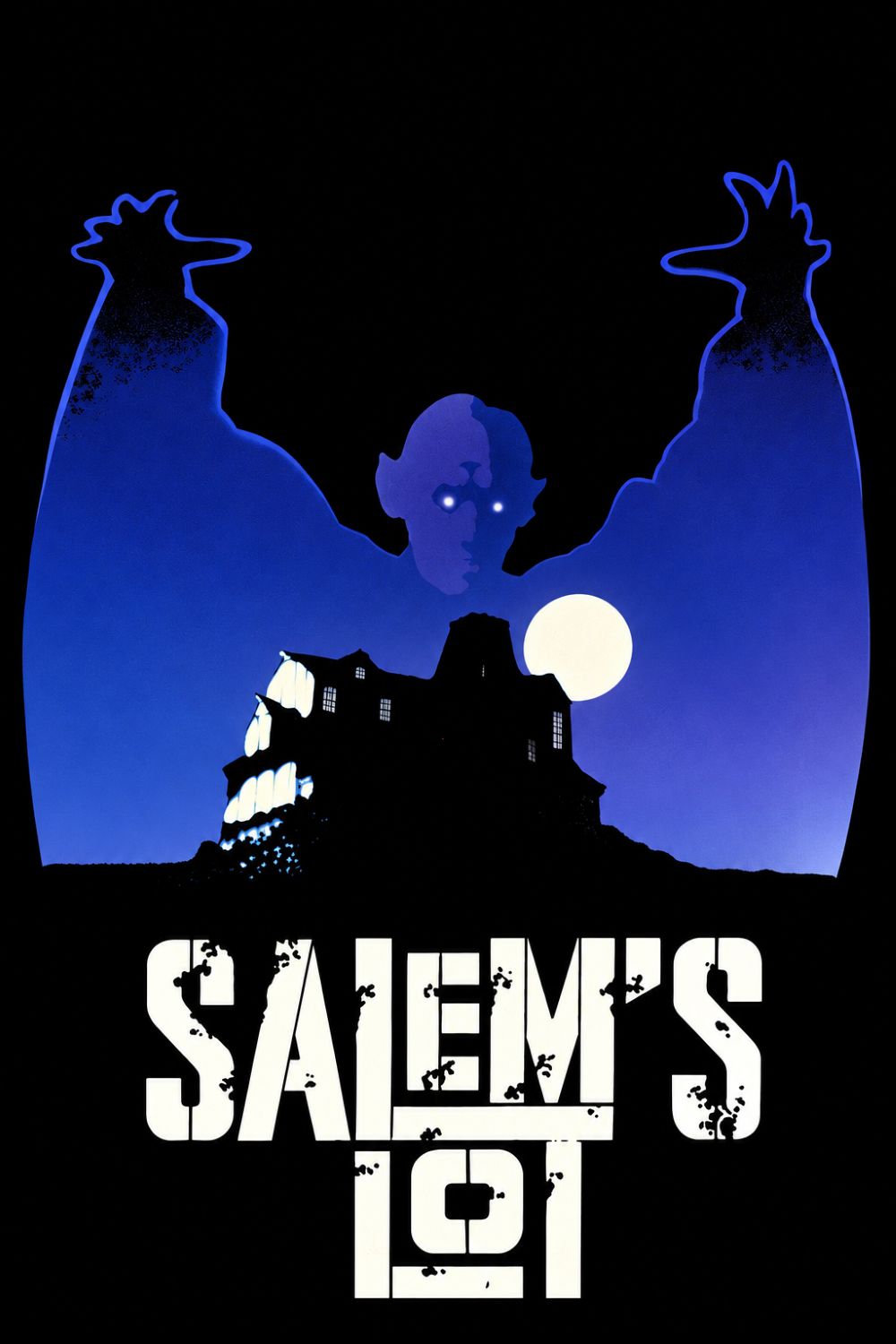
Horror Series Review: Salem’s Lot (by Tobe Hooper & Paul Monash)


“Open the window, Mark.” — Danny Glick

A town doesn’t have to look sinister to be hiding something rotten. That idea gives Tobe Hooper’s 1979 Salem’s Lot much of its staying power. Sure, there’s a creepy old house overlooking the neighborhood, but the real trouble settles into places that should feel reassuring: bedrooms, family homes, and familiar streets. Adapted from Stephen King’s novel, the miniseries turns an ordinary community into a feeding ground without losing sight of what made it ordinary in the first place. It’s uneven, occasionally stiff, and unmistakably a television production, yet its best moments deliver the sort of unease that expensive effects can’t guarantee.

The story begins with novelist Ben Mears, played by David Soul, returning to Jerusalem’s Lot, Maine. He’s drawn back partly by disturbing memories of the Marsten House, a property that seems to concentrate the town’s darkness. Unfortunately, antiques dealer Richard Straker and his mysterious partner, Kurt Barlow, have taken an interest in the place, too. Their arrival coincides with disappearances, illnesses, and deaths that suggest something worse than local bad luck. It’s familiar vampire territory, but familiarity works in its favor. We recognize the warning signs while the characters struggle to explain them away, creating tension between what the audience suspects and what the town will believe.

Hooper takes his time getting everyone into position, which is both a strength and a frustration. The early stretches contain plenty of conversation and everyday business before the supernatural threat becomes impossible to ignore. Some scenes could move faster, and a few supporting characters seem more interesting in principle than in practice. Still, the buildup matters. King’s novel isn’t simply about a vampire turning up; it’s about an entire town becoming vulnerable to him. The miniseries cannot reproduce the book’s full social landscape, but it establishes enough relationships and routines to make the destruction feel like more than a body count.

The town also isn’t an innocent paradise suddenly spoiled by an outside monster. Secrets, resentments, and unpleasant impulses already exist beneath its respectable surface. The vampires don’t invent those weaknesses so much as exploit them. This is an important part of King’s novel to preserve, and the adaptation gets the idea across even when individual subplots feel abbreviated. The Marsten House may be the obvious symbol of evil, but it doesn’t exist in isolation. Its presence above the town suggests a darkness everyone can see and would rather leave alone. That indifference makes the setting more interesting than a collection of unsuspecting victims.

Soul provides a steady center as Ben, even if his restrained performance sometimes borders on flatness. He’s convincing as a man returning to unfinished emotional business, and his seriousness keeps the increasingly bizarre events grounded. There’s little danger of him making the material feel campy. His reserve occasionally creates distance, though, especially when the story needs a stronger emotional response. Ben works best as an observer forced into action, someone whose interest in haunted history becomes considerably less comfortable once it stops behaving like material for a book. Soul conveys that shift more effectively than the warmer aspects of the character.

The romance with Susan Norton, played by Bonnie Bedelia, is less satisfying. Their relationship offers a glimpse of the life Ben might build in town, giving him something to move toward rather than simply something to investigate. That’s useful, but the scenes don’t always generate enough warmth to make the possibility compelling. Bedelia brings an appealing directness to Susan, yet the relationship can feel emotionally hurried even when the surrounding story moves slowly. You understand why it belongs without becoming invested in every exchange. A stronger connection would have given the supernatural threat a more painful personal dimension.

Lance Kerwin makes a livelier impression as Mark Petrie, a horror-loving kid whose interests become unexpectedly practical. Mark could have been a convenient walking instruction manual, but Kerwin gives him enough vulnerability to avoid that trap. He recognizes the danger without becoming immune to it. There’s also something satisfying about a character who takes the evidence seriously rather than endlessly refusing to accept it. His imagination helps him understand the situation, but it doesn’t make everything manageable. That distinction captures something essential about King’s treatment of childhood: knowing what the monster is can help you survive, but it won’t stop you from being terrified.

James Mason is the cast’s great weapon. As Straker, he brings such controlled unpleasantness that a polite conversation can feel like a threat. His calm suggests someone completely comfortable with things everyone else would find horrifying. Is he being dismissive, quietly amused, or openly contemptuous? Often, the answer seems to be all three. Mason gives the production authority whenever he appears, making civilized behavior look like something a predator has learned to imitate. He’s particularly effective because he doesn’t strain for menace. The performance lets us sense the cruelty beneath the manners without constantly dragging it into view.

That elegance becomes especially important because Barlow departs sharply from the novel. King’s vampire can speak, manipulate, and present a recognizable personality. Hooper and actor Reggie Nalder instead give us a largely silent creature, leaving Straker to handle the smooth conversation. Readers who miss the original Barlow have a fair argument: something is lost when an articulate villain becomes primarily a physical menace. Onscreen, though, the decision pays off. With his bald head, pointed ears, and jutting teeth, this Barlow recalls Nosferatu rather than a charming drawing-room vampire. He looks fundamentally unwelcome, and Hooper limits his appearances enough to keep that impression potent.

Even so, Barlow isn’t responsible for the miniseries’ most haunting imagery. That honor belongs to the children floating outside bedroom windows. These sequences create a nasty collision of recognition and wrongness: the face is familiar, but its position, movement, and expression are not. The glass offers protection, yet the request to be let inside makes that protection uncertain. Hooper turns the instinct to welcome someone you know into something dangerous. The possibility that affection might defeat caution makes these scenes more troubling than a straightforward attack. They threaten not only physical safety but the trust that makes a home feel secure.

The windows themselves are wonderfully simple horror devices. They let the characters see the danger while leaving them exposed to its attention. A wall would conceal it; an open doorway would admit it. The glass suspends the scene between those possibilities, stretching out the question of whether the barrier will hold. Mist and unnatural movement complete the effect without requiring elaborate explanations. Almost everyone understands the feeling of being awake in a dark room, looking toward a window and wishing something more substantial separated inside from outside. Hooper takes that common vulnerability and gives it a face.

Moments like these make the television restrictions feel less like a handicap than a challenge Hooper knows how to use. Without relying on graphic violence, he builds horror through faces, shadows, sound, and timing. The production doesn’t always escape its limitations: some exchanges feel conventional, transitions can be abrupt, and the pacing occasionally stalls. But the ordinary interiors also help establish the world being invaded. These look like rooms where people eat dinner, argue, and sleep. The adaptation sacrifices some of the novel’s complexity, thinning supporting characters and narrowing the town’s communal collapse, yet preserves the frightening contrast between everyday surroundings and impossible events.

What finally makes Salem’s Lot worth returning to isn’t perfect fidelity or flawless pacing. It’s the way Hooper understands what the vampires take away before they take anyone’s life: the ability to trust familiar surroundings and familiar faces. King explores that collapse more deeply, but the miniseries preserves its central nightmare with remarkable force. Its quieter stretches give the horror somewhere recognizable to live, and its strongest images make that recognition uncomfortable. By the end, the town’s comforting routines have become part of the trap. For a production working within network television’s boundaries, that’s an impressive achievement—and a more lasting scare than extra blood would have provided.
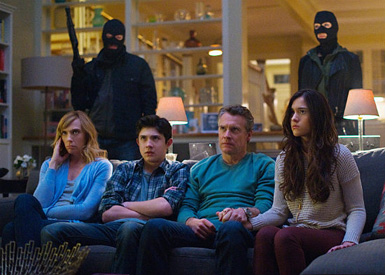
What Lisa Watched Last Night #90: Hostages Episode 1 “Pilot”


Last night, after I got back from dance class, I watched the first episode of the new CBS series, Hostages.

hostages-toni-collette-tate-donovan-cbs

Why Was I Watching It?

I spent the last three months watching and reviewing Big Brother for the Big Brother Blog.  During every episode of Big Brother, CBS would show at least one commercial for Hostages.  It was obvious that CBS was obsessed with the idea of making Hostages into the show that the entire nation would be watching and debating, a bit like a network TV version of Homeland or Breaking Bad.

The commercials, for the most part, all featured Dylan McDermott looking grim while Toni Collette frowned and, occasionally, some old white guy would tell Collette that she was the only doctor he trusted to operate on her and she would reply, “Thank you, Mr. President.”  In short, the commercials made the show look terrible.  The only question was whether or not Hostages would be intentionally bad or unintentionally awful.

Last night, I got my answer.

What Was It About?

President Paul Kinkaid (James Naughton) needs to have surgery and, of course, only one doctor can perform the operation.  That doctor is Ellen Saunders (Toni Collette).  Ellen is so concerned with the President’s health that she doesn’t realize that her husband (Tate Donovan) is having an affair, her son is selling weed, and her daughter is pregnant.

Meanwhile, Duncan Carlisle (Dylan McDermott) is a FBI hostage negotiator.  When we first see him, he’s gunning down a bank robber and smirking while he does it.  It turns out that Duncan needs money to take care of his sick wife.

Eventually, Duncan and a team of other black-clad operatives end up inside the Saunders home where they take the entire family hostage.  They tell Ellen that, if she wants to save her family, she must assassinate the President…

What Worked?

The show turned out to be just as bad as I was expecting it to be!  Whenever I saw the commercials for Hostages, I would think to myself: “That looks like it’s going to be a really boring, tedious series.”  Judging from the pilot, I was right.  It always feels good to be right.

That said, I do have to say that, alone among the cast, Dylan McDermott seems to understand that he’s playing a ludicrous character in a silly show and — much as he did in American Horror Story — he responds by giving an appropriately melodramatic performance.  While the rest of the cast appeared to be convinced that they were appearing in the next Homeland, McDermott seemed to be enjoying a joke that only he and the viewing audience could understand.

What Did Not Work?

If there’s even been a show that would obviously benefit from an over-the-top, melodramatic approach, it would be Hostages.  So, why did the pilot appear to be taking itself so damn seriously?  As I watched last night’s episode, I found myself wondering if anyone involved in the show (other than Dylan McDermott) understood just how silly this all was.  Instead, the show moved at an almost somber pace and all of the actors (again, with the notable exception of McDermott) delivered their lines with the type of gravity that one would usually associate with Jeff Daniels delivering one of Aaron Sorkin’s pompous polemical speeches on The Newsroom.  Considering all of the melodramatic potential of this show’s plot, Hostages really has no excuse to be as boring and predictable as it was last night.

Toni Collette is one of my favorite actresses so it was kind of sad to see her give such a boring performance in the lead role of Ellen Saunders.  Then again, as written, Ellen Saunders is a pretty boring character.  It’s as if the show’s producers and writers were so proud of creating a professional woman that they didn’t notice that they neglected to give her a personality.

Finally, the President is just some boring old white guy.  What’s up with that?

“Oh my God!  Just like me!” Moments

I was tempted to say that, like the family in Hostages, I would totally freak out if a bunch of people appeared in the house, pointed their guns at me, and announced that they were holding me hostage.  However, it then occurred to me that nobody in Hostages really freaked out about being held hostage.  They were certainly annoyed and occasionally, they even attempted to be defiant.  But they never really freaked out.

Nor could I really see much of myself in the character of Ellen Saunders or her daughter.  Since neither one of them came across as being anything more than a two-dimensional plot device, neither one of them was capable of inspiring any “just like me” moments.

I tried to relate to Sandrine Holt, who plays Maria, the only female hostage taker.  However, Maria spent most of the episode carrying around a gun and, while I’m totally into the 2nd amendment, I’m not really into guns.

Then I remembered that, early on in the episode, Ellen’s daughter talks to her best friend.  The friend takes one look at her and says, “Your eyes are puffy,” which is the exact same thing that I would say if one of my friends had puffy eyes.

So, that was my “Oh my God!  Just like me!” moment.

Lessons Learned

Sometimes, commercials don’t lie.

My 2012 Emmy Nominations


So, for the past few days, I’ve been happily hopping around my section of the Shattered Lens Bunker and do you know why? 

Because it’s awards season, that’s why!  With the conclusion of the 2011-2012 TV season, Emmy ballots have been mailed and votes are being cast and, come July, we’ll know which shows and performers have been nominated for the 2012 Emmys. 

Before that happens, however, I would like to play a little game called “What if Lisa Was Solely Responsible For Picking the Nominees.”  Here’s how it works — I looked over and studied the complete list of the shows and performances that have been submitted this year for Emmy consideration.  And then, from that list, I picked my personal nominees.

(A complete list of every show and performer that’s been submitted for Emmy consideration can be found here.)

Below are my personal nominations in the major Emmy categories.  Again, note that these are not necessarily the shows and performers that I believe will be nominated.  Instead, these are the shows and performers that I would nominate if I was solely responsible for picking the nominees.

A complete list of my nominations in every single Emmy category can be found here.  (And yes, there’s a lot of Lifetime on the list.  There’s also a lot of Community.)

Best Comedy Series

Bored to Death (HBO)

Community (NBC)

Girls (HBO)

It’s Always Sunny In Philadelphia (FX)

Parks and Recreation (NBC)

Raising Hope (Fox)

Veep (HBO)

Best Drama Series

Boardwalk Empire (HBO)

Breaking Bad (AMC)

The Client List (Lifetime)

Downton Abbey (PBS)

Game of Thrones (HBO)

Homeland (Showtime)

Pan Am (ABC)

Ringer (The CW)

True Blood (HBO)

The Walking Dead (AMC)

Outstanding Miniseries or Movie

Blue-Eyed Butcher (Lifetime)

Cyberbully (ABC Family)

Drew Peterson: Untouchable (Lifetime)

Five (Lifetime)

Girl Fight (Lifetime)

Hatfields & McCoys (History Channel)

The Hour (BBC America)

Of Two Minds (Lifetime)

Outstanding Variety Series

Conan (TBS)

Fashion Police (E)

Key and Peele (Comedy Central)

The Soup (E)

Tosh .O (Comedy Central)

Outstanding Variety Special

Betty White’s 90th Birthday Party (NBC)

Celtic Women: Believe (PBS)

The Comedy Central Roast of Charlie Sheen (Comedy Central)

TV Land Awards (TV Land)

Wendy Liebman: Taller on TV (Showtime)

Outstanding Nonfiction Special

Bobby Fischer Against The World (HBO)

Catholicism: Amazed and Afraid (PBS)

Crime After Crime (OWN)

God Is The Bigger Elvis (HBO)

6 Days To Air: The Making of South Park (Comedy Central)

Outstanding Nonfiction Series

America in Primetime (PBS)

American Masters (PBS)

America’s Most Wanted (Lifetime)

Beyond Scared Straight (A&E)

Inside Story (Biography)

Outstanding Reality Program

Antiques Roadshow (PBS)

Dance Moms (Lifetime)

Kitchen Nightmares (Fox)

Scouted (E)

Storage Wars (A&E)

Outstanding Reality-Competition Program

The Amazing Race (CBS)

The Bachelor (ABC)

Big Brother (CBS)

The Celebrity Apprentice (NBC)

Hell’s Kitchen (Fox)

Project Runway (Lifetime)

So You Think You Can Dance (Fox)

Survivor (CBS)

Outstanding Lead Actor In A Comedy Series

Larry David in Curb Your Enthusiasm (HBO)

Johnny Galecki in The Big Bang Theory (CBS)

Danny McBride in Eastbound and Down (HBO)

Joel McHale in Community (NBC)

Lucas Neff in Raising Hope (Fox)

Jason Schwartzman in Bored To Death (HBO)

Outstanding Lead Actor In A Drama

Steve Buscemi in Boardwalk Empire (HBO)

Bryan Cranston in Breaking Bad (AMC)

Jeffrey Donavon in Burn Notice (USA)

Damian Lewis in Homeland (Showtime)

Andrew Lincoln in The Walking Dead (AMC)

Timothy Olyphant in Justified (FX)

Outstanding Lead Actor In A Miniseries or Movie

Idris Elba in Luther (BBC America)

Rob Lowe in Drew Peterson: Untouchable (Lifetime)

Steven Weber in Duke (Hallmark Movie Channel)

Dominic West in The Hour (BBC America)

Ben Whishaw in The Hour (BBC America)

Outstanding Lead Actress In A Comedy

Zooey Deschanel in New Girl (Fox)

Lena Dunham in Girls (HBO)

Tina Fey in 30 Rock  (NBC)

Julia Louis Dreyfuss in Veep (HBO)

Mary-Louis Parker in Weeds (Showtime)

Martha Plimpton in Raising Hope (Fox)

Outstanding Lead Actress in a Drama

Claire Danes in Homeland (Showtime)

Sarah Michelle Gellar in Ringer (The CW)

Jennifer Love Hewitt in The Client List (Lifetime)

Julianna Margulies in The Good Wife (CBS)

Elizabeth McGovern in Downton Abbey (PBS)

Anna Paquin in True Blood (HBO)

Outstanding Lead Actress In A Miniseries or Movie

Kristin Davis in Of Two Minds (Lifetime)

Anne Heche in Girl Fight (Lifetime)

Rose McGowan in The Pastor’s Wife (Lifetime)

Emily Osment in Cyberbully (ABC Family)

Sara Paxton in Blue Eyed Butcher (Lifetime)

Outstanding Supporting Actor In A Comedy Series

Charlie Day in It’s Always Sunny in Philadelphia (FX)

Danny DeVito in It’s Always Sunny In Philadelphia (FX)

Donald Glover in Community (NBC)

Nick Offerman in Parks and Recreation (NBC)

Danny Pudi in Community (NBC)

Matt Walsh in Veep (HBO)

Outstanding Supporting Actor In A Drama

Bruce Campbell in Burn Notice (USA)

Peter Dinklage in Game of Thrones (HBO)

Giancarlo Espositto in Breaking Bad (AMC)

Michael Pitt in Boardwalk Empire (HBO)

Michael Shannon in Boardwalk Empire (HBO)

Alexander Skarsgard in True Blood (HBO)

Outstanding Supporting Actor In A Miniseries or Movie

Powers Boothe in Hatfields and McCoys (History Channel)

Justin Bruening in Blue-Eyed Butcher (Lifetime)

Mark-Paul Gosselaar in Hide (TNT)

Sir Roger Moore in A Princess For Christmas (Hallmark Movie Channel)

Tony Shalhoub in Five (Lifetime)

Outstanding Supporting Actress In A Comedy

Alison Brie in Community (NBC)

Kristen Chenoweth in GCB (ABC)

Anna Chlumsky in Veep (HBO)

Gillian Jacobs in Community (NBC)

Cloris Leachman in Raising Hope (Fox)

Aubrey Plaza in Parks and Recreation (NBC)

Outstanding Supporting Actress in Drama

Christine Baranski in The Good Wife (CBS)

Kristen Bauer Von Straten in True Blood (HBO)

Kelly MacDonald in Boardwalk Empire (HBO)

Christina Ricci in Pan Am (ABC)

Sophia Turner in Game of Thrones (HBO)

Deborah Ann Woll in True Blood (HBO)

Supporting Actress In A Miniseries or Movie

Tammy Blanchard in Of Two Minds (Lifetime)

Kaley Cuoco in Drew Peterson: Untouchable (Lifetime)

Lisa Edelstein in Blue-Eyed Butcher (Lifetime)

Jessica Lange in American Horror Story (FX)

Jena Malone in Hatfields and McCoy (History Channel)