Icarus File No. 31: The Adventures of Brisco County, Jr.


“I’m looking for the coming thing.” — Brisco County, Jr.

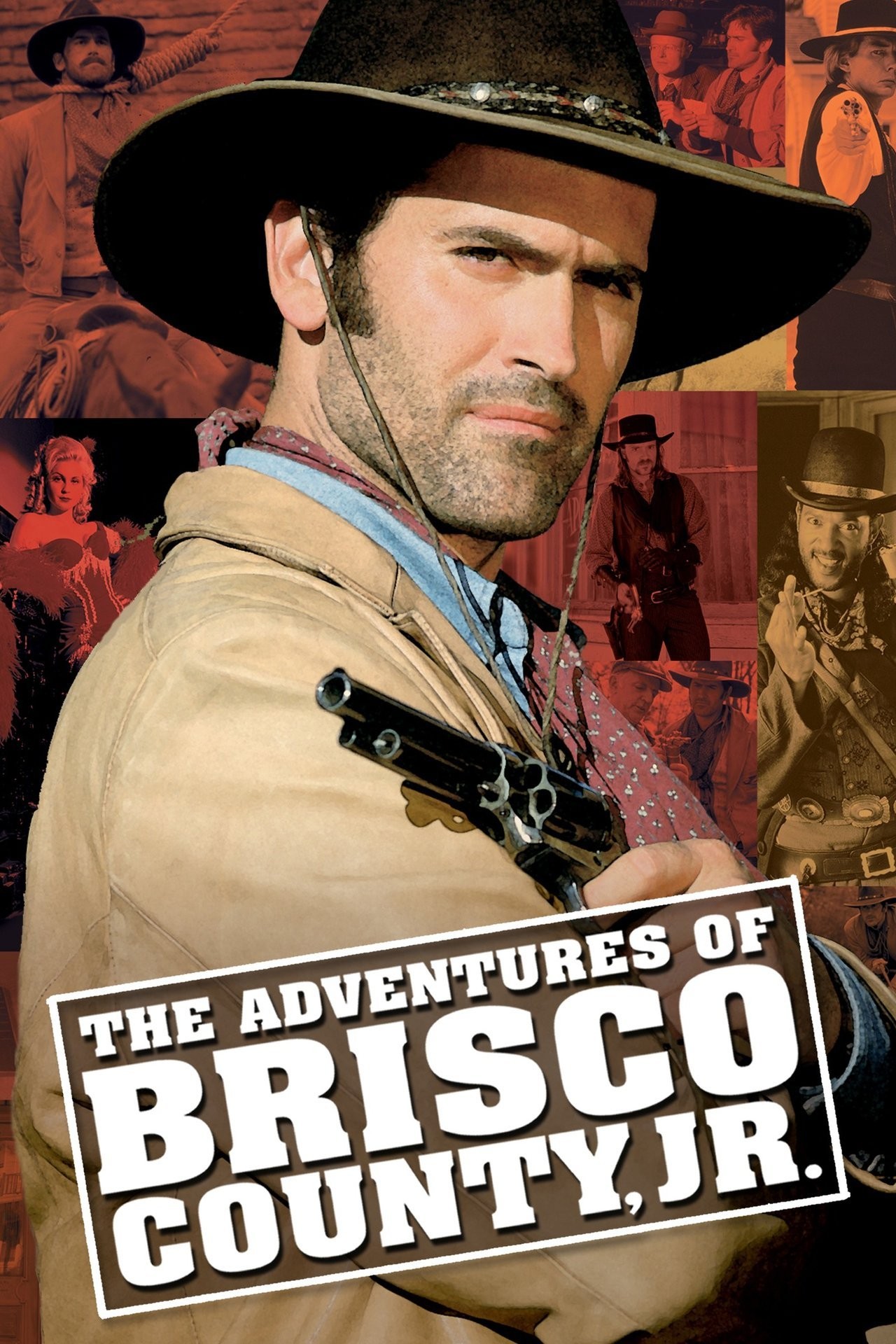
Few television series embrace their own oddness as joyfully as The Adventures of Brisco County, Jr.. Blending frontier shootouts, pulp-serial adventure, broad comedy, sci-fi weirdness, and old-fashioned heroics into one deliberately unruly package, the short-lived Bruce Campbell vehicle has only grown more distinctive with time. It ran for a single season between 1993 and 1994, produced 27 episodes, and then vanished from network television before it had the chance to fully grow into the strange, funny, action-packed cult institution it deserved to be. That short life is part of its legend now. The show remains a wonderfully odd hybrid: a Western, an adventure serial, a sci-fi mystery, a screwball comedy, a buddy show, and a loving parody of old-fashioned television heroics. It was never content to simply be one thing, and that creative restlessness is exactly why it was so distinctive.

Bruce Campbell stars as Brisco County, Jr., a Harvard-educated lawyer who becomes a bounty hunter after the murder of his father, legendary lawman Brisco County, Sr. At first glance, that setup sounds like the foundation for a hard-edged revenge Western. Brisco is hired by a group of wealthy robber barons to track down John Bly, a charismatic outlaw who escaped after killing Brisco’s father. The show does not ignore that emotional hook, either. Campbell gives Brisco just enough sincerity that the character’s grief and desire to live up to his father’s reputation land when they need to. But the series almost immediately makes clear that it has no interest in being grim prestige television before prestige television was even a common phrase. Brisco may be motivated by vengeance, but he is also a cheerful idiot at times, an inventor’s dream customer, a romantic disaster, and a man genuinely enthusiastic about the future.

That optimism is one of the show’s most charming qualities. Brisco lives in 1893, but he is obsessed with modernity: bicycles, early automobiles, telephones, scientific gadgets, anything that might make the Old West feel less old. He repeatedly calls these new inventions “the coming thing,” often with the confidence of someone who knows history is on his side even when the technology in front of him is barely functional. It is a funny recurring bit, but it also gives the series an unusual personality. Brisco is not a traditional Western hero longing for a disappearing frontier. He is a cowboy-lawyer-adventurer who wants to survive the frontier and help drag it toward the twentieth century.

Campbell is the ideal actor for that balancing act. He had already built a devoted following through the Evil Dead films, where he proved he could sell broad physical comedy, cartoonish bravado, and genuine intensity all at once. The Adventures of Brisco County, Jr. puts those qualities to excellent use. Campbell looks like the square-jawed hero of a classic matinee serial, but he plays Brisco with a sly awareness of how ridiculous the genre can be. He can throw a punch, ride a horse, fire a gun, and deliver a tough-guy line, then immediately get tangled in a rope, outsmarted by a con artist, or humiliated by one of his own overconfident schemes. The show never treats him as incompetent exactly; Brisco is clever, brave, and unusually resourceful. But it understands that a hero is more entertaining when the universe keeps refusing to cooperate.

The early arc involving John Bly gives the show a memorable villain and a sense of forward momentum. Billy Drago, a genre veteran with one of the most instantly sinister faces and voices in film and television, plays Bly as a quietly unnerving outlaw rather than a loud, swaggering gunslinger. Drago had already become familiar to audiences through roles in crime thrillers, Westerns, horror, and action stories, and his presence adds serious genre street credibility to the series. He is particularly good at making Bly feel unpredictable. The character is intelligent, dangerous, and often strangely philosophical, with Drago giving even a casual line enough menace to make it sound like a threat. His addition helps sell the idea that, beneath the jokes and gadget-driven chaos, Brisco really is moving through a world populated by lethal people.

The show’s supporting cast is equally important to its success. Julius Carry’s Lord Bowler is the real secret weapon. Initially a rival bounty hunter with a powerful need to claim rewards before Brisco does, Bowler evolves into Brisco’s closest partner and one of the series’ most dependable sources of cool. Carry plays him with perfect deadpan timing, making Bowler’s irritation at Brisco’s eccentricities endlessly funny. Their chemistry is the foundation of the series. Brisco talks too much, overthinks everything, and barrels into trouble; Bowler observes, grumbles, and then saves the day when necessary. Their partnership has the rhythm of a classic buddy-action pairing, except it exists in a world where a frontier saloon might contain a mad inventor, an escaped criminal mastermind, and a mysterious glowing orb all in the same episode.

That orb is one of the show’s boldest ideas. Known as the Orb, it becomes the central sci-fi element in a series already packed with anachronistic comedy and pulp adventure. It possesses strange powers, influences human behavior, and hints at a much bigger mythology than the show ever had time to fully explain. The Orb plotline is not always the cleanest element of the series, but it matters because it shows how willing the creators were to push beyond ordinary Western storytelling. One week, Brisco might be hunting a gang of outlaws; the next, he might be dealing with supernatural powers, secret conspiracies, bizarre inventions, or stories that feel pulled from a 1930s adventure comic. The result is a show that can feel like The Wild Wild West, Indiana Jones, and a Saturday-morning serial filtered through a 1990s sitcom sensibility.

In that sense, The Adventures of Brisco County, Jr. was ahead of its time in the way it fused different genres into one coherent theme and narrative. The series never treated its Western setting, science-fiction mythology, slapstick humor, action serial influences, and detective-story plotting as separate gimmicks awkwardly stapled together. All of those elements were filtered through Brisco himself: a hero caught between an old frontier world and the uncertain promise of the future. His fascination with progress, invention, and “the coming thing” gave the show a thematic center strong enough to make even its strangest detours feel like part of the same larger adventure. What might have looked like a mess on paper usually plays as a deliberate expression of the show’s central idea: the Old West was changing, and Brisco was exactly the kind of eccentric hero built to stumble, joke, and fight his way into that change.

That same genre blending, however, likely confused audiences when the series first aired. In 1993, viewers and network marketers generally had a much easier time selling a show that could be described in one clean sentence. A Western was a Western. A sitcom was a sitcom. A science-fiction series was a science-fiction series. Brisco was all of those things at once, sometimes within the same episode. Its tonal shifts were part of the fun for viewers who connected with it, but they may have made it difficult for casual audiences to know what kind of show they were committing to every week. It was too playful and surreal for people expecting a straight Western, but its period setting could also make it seem less accessible to viewers looking for a more conventional action-comedy or sci-fi series.

Critics largely recognized how clever this mixture was. The show earned praise for its humor, its self-aware but affectionate approach to genre material, its charismatic cast, and its willingness to combine Western action with science fiction and absurdist comedy. Yet those very strengths also help explain why it was so short-lived. The Adventures of Brisco County, Jr. was difficult to market in the conventional network-TV landscape. Its placement did not help, either. The show aired on Fox during a period when the network was still building an identity and competing for viewers against much more established broadcasters. It arrived alongside other ambitious but unconventional Fox programming, including The X-Files, but Brisco did not become the breakout hit that its better-known network sibling did.

There is a strong argument that the series would have found a much bigger audience at the turn of the century, or even later. By the late 1990s and early 2000s, audiences had become increasingly comfortable with shows that mixed tones, genres, mythology, comedy, and serialized storytelling. Viewers were more willing to follow eccentric high-concept series whose worlds did not fit neatly into one category, especially as cable television, DVD collections, online fandom, and eventually streaming made it easier to discover a show outside its original broadcast slot. Brisco could have benefited enormously from that environment. Its episodic adventures would have made it easy to casually enjoy, while the larger mysteries around John Bly and the Orb would have rewarded devoted viewers. It is easy to imagine the show building a far larger fanbase through word of mouth, repeat viewing, and a culture more eager to embrace unapologetically nerdy genre experimentation.

That mismatch between quality and ratings is why the show became such a cult fan favorite. Fans who found it did not merely enjoy it; they tended to become attached to its specific flavor. The series offers a version of television adventure that feels generous rather than cynical. It wants to entertain first. Its jokes are broad but rarely mean-spirited, its action is energetic without becoming joyless, and its heroes are allowed to be capable, kind, foolish, and enthusiastic at the same time. Campbell’s performance became central to his larger cult-TV identity, while Carry’s Bowler remains one of the great underrated sidekicks in genre television. Even the show’s oddities—the Orb, the outlandish gadgets, the deliberately pulpy villains, the historical inaccuracies played for laughs—are not flaws to fans. They are the reason the series has lasted in memory.

Ultimately, The Adventures of Brisco County, Jr. is a lovable one-season wonder because it refuses to fit neatly into a box. It is a Western that looks toward the future, an action series that enjoys making its hero the punchline, and a sci-fi adventure that never loses sight of the human fun of two bounty hunters bickering their way across the frontier. Its cancellation remains disappointing because there was clearly more territory to explore, especially with Brisco, Bowler, Bly, and the Orb mythology. But the short run also preserves the show’s charm. It never had time to become routine. It remains a fast, funny, deeply peculiar burst of television imagination—and a reminder that sometimes the most enduring cult shows are the ones too weird, too ambitious, and too specific to become ordinary hits.

Previous Icarus Files:

  1. Cloud Atlas
  2. Maximum Overdrive
  3. Glass
  4. Captive State
  5. Mother!
  6. The Man Who Killed Don Quixote
  7. Last Days
  8. Plan 9 From Outer Space
  9. The Last Movie
  10. 88
  11. The Bonfire of the Vanities
  12. Birdemic
  13. Birdemic 2: The Resurrection 
  14. Last Exit To Brooklyn
  15. Glen or Glenda
  16. The Assassination of Trotsky
  17. Che!
  18. Brewster McCloud
  19. American Traitor: The Trial of Axis Sally
  20. Tough Guys Don’t Dance
  21. Reach Me
  22. Revolution
  23. The Last Tycoon
  24. Express to Terror 
  25. 1941
  26. The Teheran Incident
  27. Con Man
  28. Looker
  29. 1776
  30. Here

Horror Trailer: Chilling Adventures of Sabrina


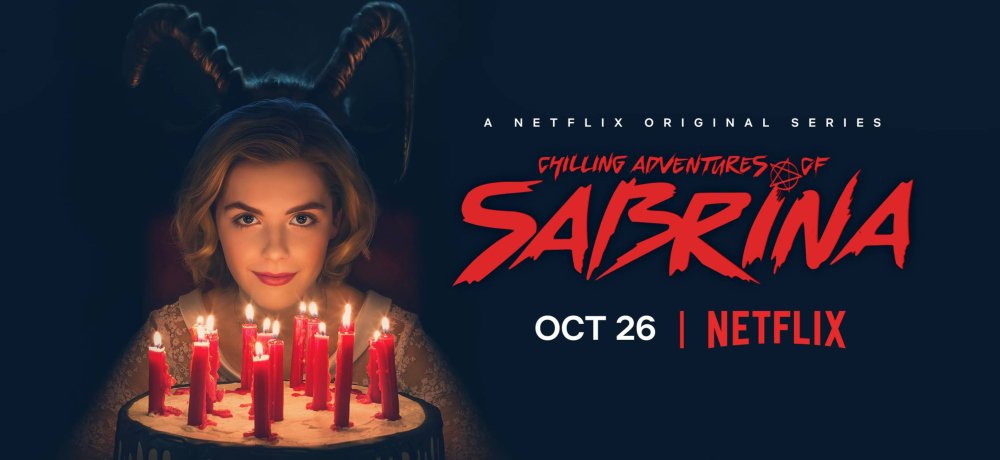
Chilling Adventures of Sabrina

Just in time for the month of October we have the first official trailer for Netflix’s series reboot titled Chilling Adventures of Sabrina.

Following the darker-edged comic book series of the same name, this Sabrina the Teenage Witch will not be similar to the more family-friendly iteration that aired on ABC during the 1990’s.

No, this looks particular version looks to be embracing the horror and occultism of the recent comic book about the character. From the look of this trailer alone it looks like horror will be quite up front and center.

Lisa will definitely be glad that Salem the cat will still be in the series.

Teaser Trailer: Chilling Adventures of Sabrina (Netflix)


Chilling Adventures of Sabrina

With each passing year since they decided to purchase and/or create original content for their streaming service, Netflix has continued to pump out more and more content to varying degrees of quality and success. For every Stranger Things or House of Cards, there would be 10 or so mediocre to just awful content, yet these are still content that the hundreds of millions of Netflix subscribers will watch.

Even now, shows that have been cancelled by the traditional networks have found a second life on Netflix to continue the series, albeit in a more streamlined version. There are no 20-24 episode seasons on Netflix. They prefer their series to be binge-able 10-13 episodes per season.

This October 26, just in time for Halloween, Netflix subscribers (plus those who borrow their friend’s account to watch Netflix) will see a new reinterpretation of the Sabrina the Teenage Witch. Just like CW Network’s Riverdale, this new Sabrina series on Netflix will have a much more darker take on the character that fans of the 1990’s series grew watching would be used to.

Kiernan Shipka of Mad Men will headline the series as the title character and if this teaser trailer is of any indication the series will definitely delve into much darker territory than the previous Sabrina series that aired on ABC.

I know one thing, I have a feeling that Lisa Marie will eat up this series, if just because of the last shot of the teaser trailer.

The Preacher Is About To Begin Mass


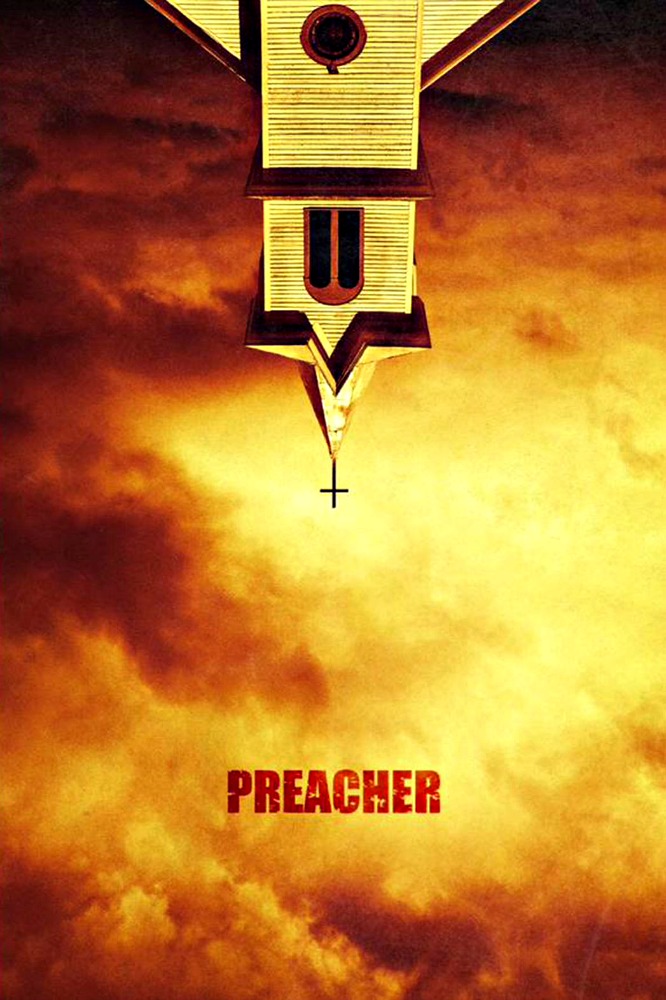
Preacher

Preacher the comic book that came out in 1995 and became the title that everyone gravitated to to balance out all the superhero titles that were coming out from Marvel, DC, Image and every small publisher in-between. The book was written by Garth Ennis and drawn by Steve Dillon. It was the book that took on the institutions of the Church, government and family in the most irreverent and blasphemous way one could think of at the time.

The book had been talked of within Hollywood since it’s release as one title that producers (seems all of them at one time or another) wanted to adapt for the big-screen. It wasn’t a superhero title so there was no need to worry about trying to adapt tights-wearing heroes and villains. Yet, the book’s subject matter which tended to go into the extreme at times became something that kept the title from being adapted.

After almost two decades of futile attempts to get Preacher up onto the big-screen it took the star-power of one big-screen star (Seth Rogen) to finally get the book adapted, but not on the big-screen, but on the small-screen to become part of AMC’s stable of unique series titles (The Walking Dead, Better Call Saul, Into the Badlands).

So, fans of the books only have until 2016 to wait for their dreams of Preacher finally coming to live-action life and non-readers will finally see what all the hype has been all about.

Review: Gotham S1E02 “Selina Kyle”


GothamS1E02

Tonight’s Gotham picked up where the “Pilot” left off and that’s the fallout from the murders of Thomas and Martha Wayne. We find out during the episode that the Wayne family was considered one of the two pillars of the Gotham community which kept the city’s order and status quo. The other pillar being Don Carmine Falcone was a nice touch by the writers. It was this little piece of world-building information that is gradually selling me into this series even this early in it’s freshman season.

The history of Batman, the Wayne family and the underworld which permeates Gotham has been told and retold so many times that it’s hard to imagine that anything new could be added to keep things fresh to hardcore fans of the character and the world. It’s actually been a major problem for comic book and film screenwriters when it’s time to come up with something new and not have it become such a major deviation from the character canon to alienate fans.

Showrunner Bruce Heller must’ve seen something within the backstory and history of some of Batman’s adversaries because he looks to be setting up Carmine Falcone and Fish Mooney as the two main antagonists for season 1. In the comics and in the films we don’t really get to explore these two characters very closely. They’re described as underworld mob bosses and, at times, seen as brutish thugs who just happen to be the heads of their criminal enterprises.

“Selina Kyle” is the title of tonight’s episode though we don’t really see the title character until much later in the episode. The episode itself dealt with a new case for the Gordon and Bullock duo who are still feeling their way around each other. It doesn’t help that Bullock seems to be getting tired of Gordon’s “holier-than-thou” attitude towards him and the rest of the force considering he and many in the force think Gordon killed Cobblepot in the previous episode. We, the audience, know better, but Gordon knows he has to continue to sell that assumption made by everyone.

While tonight’s episode wasn’t as overly busy with cramming as many Batman characters and locations it was still quite packed. In addition to building on the Gordon and Bullock relationship, we also have the episode’s main story about teen runaways being grabbed off the streets by unknown parties. Then there’s still the Wayne murders which the pilot episode showed wasn’t really solved. Will the murders of Bruce’s parents take up the bulk of the first season (I sure hope it doesn’t) or will it get a good enough resolution to help move the season’s narrative towards other more interesting storylines.

gotham-selina-kyle_article_story_large

It’s in the last twenty or so minutes of the episode that we finally get to see Selina Kyle. Camren Bicondova has such a unique look that it’s a bit jarring seeing her, at first. Yet, it’s the actress’ very exotic-look that hints at Bruce Wayne and Batman’s one true love turning into quite the seductive beauty. Yet, tonight’s episode just portrayed Selina Kyle as a tough, street-savvy runaway whose major role this season is the fact that she knows who really killed the Waynes.

Now, what really made tonight’s episode keep the series on an upward trend would be the two characters mentioned in the beginning: Carmine Falcone and Fish Mooney.

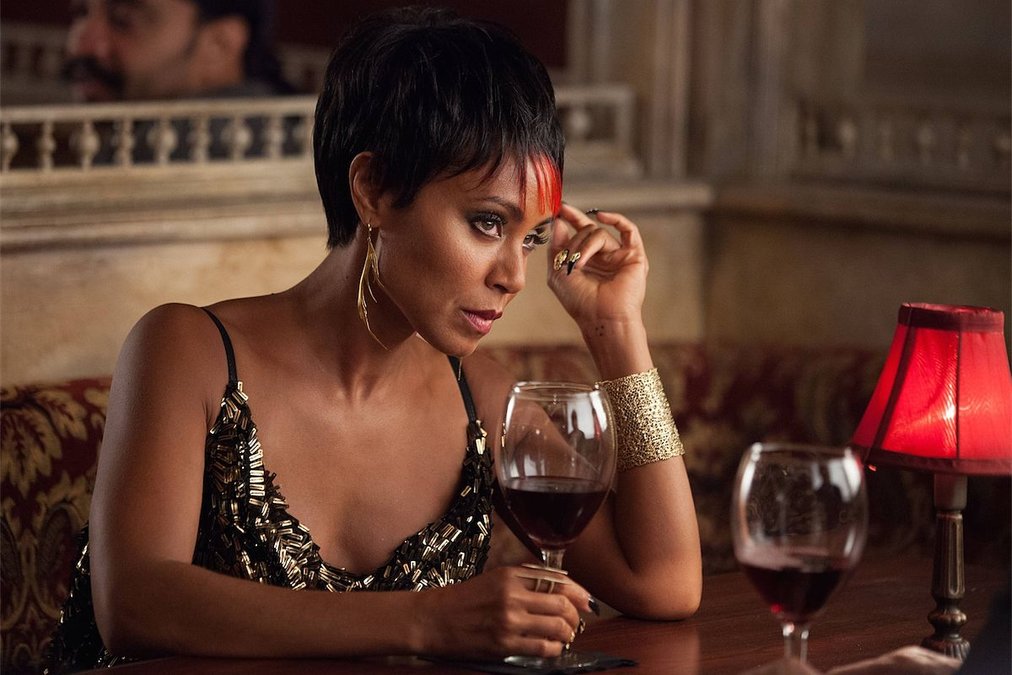
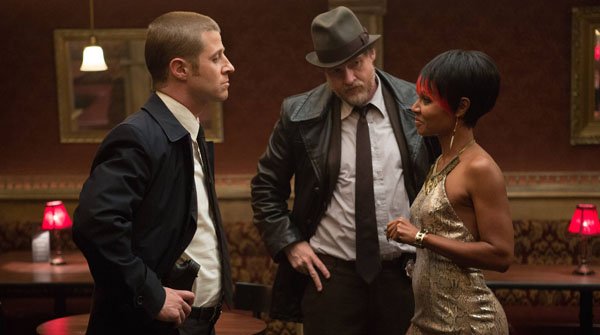
These two characters have become more interesting in just two episodes than throughout all the thousands of stories told about Batman through the comics, films and cartoons. As played by John Doman and Jada Pinkett Smith respectively, Falcone and Mooney make the show really interesting. These are not costume wearing villains or mentally-scarred antagonists. They’re hardcore criminals, but who have learned how to work within the system that is Gotham’s elite society. Where the show pushes forward that the Wayne family has been and continues to be a longstanding pillar of Gotham community, the show also seems to intimate that it does so with a sort of tacit acknowledgement of the seedier side of Gotham.

John Doman’s performance as Carmine Falcone continues to impress. There’s an almost paternal quality to the character but one that never tries to hide the brutality that’s made him the boss of all of Gotham’s criminal underworld. There was such a nice transition from polite businessman to sociopath mob boss in a space of a heartbeat during Falcone’s impromptu meeting with Mooney that one had to rewatch the scene more than once to pick it up.

Of course, many will point out that Jada Pinkett Smith as Mooney was just as good, but in a much more showier fashion. No disagreement in this corner. Smith’s performance is the opposite of Doman’s and it will be interesting how the power play between the two bosses will develop and how it’ll affect the rest of the cast of characters on Gotham.

This show still has growing pains to go through, but tonight’s episode was a good way in working through it while still trying to tell a compelling story. One thing Heller seems to have gotten right (whether by accident or deliberately) with this show’s writing is that he’s made the villains more interesting than it’s supposed heroes. That’s always been the case with Batman outside the comics and this show just continues to perpetuate it.

dcdbb92b4b1341fbc16f9bde1f629fc2

Review: Gotham S1E01 “Pilot”


GothamS1E01

“Gotham stands on a knife’s edge” — Carmine Falcone

It’s one of 2014’s most-anticipated new series. The world is superhero crazy right now and it was only time before DC dipped back into the Batman well to base a live-action tv series on their most-successful property.

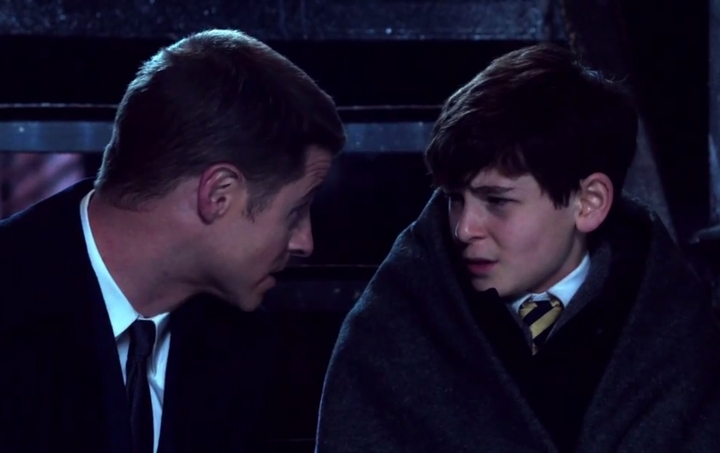
Gotham doesn’t actually take the usual tack and bring in Batman himself as it’s main character. The show uses one of Batman’s most important allies as the focal point of the show. Jim Gordon has always been one of Batman’s staunchest friends throughout every story ever told about the Dark Knight. This show looks to explore Jim Gordon’s early years as part of the Gotham City Police Department. We still get to see Bruce Wayne as a child and his character and who he will become still loom large over the pilot and, I suspect, the series in general.

The pilot episode was written by the show’s executive producer Bruno Heller and it’s actually too paint-by-the-numbers. It literally tries to introduce as many of the Batman rogues gallery in it’s less-than-an-hour running time. We get a quick intro to not just the Riddler and the Joker, but we also get the early beginnings of the Penguin, Catwoman and Poison Ivy. Don’t even get me started on Batman’s more traditional adversaries in Fish Mooney and Carmine Falcone.

It’s difficult to judge a series on it’s pilot episode since the show is still trying to find it’s identity. We saw this with last year’s other comic book series, Agents of S.H.I.E.L.D., and how it took literally 2/3’s of it’s first season to finally find it’s stable footing before it could even figure out what show it wanted to be. Gotham may just have an easier time to find its way in the superhero entertainment landscape since DC has confirmed that the series will not tie-in with it’s cinematic universe the way Marvel did with it’s own series. This should give Bruno Heller and his writers a much more free hand in molding the show into what they want. Yet, there’s a danger in that freedom in that too much of a drastic deviation from the Batman source will rile up the character’s rabid fanbase.

FOX-Gotham-Exten-1525

The first episode does arrive with some very good performances from it’s leads. Ben McKenzie as Det. Jim Gordon commands the stage whenever he’s on the screen. He’s able to convey not just the man of integrity we know Jim Gordon to be, but also inject a bit of a darkness to the character that we rarely saw in the films and cartoons, but comic book fans are very well aware of. McKenzie’s Jim Gordon definitely a bit more rougher around the edges but still idealistic than the Gary Oldman take on Jim Gordon who was more seasoned, but also more cynical about the best way to combat crime in Gotham.

Donal Logue as his veteran partner Harvey Bullock does a good job in becoming the bridge for the audience between the principled Gordon and the more corrupt, underbelly of law and order that is Gotham. We’re not sure if he’s a corrupt cop or just one who has learned how to navigate the dangerous waters of the criminal underworld as one of Gotham’s protectors. Time will tell if this version of Harvey Bullock becomes more of the Batman Begins analogue Arnold Flass or the cynical, but loyal cop of the cartoons.

Now, a show about Batman’s hometown wouldn’t be able to call itself by that city’s name if I didn’t mention the rogues gallery that will end becoming Batman’s (and to an extent, Jim Gordon) reason for being. We don’t see colorful costumes or even the recognizable look of Batman’s villains in this pilot episode, but as stated earlier they do try to cram as many of them in this series premiere as they could. It’s almost like a convoy designed to remind audiences that the show will explore not just Jim Gordon’s early days before Batman rises from the shadows, but also the time of the villains before he arrives.

cdn.indiewire.com

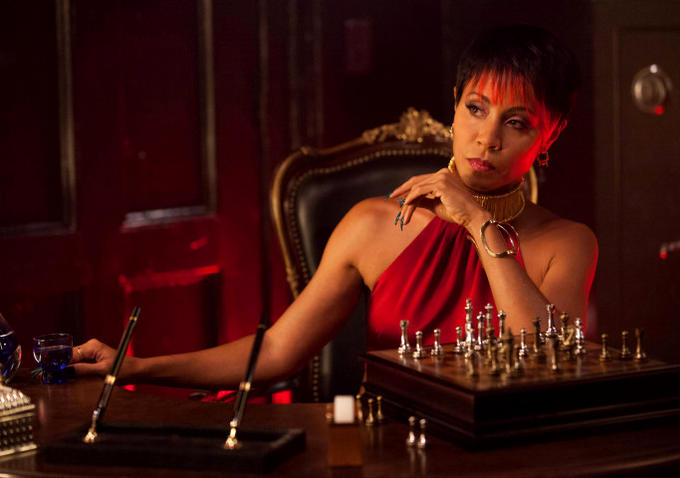
Of all the bad guys the show tries to push at the audience in this pilot it’s Fish Mooney as portrayed by Jada Pinkett Smith that stands out most. Her crimelord brings a certain amount of flair to the episode that hints at the over-the-top villainy that will come about once Bruce is all grown up and takes up the mantle of the bat. There’s hints of a past relationship between her and Logue’s Bullock that could turn out to be interesting. Robin Lord Taylor as a young Oswald Cobblepot aka the Penguin is ok, but something in his performance looks like someone trying too hard to bring out in this series the Penguin’s quirky mannerisms that the character looks to be the most cartoony of all introduced in the episode.

Gotham had a good and interesting introductory episode that laid enough stones on the series’ foundation as it moves forward. With only 16 episodes instead of the usual 24 most full-length tv series get Bruno Heller and the show’s writers has less time to create this version of the  Gotham and Batman world we’ve come to expect. Will they manage to inject some new blood into a world that’s been adapted and reimagined through decades of comics, tv and film work or will the series just try to appease the hardcore comic book fanbase thus alienating the wider general audience.

We shall see and future review installments will tell if this site buys into the series with wholeheartedly or end up getting off the ride before it’s over.