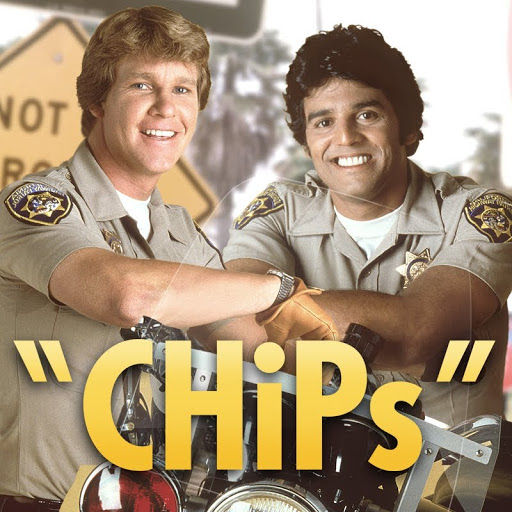
Welcome to Late Night Retro Television Reviews, a feature where we review some of our favorite and least favorite shows of the past! On Mondays, I will be reviewing CHiPs, which ran on NBC from 1977 to 1983. The entire show is currently streaming on Prime!
This week …. it’s jet pack time!
Episode 5.21 “The Game of War”
(Dir by Gordon Hessler, originally aired on March 14th, 1982)
While the members of the Highway Patrol try and fail to beat Harlan at chess, Peter J. Stoler (Clu Gulager) plots a prison break. Stoler is one of the leading members of a group of former soldiers. On the weekends, they engage in war games. During the week, they plot to spring their former leader, Rascoe (Johnny Seven), from prison. Peter has just received a jet pack. Unless the Highway Patrol can stop them, Rascoe is going to fly to freedom.
Meanwhile, a process server named Darla Mason (Sandra Kerns) goes to ludicrous lengths to serve her targets. She pretends to have car trouble. She wears old person makeup. She does whatever she needs to do to get her target to lower their defenses so that she can hand them their court papers and say, “You’ve been served.” Process servers are a necessary part of our legal system but I’ve never cared much for any of the ones that I’ve known. It takes a certain amount of cruelty to get close to someone just so you can give them a summons. Darla is a fairly annoying character and I certainly wasn’t upset when Rascoe’s militia abducted her. And when the episode ended with her getting served, it felt like poetic justice.
This episode was nothing special but it held my attention. I mean, how can you not enjoy a little jet pack action? Clu Gulager was actually somewhat sympathetic as the main bad guy. Personally, I think Ponch and Baker should have let him go. Just give him his jet pack and let him fly away. He didn’t mean any harm!
Seriously, they should have given Clu his own show.
I haven’t really sad much about the Rangers this season because they’ve really been struggling and I haven’t had much happy news to report. Right now, everyone is down on the team’s prospects, even though we haven’t even played the All-Star Game yet. There’s a lot of baseball left to play and you never know when a team might turn their fortunes around. That’s one of the things that I love about this game. A team can always make a comeback and I’ve seen the Rangers make plenty.
Still, when I see something like this:
Oh, Rangers! Why must you break my heart?
I still have faith in my team. I always have faith in them. That’s why they’re my team, no matter how many times they left me screaming into a pillow and hoping no one gets the wrong idea. Rangers, I love you! Even when you lose to the Astros!
One day in 2023, I stepped out in my backyard with my camera. I was just planning on taking a picture of some storm damage and maybe the oak tree in our backyard. Instead, I immediately spotted a little squirrel running along the chain link fence that separated our yard from our neighbor’s. He was moving like he had some place to be but, as soon as he saw me and my camera, he stopped. He stared at me, as if he saying, “Well, hurry up and take your picture.”
I snapped his picture and then I said, “Thank you.”
Upon hearing my thanks, he immediately went on his way, running down the length of the fence and then jumping into a nearby tree.
I think about that squirrel sometimes. This is Texas. We have a lot of squirrels that run through the backyard and living in the neighborhood tries. But it’s hard for me to think of one that had made a great impression than this one. Squirrels don’t have a long lifespan but I like to think that he’s still out there and he’s still posing for anyone with a camera.
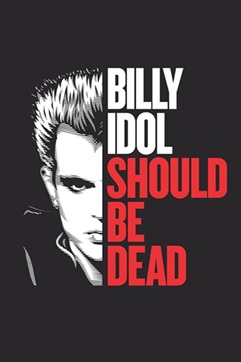
Billy Idol Should Be Dead is the title of a new documentary about Billy Idol and, watching the movie, it’s hard not to agree.
Billy Idol Should Be Dead covers Billy Idol’s storied career, from being a member of the Bromley Contingent to his time as lead singer of Generation X to his solo career and his current status as an unlikely elder statesman of rock and roll. The film features interviews with Miley Cyrus and Billie Joe Armstrong and, despite the age differences, you only have to listen to them and then listen to the 70-something Billy Idol to see the difference between a true rocker and a pretender. Even in his 70s and speaking in a gravelly voice, Billy Idol still has the charisma and the confidence that made him a star. He still has the genuine punk rock attitude that bands like Green Day have made a lot of money imitating but which they have never matched.
The documentary is as open about Billy Idol’s history of drug abuse as Idol himself has been. Idol became a heroin addict at an early age and doesn’t really start to think about cleaning himself up until his father comes over to America and scolds him. Throughout the film, we hear about overdoses and lost weekends and all the times that Billy Idol came close to dying. We also hear about the motorcycle accident that nearly lost him his leg and which ultimately inspired his most controversial album, Cyberpunk. Why did Billy Idol survive while so many of his contemporaries did not? Why was Billy Idol able to survive heroin while so many of the original punk rockers succumbed to it? Who knows? Luck of the draw, perhaps.
The theme of family runs through Billy Idol Should Be Dead. Though Billy’s father is no longer around to offer up his perspective, Billy’s mother is and she’s the epitome of the perfect English mum, amused by her son’s antics even when she doesn’t quite understand them. Billy Idol’s relationship with his father is one of the running themes of the film. It was a difficult relationship but one built on familial love. The relationship is reflected by Idol’s relationship with his own children, all of whom seem to be remarkably stable for someone who grew up with a rock star for a father.
The film alternates between archival footage of the young and cocky Billy Idol and black-and-white scenes of the contemporary Billy Idol. The older Idol still has his swagger but he also has a hard-fought wisdom that younger Idol lacked. The younger Idol thought he was indestructible while the older Idol is happy to be alive and be a grandfather. The older Idol also reveals himself to be far more thoughtful than I think anyone gave the young Idol credit for being. This documentary shows not only how Billy Idol survived a lifestyle that should have killed him but also how and why he’s earned his place as one of rock’s elder statesmen.
Billy Idol probably should be dead but this documentary will make you happy that he’s not.
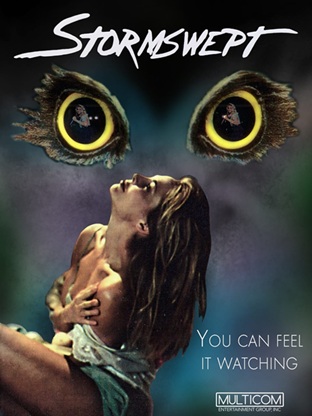
Brad recently told me that he missed out on Late Night Cinemax in the 90s so, for this week, I’m going to review a few films from the era. I’m going to start with Stormswept, which is currently available on Prime.
Dottie (Melissa Moore) is a Louisiana realtor who has been assigned to show a plantation to Marla (Kim Kopf), an actress. When Dottie enters the main house, she has flashbacks to a traumatic experience that happened years ago. Dottie tries to talk Marla into looking at a different house but both Marla and the crew who are shooting her latest movie are drawn to the plantation. On a stormy night, a game of truth or dare leads to hypnosis, nudity, attempted murder, more nudity, the supernatural, and even more nudity.
Stormswept is the epitome of a 90s Cinemax film. Before Cinemax became a semi-respectable network and all of the old direct-to-video softcore films moved to streaming platforms, late night Cinemax was the main place to see films like Stormswept. Movies like this are why Cinemax was, for the longest time, nicknamed Skinemax. (Even Jerry Seinfeld made a joke about it on an episode of Seinfeld when he said, “People don’t just bump into each other. This isn’t Cinemax.”) Most of the movies that showed up on late night Cinemax in the 90s weren’t very good but, for viewers of a certain age, they were very popular.
So, what about Stormswept? Is it any good? The plot is impossible to follow and the dialogue is so risible that it could have been written by AI but it’s a still a film that, for better or worse, epitomizes an era. Whatever else, Stormswept does generate some atmosphere and, even more importantly, it features some of the most popular B-movie actresses of the 90s. Melissa Moore, Kim Kopf, Lorisa McComas, and Kathleen Kinmont are all featured in the movie and they all give better performances than the material probably deserved. Melissa Moore, who I will admit is one of my favorite Cinemax actresses, is especially good as Dottie. Even though the camera ogles her and, as soon as Moore opens her bedroom door in a towel, it’s obvious that the towel will be on the floor within minutes, Melissa Moore still gives a committed and sincere performance as the only person in the house who truly seems to understand that something bad is going to happen. She is still sympathetic and believable as Dottie and you actually do want to find out the secrets of her past experiences with the mansion.
I should give proper warning here. Stormswept is definitely a softcore film, make no mistake about that. Even by the standards of 90s Cinemax, a few of the scenes are unusually explicit. But, with its game cast and occasionally interesting story, it’s also a pretty good example of what made late night Cinemax memorable beyond the nudity.
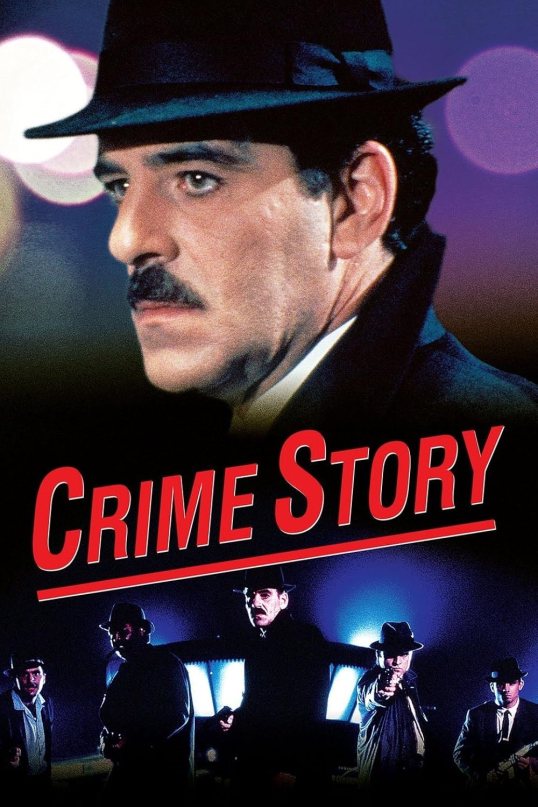
Welcome to Retro Television Reviews, a feature where we review some of our favorite and least favorite shows of the past! On Mondays, I will be reviewing Crime Story, which ran on NBC from 1986 to 1988. The entire show can be found on Tubi!
This week, Luca has to prove himself.
Episode 1.5 “The War”
(Dir by Leon Ichaso, originally aired on October 7th, 1986)
Luca is in trouble.
Last week’s episode ended with Max Goldman on the receiving end of a beating from Noah Ganz’s goons. Goldman survives and returns with a message. Ganz is not happy that Luca tried to steal his book. Bartoli, Weisbord, and Fosse all inform Luca will have to resolve the Ganz situation on his own.
Luca tries to get public defender David Abrams (Stephen Lang) to act as a negotiator for him but David doesn’t want to get involved in the mobster lifestyle that made his father rich. David just wants to defend the poor and play sax in a jazz club. When Luca is attacked while driving in Chicago, he realizes that negotiating with Ganz is a dead end.
Instead, he just kills Ganz. In a bravura sequence, Luca shows up at a hotel and, with the help of sniper, takes down Ganz’s bodyguards. Then he uses a bomb to take out Ganz while the latter is holding court in an elevator. A plume of white smoke puffs out of the hotel’s exhaust vent.
Having taken care of the issue, Luca is welcomed back into the family. Weisbord says, “Call me Mac.” Fosse (played by Michael Madsen) nods and slowly smokes a cigarette.
Meanwhile, Torello’s wife miscarries. This is the episode that features the clip of Torello walking down a lonely Chicago street on a rainy night. (The clip is prominently featured during the show’s opening credits.) In fact, both Torello and Luca end up spending a good deal of time walking around at night while David Abrams plays his saxophone. It’s a scene that is so overstylized that it shouldn’t work but somehow, it does. If nothing else, it reminds us that Crime Story of two dangerously obsessed men on a collision course.
This was a good episode, if just because it showed that Luca can be a clever criminal when he needs to be. Before this episode, Luca seemed to be clearly outmatched by Torello. With this episode, Luca proved himself to be Torello’s equal.
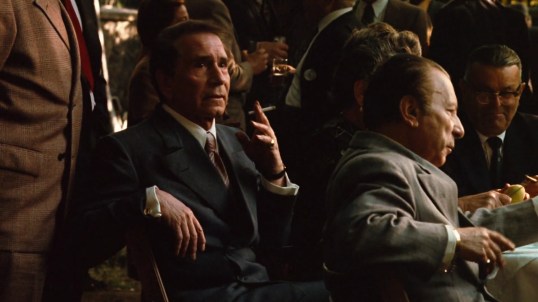
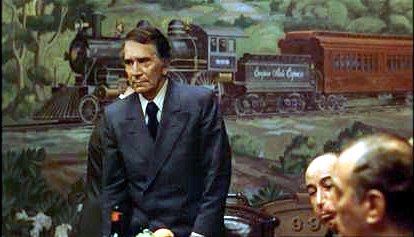
As played by Richard Conte in The Godfather, Barzini is far different from many of the other mob bosses that we meet over the course of Mario Puzo’s and Francis Ford Coppola’s Mafia epic. He doesn’t yell. He doesn’t threaten. If anything, Barzini comes across as almost being a statesman. When it’s time to broker a peace between the Tattaglia and the Corleone families, Barzini is the one who sits at the head of the table. When it’s time to determine how the drug trade will be divided, Barzini is the one who offers up the “sensible” solution. Barzini keeps calm. He knows how to deal with volatile people. He just wants to make sure that peace is restored and everyone gets a fair cut of the profit. “We are not communists,” he says.
It’s after that meeting that Vito Corleone finally realizes that everything that has happened, from the nearly successful attempt on his life to the exile of Michael to the death of Santino, was Barzini’s doing. Barzini perhaps a got a bit too clever for his own good. By so coolly and efficiently brokering the peace, Barzini revealed that was far more clever than the “pimp” Philip Tattaglia. Whereas Tattaglia was too crude to put together a coalition against the Corleones, Barzini was just the type of pitiless manipulator who could convince a group of otherwise powerful people to sign away their own futures. Perhaps he was a communist after all.
Of course, most viewers (and readers) will have figured out that Barzini is the main bad guy long before Vito does. From the first minute that we see Barzini at the wedding reception at the Corleone Compound, we know that he’s a sinister figure. While everyone else at the wedding is being emotional, sentimental, and delightfully Italian, Barzini watches without a hint of emotion. Indeed, the only time we see any real emotion from Barzini is when he smirks at Vito’s funeral.
After his goons unsuccessfully attempt to assassinate Don Vito, Sollozzo famously tells Tom Hagen that “the Don was slipping.” And it’s hard not to feel that Sollozzo had a point. Consider Vito Corleone’s track record in The Godfather. He failed to teach Sonny the basics of being a good Don. He promoted Tom Hagen to consiglieri despite the fact that Tom was viewed as being an outsider by the other Families. When it came time to send someone undercover to investigate the Tattaglias, he gave the job to Luca Brasi despite the fact that everyone knew there was no way that Brasi would actually betray Vito. He stopped to buy fruit, despite not being accompanied by his bodyguards. Worst of all, Vito somehow missed that it was Barzini all along. Vito was slipping. He got complacent. He failed to see how the world was changing and how the old honor system was being discarded. That allowed him to be victimized by Barzini.
Fortunately, Michael was there to take charge. Unfortunately, for Barzini, Al Neri was also there to put on his policeman’s uniform and wait for Barzini to exit from his latest meeting. Barzini took several bullets to the back. Barzini’s driver was caught in the cross-fire. I’ve always felt bad about that. I mean, the driver was just asking why he had been given a parking ticket and Neri shot him. If nothing else, we can see why Neri didn’t make it as a cop.
Barzini and Vito had a lot in common. They were both diplomats who could use violence when necessary. It’s perhaps not a surprise to learn that, before he was cast as Barzini, Richard Conte was one of the many actors considered for the role of Vito Corleone. How different would the film have been with the sinister Conte — as opposed to the likable Brando — in the lead role?
Luckily, Coppola made the right decision. Just as Brando was the perfect Vito, Richard Conte was the perfect Barzini.
It’s hard to imagine that someone could overact while playing a corpse but Louise Fletcher somehow manages to do just that in 1983’s Brainstorm and I think we owe her some respect for that. The underrated Fletched won an Oscar for playing Nurse Ratched in One Flew Over The Cuckoo’s Nest and she appeared in a handful of other films that I’ve liked (Strange Behavior, the 2012 restoration of Once Upon A Time In America) but, now that I’ve watched Brainstorm, I will always think of her playing a dead character with the biggest, hammiest facial expression ever on her otherwise lifeless face.
In Brainstorm, Fletcher plays Dr. Lillian Reynolds, a chain-smoking scientist who is always upset about something. When Lillian isn’t lighting a cigarette or yelling, “You sold me out!,” she’s clutching her chest and taking her heart pills. Working with her partner, Dr. Michael Brace (Christopher Walken), Lillian has developed a brain-computer interface that allows people’s brain waves to be recorded on tape so that others can then experience what they experienced. In practice, this looks like putting on a helmet and then seeing what appears to be a home movie. What fun! Lillian thinks that the interface can be used to change and save the world. Dr. Brace thinks he can use the interface to discover why his marriage to Karen (Natalie Wood) fell apart. Their associate, Hal (Joe Dorsey), thinks he can use it to experience his friend screwing the babysitter over and over and over again. Meanwhile, Alex Taber (Cliff Robertson) thinks that it can be used as a military weapon.
(Hal is probably the one who comes the closest to what people would actually use this technology for.)
Lillian is not happy about her technology being turned over to the military. She gets upset about it over and over again. Eventually, she suffers one of the most overdramatic heart attacks ever recorded on film. Before she dies, she hooks herself up to the machine and records her dying vision. Michael becomes obsessed with seeing what Lillian saw as she entered the afterlife. Unfortunately, the mean military folks have the tape so it looks like Michael is going to have to unleash some chaos. I can’t think of any other film that mixes Christopher Walken having a beatific vision with a bunch of slapstick humor featuring an out-of-control robot and a bunch of soap bubbles.
Today, if Brainstorm is known for anything, it’s as the film that Natalie Wood was shooting when she died. One popular theory about the circumstances surrounding Wood’s death is that she was having an affair with Christopher Walken. Watching the two of them in this film should disabuse anyone of that notion as the two of them have absolutely zero chemistry as a couple. (For the record, I think Wood’s death was an accident and that a lot of self-styled Internet sleuths owe Robert Wagner an apology.) If there’s anything that this film should be known for, it should be that it features a large number of Oscar nominees and winners and they all end up giving absolutely lousy performances. Even the usually wonderful Christopher Walken seems to be playing someone imitating himself. Watching this film, I was never quite sure why anyone was actually doing anything.
Director Douglas Trumbull was best known for designing the Stargate sequence in 2001: A Space Odyssey and, not surprisingly, Brainstorm’s vision of the afterlife is actually pretty effective. One gets the feeling that Trumbull was more comfortable with the special effects than he was with the human actors.
I have to admit that I always smile a little at films where scientists are shocked — shocked, I tell ya! — to discover that their technology is going to be used for military purposes. Why did they think the government was funding them in the first place? Lillian seems to believe that her technology will be used to allow people to experience what it’s like to ride a roller coaster. That’s what IMAX is for.
“A lot of those [German] soldiers, I’ve thought about this often, that man and I might’ve been good friends. We might’ve had a lot in common. We might’ve liked to fish, you know, he might’ve liked to hunt. You never know. You know. Of course, they were doin’ what they were supposed to do, and I was tryin’ to do what I was supposed to do. But, under different circumstances we might’ve been good friends.” — Darrell “Shifty” Powers
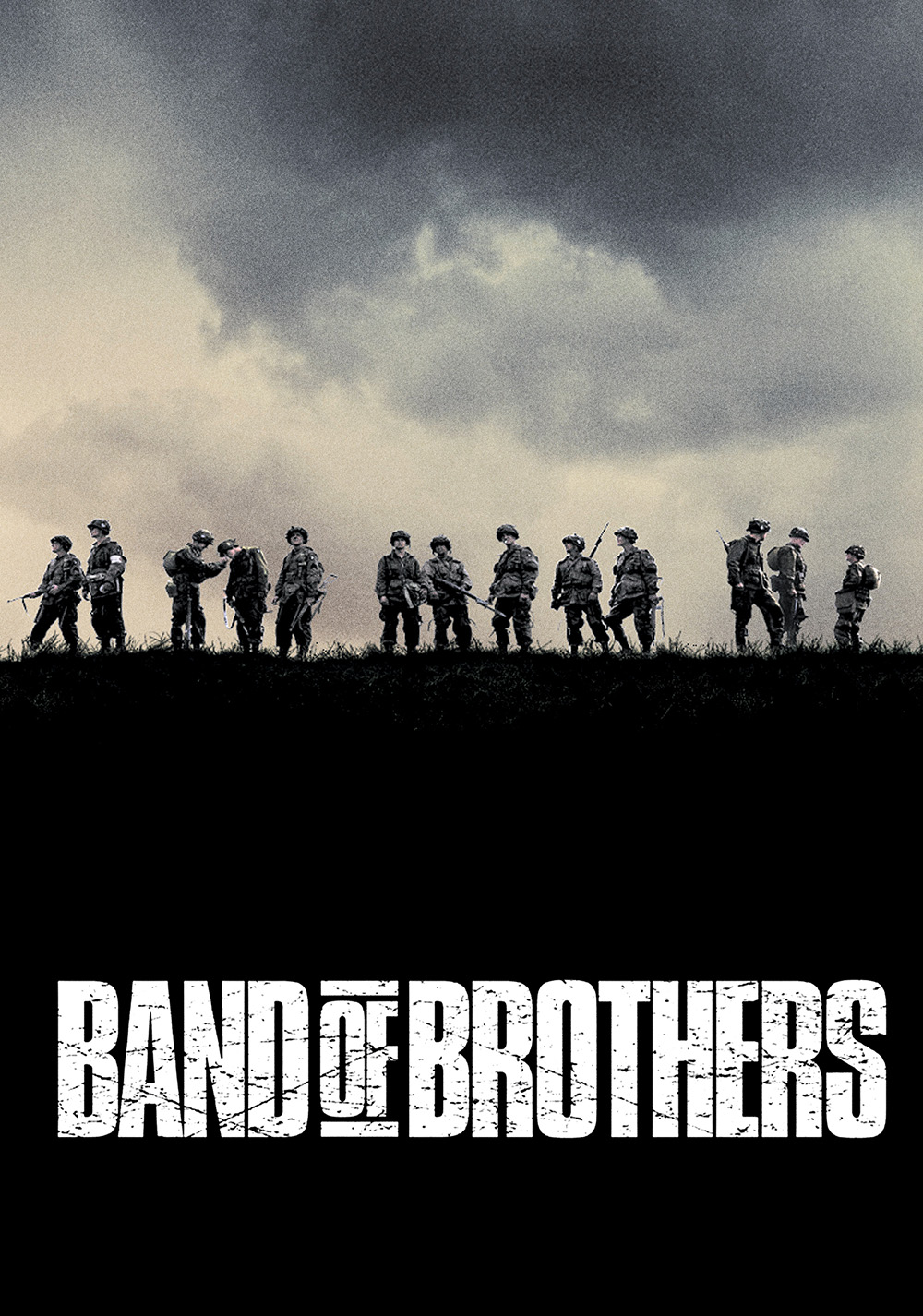
When we look back at the landscape of modern television, it is easy to take the concept of cinematic TV for granted. We live in an era where massive budgets, sweeping orchestral scores, and A-list Hollywood talent are regularly deployed on the small screen. But if you trace this golden lineage back to its true modern genesis, all roads inevitably lead to a singular, towering achievement: the 2001 HBO mini-series Band of Brothers. Produced by Tom Hanks and Steven Spielberg, this ten-part masterpiece did not just recount the harrowing journey of Easy Company, 506th Parachute Infantry Regiment, 101st Airborne Division during World War II; it fundamentally altered the DNA of television storytelling. Watching it today, a quarter-century after its initial broadcast, the series remains as potent, heartbreaking, and visually stunning as it was when it first shocked audiences. It exists as a perfect bridge between the classical Hollywood war epics of old and the uncompromising, gritty realism of twenty-first-century media. By committing to an unprecedented budget and an absolute refusal to sanitize the psychological horrors of combat, Band of Brothers set a high-water mark that few series have ever managed to touch, let alone surpass.
To understand the visual language and visceral power of Band of Brothers, one must first look at the cinematic earthquake that preceded it three years earlier: Steven Spielberg’s 1998 masterpiece Saving Private Ryan. That film rewrote the rules of how cinema captures warfare, abandoning the steady, heroic, brightly lit panoramas of mid-century studio pictures in favor of a terrifyingly immersive, chaotic style. Spielberg utilized desaturated colors, shutter-angle manipulation to create a jittery, hyper-real sense of motion, and handheld cameras that made the audience feel like they were ducking bullets in the surf of Omaha Beach. When Hanks and Spielberg pivoted to television to adapt Stephen E. Ambrose’s non-fiction book Band of Brothers, they brought this exact aesthetic blueprint with them. The impact of Saving Private Ryan on the mini-series cannot be overstated; it acts as the structural and aesthetic godfather of the entire project. Directors like Phil Alden Robinson, Richard Loncraine, and David Nutter utilized the same bleach-bypass film processing techniques to strip away vibrant primaries, leaving a color palette dominated by icy blues, muddy browns, and sickly olive drabs. This was not just a stylistic gimmick; it was a psychological tool that pulled the viewer out of the comfort of their living rooms and dropped them into the frozen, unforgiving forests of Bastogne or the smoke-choked ruins of Carentan. The camera became a participant in the war, getting splattered with mud, shaking violently during artillery barrages, and refusing to look away from the gruesome reality of what high-explosive shrapnel does to human flesh.
Yet, while it shared a visual vocabulary with Saving Private Ryan, Band of Brothers achieved something that a two-and-a-half-hour feature film simply never could, owing entirely to the expansive canvas of the mini-series format. A film must ultimately compress its narrative arc, often relying on archetypes and rapid pacing to reach a resolution. Over the course of ten hours, Band of Brothers allows its characters to breathe, change, harden, and break. Crucially, some of the show’s most powerful, lasting stories have absolutely nothing to do with active battles, but rather unfold in the quieter moments between the chaos. We do not just see these men in the heat of a firefight; we watch them suffer through the mundane, soul-crushing basic training regime of Camp Toccoa under the tyrannical eye of Captain Sobel, played with a brilliant, tragic insecurity by David Schwimmer. We sit with them in the agonizing, silent darkness of C-47 transport planes, listening to the vomit hitting the floorboards and watching the sheer, unadulterated dread on their faces before the jump over Normandy. We freeze with them in foxholes during the long, static winter in the forests of Bastogne, sharing the psychological numbness of isolation and the simple, desperate human desire for a dry pair of socks or a warm cup of coffee. This structural patience transforms the viewing experience from simple passive entertainment into an emotional marathon. We have known these men through their triumphs and their absolute lowest points, making their losses hit with the weight of personal bereavement.
While these quiet stretches build a deep, slow-burning empathy, the absolute biggest gut punch of the entire series arrives in Episode 9, titled Why We Fight. Throughout their march across Europe, the men of Easy Company—and by extension, the audience—have become somewhat cynical and battle-weary, numbly pushing forward simply to survive and get the job done. That numbness is completely shattered when a patrol stumbles across an sub-camp in the woods near Landsberg, which itself was part of the larger Dachau concentration camp complex. Up until this point, the war had been about geopolitical strategies, territory, and survival; suddenly, the men are brought face-to-face with the industrial scale of Nazi atrocities. The direction in this sequence is devastatingly restrained. There are no swelling orchestrations or heroic monologues, only the bewildered horror of soldiers looking at skeletal survivors wandering the camp in striped uniforms. Watching tough, battle-hardened paratroopers like Captain Nixon and Major Winters reduced to breathless, disbelieving silence as they uncover the truth of the Holocaust anchors the narrative in an entirely different tier of tragedy. It is an episode that completely recontextualizes the title of the series, showing that their ultimate purpose transcended military victory; they were liberating humanity from an unimaginable nightmare.
The casting of the series is another stroke of absolute genius that looks even more miraculous in hindsight. The producers deliberately avoided casting massive, distracting superstars for the main roles, opting instead for relatively unknown British and American theater and character actors. This decision was crucial for maintaining the show’s documentary-like authenticity; if Tom Cruise or Brad Pitt had been jumping out of those planes, the illusion would have been instantly shattered. Instead, we got Damian Lewis as Major Richard Winters, delivering a performance of quiet, stoic, and deeply principled leadership that serves as the moral anchor of the entire narrative. Alongside him was Ron Livingston as Captain Lewis Nixon, embodying the weary, cynical, and battle-fatigued intellect of a man seeking refuge from the horrors of war in a bottle of Vat 69. The ensemble is a treasure trove of talent, featuring early-career appearances from actors who would go on to become household names, including Tom Hardy, Michael Fassbender, James McAvoy, Simon Pegg, and Michael Cudlitz. Because the show focuses on an entire company, the perspective shifts naturally from episode to episode. One week we are viewing the war through the eyes of a terrified replacement medic in Bastogne, and the next we are embedded with the cynical, battle-hardened sergeant Carwood Lipton in The Breaking Point. This shifting focus ensures that the series never feels like a traditional Hollywood star vehicle, but rather a collective portrait of brotherhood where the company itself is the true protagonist.
The emotional resonance of Band of Brothers is amplified tenfold by the brilliant inclusion of interviews with the actual surviving veterans of Easy Company at the beginning of each episode. Kept anonymous until the very final moments of the series, these elderly men sit in simple chairs against dark backgrounds, their voices trembling and eyes misting over as they recall events that occurred more than half a century prior. There is a heartbreaking disconnect between the frail, weathered men on screen and the vibrant, muscular young actors portraying them in the dramatization. These interviews ground the cinematic spectacle in an undeniable, sobering reality. They serve as a constant reminder that the explosions, the blood, and the impossible acts of bravery we are witnessing were not the inventions of a Hollywood writers’ room, but the actual lived experiences of ordinary boys who were plucked from small-town America and dropped into the middle of the apocalypse. When the real-life winter veteran Dick Winters quotes his friend’s letter at the end of the series—saying, “Grandpa, were you a hero in the war? And Grandpa said no, but I served in a company of heroes”—it is impossible not to be moved to tears. It is a rare instance where a piece of media successfully honors historical figures without falling into the trap of cheap, unearned sentimentality or jingoistic propaganda.
Beyond its historical and emotional triumphs, the legacy of Band of Brothers is woven directly into the fabric of what we now refer to as prestige television. Before 2001, television was largely viewed as cinema’s lesser sibling—a medium defined by low budgets, procedural structures, and compromised production values meant to fit the square dimensions of old cathode-ray tube television sets. HBO had already begun to challenge this status quo with groundbreaking dramas like The Sopranos and Oz, but Band of Brothers was the project that proved television could match, and perhaps even exceed, the scale and artistic ambition of Hollywood blockbusters. With a staggering budget of over one hundred and twenty million dollars, it was the most expensive television miniseries ever produced at the time. The immense financial gamble paid off spectacularly, demonstrating to network executives and creators alike that audiences were hungry for complex, serialized, and visually uncompromising narratives that demanded to be treated as high art. The success of the show cleared the path for future cinematic television epics, directly inspiring sister projects like The Pacific and Masters of the Air, while setting the production standards that would later allow shows like Game of Thrones, Chernobyl, and Succession to flourish. It proved that the small screen was capable of housing massive, global historical narratives without losing the intimate character dynamics that make long-form storytelling so uniquely compelling.
Ultimately, Band of Brothers stands as a definitive milestone because it perfectly balanced the macro-scale horror of global warfare with the micro-scale beauty of human connection. It stripped away the romanticized myths of World War II to expose the sheer, terrifying randomness of survival, while simultaneously validating the profound love and loyalty that can only be forged in the crucible of shared suffering. It did not glamorize combat; instead, it illuminated the heavy, permanent psychological toll extracted from those who survived it. Through its hyper-realistic visual language inherited from Saving Private Ryan, its impeccable ensemble casting, and its revolutionary impact on the medium of television, the series achieved a timeless quality. It remains a definitive piece of cultural touchstone media that demands annual rewatches from millions of viewers around the globe. It is not just a historical chronicle, nor is it merely a well-executed piece of premium television; it is a monument to the human spirit, an artistic triumph that continues to remind us of the immense sacrifices made by an ordinary generation of heroes who stood together when the world was falling apart.
In the late 19th Century, a leper colony was established on the Hawaiian island of Molokai. Officially, the Kalaupapa Leprosy Settlement was said to be for the care of people with leprosy, which was then raging across Asia. Unofficially, it was a prison where lepers were isolated from the rest of society and left to die. Any leper who tried to leave the colony would be shot on sight. Father Damien, a Belgian priest, was one of the few people willing to walk amongst the lepers. When he was first sent to the colony, he was ordered to only administer last rites to the dying and to not allow himself to be touched. Instead, Damien stayed and ministered to the lepers, knowing that he would probably never be allowed to leave. For 16 years, Damien ministered to the colony. Even after he himself grew sick, he continued his ministry and continued to be an advocate for his fellow lepers until he died.
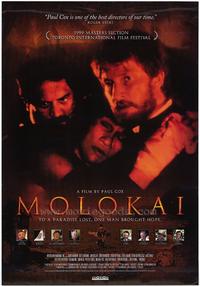
Molokai: The Story of Father Damien is a wonderful film about the life and ministry of Father Damien. The movie features a lot of familiar actors in small roles, like Sam Neill, Kris Kristofferson, Peter O’Toole, Tom Wilkinson, and Alice Krige. But the star of the film is David Wenham, who portrays the kindness and dedication of Father Damien without ever making him seem idealized or boring. Father Damien is guided by both his faith and his belief that no one should be abandoned. It’s not always easy to watch. The horrors of leprosy are unflinchingly portrayed. But, by the end of the movie, it doesn’t matter if you’re Catholic or not. You’re just thankful for men like Father Damien.
Saint Damien of Molokai was canonized by Pope Benedict XVI in 2009.