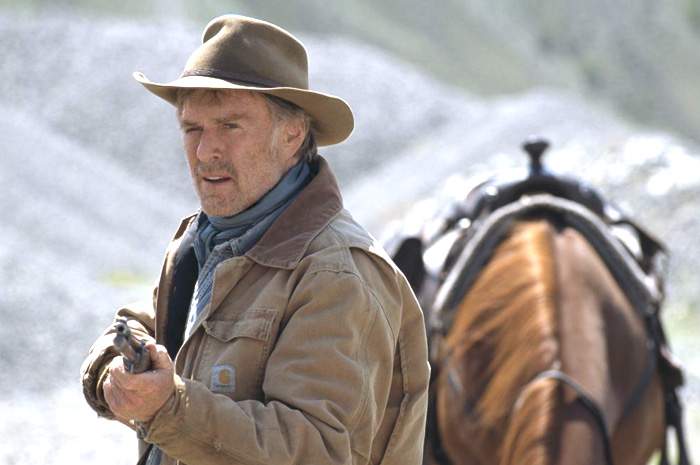
Brad reviews AN UNFINISHED LIFE (2005), starring Robert Redford! 


Recently, I was sitting on the back deck of my parents’ house visiting with my family. Of course, when I’m around movies are always a topic of conversation, and my sister brought up the fact that she had just watched AN UNFINISHED LIFE and really liked it. My sister has always loved Robert Redford, and when she brought him up, it was fun hearing my mom get on her case about her long-ago recommendation of UP CLOSE AND PERSONAL, that came without the appropriate warning of the movie’s tearjerker of an ending. That’s a no-no with my mom, and we all had a good laugh. When my wife and I got home, we were browsing the Paramount Plus streaming service, and lo and behold, there was AN UNFINISHED LIFE, so it just seemed like the right time to watch it! 

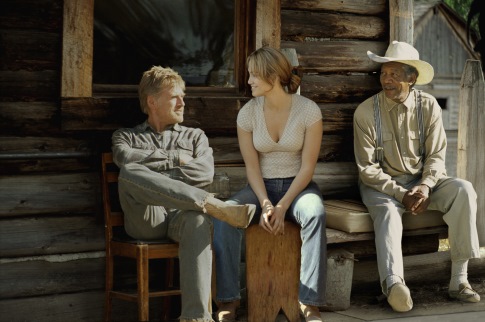
The movie centers in on Einar Gilkyson (Redford), a Wyoming rancher who still hasn’t properly dealt with the death of his son about a decade earlier. He blames his daughter-in-law Jean (Jennifer Lopez) for the accident that killed him. When Jean shows up at his ranch, because she’s on the run from her abusive boyfriend Gary (Damian Lewis), Einar tells her that he doesn’t want her there. His heart softens though as she introduces him to Griff (Becca Gardner), the granddaughter that he never knew he had. This sounds like a setup for big-time melodrama, but director Lasse Hallstrom is able to keep things somewhat grounded as we watch this broken family attempt to reconnect. 

It’s time for a confession… I’ve never been the biggest fan of Robert Redford. Now don’t get me wrong, that doesn’t mean that I don’t like him. It’s just that he’s so perfect, maybe too perfect?! My favorite actors are not perfect looking human beings, but they do have an undeniable charisma and screen presence. Actors like Charles Bronson, Roy Scheider, and James Woods immediately come to mind. As such, I’ve never made it a priority to watch all of Redford’s movies, although I’ve watched most of his best at some point in my life. I will say that I think he’s excellent in AN UNFINISHED LIFE. He’s still undeniably “Redford,” but age has a way of evening up the playing field, and this performance relies on his ability to embody a character slowly opening his heart after years of shutting himself off. His scenes with his granddaughter are especially strong, without seeming excessively manipulative. I may look more closely into his later career based on his work here. 

I’m also not the biggest fan of Jennifer Lopez. I loved her in SELENA, the film that kickstarted her career, but other than OUT OF SIGHT and ANACONDA, I haven’t enjoyed much else in her filmography. With that said, I think she’s good here. Her character has made one bad decision after another since her husband died, but I can’t help but root for her to find some happiness. In real life, it would have taken a lot of courage to ask someone like Einar for help, and I do appreciate that she’s willing to humble herself for her daughter’s sake.

Have I mentioned that Morgan Freeman is also in the film in the role of Mitch Bradley, Einar’s injured ranch hand and closest friend? He brings his warmth and wisdom to the proceedings even though his character’s unique storyline, which revolves around being mauled by a bear, doesn’t always work. The characters played by Damian Lewis and Josh Lucas also don’t land that strongly. Lewis is Lopez’s abusive boyfriend, but his awful behavior is ultimately dealt with in a way that’s more cartoonish than you might expect in a serious drama. Lucas, who was born in my home state of Arkansas, is fine here as “Crane” Curtis, but he doesn’t have that much to do. 

The Wyoming setting for our story is beautiful, but it was actually filmed in British Columbia. My wife spent 18 years of her life in Wyoming, and it’s generally not as green as the “Wyoming” presented here. That’s just a minor nitpick, because for the uninitiated, the setting is beautiful and makes you feel like you’re part of a modern day western. There’s just something romantic and comforting about that, and the wide-open spaces seem to offer endless chances for a new beginning.

Overall, while I don’t think AN UNFINISHED LIFE is a great movie, I enjoyed watching it. It’s a movie that understands the importance of forgiveness by showing us wounded characters who are willing to open themselves up to imperfect people who are just trying to be better. At the end of the day, if any of us want meaningful connections to the people in our lives, we’d better be willing to do the same. 
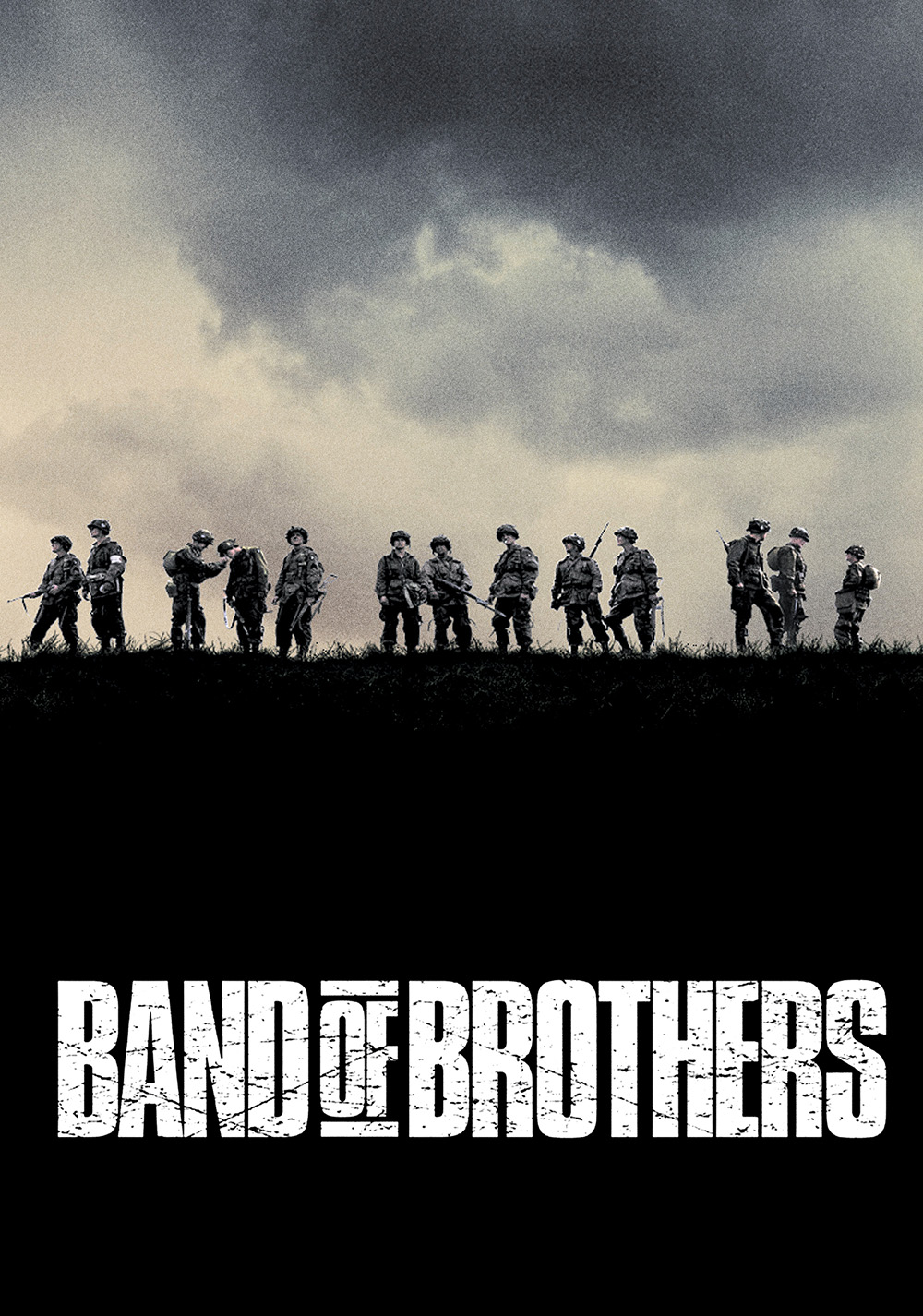
Review: Band of Brothers


“A lot of those [German] soldiers, I’ve thought about this often, that man and I might’ve been good friends. We might’ve had a lot in common. We might’ve liked to fish, you know, he might’ve liked to hunt. You never know. You know. Of course, they were doin’ what they were supposed to do, and I was tryin’ to do what I was supposed to do. But, under different circumstances we might’ve been good friends.” — Darrell “Shifty” Powers

When we look back at the landscape of modern television, it is easy to take the concept of cinematic TV for granted. We live in an era where massive budgets, sweeping orchestral scores, and A-list Hollywood talent are regularly deployed on the small screen. But if you trace this golden lineage back to its true modern genesis, all roads inevitably lead to a singular, towering achievement: the 2001 HBO mini-series Band of Brothers. Produced by Tom Hanks and Steven Spielberg, this ten-part masterpiece did not just recount the harrowing journey of Easy Company, 506th Parachute Infantry Regiment, 101st Airborne Division during World War II; it fundamentally altered the DNA of television storytelling. Watching it today, a quarter-century after its initial broadcast, the series remains as potent, heartbreaking, and visually stunning as it was when it first shocked audiences. It exists as a perfect bridge between the classical Hollywood war epics of old and the uncompromising, gritty realism of twenty-first-century media. By committing to an unprecedented budget and an absolute refusal to sanitize the psychological horrors of combat, Band of Brothers set a high-water mark that few series have ever managed to touch, let alone surpass.

To understand the visual language and visceral power of Band of Brothers, one must first look at the cinematic earthquake that preceded it three years earlier: Steven Spielberg’s 1998 masterpiece Saving Private Ryan. That film rewrote the rules of how cinema captures warfare, abandoning the steady, heroic, brightly lit panoramas of mid-century studio pictures in favor of a terrifyingly immersive, chaotic style. Spielberg utilized desaturated colors, shutter-angle manipulation to create a jittery, hyper-real sense of motion, and handheld cameras that made the audience feel like they were ducking bullets in the surf of Omaha Beach. When Hanks and Spielberg pivoted to television to adapt Stephen E. Ambrose’s non-fiction book Band of Brothers, they brought this exact aesthetic blueprint with them. The impact of Saving Private Ryan on the mini-series cannot be overstated; it acts as the structural and aesthetic godfather of the entire project. Directors like Phil Alden Robinson, Richard Loncraine, and David Nutter utilized the same bleach-bypass film processing techniques to strip away vibrant primaries, leaving a color palette dominated by icy blues, muddy browns, and sickly olive drabs. This was not just a stylistic gimmick; it was a psychological tool that pulled the viewer out of the comfort of their living rooms and dropped them into the frozen, unforgiving forests of Bastogne or the smoke-choked ruins of Carentan. The camera became a participant in the war, getting splattered with mud, shaking violently during artillery barrages, and refusing to look away from the gruesome reality of what high-explosive shrapnel does to human flesh.

Yet, while it shared a visual vocabulary with Saving Private Ryan, Band of Brothers achieved something that a two-and-a-half-hour feature film simply never could, owing entirely to the expansive canvas of the mini-series format. A film must ultimately compress its narrative arc, often relying on archetypes and rapid pacing to reach a resolution. Over the course of ten hours, Band of Brothers allows its characters to breathe, change, harden, and break. Crucially, some of the show’s most powerful, lasting stories have absolutely nothing to do with active battles, but rather unfold in the quieter moments between the chaos. We do not just see these men in the heat of a firefight; we watch them suffer through the mundane, soul-crushing basic training regime of Camp Toccoa under the tyrannical eye of Captain Sobel, played with a brilliant, tragic insecurity by David Schwimmer. We sit with them in the agonizing, silent darkness of C-47 transport planes, listening to the vomit hitting the floorboards and watching the sheer, unadulterated dread on their faces before the jump over Normandy. We freeze with them in foxholes during the long, static winter in the forests of Bastogne, sharing the psychological numbness of isolation and the simple, desperate human desire for a dry pair of socks or a warm cup of coffee. This structural patience transforms the viewing experience from simple passive entertainment into an emotional marathon. We have known these men through their triumphs and their absolute lowest points, making their losses hit with the weight of personal bereavement.

While these quiet stretches build a deep, slow-burning empathy, the absolute biggest gut punch of the entire series arrives in Episode 9, titled Why We Fight. Throughout their march across Europe, the men of Easy Company—and by extension, the audience—have become somewhat cynical and battle-weary, numbly pushing forward simply to survive and get the job done. That numbness is completely shattered when a patrol stumbles across an sub-camp in the woods near Landsberg, which itself was part of the larger Dachau concentration camp complex. Up until this point, the war had been about geopolitical strategies, territory, and survival; suddenly, the men are brought face-to-face with the industrial scale of Nazi atrocities. The direction in this sequence is devastatingly restrained. There are no swelling orchestrations or heroic monologues, only the bewildered horror of soldiers looking at skeletal survivors wandering the camp in striped uniforms. Watching tough, battle-hardened paratroopers like Captain Nixon and Major Winters reduced to breathless, disbelieving silence as they uncover the truth of the Holocaust anchors the narrative in an entirely different tier of tragedy. It is an episode that completely recontextualizes the title of the series, showing that their ultimate purpose transcended military victory; they were liberating humanity from an unimaginable nightmare.

The casting of the series is another stroke of absolute genius that looks even more miraculous in hindsight. The producers deliberately avoided casting massive, distracting superstars for the main roles, opting instead for relatively unknown British and American theater and character actors. This decision was crucial for maintaining the show’s documentary-like authenticity; if Tom Cruise or Brad Pitt had been jumping out of those planes, the illusion would have been instantly shattered. Instead, we got Damian Lewis as Major Richard Winters, delivering a performance of quiet, stoic, and deeply principled leadership that serves as the moral anchor of the entire narrative. Alongside him was Ron Livingston as Captain Lewis Nixon, embodying the weary, cynical, and battle-fatigued intellect of a man seeking refuge from the horrors of war in a bottle of Vat 69. The ensemble is a treasure trove of talent, featuring early-career appearances from actors who would go on to become household names, including Tom Hardy, Michael Fassbender, James McAvoy, Simon Pegg, and Michael Cudlitz. Because the show focuses on an entire company, the perspective shifts naturally from episode to episode. One week we are viewing the war through the eyes of a terrified replacement medic in Bastogne, and the next we are embedded with the cynical, battle-hardened sergeant Carwood Lipton in The Breaking Point. This shifting focus ensures that the series never feels like a traditional Hollywood star vehicle, but rather a collective portrait of brotherhood where the company itself is the true protagonist.

The emotional resonance of Band of Brothers is amplified tenfold by the brilliant inclusion of interviews with the actual surviving veterans of Easy Company at the beginning of each episode. Kept anonymous until the very final moments of the series, these elderly men sit in simple chairs against dark backgrounds, their voices trembling and eyes misting over as they recall events that occurred more than half a century prior. There is a heartbreaking disconnect between the frail, weathered men on screen and the vibrant, muscular young actors portraying them in the dramatization. These interviews ground the cinematic spectacle in an undeniable, sobering reality. They serve as a constant reminder that the explosions, the blood, and the impossible acts of bravery we are witnessing were not the inventions of a Hollywood writers’ room, but the actual lived experiences of ordinary boys who were plucked from small-town America and dropped into the middle of the apocalypse. When the real-life winter veteran Dick Winters quotes his friend’s letter at the end of the series—saying, “Grandpa, were you a hero in the war? And Grandpa said no, but I served in a company of heroes”—it is impossible not to be moved to tears. It is a rare instance where a piece of media successfully honors historical figures without falling into the trap of cheap, unearned sentimentality or jingoistic propaganda.

Beyond its historical and emotional triumphs, the legacy of Band of Brothers is woven directly into the fabric of what we now refer to as prestige television. Before 2001, television was largely viewed as cinema’s lesser sibling—a medium defined by low budgets, procedural structures, and compromised production values meant to fit the square dimensions of old cathode-ray tube television sets. HBO had already begun to challenge this status quo with groundbreaking dramas like The Sopranos and Oz, but Band of Brothers was the project that proved television could match, and perhaps even exceed, the scale and artistic ambition of Hollywood blockbusters. With a staggering budget of over one hundred and twenty million dollars, it was the most expensive television miniseries ever produced at the time. The immense financial gamble paid off spectacularly, demonstrating to network executives and creators alike that audiences were hungry for complex, serialized, and visually uncompromising narratives that demanded to be treated as high art. The success of the show cleared the path for future cinematic television epics, directly inspiring sister projects like The Pacific and Masters of the Air, while setting the production standards that would later allow shows like Game of Thrones, Chernobyl, and Succession to flourish. It proved that the small screen was capable of housing massive, global historical narratives without losing the intimate character dynamics that make long-form storytelling so uniquely compelling.

Ultimately, Band of Brothers stands as a definitive milestone because it perfectly balanced the macro-scale horror of global warfare with the micro-scale beauty of human connection. It stripped away the romanticized myths of World War II to expose the sheer, terrifying randomness of survival, while simultaneously validating the profound love and loyalty that can only be forged in the crucible of shared suffering. It did not glamorize combat; instead, it illuminated the heavy, permanent psychological toll extracted from those who survived it. Through its hyper-realistic visual language inherited from Saving Private Ryan, its impeccable ensemble casting, and its revolutionary impact on the medium of television, the series achieved a timeless quality. It remains a definitive piece of cultural touchstone media that demands annual rewatches from millions of viewers around the globe. It is not just a historical chronicle, nor is it merely a well-executed piece of premium television; it is a monument to the human spirit, an artistic triumph that continues to remind us of the immense sacrifices made by an ordinary generation of heroes who stood together when the world was falling apart.

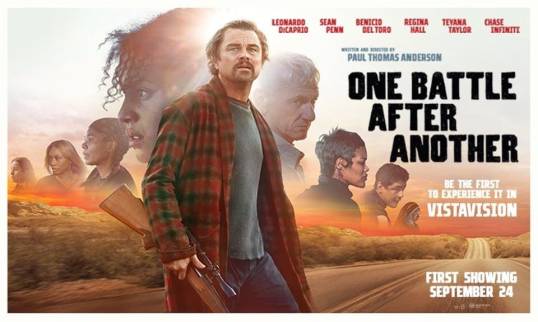
One Battle After Another Gets Another Win In St. Louis


The St. Louis Film Critics Association has announced its picks for the best of 2025.  The winners are listed in bold.

BEST FILM
Frankenstein
Hamnet
It Was Just an Accident
Marty Supreme
One Battle After Another
The Phoenician Scheme
The Secret Agent
Sinners
Superman
Weapons

BEST DIRECTOR
Paul Thomas Anderson – “One Battle After Another”
Ryan Coogler – “Sinners”
Jafar Panahi – “It Was Just an Accident”
Josh Safdie – “Marty Supreme”
Chloe Zhao – “Hamnet”

BEST ACTRESS
Jessie Buckley – “Hamnet”
Rose Byrne – “If I Had Legs I’d Kick You”
Chase Infiniti – “One Battle After Another”
Amanda Seyfried – “The Testament of Ann Lee”
Emma Stone – “Bugonia”

BEST ACTOR
Timothee Chalamet – “Marty Supreme”
Leonardo DiCaprio – “One Battle After Another”
Ethan Hawke – “Blue Moon”
Michael B. Jordan – “Sinners”
Wagner Moura – “The Secret Agent”

BEST SUPPORTING ACTRESS
Glenn Close – “Wake Up Dead Man”
Elle Fanning – “Sentimental Value”
Inga Ibsdotter Lilleaas – “Sentimental Value”
Amy Madigan – “Weapons”
Teyana Taylor – “One Battle After Another”

BEST SUPPORTING ACTOR
Benecio del Toro – “One Battle After Another”
Paul Mescal – “Hamnet”
Sean Penn – “One Battle After Another”
Andrew Scott – “Blue Moon”
Stellan Skarsgard – “Sentimental Value”

BEST ADAPTED SCREENPLAY
Frankenstein
Hamnet
One Battle After Another
Train Dreams
Wake Up Dead Man

BEST ORIGINAL SCREENPLAY
Blue Moon
It Was Just an Accident
Marty Supreme
Sinners
Sorry, Baby
Weapons

BEST CINEMATOGRAPHY
Frankenstein
Hamnet
One Battle After Another
Sinners
Train Dreams

BEST COSTUME DESIGN
Frankenstein
Hamnet
Sinners
The Testament of Ann Lee
Wicked: For Good

BEST EDITING
F1
A House of Dynamite
Marty Supreme
One Battle After Another
Sinners

BEST PRODUCTION DESIGN
Frankenstein
Hamnet
The Phoenician Scheme
Sinners
Wicked: For Good

BEST ORIGINAL SCORE
Frankenstein
Hamnet
One Battle After Another
Sinners
The Testament of Ann Lee

BEST VISUAL EFFECTS
Avatar: Fire and Ash

F1
Sinners
Superman
Tron: Ares

BEST SOUNDTRACK
KPop Demon Hunters
Marty Supreme
Sinners
Springsteen: Deliver Me from Nowhere
Wicked: For Good

BEST VOCAL PERFORMANCE

Arden Cho – “KPop Demon Hunters”
Ginnifer Goodwin – “Zootopia 2”
Damian Lewis – “Orwell: 2+2=5”
Will Patton – “Train Dreams”
Scarlet Sher – “Weapons”

BEST ANIMATED FILM
Arco
Elio
KPop Demon Hunters
Ne Zha II
Zootopia 2

BEST ENSEMBLE

Black Bag
Hamnet
A House of Dynamite
One Battle After Another
Sinners

BEST HORROR FILM
28 Years Later
Companion
Frankenstein
Sinners
Weapons

BEST STUNTS
Ballerina
F1
Mission: Impossible – The Final Reckoning
One Battle After Another
Warfare

BEST COMEDY FILM
Eephus
Friendship
Good Fortune
The Naked Gun
The Phoenician Scheme

BEST ACTION FILM
F1
Mission: Impossible – The Final Reckoning
One Battle After Another
Superman
Warfare

BEST DOCUMENTARY FEATURE
2000 Meters to Andriivka
Afternoons of Solitude
Deaf President Now
Orwell: 2+2=5
The Perfect Neighbor

BEST INTERNATIONAL FEATURE FILM
It Was Just an Accident
No Other Choice
The Secret Agent
Sentimental Value
Sirāt

BEST FIRST FEATURE FILM
Emilie Blichfeldt – “The Ugly Stepsister”
Andrew DeYoung – “Friendship”
Drew Hancock – “Companion”
Carson Lund – “Eephus”
Eva Victor – “Sorry, Baby”

BEST SCENE
The Globe theatrical production in “Hamnet”
Finale in “It Was Just an Accident”
Music evolution “I Lied to You” in “Sinners”
Baktan Cross Car Chase Scene in “One Battle After Another”
The fate of Aunt Gladys in “Weapons”

Here Are The 2025 Nominations of the St. Louis Film Critics Association


Here are the wonderfully quirky 2025 nominations of the St. Lous Film Critics Association!  Thank you, St. Louis, for thinking outside the box.

BEST FILM
Frankenstein
Hamnet
It Was Just an Accident
Marty Supreme
One Battle After Another
The Phoenician Scheme
The Secret Agent
Sinners
Superman
Weapons

BEST DIRECTOR
Paul Thomas Anderson – “One Battle After Another”
Ryan Coogler – “Sinners”
Jafar Panahi – “It Was Just an Accident”
Josh Safdie – “Marty Supreme”
Chloe Zhao – “Hamnet”

BEST ACTRESS
Jessie Buckley – “Hamnet”
Rose Byrne – “If I Had Legs I’d Kick You”
Chase Infiniti – “One Battle After Another”
Amanda Seyfried – “The Testament of Ann Lee”
Emma Stone – “Bugonia”

BEST ACTOR
Timothee Chalamet – “Marty Supreme”
Leonardo DiCaprio – “One Battle After Another”
Ethan Hawke – “Blue Moon”
Michael B. Jordan – “Sinners”
Wagner Moura – “The Secret Agent”

BEST SUPPORTING ACTRESS
Glenn Close – “Wake Up Dead Man”
Elle Fanning – “Sentimental Value”
Inga Ibsdotter Lilleaas – “Sentimental Value”
Amy Madigan – “Weapons”
Teyana Taylor – “One Battle After Another”

BEST SUPPORTING ACTOR
Benecio del Toro – “One Battle After Another”
Paul Mescal – “Hamnet”
Sean Penn – “One Battle After Another”
Andrew Scott – “Blue Moon”
Stellan Skarsgard – “Sentimental Value”

BEST ADAPTED SCREENPLAY
Frankenstein
Hamnet
One Battle After Another
Train Dreams
Wake Up Dead Man

BEST ORIGINAL SCREENPLAY
Blue Moon
It Was Just an Accident
Marty Supreme
Sinners
Sorry, Baby
Weapons

BEST CINEMATOGRAPHY
Frankenstein
Hamnet
One Battle After Another
Sinners
Train Dreams

BEST COSTUME DESIGN
Frankenstein
Hamnet
Sinners
The Testament of Ann Lee
Wicked: For Good

BEST EDITING
F1
A House of Dynamite
Marty Supreme
One Battle After Another
Sinners

BEST PRODUCTION DESIGN
Frankenstein
Hamnet
The Phoenician Scheme
Sinners
Wicked: For Good

BEST ORIGINAL SCORE
Frankenstein
Hamnet
One Battle After Another
Sinners
The Testament of Ann Lee

BEST VISUAL EFFECTS
Avatar: Fire and Ash
F1
Sinners
Superman
Tron: Ares

BEST SOUNDTRACK
KPop Demon Hunters
Marty Supreme
Sinners
Springsteen: Deliver Me from Nowhere
Wicked: For Good

BEST VOCAL PERFORMANCE

Arden Cho – “KPop Demon Hunters”
Ginnifer Goodwin – “Zootopia 2”
Damian Lewis – “Orwell: 2+2=5”
Will Patton – “Train Dreams”
Scarlet Sher – “Weapons”

BEST ANIMATED FILM
Arco
Elio
KPop Demon Hunters
Ne Zha II
Zootopia 2

BEST ENSEMBLE

Black Bag
Hamnet
A House of Dynamite
One Battle After Another
Sinners

BEST HORROR FILM
28 Years Later
Companion
Frankenstein
Sinners
Weapons

BEST STUNTS
Ballerina
F1
Mission: Impossible – The Final Reckoning
One Battle After Another
Warfare

BEST COMEDY FILM
Eephus
Friendship
Good Fortune
The Naked Gun
The Phoenician Scheme

BEST ACTION FILM
F1
Mission: Impossible – The Final Reckoning
One Battle After Another
Superman
Warfare

BEST DOCUMENTARY FEATURE
2000 Meters to Andriivka
Afternoons of Solitude
Deaf President Now
Orwell: 2+2=5
The Perfect Neighbor

BEST INTERNATIONAL FEATURE FILM
It Was Just an Accident
No Other Choice
The Secret Agent
Sentimental Value
Sirāt

BEST FIRST FEATURE FILM
Emilie Blichfeldt – “The Ugly Stepsister”
Andrew DeYoung – “Friendship”
Drew Hancock – “Companion”
Carson Lund – “Eephus”
Eva Victor – “Sorry, Baby”

BEST SCENE
The Globe theatrical production in “Hamnet”
Finale in “It Was Just an Accident”
Music evolution “I Lied to You” in “Sinners”
Baktan Cross Car Chase Scene in “One Battle After Another”
The fate of Aunt Gladys in “Weapons”

Film Review: Queen of the Desert (dir by Werner Herzog)


Last night, I finally saw the latest Werner Herzog film to be released in the United States, Queen of the Desert.

Queen of the Desert has actually been around … well, I was going to say forever but actually, I first started to hear about it in 2014.  It premiered (to less-than-enthusiastic reviews) at the Berlin International Film Festival in February of 2015 and was released in Germany later that same year.  Originally, it was going to get a wide release in America but then IFC acquired the distribution rights and ended up sitting on it for two years.  (During that time, Herzog went on to direct another film, Salt and Fire.)  Only last month did Queen of the Desert finally get a very limited theatrical and VOD release here in the United States.

Despite all of the bad things that I had heard, I was still looking forward to seeing Queen of the Desert.  Why not?  Werner Herzog is one of my favorite directors.  The star of Queen of the Desert, Nicole Kidman, is one of my favorite actresses.  Of course, there was also the Franco factor.  I knew that Queen of the Desert featured James Franco in a small role and, if you’ve been reading this site for a while, y’all know how I feel about James Franco.

Having now watched it, I can say that Queen of the Desert is not the disaster that so many have been insisting.  That doesn’t mean that it’s a great film or even a good film.  It’s a very middle-of-the-road film, one that is too well-made to really be a disaster but, at the same time, is never as memorable as it should be.

Queen of the Desert tells the story of Gertrude Bell (Nicole Kidman), who abandoned a safely comfortable but restrictive life in turn-of-the-century Britain so that she could explore the world.  In the film, Gertrude falls in love twice and, following the unhappy (and tragic) conclusions of those affairs, she always returns to the Middle East, where surviving the harshness of the desert and exploring the ruins of past civilizations brings her peace and gives her life a greater meaning.

That’s a theme that should be familiar to anyone who has watched any of Herzog’s documentaries or feature films.  The problem is that, as told in this film, there’s no real spark to the story or to Gertrude as a character.  Herzog’s best work has often dealt with people driven to the point of madness by their obsessions.  Think about Nicolas Cage in Bad Lieutenant: Port of Call New Orleans.  Think about Timothy Treadwell, obsessively living with the grizzlies until one them ate him in Grizzly Man.  Consider the introverted eccentrics who explored The Cave of Forgotten Dreams or even Christian Bale’s refusal to allow himself to be broken in the POW film, Rescue Dawn.  Think about Klaus Kinski in just about every film he ever made with Herzog.  For that matter, just think about Werner Herzog himself is Les Blank’s documentary, The Burden of Dreams.  Nicole Kidman would seem like an ideal choice for Gertrude and she does a good job with the role but, as written, Gertrude never has that touch of madness.  Unlike Aguirre, she’s not looking to conquer nature.  Unlike Fitzcarraldo, she’s not trying to bring “civilization” to the isolated spot in the world.  Unlike Timothy Treadwell, she’s not even trying to literally become one with nature.  Instead, she’s just someone who deals with heartache by going on a trip.  I do that every time I spend the weekend up at Lake Texoma.

(The real-life Gertrude Bell died, under somewhat mysterious circumstances, of an overdose of sleeping pills.  Whether it was suicide or an accidental overdose is not known.  In the film, the circumstances of her death — which seem very Herzogian, to be honest — are glossed over by an end title card that simply informs us that she died in 1926.)

As I said earlier, Queen of the Desert is disappointing but it’s not terrible.  Visually, it’s quite stunning and the scenes of the sand blowing in the desert are often a hundred times more interesting than the film’s storyline.  Whenever Herzog is letting his camera focus on the desert or glide over the ruins of an ancient palace, you can understand why Herzog wanted to make this film.  But, unfortunately, the film keeps returning to a story that’s about as middling as an old soap opera.

Nicole Kidman does a good job as Gertrude but she runs into the same problem that she ran into with Grace of Monaco.  She’s stuck with a script that repeatedly tells us that the lead character is fascinating without ever really giving her a chance to prove it.  (Before I get any angry comments, I know that Grace Kelly was fascinating and I’m sure that Gertrude Bell was too.  I’m merely talking about the way that they were portrayed in their biopics.)  As the men in her life, James Franco and Robert Pattinson are both ideal but Damian Lewis is a bit on the dull side.

All in all, this is not one of Werner Herzog’s best but, with all that said, I’ll still follow him anywhere that he chooses to go.

My 2012 Emmy Nominations


So, for the past few days, I’ve been happily hopping around my section of the Shattered Lens Bunker and do you know why? 

Because it’s awards season, that’s why!  With the conclusion of the 2011-2012 TV season, Emmy ballots have been mailed and votes are being cast and, come July, we’ll know which shows and performers have been nominated for the 2012 Emmys. 

Before that happens, however, I would like to play a little game called “What if Lisa Was Solely Responsible For Picking the Nominees.”  Here’s how it works — I looked over and studied the complete list of the shows and performances that have been submitted this year for Emmy consideration.  And then, from that list, I picked my personal nominees.

(A complete list of every show and performer that’s been submitted for Emmy consideration can be found here.)

Below are my personal nominations in the major Emmy categories.  Again, note that these are not necessarily the shows and performers that I believe will be nominated.  Instead, these are the shows and performers that I would nominate if I was solely responsible for picking the nominees.

A complete list of my nominations in every single Emmy category can be found here.  (And yes, there’s a lot of Lifetime on the list.  There’s also a lot of Community.)

Best Comedy Series

Bored to Death (HBO)

Community (NBC)

Girls (HBO)

It’s Always Sunny In Philadelphia (FX)

Parks and Recreation (NBC)

Raising Hope (Fox)

Veep (HBO)

Best Drama Series

Boardwalk Empire (HBO)

Breaking Bad (AMC)

The Client List (Lifetime)

Downton Abbey (PBS)

Game of Thrones (HBO)

Homeland (Showtime)

Pan Am (ABC)

Ringer (The CW)

True Blood (HBO)

The Walking Dead (AMC)

Outstanding Miniseries or Movie

Blue-Eyed Butcher (Lifetime)

Cyberbully (ABC Family)

Drew Peterson: Untouchable (Lifetime)

Five (Lifetime)

Girl Fight (Lifetime)

Hatfields & McCoys (History Channel)

The Hour (BBC America)

Of Two Minds (Lifetime)

Outstanding Variety Series

Conan (TBS)

Fashion Police (E)

Key and Peele (Comedy Central)

The Soup (E)

Tosh .O (Comedy Central)

Outstanding Variety Special

Betty White’s 90th Birthday Party (NBC)

Celtic Women: Believe (PBS)

The Comedy Central Roast of Charlie Sheen (Comedy Central)

TV Land Awards (TV Land)

Wendy Liebman: Taller on TV (Showtime)

Outstanding Nonfiction Special

Bobby Fischer Against The World (HBO)

Catholicism: Amazed and Afraid (PBS)

Crime After Crime (OWN)

God Is The Bigger Elvis (HBO)

6 Days To Air: The Making of South Park (Comedy Central)

Outstanding Nonfiction Series

America in Primetime (PBS)

American Masters (PBS)

America’s Most Wanted (Lifetime)

Beyond Scared Straight (A&E)

Inside Story (Biography)

Outstanding Reality Program

Antiques Roadshow (PBS)

Dance Moms (Lifetime)

Kitchen Nightmares (Fox)

Scouted (E)

Storage Wars (A&E)

Outstanding Reality-Competition Program

The Amazing Race (CBS)

The Bachelor (ABC)

Big Brother (CBS)

The Celebrity Apprentice (NBC)

Hell’s Kitchen (Fox)

Project Runway (Lifetime)

So You Think You Can Dance (Fox)

Survivor (CBS)

Outstanding Lead Actor In A Comedy Series

Larry David in Curb Your Enthusiasm (HBO)

Johnny Galecki in The Big Bang Theory (CBS)

Danny McBride in Eastbound and Down (HBO)

Joel McHale in Community (NBC)

Lucas Neff in Raising Hope (Fox)

Jason Schwartzman in Bored To Death (HBO)

Outstanding Lead Actor In A Drama

Steve Buscemi in Boardwalk Empire (HBO)

Bryan Cranston in Breaking Bad (AMC)

Jeffrey Donavon in Burn Notice (USA)

Damian Lewis in Homeland (Showtime)

Andrew Lincoln in The Walking Dead (AMC)

Timothy Olyphant in Justified (FX)

Outstanding Lead Actor In A Miniseries or Movie

Idris Elba in Luther (BBC America)

Rob Lowe in Drew Peterson: Untouchable (Lifetime)

Steven Weber in Duke (Hallmark Movie Channel)

Dominic West in The Hour (BBC America)

Ben Whishaw in The Hour (BBC America)

Outstanding Lead Actress In A Comedy

Zooey Deschanel in New Girl (Fox)

Lena Dunham in Girls (HBO)

Tina Fey in 30 Rock  (NBC)

Julia Louis Dreyfuss in Veep (HBO)

Mary-Louis Parker in Weeds (Showtime)

Martha Plimpton in Raising Hope (Fox)

Outstanding Lead Actress in a Drama

Claire Danes in Homeland (Showtime)

Sarah Michelle Gellar in Ringer (The CW)

Jennifer Love Hewitt in The Client List (Lifetime)

Julianna Margulies in The Good Wife (CBS)

Elizabeth McGovern in Downton Abbey (PBS)

Anna Paquin in True Blood (HBO)

Outstanding Lead Actress In A Miniseries or Movie

Kristin Davis in Of Two Minds (Lifetime)

Anne Heche in Girl Fight (Lifetime)

Rose McGowan in The Pastor’s Wife (Lifetime)

Emily Osment in Cyberbully (ABC Family)

Sara Paxton in Blue Eyed Butcher (Lifetime)

Outstanding Supporting Actor In A Comedy Series

Charlie Day in It’s Always Sunny in Philadelphia (FX)

Danny DeVito in It’s Always Sunny In Philadelphia (FX)

Donald Glover in Community (NBC)

Nick Offerman in Parks and Recreation (NBC)

Danny Pudi in Community (NBC)

Matt Walsh in Veep (HBO)

Outstanding Supporting Actor In A Drama

Bruce Campbell in Burn Notice (USA)

Peter Dinklage in Game of Thrones (HBO)

Giancarlo Espositto in Breaking Bad (AMC)

Michael Pitt in Boardwalk Empire (HBO)

Michael Shannon in Boardwalk Empire (HBO)

Alexander Skarsgard in True Blood (HBO)

Outstanding Supporting Actor In A Miniseries or Movie

Powers Boothe in Hatfields and McCoys (History Channel)

Justin Bruening in Blue-Eyed Butcher (Lifetime)

Mark-Paul Gosselaar in Hide (TNT)

Sir Roger Moore in A Princess For Christmas (Hallmark Movie Channel)

Tony Shalhoub in Five (Lifetime)

Outstanding Supporting Actress In A Comedy

Alison Brie in Community (NBC)

Kristen Chenoweth in GCB (ABC)

Anna Chlumsky in Veep (HBO)

Gillian Jacobs in Community (NBC)

Cloris Leachman in Raising Hope (Fox)

Aubrey Plaza in Parks and Recreation (NBC)

Outstanding Supporting Actress in Drama

Christine Baranski in The Good Wife (CBS)

Kristen Bauer Von Straten in True Blood (HBO)

Kelly MacDonald in Boardwalk Empire (HBO)

Christina Ricci in Pan Am (ABC)

Sophia Turner in Game of Thrones (HBO)

Deborah Ann Woll in True Blood (HBO)

Supporting Actress In A Miniseries or Movie

Tammy Blanchard in Of Two Minds (Lifetime)

Kaley Cuoco in Drew Peterson: Untouchable (Lifetime)

Lisa Edelstein in Blue-Eyed Butcher (Lifetime)

Jessica Lange in American Horror Story (FX)

Jena Malone in Hatfields and McCoy (History Channel)

Your Highness (Official Trailer)


With all the talk of Natalie Portman as the front-runner to win Best Actress in this upcoming Oscars (hope I didn’t just jinx her chances) for her role as Nina in Aronofsky’s Black Swan it would seem she has two films to follow her critically-acclaimed performance. One just came out this weekend and not what many of her fans would consider as worthy of her talents after what she did in Black Swan.

I am talking about the romantic-comedy No Strings Attached where she is paired up with one Ashton Kutcher. To say that critics didn’t like this film would be an understatement. The fact that it was the number one film during it’s first weekend release just boggles the mind.

The other film she has coming out soon after Black Swan if the fantasy comedy directed by the guy who made the hilarious Pineapple Express (David Gordon Green) and stars Danny McBride, James Franco, Zooey Deschanel and Justin Theroux. The film is called Your Highness and Portman plays the warrior Isabel and in the trailer shows that she can dish it out when it’s time to be fightin’ ’round the world.

Though I’m sure that one thing which sold this fantasy comedy to her male fans (probably quite a bit of her female fans as well) is the bit where she’s about to go bathe in the river. That and her wearing period style corset and such. Well, just go watch the trailer and decide for yourself.