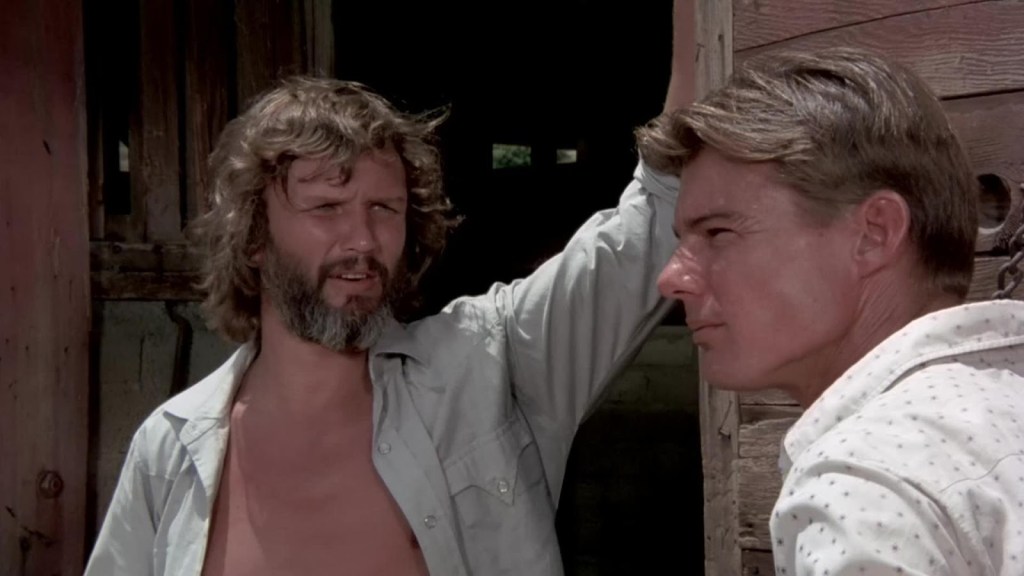
Today’s scene of the day comes from 1979’s Convoy and it features Kris Kristofferson as the greatest trucker of all time, Rubber Duck. In this scene, Rubber Duck rescues a fellow trucker from jail and lets the authorities know what they can do with their law.
This was filmed in 2016. Not only do we have Harry Dean Stanton, Kris Kristofferson, and Johnny Depp but David Lynch puts in an appearance early on in the video as well.
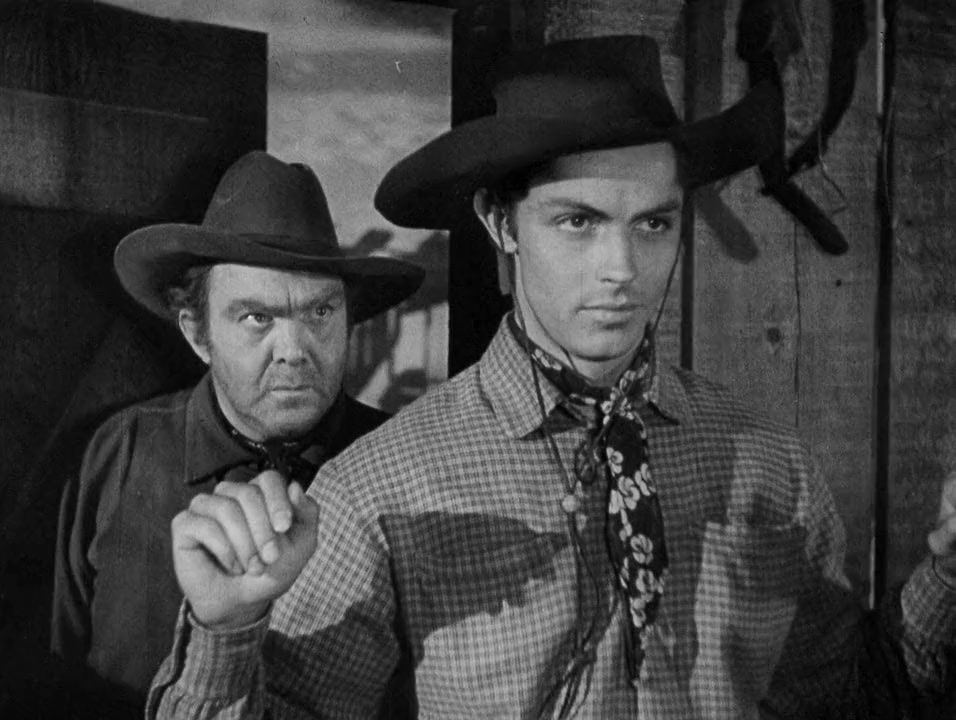
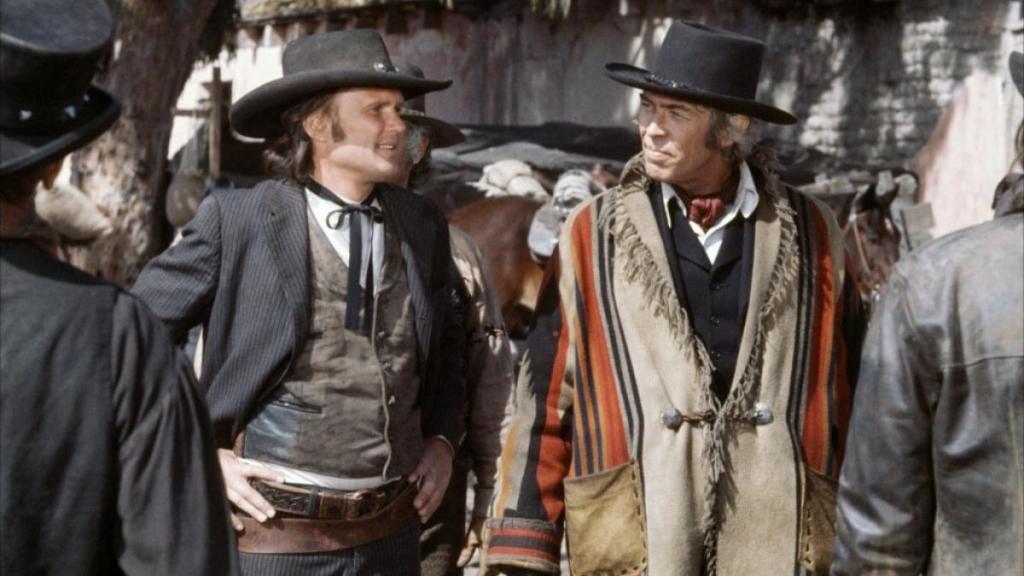
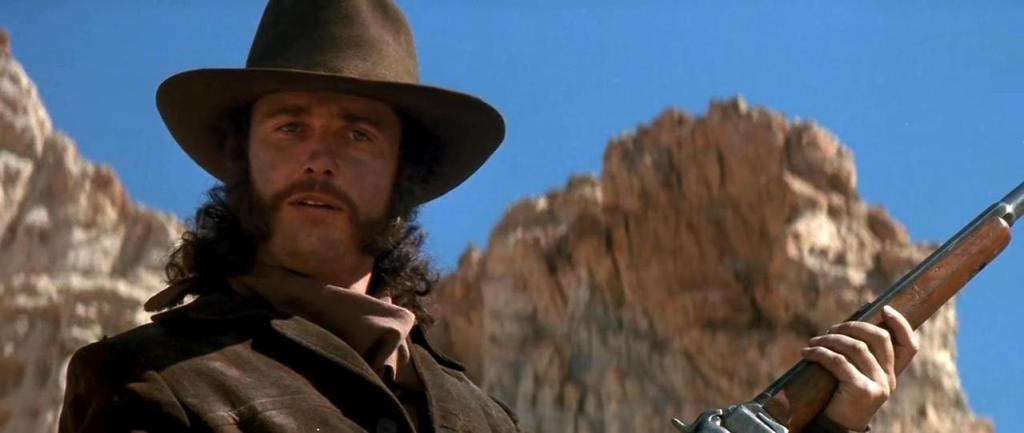
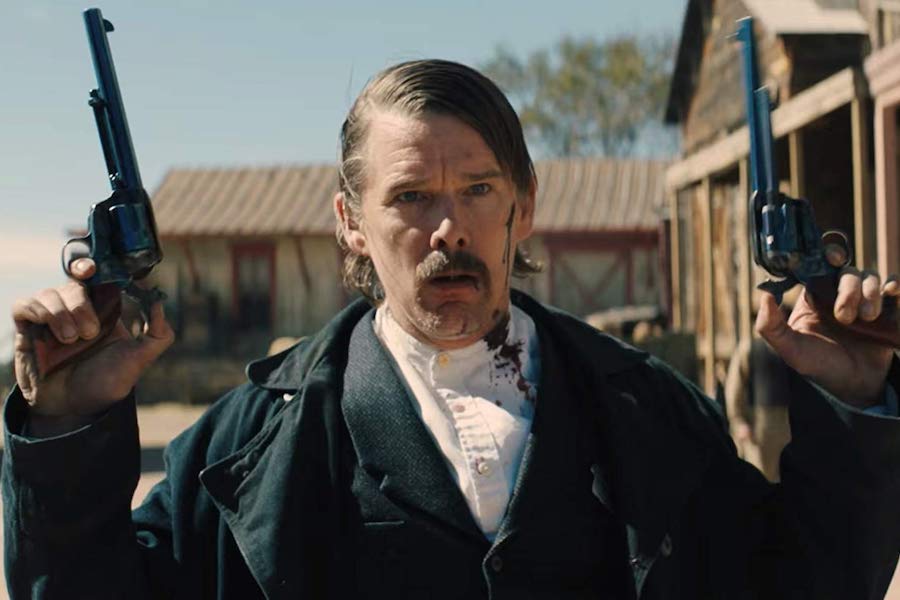
Pat Garrett, the man who shot and killed William “Billy the Kid” Bonney, was born on June 5th, 1850. He’s become a legend of the old west based on that fact, and he’s been portrayed by many different actors over the years in movies and on TV. I love westerns so the stories of Billy the Kid, and thus Pat Garrett, have always been fascinating to me. As such, on the anniversary of the man’s 176th birthday, here are “4 Shots from 4 Films” featuring some notable portrayals of Sheriff Pat Garrett.
Thomas Mitchell as Pat Garrett, behind Jack Buetel as Billy the Kid, in The Outlaw (1943)James Coburn as Pat Garrett and Kris Kristofferson as Billy the Kid in Pat Garrett & Billy the Kid (1973)William Petersen as Pat Garrett in Young Guns II (1990)Ethan Hawke as Pat Garrett in The Kid (2019)
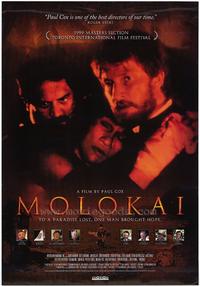
In the late 19th Century, a leper colony was established on the Hawaiian island of Molokai. Officially, the Kalaupapa Leprosy Settlement was said to be for the care of people with leprosy, which was then raging across Asia. Unofficially, it was a prison where lepers were isolated from the rest of society and left to die. Any leper who tried to leave the colony would be shot on sight. Father Damien, a Belgian priest, was one of the few people willing to walk amongst the lepers. When he was first sent to the colony, he was ordered to only administer last rites to the dying and to not allow himself to be touched. Instead, Damien stayed and ministered to the lepers, knowing that he would probably never be allowed to leave. For 16 years, Damien ministered to the colony. Even after he himself grew sick, he continued his ministry and continued to be an advocate for his fellow lepers until he died.
Molokai: The Story of Father Damien is a wonderful film about the life and ministry of Father Damien. The movie features a lot of familiar actors in small roles, like Sam Neill, Kris Kristofferson, Peter O’Toole, Tom Wilkinson, and Alice Krige. But the star of the film is David Wenham, who portrays the kindness and dedication of Father Damien without ever making him seem idealized or boring. Father Damien is guided by both his faith and his belief that no one should be abandoned. It’s not always easy to watch. The horrors of leprosy are unflinchingly portrayed. But, by the end of the movie, it doesn’t matter if you’re Catholic or not. You’re just thankful for men like Father Damien.
Saint Damien of Molokai was canonized by Pope Benedict XVI in 2009.
How many westerns do you know that open with a graduation ceremony at Harvard? I can only think of Michael Cimino’s Heaven’s Gate.
Today’s scene that I love comes from the controversial 1981 epic western. Some people feel that Heaven’s Gate is a secret masterpiece. I’m not quite one of those people but I do think the Harvard graduation scene was a great way to launch Cimino’s idiosyncratic vision of the Old West.
I’ve been a fan of actor Jan-Michael Vincent for about as long as I can remember. I was a grade schooler in the mid-80’s when AIRWOLF was playing on network TV. I loved the show and Vincent’s character, Stringfellow Hawke. It was also around that time that I began my obsession with Charles Bronson, and Vincent co-starred in the iconic 1972 Bronson film THE MECHANIC (1972). Fox 16 out of Little Rock played the movie often, further cementing my appreciation for his work. And I specifically remember renting his 1980 movie DEFIANCE where his character takes on a ruthless gang in New York. It was my kind of movie, and I still watch it every few years. There’s just something I’ve always liked about Jan-Michael Vincent. July 15th, 2025 would have been his 80th birthday so I decided to watch one of his movies that I’ve never seen, VIGILANTE FORCE from 1976. It was playing on Amazon Prime, so I fired it up for my initial viewing.
In VIGILANTE FORCE, Jan-Michael Vincent plays Ben Arnold, a guy from the small town of Elk Hills, California. It seems that the discovery of oil in the area has brought about a financial boom, but it’s also brought in a lot of rowdy out-of-towners and a surge in violent crime. Ben convinces the local community leaders to allow him to bring in his brother Aaron (Kris Kristofferson), a Vietnam war hero, to help restore order in town. Aaron assembles a group of ex-military types, friends of his, to help the local police restore order in town. Successful in cleaning out the riffraff at first, Aaron and his team of vigilantes eventually become the riffraff and use their law enforcement powers for their own corrupt, get-rich-quick schemes. Realizing that he made a horrible mistake in bringing in his brother, Ben is forced to confront Aaron and his team of murderous mercenaries in order to reclaim Elk Hills for its citizens.
I had not read anything beyond the title VIGILANTE FORCE and the basic cast list when I sat down to watch this film. I guess that’s a good thing, because I wasn’t expecting this movie to pit the brothers played by Vincent and Kristofferson against each other. I thought the two guys would be working together to get rid of a bunch of rednecks, and we do get that for the first half of the film, but when Kris goes bad, he really goes bad! And nobody is safe. This is one of those movies where he just kills whoever gets in his way, no matter how important or attractive they are. Writer-Director George Armitage, who would direct the excellent MIAMI BLUES (1990) fourteen years later, has said that he was trying to make a point about America’s involvement in the Viet Nam war with the Kristofferson character. Armitage apparently enjoys his references, as the film was made during the USA’s bicentennial year, but his two main characters are named after Benedict Arnold and Aaron Burr. While these ideas may have amused the director, his heavy-handed approach is not good for Kristofferson’s character in this film. His Viet Nam vet basically turns into an evil cartoon about halfway through the film and is no longer interesting, which is a shame because he gives a good performance.
Allegories aside, at its heart VIGILANTE FORCE is B-movie, drive-in fodder, and it’s pretty good at being that. It’s got that unpolished look and raw, energetic feel that I like in my low budget 70’s action movies. As you would expect in a film at this time, Jan-Michael Vincent is impressive and believable as the tough, good guy of the flick. Highly motivated due to the actions of our evil, out of control villain, Vincent handles the action scenes well in the film’s explosive finale. And I mean that literally, it seems that everything blows up big time at the end! Besides Kristofferson and Vincent, the film has a very recognizable supporting cast, which is one of the things I love about 70’s movies. Producer Gene Corman put together a cast that also includes Brad Dexter, Andrew Stevens, Victoria Principal, Bernadette Peters, Paul Gleason, Charles Cyphers, Loni Anderson and a host of other familiar voices and faces who add their unique talents to the proceedings. Principal, still a couple of years away from her career defining role as Pamela Ewing in the DALLAS TV series, is especially beautiful as Vincent’s girlfriend.
Overall, while VIGILANTE FORCE is not required viewing, I can definitely recommend it to anyone who likes 70’s redneck action cinema, or to fans of the main stars. I enjoyed it!
This was filmed in 2016. Not only do we have Harry Dean Stanton, Kris Kristofferson, and Johnny Depp but David Lynch puts in an appearance early on in the video as well.
Dreamer is based on the true story of a horse that did something that few horses have managed to do. It broke a bone but it still managed to make a comeback as a racehorse.
I love horses, which is why I’m not a fan of horseracing. I find horseracing to be cruel. The horses, which have an innate need to follow the orders of whoever is riding it, will literally run themselves to death to try to keep their jockeys happy. When you add that many racehorses are kept in deplorable conditions and that, with insurance, they are often worth more dead than alive, you have a sport that brings out the worst in a lot of people. Horses are wonderful animals because they are so loyal. That loyalty deserves better than being shot because they broke a leg due to their trainer’s negligence.
Given how I feel about horseracing, I’m amazed that I liked Dreamer when I saw it in the theaters and I was surprised that I still liked it when I watched it this weekend. I guess it’s because the horse in Dreamer is not euthanized. She would have been euthanized if not for the fact that her trainer (Kurt Russell) brought his daughter (Dakota Fanning) to work with him that day. Russell loses his job but he does gain a horse. After the horse recovers from its injury, Russell hopes to breed the horse. It turn out that the horse cannot have a foal but it can still race. With Russell and Fanning’s help, the horse returns to competition and shows up everyone who gave up on her. Russell and Fanning refuse to give up on the horse and the horse doesn’t give up on herself. Along the way, Russell and Fanning finally spend time together as father and daughter and Russell reconnects with his wife, Elisabeth Shue, and his father, Kris Kristofferson. Everyone involved gives a good job. The movie may be predictable but there aren’t any false notes in any of the performances. I not only wanted the horse to get better but I wanted the family to grow closer and I was happy when both those things happened.
Dreamer is a good family movie. If only every trainer was as kind and willing to admit his mistakes as Kurt Russell is in this film. There’s nothing surprising about Dreamer but it’s still a movie that makes me cheer. It makes me cheer in a way that a real horse race never would.
First released in 1981 and then re-released in several different versions since then, Heaven’s Gate begins at Harvard University.
The year is 1870 and the graduates of Harvard have got their entire future ahead of them. At the graduation ceremony, Joseph Cotten gives a speech about how, as men of cultivation, they have an obligation to help the uncultivated. Student orator Billy Irvine (John Hurt) then gives a speech in which he jokingly says the exact opposite. Amongst the graduates, Billy’s friend, Jim Averill (Kris Kristofferson), laughs at Billy’s speech. It’s a bit of a strange scene, if just because all of the graduates appear to be teenagers except for Hurt and Kristofferson, who are both clearly in their 30s. The graduates of Harvard sing to their girlfriends and dance under a tree and, for a fleeting moment, all seems to be right with the world.
Twenty years later, all seems to be wrong with the world. Averill is now the rugged and world-weary marshal of Johnson Country, Wyoming. Cattle barons are trying to force immigrant settlers to give up their land. Gunmen, like Nate Champion (Christopher Walken) and Nick Ray (Mickey Rourke), are accepting contracts to execute immigrants who are suspected of stealing cattle. When Averill stands up for the people of Johnson Country, the head of the Wyoming Stock Grower Association, Frank Canton (Sam Waterston), hires a group of mercenaries to ride into Johnson County and execute 125 settlers. Billy Irvine, who now is dissolute alcoholic who works with Canton, warns his old friend Averill. Averill, who has fallen in love with Ella (Isabelle Huppert), the local madam, announces that he will defend the immigrants. Nate, who is also in love with Ella, considers changing sides.
Heaven’s Gate is loosely based on an actual event. I actually have three distant ancestors who traveled to Wyoming to take part in the Johnson County War. All three of them survived, though one of them was shot and killed in an unrelated manner shortly after returning to Ft. Smith, Arkansas. That said, director Michael Cimino is clearly not that interested in the historical reality of the Johnson County War or the issues that it raised. Just as he did with Vietnam in The Deer Hunter, Cimino uses the Johnson County War as a way to signify a loss of national innocence. Averill and Irvine start the film as hopeful “young” men with the future ahead of them. By the end of the film, one is dead and the other is living on a yacht and dealing with what appears to be crippling ennui.
Heaven’s Gate is a bit of an infamous film. Though the film was pretty much a standard western, Cimino still went far over-budget and turned in a first cut that was over six hours long. A four hour version was briefly released in 1980 but withdrawn after a week, due to terrible reviews and audience indifference. A studio-edited version that ran for two hours and 35 minutes got the widest release in 1981. Since then, there have been several other versions released. Cimino’s director’s cut, which was released as a part of the Criterion Collection in 2012, runs for 212-minutes and is considered to now be the “official” version of Heaven’s Gate.
For years, Heaven’s Gate had a terrible reputation. It’s failure at the box office was blamed for bankrupting United Artists. After the excesses of the Heaven’s Gate production, studios were far more reluctant to just give a director a bunch of money and let him run off to make his movie. (They should have learned their lesson with Dennis Hopper and The Last Movie.) Described by studio execs as being self-indulgent and even mentally unstable, Michael Cimino’s career never recovered and the director of The Deer Hunter went from being an Oscar-winner to being an industry pariah. (Some who disliked The Deer Hunter’s perceived jingoistic subtext claimed that Heaven’s Gate proved The Deer Hunter was just an overrated fluke.) However, the reputation of Heaven’s Gate has improved, especially with the release of Cimino’s director’s cut. Many critics have praised Heaven’s Gate for its epic portrayal of the west and, ironically given the controversy over The Deer Hunter, its political subtext. It’s anti-immigrant villains made the film popular amongst the Resistance-leaning film historians during the first Trump term.
So, is Heaven’s Gate a masterpiece or a disaster? To be honest, it’s somewhere in between. Whereas it was once over-criticized, it’s now over-praised. Visually, it’s a beautiful film but those who complained that the film was too slow had a point. As with The Deer Hunter, Cimino takes the time to introduce us to and immerse us in a tight-knit immigrant community. Personally, I like the much-criticized scenes of the fiddler on skates and Averill and Ella dancing in the roller rink. Overall though, as opposed to The Deer Hunter, the members of the film’s victimized community still feel less like individual characters and more like symbols. As for the political subtext, I think that any subtext of that sort is accidental. (I feel the same way about The Deer Hunter, which I like quite a bit more than Heaven’s Gate.) Cimino is more interested in the loss of innocence than whether or not the Johnson County War can be fit into some sort of nonsense Marxist framework.
The main problem with the film is that there is no center to keep everything grounded. Kris Kristofferson had a definite screen presence but, as an actor who was incapable of showing a great deal of emotion, he lacks the gravitas necessary to keep from being swallowed up by Cimino’s epic pretensions. Isabelle Huppert, an otherwise great actress, also feels lost in the role of Ella and Sam Waterston is not necessarily the most-intimidating villain to ever show up in a western. Christopher Walken, as the enigmatic and intriguing Nate Champion, gives the best performance in the film but his character still feels largely wasted.
There are some brilliant visual moments to be found in Heaven’s Gate. I even like the Harvard prologue and the ending on the boat, both of which are not technically necessary to the narrative but still add an extra-dimension to both Averill and Irvine. But, in the end, Heaven’s Gate is big when it should have been small and epic when its should have been intimate. It’s a misfire but not a disaster. Even great directors occasionally have a film that just doesn’t work. Speilberg had his 1941. Scorsese has had a handful. Coppola’s career has been a mess but no one can take his successes away from him. Michael Cimino, who passed away in 2016, deserved another chance.
Today’s scene of the day comes from 1979’s Convoy and it features Kristofferson as the greatest trucker of all time, Rubber Duck. In this scene, Rubber Duck rescues a fellow trucker from jail and lets the authorities know what they can do with their law.