Villain of the Day: Emilio Barzini (The Godfather)


Emilio Barzini.

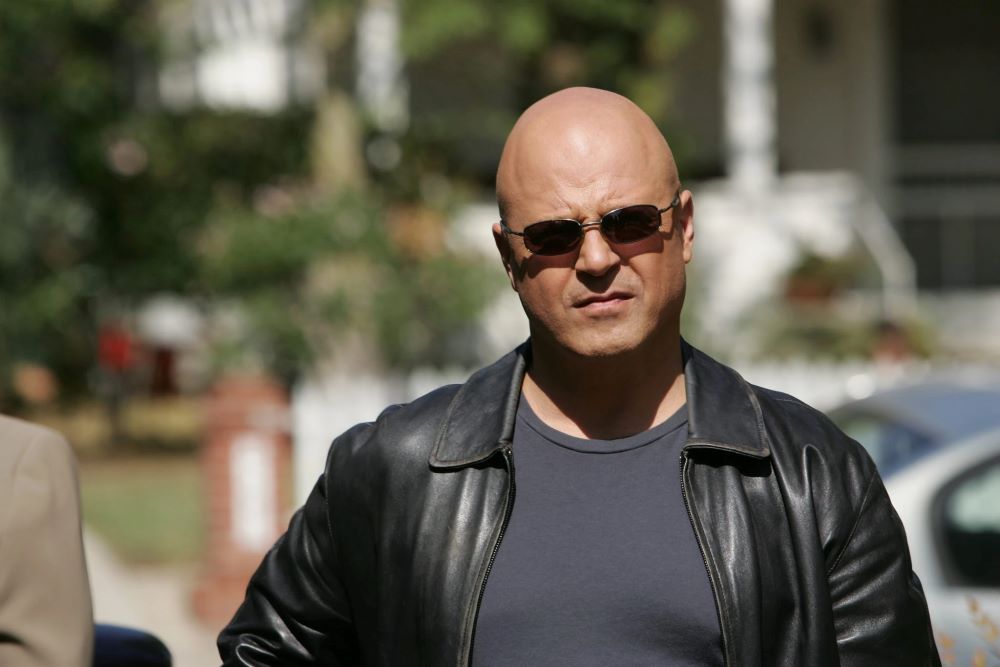
As played by Richard Conte in The Godfather, Barzini is far different from many of the other mob bosses that we meet over the course of Mario Puzo’s and Francis Ford Coppola’s Mafia epic.  He doesn’t yell.  He doesn’t threaten.  If anything, Barzini comes across as almost being a statesman.  When it’s time to broker a peace between the Tattaglia and the Corleone families, Barzini is the one who sits at the head of the table.  When it’s time to determine how the drug trade will be divided, Barzini is the one who offers up the “sensible” solution.  Barzini keeps calm.  He knows how to deal with volatile people.  He just wants to make sure that peace is restored and everyone gets a fair cut of the profit.  “We are not communists,” he says.

It’s after that meeting that Vito Corleone finally realizes that everything that has happened, from the nearly successful attempt on his life to the exile of Michael to the death of Santino, was Barzini’s doing.  Barzini perhaps a got a bit too clever for his own good.  By so coolly and efficiently brokering the peace, Barzini revealed that was far more clever than the “pimp” Philip Tattaglia.  Whereas Tattaglia was too crude to put together a coalition against the Corleones, Barzini was just the type of pitiless manipulator who could convince a group of otherwise powerful people to sign away their own futures.  Perhaps he was a communist after all.

Of course, most viewers (and readers) will have figured out that Barzini is the main bad guy long before Vito does.  From the first minute that we see Barzini at the wedding reception at the Corleone Compound, we know that he’s a sinister figure.  While everyone else at the wedding is being emotional, sentimental, and delightfully Italian, Barzini watches without a hint of emotion.  Indeed, the only time we see any real emotion from Barzini is when he smirks at Vito’s funeral.

After his goons unsuccessfully attempt to assassinate Don Vito, Sollozzo famously tells Tom Hagen that “the Don was slipping.”  And it’s hard not to feel that Sollozzo had a point.  Consider Vito Corleone’s track record in The Godfather.  He failed to teach Sonny the basics of being a good Don.  He promoted Tom Hagen to consiglieri despite the fact that Tom was viewed as being an outsider by the other Families.  When it came time to send someone undercover to investigate the Tattaglias, he gave the job to Luca Brasi despite the fact that everyone knew there was no way that Brasi would actually betray Vito.  He stopped to buy fruit, despite not being accompanied by his bodyguards.  Worst of all, Vito somehow missed that it was Barzini all along.  Vito was slipping.  He got complacent.  He failed to see how the world was changing and how the old honor system was being discarded.  That allowed him to be victimized by Barzini.

Fortunately, Michael was there to take charge.  Unfortunately, for Barzini, Al Neri was also there to put on his policeman’s uniform and wait for Barzini to exit from his latest meeting.  Barzini took several bullets to the back.  Barzini’s driver was caught in the cross-fire.  I’ve always felt bad about that.  I mean, the driver was just asking why he had been given a parking ticket and Neri shot him.  If nothing else, we can see why Neri didn’t make it as a cop.

Barzini and Vito had a lot in common.  They were both diplomats who could use violence when necessary.  It’s perhaps not a surprise to learn that, before he was cast as Barzini, Richard Conte was one of the many actors considered for the role of Vito Corleone.  How different would the film have been with the sinister Conte — as opposed to the likable Brando — in the lead role?

Luckily, Coppola made the right decision. Just as Brando was the perfect Vito, Richard Conte was the perfect Barzini.

Villain of the Day

Villain of the Day: Klaus Wortmann (Antropophagus)


Yesterday, it was announced that George Eastman had passed away at the age of 83.

George Eastman was born Luigi Montefiori in Genoa, Italy.  Montefiori began his career by appearing in Spaghetti westerns.  The tall and often bearded Montefiori had the dangerous look that made him a natural for outlaw and henchmen roles.  Like many Italian actors, he took an “Americanized” alias for his acting roles.  He appeared in his share of American and British films (he appeared opposite Charlton Heston in Call of the Wild and played Goliath in King David) but his fans will always remember him best for the work that he did in his native Italy.  Occasionally, he played a hero.  He gave a particularly strong performance in — don’t laugh — Erotic Nights of the Living Dead.  That said, Eastman will always be best remembered for his villians.

Klaus Wortmann is the one who will always give me nightmares.  Eastman played Wortmann in Joe D’Amato’s infamous 1980 film, Antropophagus.  Klaus Wortmann was a wealthy man who lived on a Greek island with his wife, daughter, and his sister.  Unfortunately, when he and his family were shipwrecked, Klaus resorted to cannibalism to survive.  As the movie begins, Klaus is back at his mansion and being sheltered by sister.  He’s also become an obsessive cannibal.  He’s surrendered his humanity.  He can no longer speak and instead just growls.  He attacks everyone that he sees and he does things to his victims that led to this film being banned in several countries.  Also known as The Grim Reaper, Antropophagus is film that delights in showing people being ripped to pieces and George Eastman is right in the middle of it all.

And he’s absolutely terrifying.

In real life, George Eastman was a handsome man.  That’s one of the things that made him such a fascinating villain in countless western and crime films.  He was usually playing a total psycho but there was still something about him that made you want to get to know more about him.  Klaus Wortmann, on the other hand, is a terrifying monster.  Unwashed, bearded, hideously scarred, continually bathed in sweat, growling and howling as he chases his victims, Klaus is a nightmare come to life.  Eastman throws himself into capturing every grimy detail of Wortmann’s twisted existence and he comes across as a creature who seems to have literally jumped out of the shadows of our greatest fears.

In many ways, Antropophagus is not a particularly good film.  Not even the notoriously shameless Joe D’Amato appeared to think much of it.  The story drags because there aren’t enough victims and therefore there’s a lot of travelogue padding, especially early on in the film.  Along with Eastman, there are some recognizable people in the cast — Tisa Farrow, Zora Kerova, Serena Grandi (who would later co-star with Eastman in Delirium) — both most of them come across like they’d rather be anywhere but there.  But when George Eastman is on-screen, the film become horrifying.  No one — not the pregnant woman and her husband, not the innocent blind girl, not even the flakey card reader — is safe.  By the end of the movie, Klaus is literally eating pieces of himself.  It takes a talented actor to pull that off.

That actor was George Eastman.

Villain of the Day

Villain of the Day: Griffith (Berserk)


(Spoilers ahead)

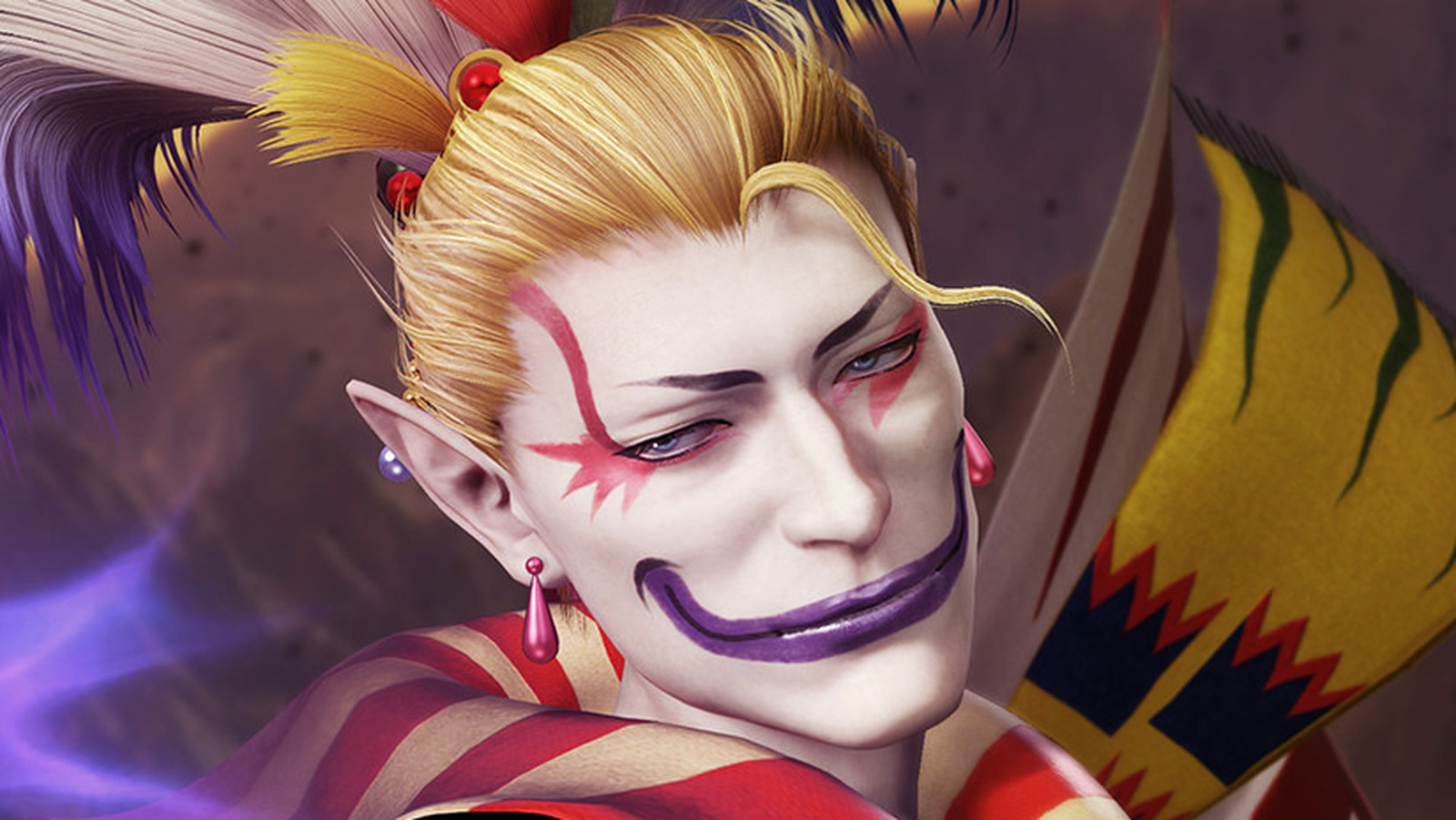
Few villains in fiction command the same level of fascination and revulsion as Griffith from Berserk. At first glance, he’s the archetypal charismatic leader: beautiful, eloquent, and seemingly selfless, rallying orphans and outcasts under the banner of the Band of the Hawk. But what makes him so mesmerizing is that his charm isn’t fake—it’s genuine. He truly believes in his dream of ruling his own kingdom, and that sincerity is what draws people, including the reader, into his orbit. You want to trust him, even as early warning signs—like his cold willingness to sacrifice comrades for political gain—start to pile up. Griffith works because he doesn’t feel like a mustache-twirling schemer; he feels like someone who could be your best friend or your worst nightmare, depending on where you stand in relation to his ambition. And that’s precisely how real history’s most destructive figures have operated—from Napoleon to Hitler to cult leaders like Jim Jones—men whose unshakable belief in their own destiny allowed them to commit unspeakable acts while genuinely convinced they were doing what’s best for their people.

The core of Griffith’s disturbance lies in the infamous Eclipse, where he sacrifices the entire Band of the Hawk—people who loved him, fought for him, and would have died for him—to become the fifth Godhand member, Femto. What makes this gut-wrenching isn’t just the brutality, but the emotional logic behind it. Griffith had been broken after a year of torture: his body ruined, his tongue cut out, his dream of a kingdom seemingly dead. When the Crimson Beherit activates, he’s offered a choice: remain a broken husk or ascend to godhood at the cost of everyone he ever cared about. And he chooses. In that moment, his quiet whisper—“I sacrifice”—isn’t a burst of rage; it’s a chillingly calm affirmation that his dream was always more real to him than the people who helped build it. That’s the horror: Griffith doesn’t betray his comrades out of malice, but out of an almost theological devotion to his own ambition. History offers grim echoes here—Stalin purging his fellow revolutionaries, Caesar turning on old allies—where the people closest to a leader become the first casualties, not because they were enemies, but because their trust made them useful fuel for a greater vision.

What deepens his complexity is that, post-Eclipse, he isn’t just a monster—he becomes a savior. As Femto, he orchestrates the merging of the physical and astral worlds, creating Falconia, a utopian city that protects humanity from the chaos he unleashed. People flock to him as a messianic figure, and from their perspective, he is benevolent. He grants them safety, purpose, and hope. This is where Berserk gets disturbingly real: Griffith’s evil isn’t anarchic destruction; it’s the evil of a flawless leader who has sublimated all human empathy into cold efficiency. He commits atrocities (including the traumatic assault of Casca in front of Guts) and then turns around and saves millions. The narrative forces you to sit with an uncomfortable question: if a demon gives you paradise, do you care that he’s a demon? Real-world tyrants have banked on that same calculus—Hitler’s autobahns and economic recovery, Napoleon’s legal codes and conquered territories. The suffering is real, but so is the public gratitude, and the leader who genuinely believes he’s building heaven rarely notices the hell he’s paving.

Kentaro Miura masterfully contrasts Griffith with Guts, his former best friend and now mortal enemy. Where Guts claws for agency and connection, Griffith embodies the seduction of surrendering your will to a greater cause. Griffith’s dream was never about friendship or love—it was about ownership and legacy. His famous speech about a “friend” being someone who pursues their own dream equal to his own was really a test, one that Guts failed when he left the Hawks. That departure broke Griffith’s ego more than any torture could, proving that his “love” for Guts was possessive, not reciprocal. This makes Griffith a tragic villain in the classical sense: he had everything—loyalty, love, a found family—and he threw it all away because he couldn’t stand not being the absolute center of the universe. It’s the same fatal flaw that undid so many historical figures whose charisma opened doors but whose narcissism burned down the house. The difference is that Griffith got his throne anyway, which might be the most haunting commentary of all: sometimes, the people who sacrifice everyone who loves them do win.

In the end, Griffith is mesmerizing because he reflects a very human darkness: the ability to sacrifice intimacy for ambition, and to dress that betrayal in the language of destiny. He’s not a cackling monster but a serene, beautiful one who genuinely believes his actions are justified. Berserk never lets you forget that his charisma works—on the characters in the story, and sometimes even on the reader. You catch yourself admiring his leadership, his vision, his grace, and then you remember the Eclipse, and you feel sick. That cognitive dissonance is the mark of a truly great villain: not one you love to hate, but one who forces you to understand why people would follow him straight into hell. History’s worst monsters were rarely obvious demons; they were the ones who smiled, who promised salvation, and who convinced themselves that the bodies piling up behind them were just the price of progress. Griffith is their fictional mirror, and that’s precisely why he remains one of the most disturbing, unforgettable antagonists in any medium.

Villain of the Day

Villain Of The Day: Willie Cicci (The Godfather & The Godfather Part II)


Willie Cicci. Was he a villain or was he a hero?

It depends on how look at it.

Played by the legendary character actor Joe Spinell, Willie Cicci made his first appearance in The Godfather. For whatever reason, Spinell isn’t credited in The Godfather. In fact, we don’t even learn that name of his character until the sequel. Unlike Tom Rosqui’s Rocco Lampone and Richard Bright’s Al Neri, he spends the majority of the film standing in the background. However, he definitely makes an impression. With his acne-scarred face, his thin mustache, and his menacing stare, Willie Cicci is probably the menacing Corleone soldier not named Luca Brasi.

Towards the end of the film, as Michael settles all accounts, it falls on Willie Cicci to assassinate one of the heads of the rival families. Cicci traps the man in a revolving door and then guns his helpless victim down. In a finale that is notable for its violence, Cicci’s sadism leaves the viewer shaken. It’s all in the eyes. Other soldiers kill as a part of the job. Cicci seems to enjoy his work.

Later, Willie is among the soldier who stands in the background while Tom Hagen informs Tessio that he can’t get him out of trouble for old time’s sake. Willie doesn’t necessarily look happy about taking Tessio on a final ride but one gets the feeling that it’s still not going to keep him up at night.

And yet, Willie Cicci is not quite a villain in The Godfather, mostly because he works for the Corleones. By the end of the first film, it’s impossible not to cheer a little when the Corleones get their revenge. As savage as it is, they’re taking out people who tried to take them out. The Corleones may have been bad but Barzini, Cuneo, Stracci, and Tattaglia were far worse.

Willie Cicci really doesn’t achieve true villain status until The Godfather, Part II. That’s when, having been arrested after the attempt by the Rosato brothers to kill Frankie Pentangeli, Willie Cicci resurfaces as a witness at the congressional hearings on organized crime. Cicci, obviously enjoying the attention, testified about the Family’s activities. “Yeah,” he says, with a laugh, “the family had lots of buffers.”

That’s the moment that Willie truly becomes a villain. In a gangster movie, you can do a lot of bad things and still be a hero. But the minute you turn rat, it’s over.

Willie Cicci doesn’t get a lot of screentime in either Godfather movie. In The Godfather Part II, he’s even spared Michael’s vengeance. While Hyman Roth, Frankie, and Fredo Corleone all die on-screen, we never see what happened to Willie. It’s as if Michael doesn’t even consider Willie worth worrying about. For viewers, though, Willie Cicci is one of the many unforgettable characters to show up over the course of the film. A lot of Willie’s unexpected popularity is due to the memorably unhinged performance of Joe Spinell. If one was not familiar with Spinell’s other films, one might be forgiven for assuming that he was an actual mob associate who just happened to be hanging out on the set.

Willie Cicci was originally slated to appear in the third film. By this point, his character would have been one of New York’s most feared mob bosses. (I guess the whole testifying before Congress thing wasn’t held against him.) However, Spinell died before shooting began and Willie Cicci was replaced by Joey Zasa, the debonair mobster played by Joe Mantegna.

Personally, I’ll never forget Willie Cicci. He’s one of the unforgettable characters who makes The Godfather special.

Villain of the Day

Villain of the Day: Anton Chigurh (No Country for Old Men)


What makes for a great onscreen psychopath? Is it intelligence, unpredictability, complete emotional detachment, or the ability to make audiences uncomfortable without saying very much at all? Few characters embody all of those qualities more effectively than Anton Chigurh in No Country for Old Men. From the moment he appears, there is something unnervingly controlled about him. He rarely raises his voice, almost never shows panic, and carries himself with a cold certainty that makes every interaction tense. What makes Chigurh so mesmerizing is that the film refuses to explain him away with easy psychological answers. He is not presented as a tragic antihero or a charismatic mastermind with grand speeches. Instead, he exists less as a person and more as an unfolding force of inevitability—something closer to a natural disaster than a traditional villain.

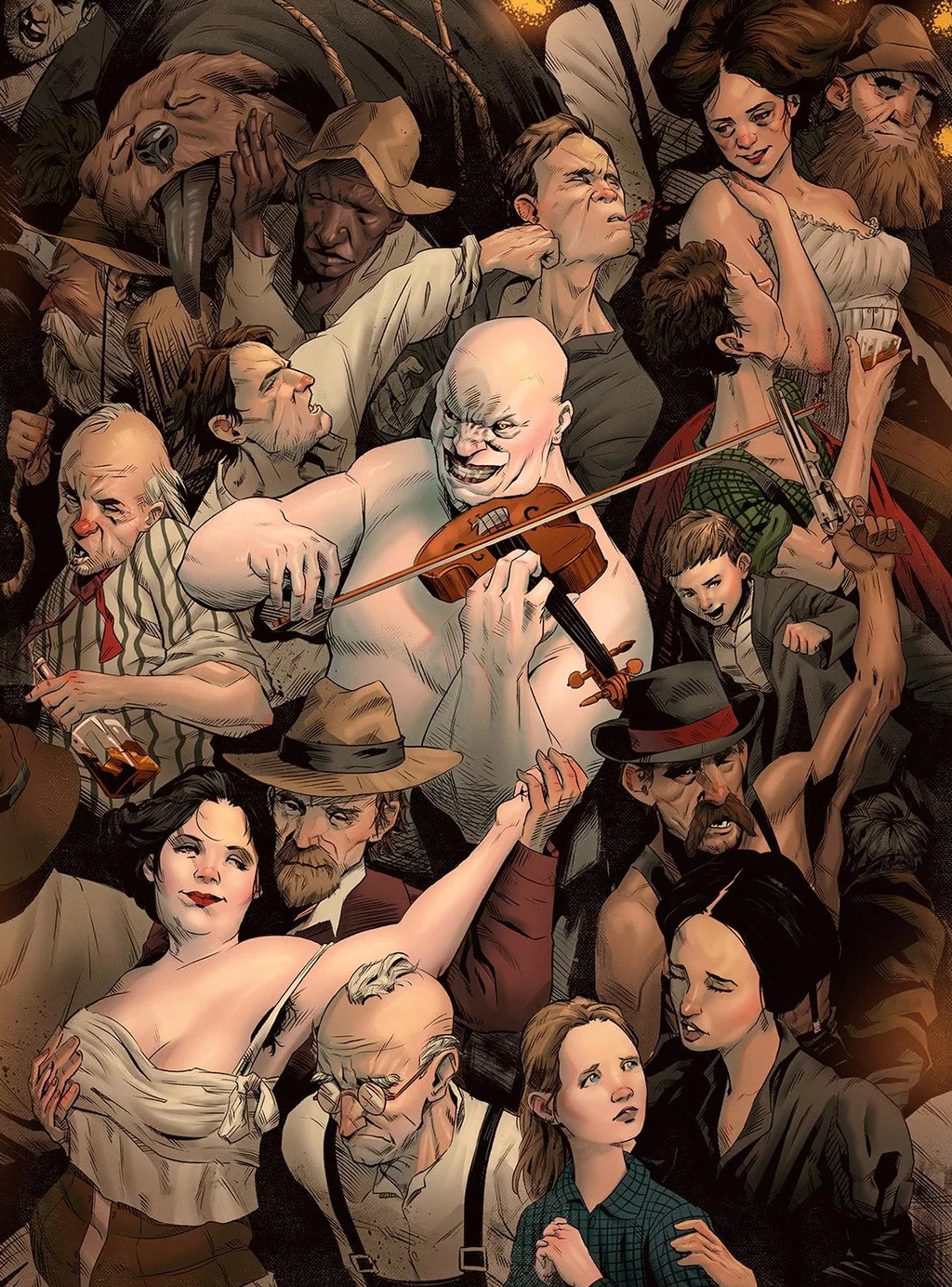
Chigurh also carries a clear literary lineage as another Cormac McCarthy creation, and he shares unsettling DNA with Judge Holden from Blood Meridian. Like Holden, Chigurh feels less like a human being and more like a presence that has stepped outside normal moral reality. Both characters operate as if they are not bound by human frameworks of empathy, guilt, or justification. In that sense, they resemble forces of nature rather than characters with inner conflict. Just as Judge Holden moves through the world with an almost mythic authority over violence and meaning, Chigurh moves with the same sense of inevitability—quiet, methodical, and indifferent to the emotional weight of his actions.

This is where the question of morality around Chigurh becomes deliberately unstable. Is he evil, or is he something beyond the concept of evil entirely? Like Judge Holden, he resists moral categorization because he does not appear to participate in the same value system as the people around him. Evil implies choice, intention, even some recognition of wrongdoing, but Chigurh operates as though he is merely enacting a set of principles that already exist independent of him. His coin toss philosophy, for instance, suggests not cruelty but submission to randomness or fate. The horror comes from the fact that human beings experience this as evil, while Chigurh seems to experience it as something closer to logic.

A major reason Chigurh leaves such a strong impression is Javier Bardem’s performance. Bardem strips the character down to the bare essentials, creating someone who feels emotionally alien without becoming cartoonish. His speech patterns are calm and deliberate, often forcing other characters into uncomfortable silence. Even simple conversations become threatening because Chigurh treats life-and-death decisions with the same tone someone else might use to discuss the weather. The famous coin toss scene perfectly captures this quality. Chigurh frames chance as something almost sacred, shifting responsibility away from himself while still remaining the instrument through which fate is delivered. That combination of politeness, inevitability, and menace makes him unforgettable.

The film also makes Chigurh especially unsettling by positioning him in contrast to Sheriff Bell’s worldview in No Country for Old Men. Bell represents an older moral framework where violence, while still real, at least had recognizable motives and boundaries. Chigurh breaks that expectation entirely. He is not driven by greed or revenge, and he does not appear to be psychologically damaged in a way that explains his actions. Instead, he behaves as though he is simply carrying out the consequences of a system that no one else fully understands. That gap between human expectation and Chigurh’s apparent indifference is where his terror truly lies.

Ultimately, Anton Chigurh endures as a villain because he refuses containment within normal storytelling or moral logic. Like Judge Holden, he reads less like a character and more like an embodiment of something larger—chaos given structure, or inevitability given form. No Country for Old Men never fully explains or defeats him because doing so would shrink him into something understandable. Instead, he remains ambiguous, almost elemental. Whether he is evil or something beyond evil is never resolved, and that uncertainty is precisely what makes him so disturbing. He becomes a figure of inevitability itself, a reminder that what humanity calls “evil” may sometimes feel indistinguishable from the indifferent mechanics of the world.