Review: Band of Brothers


“A lot of those [German] soldiers, I’ve thought about this often, that man and I might’ve been good friends. We might’ve had a lot in common. We might’ve liked to fish, you know, he might’ve liked to hunt. You never know. You know. Of course, they were doin’ what they were supposed to do, and I was tryin’ to do what I was supposed to do. But, under different circumstances we might’ve been good friends.” — Darrell “Shifty” Powers

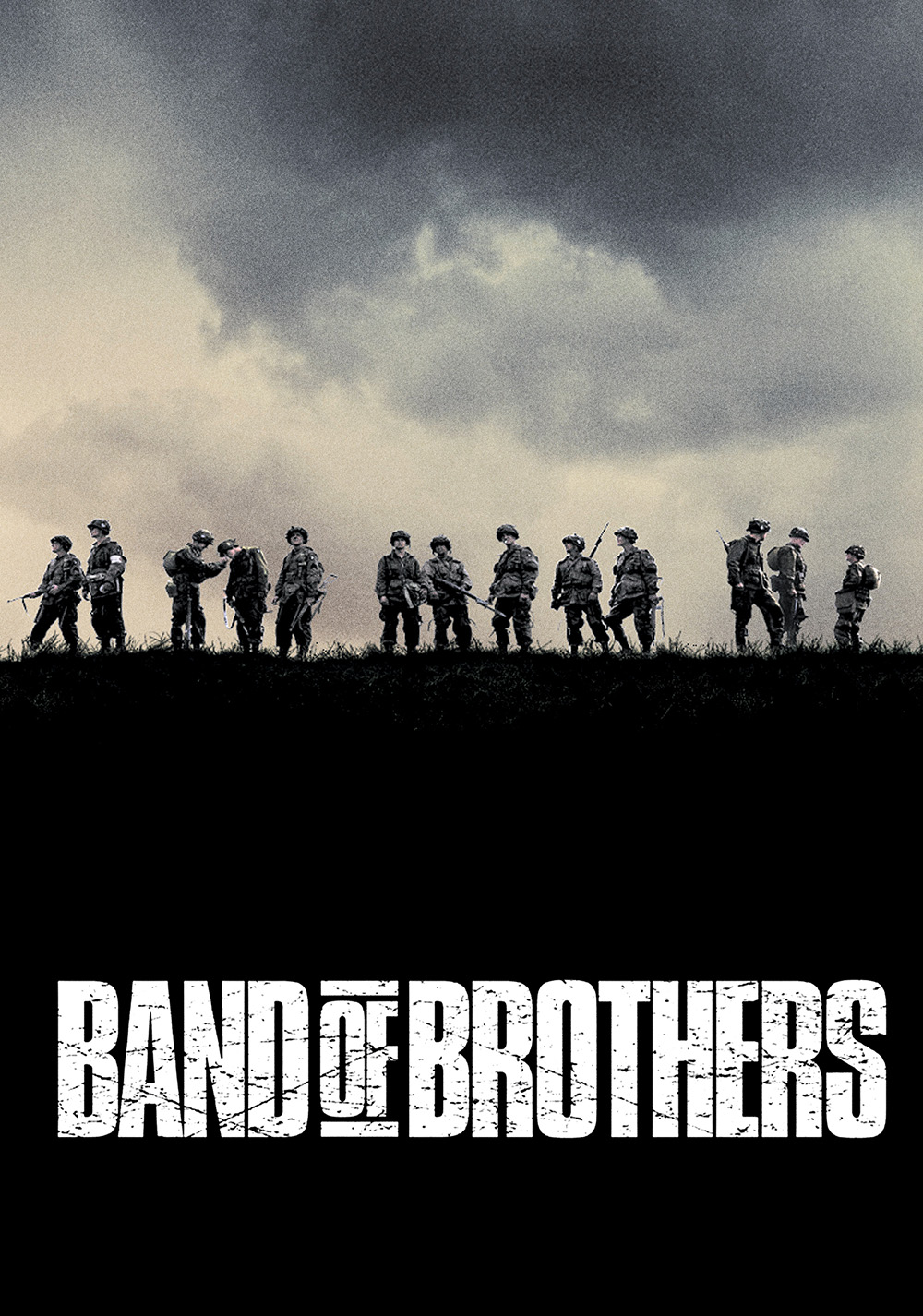
When we look back at the landscape of modern television, it is easy to take the concept of cinematic TV for granted. We live in an era where massive budgets, sweeping orchestral scores, and A-list Hollywood talent are regularly deployed on the small screen. But if you trace this golden lineage back to its true modern genesis, all roads inevitably lead to a singular, towering achievement: the 2001 HBO mini-series Band of Brothers. Produced by Tom Hanks and Steven Spielberg, this ten-part masterpiece did not just recount the harrowing journey of Easy Company, 506th Parachute Infantry Regiment, 101st Airborne Division during World War II; it fundamentally altered the DNA of television storytelling. Watching it today, a quarter-century after its initial broadcast, the series remains as potent, heartbreaking, and visually stunning as it was when it first shocked audiences. It exists as a perfect bridge between the classical Hollywood war epics of old and the uncompromising, gritty realism of twenty-first-century media. By committing to an unprecedented budget and an absolute refusal to sanitize the psychological horrors of combat, Band of Brothers set a high-water mark that few series have ever managed to touch, let alone surpass.

To understand the visual language and visceral power of Band of Brothers, one must first look at the cinematic earthquake that preceded it three years earlier: Steven Spielberg’s 1998 masterpiece Saving Private Ryan. That film rewrote the rules of how cinema captures warfare, abandoning the steady, heroic, brightly lit panoramas of mid-century studio pictures in favor of a terrifyingly immersive, chaotic style. Spielberg utilized desaturated colors, shutter-angle manipulation to create a jittery, hyper-real sense of motion, and handheld cameras that made the audience feel like they were ducking bullets in the surf of Omaha Beach. When Hanks and Spielberg pivoted to television to adapt Stephen E. Ambrose’s non-fiction book Band of Brothers, they brought this exact aesthetic blueprint with them. The impact of Saving Private Ryan on the mini-series cannot be overstated; it acts as the structural and aesthetic godfather of the entire project. Directors like Phil Alden Robinson, Richard Loncraine, and David Nutter utilized the same bleach-bypass film processing techniques to strip away vibrant primaries, leaving a color palette dominated by icy blues, muddy browns, and sickly olive drabs. This was not just a stylistic gimmick; it was a psychological tool that pulled the viewer out of the comfort of their living rooms and dropped them into the frozen, unforgiving forests of Bastogne or the smoke-choked ruins of Carentan. The camera became a participant in the war, getting splattered with mud, shaking violently during artillery barrages, and refusing to look away from the gruesome reality of what high-explosive shrapnel does to human flesh.

Yet, while it shared a visual vocabulary with Saving Private Ryan, Band of Brothers achieved something that a two-and-a-half-hour feature film simply never could, owing entirely to the expansive canvas of the mini-series format. A film must ultimately compress its narrative arc, often relying on archetypes and rapid pacing to reach a resolution. Over the course of ten hours, Band of Brothers allows its characters to breathe, change, harden, and break. Crucially, some of the show’s most powerful, lasting stories have absolutely nothing to do with active battles, but rather unfold in the quieter moments between the chaos. We do not just see these men in the heat of a firefight; we watch them suffer through the mundane, soul-crushing basic training regime of Camp Toccoa under the tyrannical eye of Captain Sobel, played with a brilliant, tragic insecurity by David Schwimmer. We sit with them in the agonizing, silent darkness of C-47 transport planes, listening to the vomit hitting the floorboards and watching the sheer, unadulterated dread on their faces before the jump over Normandy. We freeze with them in foxholes during the long, static winter in the forests of Bastogne, sharing the psychological numbness of isolation and the simple, desperate human desire for a dry pair of socks or a warm cup of coffee. This structural patience transforms the viewing experience from simple passive entertainment into an emotional marathon. We have known these men through their triumphs and their absolute lowest points, making their losses hit with the weight of personal bereavement.

While these quiet stretches build a deep, slow-burning empathy, the absolute biggest gut punch of the entire series arrives in Episode 9, titled Why We Fight. Throughout their march across Europe, the men of Easy Company—and by extension, the audience—have become somewhat cynical and battle-weary, numbly pushing forward simply to survive and get the job done. That numbness is completely shattered when a patrol stumbles across an sub-camp in the woods near Landsberg, which itself was part of the larger Dachau concentration camp complex. Up until this point, the war had been about geopolitical strategies, territory, and survival; suddenly, the men are brought face-to-face with the industrial scale of Nazi atrocities. The direction in this sequence is devastatingly restrained. There are no swelling orchestrations or heroic monologues, only the bewildered horror of soldiers looking at skeletal survivors wandering the camp in striped uniforms. Watching tough, battle-hardened paratroopers like Captain Nixon and Major Winters reduced to breathless, disbelieving silence as they uncover the truth of the Holocaust anchors the narrative in an entirely different tier of tragedy. It is an episode that completely recontextualizes the title of the series, showing that their ultimate purpose transcended military victory; they were liberating humanity from an unimaginable nightmare.

The casting of the series is another stroke of absolute genius that looks even more miraculous in hindsight. The producers deliberately avoided casting massive, distracting superstars for the main roles, opting instead for relatively unknown British and American theater and character actors. This decision was crucial for maintaining the show’s documentary-like authenticity; if Tom Cruise or Brad Pitt had been jumping out of those planes, the illusion would have been instantly shattered. Instead, we got Damian Lewis as Major Richard Winters, delivering a performance of quiet, stoic, and deeply principled leadership that serves as the moral anchor of the entire narrative. Alongside him was Ron Livingston as Captain Lewis Nixon, embodying the weary, cynical, and battle-fatigued intellect of a man seeking refuge from the horrors of war in a bottle of Vat 69. The ensemble is a treasure trove of talent, featuring early-career appearances from actors who would go on to become household names, including Tom Hardy, Michael Fassbender, James McAvoy, Simon Pegg, and Michael Cudlitz. Because the show focuses on an entire company, the perspective shifts naturally from episode to episode. One week we are viewing the war through the eyes of a terrified replacement medic in Bastogne, and the next we are embedded with the cynical, battle-hardened sergeant Carwood Lipton in The Breaking Point. This shifting focus ensures that the series never feels like a traditional Hollywood star vehicle, but rather a collective portrait of brotherhood where the company itself is the true protagonist.

The emotional resonance of Band of Brothers is amplified tenfold by the brilliant inclusion of interviews with the actual surviving veterans of Easy Company at the beginning of each episode. Kept anonymous until the very final moments of the series, these elderly men sit in simple chairs against dark backgrounds, their voices trembling and eyes misting over as they recall events that occurred more than half a century prior. There is a heartbreaking disconnect between the frail, weathered men on screen and the vibrant, muscular young actors portraying them in the dramatization. These interviews ground the cinematic spectacle in an undeniable, sobering reality. They serve as a constant reminder that the explosions, the blood, and the impossible acts of bravery we are witnessing were not the inventions of a Hollywood writers’ room, but the actual lived experiences of ordinary boys who were plucked from small-town America and dropped into the middle of the apocalypse. When the real-life winter veteran Dick Winters quotes his friend’s letter at the end of the series—saying, “Grandpa, were you a hero in the war? And Grandpa said no, but I served in a company of heroes”—it is impossible not to be moved to tears. It is a rare instance where a piece of media successfully honors historical figures without falling into the trap of cheap, unearned sentimentality or jingoistic propaganda.

Beyond its historical and emotional triumphs, the legacy of Band of Brothers is woven directly into the fabric of what we now refer to as prestige television. Before 2001, television was largely viewed as cinema’s lesser sibling—a medium defined by low budgets, procedural structures, and compromised production values meant to fit the square dimensions of old cathode-ray tube television sets. HBO had already begun to challenge this status quo with groundbreaking dramas like The Sopranos and Oz, but Band of Brothers was the project that proved television could match, and perhaps even exceed, the scale and artistic ambition of Hollywood blockbusters. With a staggering budget of over one hundred and twenty million dollars, it was the most expensive television miniseries ever produced at the time. The immense financial gamble paid off spectacularly, demonstrating to network executives and creators alike that audiences were hungry for complex, serialized, and visually uncompromising narratives that demanded to be treated as high art. The success of the show cleared the path for future cinematic television epics, directly inspiring sister projects like The Pacific and Masters of the Air, while setting the production standards that would later allow shows like Game of Thrones, Chernobyl, and Succession to flourish. It proved that the small screen was capable of housing massive, global historical narratives without losing the intimate character dynamics that make long-form storytelling so uniquely compelling.

Ultimately, Band of Brothers stands as a definitive milestone because it perfectly balanced the macro-scale horror of global warfare with the micro-scale beauty of human connection. It stripped away the romanticized myths of World War II to expose the sheer, terrifying randomness of survival, while simultaneously validating the profound love and loyalty that can only be forged in the crucible of shared suffering. It did not glamorize combat; instead, it illuminated the heavy, permanent psychological toll extracted from those who survived it. Through its hyper-realistic visual language inherited from Saving Private Ryan, its impeccable ensemble casting, and its revolutionary impact on the medium of television, the series achieved a timeless quality. It remains a definitive piece of cultural touchstone media that demands annual rewatches from millions of viewers around the globe. It is not just a historical chronicle, nor is it merely a well-executed piece of premium television; it is a monument to the human spirit, an artistic triumph that continues to remind us of the immense sacrifices made by an ordinary generation of heroes who stood together when the world was falling apart.
Late Night Retro Television Review: Pacific Blue 2.6 “The Enemy Within”


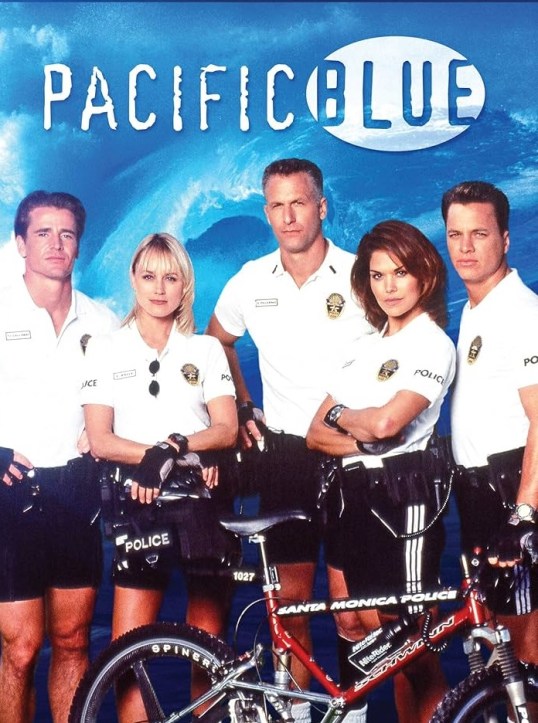
Welcome to Late Night Retro Television Reviews, a feature where we review some of our favorite and least favorite shows of the past! On Tuesdays, I will be reviewing Pacific Blue, a cop show that aired from 1996 to 2000 on the USA Network!  It’s currently streaming everywhere, though I’m watching it on Tubi.

Okay, let’s do this again.

Episode 2.6 “The Enemy Within”

(Dir by Stephen L. Posey, originally aired on September 28th, 1996)

A group of masked men are breaking into the homes of wealthy Vietnamese immigrants and stealing their money and jewelry.  We are told that the men are specifically targeting the Vietnamese because Vietnamese people do not trust banks or the police.  I have no idea if that’s true or not.  I just know that the show insisted that this is true with a bizarre vehemence.  To be honest, I’m Irish-Italian-Spanish in descent and I don’t trust banks or the police either.  That said, I would be kind of offended if something bad happened to me and the cops responded by going, “Eh.  It’s because she’s Irish-Italian-Spanish, what can you do?”

Kelly Hu, who is not Vietnamese, plays Wendy Trang, the granddaughter of a Vietnamese couple of have been robbed.  Her grandfather does not want to talk to the police so Wendy instead talks to her grandfather and then meets with TC to tell him what her grandfather told her.  From what Wendy tells him (which I think would be considered hearsay in a court of law), TC decides that only one of the thieves is Vietnamese and that the head of the robbery crew is probably an American who served in Vietnam and who harbors resentment towards immigrants.  Seriously, he figures that out from just having one conversation.

(Actually, maybe it was Palermo who figured it out.  Once they get on their bikes and put on their helmets, Palermo and TC are pretty much indistinguishable.)

TC recruits a psychic named Leslie Quint (Ken Weiler) to handle a knife that was left behind at the scene and to pick up on whatever psychic residue has been left behind.  Chris smirks and calls the guy a fraud because, two seasons is, the writers still haven’t bothered to give Chris a personality beyond being bitchy.  The psychic not only reveals that the leader of the gang is a big white guy but he also tells Chris that she needs to go to the dentist because she has a cavity.  (Ewwww!  Brush your teeth, weirdo!)  He also tells Cory that her never-before mentioned brother is involved in some trouble.

The psychic’s right!  Peter McNamara (William Bumiller), Cory’s brother, is a corrupt narcotics cop!

Anyway, things worked out.  The bag guys were captured.  Cory realized her brother wasn’t perfect.  Chris learned a lesson about dismissing secret powers.  TC smirked in that oddly humorless way of his.  As Palermo, Rick Rossovich seemed to be begging someone to remember that he had been in both Top Gun and The Terminator before allowing himself to get sucked into the world of Pacific Blue.

Along with Kelly Hu, this episode featured Cronenberg favorite Robert A. Silverman, playing an eccentric on the beach.  It’s always nice to see Silverman!

Otherwise, this was another stupid episode.  At some point, these characters are going to have to develop personalities beyond riding bikes and getting annoyed, right?


TV Review: The Walking Dead 11.11 “Rogue Element” (dir by Michael Cudlitz)


Whatever else you may or may want to say about The Walking Dead, you’ve got to love Josh McDermitt and his performance as Eugene Porter.

Eugene has consistently been one of the most interesting characters on this show.  He’s gone from being an untrustworthy coward to being one of the strongest people on the show.  He’s also gone from being the weirdo who made your skin crawl to being the weirdo who you secretly hope will find everything that he’s looking for.  The fact of the matter is that, if there was an actual zombie apocalypse, the majority of the survivors wouldn’t be Darryl or Morgan or Carol or Michonne.  The majority would be people like Eugene, people who survive through luck and who still hope to find some sort of normalcy.  There’s something very touching about the fact that, even in the middle of a zombie apocalypse, Eugene is writing a science fiction novel.

There were a few plotlines playing out in this week’s episode of The Walking Dead.  The two reporters tried to investigate what led to Tyler snapping at the Masquerade Ball.  Mercer walked around and glowered in his threatening way.  Lance took Carol out to the opium camp and made an effort to win her loyalty for the Commonwealth.  (At some point, people will learn to stop trying to recruit Carol to their pet causes.)  But the episode’s heart was with Eugene and his attempts to discover what had happened to Stephanie.  And that’s really were it should have been.  Against all odds, Eugene has emerged as the show’s symbol for every person who is trying to survive the zombie apocalypse without surrendering their emotions and their humanity.  Back when Eugene first appeared on the show and was lying about being a scientist, who could have guessed that he would still be around?  Who would have guessed that he would have outlasted not only Rick but also Carl?  Eugene survives.

This episode was directed by Michael Cudlitz, who previously played Abraham on the show.  (You may remember that Abraham was murdered by Negan.  It was kind of unfair, I thought, that Abraham was sacrificed in order to make it even more shocking when Negan then killed Glenn but that’s The Walking Dead for you.  It’s cold world.)  Cudlitz brought a lot of noir style to this episode.  I especially liked the scene at the end, with Eugene huddled in that dark alley, burning his dreams, while Max emerged from the shadows and introduced herself as being the real Stephanie.  If nothing else, this scene showed that The Walking Dead can create an haunting atmosphere, even without using walkers and blood.

The episode was, of course, dominated by Josh McDermitt’s poignant performance as Eugene but I also liked Paola Lazaro’s work as Princess.  She and McDermitt make a good team, as do Eugene and Princess.  Josh Hamilton continues to do great work as Lance Hornsby.  His rather casual dismissal of Eugene’s outrage was one of the episode’s highlights and it brought up an interesting point.  Everyone knows the Commonwealth is corrupt but everyone also knows that they’re safer in the Commonwealth than outside of it.  People will accept a lot when it comes to staying safe.

Though it took me a few days to find the time to watch it, this was a good episode.  I look forward to seeing what happens next!

TV Review: The Walking Dead 7.16 “The First Day Of The Rest Of Your Life” (dir by Greg Nicotero)


(SPOILERS, OF COURSE)

I will be the first admit that I’ve been very critical of season 7 of The Walking Dead.  I’ve spent weeks complaining about the pace of the story and episodes that didn’t seem to go anywhere.  I have been very open about my frustration with the one-dimensional villainy of Negan and my feeling that Rick Grimes is an incredibly overrated hero.  I don’t take any of that back.

But you know what?

The seventh season finale of The Walking Dead was pretty damn good.  Don’t get me wrong.  It wasn’t great.  There were still pacing problems.  There was still way too much time spent on Negan chuckling before launching into one of his marathon monologues.  I would have preferred that, instead of ending with Negan announcing, “We are going to war!,” that the episode had ended with the war already over and Negan vanquished.

But, even with all that in mind, The First Day Of The Rest Of Your Life was a well-executed finale and it went a long way towards making up for some season seven’s weaker moments.

At first, it didn’t seem like that would be the case.  When the show started with Sasha in what appeared to be a cell, I will admit to rolling my eyes a little.  “Please, God, no more cell monologues,” I thought as Negan popped into her cell and proceeded to give a monologue.  Now that I know that Sasha was in the process of committing suicide, her scenes with Abraham and Maggie are undeniably poignant.  But, at the time that I was first watching them, I have to admit that my first thought was that Abraham was getting more dialogue now that he was dead than he ever did while he was alive.  When Abraham said that Maggie was carrying the future in her, I thought to myself, “She’s been carrying the future for two years.  Is that baby ever going to be born?”

And, when Dwight told Rick that he had a plan and Rick asked to hear it, the only thing that kept me from throwing a shoe at the TV was that I wasn’t wearing any.  “Rick doesn’t have a plan!?” I snapped, “All this time and he hasn’t come up with a plan!?  No wonder Carl’s always looking for a new father figure!”

And then, finally, when the Scavengers revealed that they had been working with the Saviors all the time, I chalked it up to another case of Rick not being the strategic genius that everyone always seems to assume that he is.  As Rick stood there with guns pointed at him, I mentally prepared myself for the task of having to sit through yet another Negan monologue.

At the time, I didn’t realize how skillfully The Walking Dead was toying with me and my expectations.  In retrospect, I can see how perfectly the show played me.  Of course, I would be frustrated with Rick.  And, of course, I would be dreading the idea of another Negan speech.  And, just when I was on the verge of giving up, the show gave us…

ZOMBIE SASHA!

The moment that Zombie Sasha burst out of that coffin is destined to be remembered as the 2nd greatest moment in the history of season 7.  This was the only time that I can think of that anyone on the show made a deliberate decision to use zombiefication to turn themselves into a weapon.  I’m going to assume that Eugene secretly slipped her some poison before she got in the coffin.  It was too bad that Sasha had to die but, if you have to die, die with style.  At least this is one death that Rick wasn’t indirectly responsible for.  The blame for this one can be put on Rosita.

You may have noticed that Zombie Sasha was my choice for the 2nd greatest moment of season 7.  What was the first?

RESCUE SHIVA!

After the disruption of Zombie Sasha, the Saviors thought they had regained control of the situation.  Carl and Rick were on their knees.  Negan was starting another monologue.  I was starting to get frustrated again.  And suddenly, out of nowhere, a tiger pounced!  Ezekiel and the Kingdom showed up and basically kicked a lot of Savior ass.  Negan fled.  He may have extended his middle finger as he drove out of there but there’s no way to deny that the bully finally get his ass kicked.  After all that has happened over the course of this season, it was nice to see Negan not only twice fail to complete a monologue but also get his ass kicked by a bunch of Renaissance Faire actors.  It was pure chaos and it was beautiful.

As for the rest of the show, Rick somehow quickly recovered from being shot in the stomach and Michonne survived getting beaten half-to-death.  Carl still has his one good eye and Father Gabriel showed up long enough to let us know that he’s still alive.

The Saviors lost a battle and, when Season 8 begins in October, it’s going to be time for war.

I’ll be watching.

Will you?

A Few Thoughts On The Walking Dead 7.1 “The Day Will Come When You Won’t Be” (dir by Greg Nicotero)


05-negan-twd-w529-h529

Well, we can all breathe again.

Tonight saw the premiere of the seventh season of The Walking Dead.  All this summer, we’ve been wondering who Negan would end up killing with Lucille, his barbed wire-covered bat.  Glenn seemed to be the obvious candidate, particularly since he had already miraculously (and, some would say, implausibly) escaped certain death on the show and he was also Negan’s victim in the comic.

However, none of us wanted it to be Glenn.  Ever since the show began, Glenn has been one of the most popular characters.  In many ways, he served as a stand-in for the audience.  Sure, everyone loves Darryl and Michonne but Glenn …. well, there was just something special about Glenn.  Whereas both Darryl and Michonne were born warriors and Rick Grimes was a former police officer who had been trained to think quickly in a crisis, Glenn was just a pizza delivery boy.  He was the guy who, by all logic, should not have survived the first week of the zombie apocalypse.  And yet, he did survive.  For sic seasons, we watched as Glenn grew and developed as a character.  When he “married” Maggie, it was more than just a plot twist.  It was proof that, even in the worst of circumstances, love could survive.

So, a lot of us told ourselves that there was no way that Glenn would die.  We told ourselves that Glenn was too popular of a character.  We mentioned all the other times that the show had led us to believe it was going to follow the plot of the comics just to suddenly go in a totally opposite direction.

Myself, I believe that Negan would kill Abraham.  Abraham seemed like the obvious choice, popular enough that his death would mean something but, at the same time, not so popular that the show would risk losing any viewers by killing him.

I was so confident in my prediction that I ever decided to make it official:

And I was right.

But I was also very wrong.

It took about 25 minutes for tonight’s episode of The Walking Dead to get around to showing us who Negan killed.  The episode really pulled out the suspense and I have to admit that I was worried they were going to go the entire hour without letting us know for sure.  (I remember Lost used to do that and it would drive me crazy.)  And when we saw Negan beat Abraham to death, I think a lot of people said, “Poor Abraham but at least it wasn’t Glenn…”

And then, a few minutes later, Darryl charged Negan and, after Darryl was subdued, Negan responded by beating Glenn to death.

(As Jeffrey Dean Morgan, who was so chillingly good as Negan, pointed out on The Talking Dead, Glenn would not have died if not for Darryl’s actions.)

It was hard to watch.  You can say that it’s just a TV show and that there are bigger things to worry about than the fate of a fictional character but, at that moment, it felt as if I was watching an old friend die.  For seven years, Glenn has been one of the show’s constants.  He’s been one of the few stable elements of The Walking Dead.  He’s always been there.

And now, he’s not.

While we were all still trying to recover from the deaths of both Glenn and Abraham, Negan was busy breaking Rick.  Rick has always been the leader.  He’s always been the guy who you can count on to ultimately do whatever needed to be done to protect the group.  Rick was the one who stepped up to shoot Sophia when she came out of that barn.  Rick was the one who, no matter how bad things got, everyone felt they could depend on.  In a world where it was often hard to find meaning or morality, Rick has always stood for something more than just ruthless survival.  And yet, last night, we saw a totally defeated Rick.  Not only did Rick watch helplessly as two of his people were brutally murdered but he was also nearly forced to chop off Carl’s hand.

(I know that a lot of viewers — myself included — were expecting Negan to chop off Rick’s hand in the RV.)

As I watched that scene with Rick and Carl, I couldn’t help but think about the biblical tale of Abraham and Isaac, a story that I have always hated.  God ordered Abraham to sacrifice his son and he waited until Abraham raised the knife to say, “Stop, it was just a test of your faith.”  (Abraham is so overjoyed that he never stops to ask, “What type of God would ask me to do something so terrible in the first place?”)  When Negan ordered Rick to chop off Carl’s hand and then stopped him only after he raised the hatchet, it was Negan’s way of saying that, for all intents and purposes, he is God.

Again, it wasn’t easy to watch.  But at least Maggie doesn’t appear to be ready to surrender.  Rick may have been broken.  Darryl may now be a hostage.  But Maggie is going to keep fighting.

Finally, I have to say that, after watching all of this, I am so incredibly thankful for Chris Hardwick and Talking Dead.  When Chris opened the show by promising that we were going to talk through what we had just witnessed, he wasn’t kidding.  Tonight’s episode of Talking Dead felt like a televised group therapy session.  It helped to see Steven Yeun and Michael Cudlitz on that stage with the rest of the cast.  After we just watched, we needed to see them all together.  We needed to see them laughing and joking and crying and hugging.  We needed that catharsis.

Talking Dead served as a reminder that it was just a TV show and nobody had really died.

So, why do so many of us still feel like we just said goodbye to a member of our family?

One final thought:

RIP, Abraham and Glenn

abraham

banglennup

glenn

Horror on TV: Buffy the Vampire Slayer 3.16 “Doppelgangland”


Buffy_the_Vampire_Slayer_title_card

Let’s continue our look at Horror on TV with another classic episode of Buffy the Vampire Slayer! Just as yesterday’s episode focused on a supporting character (Xander), this episode focuses on Willow!

I was going to say that Doppelgangland was one of my favorite episodes of Buffy the Vampire Slayer but then I realized that everyone would probably say that. This is an episode that truly shows why countless fans continue to love the show after all these years.

Horror on TV: Buffy The Vampire Slayer 3.13 “The Zeppo”


Buffy_the_Vampire_Slayer_title_card

OH MY GOD, IT’S BUFFY!

I love Buffy The Vampire Slayer and it’s always bothered me that I haven’t been able to share any episodes on this site. But, fortunately, this Halloween, Hulu has come to the rescue!

The Zeppo is one of my favorite episodes. While Buffy and the Scooby Gang save the world in the background, Xander (Nicholas Brendon) finally gets an adventure of his very own! Actually, there’s a lot of things that Xander finally gets to do in this wonderful episode!

(On a personal note, it breaks my heart whenever I read about Nicholas Brendon getting arrested and I’m reminded that Xander was just a fictional character.)

Seriously, enjoy Buffy the Vampire Slayer!

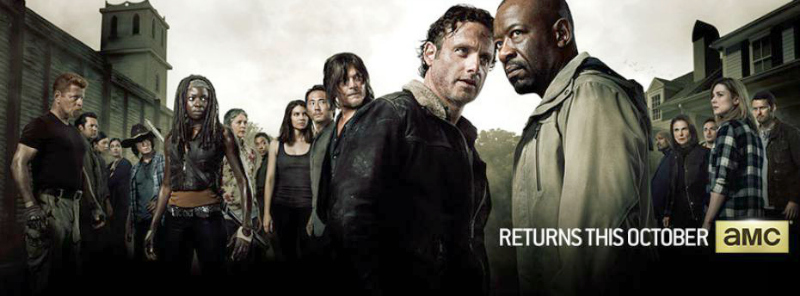
The Walking Dead Season 6 Trailer


TheWalkingDeadS6

“Do you have any idea who you’re talking to?” — Rick Grimes

AMC has unveiled it’s official trailer for the 6th season of TV’s most popular show (so popular that it even beats Sunday Night Football on occasion) during it’s San Diego Comic-Con panel at Hall H.

Last we left the Grimes crew saw Rick Grimes get the go-ahead from Alexandria Safe-Zone leader Deanna Monroe to shoot wife-batterer and neck-slashing Pete in his face. It would’ve been quite a satisfying event if not for Rick’s first BFF, Morgan Jones, suddenly appearing out of the shadows to see him do the deed. This is the same Morgan who went from crazy clear to zen clear who thought all life that wasn’t undead was precious.

So, now season 6 is almost upon us fellow fans of the show and it looks like Rick is turning out to be Alexandria’s shogun with Deanna as the figurehead leader.

Will Rick’s Shane-like attitude to leading this expanded group of survivors be a blessing or be the downfall of another safe-haven for the Grimes Gang? There’s still the Wolves out there who now knows where they are. There’s also the looming shadow of the comic book’s Negan and his Saviors possibly making their appearance which could mean just one thing: WAR.

So, grab those ribs and thick-cut steaks and take a big bite and enjoy the trailer.

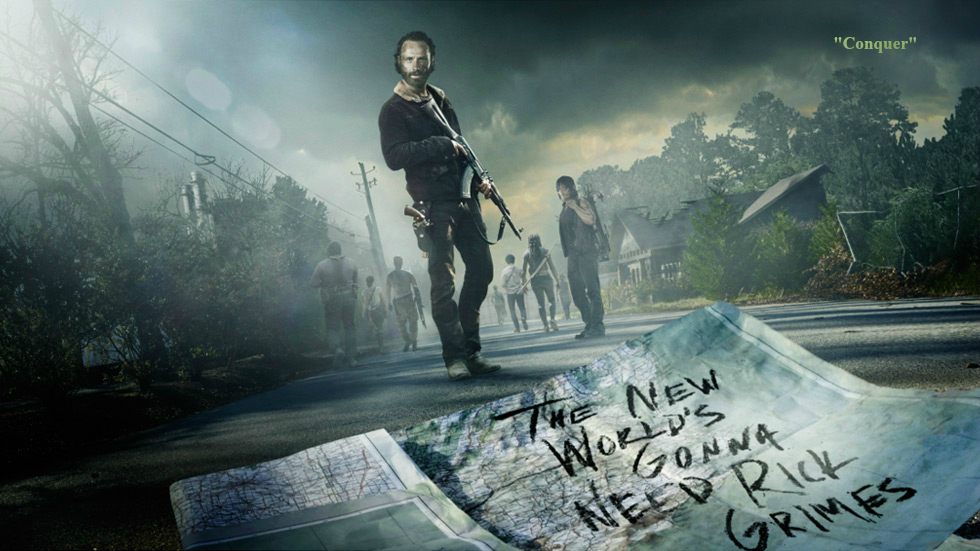
Review: The Walking Dead S5E16 “Conquer”


TheWalkingDeadS5E16

“Simply put, there is a vast ocean of shit that you people don’t know shit about.” — Sgt. Abraham Ford

[spoilers within]

The Walking Dead has been derided as badly-written (early seasons definitely had it’s story issues) with recycled themes and subplots with characters that barely rise above one-dimensional. Only the most ardent fan would take those criticisms of the show and dismiss them outright. The series has had it’s many flaws and the three mentioned have been ones earned through the show’s first three seasons of revolving door showrunners.

There was the show’s original creator, Frank Darabont, who injected a cinematic quality to a tv show that could easily have gone campy (Z Nation), but whose need to control every aspect of the show made him lose the support of the very studio that helped him get the show up and running. It didn’t help that his first half of season 2 where the group searched endlessly for Sophia almost sunk the show.

With Darabont given his walking papers the show turned to series writer and producer Glen Mazzara to right the ship after a listless first half of season 2. Things definitely turned for the better with Mazzara in charge and for the first half of season 3 it looked like Mazzara might have finally figured out what sort of show The Walking Dead should be. In the end, he too ran out of steam as season 3 limped into an underwhelming season finale.

Scott M. Gimple took the reins and things for the show has been improving at a steady rate since season 4 and finally culminates in a season 5 finale that was both full of suspense, action and melodrama in equal amounts that has been the mark of his current tenure as series showrunner. If the show has an award for series MVP it should be handed gladly over to Scott M. Gimple.

“Conquer” starts with a cold opening that already signals that great things are afoot for the rest of the season finale’s extended 90-minutes. We find Morgan asleep (quite peacefully) inside a derelict car in the middle of the woods. We see him wake up and go about what’s probably a daily ritual for him when his breakfast gets interrupted by a stranger who happens to be sporting a “W” mark on his forehead (with dirt instead of carved into). He’s the first person we meet who seems to be affiliated with the very Wolves this second half of the season has been working up as the next Big Bad to threaten Rick and his people. It’s a sequence that gives us a clue as to the sort of bad guys these “Wolves” are going to be for Rick and Company. With some fancy staff fighting and a zen quality to his actions, Morgan more than holds off the two “Wolves” looking to steal his gear and add them to their collection of “W” marked zombies.

The rest of the episode takes on three different storylines involving Rick, Father Gabriel and Glenn.

With Glenn we see him follow Nicholas seen climbing over the walls of Alexandria. While not the most smart thing he has done of late, Glenn has a right to be suspicious of Nicholas who has done nothing but get people (both his own and Rick’s) killed while pumping himself out to be a strong protector when Glenn and the audience know that he’s far from it. It’s a sort of chase sequence as Glenn and Nicholas end up going at it mano-y-mano with Nicholas starting it off with a failed ambush that only wounds Glenn, but does hurt him enough that at times during the episode there was a great chance it was going to be him that would be the significant death to mark the season finale.

The writers (Scott M. Gimple and Seth Hoffman) don’t do the obvious and kill Glenn off, but does make him teeter on the brink of doing what many in the audience hope would happen and that was kill Nicholas once he finally had him beaten down. Instead, Glenn shows that despite his extended time out in the savage wilds outside the walls of Alexandria, he still has some compassion (misguided it might well turn out to be) and the need to see justice done. While Glenn might not have died in this finale his growing role as the voice of reason and compassion in a group that’s become fractured emotionally and mentally means his days on the series could very well be numbered.

Father Gabriel was the more frustrating segment of tonight’s finale. His time with the group has found him to be both naively stupid of the new world around him and mentally unstable because of what he had to do to survive. Yet, we find him talking a walk outside the walls in a bright, clean white shirt like he has cleansed himself prior to make sure he dies with a clean conscience. Instead, the instance a zombie was about to do what he seems to want he finally decides to want to live. But then does another 180 degrees and decides to leave the compound’s gate unsecured knowing it means zombies will definitely wander in.

The writers don’t seem to know what to do with Father Gabriel. From the moment he was introduced they seem to be flailing in the dark with so many ideas on how to treat an unstable man whose faith has been shattered by this new world where the dead don’t remain dead and those who survive must turn to their darker instincts (him included). One moment he’s trying to poison the minds of Deanna about Rick and his people while not confessing to the dark deeds he has done. Next he’s trying to atone for those very sins only to turn around and do something that would add more sins to his ledger.

It’s a shame that Father Gabriel has become such an albatross this season for the show since Seth Gilliam is such a great actor (as his time on HBO’s The Wire has shown). There’s still a glimmer of hope for the fallen priest as we saw when Maggie arrives just in time to keep Sasha from killing Father Gabriel. Will Maggie’s own Hershel-like act of mercy be enough to finally turn Father Gabriel towards something more concrete (whether as a good guy or a bad guy) would have to wait for season 6 this coming October.

We finally come to Rick who is in a sort of timeout after his total breakdown in the previous episode. He finally understands that he might have gone a bit Shane-like and overboard with his behavior, but he also still believes that Alexandria’s best chance of surviving beyond the luck they’ve had before their arrival was for them to stay and takeover. Whether they take over by the examples of their words and deeds or through force if the Alexandrians try to kick them out would depend on the very people who don’t seem to understand what’s truly at stake.

Rick gets a sort of visit from all the differing voices within his group. There’s Glenn and Michonne who wonder if Rick never wanted for their stay in Alexandria to work. Then there’s Carol and, to a certain extent Abraham, who has seen enough of how Alexandria operates to know that these people are like children who have had the luxury of never having been confronted with a no-win situation to wake them up from their fantasy of trying to rebuild civilization. It’s the sort of angel and devil on the shoulder bit that could’ve gone terribly cheesy, but ended up being natural and poignant to the episode’s narrative. A narrative that showed how both Rick and Deanna have been both wrong and right in their stances of how Alexandria should be led.

It would take a death to someone Deanna holds dear for her to finally understand what Rick and his people have bee trying to tell her and the rest of the Alexandrians. Abraham (who has become the show’s go-to-guy for memorable one-liners) said it best himself during the night meeting to decide Rick’s fate. In the only way Abraham knows how he says, “Simply put, there is a vast ocean of shit that you people don’t know shit about.”

In the end, Abraham was correct in that the Alexandrians just do not understand the world they’re living in. They might have the strong walls (not so strong that people can’t climb over them) to keep the zombies out. They have power and running water and some luxuries of the life long past dead. Yet, they’re naive and delusional to think that they won’t have to get their hands dirty to keep their way of life going. These people need people like Rick Grimes and his band of survivors. They might not be the best examples of how society and civilization was before the zombie apocalypse fell on everyone, but they were the ones who best adapted to it and still kept a semblance of their humanity in some way.

So, season 5 ended with not just Rick using a brand of reasoning and a recent example of how things could easily go from good to bad to make his point, but with Daryl and Aaron bringing Morgan back to Alexandria for a reunion between the first two characters we met on this show. Last time we saw Rick and Morgan together was in season 3’s “Clear” and Morgan was definitely not in his right mind while Rick was still holding onto his pre-apocalypse principles. with their latest reunion it looks like things have reversed with Rick looking more and more like the Morgan of “Clear” while Morgan has recovered from his crisis of conscience to come out the other side clear of mind.

We already know that there will be a season 6 and a season after that (AMC knows a goldmine when they see it and this show is literally printing them cash). The questions left unanswered by tonight’s finale looks to be the driving force for the next season. The Wolves now have an idea that Alexandria exists (from the knapsack full of pictures Aaron dropped at the canned food warehouse depot) and will probably try to visit them soon. Then there’s the question of how will Glenn finally expose Nicholas’ cowardice and duplicity to the Alexandrians and whether Nicholas will remain a problem for Glenn moving forward. The biggest question remains on whether these Wolves will involve Negan of the comics in some capacity or just the tip of a bigger danger.

The season closes with a very appropriate scene before fading to black. A car in the canned food depot marked in stark white spray paint with the words: “Wolves Not Far.”

Notes

  • Tonight’s season finale was directed by series exec. producer Greg Nicotero and written by showrunner Scott M. Gimple and series writer Seth Hoffman.
  • The Wolves seem to be a new group made just for the show. They don’t seem to correspond to any past group that the comic book has had Rick encounter and/or fight against.
  • The trailers trap full of zombies with the “W” marks on their foreheads was reminiscent of a similar scene and trap from Resident Evil: Extinction.
  • Aaron had his own moment during the escape out of the car that was straight out of the original Dawn of the Dead. machetezombie
  • Kill of the season has to be when Daryl took the chain, whipped it around his head to take the top of the heads of three zombies with precision. that’s kill of the week stuff that even Zombieland would be proud of.
  • When Father Gabriel fails to secure the main gate and then his subsequent behavior and confession to Maggie at the chapel was also reminiscent of a character from a George A. Romero zombie film: Day of The Dead. When Pvt. Salazar decides to commit suicide by letting in zombies into the secured compound.
  • Lennie James was trained to use a walking/fighting stick by the original Donatello from the first Teenage Mutant Ninja Turtles.
  • The scene at the meeting where Pete accidentally kills Reg and the aftermath was straight out of the comic book frame for frame.
  • Talking Dead guests tonight are Morgan, Carol and Daryl (Lennie James, Melissa McBride and Norman Reedus) from The Walking Dead.

Season 5

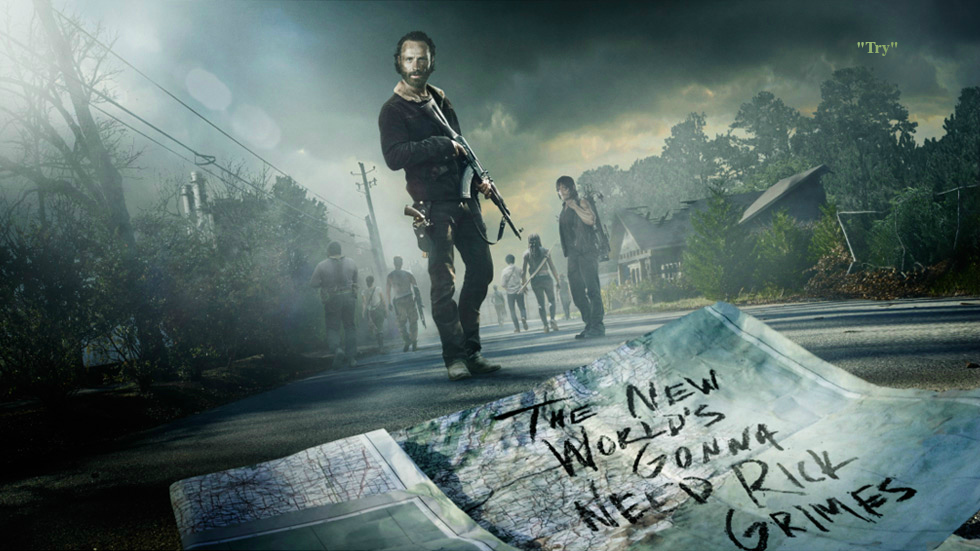
Review: The Walking Dead S5E15 “Try”


TheWalkingDeadS5E15

“It’s their world, we’re just living in it.” — Enid

[spoilers within]

Tonight’s episode of The Walking Dead marks the penultimate one for the show’s fifth season. It has been a season that’s seen the series remain on a consistent high. It still had some episodes which fell a bit flat, but overall season 5 has been the show’s best and delivered on showrunner Scott M. Gimple’s promise to keep the story moving forward.

The episode begins with a cold opening that shows the aftermath of the deadly supply run to the solar factory warehouse in the previous episode. We have to stories being told. There’s Glenn still haunted by having to witness Noah’s death by zombies very up close and personal. We see him tell Rick about how he and the others made a mistake and how it led to the deaths of Aidan and Noah. He feels responsible and hopes that it doesn’t ruin their chance in making the Alexandria experiment work. He still believes in the concept that is the ASZ (Alexandria Safe-Zone) and even Noah’s death doesn’t budge him from that belief. Rick, on the other hand, only sees danger and trouble when it comes to the ineptitude of the Alexandrians. His fears and doubts about whether the Alexandrians can pull their weight when it comes to keeping everyone safe has been confirmed.

Deanna, on the other hand, hears a different tale from Nicholas. It’s a tale of how it was he who tried to save Aidan and not leave him behind. It was Glenn who distracted and caused the death of Aidan and whose bloodthirsty attitude got Noah killed. Nicholas spoke about how he would never leave Aidan, his friend, behind and even included newcomer Tara as someone he tried to save. There’s some hints that Deanna has a sense that Nicholas wasn’t telling her the truth of what happened, but we don’t get to hear her voice out these doubts.

“Try” is a very appropriate title for tonight’s episode. We see several characters attempt to try and find a way to make the combination of Rick’s people and the Alexandrians co-exists together peacefully. Glenn, despite what some of these Alexandrians have done, still believes that they need to make Alexandria work. It’s their last chance to go beyond just existing and surviving but actually living life. He’s become the show’s moral compass (hopefully not a death sentence) now that Hershel and Tyreese are gone. Yet, unlike the previous moral compasses in the show, Glenn does understand that sometimes pragmatism must rule the day above all else. He just believes that Alexandria needs a chance to survive the growing pains of their group’s arrival.

Another of Rick’s people trying to make it work is Michonne. She’s had her time in exile in the wilds of this new and dangerous world. Her survival to this point has been in part due to those solitary months on her own with only herself to keep safe. Yet, she has also found out that being alone was a detriment to her psyche’s well-being and finding Rick and his people was what ultimately saved her not just from the zombies but from her own self-destructive ways.

She sees what’s happening with Sasha. A friend and fellow survivor deep in the midst of PTSD who has lost so much in such a short period of time that she hasn’t had the chance to take in and accept those losses let alone mourn them. Michonne understands what Sasha is going through but also realizes that they need her for what’s to come. Michonne wants to make Alexandria work and instability brought on by Sasha’s death wish and Rick’s inability to trust the Alexandrians will only make that prospect harder to achieve.

It is no surprise that the episode ends with Michonne taking control of a situation brought on by Rick’s blunt force behavior in trying to convince the Alexandrians that the way they were doing things were not going to work going forward. Michonne’s belief in the Alexandrians’ survival skills might mirror Rick’s own thoughts on the matter, but where Rick wants a confrontation to be the catalyst of change she seems more than willing to lead by example.

On the other side of things are Rick and Deanna looking to be at loggerheads about what’s truly best of Alexandria. It’s easy to take Rick’s side that the way Deanna and the rest of the Alexandrians have been doing things were just not going to cut it in this new world. It’s a world that Rick and his people have experienced first-hand and lost people along the way, but in the end have survived all it has thrown at them. Deanna, on the other hand, still believes in the rule of law and order, civilization over anarchy. She doesn’t believe in killing those who could be a danger to the ASZ (like Peter who also happens to be the lone physician and surgeon), but instead would rather exile them out into the wilds.

It’s a way of doing things that Rick sees as another way of putting the ASZ in danger. Deanna doesn’t think so and this clashing of philosophies on how things should be done looks to be one that’s heading into a confrontation that puts everyone in danger. Neither side seem willing to try and compromise and find a way to make the two groups con-exist. No attempt to allow the Alexandrians to learn from what Rick and his people could teach them to be better survivors. No attempt from Rick and those who believe him to adjust to this new life. A life that they see as a danger in itself. They see Alexandria’s walls as something that could make them soft and distract them from surviving.

So, we have the extended season finale next week and the question of whether Rick is too far gone to stay in Alexandria will be one of the questions that need answering. Will the group have to suffer through another loss of one of their own for the Alexandrians to finally realize that their survival before Rick and his people arrived have been through blind luck not through the civilizing rule of Deanna? Will Rick and the others just leave Alexandria or will the group finally splinter-off from those wanting to try and make it work and those unable to?

Then there are those zombies with the “W” cut into their foreheads looking to crash the party.

Notes

  • Tonight’s episode of The Walking Dead, “Try”, was directed by Michael E. Satrazemis and written by series veteran Angela Kang.
  • “Keep walking” has become Rick’s version of Carol’s “look at the flowers”. Pete should’ve been sprinting away the moment Rick uttered those wordsa at him with those Rick dead-eyes.
  • Nine Inch Nails’ “Somewhat Damaged” plays during the episodes cold opening and was a nice reminder that both groupsm Rick’s and the Alexandrians, have been damaged in some fashion since the start of the zombie apocalypse.
  • Still wondering how Nicholas knew about the Glock Rick hid in the blender out in the woods (Nicholas was in the ASZ when Rick and the group arrived). Is there someone outside the walls that told Nicholas of the hidden pistol?
  • Talking Dead guests tonight are Yvette Nicole Brown (Community), series executive producer Gale Anne Hurd and Chandler Riggs (Carl Grimes of The Walking Dead)

Season 5