Happy 75th birthday to cult director Abel Ferrara! Here are four shots from my 4 favorite Ferrara films!
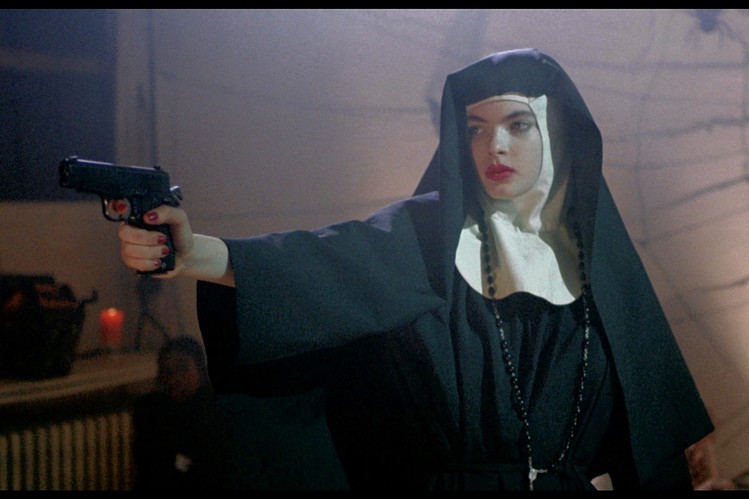
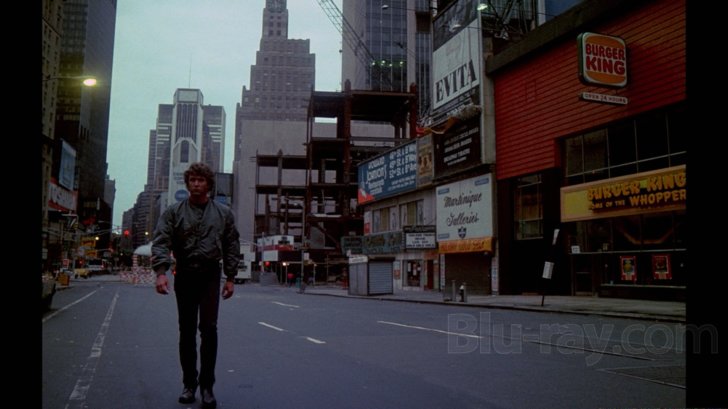
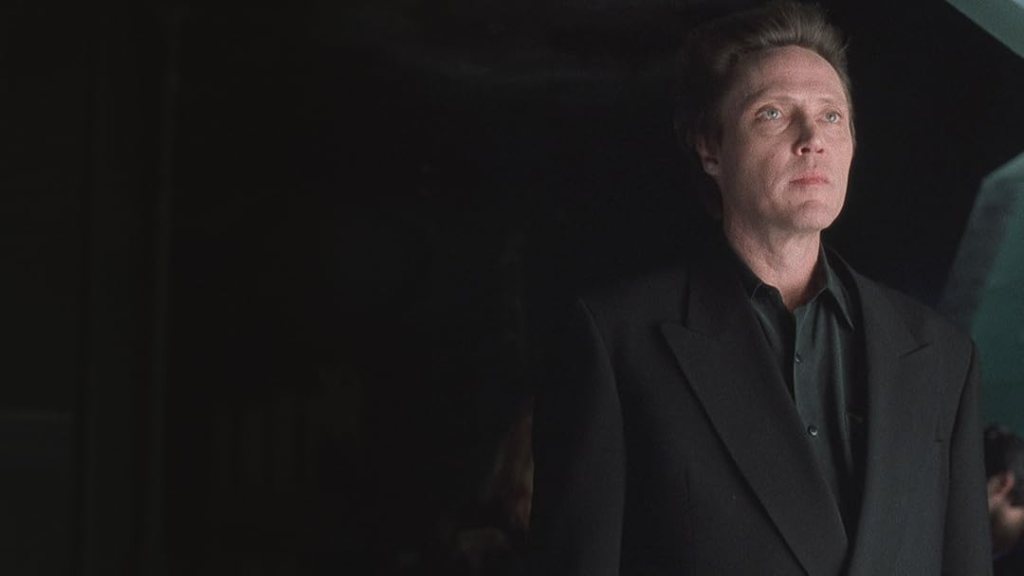
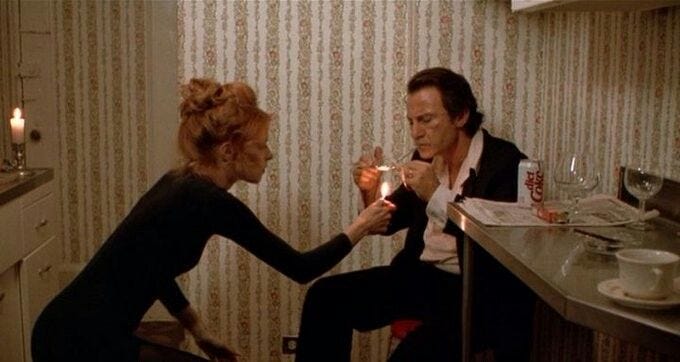
Happy 75th birthday to cult director Abel Ferrara! Here are four shots from my 4 favorite Ferrara films!
It’s hard to imagine that someone could overact while playing a corpse but Louise Fletcher somehow manages to do just that in 1983’s Brainstorm and I think we owe her some respect for that. The underrated Fletched won an Oscar for playing Nurse Ratched in One Flew Over The Cuckoo’s Nest and she appeared in a handful of other films that I’ve liked (Strange Behavior, the 2012 restoration of Once Upon A Time In America) but, now that I’ve watched Brainstorm, I will always think of her playing a dead character with the biggest, hammiest facial expression ever on her otherwise lifeless face.
In Brainstorm, Fletcher plays Dr. Lillian Reynolds, a chain-smoking scientist who is always upset about something. When Lillian isn’t lighting a cigarette or yelling, “You sold me out!,” she’s clutching her chest and taking her heart pills. Working with her partner, Dr. Michael Brace (Christopher Walken), Lillian has developed a brain-computer interface that allows people’s brain waves to be recorded on tape so that others can then experience what they experienced. In practice, this looks like putting on a helmet and then seeing what appears to be a home movie. What fun! Lillian thinks that the interface can be used to change and save the world. Dr. Brace thinks he can use the interface to discover why his marriage to Karen (Natalie Wood) fell apart. Their associate, Hal (Joe Dorsey), thinks he can use it to experience his friend screwing the babysitter over and over and over again. Meanwhile, Alex Taber (Cliff Robertson) thinks that it can be used as a military weapon.
(Hal is probably the one who comes the closest to what people would actually use this technology for.)
Lillian is not happy about her technology being turned over to the military. She gets upset about it over and over again. Eventually, she suffers one of the most overdramatic heart attacks ever recorded on film. Before she dies, she hooks herself up to the machine and records her dying vision. Michael becomes obsessed with seeing what Lillian saw as she entered the afterlife. Unfortunately, the mean military folks have the tape so it looks like Michael is going to have to unleash some chaos. I can’t think of any other film that mixes Christopher Walken having a beatific vision with a bunch of slapstick humor featuring an out-of-control robot and a bunch of soap bubbles.
Today, if Brainstorm is known for anything, it’s as the film that Natalie Wood was shooting when she died. One popular theory about the circumstances surrounding Wood’s death is that she was having an affair with Christopher Walken. Watching the two of them in this film should disabuse anyone of that notion as the two of them have absolutely zero chemistry as a couple. (For the record, I think Wood’s death was an accident and that a lot of self-styled Internet sleuths owe Robert Wagner an apology.) If there’s anything that this film should be known for, it should be that it features a large number of Oscar nominees and winners and they all end up giving absolutely lousy performances. Even the usually wonderful Christopher Walken seems to be playing someone imitating himself. Watching this film, I was never quite sure why anyone was actually doing anything.
Director Douglas Trumbull was best known for designing the Stargate sequence in 2001: A Space Odyssey and, not surprisingly, Brainstorm’s vision of the afterlife is actually pretty effective. One gets the feeling that Trumbull was more comfortable with the special effects than he was with the human actors.
I have to admit that I always smile a little at films where scientists are shocked — shocked, I tell ya! — to discover that their technology is going to be used for military purposes. Why did they think the government was funding them in the first place? Lillian seems to believe that her technology will be used to allow people to experience what it’s like to ride a roller coaster. That’s what IMAX is for.
Today is Christopher Walken’s 83rd birthday so it seems appropriate to share a Walken scene that I love. Without further ado, here is the classic gold watch speech from the 1994 film, Pulp Fiction:
Val wrote about this music video way back in 2016. I’m sharing it again because today is Christopher Walken’s 83rd birthday! Walken trained as a dancer before going into acting and he gets to show off more than a few moves in this video.
Walken also trained as a lion tamer before he went into acting. I guess he’s a little bit old to play a lion tamer now but still, that’s something I would have liked to have seen.
Enjoy!
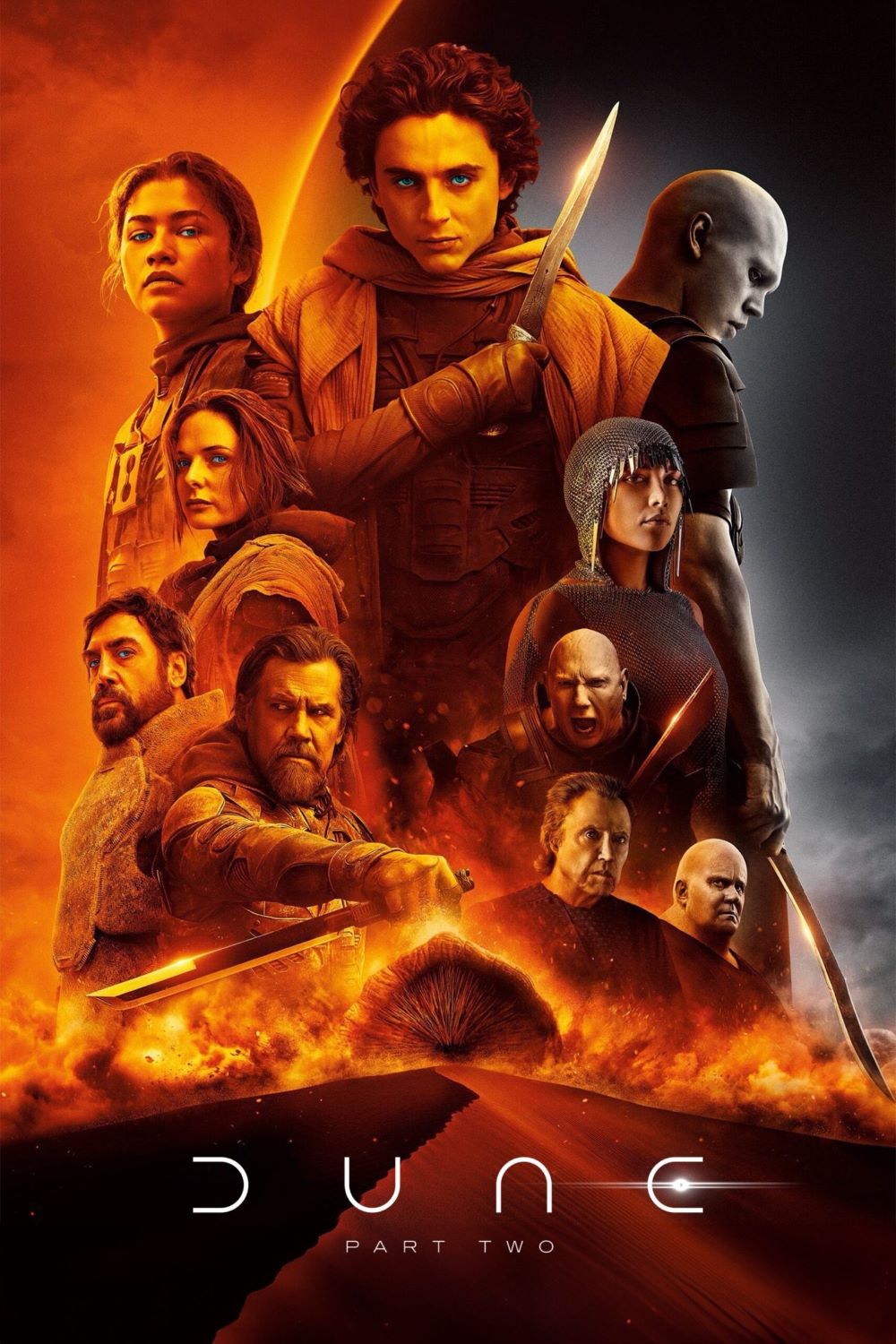
“The Mahdi is too humble to say he is the Mahdi. Even more reason to know he is!” — Stilgar
Dune: Part Two picks up right where the first film left off, diving headfirst into Paul Atreides’ quest for revenge on the desert world of Arrakis, and it absolutely delivers on the epic, operatic scale the setup promised. The first movie was all mood and table-setting; this one cashes in that patience with a story that’s bigger, louder, and way more emotionally volatile, without totally ditching the cerebral, slow-burn vibe that makes Dune feel different from other sci-fi tentpoles. Denis Villeneuve isn’t just continuing a story; he’s doubling down on the idea that this whole saga is less about a hero’s rise and more about the terrifying consequences of people begging for a savior and then getting exactly what they asked for.
Narratively, the film tracks Paul and his mother Jessica as they embed deeper into Fremen culture while House Harkonnen tightens its stranglehold on Arrakis. Paul trains, raids spice convoys, and slowly evolves from accepted outsider to full-on messianic figure, even as he keeps insisting he doesn’t want that role. The emotional throughline is his relationship with Chani, who acts as both partner and conscience, pushing back against the religious fervor gathering around him. At the same time, you’ve got Baron Harkonnen scheming from his grotesque oil-bath throne and Feyd-Rautha unleashed as the house’s rabid attack dog, chewing through enemies in gladiatorial arenas and on the battlefield. The stakes are clear and simple—control of Arrakis and its spice—but the film keeps twisting that into something more existential: control of the future itself and who gets to write it.
Visually, Dune: Part Two is just ridiculous in the best way. Arrakis still feels harsh and elemental, like the planet itself is a character that occasionally decides to eat people via sandworm. The desert exteriors are shot with that hazy, golden brutality where every wide shot makes the Fremen look tiny against an uncaring landscape. When Paul finally rides a sandworm, it’s not played as some clean, heroic moment but as a thrashing, chaotic stunt that looks legitimately dangerous—he’s clinging to this titanic creature, sand exploding in sheets around him, the camera swinging wide so you feel both the scale and the sheer lunacy of what he’s doing. The Harkonnen world, by contrast, is stark and stylized, all cold geometry and void-like skies, leaning into monochrome to make it feel like you’ve stepped into some industrial underworld. Villeneuve’s obsession with scale and texture pays off; every frame feels like it was composed to be stared at.
The action this time is more frequent and more brutal. Where Dune: Part One held back, this one goes for full war-movie energy. You get Fremen ambushes out of sand, night raids lit by explosions, and a final battle that’s basically holy war meets desert cavalry charge. Sandworms surf through shield walls, ornithopters slam into the ground, and a sea of troops gets swallowed by sand and fire. The choreography stays clean enough that you can track who’s doing what, but it never loses that messy, grounded feel—knife fights still feel close and ugly, even when they’re surrounded by massive spectacle. The duel between Paul and Feyd is the peak of that: sweaty, vicious, and personal, more about willpower and ideology than just skill.
Performance-wise, the film runs on the tension between Timothée Chalamet’s Paul and Zendaya’s Chani. Chalamet gets to shift from haunted survivor to someone who realizes he can pull the strings of history—and chooses to do it anyway. He plays Paul as a guy who genuinely hates what he sees in his visions but can’t stomach losing, which gives the final act a bitter edge. Zendaya finally gets the screen time the first film teased, and she makes the most of it. Chani isn’t just “the love interest”; she’s the one person in the story who consistently calls bullshit on prophecy, seeing how Fremen belief is being turned into a weapon. That skepticism, that refusal to be swept up, becomes the emotional counterweight to everything Jessica and the Bene Gesserit are engineering.
Rebecca Ferguson’s Jessica goes full political operator here, and it’s honestly one of the most interesting arcs in the film. Once she takes on the role of Reverend Mother, she leans into manipulating Fremen faith, playing up visions, symbols, and omens to lock in Paul’s status. She’s terrifyingly pragmatic about it, and the movie doesn’t let that slide as a “necessary evil”—it’s part of how this whole situation curdles into fanaticism. Austin Butler’s Feyd-Rautha is pure menace: feral, theatrical, and oddly charismatic, like a rock star who decided to become a warlord. He feels like the dark mirror of Paul, another bred product of a toxic system, but one who embraces cruelty instead of burden.
Then you’ve got Florence Pugh’s Princess Irulan and Christopher Walken’s Emperor Shaddam IV, introduced with real weight as the heir to the throne and the man who greenlit House Atreides’ betrayal—but then largely sidelined as bit characters rather than the shadowy power brokers they should be. On paper, they’re the architects of galactic order, pulling levers from opulent palaces while Paul scrambles in the sand. The film gives them poised entrances and sharp dialogue, but parks them as observers to Paul’s whirlwind, more like well-dressed cameos than forces reshaping the board. Walken nails the Emperor’s weary calculation, and Pugh hints at Irulan’s future scheming, but without deeper scenes of imperial intrigue, they orbit Paul’s story instead of challenging it head-on, underscoring how his rise eclipses even the old guard.
Hans Zimmer’s score keeps pushing that strange, alien soundscape he built in the first film and then amps it up. The music leans hard on percussion, guttural vocals, and warped instruments that feel half-organic, half-industrial, like you’re listening to the desert itself breathing. The score doesn’t really do the classic “themes you hum on the way out of the theater” thing; instead, it sits in your bones. During the big set pieces, it’s almost overwhelming—drones, chants, and pounding rhythms layering on top of each other until your seat feels like it’s vibrating. In quieter scenes, Zimmer pulls back just enough to let a harsh little motif peek through, usually when Paul is weighing his choices or when Chani realizes how far things are slipping away from what she hoped for.
Thematically, Dune: Part Two sinks its teeth deepest into the dangers of blind faith and the double-edged sword of prophecy—how it can shatter chains of oppression only to forge far heavier ones in their place. Frank Herbert’s original warning pulses through every frame: belief isn’t just a comfort or a spark for revolution; it’s a weapon that smart people wield to hijack desperate hearts. The Fremen, crushed under imperial boot and environmental hell, latch onto their Lisan al-Gaib legend like a lifeline, and figures like Jessica and the Bene Gesserit are all too happy to fan those flames. Lines like Stilgar’s “The Mahdi is too humble to say he is the Mahdi. Even more reason to know he is!” twist logic into a pretzel, showing how faith devours reason—Paul’s every hesitation or miracle just “proves” his divinity more. Chani’s gut-punch retort, “This prophecy is how they enslave us!” lays it bare: what starts as liberation from Harkonnen greed morphs into submission to a new myth, one engineered off-world to keep Arrakis in check.
Paul embodies this tragedy most painfully. His spice-fueled visions reveal futures of jihad consuming the stars, yet the “narrow path” he chooses—embracing the prophecy—breaks the Fremen’s subjugation to outsiders while binding them to him as unquestioning soldiers. It’s not accidental heroism; it’s a calculated gamble where prophecy empowers the oppressed to topple one empire, only for Paul to birth a deadlier one, fueled by the very zeal that freed them. Princess Irulan’s cool observation, “You underestimate the power of faith,” chills because it’s the Emperor admitting belief outstrips blades or thrones—faith doesn’t just win wars; it rewrites reality, turning Fremen riders into galaxy-scouring fanatics. Even the Reverend Mother Mohiam’s “We don’t hope. We plan” unmasks prophecy as cold manipulation, a multi-generational con that breakers colonial chains today while guaranteeing control tomorrow.
Villeneuve doesn’t glorify this cycle; he revels in its horror. The final rally, with Fremen chanting “Lisan al-Gaib!” as Paul seizes the throne, thrills like a rock concert and curdles like a cult initiation. Chani riding off alone isn’t defeat—it’s the last gasp of clear-eyed doubt in a tide of delusion. Faith topples the Baron and humbles Shaddam, sure, but it installs Paul as its high priest-emperor, proving Herbert right: saviors don’t save; they scale up the suffering. The film tweaks the book to amplify this, giving Chani more agency to voice the peril, making the “victory” feel like a velvet trap. It’s prophecy as breaker of chains—smashing Harkonnen spice rigs and imperial ornithopters—then creator of new ones, with Paul’s jihad looming not as triumph, but inevitable apocalypse.
If the film has a real sticking point, it’s that tension between being a massive, audience-pleasing sci-fi epic and being a deeply cynical story about the cost of belief. On a surface level, it totally works as a grand payoff: you get your worm rides, your duels, your big speeches, your villains being humbled. But underneath, Villeneuve keeps threading in this idea that what we’re watching isn’t a happy ending; it’s the start of something worse. The sidelining of Irulan and Shaddam reinforces how Paul’s myth-centered rise devours old powers, prophecy steamrolling politics.
As a complete experience, Dune: Part Two feels like the rare blockbuster that respects its audience’s patience and intelligence. It assumes you remember part one, assumes you’re willing to sit with long, quiet moments and sudden bursts of violence, and assumes you’ll notice that the “hero’s journey” here is more of a slow moral collapse dressed up as triumph. It’s messy in spots—some pacing jolts, some underused heavy hitters in the cast—but it swings so hard and with such confidence that the rough edges end up feeling like part of its personality. The result is a movie that works both as an immediate, visceral ride and as something you keep chewing on afterward, wondering if you were supposed to be as excited as you were by the sight of a new god-king being crowned in the desert.
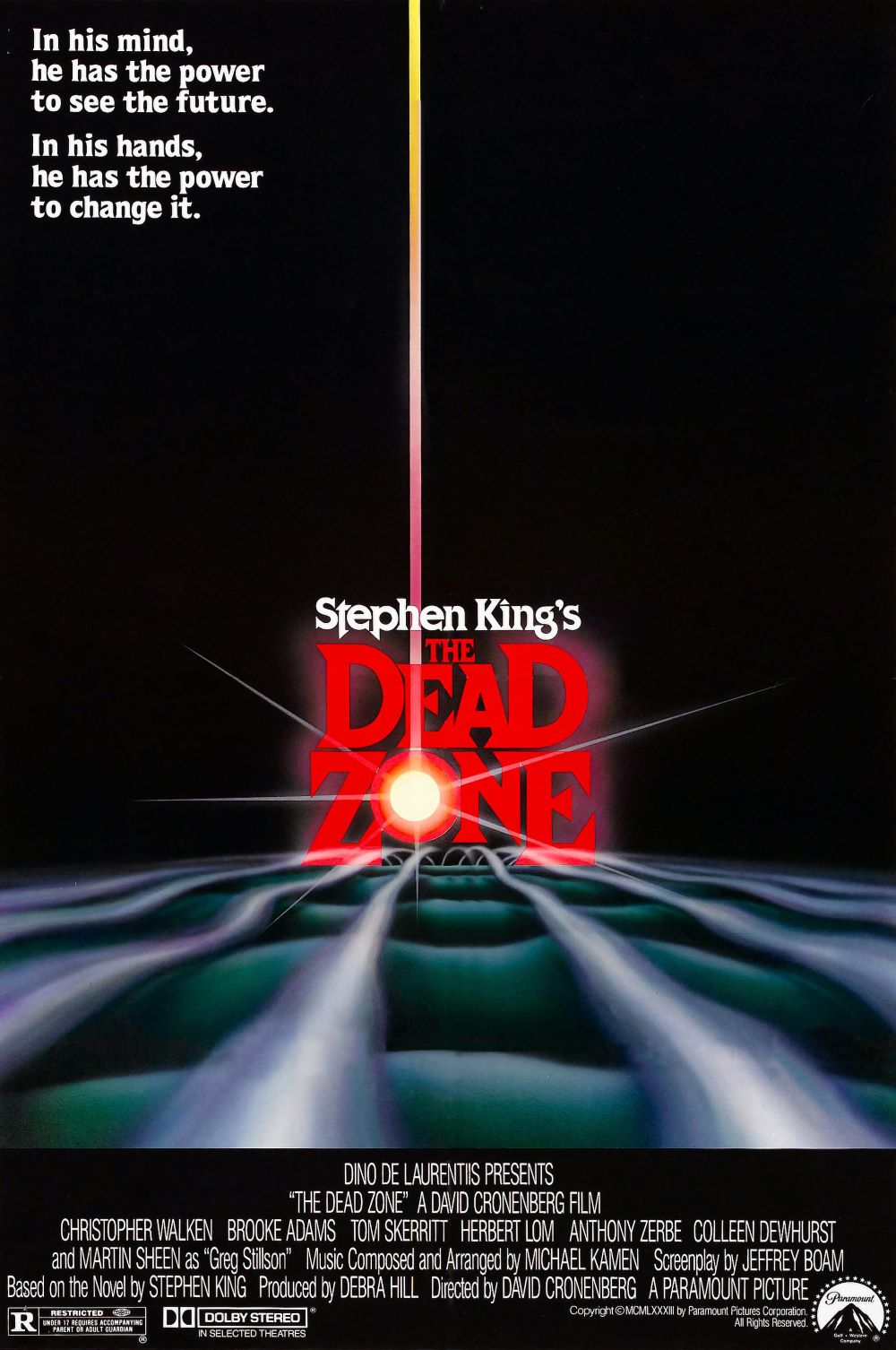
“Bless me, Father, for I have sinned. I had the power… and I tried to prevent what I saw.” — Johnny Smith
In 1983, David Cronenberg adapted Stephen King’s The Dead Zone with a distinctive emphasis on mood, morality, and psychological depth rather than traditional horror spectacle. The film follows Johnny Smith (Christopher Walken), a small-town schoolteacher whose life transforms irrevocably after a traumatic car accident leaves him in a five-year coma. Upon awakening, Johnny discovers he possesses psychic abilities that allow him to see the past and future by touch. Rather than a gift, this power becomes a heavy burden, isolating him and forcing him into wrenching moral choices.
Cronenberg’s direction is meticulous and deliberately restrained. The film’s muted color palette and stark winter landscapes visually echo Johnny’s emotional isolation and the fragility of human existence. His careful, often gliding camera movements create a mounting sense of quiet dread, while minimalistic sound design underscores moments of revelation with haunting subtlety. This subdued style elevates the film’s psychological impact, transforming it into a thoughtful and melancholy meditation on the cost of harrowing knowledge.
Significantly, The Dead Zone marks a departure from Cronenberg’s signature body horror. Instead of the grotesque physical transformations and visceral mutations that characterize much of his other work, here Cronenberg turns inward. The real horror lies in the malleability of the mind and the elusive nature of perception—how reality, memory, and the future are unstable constructs that can shift and fracture under psychic strain. This thematic focus on the impermanence and distortion of mental reality touches on some of Cronenberg’s deepest artistic fascinations.
The restrained treatment of body horror in The Dead Zone previews the director’s later, more psychologically driven films such as A History of Violence, Eastern Promises, and A Dangerous Method, where character studies and narrative depth take precedence over startling visuals. In this early pivot, Cronenberg demonstrates that his mastery lies not only in visual spectacle but in probing the profound emotional and moral dilemmas faced by his characters. The vision-focused horror here is cerebral and grounded, rooting supernatural phenomena in human frailty and ethical complexity.
Christopher Walken’s nuanced portrayal is the emotional heart of the film. He captures Johnny’s vulnerability, weariness, and profound solitude, portraying a man burdened by a cursed knowledge that isolates him from the world. Martin Sheen plays Greg Stillson, the ambitious and morally bankrupt politician whose rise Johnny must foretell and who embodies the film’s central threat. The supporting cast, including Brooke Adams as Johnny’s lost love Sarah and Tom Skerritt as Sheriff Bannerman, delivers compelling and authentic performances that humanize the film’s intimate, small-town environment.
Several changes from King’s novel sharpen the film’s thematic focus. The novel’s sprawling plot, including a serial killer subplot and a brain tumor storyline symbolizing Johnny’s mortality, is pared down or omitted. Despite this trimming, the serial killer element retained in the film remains chilling and effective. It highlights the darker repercussions of Johnny’s psychic gift and injects a tangible sense of dread, reinforcing the psychological weight Johnny carries. This subplot grounds the supernatural within a disturbing reality, illustrating the violent and tragic circumstances Johnny must grapple with as part of his burden.
The concept of the “dead zone” itself shifts in meaning. Originally, the term referred to parts of Johnny’s brain damaged by the accident, blocking certain visions. Cronenberg reinterprets it as a metaphor for the unknown and unknowable parts of the future—the gaps in psychic clarity that allow for free will and change. This subtle shift reshapes the narrative toward a more ambiguous, hopeful meditation on destiny and human agency.
Compared to King’s novel, Cronenberg’s Johnny is more grounded and isolated. The novel frames Johnny’s struggle within a broader spiritual and fatalistic context, highlighted by the looming presence of a brain tumor and a nuanced exploration of hope versus resignation. The film, by contrast, focuses on the emotional and moral fatigue induced by Johnny’s psychic gift, emphasizing his loneliness and reluctant responsibility rather than supernatural destiny.
Walken’s restrained, haunting performance strips away mythic grandeur to reveal a deeply human character. The film’s narrowed narrative tightens focus on Johnny’s internal anguish and his difficult ethical choices, making his plight intimate and richly relatable.
On a thematic level, The Dead Zone contemplates fate, free will, and sacrifice. Johnny’s psychic abilities act as a draining, almost chthonic force, transforming him into a reluctant prophet who is tasked with intervening in grim futures at great personal cost. The film’s bleak winter setting visually reflects Johnny’s alienation, while its deliberate pacing highlights the exhaustion and heartbreak that comes with such knowledge.
Ultimately, Cronenberg’s The Dead Zone goes beyond supernatural thriller conventions. It is a profound meditation on empathy, sacrifice, and the human condition—where the greatest horrors are internal, and the cost of knowledge is both psychic and emotional. Johnny Smith emerges as a tragic, flawed figure wrestling with unbearable burdens.
Cronenberg’s direction and the impeccable performances make The Dead Zone a standout in King adaptations. The film’s enduring impact lies in its rich thematic texture, its moral ambiguity, and its unflinching exploration of human frailty, all conveyed through a director shifting skillfully from physical body horror to psychological and existential terror. The film remains as haunting and resonant now as it was upon release, a testament to the synergy of Cronenberg and King’s extraordinary talents.
 Drug kingpin Frank White (Christopher Walken) has been released from prison and is again on the streets of New York City. Frank might say that he’s gone straight but, as soon as he’s free, he’s partying with his old crew (including Laurene Fishburne, Steve Buscemi, Giancarlo Esposito, and others). While Frank’s agent (Paul Calderon) goes to all of the other city’s gangsters and explains that they can either get out of Frank’s way or die, three detectives (Victor Argo, David Caruso, and Wesley Snipes) make plans to take Frank out by any means necessary. Meanwhile, Frank is donating money to politicians, building hospitals, and presenting himself as New York’s savior.
King of New York is the epitome of a cult film. Directed by Abel Ferrara, the dark and violent King of New York was originally dismissed by critics and struggled to find an audience during its initial theatrical run. (It was lumped in with and overshadowed by other 1990 gangster films like Goodfellas and Godfather Part III.) But it was later rediscovered on both cable and home video and now it’s rightly considered to be a stone cold crime classic. Walken gives one of his best performances as Frank White and that’s not a surprise. The film was clearly made to give Walken a chance to show off what he could do with a lead role and Walken captures Frank’s charisma and humor without forgetting that he’s essentially a sociopath. Walken gives a performance that feels like James Cagney updated for the end of the 80s. What’s even more impressive is that all of the supporting characters are just as memorable as Walken’s Frank White. From Laurence Fishburne’s flamboyant killer to David Caruso’s hotheaded cop to Paul Calderon’s slippery agent to Janet Julian’s morally compromised attorney, everyone gives a strong performance. (I’m usually not a Caruso fan but he’s legitimately great here.) They come together to bring the film’s world to life. Everyone has their own reason for obsessing on Frank White and his return to power. I’ve always especially appreciated Victor Argo as the weary, veteran detective who finds himself trapped by Caruso and Wesley Snipes’s impulsive plan to take down Frank White. Frank White and the cops go to war and it’s sometimes hard to know whose side to be on.
Director Abel Ferrara has had a long and storied career, directing films about morally ambiguous people who are often pushed to extremes. Personally, I think King of New York is his best film, a portrait of not just a criminal but also of a city that combines the best and the worst of human nature. The action is exciting, the cast is superb, and Frank’s justifications for his behavior sometimes make a surprising amount of sense. Thought there’s occasionally been speculation that it could happen, there’s never been a sequel to King of New York and it doesn’t need one. King of New York is a film that tell you all that you need to know about Frank White and the city that he calls home.
Today’s scene is from Abel Ferrara’s 1990 gangster epic, King of New York. Featuring Christopher Walken and a host of familiar faces, it’s one of those scenes that simply just has to be seen.
In 1971’s The Anderson Tapes, Sean Connery stars as Duke Anderson.
Duke is a career criminal, a safecracker who has just spent ten years in prison. He’s released, alongside Pops (Stan Gottlieb), who spent so much time behind bars that he missed two wars and the Great Depression, and the quirky Kid (Christopher Walken, making his film debut). Duke immediately hooks up with his former girlfriend, Ingrid (Dyan Cannon), and decides to rob the luxury apartment building where Ingrid is now living.
Of course, Duke will have to put together a crew. It’s not a heist film without a quirky crew, is it? Duke recruits the Kid and Pops. (The Kid is happy to be in the game but he’s not a fan of violence. Pops, meanwhile, has none of the skills necessary for living in the “modern” world and would much rather return to prison.) Duke also brings in the flamboyant Tommy Haskins (an overacting Martin Balsam) and driver Edward Spencer (Dick Anthony Williams). Duke goes to the mob for backing and Pat Angelo (Alan King) gives it to him on the condition that he take along a sociopathic racist named Socks (Val Avery) and that Duke kills Socks at some point. Duke reluctantly agrees.
So far, this probably sounds like a conventional heist film. Director Sidney Lumet mixes comedy and drama with uneven results but, overall, he does a good job of ratcheting up the tension and The Anderson Tapes is a good example of one of my favorite mini-genres, the “New Yorkers will be rude to anyone” genre. At first glance, Sean Connery seems to be playing yet another super smooth operator, a confident criminal with a plan that cannot fail. Duke seems like a criminal version of James Bond, However, as the film progresses, we start to suspect that things might be getting away from Duke. When Duke has to go the Mafia for support and is told that killing Socks is now a part of the job, we see that Duke isn’t as in-control of the situation as we originally assumed. This is the rare Sean Connery film where he has someone pushing him around.
(Apparently, Connery took this role as a part of his effort to escape being typecast as Bond. Perhaps that explains why Duke seems like almost a deconstruction of the James Bond archetype.)
Of course, what really lets us know that Duke isn’t as in-charge as he assumes is the fact that four different law enforcement agencies are following his every move. From the minute he gets out of prison, Duke is being watched. The apartment is bugged. Security cameras records his every move. Once the heist begins, we’re treated to flash forwards of breathless news reports. The Anderson Tapes is less a heist film and more a portrait of the early days of the modern Surveillance State. Of course, none of the agencies make any moves to stop Duke because doing so would reveal their own existence. The film really does become a portrait of a government that has gotten so big and intrusive that it’s also lost the ability to actually do anything.
The Anderson Tapes is entertaining, even if it’s not really one of Lumet’s best. Connery is, as always, a fascinating screen presence and it’s always entertaining to see a young Christopher Walken, showing early sings of the quirkiness that would become his signature style. The Anderson Tapes is a portrait of a world where you never know who might be listening.
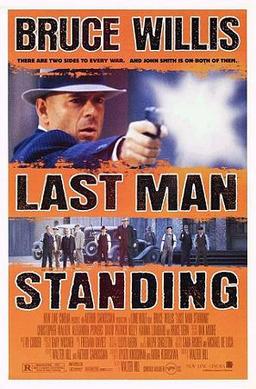 During the 1920s, at the height of prohibition, a mysterious man named John Smith (Bruce Willis) arrives in the dusty town of Jericho. Jericho sits on the border, between Texas and Mexico, and it is the site of a gang war. The Italian mob, led by Fred Strozzi (Ned Eisenberg) and Giorgio Carmote (Michael Imperioli), is trying to move in on the Irish mob, led by Doyle (David Patrick Kelly) and his fearsome gunman, Hickey (Christopher Walken). After the members of the Irish mob destroy his car and leave him stranded in town, Smith offers his services as a gunman to the Italians. Strozzi hires him but it turns out that Smith has his own agenda and soon, he is manipulating both gangs against each other.
Last Man Standing was Walter Hill’s remake of Yojimbo, with Bruce Willis playing an Americanized version of Toshiro Minfune’s wandering ronin. (Hill does the right thing and gives Kurosawa credit for the film’s story.) Now, it should be understood that this is in no way a realistic film. It makes no sense for two Chicago-style gangs to be fighting over a ghost town in Texas. Even when it came to smuggling in liquor during the prohibition era, most of it came over the Canadian border rather than the Texas border. But Walter Hill has always been more about filming the legend than worrying about realism. He’s the ultimate stylist, creating movies the come together to create an American mythology. Last Man Standing is a work of pure style, a combination western/gangster movie that pays tribute to the ultimate samurai film. Gangsters meeting in the desert while tumbleweed rolls past may not make sense but Hill knows a good visual when he sees one and he makes it work. The plot is taken from Yojimbo. The western setting is taken from A Fistful of Dollars. And the gangsters are pure Americana.
Willis, back in his action star heyday, is quick with a gun and a quip and he gets a few scenes that show that, while he may be bad, he’s not as bad as the gangsters in charge of the town. Hill surrounds Willis with a cast of great character actors, including Bruce Dern as the cowardly sheriff and William Sanderson as the owner of the hotel. Though he might not be as well-known as some members of the cast, I especially liked Ken Jenkins as the Texas Ranger who informs Willis that he has ten days to finish up his business before the Rangers come to town and kill whoever is still standing. And then you’ve got Walken, in one of his best villainous roles. Hickey doesn’t show up until pretty late in the movie but we’ve spent so much time hearing about him that we already know he’s the most dangerous man in Texas and Walken gives a performance that lives up to the hype.
Unappreciated when it was first released, Last Man Standing has stood the test of time as one of Walter Hill’s best.

