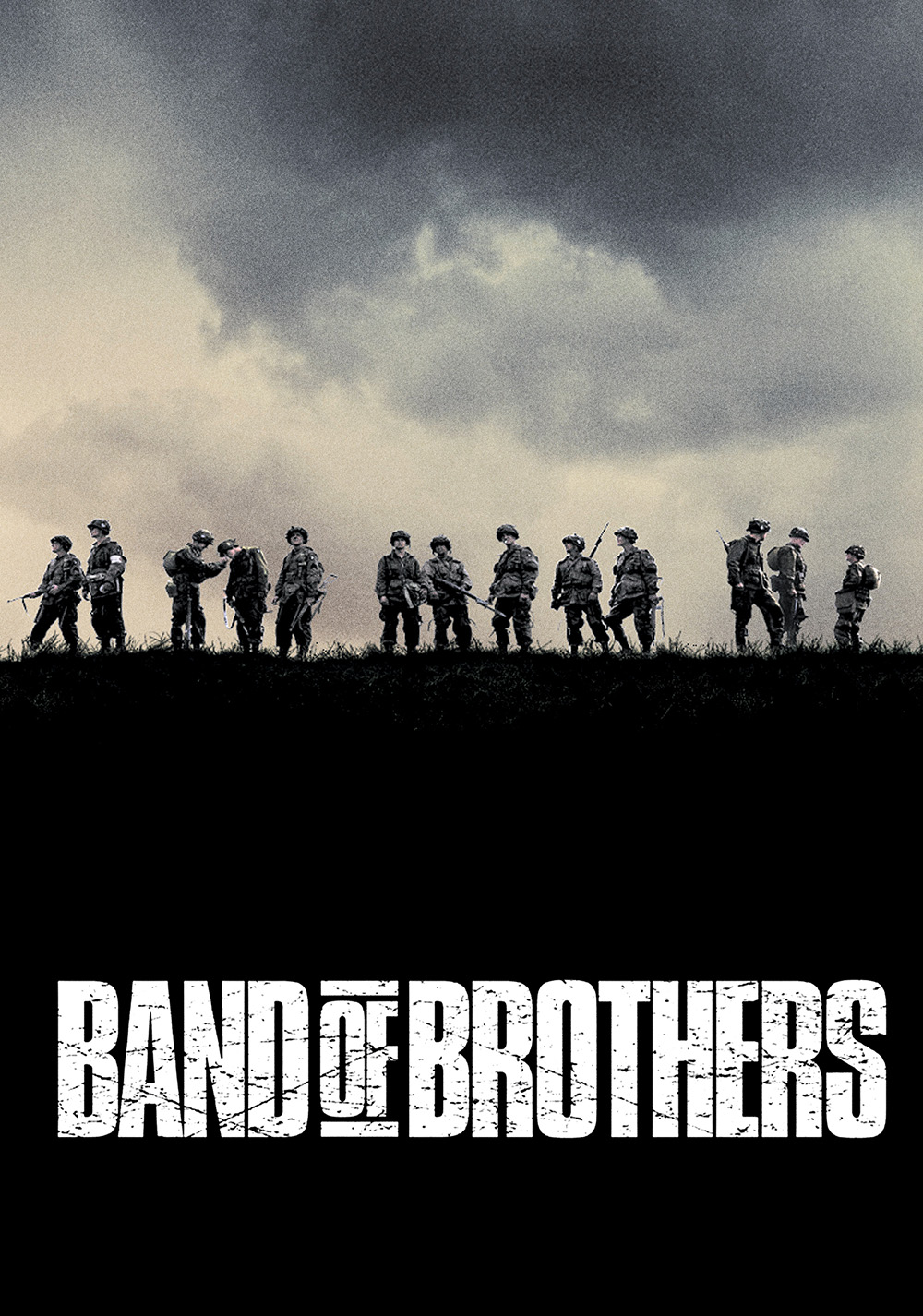
Review: Band of Brothers


“A lot of those [German] soldiers, I’ve thought about this often, that man and I might’ve been good friends. We might’ve had a lot in common. We might’ve liked to fish, you know, he might’ve liked to hunt. You never know. You know. Of course, they were doin’ what they were supposed to do, and I was tryin’ to do what I was supposed to do. But, under different circumstances we might’ve been good friends.” — Darrell “Shifty” Powers

When we look back at the landscape of modern television, it is easy to take the concept of cinematic TV for granted. We live in an era where massive budgets, sweeping orchestral scores, and A-list Hollywood talent are regularly deployed on the small screen. But if you trace this golden lineage back to its true modern genesis, all roads inevitably lead to a singular, towering achievement: the 2001 HBO mini-series Band of Brothers. Produced by Tom Hanks and Steven Spielberg, this ten-part masterpiece did not just recount the harrowing journey of Easy Company, 506th Parachute Infantry Regiment, 101st Airborne Division during World War II; it fundamentally altered the DNA of television storytelling. Watching it today, a quarter-century after its initial broadcast, the series remains as potent, heartbreaking, and visually stunning as it was when it first shocked audiences. It exists as a perfect bridge between the classical Hollywood war epics of old and the uncompromising, gritty realism of twenty-first-century media. By committing to an unprecedented budget and an absolute refusal to sanitize the psychological horrors of combat, Band of Brothers set a high-water mark that few series have ever managed to touch, let alone surpass.

To understand the visual language and visceral power of Band of Brothers, one must first look at the cinematic earthquake that preceded it three years earlier: Steven Spielberg’s 1998 masterpiece Saving Private Ryan. That film rewrote the rules of how cinema captures warfare, abandoning the steady, heroic, brightly lit panoramas of mid-century studio pictures in favor of a terrifyingly immersive, chaotic style. Spielberg utilized desaturated colors, shutter-angle manipulation to create a jittery, hyper-real sense of motion, and handheld cameras that made the audience feel like they were ducking bullets in the surf of Omaha Beach. When Hanks and Spielberg pivoted to television to adapt Stephen E. Ambrose’s non-fiction book Band of Brothers, they brought this exact aesthetic blueprint with them. The impact of Saving Private Ryan on the mini-series cannot be overstated; it acts as the structural and aesthetic godfather of the entire project. Directors like Phil Alden Robinson, Richard Loncraine, and David Nutter utilized the same bleach-bypass film processing techniques to strip away vibrant primaries, leaving a color palette dominated by icy blues, muddy browns, and sickly olive drabs. This was not just a stylistic gimmick; it was a psychological tool that pulled the viewer out of the comfort of their living rooms and dropped them into the frozen, unforgiving forests of Bastogne or the smoke-choked ruins of Carentan. The camera became a participant in the war, getting splattered with mud, shaking violently during artillery barrages, and refusing to look away from the gruesome reality of what high-explosive shrapnel does to human flesh.

Yet, while it shared a visual vocabulary with Saving Private Ryan, Band of Brothers achieved something that a two-and-a-half-hour feature film simply never could, owing entirely to the expansive canvas of the mini-series format. A film must ultimately compress its narrative arc, often relying on archetypes and rapid pacing to reach a resolution. Over the course of ten hours, Band of Brothers allows its characters to breathe, change, harden, and break. Crucially, some of the show’s most powerful, lasting stories have absolutely nothing to do with active battles, but rather unfold in the quieter moments between the chaos. We do not just see these men in the heat of a firefight; we watch them suffer through the mundane, soul-crushing basic training regime of Camp Toccoa under the tyrannical eye of Captain Sobel, played with a brilliant, tragic insecurity by David Schwimmer. We sit with them in the agonizing, silent darkness of C-47 transport planes, listening to the vomit hitting the floorboards and watching the sheer, unadulterated dread on their faces before the jump over Normandy. We freeze with them in foxholes during the long, static winter in the forests of Bastogne, sharing the psychological numbness of isolation and the simple, desperate human desire for a dry pair of socks or a warm cup of coffee. This structural patience transforms the viewing experience from simple passive entertainment into an emotional marathon. We have known these men through their triumphs and their absolute lowest points, making their losses hit with the weight of personal bereavement.

While these quiet stretches build a deep, slow-burning empathy, the absolute biggest gut punch of the entire series arrives in Episode 9, titled Why We Fight. Throughout their march across Europe, the men of Easy Company—and by extension, the audience—have become somewhat cynical and battle-weary, numbly pushing forward simply to survive and get the job done. That numbness is completely shattered when a patrol stumbles across an sub-camp in the woods near Landsberg, which itself was part of the larger Dachau concentration camp complex. Up until this point, the war had been about geopolitical strategies, territory, and survival; suddenly, the men are brought face-to-face with the industrial scale of Nazi atrocities. The direction in this sequence is devastatingly restrained. There are no swelling orchestrations or heroic monologues, only the bewildered horror of soldiers looking at skeletal survivors wandering the camp in striped uniforms. Watching tough, battle-hardened paratroopers like Captain Nixon and Major Winters reduced to breathless, disbelieving silence as they uncover the truth of the Holocaust anchors the narrative in an entirely different tier of tragedy. It is an episode that completely recontextualizes the title of the series, showing that their ultimate purpose transcended military victory; they were liberating humanity from an unimaginable nightmare.

The casting of the series is another stroke of absolute genius that looks even more miraculous in hindsight. The producers deliberately avoided casting massive, distracting superstars for the main roles, opting instead for relatively unknown British and American theater and character actors. This decision was crucial for maintaining the show’s documentary-like authenticity; if Tom Cruise or Brad Pitt had been jumping out of those planes, the illusion would have been instantly shattered. Instead, we got Damian Lewis as Major Richard Winters, delivering a performance of quiet, stoic, and deeply principled leadership that serves as the moral anchor of the entire narrative. Alongside him was Ron Livingston as Captain Lewis Nixon, embodying the weary, cynical, and battle-fatigued intellect of a man seeking refuge from the horrors of war in a bottle of Vat 69. The ensemble is a treasure trove of talent, featuring early-career appearances from actors who would go on to become household names, including Tom Hardy, Michael Fassbender, James McAvoy, Simon Pegg, and Michael Cudlitz. Because the show focuses on an entire company, the perspective shifts naturally from episode to episode. One week we are viewing the war through the eyes of a terrified replacement medic in Bastogne, and the next we are embedded with the cynical, battle-hardened sergeant Carwood Lipton in The Breaking Point. This shifting focus ensures that the series never feels like a traditional Hollywood star vehicle, but rather a collective portrait of brotherhood where the company itself is the true protagonist.

The emotional resonance of Band of Brothers is amplified tenfold by the brilliant inclusion of interviews with the actual surviving veterans of Easy Company at the beginning of each episode. Kept anonymous until the very final moments of the series, these elderly men sit in simple chairs against dark backgrounds, their voices trembling and eyes misting over as they recall events that occurred more than half a century prior. There is a heartbreaking disconnect between the frail, weathered men on screen and the vibrant, muscular young actors portraying them in the dramatization. These interviews ground the cinematic spectacle in an undeniable, sobering reality. They serve as a constant reminder that the explosions, the blood, and the impossible acts of bravery we are witnessing were not the inventions of a Hollywood writers’ room, but the actual lived experiences of ordinary boys who were plucked from small-town America and dropped into the middle of the apocalypse. When the real-life winter veteran Dick Winters quotes his friend’s letter at the end of the series—saying, “Grandpa, were you a hero in the war? And Grandpa said no, but I served in a company of heroes”—it is impossible not to be moved to tears. It is a rare instance where a piece of media successfully honors historical figures without falling into the trap of cheap, unearned sentimentality or jingoistic propaganda.

Beyond its historical and emotional triumphs, the legacy of Band of Brothers is woven directly into the fabric of what we now refer to as prestige television. Before 2001, television was largely viewed as cinema’s lesser sibling—a medium defined by low budgets, procedural structures, and compromised production values meant to fit the square dimensions of old cathode-ray tube television sets. HBO had already begun to challenge this status quo with groundbreaking dramas like The Sopranos and Oz, but Band of Brothers was the project that proved television could match, and perhaps even exceed, the scale and artistic ambition of Hollywood blockbusters. With a staggering budget of over one hundred and twenty million dollars, it was the most expensive television miniseries ever produced at the time. The immense financial gamble paid off spectacularly, demonstrating to network executives and creators alike that audiences were hungry for complex, serialized, and visually uncompromising narratives that demanded to be treated as high art. The success of the show cleared the path for future cinematic television epics, directly inspiring sister projects like The Pacific and Masters of the Air, while setting the production standards that would later allow shows like Game of Thrones, Chernobyl, and Succession to flourish. It proved that the small screen was capable of housing massive, global historical narratives without losing the intimate character dynamics that make long-form storytelling so uniquely compelling.

Ultimately, Band of Brothers stands as a definitive milestone because it perfectly balanced the macro-scale horror of global warfare with the micro-scale beauty of human connection. It stripped away the romanticized myths of World War II to expose the sheer, terrifying randomness of survival, while simultaneously validating the profound love and loyalty that can only be forged in the crucible of shared suffering. It did not glamorize combat; instead, it illuminated the heavy, permanent psychological toll extracted from those who survived it. Through its hyper-realistic visual language inherited from Saving Private Ryan, its impeccable ensemble casting, and its revolutionary impact on the medium of television, the series achieved a timeless quality. It remains a definitive piece of cultural touchstone media that demands annual rewatches from millions of viewers around the globe. It is not just a historical chronicle, nor is it merely a well-executed piece of premium television; it is a monument to the human spirit, an artistic triumph that continues to remind us of the immense sacrifices made by an ordinary generation of heroes who stood together when the world was falling apart.
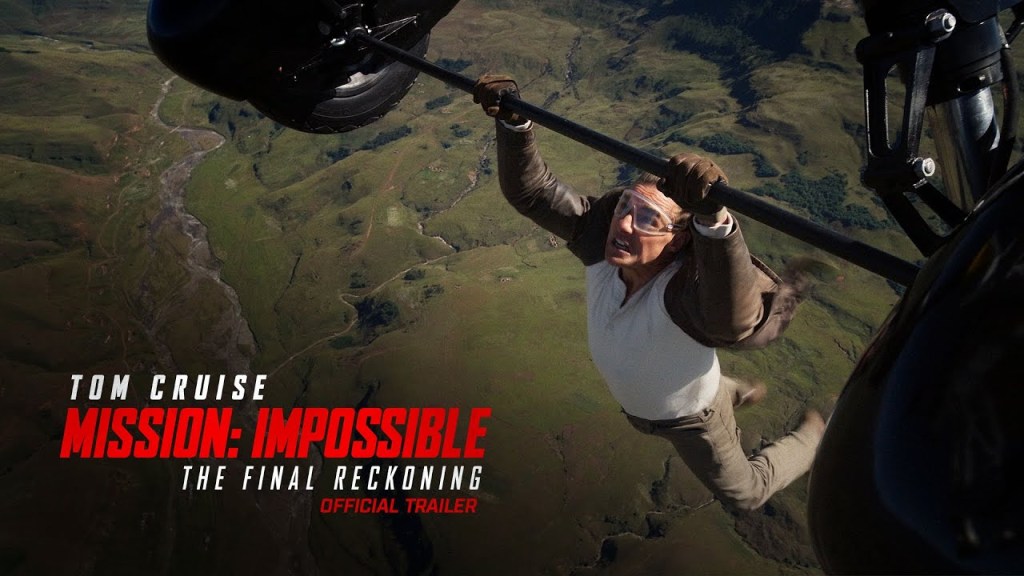
Brad’s thoughts on MISSION: IMPOSSIBLE – THE FINAL RECKONING (2025)


I’ve been trying to make it to the theater to watch the latest, and reportedly the final, “Mission: Impossible” film featuring Tom Cruise as Ethan Hunt. I was finally able to make it this weekend! This film series has been a big part of my life, with the first film opening when I was just a 22 year old kid, and the final film being released when I’m a 51 year old grandpa! Going back to 1996 when Brian De Palma directed the first in the series, I have seen all eight at the movie theater. I have enjoyed all of them, with MISSION: IMPOSSIBLE II as my clear least favorite, which is quite strange since it was directed by John Woo, my favorite director of all of them. I still like it though. This Mission: Impossible franchise has done the near impossible in the fact that it has gotten better and better over the course of its twenty nine years in existence. The first four films in the franchise experimented with different directors, some of the best in the business. The fifth in the franchise, “ROGUE NATION,” was directed by Christopher McQuarrie, who would then direct the rest of the series, including this final installment. McQuarrie’s sure hand has brought us to this final place. In a way, I’m sad to see it coming to an end, but time seems to take a toll on all of us, even Ethan Hunt / Tom Cruise.

MISSION: IMPOSSIBLE – THE FINAL RECKONING, a direct sequel to MISSION: IMPOSSIBLE – DEAD RECKONING PART 1 (2023), opens two months after the prior film. With the evil “Entity” continuing to corrupt global cyberspace and create chaos, it appears the world is headed for a sure nuclear war. With no other choice, U.S. President Erika Sloane (Angela Bassett) reluctantly puts her faith in Ethan Hunt (Tom Cruise) and his team of IMF agents, including Benji (Simon Pegg) and Luther (Ving Rhames). He also gets help from Grace (Hayley Atwell), Paris (Pom Klementieff), and Theo (Greg Tarzan Davis). Together this team goes after Gabriel (Esai Morales), an evil terrorist who’s been working with the “Entity,” in a last ditch effort to eliminate the end-of-the-world threat for a bunch of people who will never know what has been done for them.

I think that MISSION: IMPOSSIBLE – THE FINAL RECKONING is an excellent conclusion to the series featuring Tom Cruise as Ethan Hunt. There are several reasons I feel this way. First, this final episode gives us the things that we’ve loved about the series from the beginning. For example, there is always a section of the film where the team will have to do something that is impossible. They’ll go through the plan with us, the audience, and they’ll explain why it’s impossible and the worst case scenarios they could run into. You can always count on the actual execution of the mission being even worse than the “worst case scenarios,” with the fun being in how they finally achieve their objective after all sorts of complications. We definitely get that here. Second, the relationships that Ethan Hunt shares with his long term team of Luther (all 8 films) and Benji (6 films) bring something special in this final episode. Luther (Ving Rhames) has been with Ethan from the very beginning, and this final episode proves that Ethan isn’t the only person on the team willing to give everything he has to protect a bunch of people who will never know his name. Benji (Simon Pegg) has been with Ethan since the third installment, and the series has seen him go from being nerdy comic relief to an important and trusted member of the team. He’s still funny, but he’s also right in the middle of everything. I like Pegg and it’s been satisfying seeing this character arc. Third, the action sequences are incredible. The final sequence where Ethan Hunt must climb on board not one, but two different biplanes to stop the evil Gabriel from getting away is awesome. These stunt sequences are incredible, and I actually got weak in the knees as I watched the death defying maneuvers, mostly featuring Tom Cruise himself. Fourth, this final installment enjoys revisiting past missions and characters, tying these prior events to where we are now in Hunt’s story. My favorite is the re-introduction of the character William Donloe (Rolf Saxon), the CIA Analyst from the very first film who ran the impenetrable, secure room that Hunt’s team is able to break into in Langley, VA. We learn that his character was banished to a remote post on the Bering Sea as a direct result of what happened 29 years earlier. When he re-emerges here, it’s revealed that his reassignment was the best thing that ever happened to him, and he’s also made an integral part of this final installment. It’s good stuff. 

Finally, I want to finish my thoughts on MISSION: IMPOSSIBLE – THE FINAL RECKONING by discussing actor Tom Cruise. It’s my personal opinion that Cruise is the last of a dying breed, the true movie star who gives everything he has for his films. There are no others who do what Tom Cruise does, which is put his life on the line to entertain us. Jackie Chan did the same thing in his heyday, and there aren’t any others left. The stunts that Cruise completed for this film, as well as the prior films, will never be matched again by a major movie star. That may even be a good thing, but my respect for Cruise’s commitment to his craft places him alone in my book as the greatest movie star on the planet. They certainly don’t make them like Tom Cruise anymore. 

At the end of the day, MISSION: IMPOSSIBLE – THE FINAL RECKONING is an incredible close to the extremely successful franchise. It’s probably not the best in the series as it may try to cover too much ground in its efforts to close everything out. Time and repeat viewings will determine its ultimate reputation, but I know that I enjoyed every second of it. I even had some moisture well up in my eyes at the end as the film was reaching its conclusion. I honestly doubt we’ll ever see such prolonged excellence again in a movie franchise. 

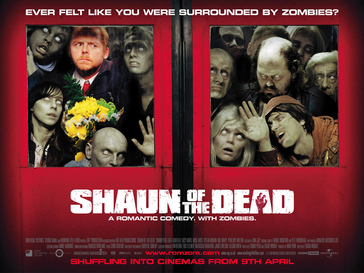
Live Tweet Alert: Watch Shaun of the Dead with #ScarySocial


As some of our regular readers undoubtedly know, I am involved in a few weekly live tweets on twitter.  I host #FridayNightFlix every Friday, I co-host #ScarySocial on Saturday, and I am one of the five hosts of #MondayActionMovie!  Every week, we get together.  We watch a movie.  We tweet our way through it.

Tonight, for #ScarySocial, @TimBuntley will be hosting 2004’s Shaun of the Dead!

That’s right!  It’s Edgar Wright’s classic zombie comedy, starring Simon Pegg, Nick Frost, and a zombiefied London!  It’ll make you laugh.  It’ll make you scream.  And the ending …. well, the ending always make me cry.

If you want to join us on Saturday night, just hop onto twitter, start the film at 9 pm et, and use the #ScarySocial hashtag!  The film is available on Prime and a few other streaming sites.  I’ll be there co-hosting and I imagine some other members of the TSL Crew will be there as well.  It’s a friendly group and welcoming of newcomers so don’t be shy.

Ethan Hunt returns in the Mission: Impossible – Dead Reckoning Part One Teaser!


Holy Cow! On Twitter, Christopher McQuarrie dropped the teaser trailer for Mission: Impossible – Dead Reckoning – Part One and there’s just so much to unpack here. Lorne Balfe reunites with McQuarrie on the score and I’m loving the piece that plays in this trailer. It looks like almost everyone from Mission: Impossible Fallout are back, and some new faces are present with Haley Atwell joining the fray. It’s also interesting to see Henry Czerny back in the mix. If the Fast and Furious movies have taught us anything, it’s that you can always find a use for a character you thought you shelved. Wow, it’s just a teaser, and it’s only Part One! I’m pretty excited for this.

The TSL’s Horror Grindhouse: Diary of the Dead (dir by George Romero)


I have to admit that I was a little bit hesitant about watching the 2007 film, Diary of the Dead.

It wasn’t that I don’t like zombie movies.  In fact, it was the complete opposite.  I love zombie films and Night of the Living Dead is one of my favorites.  George Romero, of course, went on to make several sequels to Night of the Living DeadDawn of the Dead, Day of the Dead, and Land of the Dead are certifiable horror classics.  However, I had heard mixed things about the two zombie films that Romero directed after Land of the Dead.  Seeing as how Diary of the Dead was Romero’s second-to-last film before he passed away in 2017, I was worried that I would watch the film and discover that I hated it.  I didn’t want experience anything that would tarnish Romero’s cinematic legacy.  It didn’t help my expectations that Diary of the Dead is a found footage film and the conventions of the found footage genre tend to get on my last nerve.

(Seriously, nothing makes me throw a shoe at a screen quicker than the sound of someone in a horror movie saying, “Are you filming this?”)

But you know what?

I did watch Diary of the Dead and it’s actually not bad.  It may not reach the heights of Romero’s other zombie films but it’s definitely a worthwhile companion piece.  It opens with news reports about the start of the zombie apocalypse, meaning that Diary of the Dead is meant to take place at roughly the same time as Night of the Living Dead.  (Never mind that Diary of the Dead is full of references to YouTube and blogs and other things that most people probably couldn’t even imagine when Night of the Living Dead first came out.)  A group of film students are in the woods, filming a terrible mummy movie when they first hear reports of the dead coming back to life.  Some say that there’s no way it could be true.  Others say that something must be happening but surely the dead aren’t actually coming back to life.  They soon discover that the dead have indeed returned.

We follow the students as they travel across Pennsylvania, trying to find a place that’s safe from the Dead and discovering that there’s literally no such place left in America.  Along the way, they also discover that the government has no intention of telling the people the truth about what’s happening.  In fact, a group of national guardsmen turn out to be just as dangerous as the zombies.  In their efforts to survive, the students are forced to rely on an underground network of bloggers and video makers.

Diary of the Dead has all of the usual zombie mayhem that you would expect from a film like this but, at the same time, it’s got a lot more on its mind than just the dead returning to life.  Much as he did with Land Of The Dead, Romero uses Diary of the Dead to comment on the state of America under the Patriot Act.  With the government using the zombie apocalypse as an excuse to suspend civil liberties and increase their own power, the film’s characters are forced to depend on new and independent information sources.  It’s not hard to see the parallel that Romero is making between the War on the Living Dead and the War on Terror.  As well, making all of the characters film students allows for some discussion about whether or not horror films should simply concentrate on being scary or whether they should also attempt to deal with real-world issues.  The film leaves little doubt where Romero came down on that issue.

On the negative side, Diary of the Dead struggles a bit to overcome the limitations of its low budget and none of the characters are as compelling as Ben in Night of the Living Dead or Fran in Dawn of the Dead.  At times, you find yourself wishing that Diary of the Dead featured just one actor who was as into their role as Duane C. Jones or Ken Foree were in Night of the Living Dead and Dawn of the Dead, respectively.  But Diary of the Dead still features enough zombies and enough of Romero’s trademark political subtext to be an acceptable addition to Romero’s vision of the apocalypse.

Here’s the 2nd Trailer for Star Trek Beyond!


I honestly don’t know much about Star Trek but I have seen both Fast Five and Fast & Furious 6 and, if I didn’t already know that Justin Lin was the director of the latest Star Trek film, I could have guessed from watching the 2nd trailer for Stark Trek Beyond.

(I’m also guessing that Star Trek Beyond is in no way related to Lucio Fulci’s The Beyond, which is a shame really.)

Seriously, judging from this trailer, Star Trek Beyond looks exciting and that should make for a nice change from the last Star Trek film.  It also appears that the Enterprise gets destroyed during Star Trek Beyond so I guess this must be the last movie….

(I’m totally kidding, calm down.)

One final note: somebody needs to make a movie starring Simon Pegg and Karl Urban as two cops who may break all the rules but who … GET RESULTS!

Anyway, until that happens, we can watch Simon and Karl in the trailer for Star Trek Beyond!

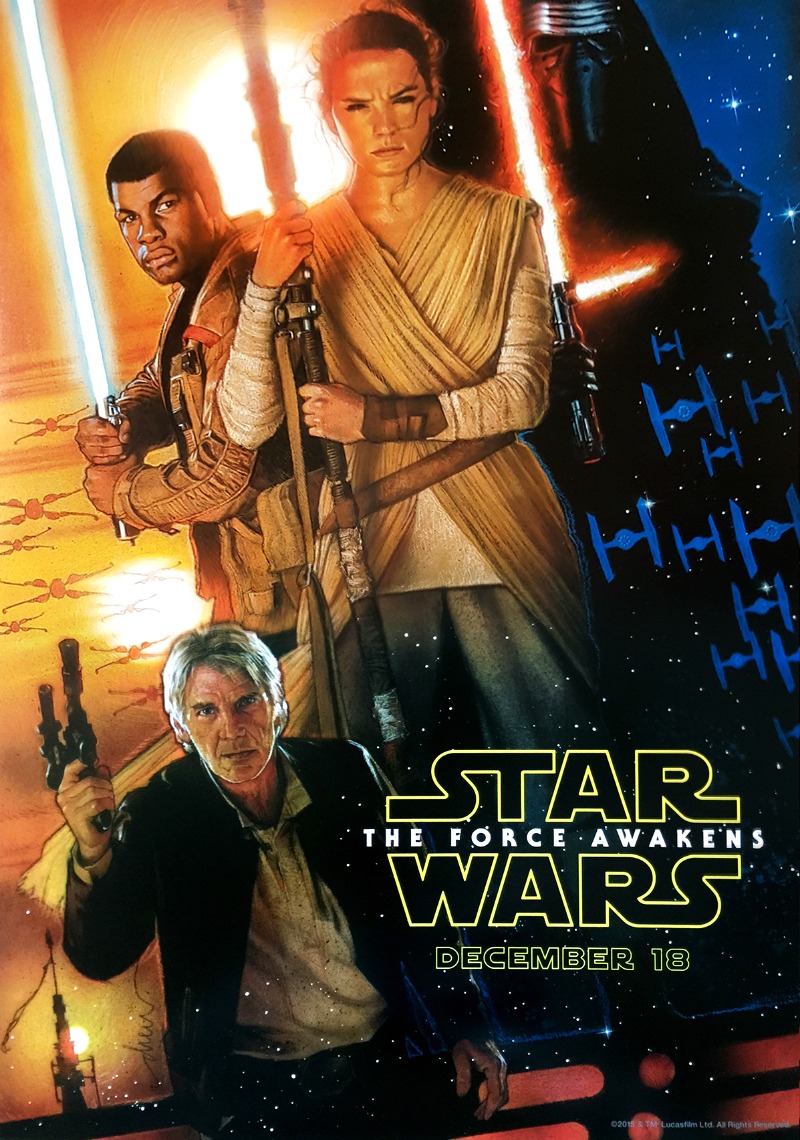
Star Wars: The Force Awakens (dir. by J.J. Abrams) Is the Sequel the Fandom Has Been Waiting For


Star Wars - The Force Awakens

[some minor, very minor spoilers]

When I first began this site on Christmas Eve of 2009 I had to thank the excitement I had for event films after seeing and experiencing James Cameron’s Avatar. It was an experience I hadn’t felt since the days of the Lord of the Rings trilogy and, even earlier than that, the original Star Wars trilogy. These were films that fired up one’s imagination, appreciation and love for film as entertainment and art. Some of these films would linger on longer in one’s mind than others, but that first viewing in their initial release would always imprint their effect on each viewer.

When George Lucas announced that he would be returning to that galaxy, far, far away with a trilogy of prequels almost 15 years since the world last saw Return of the Jedi premiere first the first time, the Star Wars fandom were giddy, excited and hyped beyond belief. The Star Wars films and the many spin-offs (novels, comic books, video games, etc.) which came about because of it only whetted the appetites of long-time Star Wars fans for more films detailing the adventures in the scifi universe created by George Lucas.

Yet, the prequels’ effect on these long-time fans would be the direct opposite of the effect the original trilogy had on the fandom. These three prequels (all directed and written by George Lucas himself) would do more than disappoint the fandom. It would create a schism between those who saw the original trilogy as the gateway to their fandom and those younger generation who never saw the original trilogy and had the prequels become their gateway to the fandom. Even to this day there would be some of the younger generation who truly believe that the prequels trump the original three films which began the franchise.

When news came down that Disney had bought Lucasfilm and everything which George Lucas had built and cultivated there was no chance in hell that there wouldn’t be another series of Star Wars despite the disaster which were the prequels. Lo and behold, it didn’t take long for Disney to greenlight the sequel to Return of the Jedi and have it set decades after the events of that film.

So, it is with Star Wars: The Force Awakens that the Star Wars fandom get to see whether their continued faith in the franchise was worth it or if they have been Charlie Brown’d once again and had the ball taken away at the very last second. It’s easy to say that Star Wars: The Force Awakens was great or it was awful. The true answer to whether this film succeeded in what it intended do was a bit more complicated.

Yet, if one was to look for an easy and simple answer then I’m happy to say that Star Wars: The Force Awakens was great. It had it’s moments of logic gap and plot holes, but as an overall finished product the film succeeded in course-correcting the franchise from the nadir it was at with the culmination of the prequels. It wouldn’t have taken much to surpass the very low bar set by those prequels, but The Force Awakens leapfrogged that bar and went even higher.

The film does begin thirty years after the events of Return of the Jedi and we find out with the now familiar episode intro crawl that Luke Skywalker has disappeared since those events and the galaxy has remained in turmoil with his absence. The Galactic Empire has been defeated, but in its place a new danger in the form of the genocidal First Order has arisen from the Empire’s remains. Opposing the First Order is a sort of galactic force supported in secret by the New Republic and led by General (not Princess) Leia Organa calling themselves the Resistance. It’s the conflict between these two factions and the search for Luke that forms the narrative base for The Force Awakens.

The film doesn’t linger too long in explaining the events which occurred in that 30-year gap between Return of the Jedi and The Force Awakens. It doesn’t need it as we’re quickly introduced to the series’ new characters in the form of Poe Dameron, the best pilot in the galaxy, who has been sent on a secret mission by Leia to find the clues as to her brother’s whereabouts. Next in line was Kylo Ren who becomes this film’s analogue to the Darth Vader figure of the original trilogy. Yet, the bulk of the film was told through the eyes of Finn and Rey.  The former is First Order stormtrooper who has seen first-hand what the First Order truly stands for and not for the betterment of the galaxy. The latter is a young woman living life on the desert planet Jakku scavenging the graveyard of starship wreckage from a battle thirty year’s prior.

It’s through Rey and Finn that the audience learns through their adventures upon meeting up with each other on Jakku what has transpired since the Rebellion destroyed the second Death Star and killed Emperor Palpatine. To these two characters, the events from the original trilogy seem to have passed beyond the realm of history and become more like legends and myths to the younger generation. Through a combination of fear and awe, Ren and Finn get introduced to some of the original trilogies main characters (Leia, Han Solo, Chewbacca and even Admiral Ackbar). These are the stories they’ve been told of growing up come to life right in front of their eyes and their reaction mirrors those of the audience who haven’t seen these characters in anything new and relevant since the end of Return of the Jedi. The reaction alone to seeing Han Solo and Chewbacca alone seemed like the fandom’s collective cheer for the good that has been missing with the franchise for over 30 years now.

The Force Awakens is not a perfect by any stretch of the imagination. Like mentioned earlier, the film does suffer from some gaps in story logic and plot holes. As with most J.J. Abrams directed films he had a hand in writing the script and one could see where he sacrificed coherent storytelling beats for something that just pushed the story along the path he wanted the film to take. For those who have been steeped in Star Wars lore and backstory, this would be easily explained as the Force nudging, guiding and, if all else fails, pushing the characters onto the right path, but for the casual viewers it would come off as story beats of convenience.

As a story to bring back the faithful and lure in those still uninitiated to the franchise The Force Awakens straddles the line between nostalgia and trying to bring in something new to the proceedings.

Let’s begin with the former and just say it now that The Force Awakens does follow some major story beats directly from A New Hope (to a smaller effect from Empire Strikes Back and Return of the Jedi). One could almost say that this film was a sort of soft reboot of the original trilogy with how it lifted ideas from them and through some writing and directing recombination come up with something new, but still very familiar for hardcore and non-fans alike.

Does this decision to lean heavily on the original trilogy for ideas hurt the film? For some it might be a bit too distracting to recognize too many callbacks to those earlier films, but for most it’s a reminder of what the prequels lacked and that’s the sense of adventure and fun. There was never anything fun about the prequels. The Force Awakens brings it all back and for most viewers this is the course-correction the series has needed since the last images from Revenge of the Sith faded away from the silver-screen.

Even the new characters introduced in this latest film were an amalgamation of the main characters from the original trilogy. Where Abrams and Kasdan changed this up a bit was to go beyond just creating new analogues for the classic characters of Leia, Han, Luke, Chewie and R2D2. They opted to take all the qualities fans loved about those characters and mixed them all up to be used in the roles of Rey, Finn, Poe, Kylo Ren and BB8.

As the standout character in the film, Rey (played by find of the year Daisy Ridley) would bring back memories of not just the young and hopeful Luke from the original trilogy, but also some personal traits of Leia and Han. The same goes for Finn who at times reminded us of Han’s roguish charm to Luke’s naivete of his role in the larger world he has finally witnessed for the very first time. For the half-empty crowd this might look as lazy character development, but those who see the film with the half-full mindset would easily latch onto these new characters. Characters who now take on the responsibility of moving the franchise beyond the nostalgia of the original trilogy and erasure of the disappointment of the prequels to new adventures with the next two films.

So, is Star Wars: The Force Awakens worth returning back to the franchise after the prequels or is it too much of a rehash of the original three films? The answer to that is a definite yes despite some of it’s flaws. For some the very flaws some have pointed out (too many callbacks, sort of a reboot, etc.) was what made the film a fun time to be had. It’s a return to the comfort zone the fandom missed with the prequels.

Will the next two films in this new trilogy follow suit and just rely too much on nostalgia to continue trying to satisfy it’s massive audience? Or will Rian Johnson and Colin Trevorrow (director of Episode VIII and Episode IX, respectively) move into new territory with minimal callbacks to those earlier films? We as an audience will have to wait til 2017 and 2019 to find out. Until then enjoy what Abrams and Lucasfilm has accomplished with The Force Awakens. A film which has reinvigorated a film franchise that has seem some major lows, but one which also happens to be one hell of a fun ride from start to finish on it’s own merits.

P.S.: Some controversy has arisen since the film’s release concerning the character played by Daisy Ridley. Some have been very vocal about calling her Rey character as a sort of knee-jerk reaction to the accusation that the Star Wars films have lacked for a strong female lead. An argument that’s as misguided and misinformed as that of the films being whitewashed. The films in the franchise have always had strong female characters. The accusation that Rey as a character in The Force Awakens is such a “Mary Sue” (a female character written and created to be the best at everything, no flaws) ignore the details in the character’s development.

What’s sadder is that some of the very people (film critics and writers) who in the past have complained that major films (especially blockbusters) have been lacking in very strong female characters have been the very same who see Rey as a negative and a character too good. This despite the character following in the very same footsteps in how her predecessors have been written (Luke, Han, Anakin). It’s an argument that is sure to bring heated debate among fans and detractors, but one that takes away from the performance of Daisy Ridley who should be one of the many breakout stars to come out of Star Wars: The Force Awakens.

Star Trek Beyond Looks Much Faster and More Furious


Star Trek Beyond

J.J. Abrams reinvigorated the Star Trek film franchise when he did a sort of sort-reboot in 2009. It brought the franchise into the consciousness of a younger demographic who didn’t grow up as fans of the franchise both in film and the many tv series. The film was a success and Paramount made sure to strike while it was still hot and greenlit a sequel that looked to build on the strong foundation set-up by J.J. Abrams.

2013 saw that sequel come out and to say that it underwhelmed and burned much of the goodwill created with the 2009 film would be an understatement. Star Trek Into Darkness (a title derided the moment it was announced) literally took the “darkness” part of the title and ramped it up to 11. There wasn’t any of the fun and adventurous nature of the first film. It didn’t help that screenwriter’s Robert Orci’s 9/11 Truther ideology seeped into the film’s plot.

When it was announced that Robert Orci would end up directing the third film after J.J. Abrams went to go direct the latest Star Wars film, the outcry was loud and clear. Orci was a bad choice and just keeping him on would just sink a film franchise already teetering on the brink of becoming irrelevant in a blockbuster environment where superhero universes and the original blockbuster universe reigned supreme.

So, it was with some relief and cautious optimism when Paramount dumped Orci and went with Justin Lin (hot off the massive success of Fast & Furious 6) and rewrites by Simon Pegg. The franchise was going to get the fun back into the series and everyone was invited. Even the chosen title, Star Trek Beyond, spoke to a creative team who saw a chance to bring back the franchise from just being part of a fandom but for those who wouldn’t know a dilithium crystal from a Sith Lord.

The first teaser shows the fun part of what Justin Lin and Simon Pegg have been talking about. Now, will the next trailer show a much more dramatic side to the events fans are hoping will balance all the fun.

Star Trek Beyond looks to land on July 22, 2016.

Film Review: Mission: Impossible — Rogue Nation (dir by Christopher McQuarrie)


Rebecca FergusonEarlier tonight, Jeff and I saw Mission: Impossible — Rogue Nation and now I’m pretty sure that I’m developing huge girl crush on actress Rebecca Ferguson.

She plays Ilsa Faust, a former operative for M.I.6. who is now somehow involved with a shadowy terrorist organization known as The Syndicate.  And while Ilsa may only be a supporting character (because, after all, this is a Mission Impossible film and therefore, Tom Cruise’s Ethan Hunt is unquestionably the star), she dominates every scene that she’s in.  Whether she’s escape the scene of an attempted assassination while wearing a dress that is simply to die for or rescuing Ethan Hunt from certain death, Ilsa Faust is a woman who kicks ass, takes no prisoners, and looks great while she’s doing it.  As much as I love Scarlett Johansson as Natasha Romanoff, Ilsa Faust is my new espionage role model.

The movie attempts to suggest that there’s some sexual chemistry between Ilsa and Ethan.  Oddly enough, there’s not.  Tom Cruise looks good and he gives a confident and likable performance but, as a character, Ethan comes across as being almost asexual.  He seems to be attracted to only intrigue and danger.  And yet, that lack of authentic romantic chemistry actually works to the film’s advantage.  Ilsa is never reduced to merely being a love interest.  Instead, she’s an equal to Ethan throughout the entire film.

Of course, Ilsa has secrets of her own.  Everyone in Mission: Impossible — Rogue Nation has a secret.  The film opens with the IMF being disbanded and its operatives being absorbed into the CIA.  When the CIA director (Alec Baldwin, in full jerk mode) orders Ethan to stop investigating the Syndicate, Ethan goes underground and continues his activities in secret.  His allies (Jeremy Renner, Ving Rhames, and the great Simon Pegg) can only help him in secret.  The origins of the Syndicate turn out to be the biggest secret of all.  There are so many secrets in Rogue Nation that it’s sometimes hard to keep track of them all but, again, that works to the film’s advantage.  It keeps the audience off-balance.  You never know when someone’s going to suddenly pull out a gun and start shooting or rip off a mask and reveal themselves to be someone else.

Rogue Nation is an entertaining action film.  The stunts are spectacular and the set pieces are exciting and enjoyably over the top.  (There’s a scene where Ethan Hunt has to change out a security card while holding his breath underwater and I literally watched it through my fingers.)  I wouldn’t suggest trying to read too much into the film and yet, at the same time, Rogue Nation does capture the paranoid times in which we live. The film manages to both condemn the excesses of government while celebrating the toys that make those excesses possible.  The average film goer may not be able to do all of the things that Ilsa and Ethan can do but we all know what it’s like not to trust authority.

That’s what makes Solomon Lane, the main villain played by Sean Harris, such an interesting character.  I know that some reviewers have complained that Lane’s role was underwritten but I have to disagree.  Lane may not be as verbose as the typical spy movie villain but I appreciated the fact that he remained somewhat enigmatic up to the conclusion of the film.  He never made the mistake of over explaining his evil plan and accidentally giving the IMF team extra time in which to defeat him.  (Solomon Lane obviously learned his lesson from watching countless would-be world conquerors accidentally allow James Bond to get the better of them.)  Lane may be ruthless and evil but he’s also a revolutionary who is outraged by some of the same things that the rest of us are outraged by.  This brings a welcome hint of ambiguity to the film.

Though it never quite reaches the lunatic highs of either Kingsman or Furious Seven, Rogue Nation is still an enjoyable and effective action movie.  Undoubtedly, Ethan and the IMF team will return in another installment.  Here’s hoping that Ilsa Faust gets a spin-off of her very own.


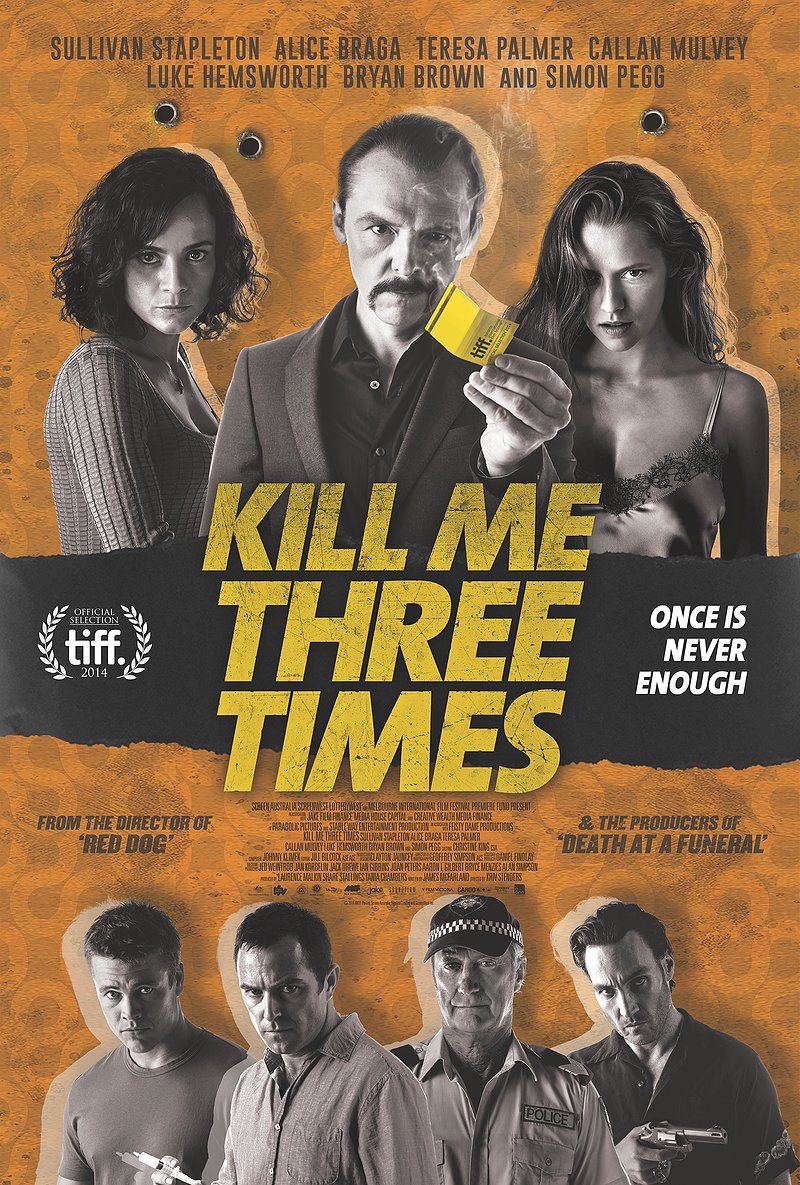
Trailer: Kill Me Three Times (Red Band)


11180763_800

Once in awhile we come across a little film that we would never have bothered to even check out if not for the reach of the interwebs.

One such film is the Australian black comedy thriller Kill Me Three Times which had a screening at 2014’s Toronto International Film Festival. It stars Simon Pegg (channeling his inner Sean Connery mustache by way of Zardoz), Teresa Palmer and Callan Mulvey.

From the red band trailer it looks to be quite the violent little black comedy that Simon Pegg seems to be quite adept at. Interesting to note that this film will probably introduce the rest of the world to a third Hemsworth brother (they must clone them Down Under or something).