Cleaning Out The DVR: Crime + Punishment in Suburbia (dir by Rob Schmidt)


(Lisa is once again trying to clean out her DVR!  She’s got about 182 films on her DVR and she needs to get them all watched by the end of this year!  Will she make it?  Not if she’s too busy writing cutesy introductions for her reviews to actually watch the movies!  She recorded Crime + Punishment in Suburbia off of Flix on February 25th!)

Oh, dammit.

I have seen some really pretentious movies before but Crime + Punishment in Suburbia is really something else.  As you might be able to guess from the title, the film is supposedly based on the Dosteyevsky novel but it takes place not only in modern times but in suburbia as well.  Oh, and it actually has next to nothing in common with Doteyevsky novel, beyond a murder and occasional religious symbolism.  And by occasional, I mean that there’s a scene where Vincent Kartheiser wears a Jesus t-shirt.

Kartheiser plays Vincent, a teenager who I think we’re supposed to think is dark and disturbed but instead he just comes across like a weird little poser.  I mean, honestly, it takes more than just wearing black clothes to be weird.  I had a closet full of black clothes when I was eighteen and it still never brought me any closer to enlightenment.  Anyway, Vincent is a classmate of Roseanne (Monica Keena) and Roseanne is dating a handsome but dumb jock named Jimmy (James DeBello).  Roseanne’s mother is named Maggie (Ellen Barkin) and Maggie has recently married an abusive drunk named Fred (Michael Ironside).

Fred is a total jerk so Maggie goes out with her best friend, Bella (Conchata Ferrell), to a bar.  It’s at the bar that she meets Chris (Jeffrey Wright), a handsome and charming bartender.  Soon, Chris and Maggie are having an affair and when Fred finds out, he rapes his stepdaughter.  Roseanne convinces Jimmy to help her murder Fred but, after the deed is done, Roseanne finds herself struggling with her conscience.

Now, of course, in Crime & Punishment, the whole point is that the murder itself was largely random and motiveless.  The rest of the book deals with the protagonist’s attempt to come to terms with not only his crime but also with the meaninglessness of it all.  In Crime + Punishment in Suburbia, Roseanne has a good reason for killing Fred.  Fred is such a monster that there’s no real confusion as to why Roseanne did what she did.  One could argue, quite convincingly, that if she didn’t kill Fred, he would have ended up killing her.  That makes the film’s later attempt at moral ambiguity feel rather hollow and empty.

The other problem with Crime + Punishment in Suburbia is that we don’t see the story through Roseanne’s eyes.  Instead, the entire movie is narrated by Vincent.  Now, Vincent Kartheiser is not a bad actor.  Anyone who has seen Mad Men knows that.  And, in this film, he occasionally gets to flash a cute smile that makes the character a little bit bearable.  But the character he plays, Vincent, is so weird and off-putting that you have no desire to spend 100 minutes listening to him portentously talk about his existence.  Considering that Monica Keena actually gives a pretty good performance as Roseanne, the decision to tell her story through Vincent’s eyes feels all the more mistaken.

The only thing more overwrought than Vincent’s narration is Rob Schmidt’s direction.  This is one of those films that uses every narrative trick in the book to tell its story.  Look at the wild camera angles!  Look at the sudden slow motion!  Look at the freeze frame!  This is one of those movies that you watch and you just want to shout, “Calm down!” at the director.

Crime + Punishment in Suburbia is one to avoid.

Here’s What Won At The Emmys Last Night!


Last night, Lisa Marie did not watch the Emmys because she says that, “I’m just not feeling TV this year.”  If Twin Peaks had been eligible to be nominated, I bet it would have been a different story!

Instead, she asked me to watch the ceremony and let everyone know what I thought.  It needed less politics and more cats.

Here’s the list of winners:

COMEDY

BEST COMEDY SERIES
“Atlanta”
“Black-ish”
“Masters of None”
“Modern Family”
“Silicon Valley”
“Unbreakable Kimmy Schmidt”
X — “Veep”

BEST COMEDY ACTRESS
Pamela Adlon, “Better Things”
Jane Fonda, “Grace and Frankie”
Allison Janney, “Mom”
Ellie Kemper, “Unbreakable Kimmy Schmidt”
X — Julia Louis-Dreyfus, “Veep”
Tracee Ellis Ross, “Black-ish”
Lily Tomlin, “Grace and Frankie”

BEST COMEDY ACTOR
Anthony Anderson, “Black-ish”
Aziz Ansari, “Master of None”
Zach Galifianaks, “Baskets”
X — Donald Glover, “Atlanta”
William H. Macy, “Shameless”
Jeffrey Tambor, “Transparent”

BEST COMEDY SUPPORTING ACTRESS
Vanessa Bayer, “Saturday Night Live”
Anna Chlumsky, “Veep”
Kathryn Hahn, “Transparent”
Leslie Jones, “Saturday Night Live”
Judith Light, “Transparent”
X — Kate McKinnon, “Saturday Night Live”

BEST COMEDY SUPPORTING ACTOR
Louie Anderson, “Baskets”
X — Alec Baldwin, “Saturday Night Live”
Tituss Burgess, “Unbreakable Kimmy Schmidt”
Ty Burrell, “Modern Family”
Tony Hale, “Veep”
Matt Walsh, “Veep”

BEST COMEDY DIRECTING
X — “Atlanta” (“B.A.N.”)
“Silicon Valley” (“Intellectual Property”)
“Silicon Valley” (“Server Error”)
“Veep” (“Justice”)
“Veep” (“Blurb”)
“Veep” (“Groundbreaking”)

BEST COMEDY WRITING
“Atlanta” (“B.A.N.”)
“Atlanta” (“Streets on Lock”)
X — “Master of None” (“Thanksgiving”)
“Silicon Valley” (“Success Failure”)
“Veep” (“Groundbreaking”)
“Veep” (“Georgia”)

DRAMA

BEST DRAMA SERIES
“Better Call Saul”
“The Crown”
X — “The Handmaid’s Tale”
“House of Cards”
“Stranger Things”
“This is Us”
“Westworld”

BEST DRAMA ACTRESS
Viola Davis, “How to Get Away with Murder”
Claire Foy, “The Crown”
X — Elisabeth Moss, “The Handmaid’s Tale”
Keri Russell, “The Americans”
Evan Rachel Wood, “Westworld”
Robin Wright, “House of Cards”

BEST DRAMA ACTOR
X — Sterling K. Brown, “This is Us”
Anthony Hopkins, “Westworld”
Bob Odenkirk, “Better Call Saul”
Matthew Rhys, “The Americans”
Liev Schreiber, “Ray Donovan”
Kevin Spacey, “House of Cards”
Milo Ventimiglia, “This is Us”

BEST DRAMA SUPPORTING ACTRESS
Uzo Aduba, “Orange is the New Black”
Millie Bobby Brown, “Stranger Things”
X — Ann Dowd, “The Handmaid’s Tale”
Chrissy Metz, “This is Us”
Thandie Newton, “Westworld”
Samira Wiley, “The Handmaid’s Tale”

BEST DRAMA SUPPORTING ACTOR
Jonathan Banks, “Better Call Saul”
David Harbour, “Stranger Things”
Ron Cephas Jones, “This is Us”
Michael Kelly, “House of Cards”
X — John Lithgow, “The Crown”
Mandy Patinkin, “Homeland”
Jeffrey Wright, “Westworld”

BEST DRAMA DIRECTING
“Better Call Saul” (“Witness”)
“The Crown” (“Hyde Park Corner”)
“The Handmaid’s Tale” (“The Bridge”)
X — “The Handmaid’s Tale” (“Offred”)
“Homeland” (“America First”)
“Stranger Things” (“Chapter One: The Vanishing of Will Byers”)
“Westworld” (“The Bicameral Mind”)

BEST DRAMA WRITING
“The Americans” (“The Soviet Division”)
“Better Call Saul” (“Chicanery”)
“The Crown” (“Assassins”)
X — “The Handmaid’s Tale” (“Offred”)
“Stranger Things” (“Chapter One: The Vanishing of Will Byers”)
“Westworld” (“The Bicameral Mind”)

MOVIE/LIMITED SERIES

BEST LIMITED SERIES
X — “Big Little Lies”
“Fargo”
“Feud: Bette and Joan”
“Genius”
“The Night Of”

BEST TV MOVIE
X — “Black Mirror: San Junipero”
“Christmas of Many Colors”
“The Immortal Life of Henrietta Lacks”
“Sherlock: The Lying Detective”
“The Wizard of Lies”

BEST MOVIE/MINI ACTRESS
Carrie Coon, “Fargo”
Felicity Huffman, “American Crime”
X — Nicole Kidman, “Big Little Lies”
Jessica Lange, “Feud: Bette and Joan”
Susan Sarandon, “Feud: Bette and Joan”
Reese Witherspoon, “Big Little Lies”

BEST MOVIE/MINI ACTOR
X — Riz Ahmed, “The Night Of”
Benedict Cumberbatch, “Sherlock: The Lying Detective”
Robert De Niro, “The Wizard of Lies”
Ewan McGregor, “Fargo”
Geoffrey Rush, “Genius”
John Turturro, “The Night Of”

BEST MOVIE/MINI SUPPORTING ACTRESS
Judy Davis, “Feud: Bette and Joan”
X — Laura Dern, “Big Little Lies”
Jackie Hoffman, “Feud: Bette and Joan”
Regina King, “American Crime”
Michelle Pfeiffer, “The Wizard of Lies”
Shailene Woodley, “Big Little Lies”

BEST MOVIE/MINI SUPPORTING ACTOR
Bill Camp, “The Night Of”
Alfred Molina, “Feud: Bette and Joan”
X — Alexander Skarsgard, “Big Little Lies”
David Thewlis, “Fargo”
Stanley Tucci, “Feud: Bette and Joan”
Michael Kenneth Williams, “The Night Of”

BEST MOVIE/MINI DIRECTING
X — “Big Little Lies”
“Fargo” (“The Law of Vacant Places”)
“Feud: Bette and Joan” (“And the Winner Is”)
“Genius” (“Einstein: Chapter One”)
“The Night Of” (“The Art of War”)
“The Night Of” (“The Beach”)

BEST MOVIE/MINI WRITING
“Big Little Lies”
X — “Black Mirror: San Junipero”
“Fargo” (“The Law of Vacant Places”)
“Feud: Bette and Joan” (“And the Winner Is”)
“Feud: Bette and Joan” (“Pilot”)
“The Night Of” (“Call of the Wild”)

VARIETY/REALITY

BEST REALITY COMPETITION PROGRAM
“The Amazing Race”
“Amercan Ninja Warrior”
“Project Runway”
“RuPaul’s Drag Race”
“Top Chef”
X — “The Voice”

BEST VARIETY TALK SERIES
“Full Frontal with Samantha Bee”
“Jimmy Kimmel Live”
X — “Last Week Tonight with John Oliver”
“Late Late Show with James Corden”
“Late Show with Stephen Colbert”
“Real Time with Bill Maher”

BEST VARIETY SKETCH SERIES
“Billy on the Street”
“Documentary Now”
“Drunk History”
“Portlandia”
X — “Saturday Night Live”
“Tracey Ullman’s Show”

BEST VARIETY SERIES DIRECTING
“Drunk History”
“Jimmy Kimmel Live”
“Last Week Tonight with John Oliver”
“Late Show with Stephen Colbert”
X — “Saturday Night Live”

BEST VARIETY SERIES WRITING
“Full Frontal with Samantha Bee”
X — “Last Week Tonight with John Oliver”
“Late Night with Seth Meyers”
“Late Show with Stephen Colbert

Film Review: Basquiat (dir by Julian Schnabel)


Basquiat.  I love this movie.

I Shot Andy Warhol was not the only 1996 film to feature Andy Warhol as a character.  He was also a prominent supporting character in Basquiat.  In this film, he’s played by David Bowie and Bowie gives a far different performance than Jared Harris did in I Shot Andy Warhol.  Whereas Harris played Andy as a detached voyeur, Bowie’s performance is far more sympathetic.  (Of course, it should be noted that Harris and Bowie were playing Andy Warhol at very different points in the artist’s life.  Harris played the younger, pre-shooting Warhol.  Bowie played the older, post-shooting Warhol.)

Then again, it’s not just Andy Warhol who is portrayed more positively in Basquiat than in I Shot Andy Warhol.  The entire New York art scene is portrayed far more positively in Basquiat.  Whereas I Shot Andy Warhol was a film about an outsider who was destined to forever remain an outsider, Basquiat is a film about an outsider who becomes an insider.  On top of that, Basquiat was directed by a fellow insider, painter Julian Schnabel.

The film itself is a biopic of Jean-Michel Basquiat (very well played by Jeffrey Wright), the graffiti artist who, in the 1980s, briefly became one of the superstars of the New York art scene.  However, it’s less of a conventional biopic and more of a meditation on what it means to be an artist.  Throughout the film, Basquiat looks up to the New York skyline and sees a surfer riding a wave across the sky.  The image itself is never explicitly explained.  We never learn why, specifically, Basquiat visualizes a surfer.  But then again, that’s what makes the surfer a perfect symbol of Basquiat’s artistic sensibility and talent.  It’s a reminder that, while we can appreciate an artist’s work, only the artist can truly understand what that work is saying.  All attempts to try to explain or categorize art are as pointless as trying to understand why that surfer is in the sky.  Ultimately, the why is not as important as the simple fact that the surfer is there.

The film follows Basquiat as he goes from living on the streets to being a protegé of Andy Warhol’s and, until he overdosed on heroin, one of the shining lights of the New York art scene.  Along the way, Basquiat struggles to maintain a balance between art and the business.  In one of the key scenes of the film, an empty-headed suburbanite (Tatum O’Neal) looks at Basquiat’s work and whines that there’s too much green.  She just can’t handle all of that green.

Basquiat’s friendship with Andy Warhol provides this film with a heart.  When Bowie first appears — having lunch with a German art dealer played by Dennis Hopper — one’s natural instinct is to assume that Bowie as Warhol is stunt casting.  However, Bowie quickly proves that instinct to be wrong.  As opposed to many of the actors who have played Andy Warhol over the years, Bowie gives an actual performance.  Instead of resorting to caricature, Bowie plays Warhol as being mildly bemused by both his fame and the world in general.

Basquiat also develops a close friendship with another artist.  Gary Oldman may be playing a character named Albert Milo but it’s obvious from the moment that he first appears that he’s playing the film’s director, Julian Schnabel.  If there was any doubt, Schnabel’s studio stands in for Milo’s studio.  When Milo shows off his work, he’s showing off Schnabel’s work.  When Albert Milo introduced Basquiat to his parents, the nice old couple is played by Julian Schnabel’s actual parents.  It’s perhaps not surprising that Albert Milo is presented as being one of the most important and popular artists in New York City.  In a film full of bitchy characters, Albert Milo is unique in that literally everyone likes and respects him.  And yet Gary Oldman gives such a good and heartfelt performance that you can’t hold it against the character that he happens to be perfect.  There’s a small but touching scene in which Albert Milo and his daughter share a dance in front of one of Schnabel’s gigantic canvases.  Of course, Milo’s daughter is played by Julian Schnabel’s daughter.

The entire cast is full of familiar actors.  Willem DaFoe appears as a sculptor.  Christopher Walken plays a hilariously vapid interviewer.  Courtney Love plays a groupie.  Benicio Del Toro plays Basquiat’s best friend.  Parker Posey shows up as gallery owner Mary Boone.  Michael Wincott plays Rene Ricard, the somewhat infamous art critic who was among the first to celebrate the work of both Basquiat and Schnabel.  For once, the use of familiar actors does not sabotage the effectiveness of the film.  If anything, it helps to explain why Basquiat was so determined to make it.  There’s a magical scene where a then-unknown Basquiat peeks through a gallery window and sees Andy Warhol, Albert Milo, and Bruno Bischofberger.  However, the film’s audience sees David Bowie, Gary Oldman, and Dennis Hopper.  What both Basquiat and the audience have in common is that they’re both seeing bigger-than-life stars.

Basquiat is an often magical and poignant film and I absolutely love it.

A Movie A Day #16: Boycott (2001, directed by Clark Johnson)


boycott

Originally made for HBO, Boycott is one of the best and, unfortunately, least-known films made about the life of Martin Luther King, Jr.  Boycott tells the story of the Montgomery Bus Boycott, starting with the arrest of Rosa Parks for refusing to sit in the back of the bus to the eventual integration of the Montgomery public transportation system.  Clark Johnson directs Boycott in a semi-documentary, handheld style, which adds an immediacy to the oft-told story.

Boycott focuses on the role that 24 year-old Martin Luther King, Jr. (played by Jeffrey Wright) played as the leader of the Montgomery Bus Boycott and how the boycott’s success turned King into a national figure.  Jeffrey Wright does a great job playing the young King and it’s interesting to watch as the initially uncertain King finds both his voice and his strength as a leader.  Boycott works as a good companion piece to Selma, not the least because Carmen Ejogo plays Coretta Scott King in both of them.

Also giving a noteworthy performances are Terrence Howard as King’s second-in-command, Ralph Abernathy and Erik Dellums in the role of Bayard Rustin, who was one of King’s closest confidants but, because he was gay, was often left outside of the movement’s inner circle.  Before they worked together on Boycott, Dellums, the son of former U.S. Rep. Ron Dellums, co-starred with Clark Johnson on Homicide: Life on the Street.

Boycott is a tribute to not just Martin Luther King but also the entire civil rights movement.

Playing Catch Up: The Good Dinosaur and The Peanuts Movie


http://www.youtube.com/watch?v=-RaApFZw9Hw

The Good Dinosaur (dir by Peter Sohn)

It may be hard to remember this now but, at the beginning of 2015, a lot of film bloggers were very excited about an upcoming film from Pixar Studios.  “This,” they said, “is the film that will remind people why they love Pixar in the first place!  In fact, this might be the first animated film to get a best picture nomination since Toy Story 3!”  Of course, there was another movie from Pixar that was due to come out in 2015 but everyone agreed that movie sounded too weird and silly to be a legitimate contender.  One of the movies would be a huge success and the other would probably be forgotten in a year or two.

And, at the time, everyone was sure that The Good Dinosaur would be the triumph while Inside Out would be the also-ran.

Instead, the exact opposite happened.  Inside Out turned out to be one of the most innovative and charming animated films ever.  Meanwhile, The Good Dinosaur — despite being a financial and critical success — has struggled to escape from Inside Out‘s shadow.

But you know what?  Taken on its own terms, The Good Dinosaur is a likable and entertaining movie.  No, it’s not as good as Inside Out but then again, the same can be said for a lot of good movie that were released in 2015.  Inside Out, of course, is a movie for adults that can still be enjoyed by kids.  The Good Dinosaur is definitely a movie for kids but it’s still visually striking enough that adults can get something out of it as well.

Plotwise, The Good Dinosaur imagines a world in which that meteorite did not strike the Earth and dinosaurs and humans developed next to each other.  A teenage dinosaur — eager to prove that he’s worthy despite being clumsy and easily scared — gets separated from his family and tries to get back to them.  Along the way, he deals with villainous pterodactyls and befriends a human child that he names Spot.  Sadly, the film brings about as much depth to the idea of talking dinosaurs as Pixar previously brought to the idea of talking cars but still, it’s an enjoyable and undeniably effective film.  Unlike Inside Out, it may not be great but it’s definitely good enough.

The Peanuts Movie (dir by Steve Martino)

My sister Erin and I saw The Peanuts Movie when it first opened last November.  As we left the theater, we both agreed that the movie was genuinely sweet and cute but that the ending just didn’t feel right.  Ultimately, we agreed that the ending was just too happy.

I don’t claim to be the world’s biggest expert on the life of Charlie Brown but I do know that he’s been around for nearly 70 years and, in that time, I don’t think he’s ever really had a traditionally happy ending.  From what I’ve seen of his holiday specials, it seems that Charlie is usually fated to end up sitting by himself while snow falls all around him.  And really, that always seemed to be the main appeal of Charlie Brown as a character.  Even though nothing ever goes his way, he never stops trying.  Even though he may sometimes get discouraged, he never gives up.  The Peanuts Movie actually rewards Charlie Brown for his patience and that didn’t quite feel right.

But you know what?  Maybe, after 70 years, Charlie Brown has finally earned the right to have at least one unambiguously positive ending.  The Peanuts Movie was a financial success so I imagine there will be a sequel.  If, during that sequel, Charlie wins a game or kicks that football or gets a kite to fly or actually wears a flattering outfit, it’ll be a problem.  But for now, it’s acceptable and perhaps even appropriate that he finally got to feel good about something at the end of The Peanuts Movie.

As for the rest of the film, it’s a cute homage to the original Peanuts specials.  Despite that happy ending, it remains true to the spirit of its source material and it’s obvious that the filmmakers had a lot of affection for Charlie, Linus, Snoopy, and all the rest.

And yes, Snoopy does steal the entire film.

Was there ever any doubt?

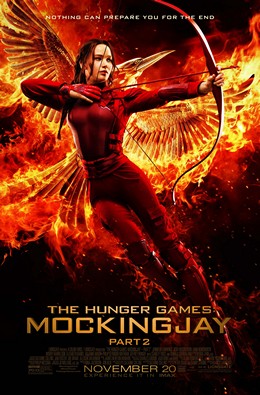
Sci-Fi Film Review: The Hunger Games: Mockingjay — Part 2 (dir by Francis Lawrence)


Mj

It’s finally over!

It probably sounds like I’m really excited that the final Hunger Games adaptation has been released.  It may sound like I’m happy that the saga of Katniss Everdeen and her life in Panem has finally come to an end.  And, to a certain extent, I am.  After everything that Katniss has been through, she deserves some peace and, fortunately, the series has ended before Jennifer Lawrence got bored with playing the role.  (To see what happens when actor gets bored with an iconic role, check out Daniel Craig in Spectre.)  Even though I think it can be argued that Mockingjay Part Two is the weakest of all the Hunger Games films, it still allows both Katniss and the actress who brought her to life to go out on a high note.

There’s a part of me that cringes a little when I think about all of the films that were released as a direct result of the success of The Hunger Games.  The Giver, The Maze Runner, Divergent, Tomorrowland, the list goes on and on.  I’ve reached the point where I can now say that I am officially sick of sitting through adaptations of Young Adult dystopian fiction.  And yet, I was still excited to see The Hunger Games: Mockingjay Part Two (even if that title is way too long and unwieldy).  Regardless of the number of mediocre films that it may have inspired, The Hunger Games franchise has always remained compelling.

So, how was Mockingjay Part Two?  Obviously, it doesn’t work as a stand-alone film.  The pacing is totally off, characters appear and disappear almost at random, and it’s all rather confusing.  If you haven’t seen the film that came before Mockingjay Part Two, I imagine that you would be totally confused by this film.  But, when viewed as the fourth part of one gigantic epic story, the whole thing is rather brilliant.

When the film opens, Katniss is still being used a prop in Alma Coin’s (Julianne Moore) revolution.  The majority of the film deals with her journey into and through the capital.  She wants to track down and assassinate President Snow (the wonderfully evil Donald Sutherland) whereas Coin just wants to use her as a symbol to solidify her authority.  As Katniss quickly realizes, there’s not much difference between Snow and Coin.  However, it takes one great tragedy for Katniss to truly understand the truth about the Alma Coin and her revolution.  If you’ve read the book, you’ll already know about and be prepared for that tragedy but it’s still a heart-breaking moment.

It’s also the most important moment in the franchise, one that reminds us that The Hunger Games has always been far more politically sophisticated (and thematically darker) than all of the films, books, and fan fic that has been inspired by it.  This is a seriously dark and, some would say, cynical movie and, as a student of history, I appreciated that.  I appreciated that Mockingjay didn’t try to force a happy ending on us and I also appreciated the fact that Mockingjay didn’t buy into the simplistic Manichaen worldview that is currently ruining worlds both real and cinematic.  The film’s final scene may be hopeful but it’s never naive.

It’s a bit unfortunate that Mockingjay had to be split into two separate films.  Mockingjay Part Two is full of exciting moments but there’s also a lot of scenes that feel like filler.  You get the feeling they were included to make sure that Mockingjay Part Two’s running team was equal to the other films in the franchise.  This is a film that features a lot of genuinely exciting action and some truly emotional moments.  It’s also a film that features a lot of speeches.  If only both parts of Mockingjay could have been released as one six hour film.  I would have watched it!

The film also features the final performance of Philip Seymour Hoffman, playing the rule of Plutarch.  Hoffman is not in many scenes and reportedly, he died before filming two of his biggest scenes.  Those scenes were rewritten and his dialogue given to other actors.  At one point, Woody Harrelson starts to read a letter that was written by Plutarch and it’s a sad scene because you’re aware that, originally, Hoffman was meant to deliver those lines in his trademark style.  As it is, Hoffman only appears in a few minutes of Mockingjay Part Two and he doesn’t do much.  But, when the film briefly features his bemused smile, you’re reminded of what a great actor the world lost when Philip Seymour Hoffman died.

Of course, the entire Hunger Games franchise has been full of great actors.  Jennifer Lawrence brought Katniss to wonderful and empowering life and one of the joys of Mockingjay Part Two is getting to see her bring the character’s story to a close.  But even beyond Jennifer Lawrence’s rightly acclaimed work, the entire cast of the franchise deserves a lot of credit.  I’ve always loved Donald Sutherland’s interpretation of President Snow and he’s at his best here.

For that matter, if there ever is another Hunger Games film or a Hunger Games spin-off, why not make it about Jena Malone’s Johanna Mason?  The way that Malone delivered her angry and frequently sarcastic dialogue was definitely one of the film’s highlights.

Regardless of whether there are any future films, The Hunger Games: Mockingjay Part Two is a worthy conclusion to a great story.

(By the way, as you may have guessed from the title of this post, December is science fiction month here at the Shattered Lens!  We hope you enjoy it!)

Previous Hunger Games Reviews:

  1. Quick Review: The Hunger Games (dir by Gary Ross)
  2. Review: The Hunger Games
  3. 44 Days of Paranoia: The Hunger Games: Catching Fire
  4. For Your Consideration: Jennifer Lawrence in The Hunger Games Mockingjay Part One

For Your Consideration #6: Jennifer Lawrence in The Hunger Games: Mockingjay Part One


Mockingjay

Of the three The Hunger Games films released so far, Mockingjay Part One is definitely the weakest.  That does not, however, mean that it’s a bad film.  It’s just that it doesn’t quite reach the grandeur of the first film, nor does it have the same political immediacy as the second one.  However, there’s a lot of good things to be said about Mockingjay.  Julianne Moore is perfectly cast as the charismatic but faintly sinister Alma Coin.  Philip Seymour Hoffman’s performance reminds us of what a towering talent we lost earlier this year.  Donald Sutherland continues to transform President Snow into a villain for the ages.  Even though he’s only in the film for a few minutes, Stanley Tucci is perfectly vapid as Caesar Flickerman.

In fact, the only real problem with Mockingjay is that it’s so obviously a prologue to something bigger.  Much as with The Maze Runner, we watch Mockingjay with the knowledge that it’s only part one and that the majority of the issues raised by the film will not be settled until next year.  The film itself knows this as well and, as such, it lacks the immediacy and much of the excitement of the first two Hunger Games films.

But yet, with all those flaws in mind, Mockingjay still works and it’s largely because of Jennifer Lawrence’s performance as Katniss Everdeen.  Whereas the first two Hunger Games films featured a Katniss who was always at the center of the action and always taking charge of any situation that she found herself in, Mockingjay features a Katniss who has far less control over her fate.  (One of the neater ironies of the series is that Katniss was actually more independent as a prisoner of President Snow than as a “guest” of Alma Coin.)  In Mockingjay, Katniss finds herself forced — with more than a little reluctance — to become the figurehead for the entire revolution and the film’s best moments are the ones in which others debate how to best “market” her.  These scenes are all about how Katniss — who is now not only a celebrity but a political icon as well — deals with losing control over her own public image.  Considering that Jennifer Lawrence’s rise to fame and acclaim occurred just as abruptly as Katniss’s, it’s probable that — even more so than in the previous films — the actress brought a lot of herself to the character.

So, yes, I would argue that Jennifer Lawrence does perhaps deserve some awards consideration for her performance in Mockingjay.  However, she truly deserves it for the consistent quality of her performance throughout the entire Hunger Games franchise.  From the very first film, Jennifer Lawrence’s performance has been iconic.  Fiercely independent without giving into the usual cinematic clichés that come with that, Katniss Everdeen has provided an alternative role model for a generation of girls who, otherwise, might have only had the likes of Bella Swan to look up to.

If that’s not worthy of being honored, then I don’t know what is.

And here are the NAACP Image Award Nominations!


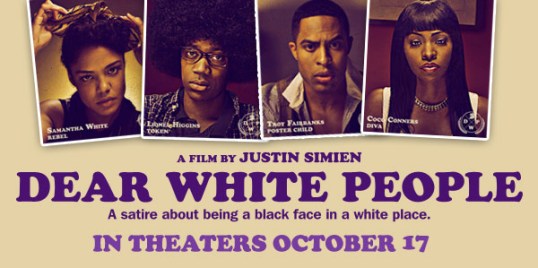
Dear White People

And continuing our awards wrap-up, here are the 2014 NAACP Image Award nominations!

(h/t to awardswatch)

MOTION PICTURE
Outstanding Motion Picture
• “Belle” (Fox Searchlight Pictures/ DJ Films)
• “Beyond The Lights” (Relativity Media)
• “Dear White People” (Lionsgate and Roadside Attractions)
• “Get On Up” (Universal Pictures)
• “Selma” (Paramount Pictures)

Outstanding Actor in a Motion Picture
• Chadwick Boseman – “Get On Up” (Universal Pictures)
• David Oyelowo – “Selma” (Paramount Pictures)
• Denzel Washington – “The Equalizer” (Columbia Pictures)
• Idris Elba – “No Good Deed” (Screen Gems)
• Nate Parker – “Beyond The Lights” (Relativity Media)

Outstanding Actress in a Motion Picture
• Gugu Mbatha-Raw – “Belle” (Fox Searchlight Pictures/ DJ Films)
• Quvenzhané Wallis – “Annie” (Columbia Pictures)
• Taraji P. Henson – “No Good Deed” (Screen Gems)
• Tessa Thompson – “Dear White People” (Lionsgate and Roadside Attractions)
• Viola Davis – “The Disappearance of Eleanor Rigby” (The Weinstein Company)

Outstanding Supporting Actor in a Motion Picture
• André Holland – “Selma” (Paramount Pictures)
• Cedric the Entertainer – “Top Five” (Paramount Pictures)
• Common – “Selma” (Paramount Pictures)
• Danny Glover – “Beyond The Lights” (Relativity Media)
• Wendell Pierce – “Selma” (Paramount Pictures)

Outstanding Supporting Actress in a Motion Picture
• Carmen Ejogo – “Selma” (Paramount Pictures)
• Jill Scott – “Get On Up” (Universal Pictures)
• Octavia Spencer – “Get On Up” (Universal Pictures)
• Oprah Winfrey – “Selma” (Paramount Pictures)
• Viola Davis – “Get On Up” (Universal Pictures)

Outstanding Independent Motion Picture
• “Belle” (Fox Searchlight Pictures/ DJ Films)
• “Dear White People” (Lionsgate and Roadside Attractions)
• “Half of a Yellow Sun” (monterey media inc.)
• “JIMI: All Is By My Side” (XLrator Media)
• “Life of a King” (Animus Films/Serena Films)

Outstanding Writing in a Motion Picture
• Chris Rock – “Top Five” (Paramount Pictures)
• Justin Simien – “Dear White People” (Roadside Attractions and Lionsgate)
• Margaret Nagle – “The Good Lie” (Alcon Entertainment)
• Misan Sagay – “Belle” (Fox Searchlight Pictures/ DJ Films)
• Richard Wenk – “The Equalizer” (Columbia Pictures)

Outstanding Directing in a Motion Picture
• Amma Asante – “Belle” (Fox Searchlight Pictures/ DJ Films)
• Antoine Fuqua – “The Equalizer” (Columbia Pictures)
• Ava DuVernay – “Selma” (Paramount Pictures)
• Gina Prince-Bythewood – “Beyond The Lights” (Relativity Media)
• John Ridley – “JIMI: All Is By My Side” (XLrator Media)

TELEVISION
Outstanding Comedy Series
• “Black-ish” (ABC)
• “House of Lies” (Showtime)
• “Key & Peele” (Comedy Central)
• “Orange is the New Black” (Netflix)
• “Real Husbands of Hollywood” (BET)

Outstanding Actor in a Comedy Series
• Andre Braugher – “Brooklyn Nine-Nine” (FOX)
• Anthony Anderson – “‘Black-ish” (ABC)
• Don Cheadle – “House of Lies” (Showtime)
• Keegan-Michael Key – “Key & Peele” (Comedy Central)
• Kevin Hart – “Real Husbands of Hollywood” (BET)

Outstanding Actress in a Comedy Series
• Mindy Kaling – “The Mindy Project” (FOX)
• Niecy Nash – “The Soul Man” (TV Land)
• Tracee Ellis Ross – “Black-ish” (ABC)
• Uzo Aduba – “Orange is the New Black” (Netflix)
• Wendy Raquel Robinson – “The Game” (BET)

Outstanding Supporting Actor in a Comedy Series
• Boris Kodjoe – “Real Husbands of Hollywood” (BET)
• Glynn Turman – “House of Lies” (Showtime)
• Laurence Fishburne – “Black-ish” (ABC)
• Marcus Scribner – “Black-ish” (ABC)
• Terry Crews – “Brooklyn Nine-Nine” (FOX)

Outstanding Supporting Actress in a Comedy Series
• Adrienne C. Moore – “Orange is the New Black” (Netflix)
• Laverne Cox – “Orange is the New Black” (Netflix)
• Lorraine Toussaint – “Orange is the New Black” (Netflix)
• Sofia Vergara – “Modern Family” (ABC)
• Yara Shahidi – “black-ish” (ABC)

Outstanding Drama Series
• “Being Mary Jane” (BET)
• “Grey’s Anatomy” (ABC)
• “House of Cards” (Netflix)
• “How to Get Away with Murder” (ABC)
• “Scandal” (ABC)

Outstanding Actor in a Drama Series
• LL Cool J – “NCIS: LA” (CBS)
• Omar Epps – “Resurrection” (ABC)
• Omari Hardwick – “Being Mary Jane” (BET)
• Shemar Moore – “Criminal Minds” (CBS)
• Taye Diggs – “Murder in the First” (TNT)

Outstanding Actress in a Drama Series
• Gabrielle Union – “Being Mary Jane” (BET)
• Kerry Washington – “Scandal” (ABC)
• Nicole Beharie – “Sleepy Hollow” (FOX)
• Octavia Spencer – “Red Band Society” (FOX)
• Viola Davis – “How to Get Away with Murder” (ABC)

Outstanding Supporting Actor in a Drama Series
• Alfred Enoch – “How to Get Away with Murder” (ABC)
• Courtney B. Vance – “Masters of Sex” (Showtime)
• Guillermo Diaz – “Scandal” (ABC)
• Jeffrey Wright – “Boardwalk Empire” (HBO)
• Joe Morton – “Scandal” (ABC)

Outstanding Supporting Actress in a Drama Series
• Aja Naomi King – “How to Get Away with Murder” (ABC)
• Alfre Woodard – “State of Affairs” (NBC)
• Chandra Wilson – “Grey’s Anatomy” (ABC)
• Jada Pinkett Smith – “Gotham” (FOX)
• Khandi Alexander – “Scandal” (ABC)

Outstanding Writing in a Comedy Series
• Aisha Muharrar – “Parks and Recreation” – Ann & Chris (NBC)
• Brigette Munoz-Liebowitz – “Brooklyn Nine-Nine” – Road Trip (FOX)
• Mindy Kaling – “The Mindy Project” – Danny and Mindy (FOX)
• Regina Hicks – “Instant Mom” – A Kids’s Choice (Nickelodeon and Nick@Nite)
• Sara Hess – “Orange is the New Black” – It Was the Change (Netflix)

Outstanding Writing in a Drama Series
• Erika Green Swafford – “How to Get Away with Murder” – Let’s Get To Scooping
(ABC)
• Mara Brock Akil – “Being Mary Jane” – Uber Love (BET)
• Warren Leight, Julie Martin – “Law & Order: SVU” – American Disgrace (NBC)
• Zahir McGhee – “Scandal” – Mama Said Knock You Out (ABC)
• Zoanne Clack – “Grey’s Anatomy” – You Be Illin’ (ABC)

Outstanding Television Movie, Mini-Series or Dramatic Special
• “A Day Late and a Dollar Short” (Lifetime Networks)
• “American Horror Story: Freak Show” (FX)
• “Drumline: A New Beat” (VH1)
• “The Gabby Douglas Story” (Lifetime Networks)
• “The Trip to Bountiful” (Lifetime Networks)

Outstanding Actor in a Television Movie, Mini-Series or Dramatic Special
• Blair Underwood – “The Trip to Bountiful” (Lifetime Networks)
• Charles S. Dutton – “Comeback Dad” (UP Entertainment)
• Larenz Tate – “Gun Hill” (BET)
• Mekhi Phifer – “A Day Late and a Dollar Short” (Lifetime Networks)
• Ving Rhames – “A Day Late and a Dollar Short” (Lifetime Networks)

Outstanding Actress in a Television Movie, Mini-Series or Dramatic Special
• Angela Bassett – “American Horror Story: Freak Show” (FX)
• Cicely Tyson – “The Trip to Bountiful” (Lifetime Networks)
• Keke Palmer – “The Trip to Bountiful” (Lifetime Networks)
• Regina King – “The Gabby Douglas Story” (Lifetime Networks)
• Vanessa Williams – “The Trip to Bountiful” (Lifetime Networks)

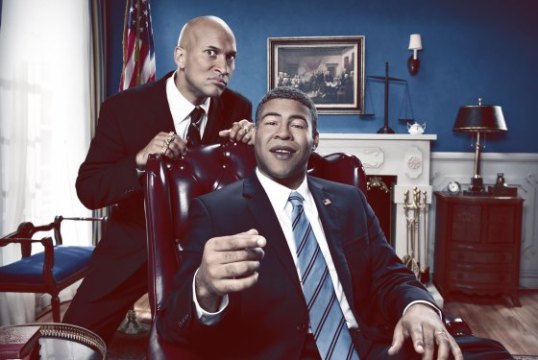
Key & Peele

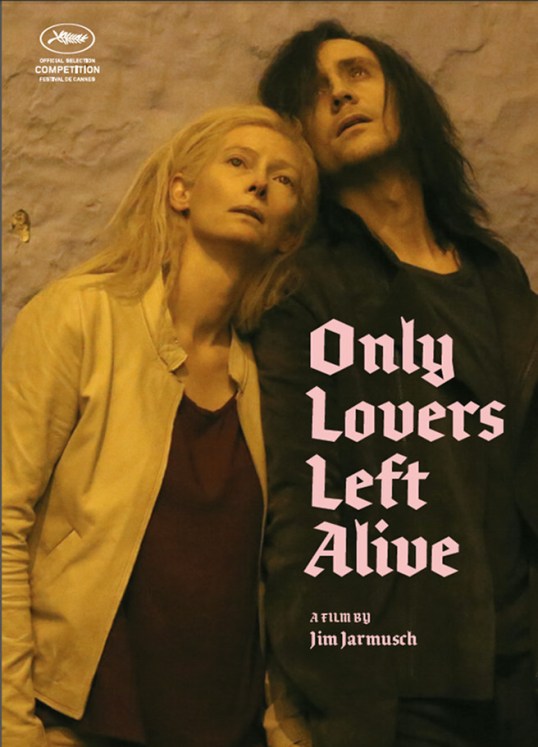
Film Review: Only Lovers Left Alive (dir by Jim Jarmusch)


Is it possible that the iconic American independent filmmaker Jim Jarmusch is a fan of the late and beloved French film director Jean Rollin?

I ask this question because Jarmusch’s latest film, Only Lovers Left Alive, is one of the most Rollinesque films to have ever been made by a director other than Jean Rollin.

The most obvious similarity between Jarmusch’s film and much of Rollin’s work is that they both deal with vampires.  Rollin was the visual poet of vampire cinema and, if nothing else, Only Lovers Left Alive is a very poetic film.  The film tells the story of three vampires — ennui-stricken Adam (Tom Hiddleston), Adam’s wife Eve (Tilda Swinton), and Eve’s hedonist sister Ava (Mia Wasikowska), all of whom would be perfectly at home in any of Rollin’s vampire films.

But, to be honest, the horror genre has reached the point where ennui-stricken and decadent vampires are hardly unique. What distinguished both Only Lovers Left Alive and the best films of Jean Rollin is the way that they both use and defy the conventions of the vampire genre to explore issues of sexuality, religion, politics, and artistic expression.  Much like Rollin, Jarmusch understands what the audience expects from a vampire film and he makes his larger points by manipulating, defying, and occasionally even confirming those expectations.

In other words, Only Lovers Left Alive is no Twilight and we’re all better off for it.

DAY1-0217.CR2

There are other similarities between Only Lovers Left Alive and the best films of Jean Rollin.  Much like Rollin, Jarmusch tells his story through a collection of sensual and increasingly dream-like images.  Even Rollin’s trademark lingering shots of empty beaches and ancient castles are duplicated, in Only Lovers Left Alive, with haunting shots of the empty streets in Detroit and Tangiers.  When, towards the end of the film, two hungry vampires find themselves searching for blood in an ancient city, it was impossible for me not to think of a similar scene in Jean Rollin’s Two Orphan Vampires.

Now, I’m sure that some of you are probably saying, “That’s great, Lisa, but can you just tell me whether the film is worth watching or not?”

To answer your question, it is.  It’s not a flawless film.  There’s a few comedic scenes involving a doctor played by Jeffrey Wright that aren’t quite as entertaining as they could be.  And while it’s an interesting idea to have Christopher Marlowe show up as a vampire, John Hurt’s performance did not quite work for me.  But, whenever the film concentrates on the chemistry between Hiddleston, Swinton, Wasikowska, and Anton Yelchin (who plays a hilariously naïve human), it works brilliantly.

So yes, definitely — see Only Lovers Left Alive.

968full-only-lovers-left-alive-screenshot

See it for the scenes in which Adam and Eva drive through the ruins of Detroit, looking for Jack White’s house (“Oh!  I love Jack White!” Eve exclaims) and discussing Adam’s belief that the “zombies” (his term for the rest of us) are on the verge of destroying themselves.  Adam serves as the film’s philosophical and political mouthpiece and often times, his dialogue runs the risk of being a bit too on-the-nose perfect but Tom Hiddleston is such a charismatic performer that it doesn’t matter.  Wisely, Hiddleston delivers his most portentous lines with just a hint of self-mockery, as if to let us know that even Adam knows he’s being overdramatic.

See it for the amazing sequence in which Adam plays music in Detroit while Eve dances to it in Tangiers.  If Katharine Hepburn had been turned into a vampire, she would have been a lot like Tilda Swinton’s Eve.

See the film for Mia Wasikowska’s hilarious turn as a petulant and immature brat who just happens to be vampire.  The scenes in which she goes out of her way to annoy the dour Adam left me convinced that, if I ever become a vampire, I’ll probably be a lot like Ava.

See it because the White Hills appear as themselves, playing in a club and absolutely killing it.

See it because it’s one of the few vampire films to strike a perfect balance between humor and drama.

Most of all, see it because it’s a good and unique movie and, so far this year, we’ve had a bit of a shortage where those are concerned.

As for me, if I ever meet Jim Jarmusch, I’m going to ask him for the title of his favorite Jean Rollin film.

If nothing else, it should be an interesting conversation.

only-lovers-left-alive-poster


44 Days of Paranoia #21: Broken City (dir by Allen Hughes)


For today’s entry in the 44 Days of Paranoia, let’s take a look at one of the most disappointing films of 2013, Broken City.

It’s a bit hard to describe the plot of Broken City, not because it’s particularly clever but just because there’s so much of it.  The film starts with New York police detective Billy Taggart (Mark Wahlberg) murdering a man in cold blood.  But don’t worry, the murdered man was a murderer himself who was only out of jail on a technicality.  The Mayor of New York, Nicholas Hostetler (Russell Crowe, who sounds like he’s as much of a New Yorker as I am and I ain’t no New Yorker), pulls some strings and get a judge to drop the charges against Billy.  The Mayor tells Billy that he’s a hero but Billy is still forced to leave the police.

Jump forward seven years later.  Mayor Hostetler is locked in a tight re-election battle.  His opponent is a liberal councilman named Jack Valliant (Barry Pepper.)  Yes, the man’s last name is Valliant and — surprise! — it turns out that he’s actually a really sincere guy who wants to make New York a great place to live.  We know this because we get to sit through an endless debate between him and Hostetler.  While Hostetler gives a speech about how he’s against higher taxes, Valliant says that all he’s doing is asking the rich “to pay their fair share.”  The debate audience, of course, explodes into applause.  Valliant never gets around to saying, “If you like your plan, you can keep your plan.”  Maybe they’re saving that for the sequel.

Meanwhile, Billy is now a private investigator.  His girlfriend is an actress who has just appeared in an independent film.  When Billy goes to the premiere, he’s so upset over the sight of his girlfriend being taken from behind on the big screen that he starts drinking and attacking random strangers on the street.

Meanwhile, (in many ways, Broken City is a movie of meanwhiles) Mayor Hostetler has hired Billy to follow his wife Cathleen (Catherine Zeta-Jones) and discover who she’s having an affair with.  Working with his assistant (played by Alona Tal), Billy follows Cathleen and discovers that she’s been spending time with Paul Andrews (Kyle Chandler), who happens to be the manager of the Valliant campaign…

Or is she?  As Billy subsequently discovers, the truth is a lot more complicated than it seems (or probably needs to be).

Broken City got a lot of attention because the script was listed on the 2008 Black List.  The Black List is an annual list of the “best” unproduced scripts in Hollywood.  Now, it should be understood that the concept of what makes something the “best” is always open to interpretation.  In the case of the Black List, the “best” is determined by a survey of studio and production executives.  The Black List comes out every December and it usually provides an excuse for lazy entertainment writers to write yet another article or blog post bemoaning all of the Hollywood remakes while so many creative and original scripts remain unproduced.

But here’s the thing.  Since, I started reviewing films for the Shattered Lens, I’ve had the chance to see several films that were produced from Black List scripts.  A few of them have been good but the majority of them have either been likable but forgettable (i.e., Cedar Rapids) or else they’ve been total and complete disasters, like The Beaver.  Typically, Black List films tend to be overly complicated, overly ambitious, and never quite as intelligent as they may seem.  Frequently, Black List scripts tend to be a bit cutesy in a way that’s effective on paper but annoying on screen.  (For example, naming your film’s only good politician Jack Valliant is one of those cutesy concepts that tend to turn up in a lot of Black List scripts.)  Several of these scripts, Broken City included, are thrillers that attempt to use the conventions of the genre film to make some larger point about American society.  They’ve usually got some sort of dreary political subtext and they always seem to feature a twist that’s surprising only because it doesn’t make any sense.

And that is certainly the case when it comes to Broken City.  Don’t get me wrong — the film starts well and Mark Wahlberg is well-cast as the hero.  But, with each passing minute of film, things get messier and messier until, finally, it’s impossible to take the film seriously.  It’s obvious that director Allen Hughes meant for Broken City to be more than just a thriller.  Instead, in much the same way that Charles Dickens used London, Hughes makes a valiant effort to use the film’s New York as a metaphor for our own corrupt society.  Under Hughes’s direction, Broken City does a lot without doing any of it that well.

Indeed, if I could give this film an A for effort and ambition, I certainly would.  However, in the end, a film should first be judged by what is actually seen on-screen.  Taken by that standard, Broken City is a mess, a disorganized collection of themes and subplots that attempts to do so much that it accomplishes very little.  Russell Crowe and Catherine Zeta-Jones both struggle to sound like New Yorkers while Barry Pepper is so overly intense and wired as the saintly Valliant that I would be scared to vote for him.  Seriously, he seems like the type who would start a war in the name of social justice and then end up having so much fun killing and conquering that he’d forget what the reason for fighting was in the first place.  On a positive note, Mark Wahlberg and Alona Tal have a very likable chemistry and it’s too bad that the rest of the film didn’t take better advantage of it.

Broken City?  Broken film.

Other Entries In The 44 Days of Paranoia 

  1. Clonus
  2. Executive Action
  3. Winter Kills
  4. Interview With The Assassin
  5. The Trial of Lee Harvey Oswald
  6. JFK
  7. Beyond The Doors
  8. Three Days of the Condor
  9. They Saved Hitler’s Brain
  10. The Intruder
  11. Police, Adjective
  12. Burn After Reading
  13. Quiz Show
  14. Flying Blind
  15. God Told Me To
  16. Wag the Dog
  17. Cheaters
  18. Scream and Scream Again
  19. Capricorn One
  20. Seven Days In May