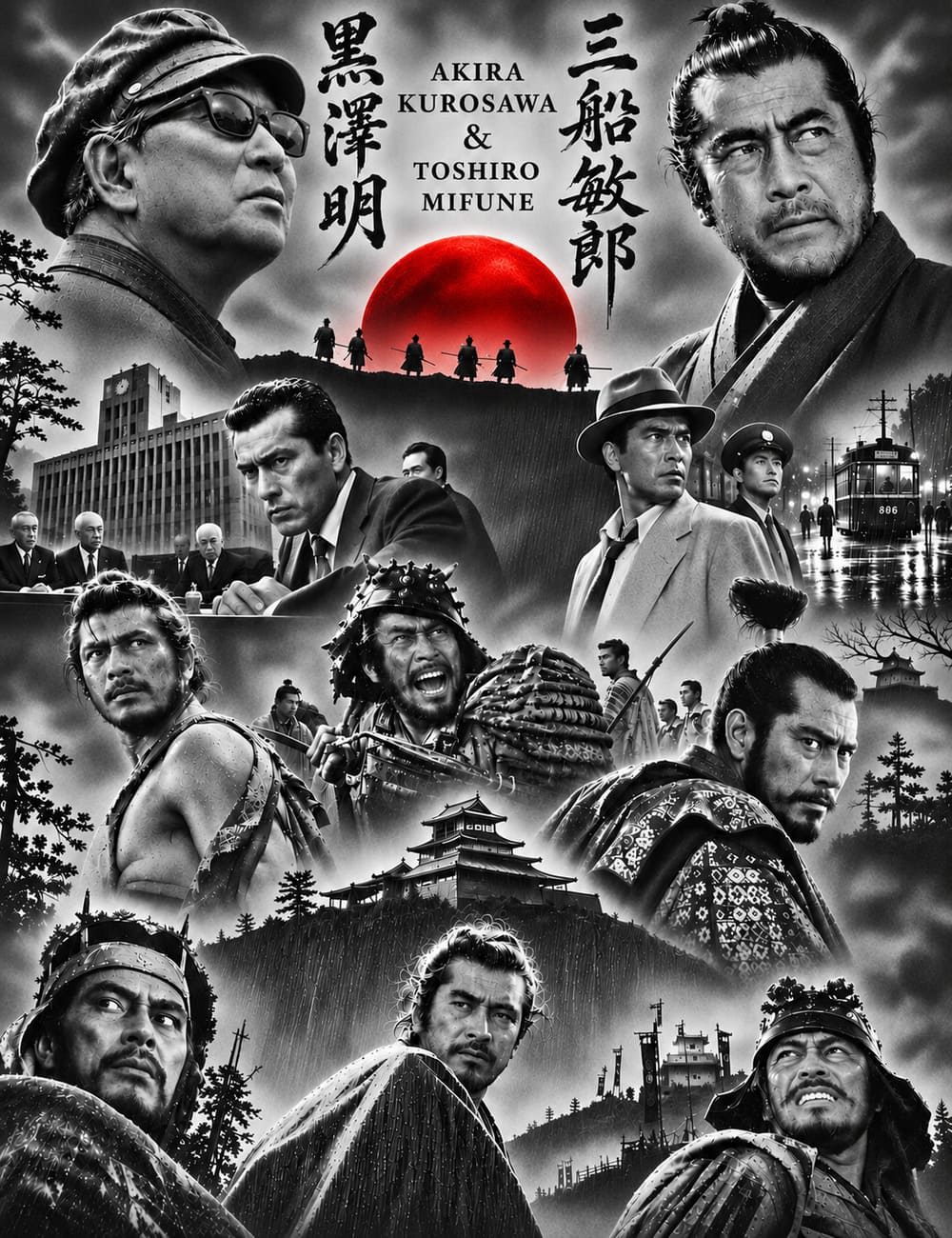
“Without Toshiro Mifune, the films of Akira Kurosawa could never have come into being.” — Teruyo Nogami
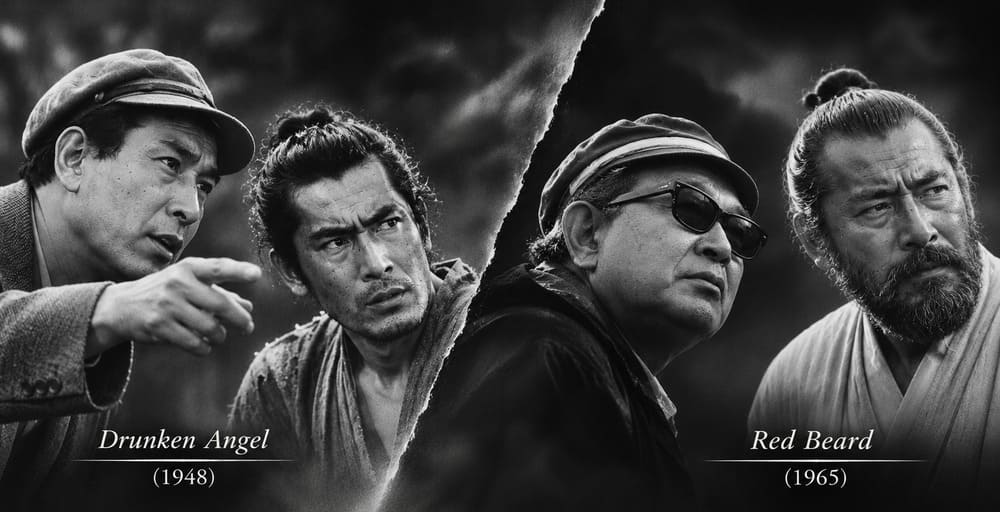
Between Drunken Angel (1948) and Red Beard (1965), Akira Kurosawa and Toshiro Mifune made sixteen films together, creating one of cinema’s most consequential artistic partnerships. Their achievement was not simply a succession of acclaimed performances or beautifully directed pictures. Together, they developed a cinematic language in which physical action expressed moral conflict, entertainment carried social criticism, and heroic charisma became something to question rather than merely celebrate. Their collaboration helped bring Japanese cinema to international attention while transforming popular storytelling. Its enduring importance lies in this fusion: Kurosawa gave ethical dilemmas dramatic architecture, while Mifune made them feel dangerously, unpredictably alive.
A Partnership Born from Postwar Uncertainty
Their first collaboration, Drunken Angel, established a central tension of their shared work: the struggle between destructive behavior and human responsibility. Mifune’s tubercular gangster, Matsunaga, projects defiance while exposing the fragility beneath it. His swagger is not security but a defense against humiliation and death. Kurosawa places that wounded masculinity within a damaged postwar environment, making individual sickness inseparable from social disorder. Mifune does not merely illustrate the director’s argument. His volatility complicates it, making a self-destructive criminal emotionally compelling without making him innocent.
That complexity continued in The Quiet Duel (1949) and Stray Dog (1949). In the former, Mifune plays a doctor infected with syphilis during wartime surgery; in the latter, a young detective whose stolen pistol becomes an instrument of violence. These characters turn vulnerability into an ethical problem rather than an embarrassment to conceal. In Stray Dog, the policeman’s pursuit becomes an encounter with someone whose circumstances disturbingly resemble his own. The boundary between respectable citizen and criminal no longer appears absolute. Their early films ask how people can act responsibly within conditions they did not choose.
Sixteen Films, Not One Formula
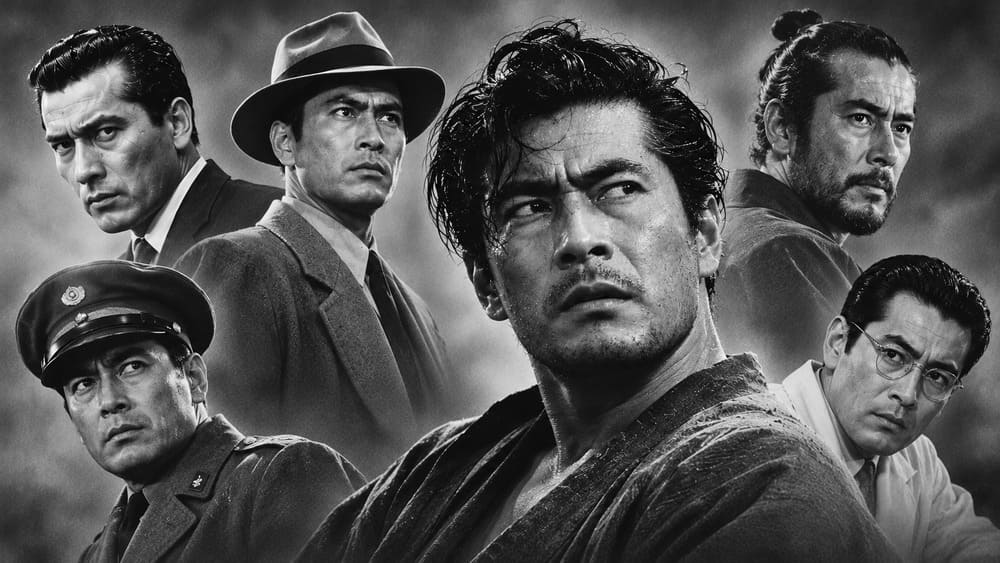
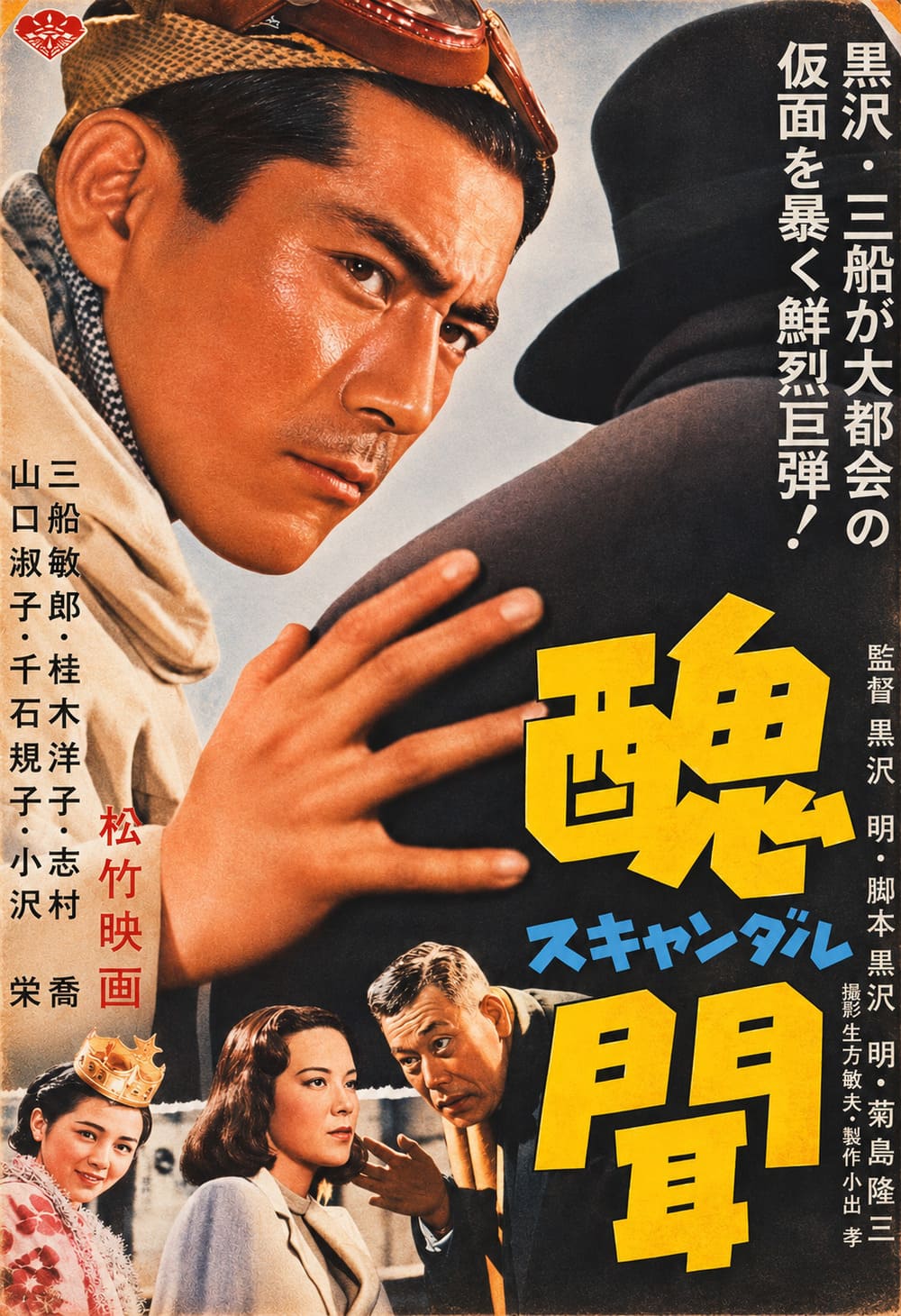
Remembering the partnership only through samurai films obscures its breadth. Alongside the early dramas came Scandal(1950), Rashomon (1950), The Idiot (1951), Seven Samurai (1954), and I Live in Fear (1955). These were followed by Throne of Blood and The Lower Depths (both 1957), The Hidden Fortress (1958), The Bad Sleep Well (1960), Yojimbo(1961), Sanjuro (1962), High and Low (1963), and finally Red Beard. Their subjects ranged from tabloid intrusion and nuclear anxiety to corporate corruption, poverty, ambition, and medical care. This was an evolving artistic inquiry, not the repetition of a successful formula.
Mifune’s versatility made that inquiry possible. His reputation as an explosive performer can obscure his restraint. The guarded corporate infiltrator of The Bad Sleep Well differs sharply from the anxious detective of Stray Dog, just as the elderly patriarch of I Live in Fear differs from the commanding doctor of Red Beard. Kurosawa challenged the actor’s established image instead of protecting it. Audiences encountered not one masculine ideal but competing versions of authority, insecurity, aggression, and care. Their partnership refused to let stardom become a fixed personality.
The Actor as a Creative Author
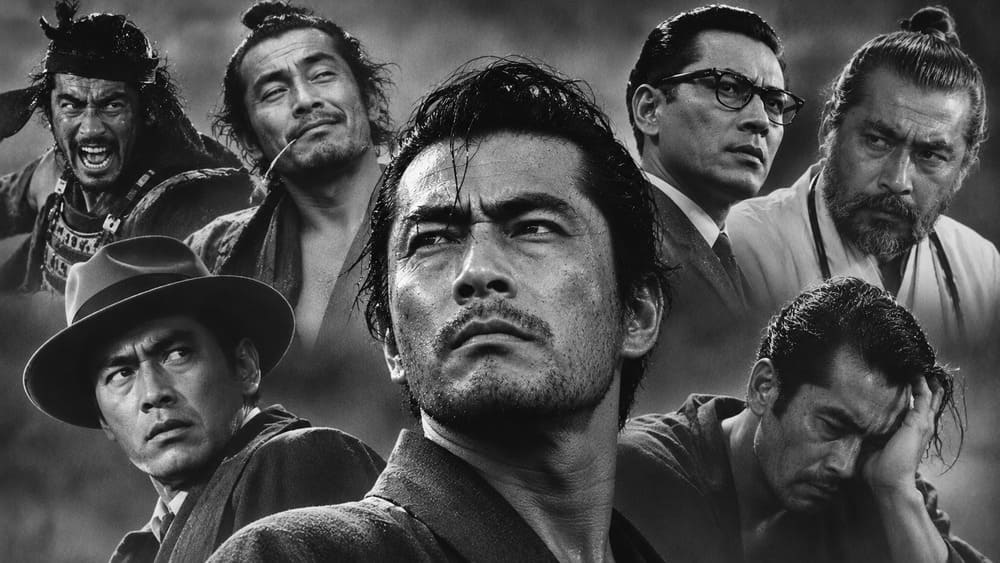
The familiar image of Kurosawa as an exacting master and Mifune as his obedient instrument understates their relationship. Mifune’s performances generated meaning rather than simply supporting directorial design. His gestures could become an entire characterization: the scratching, shrugging, and apparent indifference of Yojimbo communicate social displacement alongside comic insolence. Mifune identified those mannerisms as his contributions, connecting them to the wandering samurai’s poverty and loneliness. What looks spontaneous is therefore expressive construction. The actor was not merely supplying energy; he was thinking through movement.
This distinction challenges a solitary understanding of cinematic authorship. Kurosawa’s framing, editing, and staging were indispensable, but Mifune supplied a resistant human presence that made those formal decisions productive. His body could disrupt a composition, puncture solemnity, or transform stillness into anticipation. Their films emerge from the relationship between organization and apparent unpredictability. Nor should their partnership erase the writers, cinematographers, performers, and other collaborators who helped create these works. The celebrated duo was the most visible expression of a larger creative community.
Truth, Class, and the Unstable Hero
In Rashomon, the partnership made instability dramatically magnetic. Mifune’s bandit, Tajomaru, is boastful, animalistic, seductive, and ridiculous, yet his identity shifts within the competing accounts. His charisma cannot guarantee his credibility. Viewers may feel the force of a performance while remaining unable to trust the story it tells. The film’s international success established both men abroad, but its significance exceeds recognition. It demonstrates how acting can expose self-presentation as fiction. Mifune’s exuberance becomes an argument about the distance between what people do and how they wish to be remembered.
If Rashomon interrogates personal truth, Seven Samurai interrogates the social ownership of heroism. Mifune’s Kikuchiyo is a farmer-born pretender among trained warriors: loud, undisciplined, and desperate for recognition. Initially threatening the group’s dignity, he ultimately exposes its limitations. His divided identity allows him to understand both the villagers’ fear and the samurai’s capacity for cruelty. The performance brings comedy and grief into unusually close contact. His excess is not decoration; it breaks through the apparent naturalness of class divisions.
Kikuchiyo also prevents the film from becoming uncomplicated warrior worship. His courage does not erase his insecurity, and his inclusion does not dissolve the society that excluded him. Mifune makes heroism look improvised, costly, and emotionally needy rather than serenely assured. Kurosawa’s epic scale gains its deepest force from this unruly individual presence. Together, they make collective action exhilarating without pretending that solidarity abolishes inequality or that sacrifice guarantees happiness.
Reinventing the Warrior—and Questioning Power
Yojimbo and Sanjuro developed another influential figure: the disheveled, ironic swordsman whose apparent laziness conceals extraordinary ability. Small gestures, amused observation, and physical looseness make sudden violence startling. Yet this masterless samurai possesses competence without institutional loyalty, resisting polished ideals of martial dignity. Kurosawa and Mifune renewed the outsider warrior through comedy, menace, and self-awareness. Their hero understands violence well enough to distrust heroic posturing.
The international consequences were substantial. Sergio Leone’s A Fistful of Dollars reworked Yojimbo, carrying the wandering opportunist into the Italian western and helping establish Clint Eastwood’s screen image. George Lucas acknowledged The Hidden Fortress as an inspiration for Star Wars. Their legacy therefore extends into globally popular entertainment. Nevertheless, treating them as important merely because Western filmmakers borrowed from them reverses the proper relationship. Those adaptations demonstrate the films’ portability; they do not confer their value.
Their contemporary dramas are equally essential. In The Bad Sleep Well, private vengeance confronts corporate corruption. In High and Low, Mifune’s industrialist faces a demand that threatens his financial future for another man’s child. Moral character emerges through decisions under pressure, not professional status. Likewise, Throne of Bloodtransforms martial authority into terror and self-destruction. Across different settings, the partnership separates strength from goodness, making masculine charisma available for criticism without denying its fascination.
When Shared Success Created Competing Ambitions
The independence that gave their work such force eventually made their professional relationship harder to sustain. Kurosawa’s international stature strengthened his ability to pursue an exacting vision, while his demanding productions required substantial commitments from collaborators. Mifune, meanwhile, had become more than his indispensable leading actor. He was an internationally recognizable star with other opportunities and, after establishing his own production company, responsibilities beyond individual performances. Their partnership now had to accommodate two expanding careers and two sets of ambitions.
Red Beard brought these competing needs into sharp conflict. Its extended production tied Mifune to the film, while the requirement that he retain the character’s natural beard restricted other roles he could accept. For Kurosawa, continuity and authenticity served the finished work. For Mifune, maintaining that appearance across a prolonged commitment meant sacrificing opportunities and income. The same working method could represent artistic integrity to the director and professional confinement to his star.
These restrictions mattered especially because Mifune was now an actor-producer. Turning down work could mean more than losing a personal fee: it could limit his ability to generate projects and revenue for his financially strained company. His availability was a business asset as well as an artistic resource. Opportunities in other films and television therefore represented both creative freedom and practical necessity. His desire to pursue them should not be mistaken for indifference to ambitious filmmaking.
Their success had changed the conditions that originally made their collaboration possible. Kurosawa wanted the time necessary to realize his films without compromise; Mifune needed greater flexibility to sustain his career and enterprise. Neither ambition was inherently illegitimate, but they were increasingly difficult to reconcile. Their separation should not be reduced to one quarrel or a definitive account of personal hostility. Production pressures, financial obligations, and divergent professional directions offer a more persuasive explanation than the familiar myth of a simple feud.
A Final Act of Care
Artistically, Red Beard provides a fitting counterweight to the violent figures dominating popular memory. Mifune’s physician embodies a demanding commitment to care. His authority derives less from defeating enemies than from confronting suffering. Read beside Drunken Angel, the film gives their partnership a suggestive shape: a collaboration beginning with the struggle to save a self-destructive young man ends with an older figure devoted to healing others. That thematic culmination remains moving even when understood alongside the difficult circumstances of its creation.
The movement between these films also suggests a deepening consideration of strength. Violence and dominance remain dramatically compelling throughout their work, but care emerges as an equally demanding exercise of power. Healing requires discipline, endurance, and the willingness to recognize suffering beyond oneself. The final physician does not erase the gangsters, warriors, and compromised authority figures who preceded him. Instead, he provides a revealing counterpoint: an image of what commanding presence might become when directed toward service rather than self-preservation.
Conclusion: The Human Being behind the Hero
Taken together, Kurosawa and Mifune’s sixteen films form an extended inquiry into the relationship between power and responsibility. Their settings change—from ruined postwar streets to feudal battlefields, corporate offices, and medical wards—but the underlying questions remain connected. What makes authority legitimate? Can courage exist without compassion? How much freedom does an individual possess within an unjust social order? These questions give the collaboration its coherence without reducing its extraordinary range to a single message. Each film approaches them through a different balance of tragedy, comedy, suspense, and action.
Mifune’s characters make those questions tangible because they rarely coincide comfortably with the roles society assigns them. A bandit attempts to control his own legend; a farmer’s son claims the identity of a samurai; a wealthy businessman discovers that moral obligation extends beyond his household. In each case, the distance between social identity and ethical conduct becomes a source of drama. Kurosawa constructs situations that expose that distance, while Mifune expresses it through bodies that swagger, hesitate, endure, or erupt. Their shared subject is not simply the exceptional man, but the unstable human being beneath the exceptional image.
Their professional separation adds a final complication to this interpretation. The artists who examined the conflict between individual purpose and social obligation encountered a version of that conflict themselves. Kurosawa’s creative demands and Mifune’s expanding responsibilities could no longer be accommodated as readily within the same working relationship. This parallel should not turn their lives into a tidy allegory, but it underscores how thoroughly their films belong to a world of competing needs rather than simple moral resolutions.
Their greatest legacy, then, is not a flawless hero, a recognizable action formula, or even the mythology of an inseparable creative partnership. It is a way of looking: beyond charisma toward vulnerability, beyond status toward conduct, and beyond spectacle toward consequence. Kurosawa and Mifune made audiences feel the attraction of extraordinary individuals while asking what those individuals owed to others. That tension remains unresolved—and it is precisely what keeps their cinema alive.
Kurosawa-Mifune Collaborations










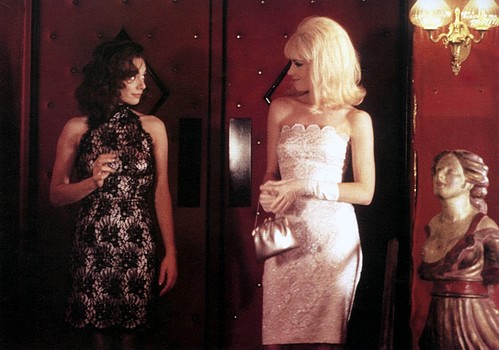
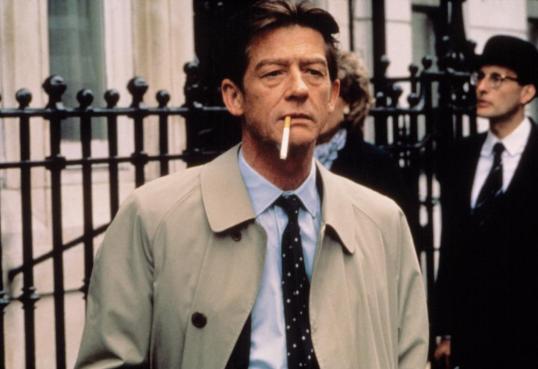
 London. 1961. Doctor Stephen Ward (played by John Hurt) is an artist and an osteopath. He counts among his patients some of the most distinguished men and women in British society, including the Minister of War, John Profumo (Ian McKellen). After meeting two young dancers, Christine Keeler (Joanne Whalley) and Mandy Rice-Davies (Bridget Fonda), Stephen becomes their mentor, the Henry Higgins to their Eliza Doolittle.