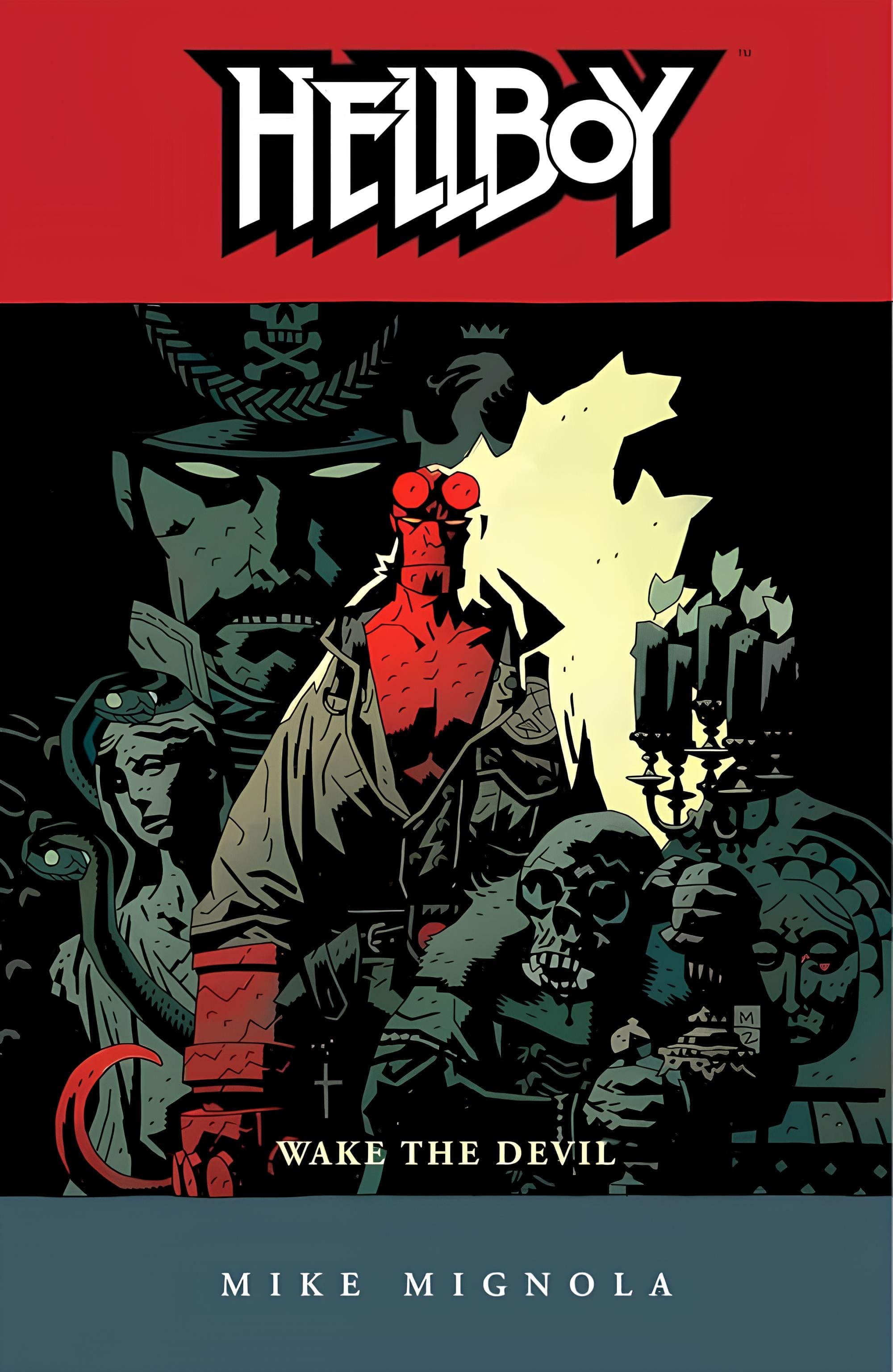
Hellboy: Wake the Devil (by Mike Mignola) Horror Review


“We are not enemies. We are the agents of change. To that end we are bound together.” — Hecate

By the time Hellboy: Wake the Devil begins, Mike Mignola has already made clear that Hellboy’s world is not one where the dead stay buried or where ancient evils remain confined to history. Building on the groundwork established in Hellboy: Seed of Destruction, this graphic novel moves deeper into the peculiar mixture of pulp adventure, Gothic horror, occult conspiracy, folklore, and apocalyptic myth that makes Hellboy so distinctive. It is a darker, stranger, and more confident continuation, one that expands Hellboy’s world through vampires, witches, ancient ruins, Russian legends, Nazi occultists, and the ever-present suggestion that the past is not buried so much as waiting to rise again.

Where Hellboy: Seed of Destruction had to introduce readers to Hellboy, the B.P.R.D., Rasputin, and the ominous question of the hero’s intended destiny, Hellboy: Wake the Devil benefits from being able to assume some familiarity with the larger premise. It does not waste time reintroducing every concept or explaining Hellboy’s origin in exhaustive detail. Instead, Mignola plunges directly into another supernatural crisis, trusting the reader to follow the fragments of history, prophecy, and folklore that emerge along the way. That confidence gives the book a more distinctive identity than the first graphic novel, which was highly entertaining but still carried some of the structure of a traditional early-1990s superhero adventure.

This difference also reflects Mignola’s greater control over the material. While Hellboy: Seed of Destruction was co-plotted and scripted by John Byrne, Wake the Devil feels more purely shaped by Mignola’s own creative instincts. The writing is leaner, stranger, and more willing to leave mysteries partially unresolved. The plot remains accessible, but it is not interested in handing readers a complete guidebook to its mythology. Rather than explaining every occult reference, historical figure, or supernatural artifact, Mignola presents them as pieces of a much larger hidden world. That approach gives the story a dreamlike quality, as if Hellboy has stumbled into a folktale that has been unfolding for centuries without him.

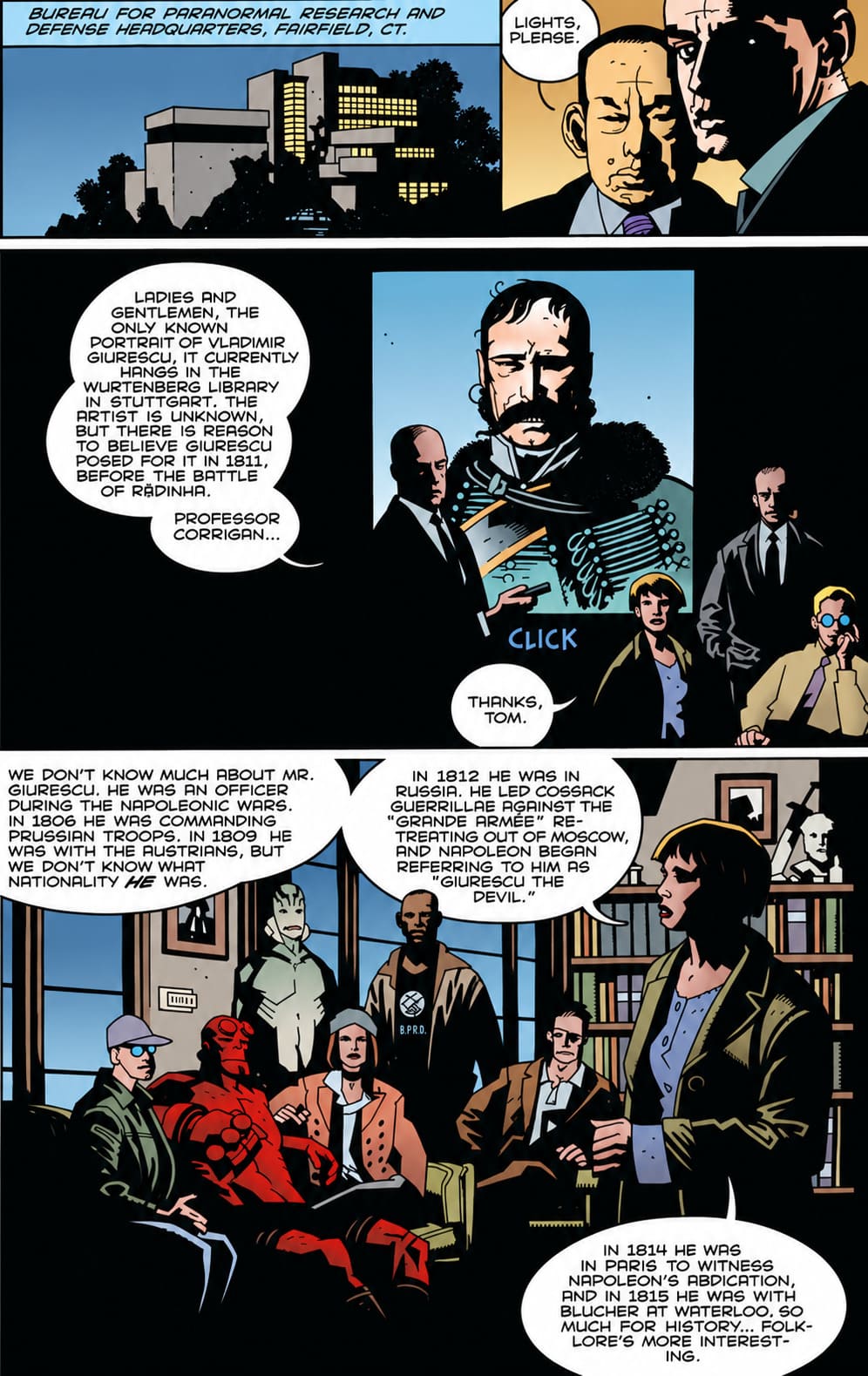
The story begins with a stolen corpse, an opening that immediately establishes the book’s grim tone. This theft is connected to Vladimir Giurescu, an ancient vampire whose resurrection becomes the central threat of the graphic novel. Giurescu is not presented as a familiar, romantic version of Dracula, nor is he simply another monster for Hellboy to punch through a wall. He is an old-world figure tied to European violence, occult ritual, aristocratic power, witchcraft, and death. Mignola makes him feel ancient in the best sense: not merely old, but connected to a past so deep and cruel that modern people cannot fully comprehend it.

Giurescu’s presence is one of the book’s greatest strengths because he embodies the kind of villain Mignola handles especially well. He is frightening not because he constantly performs elaborate acts of violence, although the story has no shortage of monstrous imagery, but because he carries the weight of history with him. His return does not feel like the arrival of a single antagonist. It feels like a buried nightmare opening its eyes. Mignola’s supernatural villains often possess this quality. They are dangerous as individuals, but they are even more dangerous as evidence that Hellboy’s world is built over ancient horrors that have never truly disappeared.

The plot also brings back Ilsa Haupstein, one of the Nazi occultists introduced in Hellboy: Seed of Destruction. Her involvement gives Wake the Devil a direct link to the previous story without making the book feel like a repetitive sequel. The Nazi occult material remains important, but Mignola wisely expands the scope beyond it. The conspirators and occultists are no longer the entire center of the story. They become one part of a wider mythology involving vampires, witches, old relics, secret histories, and supernatural forces that existed long before the twentieth century. The result is a story that feels more expansive without becoming bloated.
The title carries an interesting irony, since Hellboy himself is constantly associated with the devil because of his red skin, horns, tail, and demonic appearance. People who encounter him often assume that he must be monstrous, dangerous, or connected to evil. Yet Wake the Devil again makes clear that Hellboy’s appearance has little to do with his moral character. He may look like a demon, but he is still the person trying to stop the resurrection of an ancient vampire and the spread of occult evil. The real devils in the story are the people and creatures who seek power through murder, ritual, resurrection, and the exploitation of forbidden knowledge.

Hellboy’s moral simplicity is one of the series’ most enduring strengths. He is not simple in the sense of being a shallow character, but he is direct about what matters. He does not spend pages agonizing over whether monsters should be stopped. If something evil is threatening innocent people, he goes after it. He complains, gets irritated, takes a beating, delivers a dry joke, and keeps moving. That makes him an ideal protagonist for Mignola’s world. The setting is filled with cryptic prophecies, ancient names, hidden archives, and supernatural mysteries, but Hellboy gives the reader someone grounded to follow through it all.

His humor remains especially important. Wake the Devil is a dark book, full of graves, corpses, ruined buildings, occult rites, and creatures whose existence seems to violate the natural order. Without Hellboy’s blunt attitude, the material could become overly solemn. He does not make light of the danger, but his presence keeps the graphic novel from collapsing under the weight of its own mythology. Hellboy has the energy of a hardboiled detective dropped into a nightmare, even though his methods usually involve a massive stone fist rather than a revolver and a fedora.

The B.P.R.D. supporting cast also becomes more meaningful in this story. Abe Sapien and Liz Sherman are not merely background teammates, even if Hellboy remains the main focus. Abe’s intelligence and aquatic strangeness make him a natural fit for a universe filled with lost civilizations, secret knowledge, and evolutionary mysteries. Liz, meanwhile, carries a more tragic and dangerous presence because of her pyrokinetic powers. She is not simply a character who can shoot fire at monsters. Her abilities are tied to fear, isolation, and trauma, which gives her a vulnerability that contrasts sharply with Hellboy’s more durable and outwardly confident persona.

The relationship between these characters reinforces the unusual nature of the B.P.R.D. It is not a brightly polished superhero team assembled to save the world in matching costumes. It is an organization of people who have been pushed outside ordinary society, whether by their appearance, their powers, or the bizarre things they have experienced. Hellboy, Abe, and Liz are united less by traditional comic-book camaraderie than by shared alienation. They understand dangers that ordinary people would struggle to believe, and that creates a quieter emotional bond beneath the monster fights and supernatural investigations.

Visually, Hellboy: Wake the Devil is a major achievement. Mignola’s artwork is not built around realism or dense anatomical detail. Instead, it relies on dramatic shapes, bold shadows, exaggerated silhouettes, and a masterful sense of composition. His pages can make a single doorway, tomb, hallway, or distant figure feel ominous. A black shape against a pale background becomes threatening because Mignola knows precisely how much information to withhold. His art frequently suggests that the real terror is not necessarily what readers can see, but what might be waiting inside the darkness beyond the panel.

The book’s use of architecture is especially striking. Castles, crypts, underground chambers, cemeteries, churches, and ruined interiors are not just places where the action happens. They feel like extensions of the story’s ancient dread. Heavy stone walls, towering doorframes, deep corridors, and massive areas of black create the impression that Hellboy is moving through a physical landscape built by history itself. The settings seem to contain memories. Every abandoned room and buried chamber implies that something dreadful once happened there, and perhaps never truly stopped happening.
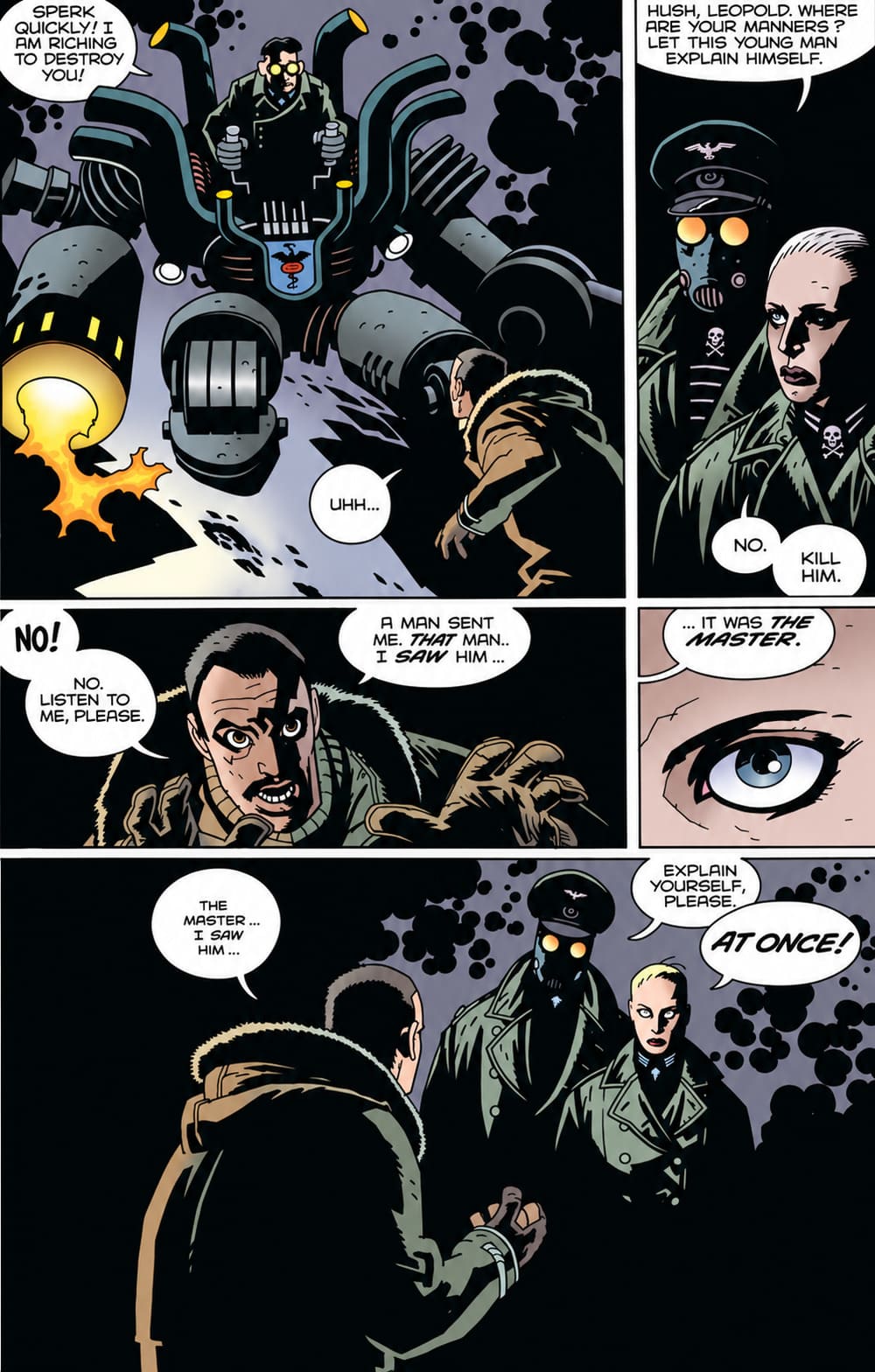
Matt Hollingsworth’s color work adds enormously to this atmosphere. The palette is often muted and moody, dominated by dark blues, sickly greens, faded browns, purples, and deep black shadows. This restraint makes the bursts of red more powerful, whether the red comes from Hellboy himself, blood, fire, or supernatural violence. The colors give the pages an aged, almost storybook texture. It can feel as though the reader is looking at a collection of old illustrations from some forbidden European folktale rather than a conventional comic book.

Mignola’s pacing is equally important. Wake the Devil knows when to pause and let the mood settle. There are moments where a character simply stands before an open grave, explores a silent corridor, or confronts an object that hints at a terrible history. Those quieter scenes make the action scenes more forceful. Hellboy does not fight with the slick agility of a typical superhero. He crashes through doors, falls through floors, gets thrown into walls, and responds to impossible threats with the stubborn endurance of someone who has spent his whole life being sent into terrible places.

That physicality helps make Hellboy feel vulnerable even when he is clearly superhuman. He is powerful, but he is not untouchable. He gets hurt, overwhelmed, deceived, and placed in situations where brute strength alone is not enough. The Right Hand of Doom is visually iconic, but it is not a solution to every problem. Hellboy survives because he is resilient, practical, and unwilling to give up when the supernatural situation becomes more complicated than expected.

The story’s deeper theme is the danger of seeking power through forbidden knowledge. Nearly every major threat in Wake the Devil grows out of someone trying to revive, exploit, or control something that should have remained lost. Characters pursue immortality, occult strength, revenge, or access to secret history, only to discover that ancient evil does not become manageable merely because someone has learned its name. Mignola draws heavily from Gothic vampire fiction, but the story also has the broader cosmic unease that defined Seed of Destruction. The horrors here are not merely monsters with weaknesses. They are fragments of a much bigger darkness.

At times, the book can seem deliberately cryptic, particularly for readers unfamiliar with the expanding mythology of Hellboy. Mignola introduces artifacts, historical references, mystical forces, and supernatural figures without always providing a detailed explanation. Yet that ambiguity is largely part of the appeal. The comic does not make its world feel small enough to be completely explained in a few captions. Instead, it invites readers to feel the weight of a hidden history that Hellboy can only partially understand.

Ultimately, Hellboy: Wake the Devil is an essential chapter in Mike Mignola’s larger saga. It confirms that Hellboy is not merely a clever premise about a demon who fights monsters for a government agency. It is a singular world of pulp adventure, folklore, Gothic horror, vampire mythology, wartime conspiracy, and dark fantasy, all filtered through Mignola’s unmistakable visual imagination. The graphic novel deepens the mythology while preserving the straightforward pleasure of watching Hellboy enter a supernatural disaster, trade a sarcastic remark with a monster, and refuse to let ancient evil dictate his fate.

If Hellboy: Seed of Destruction introduced a hero resisting the destiny imposed upon him, Hellboy: Wake the Devilreveals the scale of the haunted world surrounding that struggle. It is eerie, violent, funny, mysterious, and visually beautiful. Most importantly, it shows that Hellboy’s greatest strength is not the Right Hand of Doom or his ability to survive battles with creatures from nightmare. His true strength is his refusal to let monsters, prophecies, occult conspiracies, or his own infernal appearance determine who he is.

Hellboy Saga
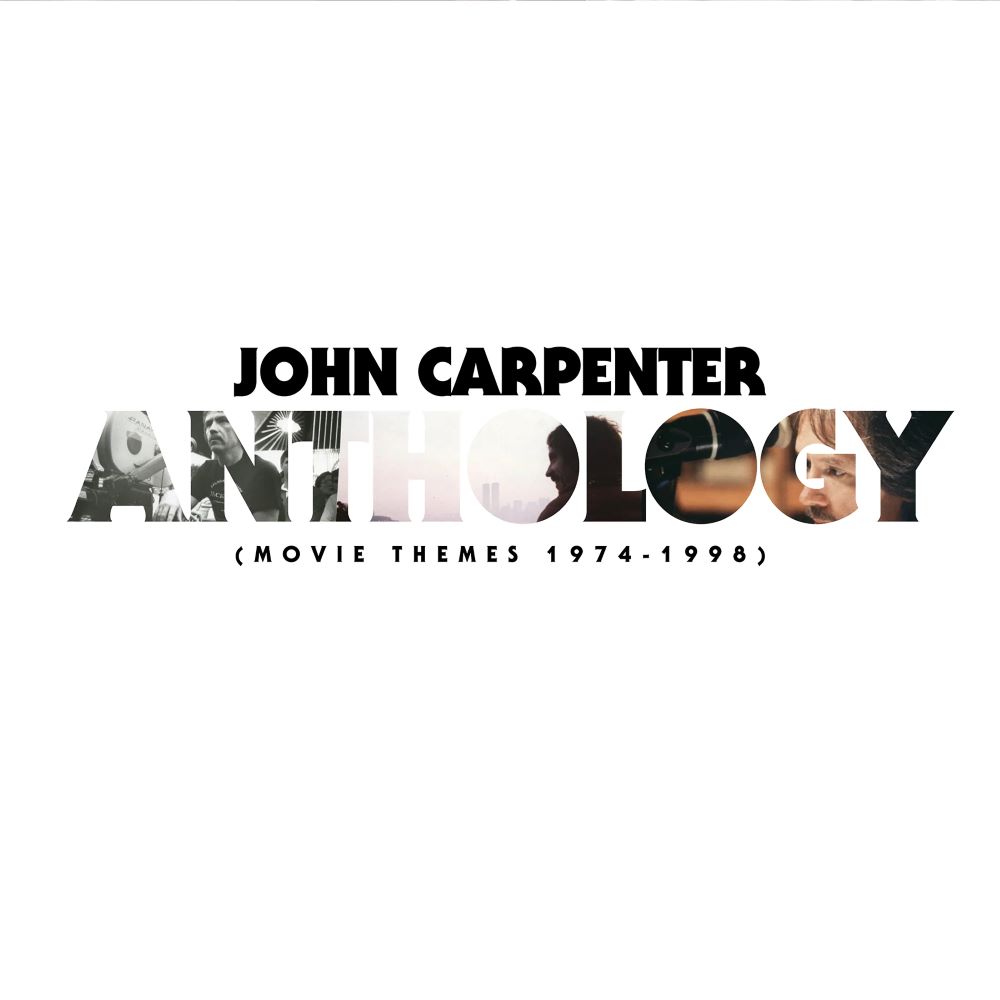
Anthology: Movie Themes 1974-1998 (by John Carpenter) Review


John Carpenter’s Anthology: Movie Themes 1974-1998 is an absolute gem of a compilation, breathing new life into 13 of his most unforgettable film themes with a killer mix of synth menace and live-band muscle that feels both nostalgic and freshly electrifying. Released in 2017 on the indie powerhouse Sacred Bones Records, this project pulls straight from Carpenter’s golden era of directing, spanning the lo-fi space oddities of Dark Star in 1974 all the way to the blood-soaked Western vibes of Vampires in 1998. Here, the master himself teams up with his son Cody Carpenter handling keyboards and his godson Daniel Davies ripping on guitar, delivering rerecorded versions that aren’t just facsimiles of the originals but revitalized beasts with modern production muscle. Clocking in at a tight 42 minutes, the album strikes that sweet spot between crystalline clarity and the warm, gritty analog fuzz of vintage synths, making it an essential spin for horror fans, synthwave enthusiasts, or anyone craving pure cinematic chills without firing up the projector. It’s the kind of record that turns your living room into a foggy, neon-lit nightmare factory, proving Carpenter’s scores were never mere background noise—they’re standalone monsters.

Right out of the gate, the album spotlights three absolute titans as its major standouts: the themes from The Thing, Halloween, and Escape from New York. These aren’t just tracks; they’re the sonic DNA of horror and sci-fi tension, retooled here to hit even harder with the benefit of hindsight and better gear. Take the Halloween theme—it’s the undisputed king of the collection, that iconic, haunting piano riff slicing through stabbing synth accents and a relentless, mechanical beat that creates this perfect off-kilter unease. It mirrors Michael Myers’ unstoppable, shambling lurch so viscerally that you can practically hear the Shape breathing down your neck; the simplicity is its genius—repetitive enough to burrow into your skull like a parasite, yet layered just right with those eerie high-end whistles and a pulse that never lets up. In this rerecord, the piano feels more intimate and ominous, the synths sharper, turning what was already a cultural earworm into something that demands volume cranked to 11.

Then there’s Escape from New York, which cranks everything up to gritty, dystopian overdrive with its crunchy guitar riff chewing through swelling synth waves and pounding, no-nonsense drums. It evokes Snake Plissken’s lone-wolf crawl through a prison-island Manhattan like a bluesy battle cry—mid-tempo swagger that’s tailor-made for high-stakes heists, shadowy escapes, and that pure ’80s anti-hero cool. Fans often mix it up with his Big Trouble in Little China groove because of the shared tough-guy energy, but here the rerecord leans harder into the guitar’s snarl and the synths’ ominous undercurrent, making it feel tougher, meaner, and ready for a modern apocalypse playlist. And don’t sleep on The Thing—it grabs Ennio Morricone’s frosty original cue and mutates it into peak Carpenter dread: deep, throbbing synth pulses underpin eerie, isolated stabs and desolate windswept effects that build a suffocating frozen isolation. This one’s all about the paranoia of shape-shifting aliens in an Antarctic hellscape—slow-burn horror that creeps under your skin, rewarding patient listeners with layers of tension that unfold over multiple spins. Critics might tuck it behind the flashier hits, but its subtlety makes it a powerhouse, especially in this version where the low-end rumble feels like cracking ice underfoot.

While those three rightfully dominate every conversation about the album (and they should, as they’re the heart-pounding peaks that define Carpenter’s sound), two deeply underrated gems absolutely deserve way more shine: the Christine theme and “Santiago (Vampires).” Christine sneaks up on you, opening with these foggy, ambient synth washes that evoke a quiet garage at midnight before exploding into full-on rock fury—fuzzy guitars screech, driving rhythms kick in, and it all nails the possessed Plymouth Fury’s vengeful, supernatural roar. It’s often overlooked amid the bigger icons, but this rerecord injects fresh menace, highlighting its dynamic arc from subtle creep to all-out chaos; imagine the car’s headlights flickering to life as the music revs up—pure possessed-machine terror that lingers like burnt rubber. “Santiago (Vampires)” is the other hidden firecracker, completely ditching the synth-heavy storm for sparse acoustic strums and reverb-drenched electric guitar in a sun-baked, dusty groove that screams Southwestern vampire hunt. It’s a total mood shifter—breezy yet tense, like a standoff in a ghost town at high noon—and criminally underappreciated next to the heavier hitters; the modal twang and open spaces give it a unique flavor that breaks up the album’s darker pulse beautifully, begging for more road-trip spins.

The rest of the tracklist does a stellar job setting up and framing these peaks without ever overshadowing them. “Assault on Precinct 13” barrels in early with its oppressive synth riff and militaristic pounding, hammering home that raw siege-mentality dread—still a total banger, but it takes a slight backseat to The Thing‘s more nuanced chill. “In the Mouth of Madness” dives from aggressive guitar riffs into vast ambient drifts, perfectly suiting the film’s reality-warping madness. “The Fog” floats delicate piano over misty, reverb-soaked swells that build a supernatural haze, like fog horns calling from the deep. “Prince of Darkness” broods heavy with slow, echoing riffs and a sense of gathering evil, feeding right into the album’s cohesive horror heartbeat. “Porkchop Express (Big Trouble in Little China)” grooves with that infectious trucker-rock energy, echoing Escape‘s swagger but with brighter, adventure-ready lifts for Kurt Russell’s wild ride. “They Live” layers in bluesy harmonica and slide guitar for a laconic, consumerist snarl, while “Starman” blooms into warm, romantic synth-orchestral bliss—think soaring melodies and rolling timpani for heartfelt ’80s alien love. The ultra-brief “Dark Star” blasts a proto-synth drone in under 90 seconds, more historical sketch than full banger, but it nods to Carpenter’s early experiments. All these solid supporting players keep the energy flowing, ensuring the majors land with maximum impact.

What ties it all together is Carpenter’s effortlessly cool style: deep, pulsating synth bass locks in with fuzzy, overdriven guitars and tight, hypnotic drumming to create grooves that build tension like a jump scare coiled to spring. The production is a standout—crisp and punchy, with Cody owning the rumbling low end while Davies carves sharp midrange bite, sidestepping the muffled haze of some vintage OST pressings. These themes thrive completely standalone now, untethered from their films but still evoking every shadowy corner. Yeah, there’s a touch of repetition in the fuzzy guitar tones and mid-tempo plods that can make straight-through listens feel a bit samey—it’s more killer playlist than wildly eclectic LP—but that’s a tiny nitpick when the big guns (The Thing, Halloween, Escape from New York, plus the slept-on Christine and Vampires) deliver one haymaker after another.

This collection doesn’t just compile; it cements Carpenter’s legacy as a shoestring-budget genius who scored generational nightmares with a handful of synths, guitars, and sheer instinct, directly inspiring synthwave legions like Perturbator, Carpenter Brut, and beyond. Don’t sleep on it; these tracks don’t just play—they haunt, they pump, and they endure for life, turning everyday moments into edge-of-your-seat thrills.

4 Shots From 4 Horror Films: 1990s Part Three


This October, I’m going to be doing something a little bit different with my contribution to 4 Shots From 4 Films.  I’m going to be taking a little chronological tour of the history of horror cinema, moving from decade to decade.

Today, we complete the 90s!

4 Shots From 4 Horror Films

I Know What You Did Last Summer (1997, dir by Jim Gillepsie)

I Know What You Did Last Summer (1997, dir by Jim Gillepsie)

Vampires (1998, dir by John Carpenter)

Vampires (1998, dir by John Carpenter)

The Sixth Sense (1999, dir by M. Night Shyamalan)

The Sixth Sense (1999, dir by M. Night Shyamalan)

The Blair Witch Project (1999, dir by Daniel Myrick and Eduardo Sanchez)

The Blair Witch Project (1999, dir by Daniel Myrick and Eduardo Sanchez)

Horror on TV: The Night Stalker (dir by John Llewelyn Moxey)


Long before he achieved holiday immortality by playing the father in A Christmas Story, Darren McGavin played journalist Carl Kolchak in the 1972 made-for-TV movie, The Night Stalker.  Kolchak is investigating a series of murders in Las Vegas, all of which involve victims being drained of their blood.  Kolchak thinks that the murderer might be a vampire.  Everyone else thinks that he’s crazy.

When this movie first aired, it was the highest rated made-for-TV movie of all time.  Eventually, it led to a weekly TV series in which Kolchak investigated various paranormal happenings.  Though the TV series did not last long, it’s still regularly cited as one of the most influential shows ever made.

The Night Stalker is an effective little vampire movie and Darren McGavin gives an entertaining performance as the rather nervous Carl Kolchak.

Enjoy!

Forever Knight – S1:E3 – “For I Have Sinned”


“He was brought across in 1228. Prayed on humans for their blood. 
Now, he wants to be mortal again.To repay society for his sins. 
To emerge from his World of Darkness. From his endless Forever Night.”

The Prologue opens in the back of an electronic store, where a couple is making out. The woman pushes her Security Guard lover away playfully and states she has to go, fastening a cross around her neck before leaving. Inside her car, the woman puts on a wedding ring. Before she can leave, a figure grabs her from the back seat, ripping the cross from her neck and whispering “You don’t deserve this.” as she screams. It’s time for another case!

Nick arrives at Janette’s nightclub, greeting each other with a small dance before Nick relays the recent murders in the city. “Two women, one decapitated, one disembowled.” Janette wonders why he came to her. She doesn’t care about mortals and reminds Nick that he’s “not people”, by dipping her finger in her blood filled glass, offering a taste. Schanke arrives in the club, getting a little close to one of the vampire patrons when Nick escorts him out. “It’s dangerous in there, Schanke.”, to which Schanke argues that his entire lineage are filled with ladies men who fooled around. They don’t have much time to go into details as he tells Nick about the latest crime scene.

With the chalk outline and blood splatter, Nick is quickly able to discern the crime as a crucifixion and has the cops on the scene bring in the guard as a suspect. One thing is certain, there is a an incredible about of blood loss. Could another vampire be doing this? At the morgue, Natalie’s analysis supports Nick’s theory. Death by a coronary. As she removes the victim’s cross, she sees Nick flinch and says “These things really make you uncomfortable, don’t they?” His response is that they make him sick. Natalie apologizes, noting he’ll have to keep the cross as evidence, with the other two woman all having had crosses with them and were all Catholic. 

In a church, a priest listens to a confession. The voice in the other room explains that he’s not a sinner, that he holds the keys of perdition and of death. Father Pierre Rochefort (Michael McManus, TV’s Lexx) tries to dissuade the individual, but only receives a warning that more sinners will face his wrath. The priest hears footsteps scamper away, visibly shaken. 

At his apartment, Nick tries some garlic pills that send him into a short fit. As he recovers, he examines the cross Natalie gave him that causes him to remember being in a chapel in the Dark Ages. He recalls Joan(Christine Cox, who ironically played a cop in her own vampire show, Blood Ties) who tells him he’s cursed because his salvation has him living in fear of death. As he raises his hand to the nearby cross in the flashback, his hand catches fire. At the same time, he drops the evidence cross into his palm, which burns a small imprint. “Well, the garlic pills are definitely an improvement.”, he whispers. 

The next day, Father Pierre approaches another priest and asks his advice about going to the police. The elder price reminds him that what’s said in the confessional stays there, and has to be protected. This leaves Father Pierre a bit troubled. That night, Schanke makes a visit to Janette’s nightclub, where he catches the attention of Alma (Tracey Cook). She dazzles him with her vampire eyes and leads him into the back of the club, away from the others. Janette breaks up Alma and Schanke before she can have a drink. Janette warns Schanke to stay away from the club, else he might find himself a permanent member of the night shift. Schanke quickly runs out of the room and the club.

At a Naughty phone line service desk, a woman named Magda receives a call from the villain. He tells her he knows her name and that she “profanes the church by feeding the fires of lust”, threatening to burn her alive. Playing the call for her manager, she’s sent home. The poor girl can’t even make it out of the building before she’s caught by the masked killer. Nick, who happens to just be driving in the vicinity, hears her screams and pulls over his car, taking flight. He arrives in the building from the room and pulls his firearm on the villain. The villain pushes the girl into Nick’s arm and reveals a revolver of his own, shooting Nick at point blank range before darting down the stairs. Nick makes the girl call an ambulance, using the moment to change the villain out into the alleyway. He stops the masked individual who turns out to be Father Pierre. Nick’s seen a lot over the years, but even he seems shocked at the revelation. 

In the Interrogation Room, Father Pierre says that he’s not protecting the killer, but the rules and beliefs of his religion. Nick scoffs at this, but the Captain (who’s also in the room) kicks Knight out after his outburst. Father Pierre poses a question: “Faith is the cornerstone of the church…I believe in it. Is there nothing you believe in that strongly?” We see another flashback, with Nick talking to Joan, who is due to be burned at the stake. He offers to make her a vampire, but she refuses. It’s something Nick can’t understand. She gives him her cross to remind him that “the faith you’ve lost is always there to regain.”

At the Precinct, Magda finds Nick, asking him if he’s okay. He shrugs off the shooting as just a grazing and that he’ll be fine. Magda suggests setting herself up as bait, but Knight refuses, sending her away. She then turns to Father Pierre, who comes into the hallway from the interrogation room, but he sends her away as well. The Captain has Nick find someone to put Magda in a hotel until everything’s safe. 

Back at Nick’s apartment, Natalie discovers the old wooden cross and Nick tells her it belonged to Joan of Arc. Natalie is amazed by this, gently caressing the cross while listening as Nick talk about Joan. “You know, she had this incredible strength, this courage…” he smiles, reminiscing. “Faith.” Natalie smiles, still admiring the cross. Nick asks Natalie to bring the cross closer to him. When she does, he flinches, but fights against it. To Nat’s question of why he fears it, he says it’s because it’s “the One True Light and we’re creatures of the Dark.” Nick tells Natalie that he has to spend the day in the church in case the villain returns. 

Dawn. We find Nick staring at the front of Father Pierre’s church. He has a quick conversation with Schanke, letting him know he doesn’t need any extra backup as it might tip the villain off. In the church, Knight moves through the pews, pausing at a row of candles. He remembers watching Joan, burning at the cross. He tries to run out the door, but with the sun already out, he’s trapped. Instead, he hides himself inside Father Pierre’s confessional box. Schanke, still feeling some guilt over his antics at Janette’s, steps into the church and into the other area of the confessional. Knight hears Schanke out, having some fun at the poor guy’s expense. 

As the evening starts, the police are ready to close the stakeout when Schanke catches sight of Magda. She snuck out of the hotel and made her way into the church. Schanke gets knocked out in his car, and Magda is kidnapped by the villain and is taken behind the church to a hilltop where a large cross awaits. The villain ties Magda to the cross, preparing to start a bonfire. Knight arrives (via flight) and tackles the villain, eventually knocking him out. The villain’s torch lands in the kindling, starting the bonfire. Remembering Joans words about Faith being ready to be reclaimed, he leaps over the fire onto the platform and unties Magda. He covers her head with his jacket and jumps away from the bonfire saving them both. “How….” she breathes, “How did you do that?!” to which Knight replies…”A little bit of adrenaline…and a lot of faith.” 

With the day (or night) saved, everyone’s at the precinct. Magda thanks Father Pierre and Nick as well, giving him her cross. He refuses at first, but she places it in his hand and closes it, smiling. Nick makes his way to the recovering Schanke and Natalie. Natalie notices the cross in Knight’s hand, amazed he’s able to hold it. “It still burns, but not as much.”, he says. Natalie suggests that he’s perhaps one step closer to redemption. Schanke offers to get them all food, but Nick states he can’t, putting on his sunglasses in a move that would make CSI’s Horatio Caine proud…”..the sun is coming up.” are his final words. 

Forever Knight – S1:E2 – “Dark Knight, Part II”


“He was brought across in 1228. Prayed on humans for their blood. 
Now, he wants to be mortal again.To repay society for his sins. 
To emerge from his World of Darkness. From his endless Forever Night.”

When we last left Nick Knight, Vampire Detective (Geraint Wyn Davies), he was driving through the streets of Toronto, Canada. On the radio was the voice of the Nightcrawler, a.k.a. LaCroix (Nigel Bennett), As Nick’s maker, LaCroix hates the quest for mortality that Nick’s put himself on. Following him along in dark, smoky alleyways, Nick and LaCroix make their way to a local warehouse. Despite their supernatural senses, neither of them notice Alyce trailing behind Nick in the distance. 

LaCroix admits to stealing the jade cup from the museum and to the killing of the guard. The other deaths, however, are not his. When Nick accuses him of lying, LaCroix snaps. “Why would I lie?”, he says. “Give me a reason. I’ve never been afraid of killing.” LaCroix goads Nick into a fight, but easily takes him down since Nick’s been avoiding blood. Alyce arrives on the scene just in time in the rafters above to see Nick’s vampire face, causing her to scream. LaCroix quickly catches her and forces Nick to choose between the cup and Alyce. In the space it takes for the cup to fall, Nick reaches LaCroix and subdues him. LaCroix chuckles and notes, “Either way, I won.” They both watch the cup shatter into pieces on the floor a second later. Alyce heads out the door and down the building’s fire escape, with dawn quickly approaching. Nick and LaCroix get into a scuffle, which end ups with LaCroix impaled on a metal pole. We’re given a short flashback with Nick in the Dark Ages wanting to be human again, with LaCroix assuring him that the life he’s given him is a blessing. “I shall repay you.” Nick responds with contempt. Leaving LaCroix’s body, Nick runs outside into the morning sun. Smoke flows from his clothes as he makes it to his Caddy and locks himself in the trunk. 

The next morning, Captain Stonetree (Gary Farmer), Nat (Catherine Disher) and Schanke (John Kapelos) are trying to figure out what happened to Nick. Schanke believes the Bloodbank has something to do the case. A call comes in, notifying the Captain that Nick’s Caddy was found and is being brought in. Schanke picks up the car and decides to ‘tool around’ in Knight’s Caddy for a while. 

The “Bloodmobile” Winnebago arrives at a local hospital, and we watch a cart with blood bags make its way to the front desk. The nurse goes to accept the delivery when the phone rings. When she mentions the police (who are on the line as they are visiting), we see Dr. Fenner (Graham McPherson) brought in the blood. The fellow seems nervous at the sound of the police. 

With Schanke at the front desk asking for the blood doner records, the nurse lets him know it’s confidential info. Fenner walks over to Schanke (as Schanke donated blood in the previous episode) and despite the Doctor vouching for him (and joking over the mileage of the Caddy), Schanke still can’t the nurse to hand over the records. He waves her away and promises to return with a warrant. At the same time Schanke has this conversation, Nick climbs out the Cadillac, sneaks into Fenner’s office and uses his computer. A quick call to Natalie and Nick mentions that Schanke’s hunches were correct and all of the victims were indeed blood donors. 

Dr. Fenner makes a visit to the Caddy, causing Nick (in the truck again) to wonder what’s up. Schanke gets back into the car, cranks up some Polka music and backs out of the car lot, leaving behind a puddle of break fluid. On the road, he discovers he can’t slow down and panics. 

Alyce tries to contact Nick via the phone, but can’t reach him. She looks up his address in the phone book, remembering their initial conversation and how Nick mentioned the numbers in the stones matched his alarm code. She writes this down on a pad and heads to Nick’s place. 

At the Garage shop, Schanke and a mechanic are going over the damage to Nick’s Caddy. Before Schanke can leave, Nick comes out of hiding and confronts him. Schanke pleads for his life, describing the events of the crash, and Nick points out that not were the brake lines cut but that he was right on his hunch. Nick still wants to kill Schanke about the car, but apologizes to him for his work on the case. Schanke came through big. 

“Hey, you look like death warmed over.” Schanke tells Nick, who responds that he hasn’t had anything to eat, but will get to “bite into something”. They head back to the Hospital to continue the investigation. Alyce, meanwhile heads to Nick’s place and find an injured Jeannie (Nicole De Boer). While tending to her, she calls for a doctor, asking for them to just ring the buzzer. Alyce tells Jeannie about the ambulance coming, but Jeannie freaks out. “He’ll be there! No!!” she cries out. 

At the hospital, the truth comes to light. Dr. Fenner was the one who visited, his motive for the crimes being the death of his mother after a Type O blood transfusion lead to her having hepatitis. He blamed the homeless as the source of the problem. Nick quickly calls in an APB on the Doctor from the Hospital and then calls home to check his messages. Alyce picks up and tells him that Jeannie’s there, with the Ambulance on the way. Leaving the receiver open, Nick overhears Alyce’s scream and Doctor Fenner stuggling with her. Nick jumps into action, yelling to Schanke to send back up to his warehouse while leaping out of a window (outside of Schanke’s view, of course), soaring over Toronto’s busy streets. 

Nick crashes through the window of his Warehouse, his apartment partially in flames. He moves to bite the Doctor, but his willpower is strong enough to keep from doing so. The doctor makes a run for it across the room, but is quickly dispatched by LaCroix, who drains him to a husk. LaCroix taunts Nick, who is too weak from not having fed. Alyce offers herself to him (a notion that LaCroix is in total support of), but Nick refuses. He instead picks up a burning piece of wood and tries to take out LaCroix, but is no real match for him. Alyce tries to run, but LaCroix catches up to her. Before he can bite her, though, Nick leaps back into action, finally impaling him with the piece of wood. LaCroix seemingly bursts into flames, leaving Nick with the unconscious Alyce as the sound of police sirens grow louder. 

In the Epilogue, Natalie and Nick are back at the museum. “She wanted to live forever.” Nick says, saying that Alyce and LaCroix were the lucky ones in death. Vampirism for Nick is a life without love, but Natalie has hopes for him. “Do you really think you could bring me back over?”, he asks. “All we can do is keep trying.” she responds. As they leave the museum, Schanke makes fun over Nick’s blood transfusion (which is his). In a change from the TV film, as the trio depart the museum, we notice someone watching them from a high window. Nat and Schanke walk away, but Nick looks up briefly to find Alyce – a vampire herself now – smiling back at him before she takes flight into the night. 

Forever Knight – S1:E1 – “Dark Knight, Part I”


“He was brought across in 1228. Prayed on humans for their blood. 
Now, he wants to be mortal again. To repay society for his sins. 
To emerge from his World of Darkness. From his endless Forever Night.”

I stumbled onto Forever Knight late one early pre-dawn Sunday Morning, which would show up on a special “Crimetime After Primetime”. Although the cast was different (save for John Kapelos, still playing Don Schanke), it still had the flavor of the 1989 TV Film. It also ended up trading the streets of Los Angeles for Toronto, Canada, which meant that the production also had to include Canadian talent. The two part pilot, which aired in May of 1992, was just a beat for beat revamp of the TV film’s story. I’ll try to find a way to not make these so long as this progresses. 

In the prologue, we open in Paris in the year 1288. A young woman welcomes a man to the rest of his unlife, letting him know that while he’s now as eternal as the city, he must kill. This trio of vampires are our hero, Nicholas (Geraint Wyn Davies, Airwolf), his maker LaCroix (Nigel Bennett, HBO’s Gotti), and Janette (Deborah Duchene, TV’s Street Legal). Moving to the present day, the night watchman of a museum is murdered, and a jade cup stolen. 

At the crime scene, Schanke is still going wild with the camera, assisting the forensic crew. He and Nick have a few words before Nick interviews the assistant curator, Dr. Alyce Hunter (Christine Reeves) about the missing cup. Alyce seems somewhat fascinated about Knight’s knowledge of the history and the use of the jade cup in blood drinking rituals. There’s a moment of quiet between them as they consider what that could mean. 

Heading over to the morgue, we’re introduced to Natalie (Catherine Disher, who voiced Jean Grey in Fox’s X-Men and Val Cooper in Disney Plus’ X-Men ’97). She offers Nick some tea that he can’t quite stomach, but he’s making some progress in staying away from blood. The victim from the museum is one of three, all with large blood loss and some tell-tale puncture marks on their necks. “Nick, Is this something I should worry about?” she asks. Nick doesn’t have an answer. Back at the Precinct, the Captain (Gary Farmer, Tales From the Crypt: Demon Knight) is nervous about these murders and wants some results. A food order comes in, giving Nick three hamburgers that the Captain snarks over. “Skinny guy. Eats like a pig.” The Captain pairs Knight with Schanke, to Don’s delight and Nick’s aggravation. 

The 2 elderly hobos from the film are now 3 people. Dr. Dave (George Buza, the voice of Beast in both Fox’s X-Men and in X-Men ’97), Topper (Zack Ward, Transformers) and Jeannie (Deep Space Nine’s Nicole De Boer). Nick warns the three to spend their nights inside with the murders going around. Jeannie lets Nick know they’ll be careful. 

Nick heads home for the day, turning on the window shutters for the coming dawn. His fridge is stocked with bottles of the good stuff. He pours himself two glasses full of blood and drinks heartily. It’s been a long night, indeed. 

Knight regroups with Schanke the following night. Schanke asks about Nick’s Cadillac and Nick explains that it has some incredible trunk space (for daytime sleeping, though he doesn’t share that tidbit). While on patrol, Nick hears some commotion in a building and detours the car. When they arrive at a nearby building, a woman informs Nick in Mandarin that her daughter’s inside and someone has an Uzi. Running inside, Nick and Schanke stack up on the door to the perp’s room, kicking the door open. The response is a blaze of gunfire. Thankfully, Knight’s vision clearly picks up the enemy with the hostage and has Schanke hold in place while he heads around to the back. Nick floats up to the window and pulls the gunman through it, quickly dispatching him outside of Schanke’s view. 

Relaxing in a dark alley, Topper and Jeannie are arguing over what to do for the evening. Topper suggests that they could go to Nick’s Garage, where it’s much warmer, but Jeannie won’t want to have to owe him anything. Dr. Dave is no where to be found, but someone approaches the pair from the dark, attacking Topper causing Jeannie to scream. 

Nick takes flight, paying Alyce a late night visit. Just before he shows up, however, Alyce finds a picture of Nick in an old book on archeology. Unlike the film, this doesn’t bring any kind of questioning or curiosity about why he was in the picture. What we do get is a nice flirtatious moment between Nick and Alyce. She loves the dark, and he’s all about the dark. Nick gets a little too close with a kiss, nearly losing control of himself. He pulls away and leaves Alyce be, just in time for a guard to show up. The romance will have to wait for another night. At the same time, Schanke debriefs the Captain, relaying that the captured perp claimed a vampire attacked him. The Captain relays a legend about how burning scorpions attaches other ones from miles around, which spooks Schanke. The Captain reminds him it’s just a legend, like vampires, and he should focus on the real world. 

With Nick failing to check in the following morning, Natalie borrows his Caddy from the precinct and visits him at home. She finds him in a blood drunken self pitying stupor. With no fear of who or what she is, she lays into him for falling off the wagon. “You don’t want help, hey, I’m a dot on the horizon.”, she says. Their argument is interrupted by Alyce’s voice message, asking Nick to “talk about last night.” Nat, a little shaken by this, inquires what happened. Nick confesses that he kissed Alyce and then nearly killed her. Nat softens and asks him about the other vampires. Nick shares that the jade cup is part of a pair that could possibly cure vampirism. LaCroix has been keeping Nick away from both cup to ensure he stays immortal. Could he be the source of the current killings? 

The next day, Topper’s body is discovered in a barrel. According to Nat, he was hit by a blunt object and then had the neck incision done. Nick becomes livid that he lost Topper on his watch and that Jeannie is missing, though we get a major clue in that there was a blood mobile that recently visited the area. Nick snaps at Schanke and pays a visit to Jeanette to find LaCroix. She’s adjusted to modern times pretty well, owning her own vampire nightclub. They share a quick discussion in French, with Jeanette informing Nick that LaCroix is indeed very much around and is keeping his eyes on him. As he leaves the nightclub and drives away, we find Alyce trailing behind him. 

We end the episode with Nick turning on the car radio, hearing the voice of the Nightcrawler (LaCroix) who laments being in town and not having heard from his friend. The music station is still Metal, and yet the show still decides to play something different, this time a violin. “I am waiting.” LaCroix says to the microphone. 

Nick Knight (dir. by Farhad Mann)


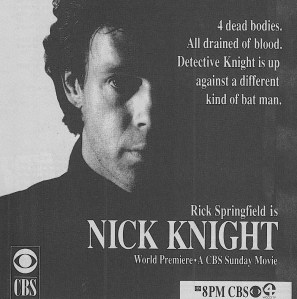
Directed in 1989 by Farhad Mann, Nick Knight (a.k.a. Midnight Cop) was a made for tv movie meant as a pilot for a series filmed in Los Angeles. It would take another 3 years to for the show to be picked up as Forever Knight, and even then, it was difficult show to catch given you could really find it sometime after Midnight on Saturdays and/or Sundays. As Vampires in media go, Nick Knight is tucked away in a very small place between the success of Kathryn Bigelow’s Near Dark in 1987 and Francis Ford Coppola’s Bram Stoker’s Dracula in 1992. It’s nowhere near as good as either of those films, but plays on most of the vampire tropes. Allergic to Garlic? Check. Aversion to sunlight? Sure. As I’m writing this the way I would cover a TV episode, this review will have spoilers and will be a bit long in the tooth. My apologies in advance. For the TSL Horrorthon this year, I’m hoping my contribution will be (at least) the first season of Forever Knight. For the film, If you search for it, you can find on YouTube.

Detective Nick Knight (Rick Springfield, Hard to Hold) loves to work the night shift, but not before getting in a quick visit at a local suntan spa. It’s a bit uncomfortable, enough for him to hit the panic button and bring in a few staff to check in on him. He blames it on claustrophobia, “It’s like a coffin in there.”, he says and moves on. When an ancient jade goblet is stolen from a museum, leaving a guard murdered, Knight is brought on to the scene where Don Schanke (John Kapelos, The Shadow, The Breakfast Club) is already helping the cops take photos of the crime scene, and putting himself in the way of things. Nick interviews Dr. Alyce Hunter (Laura Johnson, TV’s Falcon Crest) about the homicide. Alyce reports the goblet was used in ritual blood drinking sacrifices (something that Knight sounds like he’s aware of since he can understand some of the ancient writing in the museum).

Cleaning up the scene, the media approaches Knight and asks if it’s “another Vampire murder”. Word has gotten out that there’s no blood in the course. Knight’s rescued by Captain Brunetti (Richard Fancy, The Girl Next Door) who asks to have him stop by his office after he gets the autopsy work. At the morgue, Nick is given a mug of tea that he just can’t stomach. Thankfully, Dr. Jack (Robert Harper, Twins)knows about Nick’s true nature, and is working helping him find a cure (which includes the tea). “How is your tanning coming along?”, Jack asks. “I’m up to ten minutes.” is Nick’s response, with a smile. When Nick returns to the Precinct, the Captain assigns Knight a new partner to help him with the vampire crimes. Nick’s been able to work alone for the most part, but now he finds himself paired with Schanke. This poses a few problems with hiding his nature.

Schanke and Knight get to know each other on their first night shift, with some talk about Schanke’s married life vs. Nick being forever single. The conversation is interrupted by a dispatch call about an Uzi toting gunman terrorising a local gym. They arrive on the scene, and much like Riggs & Murtaugh, Nick is gung ho about the situation, which causes a third cop on the scene to get killed. With a hostage in stow, the gunman threatens Nick. The girl gets herself out of trouble with a swift knee to the gunman’s gut, causing him to unload a full magazine into Knight. This brings out the vampire in Nick, who throws the gunman into an electrical fence, killing him.

With the case wrapped up, Nick visits Alyce, who spent her evening going through a book on the dig that discovered the cup. Before his arrival, she found a picture of the archeological team that includes someone who looks just like Nick. She makes a copy of the picture, but never mentions it to Nick during his visit. They have a moment, leading to a kiss. Of course, this also causes Nick’s fangs to sprout. He makes a hasty exit.

Having not seen Nick during the evening, Dr. Jack visit’s Nick’s haven, a closed down movie theatre with It’s a Wonderful Life still on the marquee. He finds Nick chugging on a wine bottle full of blood. They have a small argument over Nick’s humanity, leading Nick to admit his desire for love and companionship despite the vampiric side effect of watching people die around them. They make up and move on, there’s crime on the streets and the city needs it’s Midnight Cop. Nick explains that the stolen goblet is part of a pair (one of which he owns) that may be able to cure one of vampirism. The other goblet was coveted by Nick’s maker, LaCroix (Michael Nader, TV’s All My Children), who wants Nick to embrace his vampirism instead of trying to fix it. Could he be the thief?

When a homeless couple goes missing, Nick visits a local vampire nightclub. There he finds Janette (Cec Verrell (Silk). She informs him that while, yes, LaCroix is in town and yes, he may have something to do with the goblet, the missing couple has nothing to do with him. On his way out of the nightclub, Nick bumps into Alyce, who followed him. When some other vampire locals approach the couple, she notices a scar on Nick’s chest (matching one in the photo she had), and confronts him. He doesn’t outright admit to being a vampire, but she gets the feeling she’s on the right track. She even dares him a little, baring her neck. Nick doesn’t take the bait.

On the radio, we hear “The Nightcrawler” who is really LaCroix. The Nightcrawler hosts “Metal for the Ages”, lamenting that he hasn’t seen his old friend Jean Pierre (Nick) in some time. LaCroix dedicates his next song to him, which just happens to be Bobby Brown’s “My Prerogative”. I don’t remember Bobby Brown’s music ever being Metal, but we’ll roll with it.

Eventually, Nick has to deal with both LaCroix and the real villain in this tale. The story ends on a bit of a dark note, resolving the whole mystery, but still leaves open the promise of Nick’s search for Mortality. The city is safe for now, and that’s what counts.

Though the film isn’t terribly strong on the plot, it does shine with the music choices. With classic 80s hits like Steve Winwood’s “Don’t You Know What the Night Can Do” and “Human” by The Human League, Nick Knight definitely has a bit of style, though it’s a bit over the top and campy on the action sequences. It was one of those films that I had a better memory of than what it truly was.

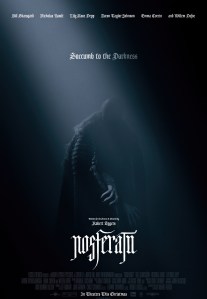
Film Review: Nosferatu (dir. by Robert Eggers)


I stepped out of the doors of the Regal Times Square yesterday, feeling giddy as a schoolkid. In my hands were a custom popcorn bucket and an Orlock Funko-Pop. I thoroughly enjoyed Robert Eggers Nosferatu and Christmas Morning was a delight. It was Film Euphoria. It was as if Halloween had one last gift to give, one final end of film zinger, and give it did.

At my early morning showing for Robert Eggers Nosferatu, we had at least one fellow who fell asleep and snored through the bulk of the film. Not loud enough to be disruptive, but it almost mimicked the strange purring sounds of the film’s antagonist. Granted, I understand. My showing was around 10a.m. on Christmas Morning and perhaps they partied hard the night before. Anything’s possible. Still, part of me likes to think that a person walking into a Robert Eggers film may have some expectations. With only three films under his belt – The Witch, The Lighthouse, and The Northman, regular audiences know that he has a taste for the macabre (perhaps even the unhinged), usually employs a slow burn when it comes to pacing and works with a great deal of light and shadow. If either of his previous films worked for you, Nosferatu‘s a near perfect fit for his style. If you’re not a fan of Eggers work, nor a fan of the previous renditions of Nosferatu, there’s little here that will make you change your mind (save for just a little more gore, perhaps). It’s a little hard to spoil a story that’s more than a century old, but Eggers makes enough changes to keep the film from being the exact note for note story as before. Is it scary? Yes. Is there blood? Sure, but none of it is in the ‘jumpscare every other second’ variety. If that’s what you’re looking or hoping for, none of the Nosferatu’s (including this one) will deliver that and you will be quite disappointed. This is a prime cut of wagyu beef, not your everyday sirloin.

As most know, Nosferatu was essentially stolen from Bram Stoker’s Dracula. The original – Nosferatu: A Symphony of Horror was a silent film released back in 1922 by F. W. Murnau. Although the story was written and changed to fit German audiences, elements were still very close to Stoker’s and the Stoker Family tried to get rid of it. Copies were burned, but like that Jumanji box, it managed to slither through the years, gaining popularity to the point of Canonization. If Film History is your thing, I highly recommend watching the 1922 film, if you haven’t already. It amazes me how most of what they did was accomplished (my favorite scene being Orlok prepping his coffins for his trip). At the time of this writing, the movie is currently available on Amazon Prime. For me, I love the 1979 update by Werner Herzog, Nosferatu The Vampyre. There are a few minor changes in the plot, but it’s just as powerful.

Thomas Hutter (Nicholas Hoult, Mad Max: Fury Road) is married to his lovely wife Ellen (Lily-Rose Depp, The King) in the town of Wisborg. Ellen suffers from fits of melancholia, which cause her to either spurt morbid tales or put her in convulsive fits. He’s looking for a way to improve his financial station with his bride while keeping her problems hushed, and has found a great opportunity from his boss, Herr Knock (Simon Burney, Mission Impossible: Rogue Nation). It appears a wealthy old man wishes to move to Wisborg and purchase an estate there. The only stipulation is that he is infirm and cannot make the journey. Thomas is charged with traveling to the Carpathian mountains, where he is to visit Count Orlock at his home with the deeds and contracts. During his trip, Thomas is warned of the dangers ahead, but proceeds full on, meeting the Count and his strange ways. Upon learning of Ellen and her beauty, the Count sets off a chain of events that will put all of Wisborg at risk. Can the Count be stopped in time?

There’s so much love in this production, it seems. It certainly has the atmosphere down. Cinematographer Jarin Blaschke, who worked on all of Eggers previous films, weaves some magic with light that in some scenes rival Alejandro Amenabar’s The Others. Lanterns and candles are blinding, while at the same time, you might find yourself squinting to see the figure in the shadows. I had a few “look around the screen” moments while watching it. There’s absolutely nothing to complain about from a visual standpoint, it’s just beautiful. It’s also quite dark in nature. We’re dealing with vampires, possession and the occult, which Eggers takes in a few extremes (particularly through Skarsgard, Depp and Burney). Ancient tomes? Check. Romani banishing the darkness with Garlic? Check. Consecrating the soil? Done. The sound design in the film is nice, particularly with the breathing and talking for Orlok, which felt like it travelled through the audience. Blood squelches, screams are crisp. There’s little more I can say there, really. I was entertained and transported.

The cast is wonderful. The only thing I’ve ever watched Lily-Rose Deep do was Yoga Hosers, and she’s come a long way from that. Ellen is a tortured character, and Deep rides this through – fits, convulsions and all – to a point where you may wonder if she was really okay on set. We follow Nicholas Hoult’s Thomas as he moves from quiet reservation to curious disbelief and then ultimately, just full on terrified. Even the smaller roles work. Simon Burney’s character becomes repulsive. Emma Corrin, who had a fun turn earlier this year in Deadpool & Wolverine has good moments, along with Aaron Taylor-Johnson (Kraven the Hunter). Then there’s Dafoe. It never hurts to have Willem Dafoe in your lineup. This is his third film with Eggers and he’s come something of a lucky charm as Prof. Ebenhart von Franz. As the Van Helsing of the story, Dafoe is a treat to watch on screen, especially when paired with Ralph Ineson from The Witch. I could watch the two of them as detectives solving Gothic/Victorian X-Files in their own series or movies.

As Orlock, Bill Skarsgard (John Wick 4) really melts into the role, giving the character a low near constant purr and a voice that enunciates every word. Perhaps it was just me, but I did have a bit of a problem figuring out what Orlock was saying at some points. It improved as the story went on, though. Orlock’s look does veer from the traditional, through. That’s a jolt in itself. While he looks more like the Draugr in Skyrim or in Eggers own The Northman, I found myself thinking of “Taserface” in Guardians of the Galaxy, Vol. 2. If you can get past that feeling, it still works. It’s a creepy character and Skarsgard does it justice, I felt.

Clocking in at about 2 hours and 12 minutes, it’s considered the longest Nosferatu film. I found this odd because were a number of sequences the original and remake had that Eggers missed (like the loading of the coffins). The film is cut pretty well, for what it’s worth, though I’m not sure what they could have removed to trim scenes down.

If the film has any faults, any problems, there was one. The one weird misstep in all of this is a sex scene that seemed just a little out of place. I understand why it happened, and how it was supposed to fuel the story, but it comes on so fast and fierce that I sat there in the audience whispering…”Wait…what’s happening…Whoa…now? Here? Why?” Mind you, this is coming from someone who watched Shame more than once when it was first released. That, if anything, might freak a few people out if they’re not ready for it. Either that, or I’m becoming prudish in my old age.

Overall, I loved Nosferatu. If it weren’t so expensive to get out to a theatre, I’d make another run at it. As a remake, it easily stands toe to toe with John Carpenter’s The Thing and Chuck Russell’s The Blob as one you can sit on the shelf next to those who came before it. It’s a worthy adaptation, with moments of sheer dread and some that may push a boundary or two.

Horror on the Lens: The Night Stalker (dir by John Llewelyn Moxey)


For today’s horror on the lens, we have a real treat!  (We’ll get to the tricks later…)

Long before he achieved holiday immortality by playing the father in A Christmas Story, Darren McGavin played journalist Carl Kolchak in the 1972 made-for-TV movie, The Night Stalker.  Kolchak is investigating a series of murders in Las Vegas, all of which involve victims being drained of their blood.  Kolchak thinks that the murderer might be a vampire.  Everyone else thinks that he’s crazy.

When this movie first aired, it was the highest rated made-for-TV movie of all time.  Eventually, it led to a weekly TV series in which Kolchak investigated various paranormal happenings.  Though the TV series did not last long, it’s still regularly cited as one of the most influential shows ever made.

The Night Stalker is an effective little vampire movie and Darren McGavin gives a great performance as Carl Kolchak.

Enjoy!