And here are the NAACP Image Award Nominations!


Dear White People

And continuing our awards wrap-up, here are the 2014 NAACP Image Award nominations!

(h/t to awardswatch)

MOTION PICTURE
Outstanding Motion Picture
• “Belle” (Fox Searchlight Pictures/ DJ Films)
• “Beyond The Lights” (Relativity Media)
• “Dear White People” (Lionsgate and Roadside Attractions)
• “Get On Up” (Universal Pictures)
• “Selma” (Paramount Pictures)

Outstanding Actor in a Motion Picture
• Chadwick Boseman – “Get On Up” (Universal Pictures)
• David Oyelowo – “Selma” (Paramount Pictures)
• Denzel Washington – “The Equalizer” (Columbia Pictures)
• Idris Elba – “No Good Deed” (Screen Gems)
• Nate Parker – “Beyond The Lights” (Relativity Media)

Outstanding Actress in a Motion Picture
• Gugu Mbatha-Raw – “Belle” (Fox Searchlight Pictures/ DJ Films)
• Quvenzhané Wallis – “Annie” (Columbia Pictures)
• Taraji P. Henson – “No Good Deed” (Screen Gems)
• Tessa Thompson – “Dear White People” (Lionsgate and Roadside Attractions)
• Viola Davis – “The Disappearance of Eleanor Rigby” (The Weinstein Company)

Outstanding Supporting Actor in a Motion Picture
• André Holland – “Selma” (Paramount Pictures)
• Cedric the Entertainer – “Top Five” (Paramount Pictures)
• Common – “Selma” (Paramount Pictures)
• Danny Glover – “Beyond The Lights” (Relativity Media)
• Wendell Pierce – “Selma” (Paramount Pictures)

Outstanding Supporting Actress in a Motion Picture
• Carmen Ejogo – “Selma” (Paramount Pictures)
• Jill Scott – “Get On Up” (Universal Pictures)
• Octavia Spencer – “Get On Up” (Universal Pictures)
• Oprah Winfrey – “Selma” (Paramount Pictures)
• Viola Davis – “Get On Up” (Universal Pictures)

Outstanding Independent Motion Picture
• “Belle” (Fox Searchlight Pictures/ DJ Films)
• “Dear White People” (Lionsgate and Roadside Attractions)
• “Half of a Yellow Sun” (monterey media inc.)
• “JIMI: All Is By My Side” (XLrator Media)
• “Life of a King” (Animus Films/Serena Films)

Outstanding Writing in a Motion Picture
• Chris Rock – “Top Five” (Paramount Pictures)
• Justin Simien – “Dear White People” (Roadside Attractions and Lionsgate)
• Margaret Nagle – “The Good Lie” (Alcon Entertainment)
• Misan Sagay – “Belle” (Fox Searchlight Pictures/ DJ Films)
• Richard Wenk – “The Equalizer” (Columbia Pictures)

Outstanding Directing in a Motion Picture
• Amma Asante – “Belle” (Fox Searchlight Pictures/ DJ Films)
• Antoine Fuqua – “The Equalizer” (Columbia Pictures)
• Ava DuVernay – “Selma” (Paramount Pictures)
• Gina Prince-Bythewood – “Beyond The Lights” (Relativity Media)
• John Ridley – “JIMI: All Is By My Side” (XLrator Media)

TELEVISION
Outstanding Comedy Series
• “Black-ish” (ABC)
• “House of Lies” (Showtime)
• “Key & Peele” (Comedy Central)
• “Orange is the New Black” (Netflix)
• “Real Husbands of Hollywood” (BET)

Outstanding Actor in a Comedy Series
• Andre Braugher – “Brooklyn Nine-Nine” (FOX)
• Anthony Anderson – “‘Black-ish” (ABC)
• Don Cheadle – “House of Lies” (Showtime)
• Keegan-Michael Key – “Key & Peele” (Comedy Central)
• Kevin Hart – “Real Husbands of Hollywood” (BET)

Outstanding Actress in a Comedy Series
• Mindy Kaling – “The Mindy Project” (FOX)
• Niecy Nash – “The Soul Man” (TV Land)
• Tracee Ellis Ross – “Black-ish” (ABC)
• Uzo Aduba – “Orange is the New Black” (Netflix)
• Wendy Raquel Robinson – “The Game” (BET)

Outstanding Supporting Actor in a Comedy Series
• Boris Kodjoe – “Real Husbands of Hollywood” (BET)
• Glynn Turman – “House of Lies” (Showtime)
• Laurence Fishburne – “Black-ish” (ABC)
• Marcus Scribner – “Black-ish” (ABC)
• Terry Crews – “Brooklyn Nine-Nine” (FOX)

Outstanding Supporting Actress in a Comedy Series
• Adrienne C. Moore – “Orange is the New Black” (Netflix)
• Laverne Cox – “Orange is the New Black” (Netflix)
• Lorraine Toussaint – “Orange is the New Black” (Netflix)
• Sofia Vergara – “Modern Family” (ABC)
• Yara Shahidi – “black-ish” (ABC)

Outstanding Drama Series
• “Being Mary Jane” (BET)
• “Grey’s Anatomy” (ABC)
• “House of Cards” (Netflix)
• “How to Get Away with Murder” (ABC)
• “Scandal” (ABC)

Outstanding Actor in a Drama Series
• LL Cool J – “NCIS: LA” (CBS)
• Omar Epps – “Resurrection” (ABC)
• Omari Hardwick – “Being Mary Jane” (BET)
• Shemar Moore – “Criminal Minds” (CBS)
• Taye Diggs – “Murder in the First” (TNT)

Outstanding Actress in a Drama Series
• Gabrielle Union – “Being Mary Jane” (BET)
• Kerry Washington – “Scandal” (ABC)
• Nicole Beharie – “Sleepy Hollow” (FOX)
• Octavia Spencer – “Red Band Society” (FOX)
• Viola Davis – “How to Get Away with Murder” (ABC)

Outstanding Supporting Actor in a Drama Series
• Alfred Enoch – “How to Get Away with Murder” (ABC)
• Courtney B. Vance – “Masters of Sex” (Showtime)
• Guillermo Diaz – “Scandal” (ABC)
• Jeffrey Wright – “Boardwalk Empire” (HBO)
• Joe Morton – “Scandal” (ABC)

Outstanding Supporting Actress in a Drama Series
• Aja Naomi King – “How to Get Away with Murder” (ABC)
• Alfre Woodard – “State of Affairs” (NBC)
• Chandra Wilson – “Grey’s Anatomy” (ABC)
• Jada Pinkett Smith – “Gotham” (FOX)
• Khandi Alexander – “Scandal” (ABC)

Outstanding Writing in a Comedy Series
• Aisha Muharrar – “Parks and Recreation” – Ann & Chris (NBC)
• Brigette Munoz-Liebowitz – “Brooklyn Nine-Nine” – Road Trip (FOX)
• Mindy Kaling – “The Mindy Project” – Danny and Mindy (FOX)
• Regina Hicks – “Instant Mom” – A Kids’s Choice (Nickelodeon and Nick@Nite)
• Sara Hess – “Orange is the New Black” – It Was the Change (Netflix)

Outstanding Writing in a Drama Series
• Erika Green Swafford – “How to Get Away with Murder” – Let’s Get To Scooping
(ABC)
• Mara Brock Akil – “Being Mary Jane” – Uber Love (BET)
• Warren Leight, Julie Martin – “Law & Order: SVU” – American Disgrace (NBC)
• Zahir McGhee – “Scandal” – Mama Said Knock You Out (ABC)
• Zoanne Clack – “Grey’s Anatomy” – You Be Illin’ (ABC)

Outstanding Television Movie, Mini-Series or Dramatic Special
• “A Day Late and a Dollar Short” (Lifetime Networks)
• “American Horror Story: Freak Show” (FX)
• “Drumline: A New Beat” (VH1)
• “The Gabby Douglas Story” (Lifetime Networks)
• “The Trip to Bountiful” (Lifetime Networks)

Outstanding Actor in a Television Movie, Mini-Series or Dramatic Special
• Blair Underwood – “The Trip to Bountiful” (Lifetime Networks)
• Charles S. Dutton – “Comeback Dad” (UP Entertainment)
• Larenz Tate – “Gun Hill” (BET)
• Mekhi Phifer – “A Day Late and a Dollar Short” (Lifetime Networks)
• Ving Rhames – “A Day Late and a Dollar Short” (Lifetime Networks)

Outstanding Actress in a Television Movie, Mini-Series or Dramatic Special
• Angela Bassett – “American Horror Story: Freak Show” (FX)
• Cicely Tyson – “The Trip to Bountiful” (Lifetime Networks)
• Keke Palmer – “The Trip to Bountiful” (Lifetime Networks)
• Regina King – “The Gabby Douglas Story” (Lifetime Networks)
• Vanessa Williams – “The Trip to Bountiful” (Lifetime Networks)
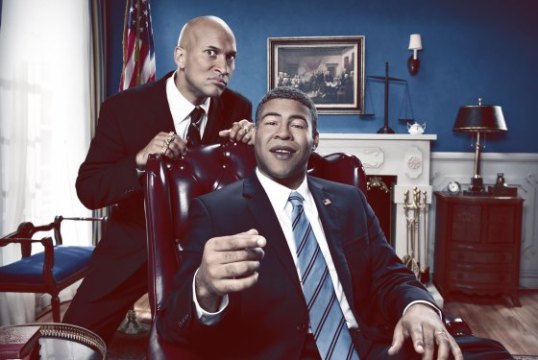
Key & Peele

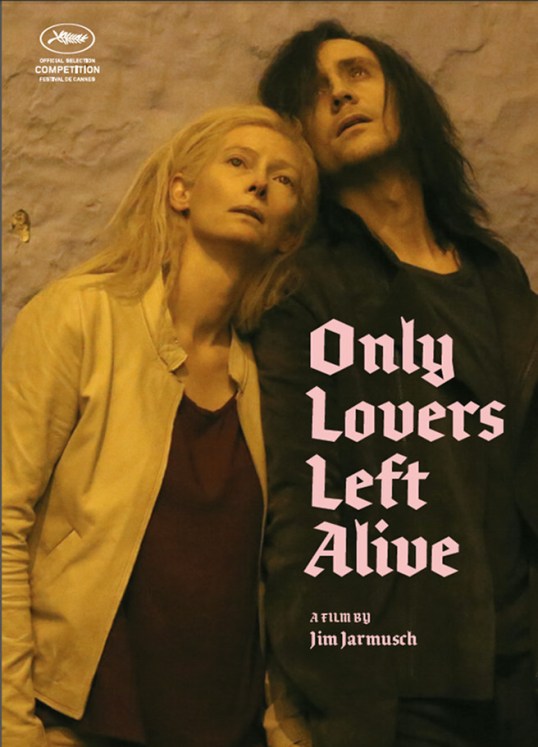
Film Review: Only Lovers Left Alive (dir by Jim Jarmusch)


Is it possible that the iconic American independent filmmaker Jim Jarmusch is a fan of the late and beloved French film director Jean Rollin?

I ask this question because Jarmusch’s latest film, Only Lovers Left Alive, is one of the most Rollinesque films to have ever been made by a director other than Jean Rollin.

The most obvious similarity between Jarmusch’s film and much of Rollin’s work is that they both deal with vampires.  Rollin was the visual poet of vampire cinema and, if nothing else, Only Lovers Left Alive is a very poetic film.  The film tells the story of three vampires — ennui-stricken Adam (Tom Hiddleston), Adam’s wife Eve (Tilda Swinton), and Eve’s hedonist sister Ava (Mia Wasikowska), all of whom would be perfectly at home in any of Rollin’s vampire films.

But, to be honest, the horror genre has reached the point where ennui-stricken and decadent vampires are hardly unique. What distinguished both Only Lovers Left Alive and the best films of Jean Rollin is the way that they both use and defy the conventions of the vampire genre to explore issues of sexuality, religion, politics, and artistic expression.  Much like Rollin, Jarmusch understands what the audience expects from a vampire film and he makes his larger points by manipulating, defying, and occasionally even confirming those expectations.

In other words, Only Lovers Left Alive is no Twilight and we’re all better off for it.

DAY1-0217.CR2

There are other similarities between Only Lovers Left Alive and the best films of Jean Rollin.  Much like Rollin, Jarmusch tells his story through a collection of sensual and increasingly dream-like images.  Even Rollin’s trademark lingering shots of empty beaches and ancient castles are duplicated, in Only Lovers Left Alive, with haunting shots of the empty streets in Detroit and Tangiers.  When, towards the end of the film, two hungry vampires find themselves searching for blood in an ancient city, it was impossible for me not to think of a similar scene in Jean Rollin’s Two Orphan Vampires.

Now, I’m sure that some of you are probably saying, “That’s great, Lisa, but can you just tell me whether the film is worth watching or not?”

To answer your question, it is.  It’s not a flawless film.  There’s a few comedic scenes involving a doctor played by Jeffrey Wright that aren’t quite as entertaining as they could be.  And while it’s an interesting idea to have Christopher Marlowe show up as a vampire, John Hurt’s performance did not quite work for me.  But, whenever the film concentrates on the chemistry between Hiddleston, Swinton, Wasikowska, and Anton Yelchin (who plays a hilariously naïve human), it works brilliantly.

So yes, definitely — see Only Lovers Left Alive.

968full-only-lovers-left-alive-screenshot

See it for the scenes in which Adam and Eva drive through the ruins of Detroit, looking for Jack White’s house (“Oh!  I love Jack White!” Eve exclaims) and discussing Adam’s belief that the “zombies” (his term for the rest of us) are on the verge of destroying themselves.  Adam serves as the film’s philosophical and political mouthpiece and often times, his dialogue runs the risk of being a bit too on-the-nose perfect but Tom Hiddleston is such a charismatic performer that it doesn’t matter.  Wisely, Hiddleston delivers his most portentous lines with just a hint of self-mockery, as if to let us know that even Adam knows he’s being overdramatic.

See it for the amazing sequence in which Adam plays music in Detroit while Eve dances to it in Tangiers.  If Katharine Hepburn had been turned into a vampire, she would have been a lot like Tilda Swinton’s Eve.

See the film for Mia Wasikowska’s hilarious turn as a petulant and immature brat who just happens to be vampire.  The scenes in which she goes out of her way to annoy the dour Adam left me convinced that, if I ever become a vampire, I’ll probably be a lot like Ava.

See it because the White Hills appear as themselves, playing in a club and absolutely killing it.

See it because it’s one of the few vampire films to strike a perfect balance between humor and drama.

Most of all, see it because it’s a good and unique movie and, so far this year, we’ve had a bit of a shortage where those are concerned.

As for me, if I ever meet Jim Jarmusch, I’m going to ask him for the title of his favorite Jean Rollin film.

If nothing else, it should be an interesting conversation.

only-lovers-left-alive-poster


44 Days of Paranoia #21: Broken City (dir by Allen Hughes)


For today’s entry in the 44 Days of Paranoia, let’s take a look at one of the most disappointing films of 2013, Broken City.

It’s a bit hard to describe the plot of Broken City, not because it’s particularly clever but just because there’s so much of it.  The film starts with New York police detective Billy Taggart (Mark Wahlberg) murdering a man in cold blood.  But don’t worry, the murdered man was a murderer himself who was only out of jail on a technicality.  The Mayor of New York, Nicholas Hostetler (Russell Crowe, who sounds like he’s as much of a New Yorker as I am and I ain’t no New Yorker), pulls some strings and get a judge to drop the charges against Billy.  The Mayor tells Billy that he’s a hero but Billy is still forced to leave the police.

Jump forward seven years later.  Mayor Hostetler is locked in a tight re-election battle.  His opponent is a liberal councilman named Jack Valliant (Barry Pepper.)  Yes, the man’s last name is Valliant and — surprise! — it turns out that he’s actually a really sincere guy who wants to make New York a great place to live.  We know this because we get to sit through an endless debate between him and Hostetler.  While Hostetler gives a speech about how he’s against higher taxes, Valliant says that all he’s doing is asking the rich “to pay their fair share.”  The debate audience, of course, explodes into applause.  Valliant never gets around to saying, “If you like your plan, you can keep your plan.”  Maybe they’re saving that for the sequel.

Meanwhile, Billy is now a private investigator.  His girlfriend is an actress who has just appeared in an independent film.  When Billy goes to the premiere, he’s so upset over the sight of his girlfriend being taken from behind on the big screen that he starts drinking and attacking random strangers on the street.

Meanwhile, (in many ways, Broken City is a movie of meanwhiles) Mayor Hostetler has hired Billy to follow his wife Cathleen (Catherine Zeta-Jones) and discover who she’s having an affair with.  Working with his assistant (played by Alona Tal), Billy follows Cathleen and discovers that she’s been spending time with Paul Andrews (Kyle Chandler), who happens to be the manager of the Valliant campaign…

Or is she?  As Billy subsequently discovers, the truth is a lot more complicated than it seems (or probably needs to be).

Broken City got a lot of attention because the script was listed on the 2008 Black List.  The Black List is an annual list of the “best” unproduced scripts in Hollywood.  Now, it should be understood that the concept of what makes something the “best” is always open to interpretation.  In the case of the Black List, the “best” is determined by a survey of studio and production executives.  The Black List comes out every December and it usually provides an excuse for lazy entertainment writers to write yet another article or blog post bemoaning all of the Hollywood remakes while so many creative and original scripts remain unproduced.

But here’s the thing.  Since, I started reviewing films for the Shattered Lens, I’ve had the chance to see several films that were produced from Black List scripts.  A few of them have been good but the majority of them have either been likable but forgettable (i.e., Cedar Rapids) or else they’ve been total and complete disasters, like The Beaver.  Typically, Black List films tend to be overly complicated, overly ambitious, and never quite as intelligent as they may seem.  Frequently, Black List scripts tend to be a bit cutesy in a way that’s effective on paper but annoying on screen.  (For example, naming your film’s only good politician Jack Valliant is one of those cutesy concepts that tend to turn up in a lot of Black List scripts.)  Several of these scripts, Broken City included, are thrillers that attempt to use the conventions of the genre film to make some larger point about American society.  They’ve usually got some sort of dreary political subtext and they always seem to feature a twist that’s surprising only because it doesn’t make any sense.

And that is certainly the case when it comes to Broken City.  Don’t get me wrong — the film starts well and Mark Wahlberg is well-cast as the hero.  But, with each passing minute of film, things get messier and messier until, finally, it’s impossible to take the film seriously.  It’s obvious that director Allen Hughes meant for Broken City to be more than just a thriller.  Instead, in much the same way that Charles Dickens used London, Hughes makes a valiant effort to use the film’s New York as a metaphor for our own corrupt society.  Under Hughes’s direction, Broken City does a lot without doing any of it that well.

Indeed, if I could give this film an A for effort and ambition, I certainly would.  However, in the end, a film should first be judged by what is actually seen on-screen.  Taken by that standard, Broken City is a mess, a disorganized collection of themes and subplots that attempts to do so much that it accomplishes very little.  Russell Crowe and Catherine Zeta-Jones both struggle to sound like New Yorkers while Barry Pepper is so overly intense and wired as the saintly Valliant that I would be scared to vote for him.  Seriously, he seems like the type who would start a war in the name of social justice and then end up having so much fun killing and conquering that he’d forget what the reason for fighting was in the first place.  On a positive note, Mark Wahlberg and Alona Tal have a very likable chemistry and it’s too bad that the rest of the film didn’t take better advantage of it.

Broken City?  Broken film.

Other Entries In The 44 Days of Paranoia 

  1. Clonus
  2. Executive Action
  3. Winter Kills
  4. Interview With The Assassin
  5. The Trial of Lee Harvey Oswald
  6. JFK
  7. Beyond The Doors
  8. Three Days of the Condor
  9. They Saved Hitler’s Brain
  10. The Intruder
  11. Police, Adjective
  12. Burn After Reading
  13. Quiz Show
  14. Flying Blind
  15. God Told Me To
  16. Wag the Dog
  17. Cheaters
  18. Scream and Scream Again
  19. Capricorn One
  20. Seven Days In May

Trailer: The Hunger Games: Catching Fire (Exclusive Teaser)


CatchingFire

The next installment in The Hunger Games series, Catching Fire, looks to return later this year with a new director taking over the reins. Gary Ross began the series as director of the first film and the film enjoyed massive success and very positive reception from the critics-at-large. So, it was surprising news that Ross wouldn’t be returning to continue the series and instead Lionsgate replacing him with Francis Lawrence (Constantine, I Am Legend).

This sequel brings back everyone who survived the first film and adds some new faces in the cast such as Philip Seymour Hoffman, Toby Jones, Jena Malone and Jeffrey Wright.

The Hunger Games: Catching Fire is set for a November 22, 2013 release date.

A Very Late Film Review: Extremely Loud and Incredibly Close (dir. by Stephen Daldry)


Earlier this month, I finally found the time to see Extremely Loud and Incredibly Close, the critically reviled “prestige” picture that was the center of a minor scandal when it received an Academy Award nomination for best picture back in January.

That nomination, by the way, is the only reason that I made a point of DVRing the film when I saw that it was going to be on HBO.  I had already been turned off by the film’s trailer and the subject matter (a little kid trying to make sense of 9-11 by wandering around New York with a mute old man) seemed like the sort of thing that could only have been made effective by a Roberto Rossellini or a Vittorio De Sica.  Say what you will about director Stephen Daldry (and I think that both Billy Elliott and The Reader are excellent films), he’s not an Italian neorealist.  Extremely Loud and Incredibly Close seemed like just the film to bring out his worst instincts as a filmmaker.

Having now finally seen the film, I am sorry to say that my initial instincts were correct.  Extremely Loud and Incredibly Close is the type of film that gives a bad name to good intentions.  This is the type of film that you watch and you know that you should be touched by the subject matter but it just all feels so forced, heavy-handed, and ultimately quite empty.

The film tells the story of Oskar (played by Thomas Horn), a brilliant child who is also a bit abrasive and neurotic.  At one point, Oskar says that he’s been tested for Asperger syndrome but that the tests were “inconclusive.”  What’s interesting about this is that in the book that this film is based on, the possibility that Oskar might be autistic is never stated or even hinted at.  Instead, he’s just an abrasive kid and, to be honest, the film’s decision to make Oskar autistic feels less like characterization and more like narrative laziness.  It’s hard not to feel that the filmmakers introduced autism as a way to avoid dealing with the fact that Oskar (especially as played by Thomas Horn) is perhaps one of the most abrasive and annoying characters in film history.

Oskar’s life falls apart when his father, Thomas (Tom Hanks), is killed on 9-11.  He obsessively listens to the final 6 messages that his father left on the family’s answering machine, even while he hides those messages from his mother (Sandra Bullock).

A year later, Oskar is exploring his father’s closet and finds a vase that has an envelope in it.  Inside the envelope is a key and written on the envelope is the word “Black.”  Convinced that the key is a final message from his father, Oskar looks up the address of every single person in New York whose last name is Black and sets about tracking each one of them down and demanding to know if they knew his father.  Eventually, he’s joined in his quest by a sad-eyed mute (Max Von Sydow) who lives with Oskar’s grandmother.

Extremely Loud and Incredibly Close is based on a novel and the film’s central idea — that Oskar’s quest is his way of trying to make some sort of sense out of the September 11th terrorist attacks — is one that works better as a literary metaphor than as an actual story.  While Oskar’s quest might seem poignant on paper, it becomes narcissistic and rather insensitive when seen on film.  You find yourself wondering why so many New Yorkers are willing to let this obnoxious and rather annoying little brat into the homes, especially when he usually responds to their hospitality by being rude and condescending.

(In the film’s defense, it does try to address that very issue at the end of the movie but it does so in a way that just doesn’t seem that plausible.)

Ultimately, the film feels like a rather crass exploitation of a true-life tragedy and it’s made even more offensive by Daldry’s heavy-handed approach to the material.  This is the type of material that needed more than a hint of realism and instead, Daldry seems to feel that it’s necessary to manipulate us into thinking that 9-11 was a national trauma (as if we didn’t already know that).  The all-star approach that Daldry takes to casting his story also serves to undermine the film’s message.  At moments when you should be wrapped up in the unfolding melodrama, you find yourself saying, “Hey, it’s John Goodman!  There’s Viola Davis!  Oh look!  Jeffrey Wright!”  Extremely Loud and Incredibly Close ultimately feels less like a film about a national trauma and more like a slick Towering Inferno-style disaster flick.

The film’s one saving grace is Max Von Sydow, who dominates this entire film without saying a word or even having that much screen time.  One wishes that Daldry had told his 9-11 story through Von Sydow’s sad eyes and just left the kid at home.

A Quickie With Lisa Marie: The Source Code (dir. by Duncan Jones)


Okay, I’ll admit it right now: I’m way too late in reviewing this film.  Seriously, if you were planning on seeing The Source Code, then you’ve probably already seen it by this point.  You already have your own opinion about the film.  Why do you need hear mine?  You’re probably saying, “Girl, move on.”

And to that I say: “I do what I want!”

Anyway…

The Source Code is a surprisingly smart and occasionally even moving little sci-fi thriller.  Jake Gyllenhaal plays Colt Stevens, an army helicopter pilot who, as the film begins, awakens to find himself on a commuter train with no idea who he is or how he got there.  The woman sitting across from him (played by Michelle Monaghan) seems to know he is.  The confused Gyllenhaal wanders around the train trying to figure out who he is.  He goes into the train’s restroom, looks in the mirror, and sees a stranger staring back at him.  And then the entire train blows up.

Suddenly, Gyllenhaal wakes up again.  He’s apparently trapped in a dark chamber with his only link to the outside world being a computer screen.  An army officer (Vera Farminga) appears on the screen and explains to him that he was sent into the past in order to find out who bombed the train.  And he will continually be sent back into the past to relive the few minutes before the bomb goes off.  He’s told that the past cannot be changed, the people on the train cannot be saved, and his only mission is to discover who planted the bomb. 

It’s a clever little plot (one that would do Philip K. Dick proud) that has a lot more twists and turns than is obvious from a simple recap.  Along with a smart script, the film has a cast who bring a lot of conviction and nuance to their roles.  Jake Gyllenhaal, in particular, redeems himself after his unfortunate work in Love and Other Drugs.  However, the film’s real hero is director Duncan Jones who gives The Source Code both a heart and a brain.  His work here confirms that talent that was evident in Moon and I’m looking forward to what he gives us next.