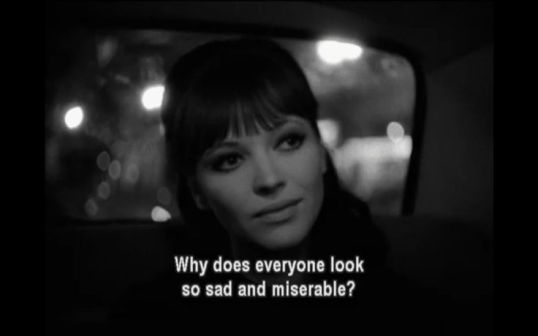
4 Or More Shots From 4 Or More Films is just what it says it is, 4 shots from 4 of our favorite films. As opposed to the reviews and recaps that we usually post, 4 Shots From 4 Films lets the visuals do the talking!
4 (or more) Shots From 4 (or more) Films is just what it says it is, 4 (or more) shots from 4 (or more) of our favorite films. As opposed to the reviews and recaps that we usually post, 4 (or more) Shots From 4 (or more) Films lets the visuals do the talking.
Today, on Jean-Paul Belmondo’s birthday, we pay tribute to French cinema! It’s time for….
4 Shots From 4 French Film
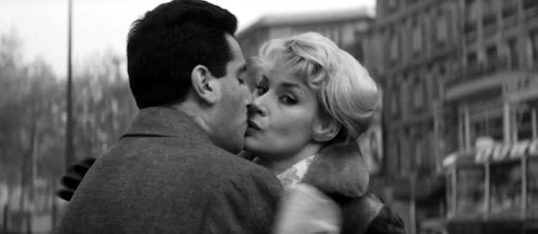
The 400 Blows (1959, dir by François Truffaut, DP: Henri Decae)
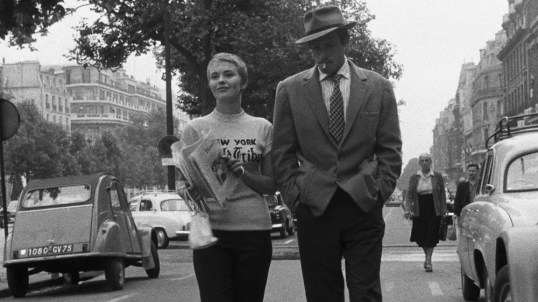
Breathless (1960, dir by Jean-Luc Godard, DP: Raoul Coutard)
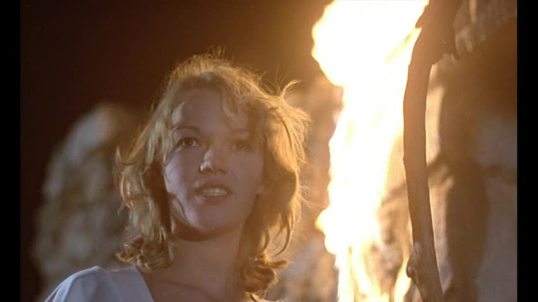
The Iron Rose (1973, dir by Jean Rollin)
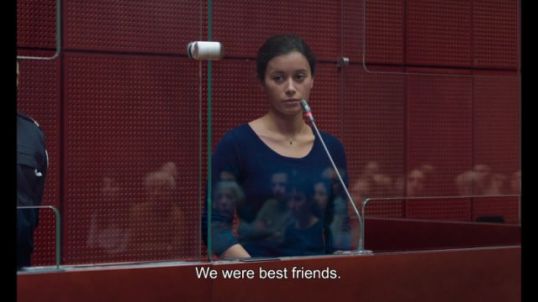
The Girl With A Bracelet (2020, dir by Stéphane Demoustier, DP: Sylvain Verdet)
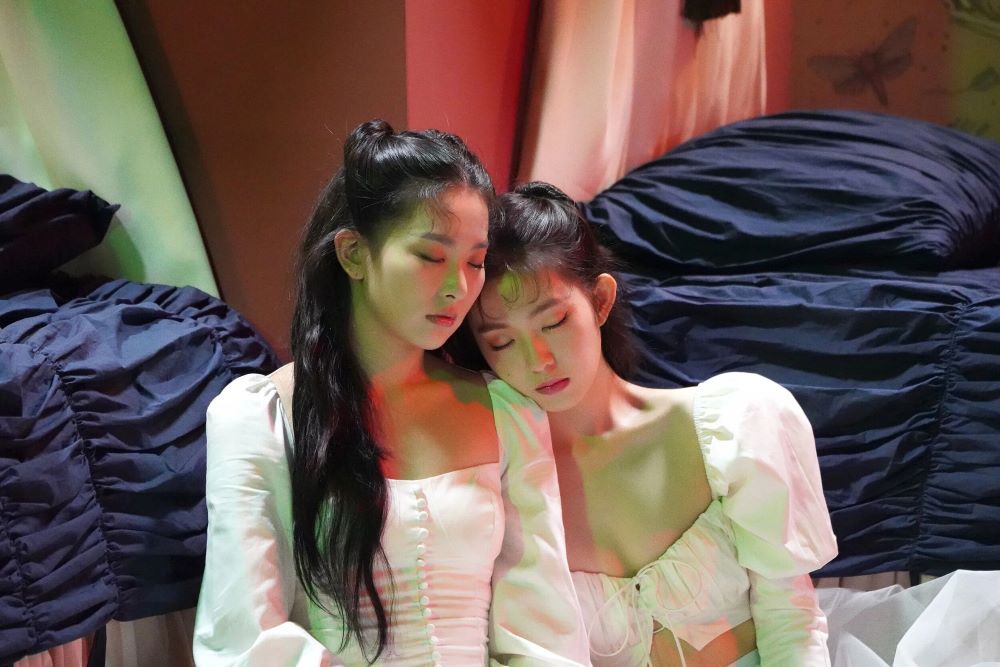
“Monster” by Irene & Seulgi (sub-unit of the K-pop girl group Red Velvet) dives into a dark and captivating space, blending eerie visuals with a sound that really sticks with you. The music video channels the vibe of classic sapphic vampire films, especially those atmospheric, haunting works by Jean Rollin. Irene takes on the role of a succubus-like figure, this hypnotic presence who seems to dominate Seulgi both visually and emotionally. Their movements, cold doll-like expressions, and the green light symbolizing possession all come together to paint a picture of seduction as a form of power struggle, where desire and control are beautifully intertwined.
Sonically, the song pushes boundaries with a mix of dark pop, industrial beats, and dubstep textures. The production is sharp, with synths that cut through like shadows and a bassline that grabs hold and won’t let go. Irene and Seulgi’s vocals glide between whispery softness and fierce intensity, capturing the delicate balance of temptation and danger that drives the song’s energy. The repetitive hook has a spell-like quality, reinforcing the feeling of being caught by this irresistible “monster.”
What really makes “Monster” stand out is how the song and video come together to create a seamless fusion of horror and sensuality. This isn’t just spooky imagery matched with a dark sound—it’s a fully immersive experience that captures the intoxicating mix of fear and desire. The supernatural themes of possession and seduction fit perfectly with the song’s hypnotic beats and evocative vocal delivery. “Monster” tells a story framed in shadows and light, a stylish journey where eroticism and horror enhance each other, pulling the listener deeper into its mesmerizing hold.
Monster
My move is unique Not ordinary 1 2 5 to 7 I’m a dancer in the darkness I’ll crack every joint in my body And come close to your bed I’ll horribly steal your heart And dominate you
Under a single lighting, why are there two shadows? I guess something else woke up inside me I’m a little monster, be scared of me I’m bothering you making you dream only about me I’ll dance and play as I cast a spell On your body in a nightmare I’m a little monster I’m a little monster
I rose from The ashes in the cold ground From dusk to dawn I still exist I don’t hate this madness I’m having fun You can’t get out Don’t run away, you’ll get hurt I save you and tease you again Oh I’m perfect and messed up again
I’m a little monster, be scared of me I’m bothering you making you dream only about me I’ll dance and play as I cast a spell On your body in a nightmare I’m a little monster I’m a little monster
See, I’m just playing No bad intentions I’m small but dangerous Who would refuse me? It’s time for the red sun to rise at dawn Now that you are relieved You try to come out of the dream But monster lives forever
I’m a little monster, be scared of me I’m bothering you making you dream only about me I’ll dance and play as I cast a spell On your body in a nightmare I’m a little monster I’m a little monster I’m a little monster
This October, I’m going to be doing something a little bit different with my contribution to 4 Shots From 4 Films. I’m going to be taking a little chronological tour of the history of horror cinema, moving from decade to decade.
This October, I’m going to be doing something a little bit different with my contribution to 4 Shots From 4 Films. I’m going to be taking a little chronological tour of the history of horror cinema, moving from decade to decade.
Today, we start the savage 70s!
4 Shots From 4 Horror Films
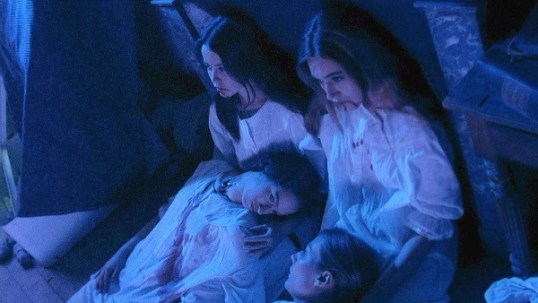
The Shiver of the Vampires (1970, dir by Jean Rollin)
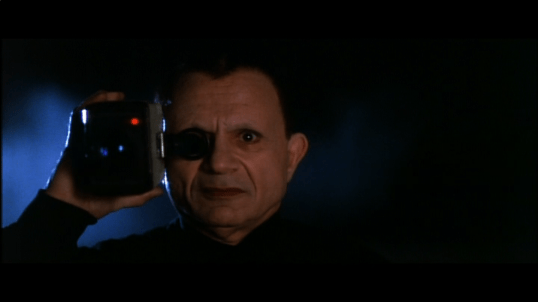
The Abominable Dr. Phibes (1971, dir by Robert Fuest)
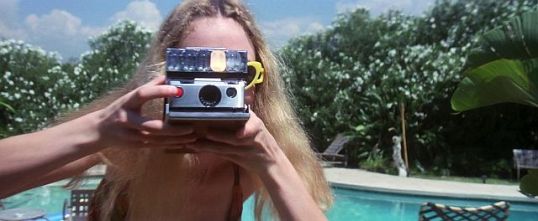
The Last House On The Left (1972, dir by Wes Craven)
This October, I’m going to be doing something a little bit different with my contribution to 4 Shots From 4 Films. I’m going to be taking a little chronological tour of the history of horror cinema, moving from decade to decade.
Today, we finish off the 1960s!
4 Shots From 4 Horror Films
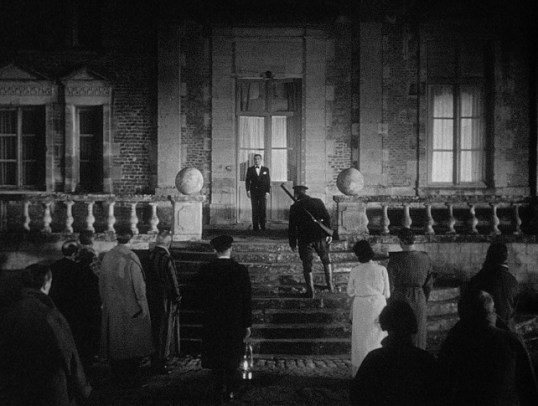
Even The Wind is Scared (1967, dir by Carlos Enrique Taboada)
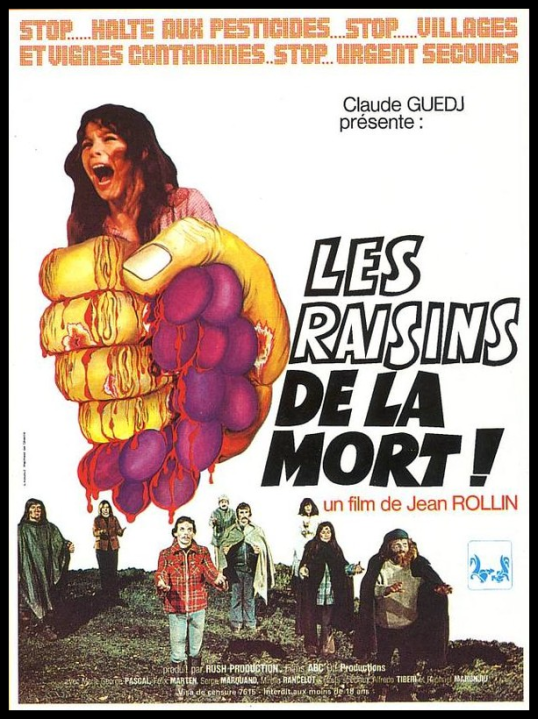
1978’s The Grapes of Death is a zombie film that moves at a relentless place, combining effective body horror with an ominous atmosphere that leaves you feeling as if anyone could be the next victim of the zombie horde.
At a vineyard, a worker complains about the new pesticides that are being used and is told, by his smug manager, not to worry so much. Later, when that worker stumbles aboard a train, his face is pulsing with hideous ulcers. He kills one woman and chases another, Elizabeth (Marie-Georges Pascal), off the train. Elizabeth, who is just trying to visit her boyfriend in a nearby village, makes her way across the French countryside, meeting men and women who have been infected by something and who are now going mad. They may not technically be the undead but, with their nonstop pursuit and their obsession with killing everyone that they come across, they are definitely zombies.
The Grapes of Death is also one of the most French films ever made. In this film, the zombies are not the creation of a voodoo curse or outer space radiation or even there no longer being room in Hell. (In fact, it becomes fairly obvious that The Grapes of Death takes place in a world in which there is no Heaven or Hell.) Instead, this film features people who are transformed into zombies because they drank contaminated wine at an annual festival. When Elizabeth does eventually meet two men who have not been turned into zombies, they are both revealed to be beer drinkers. One could actually argue that, despite the film’s grim atmosphere and all of the violence committed and the blood shed and the philosophical discussions that occur, The Grapes of Death is ultimately a satire of French culture. Only in France could a bad crop of wine lead to the zombie apocalypse.
The Grapes of Death was one of the more commercially successful films to be directed by the great Jean Rollin. Rollin is best-known for his surreal and dream-like vampire films. In an interview, he stated that The Grapes of Death was his attempt to make a commercial horror film and that, when he was writing the script, he closely studied the structure of Night of the Living Dead. While the film does have its similarities to Romero’s classic zombie film, The Grapes of Death is still definitely the work of Jean Rollin. The lingering shots of the fog-shrouded French countryside and the ancient French villages, with blood staining the cobblestone streets, could have come from any of Rollin’s vampire films. The film also uses the same serial structure that Rollin used in many of his film, with Elizabeth going from one adventure to another and almost always managing to narrowly escape danger. Elizabeth goes from fleeing the infected man on the train to finding herself a near prisoner in an isolated house to protecting a blind girl (Mirella Rancelot) for her crazed boyfriend to being menaced by the mysterious Blonde Woman (played by frequent Rollin collaborator Brigitte Lahaie). There’s a new cliffhanger every fifteen minutes or so.
(Rollin said that he originally envisioned contaminated tobacco as being the cause of the zombie outbreak but he ultimately went with wine instead. Not everyone smokes but, in France, just about everyone drinks wine.)
First released as Les raisins de la mort, The Grapes of Death has been described as being “France’s first zombie film.” I don’t know if it was the first but it’s certainly one of the best, a relentless chase through the French countryside that ends on a proper note of downbeat horror. This film made me happy that I’m not a wine drinker.
4 Or More Shots From 4 Or More Films is just what it says it is, 4 shots from 4 of our favorite films. As opposed to the reviews and recaps that we usually post, 4 Shots From 4 Films lets the visuals do the talking!
With October approaching, it will soon be time for our annual Horrorthon here at the Shattered Lens. We’ve been working hard getting things ready! Here are 4 shots from 4 of the many films that we will be reviewing this October.
4 Shots From 4 Horror Films
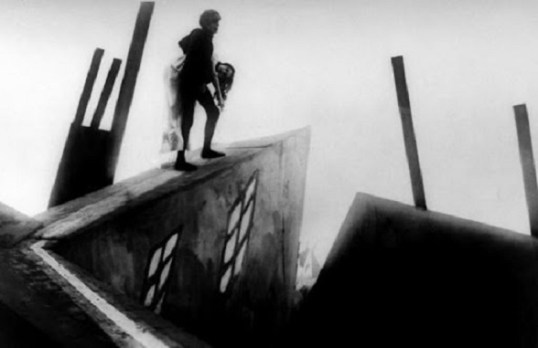
The Cabinet of Dr. Caligari (1920, dir by Robert Wiene)
4 Shots From 4 Films is just what it says it is, 4 shots from 4 of our favorite films. As opposed to the reviews and recaps that we usually post, 4 Shots From 4 Films lets the visuals do the talking!
Today, let us take a look back at a classic cinematic year. It’s time for….
4 Shots From 4 1997 Films
Boogie Nights (1997, dir by Paul Thomas Anderson, DP: Robert Elswit)
Kundun (1997, dir by Martin Scorsese, DP: Roger Deakins)
Lost Highway (1997, dire by David Lynch, DP: Peter Deming)
4 (or more) Shots From 4 (or more) Films is just what it says it is, 4 (or more) shots from 4 (or more) of our favorite films. As opposed to the reviews and recaps that we usually post, 4 (or more) Shots From 4 (or more) Films lets the visuals do the talking.