Film Review: Asteroid City (dir by Wes Anderson)


Asteroid City opens with black-and-white footage of Bryan Cranston, wearing a suit and speaking in the authoritative tones of someone who has made his living on television.  Cranston informs us that we are about to see a televised production of a play by the famed but enigmatic playwright named Conrad Earp (Edward Norton).

The play, which is seen in stylized color, opens with Augie Steeback (Jason Schwartzman) driving his family through the desert.  He is taking his son, Woodrow (Jake Ryan), to a Junior Stargazers convention that is being held at Asteroid City, a tiny town that is best-known for being the location of an impact crater.  Along for the ride are Augie’s three daughters, who are all pretending to be witches.  What Augie hasn’t told his children is that their mother has died, her cremated remains are in a Tupperware container, and that they will be moving in with their wealthy grandfather (Tom Hanks).

There’s not much to the town of Asteroid City.  There’s a motel that’s managed by a man (Steve Carell) who sells land deeds out of a refurbished Coke machine.  There’s a diner.  There’s a group of helpful cowboys, led by the polite and helpful Montana (Rupert Friend).  There’s a mechanic (Matt Dillon) who is called into duty when Augie’s car breaks down.  The Junior Stargazer convention is the event of the year for Asteroid City.  Young geniuses from all around the country have descended on the town and have brought their parents.  One of them, Dinah (Grace Edwards), is the daughter of actress, Midge Campbell (Scarlett Johansson).  When an alien (played, at one point in the film, by Jeff Goldblum) shows up and steals the town’s meteorite, General Gibson (Jeffrey Wright) declares a quarantine.  Some people handle the lockdowns better than others.  Augie takes pictures and thinks about his wife.  Midge rehearses for her next role, one that is centered around her character dying.  The genius children play a memory game that they realize will never end because they’re all geniuses.  A teacher (Maya Hawke) tries to teach her students about the Milky Way, just to discover that the kids only want to talk about the alien.  One of the fathers (Liev Schreiber) ends up with a useless plot of desert land and the death ray that his son recently invented.

Throughout it all, Bryan Cranston appears in black-and-white footage that gives us a look into what went on behind the scenes during the production of Asteroid City.  The director (Adrien Brody) was a lech.  The actor playing Augie struggled to understand what the play was about and who his character was meant to be while the actress (Margot Robie) hired to play his wife ended up in another play after her scenes were cut from Asteroid City.  Only once does Bryan Cranston’s host appear in the color sections of Asteroid City, just to sheepishly admit that he’s not supposed to be there before ducking off camera.

Even if his name wasn’t in the opening credits, the viewer could probably easily guess that this is a Wes Anderson film.  It features all of Anderson’s trademarks, all of the things that viewers will automatically love or hate depending on how they feel about Anderson’s quirky aesthetic.  It’s a visually impressive, pop art-flavored, all-star comedy with an undercurrent of profound melancholy, one in which the fanciful strangeness of the alien’s “invasion” is compared and contrasted with the very real-life strangeness of how humans deal with life, loss, death, and uncertainty.  Scenes of clever wordplay are mixed with scenes in which we see Augie still very much struggling to come to terms with the death of his wife and the actor Augie very much struggling to understand what is actually going on in his character’s head.  As far as recent Anderson films go, Asteroid City is not quite as humanistic as Rushmore or Grand Budapest Hotel but, at the same time, it’s still more accessible than The French Dispatch.

If you’re not a fan of Anderson’s style, this film won’t convert you.  That said, I am a fan of Anderson’s style and I absolutely loved Asteroid City.  As with so many of Anderson’s films, the main focus is on how we try to deal with the uncertainties of life by trying to maintain an illusion of control over every aspect of our lives.  Playwright Conrad Earp writes because that way he can have a world that follows his own rules.  The actors follow a script that tells them how to react to everything that happens around them.  In the play, the Junior Stargazers fall back on science while Augie’s father-in-law falls back on religion and Augie’s daughter convince themselves that spells will bring back or, at least, protect their mother.  Even General Gibson falls back on his belief in the government and the military to deal with the sudden appearance by the alien.  The alien is the unknowable and his arrival reminds everyone that life is unpredictable, regardless of how much you try to control your own story.  Indeed, while the film takes place in the 50s and is full of comments about the Red Scare and atomic bomb testing, it’s hard not to see Asteroid City as being a commentary on the recent COVID lockdowns and the debate over whether people could ever go back to living the way that they did before the pandemic.  Much as with the Coen Brothers’s similarly stylized A Serious Man, the ultimate message seems to be that the only way to deal with the unpredictability of life is to embrace it.

It’s also a very funny film, one that is full of small details that reward repeat viewing.  If one focuses on the background characters, it quickly becomes apparent that there are actually several stories unfolding in the film and, much as with life, the viewer just has to be willing to look for them.  (I particularly enjoyed the romance between The Teacher and Montana.)  Jason Schwartzman is compelling as both Augie and the actor playing Augie and Scarlett Johansson plays both Midge and the actress playing Midge with the perfect amount of cool detachment.  To the film’s credit, none of the character’s become caricatures.  They remain individuals, regardless of how bizarre the film’s story may sometimes seem.  Everyone gets a moment to reveal a little depth, from Jeffrey Wright’s sincere (if misplaced) faith in the lockdown policy to the moment when Tom Hanks’s previously unsympathetic father-in-law reveals that he’s as much in mourning as Augie.  The all-star cast also includes Tilda Swinton, Liev Schrieber, Stephen Park, Willem DaFoe, Hong Chau, and Margot Robbie and all of them add to the film’s portrait of quirky but ultimately relatable humanity.

Again, with this film, it undoubtedly helps to already be familiar with and to like Wes Anderson’s way of doing things.  If  you’re not a fan of his film, this one probably won’t change your mind.  That said, for those of us who do enjoy his style, this is Anderson at his best.

10 Oscar Snubs From The 2010s


And now, we reach the present day!  A lot has changed over the past few decades but one thing has remained consistent.  No matter how hard the Academy tries, some good movies and performances are always going to get snubbed.  Here are ten snubs from the previous decade.

2011: Shame Is Totally Ignored

Despite being critically acclaimed and receiving nominations from other groups, Steve McQueen’s Shame was totally ignored by the Academy.  My theory is a lot of people looked at Michael Fassbender playing an emotionally detached, self-destructive sex addict and they basically saw aspects of themselves that they didn’t want to acknowledge.  Shame caused too much shame amongst the voters.

2012: The Master Is Not Nominates For Best Picture

When The Master was first released, a lot of people didn’t really know what to make of Paul Thomas Anderson’s barely disguised portrait of Scientology.  The film received only three nominations, for Joaquin Phoenix, Philip Seymour Hoffman, and Amy Adams.  It deserved quite a bit more but, in 2012, I imagine the film’s portrait of a charismatic cult leader taking advantage of his wealthy followers seemed a bit too familiar to some voters.

2013: Tom Hanks Is Not Nominated For Best Actor For Captain Phillips

Looking over today’s list of snubs, a recurring theme seems to be actors who were not nominated because the Academy took them and their talent for granted.  That’s the only possible reason that I can come up with for the Academy to have not nominated Tom Hanks for his outstanding lead performance in Captain Phillips.  Just consider the scene at the end of the film, when the shellshocked and exhausted Captain Phillips is examined by a nurse and he can’t stop talking about the blood on his clothes.  It’s a devastating scene, largely because the audience doesn’t feel as if they’re watching Tom Hanks give a performance.  At that moment, they feel that they are watching a man who has just been through the worst experience of his life and who, even though he is now safe, will be forever haunted by what he has witnessed.

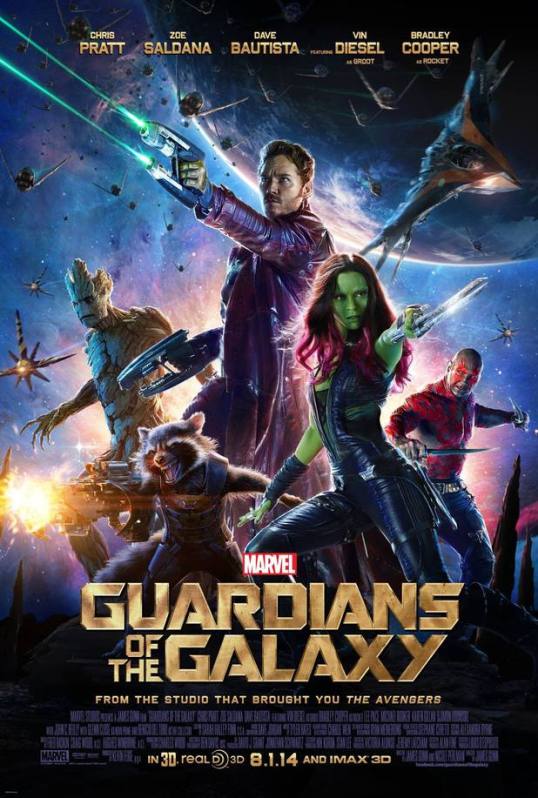
2014: Guardians of the Galaxy Is Not Nominated For Best Picture

Seriously, if any MCU film deserved to be nominated for Best Picture, it was Guardians of the Galaxy.  It was a fun movie with a charismatic cast and, despite what some critics claimed, it actually did have something to say about the importance of tolerance and individual freedom.  It even holds up well to repeat viewings, which is not exactly something that you can say about a few of the other MCU film.

2016: Amy Adams Is Not Nominated For Best Actress For Arrival

Much as they did with Tom Hanks and his performance in Captain Phillips, the Academy took Amy Adams for granted and failed to nominate her for Arrival, despite the fact that it was her best performance to date.  At this point, if I’m Amy Adams, I would be wondering just what it is that I’m going to have to do to finally get my Oscar.

2017: Ethan Hawke Is Not Nominates For Best Actor For First Reformed

This is another snub that I can’t get my head around.  Ethan Hawke has been nominated in the past.  The Academy is obviously not resistant to honoring Ethan Hawke.  So how was it that one of his best performances went unnominated?  For that matter, how is it that First Reformed itself only received one Oscar nomination?

2019: The Souvenir Is Ignored

Despite being one of the best films of the past ten years, The Souvenir was ignored by Academy.  The things that made the film work, like its low-key but honest performances and its refusal to pass easy judgment on its characters, are probably the same things that caused the Academy to overlook it.

2020: The Assistant Is Ignored

This was a powerful film and it featured an award-worthy performance from Julia Garner.  It was also about Harvey Weinstein so I guess I shouldn’t be too shocked that the Academy snubbed it.  The Assistant is a film that probably hit too close to home for many members of the Academy.

2021: Val Is Not Nominated For Best Documentary Feature

Val is one of the most affecting documentaries that I’ve ever seen but the Documentary Branch failed to even give it a nomination.  Maybe, like The Assistant, Val just hit too close to home for some of the voters.

2021: Mass Is Ignored

Again, I will never understand how the Academy can fail to give even one nomination to a film as good as Mass.  As with The Souvenir, I can only guess that the Academy did not know how to react to Mass’s honest approach to its subject matter.  Mass worked because it avoided easy judgments and solutions.  That’s probably the same thing that led to the Academy ignoring both the film and its outstanding cast.

Agree?  Disagree?  Do you have any bigger Oscar snub that you’d like to mention?  Let us know in the comments!

And now, get ready to enjoy the show!  And, if you don’t care about the Oscars, fear not!  My review of The Black Godfather will be posting in an hour.

10 Oscar Snubs From The 2000s


Welcome to the aughts. The new century started out with the terror of 9-11 and it ended with the collapse of the world’s economy. In between, a lot of films were released. Some of them were really good. A few of them were nominated for Best Picture. Most of them were not.  As always, there were snubs aplenty.

2000: Michael Douglas Is Not Nominated For Wonder Boys

I recently saw someone online bemoaning the fact that Michael Douglas appears to be fated to end his career as a supporting character in the MCU as opposed to playing the type of “mature” roles with which he made his reputation.  And I actually think that person had a good point.  Michael Douglas, whose performances once epitomized the last few decades of the 20th Century, does seem a bit out of place surrounded by CGI and responding to the overly quippy dialogue of the MCU.  If you want to see a truly good Michael Douglas performance that doesn’t involve anyone shrinking, check him out in Curtis Hanson’s Wonder Boys.  Though Wonder Boys won the Oscar for Best Original Song and picked up nominations for Editing and Adapted Screenplay, Michael Douglas’s wonderful lead performance was overlooked.

2001: Mulholland Drive Is Almost Totally Ignored

Considering the reverence with which it is now viewed, it’s interesting to note that Mulholland Drive only received one Oscar nomination, for David Lynch’s direction.  The film was not nominated for Best Picture.  Naomi Watts and Laura Harring both went unnominated.  At the time, I imagine the film was too strange for Academy voters and its origin as a television pilot probably worked against it.  Today, it is regularly cited as one of the best films ever made.

2002: Leonardo DiCaprio and Tom Hanks Are Not Nominated For Catch Me If You Can

Catch Me If You Can was that rarest of movies, an underrated Steven Spielberg production.  Christopher Walken was nominated for Best Supporting Actor and the film’s score was nominated as well.  But both Leonard DiCaprio and Tom Hanks went unnominated, despite doing some of the best work of their careers.

2002: Robin Williams Is Not Nominated For One Hour Photo

One Hour Photo featured what I consider to be Robin Williams’s best and most poignant performance.  It was also perhaps his most frightening performance, which probably explains why the Academy shied away from honoring it.

2003: Scarlet Johansson Is Not Nominated For Best Actress For Lost In Translation

Though Bill Murray got most of the awards attention, Scarlet Johansson’s performance was just as important to the success of Lost In Translation.

2004: Eternal Sunshine of the Spotless Mind Is Not Nominated For Best Picture or Best Actor

Even before he decided to present himself as being an expert on vaccines and modern art, I wasn’t a huge fan of Jim Carrey’s.  That said, even I have to admit that he deserved a nomination for Eternal Sunshine of the Spotless Mind.  The film itself was only nominated for two Oscars.  Kate Winslet was nominated for Best Actress and Charlie Kaufman won the Oscar for Original Screenplay.  The film deserved quite a bit more.

2007: Once Is Not Nominated For Best Picture

This is one snub that I haven’t quite gotten over.  Once, a beautiful independent film from Ireland, deserved far more love than it received from the Academy.  That said, it did win the Oscar for Best Original Song and Glen Hansard gave one of the best acceptance speeches in Oscar history.  So, there is a little justice.

2008: The Dark Knight Is Not Nominated For Best Picture

If ever there was a comic book movie that deserved to be nominated for Best Picture, it was this one. To me, I think the main reason why The Dark Knight is superior to so many other comic book movies is because, even with Batman and the Joker running around, it still feels as if it’s taking place in the real world.  The smartest decision that Christopher Nolan made was to use a real city for Gotham instead of constructing a phony-looking set.  The fact that The Dark Knight received 8 nominations without also receiving a nomination for Best Picture leaves little doubt that the film’s lack of a nomination was due to its origins as a comic book movie.  There was such an uproar about The Dark Knight failing to pick up a Best Picture nomination that the Academy increased the number of Best Picture nominees to ten.  (Of course, that’s didn’t do much to help anything.)

2008: Robert Downey, Jr. Is Not Nominated For Best Actor For Iron Man

The MCU is now so big that it’s easy to forget that, if Robert Downey, Jr. hadn’t been a convincing Tony Stark in 2008, the whole thing would have never happened.  Going back and watching the early MCU films, before they got bogged down in their own formula, can be an eye-opening experience.  Downey’s performance in the first Iron Man holds up extremely well.  He goes from being an irresponsible businessman to being a hero and he’s convincing at every turn.  He gave such a good performance that it convinced even those of us who weren’t comic book readers to stick around and see what was coming up next in the Marvel Cinematic Universe.

2009: George Wyner Is Not Nominated For Best Supporting Actor For A Serious Man

Not all snubs involve big stars or famous actors.  Some of them involve talented character actors like George Wyner who totally knock their one scene out of the park but who still don’t get the recognition that they deserve.  In A Serious Man, Wyner plays the rabbi who tells Larry Gopnik (Michael Stuhlbarg) the parable of the dentist who found Hebrew phrases on the teeth of one of his patients.  It’s a mesmerizing scene, thanks to George Wyner’s skill as a storyteller.

Agree?  Disagree?  Have a snub of your own that you’d like to mention?  Let us know in the comments!

Coming up next, we go from the 2010s to the present day!

Here Are The 2022 Razzie Results


Ugh.  I hate the Razzies.  Blonde was pretty bad, though.  I don’t agree with Tom Hanks as Worst Supporting Actor, though.  Tom Hanks’s performance may have been strange but it was appropriate for Elvis.

Anyway, here are the results:

Worst Picture
WINNER: Blonde
Disney’s Pinocchio
Good Mourning
The King’s Daughter
Morbius

Worst Actor
Colson Baker (aka Machine Gun Kelly) / Good Mourning
Pete Davidson (Voice Only) / Marmaduke
Tom Hanks (as Gepetto) / Disney’s Pinocchio
WINNER: Jared Leto / Morbius
Sylvester Stallone / Samaritan

Worst Actress
WINNER: The Razzies*
Bryce Dallas Howard / Jurassic Park: Dominion
Diane Keaton / Mack & Rita
Kaya Scodelario / The King’s Daughter
Alicia Silverstone / The Requin

*The Razzies withdrew 12-year-old Firestarter star Ryan Kiera Armstrong’s nomination after sparking controversy online and nominated itself in the category.

Worst Remake/Rip-off/Sequel
Blonde
BOTH 365 Days sequels — 365 Days: This Day and The Next 365 Days [a Razzie BOGO]
WINNER: Disney’s Pinocchio
Firestarter
Jurassic World: Dominion

Worst Supporting Actress
WINNER: Adria Arjona / Morbius
Lorraine Bracco (voice only) / Disney’s Pinocchio
Penélope Cruz / The 355
Fan Bingbing / The 355 and The King’s Daughter
Mira Sorvino / Lamborghini: The Man Behind the Legend

Worst Supporting Actor
Pete Davidson (cameo role) / Good Mourning
WINNER: Tom Hanks / Elvis
Xavier Samuel / Blonde
Mod Sun / Good Mourning
Evan Williams / Blonde

Worst Screen Couple
Colson Baker (aka Machine Gun Kelly) and Mod Sun / Good Mourning
Both Real Life Characters in the Fallacious White House Bedroom Scene / Blonde
WINNER: Tom Hanks and His Latex-Laden Face (and Ludicrous Accent) / Elvis
Andrew Dominik and His Issues With Women / Blonde
The Two 365 Days Sequels (both released in 2022)

Worst Director
Judd Apatow / The Bubble
WINNER: Colson Baker (aka Machine Gun Kelly) and Mod Sun / Good Mourning
Andrew Dominik / Blonde
Daniel Espinosa / Morbius
Robert Zemeckis / Disney’s Pinocchio

Worst Screenplay
WINNER: Blonde / Written for the screen by Andrew Dominik, adapted from the bio-novel by Joyce Carol Oates
Disney’s Pinocchio / Screenplay by Robert Zemeckis and Chris Weitz (not authorized by the estate of Carlo Collodi)
Good Mourning / “Written” by Machine Gun Kelly and Mod Sun
Jurassic World: Dominion / Screenplay by Emily Carmichael and Colin Trevorrow, story by Trevorrow and Derek Connolly
Morbius / Screen story and screenplay by Matt Sazama and Burk Sharpless

2022 In Review: Lisa Marie’s Top 30 Films of 2022


Without further ado, here are my top 30 films of 2022!

(Why 30?  Because Lisa doesn’t do odd numbers!  Also, be sure to check out my picks for 2010201120122013201420152016201720182019, 2020, and 2021!  Wow, I’ve been doing this for a while!)

30. Marcel The Shell With Shoes On (dir by Dean Fleischer Camp)

An animated film with heart, Marcel The Shell With Shoes On would probably be ranked higher if Marcel’s favorite news show had been something other than 60 Minutes.  Still, questionable viewing habits aside, Marcel and Nana Connie and all the other shells were amazing characters and the end of the movie brought tears to my mismatched eyes.  With this film and I Want You Back, Jenny Slate had quite a year.

29. Ted K (dir by Tony Stone)

Released in February of this year, this film about Ted Kaczyski and his descent into madness was unfairly overlooked. Sharlto Copley was perfectly cast as Ted K.  This is a film that probably won’t make Ted’s supporters happy but, at the same time, it also avoids painting him as just being a straight-out madman.  It’s refusal to simplify makes the film far more than just another true crime biopic.

28. Dashcam (dir by Rob Savage)

Starring Annie Hardy as herself, this low-budget horror film is a scathing satire of life during the age of COVID and performative “wokeness.”  After the past few years, there’s something rather cathartic about Hardy’s refusal to obey.

27. The Batman (dir by Matt Reeves)

At this point, I’m fairly cynical about comic book movies in general and Batman films in specific.  I mean, how many Batmen have we had over the past ten years?  (Actually, I think only four but it feels like a lot more!)  That said, I enjoyed The Batman, for both its noirish atmosphere and it’s willingness to embrace the melodrama.  You have to love the fact that the villain was basically a nerdy podcaster.

26. Operation Mincemeat (dir by John Madden)

Based on a true story, this film was a throwback to the earnest World War II films of the past.  Colin Firth, Kelly MacDonald, Matthew McFayden, and Johnny Flynn were all well-cast and did their part to bring this moment of WWII history to life.
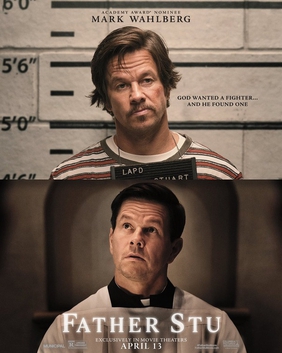
25. Father Stu (dir by Rosalind Ross)

You don’t have to be from a Catholic background to appreciate Father Stu but it probably helps.  This was one of those roles that only Mark Wahlberg could have pulled off.

24. See How They Run (dir by Tom George)

This stylized murder mystery was terrifically entertaining and witty.  Sam Rockwell and Saoirse Ronan are both treasures.

23. I Want You Back (dir by Jason Orley)

Two friends conspire to win back their respective romantic partners and end up falling in love with each other instead.  This was an enjoyable comedy, one that was blessed with an outstanding cast that included Jenny Slate, Charlie Day, Scott Eastwood, and Gina Rodriguez.  The scene in which Jenny Slate sings Suddenly Seymour is a classic.

22. Ambulance (dir by Michael Bay)

This was the film that Michael Bay was born to direct.  For once, Bay’s hyperkinetic style was perfectly matched by the story being told.  It also helped that the ambulance was a real ambulance and not a robot pretending to be an ambulance.

21.Send Me (dir by Nick Palmisciano)

This is a heart-breaking documentary about the efforts of 12 veterans to evacuate as many allies as they could during the disastrous withdraw from Afghanistan.  This film deserved more attention than it got.

20. The Bombardment (dir by Ole Bornedal)

Based on a true story, this Danish film deals with the accidental bombing of a school during World War II.  It’s been overshadowed a bit by All Quiet On The Western Front but, in its quieter way, The Bombardment is also a strong look at the horrors of war.

19. Goodnight Oppy (dir by Ryan White)

This is a poignant documentary about Opportunity, the NASA exploration rover that spent 15 years exploring Mars.  This movie proves that a robot can make you cry.
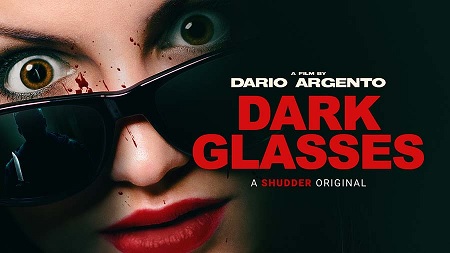
18. Dark Glasses (dir by Dario Argento)

Don’t listen to the critics.  This enjoyably over-the-top giallo was an entertaining return-to-form for Dario Argento.

17. Wildcat (dir by Melissa Lesh and Trevor Fost)

This poignant documentary follows a depressed veteran as he finds purpose helping to raise a baby ocelot in Peru.  Be prepared to cry.

16. Apollo 10 1/2 (dir by Richard Linklater)

Richard Linklater’s animated film was well-received by critics but it’s still hard not to feel that it’s been a bit overlooked.  Narrated by Jack Black, the film details the 1969 moon landing from the perspective of a child with a very active imagination.  Nostalgic, sweet-natured, and ultimately rather moving, Apollo 10 1/2 is a film that celebrates life.

15. Three Minutes: A Lengthening (dir by Bianca Stigner)

This haunting and moving documentary, which is narrated by Helena Bonham Cater, examines a three-minute snippet of 16mm film that was shot in a Jewish town in Poland in 1938, shortly before the Nazis invaded.  By examining every aspect of those three minutes, this documentary becomes both a memorial for the inhabitants of that town and a much-needed reminder of the horrors and reality of the Holocaust.  With anti-Semitism and Holocaust denial on the rise, this is an important documentary.

14. The Northman (dir by Robert Eggers)

The Northman is occasionally thrilling and occasionally ludicrous but it’s always watchable.  Robert Eggers finds moments of humor and odd beauty in this Viking epic.  Nicole Kidman embraces the melodrama and goes all out.  I just hope Valhalla was actually worth all the trouble.

13. Puss In Boots: The Last Wish (dir by Joel Crawford)

Yeah, you knew this film was going to show up on my list.  To be honest, the film could have been about just about anything.  I’d watch Puss In Boots read the phone book as long as Antonio Banderas returned to do his voice.  The fact that the film itself was cute and even touching was an added bonus.

12. Guillermo del Toro’s Pinocchio (dir by Guillermo del Toro and Mark Gustafson)

Yes, a puppet can make you cry.

11. Babylon (dir by Damien Chazelle)

Was it flawed?  You bet.  Did it run a little bit too long?  Yes, it did.  Could I have done without the scene with the elephant?  You better believe it.  That said, this film was so gloriously excessive and over-the-top that it was easy for me to forgive its flaws.  The critics may not have liked it but Babylon is a film that will be rediscovered.

10. The Fabelmans (dir by Steven Spielberg)

I went back and forth over whether to put The Fabelmans or Babylon in the number ten spot.  In a way, they’re kind of similar in that they have their flaws but they’re both saved by their director’s obvious love of cinema.  In the end, David Lynch’s role as John Ford moved The Fabelmans into the 10th spot.

9. Everything Everywhere All At Once (dir by the Daniels)

To be honest, I think some people are going a little bit overboard in their praise for this film.  Yes, it’s one of the year’s best but 2022 wasn’t that strong of a year and Everything is one of those probable Best Picture winners that, like Nomadland and CODA, will probably not be quite as celebrated after it actually wins.  That said, Michelle Yeoh and especially Ke Huy Quan deserve all the praise that they’ve received and I appreciated that the film featured the destruction of an IRS office.  It’s not as perfect as some say but, due largely to the cast, it still deserves to be in my top ten.

8. Nitram (dir by Justin Kurzel)

This is another unfairly overlooked film, this time from Australia.  Caleb Landry Jones gives a powerful and disturbing performance as a troubled young man named Nitram who commits an act of shocking violence.  Anthony LaPaglia and Judy Davis play Nitram’s parents, who are both troubled in their own individual ways.  Essie Davis plays the older woman who falls in love with Nitram, despite the fact that Nitram is incapable of loving anyone.

7. Emily the Criminal (dir by John Patton Ford)

Aubrey Plaza plays Emily, who discovers that not only does crime pay but, in the gig economy, it’s one of those few ways to get ahead.  Part thriller and part satire, Emily the Criminal reminds us that Plaza is one of the most interesting actresses working today.

6. All Quiet On The Western Front (dir by Edward Berger)

This German anti-war epic stays true to the themes of its source material while updating the plot for the modern era.  The contrast between the generals and the diplomats planning battles and the soldiers dying in them is a powerful one.

5. Elvis (dir by Baz Luhrmann)

This wonderfully excessive biopic features good music, a great performance from Austin Butler, and a wonderfully eccentric one from Tom Hanks.  Luhrmann is hardly a subtle director but Butler’s performance keeps the film from spiraling out of control.

4. Vengeance (dir by B.J. Novak)

This whip-smart satire of both true crime podcasts and the red state/blue state divide deserved far more attention than it received.  Ashton Kutcher has actually become a surprisingly dependable character actor.  Director and screenwriter Novak tells the story with sensitivity and a sharp eye for the absurd.
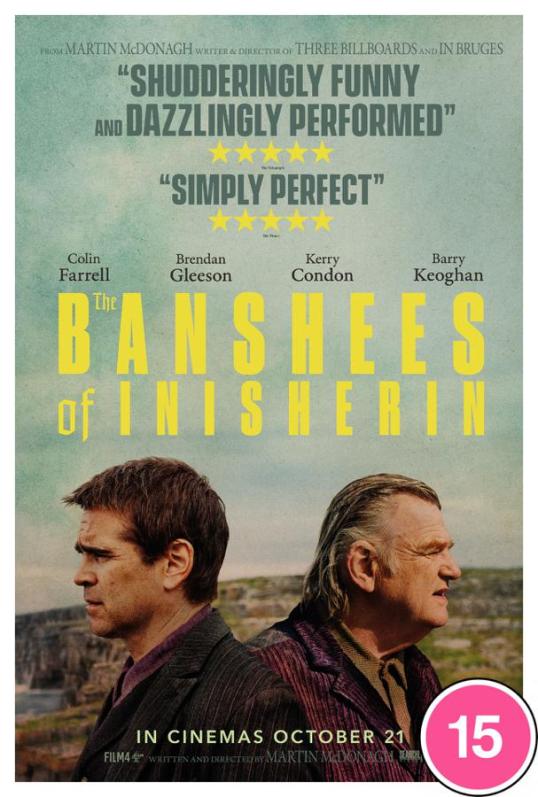
3. The Banshees of Inisherin (dir by Martin McDonagh)

In his best film yet, Martin McDonagh examines friendship, art, violence, and anger in Ireland.  Brendan Gleeson no longer wants to be Colin Farrell’s friend.  Farrell’s attempts to discover why leads to all sorts of surprising and macabre developments.  Gleeson and Farrell have never been better.  Kerry Condon and Barry Keoghan offer up poignant support.

2. Tar (dir by Todd Field)

Lydia Tar is a brilliant artist.  Does it matter that she also might be a terrible human being?  Todd Field’s return to filmmaking meditates on the meaning of art, morality, and the consequences of hubris.  Cate Blanchett is perfectly cast.  The scene where Tar talks to a student who objects to playing music by a white male is a real litmus test.  Do you think Tar is a bully or do you think the student is being too sensitive?  For all the talk about how Lydia dismisses the student’s claims, many also fail to note that the student is the one who calls her a “bitch” and runs out of the room.  Much as in Field’s previous film, no one is as perfect or as justified or as blameless as they may believe.

And, finally, my top film of 2022 is….

  1. Top Gun: Maverick (dir by Joseph Kosinski)

After 2 years of lockdowns and pessimism, Top Gun: Maverick was finally released and it reminded audiences of what they loved about movies in the first place.  Top Gun: Maverick was the movie that we needed in 2022.

Well, that concludes my late look back at 2022!  Now, let’s focus on 2023!

Lisa Marie’s 2022 In Review:

  1. 16 Worst Movies
  2. 10 Favorite Songs
  3. 10 Top Non-Fiction Books
  4. Lisa Marie’s Favorite Novels
  5. The Best of Lifetime
  6. 10 Good Things I Saw On Television

Lisa Marie’s Oscar Predictions For November


We are right on the cusp of Awards Season, which means that the Oscar race is about to become a bit more clear!

Below, you’ll find my predictions for November!  In order to see how my thinking has evolved over the course of the year, be sure to check out my predictions for February, March, April, May, June, July, August, September, and October!

Best Picture

Aftersun

Babylon

The Banshees of Inisherin

Elvis

Everything Everywhere All At Once

The Fabelmans

TAR

Till

Top Gun: Maverick

Women Talking

Best Director

Todd Field for TAR

Martin McDonagh for The Banshees of Insherin

Sarah Polley for Women Talking

Steven Spielberg for The Fabelmans

Charlotte Wells for Aftersun

Best Actor

Austin Butler in Elvis

Tom Cruise in Top Gun: Maverick

Colin Farrell in The Banshees of Insherin

Brendan Fraser in The Whale

Paul Mescal in Aftersun

Best Actress

Cate Blanchett in TAR

Viola Davis in The Woman King

Danielle Deadwyler in Till

Margot Robbie in Babylon

Michelle Yeoh in Everything Everywhere All At Once

Best Supporting Actor

Brendan Gleeson in The Banshees of Insherin

Tom Hanks in Elvis

Brian Tyree Henry in Causeway

Judd Hirsch in The Fabelmans

Ke Huy Quan in Everything Everywhere All At Once

Best Supporting Actress

Jessie Buckley in Women Talking

Jamie Lee Curtis in Everything Everywhere All At Once

Claire Foy in Women Talking

Nina Hoss in Tar

Janelle Monae in Glass Onion: A Knives Out Mystery

Lisa Marie’s Oscar Predictions For October


Even though Horrorthon has taken up the majority of my time this October, I still have been watching as this year’s Oscar race has developed over the past 29 days.  And that’s a good thing because it’s time for my monthly predictions!

Below, you’ll find my predictions for October!  In order to see how my thinking has evolved over the course of the year, be sure to check out my predictions for February, March, April, May, June, July, August, and September!

Best Picture

Babylon

The Banshees of Inisherin

Elvis

Everything Everywhere All At Once

The Fabelmans

She Says

TAR

Till

Top Gun: Maverick

Women Talking

Best Director

Chinonye Chukwu for Till

Todd Field for TAR

Martin McDonagh for The Banshees of Insherin

Sarah Polley for Women Talking

Steven Spielberg for The Fabelmans

Best Actor

Austin Butler in Elvis

Tom Cruise in Top Gun: Maverick

Colin Farrell in The Banshees of Insherin

Hugh Jackman in The Son

Brendan Fraser in The Whale

Best Actress

Naomi Ackie in I Wanna Dance With Somebody

Cate Blanchett in TAR

Olivia Colman in Empire of Light

Danielle Deadwyler in Till

Michelle Yeoh in Everything Everywhere All At Once

Best Supporting Actor

Brendan Gleeson in The Banshees of Insherin

Tom Hanks in Elvis

Woody Harrelson in Triangle of Sadness

Judd Hirsch in The Fabelmans

Ke Huy Quan in Everything Everywhere All At Once

Best Supporting Actress

Jessie Buckley in Women Talking

Claire Foy in Women Talking

Nina Hoss in Tar

Janelle Monae in Glass Onion: A Knives Out Mystery

Carey Mulligan in She Says

Lisa Marie’s Oscar Predictions For September


Horrorthon, my favorite time of year, starts tomorrow!  However, before we get lost in the scary season, I want to take one last look at awards season!  It’s time for me to update my Oscar nominations.  Fortunately, thanks to all of the recent festival premieres, the Oscar picture is finally starting to look a little bit clearer.  There’s still a lot of question marks out there and, as always, anything can happen.  But, finally, I can say that there’s more to my predictions that just lucky guesses and wishful thinking.

Below, you’ll find my predictions for September!  In order to see how my thinking has evolved over the course of the year, be sure to check out my predictions for February, March, April, May, June, July, and August.

Best Picture

Babylon

The Banshees of Inisherin

Elvis

Everything Everywhere All At Once

The Fabelmans

The Menu

TAR

Till

Top Gun: Maverick

Women Talking

A few thoughts on the (potential) nominees:

Babylon, I will admit, I’m including because of the trailer and the fact that it’s a Damien Chazelle film about Hollywood.  The Academy likes films about itself and one can argue that after what happened when La La Land was nominated, Chazelle is owed at least a little bit of recognition.  Then again, that same argument could have been made for First Man and we know how that turned out.

As for The Menu, I’ve got that in my surprise nominee slot.  There’s almost always at least one potential nominee that’s considered to be a long shot until the nominations are announced.  Now that we have a set number of ten nominees, the chances that one nominee will be a surprise seems even more certain than before.

Top Gun: Maverick, Elvis, and Everything Everywhere All At Once all came out early in the year but they’ve all achieved the box office success necessary to be remembered.

Till seems like the type of film that the Academy will want to acknowledge, especially with the presidential election right around the corner.

The Banshees of Inisherin, The Fabelmans, TAR, and Women Talking were all acclaimed when they made their festival debuts.  Banshees, in particular, went from being a probable also-ran to a surefire contender based on the length of the standing ovation that it received.

Best Director

Chinonye Chukwu for Till

Todd Field for TAR

Martin McDonagh for The Banshees of Insherin

Sarah Polley for Women Talking

Steven Spielberg for The Fabelmans

Best Actor

Austin Butler in Elvis

Tom Cruise in Top Gun: Maverick

Colin Farrell in The Banshees of Insherin

Ralph Fiennes in The Menu

Brendan Fraser in The Whale

Best Actress

Naomi Ackie in I Wanna Dance With Somebody

Cate Blanchett in TAR

Olivia Colman in Empire of Light

Danielle Deadwyler in Till

Michelle Yeoh in Everything Everywhere All At Once

Best Supporting Actor

Brendan Gleeson in The Banshees of Insherin

Tom Hanks in Elvis

Woody Harrelson in Triangle of Sadness

Judd Hirsch in The Fabelmans

Ke Huy Quan in Everything Everywhere All At Once

Best Supporting Actress

Jessie Buckley in Women Talking

Jamie Lee Curtis in Everything Everywhere All At Once

Sally Field in Spoiler Alert

Frances McDormand in Women Talking

Janelle Monae in Glass Onion: A Knives Out Mystery

Film Review: Elvis (dir by Baz Luhrmann)


Elvis the movie has much in common with Elvis the entertainer.

Both the movie and the entertainer (who is played, in the film, by Austin Butler) start strong, fall apart at the end, and leave you with a tear in one of your eyes once it’s all over.

Both the movie and the entertainer are big and unapologetically excessive yet also undeniably earnest as well.  Considering the amount of music that appears in the film (from both Elvis Presley and others), it’s significant that the final song played is In The Ghetto, which features Elvis at both his most naïve, his most sincere, and at what some of his critics would call his most offensive.

Both the movie and the entertainer are occasionally shallow but both of them want to be about more than just screaming fans, libidinal desires, and radio-friendly songs.  While Elvis (played by Austin Butler) watches the funeral of Martin Luther King, Jr. and the assassination of Bobby Kennedy and wonders how he should respond, the movie tries to make sense of and find a deeper meaning in the world’s fascination with kitschy Americana.  The movie suggests that Elvis spent much of the 60s on the outside looking in and the same could be said of Australian director Baz Luhrmann and his attempts to observe and capture the contradictions inherent in American culture.  Luhrmann’s kinetic style, which is one of those things that viewers will either love or hate, serves not just to capture the frantic energy of the late 50s and the 60s but it also allows him to remain detached from the world that he’s recreating.  It’s his way of reminding us that, though the story may be about a real person and a real moment in time, it’s still just a movie and, even during the film’s most intimate moments, the audience is still on the outside looking in.  We are the outsiders peeping in on the insiders, watching through a locked window that allows us to observe but not to interact.  This is history as a fever dream.

Finally, both Elvis the movie and Elvis the entertainer face the same dilemma.  What to do about Colonel Tom Parker?  Tom Parker was the former sideshow carny-turned-promoter who took credit for discovering Elvis and who managed his career.  Of course, he wasn’t really a colonel.  His name wasn’t Tom Parker.  And despite his claims to the contrary, he wasn’t born in West Virginia.  No one, not even the film’s version of Elvis, seemed to be sure who Col. Parker really was.  Parker is typically cast as the villain in the story of Elvis’s self-destruction.  He made a lot of money off of Elvis but he also put Elvis is bad movies and trapped him in a Las Vegas residency.  He made sure that Elvis got the pills that he needed to keep performing.

In the film, Parker narrates the story from his deathbed and angrily denounces anyone who would say that he was responsible for Elvis’s death.  When he talks about the gamble he took on Elvis, Parker’s seen staggering through a casino while still wearing a hospital gown.  Parker is played by Tom Hanks, who wears a prosthetic nose and speaks in an almost unintelligible accent.  My first reaction to Hanks’s performance was to think, “Could they not have gotten Christoph Waltz for this role?”  There’s nothing subtle about Hanks’s performance but then again, there’s never been anything subtle about Luhrmann as a filmmaker.  As the film progressed, I started to better appreciate what Luhrmann was doing with the character and I think I even came to understand his motives for casting Hanks.  If Austin Butler’s Elvis is meant to represent the optimism and the hope of America then it makes sense that he would be shadowed by the dark side of kitsch and there’s nothing more kitschy then casting an actor like Tom Hanks as the Devil.  As an actor, Hanks is often casts in roles where he epitomizes old-fashioned integrity.  By casting him as Col. Parker, Luhrmann challenges our expectations of who Tom Hanks can be in much the same way that Elvis challenged expectations of how music could be performed.  This is a film that is fully aware of the irony of Elvis coming to symbolize America while his career was being managed and his image carefully constructed by a man who entered the country illegally and who couldn’t reveal his real name or his real biography.  If Tom Hanks sometimes seems lost in the role of Col. Parker, it helps to remind us that Parker himself was often lost in America.  If Tom Hanks is usually cast as the epitome of American exceptionalism, his casting here reminds us that Col. Parker was a man who achieved the American dream and who came to represent the American nightmare.

In the end, it’s Austin Butler’s performance as Elvis that keeps the movie from spinning out of control.  Even while surrounded by Luhrmann’s stylistic touches and Tom Hanks’s bizarre performance, Austin Butler keeps the film grounded in reality by turning Elvis into a human being, a talented singer who loves his success but who also fears that he’ll never truly be worthy of it.  Butler gives a performance that is full of sexual swagger but which also finds room for the small moments in which Elvis reverts back to being a lost child who feels like he needs someone to look after him.  Interestingly enough, there aren’t many scenes in the film in which Elvis and Col. Parker show much affection toward each other.  Instead, each feels like he needs the other to survive and, to a certain extent, they each resent the other because of that dependence.  Austin Butler’s Elvis is the king when he’s on stage but, when he’s off-stage, he’s just another outsider looking in.  Elvis becomes a symbol of America but the American establishment is only willing to fully accept him after he’s gone.  If nothing else, this role should make a star out of Austin Butler.  Before he played Elvis, Butler was best known for playing murderer Tex Watson is another fever dream of history, Tarantino’s Once Upon A Time In Hollywood.  In Elvis, the title character retreats into his hotel room after reading about the murders that Tex Watson, under the direction of Charles Manson, took part in.  As both a film and a character, Elvis understands that society is just as quick to destroy its celebrities as it is to idolize them.

Elvis is a flawed film, make no mistake.  How the viewer reacts to it will largely depend on how much tolerance that viewer has for Luhrmann’s flamboyant style.  At 2 hours and 38 minutes, it feels a bit overlong and, despite all of Luhrmann’s stylistic flourishes, the final fourth of the film is a conventional “rock star in decline” story.  (In one way or another, these flaws are present in almost all of Luhrmann’s films, allowing one to wonder when a flaw ceases to become a flaw and instead becomes a directorial trademark.)  Elvis is undeniably a Baz Luhrmann film but, fortunately, it’s also an Austin Butler film.  It’s a big, sprawling, overwhelming, sometimes annoying and often very moving piece of cultural history.  It’s a work of pure, unapologetic showmanship.  Elvis probably would have lost interest after the first hour but Col. Parker would have loved it.

Lisa Marie’s Early Oscar Predictions For August


It’s that time of the month again!

Here are my Oscar predictions for August.  By the end of September, the picture should be a bit clearer.  Until then, most of the predictions listed below continue to be guesses.

Be sure to check out my predictions for February, March, April, May, June, and July!

Best Picture

Babylon

Elvis

Empire of Light

Everything Everywhere All At Once

The Fabelmans

The Inspection

The Son

TAR

Till

Top Gun: Maverick

Best Director

The Daniels for Everything Everywhere All At Once

Todd Field for TAR

Baz Luhrmann for Elvis

Steven Speilberg for The Fabelmans

Florian Zeller for The Son

Best Actor

Austin Butler in Elvis

Tom Cruise in Top Gun: Maverick

Brendan Fraser in The Whale

Hugh Jackman in The Son

Harry Styles in My Policeman

Best Actress

Cate Blanchett in TAR

Olivia Colman in Empire of Light

Viola Davis in The Woman King

Danielle Deadwyler in Till

Michelle Yeoh in Everything Everywhere All At Once

Best Supporting Actor

Tom Hanks in Elvis

Anthony Hopkins in The Son

David Lynch in The Fabelmans

Tobey Maguire in Babylon

Ke Huy Quan in Everything Everywhere All At Once

Best Supporting Actress

Jamie Lee Curtis in Everything Everywhere All At Once

Laura Dern in The Son

Sally Field in Spoiler Alert

Stephanie Hsu in Everything Everywhere All At Once

Michelle Williams in The Fabelmans