4 Or More Shots From 4 Or More Films is just what it says it is, 4 shots from 4 of our favorite films. As opposed to the reviews and recaps that we usually post, 4 Shots From 4 Films lets the visuals do the talking!
Today, the Shattered Lens wishes a happy birthday to Tom Hanks! It’s time for….
4 Shots From 4 Tom Hanks Films
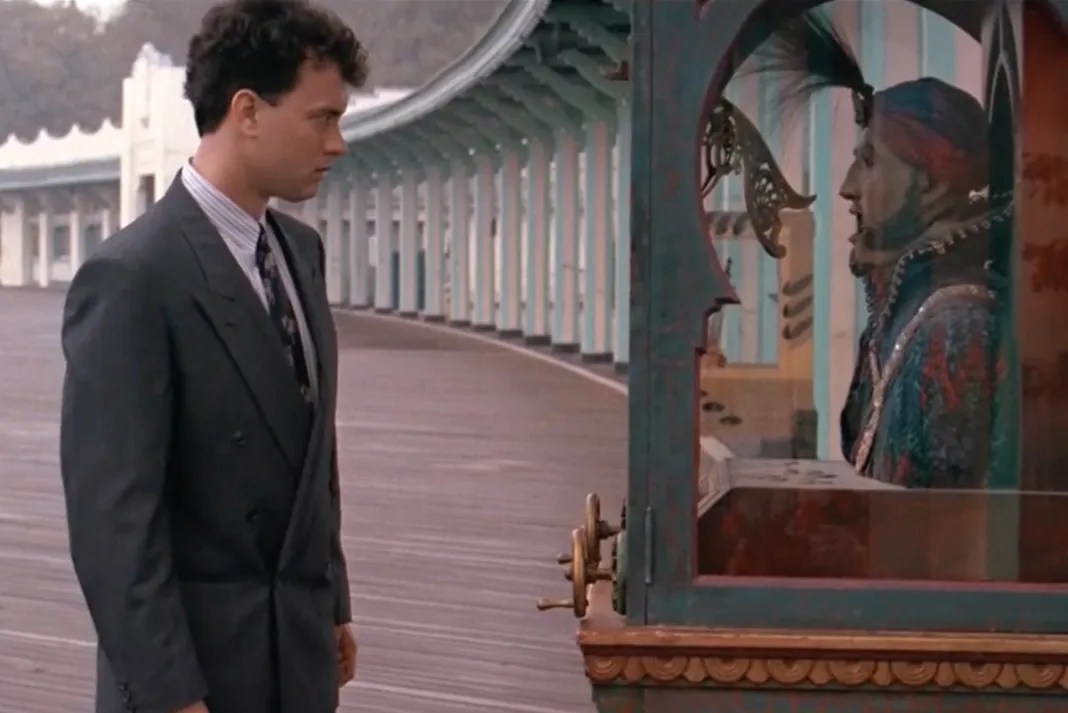
Big (1988, dir by Tom Hanks, DP: Barry Sonnenfeld)
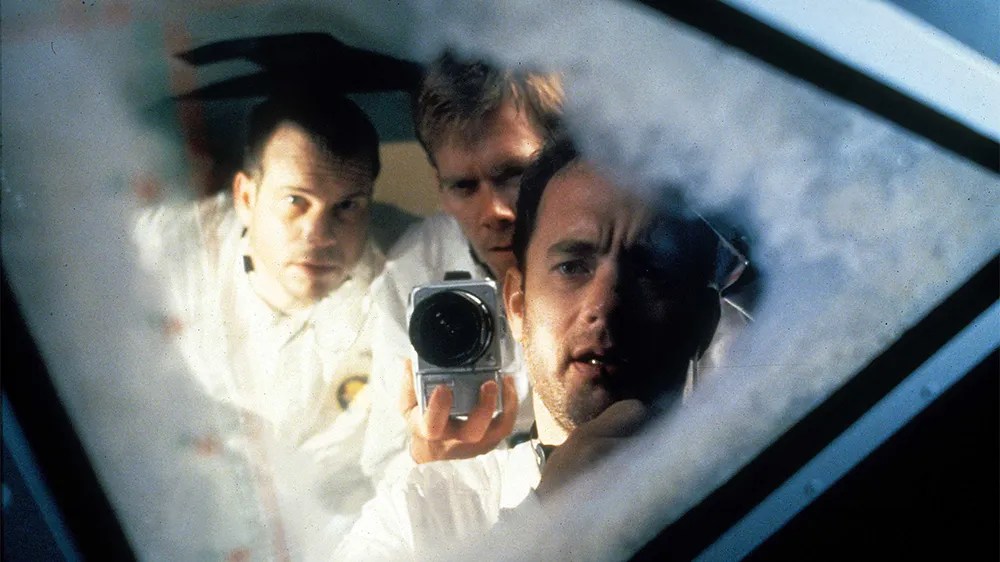
Apollo 13 (1995, dir by Ron Howard, DP: Dean Cundey)
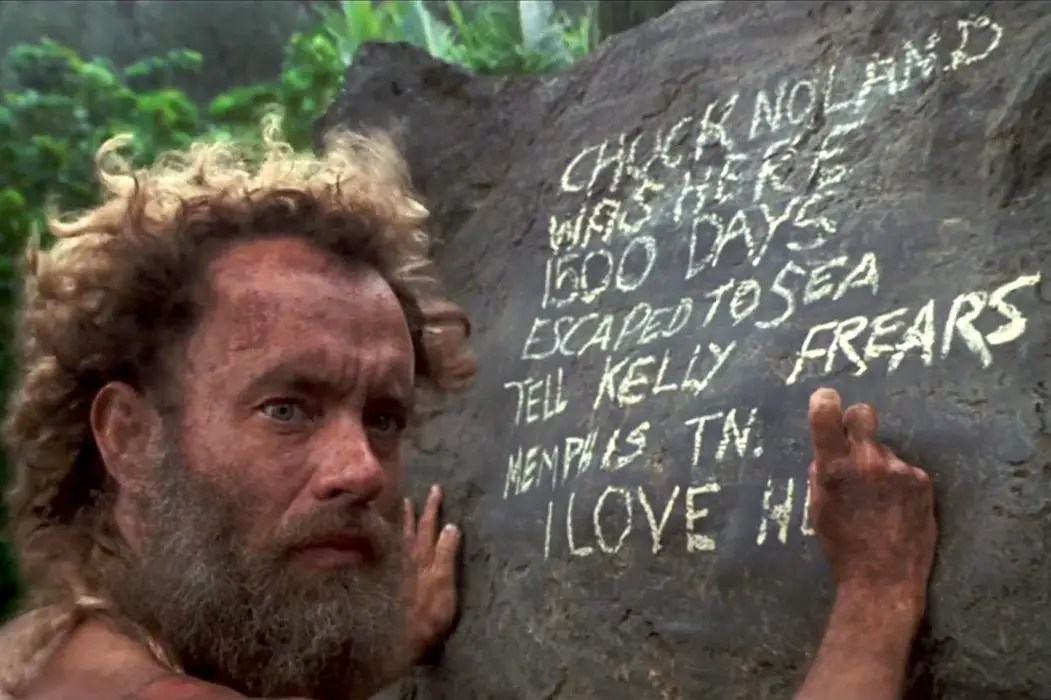
Cast Away (2000, dir by Robert Zemeckis, DP: Don Burgess)
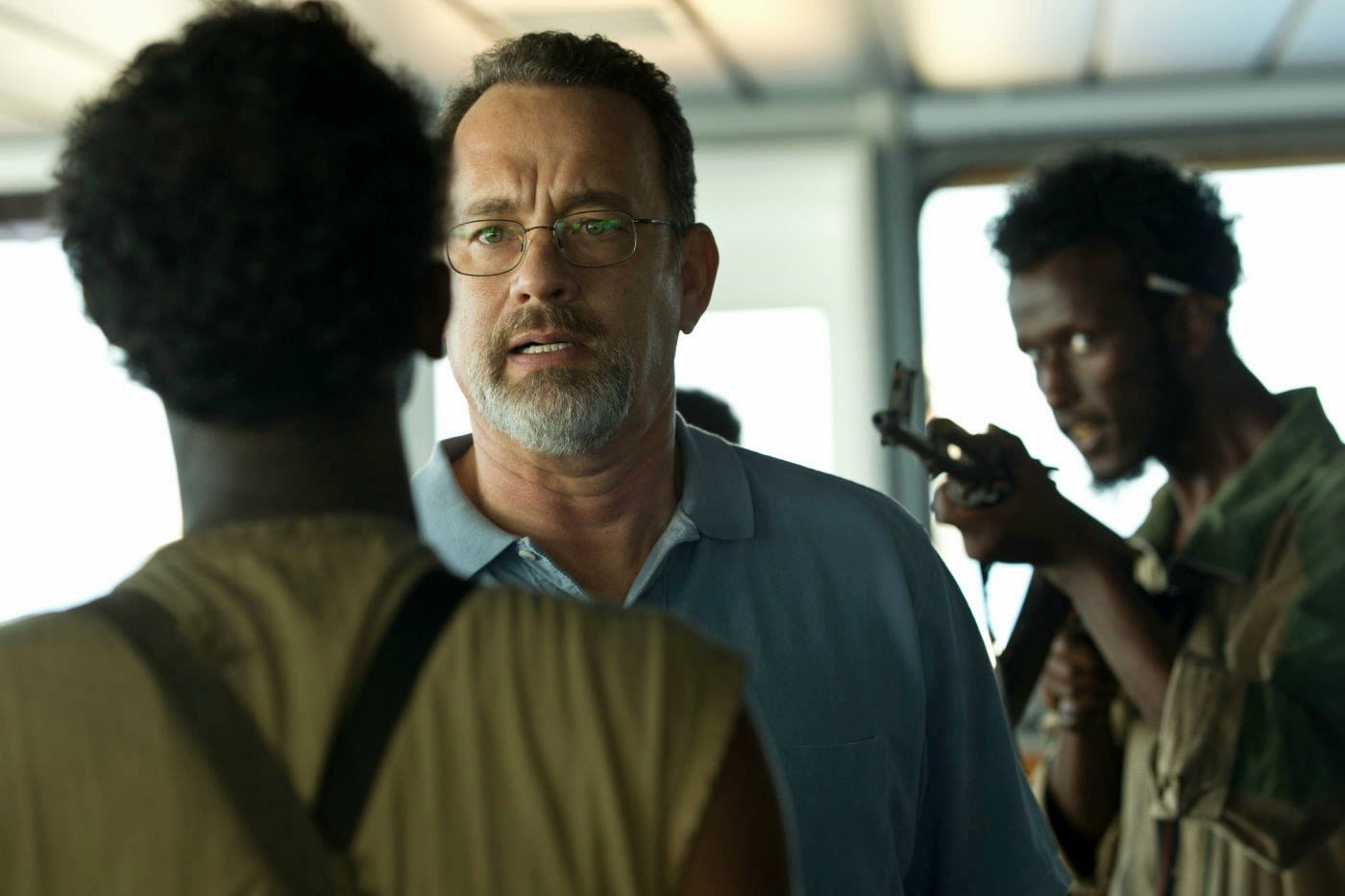
Captain Phillips (2013, dir by Paul Greengrass, DP: Barry Ackroyd)
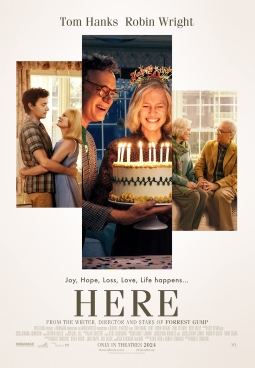
Released in 2024, Here is the type of movie that I usually would like. It’s ambitious. It’s experimental. It’s about history and how certain patterns will always repeat themselves no matter what. It features Tom Hanks and Paul Bettany, two of my favorite actors. Also, unlike a lot of people, I haven’t turned on Robert Zemeckis. For the most part, I usually enjoy his movies, including the more recent ones. (Of course, when I say more recent, I’m thinking of The Walk, which came out eleven years ago. But still….)
Here has an intriguing concept. Over the course of 104 minutes, Here covers several thousand years of history. The stationary camera focuses on a single plot of land, which goes from being an area dominated by dinosaurs to being the road outside of Colonial Governor William Franklin’s house during the American Revolution to eventually becoming the living room of a house that is occupied by several different families. The story plays out in a nonlinear fashion with the marriage of Richard and Margaret Young (played by Tom Hanks and Robin Wright) ultimately dominating the narrative. We watch as people fall in love, sometimes fall out of love, and eventually die. With the exception of one key moment, the camera never moves. Instead, we watch as life plays out in front of the camera and it’s often left to our imagination as to what’s happening on the other side of the lens. When Margaret, at one point, complains about how she can’t stand to keep looking at the same couch day-after-day, we know exactly how she feels.
As I said, I really wanted to like this movie but, unfortunately, it just fell flat. We meet a lot of characters but no one really feels human. Instead, all of the dialogue and the action has the shallow snappiness of an old sitcom. It’s easy to imagine this film being aired with a laugh track and an audience going, “Awwww!” after every emotional moment. As a result, watching Here feels less like witnessing history unfold and more like flipping around the nostalgia channels and trying to pick which old sitcom you want to watch. Do you want to watch the show about Ben Franklin not liking his son or the show that features Paul Bettany as a veteran dealing with PSTD? Do you want a show about a pilot who dies during the Spanish Flu epidemic or about a masked-up husband during the COVID lockdowns? One of the film’s final scenes features a character who is suffering from Alzheimer’s visiting the house and suddenly announcing that they remember everything about living there. It’s a moment that is meant to be heartfelt but, instead, it feels insulting to anyone who has ever taken care of a loved one with dementia. Alzheimer’s is never cutesy, regardless of what the movies may tell us. In the end, very little of the film’s vision of humanity feels authentic.
The other big problem is that the film occasionally uses digital de-aging to try to convince us that Tom Hanks and Robin Wright are both teenagers and it just doesn’t work. Hanks is playing Paul Bettany’s son but, whenever the two actors appear at the same time, it’s obvious that Hanks is considerably older than his screen father. Unlike The Irishman, which had a strong story and enough good performances to convince the viewer to suspend their disbelief and accept the imperfect de-aging technology, the de-aging in Here just emphasizes how inauthentic the film’s story feels.
As I said earlier, this film had potential but, unfortunately, most of that potential goes unrealized.
4 Shots From 4 Films is just what it says it is, 4 shots from 4 of our favorite films. As opposed to the reviews and recaps that we usually post, 4 Shots From 4 Films lets the visuals do the talking!
Today, the Shattered Lens wishes a happy birthday to screenwriter Bob Gale! It’s time for….
4 Shots From 4 Films Written By Bob Gale
I Wanna Hold Your Hand (1978, dir by Robert Zemeckis, DP: Donald M. Morgan)
1941 (directed by Steven Spielberg, DP: William A. Fraker)
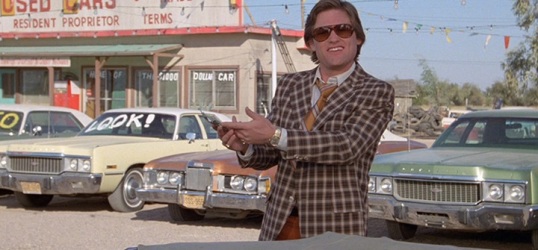
Used Cars (1980, dir by Robert Zemeckis, DP: Donald M. Morgan)
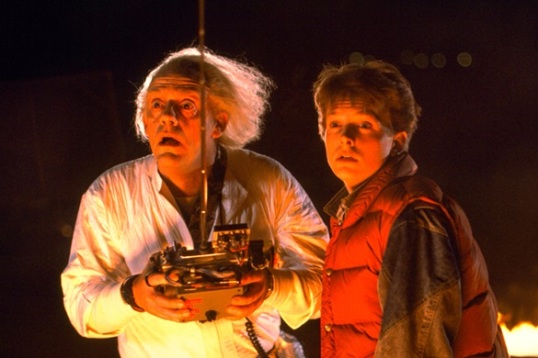
Back to the Future (1986, dir by Robert Zemeckis, DP: Dean Cundey)
Today, the Shattered Lens wishes a happy birthday to director Robert Zemeckis!
Today’s scene that I love comes from Zemeckis’s 1980 comedy, Used Cars! In this scene, used car salesman Gerrit Graham interrupts a televised presidential address so that he can demonstrate the best way to deal with inflation.
(Of course, he does the demonstration at a rival used car lot.)
Jack Warden watches as his cars blow up while Graham’s boss (Kurt Russell) tries to keep his business partner (Deborah Harmon) from noticing what is happening on the television.
4 Shots From 4 Films is just what it says it is, 4 shots from 4 of our favorite films. As opposed to the reviews and recaps that we usually post, 4 Shots From 4 Films lets the visuals do the talking!
Today, we wish a happy birthday to the great Kurt Russell! Last year, we pretty much reviewed every Kurt Russell films that we could find. It was a great day. This year, we cannot let the day pass without offering up….
4 Shots From 4 Kurt Russell Films
Used Cars (1980, dir by Robert Zemeckis, DP: Donald M. Morgan)
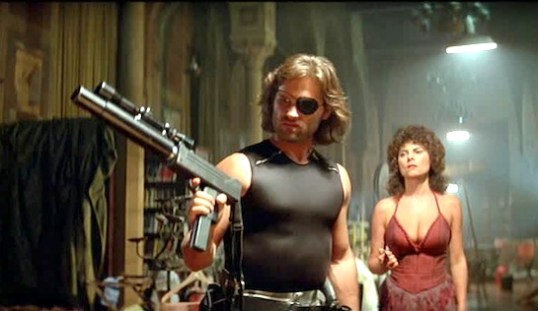
Escape From New York (1981, dir by John Carpenter, DP: Dean Cundey)
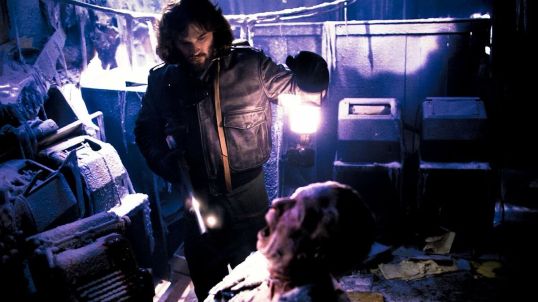
The Thing (1982, dir by John Carpenter, DP: Dean Cundey)
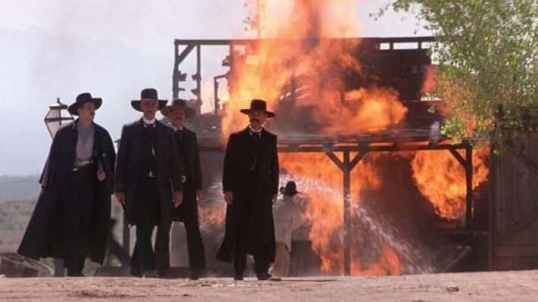
Tombstone (1993, dir by George Pan Cosmatos (and Kurt Russell), DP: William Fraker)
4 Shots From 4 Films is just what it says it is, 4 shots from 4 of our favorite films. As opposed to the reviews and recaps that we usually post, 4 Shots From 4 Films is all about letting the visuals do the talking.
Claire (Michelle Pfeiffer) is a former cellist who is still struggling to recover from a serious car accident and who has been at loose ends ever since her daughter left for college. Claire’s husband, Norman (Harrison Ford), is a scientist and a college lecturer. After their neighbor, Mary (Miranda Otto), disappears, Claire becomes convinced that Mary’s husband (James Remar) did something to her. Claire also becomes convinced that Mary’s ghost is trying to contact her, by appearing in the lake and filling the bathtub up with water whenever Claire isn’t looking. Norman tells Claire that she’s imagining things and pushes her to see a therapist. As Claire investigates, she discovers that Norman knows more than he’s letting on.
What Lies Beneath is a long and drawn-out ghost story that Robert Zemeckis made because he had time to kill while the filming of Cast Away was on hiatus so Tom Hanks could lose weight and grow a beard. That this movie was not a personal project for Zemeckis is reflected in his direction, which is surprisingly impersonal for a Zemeckis film. The film is a showcase for Michelle Pfeiffer, who gives a good performance as the emotionally fragile Claire and holds the film’s many disparate elements together. Harrison Ford sometimes seems disinterested but his casting still pays off when Norman gets to say and do some things that you normally would never expect Harrison Ford to do.
I remember seeing this in a theater in 2000 and being surprised by the ending. Looking back on it today, I just can’t believe that I sat through the entire movie.
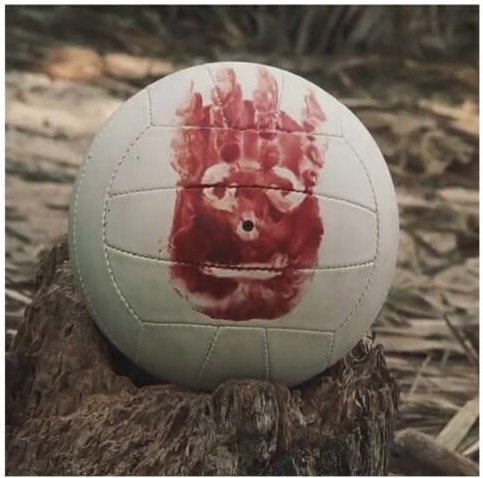
Seriously, I’m usually pretty well-behaved when I watch a movie but every time I see the 2000 film Cast Away, I find myself thinking, “Protect Wilson! You must protect Wilson!” And then, every time, I feel the sting of tears in my eyes as Wilson, with that red-face and that understanding attitude, goes floating away.
Wilson is a volleyball. When a FedEx executive named Chuck Noland (played by Tom Hanks) finds himself stranded on a desert island, Wilson becomes his only companion. A stain from Chuck’s bloody palm creates something that resembles a face on Wilson’s rubber surface and Chuck spends a lot of time talking to Wilson. It’s how Chuck maintains his sanity, even as he loses weight, sheds most of his clothes, and grows a beard.
Chuck learns how to make fire. He learns how to catch fish. He is able to survive due to the supplies that he gathers from the FedEx packages that were being carried on the plane that crashed into the island. But Chuck never stops dreaming of returning home to his girlfriend (Helen Hunt). Eventually, Chuck finds the courage to try to make the journey back to civilization. He brings Wilson with him but ultimately, this is something that Chuck is going to have to do on his own. Of course, Chuck has failed to consider that he’s been gone for years. He is presumed dead. On the Island, time seemed like it was frozen. For the rest of the world, life has continued.
CastAway is a film that a lot of people, especially online film commentators, tend to criticize. The complaint is usually that the film is essentially a commercial for FedEx, that it’s not believable that Tom Hanks could survive on that island for as long as he did, and that the film itself has a weak ending. I’ll concede that the film does make FedEx look like the nicest corporation on Earth. (FedEx’s CEO appears as himself, which should tell you something about how the company is presented.) And I will admit that the film’s time-advancing jump cut, which abruptly takes Hanks from being clean-shaven and husky to being thin and bearded, does leave a lot of unanswered questions. But I will always defend the film’s ending. The film ends on a note of ambiguity but how else could it have ended? Everyone thought Chuck Noland was dead. His girlfriend had every right to get on with her life and, in fact, it would have been psychologically unhealthy for her if she hadn’t. As for that final shot, it’s an acknowledgment that Chuck doesn’t know what lies ahead of him in the future. All he knows is that he life isn’t over yet. It’s a melancholy ending. It’s a frustrating ending. But it’s also the only way the film could have ended and therefore, it’s a perfect ending.
CastAway is a film that I will always defend and it’s also a film that really only could have worked with Tom Hanks in the lead role. He plays Chuck as being the ultimate everyman, an affable guy who was just trying to do his job and whose survival of the initial plane crash was largely due to luck. Hanks is one of those actors who is instantly sympathetic and CastAway uses his screen persona to good effect. You want him to survive because he’s Tom Hanks. He may be playing a character named Chuck Noland but ultimately, he’s Tom Hanks. He survived being trapped in space. Surely, he can survive being stranded on an island. The majority of the film is just Hanks talking to himself. This would have brought out the worst in so many actors but Tom Hanks makes it work. And yes, he’ll bring tears to your eyes as he watches Wilson float away. That’s the power of a good actor.
As for Wilson, I like to think that he washed up in Pensecola. Recently, I played a little volleyball on a beautiful Florida beach. Was that you, Wilson?
4 Or More Shots From 4 Or More Films is just what it says it is, 4 shots from 4 of our favorite films. As opposed to the reviews and recaps that we usually post, 4 Shots From 4 Films lets the visuals do the talking!
Today, the Shattered Lens wishes a happy birthday to Tom Hanks! It’s time for….
4 Shots From 4 Tom Hanks Films
Big (1988, dir by Tom Hanks, DP: Barry Sonnenfeld)
Apollo 13 (1995, dir by Ron Howard, DP: Dean Cundey)
Cast Away (2000, dir by Robert Zemeckis, DP: Don Burgess)
Captain Phillips (2013, dir by Paul Greengrass, DP: Barry Ackroyd)
4 Shots From 4 Films is just what it says it is, 4 shots from 4 of our favorite films. As opposed to the reviews and recaps that we usually post, 4 Shots From 4 Films lets the visuals do the talking!
Today, the Shattered Lens wishes a happy birthday to screenwriter Bob Gale! It’s time for….
4 Shots From 4 Films Written By Bob Gale
I Wanna Hold Your Hand (1978, dir by Robert Zemeckis, DP: Donald M. Morgan)
1941 (directed by Steven Spielberg, DP: William A. Fraker)
Used Cars (1980, dir by Robert Zemeckis, DP: Donald M. Morgan)
Back to the Future (1986, dir by Robert Zemeckis, DP: Dean Cundey)