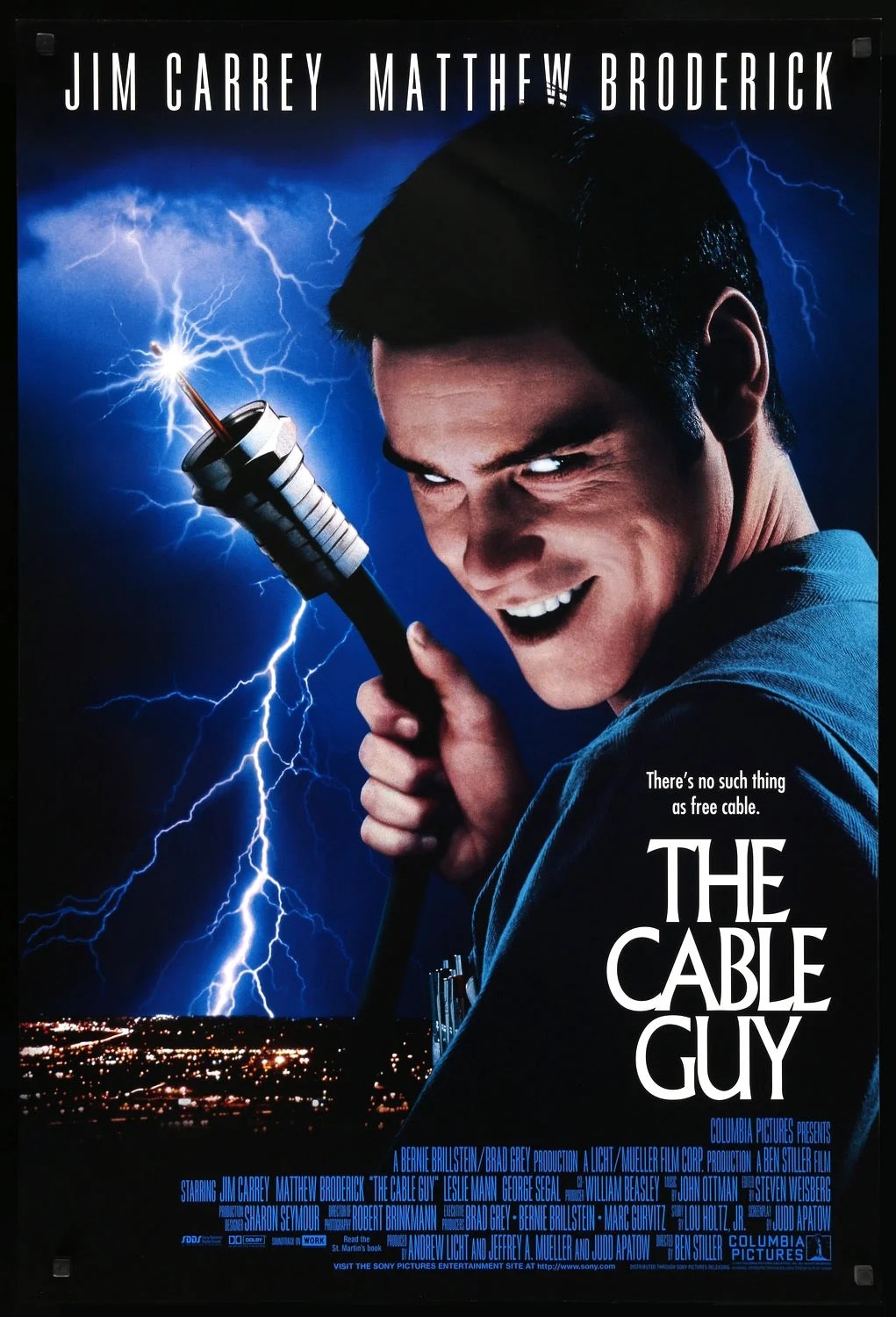
Icarus File No. 32: The Cable Guy (dir. by Ben Stiller)


“You were never there for me, were you, Mother? You expected Mike and Carol Brady to raise me! I’m the bastard son of Claire Huxtable! I am a lost Cunningham! I learned the facts of life from watching The Facts of Life!” — Chip

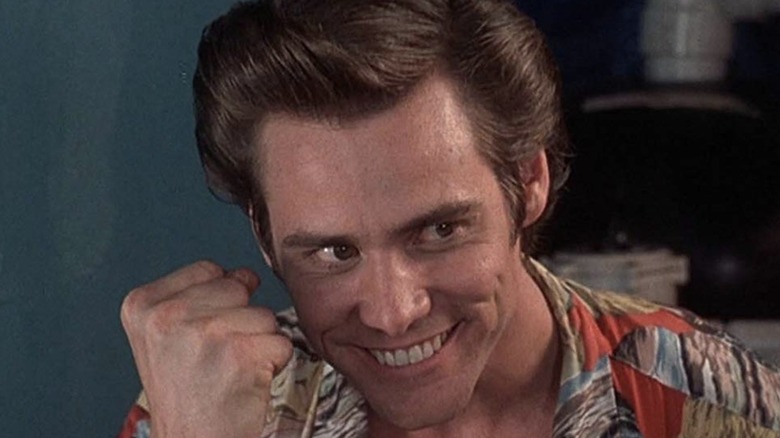
Few 1990s studio comedies are as awkwardly fascinating—or as misunderstood on arrival—as The Cable Guy. Directed by Ben Stiller and built around one of Jim Carrey’s most deliberately uncomfortable performances, it arrived at a strange point in Carrey’s career: he had become a massive box-office draw through films such as Ace Ventura: Pet Detective, The Mask, Dumb and Dumber, Batman Forever, and Ace Ventura: When Nature Calls. Audiences associated him with rubber-faced chaos, exuberant catchphrases, and a kind of manic but fundamentally likable comic energy. The Cable Guy offers something much colder. Carrey is still loud, physical, and wildly committed, but the movie twists those familiar traits into a portrait of loneliness, obsession, and emotional menace. It is a dark comedy about a man who has absorbed television culture so completely that he cannot form a normal human relationship without treating it like an episode of a sitcom.

That basic idea remains clever and surprisingly ahead of its time. Carrey plays Chip Douglas, a cable installer who enters the life of Steven Kovacs, played by Matthew Broderick, after Steven moves into a new apartment following a breakup with his girlfriend Robin, played by Leslie Mann. Steven wants cable television installed; Chip wants a best friend. What begins as awkward friendliness becomes invasive dependence, as Chip worms his way into Steven’s social circle, his professional life, and eventually his relationship with Robin. Chip is not simply a pest or an eccentric service worker. He is a lonely, emotionally stunted man whose references to television, movies, commercials, and game shows have become his entire vocabulary for intimacy.

The most interesting thing about The Cable Guy is that it understands television as both comfort and damage. Chip’s childhood was clearly shaped by neglect, with television functioning as his guardian, teacher, and surrogate parent. The movie makes this point broadly, sometimes too broadly, but it also gives the character a sad logic. Chip does not understand friendship as mutual connection; he understands it as a package deal. You meet someone, quote the same shows, hang out constantly, become inseparable, and live out the happy ending promised by popular entertainment. When Steven resists that fantasy, Chip does not know how to process rejection. His behavior turns increasingly controlling and vindictive because, in his mind, Steven has violated the rules of the relationship genre they are supposed to be playing.

In that respect, the film was well ahead of its time. In 1996, the idea of television becoming an all-encompassing babysitter for a generation of children was recognizable, but it still played largely as exaggerated satire. Chip represents the extreme result of a childhood where adults failed to provide stability, affection, supervision, and basic emotional guidance, leaving television to fill every role instead. He learned how to talk, how to joke, how to flirt, how to fight, and how to imagine friendship from whatever appeared on the screen. The tragedy is that media gave him endless information and endless imitation, but no real understanding of boundaries, empathy, or reciprocity.

That concern feels much less hypothetical today. Television did not disappear; it expanded into streaming libraries, on-demand movies, YouTube, social media feeds, online games, short-form video, and the constantly available internet. More children now grow up surrounded by screens that are not confined to a living-room television set or a few scheduled hours of programming. The old guardrails of limited channels, parental supervision around a shared TV, and the simple fact that a show ended at a certain time have weakened or, in many homes, disappeared altogether. The Cable Guy obviously does not predict every aspect of the internet age, but it does anticipate the emotional danger of allowing media to become a substitute for parenting, companionship, and healthy social development.

The film is careful enough to suggest that media alone did not create Chip. He is the product of abandonment first and television second. That distinction matters, because the movie is not arguing that children who watch too much television will inevitably become unstable stalkers. Rather, it suggests that screens can become especially powerful when they are used to fill an emotional void that should be addressed by family, community, and genuine relationships. Chip’s many references are funny at first because they are recognizable, but they become sadder as the movie reveals that he is not simply quoting pop culture for fun. He is quoting it because he has little else to draw from.

That makes the film more ambitious than its reputation as “the weird Jim Carrey movie” might suggest. The screenplay, by Lou Holtz Jr., has fun with media saturation, consumer culture, male insecurity, and the way people use technology to avoid direct emotional communication. The title itself now feels almost quaint, because cable installation hardly seems threatening in an age of smartphones, streaming services, social media surveillance, and algorithmic recommendation systems. Yet Chip’s obsession has only become more recognizable. He is essentially a proto-internet stalker, a man who treats access as entitlement. Because he can enter Steven’s home to connect his television service, he assumes he deserves access to Steven’s private life. The film exaggerates that premise for comic effect, but the underlying discomfort has aged well.

At the same time, The Cable Guy has a major problem, and it is inseparable from the reason the film exists: Jim Carrey. Casting Carrey was a commercial gamble meant to make a very dark premise accessible to a mainstream audience. In theory, it is an inspired decision. His brand of elastic, outsized comedy gives Chip a strange unpredictability; you never know whether he is going to make a ridiculous movie reference, belt out a sentimental song, physically humiliate himself, or suddenly become frightening. Carrey’s comic instincts make Chip memorable in a way that a more restrained actor likely would not have been. His version of the character is like an abandoned cartoon character who has somehow wandered into a real person’s life.

But the same performance often works against the movie. Carrey’s penchant for excessive facial expressions, exaggerated voices, and physical escalation overwhelms the subtler and more unsettling possibilities in the script. The film wants to be a satirical dark comedy, but it repeatedly gives itself over to big Jim Carrey bits. Some are undeniably funny, especially because Carrey commits to them with fearless energy, but they can make Chip feel less like a damaged human being and more like a delivery system for gags. The movie keeps shifting between “this man is dangerously unstable” and “look at Jim Carrey doing something weird,” and that unevenness prevents it from fully landing as either a truly disturbing character piece or a consistently hilarious farce.

The medieval-themed restaurant sequence is probably the clearest example of both the movie’s strengths and weaknesses. When Chip and Steven engage in an extended jousting and sword-fighting routine at Medieval Times, it is funny because it transforms a casual social outing into a ridiculous, testosterone-heavy spectacle. It also exposes the warped nature of their friendship: Chip is trying to force Steven into a grand, cinematic bonding ritual. Yet the scene is so broad and so committed to the escalating stunt comedy that it can feel detached from the film’s more interesting emotional undercurrents. It is memorable, certainly, but it is also the kind of scene that makes it easy to see why contemporary audiences may have expected another straightforward Carrey comedy rather than a satire with genuine bitterness beneath the jokes.

Broderick is important here because he provides the film’s necessary straight-man perspective. Steven is not a particularly dynamic protagonist, and that is partly the point. He is an ordinary, mildly selfish guy trying to rebuild his life after a breakup, which makes Chip’s intrusion feel even more invasive. Still, Broderick’s deliberately subdued performance can make Steven seem passive compared with the hurricane of Carrey’s performance. The movie needs Steven to be bland enough for Chip to project his fantasies onto him, but that choice also leaves the film with an imbalance: Chip is by far the most vivid person on screen, even when the story is asking us to see him as a nightmare.

Leslie Mann brings warmth and patience to Robin, while Jack Black, in an early supporting role as Steven’s friend Rick, adds a welcome jolt of weird energy without taking over the movie. The supporting cast understands the heightened tone, but Stiller’s direction occasionally pushes the material toward sketch-comedy exaggeration. That is not always a flaw; The Cable Guy is frequently inventive in its visual jokes, its television parodies, and its depictions of Chip turning every situation into a warped pop-culture performance. Still, the film is at its best when Stiller lets the strangeness breathe rather than constantly underlining it.

The movie’s lackluster initial reception makes sense in context. Audiences had been trained to see Carrey as a wildly energetic hero of broad studio comedies, not as a creepy, needy antagonist whose jokes often curdle into discomfort. The promotional challenge was enormous: sell The Cable Guy as a Jim Carrey movie, and viewers might expect another crowd-pleasing laugh machine; sell it honestly as a dark satire about loneliness and media dependency, and it becomes a much harder commercial proposition. Many viewers at the time seemed to reject it not because it lacked ideas, but because it did not give them the version of Jim Carrey they thought they were buying a ticket to see.

In the years since, however, the film has developed a deservedly large cult following. Distance has helped. Modern audiences are more accustomed to comedians making darker career turns, and the themes of mediated identity, parasocial attachment, isolation, and invasive access now feel much more relevant than they did in the mid-1990s. Carrey’s performance, once seen by many as abrasive or miscalculated, can now be appreciated as a risky attempt to weaponize his own comic persona. Chip is funny precisely because he is desperate to be liked, but he is also disturbing because his idea of being liked involves total possession.

The Cable Guy is not a perfect dark comedy. Its tone wobbles, its protagonist can feel underwritten, and Carrey’s larger-than-life antics sometimes obscure the sharper satire hiding underneath. Yet those flaws are also part of what makes it fascinating. It is a studio movie willing to be unpleasant, odd, and commercially confusing at the height of a superstar’s popularity. Rather than simply giving Jim Carrey another vehicle for his most familiar tricks, it turns those tricks into symptoms of a damaged man’s inability to connect. The result is uneven, but it is far more interesting than a safer 1996 Jim Carrey comedy would have been—and its cult status feels earned.

Previous Icarus Files:

  1. Cloud Atlas
  2. Maximum Overdrive
  3. Glass
  4. Captive State
  5. Mother!
  6. The Man Who Killed Don Quixote
  7. Last Days
  8. Plan 9 From Outer Space
  9. The Last Movie
  10. 88
  11. The Bonfire of the Vanities
  12. Birdemic
  13. Birdemic 2: The Resurrection 
  14. Last Exit To Brooklyn
  15. Glen or Glenda
  16. The Assassination of Trotsky
  17. Che!
  18. Brewster McCloud
  19. American Traitor: The Trial of Axis Sally
  20. Tough Guys Don’t Dance
  21. Reach Me
  22. Revolution
  23. The Last Tycoon
  24. Express to Terror 
  25. 1941
  26. The Teheran Incident
  27. Con Man
  28. Looker
  29. 1776
  30. Here
  31. The Adventures of Brisco County, Jr.

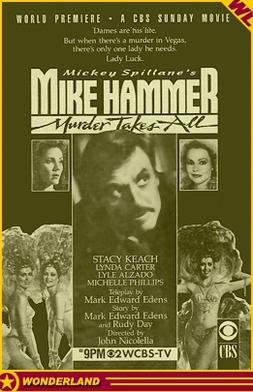
Mike Hammer: Murder Takes All (1989, directed by John Nicollela)


Entertainer Johnny Roman (Ed Winter, best-known as the crazed Colonel Flagg on M*A*S*H) sends an invitation to New York P.I. Mike Hammer (Stacy Keach), asking him to come to Vegas for a job.  Hammer refuses.  Vegas is not for him.  He’s pure New York.  So, someone has Hammer abducted and thrown out of an airplane over Vegas.  Luckily, they gave Hammer a parachute.  Unluckily, for them, Hammer is now in Las Vegas and he’s pissed off.

Johnny, who says he had nothing to do with the kidnapping and just wants Hammer to help him deal with a singer who has been stealing from him, is killed by an explosive device while hosting a telethon.  Everyone suspects Hammer.  When the singer that Hammer was supposed to investigate also turns up dead, Hammer is again suspected.  Hammer has to clear his name while dealing with guest stars ranging from Lynda Carter to Michelle Phillips to Jim Carrey.

Stacy Keach was Mike Hammer for most of the 80s, playing Mickey Spillane’s notorious detective in a television series and in several made-for-TV movies, like this one.  Television was an awkward fit for Mike Hammer, or at least Hammer the way he was imagined in the books.  Mike Hammer was written to be a killer with his own brand of justice.  He was not written to be a nice person.  Instead, he was the brutal but intelligent warrior that you hoped would be on your side.  The television version of Mike Hammer was considered to be violent for the era but the show still toned down Hammer’s signature brutality.  Keach’s Hammer still killed people but he no longer gloated about it.  Stacy Keach, with his trademark intensity, was a good pick for Mike Hammer, even if the show’s scripts often let him down.

This movie is hamstrung by the fact that it was made-for-TV.  Hammer is not happy about being in Las Vegas but he can’t go off on the city in the same way that he would have in one of Mickey Spillane’s novels.  Keach still gives a good and tough performance as Hammer, getting as close to the character as anyone could under the restrictions of 80s network television.  The mystery is interesting, though Hammer doesn’t really solve it as much as he just waits until all the other suspects have been killed.  The main attraction of this one is the amount of guest stars who show up.  Lynda Carter is a great femme fatale and it’s always good to see Michelle Phillips, even in a small role.  Jim Carrey, in his pre-In Living Color days, plays an accountant and does okay with a serious role.

Who could play Mike Hammer today?  It’s hard to say.  There aren’t many believably tough actors around anymore and even those who do seem like they could hold their own in a fight don’t have the gritty world-weariness that the character requires.  (Just try to imagine Dwayne Johnson reenacting the end of I, the Jury.)  A few years ago, I would have said Frank Grillo.  In the 90s, Bruce Willis would have been the perfect Hammer.  Today, though, Mike Hammer’s time may finally have passed.

Happy 63rd Birthday, Jim Carrey! The ACE VENTURA (1994) montage sequence that made me a fan!


How many of you remember something specific that you did on February 9th, 1994? I do! I was sitting in a movie theater in Conway, Arkansas watching the goofy Jim Carrey comedy ACE VENTURA: PET DETECTIVE. I already knew he was a funny guy based on his various appearances on the sketch comedy show IN LIVING COLOR. I also remember seeing him in that vampire comedy ONCE BITTEN (1985) with Lauren Hutton when I was in junior high. To be honest though, when I was watching ONCE BITTEN in the mid-80’s, I was much more interested in Lauren’s character than I was in Jim’s. On this particular day in February of 1994, I was more interested in being at the theater because I had a major crush on the girl that was there with me. I figured the movie would be pretty silly, but that’s okay because I don’t mind silly comedies when they’re done right. Admittedly, I was also curious to see if Jim Carrey could actually carry a film by himself, and if the film would be as funny as the trailers I had seen.

I had settled in and was enjoying this film, when the montage shared below appeared on-screen, accompanied by Aerosmith’s “Line Up.” At the very end of the montage, when Ace Ventura resorts to chloroform to slow down the Dolphin player on the track, I probably laughed harder in the theater than I ever had up to that point in my life. I don’t think I’ve ever laughed as hard since either. The stars had all aligned and for that moment, I thought Jim Carrey was the funniest person on earth. Enjoy!

THE DEAD POOL – the 5th and final Dirty Harry adventure!


Dirty Harry Callahan has brought so much joy into my life. I remember when I was in 5th Grade in 1983, the hot phrase was “Go ahead. Make my day.” You heard that phrase everywhere. It may have been said by Dirty Harry in the 4th Harry Callahan adventure, SUDDEN IMPACT, but it transcended the movie and became a cultural phenomenon. Somewhere between 1983 and 1988, I was able to watch all of the Dirty Harry films, DIRTY HARRY, MAGNUM FORCE, THE ENFORCER and SUDDEN IMPACT. I just loved Harry. He was always sticking it to his superiors, and then doing whatever it took to take out the bad guys. That was an amazing combination for me. I was 14 years old when the 5th and final Dirty Harry film, THE DEAD POOL, was released into the theaters in July of 1988. This was the first Dirty Harry film to be released after our family got our VCR in the mid 80’s. I couldn’t wait to rent it. 

In THE DEAD POOL, Harry Callahan (Clint Eastwood) finds himself the target of crime boss Lou Janero, as Harry was crucial in his arrest and subsequent conviction. This high profile news story has caught the attention of the horror film director, Peter Swan (Liam Neeson). It’s seems Swan and some of his friends are playing a twisted game called “the dead pool” where they predict the deaths of certain celebrities based on various factors going on in their lives. Harry Callahan is a local celebrity and Swan includes him on his list due to his role in the Janero conviction. This “dead pool” game is leaked to reporter Samantha Walker (Patricia Clarkson) after the murder of Johnny Squares (Jim Carrey), who’s on Peter Swan’s list. As celebrities who are on Swan’s list continue to die, Harry and his partner Al Kwan (Evan C. Kim) try to figure out if Swan is behind the killings, or if someone else is trying to frame him, all while trying to keep themselves alive!

There are so many cool and interesting things about THE DEAD POOL. First, there has never been a character any more awesome than Harry Callahan, as played by Clint Eastwood. He will do whatever it takes to get the bad guys, regardless of what his superiors think. As a rule follower, I absolutely love Harry’s approach to life and live vicariously through him. Only vigilante Paul Kersey, played by Charles Bronson in the DEATH WISH films, rivals Callahan in his willingness to fight for justice, everyone else be damned! Second, future superstar actor Jim Carrey has the role of Johnny Squares, the drug-addicted rocker whose death kicks off the public’s knowledge of the dead pool. In hindsight, it’s fun seeing Carrey as a working actor in 1988, while also knowing that he’d become one of the biggest stars in the world over the next decade. It’s also pretty cool seeing a pre-superstar Liam Neeson as horror director Peter Swan. Third, in the late 80’s, I loved the rock group Guns N Roses. The group members are in this film in two places. They’re in the sequence where a harpoon stunt goes wrong, as well as at the funeral of Johnny Squares. Hell, guitarist Slash gets to fire the harpoon! Their hit song “Welcome to the Jungle” also has a prominent part in the film. I loved their other hits “Sweet Child of Mine,” and “Paradise City,” when I was a teenager. Fourth, I always love Harry’s catchphrases from the films. Each Dirty Harry film has its own catchphrase, including examples like “Do you feel lucky?” and “Go ahead. Make my day.” In THE DEAD POOL, various bad guys get “you’re shit out of luck.” Shit is a favorite curse word of my family, so I like this one. Fifth, THE DEAD POOL has a crazy car chase sequence. In this sequence, Harry and his partner Al Kwan find themselves chased by a remote-controlled car packing a bomb. It makes for some interesting visuals as the tiny car chases them through those familiar streets of San Francisco. It’s not often that filmmakers can come up with a new way to present a car chase, but they do a great job here. Finally, I enjoy seeing the media getting skewered in THE DEAD POOL. Patricia Clarkson’s reporter character has a solid arc as she goes from someone at the beginning of the movie who will do anything to get an exclusive story, to someone who is even willing to forego the exclusive if it’s the “right thing to do.” Our media is a hopeless mess these days where opinion is treated as facts, and actual facts are treated as an option. Where’s Dirty Harry to clean this up in 2024? 

I’m a fan of THE DEAD POOL, and I probably watch it every year or two. If you haven’t ever seen it, or if it’s been a while, I’d definitely recommend it! 

Shadow joins the fray in the Sonic the Hedgehog 3 Trailer!


The trailer for Sonic the Hedgehog 3 dropped today, and it has Sonic (Ben Schwartz), Tails(Colleen O’Shaughnessey) & Knuckles (Idris Elba) squaring off against Shadow, voiced by Keanu Reeves. Shadow seems to be too much, even for the trio. It looks like we might get a team up with Dr. Robotnik (Jim Carrey). Of course, both Tom (James Marsden) and Maddie (Tika Sumpter) are still on hand to cheer on our heroes with moral support.

Sonic the Hedgehog 3 will be in cinemas this December.

10 Oscar Snubs From The 2000s


Welcome to the aughts. The new century started out with the terror of 9-11 and it ended with the collapse of the world’s economy. In between, a lot of films were released. Some of them were really good. A few of them were nominated for Best Picture. Most of them were not.  As always, there were snubs aplenty.

2000: Michael Douglas Is Not Nominated For Wonder Boys

I recently saw someone online bemoaning the fact that Michael Douglas appears to be fated to end his career as a supporting character in the MCU as opposed to playing the type of “mature” roles with which he made his reputation.  And I actually think that person had a good point.  Michael Douglas, whose performances once epitomized the last few decades of the 20th Century, does seem a bit out of place surrounded by CGI and responding to the overly quippy dialogue of the MCU.  If you want to see a truly good Michael Douglas performance that doesn’t involve anyone shrinking, check him out in Curtis Hanson’s Wonder Boys.  Though Wonder Boys won the Oscar for Best Original Song and picked up nominations for Editing and Adapted Screenplay, Michael Douglas’s wonderful lead performance was overlooked.

2001: Mulholland Drive Is Almost Totally Ignored

Considering the reverence with which it is now viewed, it’s interesting to note that Mulholland Drive only received one Oscar nomination, for David Lynch’s direction.  The film was not nominated for Best Picture.  Naomi Watts and Laura Harring both went unnominated.  At the time, I imagine the film was too strange for Academy voters and its origin as a television pilot probably worked against it.  Today, it is regularly cited as one of the best films ever made.

2002: Leonardo DiCaprio and Tom Hanks Are Not Nominated For Catch Me If You Can

Catch Me If You Can was that rarest of movies, an underrated Steven Spielberg production.  Christopher Walken was nominated for Best Supporting Actor and the film’s score was nominated as well.  But both Leonard DiCaprio and Tom Hanks went unnominated, despite doing some of the best work of their careers.

2002: Robin Williams Is Not Nominated For One Hour Photo

One Hour Photo featured what I consider to be Robin Williams’s best and most poignant performance.  It was also perhaps his most frightening performance, which probably explains why the Academy shied away from honoring it.

2003: Scarlet Johansson Is Not Nominated For Best Actress For Lost In Translation

Though Bill Murray got most of the awards attention, Scarlet Johansson’s performance was just as important to the success of Lost In Translation.

2004: Eternal Sunshine of the Spotless Mind Is Not Nominated For Best Picture or Best Actor

Even before he decided to present himself as being an expert on vaccines and modern art, I wasn’t a huge fan of Jim Carrey’s.  That said, even I have to admit that he deserved a nomination for Eternal Sunshine of the Spotless Mind.  The film itself was only nominated for two Oscars.  Kate Winslet was nominated for Best Actress and Charlie Kaufman won the Oscar for Original Screenplay.  The film deserved quite a bit more.

2007: Once Is Not Nominated For Best Picture

This is one snub that I haven’t quite gotten over.  Once, a beautiful independent film from Ireland, deserved far more love than it received from the Academy.  That said, it did win the Oscar for Best Original Song and Glen Hansard gave one of the best acceptance speeches in Oscar history.  So, there is a little justice.

2008: The Dark Knight Is Not Nominated For Best Picture

If ever there was a comic book movie that deserved to be nominated for Best Picture, it was this one. To me, I think the main reason why The Dark Knight is superior to so many other comic book movies is because, even with Batman and the Joker running around, it still feels as if it’s taking place in the real world.  The smartest decision that Christopher Nolan made was to use a real city for Gotham instead of constructing a phony-looking set.  The fact that The Dark Knight received 8 nominations without also receiving a nomination for Best Picture leaves little doubt that the film’s lack of a nomination was due to its origins as a comic book movie.  There was such an uproar about The Dark Knight failing to pick up a Best Picture nomination that the Academy increased the number of Best Picture nominees to ten.  (Of course, that’s didn’t do much to help anything.)

2008: Robert Downey, Jr. Is Not Nominated For Best Actor For Iron Man

The MCU is now so big that it’s easy to forget that, if Robert Downey, Jr. hadn’t been a convincing Tony Stark in 2008, the whole thing would have never happened.  Going back and watching the early MCU films, before they got bogged down in their own formula, can be an eye-opening experience.  Downey’s performance in the first Iron Man holds up extremely well.  He goes from being an irresponsible businessman to being a hero and he’s convincing at every turn.  He gave such a good performance that it convinced even those of us who weren’t comic book readers to stick around and see what was coming up next in the Marvel Cinematic Universe.

2009: George Wyner Is Not Nominated For Best Supporting Actor For A Serious Man

Not all snubs involve big stars or famous actors.  Some of them involve talented character actors like George Wyner who totally knock their one scene out of the park but who still don’t get the recognition that they deserve.  In A Serious Man, Wyner plays the rabbi who tells Larry Gopnik (Michael Stuhlbarg) the parable of the dentist who found Hebrew phrases on the teeth of one of his patients.  It’s a mesmerizing scene, thanks to George Wyner’s skill as a storyteller.

Agree?  Disagree?  Have a snub of your own that you’d like to mention?  Let us know in the comments!

Coming up next, we go from the 2010s to the present day!

Sonic gets a makeover in the 2nd Sonic the Hedgehog Trailer


Earlier in the year, when Paramount released the trailer for the Sonic The Hedgehog movie, audiences were up in arms over Sonic’s look. It was so bad that the production team shelved the film for a bit and reworked the CGI. Six months later, we have a vastly improved Hedgehog, and everything appears to be looking better for the film. The character has more expressive eyes, the classic sneakers and what seems like a new voiceover.

Now we just have to hope that all of that extra work by the effects team is rewarded by moviegoers when the film comes out. Here’s hoping, anyway.

Sonic the Hedgehog, starring Jim Carrey, James Marsden and Ben Schwartz as the voice of Sonic, premieres in time for Valentine’s Day of 2020.

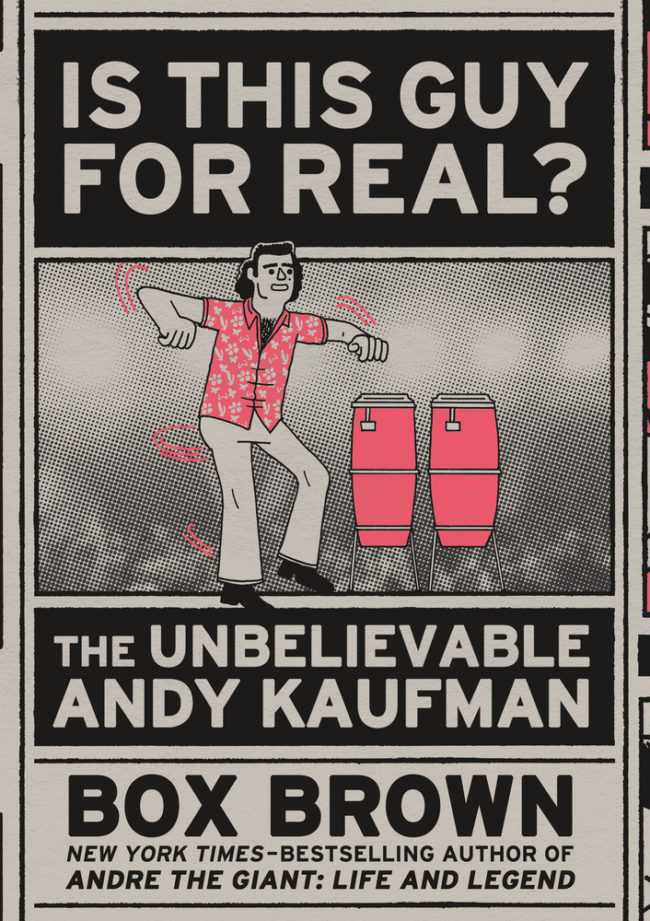
“Is The Guy For Real? The Unbelievable Andy Kaufman” : Here Comes Box Brown To Save The Day


Don’t look now, but it appears as though Box Brown is making a concerted play for the title of “Best Biographer In Comics” — and he’s doing it by telling the life story of a guy who held a title of his own, that of “World Intergender Wresting Champion.”

Yup, dadaist comedian Andy Kaufman is back under the media microscope in a big way, and it makes all the sense in the world that the cartoonist who chronicled the exploits of Andre The Giant and the history of Tetris in his previous volumes for First Second (who also publish his latest) would be the guy to do it. Kaufman’s never really left the spotlight entirely, of course — his tragically early death, combined with his singularly bizarre (and I mean that in the best possible way) career are more than enough to ensure that his legend will always carry on — but detailed looks at the man behind such memorable characters are Latka Gravas and Tony Clifton have been few and far between. Academy Award-winning director Milos Forman gave it his best shot with Man On The Moon nearly twenty years ago (the title being taken from R.E.M.’s song about Andy — which also never seems to go away completely), but despite a stellar starring turn from Jim Carrey, who absolutely inhabited the role (or should that be roles?) of Kaufman, I think most would agree that the film didn’t quite manage to pierce the veil of its own subject. And so now it falls to Brown to humanize this most alien of talents, and with his graphic novel Is This Guy For Real? The Unbelievable Andy Kaufman, he (spoiler alert) manages to do it — at least to a greater degree than has been done in the past.

The fleshing-out of important members of “Team Kaufman” such as writing partner/Tony Clifton fill-in Bob Zmuda, girlfriend Lynne Margulies, and manager George Shapiro go some way toward answering the books’ titular question for us, as does a more-than-cursory examination of the future comic’s early years and of his relationship with his family throughout his life. Brown being Brown, though, you pretty much know going in that one particular aspect of Kaufman’s career is going to get the most attention — his turn as a pro wrestling bad guy.

Cue some rather curious side-bars — such as Brown devoting something like 15 pages to a re-telling of the career of Kaufman’s main “nemesis,” Jerry “The King” Lawler , as well as a relating of the history and minutiae of Memphis regional wrestling in general — that very nearly run the book off the rails, and yet things come back together more or less just in time to prevent your interest from waning, even if it is rather curious, to say the least, that Brown spends more time on the Kaufman/Fred Blassie one-off video Breakfast With Blassie than he does on Kaufman’s entire five-year stint on Taxi. Go Figure.

Still, for every lapse in judgment like that, there’s at least one strong choice that Brown makes to ensure that your faith in his storytelling abilities never wanes. He makes it clear, for instance, that yes, Kaufman’s entire “thing” was an act (or, if you prefer, a series of acts), and shows enough of the comedian away/apart from his various ingeniously-constructed personas so that readers finally have a fairly solid handle on where Andy ends and, say, the “foreign guy,” or the misogynist wrestler, begins. This takes a deft touch, to be sure, but the disarmingly straight-forward script is aided in no small part by Brown’s smartly minimalist cartooning that draws special attention to differences in body language, facial expression, etc. that let you know when various “switches” are “flipped.” No one will ever accuse Brown of having a hugely varied repertoire as an illustrator, but his rote and basic forms and figures carry a degree of nuance that their ostensible “simplicity” wouldn’t necessarily be assumed to be capable of conveying. There’s also something of the frank and absurd to Brown’s style that fits this material perfectly — as if something utterly unique unto itself is being communicated in a visual language we can all understand.

A style as no-frills as Brown’s is also highly adaptable, and so whether Kaufman is portraying Elvis, Latka, Tony Clifton, or Lawler’s foil in the ring, the panels transition into each role nearly as seamlessly as did the comic himself. At the end of the day, though, Box Brown’s greatest triumph with Is This Guy For Real? The Unbelievable Andy Kaufman lies in the fact that, perhaps for the first time (and thanks, no doubt, to the assistance and participation he was able to obtain from the late performer’s family, particularly his brother, Michael), he finds a way to show Kaufman  — at every phase of his life and career, from his earliest years to his ascension of showbiz’s heights to his painful final days — as his most complex and compelling character of all : himself.

Trailer: Kick-Ass 2 (Extended Red Band)


KickAss2

This past week saw the largest collection of nerd, geek and comic book fandom gathered in one magical place. The place in question is San Diego and the event is called San Diego Comic-Con or simply just uttered in awed whispers as Comic-Con. It is a place that many outsiders have shunned as a place that has no place in good, normal society yet they continue to arrive in larger numbers to ply their products to those they shun. Even this blog has it’s shamers and ignorant individuals who spew insults yet they too continue to visit because deep in their subconscious they know, like those who ridicule Comic-Con and those who attend them with a passion, that they’re the ones out of step with whats not accepted in society.

What does this mean when it comes to the latest trailer for Kick-Ass 2 that just came out of Comic-Con?

Absolutely nothing other than the trailer and the film itself is just another weird meeting of the two cultures. It’s a film that celebrates the ridiculousness and absurdity of the comic book culture, yet it’s one that’s funded by the very same people who insulted the scene just a decade ago.

The first film was a revelation and helped introduced the world to one Chloe Grace Moretz, but it also showed that comic books and films made from them didn’t have to be PG or even PG-13. There was a place for ultra-violence in our comic book films. It also helped bring the name of Matthew Vaughn into the forefront of comic book fandom. While he’s not directing this sequel (he elected to go with X-Men: First Class and we’re all the better for it), he did help in bringing it to life and hand-picked his successor in Jeff Wadlow.

While Kick-Ass 2 is not getting the same sort of buzz from Comic-Con the original film did it is still one film I’m quite interested in seeing just to find out what has happened to our young superheroes and vigilante crime fighters since the last film. Plus, it’s main villain likes to call himself “Motherfucker”.

Quick Review: The Incredible Burt Wonderstone (dir. by Don Scardino)


url-2I don’t have a whole lot to say about The Incredible Burt Wonderstone. It’s such a compact, little film, there’s not much I can say without telling everyone the entire story. The trailer is the movie, let’s put it that way.

When I was little, I owned this deck of magic playing cards. On the back of every card was a circular pattern that told the reader what card they were holding, the next card in the deck and the card at the bottom of the set (if they were shuffled correctly). It only lasted a few days, but the effect of doing the trick – that look of amazement when the trick actually worked – was pretty cool. Once that time passed, the trick was stale and predictable.

The Incredible Burt Wonderstone is kind of like that. It’s a film that probably won’t be very memorable in the long run, especially when you have other films about magic like Neil Burger’s The Illusionist and Christopher Nolan’s The Prestige. At the start, it seems awesome, but once the story arcs develop, you may start wondering if you need to stick around for the rest. Truth be told, it’s not a film you have to rush out to see, though there are some scenes to laugh at. On the other hand, if you’re going to the movies just to be entertained, to just laugh for a while, this may be what you’re looking for.

After receiving a magic trick set as kid and watching a training video by the great Rance Holloway (Alan Arkin), young Burt Wonderstone decides he’s going to be a magician. He and his new best friend decide to train together over the years, enjoying the tricks until they become The Incredible Burt Wonderstone and Anton Marvelton. They end up doing so well that they become the headliners for a major Casino for the next 10 years, and this strains their friendship. Anton enjoys the magic for the entertainment it is, and Burt considers himself royalty, feeling a sense of entitlement for all the perks he receives. When Steve Gray (Jim Carrey) appears on the scene with his new tricks, Burt and Anton find themselves facing some serious competition. Can the duo come up with something as amazing as Grey serves up? Can Wonderstone deflate his incredibly huge ego?

The story, written by Johnathan Goldstein (Horrible Bosses) and John Francis Daley (Freaks and Geeks) is not bad for what it’s offering. Of the last 3 films I’ve seen (Hansel & Gretel: Witch Hunters, Identity Thief, Jack & the Giant Slayer), it easily has the best pacing, but you can almost close your eyes and dictate what the next scene is going to be. There’s not a whole lot in the way of surprise, story wise…which I guess is what all the magic is for.  Not saying I could ever come up with anything better, though. For the director, Don Scardino, if this is first movie coming off of the 30 Rock episodes he’s done, he does a good job of keeping the story moving. The cast does well, but there’s nothing amazing with anyone here save for Carrey and Arkin. Carrell is basically himself in this film, which works well enough, and I felt that Buscemi was almost reenacting his role from The Big Lebowski. As a group, it seemed to make sense that Buscemi was the straight man to Carrell’s role.

Carrey’s Steve Grey is a lot like a David Blaine or Criss Angel, performing a mixture of illusion and stunt effects.  I have to admit that while I’m not a huge fan of Carrey’s recent efforts, I really don’t think this film would be as fun as it is without him in it. That the movie offers him up in small doses actually helps things. Olivia Wilde was nice as Wonderstone’s new assistant, but I would have liked her to do just a little more, or even better, she could have played a great rival. The same can be said of Alan Arkin, who had me smiling for most of the time he was in the film (though his appearance does kind of leave something of a plot hole in the story, but that’s just me).

The magic itself is more or less hit or miss. Depending on who you’re watching, the “tricks” were either worthy of a chuckle, made you simultaneously laugh and wince (Just about all of Grey’s were that way) or they showed one or two that made the audience at my showing gasp. For those moments, the movie was worth it, and the comedy is definitely there. Overall, I’d see this again if it were on cable or someone showed it to me, but it’s not a film I’d run right back to.

If only I could get that damn Abracadra song out of my head.