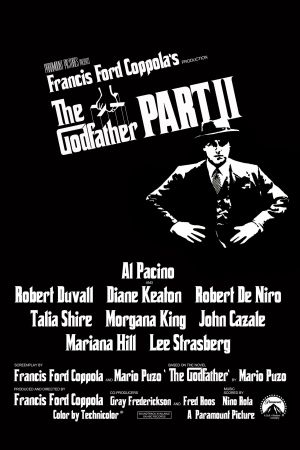
What Could Have Been: The Godfather, Part II


Years ago, I wrote a post called What Could Have Been: The Godfather, in which I discussed all of the actors and the directors who were considered for The Godfather. 

It remains one of the most widely viewed posts that we’ve ever had on this site.  I guess that shouldn’t be a surprise.  People love The Godfather and they love playing What If?  Would The Godfather still have been a classic if it had been directed by Otto Preminger with George C. Scott, Michael Parks, Burt Reynolds, and Robert Vaughn in the lead roles?  Hmmm …. probably not.  But, in theory, it could have happened.  All of them were considered at one point or another.

However, in the end, it was Francis Ford Coppola who directed The Godfather and it was Marlon Brando, Al Pacino, James Cann, and Robert Duvall who brought the Corleone family to life.  The Godfather, as everyone knows, was a huge hit and it went on to win the Oscar for Best Picture of the year.  As the film ended with the future of the Corleone family still up in the air, there was obviously room for a sequel.

When Paramount Pictures first approached Coppola about writing and directing a sequel, he turned them down.  He said he was done with The Godfather and didn’t see any way that he could improve on the story.  It’s debatable whether or not Coppola truly felt like this or if he was just holding out for more money.  It is known that Coppola did suggest to Paramount a possible director for Part II and that director’s name was Martin Scorsese.

What would Martin Scorsese’s The Godfather Part II have looked like?  It’s an intriguing thought.  At the time, Scorsese was best-known for Mean Streets and it’s probable that Scorsese’s film would have been a bit messier and grittier than Coppola’s version.  If Coppola made films about the upper echelons of the Mafia, Scorsese’s interest would probably have been with the soldiers carrying out Michael’s orders.  While Scorsese has certainly proven that he can handle a huge productions today, he was considerably younger and much more inexperienced in the early 70s.  To be honest, it’s easy to imagine Scorsese’s Godfather Part II being critically and commercially rejected because it would have been so different from Coppola’s.  A failure of that magnitude would have set back Scorsese’s career and perhaps even led to him returning to Roger Corman’s production company.  As such, it’s for probably for the best that Coppola did eventually agree to shoot the sequel, on the condition that Coppola be given creative control and Paramount exec Robert Evans not be allowed on the set.  While Coppola was busy with Godfather Part II, Scorsese was proving his versatility with Alice Doesn’t Live Her Anymore.

After Coppola was signed to direct, the next best question was whether or not Marlon Brando would return to play the role of Vito Corleone.  The film’s flashback structure would ensure that Vito would remain an important character, despite his death in the first film.  Coppola reportedly considered offering Brando the chance to play the younger version of Vito but he changed his mind after he saw Robert De Niro in Scorsese’s Mean Streets.  Still, it was felt that Brando might be willing to show up in a cameo during the film’s final flashback, in which Michael tells his family that he’s enlisted in the army.  Frustrated by Brando’s refusal to commit to doing the cameo, Coppola told him to show up on the day of shooting if he wanted to do the film.  When Brando didn’t show, the Don’s lines were instead rewritten and given to Tom Hagen.  It’s hard not to feel that this worked to the film’s advantage.  A last-minute appearance by Brando would have thrown off the film’s delicate balance and probably would have devalued De Niro’s own performance as the younger version of the character.

Brando wasn’t the only member of the original cast who was hesitant about returning.  Al Pacino held out for more money, which makes sense since he was literally the only cast member who could not, in some way, be replaced.  Richard Castellano, who played Clemenza in the first film, however learned that he that hard way that he was not quite as indispensable as Al Pacino.  In Part II, Clemenza was originally meant to have a large role in both the flashbacks and the present-day scenes.  However, when Castellano demanded more money and the right to rewrite his own lines, the older Clemenza was written out the film and replaced by the character of Frankie Petangeli (played by Michael V. Gazzo).

It’s impossible to find fault with Gazzo’s performance but it’s still hard not to regret that Castellano didn’t return.  Imagine how even more poignant the film’s final moments would have been if it had been the previously loyal Clemenza who nearly betrayed Michael as opposed to Frankie?  Indeed, even after the part was rewritten, many of Frankie’s lines deliberately harken back to things that Clemenza said and did during the first film.  Because Clemenza is a very prominent character during the film’s flashbacks, his absence in the “modern” scenes is all the more obvious.

When the role of Young Clemenza was cast, it was still believed that Richard Castellano would be appearing in that film.  One of the main reasons that Bruno Kirby was selected for the role of Young Clemenza was because Kirby had previously played Castellano’s son in a television show.  Also considered for the role was Joe Pesci, who was working as a singer and a comedian at the time.  (His partner in his comedy act was Frank Vincnet.)  If Pesci had been cast, he would not only have made his film debut in The Godfather Part II but the film also would have been his first pairing with Robert De Niro.  (Interestingly enough, Frank Sivero — who played Pesci and De Niro’s henchman, Frankie Carbone, in Goodfellas, also had a small role in Godfather Part II, playing Vito’s friend, Genco.)

As for the film’s other new major character, there were several interesting names mentioned for the role of gangster Hyman Roth.  Director Sam Fuller read for the role and Coppola also considered Elia Kazan.  Perhaps the most intriguing name mentioned as a possible Roth was that of James Cagney.  (Cagney, however, made it clear that he was content to remain retired.)  In the end, the role was offered to Al Pacino’s former acting teacher, Lee Strasberg.  Like Gazzo, Strasberg made his film debut in The Godfather Part II and, like Gazzo, he received his only Oscar nomination as a result.

The legendary character actor Timothy Carey (who was courted to play Luca Brasi in the first film) met with Coppola to discuss playing Don Fanucci, the gangster who is assassinated by Vito.  A favorite of Stanley Kubrick’s, Carey reportedly lost the role when he pulled out a gun in the middle of the meeting.

Originally, the film was supposed to end in the mid-60s, with a now teenage Anthony Corleone telling Michael that he wanted nothing to do with him because he knew that Michael had Fredo murdered.  (That famous scene of Michael bowing his head was originally supposed to be in response to Anthony walking out on him as opposed to the sound of Fredo being shot.)  Cast in the role of teenage Anthony was actor Robby Benson so perhaps it’s for the best that the scene was ultimately not included in the film.

Some of the smaller roles in Part II were played by actors who were considered for larger roles in the first film.  The young Tessio was played by John Aprea, who was also considered for the role of Michael.  Peter Donat, who played the lead Senate counsel in Part II, was considered for the role of Tom Hagen.  The rather tall Carmine Caridi, who played Camine Rosato in Part II, was originally cast as Sonny until it was discovered that he towered over everyone else in the cast.  And, of course, Robert De Niro famously read for the role of Sonny and was cast in the small role of Paule Gatto before he left The Godfather to replace Al Pacino in The Gang Who Couldn’t Shoot Straight.  (Of course, the whole reason that Pacino left The Gang Who Couldn’t Shoot Straight was so he could play the role of Michael in The Godfather.  In the end, it all worked out for the best.)

Finally, former teen idol Troy Donahue played Connie Corleone’s second husband, Merle Johnson.  Merle Johnson was Troy Donahue’s real name.

Personally, I think The Godfather Part II is one of the few films that can be described as perfect. Still, it’s always fun to play what if.

An Offer You Can’t Refuse #20: The Untouchables (dir by Brian DePalma)


“Let’s do some good!” Eliot Ness shouts as he and a platoon of Chicago cops raid what they believe is a bootlegger’s warehouse.

That line right there tells you everything that you need to know about the 1987 film, The Untouchables.  In real life, Eliot Ness was known to be an honest member of law enforcement (which did make him a bit of a rarity in 1920s Chicago) but he was also considered to be something of a self-promoter, someone who tried to leverage his momentary fame into an unsuccessful political career.  In the 50s, after Ness had lost most of his money due to a series of bad investments and his own alcoholism, Ness wrote a book about his efforts to take down Al Capone in Chicago.  That book was called The Untouchables and though Ness died of a heart attack shortly before it was published, it still proved popular enough to not only rehabilitate Ness’s heroic image but also to inspire both a television series and the movie that I’m currently reviewing.

None of that is to say that Ness didn’t play a role in Al Capone’s downfall.  He did, though it’s since been argued that Ness had little to do with actual tax evasion case that led to Capone going to prison.  It’s just that, in real life, Eliot Ness was a complicated human being, one who had his flaws.  In The Untouchables, Kevin Costner plays him as a beacon of midwestern integrity, a Gary Cooper-type who has found himself in the very corrupt city of Chicago in the very corrupt decade of the 1920s.  The film version of Eliot Ness has no flaws, beyond his naive belief that everyone is as determined to “do some good” as he is.

So, The Untouchables may not be historically accurate but it’s still an entertaining film.  It’s less concerned with the reality of Eliot Ness’s life and more about the mythology that has risen up around the roaring 20s.  Everything about the film is big and operatic.  In the role of Al Capone, Robert De Niro sneers through every scene with the self-satisfaction of a tyrant looking over the kingdom that he’s just conquered.  While Costner’s Ness tells everyone to do some good, De Niro’s Capone uses a baseball bat to keep his underlings in line.  He goes to the opera and cries until he’s told that one of Ness’s men has been killed.  Then a big grin spreads out across his face.  It’s not exactly a subtle performance but then again, The Untouchables is not exactly a subtle movie.  It’s not designed to be a film that makes you think about whether or not prohibition was a good law.  Instead, everything is bigger-than-life.  It’s a film that takes place in a dream world that appears to have sprung from mix of old movies and American mythology.

In real life, Ness had ten agents working under him.  They were all selected because they were considered to be honest lawmen and they were nicknamed The Untouchables after it was announced to the press that Ness had refused a bribe from one of Capone’s men.  In the film, Ness only has three men working underneath him and they’re all recognizable types.  Sean Connery won an Oscar for playing Jmmy Malone, the crusty old beat cop who teaches Ness about the Chicago Way.  A young and incredibly hot Andy Garcia plays George Stone, the youngest of the Untouchables.  Best of all is Charles Martin Smith, cast as Oscar Wallace, a mild-mannered accountant who first suggests that Capone must be cheating on his taxes.  There’s a great scene in which the Untouchables intercept a liquor shipment on the Canadian border, all while riding horses.  Sitting on the back of his galloping horse and trying not to fall off, both Oscar Wallace and the actor playing him appear to be having the time of their lives.  For Oscar (and probably for much of the audience), it’s a fantasy come to life, a chance to “do some good.”

The Untouchables was directed by Brian DePalma and his stylish approach to the material is perfect for the film’s story.  DePalma fills the film with references to other movies, some from the gangster genre and some not.  (In one of the film’s most famous sequence, DePalma reimagines Battleship Potemkin‘s massacre on The Odessa Steps as a shoot-out between Eliot Ness and Capone’s men.)  DePalma’s kinetic style reminds us that The Untouchables is less about history and more about how we imagine history.  In reality, Capone was succeeded by Frank Nitti and The Chicago Outfit continued to thrive even in Capone’s absence.  In the film, Nitti (played by Billy Drago) brags about killing one of the Untouchables and, as a result, is tossed off the roof of a courthouse by Eliot Ness.  It’s not historically accurate but it makes for a crowd-pleasing scene.

Big, operatic, and always entertaining, The Untouchables is an offer that you can’t refuse.

Previous Offers You Can’t (or Can) Refuse:

  1. The Public Enemy
  2. Scarface (1932)
  3. The Purple Gang
  4. The Gang That Could’t Shoot Straight
  5. The Happening
  6. King of the Roaring Twenties: The Story of Arnold Rothstein 
  7. The Roaring Twenties
  8. Force of Evil
  9. Rob the Mob
  10. Gambling House
  11. Race Street
  12. Racket Girls
  13. Hoffa
  14. Contraband
  15. Bugsy Malone
  16. Love Me or Leave Me
  17. Murder, Inc.
  18. The St. Valentine’s Day Massacre
  19. Scarface (1983)

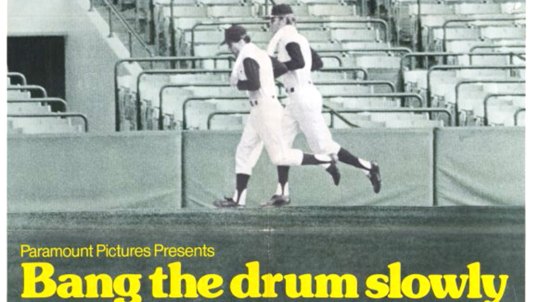
Bang The Drum Slowly (1973, dir. by John Hancock)


The last time I wrote a film review for this site, it was because I was missing baseball.

Guess what?

I still miss baseball!  Luckily, I’ve still got plenty of baseball films to keep me busy until the MLB gets its act together and starts up again.  I hope we’ll get baseball this year but if we don’t, at least I can watch a movie like Bang The Drum Slowly.

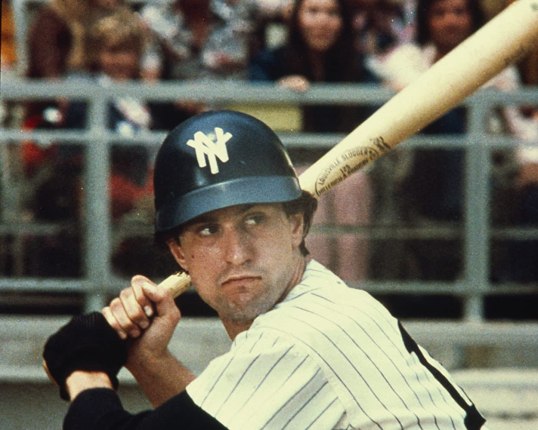
Bang The Drum Slowly is the ultimate baseball movie.  It’s about a pitcher named Henry Wiggin (Michael Moriarty) who plays for the New York Mammoths and who has a side job selling insurance and writing books.  When it’s time to renegotiate his contract, Henry says that he’ll re-sign with the team if the team agrees to not release or trade one of their catchers, Bruce Pearson (a really young Robert de Niro).  Henry says that he and Bruce are a package deal.  No one can understand why Henry cares because Bruce isn’t an outstanding player and everyone thinks that he’s slow but Henry finally gets the team’s general manager, Dutch (Vincent Gardenia), to agree to his terms.  What only Henry knows is that Bruce is terminally ill and that he will be lucky to survive the entire season.

Though the Mammoth eventually make a run for the World Series and there’s a lot of great baseball footage, Bang the Drum Slowly is more about friendship than it is about winning or losing.  Henry is willing to sacrifice everything to make sure that Bruce enjoys his final days and Bruce finally gets to play on a wining team.  Because Bruce is so young and he appears to be so healthy for most of the film, it’s really devastating when he suddenly does get ill and he’s finally has to come to terms with his mortality.  I cried a lot while I was watching Bang The Drum Slowly.  You will too.

The other players eventually rally around Bruce and they become a stronger teams as a result.  That’s one of the things that I love about baseball.  One player, no matter how good, can’t win a game on his own.  Instead, the entire team has to work together.  Not everyone can go out and try to hit a home run.  That’s not the way you win at baseball.  Instead, you win by doing what you have to do to bring your teammates home.  Bang The Drum Slowly celebrates friendship and loyalty and it perfectly captures the spirit of the game.

We may not be able to watch baseball right now.  But at least we can watch movies like Bang The Drum Slowly.

An Offer You Can Refuse #4: The Gang That Couldn’t Shoot Straight (dir by James Goldstone)


“Oh, fuck you.”

That was my reaction, last night, as I watched the 1971 film, The Gang That Couldn’t Shoot Straight.  I was talking to my DVR and yes, I was cursing quite a bit.  You know that a film has to be bad when it actually drives me to start cursing at an inanimate object.  The Gang That Couldn’t Shoot Straight was so bad that I actually got pissed off at my DVR for recording it.  It’s true that I am the one who scheduled the recording but still …. my DVR should have known better than to listen to me!

What is The Gang That Couldn’t Shoot Straight about?  I have no idea.  I watched the damn movie and I have no idea what the point of it was.  The film stars Jerry Orbach as a low-level gangster named Kid Sally.  Kid Sally’s crew — the Gang That Couldn’t Shoot Straight — is made up of a collection of malcontents, morons, and other stereotypes.  One member of the crew is a little person.  That’s the joke.  He’s a tough gangster who is wiling to put a bullet between your legs but that’s just because he’s crotch-height.  Ha ha.

Anyway, the big boss is a guy named Baccala (Lionel Stander).  Every morning, Baccala’s wife starts the car to check for bombs.  Whenever she goes outside, Baccala crawls underneath the kitchen table and waits.  Like a lot of the stuff in this movie, that’s one of those things that would be funny if it hadn’t been taken too such a cartoonish extreme.  Anyway, Baccala has zero respect for Kid Sally and Kid Sally wants to take over Baccala’s rackets.  Is it time for a mob war!?

Maybe.  A lot of people die in various “amusing” ways over the course of the film but I was never quite sure whether or not the killings were part of a mob war or if they were just the type of random mishaps that occur when a bunch of dumbasses get their hands on a cache of weapons.  Trying to follow the plot of The Gang Who Couldn’t Shoot Straight is next to impossible.  The editing of the film is so ragged that you’re rarely aware of how one scene relates to another.  If The Godfather showed how a gangster story could be a historical epic and if Goodfellas showed how an editor could recreate the kinetic experience of being a gangster, The Gang Who Couldn’t Shoot Straight shows how a mafia movie can just be a collection of random vignettes that may or may not be connected.  It’s impossible to care about the potential war between Kid Sally and Baccala because neither Kid Sally nor Baccala exist as characters beyond their silly names.

A young Robert De Niro is in this film.  He plays Mario, an Italian thief who comes to New York for a bicycle race and joins Kid Sally’s crew.  Or at least, I think he joins the crew.  It’s hard to tell.  Mario often dresses like a priest, for some reason.  He’s also fallen in love with Angela (Leigh Taylor-Young), who is Kid Sally’s sister though she could just as easily be his cousin or maybe his daughter-in-law from Tuscon.  I wouldn’t necessarily say that De Niro gives a good performance here as much as it’s just impossible not to pay attention to him because he’s a young Robert De Niro.  He and Leigh Taylor-Young do have a very sincere and touching chemistry but it’s out-of-place in a film that’s dominated by slapstick and scenes of Kid Sally using a lion to intimidate shop owners.  (Yes, that happens.)  De Niro certainly seems to be trying hard to give a good performance but he’s not a natural comedian.  Of course, you don’t need me to tell you that.  FOR THE LOVE OF GOD, WE’VE ALL SEEN DIRTY GRANDPA!

Anyway, the main problem with this film is that it’s a comedy that was apparently put together by people who think that comedy involves a lot of screaming and silly music.  I’ve actually seen a handful of other films that were directed by James Goldstone — Brother John, Rollercoaster, When Time Ran Out.  Significantly, none of those other films were comedies and there’s nothing about any of Goldstone’s other films that suggest that he was anything more than a director-for-hire.  The film itself was written by Waldo Salt, who also worked on the scripts for Midnight Cowboy, Coming Home, and Serpico.  Again, none of those films are particularly funny.  70s era Mel Brooks probably could have made this into a funny film but James Goldstone and Waldo Salt could not.

As bad as The Gang Who Couldn’t Shoot Straight is, it is also the answer to a very interesting trivia question.  This is the film that Al Pacino dropped out of when he was cast as Michael Corleone in The Godfather.  The actor who replaced Pacino was Robert De Niro.

Anyway, The Gang That Couldn’t Shoot Straight is an offer you can refuse.

Previous Offers You Can’t (or Can) Refuse:

  1. The Public Enemy
  2. Scarface
  3. The Purple Gang

Lisa Reviews An Oscar Nominee: Raging Bull (dir by Martin Scorsese)


This is not my favorite Martin Scorsese film.

I feel like I have to make that clear from the start because, for many people, this is their favorite Scorsese film.  Though it may have gotten mixed reviews when it was first released, it is now regularly described as being the high point of Scorsese’s fabled collaboration with Robert De Niro.  This was also the first film that Scorsese made with not only Joe Pesci but at also Frank Vincent as well.  (In fact, the whole scene in Goodfellas where Pesci and De Niro nearly stomp Vincent to death is a bit of an homage to a scene in Raging Bull.  Of course, Vincent got his revenge on Pesci in Casino.)  This film earned Martin Scorsese his first Oscar nomination for best director and it’s regularly cited as being one of the greatest film ever made.

Even more importantly, 1980’s Raging Bull has been described — by none other than the director himself — as the film that saved Martin Scorsese’s life.  Like a lot of his contemporaries, Scorsese got hooked on cocaine during the 70s.  He even nearly died of an overdose.  De Niro, who has been on Scorsese to direct Raging Bull for years, visited him in the hospital, brought him the script, told him to clean up his act, and make the film.  When Scorsese started to work on the film, he assumed it would be his last.  Whether Scorsese thought he would be dead or if he just thought he’d retire, I’m not sure.  Still, if Raging Bull had not rejuvenated Scorsese’s love of cinema, he wouldn’t have subsequently directed some of the greatest films ever made.  So, regardless of anything else, we have to be thankful that De Niro kept pushing Scorsese to direct Raging Bull.

The film itself is a biopic of Jake LaMotta (Robert De Niro), a brutal boxer who destroys opponents in the ring while destroying everyone who loves him outside of the ring.  He’s the type of guy who takes joy in destroying one opponent’s face just because his wife, Vicki (Cathy Moriarty), said that the guy was handsome.  When he’s forced to take a dive in order to win a title shot, he sobs in the locker room and it’s as close to being sympathetic as Jake gets.  The rest of the movie, he spends his time terrorizing his wife and taking out his frustrations on his loyal brother, Joey (Joe Pesci).

Most boxing films tend to present boxers as being lovable lugs, guys who might not be too smart but who have found the one thing that they’re good at.  (Think of the pre-Creed Rocky films.)  In Raging Bull, there’s nothing lovable about Jake.  He’s an animal, an angry man who fights because that’ the only way that he knows how to relate to the world.  He’s the type of guy who spends all of his time looking for an excuse to get mad and throw a punch.  The most dangerous thing you can do is make a joke in the presence of Jake LaMotta because, as portrayed in this film, he’s such an idiot that his reaction will always be to see it as a provocation.  From beginning to end, he’s a loathsome figure but the young De Niro was such a charismatic actor that you keep watching because — much like Vicki — you keep hoping that you’ll see some glimmer of humanity and some chance of redemption.

Reportedly, Scorsese and De Niro feel that the end of Raging Bull does provide Jake with some redemption.  Having lost everyone that ever loved him, an overweight Jake runs a sleazy nightclub and makes a fool of himself reciting dramatic monologues.  The production actually shut down so that De Niro could overeat and gain all the extra weight and it is shocking to see him go from being a handsome, athletic man to a fat slob whose shirt can’t even cover his belly.  No longer a boxer, Jake is now a faded D-list celebrity.  Now that he can’t fight and he can’t make money for the mob and the gamblers, no one cares about him.  That’s unfortunate for Jake but I have to say that I’ve never seen much redemption in Jake’s fate.  If anything, I was just happy that Vicki finally got away from him.

Raging Bull is a film that’s easier to admire than to actually like.  It’s impossible not to appreciate the black-and-white cinematography or the performances of De Niro, Pesci, and Cathy Moriarty.  As directed by Scorsese, the boxing scenes are horrifying brutal, to the extent that you find yourself wondering how anyone could enjoy the sport.  (When a spray of Jake’s blood hits the people in the first row, you can’t help but think that they’re all getting what they deserved.)  That said, the film’s never been a favorite of mine because, as well done as it is, Jake LaMotta never seems like he’s worth spending two hours with.

Obviously, a lot of people disagree with me on that.  Raging Bull received 8 Oscar nominations.  Robert De Niro won Best Actor.  Raging Bull, itself, lost Best Picture to Robert Redford’s Ordinary People.

The Dallas-Ft. Worth Film Critics Association Names 1917 As The Best of 2019!


Reunion Tower (picture by Erin Nicole)

Here are the winners in Dallas!

BEST PICTURE

Winner: 1917

Runners-up: MARRIAGE STORY (2); PARASITE (3); THE IRISHMAN (4); ONCE UPON A TIME IN HOLLYWOOD (5); JOJO RABBIT (6); LITTLE WOMEN (7); THE FAREWELL (8); THE TWO POPES (9); KNIVES OUT (10)

BEST ACTOR

Winner: Adam Driver, MARRIAGE STORY

Runners-up: Joaquin Phoenix, JOKER (2); Antonio Banderas, PAIN AND GLORY (3); Leonardo DiCaprio, ONCE UPON A TIME IN HOLLYWOOD (4); Robert De Niro, THE IRISHMAN (5)

BEST ACTRESS

Winner: Scarlett Johansson, MARRIAGE STORY

Runners-up: Renée Zellweger, JUDY (2); Charlize Theron, BOMBSHELL (3); Saoirse Ronan, LITTLE WOMEN (4); Awkwafina, THE FAREWELL (5, tie); Lupita Nyong’o, US (5, tie)

BEST SUPPORTING ACTOR

Winner: Brad Pitt, ONCE UPON A TIME IN HOLLYWOOD

Runners-up: Willem Dafoe, THE LIGHTHOUSE (2); Joe Pesci, THE IRISHMAN (3); Al Pacino, THE IRISHMAN (4); Shia LaBeouf, HONEY BOY (5)

BEST SUPPORTING ACTRESS

Winner: Laura Dern, MARRIAGE STORY

Runners-up: Margot Robbie, BOMBSHELL (2); Florence Pugh, LITTLE WOMEN (3); Jennifer Lopez, HUSTLERS (4); Annette Bening, THE REPORT (5)

BEST DIRECTOR

Winner: Sam Mendes, 1917

Runners-up: Bong Joon-ho, PARASITE (2); Martin Scorsese, THE IRISHMAN (3); Quentin Tarantino, ONCE UPON A TIME IN HOLLYWOOD (4); Noah Baumbach, MARRIAGE STORY (5)

BEST FOREIGN LANGUAGE FILM

Winner: PARASITE

Runners-up: PAIN AND GLORY (2); THE FAREWELL (3); LES MISÉRABLES (4); PORTRAIT OF A LADY ON FIRE (5)

BEST DOCUMENTARY

Winner: APOLLO 11

Runners-up: ONE CHILD NATION (2); AMERICAN FACTORY (3); HONEYLAND (4); FOR SAMA (5)

BEST ANIMATED FILM

Winner: TOY STORY 4

Runner-up: I LOST MY BODY

BEST SCREENPLAY

Winner: Noah Baumbach, MARRIAGE STORY

Runner-up: Steven Zaillian, THE IRISHMAN

BEST CINEMATOGRAPHY

Winner: Roger Deakins, 1917

Runner-up: Hong Kyung-pyo, PARASITE

BEST MUSICAL SCORE

Winner: Thomas Newman, 1917

Runner-up: Alexandre Desplat, LITTLE WOMEN

RUSSELL SMITH AWARD (best low-budget or cutting-edge independent film)

Winner: THE LIGHTHOUSE

The North Texas Film Critics Association Selects The Irishman As The Best of 2019!


The North Texas Film Critics Association announced their picks for the best of 2019 earlier today.  Speaking as a North Texas film critic, I’m a bit annoyed that I wasn’t consulted but oh well!  (To quote King of the Hill, “North Texas?  More like South Oklahoma!”)  Here are their winners:

BEST FILM

Winner: THE IRISHMAN

Runners-up: 1917; PARASITE; THE FAREWELL; MARRIAGE STORY; JOJO RABBIT; THE PEANUT BUTTER FALCON; A BEAUTIFUL DAY IN THE NEIGHBORHOOD; ONCE UPON A TIME…IN HOLLYWOOD; FORD V FERRARI; JOKER

BEST ACTOR

Winner: Joaquin Phoenix, JOKER

Runners-up: Robert De Niro, THE IRISHMAN; Adam Driver, MARRIAGE STORY; Adam Sandler, UNCUT GEMS and Leonardo DiCaprio, ONCE UPON A TIME…IN HOLLYWOOD

BEST ACTRESS

Winner: Charlize Theron, BOMBSHELL

Runners-up: Scarlett Johansson, MARRIAGE STORY; Renée Zellweger, JUDY; Awkwafina, THE FAREWELL and Lupita Nyong’o, US

BEST SUPPORTING ACTOR

Winner: Tom Hanks, A BEAUTIFUL DAY IN THE NEIGHBORHOOD

Runners-up: Joe Pesci, THE IRISHMAN; Brad Pitt, ONCE UPON A TIME…IN HOLLYWOOD; Al Pacino, THE IRISHMAN and Song Kang-Ho, PARASITE

BEST SUPPORTING ACTRESS

Winner: Zhao Shuzhen, THE FAREWELL

Runners-up: Laura Dern, MARRIAGE STORY; Scarlett Johansson, JOJO RABBIT; Kathy Bates, RICHARD JEWELL and Annette Bening, THE REPORT

BEST DIRECTOR

Winner: Sam Mendes, 1917

Runners-up: Martin Scorsese, THE IRISHMAN; Quentin Tarantino, ONCE UPON A TIME…IN HOLLYWOOD; Noah Baumbach, MARRIAGE STORY and Lulu Wang, THE FAREWELL

BEST FOREIGN LANGUAGE FILM

Winner: PARASITE (South Korea)

Runners-up: PAIN AND GLORY (Spain) and LES MISÉRABLES (France)

BEST DOCUMENTARY

Winner: APOLLO 11

Runners-up: AMERICAN FACTORY; ONE CHILD NATION; DAVID CROSBY: REMEMBER MY NAME and ROLLING THUNDER REVUE: A BOB DYLAN STORY

BEST ANIMATED FILM

Winner: TOY STORY 4

Runners-up: ABOMINABLE and HOW TO TRAIN YOUR DRAGON: THE HIDDEN WORLD

BEST CINEMATOGRAPHY

Winner: Roger Deakins, 1917,

Runner-ups: Jarin Blaschke, THE LIGHTHOUSE; Rodrigo Prieto, THE IRISHMAN; Hoyte Van Hoytema, AD ASTRA; Robert Richardson, ONCE UPON A TIME…IN HOLLYWOOD and Phedon Papamichael, FORD V FERRARI

BEST NEWCOMER

Winner: Roman Griffin Davis was awarded Best Newcomer for JOJO RABBIT

GARY MURRAY AWARD (Best Ensemble)

Winner: KNIVES OUT

Here Are The Nominations Of The Seattle Film Critics Society!


The winners will be revealed on December 16th!

BEST PICTURE OF THE YEAR

1917 (Universal Pictures)
The Farewell (A24)
Ford v Ferrari (20th Century Fox)
The Irishman (Netflix)
The Lighthouse (A24)
Little Women (Sony Pictures)
Marriage Story (Netflix)
Once Upon a Time…in Hollywood (Sony Pictures)
Parasite (NEON)
Uncut Gems (A24)

BEST DIRECTOR

Robert Eggers – The Lighthouse
Greta Gerwig – Little Women
Bong Joon-ho – Parasite
Josh & Benny Safdie – Uncut Gems
Martin Scorsese – The Irishman

BEST ACTOR in a LEADING ROLE

Antonio Banderas – Pain and Glory
Robert De Niro –The Irishman
Adam Driver – Marriage Story
Joaquin Phoenix – Joker
Adam Sandler – Uncut Gems

BEST ACTRESS in a LEADING ROLE

Awkwafina – The Farewell
Scarlett Johansson – Marriage Story
Lupita Nyong’o – Us
Saoirse Ronan – Little Women
Renée Zellweger – Judy

BEST ACTOR in a SUPPORTING ROLE

Willem Dafoe – The Lighthouse
Tom Hanks – A Beautiful Day in the Neighborhood
Song Kang-ho – Parasite
Joe Pesci – The Irishman
Brad Pitt – Once Upon a Time…in Hollywood

BEST ACTRESS in a SUPPORTING ROLE

Laura Dern – Marriage Story
Jennifer Lopez – Hustlers
Florence Pugh – Little Women
Taylor Russell – Waves
Zhao Shuzhen – The Farewell

BEST ENSEMBLE CAST

The Irishman
Knives Out
Little Women
Once Upon a Time…in Hollywood
Parasite

BEST ACTION CHOREOGRAPHY

1917
Avengers: Endgame
Ford v Ferrari
John Wick: Chapter 3 – Parabellum Shadow

BEST SCREENPLAY

The Farewell – Lulu Wang
The Irishman – Steven Zaillian
Knives Out – Rian Johnson
Marriage Story – Noah Baumbach
Parasite – Bong Joon-ho, Han Jin-won (screenplay); Bong Joon-ho (story)

BEST ANIMATED FEATURE

Frozen II – Chris Buck & Jennifer Lee, directors
How to Train Your Dragon: The Hidden World – Dean DeBlois, director
I Lost My Body – Jérémy Clapin, director
Missing Link – Chris Butler, director
Toy Story 4 – Josh Cooley, director

BEST FOREIGN LANGUAGE FILM

The Farewell – Lulu Wang, director
Monos – Alejandro Landes, director
Pain and Glory – Pedro Almodóvar, director
Parasite – Bong Joon-ho, director
Portrait of a Lady on Fire – Céline Sciamma, director

BEST DOCUMENTARY FEATURE

American Factory – Steven Bognar, Julia Reichert, directors Apollo 11 – Todd Douglas Miller, director
For Sama – Waad al-Kateab, Edward Watts, directors
Fyre – Chris Smith, director
Honeyland – Ljubomir Stefanov & Tamara Kotevska, directors

BEST CINEMATOGRAPHY

1917 – Roger Deakins
The Lighthouse – Jarin Blaschke
Once Upon a Time…in Hollywood – Robert Richardson
Parasite – Hong Kyung-pyo
Portrait of a Lady on Fire – Claire Mathon

BEST COSTUME DESIGN

Dolemite is My Name – Ruth E. Carter
Downton Abbey – Anna Mary Scott Robbins
Little Women – Jacqueline Durran
Once Upon a Time…in Hollywood – Arianne Phillips
Rocketman – Julian Day

BEST FILM EDITING

1917 – Lee Smith
The Irishman – Thelma Schoonmaker
Once Upon a Time…in Hollywood – Fred Raskin
Parasite – Yang Jin-mo
Uncut Gems – Ronald Bronstein, Benny Safdie

BEST ORIGINAL SCORE

1917 – Thomas Newman
Joker – Hildur Guðnadóttir
The Last Black Man in San Francisco – Emile Mosseri
Uncut Gems – Daniel Lopatin
Us – Michael Abels

BEST PRODUCTION DESIGN

1917 – Dennis Gassner (Production Designer); Lee Sandales (Set Decorator)
The Irishman – Bob Shaw (Production Designer); Regina Graves (Set Decorator)
Little Women – Jess Gonchor (Production Designer); Claire Kaufman (Set Decorator)
Once Upon a Time…in Hollywood – Barbara Ling (Production Designer); Nancy Haigh (Set Decorator)
Parasite – Lee Ha-jun (Production Designer)

BEST VISUAL EFFECTS

1917 – Guillaume Rocheron, Greg Butler, Dominic Tuohy
Ad Astra – Allen Maris, Jedediah Smith, Guillaume Rocheron, Scott R. Fisher
Alita: Battle Angel – Nick Epstein, Joe Letteri, Eric Saindon
Avengers: Endgame – Dan DeLeeuw, Matt Aitken, Russell Earl, Dan Sudick
The Irishman – Pablo Helman, Leandro Estebecorena, Stephane Grabli, Nelson Sepulveda

BEST YOUTH PERFORMANCE (18 years of age or younger upon start of filming)

Julia Butters – Once Upon a Time…in Hollywood
Kyliegh Curran – Doctor Sleep
Roman Griffith Davis – Jojo Rabbit
Noah Jupe – Honey Boy

Thomasin McKenzie – Jojo Rabbit

VILLAIN OF THE YEAR

Arthur Fleck/The Joker – Joker – portrayed by Joaquin Phoenix
Red – Us – portrayed by Lupita Nyong’o
The Red Dress – In Fabric – portrayed by a red dress
Rose the Hat – Doctor Sleep – portrayed by Rebecca Ferguson

Russell Bufalino – The Irishman – portrayed by Joe Pesci

Here Are The 2019 Nominations of the Detroit Film Critics Society!


Earlier on Friday, the Detroit Film Critics Society released their nominations for the best of 2019!

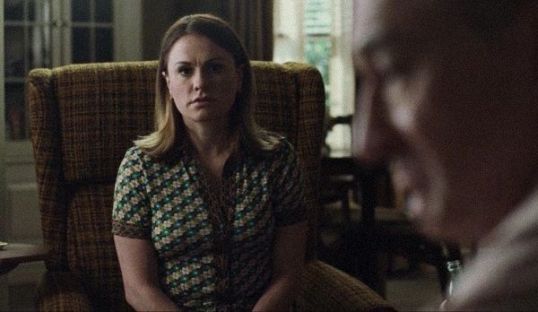
Now, back in 2018, the DFCS honored some great films that were overlooked by the Academy, films like Eighth Grade, A Quiet Place, and First Reformed.  I mean, I really, really loved the 2018 DFCS awards.  And you know what?  I’m pretty happy with what they came up with for 2019 as well!  I especially like the nomination for Anna Paquin in The Irishman.  With all the overblown controversy about how many lines she spoke in the film, it is often overlooked that she gave a great performance and, with just the power of her withering glare, pretty much transformed Peggy into the conscience of the film.

Here are the DFCS nominees for the best of 2019!  The winners will be announced on December 9th!

BEST PICTURE
The Irishman
Jojo Rabbit
Marriage Story
Once Upon a Time… in Hollywood
Parasite

BEST DIRECTOR
Noah Baumbach – Marriage Story
Bong Joon-ho – Parasite
Martin Scorsese – The Irishman
Quentin Tarantino – Once Upon a Time… in Hollywood
Taika Waititi – Jojo Rabbit

BEST ACTRESS
Scarlett Johansson – Marriage Story
Julianne Moore – Gloria Bell
Lupita Nyong’o – Us
Charlize Theron – Bombshell
Renee Zellweger – Judy

BEST ACTOR
Robert De Niro – The Irishman
Adam Driver – Marriage Story
Robert Pattinson – The Lighthouse
Joaquin Phoenix – Joker
Adam Sandler – Uncut Gems

SUPPORTING ACTOR
Willem Dafoe – The Lighthouse
Tom Hanks – A Beautiful Day in the Neighborhood
Joe Pesci – The Irishman
Brad Pitt – Once Upon a Time… in Hollywood
Sam Rockwell – Richard Jewell
Wesley Snipes – Dolemite Is My Name

SUPPORTING ACTRESS
Kathy Bates – Richard Jewell
Laura Dern – Marriage Story
Scarlett Johansson – Jojo Rabbit
Anna Paquin – The Irishman
Florence Pugh – Little Women

BEST SCREENPLAY
The Irishman
The Lighthouse
Marriage Story
Once Upon a Time… in Hollywood
Parasite

BEST ANIMATED FILM
Frozen II
How to Train Your Dragon: The Hidden World
I Lost My Body
Klaus
Toy Story 4

BEST USE OF MUSIC
1917
Once Upon a Time… in Hollywood
Rocketman
Uncut Gems
Wild Rose

BEST ENSEMBLE
Dolemite Is My Name
The Farewell
The Irishman
Once Upon a Time… in Hollywood
Parasite

BEST DOCUMENTARY
Amazing Grace
Apollo 11
Horror Noire: A History of Black Horror
Knocking Down the House
Rolling Thunder Review: A Bob Dylan Story by Martin Scorsese

BREAKTHROUGH
Ana de Armas – actress (Knives Out, The Informer, Yesterday)
Jessie Buckley – actress (Wild Rose, Judy)
Kaitlyn Dever – actress (Booksmart, Them That Follow)
Aisling Franciosi – actress (The Nightingale)
Paul Walter Hauser – actor (Richard Jewell)
Florence Pugh – actress (Fighting with My Family, Midsommar, Little Women)
Lulu Wang – director (The Farewell)
Olivia Wilde – director (Booksmart)