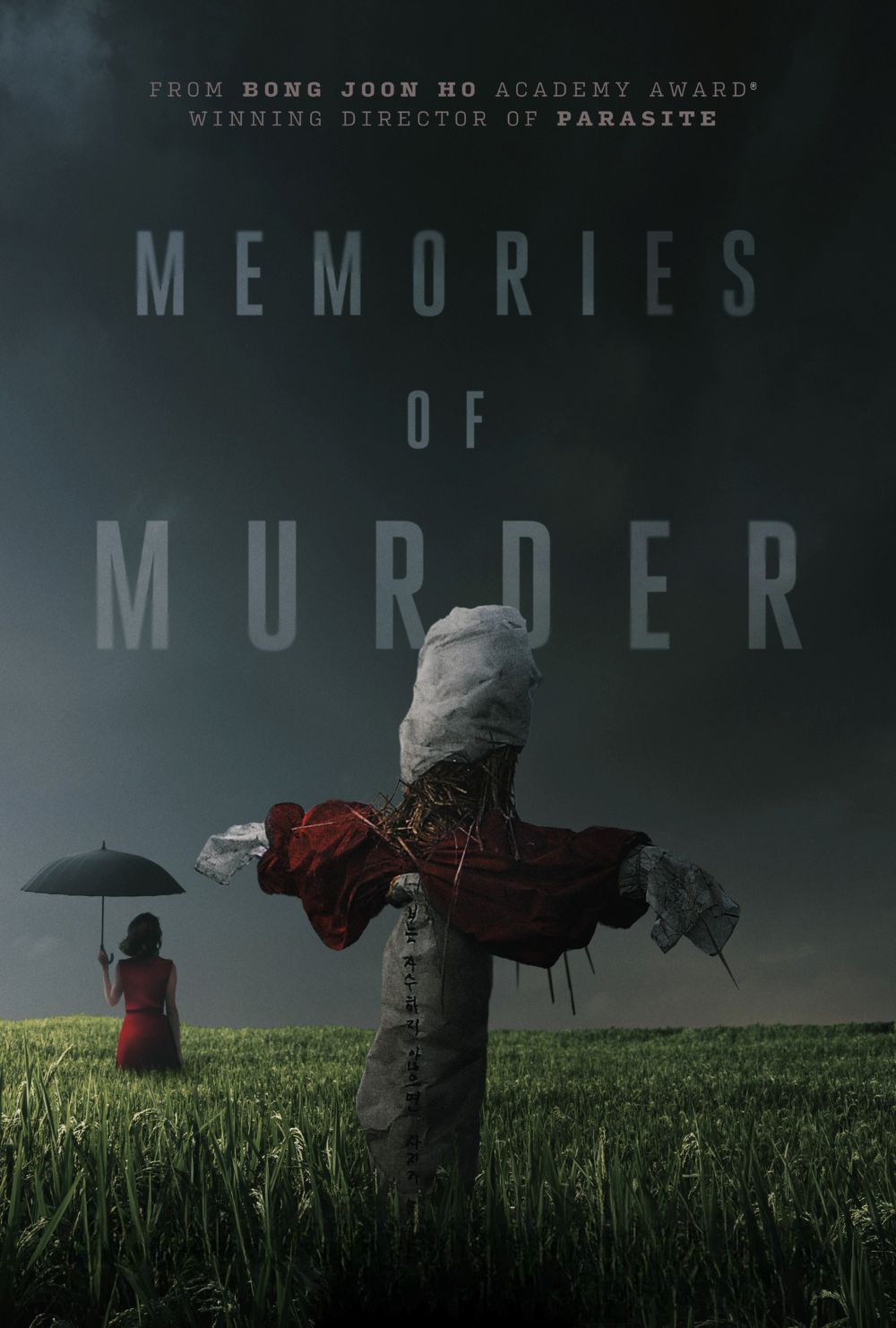
Film Review: Memories of Murder (dir. by Bong Joon ho)


“Chief, I may know nothing else, but my eyes can read people.” — Park Doo-man

Some crime thrillers make you feel clever for keeping up. Memories of Murder makes you wonder whether the whole business of feeling clever has distracted you from something terrible. Bong Joon Ho’s 2003 neo-noir follows detectives hunting a serial killer, but the real nightmare is watching their confidence outlast their competence. It is gripping, frequently hilarious, and ultimately devastating, with none of those qualities canceling out the others. Even when the investigation seems to move forward, something feels wrong. Bong turns that uneasiness into the film’s defining sensation: the growing suspicion that wanting an answer badly enough can make people incapable of recognizing the truth.

The setup sounds familiar enough. Women are being murdered in a rural community, and the local police are hopelessly unprepared. Detective Park Doo-man, played by Song Kang-ho, trusts his instincts to an almost ridiculous degree. He believes he can read people by looking at them, a convenient talent for someone not especially committed to gathering reliable evidence. Then Seo Tae-yoon, played by Kim Sang-kyung, arrives from Seoul with a more methodical approach. On paper, this is the classic clash between a rough local cop and a sophisticated outsider. In practice, Bong uses that pairing to dismantle the comforting idea that either personality type guarantees justice.

Song is the movie’s greatest asset, although calling this simply a great performance undersells how much he controls its emotional temperature. Park can be smug, lazy, funny, frightening, and oddly vulnerable, sometimes within the same scene. Song never asks us to forget the harm this man does. Instead, he makes his limitations painfully recognizable. Park wants to be good at his job, but he also wants the world to confirm that he already is. That distinction becomes increasingly important. His swagger initially supplies comic energy; later, the same mannerisms look like flimsy defenses against the possibility that he has understood almost nothing.

The humor is essential, not an awkward extra. Crime scenes become chaotic public spaces, officers stumble through their responsibilities, and investigative breakthroughs often resemble desperate improvisation. You laugh because the behavior is absurd, then feel uncomfortable because the consequences are not. Bong understands that incompetence rarely announces itself with sinister music. Sometimes it arrives as a confident man saying something stupid while everybody else goes along with it. The comedy exposes an institution accustomed to getting its way rather than getting things right. What first looks like an eccentric workplace gradually reveals itself as a place where vulnerable people can be bullied into becoming convenient answers.

That is where the film becomes much harsher than its buddy-cop outline suggests. Violence is not merely something the detectives investigate; it is also one of their preferred tools. Suspects are treated as bodies to intimidate rather than people whose accounts require attention. The movie makes it difficult to separate individual cruelty from an institutional habit of coercion. Yet Bong avoids handing Seo an easy moral victory just because he prefers evidence. As the case wears him down, his discipline becomes harder to maintain. The contrast between the detectives starts to collapse, making the investigation feel less like progress than a slow contamination.

Visually, Memories of Murder is gorgeous without ever making its setting feel like a postcard. Fields, drainage channels, narrow roads, and railway tracks form a landscape that looks open but offers very little reassurance. Darkness does not need to conceal a gothic mansion; an ordinary stretch of countryside is enough. Kim Hyung-koo’s cinematography gives the place a physical weight, especially when rain turns everything cold, muddy, and difficult to read. The contrast between the golden farmland and the grimmer investigative spaces is particularly effective. Beauty remains present, which somehow makes the violence feel more invasive rather than less disturbing.

Bong is equally good at making you search the frame. A background figure, an empty patch of ground, or a doorway can suddenly seem important. That visual restlessness puts us in an uncomfortable relationship with the detectives: we start looking for patterns, too. The procedural details become absorbing, but the film keeps questioning the leap from noticing something to proving anything. Its suspense depends less on a steady supply of ingenious clues than on the unstable meaning of the clues already available. You can understand why a suspect seems convincing while also seeing how badly the investigators need him to be guilty.

What makes that uncertainty so exhausting is the way Bong handles repetition. Another interview, another theory, another burst of confidence: each apparent opening carries the promise that this time things might finally click. Instead of making the investigation feel dramatically stalled, those cycles let frustration accumulate. The detectives become less patient, and we become more susceptible to accepting whatever explanation seems available. That is a nasty little trick, and an effective one. The film does not simply show people becoming desperate; it draws us close enough to their thinking that we can feel the temptation to mistake a possible answer for a proven one.

The horror in Memories of Murder has roots in an actual case. The film is a semi-biographical retelling of the Hwaseong serial murders, which took place in South Korea between 1986 and 1991. When it arrived in theaters in 2003, the case remained completely unsolved, so its uncertainty reflected reality rather than a screenwriter’s decision to keep viewers guessing. DNA evidence eventually identified the culprit, Lee Choon-jae, in 2019. Knowing that now changes the viewing experience, but it does not soften the film’s impact. An eventual answer cannot erase the suffering, missed opportunities, and years spent searching for someone who remained out of reach.

That unresolved history gives the ending its particular sting. Years later, Park returns to the place where a body was found, and an ordinary conversation revives the possibility that the killer has passed through the same space. Then comes that extraordinary look directly into the camera. Song’s face seems to search ours for something his younger self believed he could recognize instantly. It is not just a haunting flourish. It overturns his entire way of seeing. The man who trusted his eyes is left staring, and the audience receives neither the safety of distance nor the satisfaction of certainty.

Memories of Murder sticks with you because Bong knows exactly when to stop entertaining and leave you alone with what you have watched. The jokes, the arguments, and the frantic pursuit of leads gradually give way to something quieter: people struggling to live with what they could not put right. Song Kang-ho gives that shift a bruised humanity without turning Park into a hero or asking us to excuse him. It is a remarkably assured film, but never a comfortable one. By the end, solving the crime no longer seems like the only thing at stake. There is also the question of what remains after years of getting it wrong.
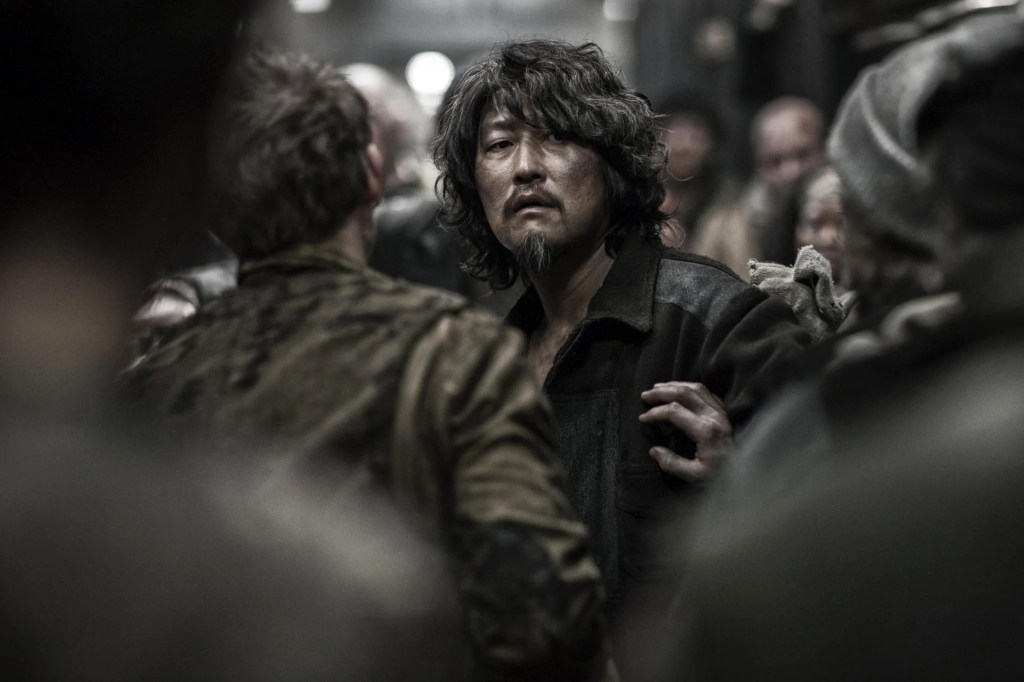
Happy 59th Birthday to the Incredible South Korean Actor Song Kang-ho!


I discovered South Korean cinema when I ran across the blu ray for SHIRI (1999) at Best Buy some time around the turn of the century. Making the impulse buy, I discovered SHIRI to be an incredible action film. With my appetite sufficiently whetted, I hopped on the Internet and just started searching for more. The next movie I came across was JOINT SECURITY AREA (2000), another great film. I took notice of the actor Song Kang-ho in both films, so I started watching his career very closely. Soon he was starring in the psychological thriller SYMPATHY FOR MR. VENGEANCE (2002) and the serial killer film MEMORIES OF MURDER (2003). Not only was Song giving incredible acting performances, he was working for two of the great South Korean directors at the time, Park Chan-Wook and Bong Joon Ho. These two incredible directors were making the best films in South Korean cinema and Song’s fingerprints were all over their best work. Films like THE HOST (2006), THIRST (2009) and SNOWPIERCER (2013) soon followed, culminating in Song’s lead performance in Bong Joon Ho’s Oscar winning film PARASITE (2018), the first foreign language film to ever take home the Best Picture Oscar! 

I have now been a fan of Song Kang-ho for over 25 years. He’s still working hard. I just noticed that he has a series that’s streaming on Hulu called UNCLE SAMSIK. I need to check that out. I also noticed that many of his best films are currently available for streaming on so many different platforms… Netflix, Tubi, the Roku Channel, PlutoTV, etc., etc.!

Check out this trailer for MEMORIES OF MURDER. If this doesn’t light your fire, your wood’s wet! Happy Birthday, Song Kang-ho. Thanks for a quarter century of entertainment!

The North Texas Film Critics Association Selects The Irishman As The Best of 2019!


The North Texas Film Critics Association announced their picks for the best of 2019 earlier today.  Speaking as a North Texas film critic, I’m a bit annoyed that I wasn’t consulted but oh well!  (To quote King of the Hill, “North Texas?  More like South Oklahoma!”)  Here are their winners:

BEST FILM

Winner: THE IRISHMAN

Runners-up: 1917; PARASITE; THE FAREWELL; MARRIAGE STORY; JOJO RABBIT; THE PEANUT BUTTER FALCON; A BEAUTIFUL DAY IN THE NEIGHBORHOOD; ONCE UPON A TIME…IN HOLLYWOOD; FORD V FERRARI; JOKER

BEST ACTOR

Winner: Joaquin Phoenix, JOKER

Runners-up: Robert De Niro, THE IRISHMAN; Adam Driver, MARRIAGE STORY; Adam Sandler, UNCUT GEMS and Leonardo DiCaprio, ONCE UPON A TIME…IN HOLLYWOOD

BEST ACTRESS

Winner: Charlize Theron, BOMBSHELL

Runners-up: Scarlett Johansson, MARRIAGE STORY; Renée Zellweger, JUDY; Awkwafina, THE FAREWELL and Lupita Nyong’o, US

BEST SUPPORTING ACTOR

Winner: Tom Hanks, A BEAUTIFUL DAY IN THE NEIGHBORHOOD

Runners-up: Joe Pesci, THE IRISHMAN; Brad Pitt, ONCE UPON A TIME…IN HOLLYWOOD; Al Pacino, THE IRISHMAN and Song Kang-Ho, PARASITE

BEST SUPPORTING ACTRESS

Winner: Zhao Shuzhen, THE FAREWELL

Runners-up: Laura Dern, MARRIAGE STORY; Scarlett Johansson, JOJO RABBIT; Kathy Bates, RICHARD JEWELL and Annette Bening, THE REPORT

BEST DIRECTOR

Winner: Sam Mendes, 1917

Runners-up: Martin Scorsese, THE IRISHMAN; Quentin Tarantino, ONCE UPON A TIME…IN HOLLYWOOD; Noah Baumbach, MARRIAGE STORY and Lulu Wang, THE FAREWELL

BEST FOREIGN LANGUAGE FILM

Winner: PARASITE (South Korea)

Runners-up: PAIN AND GLORY (Spain) and LES MISÉRABLES (France)

BEST DOCUMENTARY

Winner: APOLLO 11

Runners-up: AMERICAN FACTORY; ONE CHILD NATION; DAVID CROSBY: REMEMBER MY NAME and ROLLING THUNDER REVUE: A BOB DYLAN STORY

BEST ANIMATED FILM

Winner: TOY STORY 4

Runners-up: ABOMINABLE and HOW TO TRAIN YOUR DRAGON: THE HIDDEN WORLD

BEST CINEMATOGRAPHY

Winner: Roger Deakins, 1917,

Runner-ups: Jarin Blaschke, THE LIGHTHOUSE; Rodrigo Prieto, THE IRISHMAN; Hoyte Van Hoytema, AD ASTRA; Robert Richardson, ONCE UPON A TIME…IN HOLLYWOOD and Phedon Papamichael, FORD V FERRARI

BEST NEWCOMER

Winner: Roman Griffin Davis was awarded Best Newcomer for JOJO RABBIT

GARY MURRAY AWARD (Best Ensemble)

Winner: KNIVES OUT

Here Are The Nominations Of The Seattle Film Critics Society!


The winners will be revealed on December 16th!

BEST PICTURE OF THE YEAR

1917 (Universal Pictures)
The Farewell (A24)
Ford v Ferrari (20th Century Fox)
The Irishman (Netflix)
The Lighthouse (A24)
Little Women (Sony Pictures)
Marriage Story (Netflix)
Once Upon a Time…in Hollywood (Sony Pictures)
Parasite (NEON)
Uncut Gems (A24)

BEST DIRECTOR

Robert Eggers – The Lighthouse
Greta Gerwig – Little Women
Bong Joon-ho – Parasite
Josh & Benny Safdie – Uncut Gems
Martin Scorsese – The Irishman

BEST ACTOR in a LEADING ROLE

Antonio Banderas – Pain and Glory
Robert De Niro –The Irishman
Adam Driver – Marriage Story
Joaquin Phoenix – Joker
Adam Sandler – Uncut Gems

BEST ACTRESS in a LEADING ROLE

Awkwafina – The Farewell
Scarlett Johansson – Marriage Story
Lupita Nyong’o – Us
Saoirse Ronan – Little Women
Renée Zellweger – Judy

BEST ACTOR in a SUPPORTING ROLE

Willem Dafoe – The Lighthouse
Tom Hanks – A Beautiful Day in the Neighborhood
Song Kang-ho – Parasite
Joe Pesci – The Irishman
Brad Pitt – Once Upon a Time…in Hollywood

BEST ACTRESS in a SUPPORTING ROLE

Laura Dern – Marriage Story
Jennifer Lopez – Hustlers
Florence Pugh – Little Women
Taylor Russell – Waves
Zhao Shuzhen – The Farewell

BEST ENSEMBLE CAST

The Irishman
Knives Out
Little Women
Once Upon a Time…in Hollywood
Parasite

BEST ACTION CHOREOGRAPHY

1917
Avengers: Endgame
Ford v Ferrari
John Wick: Chapter 3 – Parabellum Shadow

BEST SCREENPLAY

The Farewell – Lulu Wang
The Irishman – Steven Zaillian
Knives Out – Rian Johnson
Marriage Story – Noah Baumbach
Parasite – Bong Joon-ho, Han Jin-won (screenplay); Bong Joon-ho (story)

BEST ANIMATED FEATURE

Frozen II – Chris Buck & Jennifer Lee, directors
How to Train Your Dragon: The Hidden World – Dean DeBlois, director
I Lost My Body – Jérémy Clapin, director
Missing Link – Chris Butler, director
Toy Story 4 – Josh Cooley, director

BEST FOREIGN LANGUAGE FILM

The Farewell – Lulu Wang, director
Monos – Alejandro Landes, director
Pain and Glory – Pedro Almodóvar, director
Parasite – Bong Joon-ho, director
Portrait of a Lady on Fire – Céline Sciamma, director

BEST DOCUMENTARY FEATURE

American Factory – Steven Bognar, Julia Reichert, directors Apollo 11 – Todd Douglas Miller, director
For Sama – Waad al-Kateab, Edward Watts, directors
Fyre – Chris Smith, director
Honeyland – Ljubomir Stefanov & Tamara Kotevska, directors

BEST CINEMATOGRAPHY

1917 – Roger Deakins
The Lighthouse – Jarin Blaschke
Once Upon a Time…in Hollywood – Robert Richardson
Parasite – Hong Kyung-pyo
Portrait of a Lady on Fire – Claire Mathon

BEST COSTUME DESIGN

Dolemite is My Name – Ruth E. Carter
Downton Abbey – Anna Mary Scott Robbins
Little Women – Jacqueline Durran
Once Upon a Time…in Hollywood – Arianne Phillips
Rocketman – Julian Day

BEST FILM EDITING

1917 – Lee Smith
The Irishman – Thelma Schoonmaker
Once Upon a Time…in Hollywood – Fred Raskin
Parasite – Yang Jin-mo
Uncut Gems – Ronald Bronstein, Benny Safdie

BEST ORIGINAL SCORE

1917 – Thomas Newman
Joker – Hildur Guðnadóttir
The Last Black Man in San Francisco – Emile Mosseri
Uncut Gems – Daniel Lopatin
Us – Michael Abels

BEST PRODUCTION DESIGN

1917 – Dennis Gassner (Production Designer); Lee Sandales (Set Decorator)
The Irishman – Bob Shaw (Production Designer); Regina Graves (Set Decorator)
Little Women – Jess Gonchor (Production Designer); Claire Kaufman (Set Decorator)
Once Upon a Time…in Hollywood – Barbara Ling (Production Designer); Nancy Haigh (Set Decorator)
Parasite – Lee Ha-jun (Production Designer)

BEST VISUAL EFFECTS

1917 – Guillaume Rocheron, Greg Butler, Dominic Tuohy
Ad Astra – Allen Maris, Jedediah Smith, Guillaume Rocheron, Scott R. Fisher
Alita: Battle Angel – Nick Epstein, Joe Letteri, Eric Saindon
Avengers: Endgame – Dan DeLeeuw, Matt Aitken, Russell Earl, Dan Sudick
The Irishman – Pablo Helman, Leandro Estebecorena, Stephane Grabli, Nelson Sepulveda

BEST YOUTH PERFORMANCE (18 years of age or younger upon start of filming)

Julia Butters – Once Upon a Time…in Hollywood
Kyliegh Curran – Doctor Sleep
Roman Griffith Davis – Jojo Rabbit
Noah Jupe – Honey Boy

Thomasin McKenzie – Jojo Rabbit

VILLAIN OF THE YEAR

Arthur Fleck/The Joker – Joker – portrayed by Joaquin Phoenix
Red – Us – portrayed by Lupita Nyong’o
The Red Dress – In Fabric – portrayed by a red dress
Rose the Hat – Doctor Sleep – portrayed by Rebecca Ferguson

Russell Bufalino – The Irishman – portrayed by Joe Pesci

The Los Angeles Film Critics Association Honors Parasite and Jennifer Lopez


On Sunday, the Los Angeles Film Critics Association announced their picks for the best of 2019!  Parasite was named Best Picture while Jennifer Lopez finally picked up an award for her acclaimed performance in Hustlers.

Here’s a full list of the winners:

Best Picture

  • “PARASITE”

Runner-up: “THE IRISHMAN”

Best Foreign-Language Film

  • “PAIN AND GLORY”

Runner-up: “PORTRAIT OF A LADY ON FIRE”

Best Director

  • Bong Joon Ho, “PARASITE”

Runner-up: Martin Scorsese, “THE IRISHMAN”

Best Actor

  • Antonio Banderas – “PAIN AND GLORY”

Runner-Up: Adam Driver – “MARRIAGE STORY”

Best Actress

  • Mary Kay Place, “DIANE”

Runner-up: Lupita Nyong’o, “US”

Best Supporting Actress

  • Jennifer Lopez, “HUSTLERS”

Runner-up: Zhao Shuzhen, “THE FAREWELL”

Best Supporting Actor

  • Song Kang Ho, “PARASITE”

Runner-Up: Joe Pesci, “THE IRISHMAN”

Best Cinematography

  • Claire Mathon, “PORTRAIT OF A LADY ON FIRE” & “ATLANTICS”

Runner-Up: Roger Deakins, “1917”

Best Screenplay

  • Noah Baumbach, “MARRIAGE STORY”

Runner-Up: Bong Joon Ho and Han Jin Won, “PARASITE”

Best Music/Score

  • Dan Levy, “I LOST MY BODY”

Runner-Up: Thomas Newman, “1917”

Best Documentary/Nonfiction Film

  • “AMERICAN FACTORY”

Runner-up: “APOLLO 11”

Best Animation

  • “I LOST MY BODY”

Runner-Up: “TOY STORY 4”

Best Production Design

  • Barbara Ling, “ONCE UPON A TIME … IN HOLLYWOOD”

Runner-up: Ha Jun Lee, “PARASITE”

Best Editing

  • Todd Douglas Miller, “APOLLO 11”

Runner-up: Ronald Bronstein & Benny Safdie,” UNCUT GEMS”

Douglas Edwards Experimental Film

  • THE GIVERNY DOCUMENT, Ja’Tovia Gary

4 Shots From 4 Films: Park Chan-wook Edition


With August 23, 2015 winding down I thought it was time to wish South Korean auteur filmmaker Park Chan-wook a happy birthday.

His films have been lauded both in his home country and worldwide. He has recently made his way into finally making a film in Hollywood with the 2013 psychological horror film Stoker. So, while people enjoy his first foray into the the Hollywood film system I thought it best to remind everyone that Park Chan-wook was already a great filmmaker before making the big leap across the Pacific.

4 SHOTS FROM 4 FILMS

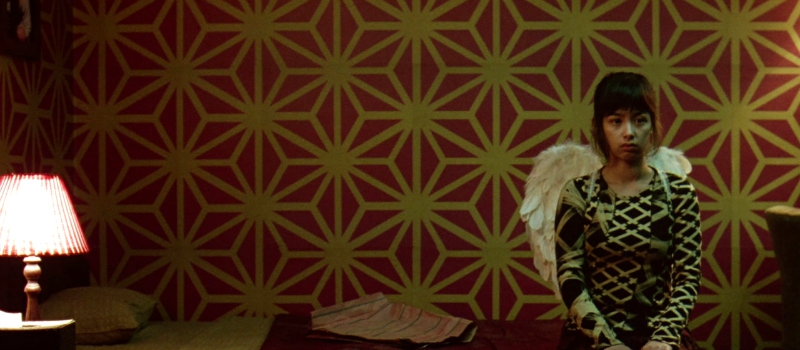
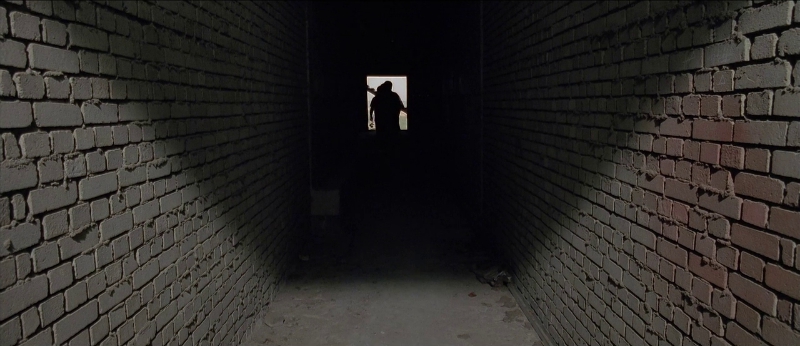
Sympathy for Mr. Vengeance (dir. by Park Chan-wook)

Sympathy for Mr. Vengeance (dir. by Park Chan-wook)

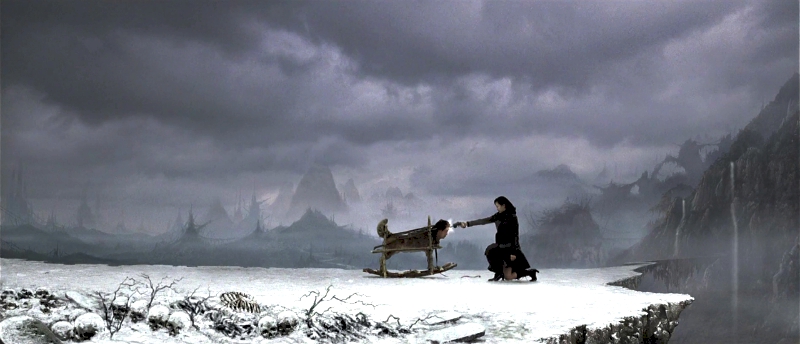
Sympathy for Lady Vengeance (dir. by Park Chan-wook)

Sympathy for Lady Vengeance (dir. by Park Chan-wook)

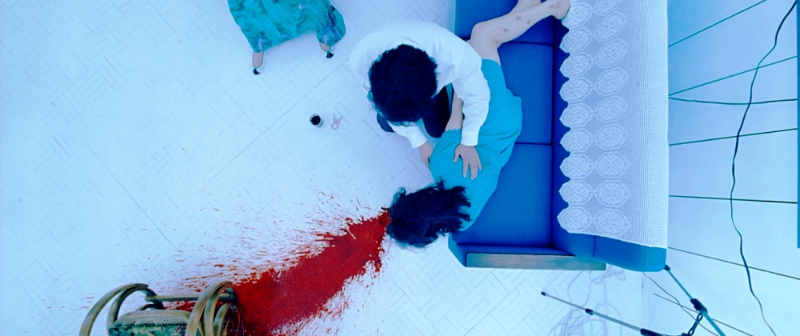
Thirst (dir. by Park Chan-wook)

Thirst (dir. by Park Chan-wook)

For Your Consideration #7: Snowpiercer (dir by Bong Joon-ho)


It is perhaps a sign of the times that 2014 saw the release of several dystopian films.  Whether it was the Purge: Anarchy, Mockingjay, The Maze Runner, Edge of Tomorrow, Dawn of the Planet of the Apes, or even Interstellar, all of these films shared a similarly bleak view of the future.  Filmmakers everywhere seemed to agree that humanity is basically doomed.

Unfortunately, with so many different and competing views of our sucky future, I fear that a lot of people may have missed one of the best of them.  When taken along with all of the usual Academy biases, I fear that means that Snowpiercer is pretty much out of the running for a best picture nomination.  It’s true that Snowpiercer did win best picture from the Boston Online Critics and there’s always an outside chance that Tilda Swinton could pick up a best supporting actress nomination.  But, for the most part, Snowpiercer has been overlooked.

And that’s a shame because Snowpiercer is one of the best of the year.

The premise of Snowpiercer is, in its way, brilliant.  After environmental scientists go a bit too far in their effort to battle global warming, the world suffers a second ice age.  (I have to admit that I enjoyed this development, just because heroic environmentalists are such a cliché.)  With the entire world frozen, what is left of humanity ends up on a massive train known as the Snowpiercer.  For the next twenty years, the Snowpiercer rushes up and down a track that spans the entire planet.

A new society forms on the Snowpiercer and, not surprisingly, it’s a lot like the old society.  The rich live up at the front of the train.  The poor live in the tail section.  All laws are set by the rarely seen Wilford (Ed Harris).  Wilford’s will is enforced by faceless soldiers and his blandly monstrous second-in-command, Mason (Tilda Swinton).

Twenty years later, the people in the tail section attempt their latest revolt.  This time, they’re being led by the charismatic Curtis (Chris Evans, proving that he’s capable of playing a lot more than just Capt. America).  Taking Mason hostage, Curtis leads his people through each car, slowly making their way to the front.  Along the way, they meet a lot a violent resistance and Curtis discovers that his rebellion was not quite as virtuous as he originally assumed…

Snowpiercer was one of the most imaginative science fiction films that I saw in 2014, a triumph of acting, direction, and design.  Each car has its own unique personality and look.  Perhaps the film’s best scene is when Curtis finds himself in the car that serves as the train’s school.  He and his grimy rebels listen as a perky and friendly teacher (Alison Pill) indoctrinates her students about the benevolence of Wilford.  It’s a surrealistic and tense scene, one that ends with burst of sudden and unexpected violence.

Perhaps what I most appreciated about Snowpiercer was that, despite all appearance to the contrary, it was ultimately a humanistic and optimistic film.  This is the rare action film where violence is not designed to look fun.  Though many character may not survive, the film never celebrates or cheapens their death.  Even the film’s most unsympathetic characters are still allowed moments of humanity.  This is a film that not only ends on a hint of hope but which earns that hope as well.

Snowpiercer is one of the best films of the year and it’s one that definitely deserves more consideration than it’s been given.

140624_MOV_Snow.jpg.CROP.promo-mediumlarge


Trailer: Snowpiercer (Red Band)


Bong Joon-ho is a name that genre fans know well. He has made a name for himself in his home country of South Korea with such critically-acclaimed films as Memories of Murder, The Host and Mother. In 2013, Bong co-wrote and directed the adaptation of the French graphic novel Le Transperceneige. The film is his first English-language film and it has garnered much acclaim when it was released in South Korea in 2013.

Snowpiercer as the film has been titled will now make it’s North American premiere this year and with months of buzz following it’s Asian release many genre fans have been awaiting its arrival. It’s premise is simple enough and involves a train that never stops moving that circles the globe that’s going through a new Ice Age that has killed off most of the planet’s population save those riding on the global train.

It’s a film that explores that ever-popular subject of the “have’s versus the have not’s”. It’ll be interesting to see what new idea Bong Joon-ho brings to an old idea.

Snowpiercer is set for a US release on June 27, 2014.