Can You Find The Wolves In This Picture? Here’s The Trailer for Martin Scorsese’s Killers of the Flower Moon!


There’s been a lot of controversy about the length of Martin Scorsese’s upcoming film, Killers of the Flower Moon, with many of the same people who regularly praise 150-minute comic book films complaining that Scorsese shouldn’t be allowed to devote over 3 hours and 26 minutes to telling the story of the Osage murders.  You can probably already guess from my tone that I have no problem with the idea of watching a 206-minute Martin Scorsese film.

The trailer for Killers of the Flower Moon was released earlier today.  (The film itself will be premiering at Cannes in just a few more days.)  The trailer looks great, with Robert De Niro and Leonardo DiCaprio appearing to be in fine form.  (Reportedly, the film’s hero is played by Jesse Plemons but he’s barely glimpsed in the trailer.  It makes sense, of course.  For a lot of people, one of the main attractions of Killers of the Flower Moon will be a chance to see Scorsese’s two regular leading men, DiCaprio and De Niro in the same film.  Yes, I know about This Boy’s Life but come on, that was Michael Caton-Jones.  This is Scorsese!)  Can you find the wolves in this picture?

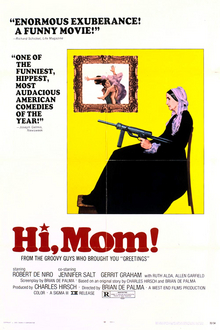
Film Review: Hi, Mom! (dir by Brian De Palma)


Released in 1970, Hi, Mom!, tells the story of Jon Rubin (played by a 26 year-old Robert De Niro).  The somewhat spacey and kind of creepy Jon has just returned to New York City from Vietnam.  After moving into a run-down apartment building and meeting the building’s superintendent (Charles Durning), Jon is hired to direct a pornographic film by producer Joe Banner (Allen Garfield).  Jon’s idea to simply point his camera at his building and to film his neighbors as they go about their day.  As quickly becomes apparent, Jon is mostly just looking for an excuse to watch and film Judy Bishop (Jennifer Salt).

Also living in the building is Gerrit Wood (Gerrit Graham), who is first seen triumphantly putting posters of Che Guevara and Malcolm X up in his apartment.  Gerrit is a freshly-minted political radical and the leader of a group of performance artists who put on a show called Be Black, Baby, in which the white audience members are forced to wear blackface and are then chased, attacked, and assaulted by black actors wearing whiteface.  (Gerrit himself is white.)  Jon is hired to play the police officer who beats and arrests the members of the audience at the end of the performance.  Of course, eventually, the real police show up….

An attempt at an episodic counter-culture comedy, Hi, Mom is definitely a product of the time in which it was made, both in its style and its thematic content.  Today, it’s best-known for being one of Brian De Palma’s early independent films and for featuring Robert De Niro in one of his first starring roles.  De Palma and De Niro aren’t exactly the first names that come to mind when one thinks about comedy and Hi, Mom shows that there’s a good reason for that.  As both a screenwriter who felt he had something important to say and a young director who was obviously eager to show off everything that he could do with a camera, Brian De Palma simply cannot get out of his own way.  Scenes are needlessly sped up.  Scenes are pointlessly slowed down.  The musical cues are obvious.  The dialogue is often so broad that it comes across as being cartoonish.  One gets the feeling that De Palma didn’t trust the audience to get the jokes so he went overboard to make sure everyone knew when to react.  All of the pointless camera trickery serves the same purpose that a laugh track would on an old sitcom.  Interestingly enough, the only sequence that really works as satire is the Be Black, Baby sequence and that’s because De Palma directs it in a semi-documentary fashion.  De Palma gets out of his own way and allow the sequence to develop a natural rhythm.  (Of course, seen today, the scene will bring to mind the upper class white liberals who pay money to have an activist lecture them about their privilege while having their friends over for dinner.)

As for Robert De Niro, he gives a typically nervy performance, one that feels like a dry run for his later work in Mean Streets, Taxi Driver, and King of Comedy.  Despite the reputation of those films, there are some genuinely funny moments to be found in all of them.  Most of them, like the classic Taxi Driver conversation between De Niro’s Travis and Peter Boyle’s Wizard, are funny because of how people react to De Niro’s obviously unhinged characters.  Both Taxi Driver and King of Comedy got mileage out of having normal people try to deal with De Niro’s unstable characters.  In Hi, Mom, everyone is equally wacky and, as such, De Niro doesn’t really have anyone to play off.  No one is really reacting to anything, De Niro-included.  (There is some spark to his scenes with Charles Durning and Allen Garfield but even those scenes seem to drag on forever.)

On the plus side, Hi, Mom! is was shot on the actual streets of New York City, guerilla-style.  (A “Re-Elect Mayor Lindsay” sign in the background confirms that the film was made on location in 1969.)  When De Palma isn’t getting in his own way with all of his fancy camera tricks, he manages to capture so memorably bleak images of New York City.  Hi, Mom! presents New York as being a dirty, crime-ridden, and menacing city but it also captures the odd grandeur of urban decay.  At its best, Hi, Mom! captures the love/hate relationship that many seem to have New York City.  The city feels both alive and dangerous at the same time.  Hi, Mom! is too uneven to work as a sustained satire but, as a documentary about New York at the end of the turbulent 60s, it’s worth watching.

I should mention that this was not the first time that De Palma and De Niro teamed up.  Indeed, De Niro was De Palma’s muse even before he met Martin Scorsese.  Hi, Mom! was a loose sequel to an earlier De Palma/De Niro film called Greetings.  (Like many of De Palma’s future films, both Greetings and Hi, Mom! were originally rated X but later re-rated R.)  De Palma and De Niro, of course, would both go onto have long Hollywood careers.  (They would later reunite for The Untouchables, a big-budget spectacle of a film that’s about as far from the grungy Hi, Mom! as one can get.)  De Palma’s career has had its ups and downs but, as of late, many of his films have been positively reevaluated.  As for De Niro, he can finally kind of play comedy.  That said, I’d rather watch Hi, Mom than Dirty Grandpa.

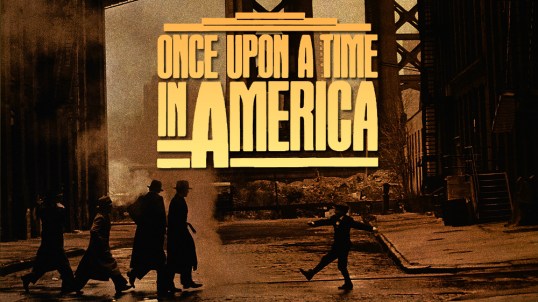
Scene That I Love: “Want to go for a swim?” from Once Upon A Time In America


Since today is Sergio Leone’s birthday, it only seems appropriate to share one of my favorite scenes from Leone’s 1984 gangster epic, Once Upon A Time In America.

For some context, Noodles (Robert De Niro) has just gotten out of prison and has been reunited with Max (James Woods) and all of the other hoodlums that he grew up with.  While Noodles was away, Max has been building up their gang and becoming a force in the underworld.  One of the first post-prison jobs that Noodles is involved with turns out to be a hit on another gangster.  Max, however, did not let Noodles know ahead of time that it was going to be hit.

In this scene, Noodles attempts to learn why.

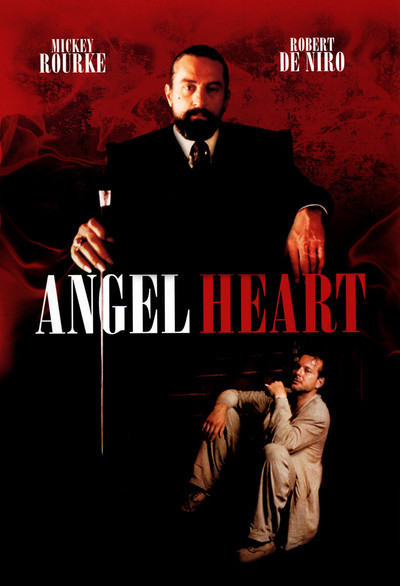
Horror Film Review: Angel Heart (dir by Alan Parker)


First released in 1987 and set in 1955, Angel Heart tells the story of Harry Angel (Mickey Rourke).

With a name like Harry Angel, it’s perhaps not surprising that Harry is a private investigator.  Harry operates out of New York.  He’s got a shabby apartment.  He wears wrinkled clothes.  He rarely shaves.  He smokes almost constantly.  (In a rare moment of comedy, the camera catches Harry blithely emptying a full ashtray in the middle of the street.)  Harry looks like he reeks of tobacco, beer, sweat, and lost dreams.  And yet, it’s difficult not to like Harry.  He’s got a charming smile, even if his face is often bruised from his latest beating.  He speaks in a low whisper and it’s hard not to get the feeling that Harry is actually kind of shy.  He’s incredibly sleazy but there’s something about him that just makes the viewer want to take care of him.

Harry is hired by a mysterious man named Louis Cyphere (Robert De Niro, cheerfully overacting).  Louis wants Harry to track down a singer named Johnny Favor.  As Cyphere explains it, he did a favor for Johnny and Johnny has yet to pay Cyphere what he owes.  Johnny has been suffering from PTSD ever since he served in World War II.  When last seen, Johnny was receiving electroshock treatment in an upstate hospital.

Harry’s search for Johnny leads him into an increasingly complex and disturbing conspiracy.  He meets a doctor who is addicted to morphine and, when the doctor turns up dead, Harry coolly uses the dead man’s shoe to light his match.  Eventually, Harry’s investigation leads him to New Orleans, where he meets both Johnny’s wife (Charlotte Rampling) and Johnny’s unacknowledged daughter, Epiphany (Lisa Bonet).  As Harry searches for Johnny, he deals with strange visions of his own mysterious past.  He sees himself wandering around Times Square shortly after the attack on Pearl Harbor.  Harry also finds himself having to deal with the fact that almost everyone that he talks to ends up being brutally murdered.  Every time that Harry tries to quit the case, Cyphere offers him more money.  (Cyphere tends to show up whenever Harry finds himself on the verge of abandoning his search.)

Angel Heart moves at its own deliberate pace.  In fact, the first hour can feel a bit slow but that first hour definitely pays off during the second half of the film.  By the time that Harry starts to truly uncover what has happened to Johnny, the audience actually cares about Harry and is actually worried about what’s going to happen to him when he reaches the end of the case.  Mickey Rourke was (and is) an eccentric actor but he’s at his most effective in Angel Heart.  A lesser actor would have just played Harry as being a typical hardboiled detective.  Rourke plays Harry as being a lost soul, a vulnerable man who is often as confused and scared as the people that he’s looking for.  By the end of the film, Harry realizes that the answer to the mystery was right in front of them and his look of despair is surprisingly powerful.  If De Niro gives a good performance that is almost totally on the surface, Rourke gives the type of performance that allows the audience to explore what’s going on beneath the surface of a character who many would initially view as being a cliché.  Mickey Rourke’s Harry Angel is right up there with Bogart’s Sam Spade and Jack Nicholson’s Jake Gittes.  He’s a familiar character who also seems to be a human being.

Full of sex, violence, and increasingly disturbing imagery, Angel Heart is not for everyone.  Alan Parker’s direction emphasizes the darkness of Harry’s world and the bleakness of his situation.  The film ends with a twist that may not be totally unexpected but which is still undeniably disturbing.  The more you think about it, the most disturbing it gets.  Angel Heart is an atmospheric and intelligent chiller.  It’s existential horror at its most nightmarish.

What Could Have Been: George Hamilton as Travis Bickle?


I was recently reading the IMDb trivia page for Martin Scorsese’s 1976 film, Taxi Driver. 

Taxi Driver is often held up as the being the ultimate New York horror story as well as being the quintessential Martin Scorsese/Robert De Niro collaboration.  In fact, the film is so identified with Scorsese, De Niro, and screenwriter Paul Schrader that it is easy to forget that it actually took a while for Scorsese and De Niro to become involved with the project.  Quite a few different directors showed interest in Schrader’s script before Scorsese signed on.  And, even though the role will always be associated with him, De Niro was not the only actor considered for the role of Travis Bickle.

That’s what brought me to the IMDb trivia page.  I wanted to see who else was considered for the role of Travis.  Here’s the list that I found: Jeff Bridges, Jack Nicholson, Dustin Hoffman, Warren Beatty, Burt Reynolds, Ryan O’Neal, Peter Fonda, Al Pacino, Jon Voight, Robert Blake, David Carradine, Richard Dreyfuss, Christopher Walken, Alain Delon, James Caan, Roy Scheider, Paul Newman, Marlon Brando, Martin Sheen, Elliott Gould, Alan Alda, and George Hamilton.  That’s quite a list!  And. for the most part, I don’t buy it for a second.

Don’t get me wrong.  It is known that Al Pacino was sent the script before Scorsese came on board.  And Scorsese himself has said that he offered the role to Dustin Hoffman.  (Hoffman says he turned down the role because Scorsese’s intensity freaked him out.)  Jeff Bridges was also a possibility and, if you read Schrader’s script and force yourself to forget about De Niro’s performance, you can actually imagine Bridges in the role.  I could also imagine a youngish Martin Sheen in the role.  He had just played Charlie Starkweather in Badlands so one can imagine him being considered for Travis.  Peter Fonda and Robert Blake seem possible as well.  Even David Carradine.

But some of the other names on that list …. Alain Delon?  Paul Newman?  Alan Alda?  GEORGE HAMILTON?

This George Hamilton?
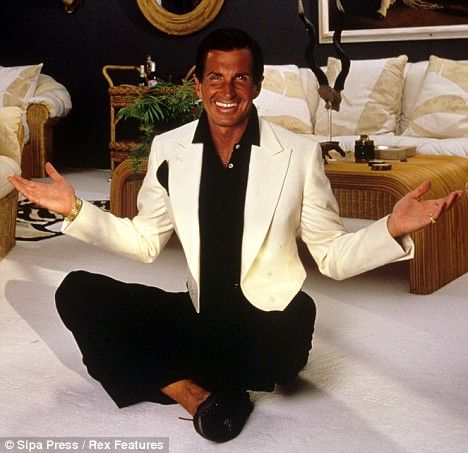
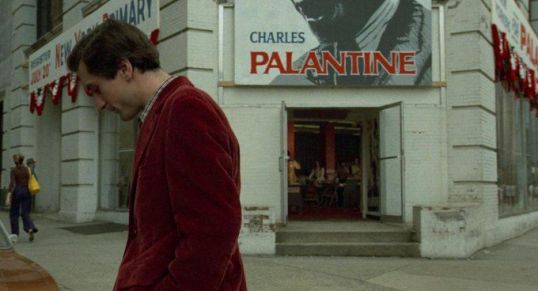
Listen, I like George Hamilton.  He’s a good comedic actor.  And I know that there were a lot of directors who took a look at Paul Schrader’s script and I also know that some of Travis’s most iconic moments — like the whole “You talkin’ to me?” scene — were improvised by De Niro and were not in the original script.  Taxi Driver could have gone in a lot of different directions.  But I’m just going to say right now that there is no way that George Hamilton was ever considered for the role of Travis Bickle.  It’s totally possible that Hamilton was considered for another role in the film.  I could imagine him as the presidential candidate, Charles Palantine.  I could also imagine him in the role of Tom, Palantine’s campaign manager.  Perhaps he was offered one of those roles and someone, reading that George Hamilton had turned down Taxi Driver, got it into their head that he was considered for Travis.

Or maybe …. someone just made the whole thing up.  I enjoy the IMDb trivia pages but I’ve come across a lot of information that simply is not true.  Despite what the page for the original Halloween says, I refuse to believe that John Belushi was considered for the role of Dr. Loomis.  For that matter, I also refuse to believe that Bill Murray was a runner-up for the role of Han Solo in Star Wars.  Sorry, IMDb trivia people.  I just don’t buy it.
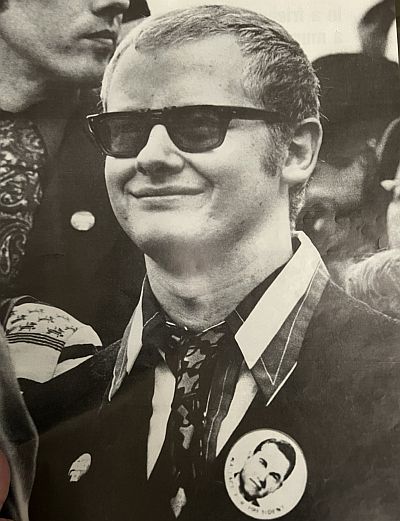
Arthur Bremer

Here’s what we do know.  Paul Schrader was originally inspired to create the character of Travis Bickle by Arthur Bremer, a non-descript 21 year-old Midwesterner who, in 1972, shot and nearly killed presidential candidate, George Wallace.  After the shooting, police turned up a diary in which Bremer wrote about his desire to be someone.  According to Bremer, he shot Wallace not as a political act but because he wanted to be famous.  Schrader later said that, while writing the script, the story became less about Bremer and more about Schrader’s own social isolation.

The script was optioned by the production team of Tony Bill and Julia and Michael Phillips.  They had just recently produced the Oscar-winning The Sting.  Originally, Tony Bill wanted to make his directorial debut with the film.  That was when the script was sent to Al Pacino.  Pacino turned down the role, reportedly because he didn’t want to work with a first-time director.  (Tony Bill, a former actor, later directed several films, most of which appeared to be taking place in a totally separate universe from Schrader’s vision of urban Hell.)

The script was eventually read by Brian De Palma, who voiced an interest in directing the film.  DePalma’s choice for the role of Travis Bickle?  Jeff Bridges.
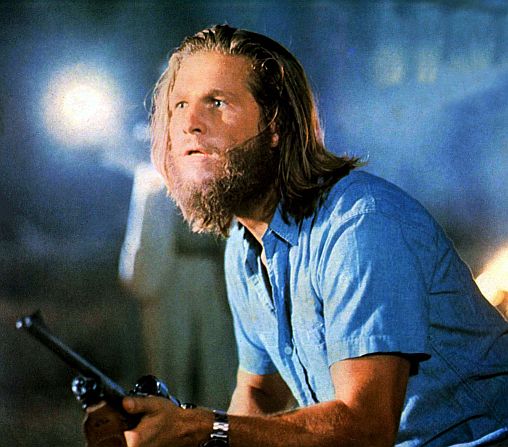
Today, it might be hard to imagine the affable, laid-back Jeff Bridges as Travis Bickle but, if you read the script, it’s easy to see why De Palma considered him for the role.  Travis was written as being someone from the middle of the country, someone who was out-of-place in New York City.  Travis was meant to be lost in New York.  (Though Travis does say that he’s from the midwest in Scorsese’s film, Robert De Niro himself remains the prototypical New Yorker.)  At least initially, Bridges would have been a bit less obviously unstable than De Niro.  As good as Taxi Driver is, it always seems a bit strange that Betsy would agree to go out with De Niro’s Travis but it’s a bit easier to believe that she would take a chance on Jeff Bridges, with his charming smile and likable manner.  Bridges’s descent into madness would have been all the more devastating because he was such an outwardly affable presence.  I’m not saying it would have worked but I can still see what De Palma would have been going for in his version of Taxi Driver.

That said, De Palma did not make Taxi Driver.  He instead decided to do Carrie.  A young Steven Spielberg briefly showed interest in Taxi Driver (the mind boggles) before decided to do Jaws instead.  Eventually, after being introduced to Schrader by De Palma, Martin Scorsese agreed to direct the film.  After getting turned down by Dustin Hoffman, Scorsese offered the role to De Niro.

As for the rest of the cast, Rock Hudson would have been an interesting choice for the role of Sen. Palantine but he turned down the script because he was busy with a television show.  There was also some talk of casting former New York Mayor John Lindsay in the role but, in the end, the role was given to a writer named Leonard Harris.

The role of Tom was originally offered to Harvey Keitel.  Because Keitel wanted to play the pimp, Albert Brooks ended up as Tom.  Because there wasn’t much to Tom in the script, it was felt that, as a comedian, Brooks could bring some sort of life to the character.  Indeed, Brooks reportedly improvised the majority of his lines.

Despite the fact that producer Julia Phillips wanted to cast Farrah Fawcett in the role, Martin Scorsese selected Cybil Shepherd for the role of Betsy.  If you believe the IMDb, Meryl Streep was offered the role but turned it down.  (If I sound skeptical, it’s because Streep hadn’t even made her film debut at the time that Taxi Driver went into production.)  Glenn Close, Jane Seymour, and Susan Sarandon auditioned for the role.  Mia Farrow reportedly wanted the role but was turned down by Scorsese.

As everyone knows, Jodie Foster played the 13 year-old prostitute, Iris, in Taxi Driver.  A man named John Hinckley, Jr. was so obsessed with Foster’s performance that he went the same route as Travis Bickle and attempted to assassinate the president in an effort to impress her.  Foster, however, was only picked after Scorsese saw several up-and-coming actresses.  Reportedly, due to the success of The Exorcist, Linda Blair was seriously considered for the role.  Tatum O’Neal was also considered, after winning her Oscar for Paper Moon.  Scorsese came close to casting Melanie Griffith but then Tippi Hedren read the script and nixed the idea.  Among the others who supposedly read for Iris: Mariel Hemingway, Jennifer Jason Leigh, Heather Locklear, Kristy McNichol, Carrie Fisher, Ellen Barkin, Kim Basinger, Geena Davis, Michelle Pfeiffer, Brooke Shields, Debra Winger, Rosanna Arquette, Bo Derek, and Kim Cattrall.

Finally, actor George Memmoli was injured on the set of another film, which led to Scorsese playing the passenger who talks to Travis about murdering his wife.
In the end, the right director and the right cast were selected and Taxi Driver became a classic of urban paranoia.  Still, it’s always fun to play What If.  On Earth-2, someone is watching Jeff Bridges, Rock Hudson, Jane Seymour, and Melanie Griffith in Brian De Palma’s Taxi Driver.  And, on Earth-3, George Hamilton is polishing his Oscars and thinking about how playing Travis Bickle changed his life.
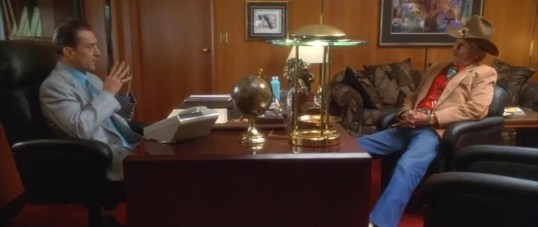
Scenes I Love: L.Q. Jones Meets Robert De Niro in Casino


Yesterday, the great western character actor, L.Q. Jones, passed away.  He was 94 years old.

Though he was probably best known for the films that he did with Sam Peckinpah and for directing the darkly humorous sci-fi film, A Boy And His Dog, Jones also appeared in Martin Scorsese’s 1995 film, Casino.  Playing the role of county commissioner Pat Webb, Jones went toe-to-toe with Robert De Niro and more than held his own.  Reportedly, Scorsese asked Jones to rewrite much of his dialogue, in order to give it a western authenticity,

From Casino, here is a scene that I love:

Though Ace would disagree with me, he really should have just taken Webb up on his suggestion to give his brother-in-law a “position further down the trough.”  That pride was not only Ace’s undoing but also the end of Bugsy Seigel’s vision of Las Vegas.

Interestingly enough, this scene always makes me think of the scene where Sen. Pat Geary (also of Nevada) tried to bully Michael Corleone in The Godfather Part II.  In that film, the Corleones were able to put the senator in his place.  In Casino, however, it turns out that Pat Webb is right and Ace and the gangsters in Kansas City never really do figure out how things work in Vegas.

Lisa Marie’s Way Too Early Oscar Predictions For February


Is it too early to start talking about next year’s Oscar race?

Of course, it is!  But I’m going to do it anyway.

Below, you’ll find the installment of my monthly list of Oscar predictions, not for what will win at the end of March but instead for what we’ll see nominated next year.  Obviously, there’s a lot that we don’t know about what’s going to happen later this year.  Only a few of the movies listed below have firmly set release dates.  Needless to say, I haven’t seen any of the films below and, as a result, I’m largely going on instinct.  Who knows if the films will be as good as their plot descriptions?  As much as I hate the overused quote from William Goldman, right now, no one knows anything.  Indeed, it’s not really until Festival Season hits that we really start to get even a vaguely clear picture of the Oscar race and we’ve got a long way to go until Cannes.

(And really, it’s debatable how much of a factor Cannes really is.  If the Oscar nominations were determined by Cannes, Red Rocket and The French Dispatch would be battling it out for best picture right now.)

The predictions below are, for the most part, just random guesses.  Most of them involve people who have won Oscars in the past.  The Fabelmans is there because it’s a Spielberg film, just as Killers of the Flower Moon makes the list because it’s directed by Martin Scorsese and it stars Leonard DiCaprio and Robert De Niro.  And, of course, a lot of the predictions are just the result of wishful thinking on my part.  I think it would be kind of fun if David Lynch got an acting nomination for his role in The Fabelmans, whatever that role may be.  I also think it would be nice if Brendan Fraser got a nomination to go along with his recent comeback.  I don’t know much about The Whale, beyond the fact that Fraser plays a 600-pound man trying to reconnect with his daughter.  For now, that’s enough.

So, without further ado, here are my way too early Oscar predictions!  As always, take them with a grain of salt.

Best Picture

Babylon

The Fabelmans

The Holdovers

Killers of the Flower Moon

Kitbag

Maestro

She Said

TAR

White Noise

The Woman King

Best Director

Damien Chazelle for Babylon

Gina Prince-Bythewood for The Woman King

Martin Scorsese for Killers of the Flower Moon

Ridley Scott for Kitbag

Steven Spielberg for The Fabelmans

Best Actor

Bradley Cooper in Maestro

Brendan Fraser in The Whale

Paul Giamatti in The Holdovers

Ryan Gosling in The Actor

Brad Pitt in Babylon

Best Actress

Naomi Ackie in I Wanna Dance With Somebody

Ana de Armas in Blonde

Viola Davis in The Woman King

Cate Blanchett in TAR

Carey Mulligan in Maestro

Best Supporting Actor

Bobby Cannavale in Blonde

Robert De Niro in Killer of the Flower Moon

John Boyega in The Woman King

Tom Hanks in Elvis

David Lynch in The Fabelmans

Best Supporting Actress

Tantoo Cardinal in Killers of the Flower Moon

Laura Dern in The Son

Li Jun Li in Babylon

Da’Vine Joy Randolph in The Holdovers

Michelle Williams in The Fabelmans

I Watched The Fan (1996, dir. by Tony Scott)


Yesterday, I told my sister that I wanted to watch a good baseball movie.

“How about The Fan?” she said, “It’s on Starz.”

“Is The Fan really a baseball movie?” I asked.

“It’s got people with baseball bats in it.” she said.

The Fan does have people with baseball bats.  Wesley Snipes is a baseball player who is getting paid a lot of money to swing a bat for the Giants but he’s in a slump because Benicio del Toro won’t let him wear his old number.  Robert de Niro is a Giants fan who uses a baseball bat to beat to death his best friend after de Niro kidnaps Snipes’s son and demands that Snipes play better.  Snipes has to win a game, even though it’s raining and he has terrible stats against the opposing pitcher.  De Niro sneaks on the field as an umpire and makes bad calls on purpose, which proves everything that I’ve ever said about umpires.

The Fan wasn’t bad.  I liked the baseball scenes and I also liked the scenes where de Niro would just start overreacting to anyone saying anything bad about the Giants because everyone knows a fan like that.  (Where I live, most of them are Cowboys fans.)  Whenever de Niro started to go crazy, Nine Inch Nails would play on the soundtrack, which was funny but also too obvious.  There was a lot about the movie that didn’t make any sense.  At the end of the movie, it’s raining so hard that there’s no way the game would have been allowed to continue but I guess once you accept that de Niro could sneak on the field dressed like an umpire, you have to accept that a baseball game would continue in the middle of a flash flood.  But we all know fans like the one played by de Niro.  At the start of the movie, I actually felt bad for him because it was so obvious that baseball was the only thing he had.  He still had all of his pictures from Little League and he wanted his son to be as big a baseball fan as he was because that was the only way that he knows how to relate to other people.  But then he started killing people and giving baseball fans everywhere a bad name.

Josh Hamilton once said that Dallas wasn’t a “real baseball town,” which hurt the feelings of fans like me who had supported him, through all of his struggles, when he was a member of the Rangers.  Whenever Hamilton would return to Arlington to play against the Rangers, everyone in the stands would chant, “Baseball town,” whenever he stepped up to the plate.  I still think it was rude for Hamilton to say what he said but he was right that Dallas doesn’t produce the type of baseball fans who will disguise themselves as umpires and take the field with a knife hidden in their cleats.  Rangers fans aren’t “the crazy fans,” like the ones who Snipes says he can’t stand in The Fan.  I hope that never changes but I also hope the Rangers get it together this upcoming season.  Support the team without kidnapping or killing anyone, that’s the duty of every true fan.  GO RANGERS!

Scenes That I Love: The Ending of Sergio Leone’s Once Upon A Time In America


(SPOILERS BELOW)

The final moments of Sergio Leone’s epic 1984 gangster film, Once Upon A Time in America, are filed with questions and mysteries.

In 1968, who did Noodles (played by Robert De Niro) see standing outside of Max’s mansion?  When the garbage truck pulled up, did the mysterious man get in the truck or was he thrown in by some unseen force?

Why, in 1968, did Noodles see a car from the 1920s, one that was full of people who appeared to be celebrating the end of prohibition?  Was the car really there, in 1968, or was it an element of Noodles’s past as a gangster suddenly popping into his mind?

When we then see a young Noodles in an opium den, are we flashing back to the 1920s?  Is Noodles remembering the past or is it possible that we’ve been in the 20s the whole time and all of the scenes set in 1968 were actually only a drug-induced dream?

Why, with men looking to kill him and all of his friends apparently dead, does Noodles suddenly smile at the end of the film?  Is that sudden smile a result of the drugs or is there something else going on?

Once Upon A Time In America was Sergio Leone’s final film.  It’s one that he spent decades trying to get made and, once it was finally produced, it was butchered and re-edited by a studio hacks who demanded that the film tell its story in a linear style.  Leone was reportedly heart-broken by how his film was treated.  Some have speculated that his disappointment may have even contributed to the heart attack that eventually killed him.  It was only after Leone passed that his version of Once Upon A Time In America became widely available in the U.S.  This enigmatic epic continues to spark debate.  One thing that can’t be denied is that it’s a brilliant film.

As today is Leone’s birthday, it only seems appropriate to share a scene that I love, the ending of Once Upon A Time In America.

Lisa Reviews An Oscar Nominee: The Irishman (dir by Martin Scorsese)


Released by Netflix in 2019 and clocking in at close to 4 hours, the Martin Scorsese-directed Best Picture nominee, The Irishman, is a film about many different things.

At its simplest, it’s a film about a very old man named Frank Shearan (played by Robert De Niro).  Frank is an Irish-American from Philadelphia.  Frank is a veteran of World War II and a former truck driver who was briefly a fairly important figure in the Teamsters union.  He did a few years in prison.  At the start of the film, though, he’s just another elderly man living in a retirement community.  All of his friends are dead.  His wife passed away years ago.  His children never comes to visit.  In fact, the only people interested in talking to Frank are the FBI but Frank doesn’t have much to say to them.  That’s not to say that Frank isn’t talkative.  For the first time in his life, he wants to talk to people but there’s no one left to talk to.  The only people who listen are those who are required to do so.  A nurse politely nods along as as he tells her about his old friend Jimmy Hoffa.  (She’s never heard of him.)  A priest listens to the story of Frank’s life and offers him absolution.  At times, Frank looks straight at Scorsese’s camera and appears to be talking straight to the audience.  Frank has a lot of interesting stories but who knows how truthful he’s being or if his memory can be trusted.

The Irishman, though, is not just the story of Frank.  It is also a secret history of America during the latter half of the 20th Century.  Frank may look old and harmless in that nursing home but, to hear him tell it, he was once acquainted with some of the most powerful men in America.  He went from executing Italian POWs during World War II to executing hits for the Mafia in post-war America.  Along the way, he became close to crime bosses like Skinny Razor (Bobby Cannavale), Angelo Bruno (Harvey Keitel) and Russell Bufalino (Joe Pesci), men who may not have been household names but who still wielded a lot of power.  These are men who, Frank flatly states, fixed the presidential election of 1960 and who later quite possibly killed the man they had elected president.  Frank also became a close associate of Jimmy Hoffa (Al Pacino), the labor leader who was reputed to have mob connections and who disappeared in 1975.

The Irishman is also a tribute to the modern gangster film, featuring role for nearly every living actor associated with the genre.  De Niro, Pacino, Pesci, Keitel, Bobby Cannavale, Domenick Lombardozzi, Gary Basaraba, they’ve all played their share of gangsters in films and television show that were both good and bad.  Having them all appear in one film together serves to remind the viewer of just how much of America’s popular entertainment has revolved around stories of organized crime.  Even as the old school Mafia has declined as a real-world power, it’s become a permanent part of pop culture.  Everyone loves a gangster, except for the people who actually have to deal with them on a daily basis.

Not surprisingly, considering the stars and the director, it’s a film full of smart, detailed performances.  When the film was originally released, Pacino and Pesci got the lion’s share of the praise and they certainly deserved it.  Pacino gets the best lines and brings some unexpected wit to his performance as Jimmy Hoffa.  Pesci, meanwhile, finally gets to play a gangster who is not psychotic and shows that he can be just as compelling when he’s not raising his voice as when he is.  Still, some of my favorite performances came from actors who one wouldn’t necessarily associate with a Scorsese gangster film.  I liked the nervous humor that Ray Romano brought to the role of a corrupt union lawyer.  I liked the seething resentment that Stephen Graham brought to the role of Jimmy Hoffa’s main rival in the union.  (The scene where Graham and Pacino argue over who is more owed an apology for all of their past disagreements is both funny and, due to the people involved, somewhat frightening.)  Jesse Plemons is poignantly dumb in his brief role as Hoffa’s stepson.  Louis Cancelmi doesn’t get a lot of screen time but he steals every scene in which he appears as a paranoid hitman.  (Cancelmi plays a character named Sally Bugs, proving that not everyone in the Mafia gets a cool nickname.)

And then there’s Anna Paquin, who provides the film with its moral center.  When the film was first released, many Twitter critics complained that Paquin, who played Frank’s daughter Peggy, only a had a handful of lines.  It was one of the stupidest controversies of 2019, which is saying something when you consider how much time Film Twitter devotes to generating stupid controversies.  Peggy doesn’t say much because she’s decided that she doesn’t want to be a part of her father’s life.  From the moment that she first sees Frank beating up a store owner, Peggy knows that her father and his associates are violent men.  She not only fears them but she resents the damage that Frank does to not only her family but to the families as other as well.  The only one of her father’s associates who she likes is Jimmy Hoffa, because Hoffa cares about helping others.  When Hoffa disappears, Peggy makes a decision to disappear from Frank’s life and Paquin’s withering stare says more than any lengthy monologue could.  Peggy doesn’t say much because she knows that her words would be wasted on a man who she knows is a liar.  The scene where she silently walks away from her now elderly father tells us everything we need to know about the emotional consequences of the life that Frank has chosen to live.  Regardless of how many lines she did or didn’t have, Paquin gave one of the best performances of 2019.

Famously (or, depending on which critics you read, infamously), de-aging technology was used so that De Niro, Pacino, Pesci, and Keitel could play both the younger and the older version of their characters.  At first, it can be a bit jarring.  The de-aging works fine with Pesci and Keitel, both of whom are already supposed to be middle-aged when they first meet Frank.  (Admittedly, Keitel only has a few minutes of screen time.)  With De Niro and Pacino, it’s a bit less successful.  Even when they’re playing younger versions of themselves, De Niro and Pacino still move and stand like old men.  Fortunately, in the case of Pacino, his natural movie star charisma wins out over his obvious age.  In the end, we believe that he’s Hoffa because we want to believe that all of our important historical figures were as interesting and entertaining as Al Pacino is in The Irishman.

And yet, ultimately, even the awkward de-aging works to the film’s advantage because it reminds us that we’re not necessarily seeing what happened.  Instead, we’re seeing what Frank says happened.  We’re seeing his memories, or at least what he claims to remember.  It makes sense that, when Frank thinks about himself as a young truck driver in 1956, he would picture himself not as he was but instead as just a slightly less weathered version of who he would eventually become.  Throughout the film, there are hints that Frank’s memory should not be trusted.  Some of his stories are incredibly detailed while others — like when he transports weapons for the failed invasion of the Bay of Pigs — are a bit more vaguely presented.  Is Frank lying or is he misremembering or are we just expecting too much detail from a man who is now essentially waiting to die?  The film leaves that up for us to determine.

The Irishman is Scorsese at his most reflective.  Compared to Goodfellas and Casino, The Irishman is certainly one of Scorsese’s less “flashy” films.  But, on repeat viewings, it becomes cleat that The Irishman is the perfect conclusion to the gangster trilogy that began with Goodfellas and continued with Casino.  All three of these films deal with someone who rises up the ranks in the mob while remaining, as a result of their ethnicity, an outsider.  (Henry Hill and Frank Shearan are both Irish.  Ace Rothstein was Jewish.)  All three of them are briefly on top of the world and all three of them are left wondering how they’re going to continue their lives after their days at the top are over.  In Goodfellas, Henry Hill makes no secret of his disgust at having to live in the bland anonymity of the suburbs.  In Casino, Ace Rothstein ends the film with a mournful acceptance the fact that he will never return to his beloved Vegas.  (“And that’s that.”)  In The Irishman, Frank finally realizes that he has comes to the end of it all, alone and with nothing but death in his future.  All three of them made their decisions and, in the end, all three of them are left to deal with the consequences.  The trilogy goes from Henry’s anger to Ace’s depression to Frank’s acceptance.

It may seem strange to describe a film like The Irishman as being underrated, seeing as how it was nominated for 10 Oscars and got a Criterion release in record time.  And yet, when the film first came out, there was a vague sense of disappointment to found in even some of the positive reviews.  It was a Scorsese film that was so eagerly awaited and arrived with so much hype that there was no way it could live up to some of the expectations that had been set for it.  (And, of course, there’s also a whole set of people who were predestined to dislike the film precisely because it was a Scorsese film and it was so anticipated.)  It’s a long film and, while Netflix should be praised for allowing Scorsese the freedom to make his epic, it’s also not a film that should be viewed in bits and pieces on a tiny screen.  The Irishman is a film that should be watched in one sitting and it’s definitely a film that most viewers should watch more than once.  It takes more than one viewing to truly grasp the the world that Scorsese has recreated.

The Irishman was nominated for Best Picture.  It lost to a worthy competitor, Parasite.  Still, regardless of who took him the Oscars, The Irishman is a film that will live forever.