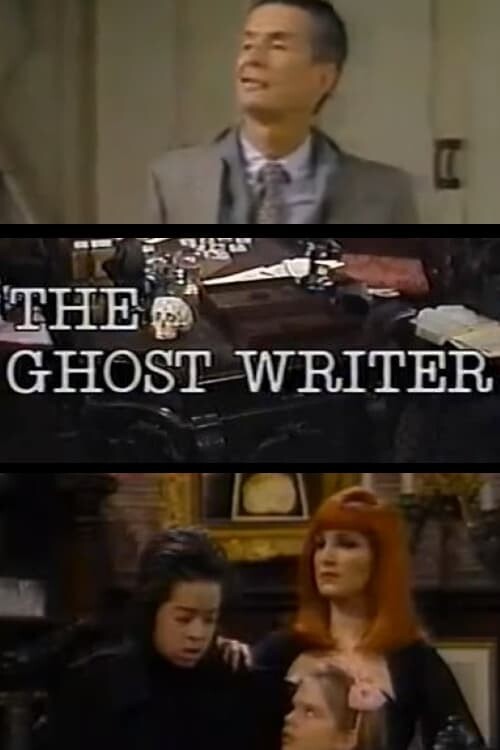
Welcome to Retro Television Reviews, a feature where we review some of our favorite and least favorite shows of the past! This Thursday, I will be reviewing Ghost Writer, which was produced for Fox in 1990. The show can be found on YouTube!
Episode 1.1 “Pilot”
(Dir by Adam Rafkin, originally aired on August 15th, 1990)
Elizabeth (Leigh Taylor-Young) is the new wife of famous horror writer Anthony Strack (Anthony Perkins). Elizabeth and her daughter, Cindy (Juliet Sorci), have just moved into Anthony’s mansion, and it’s taking both of them some time to adjust. Anthony is a workaholic but, as he informs his new family, he’s not a psycho. Elizabeth is disturbed by the strange housekeeper (Pam Matteson) and the picture of Anthony’s late first wife that hangs over the fireplace. Cindy is creeped out by her stepbrother, Edgar (Joshua John Miller, who also played a teen vampire in Near Dark and the obnoxious brother in Teen Witch). After Edgar plays a few pranks and then runs off to the cemetery, Anthony realizes that, instead of worrying about how to finish his latest book, he needs to be spending time with his family. Anthony even takes down the picture of his dead wife. Of course, this leads to his first wife’s skeleton rising up through the staircase. She and Anthony share one final dance, and Anthony declares that he now knows how his book is going to end.
This was a pilot that was not turned into a series. I watched it twice before writing this review. The first time I watched it, it was pretty obvious to me why it wasn’t picked up. A lot of the humor fell flat, and Anthony Perkins, who would die two years after this aired, looked tired and unwell. Too many of the jokes were jokes only because Perkins was the one saying them. That said, when I watched it a second time, I saw that, for all of its flaws, the pilot was actually rather sweet-natured, and it probably could have made for a good series if the show had been given an opportunity to develop. Anthony dancing with his wife’s remains and then dedicating his book to her worked surprisingly well. That said, even on a second viewing, Perkins still didn’t seem particularly comfortable delivering sitcom-style one-liners. If ever a role called out for Roddy McDowall, it was the role of Anthony Strack.
I can see why this pilot didn’t become a series, but it did have potential. If nothing else, Ghost Writer is a more than appropriate way to kill 23 minutes in October.
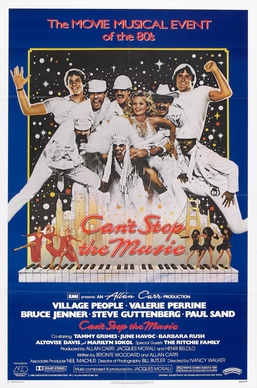
1980’s Can’t Stop The Music opens with Jack Morrell (young Steve Guttenberg) working in a record store. However, he’s got bigger plans that just standing behind a cash register. He quits his job and then roller skates around New York with a big goofy grin on his face. Everyone he passes is charmed. And why not? New Yorkers are famous for their good-humor and polite manners.
Jack is a songwriter but he doesn’t have the voice necessary to sell his songs. His platonic roommate, former supermodel Sam Simpson (Valerie Perrine), decides that what Jack needs is a band to sing his lyrics. Luckily, Sam knows a singer named Felipe Rose. He spends all of his time dressed like an Indian brave. There’s no specific reason given for his costume choice, it’s just something that he does. Sam and Jack are also able to recruit a construction worker (David Hodo), a “leatherman” (Glenn Hughes), a cowboy (Randy Jones), a G.I. (Alex Briley), and a singing cop (Ray Simpson). The name of the band? The Village People!
Yes, Can’t Stop The Music is fictionalized story of how The Village People came together. It was directed by TV actress Nancy Walker. It was a major studio production, one that was expected to build on the popularity of disco and bring in a lot of money. Unfortunately, it was released at the same moment that disco stopped being trendy. Can’t Stop The Music has a reputation for being bad and campy. Both of those things are true but I should point out that it’s also a remarkably boring film. The movie is full of characters who are constantly coming and going. Sam has a large collection of friends and former co-workers, all of whom just tend to randomly pop up. Most of them don’t really add much to the overall plot and, indeed, it’s hard not to resent being expected to keep track of all of them when there’s really no reason for many of them to be in the film. A pre-transition Caitlyn Jenner plays Ron White, a lawyer who is mugged while delivering a cake and who ends up as Sam’s boyfriend. As much as I made fun of Jenner as a performerwhile reviewing CHiPs, Jenner is even worse in You Can’t Stop The Music. In fact, Jenner’s performance is one of the worst that I have ever seen. If Ron angry? Is Ron sad? Is Ron in love? Is Ron an alien from outer space? You never really can tell, largely because Caitlyn Jenner’s performance is so inept. It’s not so much that Jenner can’t show emotion and one gets the feeling that Jenner isn’t even sure what emotion is.
As for the Village People themselves …. well, this film leaves little doubt that none of them were professional actors. Felipe Rose probably comes the closest to giving a credible performance but, as individuals, the members of the Village People aren’t that interesting and it takes forever for them to actually become a group. Even after they become a group, they still can’t generate enough on-screen charisma to really hold our attention. Who knew the Village People were so boring?
The majority of the film plays coy as far as the subtext of the Village People’s song are concerned. Steve Guttenberg’s character is definitely gay-coded without the film actually coming out and saying so.. The construction worker gets a fantasy in which he imagines being lusted after by several female groupies. The first few performances of the Village People are rather bland and it’s almost as if the film is trying to avoid the fact that the Village People’s songs and the personas of the performers all paid tribute to gay culture in the 1970s. But then the film hits the YMCA production number and suddenly, the Village People are frolicking with half-naked, muscular men while joyfully singing about everything that’s available at the YMCA. For that brief moment, the film embraces the campiness of the Village People and this major studio production actually becomes a bit subversive. It’s also one of the few moments in the film in which anyone seems to be genuinely happy. The Village People seem to be having fun. Unfortunately, the YMCA sequence is the exception instead of the rule.
Can’t Stop The Music‘s sin isn’t that it’s boring as much as it’s just bland. It’s an incredibly blah film. No film about New York in the 70s has any right to be so forgettable.
“Hi, I’m Cindy. I’m the perfect female type: 18 to 25. I’m here to sell for you.” — Cindy Fairmont
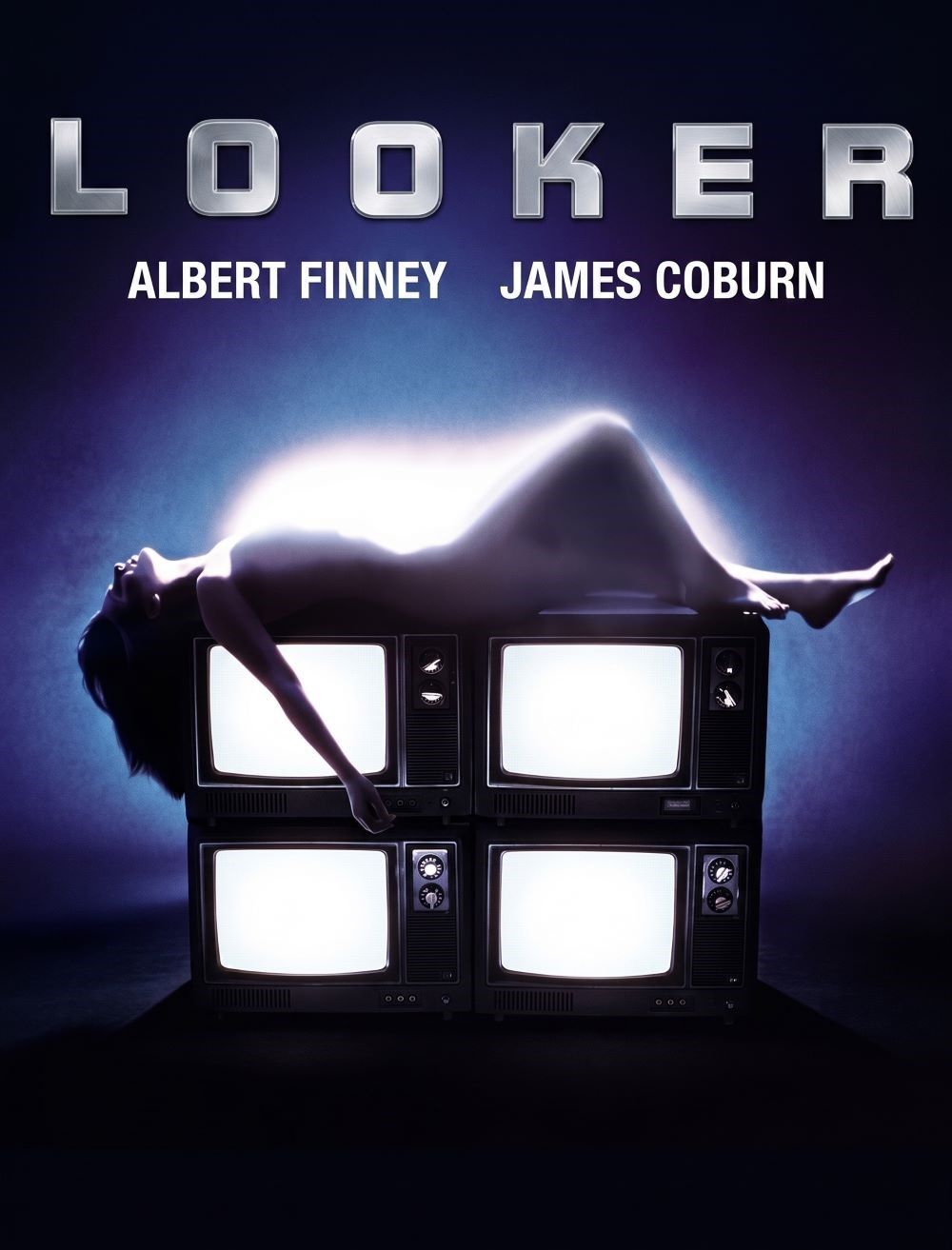
Looker is one of those 1981 films that, when it first came out, probably felt more like a goofy, slightly overwrought tech‑paranoia thriller than a serious prediction about the future. On paper, the premise—plastic‑surgery‑obsessed models being turned into digital clones for hyper‑tuned TV ads—sounds like a pulpy B‑movie gimmick. But viewed through the lens of right now, with Instagram influencers, AI‑generated content, and algorithm‑driven aesthetics shaping how we think about beauty and success, Looker starts to feel like a strangely accurate, almost eerie forecast. For a movie that was easy to write off as a minor, tonally wobbly Michael Crichton artifact, it does a surprisingly sharp job of outlining the emotional and cultural landscape we’re living in four decades later.
At the center of that landscape is Digital Matrix, the film’s antagonist in the form of a sleek, forward‑looking tech company that positions itself as a clean, rational, and indispensable partner to the advertising world. The company promises to revolutionize marketing by replacing messy, unreliable human models with perfectly calibrated digital avatars optimized to trigger maximum viewer response. That framing—as a neutral, even benevolent innovator—makes it all the more unsettling when its plans take on a distinctly murderous slant. To protect its “LOOKER” system and its vision of a world where perception can be mathematically controlled, Digital Matrix is willing to silence anyone who gets too close to the truth, from test‑subject models to inquisitive doctors. The bodies start piling up just off‑screen, treated as collateral damage in the pursuit of a more efficient, more profitable media ecosystem.
Seen from today’s vantage, Digital Matrix feels like a rough, bluntly drawn prototype of the big tech giants we now live with: polished, data‑driven, media‑centric, and profoundly invested in shaping what we see, buy, and believe. The difference, of course, is that modern tech behemoths are a lot better at hiding the bodies. In the real world, the “harm” is rarely as literal as Looker portrays it; instead, it shows up as algorithm‑driven addictions, mental health erosion, privacy carve‑ups, and the quiet erosion of trust in shared reality. People don’t get zapped by a sinister beam of light in a corporate lab; they get nudged into polarization, over‑consumption, or self‑images so warped that they resemble the film’s surgically obsessed models. The film exaggerates the physical violence, but its broader point—that when a tech company decides it can engineer human behavior at scale, ethical lines start to blur—still rings uncomfortably true.
Crichton’s version of this is less about organic social‑media culture and more about a centralized, corporate‑run system, but the emotional texture is similar. The models in Looker are under pressure to conform to a narrow, algorithmically derived standard of beauty, and the film doesn’t shy away from the toll that takes. They’re not just selling products; they’re being sold as products, their bodies and faces reduced to data points that can be adjusted, duplicated, and replaced. The idea that a person can be scanned, stored, and then endlessly repurposed as a digital avatar also anticipates contemporary debates about deepfakes, AI‑generated influencers, and the fear that real actors, musicians, and creators might be replaced by synthetic versions once their likeness and behavior are sufficiently “trained.” In that sense, Looker reads like an early, slightly clunky draft of the same anxieties we’re only now starting to grapple with at scale.
Where Looker falls short, at least in its day, is in fully articulating what all of this means for the idea of truth. The technology of 1981—not just the film’s budget and effects, but the broader cultural imagination—still assumed that truth was something largely fixed, something you could point to and defend if you had the right facts on your side. The movie flirts with the idea that perception can be manufactured, but it doesn’t really have the tools yet to show how completely that can destabilize the very concept of objective reality. The “LOOKER” system is treated as a kind of brainwashing gadget, a one‑off sci‑fi device rather than the logical endpoint of an entire infrastructure built to measure, model, and manipulate human behavior. The film wants to ask who controls the image, but in the early ’80s that question still felt contained, almost theatrical.
Now, in a world where truth is less about who has the facts in their corner and more about who controls the data, it’s clear how undercooked that idea really was in Looker. Today, truth is less a question of evidence and more a question of access: who has the biggest data centers, who owns the most comprehensive behavioral datasets, who runs the most sophisticated algorithmic matrices for shaping what people see, hear, and believe. Social‑media platforms, search engines, and ad networks don’t just reflect reality; they actively construct it by deciding which voices get amplified, which images get pushed, and which narratives get repeated until they feel like consensus. The company with the most money to build and refine those systems doesn’t just sell products; it sells versions of reality, packaged as personalized feeds, auto‑generated content, and AI‑driven narratives that feel increasingly indistinguishable from the “real” world.
Looker doesn’t fail because the ideas themselves are weak; in fact, the film actually does a fairly solid job of letting those ideas breathe and collide with each other. The problem is that those ideas sounded quite ludicrous within the context of 1981. A company digitally scanning and cloning models to engineer perfect ads, then using a device to subtly manipulate viewers’ minds, felt closer to paranoid pulp fantasy than plausible near‑future speculation. That gap between the film’s ambition and its audience’s willingness to buy into it gives the movie a slightly awkward tone, as if the world around it hasn’t yet caught up to the reality Crichton is trying to describe. The concepts are ahead of their time, which is exactly what makes them feel so prescient now, but back then, that same forward‑thinking quality made them easier to dismiss as silly or overreaching.
That disconnect is compounded by a cast that never quite seems to have fully bought into the film’s themes and narrative, even though several of them are game within the limits of the material. Albert Finney brings his usual grounded, slightly skeptical energy to Dr. Larry Roberts, lending the story a believable human center as the reluctant investigator pulled into Digital Matrix’s orbit. There’s a lived‑in quality to his performance that makes the ethical unease feel real, even when the plot veers into goofy sci‑fi mechanics. James Coburn, meanwhile, chews the scenery with a smarmy, charming conviction that suits Reston perfectly; he plays the corporate tech visionary as someone who genuinely believes in his own rhetoric, which makes his moral bankruptcy feel all the more unsettling. But around them, the rest of the ensemble often feels like it’s treating the premise more as a glossy thriller window dressing than a full‑blown social‑tech critique. The models and executives sometimes land their lines with a kind of detached professionalism that undercuts the deeper anxieties the film is trying to tap into.
As a piece of cultural legacy, Looker works less as a perfectly executed prediction and more as an early, slightly wobbly harbinger of the digital age we’re now fully immersed in. The film’s version of Digital Matrix may look clunky by our standards, but its logic—optimize attention, manufacture desire, and treat people as data to be extracted and reused—has become the default operating system of much of the digital world. The anxiety about who controls the image, who owns the algorithm, and who ultimately shapes what we see as “real” is no longer a speculative sci‑fi concern; it’s baked into the daily experience of social media, deepfake content, and AI‑driven feeds. Looker doesn’t need to be taken as a perfectly accurate prediction; it’s more powerful as a mood piece about the anxieties Crichton saw simmering beneath the surface of media, technology, and consumer culture. And in the way it casts a cutting‑edge tech company as the film’s real antagonist—a corporation whose “progressive” vision of the future quietly slides into murder and control—it feels uncomfortably close to the darker side of today’s Silicon Valley logic, minus the obvious body count but packed with a different kind of damage—one that’s less about visible corpses and more about the quiet erosion of what we can trust to be true.
Looker doesn’t so much fly too high to the sun and then crash‑burn under the weight of its ambition as it does peer through a cracked, slightly distorted future‑looking glass and just keeps staring in the wrong direction until the future finally catches up to it. It’s a film that doesn’t quite hold together as a flawless sci‑fi masterpiece, but it also never fully collapses under its own loftiness the way so many overly serious ’80s tech‑paranoia pictures do. Instead, it lurches forward with a rough, uneven energy that somehow makes its prescience feel more honest than polished. The movie doesn’t provide clean answers or tidy resolutions; it just lays out a set of ideas—about media, authenticity, beauty standards, and corporate control over perception—and then lets them sit in the air long after the credits roll.
David Hall (Matthew Faison) is an obnoxious horror writer who invites a group of associates and former friends to spend the night at a “haunted” hotel. He’s invited them because all of them are on the verge of suing him for writing about them in his latest book, The Resort. Over the course of the night, he plays cruel practical jokes on all of them. Finally, someone gets fed up and tosses him over a railing. The police arrest publisher Jordan White (Robert Stack) and charge him with the murder. It’s a good thing that Jordan’s best friend is Perry Mason (Raymond Burr).
Perry uses a cane in this movie and is not that active outside of the courtroom. That means that it’s up to Paul Drake, Jr. (William Katt) to do most of the investigating. As usual, Paul falls for an attractive, younger woman, in this case the hotel’s owner, Susan Warrenfield (Kim Delaney). Every movie features Paul falling for someone and then we never hear about them again. Does Paul have commitment issues?
I enjoyed this Perry Mason mystery. The hotel was a great location and I appreciated that the movie tried to add some horror elements to the story. The Perry Mason movies can be predictable so I always like it when they at least try to do something a little bit different. This was a fun entry in Perry Mason’s career.
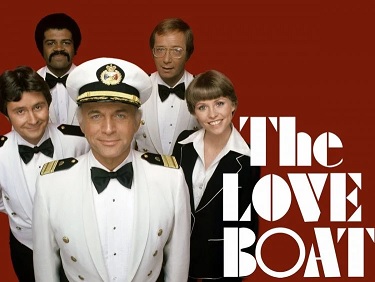
Welcome to Retro Television Reviews, a feature where we review some of our favorite and least favorite shows of the past! On Wednesdays, I will be reviewing the original Love Boat, which aired on ABC from 1977 to 1986! The series can be streamed on Paramount Plus!
This week, the Love Boat departs on one weird cruise.
Episode 2.12 “The Captain’s Cup / The Folks from Home / Legal Eagle”
(Dir by Alan Rafkin, originally aired on December 2nd, 1978)
This was a strange episode.
Let’s start with the simplest of our three stories first. Danny Holt (Bert Convy) is recently divorced and still crying over having to pay his wife alimony. When he boards the boat, he specifically asks Gopher if there are any single men onboard who might be interested in marrying his ex-wife. His ex isn’t even on the cruise! Danny is one bitter passenger. From the minute he boards the boat, he’s whining about how unfair his divorce was and how badly he was treated by his wife’s divorce lawyer, Ann Sterling (Leigh Taylor-Young).
Uh-oh, it turns out that Ann is one the cruise as well! And she’s been assigned to be Danny’s dinner companion. Danny isn’t happy about this but then, from out of seemingly nowhere, the two of them end of falling in love. It’s hard to say why they suddenly fall in love. Danny is superbitter over his divorce and Ann knows all of the details about what type of husband he was so it seems like the last thing that would ever happen would be them leaving the ship, arm-in-arm. But somehow, that’s what happens. It was a straight-forward story but it lacked any scenes that would have explained why the two of them fell in love. They just did because they were characters on The Love Boat. (It certainly wasn’t due to any noticeable romantic chemistry between Bert Convy and Leigh Taylor-Young.) This story felt lazy and generic.
In the episode’s second storyline, Captain Stubing is excited because he’s due to receive the Captain of the Year Cup. Diane DiMarzo (Florence Henderson, proving that former Bradys just cannot stay off The Love Boat) boards the ship with the Cup but she’s shocked to discover that 1) her boss — the guy who actually decided to give Stubing the Cup — will not be on the ship and 2) Stubing fully expects her boss to personally present him with the Cup. Now, I’m not really sure how the logic works here but apparently, Diane could lose her job if her boss isn’t there to give Stubing the cup. But why would that be Diane’s problem? She did what she was supposed to do. She boarded the ship with the Cup. Her boss is the one who decided not to show up and he is the boss so it’s not like there was anything Diane could have done about it.
Anyway, Diane recruits one of the ship’s handymen to pretend to be her boss. Though he works on the boat and the rest of the crew know him, it appears that the Captain himself has never met Hank Vosnik (Pat Harrington, Jr.), which kind of leads one to wonder if Stubing really deserves his award. Anyway, Hank falls in love with Diane and is crestfallen when she turns down his marriage proposal. (Seriously, at this point, they had only known each other for like three days so I’m not sure what Hank was expecting.) But, despite being turned down, Hank still pretends to be Diane’s boss. So, Diane decides that she might as well marry him. WHAT!?
Finally, Doc Bricker is happy to meet two passengers from his hometown. George (John McIntire) and Gloria (Jeanette Nolan) spend every moment with Doc and they even announce that, as far as they’re concerned, the 40-something Doc is a member of their family. Doc is touched. But then Gloria falls down a flight of stairs and Doc has to do emergency surgery on her. Gopher calls a doctor in San Francisco and he talks Doc through the surgery. Doc removes Gloria’s spleen and saves her life! Yay! Only at the end of the surgery does he get George to sign a consent form. In real life, that would lead to Doc to losing his job and the cruise line getting sued. But, on The Love Boat, it just leads to more laughter.
On the plus side, this storyline featured the charming performances of McIntire and Nolan, who were married in real life. The story was also written by Fred “Gopher” Grandy and Bernie “Doc” Kopell so, not surprisingly, it actually allowed Grandy and Kopell to do something more than just leer at the passengers. The show rarely gave Grandy or Kopell a chance to show off the fact that they were both capable of giving good dramatic performances so, whenever they got that rare chance to do so, they took advantage of it. That said, it was still a bit awkward to see Doc suddenly performing major surgery in his tiny examination room. It was all for the best on the show but, in real life, it would have led to a major lawsuit. Even though Doc Bricker saved Gloria’s life, it still seems like the ship could probably be held liable for her getting injured in the first place. I mean, the boat is in the middle of the ocean. Shouldn’t there at least be a warning posted on the stairs?
Well, who knows? Strange things happen at sea. Let’s just be happy that everything worked out in the end.
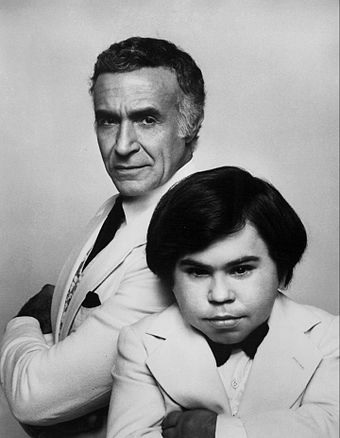
Welcome to Retro Television Reviews, a feature where we review some of our favorite and least favorite shows of the past! On Tuesdays, I will be reviewing the original Fantasy Island, which ran on ABC from 1977 to 1986. The entire show is currently streaming on Tubi!
We learn a little bit more about Fantasy Island in this week’s episode. It’s a strange place!
Episode 2.5 “I Want To Get Married/The Jewel Thief”
(Dir by George McGowan, originally aired on October 21st, 1978)
You know what the best thing about Fantasy Island is?
The Disco Dancing!
Cindy Barker (Meredith McRae) is a big fan of the disco dancing. That’s because her fantasy is to come to the island and meet the man that she’s going to marry. In fact, she wants to marry the guy at the end of the weekend and she’s already spent $20,000 to reserve the island for her wedding. (Tattoo is excited about that.)
Of course, one possible problem with Cindy’s fantasy is that she already has a boyfriend. She’s been dating Eddie (Ken Berry) for a while now. However, Eddie refuses to get married. Every time that they schedule a wedding ceremony, Eddie finds an excuse to cancel. He can’t even say the word “married” without sneezing. Still, Eddie is in love with Cindy and he comes to the Island to try to convince her to give him another chance. He also tells all of her potential suitors that Cindy is actually a prostitute.
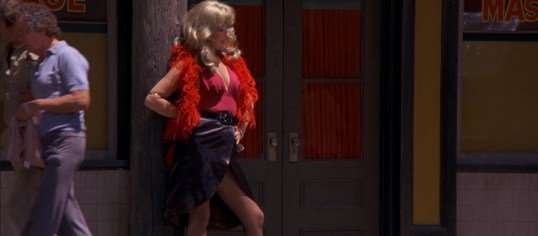
Now, to be honest, that’s not the sort of thing that I could forgive. I don’t care who you are or how much you love me, that’s just not something that I’m going to be able to overlook. However, this somehow convinces Cindy that Eddie really does love her so she decides to teach him a lesson by putting on a slit leather skirt and hanging out on a street corner in Fantasy Island’s red light district.
At this point, I said to myself, “Since when has Fantasy Island had a red light district?” Seriously, last week revealed that the island has a desert where the Egyptians buried their pharaohs. This week, we learn that the island has a red light district. Fantasy Island is a strange place. Stranger still, Eddie lying about Cindy and then Cindy pretending to be a prostitute leads to Eddie and Cindy getting married.
While that’s going on, Jordan Montgomery (Steve Forrest) is living out his fantasy of being an international jewel thief and …. wait, what? What type of fantasy is this? You can commit crimes in your fantasies? This island gets stranger and stranger! Anyway, Jordan steals a necklace from Leslie Tarleton (Leigh Taylor-Young), just to discover that the necklace didn’t actually belong to her and his thievery is going to cause her to lose her job. When Jordan attempts to retrieve the necklace so that he can return it, he discovers that it’s been stolen yet again! This time, crime lord Carl Dekker (Peter Mark Richman) has stolen the necklace and is keeping it on his boat, which is heavily guarded and which is also floating off the coast of the island.
So, for those keeping track, Fantasy Island has a desert, a pharaoh’s tomb, a red light district, and a Mafia. It seems like the island’s kind of gone downhill since the end of season one!
Anyway, this was actually a fun episode. Neither story was particularly deep but the action moved quickly and Steve Forrest made for a properly dashing jewel thief. I still don’t think that Cindy should have forgiven Eddie, let alone married him. But it was 1978 and I guess times were different back then.
Finally, Tattoo tried to start his own greeting card company. He was looking to corner the market on sarcastic and downbeat greeting cards. He was just a few decades too early!
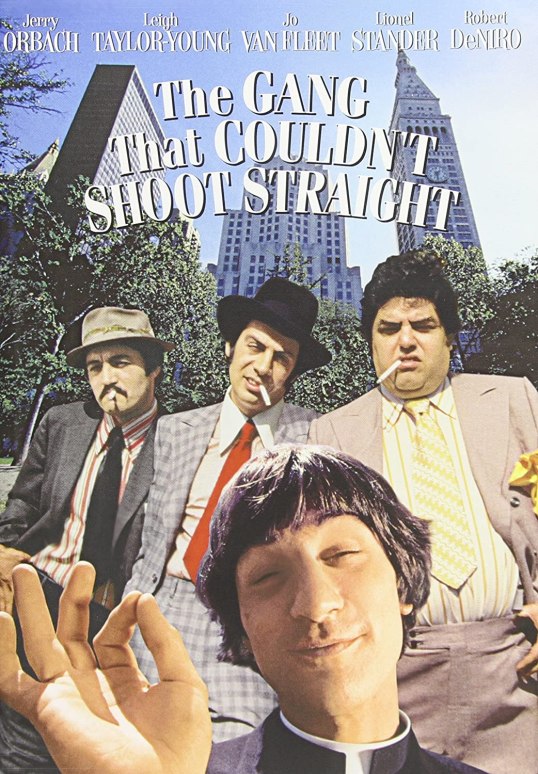
That was my reaction, last night, as I watched the 1971 film, The Gang That Couldn’t Shoot Straight. I was talking to my DVR and yes, I was cursing quite a bit. You know that a film has to be bad when it actually drives me to start cursing at an inanimate object. The Gang That Couldn’t Shoot Straight was so bad that I actually got pissed off at my DVR for recording it. It’s true that I am the one who scheduled the recording but still …. my DVR should have known better than to listen to me!
What is The Gang That Couldn’t Shoot Straight about? I have no idea. I watched the damn movie and I have no idea what the point of it was. The film stars Jerry Orbach as a low-level gangster named Kid Sally. Kid Sally’s crew — the Gang That Couldn’t Shoot Straight — is made up of a collection of malcontents, morons, and other stereotypes. One member of the crew is a little person. That’s the joke. He’s a tough gangster who is wiling to put a bullet between your legs but that’s just because he’s crotch-height. Ha ha.
Anyway, the big boss is a guy named Baccala (Lionel Stander). Every morning, Baccala’s wife starts the car to check for bombs. Whenever she goes outside, Baccala crawls underneath the kitchen table and waits. Like a lot of the stuff in this movie, that’s one of those things that would be funny if it hadn’t been taken too such a cartoonish extreme. Anyway, Baccala has zero respect for Kid Sally and Kid Sally wants to take over Baccala’s rackets. Is it time for a mob war!?
Maybe. A lot of people die in various “amusing” ways over the course of the film but I was never quite sure whether or not the killings were part of a mob war or if they were just the type of random mishaps that occur when a bunch of dumbasses get their hands on a cache of weapons. Trying to follow the plot of The Gang Who Couldn’t Shoot Straight is next to impossible. The editing of the film is so ragged that you’re rarely aware of how one scene relates to another. If The Godfathershowed how a gangster story could be a historical epic and if Goodfellas showed how an editor could recreate the kinetic experience of being a gangster, The Gang Who Couldn’t Shoot Straight shows how a mafia movie can just be a collection of random vignettes that may or may not be connected. It’s impossible to care about the potential war between Kid Sally and Baccala because neither Kid Sally nor Baccala exist as characters beyond their silly names.
A young Robert De Niro is in this film. He plays Mario, an Italian thief who comes to New York for a bicycle race and joins Kid Sally’s crew. Or at least, I think he joins the crew. It’s hard to tell. Mario often dresses like a priest, for some reason. He’s also fallen in love with Angela (Leigh Taylor-Young), who is Kid Sally’s sister though she could just as easily be his cousin or maybe his daughter-in-law from Tuscon. I wouldn’t necessarily say that De Niro gives a good performance here as much as it’s just impossible not to pay attention to him because he’s a young Robert De Niro. He and Leigh Taylor-Young do have a very sincere and touching chemistry but it’s out-of-place in a film that’s dominated by slapstick and scenes of Kid Sally using a lion to intimidate shop owners. (Yes, that happens.) De Niro certainly seems to be trying hard to give a good performance but he’s not a natural comedian. Of course, you don’t need me to tell you that. FOR THE LOVE OF GOD, WE’VE ALL SEEN DIRTY GRANDPA!
Anyway, the main problem with this film is that it’s a comedy that was apparently put together by people who think that comedy involves a lot of screaming and silly music. I’ve actually seen a handful of other films that were directed by James Goldstone — Brother John, Rollercoaster,When Time Ran Out. Significantly, none of those other films were comedies and there’s nothing about any of Goldstone’s other films that suggest that he was anything more than a director-for-hire. The film itself was written by Waldo Salt, who also worked on the scripts for Midnight Cowboy, Coming Home, and Serpico. Again, none of those films are particularly funny. 70s era Mel Brooks probably could have made this into a funny film but James Goldstone and Waldo Salt could not.
As bad as The Gang Who Couldn’t Shoot Straight is, it is also the answer to a very interesting trivia question. This is the film that Al Pacino dropped out of when he was cast as Michael Corleone in The Godfather. The actor who replaced Pacino was Robert De Niro.
Anyway, The Gang That Couldn’t Shoot Straight is an offer you can refuse.
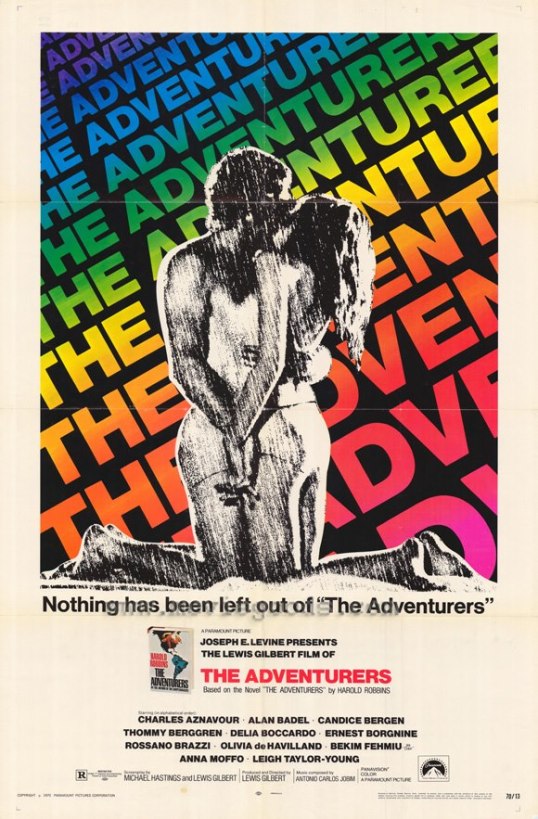
The 1970 film, The Adventurers, is a film that I’ve been wanting to watch for a while.
Based on a novel by Harold Robbins, The Adventurers was a massively expensive, three-hour film that was released to terrible reviews and even worse box office. In fact, it’s often cited as one of the worst films of all time, which is why I wanted to see it. Well, three weeks ago, I finally got my chance to watch it and here what I discovered:
Yes, The Adventurers is technically a terrible movie and Candice Bergen really does give a performance that will amaze you with its ineptitude. (In her big scene, she sits in a swing and, with a beatific look on her face, begs her lover to push her “Higher! Higher!”)
Yes, The Adventures is full of sex, intrigue, and melodrama. Director Lewis Gilbert, who did such a good job with Alfieand The Spy Who Loved Me, directs as if his paycheck is dependent upon using the zoom lens as much as possible and, like many films from the early 70s, this is the type of film where anyone who gets shot is guaranteed to fall over in slow motion, usually while going, “Arrrrrrrrrrrrgh….” A surprisingly large amount of people get shot in The Adventurers and that adds up to a lot of slow motion tumbles and back flips. Gilbert also includes a sex scene that ends with a shot of exploding fireworks, which actually kind of works. If nothing else, it shows that Gilbert knew exactly what type of movie he was making and he may have actually had a sense of humor about it. That’s what I choose to believe.
Despite the fact that The Adventurers is usually described as being a big-budget soap opera, a good deal of the film actually deals with Latin American politics. For all the fashion shows and the decadence and the scenes of Candice Bergen swinging, the majority of The Adventures takes place in the Latin American country of Cortoguay. If you’ve never heard of Cortoguay, that’s because it’s a fictional country. Two hours of this three-hour film are basically devoted to people arguing and fighting over who is going to rule Cortoguay but it’s kind of impossible to really get to emotionally involved over the conflict because it’s not a real place.
Ernest Borgnine plays a Cortoguayan named — and I’m being serious here — Fat Cat. Seriously, that’s his name. And really, how can you not appreciate a movie featuring Ernest Borgnine as Fat Cat?
Fat Cat is the guardian of Dax Xenos (Bekim Fehmiu). Dax’s father is a Cortoguayan diplomat but after he’s assassinated by the country’s dictator, Dax abandons his home country for America and Europe. While he’s abroad, Dax plays polo, races cars, and has sex with everyone from Olivia de Havilland to Candice Bergen. He also gets involved in the fashion industry, which means we get two totally 70s fashion shows, both of which are a lot of fun. He marries the world’s richest heiress (Bergen) but he’s not a very good husband and their relationship falls apart after a pregnant Bergen flies out of a swing and loses her baby.
Throughout it all, Fat Cat is there, keeping an eye on Dax and pulling him back to not only Cortoguay but also to his first love, Amparo (Leigh Taylor-Young), who just happens to be the daugther of Cortoguay’s dictator, Rojo (Alan Badel). In fact, when Fat Cat and Dax discover that an acquaintance is selling weapons to Rojo, they lock him inside of his own sex dungeon. That’s how you get revenge! And when Dax eventually does return to Cortoguay, Fat Cat is at his side and prepared to fight in the revolution. Incidentally, the revolution is led by El Lobo (Yorgo Voyagis), who we’re told is the son of El Condor.
The Adventurers is melodramatic, overheated, overlong, overdirected, and overacted and, not surprisingly, it’s eventually a lot of fun. I mean, the dialogue is just so bad and Lewis Gilbert’s direction is so over the top that you can’t help but suspect that the film was meant to be at least a little bit satirical. How else do you explain that casting of the not-at-all-Spanish Bekim Fehmiu as a Latin American playboy? Candice Bergen plays her role as if she’s given up any hope of making sense of her character or the script and the rest of the cast follows her lead. Ernest Borgnine once said that The Adventurers was the worst experience of his career. Take one look at Borgnine’s filmography and you’ll understand why that’s such a bold statement.
The Adventurers is three hours long but it’s rarely boring. Each hour feels like it’s from a totally different film. It starts out as Marxist agitprop before then becoming a glossy soap opera and then, once Fat Cat and Dax return home and get involved in the revolution, the film turns into “modern” spaghetti western. It’s a film that tries so hard and accomplishes so little that it becomes rather fascinating.
And, if nothing else, it reminds us that even Fat Cat can be a hero….
Someone is murdering models and trying to frame Larry Roberts (Albert Finney), a plastic surgeon. Larry suspects that the actual murderer is somehow involved with the Digital Matrix research firm, a shadowy organization that is headed by James Coburn and Leigh Taylor Young. Digital Matrix has developed a new technique where they digitally scan a model’s body and then generate a 3-D duplicate that can be used in commercials and on film. The real-life models stand to make a fortune from the royalties, assuming that they are physically perfect and they do not end up getting murdered immediately after being scanned. Larry’s girlfriend, Cindy (Susan Dey), is just the latest model to have been scanned and now Larry suspects that she might be targeted for death as well.
When I was growing up, Looker was one of those movies that always seemed to be on HBO. I don’t know why this box office bomb was so popular on cable but I do remember seeing it several times. I guarantee you that anyone who has ever came across this movie on HBO in the 80s and 90s will remember it. They might not remember the title but they will remember that the bad guys used light guns that would cause people to briefly go into a catatonic state. Everyone who has ever seen this movie remembers the model standing frozen in the doorway of her apartment.
As for the movie itself, the guns are cool and so is the scene where Susan Dey gets scanned but otherwise, Looker is not very good. Michael Crichton later said that he had conflicts with Warner Bros during the editing of Looker and, as a result, there were some important scenes that did not make it into the final cut. For instance, it is never really explained why the models are being killed. Albert Finney was in one of his periodic career slumps when he starred as Larry and he looks uncomfortable going through the motions of being an action star. Two years after Looker came out, Finney’s career would be reinvigorated when he received an Oscar nomination for The Dresser and three years later, he would give his career best performance in Under the Volcano.
As it typical of Michael Crichton’s work, Looker was ahead of its time in predicting the use of CGI in media but otherwise, it’s nothing special. If you want to see a good Crichton-directed film, stick with Westworld and The Great Train Robbery.
After I finished watching Girls Just Want To Have Fun, it was time for the 1986 film, Secret Admirer!
Secret Admirer is a fairly good example of a film that is dependent upon the idiot plot. Every plot complication could have been avoided by the characters not being idiots. The entire storyline could have been resolved within five minutes if some of the characters had been willing to ask questions before jumping to assumptions. Idiot plots tend to fun when they deal with teenagers, largely because, when you’re that age, you can get away with being an idiot. That’s part of the charm of being a teenager and why nobody ever wants to grow up. When you’re a teenager, you’re not expected to have any common sense or knowledge of the real world so you can get away with a lot more. At the same time, idiot plots involving adults tend to be annoying because adults really should know better. The idiot plot of Secret Admirer involves both teenagers and adults and, as a result, the film is half-charming and half-annoying.
Smart but shy Toni (Lori Loughlin) has a crush on her lifelong friend, the sweet but kinda stupid Michael (C. Thomas Howell). So, Toni writes Michael an incredibly eloquent love note and slips it into his locker. When Michael finds the note, he assumes that it was written by Debbie (Kelly Preston), who is pretty and popular but only dates college students. When Michael attempts to write a response to Debbie, he is sabotaged by his limited vocabulary, lack of eloquence, and general dimness. Luckily, Toni finds the note and, wanting to spare Michael any embarrassment, rewrites it for him. Debbie is so touched by Toni’s note that she goes out on a date with Michael. Toni is forced to stand in the background and watch while the boy she loves falls for a girl who is obsessed with shopping. (Secret Admirer suggests that this obsession indicates that Debbie is shallow but seriously, who doesn’t love to shop?) Will Toni tells Michael that she loves him or will she leave him so that she can spend a year studying abroad? (Personally, I would leave and have fun exploring Europe but then again, I also love to shop so obviously, Toni and I have conflicting worldviews.)
But that’s not all! Michael’s dad, George (Cliff DeYoung), also finds the note and assumes that it was written to him by Debbie’s mom, Elizabeth (Leigh Taylor-Young). Of course, Debbie’s father, a police detective named Lou (the always gruff Fred Ward), also comes across the note and becomes convinced that George and Elizabeth are having an affair. He somewhat forcibly recruits George’s wife, Connie (Dee Wallace Stone), to help him expose George and Elizabeth for being the cheaters that he believes them to be….
I got annoyed with the parents fairly quickly. It’s always fun to watch Fred Ward grimace and glare at people but otherwise, all of the adults were way too stupid and their behavior reminded me of that terrible episode of Saved By The Bell where the exact same thing happens to Mr. Belding. Secret Admirer works best when the adults are pushed to the background and the film concentrates on the relationship between Toni and Michael. They’re a sweet couple and you really want to see them end up together. Michael may be stupid but he’s still really cute and the film is perfectly charming whenever it concentrates on him and Toni.
Incidentally, Michael has several friends. They all ride around in a van and look through old issues of Playboy together. Most of the friends are interchangeable but I did like Ricardo (Geoffrey Blake), just because he was wearing a suit and a fedora for no particular reason. Ricardo didn’t really get to do much but his fashion sense made a definite impression.
By the admittedly high standards of 80s teen films, Secret Admirer is a minor film. It’ll never be mistaken for Sixteen Candles or Pretty In Pink. That said, it’s still an entertaining and occasionally sweet film. You’ll want to skip over the scenes involving the adults but the scenes involving C. Thomas Howell and Lori Loughlin are perfectly charming.


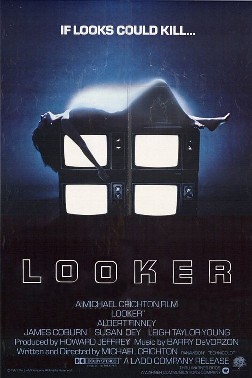 Someone is murdering models and trying to frame Larry Roberts (Albert Finney), a plastic surgeon. Larry suspects that the actual murderer is somehow involved with the Digital Matrix research firm, a shadowy organization that is headed by James Coburn and Leigh Taylor Young. Digital Matrix has developed a new technique where they digitally scan a model’s body and then generate a 3-D duplicate that can be used in commercials and on film. The real-life models stand to make a fortune from the royalties, assuming that they are physically perfect and they do not end up getting murdered immediately after being scanned. Larry’s girlfriend, Cindy (Susan Dey), is just the latest model to have been scanned and now Larry suspects that she might be targeted for death as well.

