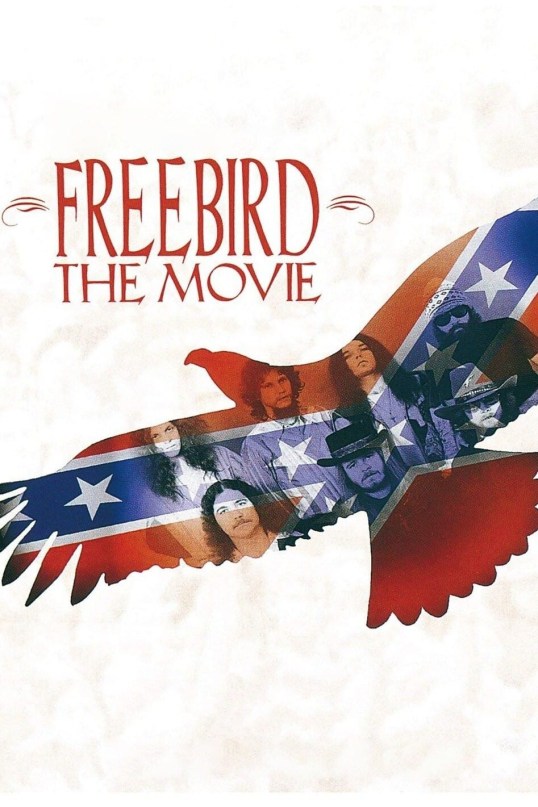
Musical Film Review: Freebird…. The Movie (dir by Jeff G. Waxman)


My Dad was a huge Skynyrd fan.

When I was little, I didn’t really know that there was any controversy about the lyrics of Sweet Home Alabama or the fact that Lynyrd Skynyrd’s stage show usually featured a Confederate flag.  I didn’t know what Tuesday’s Gone was about.  I didn’t know that Free Bird was considered to be a classic by anyone other than my father.  I didn’t even know about the tragic 1977 airplane crash.  I just knew that when my Dad was driving he liked the Eagles, he enjoyed the Steve Miller Band, and he loved Lynyrd Skynyrd.  Even today, whenever I hear Sweet Home Alabama, I imagine my Dad driving his big rig across this beautiful country of ours.  The song may have been about Alabama and it may have been an answer song to a very specific song written by a Canadian (of all people) but it was still a song that could be listened to and enjoyed anywhere.  It was a song about Alabama but it was also a song that uniquely American.

At least, that’s what I always thought.  When I was in college, my friend Jen absolutely hated Sweet Home, Alabama (both the song and, believe it or  not, the film) and she would always start going, “No, don’t do it!” whenever she saw that I was about to play it.  That just made me play it louder.

By that time, of course, I knew that there was some controversy about both the song and the band.  Because Lynyrd Skynyrd was proudly and defiantly Southern, there were quite a few people who interpreted Sweet Home, Alabama as being a defense of everything that was going on in Alabama during the early 70s.  Of course, that’s not the case of all.  The song was defending a group of people against other people who, like Mr. Young, looked down on Alabama while ignoring or excusing the very similar things that were happening in their own backyard.  Massachusetts, for instance, was the scene of a good deal of violent racial strife throughout the 70s but Neil Young was never tempted to write Boston Man.  While Alabama was finally starting to move away from Jim Crow, people in Boston were rioting about busing.  The appeal of Lynyrd Skynyrd, at least as far as the original 70s version, was that they were tough, they were loud, and they didn’t apologize for being who they were. They weren’t going to apologize for being from the South and speaking with Southern accents.  They were defiant in a way that brought together both hippies and rednecks.

1996’s Freebird…. The Movie was one of the last films that my Dad watched before he died.  The film is a mix of archival concert footage and interviews with the members of Lynyrd Skynyrd, all of whom are rather worshipful of lead singer Ronnie Van Zant.  Van Zant emerges as such a charismatic performer and frontman that it’s easy to see why the members of the band and the audience would follow him just about anywhere.  Of course, the main appeal of the film is the music.  Sweet Home Alabama is performed with a blast of pure energetic Southern rock that stands in contrast to some of the band’s more mellow songs.  Freebird is performed beautifully and Billy Powell’s piano solo remains amazing.  As always, it probably helps to already be a fan of the band when watching a film like this.  All I can say is that, on July 31st, 2024, my Dad smiled as he watched it and I cried as I watched it with him.

Lifetime Film Review: I Am Mary Jo Buttafuoco (dir by Heather Hawthorne-Doyle)


I Am Mary Jo Buttafuoco is an example of one of the latest trends in Lifetime filmmaking.  The real Mary Jo Buttafuoco tells us her story in between scenes of it being reenacted by actors.

That’s not necessarily a bad idea.  Lifetime did something similar with Elizabeth Smart and it led to one of the most powerful films to ever appear on the network.  However, the Elizabeth Smart film benefitted from the fact that Smart is an articulate, intelligent, and insightful speaker in her own right.  She is someone who went through the worst and managed to come out of it not only stronger but also with the passion and articulateness of an genuine activist.

Mary Jo is not quite as compelling.  It brings me no joy to say that because Mary Jo really was put through Hell and, far too often, she has been treated as an afterthought in her own story.  For those who may have forgotten or who haven’t had seen any of the previous films made about what happened to her, Mary Jo Buttafuoco was the wife of Long Island mechanic Joey Buttafuoco.  She stood by Joey while he struggled with drug addiction and she supported him when he opened his own garage.  Joey rewarded her loyalty by having an affair with a teenager named Amy Fisher.  Fisher, who apparently believed that Mary Jo was the only thing standing in the way of her being with Joey forever, went to the Buttafuoco home and shot Mary Jo in the face.

The story was a media circus, with Amy Fisher being dubbed “the Long Island Lolita” and three made-for-TV movies being made, all in the same year, about the shooting.  Joey initially denied that he had ever touched Amy and Mary Jo, who miraculously survived, originally stood by Joey.  Unfortunately, in all the attention that was given to Amy and Joey (and really, the word “goombah” might as well appear with a picture of Joey in the dictionary), the fact that Mary Jo nearly died was often overlooked.  Amy Fisher and Joey Buttafuoco became odd celebrities as a result of the crime.  Mary Jo was ridiculed for both not realizing that Joey was cheating on her and continuing to stand by her man for years after she was shot by his mistress.

There’s a great movie to be made about Mary Jo Buttafuoco.  (Considering that one of three previous films was told from Joey’s point of view, it only seems appropriate that there should have been a movie from Mary Jo’s.)  Unfortunately, having Mary Jo tell her own story doesn’t work as well as one might hope.  When you really want Mary Jo to go off on Joey, she instead goes off on being raised Catholic.  If only she hadn’t been raised in a Catholic family, she seems to be saying, she never would have married and stuck with Joey Buttafuoco.  Instead of really examining her marriage to Joey Buttafuoco, she instead blames her mother and her religion.  It feels like too convenient an excuse.

The film is a bit more compelling in the flashbacks, with Chloe Lanier giving a strong performance as Mary Jo and Madelyn Grace playing Amy Fisher as not being a Lolita but instead as being a neurotic and rather stupid brat.  In the end, what matters is that Mary Jo did eventually free herself from Joey and we should all be happy for that.

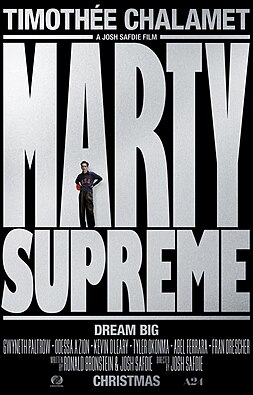
Lisa Marie Reviews An Oscar Nominee: Marty Supreme (dir by Josh Safdie)


Leave it to Josh Safdie to make an anxiety-ridden film about ping pong.

That’s not a complaint, by the way.  Both with his brother Benny and working solo on this film, Josh Safdie has proven himself to be a master at making anxiety compelling.  Much more so than Benny’s 20205 offering, The Smashing Machine, Josh’s Marty Supreme keeps you off-balance.  Marty Supreme may be set in the 50s but it’s deliberately shot in the gritty style of 70s-era Scorese and Lumet.  Meanwhile, the background music is largely made up of classic songs from the 80s.  Timothee Chalamet may play the title role of Marty Mauser, a shoe salesman who also happens to be a ping pong champion.  And the film may also feature recognizable actors like Odessa A’Zion, Gwyneth Paltrow, Fran Drescher, and Emory Cohen (remember him?).   But the majority of the cast is made up of people best-known for not being actors.  Shark Tank co-host and aspiring lead of Canada Kevin O’Leary plays Paltrow’s husband and Marty’s occasional sponsor.  Director Abel Ferrara plays a gangster who is searching for his dog.  Penn Jillette plays a New Jersey farmer who shoots first and asks questions later.  David Mamet, Isaac Mizrahi, early internet sensation Ted Williams, former New York mayoral candidateJ ohn Catsimatidis, rapper Tyler The Creator, and performance artist Sandra Bernhard all show up in small roles, creating a very New York atmosphere that somehow feels both familiar and artificial.  Watching the movie is like living the tourist’s dream of traveling to New York, seeing your favorite Manhattan celebrities hanging out in Brooklyn, and then having them curse you out for owing them money.

As is to be expected from a Safdie film, Marty Mauser is not always a sympathetic protagonist.  He’s been having an affair with the married Rachel (Odessa A’Zion) but, even after he finds out that Rachel is pregnant, that doesn’t stop him from having a purely sexual relationship with former actress Kay Stone (Gwyneth Paltrow), the wife of businessman Milton Rockwell (Kevin O’Leary).  Marty thinks that he’s the world’s best ping pong player, which is why he has a hard time accepting being humiliated at the hands of Japan’s champion, Endo (Koto Kawaguchi).  Marty’s efforts to return to Japan for a rematch lead to an at times dizzying array of complications.  Marty is the type who will steal his lover’s necklace just to return it and apologize after learning that it was only worth two bucks because it was costume jewelry.  Fortunately, Marty is played by Timothee Chalamet, who gives such an energetic and charismatic performance that it’s hard not to be charmed by the character even while his actions might upset, annoy, or even offend you.  The film never claims that Marty is the best ping pong player in the world.  Only Marty claims that.  Instead, the film shows just how unshakeable Marty’s belief in himself is.  It’s hard not to like someone who refuses to accept defeat.

In many ways, Marty is a quintessential American figure.  He believes in himself and he’s not going to apologize for it.  Both the character and the film celebrate the individualism that make America unique.  That 50s setting really does make sense.  Marty truly is the post-war American, dedicated and unapologetic.  And, in that context, the film’s “stunt” casting, for lack of a better description, makes sense as well.  David Mamet, Kevin O’Leary, Penn Jillette, Abel Ferrara, John Catsimatidis, and so many of the other familiar faces that float through Marty Supreme: they’re all people who have gone their own way, even at the risk of alienating the establishment.

Marty Supreme was nominated for 9 Oscars but failed to win any of them.  Indeed, the amount of negative stories that were breathlessly reported about the film’s director and lead actor after the nominations were announced indicates that there was an organized whisper campaign against the film.  (In a sad sign of the time, there was a good deal of negative backlash online from the dishrag brigade, who were upset that the film’s lead character was Jewish.)  Despite being the best of the nominated films, Marty Supreme lost to One Battle After Another.

Late Night Retro Television Review: Degrassi: The Next Generation 2.19 “Fight For Your Right”


Welcome to Late Night Retro Television Reviews, a feature where we review some of our favorite and least favorite shows of the past!  On Sunday, I will be reviewing the Canadian series, Degrassi: The Next Generation, which aired from 2001 to 2015!  The series can be streamed on YouTube and Tubi.

Oh no, Emma’s got a cause!

Episode 2.19 “Fight For Your Right”

(Dir by Chris Deacon, originally aired on February 2nd, 2003)

This episode is a good example of Emma being the worst.

Emma and Ashley approach Principal Raditch and tell him that they don’t want genetically modified foods in the cafeteria.  Raditch tells them to buzz off, which is the right response when you consider that Raditch is probably just following the orders of the school board.  Emma responds by standing outside the school and handing out flyers that announce that Sheila the lunch lady is “poisoning” the students with the food she’s serving.

Now, to me, this is the moment that Emma goes from being a young idealist to being arrogant brat.  Sheila works for the school.  She’s a lunch lady.  I doubt she lives in a nice big house like Emma.  Sheila probably needs the job.  Emma is accusing Sheila of poisoning people.  When Ellie sensibly points out that saving money with GM food — as opposed to the expensive organic crap that Emma wants the school to serve — allows Degrassi to give free meals to poor students, Emma accuses Ellie of not caring about the fact that the students might get cancer in 20 years.  Principal Raditch finally comes out and tells Emma that she’s not allowed distribute “propaganda” on school property.

And again, it seems to me that Radtich is within his rights.  Number one, why isn’t Emma in class?  Number two, Emma is accusing a school employee of being a potential murderer.  Number three, Emma is causing a disruption on school property.

The show disagrees with me.  The show wants me to say, “Yay, Emma!”  Even when Emma goes into the cafeteria and accidentally starts a food fight by knocking Toby and JT’s lunch on Jimmy, we are meant to be on Emma’s side.  When Emma gets offended at Raditch’s insistence that she apologize to Sheila, we’re meant to be on her side.  One thing that we don’t see is who gets stuck cleaning up the cafeteria after the food fight.  I’m going to assume that it was probably the same Sheila that Emma accused of poisoning the students.

Emma is suspended for the day so she stands across the street and holds a sign, claiming that her right to free speech has been violated.  Raditch tells Emma that if she doesn’t apologize on the next day’s video announcement, she’ll be suspended for a week.

At home, Emma asks Snake what she should do.  Snake encourages her to …. NOT APOLOGIZE!  Well, he doesn’t directly say that but he doesn’t say that she should apologize either.  Snake, in case you had forgotten, is not only Emma’s teacher but also her stepfather.  Spike is on a trip so he’s the only parent at home.  Snake, at this point, should be saying, “This is a dumb protest and you should at least apologize to Sheila.  No matter what else happens, you’re not getting your organic food in the cafeteria so there’s nothing to be accomplished with any of this.”

Instead, the next morning, Snake just sits there with a big dumbass grin on his face when Emma goes on the video announcements and refuses to apologize.  Okay, Snake, do you think it’s cool that a school employee has been accused of poisoning the students?  Oh, and Snake — are you the one who is going to call Spike to tell her that you got her daughter suspended from school for a week?  Spike, who had to fight so hard for the right to go to school when she was pregnant with Emma, will certainly appreciate hearing that!

Seriously, Emma is the worst!  But the only she’s the worst is because this show was convinced that she was the best.  One gets the feeling that Emma’s character was a case wish-fulfillment for the show’s writers.  Imagine a world where you can be obnoxious and self-righteous and everyone loves you for it!

There is a B-plot and, to be honest, it probably should have been the A-plot.  Spinner, jealous that Jimmy’s parents buy him everything, steals Jimmy’s CD player and attempts to sell it.  When Jimmy finds out, he overturns a trash can.  Spinner takes a job at the cafeteria to earn money and gives Jimmy back the CD player.

“You are my best friend!” Spinner says.

“Was,” Jimmy replies.

Oh my God!  Spinner and Jimmy, no!  Actually, Spinner and Jimmy were always ending their friendship and then eventually restoring it.  They’ll be fine.  Still, their storyline was a lot more interesting than Emma’s latest crusade.

When in doubt, always focus on Spinner.  That’s a lesson the writers should have taken to heart.

Retro Television Review: Homicide: Life On The Street 5.12 “Betrayal”


Welcome to Retro Television Reviews, a feature where we review some of our favorite and least favorite shows of the past!  On Sundays, I will be reviewing Homicide: Life On The Street, which aired from 1993 to 1999, on NBC!  It  can be viewed on Peacock.

This week, Kellerman finally clears his name and Bayliss takes the job too personally …. again!

Episode 5.12 “Betrayal”

(Dir by Clark Johnson, originally aired on January 1oth, 1997)

It’s finally time for Detective Kellerman to testify in front of the Grand Jury.  At first, Kellerman is thinking of taking the Fifth so that he won’t have to testify about what any of the other members of the Aron squad may or may not have done.  However, when Kellerman realizes that another member of the squad has named him in order to try to make a deal with the prosecutor, Kellerman changes his mind.  He says that he will testify.  He will throw his career away.  He’ll do it because he’s not going to let anyone think that he’s a dirty cop.  The prosecutor (Rebecca Boyd) is so moved that she allows Kellerman to testify that he never took a bribe but then declines to ask any follow-up questions.  Kellerman is cleared.

This, of course, is something that would never happen in real life.  A prosecutor declining to ask follow-up questions because she respects the witness?  Seriously?  That said, if it means the bribery storyline is finally wrapped up and Kellerman can return to active duty, I’m happy.

Meanwhile, Pembleton and Bayliss investigate the death of a teenage girl who was found abandoned on the side of the road.  When it’s revealed that the victim was horribly abused, Bayliss — of course — takes the case personally.  For Pembleton, it’s just another case.  It’s what he does for a living and he knows better than to get personally involved.  For Bayliss, it’s a crusade.  At the end of the episode, Bayliss reveals that he was abused as a child.  He also says that he no longer wants to be Pembleton’s partner.

WHAT!?

Dammit, Bayliss, we just got Pembleton back and now you don’t want to work with him!?

Don’t get me wrong.  This was a good episode but it did leave me feeling a bit frustrated.  Hopefully, Bayliss and Pembleton will make up soon.  The Kellerman bribery subplot went on forever.  Here’s hoping the same doesn’t happen with Bayliss and Pembleton’s divorce.

Late Night Retro Television Review: Saved By The Bell 2.5 “House Party”


Welcome to Late Night Retro Television Reviews, a feature where we review some of our favorite and least favorite shows of the past!  On Saturdays, I will be reviewing Saved By The Bell, which ran on NBC from 1989 to 1993.  The entire show is currently streaming on Tubi!

This week, Screech’s parents are gone.  It’s time to party like Elvis!

Episode 2.5 “House Party”

(Dir by Don Barnhart, originally aired on October 6th, 1990)

Mrs. Powers (Ruth Buzzi) and her husband go to Graceland for their anniversary, leaving Screech alone for a few days.  It’s time to have the boys over so that they can lip-sync to the Beach Boys!  Unfortunately, when the girls come over to laugh at the boys, a bust of Elvis is shattered.  It’ll cost $250 to replace!  Despite the fact that all of the main characters — with the exception of Kelly and Slater — come from wealthy families, everyone claims to not have any money.  You know who does have money?  Max Nerdstrom (Jeff Asch)!  Max also has a girlfriend named Violet (Tori Spelling), who has a crush on Screech.  (Or Samuel, as she calls him.)

This is an important episode in the history of Saved By The Bell, in that it not only introduces us to Violet Bickerstaff but it also establishes that Tori Spelling was bad actress even before she was cast on 90210.  (If anything, Spelling is actually better-cast as Violet than as Donna Martin because Violet was at least supposed to be awkward and cringey.)  This episode also introduced us to Max Nerdstrom, a great character who only appeared once but who should have been a regular member of the cast.  That said, it’s also obvious that the only reason this episode was made was so Slater, Screech, and Zack could do the Barbara Ann scene.  It’s all pretty obviously ripped off from Risky Business, just without the prostitutes and Tangerine Dream soundtrack.

How to raise the money to replace the statue?  Zack challenged Max to a poker game and ends up losing not only another $250 but also the Powers family dog.  If Zack had $250 to lose in a poker game, how come he didn’t have it to buy a new Elvis?  Seriously, don’t try to follow Bayside logic.  Jessie has to go on a date with Max in order to get the dog bac and Zack throws a party to raise money for the new statue.  Mrs. Powers arrives home early and announces that she told Screech that he wasn’t allowed to throw any parties.  Zack announces that it’s a surprise anniversary party for Mrs. Powers and her husband (who is apparently just sitting out in the car while all this is going on).  Why would a bunch of teenagers throw an anniversary party for a 50-something Elvis fan?

Bayside logic, baby!

It still a cute episode.


Lisa Marie’s Week In Television: 5/24/26 — 5/30/26


Diff’Rent Strokes (Tubi)

Kimberly developed Bulimia but it only took her one episode to both kick the habit and recover her health.

Election Day Coverage (Tuesday Night)

It was interesting to watch the results from the Texas run-off election on Tuesday night.  I was happy to see that my former Congressman Colin Allred defeated my current Congressperson Julie Johnson in a totally different district from the one in which I currently live.  When he was my congressman, Allred was a bit liberal for me but he was still tried to take care of his district.  Julie, meanwhile, just spent all of her time cursing on television.

George Gently (YouTube)

I watched another depressing episode of this UK cop show on Tuesday.

Good Times (Tubi)

Damn!  Damn!  Damn!  James, the patriarch of the family, died in a car accident.  And then Florida remarried an atheist and moved with him to Arizona because he had cancer.  She left her children behind in Chicago.  For some reason, the kids kept talking about how they had to get out of “the ghetto” and I was like, “Well, why didn’t you go to Arizona with your mom!?”  Then Florida returned home without the atheist (I guess he died) and her daughter married a crippled football player and JJ ended up as a numbers runner.  I watched a few random Good Times episodes this week.

Indianapolis 500 (Sunday Afternoon)

There’s nothing more gloriously American.

Ken and Barbie Killers: The Lost Murder Tapes (HBOMax)

This was another documentary about the Canadian serial killers, Paul Bernardo and Karla Homolka.  You really can’t hate these two enough.  Bernardo is in prison.  Homolka, on the other hand, is free and living somewhere in Canada.

Kyōryū Sentai Zyuranger (Shout Factory TV)

I watched three episodes of this weird Japanese series on Saturday morning.  Monsters were everywhere but luckily, so were some people who were apparently descended from dinosaurs.  I really couldn’t follow the plot but the saber-tooth tiger was cute.

Muscles and Mayhem: The Untold Story of American Gladiators (Hulu)

American Gladiators is a show that I never watched but I still found this documentary to be an interesting look at the intersection of pop culture and steroid abuse.

Night Flight (Night Flight+)

I watched two episodes on Friday night, one about afrobeat music and one about heavy metal.

Seinfeld (Netflix)

So, George like totally murdered his fiancée.

Untold: The Liver King (Netflix)

The freakish star of countless twitter ads got his own documentary about how he was essentially a fraud.  He didn’t seem to have many regrets about it.  He was kind of annoying, to be honest.


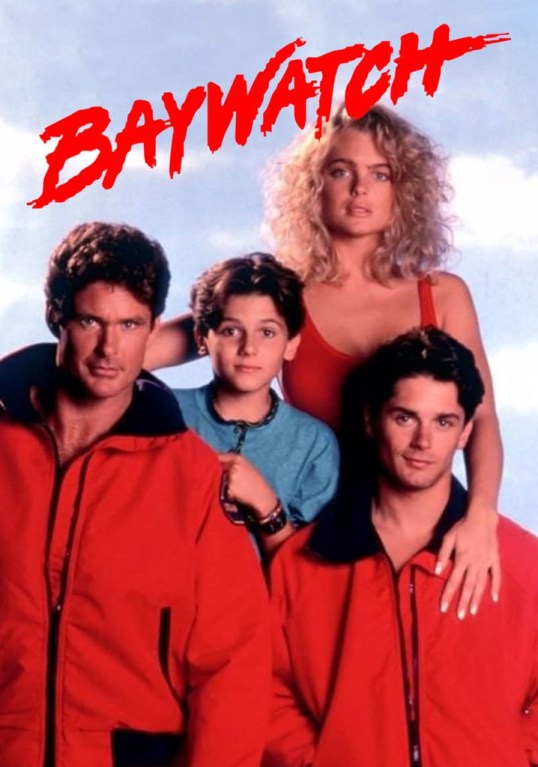
Retro Television Review: Baywatch 2.6 “Point Attack”


Welcome to Retro Television Reviews, a feature where we review some of our favorite and least favorite shows of the past!  On Saturdays, I will be reviewing Baywatch, which ran on NBC and then in syndication from 1989 to 2001.  The entire show can be viewed on Tubi.

This week, Eddie tries to change a young man’s life.

Episode 2.6 “Point Attack”

(Dir by Alan Myerson, originally aired on October 21st, 1991)

Cort returns!

When the syndicated version of Baywatch first aired, John D. Cort (John Allen Nelson) was among the first season cast members who were no longer on the beach.  His absence was not addressed.  With this episode, we learn that he’s been in either South America, Kuwait, or Asia.  No one’s sure.  To me, it sounds like Cort’s a drug smugler.

Anyway, Cort shows up on the beach, just in time to help Eddie break up a gang fight!  Eddie, remembering his own tough past in Philadelphia, arranges for the gang members to become a part of W.A.T.A.R., a lifeguard-run program for troubled youths. This the second episode of Baywatch’s second season to feature a gang subplot.  It’s hard not to notice that whenever anyone who isn’t white shows up on this show, they’re always portrayed as being 1) poor and 2) affiliated with a gang.

Eddie hopes that he can convince gang leader Memo (Richard Coca) to change his ways.  Unfortunately, Memo’s father (Danny Trejo) wants his son to follow in his footsteps as a gang member.

When told that Memo is facing jail, his father says that’s no big deal and adds, “I did time!”

“So did I,” Eddie replies.

Eddie — do you really want to challenge Danny Trejo on the subject of prison?

On the one hand, it’s always good to see Danny Trejo and there’s a definite authenticity to his performance that the rest of this episode lacks.  At the same time, having Trejo around makes it all the more clear just how miscast Billy Warlock was a former juvenile delinquent-turned-lifeguard.  Watching this episode, I could buy Billy Warlock as someone who could save me if I was drowning.  (Thanks, Billy!)  But seeing him a graduate of the hard streets of Philadelphia?  That was a step too far.

As for the rest of this episode, Cort is far less of a rogue in this episode and he even helps out with the W.A.T.A.R. program.  (If anything John Allen Nelson seems to get all the lines that would usually have gone to David Hasselhoff, who is barely in this episode.)  When Eddie catches Memo trying to steal from the locker room, there’s a chase scene that goes on for so long that I was literally wondering if Eddie and Memo were eventually going to end up back at Baywatch Headquarters.  I’m all for a good action scene but this chase went on for so long that it verged on parody and left me wondering if maybe the show’s director realized, at the last minute, that the episode needed padding.

Unfortunately, Danny Trejo and David Hasselhoff don’t share any scenes in this episode.  As mentioned earlier, the Hoff is barely in it!  That seems like a missed opportunity to me.


Song of the Day: The Good, The Bad, and the Ugly — Main Theme (composed by Ennio Morricone)


Today’s song of the day is the main theme from Leone’s best-known film, The Good, The Bad, and The Ugly.

Ennio Morricone’s score is as much of a character in this film as the ones played by Clint Eastwood, Eli Wallach, and Lee Van Cleef.  It perfectly sets the moods, telling us that we’re about to see something that is truly epic.  The opening notes, which have so often been parodied but which have never lost their power, truly capture the feel of Sergio Leone’s mythical vision of the old west.