Musical Film Review: Freebird…. The Movie (dir by Jeff G. Waxman)


My Dad was a huge Skynard fan.

When I was little, I didn’t really know that there was any controversy about the lyrics of Sweet Home Alabama or the fact that Lynard Skynard’s stage show usually featured a Confederate flag.  I didn’t know what Tuesday’s Gone was about.  I didn’t know that Free Bird was considered to be a classic by anyone other than my father.  I didn’t even know about the tragic 1977 airplane crash.  I just knew that when my Dad was driving he liked the Eagles, he enjoyed the Steve Miller Band, and he loved Lynard Skynard.  Even today, whenever I hear Sweet Home Alabama, I imagine my Dad driving his big rig across this beautiful country of ours.  The song may have been about Alabama and it may have been an answer song to a very specific song written by a Canadian (of all people) but it was still a song that could be listened to and enjoyed anywhere.  It was a song about Alabama but it was also a song that uniquely American.

At least, that’s what I always thought.  When I was in college, my friend Jen absolutely hated Sweet Home, Alabama (both the song and, believe it or  not, the film) and she would always start going, “No, don’t do it!” whenever she saw that I was about to play it.  That just made me play it louder.

By that time, of course, I knew that there was some controversy about both the song and the band.  Because Lynard Skynard was proudly and defiantly Southern, there were quite a few people who interpreted Sweet Home, Alabama as being a defense of everything that was going on in Alabama during the early 70s.  Of course, that’s not the case of all.  The song was defending a group of people against other people who, like Mr. Young, looked down on Alabama while ignoring or excusing the very similar things that were happening in their own backyard.  Massachusetts, for instance, was the scene of a good deal of violent racial strife throughout the 70s but Neil Young was never tempted to write Boston Man.  While Alabama was finally starting to move away from Jim Crow, people in Boston were rioting about busing.  The appeal of Lynard Skynard, at least as far as the original 70s version, was that they were tough, they were loud, and they didn’t apologize for being who they were. They weren’t going to apologize for being from the South and speaking with Southern accents.  They were defiant in a way that brought together both hippies and rednecks.

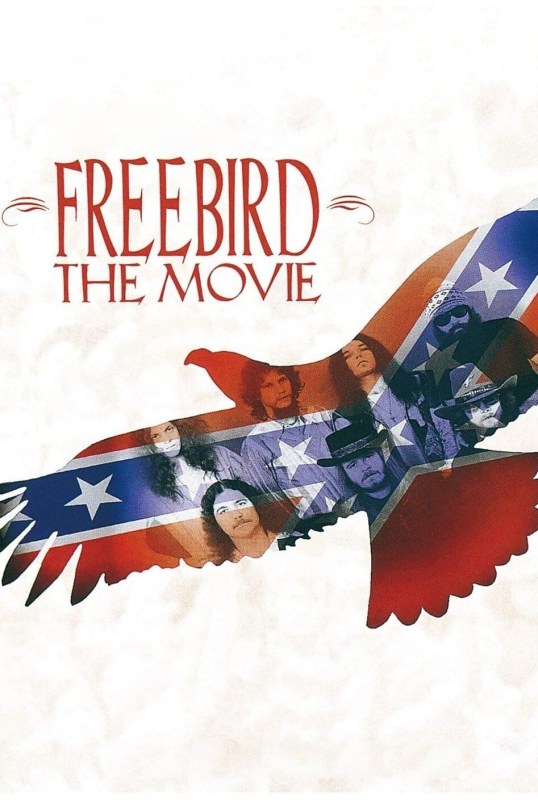
1996’s Freebird…. The Movie was one of the last films that my Dad watched before he died.  The film is a mix of archival concert footage and interviews with the members of Lynard Skynard, all of whom are rather worshipful of lead singer Ronnie Van Zant.  Van Zant emerges as such a charismatic performer and frontman that it’s easy to see why the members of the band and the audience would follow him just about anywhere.  Of course, the main appeal of the film is the music.  Sweet Home Alabama is performed with a blast of pure energetic Southern rock that stands in contrast to some of the band’s more mellow songs.  Freebird is performed beautifully and Billy Powell’s piano solo remains amazing.  As always, it probably helps to already be a fan of the band when watching a film like this.  All I can say is that, on July 31st, 2024, my Dad smiled as he watched it and I cried as I watched it with him.
Song of the Day: Free Bird by Lynyrd Skynard


I’m not even a hockey fan and I’m cheering right now!  3 Days ago, the U.S. women’s hockey team defeated Canada and won a gold medal at the Winter Olympics.  Today, the men’s hockey team did the same thing.

I have tears in my eyes and you better believe I have a song of the day.

Sing it!

(Arleigh picked this for Song of the Day back in 2015 and did a much better job than me explaining why this song is the unofficial national anthem of the United States.)

Free Bird

If I leave here tomorrow
Would you still remember me?
For I must be traveling on, now
‘Cause there’s too many places
I’ve got to see

But, if I stayed here with you, girl
Things just couldn’t be the same
‘Cause I’m as free as a bird now
And this bird, you’ll can not change
Oh, oh, oh, oh, oh

And the bird you cannot change
And this bird you cannot change
Lord knows, I can’t change
Bye, bye, baby it’s been a sweet love

Yeah, yeah
Though this feeling I can’t change
But please don’t take it so badly
‘Cause the Lord knows
I’m to blame

But, if I stayed here with you girl
Things just couldn’t be the same
‘Cause I’m as free as a bird now
And this bird, you’ll can not change
Oh, oh, oh, oh, oh

And this bird you cannot change
Lord knows, I can’t change
Lord help me, I can’t change
Lord I can’t change

Won’t you fly high, free bird, yeah?

(commence awesome triple guitar solos)

Music Video of the Day: Sweet Home Alabama by Keenan West (2011, dir by Dean Bierschwal)


I’m going to be in Alabama for the next three days so, naturally, I decided that today’s music video should be Sweet Home Alabama.  Since the song was recorded before music videos were really a big thing, Lynard Skynard never did a video for their original recording.  However, I was able to find a video for Keenan West’s soulful cover version.

Sweet Home Alabama was originally recorded in 1973, as a response to a song by Neil Yong that was called Southern Man.  In that song, Neil Young looked down on the South from the safety of Canada and basically damned everything he saw.  In response, Ronnie Van Zant wrote:

Well, I heard Mister Young sing about her
Well, I heard ol’ Neil put her down
Well, I hope Neil Young will remember
A Southern man don’t need him around anyhow

Not surprisingly, Sweet Home Alabama has been a popular but controversial song in the past.  Over the years, several critics — mostly folks from up north who don’t really get nuance — have assumed that Sweet Home Alabama was meant to be some sort of right-wing political track.  What they miss is that the song is openly critical of Alabama’s segregationist governor.   (There’s a reason why there’s a chorus of “boo!  boo!  boo!” after the governor is mentioned.)  Sweet Home Alabama was less about defending the South and more about calling out the self-righteousness of northern activists who attacked the South while either ignoring or rationalizing the racism in their own back yard.

(And if you want argue with me about that interpretation, I’m going to need you to first read Common Ground by J. Anthony Lukas.  Don’t come at me unless you’re willing to discuss what happened in the early 70s when Boston attempted to integrate its schools.)

Anyway, this is a good cover version and nicely heartfelt video.

Enjoy!