Happy 75th birthday to cult director Abel Ferrara! Here are four shots from my 4 favorite Ferrara films!
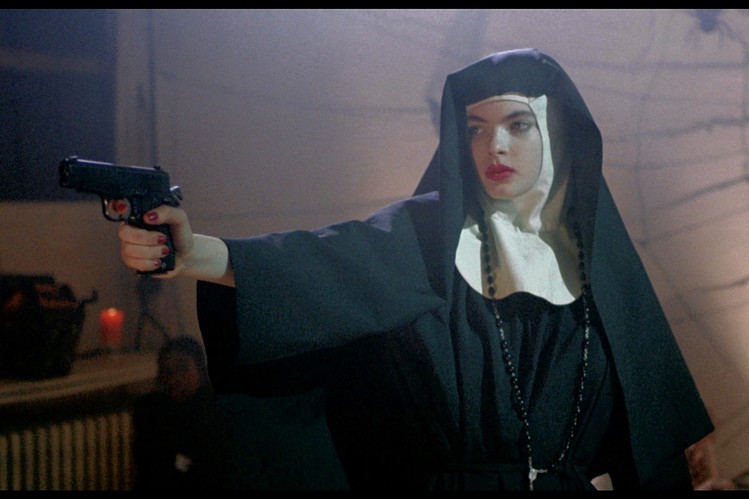
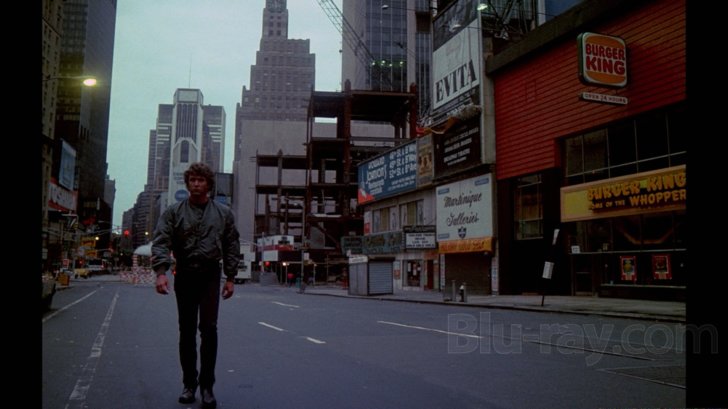
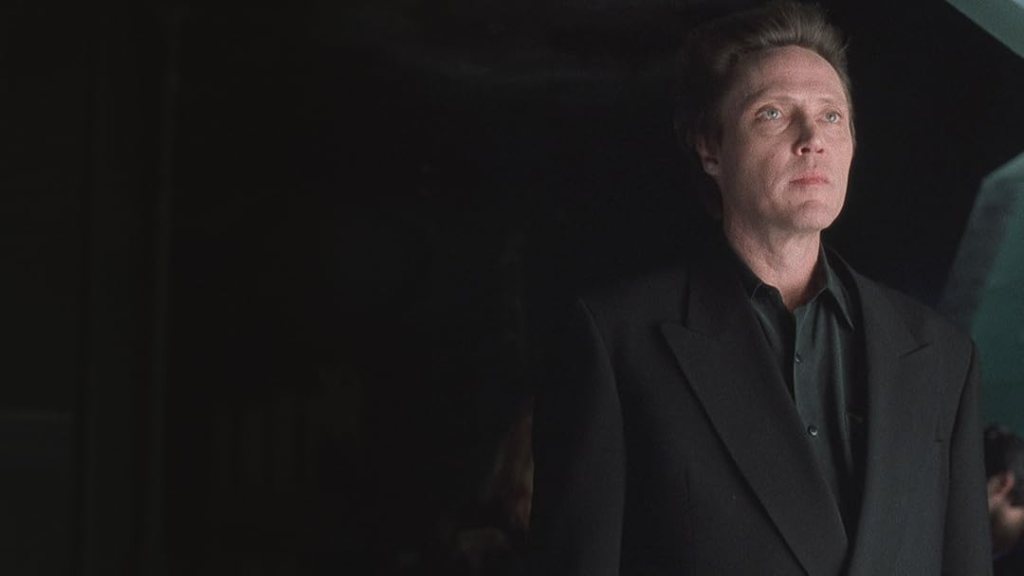
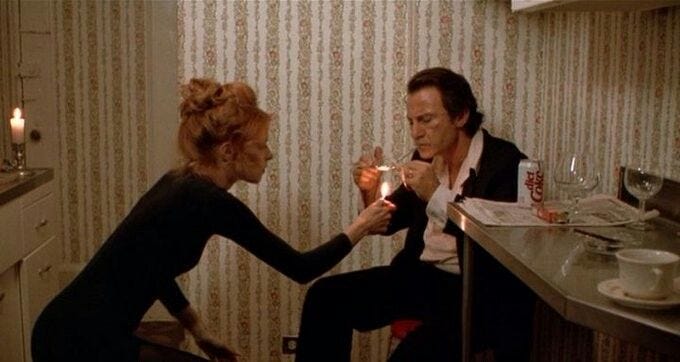
Happy 75th birthday to cult director Abel Ferrara! Here are four shots from my 4 favorite Ferrara films!
4 Shots From 4 Films is just what it says it is, 4 shots from 4 of our favorite films. As opposed to the reviews and recaps that we usually post, 4 Shots From 4 Grindhouse Films is all about letting the visuals do the talking.
4 Shots From 4 Films
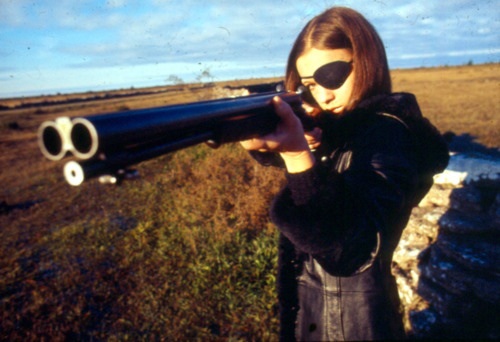
Thriller, A Cruel Picture a.k.a. They Call Her One Eye (1973, dir by Bo Arne Vibenius)
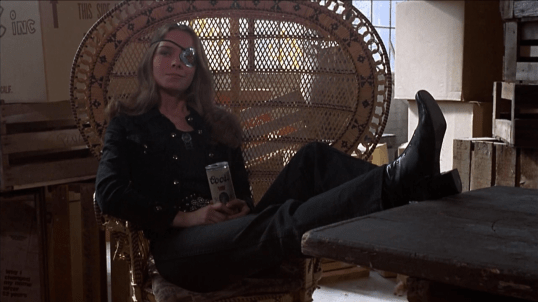
Switchblade Sisters (1975, dir by Jack Hill)
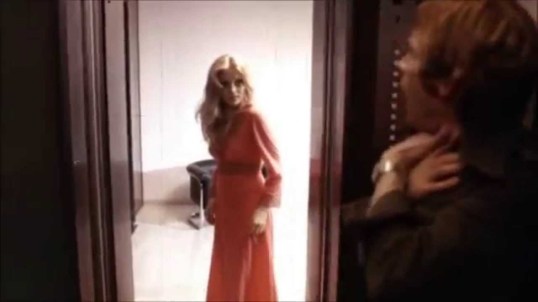
Death Has Blue Eyes (1976, dir by Nico Mastorakis)
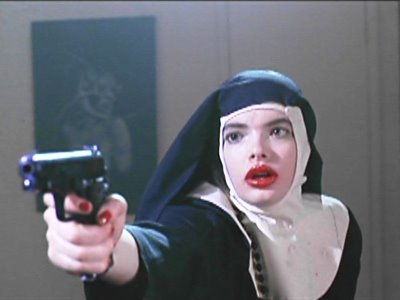
Ms. 45 (1981, dir by Abel Ferrara)
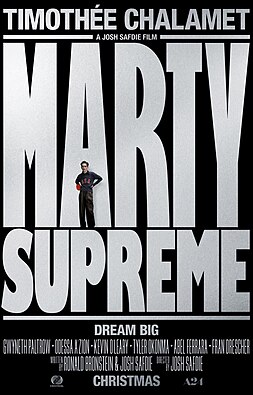
Leave it to Josh Safdie to make an anxiety-ridden film about ping pong.
That’s not a complaint, by the way. Both with his brother Benny and working solo on this film, Josh Safdie has proven himself to be a master at making anxiety compelling. Much more so than Benny’s 20205 offering, The Smashing Machine, Josh’s Marty Supreme keeps you off-balance. Marty Supreme may be set in the 50s but it’s deliberately shot in the gritty style of 70s-era Scorese and Lumet. Meanwhile, the background music is largely made up of classic songs from the 80s. Timothee Chalamet may play the title role of Marty Mauser, a shoe salesman who also happens to be a ping pong champion. And the film may also feature recognizable actors like Odessa A’Zion, Gwyneth Paltrow, Fran Drescher, and Emory Cohen (remember him?). But the majority of the cast is made up of people best-known for not being actors. Shark Tank co-host and aspiring lead of Canada Kevin O’Leary plays Paltrow’s husband and Marty’s occasional sponsor. Director Abel Ferrara plays a gangster who is searching for his dog. Penn Jillette plays a New Jersey farmer who shoots first and asks questions later. David Mamet, Isaac Mizrahi, early internet sensation Ted Williams, former New York mayoral candidateJ ohn Catsimatidis, rapper Tyler The Creator, and performance artist Sandra Bernhard all show up in small roles, creating a very New York atmosphere that somehow feels both familiar and artificial. Watching the movie is like living the tourist’s dream of traveling to New York, seeing your favorite Manhattan celebrities hanging out in Brooklyn, and then having them curse you out for owing them money.
As is to be expected from a Safdie film, Marty Mauser is not always a sympathetic protagonist. He’s been having an affair with the married Rachel (Odessa A’Zion) but, even after he finds out that Rachel is pregnant, that doesn’t stop him from having a purely sexual relationship with former actress Kay Stone (Gwyneth Paltrow), the wife of businessman Milton Rockwell (Kevin O’Leary). Marty thinks that he’s the world’s best ping pong player, which is why he has a hard time accepting being humiliated at the hands of Japan’s champion, Endo (Koto Kawaguchi). Marty’s efforts to return to Japan for a rematch lead to an at times dizzying array of complications. Marty is the type who will steal his lover’s necklace just to return it and apologize after learning that it was only worth two bucks because it was costume jewelry. Fortunately, Marty is played by Timothee Chalamet, who gives such an energetic and charismatic performance that it’s hard not to be charmed by the character even while his actions might upset, annoy, or even offend you. The film never claims that Marty is the best ping pong player in the world. Only Marty claims that. Instead, the film shows just how unshakeable Marty’s belief in himself is. It’s hard not to like someone who refuses to accept defeat.
In many ways, Marty is a quintessential American figure. He believes in himself and he’s not going to apologize for it. Both the character and the film celebrate the individualism that make America unique. That 50s setting really does make sense. Marty truly is the post-war American, dedicated and unapologetic. And, in that context, the film’s “stunt” casting, for lack of a better description, makes sense as well. David Mamet, Kevin O’Leary, Penn Jillette, Abel Ferrara, John Catsimatidis, and so many of the other familiar faces that float through Marty Supreme: they’re all people who have gone their own way, even at the risk of alienating the establishment.
Marty Supreme was nominated for 9 Oscars but failed to win any of them. Indeed, the amount of negative stories that were breathlessly reported about the film’s director and lead actor after the nominations were announced indicates that there was an organized whisper campaign against the film. (In a sad sign of the time, there was a good deal of negative backlash online from the dishrag brigade, who were upset that the film’s lead character was Jewish.) Despite being the best of the nominated films, Marty Supreme lost to One Battle After Another.
4 Shots From 4 Films is just what it says it is, 4 shots from 4 of our favorite films. As opposed to the reviews and recaps that we usually post, 4 Shots From 4 Films lets the visuals do the talking!
Today, the Shattered Lens wishes a happy 87th birthday to the legendary actor, Harvey Keitel! It’s time for….
4 Shots From 4 Harvey Keitel Films
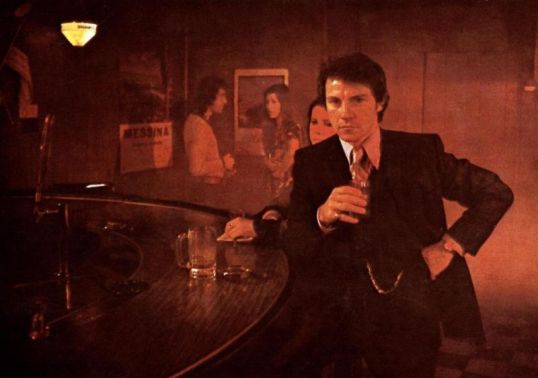
Mean Streets (1973, dir by Martin Scorsese, DP: Kent L. Wakeford)
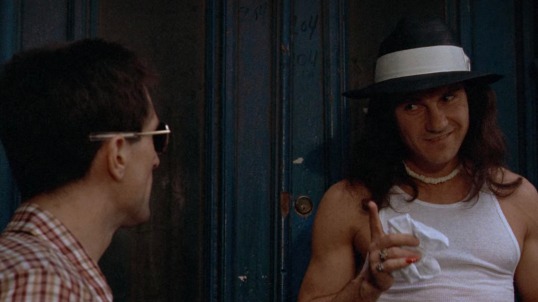
Taxi Driver (1976, dir by Martin Scorsese, DP: Michael Chapman)
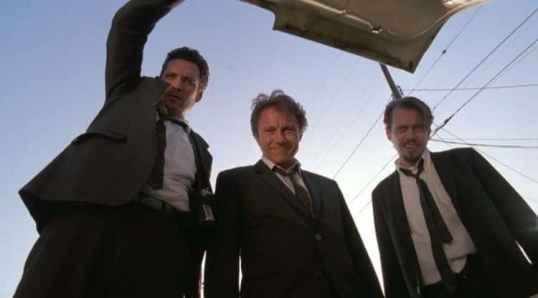
Reservoir Dogs (1992, dir by Quentin Tarantino, DP: Andrzej Sekuła)
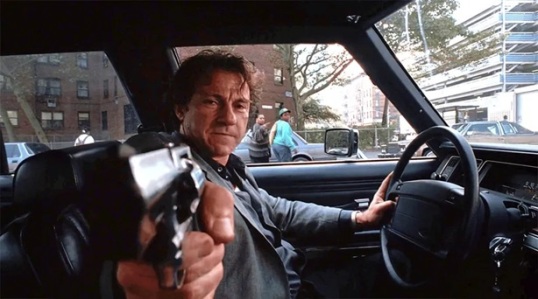
Bad Lieutenant (1992, dir by Abel Ferrara, DP: Ken Kelsch)
Welcome to Retro Television Reviews, a feature where we review some of our favorite and least favorite shows of the past! On Mondays, I will be reviewing Crime Story, which ran on NBC from 1986 to 1988. The entire show can be found on Tubi!
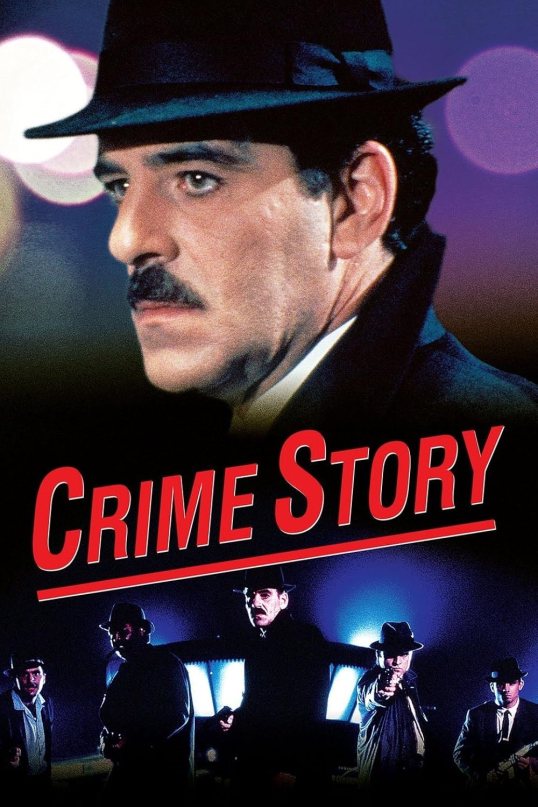
In 1986, riding high on the success of Miami Vice, Michael Mann signed on as executive producer of Crime Story, a cop show that Mann imagined would run for five seasons and which would follow a group of cops and gangsters from 1960s Chicago to 1980s Las Vegas. The show was co-created by former Chicago cop Chuck Adamson and it starred another former Chicago cop, Dennis Farina.
Though generally well-received by critics, Crime Story struggled in the ratings. The show’s highly serialized-nature made it difficult for audiences to follow. (This was in the pre-streaming age, when viewers couldn’t just get online and catch up with what they may have missed.) Crime Story only lasted for two seasons but it has since developed a strong cult following and is now regularly listed as one of the best cop shows ever made.
I’m going to find out if that’s true over the next few months. Two weeks ago, I finished up Miami Vice. Now, it’s time for Crime Story.
Episode 1.1 “Pilot”
(Dir by Abel Ferrara, originally aired on September 18th, 1986)
In Chicago, on a rainy night in the early 1960s, a group of masked robbers hold up a fancy restaurant and then try to escape with a group of terrified hostages. On the scene is the Major Crimes Unit, led by the grim Lt. Torello (Dennis Farina, a former real-life cop). The end result is that all of the robbers end up dead, the hostages end up traumatized, and one of Torello’s men, the obviously doomed Wes Connelly (William Russ), appears to be losing his mind over the violence that he has to deal with every day.
The plot of the pilot is actually pretty simple. A gang of thieves is holding up restaurants, banks, and stores in Chicago. Torello believes that an ambitious gangster named Ray Luca (Tony Denison) is behind the robberies and Torello is correct. The cool and sociopathic Ray is working with Johnny O’Donnel (David Caruso). O’Donnel may be a childhood friend of Luca’s but his parents are friends with Torello. When gangster Phil Bartoli (Jon Polito) orders Luca to kill O’Donnel after the latter robs one of Bartoli’s jewelry stores, it’s personal all-around.
Plot-wise, it’s pure Michael Mann. The cops and the gangsters are both obsessive. Luca will kill anyone to get ahead in the underworld. Oddly, his only real loyalty seems to be to his dumbest henchman, Pauli Taglia (John Santucci, a real-life former jewel thief who was once arrested by Dennis Farina). Torello may be fighting on the side of the law but he’s often just as quick to resort to violence as Luca. Director Abel Ferrara’s style can be seen in a scene where Torello is visited by the ghost of the recently murdered Wes Connelly. Torello is burned out and paranoid, flying into a rage when he sees his wife, Julie (Darlanne Fluegel), dancing with another man at a wedding. (The man in question turns out to be Torello’s cousin, whom Torello didn’t even recognize because he apparently doesn’t have much of a connection to anyone outside of the police force.) Towards the end of the episode, there’s a shoot-out in a department store and it’s hard not to notice that neither the crooks nor the cops seem to be all that concerned with the innocent bystanders trying to not get caught in the crossfire.
The pilot is dark, gritty, and, in its way, as stylized as any episode of Miami Vice. It never seems to stop raining and, even during the day, the skies are permanently gray and dark. The early 60s are recreated like a fever dream of pop culture, with rock and roll on the soundtrack, cars with tail fins screeching down the street, and Bartoli living in a house that looks more like a tacky diner then a true home. Torello and his men wear their dark suits and trenchcoats the way that soldiers wear their uniforms.
It’s an effective pilot, though we don’t really get to know much about the men working with Torello at the Major Crimes Unit. Bill Smitrovich, in the role Detective Danny Krycheck, establishes himself as being Torello’s second-in-command but that’s about it. Stephen Lang appears in a handful of scenes as David Abrams, a liberal public defender who is the son of a prominent gangster. Both Luca and Torello seem to want to make David into an alley and the episode hints that he will eventually have to make a choice. The episode ends with Luca in sunny Florida, meeting with veteran gangster Manny Weisbord (Joseph Wiseman). Torello, meanwhile, remains in dark Chicago.
The Crime Story pilot was deemed good enough to be released as a feature film in Europe. It also led to a series on NBC, which I will be reviewing here, every Monday! On the basis of the pilot, I’m looking forward to it.
Welcome to Manhattan in the mid-80s!
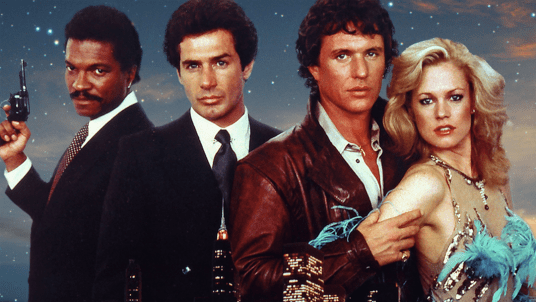
While self-righteous vice cop Al Wheeler (Billy Dee Williams) patrols the streets with the fury of an Old Testament prophet, men flock to seedy bars to watch women like Loretta (Melanie Griffith) dance and strip. Mobsters like Carmine (Rossano Brazzi) control the streets while club owners like Mike (Michael V. Gazzo) and Frank (Joe Santos) try to do business and make enough money to keep things open. Bookers like Nicky Parzeno (Jack Scalia) and Lou Goldstein (Jan Murray) compete to see who can place their girls in the most clubs. Nicky’s best friend and business partner, Matt Rossi (Tom Berenger), is haunted by his violent past as a boxer and his failed relationship with the drug-addicted Loretta.
Meanwhile, a nameless man (John Foster) practices nude tai chai in his warehouse apartment and writes feverishly in his journals. At night, he stalks the streets with a blade in his hand. He targets strippers, attacking them as they try to get home from the club. Honey (Ola Ray) is attacked on a subway platform. Loretta’s girlfriend, Leila (Rae Dawn Chong), is attacked on the streets. Obsessed with Loretta’s safety, Matt struggles with his own inner demons as he prepares for a final confrontation with the killer….
1985’s Fear City is another one of director Abel Ferrara’s heavily stylized fever dreams. In typical Ferrara fashion, the plot is so sordid that one might be tempted to think that the film is meant to be a self-parody and the dialogue mixes profane insults with bizarrely philosophical asides. As played by Billy Dee Williams, Al Wheeler is not just a cop who wants to clean up New York and Times Square. Instead, he’s a seething soldier to traditional morality and one who is so intense that it’s something of a shock that he doesn’t just walk around New York shooting people for jaywalking. Meanwhile, Tom Berenger’s Matt is a hulking brute who is haunted by the time he killed a man in the ring. He knows what he’s capable of and it scares him but, in order to save Loretta and his business, he’s going to have to become that deadly boxer once again. “I hate Matt Rossi because he’s arrogant,” Al Wheeler says through gritted teeth. Meanwhile, Matt deals with his own issues by trashing his office and then leaving the mess for someone else to clean up. I’m not sure what that was supposed to accomplish but it’s apparently something that Matt just has to do.
Abel Ferrara directed this film five years before King of New York and, in some ways, Fear City feels like a dry run for King of New York. Both films are highly stylized and both present New York as being a neon-lit Hell where the rich and the poor come together in mutual self-loathing and where the criminals often have more of a code of honor than the cops who are trying to stop them. Of course, King of New York had Christopher Walken’s magnetic performance as Frank White holding the film and its many storylines together. Fear City doesn’t really have that. Billy Dee Williams, Tom Berenger, Jack Scalia, and Melanie Griffith all give strong performance but none of their characters are really quite compelling or grounded enough to keep the film from spinning off into delirious excess.
In other words, Fear City is a mess but it’s one of those over-the-top, shamelessly sordid messes that you really can’t look away from. There’s enough philosophical dialogue to confirm that, as with King of New York, Ferrara was shooting at something more than just a typical exploitation film. Unlike King of New York, Ferrara doesn’t quite succeed in saying anything particularly deep about the human condition in Fear City. But that’s okay. It’s an entertainingly sordid film.
Timothee Chalamet plays Marty Mauser, a young man who dreams of being the world’s greatest ping pong player.
Normally, that is not the type of plot description that would catch my attention but Marty Supreme is directed by Josh Safdie, so you know it’s going to be about much more than just ping pong. The cast is also intriguing. Along with Chalamet, the cast includes everyone from Gwyneth Paltrow to Fran Drescher to Penn Jillette and director Abel Ferrara. Is Kevin O’Leary playing himself? Who knows with Safdie directing?
Judging from the trailer, this might be the most intense ping pong film ever made.
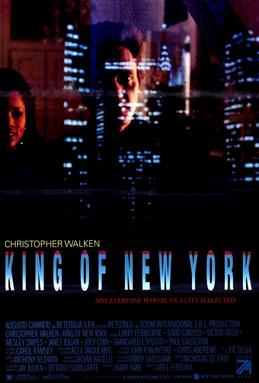 Drug kingpin Frank White (Christopher Walken) has been released from prison and is again on the streets of New York City. Frank might say that he’s gone straight but, as soon as he’s free, he’s partying with his old crew (including Laurene Fishburne, Steve Buscemi, Giancarlo Esposito, and others). While Frank’s agent (Paul Calderon) goes to all of the other city’s gangsters and explains that they can either get out of Frank’s way or die, three detectives (Victor Argo, David Caruso, and Wesley Snipes) make plans to take Frank out by any means necessary. Meanwhile, Frank is donating money to politicians, building hospitals, and presenting himself as New York’s savior.
King of New York is the epitome of a cult film. Directed by Abel Ferrara, the dark and violent King of New York was originally dismissed by critics and struggled to find an audience during its initial theatrical run. (It was lumped in with and overshadowed by other 1990 gangster films like Goodfellas and Godfather Part III.) But it was later rediscovered on both cable and home video and now it’s rightly considered to be a stone cold crime classic. Walken gives one of his best performances as Frank White and that’s not a surprise. The film was clearly made to give Walken a chance to show off what he could do with a lead role and Walken captures Frank’s charisma and humor without forgetting that he’s essentially a sociopath. Walken gives a performance that feels like James Cagney updated for the end of the 80s. What’s even more impressive is that all of the supporting characters are just as memorable as Walken’s Frank White. From Laurence Fishburne’s flamboyant killer to David Caruso’s hotheaded cop to Paul Calderon’s slippery agent to Janet Julian’s morally compromised attorney, everyone gives a strong performance. (I’m usually not a Caruso fan but he’s legitimately great here.) They come together to bring the film’s world to life. Everyone has their own reason for obsessing on Frank White and his return to power. I’ve always especially appreciated Victor Argo as the weary, veteran detective who finds himself trapped by Caruso and Wesley Snipes’s impulsive plan to take down Frank White. Frank White and the cops go to war and it’s sometimes hard to know whose side to be on.
Director Abel Ferrara has had a long and storied career, directing films about morally ambiguous people who are often pushed to extremes. Personally, I think King of New York is his best film, a portrait of not just a criminal but also of a city that combines the best and the worst of human nature. The action is exciting, the cast is superb, and Frank’s justifications for his behavior sometimes make a surprising amount of sense. Thought there’s occasionally been speculation that it could happen, there’s never been a sequel to King of New York and it doesn’t need one. King of New York is a film that tell you all that you need to know about Frank White and the city that he calls home.
Today’s scene is from Abel Ferrara’s 1990 gangster epic, King of New York. Featuring Christopher Walken and a host of familiar faces, it’s one of those scenes that simply just has to be seen.
4 Shots From 4 Films is just what it says it is, 4 shots from 4 of our favorite films. As opposed to the reviews and recaps that we usually post, 4 Shots From 4 Films lets the visuals do the talking.
Today is the birthday of Abel Ferrara. It’s time for….
4 Shots From 4 Films: Special Abel Ferrara Edition
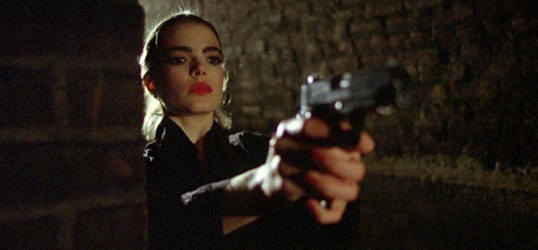
Ms. 45 (1981, dir by Abel Ferrara)
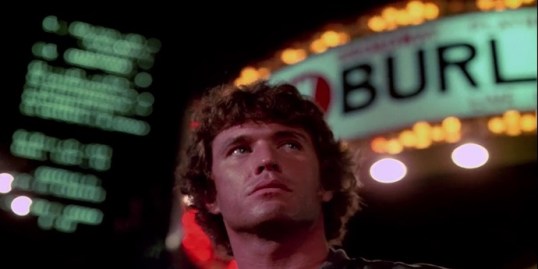
Fear City (1984, dir by Abel Ferrara)
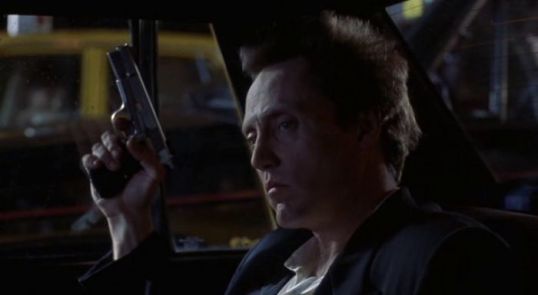
King of New York (1990, dir by Abel Ferrara)
Bad Lieutenant (1992, dir by Abel Ferrara)

