And here are The Independent Spirit Nominations


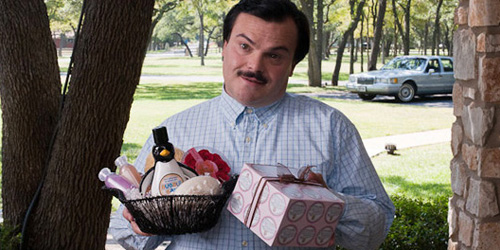
The Gotham Awards aren’t the only awards regularly given to films that the majority of filmgoers will never get to see.  The Independent Spirit Nominations are also dedicated to recognizing the best of independent film and they tend to get a bit more attention than the Gothams.  With the early Oscar talk being dominated by mainstream studio films like Argo, Lincoln and Les Miserables, indie films like Bernie and Moonrise Kingdom are going to need all of the help that they can get.

BEST PICTURE

Bernie

Beasts of the Southern Wild

Keep The Lights On

Moonrise Kingdom

Silver Linings Playbook

BEST DIRECTOR

Wes Anderson, Moonrise Kingdom

Julia Loktev, The Loneliest Planet

David O. Russell, Silver Linings Playbook

Ira Sachs, Keep the Lights On

Benh Zeitlin, Beasts of the Southern Wild

BEST SCREENPLAY

Wes Anderson & Roman Coppola, Moonrise Kingdom

Zoe Kazan, Ruby Sparks

Martin McDonagh, Seven Psychopaths

David O. Russell, Silver Linings Playbook

Ira Sachs, Keep the Lights On

BEST FIRST FEATURE

Fill the Void

Gimme the Loot

Safety Not Guaranteed

Sound of My Voice

The Perks of Being a Wallflower

BEST FIRST SCREENPLAY

Rama Burshtein, Fill the Void

Derek Connolly, Safety Not Guaranteed

Christopher Ford, Robot & Frank

Rashida Jones & Will McCormack, Celeste and Jesse Forever

Jonathan Lisecki, Gayby

JOHN CASSAVETES AWARD – (for features under $500,000)

Breakfast with Curtis

Middle of Nowhere

Mosquita y Mari

Starlet

The Color Wheel

BEST FEMALE LEAD

Linda Cardellini, Return

Emayatzy Corinealdi, Middle of Nowhere

Jennifer Lawrence, Silver Linings Playbook

Quvenzhané Wallis, Beasts of the Southern Wild

Mary Elizabeth Winstead, Smashed

BEST MALE LEAD

Jack Black, Bernie

Bradley Cooper, Silver Linings Playbook

John Hawkes, The Sessions

Thure Lindhardt, Keep the Lights On

Matthew McConaughey, Killer Joe

Wendell Pierce, Four

BEST SUPPORTING FEMALE

Rosemarie DeWitt, Your Sister’s Sister

Ann Dowd, Compliance

Helen Hunt, The Sessions

Brit Marling, Sound of My Voice

Lorraine Toussaint, Middle of Nowhere

BEST SUPPORTING MALE

Matthew McConaughey, Magic Mike

David Oyelowo, Middle of Nowhere

Michael Péna, End of Watch

Sam Rockwell, Seven Psychopaths

Bruce Willis, Moonrise Kingdom

BEST CINEMATOGRAPHY

Yoni Brook, Valley of Saints

Lol Crawley, Here

Ben Richardson, Beasts of the Southern Wild

Roman Vasyanov, End of Watch

Robert Yeoman, Moonrise Kingdom

BEST DOCUMENTARY

How to Survive a Plague

Marina Abramović: The Artist is Present

The Central Park Five

The Invisible War

The Waiting Room

BEST INTERNATIONAL FILM

Amour (France)

Once Upon A Time in Anatolia (Turkey)

Rust And Bone (France/Belgium)

Sister (Switzerland)

War Witch (Democratic Republic of Congo)

PIAGET PRODUCERS AWARD

Nobody Walks, Alicia Van Couvering

Prince Avalanche, Derrick Tseng

Stones in the Sun, Mynette Louie

SOMEONE TO WATCH AWARD

Pincus, director David Fenster

Gimme the Loot, director Adam Leon

Electrick Children, director Rebecca Thomas

TRUER THAN FICTION AWARD (given to emerging documentary filmmaker)

Leviathan, directors Lucien Castaing-Taylor and Véréna Paravel

The Waiting Room, director Peter Nicks

Only the Young, directors Jason Tippet & Elizabeth Mims

ROBERT ALTMAN AWARD (for ensemble cast)

Starlet Director: Sean Baker Casting Director: Julia Kim Cast: Dree Hemingway, Besedka Johnson, Karren Karagulian, Stella Maeve, James Ransone

Film Review: Lincoln (dir. by Steven Spielberg)


I am a history nerd.

If you’ve read my previous reviews here on the Shattered Lens, that’s not necessarily a major revelation.  Still, before I talk about Steven Spielberg’s latest film, the sure-to-be Oscar nominated Lincoln, you should know where I’m coming from as a reviewer.  Cinema may be my number one love but history, and especially political history, runs a close second.  To me, there is nothing more fascinating than learning how those in the past both viewed and dealt with the issues that we still face in the present.  Whereas some people take pride in being able to name every player that’s ever played for the Dallas Cowboys, I take pride in the fact that I can not only name every President and Vice President in order but I can also tell you exactly who they had to defeat in order to serve in those offices.

I love history and therefore, it was hard for me not to feel as if Lincoln was a film that was made specifically for me.  Covering the final four months of the life of the 16th president, this film tells the story of Lincoln’s struggle to pass the 13th Amendment and to bring an end to the U.S. Civil War.  The film also documents Lincoln’s troubled marriage to the unstable Mary and his son’s decision to enlist in the Union Army.  Even though Spielberg and screenwriter Tony Kushner don’t include any vampires*, there’s still a lot going on in Lincoln and it is to their credit that the film remains compelling despite the fact that everyone already knows how the story is going to end.

Daniel Day-Lewis is getting a lot of critical acclaim for his performance in the title role and, for once, I actually have to agree with the critics.  Abraham Lincoln is one of the most iconic figures in American history.  He is such an icon that, at times, it’s hard to believe that this larger-than-life figure, with his stove-pipe hat and his homely face, was an actual human being who lived and breathed and died like any other human being.  It’s easier to think of him in the same way that Jesus Christ used to be represented in films like Ben-Hur, as an inspiring character who is always standing just a little bit off-camera.  The brilliance of Day-Lewis’s performance is that he makes us believe that this legendary figure could actually exist with all the rest of history’s mortals.  For lack of a better term, Day-Lewis humanizes Lincoln.  His performance contains all the bits of the Lincoln legend: the fatalistic melancholy, the steely resolve, the quick humor, and occasional flashes of self-doubt.  The genius of the performance is the way that it takes all the legendary pieces and arranges them to create a portrait of a very believable man.

Though the film is dominated by Day-Lewis’s lead performance, the film’s supporting cast does a good job at bringing to life the people around Lincoln.  Whenever one film can manage to find roles for Hal Holbrook, David Strathairn, Jared Harris, James Spader, John Hawkes, and Jackie Earle Haley, you’ve got good reason to be optimistic about what you’re about to see.  Probably the film’s showiest supporting role goes to Tommy Lee Jones, who plays the firebrand abolitionist Thaddeus Stevens.  Admittedly, Tommy Lee Jones gives a standard Tommy Lee Jones performance here but, especially when paired with Day-Lewis’s more internal acting style, the end result is still fun to watch.  Also giving a good performance is Sally Field, who plays Lincoln’s mentally unstable wife.  Historians have rarely been kind (or fair) to Mary Lincoln but Field makes her into a difficult but sympathetic figure.  Finally, even though the role of Lincoln’s son is not a challenging one, I’m always happy whenever Joseph Gordon-Levitt shows up onscreen.

Ultimately, however, Lincoln is a Steven Spielberg film.  Spielberg is a very good director but he’s also a very safe one.  The same can be said of Lincoln as a film.  The film’s cinematography, art design, and costume design are all brilliantly done and award-worthy but it’s still hard not to occasionally wish that Spielberg would have enough faith in his audience that he wouldn’t feel the need to have John Williams provide constant musical cues to let us know what we are supposed to be feeling about what we’re experiencing.  If you’re looking for hints of moral ambiguity, an unflinching examination of the rivers of blood that flowed on the Civil War battlefield, or for an in-depth portrait of Lincoln’s personal demons (and most historians agree that he had a few), you might want to look elsewhere.  This is not Martin Scorsese’s Lincoln.  This is Steven Spielberg’s Lincoln.  This is a film that is meant to be inspiring (as opposed to thought-provoking) and, for the most part, it succeeds.

I have to admit that I went into Lincoln expecting to be disappointed.  Ever since the film first went into production in 2011, websites like Awards Daily have been hyping this film to death.  Before many of them had even seen the completed film, online critics were announcing that both the film and Daniel Day-Lewis were the clear front-runners for the Oscars in 2013.  As anyone who has read my previous reviews on this site knows, nothing turns me off more than the bandwagon mentality of the critical establishment.  Often times, when a film is embraced as vehemently and as early as Lincoln has been, I feel almost honor-bound to be a hundred times more critical of it than I would be of a film like Step Up Revolution.

However, Lincoln is a rarity.  It’s a film that, for the most part, actually lives up to all the hype.

—-

*I imagine that little joke will cause a lot of confusion to anyone who, ten years in the future, happens to stumble across this review.  To you, future reader who has forgotten all about Abraham Lincoln: Vampire Hunter, I can only apologize.

2 Trailers: The Sessions and Alex Cross


A frequently asked question: When is John Hawkes going to win an Oscar?

Ever since I first saw Winter’s Bone back in 2010, I’ve wondered just when exactly John Hawkes is going to finally win an Oscar.  Unfortunately, he did not win for Winter’s Bone and his chilling work in Martha Marcy May Marlene was ignored.  This year, however, he’s back with The Sessions.  In this film, Hawkes plays a 38 year-old man who is confined to an iron lung and who is attempting to lose his virginity with the help of William H. Macy and Helen Hunt.

The Sessions has been getting a lot of buzz since it premiered on Sundance.  That, quite frankly, makes me wary because I’ve come to learn that you have to take Sundance acclaim with a grain of salt.  If Cannes is where people go to be insanely critical, Sundance has a deserved reputation for going overboard when it comes to praise.  However, I will take a chance on anything featuring John Hawkes and, just judging from the trailer, it looks like both The Sessions and John Hawkes could be contenders when it comes time to hand out Oscar nominations.

A less frequently asked question: When is Tyler Perry going to win an Oscar?

Most people would probably answer that question by replying, “Never,” and they could very well be correct.  I have to admit that I’ve never actually sat through any of Tyler’s Perry’s films and, to be honest, I’ve never really had any desire to.  That said, I’ve always been fascinated by Perry’s success and I can’t help but admire the fact that he’s not shy when it comes to self-promotion.

In the upcoming Alex Cross, Tyler Perry will step into a role that was previously played by Morgan Freeman and, if nothing else, it’ll add fuel to the debate as to whether or not Perry is a legitimate acting talent or just a smart businessman.  To be honest, the trailer for Alex Cross plays less like a movie trailer and more like a commercial for a movie on Chiller.  I think that’s largely because of the presence of TV-movie mainstays like Matthew Fox and John C. McGinley.  Still, chances are, Alex Cross will be the first exposure that I (and a lot of other people) get to Tyler Perry as an actor as opposed to just a personality. 

Film Review: Martha Marcy May Marlene (directed by Sean Durkin)


Martha Marcy May Marlene was, for me, one of the most surprising films of 2011.  I wasn’t expecting much when I went to see it because so much of the film’s publicity centered on the fact that it starred Elizabeth Olsen, the younger sister of the Olsen Twins.  Needless to say, we don’t usually associate the Olsen Twins with challenging and mature filmmaking and, even though they had nothing to do with Martha Marcy May Marlene, it was impossible to read or hear about the film without them being mentioned.  For a lot of people, this led to Martha Marcy May Marlene being dismissed by association.  That’s really not fair to the film or Elizabeth Olsen (or the Olsen Twins, for that matter).  Martha Marcy May Marlene is a haunting and disturbing little psychological thriller and one of the best films of 2011.

Olsen plays Martha, a young woman who, one day, shows up at the home of her older sister and her husband (played by Sarah Paulson and Hugh Dancy).  Though the film never gets into the specific details, it becomes apparent that Paulson and Olsen are the products of a dysfunctional background.  Olsen escaped by running away from home while Paulson found her exit by marrying the rather arrogant Dancy.  Hoping to repair their own strained relationship, Paulson agrees to let Olsen stay with them, despite both the objections of Dancy and Olsen’s refusal to say where she’s been.  No sooner has Olsen moved in then it starts to become apparent that she’s not the same person that Paulson remembers. When Paulson asks Olsen if she wants to take a swim in the nearby lake, Olsen responds by stripping off her clothes in front of Dancy and when Paulson and Dancy are trying to conceive their first child, Olsen sees nothing wrong with casually walking into the room and laying down on the bed beside them.  More ominously, Olsen soon reveals herself to be paranoid of strangers.  As Paulson struggles to understand her sister, we see flashbacks of a much more open (and trusting) Olsen joining a cult-like group, led by a magnetic John Hawkes.

Director Sean Durkin makes an assured debut with this film, subtly shifting between the present and the past and filling the screen with beautifully placid images that somehow manage to leave the audience with an unshakeable sense of menace and foreboding.  As a storyteller, Durkin keeps the audience guessing and wondering about both who Martha once was, who she eventually became, and who she’s going to be in the future.  Wisely Durkin doesn’t provide any easy solutions as much as he poses questions and then suggests a possible answer. 

If you’re like and you’re a true crime and/or exploitation junkie (I’m both), you’ll realize immediately that the character played by John Hawkes is pretty blatantly based on Charles Manson and his followers are the equivalent of Manson’s “family.”  What’s interesting is how Hawkes manages to keep his character both threatening and intriguing even after this become apparent.  Hawkes radiates such charisma in the beginning of the film that the scenes where he eventually reveals his true colors are shocking, despite the fact that you know they’re coming.  It’s a performance that proves that Hawkes is one of the best character actors working today and Durkin skillfully contrasts Hawkes’s more subtle form of domination with Hugh Dancy’s more obvious technique with the film ultimately suggesting that both of these patriarchal characters are just two sides of the same coin.

Ultimately, though, the film is dominated by Elizabeth Olsen who gives a performance that is simply brilliant.  Alternatively innocent and calculating, Martha is a fascinating character and Olsen brings her to haunting life.  As a result of Olsen’s brave performance, Martha Marcy May Marlene joins with Hanna and Shame as a great modern film about the search for identity.  This has been a year full of strong female performances and Olsen gives one of the strongest.  The next time some shyster tries to sell you on the idea that Rooney Mara is the actress of the future, tell them to go see Martha Marcy May Marlene.

The WAFCA Has Spoken


I don’t know much about the Washington Area Film Critics Association but, just judging from the films that they chose to nominate for being the best of 2011, they would appear to have better taste than most film critics. 

(Seriously, film critics are the worst.)

They announced their picks for the best of 2011 earlier today and here’s a complete list of their nominees and winners.  If nothing else, this year’s Oscar race is certainly shaping up to be a bit more interesting than last years. 

Best Film:
*The Artist
The Descendants
Drive
Hugo
Win Win

Best Director:
Woody Allen (Midnight in Paris)
Michel Hazanavicius (The Artist)
Alexander Payne (The Descendants)
Nicolas Winding Refn (Drive)
*Martin Scorsese (Hugo)

Best Actor:
*George Clooney (The Descendants)
Jean Dujardin (The Artist)
Michael Fassbender (Shame)
Brad Pitt (Moneyball)
Michael Shannon (Take Shelter)

Best Actress:
Viola Davis (The Help)
Elizabeth Olsen (Martha Marcy May Marlene)
Meryl Streep (The Iron Lady)
Tilda Swinton (We Need to Talk About Kevin)
*Michelle Williams (My Week with Marilyn)

Best Supporting Actor:
Kenneth Branagh (My Week with Marilyn)
*Albert Brooks (Drive)
John Hawkes (Martha Marcy May Marlene)
Christopher Plummer (Beginners)
Andy Serkis (Rise of the Planet of the Apes)

Best Supporting Actress:
Bérénice Bejo (The Artist)
Melissa McCarthy (Bridesmaids)
Carey Mulligan (Shame)
*Octavia Spencer (The Help)
Shailene Woodley (The Descendants)

Best Acting Ensemble:
*Bridesmaids
Harry Potter and the Deathly Hallows Part 2
The Help
Hugo
Margin Call

Best Adapted Screenplay:
*Alexander Payne and Nate Faxon & Jim Rash (The Descendants)
Tate Taylor (The Help)
John Logan (Hugo)
Steven Zaillian and Aaron Sorkin (Moneyball)
Bridget O’Connor & Peter Straughan (Tinker, Tailor, Soldier, Spy)

Best Original Screenplay:

Woody Allen (Midnight in Paris)
Michel Hazanavicius (The Artist)
Tom McCarthy (Win Win)
Annie Mumolo & Kristen Wiig (Bridesmaids)
*Will Reiser (50/50)

Best Animated Feature:
The Adventures of Tintin
Arthur Christmas
Puss in Boots
*Rango
Winnie the Pooh

Best Documentary:
Being Elmo: A Puppeteer’s Journey
Buck
*Cave of Forgotten Dreams
Into the Abyss: A Tale of Death, A Tale of Life
Project Nim

Best Foreign Language Film:
13 Assassins
Certified Copy
I Saw the Devil
Pina
*The Skin I Live In

Best Art Direction:
Lawrence Bennett, Production Designer, and Gregory S. Hooper, Art Director (The Artist)
Stuart Craig, Production Designer, and Stephenie McMillan, Set Decorator (Harry Potter and the Deathly Hallows Part 2)
*Dante Ferretti, Production Designer, and Francesca Lo Schiavo, Set Decorator (Hugo)
Jack Fisk, Production Designer, and Jeanette Scott, Set Decorator (The Tree of Life)
Rick Carter, Production Designer, and Lee Sandales, Set Decorator (War Horse)

Best Cinematography:
Guillaume Schiffman (The Artist)
Robert Richardson (Hugo)
Manuel Alberto Claro (Melancholia)
*Emmanuel Lubezki (The Tree of Life)
Janusz Kaminski (War Horse)

Best Score:
*Ludovic Bource (The Artist)
Cliff Martinez (Drive)
Trent Reznor & Atticus Ross (The Girl with the Dragon Tattoo)
Howard Shore (Hugo)
John Williams (War Horse)

Quick Review: Contagion (dir. by Steven Soderbergh)


Note that this isn’t the only review for Contagion.

Arleigh has an in-depth review of the film, which is also available to see, whereas this is more of a summary. As it’s for the same film, I’ve used the same tags that were in Arleigh’s post.

Before I start, I have to say that I haven’t had a theatre be so quiet during a film since I went to see Mirrors, and that was because there was no one there. My showing for Contagion was packed, but no one made a sound throughout the film. I coughed twice (because I had to), and you wouldn’t believe how many heads turned in my general direction. If nothing else, it shows that the movie had some impact to the audience, and that’s always (okay, usually) interesting to see. By the time the movie is over, you will probably pay attention to how many times you touch your face or the objects around you.

If there’s one thing I can give director Steven Soderbergh, it’s that he has a great ability to work with ensemble casts. He did a great job in getting everyone to work together on the Oceans Eleven remake and sequels. He also walked away with a Best Director Oscar for Traffic. His films have the ability to avoid having his stars chew up enough screen time that they appear to be an actual center character. Catherine Zeta-Jones’ had a character who’s story was just as strong as Benecio Del Toro’s.

On this, Contagion is no different. In essence, it’s almost like watching cameos in a miniseries.

Although the film is peppered with various actors, no one person can be considered the main character of the film. Soderbergh is able to get them all to play their roles well. He and Scott Z. Burns – one of the writers on The Bourne Ultimatum and a collaborator with Soderbergh – give us a number of perspectives for this story and damn, the whole thing is very tight overall. The movie has very little wasted space.

Like the story itself, the movie moves at a great pace, opening with Elizabeth Emhoff (Gwenyth Paltrow) on her second day after exposure to the virus after returning from a trip to Hong Kong. This eventually escalates to other infections reported in other areas around the world. In an effort to contain and understand what they’re dealing with, the Center for Disease Control starts an investigation. Lead by Dr. Ellis Cheever (Lawrence Fishburne), he sends Dr. Erin Mears (Kate Winslet) to Minnesota to determine the scale of the problem.

In addition to the CDC’s efforts, the World Health Organization also gets involved, sending their own field agent to Hong Kong, played by Marion Cotillard. Both doctors come up with information that appear to be helpful for the overall investigation in various ways.

The other two angles in the film are through a conspiracy theory blogger / investigative reporter played by Jude Law and Mitch Emhoff (Matt Damon), who has to deal with the impact of his wife’s sickness. Enrico Colantoni, Brian Cranston, Sanaa Lathan, Elliot Gould and Jennifer Ehle round out the cast. It should be noted that Ehle is the daughter of Kenneth Branaugh’s Hamlet actress Rosemary Harris, who looks remarkably like her mother. That’s just something that caught my eye.

In terms of the Kid Factor, I would be hesitant to take kids to see this unless they had a pretty clear handle on death or getting sick. Teens and adults could probably handle the film, but anyone under than that may freak out a little. Mind you, there’s very little gore in this film. When I think about it, there’s not even a whole lot of blood. There is some violence though as the story escalates and humanity goes wild, but it’s not that far a cry from many zombie movies. It’s up to the parents discretion on whether their kids should see this.

I should also point out that the music in this film is also very good. Cliff Martinez, who also worked on the score for Drive (also out this month) did an impressive job with an electronic score that sits in the background of the film, but also fits the pacing of the film well. It’s worth giving it a listen if at all possible. This quick review was actually written to the Contagion score.

Contagion is definitely worth seeing, easily recommended, but if you happen to be particular about germs, note that this may not be the most comfortable film to watch. Don’t be shocked if you end up hugging yourself while watching this in the theatre. With Soderbergh moving away from film directing to pursue other interests, Contagion is a nice final bow to his career.

Review: Contagion (dir. by Steven Soderbergh)


In a world where almost every season news media both traditional and on-line warn the population of what could be an outbreak of a new super-virus that could cause a new pandemic similar to the Spanish Flu of 1918. This was a pandemic which occurred before transcontinental travel was the norm and the virus still managed to kill 1% of the world’s population. Now, it’s 2011 and with warnings of swine flu, bird flu, Ebola, SARS and any number of infectious diseases still in the public’s consciousness we get a new film from filmmaker Steven Soderbergh which seriously explores a world discovering a new deadly disease and how the world responds and deals with the crisis.

Contagion begins with a simple “Day 2” caption as we see one Beth Emhoff (Gwyneth Paltrow) awaiting her flight to board in O’Hare at Chicago. There’s a bit of character building about this character who we see as already in the early stages of what looks to be the flu. From there Soderbergh does an interesting bit where he lets the camera linger for just a split second longer whenever Beth touches something. Soderbergh does this many times that the audience will soon get used to it and forget the significance of the act. We see Beth get a ride home from a colleague back to her home where she’s welcomed home by her husband Mitch and her young son Clark who runs to her and gives her a big hug.

The story really hits the ground running as Beth and soon those she has come into contact with begin to show similar symptoms and quickly die. The CDC and it’s head administrator, Dr. Ellis Cheever (Laurence Fishburne), soon begin to see a pattern to the deaths and the similarity to their symptoms. We soon see another aspect of the story begin with the arrival of Dr. Erin Mears whose job is to investigate the circumstance which seems to be leading into a cluster case starting with Beth and the area she lives in.

The third aspect of this film throws in internet news blogger Alan Krumwiede (Jude Law) who begins to suspect that several deaths around the world looks to be interconnected in someway and that the government, the CDC and the WHO (World Health Organization) are trying to hide these disturbing facts from the general public. Krumwiede becomes the purveyor of unfiltered news which seems to do more harm than good as more and more people begin to believe his conspiracy theories about what looks to be a growing global pandemic cause by an unknown virus every expert brought in to help cannot seem to figure out.

Let me just first say that to call Contagion a thriller in the traditional sense would be flimsy at best. Soderbergh and the film’s writer, Scott Z. Burns, have made a thriller but in a sense that it skews heavily on using realism and an almost docudrama style to push the film’s narrative. The thriller aspect comes from the notion that this film’s plot is not far off from actually becoming a real event. There’s no usage of dramatic tropes from past disaster and apocalyptic films to manipulate the audience. The film as a thriller would be quite mundane when stacked up against films like Outbreak and The Andromeda Strain. It’s the realness of the story, the events taking place on the screen which gives the film it’s dramatic heft.

We begin to see what Soderbergh is trying to accomplish with this film. How transcontinental travel which took weeks during the 1918 Spanish Flu pandemic now can spread a highly infectious disease in a manner of less than a day’s plane flight over one ocean. The film shows in disturbing detail just how easily we as a people can spread a disease just by doing the most innocuous thing like absently touching one’s face many times a minute then transferring whatever we had to any surface we touch. Contagion definitely will add to the paranoia of those who already have an unhealthy habit of disinfecting everything before they even touch it.

The film doesn’t just touch upon the medical side of solving the growing crisis, but also explores how the governmental response and sociological reaction to the epidemic. For the former we see how protocols and the need to slowly disseminate information to the public only adds to the public’s mistrust of the very agencies created to help them in case of such an event. Soderbergh doesn’t condemn or praise these agencies for their bureaucracy. We see the reason why places like the CDC take their time to finally inform the public as we get the unfiltered and manipulative news blog side of the news media in the form of Krumwiede’s blog. While he does dare to ask the questions other more traditional news organizations fail to ask he also becomes too enamored with how many people read his blog that he’s willing to manipulate the news itself in order to gain more followers.

Contagion hits the second half of the film with the world in full crisis mode and the film taking on a more apocalyptic tone. We see streets in San Francisco full of garbage bags as agencies who used to pick them up have either gone on strike or have stopped their daily runs in fear of infection. Then there are the riots at pharmacies and stores as interstate commerce grounds to a halt and no new supplies of goods and sundries make it to stores. Society itself begin to devolve as everyone and every group start to look after their own and begin to turn on others for the dwindling supplies.

It’s here in the second half that we see the film take on some of the more traditional aspects of a thriller, but even here Soderbergh doesn’t seem to want to linger on the more sensational side of the story. He continues, for good or ill, on the narrative style he began with and that’s to see the epidemic from beginning to conclusion in as clinical a manner as possible. It’s for this reason that at times the more intimate and personal side of the film’s story involving the Emhoff family seemed like it was from a different film. The Emhoff’s end up becoming the heart of the film, but it’s this emotional center that never seemed to fit with the sterile and cold narrative style Soderbergh chose to tell the film’s story.

The performances by the star-studded cast was quite good, but no one person really stood out. If I had to choose one it would have to be Kate Winslet’s Dr. Mears who goes out into the field early in the crisis investigating the early stages of the epidemic. We see her frustration at having to deal with local governmental agencies who fear the hit a quarantine would put on local economies (as if people dying in droves wouldn’t be a bigger hit) and the very danger of contracting the disease itself since having no knowledge of how it works she must use means of protection that may or may not protect her. While her story-arc in the film was just one of several it was her’s which really showed a major impact at how impersonal can be and how no one is truly safe.

Contagion is a film that tells a story about the possibility of such an event occurring and does it well, if not in a very clinical way, but it also shows just how unprepared we truly are when it comes to the smallest of creatures who sees us as nothing more than living forms of intercontinental travel. It’s exploration of such a global crisis in all it’s aspects (medical, research, governmental, media and sociological) makes it seem more like a docudrama more at home in the Discovery Channel, The Science Channel and the like instead of a cinema multiplex. It’s all due to Soderbergh’s storytelling skills that he’s able to pull off such a non-traditional thriller and make people more afraid about their surroundings coming out of the film than they were going into it. It’s not one of Soderbergh’s best films, but it’s a strong offering from him and one of the better films to come out in 2011.

Trailer: Contagion (Official)


If there’s one type of genre film I always will end up watching (sometimes to my regret if they turn out to be awful) it will be the apocalyptic-themed film. It doesn’t matter if the apocalypse about to hammer down on the planet in the film is nuclear war, some cosmic event, zombies, the Rapture, etc. As long as the world is in the brink of snuffing out I will watch it.

To find out last year that Steven Soderbergh was going to make his next big project just such an apocalyptic film was exciting. He was to take the worldwide, multi-subplot storyline and a huge cast like he did with Traffic and substitute an lethal pandemic virus for the drug war. It’s cast was to include Matt Damon, Marion Cotillard, Kate Winslet, Gwyneth Paltrow, Laurence Fishburne, John Hawkes and Jude Law to name a few. The film was going to be filmed around the world to truly give it that international feel to it.

Contagion will have a release date of September 16, 2011 and if any film really could benefit from a really great viral marketing it would be this.

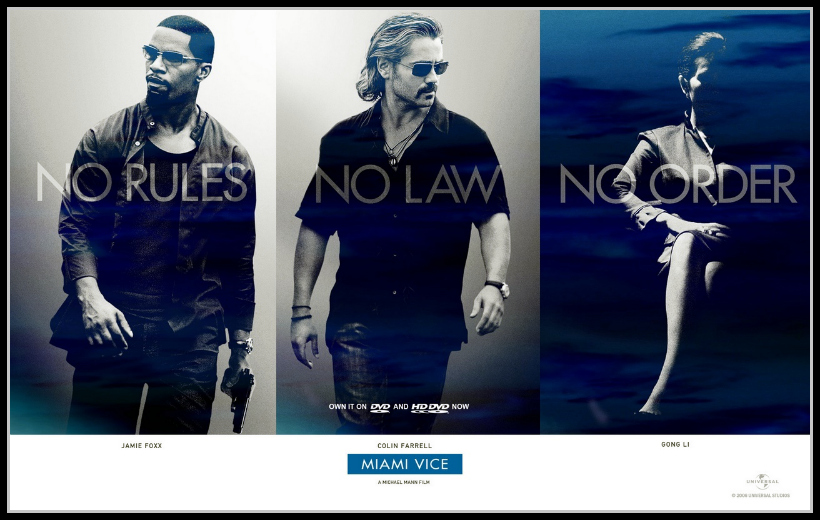
Review: Miami Vice (dir. by Michael Mann)


Michael Mann has always been in the forefront of experimenting and trying out new film techniques and styles to tell his stories. 2003’s Collateral was a veritable masterpiece of directing of a modern, urban noir. He even made Tom Cruise very believable as a sociopathic character. In 2006, Michael Mann followed up Collateral with another trip down the darkside of the law and crime. Taking a concept he made into a cultural phenomenon during the mid 80’s, Mann reinvents the show Miami Vice from the pastel colors, hedonistic and over-the-top drug-culture Miami of the 1980’s to a more down, dirty and shadowy world of the new millenium where extremes by both the cops and the criminals rule the seedy, forgotten side of the city.

Michael Mann’s films have always dealt with the extremes in its characters. Whether its James Caan’s thief character Frank in Thief, the dueling detective and thief of Al Pacino and Robert DeNiro in Heat, up to Foxx and Cruise’s taxi driver and assassin in the aforementioned Collateral. They all have had one thing in common. They’re individuals dedicated to their chosen craft. Professional in all respect and so focused to doing their job right that they’ve crossed the line to obsession. It is this obsession and how it governs everything they do which almost makes it into their own personal form of drug.

This theme continues in Mann’s film reboot of his TV series Miami Vice. The characters remain the same. There’s still the two main characters of Vice Detectives Sonny Crockett and Ricardo Tubbs. This time around these titular characters were played by Colin Farrell (in a look that echoes Gregg Allman more than Don Johnson) and Jamie Foxx. From the first moment the first scene suddenly appears all the way through to the final fade to black in the end of the film, the audience was thrust immediately into the meat of the action. Mann dispenses with the need for any sort of opening credits. In fact, the title of the film doesn’t appear until the end of the film and the same goes for the names of all involved. I thought this was a nice touch. It gave the film a stronger realism throughout.

The film’s story was a mixture of past classic episodes rolled into one two-hour long film with the episode “Smuggler’s Blues” being the main influence on the story. The glamour and glitz that were so prevalent in the original series does show up in the film, but it’s not used too much that it turned the characters of Crockett, Tubbs and the rest of the cast into caricatures. The glamour seems more of a thin veneer to hide the danger inherent in all the parties involved. These people were all dangerous from the cops to the criminals. There’s a lot of the so-called “gray areas” between what makes a cop and what makes a criminal. Mann’s always been great in blurring those lines and in showing that people on either side of the line have much more in common than they realize.

Miami Vice‘s story doesn’t leave much for back story exposition for the main leads. Michael Mann takes the minimalist approach and just introduces the characters right from the beginning with nothing to explain who they were outside of the roles they played — whether they were law-enforcement or drug dealers. The script allows for little personal backstory and instead lets the actors’ performance show just what moves, motivates and inspires these characters. Again, Jamie Foxx steals the film from his more glamorous co-star in Colin Farrell. Farrell did a fine job in making Crockett the high-risk taking and intense half of the partnership, but Foxx’s no-nonsense, focused intensity as Tubbs was the highlight performance throughout the film.

The rest of the cast do a fine job in the their roles. From Gong Li as Isabella, the drug-lord’s moll who also double’s as his organization’s brains behind the finances to Luis Tosar as the mastermind drug kingping Arcángel de Jesús Montoya. Tosar as Montoya also does a standout performance, but was in the screen for too less a time. Two other players in the film I have to make mention of were John Ortiz as Jose Yero who was Montoya’s machiavellian spymaster and Tom Towles in a small, but scary role as the leader of the Aryan Brotherhood gang hired by Yero to be his Miami enforcers. Both actors were great in their supporting role and more than held their own against their more celebrated cast mates.

This film wouldn’t be much of a police crime drama if it was all talk and no action. The action in Miami Vice comes fast and tight. Each scene was played out with a tightness and intensity which prepped the audience to the point that the violence that suddenly arrives was almost a release. Everyone knew what was coming and when the violence and action do arrive it goes in hard and fast with no use of quick edits, slow-motion sequences or fancy camera angles and tricks like most action films. Instead Michael Mann continues his theme of going for realism even in these pivotal moments in the film.

The shootouts doesn’t have the feel of artificiality. The gunshots inflicted on the people in the film were brutal, violent and quick. The camera doesn’t linger on the dead and wounded. These scenes must’ve taken only a few minutes of the film’s running time, but they were minutes that were executed with Swiss-like precision. The final showdown at an empty lot near the Miami docks was organized chaos with the scene easy to follow yet still keeping a sense of anarchy to give the whole sequence a real sense of “in the now”.

The look of the film was where Mann’s signature could be seen from beginning to end. He started using digital cameras heavily in Collateral. His decision to use digital cameras for that film also was due to a story mostly set at night. The use of digital allowed him to capture the deepest black to off-set the grays and blues of Los Angeles at night. Mann does the same for Miami Vice, but he does Collateral one better by using digital cameras from beginning to end. Digital lent abit of graininess to some scenes, but it really wasn’t as distracting as some reviewers would have you believe. In fact, it made Miami Vice seem like a tale straight out of COPS or one of those reality police shows.

Michael Mann stretches the limits of what his mind and technology could accomplish when working in concert. Mann’s direction and overall work in Miami Vice could only be described as being as focused and obsessive over the smallest detail as the characters in his films. This is a filmmaker who seem to want nothing but perfection in each scene shot.

With Miami Vice, Michael Mann has done the unthinkable and actually made a film adaptation of a TV show look like an art-film posing as a tight police drama. Everyone who have given the film a less than stellar review seem to have done so because Mann didn’t use the 80’s imagery and sensibilities from the original show. There were no pastel designer clothes and homes. There was no pet alligator and little friendly banter and joking around. Mann goes the other way and keeps the mood deadly serious. This was very apropo since the two leads led mortally dangerous lives as undercover agents who could die at the slightest mistake. The fun and jokes of the original series would’ve broken the mood and feel of this film. I, for one, am glad Mann went this route and not paid homage to the original series. This some saw as a major flaw, but I saw it as the main advantage in keeping Miami Vice from becoming a self-referential film bordering on camp.

Miami Vice was a finished product thats smart, stylish, and innovative crime drama. This was a film that people would either love despite some of the flaws, or one people would hate due to not being like the original TV series. Those who decide to skip watching Miami Vice because of the latter would miss a great film from one of this generation’s best directors. Those who do give this version of Miami Vice a chance would be rewarded with a great tale of cops and criminals and the obsession they have in their set roles.

Lisa And The Academy Agree To Disagree


The Oscar nominations were announced today and, for the most part, it’s pretty much what you would expect.  Below is the list of nominees.  If a nominee listed in bold print, that means they also appeared on my own personal list of nominations.

Best motion picture of the year

Black Swan
The Fighter
Inception
The Kids Are All Right
The King’s Speech
127 Hours
The Social Network
Toy Story 3
True Grit
Winter’s Bone

(The Academy and I agree on five of the ten nominees.  That’s actually more than I was expecting.)

Performance by an actor in a leading role

Javier Bardem (Biutiful)
Jeff Bridges (True Grit)
Jesse Eisenberg (The Social Network)
Colin Firth (The King’s Speech)
James Franco (127 Hours)

(The only real surprise here is Bardem.  I haven’t seen Biutiful but I’ve heard amazing things about it.)

Performance by an actor in a supporting role

Christian Bale (The Fighter)
John Hawkes (Winter’s Bone)
Jeremy Renner (The Town)
Mark Ruffalo (The Kids Are All Right)
Geoffrey Rush (The King’s Speech)

(Yay for John Hawkes!  Some people are surprised that Andrew Garfield wasn’t nominated for The Social Network.  I’m disappointed he wasn’t nominated for Never Let Me Go.)

Performance by an actress in a leading role

Annette Bening (The Kids Are All Right)
Nicole Kidman (Rabbit Hole)
Jennifer Lawrence (Winter’s Bone)
Natalie Portman (Black Swan)
Michelle Williams (Blue Valentine)

(I’m happy to see Lawrence and Portman recognized but I still so wish that the Academy had recongized Noomi Rapace and Katie Jarvis as well.  I knew it wouldn’t happen but still…)

Performance by an actress in a supporting role

Amy Adams (The Fighter)
Helena Bonham Carter (The King’s Speech)
Melissa Leo (The Fighter)
Hailee Steinfeld (True Grit)
Jacki Weaver (Animal Kingdom)

(Weaver — Yay!) 

Achievement in directing

Darren Aronofsky (Black Swan)
David O Russell (The Fighter)
Tom Hooper (The King’s Speech)
David Fincher (The Social Network)
Joel Coen and Ethan Coen (True Grit)

(The snubbing of Christopher Nolan for Inception is probably the closest thing to an outrage that the Oscars will produce this year.)

Adapted screenplay

127 Hours – Danny Boyle & Simon Beaufoy
The Social Network – Aaron Sorkin
Toy Story 3 – Michael Arndt (screenplay); John Lasseter, Andrew Stanton and Lee Unkrich (story)
True Grit – Joel Coen and Ethan Coen
Winter’s Bone – Debra Granik & Anne Rosellini

Original screenplay

Another Year – Mike Leigh
The Fighter – Scott Silver, Paul Tamasy and Eric Johnson (screenplay); Keith Dorrington, Paul Tamasy and Eric Johnson (story)
Inception – Christopher Nolan
The Kids Are All Right – Lisa Cholodenko and Stuart Blumberg
The King’s Speech – David Seidler

Best animated feature film of the year

How to Train Your Dragon
The Illusionist
Toy Story 3

 (I haven’t seen The Illusionist yet but I’m looking forward to it because the previews look great, it’s based on a script by Jacques Tati, and I love all things French.  Still, I kinda wish that Despicable Me had been nominated just so Arleigh could see the minions at the Academy Awards.)

Best foreign language film of the year

Biutiful (Mexico)
Dogtooth (Greece)
In a Better World (Denmark)
Incendies (Canada)
Outside the Law (Hors-la-loi) (Algeria)

Art direction

Alice in Wonderland – Robert Stromberg (production design), Karen O’Hara (set decoration)
Harry Potter and the Deathly Hallows Part 1 – Stuart Craig (production design), Stephenie McMillan (set decoration)
Inception – Guy Hendrix Dyas (production design), Larry Dias and Doug Mowat (set decoration)
The King’s Speech – Eve Stewart (production design), Judy Farr (set decoration)
True Grit – Jess Gonchor (production design), Nancy Haigh (set decoration) 

Achievement in cinematography

Matthew Libatique (Black Swan)
Wally Pfister (Inception)
Danny Cohen (The King’s Speech)
Jeff Cronenweth (The Social Network)
Roger Deakins (True Grit) 

Achievement in costume design

Colleen Atwood (Alice in Wonderland)
Antonella Cannarozzi (I Am Love)
Jenny Beavan (The King’s Speech)
Sandy Powell (The Tempest)
Mary Zophres (True Grit)

(That’s right, I ended up going 0 for 5 as far as Costume Design is concerned.  Which I guess goes to prove that I have better taste than the Academy.)

Best documentary feature

Exit Through the Gift Shop (Banksy and Jaimie D’Cruz)
Gasland (Josh Fox and Trish Adlesic)
Inside Job (Charles Ferguson and Audrey Marrs)
Restrepo (Tim Hetherington and Sebastian Junger)
Waste Land (Lucy Walker and Angus Aynsley)

 (If Banksy wins, I’ll be happy.  I have a feeling the award will go to Inside Job, however.  As a documentary, Inside Job reminded me a lot of Capt. Hindsight from the South Park Coon Vs. Coon And Friends trilogy.  Also, I’m a little bit surprised that Waiting for Superman wasn’t nominated.  I’m even more surprised that I actually saw enough feature documentaries last year to even have an opinion.  Also, interesting to note that Restrepo — a very nonpolitical look at military in the mid-east — was nominated while The Tillman Story, a much more heavy-handed and stridently political documentary was not.)

Best documentary short subject

Killing in the Name (Nominees to be determined)
Poster Girl (Nominees to be determined)
Strangers No More (Karen Goodman and Kirk Simon)
Sun Come Up (Jennifer Redfearn and Tim Metzger)
The Warriors of Qiugang (Ruby Yang and Thomas Lennon)

(It’s always interesting that nobody knows what these movies are about yet their producers always end up giving the longest speeches at the Oscars.  I’m hoping that Poster Girl wins because the actual producers have yet to be determined.  I imagine that means there might be some sort of legal action going on which means that, if it wins on Oscar night, there might be a big fight at the podium.  Plus, I like the title.  It makes me want to walk up to people I barely know, lean forward, and go, “Can I be your poster girl?”)

Achievement in film editing

Andrew Weisblum (Black Swan)
Pamela Martin (The Fighter)
Tariq Anwar (The King’s Speech)
Jon Harris (127 Hours)
Angus Wall and Kirk Baxter (The Social Network) 

Achievement in makeup

Adrien Morot (Barney’s Version)
Edouard F Henriques, Gregory Funk and Yolanda Toussieng (The Way Back)
Rick Baker and Dave Elsey (The Wolfman)

Achievement in music written for motion pictures (original score)

John Powell (How to Train Your Dragon)
Hans Zimmer (Inception)
Alexandre Desplat (The King’s Speech)
AR Rahman (127 Hours)
Trent Reznor and Atticus Ross (The Social Network)

Achievement in music written for motion pictures (original song)

Coming Home (from Country Strong, music and lyrics by Tom Douglas, Troy Verges and Hillary Lindsey)
I See the Light (from Tangled, music by Alan Menken, lyrics by Glenn Slater)
If I Rise (from 127 Hours, music by AR Rahman, lyrics by Dido and Rollo Armstrong)
We Belong Together (from Toy Story 3, music and lyrics by Randy Newman)

(I’ll just say it now — 4 nominations and I didn’t agree with a single one of them.  Seriously, they could have nominated up to 5 songs but instead of giving at least one nomination to Burlesque, they just nominated 4 songs.  What a load of crap.)

Best animated short film

Day & Night (Teddy Newton)
The Gruffalo (Jakob Schuh and Max Lang)
Let’s Pollute (Geefwee Boedoe)
The Lost Thing (Nick Batzias, Shaun Tan and Andrew Ruhemann)
Madagascar, carnet de voyage (Madagascar, a Journey Diary) (Bastien Dubois)

(I’ve actually seen Day & Night since it was shown before Toy Story 3.  I thought it went on a little bit too long, to be honest.)

Best live action short film

The Confession (Tanel Toom)
The Crush (Michael Creagh)
God of Love (Luke Matheny)
Na Wewe (Ivan Goldschmidt)
Wish 143 (Ian Barnes and Samantha Waite) 

Achievement in sound editing

Inception (Richard King)
Toy Story 3 (Tom Myers and Michael Silvers)
Tron: Legacy (Gwendolyn Yates Whittle and Addison Teague)
True Grit (Skip Lievsay and Craig Berkey)
Unstoppable (Mark P Stoeckinger)

Achievement in sound mixing

Inception (Lora Hirschberg, Gary A Rizzo and Ed Novick)
The King’s Speech (Paul Hamblin, Martin Jensen and John Midgley)
Salt (Jeffrey J Haboush, Greg P Russell, Scott Millan and William Sarokin)
The Social Network (Ren Klyce, David Parker, Michael Semanick and Mark Weingarten)
True Grit (Skip Lievsay, Craig Berkey, Greg Orloff and Peter F Kurland)

 (I would have probably had more matches in the sound category if I actually knew the difference between sound editing and sound mixing.)

Achievement in visual effects

Alice in Wonderland (Ken Ralston, David Schaub, Carey Villegas and Sean Phillips)
Harry Potter and the Deathly Hallows Part 1 (Tim Burke, John Richardson, Christian Manz and Nicolas Aithadi)
Hereafter (Michael Owens, Bryan Grill, Stephan Trojanski and Joe Farrell)
Inception (Paul Franklin, Chris Corbould, Andrew Lockley and Peter Bebb)
Iron Man 2 (Janek Sirrs, Ben Snow, Ged Wright and Daniel Sudick)

So there you go.  I went 50/50 on the Best Picture nominations and — well, it all pretty much went downhill from there, didn’t it?  Oh well.