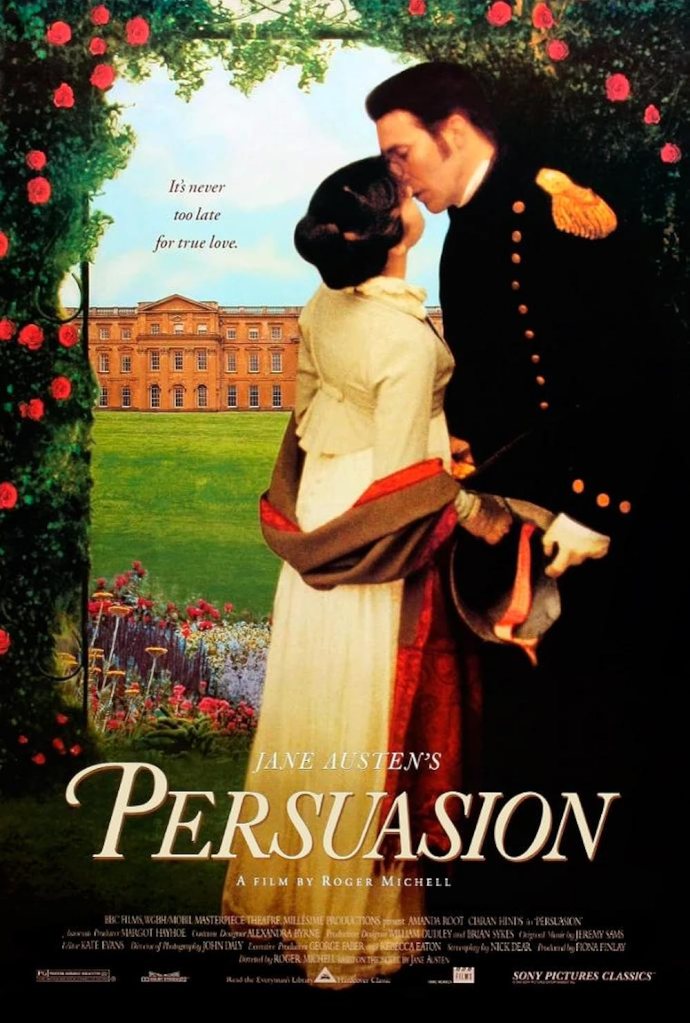
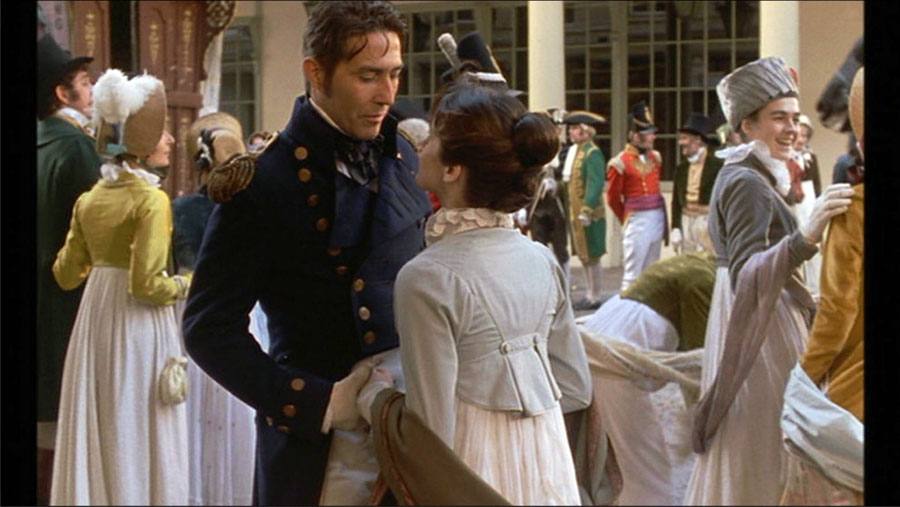
It’s been a while since I’ve written about any of my favorite romantic films. Today, I thought I would discuss the film that just might be my favorite love story of them all, and that’s the 1995 version of PERSUASION. Based on Jane Austen’s final completed novel, PERSUASION tells the story of Anne Elliot (Amanda Root) who was persuaded eight years earlier, at the age of 19, to reject the hand of the man she loved, Captain Frederick Wentworth (Ciarán Hinds). At the time, Wentworth had no fortune or social standing, but the ensuing years seemed to bring both to the seafaring captain. When fate unexpectedly brings them back together, Anne’s past feelings of love re-emerge, and so does her regret for her earlier decision. After all these years, does the still-single Captain Wentworth love her, or is he ready to move on?
PERSUASION features incredible turns from Amanda Root and Ciarán Hinds as Anne Elliot and Frederick Wentworth. Their performances aren’t built around grand gestures or sweeping declarations of love. They’re built on quick glances, emotional restraint, and an ability to convey lingering pain, regret, and feelings of love that began many years earlier but have never gone away. Their chemistry isn’t flashy, but it is authentic, built over many years rather than some instant attraction. These character traits may seem old-fashioned and unnecessary in this day and time, but the action in the film takes place in early 1800’s where this behavior would have been perfectly natural.
Speaking of “perfectly natural,” director Roger Michell’s realistic presentation of the material is one of the film’s key strengths as far as I’m concerned. Avoiding the polish of most period dramas, PERSUASION embraces the weathered houses, imperfect landscapes, simple costumes, and yes, even the less than glamourous looks of the cast. It seems like we’re watching real people living in the real world instead of impossibly attractive men and women playing dress up. As the lead characters seem to be falling deeper into love over the course of the film, their blossoming happiness makes them more attractive.
If I haven’t made it clear enough, if you’re looking for a movie that throws a lot of overly dramatic plot twists and simple solutions your way, PERSUASION is probably not the movie for you. But if you enjoy a deliberately paced, mature story that deals with messy themes of missed opportunities, personal growth, and forgiveness, then you just may love it. There are moments when Anne simply watches Wentworth across a room, or clutches a chair as he enters a room, where I felt such a strong connection to the characters. Sometimes the most powerful emotions truly are those that are left unspoken. This film will reward your patience if you stick with it, and its final scenes are very satisfying to me because of what the characters have gone through to reach that point.
PERSUASION is a film that I return to again and again when I’m stressed or need a pick-me-up. It just makes me feel good. In my opinion, it isn’t just one of the best Jane Austen movies, it’s one of the best romantic dramas out there, and I highly recommend it!
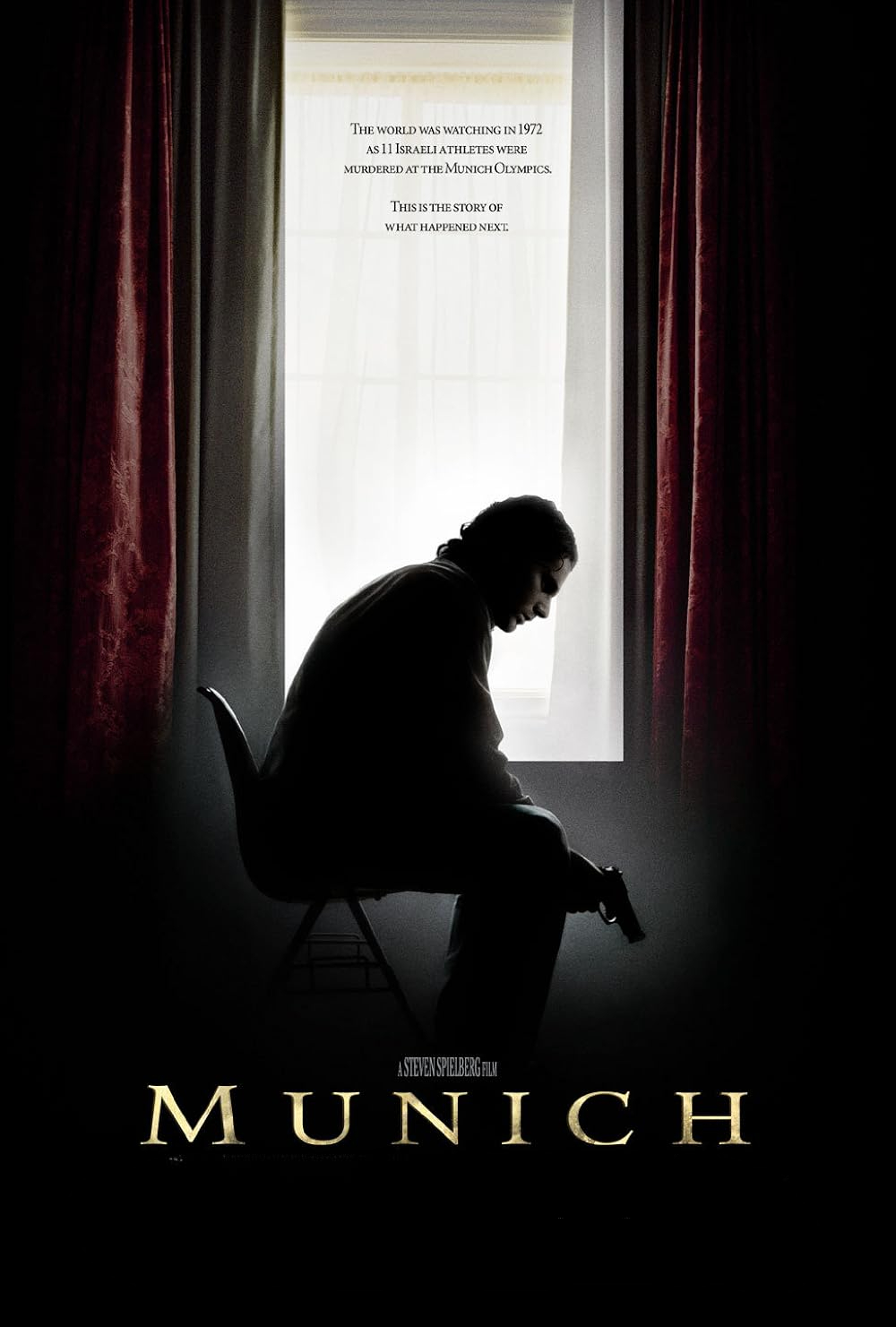
If you’re looking for a comfortable, easily digestible thriller with clear-cut heroes and villains, Munich is going to be a tough sit. This 2005 film, now two decades old, finds Steven Spielberg operating at a peak level of craft, but it’s a cold and angry kind of mastery. It’s a dense, paranoid, and deeply unsettling historical drama that feels less like a movie and more like a wound that’s been picked at for years. Based on the book Vengeance, the film dramatizes the secret Israeli mission, “Operation Wrath of God,” to hunt down and assassinate the Palestinian militants responsible for the massacre of 11 Israeli athletes at the 1972 Munich Olympics. But here’s the kicker: this isn’t an action movie about a bunch of spies getting revenge and feeling good about it. Spielberg isn’t making a war film about who is right and who is wrong. Munich is a film about the ugly, corrosive nature of state-sponsored violence and the way it eats away at the soul of everyone involved. It’s a thriller, sure, but the tension isn’t built around whether the team will succeed, but around the psychological and moral cost of their success. There’s no triumph here, no victory lap—just the sinking realization that for every target they eliminate, the wound in the world only seems to get deeper.
The movie is anchored by a phenomenal performance from Eric Bana as Avner, the team’s leader. He’s a man of deep patriotism, handpicked for this mission by Prime Minister Golda Meir (Lynn Cohen) herself, but he’s completely unprepared for the psychological toll the job will take. He’s joined by a fantastic ensemble that includes Daniel Craig as a brutal and cold-blooded South African operative, and Mathieu Kassovitz as a toymaker turned reluctant bomb expert. They’re a tight, desperate group, and as they move from one European capital to the next, meticulously planning and executing assassinations, the initial sense of righteous duty slowly curdles into paranoia, guilt, and nihilism. The film doesn’t shy away from the violent acts, but it presents them not as a cause for celebration, but as messy, brutal affairs that often have unintended, horrific consequences—like a scene where a bombing intended for a target gets dangerously close to an innocent child. You can feel the weight of every decision pressing down on these men, and Spielberg makes sure you sit with that discomfort rather than brushing past it for the sake of pacing.
One of the most crucial—and still controversial—aspects of Munich is its willingness to humanize the Palestinian perspective. This isn’t a film that paints the Black September terrorists as caricatures of evil. In one of the film’s most powerful scenes, Avner and a PLO member named Ali (Omar Metwally) engage in a tense, philosophical debate about their respective claims to the land. Avner warns that the world will see the Palestinians as “animals” for their actions, to which Ali chillingly replies, “Yes, but then the world will see how they’ve made us into animals. They’ll start to ask questions about the conditions in our cages.” The film doesn’t excuse the terrorism, but it forces the audience to understand the desperation and statelessness that fuels it, presenting a horrifying symmetry where both sides see themselves as victims fighting for survival. It’s a gutsy move for a mainstream Hollywood director, especially in the mid-2000s, and it’s precisely that moral even-handedness that made the film so divisive upon release—and still makes it so damn compelling today.
And that’s where this film connects to a larger, darker moment in Spielberg’s career. Munich was released at the tail end of what some critics have rightly called his “Post-9/11 triptych,” alongside Minority Report (2002) and War of the Worlds (2005). These aren’t just three random films. They are all steeped in a profound sense of paranoia and fear of the outsider that was so prevalent in America after 9/11. Minority Report imagines a society where you’re arrested for a crime before you commit it; War of the Worlds literalizes the fear of a sudden, devastating attack on American soil; and Munich transposes those anxieties onto the Israeli-Palestinian conflict. Spielberg used this triptych to explore the American psyche’s newfound sense of vulnerability and its willingness to embrace extreme, morally ambiguous measures—like torture and preemptive strikes—in the name of security. It was a director grappling with a changed world, and Munich, with its focus on a secret, government-approved assassination squad, feels like his most potent and cynical entry in the series. You can almost hear the echo of post-9/11 rhetoric in every scene, as if Spielberg was holding up a dark mirror to his own country’s creeping acceptance of extrajudicial killing.
But the bleakest part of Munich is how it transcends even that specific historical and political moment. The film relentlessly returns to the theme of the “violence loop.” The team assassinates one target, and he is immediately replaced by someone even more radical. They get a hit, and there’s a retaliatory bombing. It’s a terrifyingly accurate depiction of what has continued to happen for decades after the film’s events. Avner realizes that their entire operation, the endless cycle of state-sponsored revenge, is ultimately pointless for achieving peace. It’s a desperate, bloody game of whack-a-mole that only ensures the conflict continues in perpetuity, a cycle of vengeance that simply feeds on itself. As the film shows, and as is still plain to see today, the violence doesn’t end when the “list” is completed; it just regenerates. The final scenes, where Avner finds himself unable to even sleep in his own bed, watching his young daughter with a haunted look, drive home that the real casualty of state-approved assassination isn’t just the targets—it’s the humanity of the people pulling the trigger. He’s won the tactical war, but he’s lost every single battle that actually mattered.
Ultimately, Munich is a masterclass in filmmaking that offers no easy answers, and watching it today, with the current geopolitical landscape looking more fractured than ever, its relevance hasn’t faded one bit—if anything, it’s sharper and more painful now than it was in 2005. The same arguments, the same grievances, the same bloody score-settling between Israel, the Palestinians, and their Arab allies are still playing out in real time, with no end in sight. And yet, for all its brutal honesty, the film also exposes a tragic truth: this movie, like so much of the discourse surrounding the conflict, will probably only deepen the divide between the two groups watching it, as each side can point to it and say, “See? That’s what they do to us. That’s our pain validated.” It becomes another piece of ammunition in an endless argument rather than a bridge toward understanding. The brilliant cinematography from Janusz Kaminski and the chilling, minimalist score from John Williams only add to that oppressive, paranoid atmosphere, making it not a film that will make you feel good about anything, but one that will make you think—and perhaps that’s exactly why it remains so damn relevant decades later.
So what’s the way out? The film doesn’t give you a manual, but it does whisper a desperate question between its frames: can either side actually step back from the brink long enough to see the loop they’re both trapped in? Because the violence loop isn’t a natural disaster—it’s a human creation, and what humans build, humans can theoretically unbuild. But that would require something infinitely harder than pulling a trigger or planting a bomb—it would require acknowledging that your own righteous suffering doesn’t cancel out the other side’s legitimate pain, it would require looking at the face of your enemy and seeing not a monster but a person who also loves their children and believes they’re fighting for survival. The film dares to suggest that the only real break in the cycle might come from exhaustion, from the sheer soul-crushing fatigue of burying one more generation, or from a moment of radical, almost insane empathy that makes someone say “enough” before the next retaliation.
Spielberg doesn’t offer that moment in the movie, because he knows it hasn’t happened yet in real life—Munich isn’t a prescription; it’s an autopsy. Every few years, when the news cycle inevitably rolls around to another flare-up in that tortured corner of the world, this movie comes back to mind not as a prophecy, but as a painfully accurate diagnosis. It’s a powerful, haunting reminder that the echo of old violence is never truly silent, and that in the long run, vengeance is often a debt that can never be repaid. If you go in expecting a straightforward revenge fantasy, you’ll walk out exhausted and conflicted. But if you go in ready to wrestle with some of the ugliest questions about justice, morality, and state power, then Munich will stick with you like a splinter you just can’t dig out—and maybe, just maybe, that splinter is the first tiny crack in the loop that someone, someday, will have the courage to break.
As I watched 2025’s Is This Thing On?, I found myself making a special plea to the Academy.
Dear Academy, I wrote in my head,
Please, please, please hurry up and give Bradley Cooper an Oscar so he’ll stop directing these depressing movies. Love, Lisa Marie
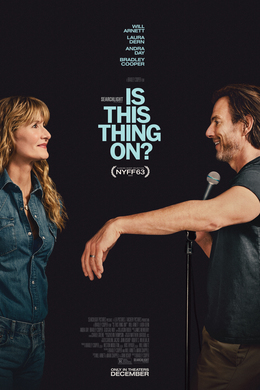
Is This Thing On? is technically a dramedy. Will Arnett and Laura Dern star as Alex and Tess Novak, a separated couple who try to learn how to be friends and parents while in the process of splitting up. Both of them find fulfilment in activities that they couldn’t necessarily pursue while being married. Tess once again starts coaching volleyball and dating Peyton Manning. (Technically, Peyton Manning plays a character named Laird but, for all intents and purposes, he’s Peyton Manning.) And Alex becomes a stand-up comedian, performing a routine about his failing marriage.
Casting Will Arnett as a comedian with a dark side isn’t that much of a stretch and Arnett does do a good job in the role, even if he sometimes seems to be doing a bit of a Bradley Cooper imitation himself. (Of course, Cooper himself also appears in the movie, playing Arnett’s best friend.) Arnett is not only plays the lead role but he also co-wrote the script. Both Arnett and Cooper have been open about their past struggles with alcoholism and Is This Thing On?, with its muted color scheme and its nervous camera work, is very much a 12-step film. It’s a movie where people talk and talk and talk about their problems and their past mistakes and their regrets. The scenes of Alex performing stand-up have an AA feeling to them. One could just as easily imagine Alex taking the stage and saying, “Hi, I’m Alex and I’m an alcoholic.” The support that he gets from the audience feels very much like the applause that one would get upon announcing they had gone a week, a month, or a year without taking a drink.
And that’s not necessarily a bad thing. Many stand-up comedians have attested to the fact that their sets often double as therapy. I used to be pretty cynical about programs like AA but then I saw how it helped my Dad not only get sober but also stay sober. Cooper and Arnett are smart enough to not focus too much time on Arnett’s stand-up. We see enough to convince us that people would find him to be funny but the movie seems to understand that humor is subjective and, unlike other stand-up films like The Comedian, it doesn’t beg us to laugh at Alex’s act. I appreciated the fact that the laughter in the club scenes sounded like actual laughter, as opposed to sounding like a bunch of extra being ordered to make a joyful noise no matter what.
Is This Thing On? is well-acted and, though he leans a bit too much on the jittery hand-held camera thing, Cooper’s direction gets better as it goes but ultimately, Alex and Tess never really come across as if they are worth all the trouble. They come across as being the self-absorbed friends that everyone secretly hopes won’t be able to make it to the party. Unlike Cooper’s A Star Is Born, the film never quite convinces us that we’re watching real relationship. It’s easy to believe that Tess could get back into coaching volleyball after she splits up with Alex but when Tess announces that she’s been offered a spot coaching the Olympic team, it’s hard not to roll your eyes just a little. Being offered a chance to coach the high school team or maybe the community center team would have worked just as well. Instead, it has to be the Olympics. It’s one of those things, like quitting your job and using your homemade cupcakes to open a bakery, that only happens in Hollywood films.
“We are not so very different, you and I.” — George Smiley
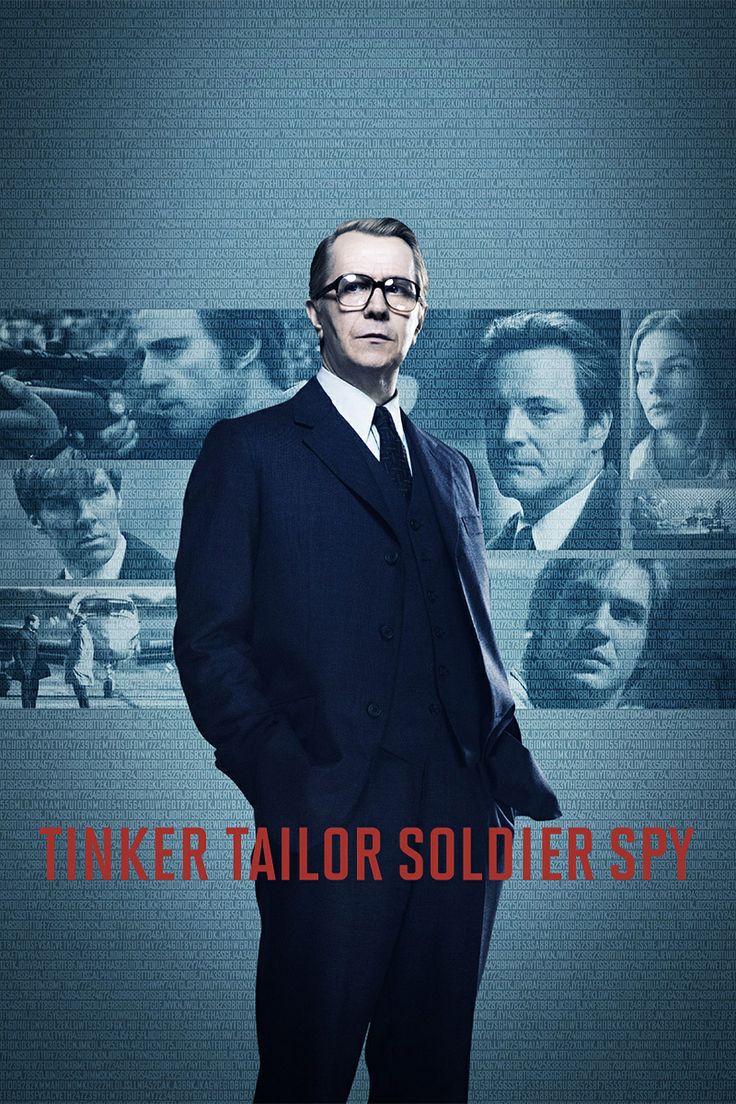
Tomas Alfredson’s Tinker Tailor Soldier Spy (2011) is a cold, coiled, and relentless march into the gray, rain-lashed corridors of British espionage—a film that exchanges Bond’s swagger for bureaucratic unease, where information is traded like poison and every conversation feels weaponized. The film is sheer confidence: so sure of itself, it expects you to keep up, get lost, and piece the puzzle together from the hushed fragments left in close-up reactions and glances across smoke-filled rooms. This is spy cinema not as spectacle, but as slow-burning existential puzzle.
A key element of the film’s mood is its distinctive brutalist aesthetic, which powerfully evokes the Cold War mentality not only behind the Iron Curtain but also in the West. Alfredson and cinematographer Hoyte van Hoytema immerse viewers in a London setting defined by greying, tired walls, bleak drizzle, and decaying interiors that feel as cold and institutional as the very espionage world they depict. This use of brutalism—with its bare concrete textures, utilitarian spaces, and sense of institutional decay—does more than create atmosphere; it visually projects the emotional and material exhaustion of a Britain entrenched in paranoia and internal rot. The characters seem physically and emotionally hemmed in by these spaces, reinforcing the film’s themes of secrecy, alienation, and moral corrosion.
There are no car chases or shootouts to speak of—just a masterclass in stillness where tension arises from precisely what remains unspoken. The film is closer to an autopsy than a thriller, dissecting the social and emotional costs of lives devoted to deception. It begins with a botched operation in Budapest—Jim Prideaux (Mark Strong), one of “the Circus’s” best agents, is captured in a tense, almost wordless scene that sets a tone of brooding unease. The fallout leads to a purge of the leadership, with Control (John Hurt) forced out and George Smiley (Gary Oldman), his quietly watchful confidant, retired—though soon to return for an unofficial mole hunt.
From there, the narrative unfolds elliptically, like a mosaic of recollections and betrayals, requiring viewers to assemble the truth from fractured glimpses. Gary Oldman’s Smiley is the film’s anchor—his performance a masterclass in minimalism and subtext. He’s the ultimate observer, haunted by decades of institutional compromises and personal betrayals.
The supporting cast is nothing short of exceptional, elevating the film through richly textured performances that bring vibrant life to an otherwise reserved script. Colin Firth as Bill Haydon delivers a quietly magnetic portrayal, his charm barely concealing the complexity beneath. Tom Hardy’s Ricki Tarr injects raw energy and restlessness, perfectly contrasting the film’s restrained atmosphere. Benedict Cumberbatch’s Peter Guillam is adept at conveying subtle shifts in allegiance and tension, his nuanced portrayal deepening the intrigue. John Hurt’s brief but potent presence as Control exudes weary gravitas, setting the tone for the murky world of espionage. Mark Strong as Jim Prideaux balances stoicism with vulnerable humanity, particularly in moments laden with pain and regret. Other supporting actors such as Ciarán Hinds, Toby Jones, and Kathy Burke contribute layered, compelling portrayals of individuals trapped within the machinery of the Circus. What binds these performances is a reliance on subtlety—expressing volumes through nuanced gestures and lingering silences, the cast anchors the complex narrative in a palpable human reality.
At its core, Tinker Tailor Soldier Spy is less a whodunnit than an exploration of institutional decay and emotional repression. The brutalist aesthetic mirrors this decline: just as the concrete and ochre walls close in on the agents, so too does the film reveal a Britain worn down by secrets and internal contradiction. Love and loyalty are liabilities in this world where everyone is alienated. The story’s emotional heart revolves around the search for a deeply embedded mole within the Circus—an elusive betrayal that shakes the organization to its core. The film carefully avoids easy reveals, maintaining a deliberate tension and exemplifying the emotional cost that the espionage game of the era had on everyone involved.
The film also explores themes of repressed queerness, class stratification, and misogyny, linking these to the numbing demands of espionage. The gloomy visuals and tightly controlled dialogue echo the emotional constraints on these men, underscoring that beneath the seemingly impenetrable exterior lies a fragile, fragile human cost.
This film is not an easy watch. Its elliptical storytelling, coded conversations, and subtle body language demand patience and multiple viewings. Yet that opacity is part of its power—uncertainty and not-knowing become central to the experience, enhanced by Alberto Iglesias’s restrained score and the claustrophobic mise-en-scène. Unlike many spy films, Tinker Tailor Soldier Spy is about process and detection, not action or glamour. Its cold, meticulous pacing trades on the cerebral seduction of uncovering hidden truths rather than adrenaline-fueled confrontations.
Ultimately, the film refuses easy resolutions. Though Smiley uncovers the mole and the Circus is superficially restored, there’s no real victory—only the acknowledgment of profound damage, both personal and institutional. The brutalist setting, with its unyielding, somber lines, stands as a perfect metaphor for this unresolved tension. Tinker Tailor Soldier Spy is a masterclass in unease and ambiguity, a film that stays with you because it reveals what you’ll never fully know about loyalty, betrayal, and the cost of secrets in a world where the line between friend and enemy is always blurred.
When it comes to the Oscar race, there will often be a film that is anointed at the front runner just to falter once it’s actually released. It may be hard to believe now but, way back in 2013, almost every Oscar pundit spent the early part of the year predicting that George Clooney’s The Monuments Men would be a major contender. Martin Scorsese’s Silence suffered a similar fate in 2016. Sometimes, it’s because the films in question are truly flawed. The Monuments Men pretty much confirmed that Clooney’s directorial instincts were aggressively middlebrow. Sometimes, it’s because the film itself turns out to appeal to a very narrow audience. That was the case with Silence, one of the most Catholic films ever released by a major studio. Unfortunately, when these front runners falter, they tend to get hit by a backlash, with some critics and audience members seeming to take it personally that the film was not as much of a triumph as they were expecting.
That was certainly the case with Kenneth Branagh’s Belfast. Released in 2021, Belfast spent much of the year being touted as the obvious front runner for Best Picture. Seriously, how could the Academy resist it? Not only was the film in black-and-white but it was said to be Branagh’s most personal film. One of the best actors in the Western World, the man who had revived cinematic interest in Shakespeare, had now written and directed a film about his youth in Belfast. The film would deal with growing up as a protestant during the early days of the Troubles. Jamie Dornan and Caitriona Balfe where playing Branagh’s parents. The great Judi Dench and Ciaran Hinds were playing his grandparents. For all the acclaim that he had received over the years, Kenneth Branagh had yet to actually win an Oscar. Indeed, some felt that, pre-Belfast, it was a bit embarrassing that he had only been nominated for twice for his acting and once for his direction.
However, when Belfast came out, critics were complimentary but, at the same time, there was a slight undercurrent of disappointment in most of the reviews. Belfast was good, they seemed to be saying, but it wasn’t as good as they were expecting. Some members of Film Twitter was practically savage towards the film, as if Branagh had personally insulted them by making a nostalgic film about his childhood. Belfast received seven Oscar nominations but it was no longer the Oscar front runner. That role had been assumed by the technically impressive but emotionally remote The Power of the Dog.
Belfast has its flaws. Some scene works better than others, the ending is a bit overdone, and, for a film that was sold as being a memoir, some of the scenes do feel a bit familiar as if Branagh spent his childhood imitating moments from other coming-of-age films. That said, I liked Belfast and I don’t think it deserved all of the criticism that it received. Young Jude Hill did a wonderful job as Buddy, the Kenneth Branagh stand-in. Jamie Dornan proved that he was capable of more than one might have suspected based on his work in the Fifty Shades of Grey films. He and Caitriona Balfe were a compelling couple and the actors had such a strong chemistry that I found myself wishing that the film had been even more about their marriage. At this point, we take actresses like Judi Dench and actors like Ciaran Hinds for granted but both of them are truly wonderful in this film. At its best, Belfast captures the feeling of being young and not realizing that the world is basically collapsing around you. Buddy may be growing up in the shadow of The Troubles but, until the unrest literally comes into his home, he just wants to enjoy movies and have fun with his friends. Belfast is nostalgic and sometimes a bit predictable in its storytelling but it’s gorgeous to look at and the acting won me over.
In then end, the Academy honored neither Belfast nor The Power of the Dog for Best Picture but instead another film about family, the far more straight-forward CODA. Branagh, however, did win his first Oscar for Best Original Screenplay.
1995’s Circle of Friends tells the story of three friends who come of age in 1950s Ireland.
Bernadette Hogan (Minnie Driver), better known as Benny, is our narrator, the daughter of a local tailor whose shyness and insecurity disguises a quick mind and a sarcastic wit. After years of jokes about her weight (which feel particularly cruel since Benny doesn’t appear to be particularly overweight), Benny has resigned herself to being alone. Her parents may want her to marry their accountant, Sean Walsh (Alan Cumming), but Sean is obviously a creep. He’s one of those guys who drinks his tea with his pinky extended. Everyone knows better than to trust him.
Eve (Geraldine O’Rawe) is an orphan and was largely raised in a convent. Now that she’s 18, the Westawards — the protestant heretics who once employed her father — are grudgingly keeping their promise and paying for her education. She gets 60 pounds per term. (I know my uncle, who paid my college tuition, would have loved it if my college tuition had been whatever the American equivalent of 60 pounds may be.) Eve has inherited a cottage, a nice and isolated little building that becomes quite important later on in the film.
And finally, there’s Nan (Saffron Burrows). Nan grew up with Bernadette and Eve, though her family eventually moved to Dublin. Benny says that Nan is destined to be known for being pretty.
Nan is reunited with Benny and Eve when they all enroll at University College Dublin. The film follows their friendship at the college, examining how they grow and change over the course of the term. Benny develops a crush on and eventually starts dating Jack Foley (Chris O’Donnell), a medical student who enjoys playing rugby. (I’ve never quite understood rugby, to be honest. It seems weird to me that everyone always starts all huddled up and then apparently, they all try to grab a muddy ball until someone ends up with a compound fracture. I’m not sure why someone would want to risk losing a limb over a game.) Eve dates Jack’s friend, Aidan (played by a young Aiden Gillen). And Nan …. at first glance, Nan would seem to be living every film lover’s dream! Not does she lose her virginity to a character played by Colin Firth (in this case, Firth is playing Simon Westward) but they also regularly have sex in Eve’s lovely little cabin. Of course, they don’t bother to let Eve know what they’re doing. That’s part of the forbidden appeal of it all! Unfortunately, despite being played by Colin Firth, Simon turns out to be a bit of cad.
Indeed, all of the men turn out to be a bit of a disappointment, though some do manage to redeem themselves. The film is less about Benny finding love and more about Benny discovering that it’s even more important to love and respect herself. As so often happens when it comes to lifelong friends, there are some struggles. Not all of the friendships survive. Unfortunately, that’s just a part of growing up. Still, Benny, Eve, and Nan are all wonderfully written and acted characters and the film does a great job of portraying their difficult but very true-to-life relationship.
Circle of Friends is a lovely film and a personal favorite of mine. Unfortunately, it’s not always an easy film to watch. It’s not streaming on any of the usual services. However, the film has been uploaded to YouTube so be sure to watch it while you can.
During the Dark Ages, Britain is at war. King Uther Pendragon (Gabriel Byrne) leads his men against The Duke of Cornwall (Corin Redgrave). Uther and his men swear their allegiance to God and St. George but they trust in the magic of the mysterious Merlin (Nicol Williamson).
Merlin negotiates peace between Uther and Cornwall but Uther throws that peace away when he becomes obsessed with Cornwall’s beautiful wife, Igrayne (Katrine Boorman). Merlin uses his magic to disguise Uther as Cornwall so that Uther can spend one night with Igrayne. When Cornwall is killed in battle, Uther marries Igrayne and realizes it was never necesarry to use Merlin’s magic and that Merlin, who has the power to see the future, knew that. Merlin takes Uther and Igrayne’s infant son from them and then disappears. Later, Uther is killed by by three of Cornwall’s men. Before dying, Uther drives his magic sword, Excalibur, into a stone. On the true king of England will be able to remove it.
Uther’s son, Arthur (Nigel Terry), grows up with no knowledge about his parentage. When he accidentally draws Excalibur out of the rock, Merlin returns to counsel the new king. And the new king has much to learn, as not all of the nobleman are willing to accept him as their ruler. Arthur proves himself worthy to be king while his half-sister, Morgan (Helen Mirren), waits for her chance to get revenge.
Excalibur is one of the most ambitious films made about King Arthur. John Boorman fits the entire legend of Arthur, Lancelot (Nicholas Clay), Percevel (Paul Geoffrey), Guinevere (Cherie Lunghi), and the search for the Holy Grail into one movie and, as a result, there’s not a dull moment. Boorman presents the reign of King Arthur as a conflict between England’s pagan past and the new era of man. Merlin and Morgan’s magic is powerful but, in the end, power is determined by bloody battles fought by men encased in clunky armor. Arthur, Lancelot, and the other knights claim to live by the honorable, chivalric code but only one of them is able to live up to the ideal. The others become consumed by lust, jealousy, and a thirst for power.
In my opinion, Excalibur is the best movie made about King Arthur, mostly because John Boorman takes the story seriously and makes us feel like we are watching people who truly are living in different world and a different time. The chivalric code is necessary to keep the peace in a time when there are multiple pretenders-to-throne. Mordred (Robert Addie) is not just a villain because he seeks to overthrow his father but also because he is the one person to have no respect for the code or the mystic power of the Holy Grail.
Excalibur has a large cast with many familiar faces. Keep an eye out for Patrick Stewart as one of Arthur’s earliest supporters and also Liam Neeson as a surly Sir Gawain. Of all the Lancelots who have appeared in the movies, Nicolas Clay is the best and Helen Mirren is the perfect Morgan. Nicol Williamson steals the movie as the mysterious Merlin. And while Nigel Terry was too old for the scenes where Arthur is supposed to be a callow teenager, he grows into the role just as Arthur grew into being king of the Britons.
Monty Python and The Holy Grail will always make me laugh but John Boorman’s big, beautiful, and bloody Excalibur is the best film about Camelot.
Well, here we are. Another awards season is wrapping up. Almost all of the regional critic groups have announced their picks for the best of 2021. The Guilds have spoken. The front runners have emerged. Both Don’t Look Up and Being the Ricardos have weathered bad reviews and become probable Oscar nominees. If nothing else, I’ll have something to complain about for the next three or four months. At the same time, Power of the Dog has emerged as the critical favorite. Belfast seems to be the populist favorite. West Side Story is the big production that has to be nominated, even though no one seems to feel particularly strongly about it one way or the other. Dune is the blockbuster that the Academy is hoping will cause people to tune into the ceremony, especially now that it appears that the Spider-Man Oscar campaign has fizzled. Don’t Look Up is the “Let’s piss off the cons” nominee. Being the Ricardos is this year’s “Wow, our industry really is the best” nominee. Personally, I’m going to view tick, tick….Boom! as being the most likely dark horse to pull off an upset.
So, with all that in mind, here’s my last set of 2021 Oscar predictions.
Looking at the list below, I have to say that we certainly have a good race this year. It’s interesting that, this year, only films that were released between March and the end of December were eligible for the Oscars. 2021 was a very good year for movies! Not only do we have the nominees below but we also had films like The Father and Judas and the Black Messiah, both of which are 2021 films as far as I’m concerned.
(Consider this. If the Oscars had kept the eligibility window the same last year instead of extending it to accommodate films delayed by the pandemic, Anthony Hopkins would probably be the Best Actor front runner right now and the Academy probably would have given Chadwick Boseman a posthumous Best Actor award last April. I also imagine that Jesse Plemons would have a better chance of picking up a supporting actor nomination if the members of the Academy were currently screening both The Power of the Dog and Judas and the Black Messiah at the same time.)
Well, the year’s nearly over and that means that it is time for me to post my final Oscar predictions for 2021. The race has gotten much clearer with the start of the precursor season. The critics love The Power of the Dog. However, it’s perhaps a bit too early to declare it the front runner. I want to see how things go with the Guilds in January before I bestow that title on any film.
A few thoughts:
There are ten Best Picture nominees this year so we won’t have any of that, “Here’s a random number of nominees” crap. In theory, that should open the door for some unconventional nominees that might have missed the cut-off in previous years. Again, I said, “In theory.” They tried this 10 nominee thing before and it didn’t really lead to the results that a lot of people were expecting.
Still, I’m going to swing out on a web and predict a Best Picture nomination for Spider-Man: No Way Home. It’s got Disney and Sony behind it. It’s making a ton of money despite not playing in China. It’ the film that’s currently giving the industry hope that there’s a future outside of the streaming sites. Plus, after the nominations of Black Panther and Joker, it might be time to give the whole “They’ll never nominate a comic book movie!” argument a rest.
I’m also going to predict a Best Picture nomination for Drive My Car, which has been getting a lot of attention from the critics.
The critics also loved West Side Story but now, it’s probably best known for being a bust at the box office. I still think the movie will be nominated but I don’t think it’ll win. And I think it’s a lot less likely that Rita Moreno will pick up a nomination. People seem to have moved on from the movie. Again, this could all change once the Guilds start announcing their nominations.
The critics are split on Don’t Look Up. I personally think it’s one of the worst films of 2021. But the film will be nominated for much the same reason that The Big Short and Vice were nominated. There’s a lot of Academy members who agree with McKay’s politics. And the people who do like Don’t Look Up really, really like it. And I also think there’s probably enough people annoyed with Elon Musk that Mark Rylance will sneak into the supporting actor race.
Belfast has not been dominating the early part of awards season but I think it will come on strong once the Guilds start announce their nominations.
Anywya, these are just my guesses, for better or worse. To see how my thinking has evolved, check out my predictions for March and April and May and June and July and August and September and October and November!
The Washington D.C. Area Film Critics have announced their nominees for the best of 2021! The winners will be announced tomorrow so that means you have exactly one day to see all the nominees. GET TO IT!
Best Film
Belfast
The Green Knight
The Power of the Dog
tick, tick…BOOM!
West Side Story
Best Director
Kenneth Branagh – Belfast
Jane Campion – The Power of the Dog
David Lowery – The Green Knight
Steven Spielberg – West Side Story
Denis Villeneuve – Dune
Best Actor
Nicolas Cage – Pig
Benedict Cumberbatch – The Power of the Dog
Andrew Garfield – tick, tick…BOOM!
Will Smith – King Richard
Denzel Washington – The Tragedy of Macbeth
Best Actress
Olivia Colman – The Lost Daughter
Nicole Kidman – Being the Ricardos
Lady Gaga – House of Gucci
Kristen Stewart – Spencer
Tessa Thompson – Passing
Best Supporting Actor
Jamie Dornan – Belfast
Ciarán Hinds – Belfast
Troy Kotsur – CODA
Jesse Plemons – The Power of the Dog
Kodi Smit-McPhee – The Power of the Dog
Best Supporting Actress
Caitríona Balfe – Belfast
Ariana DeBose – West Side Story
Ann Dowd – Mass
Kirsten Dunst – The Power of the Dog
Aunjanue Ellis – King Richard
Best Acting Ensemble
Belfast
The French Dispatch
The Harder They Fall
Mass
The Power of the Dog
Best Youth Performance
Jude Hill – Belfast
Emilia Jones – CODA
Woody Norman – C’mon, C’mon
Saniyya Sidney – King Richard
Rachel Zegler – West Side Story
Best Voice Performance
Awkwafina – Raya and the Last Dragon
Stephanie Beatriz – Encanto
Abbi Jacobson – The Mitchells vs. the Machines
Kelly Marie Tran – Raya and the Last Dragon
Jacob Tremblay – Luca
Best Original Screenplay
Kenneth Branagh – Belfast
Mike Mills – C’mon, C’mon
Zach Baylin – King Richard
Paul Thomas Anderson – Licorice Pizza
Fran Kranz – Mass
Best Adapted Screenplay
Siân Heder – CODA
Jon Spaihts and Denis Villeneuve and Eric Roth – Dune
Jane Campion – The Power of the Dog
Steven Levenson – tick, tick…BOOM!
Tony Kushner – West Side Story
Best Animated Feature
Encanto
Flee
Luca
The Mitchells vs. the Machines
Raya and the Last Dragon
Best Documentary
The First Wave
Flee
The Rescue
Summer of Soul (…Or, When the Revolution Could Not Be Televised)
Val
Best International/Foreign Language Film
Drive My Car
A Hero
Lamb
Titane
The Worst Person in the World
Best Production Design
Jim Clay, Production Designer; Claire Nia Richards, Set Decorator – Belfast
Patrice Vermette, Production Designer; Richard Roberts and Zsuzsanna Sipos, Set Decorators – Dune
Adam Stockhausen, Production Designer; Rena DeAngelo, Set Decorator – The French Dispatch
Tamara Deverell, Production Designer; Shane Vieau, Set Decorator – Nightmare Alley
Adam Stockhausen, Production Designer; Rena DeAngelo, Set Decorator – West Side Story
Best Cinematography
Haris Zambarloukos – Belfast
Greig Fraser – Dune
Andrew Droz Palermo – The Green Knight
Ari Wegner – The Power of the Dog
Bruno Delbonnel – The Tragedy of Macbeth
Best Editing
Úna Ní Dhonghaíle – Belfast
Joe Walker – Dune
Andrew Weisblum – The French Dispatch
Peter Sciberras – The Power of the Dog
Myron Kerstein & Andrew Weisblum – tick, tick…BOOM!
Best Original Score
Bryce Dessner & Aaron Dessner – Cyrano
Hans Zimmer – Dune
Alexandre Desplat – The French Dispatch
Jonny Greenwood – The Power of the Dog
Jonny Greenwood – Spencer