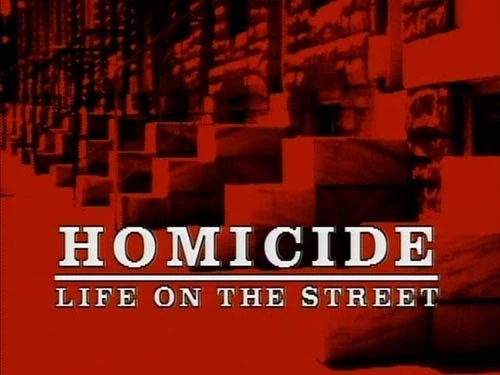
Retro Television Review: Homicide: Life On The Street 6.2 “Blood Ties, Part Two”


Welcome to Retro Television Reviews, a feature where we review some of our favorite and least favorite shows of the past!  On Sundays, I will be reviewing Homicide: Life On The Street, which aired from 1993 to 1999, on NBC!  It  can be viewed on Peacock.

This week, the investigation into Melia’s murder continues.

Episode 6.2 “Blood Ties: Part 2”

(Dir by Nick Gomez, originally aired on October 24th, 1997)

Detectives Munch and Kellerman investigate a murder at Camden Yards, where the Orioles are playing the A’s and also where someone beat a loudmouth New Yorker to death in the stairwell.  Munch and Kellerman’s investigation is hindered by the fact that there’s a baseball game going on and every single witness would rather watch the action on the field then discuss the murder.  In fact, most of them don’t even consider it a crime to kill a Yankees fan.  Eventually, even Kellerman decides that he’d rather just watch the game.

In the end, though, Kellerman and Munch do make an arrest.  The murderer turns out to be another Yankees fan who was upset because he thought the Yankees were going to be playing the Orioles.  He’s even willing to sign a confession as long as he’s allowed to watch the end of the game.

Meanwhile, Pembleton and Bayliss continue to investigate the murder of Felix Wilson’s maid, Melia.  While Ballard and Gharty think that Pembleton should be looking at the Wilsons (and Gharty specifically feels that Pembleton is biased because the Wilsons are black and rich), Pembleton theorizes that the maid was killed by her abusive ex-boyfriend.  However, when it turns out that the boyfriend is still in prison in Haiti, Pembleton finally calls in Felix Wilson.

In the Box, Pembleton tells Felix that Melia had sex before she was murdered and that he needs a blood and hair sample so that both Felix and his son Hal (Jeffrey Wright) can be  eliminated as suspects.  “I had sex with her,” Felix says.  Felix goes on to say that he didn’t kill her.  Later, Felix’s attorney shows up at the station and announces that Felix has not only exercised his right to legal counsel but he will also not be submitting either his blood or his hair without a court order.  Both Pembleton and Giardello are left shaken.  Could Felix Wilson, a man admired by both of them, be a murderer?

This episode was an improvement on last week’s episode.  Munch and Kellerman got a decent, non-Luther Mahoney storyline.  The Wilson storyline is bringing out the best in both Yaphet Kotto and Andre Braugher and the great James Earl Jones is perfectly cast as Felix Wilson.  Ballard and Gharty held their own against Pembleton and Bayliss and, as opposed to last week, both of them seemed like they actually belonged in the Homicide Unit.  There was a great breakroom confrontation between the four detectives.  Even better, there was a genuinely funny scene in which Bayless called in his junior high French teacher to talk to the police in Haiti.

And yet, we still had to sit through a bunch of nonsense with Detective Falsone.  Falsone is still investigating the Luther Mahoney shooting, even though no one has asked him to do and all of the detectives involved were cleared of any wrongdoing.  Why, Falsone, why?  Why is Falsone so determined to prove that Lewis and Kellerman did something wrong in the shooting?  Why are we expected to sympathize with a character like Falsone?  This episode even features Falsone having a chance meeting with Dr. Cox and flirting with her.  Hey, Falsone — that’s Kellerman’s routine!  What the Hell!?

This would be a fine episode if not for Falsone and his vendetta against his fellow cops.  The show is really determined to try to make me like Falsone but …. I don’t think it’s going to happen.

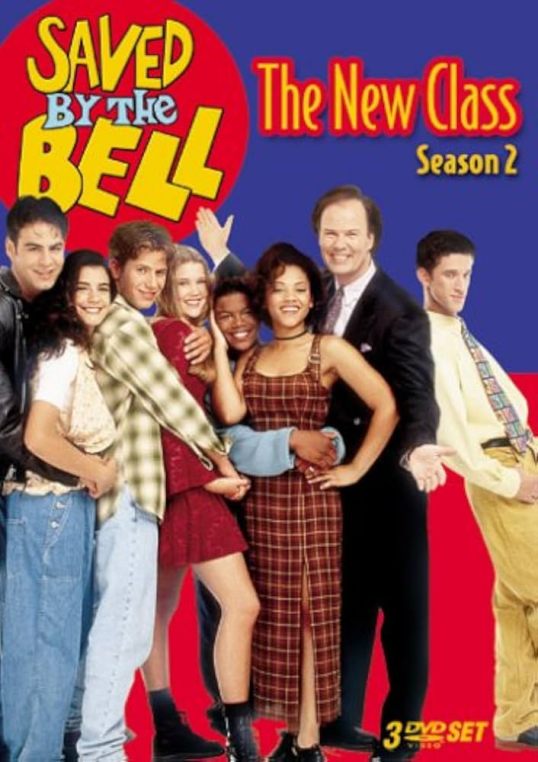
Late Night Retro Television Review: Saved By The Bell 3.4 “The Last Dance”


Welcome to Late Night Retro Television Reviews, a feature where we review some of our favorite and least favorite shows of the past!  On Saturdays, I will be reviewing Saved By The Bell, which ran on NBC from 1989 to 1993.  The entire show can be purchased on Prime!

This is the episode that has traumatized thousands of viewers.

(I should note that the IMDb and Wikipedia list this as being this first episode of season 3.  Amazon, Tubi, and just about every other streaming site that I’ve seen lists it as being 3.4.  In order to keep things simple and to not trigger my ADD, I’m following what the streaming sites say.)

Episode 3.4 “The Last Dance”

(Dir by Don Barnhart, originally aired September 14th, 1991)

Where were you the first time you watched Kelly break up with Zack?

This is the episode. Kelly applies for a waitressing job at The Max and is hired by the new manager, handsome college guy Jeff (Patrick Muldoon). Zack is excited because Kelly will be able to afford a costume for Bayside’s costume dance. Plus, Zack Attack is going to perform. Zack is looking forward to being named king of the dance with Kelly as his queen. Kelly is feeling guilty because she has a huge crush on Jeff. While they’re dancing, she accidentally calls him “Jeff.” Everyone remembers Zack and Kelly talking outside the school, Kelly crying as she asks if they can still be friends.

In my experience, most people blame Jeff for breaking up Zack and Kelly. Jeff is actually pretty sympathetic in this episode and the next. Yes, he kisses and then dates Kelly while also being her boss. That’s a problem. But he doesn’t set out to break them up. For most of this episode he’s polite and professional. Zack, meanwhile, is possessive and fairly immature. When Kelly says she has to get a job because her family is poor, Zack acts as if she’s suddenly speaking a foreign language. Kelly is worried about helping her family. Zack is worried about the school dance. On top of that, he’s the one who decides they should go as Romeo and Juliet, and he doesn’t even help her pay for the costume.

Then there’s Jeff. Yes, he will eventually cheat on Kelly and try to convince her it’s no big deal. That’s later. In this episode he really does seem like a catch. He’s older, but not so much older that it would be a real issue. He’s responsible enough to manage The Max even though he hasn’t graduated from college. Like Kelly, he actually has to work for a living. He stands up for her when customers are rude. He goes out of his way to accommodate her so she can go to the dance. And, on top of all that, he looks like Patrick Muldoon.

I don’t blame Kelly for dumping Zack at all. You can date a hot guy who will stand up for you, or you can date the cute guy who still spends all his spare time with Screech. Who are you going to pick? Be honest.

It’s still hard to watch them break up. Mark-Paul Gosselaar’s most serious SBTB relationship was reportedly with Lark Voorhies, but he and Tiffani Thiessen did date at one point, and there does seem to be genuine emotion in that scene outside the high school. This is one of those rare SBTB moments that actually feels real. The emotions feel earned. I support Kelly’s decision, but if this episode traumatized you, I understand why.

The breakup is such a big deal that it’s easy to overlook that this episode also introduced Zack Attack. It always cracks me up when Zack says the band will play for free and everyone acts so excited. It’s a school dance, and Zack has basically decided all of his friends are working for nothing that night. When Slater steps out from behind the drum set and duets with Jessie, he’s replaced on drums by Ollie, the nerd with the froggy voice. It’s a shame Ollie wasn’t included in the rockumentary.

Well, Zack is single again. How will he handle it? We’ll find out next week.

Retro Television Review: Baywatch 2.18 “Sharks Cove”


Welcome to Retro Television Reviews, a feature where we review some of our favorite and least favorite shows of the past!  On Saturdays, I will be reviewing Baywatch, which ran on NBC and then in syndication from 1989 to 2001.  The entire show can be viewed on Tubi.

This week, we meet Eddie’s never-before mentioned brother.

Episode 2.18 “Sharks Cove”

(Dir by Monte Markham, originally aired on April 20th, 1992)

Shauni’s friend Debbie Kent (Monica Lacy) throws a party on the beach with her boyfriend, Zack (Spencer Rochfort). When Debbie and Zack get in the water, Debbie suddenly yells out Zack’s name and is then apparently pulled below the surface by something. Zack runs back to the beach and says that a shark got Debbie.

Shauni, who is still haunted by Jill’s shark-related death in season one, insists on investigating this one on her own. She quickly figures out that Debbie faked her death because her father (Ernie Lively) was putting too much pressure on her to become a competitive, Olympic-class swimmer. It turns out that Debbie has just been hiding out in Zack’s trailer for the past few hours.

Meanwhile, Eddie decides to bring his older half-brother, Bobby (Blake Gibbons), to the beach. Bobby is schizophrenic and lives on a ranch, but his therapist thinks it would be a good idea for Bobby to spend the weekend with Eddie. Bobby ends up stealing a lifeguard outfit and running off. When Eddie eventually finds him, Bobby is on the edge of the pier, trying to rescue someone who isn’t really there. Bobby plunges into the ocean. Eddie saves his life, and hopefully he pays to get Bobby a new therapist, because this one obviously had no idea what she was talking about.

This was a strange episode. Baywatch previously established Eddie as a former juvenile delinquent from Philadelphia who came to Malibu to get away from the gang life. This episode features flashbacks of Eddie and his brother growing up in California, and Eddie is presented as the one who pays for Bobby to stay at the ranch, despite the fact that Eddie was previously portrayed as having come to California without a dime to his name.  (Eddie even slept in his lifeguard tower until Gina and Craig agreed to take him in.)  The first season also established that Eddie had a younger sister who drowned.  In this episode, he has an older half-brother who was schizophrenic and, in the flashbacks, there’s no sign of a sister.  Baywatch is not exactly a monument to continuity.

As for Debbie, she returns home and is forgiven by her father. Considering that lifeguards and police officers have been spending the last day or so searching for her, I assumed she would be in a bit more trouble than she was. Faking your own death is not something that I would recommend.

The Hoff was barely in this episode. Maybe it was his week off.

Late Night Retro Television Review: Sledge Hammer 1.4 “They Shoot Hammers, Don’t They?”


Welcome to Late Night Retro Television Reviews, a feature where we review some of our favorite and least favorite shows of the past! On Fridays, I will be reviewing SLEDGE HAMMER!, a cop comedy which ran on ABC from 1986 to 1988. The entire series can be found on Prime!

This week, Hammer’s former partner break out of prison!

Episode 1.4 “They Shoot Hammers, Don’t They?”

(Dir by David Wechter, originally aired on October 17th, 1986)

At the annual police quick-draw contest, Hammer is once again named the department champion. His secret is to shoot every target, whether it represents a criminal or a civilian. He also attaches a “loudener” to the barrel of his gun, which not only makes a lot of noise but also causes a lot of damage.

Hammer is going to need all of his abilities, because his childhood friend and former partner on the force, John Kogan (Jack Thibeau), has broken out of jail and hijacked a bus. He announces that he’s going to drive the bus across the country and cause a lot of trouble unless Hammer meets him for a duel. Kogan, a corrupt cop, blames Hammer for sending him to prison. Captain Trunk refuses to allow Hammer to meet with Kogan. As Trunk puts it, Kogan is one man with a bus. How much damage can he do?

After a montage of buildings exploding and people running in fear, Hammer finally confronts Kogan. As Dori Doreau watches, Kogan and Hammer attempt to outdraw each other. Kogan turns out to be faster than Hammer. He shoots the gun out of Hammer’s hand, then keeps shooting the gun.

“Stop shooting my gun!” Hammer yells.

This was a funny episode, even if it didn’t quite reach the comedic heights of the previous three. While those episodes were often intentionally absurd and even surreal, this one tells a relatively straightforward story. That said, David Rasche continues to be gleefully unhinged as Hammer, and Anne-Marie Martin and Harrison Page provide good support as the two people tasked with keeping him under control.

The funniest scene involves Hammer using a pay phone to talk to an informant who is himself using another pay phone only about five feet away. When the informant demands $25,000 for his information, Hammer has to use another pay phone to call the station and get Trunk’s permission. Trunk has left for lunch, so Hammer then has to use yet another pay phone to call Trunk’s home. It’s a wonderfully chaotic visual gag, and it gives David Rasche a chance to show off some impressive physical comedy.

In the end, the city is saved. Trust Sledge Hammer. He knows what he’s doing.

Retro Television Review: St. Elsewhere 4.9 “Sanctuary”


Welcome to Retro Television Reviews, a feature where we review some of our favorite and least favorite shows of the past! On Fridays, I will be reviewing St. Elsewhere, a medical show which ran on NBC from 1982 to 1988.  The show can be found on Daily Motion.

This week, Westphall finds something else to feel depressed about.

Episode 4.9 “Sanctuary”

(Dir by Eric Laneuville, originally aired on December 4th, 1985)

Dr. Ehrlich has been demoted to gynecology, the department he most fears. He even begs Dr. Caldwell to allow him to return to plastic surgery, but Caldwell has no sympathy for him. Caldwell tells Ehrlich that he’s a loser and that he’ll always be a loser.

Well, Ehrlich may be a loser, but he also helps deliver a baby in this episode and learns that he can actually get through the day without offending someone. Bobby Caldwell, on the other hand, makes a joke about Lucy’s breasts in front of a patient and ends up getting reported for sexual harassment. When Lucy points out to Auschlander that Caldwell’s statement was both demeaning and uttered in front of a patient, Caldwell argues that Lucy is taking things too personally and that he was just joking. (Ugh. Every woman has had a Bobby Caldwell in her life.) Auschlander asks Lucy to leave the room and then tells Bobby that if he ever makes another joke like that, he’ll be fired. While it’s good that Auschlander makes it clear that Bobby’s conduct was unprofessional, sending Lucy out of the room beforehand only leaves her feeling more isolated. Auschlander is willing to reprimand Caldwell, but only in private, a consideration that Bobby wasn’t willing to show Lucy.

Lucy is angry, and it doesn’t help that Nurse Rosenthal essentially says that Lucy only has herself to blame for being too flirtatious with the doctors in the past. Oh God, this episode was not easy for me to watch. I used to work as an administrative assistant. My boss was a good guy who always treated me with respect. (It undoubtedly helped that he was a good friend of my mom’s and we had more of a father/daughter relationship than a standard boss/employee relationship.) However, I lost track of the number of other men who would tell me that they appreciated it whenever I wore a skirt or who would hang out at my desk and watch whenever I had to lean forward for any particular reason. I would smile and say something silly in response because that just seemed like the easiest way to deal with things. The other women who worked in the building always told me that I should “dress down,” but I didn’t want to do that. I just wanted to be myself.

Meanwhile, Dr. Fiscus loses a patient, a homeless man (Mark Casella) who once helped Fiscus move. Before the man dies, he sees an Egyptian sarcophagus being X-rayed and comments on how people still remember the rulers of ancient Egypt but no one is going to remember him. After he dies, Fiscus and his girlfriend, X-ray technician Mona Polita (Leah Ayres), wrap the man’s body and put him in an empty sarcophagus.

Finally, Westphall’s new housekeeper, Morena (Edith Diaz), is rushed to the ER with back pain. With the help of Dr. Morrison (who speaks fluent Spanish as a result of attending a South American medical school), Westphall learns that Morena was tortured in her native El Salvador. As usual, Dr. Westphall makes Morena’s tragedy all about himself by using her as an example of why the hospital needs to adopt Westphall’s plans to reach out to the community.

The next day, Westphall snaps at the residents about their lack of community spirit. Fiscus finally snaps that he’s sick of being lectured by Westphall and leaves the room. Good for Fiscus! Seriously, Westphall’s self-righteousness has been unbearable this season. Just because Westphall can’t figure out how to communicate with his autistic son, he’s been making everyone else’s life miserable.

This was another rather sad episode of St. Elsewhere. There’s not much happiness to be found in St. Eligius. That said, Lucy’s storyline was touching and also a reminder that, in some ways, 2026 is not that different from 1985. And I was glad that the poor homeless man was given a burial fit for a king. If nothing else, Fiscus will never forget him.

Late Night Retro Television Review: Hunter 1.19 “Sniper”


Welcome to Late Night Retro Television Reviews, a feature where we review some of our favorite and least favorite shows of the past!  On Thursdays, I will be reviewing Hunter, which aired on NBC from 1984 to 1991.  The entire show is currently streaming on Tubi and several other services!
This week, the first season of Hunter comes to a close.

Episode 1.19 “Sniper”

(Dir by James Whitmore, Jr., originally aired on May 18th, 1985)

Someone is using a sniper rifle to target blonde women who visit a national park. Hunter suspects that the sniper might have Army training, and he focuses his investigation on a nearby military base. Hunter’s instincts are correct. Early on, we’re shown that the sniper is Sgt. Dennis Balzer (Jack Starrett, the actor/director who also played the abusive cop who fell out of the helicopter in First Blood). Years ago, Balzer’s heart was broken by a blonde woman, and now he’s seeking revenge by killing every blonde he sees. It’s always odd to me how Hunter, a show about a detective, never seemed to try to generate any suspense as to who was going to turn out to be guilty. Instead, we usually learn the killer’s identity before Hunter does.

Meanwhile, Hunter also has to deal with something even scarier than a sniper: he’s being audited by the IRS. James Cromwell appears as the IRS agent, who eventually ends up auditing the entire department.

Since its very first episode, Hunter has been a violent show. Both Hunter and McCall have been portrayed as shoot-first, ask-questions-later types of cops, though Hunter does seem to be a much better shot than McCall. This episode was even more violent than usual, and the mix of innocent people getting shot in the head with comedic scenes about tax evasion sometimes felt a bit awkward. That said, who doesn’t hate the IRS? (Anyone who enjoys paying taxes is a commie sap.) I was glad to see that Hunter had the same attitude.

This episode brings the first season of Hunter to a close. Looking over the first season, it can be argued that more than a few of the episodes featured stories that felt a bit generic. The idea of Hunter being the son of a mobster was abandoned early on. And while the violence was undoubtedly part of the show’s appeal, it still feels strange that Hunter can kill so many people every week without getting into any trouble over it. What made this season work was the chemistry between Fred Dryer and Stepfanie Kramer. Fred Dryer may not have been the greatest actor in the world, but he had an engaging smile, he could deliver a one-liner, and the showrunners obviously understood that the sight of the very tall Dryer crammed into a broken-down car would more than make up for what he may have lacked in range. As for Stepfanie Kramer, the first season showed that she could hold her own in the action scenes, and her banter with Dryer was usually the highlight of each episode. That was certainly the case here.

Next week, we start the second season!

Retro Television Review: Warden Duffy Of San Quentin 1.1 “The Hostages”


Welcome to Retro Television Reviews, a feature where we review some of our favorite and least favorite shows of the past!  This Thursday, I will be reviewing Warden Duffy of San Quinten, which aired its only episode on NBC in 1952.  The show can be found on YouTube!

The real-life Warden Clinton Duffy

Episode 1.1 “The Hostages”

(Dir by Walter Doniger, originally aired in 1952)

“Welcome to my hometown,” Warden Clinton Duffy (Paul Kelly) narrates over a montage of still shots of California’s San Quentin Prison. Duffy explains that San Quentin has its own fire department, its own athletic field, its own hospital, and even its own jail, reserved for the prisoners who are too dangerous to be allowed in the general population.

Shot in a noir style, this episode follows one prisoner (John Ireland) who masterminds an attempted jailbreak. He gets his brother (Charles Nolte) to smuggle in a gun. He and his accomplice (Lawrence Tierney) take two members of the prison board hostage and kill a guard. The dapper Clinton Duffy, well known as an advocate for prison reform, tries to negotiate. Negotiations don’t go well, and the episode ends with Tierney, Ireland, and their accomplices dead on the floor of their cell.

Warden Clinton Duffy was a real person. He served as San Quentin’s warden from 1940 to 1952 and had a reputation as a liberal-minded reformer who tried to treat the prisoners with as much humanity as possible. Duffy wrote several books about his time as warden and was also known as an opponent of capital punishment. This show presents him as someone who wants the best for his prisoners but is still willing to give the order to shoot if that’s what is needed to protect innocent lives. Indeed, one gets the feeling that the prisoners’ biggest mistake was taking hostages. If the hostages’ lives hadn’t been in danger, Duffy probably would have been more willing to talk.

Interestingly, Paul Kelly, the actor who plays Duffy, was himself a former San Quentin inmate. Kelly was convicted of manslaughter in 1927 after he beat another actor, Ray Raymond, to death. (Kelly was having an affair with Raymond’s wife and claimed that he had no idea how hard he had hit Raymond when the other actor confronted him.) Kelly served 25 months in San Quentin and, when he was released, was told that while on parole he could take acting jobs, but only if they paid no more than $30 a week. Amazingly, his manslaughter conviction didn’t seem to slow his career at all. Nowadays, an unconfirmed rumor of cannibalism is enough to force a once-prominent actor to start working with Uwe Boll.

As for the pilot, it wasn’t picked up for a series, and it’s easy to see why. The pilot has a noir look that I liked, but the action moved slowly. Stories about hostage negotiations often seem dramatically inert, if only because they always seem to go through the exact same beats. Dog Day Afternoon is the exception to the rule. That said, director Walter Doniger obviously liked the idea of putting Duffy’s story on screen, because he later directed the 1954 film Duffy of San Quentin. In the film, Warden Duffy was again played by Paul Kelly.

Paul Kelly died of a heart attack in 1956, at the age of 57. Clinton Duffy retired as warden of San Quentin in 1952, the same year this pilot aired. He died in 1982.


Late Night Retro Television Review: 1st & Ten 5.1 “The Book of Zagreb”


Welcome to Late Night Retro Television Reviews, a feature where we review some of our favorite and least favorite shows of the past! On Wednesdays, I will be reviewing 1st and Ten, which aired in syndication from 1984 to 1991. The entire series is streaming on Tubi.

This week, we start season 5!

Episode 5.1 “The Book of Zagreb”

(Dir by Stan Lathan, originally aired on October 11th, 1989)

It’s time for another season of football with the California Bulls.

In the wake of the Bulls finally winning the championship, Zagreb has written a tell-all book about his teammates. He spills that Bubba cheats on his wife, that Dr. Death smokes weed, and that, during the previous season, one member of the Bulls was killed by a bull. Solid continuity from 1st & Ten. About time.

T.D. Parker (O.J. Simpson) is described as a chronic womanizer who collects the underwear of secretaries. T.D. is so furious he could kill someone. Before he does, though, he has to keep the Bulls functioning. Help arrives in the form of a new general manager sent by the Dodds Corporation: Kristy Fulbright (Shannon Tweed). Kristy wants the Bulls to become the first team to win two championships in a row. Coach Denardo agrees.

A few familiar faces are missing from the locker room. Mad Dog has been traded to New York. Former quarterback Doug Clayton is mentioned as having been murdered after the big game. (Yikes. What exactly did he say to T.D.?) Dr. Death is now working as a professional wrestler, but he walks away from the ring the moment he’s told to take a fall.

If this review feels a little random, that’s because the episode is too. As usual with 1st & Ten, there isn’t much of a real plot. Everyone is furious at Zagreb, then they get over it. Dr. Death is done with football, then he gets over it. Bubba is terrified his wife will leave him, then she doesn’t. The show is about football; the characters barely have lives off the field.

The best things here are John Kassir’s handful of funny lines as Zagreb and Shannon Tweed’s red dress, which is to die for. We’ll see how the rest of the season plays out.


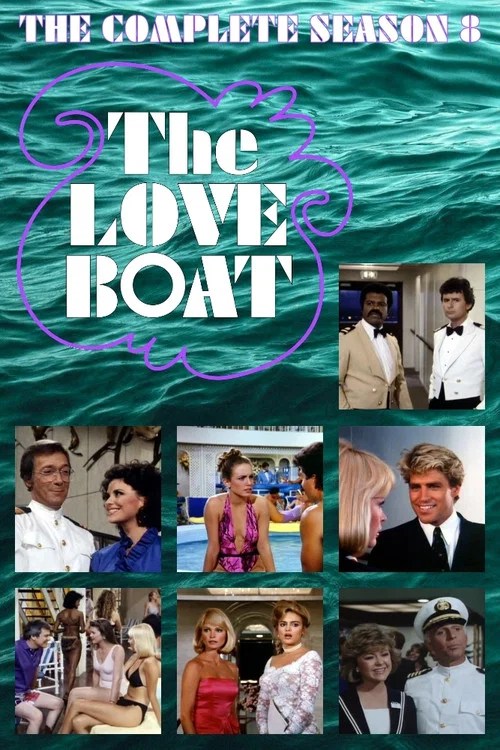
Retro Television Review: The Love Boat 8.9 “The Last Heist/Starting Over/Watching the Master”


Welcome to Retro Television Reviews, a feature where we review some of our favorite and least favorite shows of the past!  On Wednesdays, I will be reviewing the original Love Boat, which aired on ABC from 1977 to 1986!  The series can be streamed on Paramount Plus!

And looooooove, won’t hurt anymore….

Episode 8.9 “The Last Heist/Starting Over/Watching the Master”

(Dir by Ted Lange, originally aired on November 10th, 1984)

Recent law school graduate Paula (Julia Duffy) boards the boat with the man who paid for her education, Uncle David (Patrick Macnee).  Paula thinks David is a businessman but, as David explains to her once they’ve reached their cabin, he’s actually a jewel thief.  Paula asks David to retire from stealing but David explains that he’s going to pull off one final big score by stealing a necklace owned by Martha Parker (Abby Dalton).  He’s even had a replica of the necklace made so that Martha will never notice that the real one has been stolen,

Needless to say, Paula has a lot on her mind when stockbroker Andy Brooks (Douglas Barr) first tries to hit on her.  But what if Andy isn’t a stockbroker?  Shortly after David steals the necklace, Andy shows up at his cabin.  Andy explains that he’s actually an insurance investigator and that David will be turned over to the authorities as soon as the ship docks in Los Angeles.  Oh no!

However, because Andy has fallen in love with Paula, he later tells them that he won’t turn David in as long as David both returns the necklace and retires from being a thief.  David agrees.  What David doesn’t realize is that Andy actually is just a stockbroker and the whole thing was a set-up engineered by Paula to get him to retire.

Meanwhile, Doc is excited because his new girlfriend, Gloria (Delta Burke), is going to be on the cruise. Unfortunately, Hal Winston (William Christopher) is also on the boat.  Hal is marrying one of Doc’s ex-wives and he’s on the cruise so he can observe Doc and learn to be more like him.  Doc gets annoyed.  Gloria falls in love with Hal.  “I guess I’m still paying alimony,” Doc says as he watches Hal and Gloria leave the boat together.

These first two stories were really charming.  I especially liked the story involving David, Andy, and Paula.  Patrick Macnee had just the right twinkle in his eye.  Julia Duffy and Douglas Barr had the type of carnal chemistry that was rarely seen on the G-rated Love Boat.  As for Doc’s story, it was funny in its dopey way.

Unfortunately, those two stories were overshadowed by the third story.  Beth Reed (Deborah Adair), an old friend of Judy’s, boards the cruise.  Beth is recently divorced.  When another passenger, Joe (Brodie Greer), starts to hit on her, Beth says she’s not interested.  At first, Joe thinks that it’s because he’s been coming on too strong and Judy assumes that Beth is struggling to adjust to being divorced.  However, Beth eventually explains that she got divorced because her husband could not handle the fact that she was raped by a stranger.  At first, Joe seems understanding but then he freaks out when Beth says that, when she returns to Los Angeles, she will be testifying against her rapist.  That’s going to be so embarrassing for you!, he says.  Joe goes on and on about how Beth shouldn’t testify.  In fact, Joe was so adamant that I was almost expecting it be revealed that Joe was the brother or a friend of the man who raped her.

Instead, it just turns out that Joe’s a jerk.  Beth says that she never wants to see Joe again and that’s really where this story should have ended.  Joe goes from coming on way too strong to basically ordering Beth not to testify against a rapist.  Joe should have been dumped and Beth should have left the boat alone but proud that she stood up for herself.  Instead, Joe offers up a half-assed apology and Beth not only takes him back but agrees to marry him.

NO!  Joe does not deserve to be taken back.  NO!  Do not marry the guy who, after knowing you for two days, tries to tell you how to live your life.  It seems like Beth is just going from one jerk to another and her friend Judy doesn’t do anything to stop her.

I have no doubt that there were good intentions behind this story.  But, seen today, the best thing you can say about the story is that it was tone deaf and insensitive.  Brodie Greer, who was likable as Baricza on CHiPs and on a previous episode of The Love Boat in which he appeared, gives a rather stiff performance, almost as if he himself couldn’t believe some of the lines that had been written for him.

Two of the stories were charming but they were both overshadowed by the third story and it brought the entire episode down.

Late Night Retro Television Review: Pacific Blue 4.17 “Scarlet Rose”


Welcome to Late Night Retro Television Reviews, a feature where we review some of our favorite and least favorite shows of the past! On Tuesdays, I will be reviewing Pacific Blue, a cop show that aired from 1996 to 2000 on the USA Network!  It’s currently streaming everywhere, though I’m watching it on Tubi.

This week, the bicycle cops investigate a 50 year-old cold case.

Episode 4.17 “Scarlet Rose”

(Dir by Paul Brown, originally aired on March 7th, 1999)

In the 1940s, Santa Monica was shaken by the brutal murder of an actress nicknamed the Scarlet Rose. Her ghost is said to haunt the ballroom where she used to dance and where it’s believed she met her still-unknown murderer. Now, after nearly 50 years, the ballroom is reopening as the Scarlet Rose Ballroom.

Bobby Cruz, who has long been haunted by the stories about the Scarlet Rose, attends the grand opening, where everyone is dressed like it’s the 1940s and swing dancing. When he meets Lily (LuAnne Ponce), he’s stunned because she looks just like the Scarlet Rose. Lily explains that she is Scarlet’s granddaughter and that she’s looking not only for the truth about who killed her grandmother, but also for what happened to a valuable necklace Scarlet owned.

Bobby suspects that Walter (William Schallert), an older man who hangs around the club, might have had something to do with Scarlet’s murder. He also suspects that it might somehow be linked to a recent robbery at a jewelry store. He takes his suspicions to T.C.

“We are going undercover!” T.C. announces.

Yes, this is yet another episode in which the members of Pacific Blue go undercover. These episodes never make sense to me, because the members of Pacific Blue are bicycle cops. They’re not detectives. They’re not trained to go undercover. They’re trained to ride around on their bikes, hand out traffic tickets, and secure crime scenes until the real detectives can show up.

In this episode, going undercover means that Monica gets a job singing at the club while Cory and Jamie hang out at the bar and glare at everyone like the two biggest killjoys in existence. It isn’t just that it doesn’t make any sense for these people to be working undercover. It’s also that none of them are particularly good at it. Cory and Jamie may be dressed up like 1940s femme fatales, but they still give off an immediate cop vibe.

For the record, the case of the Scarlet Rose is solved. It turns out that she was murdered by an associate of Los Angeles gangster Mickey Cohen. Considering that Cohen was a real person, it feels a little unfair to pin a fictional murder on him, but I guess Pacific Blue felt that, since he wasn’t around to complain, it wouldn’t be a problem.

(The Scarlet Rose was clearly based on the Black Dahlia murder case. It seems like every few years, someone publishes a book claiming to have solved the Black Dahlia case. Former LAPD detective Steve Hodel built an entire literary career out of accusing his late father of being responsible for the Dahlia’s murder and practically every other unsolved murder in California.)

A few positive things can be said about this episode. The 1940s-style costumes were to die for. The real-life band Jumpin’ Jimes provided the episode with a great soundtrack, and the swing dance scenes were nicely choreographed. The Scarlet Rose Ballroom looked like a fun place to hang out. Not even the dour presence of Cory and Jamie could suck the fun out of that place. Finally, old pro William Schallert gave a good performance as a potential suspect who wasn’t entirely what he seemed to be.

In other words, this was actually a pretty good episode of Pacific Blue. I’ll never understand why the bicycle cops were investigating a 50-year-old cold case, but whatever. It was still an entertaining episode.