Retro Television Review: The Love Boat 8.19 and 8.20 “Scandinavia Cruise: Girl of the Midnight Sun/There’ll Be Some Changes Made/Too Many Isaacs/Mr. Smith Goes to Stockholm”


Welcome to Retro Television Reviews, a feature where we review some of our favorite and least favorite shows of the past!  On Wednesdays, I will be reviewing the original Love Boat, which aired on ABC from 1977 to 1986!  The series can be streamed on Paramount Plus!
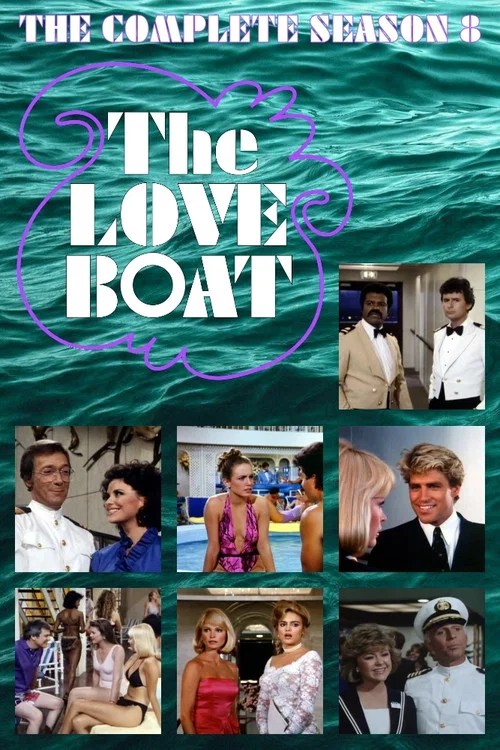
This week, we’ve got a special two-hour episode of The Love Boat!

Episodes 8.19 and 8.20 “Scandinavia Cruise: Girl of the Midnight Sun/There’ll Be Some Changes Made/Too Many Isaacs/Mr. Smith Goes to Stockholm”

(Dir by Robert Scheerer, originally aired on February 2nd, 1985)

The Love Boat is going to Oslo and Stockholm!

This is another one of those two-hour episodes that largely served as a travelogue. Let’s just say that there are a lot of scenes of the crew members wandering around Oslo and Stockholm and pointing out all of the historic buildings. That said, there is the usual collection of guest stars.

Jack Klugman plays a man who wants to reduce the size of his nose. He meets and falls for Susannah York. In one of those mix-ups that could only happen on a sitcom, she gets it into her head that he’s going to Sweden to get a sex-change operation, and she makes it her mission to change his mind.

John Davidson plays the vice president of a suntan lotion company who has been tasked with finding a Scandinavian model to pose for the company’s ads. He thinks that he’s found the perfect candidate in Greta (Christopher Norris). How will he react when he discovers that Greta is actually just an American pretending to be Swedish? Do you think they’ll fall in love?

Priscilla Barnes plays a Swedish actress who appears to be fascinated with Gopher. Gopher briefly resigns from the cruise to join her father’s company. Don’t worry, he comes back.

Here’s the thing, though. While all of this is going on, Telly Savalas is playing a mad scientist who has built a robot that looks exactly like Isaac. He has hired Janet Jackson to distract the real Isaac so that the robot Isaac can commit a daring daylight robbery. His plan is for the real Isaac to be arrested. He almost succeeds until the robot Isaac malfunctions in a hallway. “That’s not Isaac!” Doc Bricker says.

Remarkably, Isaac is amazingly untraumatized by all of this. He even pretends to act like a robot after Savalas and Janet Jackson are arrested. The entire crew laughs. It really seems like this story should have left everyone feeling a bit more uneasy than it did.

Still, the Scandinavian countries were lovely to look at, and watching this old episode of The Love Boat on Wednesday helped to distract me from the fact that a political party that doesn’t have the guts to condemn anti-Semitism swept the midterms. That’s really the best thing that a show like this can do. That’s why I love The Love Boat.

Lisa Reviews an Oscar Winner: The Sting (dir by George Roy Hill)


Earlier tonight, as a part of their 31 Days of Oscar, TCM aired The Sting, the film that the Academy selected as being the best of 1973.  I just finished watching it and what can I say?  Based on what I’ve seen of the competition (and there were a lot of great films released in 1973), I would not necessarily have picked The Sting for best picture.  However, the movie is still fantastic fun.

The Sting reunited the director (George Roy Hill) and the stars (Robert Redford and Paul Newman) of Butch Cassidy and the Sundance Kid and told yet another story of likable criminals living in the past.  However, whereas Butch Cassidy largely satirized the conventions of the traditional Hollywood western, The Sting is feels like a loving homage to the films of 1930s, a combination of a gritty, low-budget gangster film and a big budget musical extravaganza.  The musical comparison may sound strange at first, especially considering that nobody in The Sting randomly breaks out into song.  However, the musical score (which is famously dominated by Scott Joplin’s The Entertainer) is ultimately as much of a character as the roles played by Redford, Newman, and Robert Shaw.  And, for that matter, the film’s “let-pull-off-a-con” plot feels like an illegal version of “let’s-put-on-a-show.”

The film takes place in the 1936 of the cultural imagination, a world dominated by flashy criminals and snappy dialogue.  When con artists Johnny Hooker (Robert Redford) and Luther Coleman (Robert Earl Jones) inadvertently steal money from a gangster named Lonnegan (Robert Shaw), Lonnegan has Luther murdered.  Fleeing for his life, Hooker goes to Chicago where he teams up with Luther’s former partner, veteran con man Henry Gondorff (Paul Newman).  Gondorff used to be one of the great con artists but he is now living in self-imposed obscurity, spending most of his time drinking and trying to avoid the FBI.  Hooker wants to get revenge on Lonnegan by pulling an elaborate con on him.  When Gondorff asks Hooker why, Hooker explains that he can either con Lonnegan or he can kill him and he doesn’t know enough about killing.

The rest of the film deals with Hooker and Gondorff’s plan to con Lonnegan out of a half million dollars.  It’s all very elaborate and complicated and a bit confusing if you don’t pay close enough attention and if you’re ADHD like me.  But it’s also a lot of fun and terrifically entertaining and that’s the important thing.  The Sting is one of those films that shows just how much you can accomplish through the smart use of movie star charisma.  Redford and Newman have such great chemistry and are so much fun to watch that it really doesn’t matter whether or not you always understand what they’re actually doing.

It also helps that, in the great 70s tradition, they’re taking down stuffy establishment types.  Lonnegan may be a gangster but he’s also a highly respected and very wealthy gangster.  When Newman interrupts a poker game, Lonnegan glares at him and tells him that he’ll have to put on a tie before he’s allowed to play.  Lonnegan may operate outside the law but, in many ways, he is the establishment and who doesn’t enjoy seeing the establishment taken down a notch?

As entertaining as The Sting may be and as influential as it undoubtedly is (Steven Soderbergh’s Ocean films may be a lot more pretentious — which makes sense considering that Soderbergh is one of the most pretentious directors in film history — but they all owe a clear debt to The Sting), it still feels like an unlikely best picture winner.  Consider, for instance, that The Sting not only defeated American Graffiti and The Exorcist but Ingmar Bergman’s Cries and Whispers as well.  On top of that, when you consider some of the films that were released in 1973 and not nominated — Mean Streets, Badlands, The Candy Snatchers, Day of the Jackal, Don’t Look Now, Jesus Christ Superstar, and The Long Goodbye — it’s debatable whether The Sting should have been nominated at all.  That’s not a criticism of The Sting as much as it’s an acknowledgement that 1973 was a very good year in film.

So, maybe The Sting didn’t deserve its Oscar.  But it’s still a wonderfully entertaining film.  And just try to get that music out of your head!