Having been rejected for membership in the Avengers, the merc with a mouth is no longer a merc. Deadpool (Ryan Reynolds) has broken up with Vanessa (Morena Baccarin) and he now sells used cars. What he really wants is to be a member of the Marvel Cinematic Universe, but Blind Al (Leslie Uggams) keeps doing cocaine even though Kevin Feige has forbidden it. Things aren’t going well for Deadpool until he’s contacted by Mr. Paradox (Matthew Macfadyen), who explains that Deadpool’s timeline is decaying because of the death of Logan (Hugh Jackman), the character who was holding everything together. Paradox is willing to send Deadpool over to the main “Sacred Timeline,” but when Deadpool realizes that his current universe is going to end and all of his friends are going to die, Deadpool decides to resurrect Logan and save the day.
Deadpool & Wolverine answers the question of what happened to all of those characters from the Marvel movies that weren’t produced by Disney. It turns out that they’re all in the Void, where they’re ruled over by Professor X’s twin sister, Cassandra (Emma Corrin). Jennifer Garner shows up as Elektra. Wesley Snipes proves once again that he’s the only actor who should ever play Blade. Chris Evans plays not Captain America but instead a useless Johnny Storm. This being a Deadpool film, our hero can’t resist expressing his disappointment over not getting Evans as Cap. Deadpool & Wolverine becomes a commentary on just how many Marvel films there were before Robert Downey, Jr. declared “I am Iron Man,” and how most of them, with the exception of the X-Men films, were swept under the rug once the MCU became a cultural juggernaut.
Of course, Logan eventually returns. There are many different versions of Logan, just as there are many different versions of Deadpool, but eventually the right Deadpool finds the right Logan. Reynolds and Jackman bring an interesting dichotomy to the film. If Ryan Reynolds spends the entire movie commenting on how the MCU has become, even in decline, an unstoppable beast, Jackman reminds us that he was one of the first actors to prove that a comic book character can be played with real emotion.
Violent, profane, and very funny, Deadpool & Wolverine was a hit at a time when the MCU seemed to be really struggling. Rewatching it, I was reminded that the success of Deadpool really is a reflection of just how cynical a lot of us have gotten about comic books and the MCU. Deadpool exists to point out all of the things that we’ve noticed, and sometimes it feels like Disney is expecting too much credit for acknowledging its problems without actually fixing them. Fortunately, the team of Reynolds and Jackman is so strong that it’s hard not to just go with them. (You only have to watch the She-Hulk series to see how bad an attempt at meta commentary can be when you don’t have the right people.) With this film, Deadpool and Logan announce their arrival in the MCU, and it’ll be interesting to see where this all leads.
“Who’s going to believe a talking head? Get a job in a sideshow.” — Herbert West
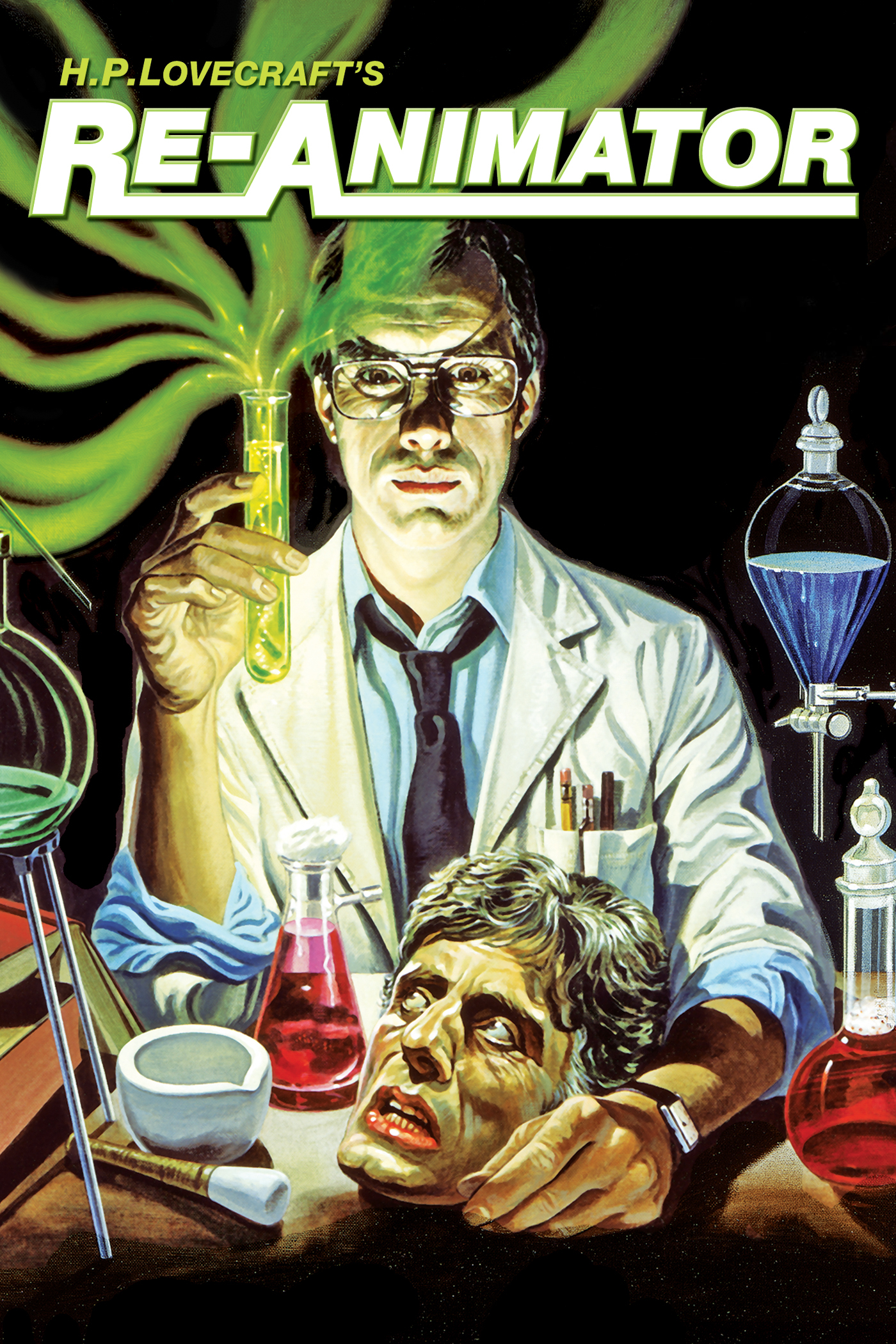
Somewhere in a cramped basement lab in Arkham, Massachusetts, a gaunt young man in glasses holds up a syringe of luminous green fluid and announces, with the total confidence of someone who has never once doubted himself, that death is merely a temporary condition. “Don’t expect it to tuck you in at night,” he warns about his reanimation serum. He’s right to be wary, because the things that come back in Stuart Gordon’s Re-Animator (1985) come back wrong. That single image—the needle full of ectoplasm-green juice—is the seed the entire film grows from. It’s a movie about the arrogance of believing death can be solved like a math problem, and it explores that idea with more fake blood per minute than almost anything made before or since. That it also happens to be one of the funniest, most quotable, and most flat-out entertaining horror films of its decade is the kind of miracle that happens only when everyone involved is operating at maximum commitment.
The plot is a beautifully simple delivery system for chaos. Dan Cain (Bruce Abbott), a promising medical student at Miskatonic University, takes in a new roommate: the twitchy, superior, relentlessly focused Herbert West (Jeffrey Combs), freshly arrived from Switzerland, where his mentor met a spectacularly bad end. West has developed a glowing green serum that, when injected into the freshly dead, jolts them back to violent, shambling, extremely angry life. His theory, delivered with clenched-jaw intensity, is that their aggression is merely a side effect of having been dead too long before the injection. It’s absurd pseudoscience, and the film knows it, leaning into every ridiculous beat with a straight face. That deadpan sincerity is the whole engine of the movie.
Gordon, working with producer Brian Yuzna and co-writer William J. Norris, never winks at the audience. A cat attacking West in a basement storage room makes for a legitimately tense scene right up until the punchline. A reanimated cadaver lurking in a morgue drawer is genuinely creepy. Then the film escalates to the point where severed heads are being reanimated in pans of blood, and you realize you’ve been grinning for forty straight minutes.
The crown jewel of the whole enterprise is Combs as Herbert West, delivering one of the great horror performances ever committed to film. West is written as a complete sociopath with zero social graces and an ego the size of a small planet. Combs plays him with clipped, precise, faintly outraged diction, like a man perpetually offended that the universe isn’t cooperating with his research. Every line reading is a small marvel of controlled, over-the-top delivery. West isn’t scary because of how he looks—he’s a scrawny guy in glasses and a suit. He’s scary because he simply does not care about anything beyond his experiments, and Combs lets you see that emptiness behind his eyes even in the film’s funniest moments.
Around him, the supporting cast gamely keeps pace. Abbott’s Dan is the classic 1980s horror protagonist: handsome and increasingly willing to go along with West’s atrocities once his fiancée, Megan (Barbara Crampton), is in danger. Crampton brings more to Megan than the screaming-final-girl archetype might suggest, though she does plenty of shrieking in the back half. Robert Sampson plays Dean Halsey, Megan’s father, who ends up as one of West’s reanimated subjects. Meanwhile, David Gale is magnificently unhinged as Dr. Carl Hill, the smug department head who becomes West’s academic nemesis and, eventually, a headless, telepathically linked villain in one of cinema’s most audacious third acts. You could say Hill really loses his head over Megan, and the film means that quite literally.
Because, yes, the finale is a delirious carnival of gore, black comedy, and genuinely disturbing imagery. Hill’s severed head gets the serum and acquires the ability to command his reanimated body, which abducts Megan. What follows is the film’s most infamous sequence, combining grotesque visual humor with sexual assault. The head-related wordplay practically writes itself, but the scene’s cruelty makes the laughter uncomfortable. Even within a movie this determined to offend, it’s a confrontational moment, and whether it feels audacious or simply ugly will depend on the viewer. Either way, it pushes the film’s collision of comedy and horror to its most extreme point.
The effects team deserves enormous credit for making the physical madness land. The gore, crafted by a crew including John Carl Buechler and Tony Doublin, with special makeup by John Naulin, is cartoonish, wet, and shockingly durable. There are gallons of blood, multiple severed heads, rubbery reanimated corpses, and an iconic image of a head impaled on a shovel. The effects don’t always look realistic, but realism isn’t quite the point. They have weight, texture, and a gloriously unpleasant physical presence that makes the mayhem feel immediate.
What elevates Re-Animator above its splattery peers is that, underneath the grue, it’s a genuinely well-made movie. Richard Band’s score wears its resemblance to Bernard Herrmann’s Psycho music so openly that the familiarity becomes part of the film’s cheeky charm. The pacing is brisk, the Miskatonic setting grounds the madness, and the low budget rarely reads as cheap—just resourceful. Gordon’s background in theatre shows in how tightly each scene builds and pays off. This is a director who understood dramatic construction even as blood poured over everything.
The film also takes enormous liberties with Lovecraft’s source material, “Herbert West–Reanimator,” particularly in its tone and content. But that freedom is a strength rather than a drawback. Gordon isn’t trying to preserve every detail or reproduce the experience of reading the original. He takes the central premise and turns it into something with its own nasty personality. The film captures the queasy idea that a scientific mind unconstrained by ethics is the real monster, then finds increasingly outrageous ways to make that idea entertaining.
That brings us back to the syringe of glowing green serum. Re-Animator understands something many horror movies forget: the scariest monster isn’t necessarily the thing on the slab. It’s the calm, rational man holding the needle who sees no reason to pause. The reanimated cat, the dead dean, the headless professor—they’re all just side effects. West’s indifference gives the chaos its connective tissue. No matter how grotesque the results become, he remains more interested in refining his process than questioning whether he should continue.
The film’s darkest, funniest joke is that catastrophic evidence never seems capable of shaking West’s faith in his own brilliance. Every disaster becomes another technical problem rather than a reason to stop. Forty years later, the movie remains a blast precisely because it plays that arrogance for both laughs and dread. It leaves you grinning while quietly wondering how many genuine Herbert Wests are out there, holding up their own green syringes, utterly certain that death is just a problem waiting to be solved. Maybe don’t watch it right after dinner.
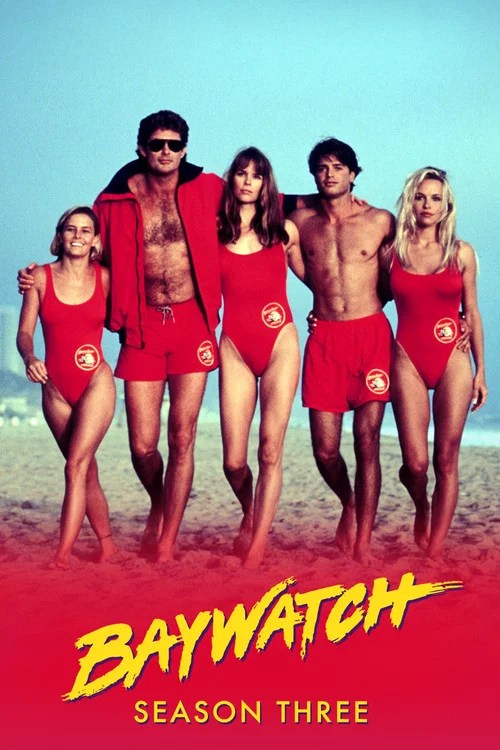
Welcome to Retro Television Reviews, a feature where we review some of our favorite and least favorite shows of the past! On Saturdays, I will be reviewing Baywatch, which ran on NBC and then in syndication from 1989 to 2001. The entire show can be viewed on Tubi.
This week, Brody and Summer go through rookie school!
Episode 3.4 “Rookie of the Year”
(Dir by Gus Trikonis, originally aired on October 5th, 1992)
This week’s episode follows Matt Brody and Summer Quinn through rookie school as they compete for Rookie of the Year. The winner gets to choose a beach assignment. Eddie Kramer won the honor in his class. Brody has a shot this year, but only if he can beat arrogant Clint Chandler (Race Nelson) in the Gauntlet, a grueling race across the beach and through the ocean.
The episode gives us a few questions to ponder.
Will Brody overcome his rebellious attitude and the disapproval of his wealthy father (Dirk Benedict)?
Will Summer find the courage to make the pier jump?
When C.J. and Stephanie discover that they share an ex-boyfriend, and that he rented his old apartment to both of them, will they be able to live together?
The answer to all three questions is yes. If you didn’t instinctively know that, you have obviously never watched Baywatch.
Brody comes close to dropping out of rookie school, until Mitch tells him he reminds him of a young hothead who had a problem with his dad. “Eddie Kramer?” Brody says. Mitch shakes his head. “About a foot taller.” (Mitch means himself. Brody still deserves some credit for clocking that he is basically Eddie Kramer with a rich dad.)
C.J. may be into crystals and Stephanie may be down-to-earth and practical, but they still make their odd-couple dynamic work.
And Summer may be scared of jumping off the pier, but she does it after encouragement from C.J. and Brody. Brody wins Rookie of the Year not just because he beat Clint in the Gauntlet, but because he helped Summer make the jump.
Meanwhile, it is announced that Guido Torzini (Buzz Belmondo), a guy with a pencil-thin mustache who has been hanging around headquarters whether anyone asked him to or not, will be Baywatch’s official maintenance engineer. Congratulations, Guido, whoever you may be.
This was an episode built out of montages. The rookies run into the water. The rookies run out of the water. Sometimes they do it in slow motion. It was thoroughly predictable, but the beach was lovely and the ocean was inviting.
There was nothing at all challenging about this episode.
Why would a serial killer use Betamax? This question is very specific, but “What We Found Out There” answers it! I’m leery to give away the twist on this one because it’s … okay- it’s not amazing, but it’s not bad either. I would describe this short that way too: it’s…okay, not great, but aggressively mediocre. “What We Found Out There” is the six hours of sleep, the two dollar win on a five dollar scratch ticket, the soft cooked bacon, the flat soda, or the tie game of films.
Two friends go hiking and find an injured hiker who has a bag of Betamax tapes. They go straight to the police? Nope. Call in emergency services? Nope, that’s for wimps! The two guys go to their creepy friend’s house who has Betamax capabilities and they watch the tapes and discover that they are films of a man’s murders! Yes, the tapes are the recordings of a prolific serial killer! But whodunit?
The film does answer whodunit, but how? If you were expecting an answer on how, tough cookies! You heard me! Should you watch this? Why not? I mean, it’s not the worst thing I’ve seen. You won’t love it, but it is a solid mid.
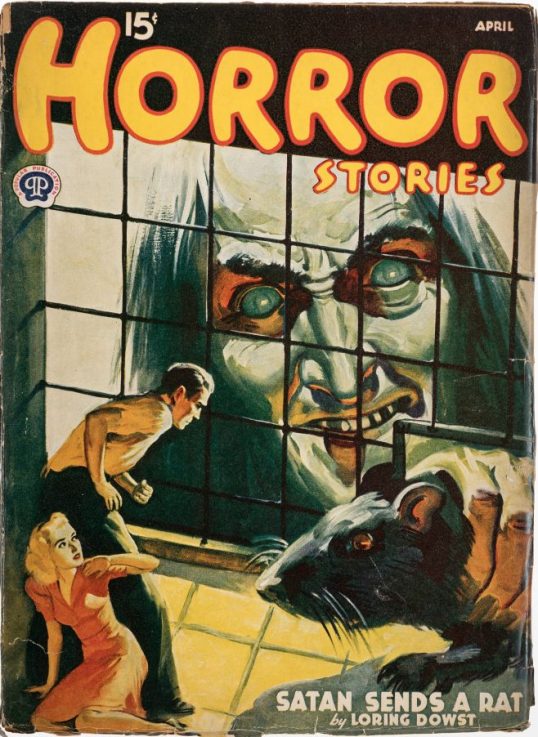
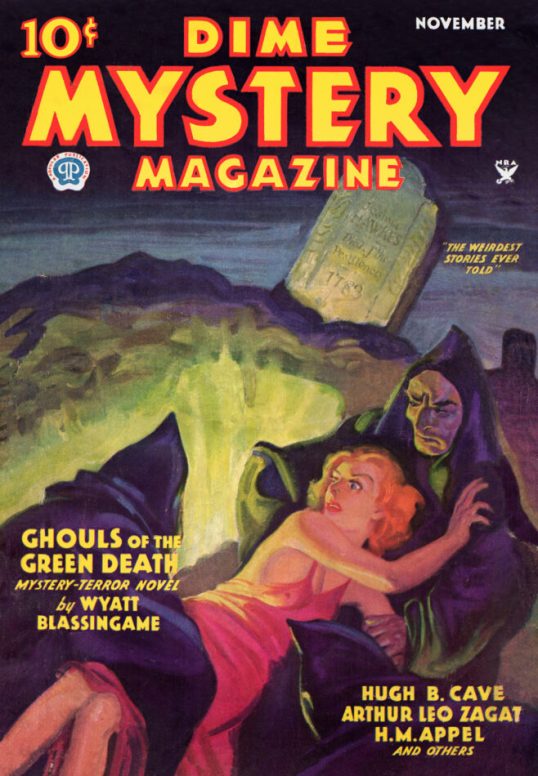
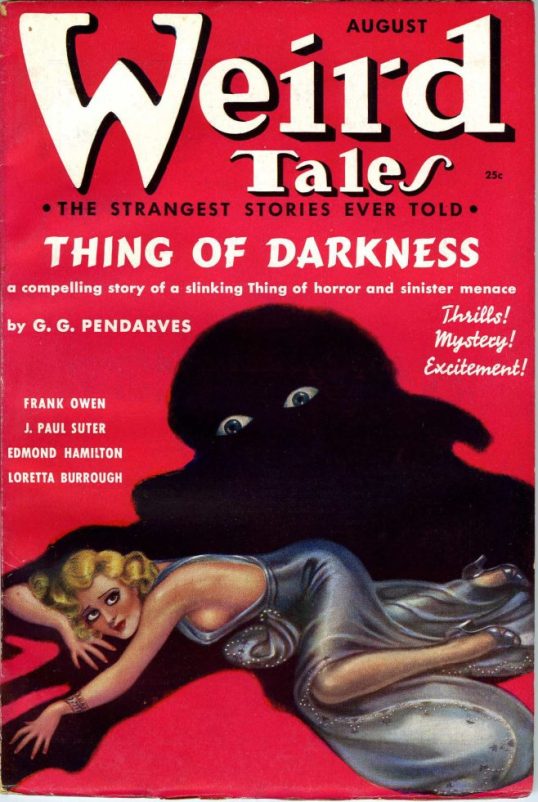
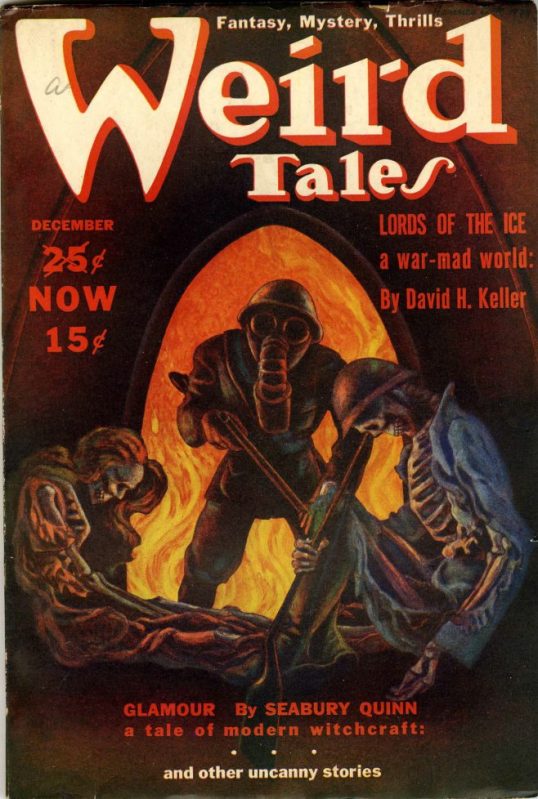
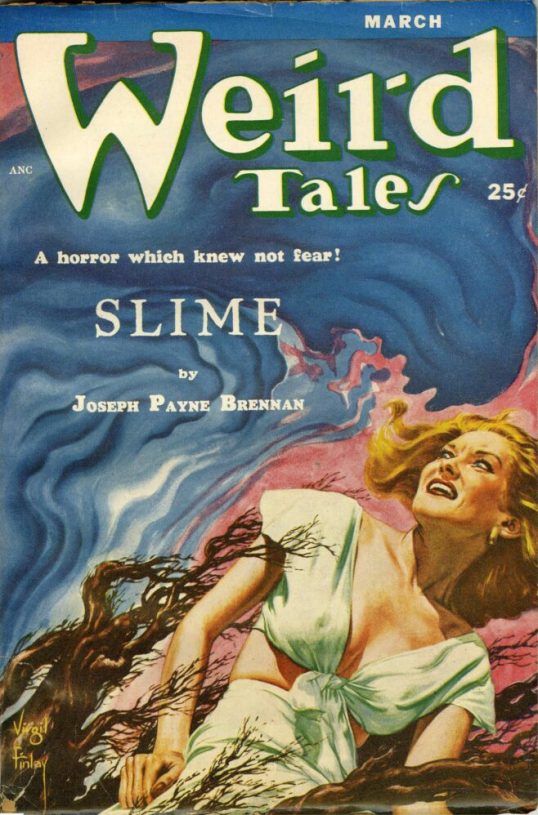
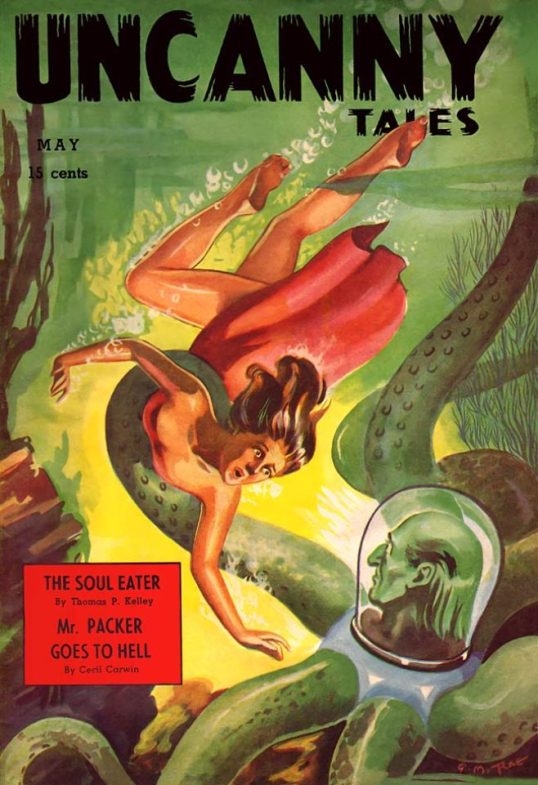
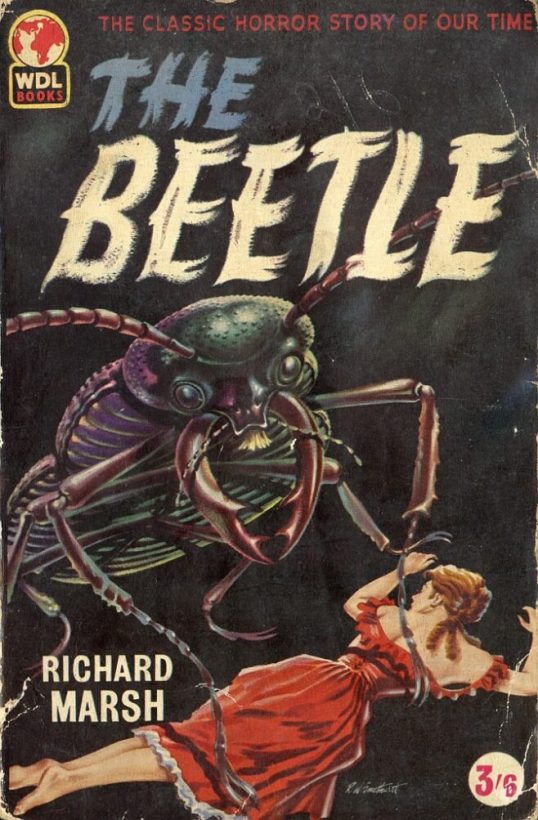
If you’re struggling to get into the Halloween spirt, don’t worry! Dazzling Erin is here to get you in the mood, with a little help from the pulps! Here are seven classic and pulpy horror covers that are guaranteed to get you ready to see ghosts and listen for things that go bump in the night!
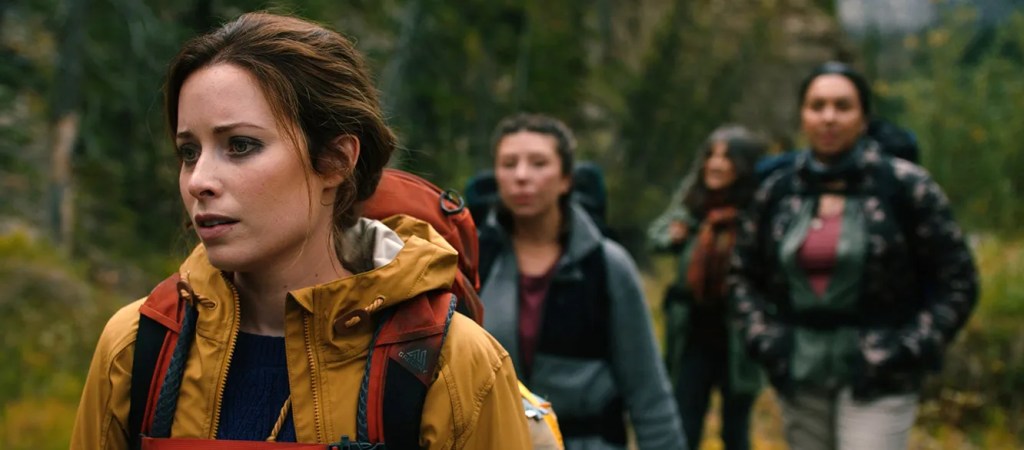
As I type this, DARK NATURE is the No. 3 streaming horror film on Amazon Prime, so I thought, “What the hell… I’ll just watch it.” The story seemed somewhat interesting as it follows Joy (Hannah Emily Anderson), a woman trying to recover from an abusive relationship. She joins her friend Carmen (Madison Walsh), whose therapy group is heading out on a retreat into the Canadian Rockies. Led by Dr. Dunnley (Kyra Harper), the goal of the group is to confront their personal traumas and start healing. Unfortunately, once they get out into the mountains, things really begin to go wrong. Joy experiences visions of her abusive ex, while the other members of the group have their own disturbing issues to deal with. And what’s the deal with this terrifying vision they all seem to be having of a dangerous beast in the woods?!
I’ll give this movie credit for trying to do something a little different. Writer and director Berkley Brady uses horror to explore the darkness inside the normal lives of its characters in a literal outdoor group therapy camping session. It’s an interesting idea, but I don’t think the movie does enough with it. I wanted the film to explore the characters more deeply and maybe put them in a position to really work together no matter what dangers they face. But when the actual deadly creature shows up, I was disappointed because the story abandoned that idea of a group helping each other. Rather, most of them just became lunch.
On the positive side, the movie is set in beautiful mountainous locations where the remote wilderness reinforces the feeling that our characters have little hope of escaping. And I thought Hannah Emily Anderson did a good job of showing Joy’s fear and her doubts, and then getting tough when she has to. I thought her most effective scenes were spent trying to reconcile with her best friend or fighting the abusive man in her life, not the murderous mountain creature. Those scenes actually felt real and tugged at my emotions. The story presented interesting possibilities, but I don’t think the execution delivers.
At the end of the day, I do have some appreciation for what DARK NATURE is attempting to do, even if I was somewhat underwhelmed with the actual movie. It’s never a good sign when an 85-minute movie feels a lot longer. But I do think that there could be an interesting movie buried inside this story, one that uses a horror movie monster and group therapy to explore the very real monstrous situations that regular people find themselves in. I just don’t think this is it.
Happy Halloween! I’ve really enjoyed this horrorthon. Were some of the films terrible? Oh Yeah!
Some were terrible!
AI has improved by a quantum leap and will likely surpass all normal film in the next 3 years. If “Nightwalker” is the competition for AI films, good riddance to traditional filmmaking. Do a lot of the characters look leathery and similar in AI films? You betcha! However, they’re less pretentious and boring.
In “Nightwalker”, a boring knight wants to get immortal life and seeks out a vampire and finds one. All I kept thinking was- why didn’t they use AI? It would’ve been better and cheaper. Granted, this short film was garbage trash; so, maybe the AI substitution is a bit unfair. What do I say to this critique? Bruh, whaddya a cop?
I will do a few more reviews for Halloween, but I hope the films are better than this. Let the machines rise!!!
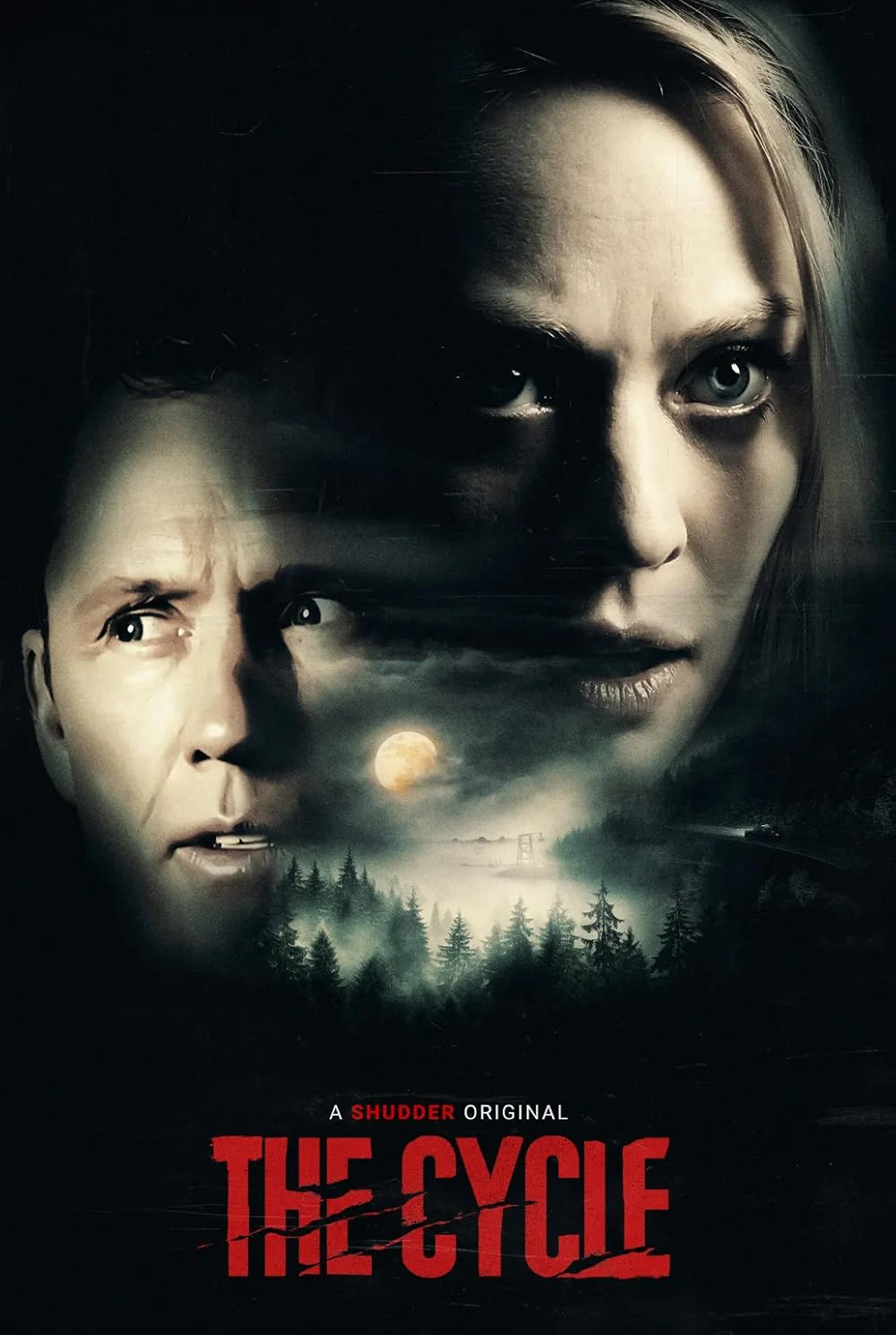
A good monster can make a horror movie entertaining. A monster tangled up in somebody’s family history can make it personal. Jordan Downey’s The Cycle works best when it understands that difference, using a disturbing investigation to pick apart the story its main character has told herself about her father. There is grisly forensic work, a creeping sense of wrongness, and eventually the sort of creature-feature nastiness that rewards patient horror fans. But underneath all that is a more uncomfortable question: what happens when someone you thought had abandoned you turns out to have left behind a much stranger explanation?
Deborah Ann Woll plays Dr. Meg Garland, a forensic anthropologist whose latest assignment quickly becomes more than another difficult day at work. The brutal murders of a mother and daughter lead investigators to another body, one with abnormalities that resist a straightforward explanation. Then Meg discovers that the dead man is her father, who disappeared when she was a child. It is an effective complication because it immediately changes her relationship with the evidence. She can approach the remains as a scientist, but she cannot pretend they belong to someone whose life means nothing to her.
That collision between professional distance and personal involvement gives The Cycle its strongest material. Meg has built a career around examining what people leave behind, yet she has never had a satisfying explanation for her father’s absence. Now the answers are physically in front of her, and they are considerably harder to process than she might have imagined. The film gets something right about unresolved family history: sometimes the explanation you resent becomes part of how you understand yourself. Finding out that it might be incomplete does not automatically make anything easier.
Woll keeps that emotional conflict from becoming too heavy-handed. Her performance gives Meg enough composure to feel credible in her work without making her seem untouched by what she discovers. The character’s discomfort matters more because it has to fight its way through habits of observation and control. She is someone who wants to understand a problem before reacting to it, which makes her a useful anchor as the investigation becomes increasingly bizarre. Without that steadiness, the film’s movement from crime story to monster movie could feel like two separate ideas awkwardly sharing the same running time.
Downey and cinematographer Kevin Stewart build the first part around a chilly, oppressive atmosphere. The drained colors and forensic imagery place the film firmly in familiar crime-thriller territory, where every room seems to carry the residue of something unpleasant. That familiarity is both useful and limiting. It establishes the seriousness of the investigation, but it also means the early scenes do not always feel especially distinctive. What makes the approach worthwhile is its connection to Meg’s perspective. This is a world she should know how to navigate, which gives the inexplicable details more power to unsettle her.
The trouble is that the film sometimes mistakes staying in that atmosphere for developing it. A slow investigation can be gripping when each discovery sharpens the mystery or changes the stakes. Here, some passages feel as though they are maintaining the same level of unease rather than pushing it further. The personal connection helps, but it cannot generate momentum on its own. There are moments when the story seems ready to move forward and then settles back into another stretch of explanation. Viewers who enjoy deliberate horror may be comfortable with that rhythm; others will probably feel the drag.
Once The Cycle leans into its physical horror, the appeal becomes much more immediate. Its commitment to practicality gives the effects a welcome sense of substance. Special effects supervisor Patrick Magee’s creature and makeup work suits a story built around bodies that refuse to provide reassuring answers. The grotesque material does not feel entirely separate from the investigation; it is an extension of it. What begins as something to study becomes something to fear. That progression gives the nastiness a purpose beyond simply proving that the movie can deliver an unpleasant image when it wants to.
The frustrating part is that the action does not always show off those effects as effectively as it could. Tight framing and shaky camerawork can turn moments of danger into a struggle to follow what is happening. Keeping a creature partly hidden is a perfectly reasonable choice, but there still needs to be a clear sense of space and threat. Otherwise, suspense gets replaced by confusion. With such tangible effects available, the film could afford to trust them a little more. Sometimes letting the audience properly see something horrible is more effective than cutting around it.
The supporting cast helps give the procedural material some texture. Jeffrey Donovan and Will Hochman play a father-and-son police pairing, adding another family relationship to a story already preoccupied with the things parents pass down or leave unresolved. Jeb Berrier’s coroner contributes to the investigative side, while Nick Soole’s score maintains an undercurrent of unease. These elements help the movie feel populated rather than built solely around Meg’s discoveries. They also make its unevenness more noticeable: there are enough solid ingredients here that the stretches of repetition feel like missed opportunities rather than unavoidable limitations.
For all its rough edges, The Cycle has the right instinct about where its horror belongs. The gruesome effects supply the immediate discomfort, but Meg’s relationship with her father gives that discomfort somewhere to settle. Its best idea is that uncovering the truth can disturb an old wound instead of closing it. The pacing could be tighter, and the creature scenes could use a clearer eye, yet the film offers more than a mystery with a monster attached. It makes the investigation personal enough that solving the case and making peace with the past become two very different things.
Here to add some historical perspective to your Halloween celebrations are some wonderful vintage images of the holiday. The illustrations below were all done during the first half of the 20th Century and they all show that Halloween is a holiday that’s been celebrated treasured for years before we came along and which will continue to be celebrate after all of us are gone.
These filmmakers need to be arrested for iPhone abuse. I was doing so well this Horrorthon. There are so many excellent shorts. I’m not yet done, but wow…this one is HOT GARBAGE!
I know in my bones that these guys do not have the rights to have the song “Sunflower” from crappy Spiderman – there is no way on earth! I guess you should watch this trash before they get a YouTube strike. I won’t dime them out, BUT I COULD or any of my loyal readers could. It’s just a quick little email….Just Sayin, Bruh.
A Gen-Z guy is listening to “Sunflower”; so, I really don’t like our chances if we have to duke it out with China. We’re doomed! Anyway, there are doppelgangers about and you can kind of hear some warnings about doppelganger activity in his apartment on the radio- sort of because they are making the most of their piracy of “Sunflower” by playing it very loudly. I am mentioning “Sunflower” a lot because it is the best thing about the film because they did not make it! However, I am pretty sure the protagonist dies at the end and I did not care.
In other news, I was dumped when I wrote this (10/18/26). Fun fact, when you date and then break up and have an interim liaison with a 3rd party lady during the breakup period and then get back together with your on and off girlfriend- she believes that you belonged to her the entire time. If she finds out that you went on a date, when you were totally broken up, it’s still cheating and you are terrible. The only way you cannot cheat is to die; maybe, a doppelganger from this terrible film could help you out? I would be down with that – Nah, I didn’t cheat; it was my evil twin.
If doppelgangers stopped with all the murdering, this could be very lucrative for them. Doppelgangers could be stand-ins! I love it!
My Short Film script
The Doppelganger –
Doppelganger: Hey, Steve. Steve prime: Hey “Bro” (Aggressive air quotes and finger gun usage) Doppelganger: Stop that. Steve prime: *Steve is a little sad now* Minimum of four hours, $300 upfront? Doppelganger: Yes… *Sigh* just like the last… eight… times. Steve prime: Well about that, how bout a discount? Doppelganger: You mean like a sandwich punchcard? Steve prime: YEAH! Doppelganger: Yeah (Steve prime looks excited) NO! Steve prime: Bu…. Doppelganger raises his hand, silencing Steve prime- Say another word and I will try on all of your underwear and aggressively use your toothbrush….everywhere. Steve prime: Like grout? Doppelganger: Head to toe “Bro” (Doppelganger points all over his body and then mocks Steve prime with air quotes and finger guns, while rolling his eyes) Steve prime hands the $300 to Doppelganger, looks sad, and leaves. Doppelganger: Yeech, humans are so gross! Ok, where’s that guy’s toothbrush?
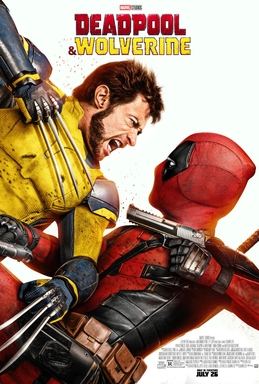 Having been rejected for membership in the Avengers, the merc with a mouth is no longer a merc. Deadpool (Ryan Reynolds) has broken up with Vanessa (Morena Baccarin) and he now sells used cars. What he really wants is to be a member of the Marvel Cinematic Universe, but Blind Al (Leslie Uggams) keeps doing cocaine even though Kevin Feige has forbidden it. Things aren’t going well for Deadpool until he’s contacted by Mr. Paradox (Matthew Macfadyen), who explains that Deadpool’s timeline is decaying because of the death of Logan (Hugh Jackman), the character who was holding everything together. Paradox is willing to send Deadpool over to the main “Sacred Timeline,” but when Deadpool realizes that his current universe is going to end and all of his friends are going to die, Deadpool decides to resurrect Logan and save the day.