Review: A Fistful of Dollars (dir. by Sergio Leone)


“When a man with a .45 meets a man with a rifle, you said, the man with a pistol’s a dead man. Let’s see if that’s true.” — Joe

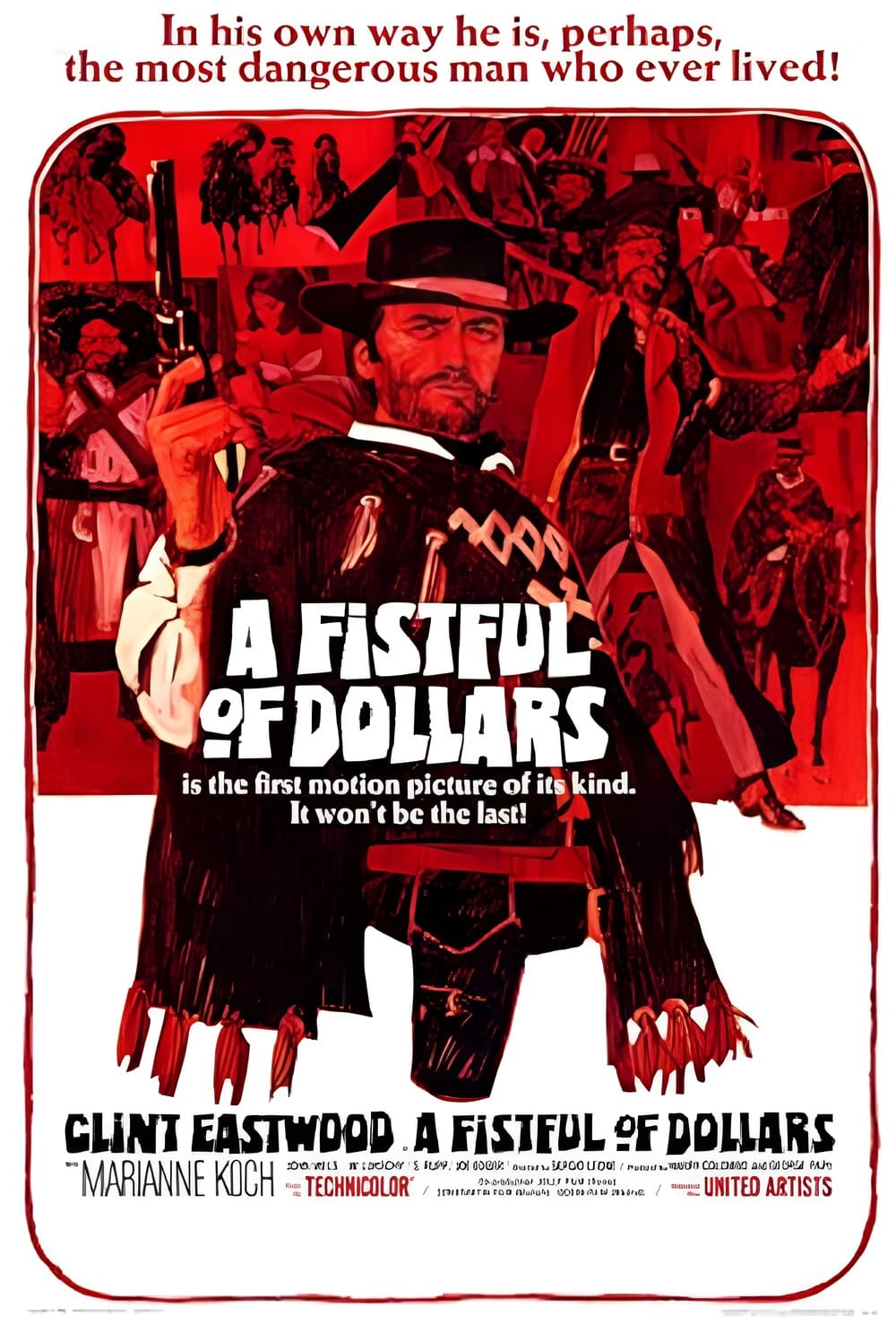
When examining the films that fundamentally reshaped a genre, 1964’s A Fistful of Dollars stands as an undeniable cornerstone. Directed by Sergio Leone, this movie didn’t just accidentally stumble into creating a new genre; it grabbed the classic American western by the collar, dragged it into the mud, and spat on its shiny boots. This was the first leg of Leone’s “Dollar’s Trilogy,” and honestly, looking back at it now, it’s kind of crazy to think about how much of an underdog this production was. It was made on a shoestring budget, shot in Spain with a bunch of Italian and Spanish actors speaking different languages and then dubbed over, and it featured a lead actor who was mostly known for playing a lovable cowboy on a little American TV show called Rawhide. Nobody expected A Fistful of Dollars to become a massive international hit, but it did, and it permanently altered the cinematic landscape.

The story itself feels incredibly familiar today, but that’s only because it has been copied and homaged about a million times since. Unapologetically lifting the plot from Akira Kurosawa’s Yojimbo, the film follows a gritty, chain-smoking drifter who rides into a dusty, miserable border town called San Miguel. But the fun part about this cinematic lineage is that Yojimbo wasn’t entirely original either. Kurosawa openly borrowed the core concept from Dashiell Hammett’s hardboiled detective novels, specifically Red Harvest and The Glass Key. Both of those books featured a lone, cynical protagonist who manipulates warring criminal factions fighting it out for control of a corrupt town. So Leone was essentially taking a Japanese interpretation of an American noir trope, stripping it down, and repackaging it as a western. Once our drifter arrives in San Miguel, he quickly realizes the town is torn apart by two rival gangs: the Baxters, a family of American gun-runners, and the Rojos, a ruthless group of Mexican smugglers. Instead of playing the traditional white-hat hero who immediately picks a side and saves the day, our guy does the exact opposite. He decides to play both sides against each other, hiring himself out to the highest bidder, switching loyalties at the drop of a hat, and essentially bleeding the town dry for his own profit. It is a brilliantly cynical setup that completely subverted what western audiences were used to seeing at the time.

And then there is Clint Eastwood. Now, pop culture famously knows him as the Man with No Name, but that is actually the result of a very clever piece of US marketing. In A Fistful of Dollars, his character absolutely has a name: Joe. The American distributors thought the mysterious, anonymous angle sounded cooler for the posters, and the moniker stuck so hard over the decades that most people forget he literally introduces himself as Joe to the locals early on in the movie. Regardless of what you call him, when Leone cast Eastwood, American studios were apparently confused, wondering why an Italian director would want a TV actor to lead a movie. But Leone saw something in Eastwood’s squint, a kind of rugged, lazy menace that was perfect for this new brand of anti-hero. Joe isn’t a knight in shining armor. He’s greedy, he’s manipulative, and he kills people without losing a wink of sleep. But he has an undeniable coolness to him that is just magnetic. The costume design plays a massive part here too. The weathered brown poncho, the stubble, the short cigar clamped in his jaw, and that iconic hat all combined to create a look that felt lived-in and dangerous. Compared to the impeccably groomed, brightly dressed cowboys of the 1950s, Eastwood looked like he actually smelled like sweat, horse hair, and gunpowder.

Of course, a conversation about A Fistful of Dollars is totally incomplete without talking about the villains, because Leone knew how to cast bad guys who were genuinely terrifying. Gian Maria Volonté plays Ramón Rojo, the main antagonist, and he is absolutely phenomenal. Ramón isn’t just a cartoonish thug; he is smart, cold-blooded, and utterly devoid of mercy. There is a famous scene where Ramón is demonstrating the accuracy of his rifle by shooting at the heart of a man he has just murdered at long range, and Volonté plays it with such a creepy, casual indifference that it makes your skin crawl. The Baxters are mostly just pathetic pawns, but the Rojos feel like a legitimate, organized threat, which makes the stakes feel incredibly real. You genuinely believe that if Joe slips up even once, these guys will brutally torture and kill him without a second thought.

Visually, A Fistful of Dollars is an absolute masterclass in atmosphere. Leone was working with a limited budget, but he used what he had to create a style that felt massive. He employed these extreme, lingering close-ups of people’s eyes, sweaty faces, and flies buzzing around, which gave the film an almost unbearable tension. Then he would suddenly cut to these massive, sweeping wide shots of the barren Spanish desert, making the characters look like tiny, insignificant specks in a cruel, uncaring world. The violence was also shockingly graphic for the time. People didn’t just clutch their chests and fall over gracefully like they did in older westerns. They bled, they grimaced in agony, and the gunfights felt loud, chaotic, and messy. Leone stripped away the romanticism of the Wild West and replaced it with a gritty, dirty reality that felt much more authentic, even if it was entirely a fabricated Italian fantasy of America.

You also absolutely have to talk about Ennio Morricone’s legendary musical score. It is basically a character in the film itself. Before A Fistful of Dollars, western soundtracks were mostly made up of traditional orchestral arrangements and folksy songs. Morricone threw that playbook out the window. He used electric guitars, twanging banjos, screaming trumpets, whip cracks, choral chants, and even a bizarre, wailing coyote sound that sounds like a human having a mental breakdown. The main theme is so incredibly catchy and weird that it burrows into your brain and stays there for days. The music didn’t just support the action on screen; it told the audience exactly how to feel, ramping up the tension during the standoffs and giving Eastwood’s character a larger-than-life aura. Without Morricone’s score, the Spaghetti Western genre simply would not exist as we know it.

The pacing of the movie is something that modern audiences might need a minute to adjust to, but it is completely intentional. Leone was in absolutely no rush to get from point A to point B. He wanted to linger on the tension, letting scenes breathe and stretch out to almost uncomfortable lengths. When Eastwood is staring down a group of thugs in the street, Leone holds the camera on their faces for what feels like an eternity. You can see the sweat dripping, you can see the fear building, and by the time the first shot is finally fired, the release of tension is almost physical. It is a slow burn that requires a bit of patience, but it makes the eventual bursts of violence so much more impactful and satisfying. It is the exact opposite of the fast-paced, action-packed blockbusters we get today, and that deliberate slowness is a huge part of its strange, hypnotic charm.

Despite all of Joe’s outward greed and manipulation, there is a subtle emotional core to the film that keeps you totally invested. It comes in the form of Marisol, a woman who is being held captive by Ramón Rojo and used as leverage against her husband. When Eastwood sees the absolute misery of this family, his cold exterior cracks just a little bit. He risks his entire scheme, and his own life, to sneak Marisol and her son out of town in the middle of the night, giving them money to start over. It is a beautifully quiet, understated scene that proves there is still a shred of humanity left underneath all that grit and cynicism. He doesn’t make a big speech about it or ask for thanks; he just does it because it is the right thing to do. It gives the character a moral center without turning him into a traditional good guy, which is a really difficult balancing act that the film pulls off perfectly.

The climax of the film is where everything comes together in a spectacular display of style and sheer badassery. After getting brutally beaten by the Rojos, Eastwood escapes and returns for revenge, utilizing a makeshift iron chest plate hidden under his poncho. Watching him walk slowly down the empty street, taking bullet after bullet to the chest without flinching, while the electric guitar wails in the background is just pure, unadulterated cinema magic. He outdraws Ramón in a final, agonizingly tense standoff, proving that his wits and his nerve are just as deadly as his revolver. It is the perfect payoff to the slow build-up of the entire movie, cementing Joe as an absolute icon of pop culture.

And this endless game of cinematic telephone didn’t stop with Leone. Just as A Fistful of Dollars was heavily “inspired by Yojimbo“—which itself transplanted the 1920s pulp noir concept into the 1860 Edo period—it went on to inspire a whole new wave of imitators looking to put their own spin on the formula. The most obvious example is the 1996 action flick Last Man Standing starring Bruce Willis, which takes the exact same plot of warring factions and a lone drifter playing them against each other, but moves the action to a Prohibition-era Texas border town. It is wild to trace that DNA from a 1920s pulp novel to the 1860 Edo period, to a 1960s Italian western, and all the way to a 1990s Bruce Willis shoot-em-up, proving just how durable and universally cool this basic storyline really is.

Looking at A Fistful of Dollars today, it is easy to see the cracks in its foundation. The dubbing is notoriously clunky, some of the supporting performances are a bit wooden, and the fact that it is a direct rip-off of a Japanese masterpiece is impossible to ignore. But honestly, none of that really matters in the grand scheme of things. Leone took a great story and injected it with so much style, so much attitude, and so much raw energy that it became its own completely distinct entity. As the first leg of Leone’s “Dollar’s Trilogy,” it laid the foundational blueprint that he would later perfect with For a Few Dollars More and absolutely master with The Good, the Bad and the Ugly. But there is something special about this first outing. It has a rougher, scrappier, and more experimental vibe that is incredibly fun to watch. It is the movie that killed the old western and birthed the new one, and for that alone, it deserves every bit of its legendary status.
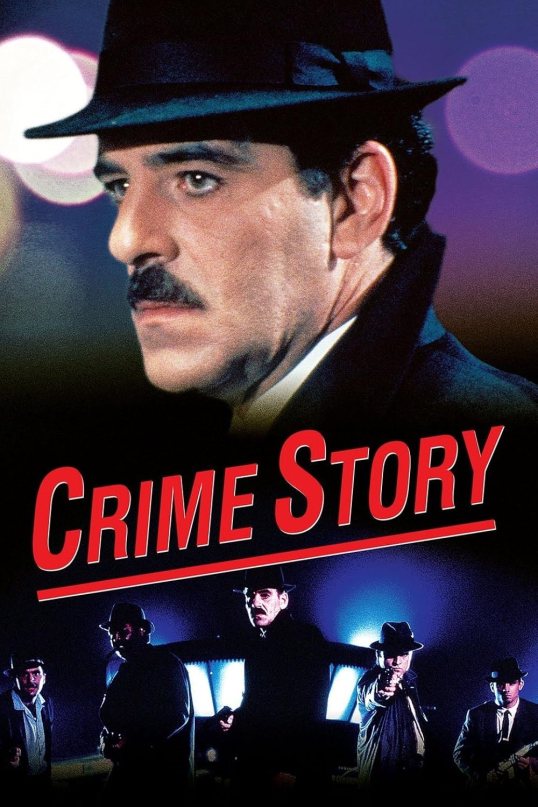
Retro Television Review: Crime Story 1.13 “Strange Bedfellows”


Welcome to Retro Television Reviews, a feature where we review some of our favorite and least favorite shows of the past!  On Mondays, I will be reviewing Crime Story, which ran on NBC from 1986 to 1988.  The entire show can be found on Tubi!

This week, Homan sings.

Episode 1.13 “Strange Bedfellows”

(Dir by Francis Delia, originally aired on December 26th, 1986)

Homan is in federal custody and he’s telling Breitel all that he knows about Luca and Bartoli.  He’s also making up a story about Torello taking a bribe.  Even though Homan’s Torello story is pretty shaky, Breitel is looking forward to taking down a crooked cop and launching his political career off of of the publicity.

Bartoli is not amused when he learns that he’s being indicted.  However, Luca is able to convince Manny Weisbord to provide him with a top-level defense attorney.  Manny also makes it clear that Luca no longer works for Phil.  Instead, Luca works with Phil.  Lucas has another reason to be happy.  When he runs into David Abrams at a bar, he gets some free legal advice.  Luca explains that Homan is lying about Torello.  Abrams tells Luca that, if they can prove that Homan is lying about Torello, it will be easier to convince a jury that Homan is lying about Luca and Bartoli as well.

Torello, meanwhile, responds to his upcoming indictment by going to Las Vegas and playing some golf.  He’s in a great mood until he sees that his indictment is one the front page of the newspaper.

Not much really happened in this episode of Crime Story.  That’s not really a complaint.  If anything, it was a bit of a nice change-of-pace.  We got to watch the characters just be themselves.  Luca, who rarely shows emotion, actually smiles when he hears that Torello is about to be indicted along with “his favorite people.”  Luca actually has a sense of humor and an appreciation for irony.  Who would have guessed?  Meanwhile, Torello continues to be just a bit too intense for his own good.  Even on vacation, he seems like he’s just one frustration away from snapping.

Will Torello snap next week?  We’ll find out!

Scenes That I Love: Apocalypse Now


Since today is Martin Sheen’s birthday, it seems appropriate that our scene that I love should come from one of Sheen’s most popular films.

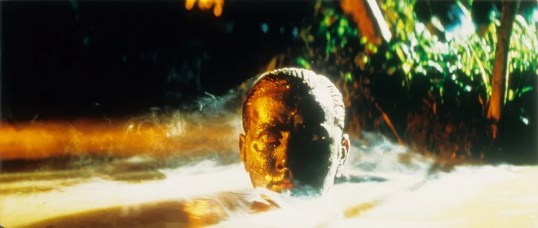
1979’s Apocalypse Now is a film that is full of outstanding set pieces.  The scene where Captain Willard (Martin Sheen) reaches the Do Lung Bridge is one of the best moments in the film, a surreal portrayal of the futility of war.  The bridge is built every day and blown up every night.  In this scene, we see how good Sheen as it simply reacting to action around him.  It’s been said that a good actor has to be just as good at reacting as acting and, in this scene, Sheen shows himself to be one of the best.

4 Shots For 4 Films: Special Martin Sheen Edition


4 Or More Shots From 4 Or More Films is just what it says it is, 4 shots from 4 of our favorite films. As opposed to the reviews and recaps that we usually post, 4 Shots From 4 Films lets the visuals do the talking!

Today, the Shattered Lens wishes a happy birthday to actor Martin Sheen.  It’s time for….

4 Shots From 4 Martin Sheen Films

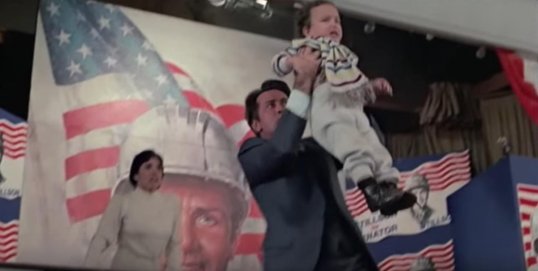
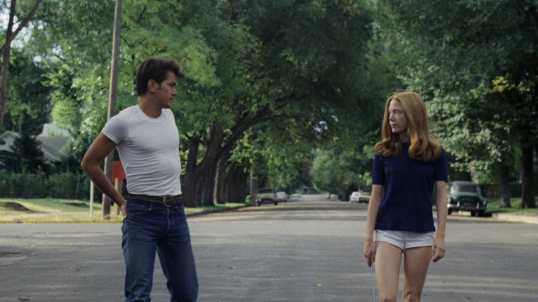
Badlands (1973, dir by Terrence Malick)

Apocalypse Now (1979, dir by Francis Ford Coppola)

The Dead Zone (1983, dir by David Cronenberg)

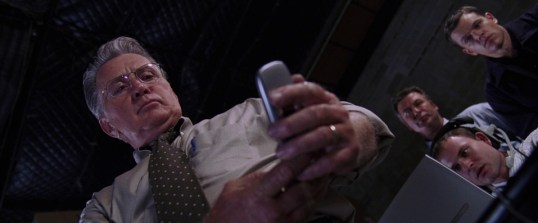
The Departed (2006, dir by Martin Scorsese)

Monday Live Tweet Alert: Join Us for Hudson Hawk!


As some of our regular readers undoubtedly know, I am involved in hosting a few weekly live tweets on twitter and occasionally Mastodon.  I host #FridayNightFlix every Friday, I co-host #ScarySocial on Saturday, and I am one of the five hosts of Mastodon’s #MondayActionMovie!  Every week, we get together.  We watch a movie.  We snark our way through it.

Tonight, for #MondayActionMovie, the film will be Hudson Hawk!

If you want to join this watch party, just hop onto Mastodon, pull up Hudson Hawk on YouTube, start the movie at 8 pm et, and use the #MondayActionMovie hashtag!

Enjoy!

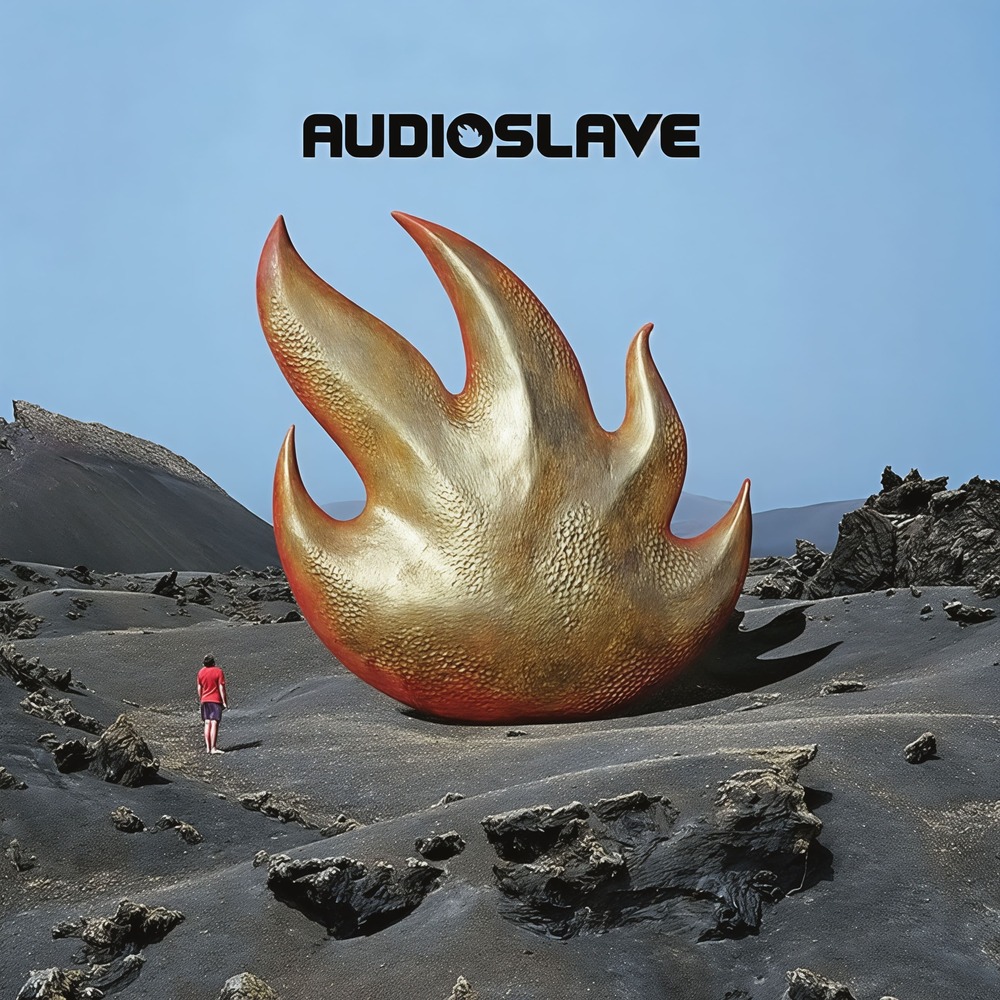
Review: Audioslave (by Audioslave)


The early 2000s represented a peculiar and fascinating crossroads for rock music, a transitional period in which grunge’s lingering haze had finally begun to dissipate, nu-metal commanded the airwaves with its downtuned aggression, and the remaining fragments of the 90s alternative landscape were urgently seeking a fresh direction. It was also, rather bizarrely, the golden era of the rock supergroup. You had Velvet Revolver cobbling together the remains of Guns N’ Roses with Scott Weiland, you had A Perfect Circle rising from the ashes of Tool’s side projects, and then you had the absolute behemoth that was Audioslave. This wasn’t just a side hustle; this was a full-on collision of two titanic forces. On one side, you had the fierce, funk-metal juggernaut of Rage Against the Machine—Tom Morello, Tim Commerford, and Brad Wilk—who were suddenly without a frontman after Zack de la Rocha walked away. On the other, you had Chris Cornell, the godlike voice of Soundgarden, who had just watched his own grunge empire crumble and was fresh off a slightly misguided but commercially successful solo record. The question on everyone’s mind in 2002 wasn’t if this band would be good, but if they would even survive the ego clash. The answer, as we all now know, arrived in the form of their self-titled debut, Audioslave, a record that didn’t just meet expectations—it bulldozed them and built a new temple of riff-heavy, soul-shaking rock.

From the very first screech of feedback that opens Cochise, you know you are in for something violently different. That track is the mission statement, the thesis, and the gauntlet thrown all at once. It starts with that iconic, ominous piano chord, a hint of melancholy that Cornell immediately drenches in his signature wail, but then the floor drops out. Morello’s guitar doesn’t just chug; it detonates with that percussive, scratchy, almost alien sound that only he can conjure. It’s not a Rage riff and it’s not a Soundgarden riff; it’s this ugly, beautiful, monstrous hybrid. And Cornell? He doesn’t try to be de la Rocha. He doesn’t rap; he soars. He belts about shaking the disease and bleeding, and you feel every single drop of sweat in his throat. The chorus is an absolute avalanche, a tidal wave of rhythm that Wilk and Commerford lock into with the precision of a Swiss watch. It’s the perfect opener because it immediately establishes the ground rules: this is a band that respects its roots but has zero interest in repeating them.

What really makes Audioslave stick, though, is the sheer diversity of the tracklist. This isn’t a one-trick pony of political rage or downtuned sludge. Take Show Me How to Live, for instance. That main riff is pure Led Zeppelin worship filtered through a distortion pedal from hell, a swaggering, hip-shaking groove that practically dares you to keep your head still. Cornell’s delivery here is almost cocky, a far cry from the tortured poet of Black Hole Sun. He’s commanding, charismatic, and utterly in control. Then you get the ballad, Like a Stone, which is arguably the song that defined the band for the mainstream. It’s hauntingly beautiful, built on that simple, echoing guitar line that sounds like it’s being played in a cathedral. Cornell’s vocals are heartbreakingly tender, pondering the afterlife and loneliness with a maturity that the younger version of himself might have drowned in distortion. It’s a radio hit, sure, but it’s a radio hit with guts, a slow burn that builds to that soaring, melodic climax where Morello lets loose with one of his most restrained yet effective solos. It proves that these guys could write a hook that could catch a whale, not just bash you over the head with a hammer.

The deep cuts are where the album really flexes its muscles, though. Set It Off is a frantic, paranoid sprint, with Wilk’s drums sounding like machine-gun fire and Commerford’s bass vibrating so low it might rearrange your internal organs. It’s claustrophobic and anxious, a perfect marriage of Cornell’s lyrical darkness and the band’s rhythmic tension. On the flip side, Shadow on the Sun is a sprawling, psychedelic epic that feels like a desert road trip at midnight. Morello uses every trick in his book—the whammy pedal, the kill switch, the feedback—but he uses them to create atmosphere, not just noise. It’s moody, cinematic, and it showcases Cornell’s ability to shift from a whisper to a roar within the span of a single breath.

You can’t talk about this record without acknowledging the colossal rhythm section. Brad Wilk isn’t just keeping time; he’s playing the drums like they owe him money. His fills are crisp, his snare cracks like a whip, and he provides this unshakeable foundation that allows Morello to go completely off the rails. Likewise, Tim Commerford’s bass is the glue and the grit. He doesn’t just follow the guitar; he often leads the charge, driving tracks like Gasoline with that thick, distorted thump that makes your car speakers rattle. That track is pure gasoline, pun intended—a roaring, rebellious anthem that feels like it was recorded in a garage right before the cops showed up. It’s aggressive, but it’s also incredibly tight; there’s a discipline here that comes from years of playing in one of the most rhythmically complex bands of the 90s.

Lyrically, Cornell is on another planet. He abandoned the cryptic, abstract poetry of Soundgarden for something more direct, yet still shrouded in metaphor. He writes about isolation, addiction, salvation, and damnation, but he does it with a preacher’s fire. In I Am the Highway, he delivers one of the most stunning metaphors of his career, comparing himself to a road that people travel on but never really see, a sentiment that feels incredibly poignant given his role as the frontman who was always slightly above the fray. The chorus is anthemic without being cheesy, a declaration of self-worth that resonates deeply. What You Are closes the album out with a snarling, defiant energy, a final punch to the gut that reminds you that this band wasn’t just a temporary fix; they were a legitimate force. It ends abruptly, leaving you in a vacuum of silence, catching your breath.

Of course, the elephant in the room is the chemistry. How does a band that was built on political fury and a band built on melancholic grunge actually gel? The genius of Audioslave is that they didn’t try to meld their styles into one homogenous blob. Instead, they created a space where both identities could coexist and clash. Morello still uses his whammy pedal like a mad scientist, but he tunes it to Cornell’s vocal range. Cornell still uses his upper register to shatter glass, but he does it over a groove that would make any funk band jealous. There are moments where you can hear the ghost of Rage, like in the staccato riff of Exploder, and moments where you can hear the ghost of Soundgarden, like in the murky, sludgy bridge of Hypnotize. But these are just ghosts. The living, breathing entity is Audioslave.

Looking back, this debut stands as a testament to what happens when you take four musicians at the peak of their powers and force them to start over from scratch. It’s not perfect—some of the middle tracks can blur together on a casual listen, and the production by Rick Rubin is so dry and in-your-face that it occasionally feels a bit sterile. But when it hits, it hits like a freight train. It captured a specific moment in time when rock music was desperate for a savior, and Audioslave walked in wearing a leather jacket and holding a lit match. They weren’t just another supergroup cashing in on nostalgia; they were a vital, urgent, and thrilling new animal. It’s an album that demands to be played loud, preferably on a highway with the windows down, because that’s where it lives—in the space between the speakers and your soul. It remains a cornerstone of 2000s rock, a record that proved that even when your past is legendary, your future can still be bright, loud, and gloriously unpredictable. And for that alone, it deserves a permanent spot in the rotation.