Review: Audioslave (by Audioslave)


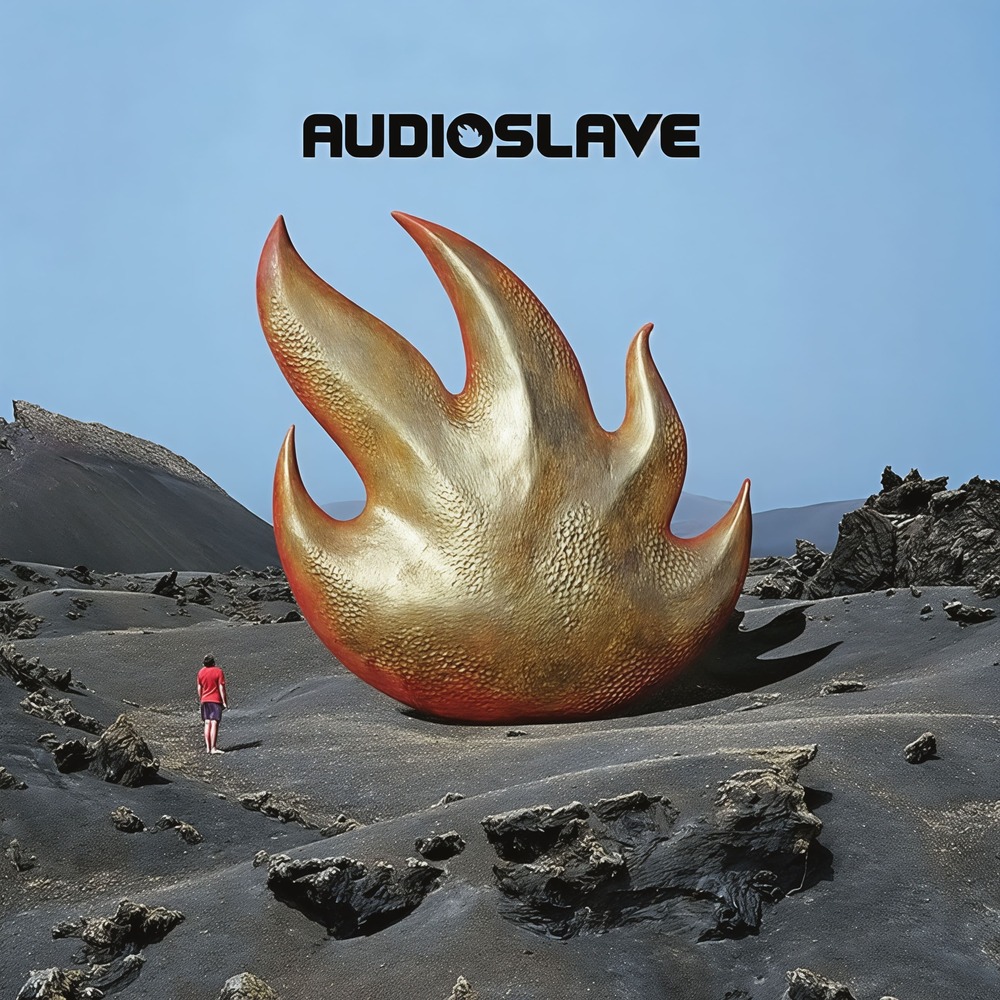
The early 2000s represented a peculiar and fascinating crossroads for rock music, a transitional period in which grunge’s lingering haze had finally begun to dissipate, nu-metal commanded the airwaves with its downtuned aggression, and the remaining fragments of the 90s alternative landscape were urgently seeking a fresh direction. It was also, rather bizarrely, the golden era of the rock supergroup. You had Velvet Revolver cobbling together the remains of Guns N’ Roses with Scott Weiland, you had A Perfect Circle rising from the ashes of Tool’s side projects, and then you had the absolute behemoth that was Audioslave. This wasn’t just a side hustle; this was a full-on collision of two titanic forces. On one side, you had the fierce, funk-metal juggernaut of Rage Against the Machine—Tom Morello, Tim Commerford, and Brad Wilk—who were suddenly without a frontman after Zack de la Rocha walked away. On the other, you had Chris Cornell, the godlike voice of Soundgarden, who had just watched his own grunge empire crumble and was fresh off a slightly misguided but commercially successful solo record. The question on everyone’s mind in 2002 wasn’t if this band would be good, but if they would even survive the ego clash. The answer, as we all now know, arrived in the form of their self-titled debut, Audioslave, a record that didn’t just meet expectations—it bulldozed them and built a new temple of riff-heavy, soul-shaking rock.

From the very first screech of feedback that opens Cochise, you know you are in for something violently different. That track is the mission statement, the thesis, and the gauntlet thrown all at once. It starts with that iconic, ominous piano chord, a hint of melancholy that Cornell immediately drenches in his signature wail, but then the floor drops out. Morello’s guitar doesn’t just chug; it detonates with that percussive, scratchy, almost alien sound that only he can conjure. It’s not a Rage riff and it’s not a Soundgarden riff; it’s this ugly, beautiful, monstrous hybrid. And Cornell? He doesn’t try to be de la Rocha. He doesn’t rap; he soars. He belts about shaking the disease and bleeding, and you feel every single drop of sweat in his throat. The chorus is an absolute avalanche, a tidal wave of rhythm that Wilk and Commerford lock into with the precision of a Swiss watch. It’s the perfect opener because it immediately establishes the ground rules: this is a band that respects its roots but has zero interest in repeating them.

What really makes Audioslave stick, though, is the sheer diversity of the tracklist. This isn’t a one-trick pony of political rage or downtuned sludge. Take Show Me How to Live, for instance. That main riff is pure Led Zeppelin worship filtered through a distortion pedal from hell, a swaggering, hip-shaking groove that practically dares you to keep your head still. Cornell’s delivery here is almost cocky, a far cry from the tortured poet of Black Hole Sun. He’s commanding, charismatic, and utterly in control. Then you get the ballad, Like a Stone, which is arguably the song that defined the band for the mainstream. It’s hauntingly beautiful, built on that simple, echoing guitar line that sounds like it’s being played in a cathedral. Cornell’s vocals are heartbreakingly tender, pondering the afterlife and loneliness with a maturity that the younger version of himself might have drowned in distortion. It’s a radio hit, sure, but it’s a radio hit with guts, a slow burn that builds to that soaring, melodic climax where Morello lets loose with one of his most restrained yet effective solos. It proves that these guys could write a hook that could catch a whale, not just bash you over the head with a hammer.

The deep cuts are where the album really flexes its muscles, though. Set It Off is a frantic, paranoid sprint, with Wilk’s drums sounding like machine-gun fire and Commerford’s bass vibrating so low it might rearrange your internal organs. It’s claustrophobic and anxious, a perfect marriage of Cornell’s lyrical darkness and the band’s rhythmic tension. On the flip side, Shadow on the Sun is a sprawling, psychedelic epic that feels like a desert road trip at midnight. Morello uses every trick in his book—the whammy pedal, the kill switch, the feedback—but he uses them to create atmosphere, not just noise. It’s moody, cinematic, and it showcases Cornell’s ability to shift from a whisper to a roar within the span of a single breath.

You can’t talk about this record without acknowledging the colossal rhythm section. Brad Wilk isn’t just keeping time; he’s playing the drums like they owe him money. His fills are crisp, his snare cracks like a whip, and he provides this unshakeable foundation that allows Morello to go completely off the rails. Likewise, Tim Commerford’s bass is the glue and the grit. He doesn’t just follow the guitar; he often leads the charge, driving tracks like Gasoline with that thick, distorted thump that makes your car speakers rattle. That track is pure gasoline, pun intended—a roaring, rebellious anthem that feels like it was recorded in a garage right before the cops showed up. It’s aggressive, but it’s also incredibly tight; there’s a discipline here that comes from years of playing in one of the most rhythmically complex bands of the 90s.

Lyrically, Cornell is on another planet. He abandoned the cryptic, abstract poetry of Soundgarden for something more direct, yet still shrouded in metaphor. He writes about isolation, addiction, salvation, and damnation, but he does it with a preacher’s fire. In I Am the Highway, he delivers one of the most stunning metaphors of his career, comparing himself to a road that people travel on but never really see, a sentiment that feels incredibly poignant given his role as the frontman who was always slightly above the fray. The chorus is anthemic without being cheesy, a declaration of self-worth that resonates deeply. What You Are closes the album out with a snarling, defiant energy, a final punch to the gut that reminds you that this band wasn’t just a temporary fix; they were a legitimate force. It ends abruptly, leaving you in a vacuum of silence, catching your breath.

Of course, the elephant in the room is the chemistry. How does a band that was built on political fury and a band built on melancholic grunge actually gel? The genius of Audioslave is that they didn’t try to meld their styles into one homogenous blob. Instead, they created a space where both identities could coexist and clash. Morello still uses his whammy pedal like a mad scientist, but he tunes it to Cornell’s vocal range. Cornell still uses his upper register to shatter glass, but he does it over a groove that would make any funk band jealous. There are moments where you can hear the ghost of Rage, like in the staccato riff of Exploder, and moments where you can hear the ghost of Soundgarden, like in the murky, sludgy bridge of Hypnotize. But these are just ghosts. The living, breathing entity is Audioslave.

Looking back, this debut stands as a testament to what happens when you take four musicians at the peak of their powers and force them to start over from scratch. It’s not perfect—some of the middle tracks can blur together on a casual listen, and the production by Rick Rubin is so dry and in-your-face that it occasionally feels a bit sterile. But when it hits, it hits like a freight train. It captured a specific moment in time when rock music was desperate for a savior, and Audioslave walked in wearing a leather jacket and holding a lit match. They weren’t just another supergroup cashing in on nostalgia; they were a vital, urgent, and thrilling new animal. It’s an album that demands to be played loud, preferably on a highway with the windows down, because that’s where it lives—in the space between the speakers and your soul. It remains a cornerstone of 2000s rock, a record that proved that even when your past is legendary, your future can still be bright, loud, and gloriously unpredictable. And for that alone, it deserves a permanent spot in the rotation.

Music Video Of The Day: God’s Gonna Cut You Down (2006, dir by Tony Kaye)


This is a case where I like the song more than the music video.  This video was actually filmed three years after Johnny Cash’s death.  As far as “official” music videos are concerned, I always feel like a musician should have some sort of say into how their music is visually interpreted.  Obviously, Johnny Cash wasn’t around to have anything to say about the video for God’s Gonna Cut You Down.

Since Cash wasn’t available, director Tony Kaye filled the video with cameos from other actors and musicians, a few of whom (though not many) were previous Cash collaborators.  Among the celebs who make an appearance in this video: David Allan Coe, Patricia Arquette, Travis Barker, Peter Blake, Bono, Sheryl Crow, Johnny Depp, the Dixie Chicks, Flea, Billy Gibbons, Whoopi Goldberg, Woody Harrelson, Dennis Hopper, Terrence Howard, Jay-Z, Mick Jones, Kid Rock, Anthony Kiedis, Kris Kristofferson, Amy Lee, Adam Levine, Shelby Lynne, Chris Martin, Kate Moss, Graham Nash, Busy Philipps, Iggy Pop, Lisa Marie Presley, Q-Tip, Corinne Bailey Rae, Keith Richards, Chris Rock, Rick Rubin, Patti Smith, Sharon Stone, Justin Timberlake, Kanye West, Brian Wilson, and Owen Wilson.  Some of the celebs — like Dennis Hopper and Kris Kristofferson — seem like they naturally belong there.  Others seem so out-of-place that you’ll want to throw something.  You know how that works,

God’s Gonna Cut You Down is a traditional folk song.  I’ve heard countless versions of it.  I prefer Cash’s version to the more traditional gospel arrangement but, then again, I tend to find gospel music to be dull in general.  Cash’s arrangement brought new life to an old song.

Enjoy!

Song of the Day: I Am the Highway (by Audioslave)


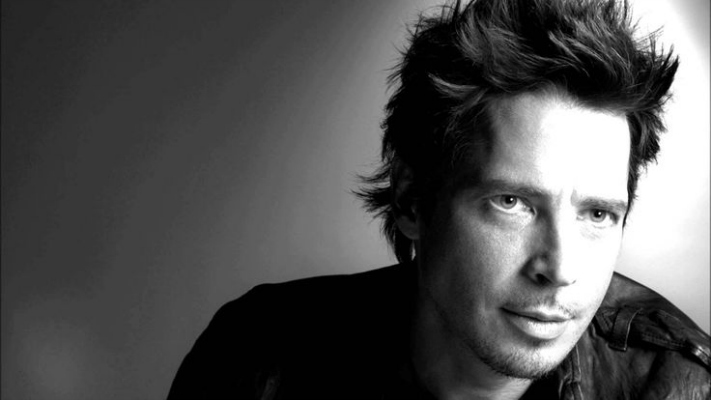
Chris Cornell passed away on May 17, 2017 and the world is that much more empty with his passing.

He was 52 and joins the others Gods of Rock in the afterlife.

R.I.P. Chris Cornell.

I Am the Highway

Pearls and swine bereft of me
Long and weary my road has been
I was lost in the cities
Alone in the hills
No sorrow or pity for leaving I feel

I am not your rolling wheels
I am the highway
I am not your carpet ride
I am the sky

Friends and liars don’t wait for me
‘Cause I’ll get on all by myself
I put millions of miles
Under my heels
And still too close to you
I feel

I am not your rolling wheels
I am the highway
I am not your carpet ride
I am the sky
I am not your blowing wind
I am the lightning
I am not your autumn moon
I am the night, night

I am not your rolling wheels
I am the highway
I am not your carpet ride
I am the sky
I am not your blowing wind
I am the lightning
I am not your autumn moon
I am the night, night
Yeah, yeah, yeah, yeah

Song of the Day: Hazy Shade of Winter (by The Bangles)


Bangles

Another song from my youth during the 80’s is the classic rock song from the all-girl rock band The Bangles. It makes an appearance in a later episode of Netflix’s Stranger Things, but it’s better known as the unofficial anthem for the drug-fueled drama Less Than Zero starring a very young (and rumors abound of being very drugged out) Robert Downey, Jr.

Less Than Zero was adapted from a novel written by the 80’s agent provocateur Bret Easton Ellis. It definitely was part of the list of 80’s films that all the teens wanted to see. It being rated-R meant double the temptation. It was a film that both celebrated and condemned the Reagan-era yuppie culture that was fueled by excess amount of drugs, alcohol and sex.

The song “Hazy Shade of Winter” would become part of the film’s soundtrack and The Bangles had been tasked with covering the Simon & Garfunkel song of the same title. Where the former was more attuned to the duo’s folk sensibilities, the cover by The Bangles would put a harder edge to the song which made for a nice complement to the rough edges of the film.

Oh, I still have a major crush on Sussana Hoffs to this very day.

Hazy Shade of Winter

Time, time, time
See what’s become of me…

Time, time, time
See what’s become of me
While I looked around
For my possibilities
I was so hard to please

Look around
Leaves are brown
And the sky
Is a Hazy Shade of Winter

Hear the Salvation Army Band
Down by the riverside
It’s bound to be a better ride
Than what you’ve got planned
Carry a cup in your hand

Look around
Leaves are brown
And the sky
Is a Hazy Shade of Winter

Hang onto your hopes my friend
That’s an easy thing to say
But if your hopes should pass away
Simply pretend
That you can build them again

Look around
Grass is high
Fields are ripe
It’s the springtime of my life

Seasons change with their scenery
Weaving time in a tapestry
Won’t you stop and remember me

Look around
Leaves are brown
And the sky
Is a Hazy Shade of Winter

Look around
Leaves are brown
There’s a patch of snow on the ground
Look around
Leaves are brown
There’s a patch of snow on the ground
Look around
Leaves are brown
There’s a patch of snow on the ground


Song of the Day: 1980’s Edition

  1. Everybody Wants To Rule The World (by Tears for Fears)

Song of the Day: Ain’t No Grave (by Johnny Cash)


The latest “Song of the Day” comes courtesy of the “Man in Black” himself. It’s the main track from his final posthumous-released album, American VI: Ain’t No Grave.

“Ain’t No Grave” gives us Cash in his final days as he continued to make music despite knowing that Death was coming for him and his time was almost up. We can hear the Cash’s voice gravelly as usual but also shows the failing health he was in. Yet, despite that he still gives the Old Testament-like lyrics of “Ain’t No Grave” the gravity and strength of someone who has seen all that life had to offer (both good and bad) and experienced them all.

The minimalist music backing up Cash’s voice as piano, organ and banjo played on the fly gives the song an almost doomsday tone as he sings about death, angels and the Second Coming. Yet, there’s a sense of hope to the lyrics themselves as Cash points out that not even the grave can keep him from reaching the promised land.

It’s final songs like “Ain’t No Grave” which continues to build the legend that is Johnny Cash. He’s gone beyond music superstar and icon to just legendary figure who seems to transcends art and life itself with every gravelly-voiced lyric sung. If there’s anyone who can look the Devil and God in their eye and tell them to stick it then it would be Johnny Cash.

Ain’t No Grave

There ain’t no grave
Can hold my body down
There ain’t no grave
Can hold my body down

When I hear that trumpet sound
I’m gonna rise right out of the ground
Ain’t no grave
Can hold my body down

Well, look way down the river
And what do you think I see
I see a band of angels
And they’re coming after me

Ain’t no grave
Can hold my body down
There ain’t no grave
Can hold my body down

Well, look down yonder, Gabriel
Put your feet on the land and sea
But Gabriel, don’t you blow your trumpet
Until you hear from me

There ain’t no grave
Can hold my body down
Ain’t no grave
Can hold my body down

Well meet me, Jesus, meet me
Meet me in the middle of the air
And if these wings don’t fail me,
I will meet you anywhere

Ain’t no grave
Can hold my body down
There ain’t no grave
Can hold my body down

Well meet me, Mother and Father,
Meet me down the river road
And Mama, you know that I’ll be there
When I check in my load

Ain’t no grave
Can hold my body down
There ain’t no grave
Can hold my body down
There ain’t no grave
Can hold my body down