I’m not even really a Led Zeppelin fan but I do like this song. Most Zeppelin songs go on too long for my ADHD brain but Kashmir always manages to hold my attention.
I’m not even really a Led Zeppelin fan but I do like this song. Most Zeppelin songs go on too long for my ADHD brain but Kashmir always manages to hold my attention.
In 1997, Atlantic Records released a single version of Led Zeppelin’s Whole Lotta Love that was edited down from the band’s original 1969 recording. They also put together this video, featuring footage edited together from various live performances, to promote it.
Enjoy!
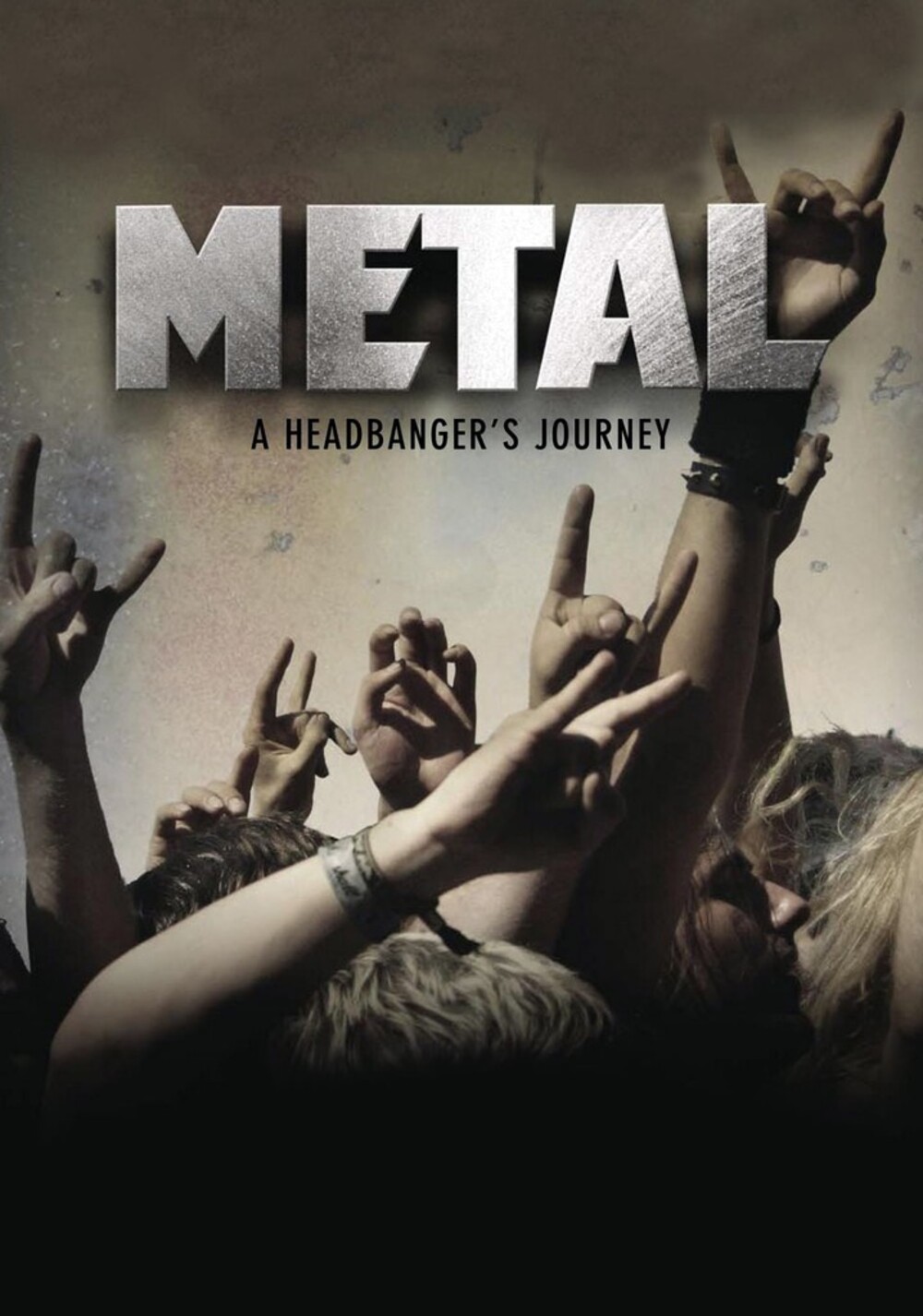
“Metal confronts what we’d rather ignore. It celebrates what we often deny. It indulges in what we fear most. And that’s why metal will always be a culture of outsiders.” — Sam Dunn
Metal: A Headbanger’s Journey is the kind of documentary that feels like it was made by someone who actually gets heavy metal instead of just staring at it from the outside and treating it like a weird cultural problem to be solved. Sam Dunn, with Scot McFadyen and Jessica Wise, builds the film around a simple but very effective idea: if metal has spent decades getting mocked, misunderstood, and moral-panic’d into the ground, why not let a real fan and anthropologist go out and explain what the scene is actually about? That perspective gives the movie a relaxed confidence right away. It never acts like it has to apologize for loving metal, and that attitude makes the whole thing way more engaging than a dry music-history lecture.
What makes the documentary work so well is the mix of fandom and curiosity. Dunn is not posing as some detached academic who wandered into the pit by accident. He is clearly a lifer, and that matters because his enthusiasm keeps the film from turning into a lecture about subgenres, stereotypes, and cultural backlash. At the same time, he is smart enough to ask real questions about why metal exists, why it inspires such loyalty, and why it keeps attracting outsiders who feel like they do not fit anywhere else. That balance gives the movie its shape. It is informative without becoming stiff, and it is affectionate without becoming blind praise.
The film does a stellar job of tracing the evolutionary trajectory of the genre. It starts with the bedrock, showing how the heavy, blues-influenced rock of the late sixties and early seventies paved the way for everything else. Dunn maps out the genealogy of metal with a sense of wonder, illustrating how a common foundation in the hard rock of acts like Led Zeppelin or the dark, doom-laden riffs of Black Sabbath splintered into a massive, tangled family tree. You get to see the distinct shifts in tone, speed, and imagery as the music moved from the raw power of pioneers like Iron Maiden and Motörhead into the more extreme, experimental territories of bands like Cannibal Corpse or the provocative, atmospheric reaches of Mayhem. This structural focus turns the film into a clear guide for how metal constantly reinvented itself while holding onto that core aggressive energy.
The interviews are a huge part of why the film stays alive. Dunn talks to an incredible array of musicians who cover a lot of ground, including legends like Alice Cooper, Bruce Dickinson, and Ronnie James Dio, and the movie benefits from the fact that these people are speaking as insiders rather than museum curators. Some bring humor, some bring historical context, and some bring genuine passion that reminds you why this music matters to its fans in the first place. What’s especially nice is that the movie does not treat everyone with the same reverence. It lets personalities come through, which gives the film a looser, more conversational energy. That makes it easier to sit through even when it moves into territory that could have felt overly academic in less capable hands.
One of the most memorable things about Metal: A Headbanger’s Journey is the way it handles the old stigma around heavy metal. The film doesn’t just repeat the familiar story that “metal got unfairly attacked”; it also shows why those attacks stuck in the public imagination for so long. That gives the documentary more bite. It is not only defending the genre, but also explaining the cultural fear that surrounded it, whether that meant the PMRC era or the broader idea that loud guitars and dark imagery automatically equal danger. Dunn and company make a strong case that metal is often a release valve rather than a threat. For a lot of listeners, it is a place to channel anger, alienation, and frustration instead of acting them out in destructive ways.
The film also does not shy away from the darker controversies that have haunted the genre’s reputation, specifically the actions linked to the Norwegian black metal scene. Dunn confronts the violence and extremism associated with these artists head-on, including a chilling interview with Gaahl, the infamous frontman of the Norwegian black metal band Gorgoroth. By highlighting the intense, radical nature of Gaahl’s worldview and the violent history of the subculture he represented, the film addresses the deep, dark mark these controversies placed on the Norwegian scene. Acknowledging how these headlines fueled mainstream hatred toward the music is essential to the film’s narrative. However, the documentary’s nuance really shines in its later home video releases, where Dunn adds vital context to ensure viewers understand that those dark moments were extreme outliers rather than the standard for the community at large. By clarifying that these actions did not represent the vast majority of metal fans or artists, the film successfully separates the music’s spirit from the criminal acts of a few.
There is also a fun educational streak running through the whole thing. The movie likes to trace lines between older rock traditions and the more extreme corners of metal, and that gives it some useful perspective. It reminds you that the genre did not appear out of nowhere and that its DNA is tangled up with blues, hard rock, theatricality, and rebellion. Even if you already know a fair amount about the subject, the film still has a way of making those connections feel vivid rather than obvious. It does a solid job of showing how metal evolved into something bigger and more fragmented than casual listeners usually assume.
If the movie has a weakness, it is that it can feel a little too short for everything it wants to cover. There is so much material here that some topics get only a snapshot when they could have used a deeper dive. That is especially true if you are the kind of viewer who wants more on the later developments and regional differences within the scene. Still, the brisk runtime also helps the film stay punchy and rewatchable. It does not overstay its welcome, and it keeps moving at a pace that suits the subject. In a weird way, the documentary’s eagerness to pack in so much is part of its appeal.
Visually and structurally, the movie keeps things straightforward, which works in its favor. It is not trying to be slick in a way that would distract from the subject. Instead, it uses interviews, performance footage, festival scenes, and Dunn’s own traveling framework to keep the momentum going. That direct approach fits the personality of the material. Metal is not a genre that usually benefits from fancy packaging. It needs energy, attitude, and clarity more than polish, and this documentary understands that.
The best compliment you can give Metal: A Headbanger’s Journey is that it feels like a conversation with someone who loves the music enough to explain it honestly. It celebrates the bombast, the mythology, the anger, and the community without pretending metal is above criticism or complexity. It is smart, funny in places, and genuinely useful as both a fan piece and an introduction for newcomers. Even years later, it still comes off as a passionate and accessible guide to a scene that is often easier to caricature than understand. For metal fans, it is an easy recommendation. For everyone else, it is one of those documentaries that might actually change how you hear the genre the next time a riff kicks in.
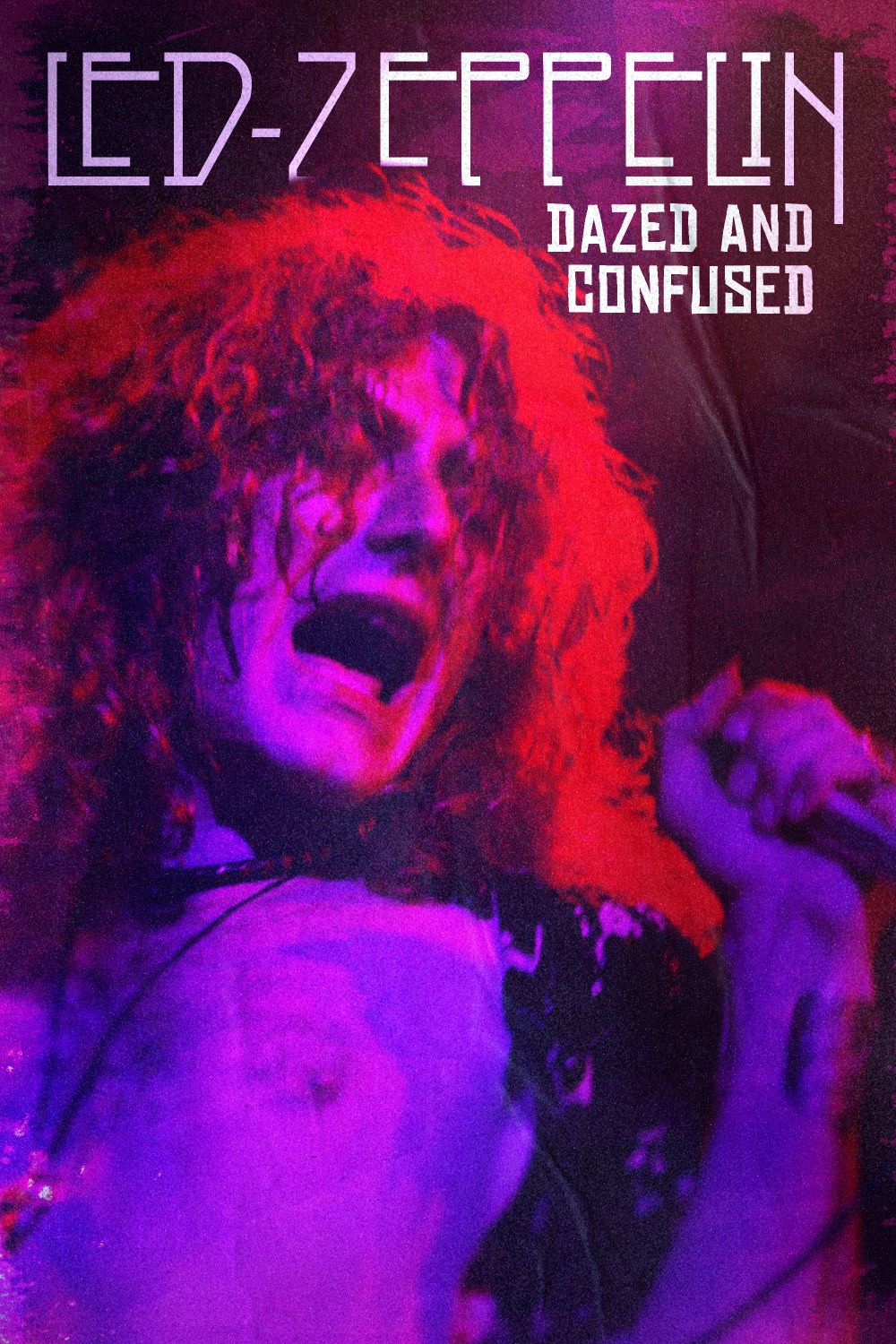
Today’s Song of the Day is Led Zeppelin’s “Dazed and Confused”, that hypnotic Yardbirds cover Jimmy Page transformed into a sprawling psychedelic monster on their 1969 debut. Robert Plant’s otherworldly wails float over John Paul Jones’s prowling bass and John Bonham’s primal drums, crafting this foggy, trippy atmosphere that’s perfect for zoning out late at night. But let’s be real, it’s Page’s six-string sorcery that cements it as essential listening.
The real magic erupts at the 3:53 timestamp in the official release cut, when Page launches into his legendary guitar solo—a blistering torrent of bent notes, ferocious pentatonic dives, and those eerie, talkbox-esque squeals that sound like the guitar’s possessed. He’s wringing every ounce of emotion from his Telecaster, stacking fuzz, echo, and vibrato into a wall of controlled chaos that feels like a bad acid trip turned triumphant. It’s raw, innovative shredding that grabs you by the soul and doesn’t let go.
Live versions took it to another level, ballooning into 10+ minute odysseys with Page’s violin bow creating those haunting drones before he dives back into the frenzy—check the ’73 Madison Square Garden tape for the ultimate freakout. This solo isn’t just flashy; it’s Page channeling pure rock alchemy, paving the way for metal and jam gods alike. Crank it up and feel the daze.
Dazed and Confused
Been dazed and confused for so long, it’s not true
Wanted a woman, never bargained for you
Lots of people talkin’, few of them know
Soul of a woman was created below, yeah
You hurt and abuse, tellin’ all of your lies
Run ’round, sweet baby, Lord, how they hypnotize
Sweet little baby, I don’t know where you been
Gonna love you, baby, here I come again
Every day I work so hard
Bringin’ home my hard-earned pay
Try to love you, baby
But you push me away
Don’t know where you’re goin’
Only know just where you’ve been
Sweet little baby
I want you again
Ah, ah, ah, ah
(Did you ever look up my woman?)
Ah, ah, ah, ah
Aah-ah, aah, ah, ah, ah, ah, ah
Aah, ah, ah, ah, ah, ah, ah, ah, ah, ah, ah, aah
Oh, yeah, alright
Been dazed and confused
For so long, it’s not true
Wanted a woman
Never bargained for you
Take it easy, baby
Let them say what they will
Tongue wag so much
When I send you the bill
Oh yeah, alright
Oh, oh, oh, oh
Oh, oh, oh, oh
Oh, oh, oh, oh
Oh, oh, oh, oh
Oh, oh, oh
Great Guitar Solos Series
Today, the Shattered Lens wishes a happy 81st birthday to the one and only Jimmy Page!
In honor of one of the world’s greatest guitarists, today’s song of the day is one of the few Led Zeppelin songs that I like. Page originally came up with the lyrics for the song while driving through Morocco but clearly, Kashmir was a better title.
Oh, let the sun beat down upon my face
And stars fill my dream
I’m a traveler of both time and space
To be where I have been
To sit with elders of the gentle race
This world has seldom seen
They talk of days for which they sit and wait
All will be revealed
Talk in song from tongues of lilting grace
Sounds caress my ear
And not a word I heard could I relate
The story was quite clear
Oh, baby, I been blind
Oh, yeah, mama, there ain’t no denyin’
Oh, ooh yes, I been blind
Mama, mama, ain’t no denyin’, no denyin’
All I see turns to brown
As the sun burns the ground
And my eyes fill with sand
As I scan this wasted land
Try to find, try to find the way I feel
Oh, pilot of the storm who leaves no trace
Like sorts inside a dream
Leave the path that led me to that place
Yellow desert stream
My shangri la beneath the summer moon
I will return again
As the dust that floats high in June
We’re moving through Kashmir
Oh, father of the four winds fill my sails
Cross the sea of years
With no provision but an open face
Along the straits of fear
Oh, when I want, when I’m on my way, yeah
And my feet wear my fickle way to stay
Ooh, yeah yeah, oh, yeah yeah,
But I’m down oh, yeah yeah, oh, yeah
Yeah, but I’m down, so down
Ooh, my baby, oh, my baby
Let me take you there
Come on, oh let me take you there
Let me take you there
Songwriters: James Patrick (Jimmy) Page / John Bonham / Robert Anthony Plant
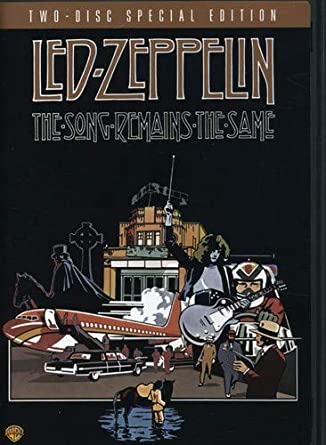 The Song Remains The Same is a concert film that features one of the world’s greatest bands giving one of their worst performances.
Shot over three nights in Madison Square Garden in 1973 (with additional footage later being filmed on a sound stage designed to look like Madison Square Garden), the film features Led Zeppelin sounding tired and bored. Robert Plant asks, “Does anyone remember laughter?” during Stairway to Heaven while the legendary Jimmy Page has a look on his face like he already knows that, at some point in the future, he’s going to end up playing back-up to Sean Combs on Saturday Night Live. Even John Bonham’s drum solo seems self-indulgent and uninspired. Meanwhile, John Paul Jones’s clothing changes from shot-to-shot, a reminder that Jones was the only member of the band not to wear the same thing during all three nights of shooting. The film looks bland and the soundtrack doesn’t capture the Zeppelin sound. Instead, it sounds muddy, to the extent that those not already familiar with Led Zeppelin will wonder what the big deal is.
The good news is that you can dislike The Song The Remains The Same and still be a Led Zeppelin fan. The band reportedly hated the film, feeling that it captured them at their worst. Robert Plant, who unsuccessfully tried to get the infamous “Does anyone remember laughter?” line removed from the film, called the film “bollocks” while John Paul Jones called it a “massive compromise.” In 1976, when the film was first released, Jimmy Page told New Musical Express, “The Song Remains The Same is not a great film, but there’s no point in making excuses. It’s just a reasonably honest statement of where we were at that particular time.”
The film also features fantasy sequences, in which the members of the band and their managers get a chance to show what’s going on in their minds and how they viewed themselves in 1973. The band’s managers appears as gangsters and start the film off by gunning everyone down. Robert Plant is a knight, in a sequence that inadvertently brings to mind the travels of Brave Sir Robin in Monty Python and the Holy Grail. Jimmy Page is a hermit who reads tarot cards. John Paul Jones is chased on horseback. The only member of the band whose image is helped by his fantasy sequence is John Bonham, who comes across as a likable, down-to-Earth bloke who likes retiring to his farm and driving fast cars. Knowing that Bonham would die just seven years later makes his fantasy sequence especially poignant to watch. His son, Jason Bonham, appears, drumming on a child-sized drum kit. Years later, of course, Bonham would play drums during several Led Zeppelin reunions.
For years, The Song Remains The Same was the only official video footage of Led Zeppelin performing and, flaws and all, that does give it some importance. The Song Remains The Same is also said to have been one of the major inspirations for This Is Spinal Tap so everything worked out in the end.
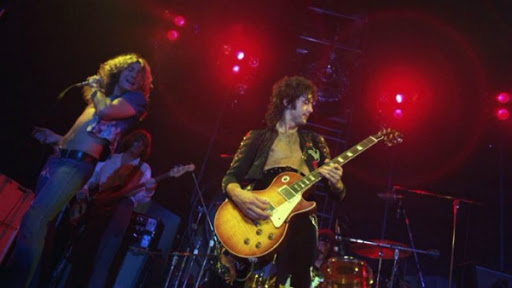

So, the latest “Song of the Day” comes courtesy of Led Zeppelin and also in no small part from the release of the first trailer for the third Thor in the MCU (that’s Marvel Cinematic Universe for those who have been living in a cave the last 10 years).
“Immigrant Song” has been used in past trailers though not as often as people think. Led Zeppelin has been very selective of who uses (and pays) for the license to use their songs.
Whether the song makes it into Thor: Ragnarok still to be determined, but it definitely fits the trailer as it sings of Vikings and their call to ship off to find new lands, adventure and battle.
So, yes, Lisa Marie, that song in the Thor: Ragnarok teaser trailer was definitely Led Zeppelin.
Immigrant Song
We come from the land of the ice and snow
From the midnight sun where the hot springs blow
Hammer of the gods will drive our ships to new lands
To fight the horde and sing and cry
Valhalla, I am coming
On we sweep with the threshing oar
Our only goal will be the western shore
We come from the land of the ice and snow
From the midnight sun where the hot springs blow
How soft your fields so green can whisper tales of gore
Of how we calmed the tides of war
We are your overlords
On we sweep with the threshing oar
Our only goal will be the western shore
So now you’d better stop and rebuild all your ruins
For peace and trust can win the day despite of all your losing

To say that I’m a huge fan of Led Zeppelin would be an understatement. They’re the band that combines both my love for hard rock and, ultimately, an even bigger love for that most American of musical style, the blues.
Led Zeppelin have always been rooted in their blues foundation. They’ve been an integral part of the British rock invasion to the US that was steeped heavily in blues rock. With classic blues heavily influencing their sound, Led Zeppelin would take the US by storm starting in 1968 and would continue to do so until the band’s dissolution in 1980 soon after John Bonham’s untimely death.
It’s a song from their third album that, for me, epitomizes Led Zeppelin’s early days. These were the years when they reigned as the blues rock kings of the rock world. They would later experiment and try new sounds with their later albums as the band began to branch out into new, diversified musical styles. Yet, for me, the band will always be that blues rock band from London, England who were the first supergroup.
“Since I’ve Been Loving You” is straight up blues and Robert Plant sings it with such emotional intensity that anyone hearing the song for the first time could easily mistake him and the band as one of the classic American blues bands. The song also makes the latest “Song of the Day” not just because it’s one of my favorites but also because of Jimmy Page once again demonstrating why he’s one of the best rock guitarists.
It’s not often a song starts off with a guitar solo, but this one does and Page does so in a slow, blues tempo that would segue into Robert Plant’s vocals. The second guitar solo arrives after the song’s second verse and would have a more blues rock sound to it, but no less impressive.
Since I’ve Been Loving You
(guitar solo)
Working from seven to eleven every night,
It really makes life a drag, I don’t think that’s right.
I’ve really been the best, the best of fools, I did what I could. (Yeah)
‘Cause I love you, baby, How I love you, darling, How I love you, baby,
My beloved little girl, little girl.
But baby, Since I’ve Been Loving You (yeah). I’m about to lose my worried mind, oh, yeah.
Everybody trying to tell me that you didn’t mean me no good.
I’ve been trying, Lord, let me tell you, Let me tell you I really did the best I could.
I’ve been working from seven to eleven every night, I said It kinda makes my life a drag
Lord, that ain’t right…
Since I’ve Been Loving You, I’m about to lose my worried mind. (Watch out!)
(guitar solo)
Said I’ve been crying, yeah. Oh, my tears they fell like rain,
Don’t you hear them, Don’t you hear them falling?
Don’t you hear, Don’t you hear them falling?
Do you remember mama, when I knocked upon your door?
I said you had the nerve to tell me you didn’t want me no more, yeah
I open my front door, hear my back door slam,
You know, I must have one of them new fangled, new fangled back door man.
I’ve been working from seven, seven, seven, to eleven every night, It kinda makes my life a drag…
Baby, Since I’ve Been Loving You, I’m about to lose, I’m about to lose, lose my worried mind.
Just one more, just one more, oooh, yeah,
Since I’ve been loving you, I’m gonna lose my worried mind.
Great Guitar Solos Series

The latest in the Song of the Day for the greatest guitar solo series is the power rock ballad of power ballads. Straight from their untitled fourth album, Stairway to Heaven is a mixture of acoustic-folk music and anthemic hard rock. The fact that this power ballads of all power ballads have stood the test of time, ridicule and countless covers (both serious and comedic) says much about the power that Led Zeppelin had over rock music. Even 30 years since they broke up the band still influences musicians to this day.
Stairway to Heaven to me best exemplifies the gradual shift of the band from a down and dirty blues-based hard rock band to the proto-metal/progressive rock which would dominate the band’s sound from the mid-70’s until the band’s break-up after the untimely death of drummer John Bonham in 1980. The song puts to light Jimmy Page’s growing attraction for the esoteric as the song’s lyrics conjures up images of the fairy folk of the Welsh countryside. The acoustic guitar arpeggios which begins the song soothingly brings the listener in. Each section brings in more of the modern to the Renaissance-like intro. This build-up reaches a crescendo at the mid 5-minute mark when Jimmy Page begins a guitar solo which finally leads to a climactic hard rock finish to the song.
The song was the most requested and played track over the radio and became a staple of the band’s sets on their many tours during the 70’s. Like any piece of artistic work extremely popular with the masses the song reached such a popularity that a backlash just as extreme followed as the band broke up in 1980. The fact that this backlash didn’t diminish the song’s appeal to future generations of fans and to the legions before them shows just how important this song has become to rock music history.
While other epic power ballads have come and gone since Stairway to Heaven they will never supplant Led Zeppelin’s epic mystical anthem of fairy folk, magical lands with progressive hard rock. Led Zeppelin’s Stairway to Heaven was first and to many will always be First and The One.
Stairway to Heaven
There’s a lady whose sure all that glitters is gold
And she’s buying a stairway to heaven.
When she gets there, she knows if the stores are all closed
With a word she can get what she came for.
Ooh, ooh, and she’s buying a stairway to heaven.
There’s a sign on the wall but she wants to be sure
’Cause you know sometimes words have two meanings.
In a tree by the brook, there is a songbird who sings:
Sometimes all of our thoughts are misgiven.
Ooh, it makes me wonder,
Ooh, it makes me wonder.
Theres a feeling I get when I look to the west,
And my spirit is crying for leaving.
In my thoughts I have seen rings of smoke through the trees,
And the voices of those who standing looking.
Ooh, it makes me wonder,
Ooh, really makes me wonder.
And it’s whispered that soon if we all call the tune
Then the piper will lead us to reason.
And a new day will dawn for those who stand long
And the forests will echo with laughter.
If there’s a bustle in your hedgerow,
Don’t be alarmed now,
Its just a spring clean for the May queen.
Yes, there are two paths you can go by but in the long run
Theres still time to change the road you’re on.
And it makes me wonder.
Ooooooh…
Your head is humming and it won’t go,
In case you don’t know:
The pipers calling you to join him.
Dear lady, can you hear the wind blow,
And did you know:
Your stairway lies on the whispering wind.
(guitar solo)
And as we wind on down the road,
Our shadows taller than our soul,
There walks a lady we all know.
Who shines white light and wants to show…
How everything still turns to gold.
And if you listen very hard the tune will come to you at last.
When all are one and one is all, yeah, to be a rock and not to roll.
And she’s buying a stairway… to heaven.
Great Guitar Solos Series

I missed a couple of nights with a post leading up to Valentine’s Day. So, I shall make it up with a quickie, but definitely a classic choice for latest “Song of the Day”.
In what has to be one of the sexiest and raunchiest songs to explode from that little supergroup called Led Zeppelin in late 1969. Everything about this song oozes sex from Robert Plant’s performance to the silky riffs by Jimmy Page right up to the rhythmic pounding by Bonham on drums.
The song I speak of “Whole Lotta Love” and considered a favorite amongst fans of the group. Enough talk and just listen. I’m pretty sure there’s a sizable number of people who visit this site and go on the many social media outlets that owe their existence to their parents having this song on.
Whole Lotta Love
You need coolin’, baby, I’m not foolin’
I’m gonna send ya back to schoolin’
Way down inside, a-honey, you need it
I’m gonna give you my love
I’m gonna give you my love, oh
Wanna whole lotta love
Wanna whole lotta love
Wanna whole lotta love
Wanna whole lotta love
You’ve been learnin’
And baby, I been learnin’
All them good times
Baby, baby, I’ve been a-yearnin’, ah
A-way, way down inside
A-honey, you need-a
I’m gonna give you my love, ah
I’m gonna give you my love, ah
Oh, whole lotta love
Wanna whole lotta love
Wanna whole lotta love
Wanna whole lotta love
I don’t want more
Ooh, just a little bit
Ah, ah, ah, ah
Ah, hah, hah
Ah, ah, ah, ah, ah, ah, ah, ah, ah, ah, ah
Ah, ah, ah, ah, ah, ah, ah, ah, ah, ah, ah, ah, ah
No, no, no, no, ah
Love, low-ow-ow-ow-ove
Oh, my, my, my
You’ve been coolin’
And baby, I’ve been droolin’
All the good times, baby, I’ve been misusin’
A-way, way down inside
I’m gonna give ya my love
I’m gonna give ya every inch of my love (Ah)
I’m gonna give you my love
Yeah, alright, let’s go
Wanna whole lotta love
Wanna whole lotta love
Wanna whole lotta love
Wanna whole lotta love
(Way down inside) Way down inside
(Way down inside, woman, you) Woman
(Woman, you) You need it
(Need) Love
My, my, my, my
My, my, my, my, oh
Shake for me, girl
I wanna be your backdoor man
Hey, oh, hey, oh
Hey, oh, ooh
Oh, oh, oh, oh
Hoo-ma, ma, hey
Keep a-coolin’, baby
A-keep a-coolin’, baby
A-keep a-coolin’, baby
Ah, keep a-coolin’, baby, ah, ah-hah, oh-oh

