Retro Television Review: Homicide: Life On The Street 5.19 “Deception”


Welcome to Retro Television Reviews, a feature where we review some of our favorite and least favorite shows of the past!  On Sundays, I will be reviewing Homicide: Life On The Street, which aired from 1993 to 1999, on NBC!  It  can be viewed on Peacock.
This week, the Luther Mahoney saga comes to an end.

Episode 5.19 “Deception”

(Dir by Peter Medak, originally aired on April 25th, 1997)

A Nigerian drug courier is found dead in a hotel room and, of course, that means that Kellerman, Lewis, and Stivers are going to get another chance to go after Luther Mahoney.  After covering up the death of the actual courier, the police send in an undercover officer who delivers a batch of “bad” drugs to Mahoney’s middleman, Antonio Brookdale (Christopher Mann).  When the drugs hit the street, it leads to a revolt amongst Mahoney’s customers.  No one is buying from Mahoney and that causes Mahoney to lose his temper.  Luther Mahoney can handle almost anything but he can’t handle losing money.

Mahoney demands that Antonio meet him at a public park.  What Mahoney doesn’t know is that the police — including Kellerman, Stivers, and Lewis — have got the park staked out.  When Mahoney, in a fit of rage, shoots both Brookdale and an innocent mother with her kids, the police rush to the scene.  A panicked Mahoney jumps in his vehicle and drives away, leaving his crew behind to get arrested.

Lewis tracks Mahoney down to his apartment, where Mahoney is desperately packing up his money.  The sight of Mahoney causes Lewis to lose control.  He starts hitting Mahoney, demanding to know why Mahoney had to kill so many people when he could have just been content to sell drugs.  Mahoney manages to grab Lewis’s gun.  Kellerman and Stivers burst into the apartment with their own guns drawn.  Seeing them, Mahoney lowers his gun and says, “What are you going to do?  Read me my rights?”

“You have the right to remain silent….” Kellerman says, before shooting and killing Mahoney.

OH MY GOD, KELLERMAN JUST EXECUTED LUTHER MAHONEY!

Technically, you could argue that, as Mahoney was still holding the gun, the shooting was justified.  Mahoney lowered the gun but he never dropped it.  Nor did Mahoney ever say that he was surrendering.  Instead, he laughed and mocked the cops.  If Mahoney had raised the gun quickly enough, he probably could have gotten at least one shot in before Stivers and Kellerman had time to take action.  Then again, Kellerman also never ordered Mahoney to drop the gun.  Instead, he just shot him.  After Mahoney falls, Kellerman asks Lewis and Stivers if either has a problem with what happened.  “Nope,” Lewis says.  Stivers, however, doesn’t look convinced that the shooting was justified.

It’s a shocking moment but it’s also a moment that feels somewhat inevitable.  Kellerman has spent this entire season with people accusing him of being crooked.  Even though he was never charged, even his fellow detectives assumed that he must have been doing something to get in trouble in the first place.  Meanwhile, Mahoney killed numerous people and smirked every time that he got away with it.  Kellerman snapped and probably committed a crime.

If that’s not bad enough, Munch is contacted by Punchy DeLeon (Lewis Black), a small-time mobster who has just spent ten years in prison on a murder charge.  Punchy tells Munch that he knows that a criminal associate of his, Jimmy Pugliese, was murdered and buried in section C of the parking lot at the Plimco race track.  With Munch and Brodie in attendance, the parking lot is dug up and …. nothing is found.  Munch does some further investigating and discovers that Pugliese had a girlfriend named Fallon (Deborah Hazlett).  When he drives out to see her, he discovers that Pugliese (Brian Hemmingsen) is still alive.  Pugliese orders to Much to get off his front porch.  Much leaves, not realizing that he’s been followed by Punchy.

Back at the office, Sgt. Howard tells Munch not to worry about it because there hasn’t been an actual homicide.  However, then Fallon shows up and says that Pugliese has disappeared.  Munch drives out to Plimco, where he finds Punch waiting for him in Lot C.  Punchy explains that he took the fall for a murder the Pugliese committed.  Because Pugliese didn’t keep his promise to take care of Punchy’s wife while Punchy was in prison, Punchy used Munch to track down Pugliese.  And now, Pugliese really is buried under the parking lot.  (It helped that the parking lot itself was already ripped up due to Munch searching for the body the first time.)  Munch tells Punchy that he’s going back to prison.  Punchy replies that he did ten years for a murder he didn’t commit and suggests that should allow him to commit one murder without punishment.  It doesn’t work that way, which is kind of sad because Punchy was a likable guy.

Finally, Bayliss and Pembleton decide to be partners again.  Good news!  But Bayliss is also buying groceries for the uncle who molested him.  What the Hell, Bayliss!?

Seriously, this episode got dark!

Well, dark or not, this was one of the better episodes of season 5.  This was Homicide at its most cynical.  Luther Mahoney is dead but someone else will inevitably take his place and now Kellerman really has committed a crime.  (For all the cheering the cops do as they listen to Mahoney incriminate himself on tape, it’s not going to be much comfort to children of the innocent woman that he shot in the park.)  For once, Munch actually does his job well and the end result is a man getting murdered and Punchy going back to prison.

One final note: I will miss the magnificently evil performance of Erik Dellums, who played Luther Mahoney with the right mix of arrogance, hubris, and ruthlessness.  A good villain is hard to find!

Brad reviews THE BADGE (2002), starring Billy Bob Thornton!


Being an Arkansan, and living in the same county where SLING BLADE was filmed, I’ve always been a big fan of Billy Bob Thornton. One of the things I like about him is his ability to somehow make the most miserable human beings just a little bit sympathetic. So many of his characters seem like they have no redeeming characteristics on the surface, but way down deep, in places they may have forgotten about, there’s a decent man trying to get out. That’s certainly the case with his Sheriff Darl Hardwick in THE BADGE.

Darl is a small-town Louisiana sheriff who spends most of his time dealing with the drunks, unruly youth and other assorted troublemakers. He’s not a model law enforcement officer, either. He drinks too much, womanizes, has a short temper and seems to take his marching orders from the politically powerful and corrupt Judge (William Devane). When the dead body of a transgender woman is discovered, Darl initially treats the investigation like any other. But it soon becomes clear that certain powerful people in the community want the situation to quietly disappear. Things get more interesting when the deceased woman’s spouse Scarlett (Patricia Arquette) shows up from New Orleans, with Darl ultimately deciding to confront some ugly things about his past and the community he serves.

THE BADGE is a movie that’s not afraid to get dirty and uncomfortable. Everything here feels sweaty, rundown and a little bit rotten. And that’s whether we’re in the porn shops and strip clubs of New Orleans or a majestic mansion near Shreveport. On multiple occasions, Darl comments on the bad smells that are around him. When you consider the ever present political corruption that we witness throughout the movie, it seems clear that the filmmakers are pounding that stench into our heads. It’s a heavy handed approach, but it gives the movie an atmosphere that fits its story of small town power and prejudice versus the LGBTQ+ community. 

As I mentioned earlier, Sheriff Darl Hardwick fits Billy Bob Thornton like a glove. He’s a deeply flawed man, but he still has a sense of right and wrong, and when he’s up against the wall, he decides to do what he thinks is right. The supporting cast is very good, with Patricia Arquette, William Devane, Ray McKinnon, Thomas Haden Church, and Sela Ward all giving strong performances. I thought Patricia Arquette is especially good as Scarlett, and she has one line that made me laugh out loud. If you know anything about Arquette’s politics, her line, “I can’t believe I’m depending on Republicans to save me,” can’t help but make you smile.

THE BADGE isn’t a perfect movie, and there are times when it sacrifices some reality in order to make its points. But thanks primarily to Thornton’s strong work, I did appreciate it as a dark crime drama about an extremely troubled man who finds enough decency to do the right thing and fight for justice when everyone else just wants him to go away.

Song of the Day: Now You’re All Alone by David Hess


Today’s song of the day comes from Wes Craven’s infamous Last House On The Left.  Of course, many people might know it better from it’s use in Quentin Tarantino’s The Hateful Eight.

This haunting piece of music was composed by David Hess, who played the murderous Krug in Craven’s film.

Scenes I Love: A Nightmare on Elm Street


A Nightmare on Elm Street (1984, dir by Wes Craven, DP: Jacques Haitkin)

Since today is Wes Craven’s birthday, our scene of the day comes from 1984’s A Nightmare On Elm Street.  Along with Scream, this was Wes Craven’s signature film.  And also, much like Scream, a series of sequels led to many people forgetting just how effective the first film was.  Wes Craven reportedly reached back to his own childhood fears with the character of Freddy and, in Robert Englund, he found the perfect actor to bring the character to life.

(Interestingly, Craven’s initial choice for the role was David Warner.)

In this scene, we see just how scary the original A Nightmare on Elm Street actually was.

4 Shots From 4 Films: Special Wes Craven Edition


4 Or More Shots From 4 Or More Films is just what it says it is, 4 shots from 4 of our favorite films. As opposed to the reviews and recaps that we usually post, 4 Shots From 4 Films lets the visuals do the talking!

87 years ago today, Wes Craven was born in Cleveland, Ohio.  Craven started his career as an academic, teaching high school English.  However, realizing that there was more money to be made in the film industry, Craven changed careers.  By his own admission, he started his career directing “hardcore, X-rated films” under a pseudonym and it has been rumored that he was a member of the crew of the first “porno chic” film, Deep Throat.  Eventually, Craven broke into the mainstream with some of the most influential and often controversial horror films ever made.  From being denounced for the original Last House On The Left to changing the face of horror with A Nightmare on Elm Street to becoming something of a revered statesman and a beloved pop cultural institution with the Scream franchise, Wes Craven had a truly fascinating career.

In honor his films and legacy, it’s time for….

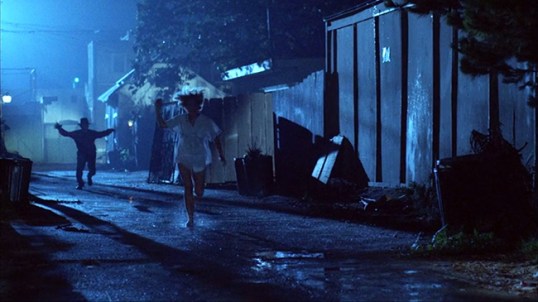
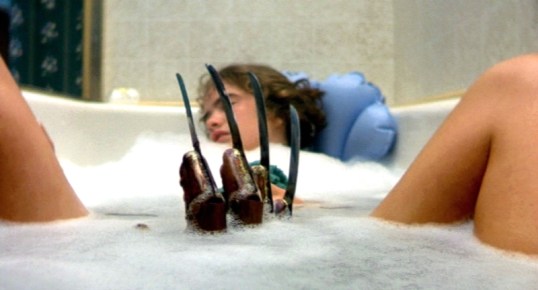
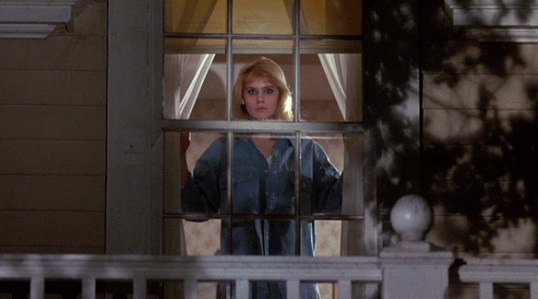
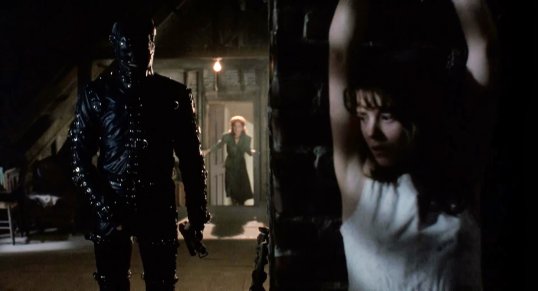
4 Shots from 4 Wes Craven Films

The Hills Have Eyes (1977, dir by Wes Craven, DP: Eric Saarinen)

A Nightmare on Elm Street (1984, dir. by Wes Craven, DP: Jacques Haitkin)

Deadly Friend (1986, dir by Wes Craven, DP: Philip H. Lathrop)

The People Under The Stairs (1991, dir by Wes Craven, DP: Sandi Sissel)

Music Video of the Day: Paper In Fire by John Mellencamp (1987, directed by ????)


This video was shot outside of a house on a dirt road near Savannah, Georgia.  John Mellencamp wanted to highlight the poverty that many Americans were living under.  This video was also shot at a time when Mellencamp was still trying to escape from the “Johnny Cougar” persona that was forced on him early on in his career.  (In fact, at the time this song was recorded, he was still officially known as John Cougar Mellencamp.)

Enjoy!

Review: Balatro


It is incredibly rare to find a game that completely takes over your brain in the way that Balatro has. Developed by a solo creator going by the name LocalThunk and published by Playstack, this little indie game dropped out of nowhere and quickly became one of the most talked-about releases of the year. On the surface, it looks like a pretty standard digital poker game. You have a deck of cards, you get dealt a hand, and you try to make the best poker hand possible. But spend about five minutes with it, and you will quickly realize that Balatro is not actually a poker game at all. It is a brilliantly disguised roguelike deck-builder that uses the universal language of poker hands as its foundation to create one of the most addicting gameplay loops I have ever experienced.

The core mechanics start off simple enough to teach anyone, even if you have never played a card game in your life. You are trying to beat a certain score threshold, known as a blind, by playing poker hands. A pair gives you a base amount of chips and a small multiplier. A flush gives you more chips, and a straight flush gives you even more. You play through a series of antes, and the score requirements get higher and higher as you progress. If you fail to reach the score limit with the hands you are dealt, your run is over and you have to start from scratch. It sounds like standard video poker, but the magic of Balatro lies in what happens between these hands.

This is where the deck-building and roguelike elements come crashing in to completely warp your perspective on playing cards. After every blind, you visit a shop where you can spend your hard-earned money on various upgrades. The most important of these are Jokers. You can have up to five Jokers at a time, and each one fundamentally breaks the rules of poker in wildly different ways. One Joker might give you a massive multiplier every time you play a pair. Another might destroy a card in your hand and give you extra chips for each card destroyed. Another might only activate if you play a hand that contains a spade. Suddenly, you are no longer trying to play the statistically best poker hand. You are trying to play the hand that best satisfies the chaotic rules of your specific Jokers.

The deck-building goes even deeper when you factor in the other items you can buy in the shop. Planet cards permanently level up specific poker hands, meaning your flushes will naturally score more points without needing a Joker to boost them. Tarot cards let you literally alter your deck by changing the suit of a card, turning a card into a wild card, or destroying cards outright to thin your deck and increase your chances of drawing the cards you actually need. Spectral cards offer high-risk, high-reward effects that can either make your run legendary or immediately ruin it. If you have ever played a game like Slay the Spire or Monster Train, you will feel right at home with how these systems interlock, but Balatro manages to feel entirely fresh because of its playing card aesthetic.

As a roguelike, the game structure demands that you adapt to what the game gives you. You cannot force a flush-focused build if the shop only gives you Jokers that synergize with pairs and high cards. You have to pivot your strategy on the fly, which leads to these beautifully chaotic runs where you end up winning through sheer absurdity. To keep you on your toes, every eighth blind is a Boss Blind. These bosses apply a universal handicap to your run, like disabling the effect of all face cards, or making it so playing a straight actually deducts points. Beating a Boss Blind requires you to either build an incredibly versatile deck or find a specific Joker that completely ignores the boss’s rules, which is immensely satisfying when you pull it off.

The real triumph of Balatro, however, is just how unbelievably addicting its game loop is, and how that addiction directly feeds into the creation of utterly insane deck combos. Because the game constantly drip-feeds you new jokers and upgrades after every single round, you are always chasing that next layer of synergy. This creates a compulsion loop where you just want to see how far the math can go. What starts as a humble run trying to scrape together a few thousand points with a basic pair suddenly spirals completely out of control. You might pick up a Joker that gives you an x3 multiplier for every face card discarded, then find a planet card that buffs your straight, and then grab another Joker that doubles your entire score if you have exactly four cards left in your hand. Before you know it, the addictive nature of wanting to complete that puzzle pushes your scoring into the absolute stratosphere. You will find yourself playing a single pair of twos and watching the score ticker fly into the millions, then the billions, and occasionally even the trillions. The game loop tricks your brain into treating poker hands like puzzle pieces, and the ultimate reward for solving that puzzle is seeing numbers climb to absurd, astronomical heights that make no logical sense for a standard 52-card deck.

It also helps that the presentation is absolutely spot-on for this type of experience. The user interface is clean and easy to read, which is crucial when you have fifteen different modifiers happening at once and your score is rocketing into the billions. The visual style has a retro, slightly gritty CRT vibe to it that feels mysterious and cool. But the real standout is the sound design. The tactile thwack of the cards hitting the table, the escalating, hypnotic hum of the music as your score multiplier climbs higher and higher, and the incredibly satisfying sound of a massive score being calculated all tie the experience together perfectly. It is a game that feels incredible to just interact with on a moment-to-moment basis.

In a modern gaming landscape that is increasingly obsessed with massive scale, Balatro feels like a beautiful breath of fresh air. The game doesn’t rely on hyperrealistic graphics using the latest game engines with all the bells and whistles that has made game development as expensive, if not even moreso, than the biggest Hollywood blockbusters, but also made their development years in the making. Instead, it leans entirely into the simplicity of its look paired with incredibly complex mechanics under the hood. This brilliant design choice has made it incredibly easy to release on pretty much every platform from every game console, PC and mobile platform. You don’t need a pricey rig to run it; you just need a screen and a functioning brain to appreciate the sheer depth of its systems.

Balatro is a masterclass in game design. LocalThunk took something as simple and universally understood as a deck of playing cards and turned it into a sprawling, deeply strategic, and infinitely replayable roguelike. It takes the best parts of deck-builders and marries them to the instantly recognizable framework of poker, resulting in a game that is easy to learn but nearly impossible to put down. Playstack has an absolute monster hit on their hands here, and I can confidently say that if you have even a passing interest in card games, strategy games, or just games with incredibly tight gameplay loops, you owe it to yourself to play Balatro. Just make sure you do not have anything important to do for the next few days, because once this game gets its hooks in you, it will not let go.

Late Night Retro Television Review: Saved By The Bell 2.12 “Running Zack”


Welcome to Late Night Retro Television Reviews, a feature where we review some of our favorite and least favorite shows of the past!  On Saturdays, I will be reviewing Saved By The Bell, which ran on NBC from 1989 to 1993.  The entire show is currently streaming on Tubi!

This episode, Zack does some research on his family tree.  Things are about to get supercringey.

Episode 2.12 “Running Zack”

(Dir by Don Barnhart, originally aired on November 24th, 1990)

Ms. Wentworth (Carol Lawrence), who is a slightly less sociopathic version of Ms. Bliss, has assigned everyone to do a report on their family tree.  She hands out grades based on what people discover about their family’s past.  I’m not sure if that’s really a good idea.  What if someone comes from a family that doesn’t have any dark secrets?  And really, if your family did have a dark secret, what business is it of Ms. Wentworth’s?

Lisa reveals that her family escaped slavery and then helped over slaves escape as well.  “My family calls the Underground Railroad the original Soul Train,” she says.

Jessie discovers that her family was made up of slave traders.  Jessie proceeds to have a breakdown, even though Lisa says that Jessie shouldn’t feel responsible for anything that her ancestors did.  To a lot of people, that probably sounds like common sense but it’s also the type of sentiment that now gets you cancelled on Bluesky.

Screech reveals that he’s Italian and his ancestors were all great lovers.  “What is mi grade?” Screech asks.  “A!” Ms. Wentworth says with a dramatic flourish.

We never learn about Slater’s family tree, despite the fact that, along with Lisa, he’s one of the few characters who is obviously not a generic white person.  However, we do learn about Zack’s family background.  Looking through the family records, he finds one picture of an Indian.  Zack promptly declares himself to be a Native American.  However, when Zack can’t even answer a few basic questions about his family’s background, Ms. Wentworth threatens to flunk him.  But if Zack flunks, how will he compete at the track meet!?  Bayside has never beat Valley …. in track, at least.

Ms. Wentworth sends Zack to meet Chief Henry (Dehl Berti, who, unlike Mark-Paul Gosselaar, actually was of Native American ancestry), an American Indian who apparently lives in a cluttered shack.  Chief Henry takes one look at the picture and is able to identify Zack’s ancestor by name.  He also gives Zack the name “Running Zack.”  He helps Zack to appreciate his Native heritage.  And then Chief Henry promptly dies offscreen.

Zack isn’t sure that he can run in the track meet.  He’s feeling pretty depressed about the death of the old man he met twice.  Chief Henry’s ghost appears to Zack and tells him to run because beating Valley is obviously the most important thing.  Zack agrees to go to the track meet and Henry vanishes.  Zack’s Native American ancestry is never mentioned again.

This episode is the equivalent of those old DNA test commercials where an extremely white person would say that their DNA test revealed that they were 2% Native American and that it had changed their entire life.  As I rewatched it for this review, I couldn’t help but think about Elizabeth Warren, whose claims of Native American ancestry were even flimsier than Zack’s.  I found myself thinking about the fact that there’s actually a name — Pretendian — for generic white people who try to be more interesting by falsely claiming Native heritage.  What’s funny is that Mark-Paul Gosselaar’s actual heritage — Dutch and Jewish on his father’s side, Indonesian on his mother’s side — is actually pretty interesting.  But, in this episode, it’s revealed that Zack is Nez Perce.  (Though the tribe isn’t named, Zack’s ancestor is described as being one of Chief Joseph’s main warriors.)

Gosselaar used to refer to this as being his favorite episode of Saved By The Bell.  In 2016, he changed his tune and said that the episode actually was insensitive to Native Americans.  Gosselaar’s correct about that.  Even after Ms. Wentworth tells Zack that his original presentation was disrespectful to the memory of his ancestor, she still calls him “kimosabe.”  At no point does Zack show any curiosity as to why he had never heard much about his Native ancestry to begin with.  And, needless to say, it’s never mentioned again.  Like, ever.  Seriously, I had a friend who, in 2007, discovered that she was 98% European and 2% North African and she hasn’t shut up about it in nearly 20 years.

The main problem with this episode is that Chief Henry conveniently dies off-screen, despite there not being any indication that he was in any way unhealthy.  We never learn what Henry died of.  Instead, he shows up long enough to teach Zack a lesson and then he dies so that the show doesn’t have to worry about bringing him back in the future.  Zack declares that he might not run the track meet.  Ms. Wentworth sobs.  Well, at least Ms. Wentworth actually knew Chief Henry.  Zack really seems like he’s just being performative about it.

Myself, I’m Irish on my father’s side and Italian/Spanish on my mother’s side.  I would have definitely gotten an A in Ms. Wentworth’s class.

Lisa Marie’s Week In Television: 7/26/26 — 8/1/26


Austin City Limits (PBS)

I watched an episode of this show on Saturday morning.  My musical tastes pretty much start and end with EDM.  Sorry, Austin.

Big Brother 28 (24/7, CBS, Paramout+, Pluto TV)

I’ve been sharing my thoughts on the show that I love to hate over at the RealityTVChat Blog.  Feel free to leave a comment over there because, right now, the blog is not quite living up to the chat part of the name.

The Larry Sanders Show (HBOMax)

It’s a funny show and it helps to ease my anxiety.  I’ve watched quite a few episodes this week.

Rogue’s Gallery (NightFlight+)

I watched an episode about John Dillinger on Friday.  Now there was a handsome bank robber!

Saved By The Bell (Tubi)

Running Zack!  I’ll be posting a review of this week’s episode in a bit.

Survivor 50 (CBS, Wednesday Night)

CBS has been re-airing Survivor 50 after episodes of Big Brother.  I missed Survivor 50 when it first aired and I’m still struggling to get into it right now.  I prefered Survivor when it was only an hour long.  I have ADHD so asking me to concentrate for 90 minutes is a bit much.

Watched And Reviewed:

  1. 1st & Ten,
  2. Alexander The Great,
  3. Baywatch,
  4. CHiPs,
  5. Crime Story,
  6. Freddy’s Nightmares,
  7. Hunter,
  8. The Love Boat,
  9. Pacific Blue,
  10. Saved By The Bell: The New Class,
  11. St. Elsewhere