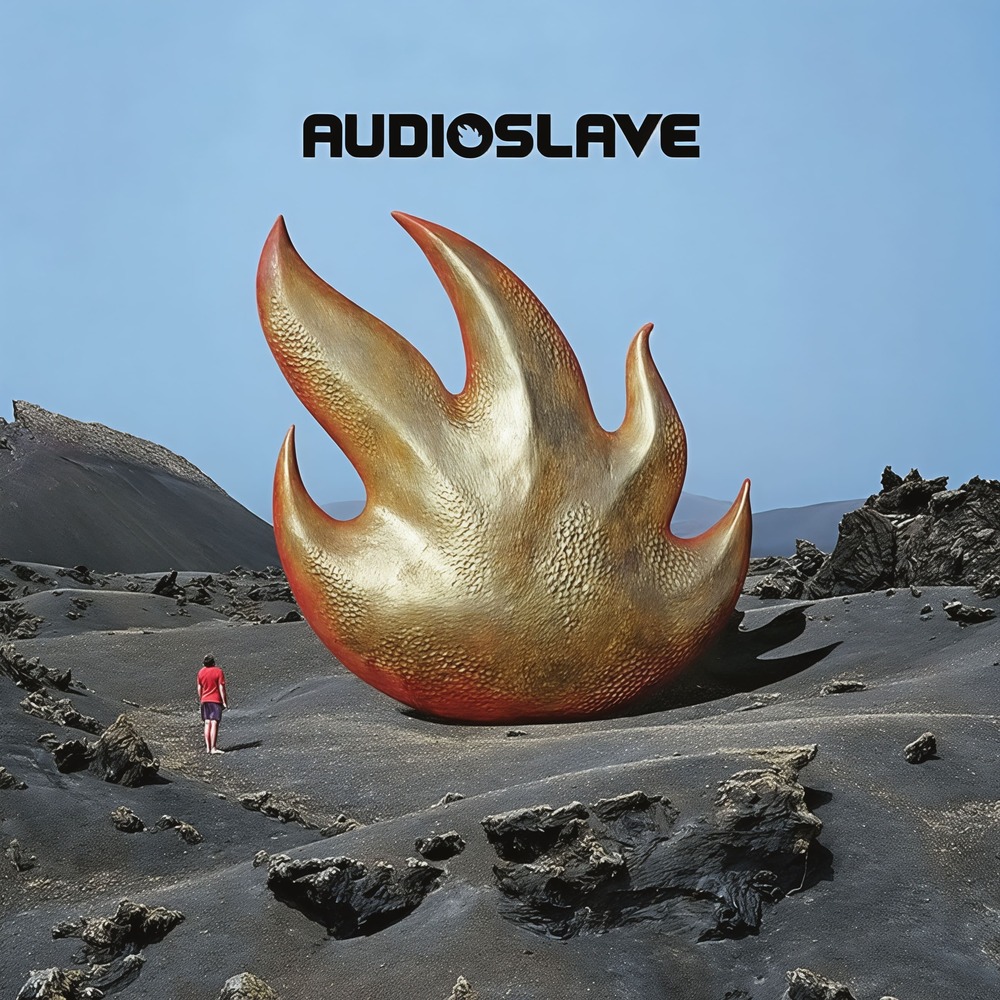
“Like a Stone” is one of Audioslave’s defining songs: a slow-burning rock ballad that feels enormous without ever becoming overly busy. Released on the band’s 2002 self-titled debut, it pairs a deceptively simple, steady arrangement with a mood of isolation, reflection, and patient longing. For a new listener, the easiest way to describe it is as a late-night song—one built around the feeling of sitting with your thoughts after everyone else has gone home. The track’s famous central image, waiting “like a stone,” gives it a spiritual, almost haunted quality.
That mood reflects Chris Cornell’s own explanation of the lyrics. Cornell said the other members of Audioslave asked him what the song was about, and his answer was death—specifically, imagining what it might be like to wait in the afterlife. That idea gives the narrator’s solitude a deeper meaning: he is not simply waiting for a person or living through ordinary heartbreak, but existing in a kind of suspended spiritual space, waiting to be reunited with those who have already passed on. It is a heavy premise, yet Cornell presents it with enough ambiguity that the song still feels personal to anyone hearing longing, regret, faith, or grief in its words.
The musical backbone is strikingly restrained. Tim Commerford’s bass and Brad Wilk’s drums hold down a deliberate, spacious groove, while Tom Morello plays a clean, chiming guitar figure that gives the song its mournful atmosphere. Unlike the aggressive, effects-heavy riffs people may associate with Rage Against the Machine, Morello largely serves the song’s emotional weight here; the guitar rings out like a distant signal rather than competing for attention. Chris Cornell’s vocals are soulful and powerful, but what makes the performance special is his control: he begins in a weary, intimate register, then gradually brings more ache and force into the chorus without losing the song’s sense of loneliness.
Morello gets his standout moment in the final stretch: his guitar solo begins at roughly 2:54 in the album recording. It is brief, but it is exactly the right kind of brief—more melodic and emotionally focused than flashy, rising out of the song like a final release of tension. He bends and sustains notes instead of turning the moment into a technical showcase, which fits the track’s somber atmosphere perfectly. “Like a Stone” is proof that Audioslave could make something as memorable through patience and feeling as they could through sheer volume: Cornell’s voice gives it its soul, and Morello’s guitar gives that soul a final, searching echo.
Like a Stone
On a cobweb afternoon, in a room full of emptiness By a freeway, I confess I was lost in the pages Of a book full of death, reading how we’ll die alone And if we’re good, we’ll lay to rest anywhere we wanna go
In your house, I long to be Room by room, patiently I’ll wait for you there like a stone I’ll wait for you there alone
And on my deathbed, I will pray to the gods and the angels Like a pagan to anyone who will take me to Heaven To a place I recall, I was there so long ago The sky was bruised, the wine was bled, and there you led me on
In your house, I long to be Room by room, patiently I’ll wait for you there like a stone I’ll wait for you there alone, alone
[guitar solo @2:54]
And on I read, until the day was gone And I sat in regret of all the things I’ve done For all that I’ve blessed, and all that I’ve wronged In dreams until my death, I will wander on
In your house, I long to be Room by room, patiently I’ll wait for you there like a stone I’ll wait for you there alone, alone
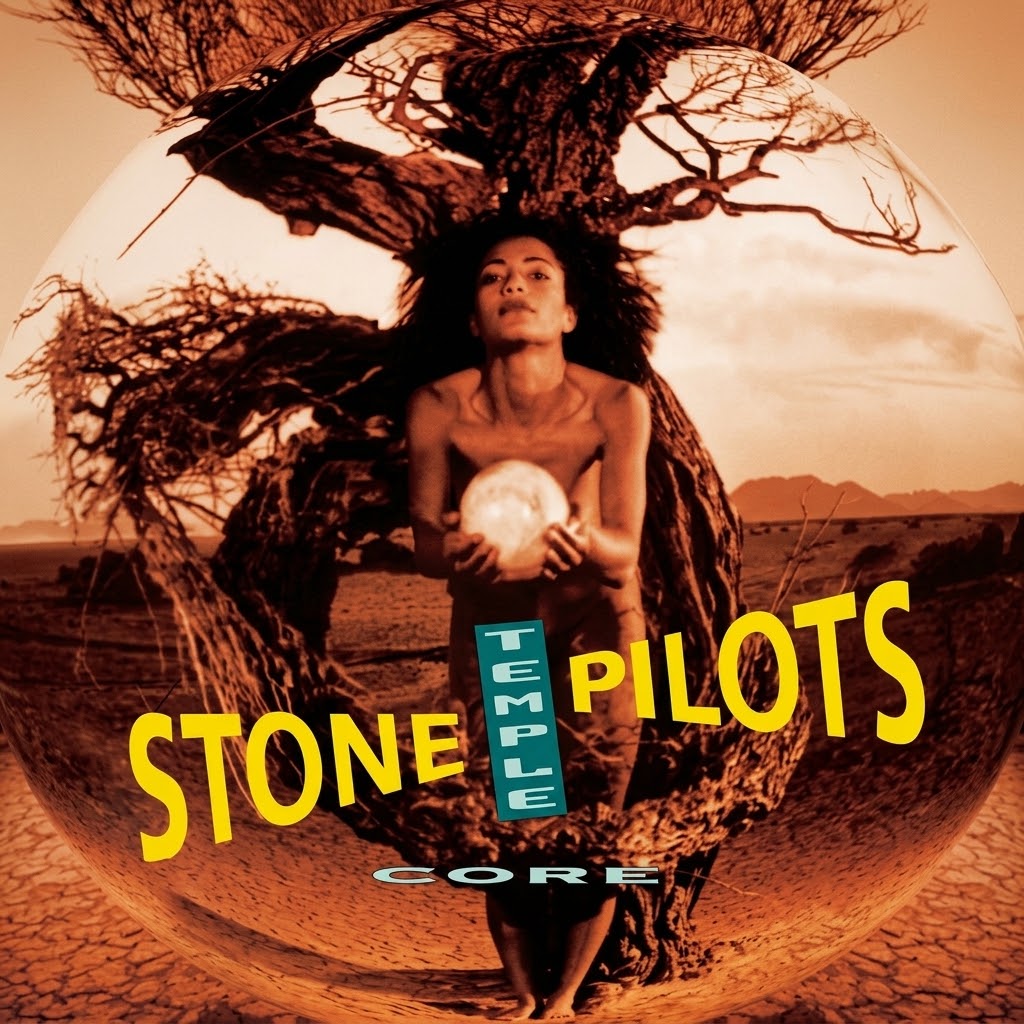
Core is one of those debut albums that has spent decades being celebrated, dismissed, rediscovered, and reassessed. Released in 1992, Stone Temple Pilots’ first full-length album arrived at the exact moment alternative rock stopped being a subcultural phenomenon and became the dominant sound on rock radio, MTV, and mainstream youth culture. Nirvana had already detonated the commercial landscape with Nevermind, while Soundgarden were about to reach even greater heights with Superunknown. Along with those records, Core became part of the broad grunge trifecta that dominated the airwaves in the early 1990s: Nirvana’s Nevermind, Soundgarden’s Superunknown, and Stone Temple Pilots’ Core. The comparison was never perfectly tidy—Stone Temple Pilots came from Southern California, not Seattle—but these albums were all central to the era’s hard-rock mainstream.
That success also made Stone Temple Pilots an easy target. A number of critics at the time treated the band as grunge followers rather than innovators, accusing them of chasing the sound popularized by Pearl Jam, Alice in Chains, Nirvana, and Soundgarden. On a superficial level, it is easy to see why. Core has the huge distorted riffs, brooding low end, emotionally damaged lyrics, and intense vocals that became closely associated with early-1990s alternative rock. But that criticism overlooks what the record actually does. Stone Temple Pilots were never just a watered-down version of one Seattle band. They drew from classic blues-based hard rock, psychedelic rock, punk, glam, funk, and metal, then pushed those influences through the darker, heavier sensibility of the grunge era.
The opening track, Dead & Bloated, immediately establishes that mixture. Dean DeLeo’s guitar entrance has a bluesy, muscular character, but its heaviness gives the song a sinister edge. Scott Weiland comes in sounding low, theatrical, and almost predatory, stretching out phrases as if he is trying to make every line uncomfortable. It is a grimy introduction, but the song also has a groove that prevents it from becoming merely blunt-force aggression. Robert DeLeo’s bass is especially important here. Rather than simply following the guitar, it moves around the riff and gives the track an elastic, almost funky pulse. Eric Kretz’s drumming locks the entire thing together with a direct, powerful attack.
That chemistry is one of the best things about Core. Scott Weiland was a magnetic frontman, but Stone Temple Pilots were not a band built around one personality. The DeLeo brothers and Kretz give the album its body. Robert DeLeo’s bass lines are melodic, active, and frequently more adventurous than the average early-1990s hard-rock bass part. Dean DeLeo’s guitar playing is equally crucial. He had a knack for writing riffs that were heavy without being generic and melodic without becoming soft. His parts tend to have little twists in their chord voicings, transitions, and lead flourishes, making even the album’s most familiar songs sound more carefully constructed than they first appear.
Wicked Garden is an early showcase for those strengths. Its riff is dark, heavy, and dirty, but the arrangement has a memorable swing rather than the mechanical stomp of conventional metal. Weiland’s vocal melody is catchy even when the lyrics feel vague and unsettling, and that contrast is a big part of the song’s appeal. Stone Temple Pilots could make music that sounded menacing while still understanding the value of a hook. Wicked Garden has enough weight to satisfy listeners looking for something aggressive, but it also has the kind of melodic shape that made the band a natural fit for radio.
Then comes Plush, the song that turned Stone Temple Pilots into a major rock band. Its opening guitar figure remains one of the defining sounds of the decade, and the song’s slow-burning verse-to-chorus escalation is nearly flawless. Plush was played so constantly in the 1990s that it can be easy to forget just how strong it is as a piece of songwriting. The track is built with real patience: the verses maintain a tense, shadowy mood, then the chorus opens up without feeling like a cheap attempt at a sing-along payoff. Weiland’s vocal is wounded, seductive, ragged, and emotionally distant all at once. It feels personal without being overly specific, which helped give the song its strange staying power.
Plush captures much of what made Core commercially successful. It has the heaviness of grunge, the accessibility of classic hard rock, and a melodic sophistication that suggested Stone Temple Pilots were capable of more than simply riding a trend. Still, Core is more interesting when it moves away from the songs that became permanent radio staples. Creep, for example, offers a softer and more vulnerable side of the band. Its acoustic-led arrangement, restrained rhythm, and melancholy vocal give the song room to breathe. It is less immediate than Plush, but it reveals that Stone Temple Pilots could create atmosphere without relying on volume or distortion.
Sex Type Thing is the album’s most confrontational track and remains one of its most complicated. Musically, it is built around a massive, stomping riff and an aggressive rhythm section that makes it feel almost physically hostile. Weiland’s voice is harsh, snarling, and deliberately ugly. The song was often misunderstood as a celebration of sexual aggression, but its perspective is more accurately read as an embodiment of predatory entitlement. The narrator is not meant to come across as admirable; he is meant to sound grotesque. That distinction did not always register in the way the song was marketed or consumed, especially when it became a rock-radio staple, but the ugliness in the performance is central to its effect.
While many listeners understandably gravitated toward the popular tracks—Plush, Creep, and Sex Type Thing—the best song on Core, to my ears, is Where the River Goes. Those singles each represent an essential piece of the album’s appeal: Plush is the enormous melodic breakthrough, Creep is its most reflective and vulnerable moment, and Sex Type Thing is its rawest burst of aggression. But Where the River Goes feels like the point where Stone Temple Pilots’ full musical identity comes into focus. It is less obviously designed for radio, more ambitious in shape, and more revealing of the different traditions the band could pull together.
What makes Where the River Goes so effective is how naturally it meshes the bluesy hard-rock language of the 1970s with a slowed-down, heavier form of late-1970s and early-1980s punk influence, then adds the metallic force of the mid-to-late 1980s. Its punk element is not expressed through the kind of frantic speed or high-energy attack usually associated with punk. Instead, the song takes punk’s tension, stripped-down bluntness, and confrontational edge, then slows it into a thick, stalking groove. The result has classic-rock swagger, but it never settles into a simple blues-rock pattern. It moves with a deliberate, coiled sense of pressure, as though it is always preparing to lunge rather than simply racing ahead.
That slowed-down punk influence gives the track much of its personality. Dean DeLeo’s guitar work has the weight and tonal density associated with heavier 1980s metal, but the arrangement retains punk’s refusal to become too polished or self-indulgent. The song is forceful without drifting into flashy excess. Robert DeLeo and Eric Kretz keep the groove grounded, creating a push-and-pull between the track’s lumbering heaviness and its underlying nervous energy. Weiland’s vocal performance fits that mood perfectly. Rather than singing it as a conventional hard-rock anthem, he moves through the song with restraint, weariness, and mounting desperation, making the shifts in the music feel emotionally connected rather than merely technical.
This is also where Core most clearly distinguishes itself from Nevermind and Superunknown. All three records were enormously important in defining what rock music sounded like in the early 1990s, but their strengths came from different places. Nevermind is driven by punk directness, explosive loud-quiet dynamics, and Kurt Cobain’s raw emotional immediacy. Superunknown is defined by Soundgarden’s colossal riffs, psychedelic unease, unconventional rhythms, and Chris Cornell’s larger-than-life vocal performances. Core shares some of the heaviness, alienation, and darkness of those albums, but Where the River Goes highlights Stone Temple Pilots’ ability to draw from several generations of rock music without sounding locked into any one of them.
The song does not make Core better than Nevermind or Superunknown, nor does it need to. What it does is show why Stone Temple Pilots deserved to be considered more than an imitation of the bands surrounding them. Where the River Goes feels like a mission statement hidden near the end of the record. It contains 1970s hard-rock blues, a slower, more menacing version of punk’s attitude and stripped-down attack, and 1980s metal weight, all filtered through the DeLeo brothers’ melodic instincts and Weiland’s unpredictable vocal presence. It is a song that makes the band’s supposed “grunge” identity feel much too narrow.
The rest of the album reinforces that point. Piece of Pie is noisy, sarcastic, and built around a riff that sounds like a reaction to the music-business machinery Stone Temple Pilots were suddenly becoming part of. Naked Sunday has a lurching rhythm and an odd, slightly off-balance quality that makes it more interesting than a standard deep cut. Sin brings back the darker, abrasive energy of the first half, while Crackerman combines a punchy hard-rock structure with a sense of creeping unease. Even when the band lean into familiar grunge-era textures, they rarely sound entirely comfortable staying in one lane.
Core is big and polished, but it does not feel sterile. The guitars are thick, the bass has real presence, the drums hit hard, and Weiland’s vocals sit clearly at the center without overwhelming the rest of the band. It is an album designed to sound powerful on loud speakers, whether it is blasting from an old car stereo, playing at a packed party, or coming through a pair of headphones decades later. The production gives the songs enough punch for radio, but it also lets the small details in the arrangements survive.
In retrospect, Core may not have been as disruptive as Nevermind or as expansive and bizarre as Superunknown, but it absolutely belongs in the conversation around the albums that defined early-1990s rock. Nirvana brought punk volatility and exposed emotional rawness into the mainstream. Soundgarden brought heaviness, psychedelic ambition, and complexity. Stone Temple Pilots brought a bruised but stylish blend of hard-rock muscle, melodic craft, and damaged glamour. Their sound fit the grunge moment, but it also carried the DNA of older rock traditions and hinted at the stylistic range they would explore on later albums.
That is why Core has outlived the old accusations that it was merely derivative. There are certainly echoes of its era throughout the record, and nobody should pretend otherwise. But the album’s best material endures because of the band’s chemistry: Dean DeLeo’s sharp, inventive riffs, Robert DeLeo’s constantly moving bass, Eric Kretz’s sturdy but responsive drumming, and Scott Weiland’s ability to make every song feel like a damaged little drama. Core is rough around the edges, occasionally blunt, and unmistakably rooted in 1992. It is also loud, catchy, moody, and packed with the musical personality that made Stone Temple Pilots more than a footnote to the grunge boom.
The early 2000s represented a peculiar and fascinating crossroads for rock music, a transitional period in which grunge’s lingering haze had finally begun to dissipate, nu-metal commanded the airwaves with its downtuned aggression, and the remaining fragments of the 90s alternative landscape were urgently seeking a fresh direction. It was also, rather bizarrely, the golden era of the rock supergroup. You had Velvet Revolver cobbling together the remains of Guns N’ Roses with Scott Weiland, you had A Perfect Circle rising from the ashes of Tool’s side projects, and then you had the absolute behemoth that was Audioslave. This wasn’t just a side hustle; this was a full-on collision of two titanic forces. On one side, you had the fierce, funk-metal juggernaut of Rage Against the Machine—Tom Morello, Tim Commerford, and Brad Wilk—who were suddenly without a frontman after Zack de la Rocha walked away. On the other, you had Chris Cornell, the godlike voice of Soundgarden, who had just watched his own grunge empire crumble and was fresh off a slightly misguided but commercially successful solo record. The question on everyone’s mind in 2002 wasn’t if this band would be good, but if they would even survive the ego clash. The answer, as we all now know, arrived in the form of their self-titled debut, Audioslave, a record that didn’t just meet expectations—it bulldozed them and built a new temple of riff-heavy, soul-shaking rock.
From the very first screech of feedback that opens Cochise, you know you are in for something violently different. That track is the mission statement, the thesis, and the gauntlet thrown all at once. It starts with that iconic, ominous piano chord, a hint of melancholy that Cornell immediately drenches in his signature wail, but then the floor drops out. Morello’s guitar doesn’t just chug; it detonates with that percussive, scratchy, almost alien sound that only he can conjure. It’s not a Rage riff and it’s not a Soundgarden riff; it’s this ugly, beautiful, monstrous hybrid. And Cornell? He doesn’t try to be de la Rocha. He doesn’t rap; he soars. He belts about shaking the disease and bleeding, and you feel every single drop of sweat in his throat. The chorus is an absolute avalanche, a tidal wave of rhythm that Wilk and Commerford lock into with the precision of a Swiss watch. It’s the perfect opener because it immediately establishes the ground rules: this is a band that respects its roots but has zero interest in repeating them.
What really makes Audioslave stick, though, is the sheer diversity of the tracklist. This isn’t a one-trick pony of political rage or downtuned sludge. Take Show Me How to Live, for instance. That main riff is pure Led Zeppelin worship filtered through a distortion pedal from hell, a swaggering, hip-shaking groove that practically dares you to keep your head still. Cornell’s delivery here is almost cocky, a far cry from the tortured poet of Black Hole Sun. He’s commanding, charismatic, and utterly in control. Then you get the ballad, Like a Stone, which is arguably the song that defined the band for the mainstream. It’s hauntingly beautiful, built on that simple, echoing guitar line that sounds like it’s being played in a cathedral. Cornell’s vocals are heartbreakingly tender, pondering the afterlife and loneliness with a maturity that the younger version of himself might have drowned in distortion. It’s a radio hit, sure, but it’s a radio hit with guts, a slow burn that builds to that soaring, melodic climax where Morello lets loose with one of his most restrained yet effective solos. It proves that these guys could write a hook that could catch a whale, not just bash you over the head with a hammer.
The deep cuts are where the album really flexes its muscles, though. Set It Off is a frantic, paranoid sprint, with Wilk’s drums sounding like machine-gun fire and Commerford’s bass vibrating so low it might rearrange your internal organs. It’s claustrophobic and anxious, a perfect marriage of Cornell’s lyrical darkness and the band’s rhythmic tension. On the flip side, Shadow on the Sun is a sprawling, psychedelic epic that feels like a desert road trip at midnight. Morello uses every trick in his book—the whammy pedal, the kill switch, the feedback—but he uses them to create atmosphere, not just noise. It’s moody, cinematic, and it showcases Cornell’s ability to shift from a whisper to a roar within the span of a single breath.
You can’t talk about this record without acknowledging the colossal rhythm section. Brad Wilk isn’t just keeping time; he’s playing the drums like they owe him money. His fills are crisp, his snare cracks like a whip, and he provides this unshakeable foundation that allows Morello to go completely off the rails. Likewise, Tim Commerford’s bass is the glue and the grit. He doesn’t just follow the guitar; he often leads the charge, driving tracks like Gasoline with that thick, distorted thump that makes your car speakers rattle. That track is pure gasoline, pun intended—a roaring, rebellious anthem that feels like it was recorded in a garage right before the cops showed up. It’s aggressive, but it’s also incredibly tight; there’s a discipline here that comes from years of playing in one of the most rhythmically complex bands of the 90s.
Lyrically, Cornell is on another planet. He abandoned the cryptic, abstract poetry of Soundgarden for something more direct, yet still shrouded in metaphor. He writes about isolation, addiction, salvation, and damnation, but he does it with a preacher’s fire. In I Am the Highway, he delivers one of the most stunning metaphors of his career, comparing himself to a road that people travel on but never really see, a sentiment that feels incredibly poignant given his role as the frontman who was always slightly above the fray. The chorus is anthemic without being cheesy, a declaration of self-worth that resonates deeply. What You Are closes the album out with a snarling, defiant energy, a final punch to the gut that reminds you that this band wasn’t just a temporary fix; they were a legitimate force. It ends abruptly, leaving you in a vacuum of silence, catching your breath.
Of course, the elephant in the room is the chemistry. How does a band that was built on political fury and a band built on melancholic grunge actually gel? The genius of Audioslave is that they didn’t try to meld their styles into one homogenous blob. Instead, they created a space where both identities could coexist and clash. Morello still uses his whammy pedal like a mad scientist, but he tunes it to Cornell’s vocal range. Cornell still uses his upper register to shatter glass, but he does it over a groove that would make any funk band jealous. There are moments where you can hear the ghost of Rage, like in the staccato riff of Exploder, and moments where you can hear the ghost of Soundgarden, like in the murky, sludgy bridge of Hypnotize. But these are just ghosts. The living, breathing entity is Audioslave.
Looking back, this debut stands as a testament to what happens when you take four musicians at the peak of their powers and force them to start over from scratch. It’s not perfect—some of the middle tracks can blur together on a casual listen, and the production by Rick Rubin is so dry and in-your-face that it occasionally feels a bit sterile. But when it hits, it hits like a freight train. It captured a specific moment in time when rock music was desperate for a savior, and Audioslave walked in wearing a leather jacket and holding a lit match. They weren’t just another supergroup cashing in on nostalgia; they were a vital, urgent, and thrilling new animal. It’s an album that demands to be played loud, preferably on a highway with the windows down, because that’s where it lives—in the space between the speakers and your soul. It remains a cornerstone of 2000s rock, a record that proved that even when your past is legendary, your future can still be bright, loud, and gloriously unpredictable. And for that alone, it deserves a permanent spot in the rotation.
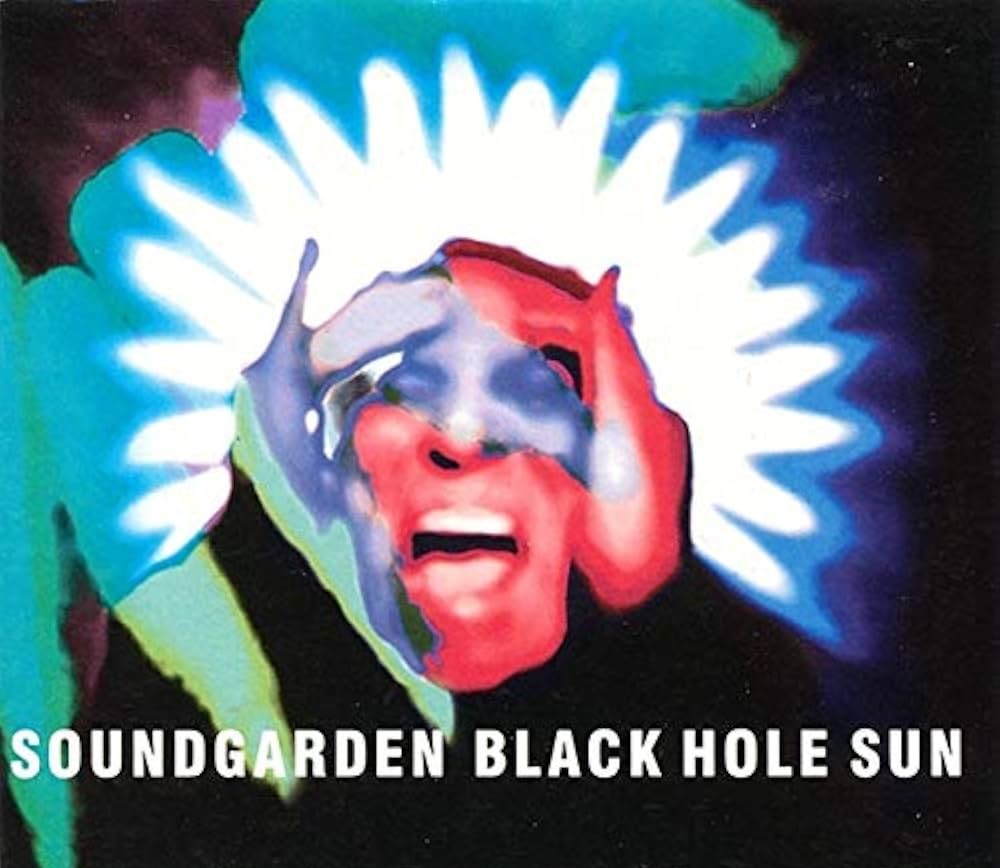
“Black Hole Sun” is one of those songs where Chris Cornell’s voice feels like the main character of its own little surreal movie. The way he drags out phrases, bends notes, and shifts between soft intimacy and howling power makes the whole thing feel heavy and hazy at the same time. You can almost feel the song stretching out like a long, strange afternoon in a half‑real town, and for a lot of people it became the entry point that pulled them headfirst into the Soundgarden rabbit hole with the Superunknown album.
Kim Thayil’s guitar work is what keeps that dream from ever feeling safe. His riffs throughout the track are already weird and slightly off‑kilter, but when the solo hits at 2:56, things get properly discordant. Instead of a neat, singable melody, the lead line feels jagged and uneasy, like the song is momentarily glitching out and refusing to sit in one place. That solo gives the song its signature discordant sound, almost like light and matter being pulled down into the black hole the title hints at.
The solo only lasts a little over 20 seconds, but it’s perfectly placed: it erupts right when the song’s tension peaks, then fades just quickly enough to let Cornell’s voice regain control and pull you into the next verse. The contrast between Thayil’s warped, dissonant lead and Cornell’s smooth, almost crooning delivery is what makes the track feel both beautiful and unsettling at the same time.
If you’re trying to get into Soundgarden, “Black Hole Sun” is a great entry point not just because it’s catchy, but because it shows how perfectly Cornell and Thayil balance each other. Cornell gives the song its soul and mystery, while Thayil’s discordant guitar solo reminds you that there’s something quietly wrong under the surface — and for countless fans, it was the hook that dragged them deep into the rest of Superunknown and the band’s wider catalog.
Black Hole Sun
In my eyes Indisposed In disguises no one knows Hides the face Lies the snake And the sun in my disgrace Boiling heat Summer stench Neath the black, the sky looks dead Call my name Through the cream And I’ll hear you scream again
Black hole sun Won’t you come And wash away the rain? Black hole sun Won’t you come Won’t you come Won’t you come
Stuttering Cold and damp Steal the warm wind, tired friend Times are gone For honest men Sometimes, far too long for snakes In my shoes Walking sleep In my youth, I pray to keep Heaven send Hell away No one sings like you anymore
Black hole sun Won’t you come And wash away the rain? Black hole sun Won’t you come Won’t you come
Black hole sun Won’t you come And wash away the rain? Black hole sun Won’t you come Won’t you come (Black hole sun, black hole sun) Won’t you come (Black hole sun, black hole sun) Won’t you come (Black hole sun, black hole sun) Won’t you come? (Black hole sun, black hole sun)
(guitar solo @2:56)
Hang my head Drown my fear Till you all just disappear
Black hole sun Won’t you come And wash away the rain? Black hole sun Won’t you come Won’t you come
Black hole sun Won’t you come And wash away the rain? Black hole sun Won’t you come Won’t you come (Black hole sun, black hole sun) Won’t you come (Black hole sun, black hole sun) Won’t you come (Black hole sun, black hole sun) Won’t you come (Black hole sun, black hole sun) Won’t you come (Black hole sun, black hole sun) Won’t you come (Black hole sun, black hole sun) Won’t you come Won’t you come
My latest pick for “Song of the Day” takes me back….way back to those early days post-high school. Only a couple years removed from graduating high school and maneuvering my ways through the turbulent seas of what would be my college years, it was only typical that music would be one of the few things that would anchor things for me during my Adrift Years.
Stone Temple Pilots is part of what I consider as the Big Four of alternative rock of the 1990’s or as some would label that particular sound as “grunge”. Alternative rock, grunge or just plain old hard rock, Stone Temple Pilots made their mark in the early 90’s rock scene with the second single off of their 1993 debut album Core.
“Plush” has always been one of my favorite songs of that era. I played that song on repeat and was one of my go-to Stone Temple Pilots track until “Interstate Love Song” a year later came along. The song was carried by Scott Weiland’s iconic vocals and its dark lyrics. I never knew how dark a song “Plush” was until finding out from a Weiland interview that it was based on a true story of a girl who had been kidnapped and murdered in the early 90’s.
Whether a song inspired by a true-crime story or a metaphor for a failed relationship (as Weiland has said the lyrics represented), “Plush” will remain one of those songs from my young adult years that I would revisit every year to reminisce.
Plush
And I feel that time’s a wasted go So where you goin’ ’til tomorrow? And I see that these are lies to come So would you even care?
And I feel it And I feel it
Where you goin’ for tomorrow? Where you goin’ with the mask I found? And I feel, and I feel when the dogs begin to smell her Will she smell alone?
And I feel so much depends on the weather So, is it rainin’ in your bedroom? And I see that these are the eyes of disarray So would you even care?
And I feel it And she feels it
Where you goin’ for tomorrow? Where you goin’ with the mask I found? And I feel, and I feel when the dogs begin to smell her Will she smell alone?
When the dogs do find her Got time, time to wait for tomorrow To find it, to find it, to find it When the dogs do find her Got time, time to wait for tomorrow To find it, to find it, to find it
Where you goin’ for tomorrow? Where you goin’ with the mask I found? And I feel, and I feel when the dogs begin to smell her Will she smell alone?
When the dogs do find her Got time, time to wait for tomorrow To find it, to find it, to find it When the dogs do find her Got time, time to wait for tomorrow To find it, to find it, to find it
I will readily admit that I am a child of the 80’s. I grew up listening to 80’s music whether it was metal (though I didn’t truly listen to them until the 90’s), rap all the way to synthpop and new wave which became quite popular during the decade with groups such as Depeche Mode, INXS, Duran Duran and The Cure. One band which I listened to quite a bit during the mid-80’s was the British new wave band Tears For Fears. It’s from this band that the latest “Song of the Day” comes from: “Everybody Wants To Rule The World”.
The song is actually an 80’s classic that has stood the test of time and musical taste. While many scoff and ridicule most of the pop songs which blew up during the 80’s this particular song from Tears For Fears was never one of them. While the song does have a foundation in the synthpop sound of the time the song itself doesn’t really sound like most of the 80’s pop music. The lyrics are socially aware without being too preachy. In fact, if one was to listen to the song now it’s original message of limitless optimism in the future for everyone actually sounds a bit selfish in today’s social climate.
The song has been covered quite a bit by many singers and bands of different stripes from such groups as The Dresden Dolls, Clare & The Reasons and Dru Hill right up to the pop punk band Care Bares on Fire whose cover was used during the end credits for Season 5, Episode 9 of True Blood.
Let this song kick-off my 80’s music revival and all of it due to the awesome inclusion of some classic 80’s pop tracks in the equally awesome and great new Netflix series, Stranger Things.
Everybody Wants To Rule The World
Welcome to your life There’s no turning back Even while we sleep We will find you acting on your best behavior Turn your back on Mother Nature Everybody wants to rule the world
It’s my own design It’s my own remorse Help me to decide Help me make the most Of freedom and of pleasure Nothing ever lasts forever Everybody wants to rule the world
There’s a room where the light won’t find you Holding hands while the walls come tumbling down When they do I’ll be right behind you So glad we’ve almost made it So sad they had to fade it Everybody wants to rule the world
I can’t stand this indecision Married with a lack of vision Everybody wants to rule the world Say that you’ll never never never never need it One headline why believe it? Everybody wants to rule the world
All for freedom and for pleasure Nothing ever lasts forever Everybody wants to rule the world
Tonight the music world found out that Stone Temple Pilots and Velvet Revolver frontman Scott Weiland passed away at the age of 48 while on tour in Minnesota.
The years after graduating from high school was a chaotic time for me. not knowing what role I had for myself moving forward and afraid of the world beyond the regimented, secured, but understood confines of high school. While I enjoyed the freedom of being a young adult after graduating in the summer of 1991 the reality of it all was that I wasn’t that far removed from still being a teenager a couple years later.
I call these my adrift years.
From this time in my life I was drawn to the music that every young adult trying to leave his teen years behind. Whether it was hip-hop, metal and, the genre of the era, grunge, I was listening to it. While I wasn’t as huge a fan of grunge as the rest of my contemporaries of the time I did gravitate to a couple of the titans of the genre: Soundgarden and Stone Temple Pilots.
It was with Stone Temple Pilots that I was introduced to one of my favorite frontman of my Adrift Years: Scott Weiland.
Weiland encompassed not just the brooding, alienation that made grunge such a popular genre of music during the 1990’s but also had a touch of the wild and dangerous aspect of what made rock frontmen so-called Rock Gods. He was the Axel Rose of grunge. An enormously talented vocalist, but one who was also scandal-bound with his off-stage drug use and self-destructive behavior.
Scott Weiland helped make those years adrift during the early 1990’s with his singing. It’s a shame and a loss to the music world that like other rock legends before him his early years battling his inner demons would take him away too soon.
Nothing epitomizes who Scott Weiland was to me better than the song “Big Empty” which was the first single off of their second album Purple.
Big Empty
drivin’ faster in my car falling farther from just what we are smoke a cigarette and lie some more these conversations kill falling faster in my car
time to take her home her dizzy head is conscience laden time to take a ride it leaves today no conversation time to take her home her dizzy head is conscience laden time to wait too long to wait too long these conversations kill
to much walkin’, shoes worn thin too much trippin’ and my soul’s worn thin time to catch a ride it leaves today, her name is what it means to much walkin’, shoe’s worn thin
It’s been awhile since we’ve had a new AMV of the Day. With con season in full gear it’s been tough waiting to see what new AMV’s come out of these conventions. The problem with finding new and interesting anime music videos, especially in the United States, has been the tendency of the same videos winning awards at North American conventions. Name recognition has become the norm when voting which videos make the grade and, in the end, win the prize in their chosen category.
Not saying that these videos and their creators don’t deserve the recognition and accolades for their work, but it does make finding new fresh voices and visual styles in the field harder and harder to discover. Foreign videos tend to be the last realm for people who are into AMVs to find rare gems in the rough.
This latest AMV of the Day is “Breaking” and by the creator Pat [AMVCON-2015] and meshes together some of the more popular and action-oriented shonen (and some shoujo) anime to the tune of Linkin Park’s “Breaking the Habit.”
Anime: Amagi Brilliant Park, Bleach Movie: Hell Verse, Btoom!, Ga-Rei Zero, Kokoro Connect, Kyoukai no Kanata, Madoka Magica: Rebellion, Naruto: Road to Ninja, Nerawareta Gakuen, One Piece: The Movie 70, Persona 3: Spring of Birth, Ookami Shoujo to Kuro Ouji, Sword Art Online 1 and 2, Steins;Gate: Fuka Ryōiki no Déjà vu, Suzumiya Haruhi no Shōshitsu, To Aru Agaku Railgun S
Decade of last.fm scrobbling countdown:
24. Radiohead (1,176 plays)
Top track (35 plays): Knives Out, from Amnesiac (2001)
It should come as no surprise that Radiohead made it onto my decade top 50 chart somewhere. The dominant album on that list might be a little less common: Amnesiac (2001) took the title with a modest margin over Hail to the Thief (2003) and OK Computer (1997). This is no accident–no single weekend of Winamp stuck on repeat. Since pretty much the week it was released, Amnesiac has been my favorite Radiohead album.
It would be a bit silly to argue that Amnesiac is their best. Just as Radiohead are too unique to really be compared to any other band, pretty much every album they’ve released since The Bends (1995) has resided in a world of its own. OK Computer certainly offers the broadest appeal, and Kid A (2000) seems to get the most praise from the more eclectic, aesthetically minded fans, but it’s the consistent vibe of Amnesiac that grabs me most. From start to finish, it glides on a sea of glass beneath an inebriated night sky. While the individual tracks are stellar at every turn, the sum of its parts come nowhere near the whole, and I can rarely bring myself to listen to them out of their intended order. There’s some calming chill that sets across the whole 45 minutes, and a spirit of motion that I did not experience again until “Bloom” (The King of Limbs, 2011).
That being said, of courseOK Computer and Hail to the Thief are unrivaled masterpieces, of courseIn Rainbows (2007) and The King of Limbs are worlds above the average for a band late in their career, and of courseThe Bends redefined the limits of rock in its day. The only album in their discography that you might justifiably find some fault with is Pablo Honey (1993), and that’s only when you measure it by the standard Radiohead set and maintained for the two decades to follow. In the most general sense, weighing all factors evenly, they might rightly be regarded as the greatest band to ever exist. That’s not lofty praise; it’s an opinion that a good many experienced music critics are prepared to agree with. But to the question of how Radiohead became my 24th most listened to band of the past 10 years, and not say, my 50th, I point without hesitation to Amnesiac.
The latest “Song of the Day” comes from the Finnish rock band Poets of the Fall.
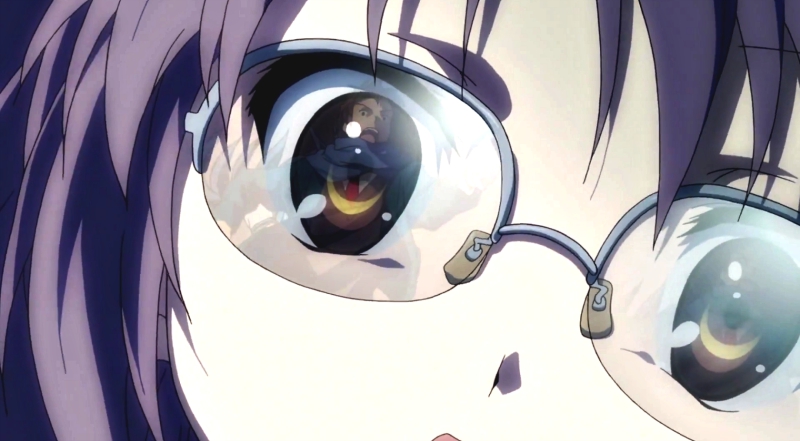
“Dreaming Wide Awake” is such a cinematic-sounding song. From the vivid imagery brought up by the songs lyrics to the band’s frontman Marko Saaresto’s singing full of emotional power. I was first introduced to this song when I came across one of my favorite anime music videos almost three years ago now in Chiikaboom’s “Against All Odds”.
The song is about one’s inability to cope and move past the loss of a loved one. How one tragedy could compound another as one loses their grip on reality in an attempt to try and return their dead loved one to them. While this is an extreme version of such an experience I’m sure everyone has felt a similar feeling when one has gone through a very emotional break-up with someone they care about for a very long time.
For a song that sounds wistful and somewhat full of hope in reality this song is actually quite dark.
Dreaming Wide Awake
Too late, the melody is over The joke seems to be on me cos I’m the one not laughing Down here on the floor
Deflate, the mystery of living In the most heartless fashion I could ever Imagine No pretense of decor
Another place and time, without a great divide And we could be flying deadly high I’ll sell my soul to dream you wide awake
Another place and time, without a warning sign And we could be dying angel style I’ll sell my soul to dream you wide awake
I’ll dream you… wide awake
With me, disaster finds a playfield Love seems to draw dark, twisted pleasure tearing at me Cos I can’t let you go
Mercy, like water in a desert Shine through my memory like jewelry in the sun Where are you now
Another place and time, without a great divide And we could be flying deadly high I’ll sell my soul to dream you wide awake
Another place and time, without a warning sign And we could be dying angel style I’ll sell my soul to dream you wide awake
I’ll dream you… wide awake
It’s like I’m racing to the sun, blindly face the blazing gun Cos I’m afraid I will be left here without you Like I’m racing not to run, give more when I have none Cos I’m afraid I will be left here without you… wide awake
Another place and time, without a great divide And we could be flying deadly high I’ll sell my soul to dream you wide awake
Another place and time, without a warning sign And we could be dying angel style I’ll sell my soul to dream you wide awake