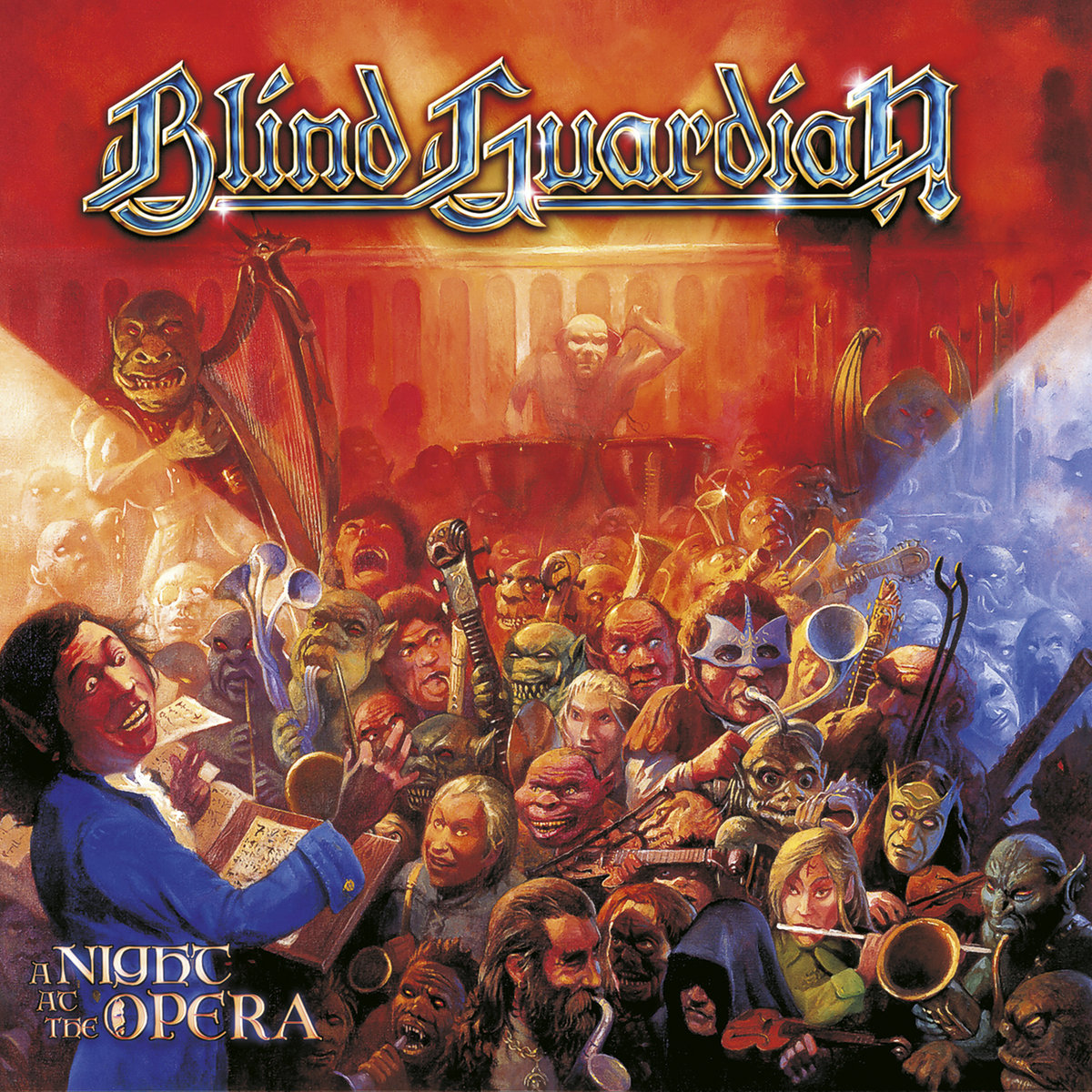
Retro Music Review: A Night at the Opera (by Blind Guardian)


Before getting into it, a little context: this album was my first introduction to Blind Guardian, courtesy of TSL writer necromoonyeti — the same person responsible for putting Boris on my radar. So if this review reads like someone who came in completely cold and got their face melted off, that’s because that’s exactly what happened.

Let’s get one thing straight right away: A Night at the Opera is not a casual listen. It’s not something you throw on while you’re folding laundry or zoning out on the commute home. This is the kind of album that demands you sit down, maybe pour yourself something nice, and just let it completely steamroll you for about an hour. And honestly? That’s exactly the kind of album Blind Guardian needed to make at that point in their career.

Released in 2002, A Night at the Opera is the German power metal legends’ seventh studio album, and it arrived after the already-enormous Somewhere Far Beyond and Imaginations from the Other Side had already cemented the band as giants of the genre. So naturally, Hansi Kürsch and company decided to throw the rulebook entirely out the window. The result is one of the most ambitious, over-the-top, maximalist records in the history of metal — and it rules, even when it’s utterly overwhelming.

The album opens with Precious Jerusalem, and within about thirty seconds you understand exactly what kind of ride you’ve signed up for. The layered vocals, the orchestral bombast, the sheer density of the production — it all comes crashing in like a wall of sound that somehow never feels muddy. Hansi’s voice is front and center, soaring over a choir that sounds like it’s made up of about four hundred people, and it sets the tone perfectly. This isn’t metal with some orchestral elements sprinkled on top. This is something else entirely — something almost operatic in the truest sense of the word.

From there, Battlefield kicks in with a bit more aggression and momentum, which is a welcome shift. André Olbrich and Marcus Siepen’s guitar work throughout the record is phenomenal, but Battlefield is one of the spots where the riffs really get a chance to breathe and cut through the orchestral layering. It’s not quite the straightforward power metal banger you might want it to be, but it’s driving and epic in all the right ways.

Then there’s Under the Ice, which slows things down into something that almost feels mournful. It’s one of the quieter moments on the record, but it’s deceptively powerful. Hansi’s vocal performance here is genuinely moving, and the restraint the band shows — relative to literally everything else on this album — makes it stand out in a really effective way.

If there’s a centerpiece that most people point to when discussing A Night at the Opera, it’s almost certainly And Then There Was Silence. Clocking in at nearly fifteen minutes, it is an absolute monster of a track — a prog-metal epic that tells the story of the fall of Troy through the eyes of Cassandra. Yes, really. And somehow it doesn’t feel self-indulgent. Well, okay, it does feel self-indulgent, but in the best possible way. The track builds and shifts and spirals through so many phases that by the time it reaches its climactic final stretch, you’ve completely forgotten where it started. It’s one of the most impressive things Blind Guardian have ever put to tape, and that’s saying something.

The Maiden and the Minstrel Knight is probably the most accessible thing on the record — a more traditional Blind Guardian ballad that sits comfortably alongside tracks from their earlier work. It’s a bit of a breather in the middle of all the chaos, and it’s genuinely gorgeous. The vocal harmonies are lush and warm, and it’s one of those songs that reminds you how good Hansi Kürsch is at pure melody when he wants to be.

Sadly Sings Destiny and Wait for an Answer keep the epic atmosphere rolling in the back half of the album, though they can start to feel a little dense if you’re not fully locked in. That’s perhaps the one honest criticism of A Night at the Opera— it’s a lot. The production, helmed by Charlie Bauerfeind and the band themselves, is incredibly thick. There are reportedly hundreds of vocal overdubs on some tracks, and while that creates an incredible sound, it can also make the album feel like it’s working very hard to impress you, all the time, without pause. By the time you hit the later tracks, the sheer weight of everything can start to feel a little exhausting if you’re not in the right headspace.

But then The Soulforged comes along and reminds you why you’re here. Inspired by the Dragonlance fantasy series — classic Blind Guardian territory — it’s one of the most energetic tracks on the album, and the chorus is an absolute earworm. It’s big, it’s bright, and it shows that even buried under all the orchestral grandeur, the band still knows how to write a hook that sticks with you for days.

Closing things out, Age of False Innocence and Punishment Divine bring the album home in suitably dramatic fashion. By this point, you’ve been through the full experience, and the record ends feeling genuinely complete — like a proper album with a beginning, middle, and end, rather than just a collection of songs.

So where does A Night at the Opera land in the Blind Guardian catalog? Honestly, it’s one of those records that rewards the people willing to meet it on its own terms. If you go in expecting Somewhere Far Beyond or Imaginations from the Other Side, you might come out a little shell-shocked. But if you give it the time and attention it demands, you’ll find one of the most unique and daring records in power metal history — a band swinging for the absolute fences and largely connecting. It’s not always easy listening, but it’s always worth it.

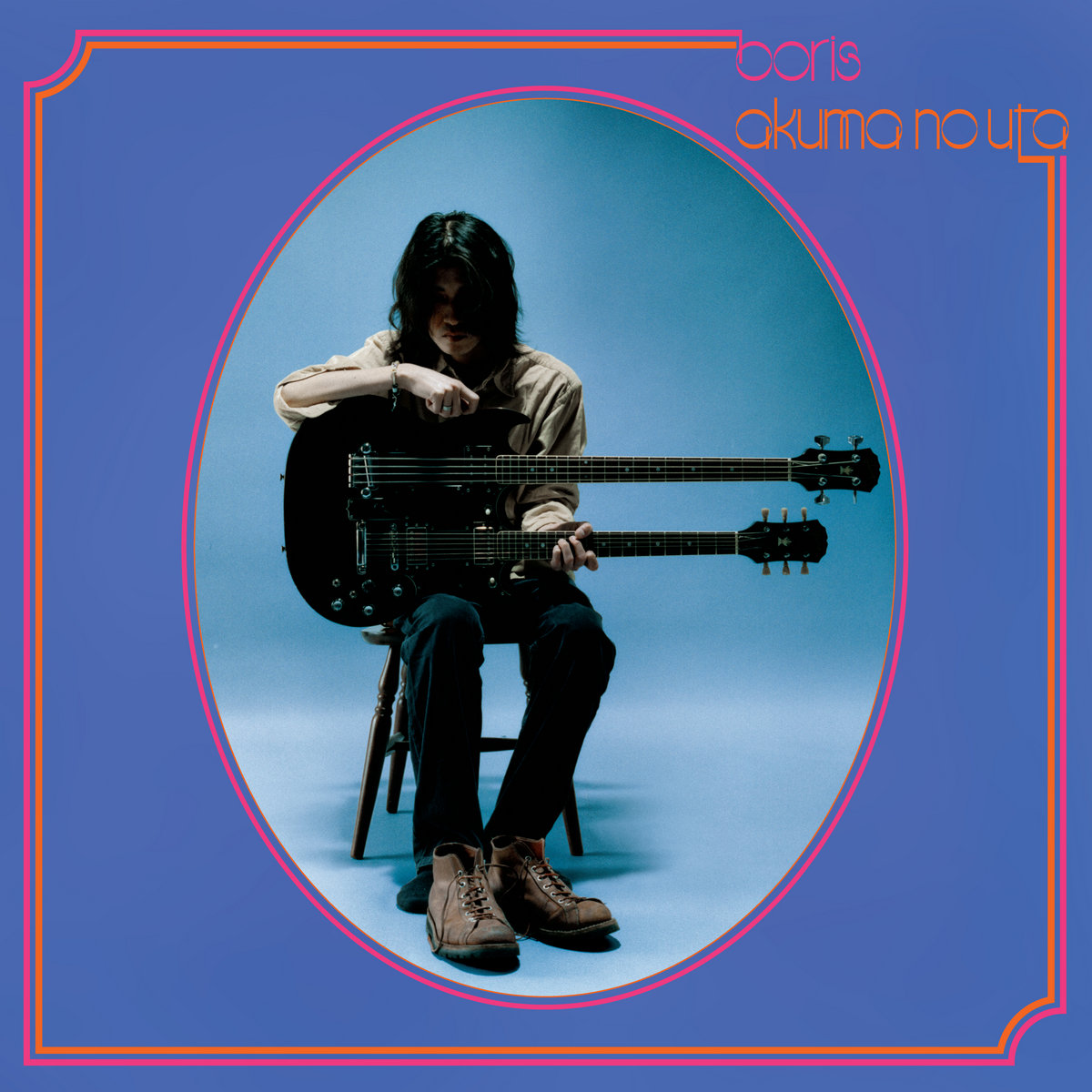
Retro Music Review: Akuma no Uta (by Boris)


So, you want to talk about Boris’s Akuma no Uta. Where do you even start with a band like Boris? They’re one of those groups that defies easy description, a Japanese power trio that has spent decades exploring the absolute outer limits of heavy, distorted sound. They’ve done albums that are just one long, droning track, records that are pure noise, and others that are surprisingly poppy. But Akuma no Uta, released back in 2003, is something special. It’s often cited as the perfect entry point for the uninitiated, and honestly, it’s easy to see why. It’s the sound of a band taking all their wildest, heaviest ideas and distilling them into a concise, 39-minute punch to the gut that still somehow manages to be incredibly listenable. I have to give full credit where it’s due here—this record didn’t just fall into my lap by accident. It came highly recommended by TSL writer necromoonyeti, and I will always thank him for introducing me to this power trio. Without that nudge, I might have spent years circling the Boris discography, intimidated by its sheer size and weirdness, never quite knowing where to dive in. So, necromoonyeti, if you’re reading this, you absolutely changed my listening habits for the better.

Right from the jump, the album announces its intentions, though maybe not in the way you’d expect. The opening track, Introduction, is a masterclass in trolling the listener in the best possible way. On the CD and streaming versions, it stretches out to nearly ten minutes of slowly building drone, feedback, and amp hum. It’s the sound of a massive, slumbering beast slowly waking up, a wall of sound that’s more about atmosphere and tension than riffs. You sit there, waiting for the song to “start,” and for a while, it doesn’t. This was apparently a deliberate move on the band’s part, a very “Boris” thing to do, essentially making you earn the payoff that’s about to come. It’s meditative, hypnotic, and maybe a little bit frustrating on the first listen, but by the time the track fades into a wash of white noise, you’re completely locked into the album’s unique frequency. It’s a brilliant, subversive way to set the stage for the chaos that follows. I remember messaging necromoonyeti about this very track, half-confused and half-intrigued, and he just told me to be patient. Best advice I could have gotten.

And then, the chaos arrives. Ibitsu hits with the force of a freight train, completely shedding the droning patience of the intro for pure, punk-edged sludge fury. It’s an explosion of tight, angry riffage that’s over before you can fully process the whiplash. This is where you hear the Melvins and Black Sabbath influence loud and clear, but it’s filtered through a distinctly Boris lens of sheer, overwhelming volume. Furi follows in a similar vein, keeping the energy high and the riffs thick and fast, a one-two punch of raw aggression that just completely kicks the door down. The sheer momentum of these tracks is absurd, with guitar solos and drum fills that sound like they’re tearing the very fabric of the recording to shreds. Without that initial recommendation, I might have bailed during Introduction, never making it to this glorious pummeling, and that would have been a tragedy.

But the true centerpiece, the track that everyone who listens to this album comes away talking about, is Naki Kyoku. This is where Boris shows their full range and cements their status as something more than just another heavy band. The song begins with a breathtakingly beautiful, clean guitar loop that’s a direct homage to the album’s cover art, a cheeky parody of Nick Drake’s Bryter Layter. For the first few minutes, you’re lulled into a state of serene, shoegaze-inspired bliss. It’s absolutely gorgeous, and it feels like a completely different band. And then, just when you’ve settled into the calm, the song switches gears and lets loose with a crushing, doom-laden riff that feels like a personal affront to the preceding quiet. This contrast, this sudden and brutal shift from beauty to pure heaviness, is what makes the track so legendary. It builds and builds in a post-rock style, layering guitars and intensity until it reaches a fantastic, euphoric peak, capped off with what many fans consider one of the greatest guitar solos ever recorded. It’s an eleven-and-a-half-minute odyssey that never gets boring for a second, a perfect encapsulation of Boris’s ability to be both devastatingly heavy and achingly beautiful. Every time I hit that transition, I think back to necromoonyeti’s description of it as “life-changing,” and honestly, he undersold it.

The album doesn’t let up after that epic journey. Ano Onna No Onryou brings things back down to earth with a more straightforward, catchy, and almost garage-punk feeling, though it’s still heavier than just about anything else out there. It’s a great palate cleanser before the closing title track, Akuma no Uta. This final song is a masterpiece of pure, unadulterated doom. It opens with the sound of a tolling bell before unleashing a riff that’s so distorted and loud that it feels like the drums are about to collapse under the sonic pressure. It’s a slow, sludgy, and utterly suffocating track that perfectly closes out the experience. It even has a brief, sudden burst of speed that shows they’re not done keeping you on your toes, before sinking back into that glorious, monstrous mire of sound.

Akuma no Uta is an album that sounds like it’s constantly on the verge of breaking apart, due in no small part to its famously brick-walled production. For some, this lack of dynamic range can be a bit much, feeling like there’s no breathing room and even triggering tinnitus. But for most, it’s an essential part of the record’s overwhelming charm. It sounds like it was recorded at a volume so high that the microphones were screaming in protest, and that’s exactly the point. It captures the pure, physical feeling of standing in front of a massive stack of amplifiers, feeling the sound waves hit you. It adds to the raw, energetic, and slightly dangerous feel of the whole affair. This record is a testament to Boris’s fearless diversity and refusal to be pinned down, effortlessly blending doom, sludge, punk, shoegaze, and drone into a single, cohesive statement. It’s a perfect storm of sonic experimentation and raw power. If you’re looking for a life-changing, meditative experience, Boris has other albums for that, but if you want a thrilling, overstimulating, and incredibly fun ride through the very best of heavy music, Akuma no Uta is pretty much unmatched. And I owe that discovery entirely to necromoonyeti—seriously, man, thank you for pointing me toward this absolute monster of an album.

Retro Music Review: S&M (by Metallica & The SF Symphony Orchestra)


Let’s just get this out of the way right now: S&M is not the perfect metal album, nor is it the perfect classical album, and it is certainly not the perfect marriage of the two. But what it is, against all odds, is a wildly ambitious, occasionally clunky, and frequently thrilling document of a band daring to step way outside its comfort zone. Released in 1999, this live album captures Metallica joining forces with the San Francisco Symphony under the direction of Michael Kamen, and the result is a sprawling, two-disc behemoth that has aged into something of a curio in the band’s catalog. It is beloved by some, dismissed by others, and debated by just about everyone who has ever cared about thrash metal or orchestral music. After spending a good amount of time with the record again recently, I find myself landing somewhere in the messy middle, appreciating the sheer nerve of the project while wincing at its occasional misfires.

Right from the opening notes of The Ecstasy of Gold, which the symphony plays with appropriate gravitas, you get the sense that this is going to be an event. Kamen’s arrangements are the real star of the album in many ways, and his work here has been both praised and picked apart for over two decades. The criticism that the orchestra often feels like an accompaniment rather than a true integration is entirely fair. There are extended stretches across both discs where the symphony seems content to just pad the background, adding a cinematic wash to the music without fundamentally altering its structure or dynamics. It can feel like the orchestra is politely following the band’s lead rather than engaging in a genuine musical conversation, and on tracks like Sad but True, the strings and brass often get buried under Hetfield’s chugging riffs and Ulrich’s pounding drums. You have to listen closely to even hear them at certain points, which rather defeats the purpose of dragging a hundred classically trained musicians onto the stage in the first place.

However, when the arrangement clicks, it clicks with genuine force. The Call of Ktulu is the album’s crowning achievement in this regard, a song that always had a cinematic, almost film-score quality to it even in its original incarnation. With Kamen’s dark, brooding orchestration swelling behind it, the track finally receives the full-blown, apocalyptic setting it always deserved. The brass section is particularly effective here, lending a menacing grandeur that makes the studio version sound almost quaint by comparison. Similarly, The Thing That Should Not Be benefits enormously from the low-end rumble of the contrabassoons and timpani, creating a sound so heavy and oppressive that it rivals anything the band has ever committed to tape. These are the moments where the album transcends its gimmick and becomes something genuinely special, a testament to what can happen when two seemingly incompatible forces find common ground.

What makes this project feel so strangely appropriate, even when it stumbles, is that Metallica’s music has always carried an orchestral grandiosity in its DNA. This is not a band that ever sounded like a scrappy punk outfit, even when thrash metal was still finding its feet in the early eighties. The credit for that largely belongs to Cliff Burton, the band’s original bassist, whose tragically short tenure with Metallica left an indelible mark on their musical identity. Burton was a classically trained musician who grew up studying piano and theory, and he brought that background into a genre that was otherwise rooted in raw aggression and speed. He was the one who pushed the band to incorporate harmonized guitar lines, complex time signatures, and a sense of melodic drama that set them apart from their peers. You can hear his influence all over Ride the Lightning and Master of Puppets, albums that traded the pure punk energy of Kill ‘Em All for something far more ambitious and cinematic. That classical sensibility Burton injected into the band’s early work became the foundation of the Metallica sound, the secret ingredient that allowed them to write songs that felt epic rather than merely fast.

If Burton had lived, I cannot help but wonder how differently S&M might have turned out. He would have been the natural bridge between the metal and the symphony, the guy who could speak both languages fluently and translate the band’s vision into something that felt truly integrated rather than merely superimposed. Kamen did a commendable job, and I do not want to diminish his work, but he was an outsider coming into Metallica’s world. Burton would have been coming from the inside, someone who understood exactly where the orchestral flourishes should sit because he had been hearing them in his head since the early days of writing For Whom the Bell Tolls and Fight Fire with Fire. I genuinely believe he would have been in the forefront of ensuring that the metal and the symphony meshed together seamlessly, not just coexisting on the same stage but actually breathing together as one living organism. The album we got is fascinating, but the album we could have gotten with Burton steering the ship is a tantalizing what-if that I suspect will linger in the minds of fans forever.

But then there are the tracks where the whole enterprise threatens to unravel. Master of Puppets is the most obvious example, and it remains one of the most contentious performances on the album. The song is an absolute thrash classic, a relentless machine of riffage and aggression, and the orchestra simply cannot keep up with it. Kamen’s arrangement feels bolted on rather than woven in, and the result is a performance where the band and symphony are essentially occupying parallel universes, occasionally bumping into each other but never truly locking into a groove. It is still an impressive display of raw power, but it also highlights the fundamental tension at the heart of S&M: Metallica is a band that thrives on chaos and volume, while a symphony orchestra demands precision and restraint. Those two approaches do not always reconcile neatly, and this track is where the seams show the most. One cannot help but think that Burton’s classical ear would have found a way to bridge that gap, to write a countermelody or a harmonic texture that made the whole thing feel intentional rather than forced.

The setlist choices have also been a point of contention ever since the album dropped, and I have to say, the criticism is warranted. The complete absence of any material from Kill ‘Em All is a baffling omission that still rankles. Hearing The Four Horsemen or Seek and Destroy with a full symphony behind them could have been absolutely legendary, a chance to see raw, unfiltered thrash energy get a classical makeover. Instead, the tracklist leans heavily on the band’s more mid-tempo, radio-friendly material from the Black AlbumLoad, and Reload eras. That decision makes a certain amount of practical sense—those songs are more dynamically suited for orchestral accompaniment—but it also means the album never quite captures the full scope of Metallica’s career. For every For Whom the Bell Tolls or One, both of which translate beautifully to the symphonic treatment, there is a palpable sense of what could have been. The two new songs, No Leaf Clover and – Human, are welcome additions and remain highlights precisely because they were written with the orchestra in mind, so the band and symphony sound naturally more locked in and symbiotic from the very first note.

Vocally, James Hetfield is in fine form throughout, delivering his signature growls and melodic croons with the gruff authority that defined his late-nineties style. His between-song banter, while occasionally corny, adds a human touch to the otherwise grandiose proceedings, and you can hear the genuine excitement in his voice when he introduces the symphony or hypes up the crowd. The audience itself is a character on this album, their roars and sing-alongs providing a palpable energy that prevents the whole affair from becoming too stuffy or self-important. This is not a stuffy classical concert; it is a Metallica show with some fancy guests, and the crowd never lets you forget it. That raw, sweaty, headbanging energy is what keeps S&M grounded, even when the orchestral arrangements threaten to float off into pretentiousness.

In the end, S&M is a deeply imperfect album, and I think even its biggest defenders would admit that. The mix is often cluttered, the orchestra can feel like an afterthought on certain tracks, and the song selection will always be a source of debate among the faithful. But perfection was never really the point. I can say this with some authority because I was actually in the building for one of those two nights at the Berkeley Community Theatre, and despite all the flaws I can hear on the record, the live experience was something else entirely. When the symphony swelled behind the band’s heaviest riffs, the usual tribal divisions between metalheads and classical music fans simply evaporated. I found myself rocking out alongside long-haired thrashers and tuxedo-wearing symphony patrons in equal measure, all of us united by the sheer absurdity and power of what we were witnessing. The album captures that energy reasonably well, but it cannot fully replicate the feeling of being in a room where two completely different worlds decided to throw a party together. This was about a band that had conquered metal deciding to do something completely insane, something that could have easily backfired, and somehow pulling it off with enough swagger and sincerity to make it matter. It is a flawed, ambitious, and undeniably heavy document of a band taking a massive risk at the peak of their fame, and for that, it deserves a place of respect in the Metallica catalog. It may not be the definitive live album of their career, and it certainly is not the definitive symphonic metal album of all time, but it is a fascinating, exhilarating, and occasionally frustrating snapshot of a band refusing to play it safe. And honestly, in a world of safe career moves, that counts for something.

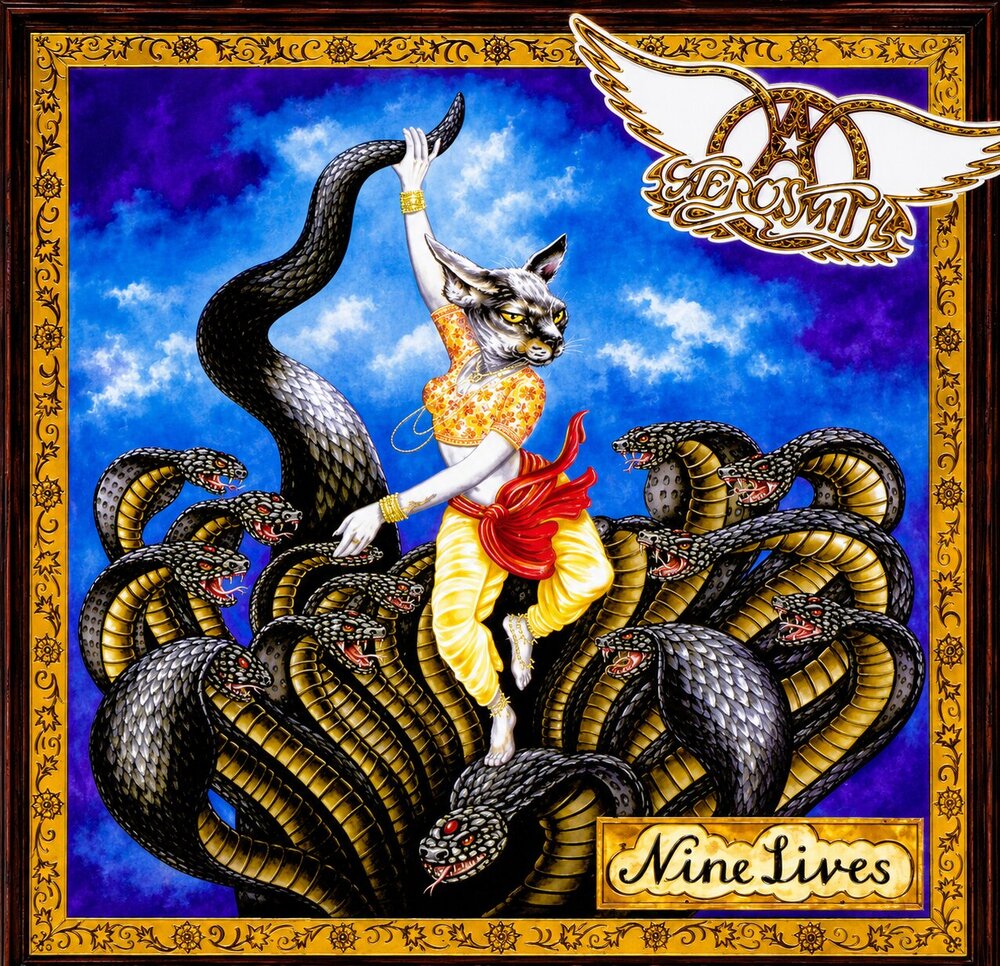
Retro Music Review: Nine Lives (by Aerosmith)


Alright, let’s talk about Nine Lives. If you were an Aerosmith fan in the spring of 1997, you were probably in one of two camps. Camp One: you were still riding the high of the Get a Grip era, cranking “Livin’ on the Edge” in your hand-me-down Camry, and you couldn’t wait to see what the Toxic Twins would do next. Camp Two: you were a grizzled, old-school devotee who thought they’d sold their soul to MTV back in ’89, and you viewed any new album with the skeptical squint of a man watching his favorite dive bar turn into a Hard Rock Cafe. I landed somewhere in the middle, which might be the perfect vantage point for Nine Lives, because this record is a glorious, baffling, overstuffed, and surprisingly scrappy cat of an album. It’s not the sleek panther of Pump or the cuddly but commercially declawed kitten of Get a Grip. No, this is a half-feral tomcat with a crooked tail, a chipped tooth, and nine lives’ worth of attitude to burn.

First, let’s get the elephant—or rather, the cat—out of the room: the cover. That bizarre, Kabuki-meets-Dali cat face with the third eye and the psychedelic swirls is your first warning that this isn’t going to be a straightforward rock record. And that’s because the making of Nine Lives was famously a disaster. They fired their long-time producer, Bruce Fairbairn, after cutting a whole album’s worth of material, brought in Kevin Shirley, who was known for his harder, rawer sound with bands like Diamond Head and Slayer’s Divine Intervention, and then proceeded to spend a fortune in studio time and label anxiety. You can hear that tension in the grooves. It’s not a polished, radio-manufactured product; it’s a band fighting with each other, fighting with their label, and fighting with their own legacy, and somehow, that ugly, beautiful struggle is what makes Nine Lives so endlessly listenable.

The album kicks off with “Nine Lives,” the title track, and it’s a mission statement disguised as a glam-stomp barnburner. That opening riff is pure, swaggering Joe Perry, all bluesy grease and garage-rock crunch, but then Steven Tyler comes in with that almost rapped, spoken-word verse that sounds like he’s reciting a beat poem about reincarnation inside a biker bar. It’s weird. It’s catchy. And by the time that “meow” hits in the chorus, you’re either cringing or grinning ear to ear. I’m firmly in the grinning camp. It’s a bold, goofy, and utterly confident opener that sets the table for an album that refuses to take the safe route.

Then comes “Falling in Love (Is Hard on the Knees),” which was the lead single, and man, did that song divide the fanbase. On one hand, it’s classic Aerosmith—sleazy, double-entendre lyrics, a hip-shaking groove, and that trademark Tyler yelp. On the other hand, it’s so deliberately, almost parodically sexy that it borders on self-satire. But here’s the thing: it rocks. That riff is a chainsaw, and the bridge where the tempo lurches and Tyler starts wailing about his “love gun” is pure, unfiltered nonsense genius. It’s not Dream On, but it’s not supposed to be. It’s a party track for a band that knows exactly how ridiculous they can be and leans into it with a wink.

But the real heart of Nine Lives isn’t in the singles; it’s in the deep cuts that show Aerosmith still had teeth. “Taste of India” is the first gut-punch. Clocking in at over five minutes, it’s a mid-tempo, Eastern-tinged blues-rock odyssey that features some of Tyler’s most evocative, cryptic lyrics about a woman who tastes like “chai and cardamom.” The sitar-like guitar work from Perry is hypnotic, and the rhythm section—Tom Hamilton’s chunky bass and Joey Kramer’s tribal, pounding drums—locks into a trance-like groove that feels more Led Zeppelin III than Permanent Vacation. It’s the sound of a band stretching their legs, and it’s magnificent. Similarly, “Full Circle” is the unsung hero of the entire record. That acoustic intro is deceptively gentle, but when the full band crashes in, it transforms into a soaring, gospel-tinged rock anthem about karma and survival. The harmonies between Tyler and Perry are some of the best they’ve ever laid down, and that chorus—“I’ve been around and I’ve come full circle”—feels like a genuine moment of reflection from a band that had seen every high and low imaginable.

Of course, you can’t talk about Nine Lives without addressing the power-ballad elephant, “Hole in My Soul.” Oh boy. This is the song that makes the purists reach for the skip button. It’s slick, it’s adult-contemporary, it’s got that Diane Warren-ish sheen that screams “soundtrack to a romantic montage in a 90s movie.” And yet… I have a soft spot for it. Is it cheesy? Absolutely. Is Tyler oversinging the hell out of it? You bet. But that bridge, where he goes “I’m a fool with a hole in my soul,” is delivered with such desperate conviction that I can’t help but buy in. It’s not Cryin’ or Angel, but it’s a perfectly fine power ballad for a band that had earned the right to be a little sappy. Plus, the guitar solo is pure Perry fire, which saves it from being a total snooze.

But then, just when you think they’ve gone soft, they drop “The Farm.” This is the weirdest, most underrated track in their entire 90s catalog. It’s a sludgy, grungy, almost industrial-tinged stomper about a mental institution, with a lyric that goes “They’re coming to take me away / To the funny farm.” It’s dark, it’s paranoid, and it features Tyler doing this manic, whispered vocal that sounds like he’s lost his last marble. The guitar tone is filthy, and the breakdown in the middle is pure chaos. It’s the closest Aerosmith ever came to sounding like Nine Inch Nails, and it works shockingly well. It’s proof that even in their commercial peak, they were still willing to get their hands dirty.

Elsewhere, “Crash” is a straight-up, high-octane rocker that sounds like it could have been a B-side from Permanent Vacation, all revved-up riffs and Tyler’s car-crash metaphors. It’s fun, it’s dumb, and it’s over in three minutes flat. “Kiss Your Past Good-Bye” is another deep-cut gem, a shuffling, bluesy kiss-off that features some slick harmonica and a chorus that begs to be sung along to with a whiskey in hand. And then there’s “Pink,” the second big single, which is pure pop-rock confection—a bouncy, funk-lite ode to, well, you know what. It’s clever, it’s silly, and the video was a masterpiece of 90s MTV absurdity. It doesn’t have the weight of “Janie’s Got a Gun,” but it’s not supposed to; it’s a sugar rush, and it’s delicious.

The album closes with “Fall Together,” a moody, atmospheric number that builds from a quiet piano intro into a swirling, psychedelic crescendo, and “Ain’t That a Bitch,” which is a bittersweet, acoustic-driven closer that finds Tyler reflecting on love and loss with a weary, world-weary rasp. It’s a surprisingly tender way to end an album that’s been so over-the-top and manic. It’s like the cat finally curls up on the windowsill and goes to sleep.

So, is Nine Lives a masterpiece? No. It’s too long, too bloated, and too inconsistent for that. The production, while rawer than Fairbairn’s work, can feel muddy in places, and there’s a sense that they threw every idea at the wall—ballads, hard rock, psychedelia, funk, grunge—to see what stuck. But that’s also its charm. This is the sound of a band that had absolutely nothing to prove commercially—they’d already sold millions—so they decided to get weird, get loud, and get a little dangerous again. It’s the album where Aerosmith remembers they used to be a dirty bar band from Boston, even if that bar now has a cocktail menu and a velvet rope. If you come to it expecting Toys in the Attic, you’ll be disappointed. But if you come to it with an open mind and a tolerance for glorious messiness, you’ll find an album full of character, muscle, and heart. It’s not their best life, but it’s certainly one of their most interesting ones. And frankly, nine lives in, who wouldn’t want to get a little scratchy?

Review: The Crow (Original Motion Picture Soundtrack)


The Crow (1994) soundtrack stands as a cornerstone of mid-90s alternative rock, capturing the gothic essence of Alex Proyas’s film through a masterful blend of original tracks, re-recordings, and covers from the era’s heaviest hitters. Released on March 29, 1994, by Atlantic Records, this 14-track album clocked in at 63:50, peaking at number one on the Billboard 200 and earning triple platinum status with over three million copies sold in the U.S. alone. Its success wasn’t just commercial; it encapsulated the raw, brooding spirit of grunge, industrial, and post-punk at their commercial zenith, turning a superhero revenge tale into a sonic monument for disaffected youth.

Opening with Burn by The Cure, the album immediately plunges listeners into the film’s shadowy heart. Written specifically for the movie, this six-minute epic pulses with Robert Smith’s haunting vocals over swirling guitars and tribal drums, evoking Eric Draven’s resurrection and transformation. It’s a high point, perfectly syncing with the scene where Brandon Lee’s character applies his iconic black-and-white makeup, the song’s fiery intensity mirroring the crow’s vengeful rebirth. The Cure, fresh off their own chart dominance, deliver a track that feels both timeless and tailor-made, its gothic romance aligning seamlessly with James O’Barr’s original comic influences—like the page devoted to their earlier song The Hanging Garden.

Stone Temple Pilots follow with Big Empty, a mellow, blues-drenched lament that didn’t appear in the film’s body but bookends the credits. Initially, the band offered Only Dying, but after Lee’s tragic on-set death, they swapped it for this brooding gem, its introspective lyrics about loss resonating deeply with the movie’s themes of grief and redemption. Scott Weiland’s vulnerable croon over swirling psychedelia captures the quiet despair of Detroit’s rain-soaked nights, making it a fan favorite that lingers long after the album spins.

The pace shifts with Slip Slide Melting by For Love Not Lisa, a grungy alternative rocker that underscores the T-Bird gang’s Devil’s Night revelry. Its sludgy riffs and anthemic chorus fit the criminals’ bullet-swallowing bravado, though the track’s mid-tempo grind can feel formulaic amid the album’s bolder moments. Similarly, Rollins Band’s Ghostrider—a cover of Suicide’s 1977 punk staple inspired by the Marvel antihero—thunders in with Henry Rollins’ barked vocals and aggressive guitars. Heard as Top Dollar learns of the pawn shop arson, it injects punk fury, but its raw energy sometimes overshadows subtler nuances.

Nine Inch Nails’ take on Joy Division’s Dead Souls elevates the covers further, Trent Reznor’s industrial edge amplifying the original’s post-punk chill. Guiding the crow to its first target, Tin Tin, the song’s droning synths and pounding rhythm evoke inescapable fate, a nod to the comic’s Joy Division obsession—chapters titled after Atmosphere and Atrocity Exhibition. It’s a standout, bridging 80s goth roots with 90s aggression, though purists might prefer Ian Curtis’s spectral delivery.​

Helmet’s Milquetoast (often stylized Milktoast) brings math-rock precision, its staccato riffs and Page Hamilton’s yelps embodying mechanical rage. Less tied to a specific scene, it slots into the album’s industrial undercurrent, offering tight songcraft but lacking the emotional punch of neighbors like The Cure. Pantera’s The Badge, covering Poison Idea’s hardcore punk original, ramps up the metal as Top Dollar executes Gideon. Dimebag Darrell’s searing solos and Phil Anselmo’s snarls deliver brutality, fitting the film’s climax, yet the track’s extremity can alienate non-metal fans.

For Love Not Lisa’s inclusion feels slightly redundant after their opener, but Slip Slide Melting at least varies tempo. More intriguing is My Life with the Thrill Kill Kult’s After the Flesh, a re-recording of Nervous Xians from their nightclub cameo. Grooving with hip-hop beats, distorted samples, and sultry spoken-word, it pulses with sleazy underworld vibe, capturing the film’s seedy underbelly.​

The Jesus and Mary Chain’s Snakedriver adds shoegaze haze, Jim Reid’s drawl weaving through feedback-drenched guitars. Not featured prominently in the movie, it evokes serpentine cunning, though its dreamy wash occasionally drifts into monotony. Medicine’s Time Baby III, an evolved version of their film performance with Cocteau Twins’ Elizabeth Fraser on ethereal vocals, shimmers with shoegaze bliss. The original Time Baby II plays in the club, but this iteration’s Fraser guest spot adds haunting fragility, a brief respite in the aggression.

Rage Against the Machine’s Darkness—a reworking of their B-side Darkness of Greed—fumes with Zack de la Rocha’s righteous fury over Tom Morello’s jagged riffs. Soundtracking Albrecht and Sarah’s hotdog stand chat, it critiques urban decay, aligning with the film’s anti-corruption bent, but its preachiness might grate on repeat listens.​

Violent Femmes’ Color Me Once brings folk-punk twitchiness, Gordon Gano’s manic energy suiting the gothic whimsy, though it feels like an outlier amid the heavier fare. Closing with Jane Siberry’s It Can’t Rain All the Time, co-written with composer Graeme Revell from a film quote, the album ends on poignant hope. Its orchestral swell and Siberry’s tender delivery reunite Eric with Shelly’s spirit, shifting from vengeance to catharsis—an emotional anchor that ties the chaos together.

As a cohesive whole, The Crow soundtrack triumphs as a film companion, each track meticulously synced to amplify Proyas’s visuals: from the gang’s swagger to Draven’s flights of fury. Hits like BurnDead Souls, and Big Empty propelled it to cultural icon status, introducing casual listeners to acts like STP and NIN while honoring goth forebears. Commercially, it mirrored the era’s alt-rock boom—albums by The Cure, STP, and Pantera had topped charts—crystallizing a moment when industrial and grunge converged.

Yet balance demands critique: as a standalone album, it falters. The reliance on covers (GhostriderThe BadgeDead Souls) showcases reverence but rarely innovation, with some feeling like scene-setters over standalone statements. Lesser lights like Milquetoast or Snakedriver blur into a wall of distortion, lacking memorable hooks. Pacing sags mid-album, the industrial barrage overwhelming subtler gems like Time Baby III. Female voices—Fraser, Siberry—provide welcome contrast, but the male-dominated roster reflects 90s rock’s bro-ish tilt.

Thematically, it excels: rain, resurrection, and romance weave through lyrics, echoing the comic’s poetic vengeance. O’Barr’s Joy Division fandom shines, while custom tracks like Burn and It Can’t Rain All the Time feel organic. Post-Lee’s death, the album gained mythic weight, Big Empty‘s swap a somber tribute.​

In 2026, with vinyl reissues etched with crow motifs, it endures as a time capsule—flawed, ferocious, unforgettable. For fans of the film, it’s essential; for alt-rock purists, a thrilling if uneven ride. Its legacy? Proving soundtracks could outshine the screen, raining darkness and light in equal measure.

Anthology: Movie Themes 1974-1998 (by John Carpenter) Review


John Carpenter’s Anthology: Movie Themes 1974-1998 is an absolute gem of a compilation, breathing new life into 13 of his most unforgettable film themes with a killer mix of synth menace and live-band muscle that feels both nostalgic and freshly electrifying. Released in 2017 on the indie powerhouse Sacred Bones Records, this project pulls straight from Carpenter’s golden era of directing, spanning the lo-fi space oddities of Dark Star in 1974 all the way to the blood-soaked Western vibes of Vampires in 1998. Here, the master himself teams up with his son Cody Carpenter handling keyboards and his godson Daniel Davies ripping on guitar, delivering rerecorded versions that aren’t just facsimiles of the originals but revitalized beasts with modern production muscle. Clocking in at a tight 42 minutes, the album strikes that sweet spot between crystalline clarity and the warm, gritty analog fuzz of vintage synths, making it an essential spin for horror fans, synthwave enthusiasts, or anyone craving pure cinematic chills without firing up the projector. It’s the kind of record that turns your living room into a foggy, neon-lit nightmare factory, proving Carpenter’s scores were never mere background noise—they’re standalone monsters.

Right out of the gate, the album spotlights three absolute titans as its major standouts: the themes from The ThingHalloween, and Escape from New York. These aren’t just tracks; they’re the sonic DNA of horror and sci-fi tension, retooled here to hit even harder with the benefit of hindsight and better gear. Take the Halloween theme—it’s the undisputed king of the collection, that iconic, haunting piano riff slicing through stabbing synth accents and a relentless, mechanical beat that creates this perfect off-kilter unease. It mirrors Michael Myers’ unstoppable, shambling lurch so viscerally that you can practically hear the Shape breathing down your neck; the simplicity is its genius—repetitive enough to burrow into your skull like a parasite, yet layered just right with those eerie high-end whistles and a pulse that never lets up. In this rerecord, the piano feels more intimate and ominous, the synths sharper, turning what was already a cultural earworm into something that demands volume cranked to 11.

Then there’s Escape from New York, which cranks everything up to gritty, dystopian overdrive with its crunchy guitar riff chewing through swelling synth waves and pounding, no-nonsense drums. It evokes Snake Plissken’s lone-wolf crawl through a prison-island Manhattan like a bluesy battle cry—mid-tempo swagger that’s tailor-made for high-stakes heists, shadowy escapes, and that pure ’80s anti-hero cool. Fans often mix it up with his Big Trouble in Little China groove because of the shared tough-guy energy, but here the rerecord leans harder into the guitar’s snarl and the synths’ ominous undercurrent, making it feel tougher, meaner, and ready for a modern apocalypse playlist. And don’t sleep on The Thing—it grabs Ennio Morricone’s frosty original cue and mutates it into peak Carpenter dread: deep, throbbing synth pulses underpin eerie, isolated stabs and desolate windswept effects that build a suffocating frozen isolation. This one’s all about the paranoia of shape-shifting aliens in an Antarctic hellscape—slow-burn horror that creeps under your skin, rewarding patient listeners with layers of tension that unfold over multiple spins. Critics might tuck it behind the flashier hits, but its subtlety makes it a powerhouse, especially in this version where the low-end rumble feels like cracking ice underfoot.

While those three rightfully dominate every conversation about the album (and they should, as they’re the heart-pounding peaks that define Carpenter’s sound), two deeply underrated gems absolutely deserve way more shine: the Christine theme and “Santiago (Vampires).” Christine sneaks up on you, opening with these foggy, ambient synth washes that evoke a quiet garage at midnight before exploding into full-on rock fury—fuzzy guitars screech, driving rhythms kick in, and it all nails the possessed Plymouth Fury’s vengeful, supernatural roar. It’s often overlooked amid the bigger icons, but this rerecord injects fresh menace, highlighting its dynamic arc from subtle creep to all-out chaos; imagine the car’s headlights flickering to life as the music revs up—pure possessed-machine terror that lingers like burnt rubber. “Santiago (Vampires)” is the other hidden firecracker, completely ditching the synth-heavy storm for sparse acoustic strums and reverb-drenched electric guitar in a sun-baked, dusty groove that screams Southwestern vampire hunt. It’s a total mood shifter—breezy yet tense, like a standoff in a ghost town at high noon—and criminally underappreciated next to the heavier hitters; the modal twang and open spaces give it a unique flavor that breaks up the album’s darker pulse beautifully, begging for more road-trip spins.

The rest of the tracklist does a stellar job setting up and framing these peaks without ever overshadowing them. “Assault on Precinct 13” barrels in early with its oppressive synth riff and militaristic pounding, hammering home that raw siege-mentality dread—still a total banger, but it takes a slight backseat to The Thing‘s more nuanced chill. “In the Mouth of Madness” dives from aggressive guitar riffs into vast ambient drifts, perfectly suiting the film’s reality-warping madness. “The Fog” floats delicate piano over misty, reverb-soaked swells that build a supernatural haze, like fog horns calling from the deep. “Prince of Darkness” broods heavy with slow, echoing riffs and a sense of gathering evil, feeding right into the album’s cohesive horror heartbeat. “Porkchop Express (Big Trouble in Little China)” grooves with that infectious trucker-rock energy, echoing Escape‘s swagger but with brighter, adventure-ready lifts for Kurt Russell’s wild ride. “They Live” layers in bluesy harmonica and slide guitar for a laconic, consumerist snarl, while “Starman” blooms into warm, romantic synth-orchestral bliss—think soaring melodies and rolling timpani for heartfelt ’80s alien love. The ultra-brief “Dark Star” blasts a proto-synth drone in under 90 seconds, more historical sketch than full banger, but it nods to Carpenter’s early experiments. All these solid supporting players keep the energy flowing, ensuring the majors land with maximum impact.

What ties it all together is Carpenter’s effortlessly cool style: deep, pulsating synth bass locks in with fuzzy, overdriven guitars and tight, hypnotic drumming to create grooves that build tension like a jump scare coiled to spring. The production is a standout—crisp and punchy, with Cody owning the rumbling low end while Davies carves sharp midrange bite, sidestepping the muffled haze of some vintage OST pressings. These themes thrive completely standalone now, untethered from their films but still evoking every shadowy corner. Yeah, there’s a touch of repetition in the fuzzy guitar tones and mid-tempo plods that can make straight-through listens feel a bit samey—it’s more killer playlist than wildly eclectic LP—but that’s a tiny nitpick when the big guns (The ThingHalloweenEscape from New York, plus the slept-on Christine and Vampires) deliver one haymaker after another.

This collection doesn’t just compile; it cements Carpenter’s legacy as a shoestring-budget genius who scored generational nightmares with a handful of synths, guitars, and sheer instinct, directly inspiring synthwave legions like Perturbator, Carpenter Brut, and beyond. Don’t sleep on it; these tracks don’t just play—they haunt, they pump, and they endure for life, turning everyday moments into edge-of-your-seat thrills.

2014 In Review: 14 of Lisa Marie’s Favorite Songs of 2014


Continuing our look back at 2014, below you’ll find 14 of my favorite songs of the past year.  Now, you should understand that I’m not necessarily saying that these are the best 14 songs of the year.  Instead, they’re just some of my personal favorites.  These are the songs that either made me want to dance or that I inevitably found myself singing off-key while I was in the shower.  These are the songs that got stuck in my head and which I found myself singing whenever I was stuck in traffic.

These are 14 of my favorite songs of 2014.

(By the way, click on the links in this sentence if you want to see my favorite songs of 2013, 2012, and 2011.)

14) Everything is Awesome — Tegan and Sara featuring The Lonely Island

13) Mess Is Mine — Vance Joy

12) Summer Nights — Kaskade featuring The Brocks

11) Chandelier — Sia

10) Take Ü There — Jack Ü (featuring Kiesza)

9) Blank Space — Taylor Swift

8) Runaway (U & I) — Galantis

7) Blue Sky Action — Above & Beyond featuring Alex Vargas

6) Fancy — Iggy Azalea featuring Charli XCX

5) Stolen Dance — Milky Chance

4) Get Low — Dillon Francis & DJ Snake

3) Don’t Leave — Seven Lions (featuring Ellie Goulding)

2) Shake It Off — Taylor Swift

1) Long Way Down — Robert DeLong

And finally, here’s my pick for the worst song and video of last year.  In the past, I’ve defended some of the notoriously awful songs that have been produced and promoted by Patrice Wilson, just on the basis that they were, at the very least, memorably weird.  Friday remains one of my favorite singing-in-the-shower songs and it’s fun to sing when you’re trying to annoy people on Monday.  Chinese Food is — well, Chinese Food sucked but I do love Chinese food so I could at least relate to the song.  But then, in 2014, came both the song Sush Up and the video featuring 11 year-old Alison Gold playing a sexualized criminal who gets electrocuted in the electric chair.  And, of course, Patrice shows up to rap.  And seriously — BLEH!

While I’m not going to share the video for Sush Up because it’s really creepy and icky, I will share another video that’ll make my point about Patrice Wilson.

Tomorrow, my look back at 2014 will continue with 20 good things that I saw on television in 2014!

Previous entries in TSL’s Look Back At 2014

  1. Things I Dug In 2014 Off The Top Of My Head
  2. 2014 in Review: The Best of Lifetime and SyFy
  3. 2014 in Review: Lisa’s Pick For the 16 Worst Films of 2014


Review: Blizzard Entertainment – Mists of Pandaria


I had pretty mixed expectations for the soundtrack to Mists of Pandaria. One the one hand, Blizzard’s scores embarked on a downward spiral starting in 2010. Cataclysm was a poorly planned expansion, and its lack of a clear focus and theme had a serious impact on the music. Russell Brower, Derek Duke, and Glenn Stafford did an outstanding job on Wrath of the Lich King in 2008, but the Cataclysm sound team faced a weak, haphazard plot and (I would imagine) a great deal of frustration as Blizzard scrapped some of their major plans for the expansion mid-stride. Diablo 3 was equally disappointing, with the inexcusable failure to bring back Matt Uelmen taking its toll. I was beginning to think Blizzard had abandoned any serious commitment to ensuring high quality music in their games.

On the other hand, there was no doubt as to what Mists of Pandaria would be about. Just as Wrath of the Lich King had a clearly Nordic vibe from start to finish, Pandaria was thoroughly immersed in Eastern culture and tradition, with a wealth of pre-existing musical themes upon which to build a score. It also brought video game music legend Jeremy Soule into the mix; but considering Cataclysm fell flat in spite of involving David Arkenstone, I wasn’t going to get too excited about this one until I heard it.

As it turns out, Mists of Pandaria might be Blizzard’s best soundtrack to date. Russell Brower, Neal Acree, Sam Cardon, Edo Guidotti, and Jeremy Soule clearly did their research, and the expansion presents a delicious mix of authentic Chinese folk and big-ticket film/game scoring. I am ill-equipped to compare it to similar contemporary soundtracks–I don’t watch movies, and I really haven’t kept up with game soundtracks for the better part of a decade now–but as an avid World of Warcraft fan who plays with the sound on, I can safely say that the music this go around is a fundamental, essential element of the gameplay. This really hasn’t been the case since Wrath of the Lich King. Hour of Twilight (Dragon Soul) had one of the most unconvincing scores in Blizzard’s catalog, for a patch that felt rushed and entirely uninspired. It was a force-fed collection of dramatic stereotypes, and it’s hard to imagine what else it really could have been in the context of the raid. Mists of Pandaria, in contrast, is packed with lively anthems that bring the action to life on a level to par with the mechanical and visual appeal.

My favorite track so far is the music to the Shado-Pan Monastery dungeon. It’s a dungeon that, I think, would hedge on the side of tedious were it not for the score. The Master Snowdrift boss battle begins with a semi-choreographed fight against Pandarian monks who take turns jumping into a ring to engage you. I don’t know if the music is intentionally timed to cue with the fight or if it has just happened that way the two or three times I’ve played through it, but the heavy drumming that starts about 2 minutes into this clip seems to sync up with the start of combat. Playing the game in silence, you might find yourself impatiently waiting for the new challengers to engage you, yawning and tapping your foot to press through and collect 80 valor points. With the music on, it’s one of the most engaging experiences of the expansion: the sweeping anthem gives the fight a cinematic feel, and it’s easy to forget that you’re actively playing a game, not watching a movie. It was on my first play through Shado-Pan Monastery that what Russell Brower and co accomplished in this expansion really hit home. In Wrath of the Lich King, it was the slower-paced themes like Grizzly Hills and Dalaran that moved me the most, capturing the timeless, snow-covered landscapes and subduing the combat experience. In Mists of Pandaria they certainly still achieve top quality questing zone ambiance, but for the first time in a Blizzard game I am also hearing songs that suitably enhance the action.

That, at least, stands for the casual encounters. I have yet to really pay attention to the music while raiding. In a sense, the raids demand the best tunes Blizzard’s sound team have to offer, but they are also the part of gameplay in which you are most focused on what you’re doing and least inclined to sit back and take in the audiovisual experience. What I can certainly say is that for the first time in a while I feel inspired to at least make an effort to pay attention to that experience. For now, I’d like to call further attention to the more ambient, questing zone tracks. The degree to which they managed to incorporate traditional Chinese instrumentation into the score is admirable, and to the best of my knowledge none of the musicians accredited with the Mists of Pandaria soundtrack specialize in Chinese traditional music. The score is certainly of a western film style at heart, and you would never mistake their Eastern fusion for authentic Chinese folk, but such inclusions as a pipa at the outset of “The River” are delicious indulgences that enhance the gameplay experience far beyond what was necessary for the composers to earn their paychecks. Mists of Pandaria is just packed with little Easter eggs that show how much fun Blizzard must have had making this game. (I love how two early, relatively insignificant NPCs you encounter in Jade Forest are named Ren and Lina Whitepaw, as in Ren and Li–Humaneness and Ritual–two of the principles of Confucianism.) Mist of Pandaria’s music offers the same tip of the hat to those of us casually informed on Chinese tradition, and I get a constant thrill in recognizing moments that resemble my beloved eight-volume Chinese Ancient Music Series collection.

Bravo to Blizzard for doing this one right through and through. It’s no masterpiece independent of the video game for which it was composed–I wouldn’t sit around listening to it while not playing the game as I would for say, a Nobuo Uematsu score–but it is an essential component of Mists of Pandaria in a way that the music of Cataclysm never was. Mists of Pandaria is one of the most visually stunning games Blizzard has yet produced, and it’s got a soundtrack to match. I wouldn’t necessarily say I like it more than Wrath of the Lich King, but it achieves the same level of quality while set to a drastically different theme and landscape.

Review: Ensiferum – Unsung Heroes


I read so many negative reviews of Unsung Heroes that I actually avoided listening to it for four months. My acquaintance with Ensiferum goes all the way back to their 2001 full-length debut, and I was in no hurry to hear such an essential and formative band for me fall by the wayside. I finally gave it a spin for the first time last night, and frankly I don’t know what everyone is bitching about.

In My Sword I Trust

I mean, sure, Unsung Heroes isn’t the explosive powerhouse of Victory Songs and From Afar. But was I the only person who got the feeling on From Afar that their standard formula was growing really stale really fast? Ensiferum may have set the standard for folk metal as we know it today, but beneath the fist-pumping and epic folk interludes of even tracks like Twilight Tavern and Stone Cold Metal I got the sneaking suspicion that they were beginning to succumb to the very genre stereotype they established. Victory Songs certainly stands as my favorite Ensiferum album to date, but I kind of felt like From Afar was riding too much on its success. Almost every song followed the formula that made Victory Songs so great, and while this certainly facilitated a fresh batch of great songs, it was less than I’d hoped from a band that had consistently paved their own way over the years.

Is Unsung Heroes a washed out version of Victory Songs and From Afar? Only if you claim that those albums capture exactly what Ensiferum ought forever more to sound like. I for one think it’s a breath of fresh air. It reminds me, if anything, of their 2001 self-titled. It humors the possibility of rocking out without lightspeed double bass. It dares to occasionally divorce overbearing synth and “epic” orchestrated overlays from the folk passages. It drops, I think, the degree of pretentiousness that concerned me on From Afar. I have no interest in listening to the musical equivalent of 300 spin-offs ad nauseam. The total testosterone indulgence of Victory Songs was exciting in its day, but in music and film alike it grows old quickly.

Pohjola

I really feel like Unsung Heroes is Ensiferum’s most mature work to date. That doesn’t make it their best; Victory Songs was just too perfect and the self-titled too nostalgic to be trumped any time soon. But on Unsung Heroes I can again feel like I’m listening to a band who share my nerdy lust for all things fantasy. There’s none of the glam and special effects that dazzled me on Victory Songs but made me begin to feel distanced from the band on From Afar. I’m absolutely thrilled to be able to connect with these guys again in the more personal way I felt on their first album.

And really, what can you possibly complain about on a track like Pohjola save that it doesn’t fall into the formula of their last two albums? I’ve heard people say they’re becoming a Turisas knock-off. That’s absolutely ridiculous. Post-Battle Metal Turisas has served as the ultimate Hollywood blockbuster band–glossy and refined, if Victory Songs was Ensiferum’s 300, Varangian Way was Turisas’s Lord of the Rings. Tracks like Pohjola might have epic operatic vocals and orchestration, but the surrounding atmosphere is completely different from either of those works. The viking metal riffs that really start to pick up at the 3 minute mark ought to be a revealing sign that this song is all about the steady drive. The orchestration ebbs and flows without many hard, dramatic stops. The synth whistle that accompanies the main riff in the earlier stages of the song gives it a light-hearted, positive feel that carries throughout. The acoustic guitar outro is beautiful, but it’s also accessible. It’s something you the listener could pick up your guitar and play.

Unsung Heroes isn’t perfect. Sami Hinkka’s clean vocals leave a bit to be desired, especially on “Last Breath” where they take center stage. That, the ninth track, is really the first moment on the album where I begin to see where any complaints might have a leg to stand on. If the 17 minute-long closer which follows–“Passion Proof Power”–was as good as we’ve come to expect from an Ensiferum grand finale, any petty complaints about “Last Breath” might be easily forgotten. The problem is that “Passion Proof Power” is frankly pretty bad. It starts off a lot slower than the rest of the album’s non-acoustic tracks, more inclined to bore me than build anticipation. When it does pick up there’s no clear direction as to what’s going on. The song gives way into some really, really lame progressive rock, coupled with boring, unconvincing spoken passages and completely misplaced operatic vocals. The song never really builds up into anything. There are moments here and there where you might find yourself drawn back in–at the 13 minute mark for instance–but as the song continues to go nowhere you’ll forget about it again soon enough. I can’t make any excuses here; “Passion Proof Power” is a waste of 17 minutes, and if you skipped ahead to it expecting to hear Ensiferum’s finest effort–a reasonable thing to do considering how they’ve concluded past albums–you may well be left with the impression that Unsung Heroes is terrible. Follow that up with an embarrassing bonus track cover of Gypsy Kings’ Bamboleo and yeah, you definitely have a right to demand the last 20 minutes of your life back.

Burning Leaves

In conclusion, this is perhaps Ensiferum’s most down to earth album to date. It’s all about moderation and maintaining a steady drive while never over-extending or burning out into a bore. It doesn’t crush or dazzle; it rocks along, and does so with some really compelling orchestration that’s uniquely accessible. I think there’s this common misconception that fantasy-themed music has to sound larger than life, but for me that’s a detriment in all but the most perfect, Victory Songs/Varangian Way-level instances. If it sounds fake it’s not doing a very good job of creating fantasy now, is it? Unsung Heroes paces itself and transitions in ways that feel legitimate. I love it, at least for the first 40 minutes. It doesn’t so much progressively decline from there as stall mid-air and nose dive; they should have put “Last Breath” before “Pohjola” and made the latter the finale. “Passion Proof Power” and “Bamboleo” are garbage B-sides better suited for some bonus disc on a collector’s edition. (I suppose Bamboleo technically is a “bonus” track.) To say Unsung Heroes is a great album while chucking out a full 20 minutes of its content is a bit of a stretch, but because the weak points are condensed on the fringe rather than interspersed throughout the album, and because 40 minutes of outstanding new Ensiferum is certainly sufficient, I am content to delete the last two tracks from my playlist and call it a success.