Retro Television Review: Baywatch 2.17 “The Chamber”


Welcome to Retro Television Reviews, a feature where we review some of our favorite and least favorite shows of the past!  On Saturdays, I will be reviewing Baywatch, which ran on NBC and then in syndication from 1989 to 2001.  The entire show can be viewed on Tubi.

This week, Mitch gets the bends (snicker)!

Episode 2.17 “The Chamber”

(Dir by Gregory J. Bonann, originally aired on March 2nd, 1992)

Mitch has a lot to think about. Summer is nearly over, and Gayle wants Hobie to return to Ohio for school. Craig, now living in Connecticut, sends Mitch a letter offering to help him get a job as a salesman. It would mean more money, but also a lot of traveling — and no more lifeguarding.

Mitch takes to the ocean in a kayak to clear his head. When he comes across a panicked boy on a boat, he learns that the boy’s father was scuba diving and is trapped 90 feet underwater. Mitch free-dives to free the father. Both men reach the surface, but they’ve both got …. THE BENDS!

The bends may have a silly name, but it’s a real condition, and it can be fatal. Because the father is in worse shape, he goes into the decompression chamber first. Mitch isn’t doing well either, so Baywatch rushes him back to the mainland and puts him in their own chamber. Then everyone waits for Mitch to recover.

And Mitch has flashbacks. Flashback after flashback. That’s right: this is a clip show. This is Baywatch at its cheapest. This is Baywatch showing clips that featured a totally different actor playing Hobie. Eventually, once the show runs out of clips, Mitch has a brief out-of-body experience — and then he wakes up.

This is Baywatch at its silliest, but it’s also David Hasselhoff at his most earnest. Say what you will about the show, Hasselhoff always seemed to take it very seriously. Or at least he did until Baywatch Hawaii. Luckily, that’s several seasons away.

Clip shows always feel like a wasted episode, but they’re also incredibly easy to review. This episode has that going for it.

Late Night Retro Television Review: Sledge Hammer! 1.3 “Witless”


Welcome to Late Night Retro Television Reviews, a feature where we review some of our favorite and least favorite shows of the past! On Fridays, I will be reviewing SLEDGE HAMMER!, a cop comedy which ran on ABC from 1986 to 1988. The entire series can be found on Prime!

This week, Sledge meets the Maninotes.

Episode 1.3 “Witless”

(Dir by Jackie Cooper, originally aired on October 3rd, 1986)

Upset that crime has fallen in the city due to the insanity of just one cop, Don Phillip Souza (Al Ruscio) announces that he will pay a million dollars to anyone who can bring him Sledge Hammer in a box. When his accountant (Basil Hoffman) points out that a million dollars is a lot of money, Souza explains that he’s running a weekly special.

Fortunately for Sledge, it turns out that the city’s assassins are even dumber than he is. On his way to work, he has several close calls that he fails to notice. A knife is tossed at him but is blocked by his newspaper (which is extra thick because of the addition of several new Zodiac signs). Two hitmen accidentally shoot each other when he leans forward. Sledge spills his poisoned coffee before he can drink it. It’s not until he arrives at work and ends up juggling a lit stick of dynamite in Captain Trunk’s office that he realizes someone is after him.

Captain Trunk orders Hammer to hide out in the country. Unfortunately, the cop driving him explains that he has 12 kids and needs the money both to pay for their school and for a vasectomy. A struggle ends with Hammer getting tossed out of the car. He lands in a field, where he is discovered by farmer Jacob (Lewis Arquette) and his daughter, Isadora (Ann Ryerson).

Jacob and Isadora may ride in a buggy and eschew modern technology, but they’re not Amish. They’re not Mennonites either. Instead, they are Maninotes. Isadora insists that Hammer stay in their farmhouse until he recovers. Jacob insists that he do chores. Sledge milks a cow. Sledge tosses hay. Sledge tries and fails to build a barn.

As you probably already guessed, “Witless” is a parody of the 1985 film Witness. It’s definitely an affectionate parody. It doesn’t make fun of the movie so much as it imagines what would have happened if Harrison Ford’s sensitive and intelligent detective had been replaced by a trigger-happy lunatic. Sledge may be attracted to Isadora, but in the end his true love remains his gun. And when the assassins (led by the Don’s accountant) arrive at the farm, Jacob and Isadora appear with machine guns. When Hammer points out that Maninotes are supposed to be against violence, Jacob shrugs. “It’s the ’80s,” he says.

Eventually, Sledge gets in a box and has himself delivered to the Don so that he can collect the money. When Officer Doreau tells Sledge that he can’t take the money because it’s evidence, Sledge laughs and says that he won’t be pressing charges. Instead, he takes the money and gives it to Jacob and Isadora. Jacob says that he’s going to repair the barn and then buy a Porsche.

This is a hilarious episode, from the sight gags at the start to Sledge’s efforts to help out around the farm. The humor is cheerfully absurd. (At one point, when the accountant is slowly creeping up on Sledge, one of the other assassins walks up and takes his place so the accountant can take a break.) David Rasche plays Sledge with just the right amount of clueless enthusiasm. I laughed throughout. Sledge Hammer may be witless, but he’s also very funny.

Retro Television Review: St. Elsewhere 4.8 “Watch The Skies”


Welcome to Retro Television Reviews, a feature where we review some of our favorite and least favorite shows of the past! On Fridays, I will be reviewing St. Elsewhere, a medical show which ran on NBC from 1982 to 1988.  The show can be found on Daily Motion.

This week, the hospital becomes a very sad place.

Episode 4.8 “Watch the Skies”

(Dir by Bethany Rooney, originally aired on November 27, 1985)

Mr. Zapata (Frank Ramirez) comes to the ER complaining of stomach pains. He tells Dr. Fiscus that he doesn’t have time for an examination. He just needs something for the pain so he can go back to his job on the loading docks. Fiscus calls in Dr. Westphall, the most depressing man on the planet, for a consult. When Zapata faints, Westphall diagnoses him as suffering from malnutrition. Zapata is an immigrant from El Salvador, and all of his money goes to paying for food for his kids and younger siblings. When he’s given food at the hospital, he insists that his sister, Morena (Edith Diaz), be allowed to take it home for the family.

It’s a sad story. Of course, Westphall makes it all about himself and his struggle to get the Hospital Board to approve his social outreach programs. For the thousandth time this season, he tells Auschlander that he thought people would automatically agree to all of his ideas. Westphall is the only character I know who can meet a man who is starving and turn it into a pity party for himself.

Speaking of sad stories, Colonel Cochrane (David Ackroyd) is informed that, even if he does regain the ability to walk, he will probably never be allowed to ride in another space shuttle. NASA feels that Cochrane’s religious fervor would make people nervous. (Really?) Cochrane’s wife gets frustrated with him always talking about God and leaves him. Cochrane has yet another vision of himself floating in space. He falls out of his hospital bed and nearly breaks his neck. Dr. Morrison tells Cochrane that God would not want him to destroy himself.

Poor Dr. Morrison. He spends this entire episode getting physically ill because he’s so worried about taking his third remedial exam. It’s actually kind of amazing that Morrison is being allowed to treat high-profile patients (like the astronaut) when he really shouldn’t even be allowed to practice medicine in the first place. (Last season, in case you forgot, Morrison confessed to getting his medical degree from a fly-by-night medical school in South America.)

When Dr. Turner’s ex-husband (Charles Weldon) comes to the hospital and asks her to consider returning to her hometown in Mississippi and serving as the town’s doctor, Chandler gets jealous. Turner informs Chandler that he’ll never be a good doctor unless he learns how to care about other people. Then she dumps him.

At the insistence of Bobby Caldwell, Ehrlich is kicked out of his plastic surgery rotation and assigned to gynecology. Meanwhile, Bobby continues to be a sleaze who hits on every woman in the hospital while obsessing over his new facial scar.

Nurse Rosenthal gets into an argument with abrasive Nurse Lucy Papandrao (Jennifer Savidge). Rosenthal accuses Lucy of being “autocratic.” Lucy accuses Rosenthal of being a suck-up who brings all of her personal problems into the hospital and whose “bratty kids are calling up here all the time.” Rosenthal slaps Lucy. Somehow, Rosenthal does not lose her job, which kind of supports Lucy’s claim that Rosenthal gets special treatment.

Seriously, is no one happy at St. Eligius?

Well, there is one happy couple, and their identity might surprise you. When Dr. Craig comes into work, he finds Gene Galecki (Ramon Bieri) waiting for him with Dr. Craig’s infant granddaughter, Barbara. Gene explains that Yvonne seems to be reacting well but that she still has a long way to go in her recovery. Gene says that he and his wife are going to have to devote all of their time to taking care of Yvonne. He asks Dr. Craig to look after Barbara. Dr. Craig agrees. When he calls Ellen and gives her the news, she’s overjoyed. For that matter, so is Dr. Craig.

So Mark and Ellen Craig end this episode happy. Who would have guessed? Personally, I’m happy for them. Watching this show, it’s easy to get used to the idea of Dr. Craig as always being sarcastic and prickly. This episode reminds us that Dr. Craig is just as compelling when he’s in a good mood.

In the end, there’s a lot of sadness in this episode. Fortunately, there’s some happiness too. That’s a lesson for us all.


Late Night Retro Television Review: Hunter 1.18 “Fire Man”


Welcome to Late Night Retro Television Reviews, a feature where we review some of our favorite and least favorite shows of the past!  On Thursdays, I will be reviewing Hunter, which aired on NBC from 1984 to 1991.  The entire show is currently streaming on Tubi and several other services!

This week, things are getting hot!

Episode 1.18: “Fire Man”

(Dir Tony Mordente, originally aired May 11th, 1985)

Somebody in Los Angeles has got a military-grade flamethrower and is using it to set fires all over the city.

When a homeless man perishes in a burning warehouse, Hunter and McCall get involved. Their first suspect is a nervous man named Jack Lachman (William Russ, giving a better performance than the material probably deserved), who always seems to show up in the crowds that gather to watch the flames. Jack swears he’s innocent and that the arsonist is instead a former Special Forces operative with whom he served in Vietnam.  Jack also claims that the arsons are connected to a war crime that Jack and his fellow soldiers covered up.

Also getting involved is Matt Gold (Mark Schneider), a reporter determined to get the story and unconcerned about whether he messes up the investigation in the process. At first, McCall thinks Matt is harmless. Hunter does not. Not surprisingly, Hunter turns out to be right: the media gets in the way of solving and preventing crimes.

This episode was all about visual style. The plot wasn’t terribly complicated, but the shots of the arsonist setting his fires were disturbing, as were the images of the flames quickly consuming anything they touched. The scene in which the arsonist takes out a witness was disturbingly violent, even by Hunter’s standards. At the same time, the song that seemed to play whenever the arsonist appeared quickly got old.

As violent as the episode got, there was something reassuring about Hunter and McCall once again stopping the bad guy and saving the city—and doing it while trading quips. It’s a scary world out there, this episode seemed to be saying, but luckily we’ve got Hunter and McCall to take out the trash.


Retro Television Review: Juvenile Court 1.1 “Pilot”


Welcome to Retro Television Reviews, a feature where we review some of our favorite and least favorite shows of the past!  This Thursday, I will be reviewing Juvenile Court, which aired its only episode in syndication in 1958.  The show can be found on YouTube!

Episode 1.1 “Pilot”

(Dir by Ralph Nelson, originally aired on September 1st, 1958)

Fifteen-year-old Raymond Pearson (Lee Kinsolving) has been charged with trying to steal a car and almost beating the car’s owner to death. Now he sits in a courtroom with his stepparents and sullenly listens as Commissioner Robert Dortman (Ken Lynch) questions his family and his squirmy accomplice, Charlie Wiggins (Tommy Cook). Dortman’s questions eventually reveal that Raymond’s crimes are linked to his conflicted feelings about his biological father, who wants nothing to do with him. Though Dortman has sympathy for Raymond, he still has to sentence him to juvenile hall. His stepfather promises to support Raymond as best he can.

The key to understanding Juvenile Court is a title card at the start that thanks the Los Angeles Juvenile Courts for their assistance. The pilot is a no-frills courtroom drama that takes place in one location and is essentially just a guy asking questions and then listening to the answers. One can understand why it didn’t become a series: while the actors are all good and believable, the episode’s style is extremely dry.

The interesting thing about this episode is the way it mixes the approaches of both the Left and the Right when it comes to examining Raymond’s crimes. The liberal will look at this show and say, “Raymond became a criminal because he never had a chance to be anything else, not with his father and his insecurities.” The conservative will look at it and say, “Raymond nearly beat a man to death. That’s all that matters.” The show says, “You’re both right!” We learn about Raymond’s sad background, but we also watch as Raymond is sentenced to confinement.

This show reminded me a bit of Decoy, the Beverly Garland cop show that I recently finished reviewing. They’re both from the late ’50s, and they both attempted to capture the feel of a documentary. Just as Decoy’s Casey Jones often had to arrest people who weren’t entirely evil, the commissioner has to send Raymond to juvie despite understanding what led Raymond to commit his criminal acts.

Seen today, Juvenile Court is the type of thing that appeals largely to history nerds like me. There’s not much drama, but it’s still interesting to see what the world was like nearly 70 years ago.

Late Night Retro Television Review: 1st & Ten 4.14 “The Irreducible Bottom Line”


Welcome to Late Night Retro Television Reviews, a feature where we review some of our favorite and least favorite shows of the past! On Wednesdays, I will be reviewing 1st and Ten, which aired in syndication from 1984 to 1991. The entire series is streaming on Tubi.

This week, the fourth season comes to a close!

Episode 4.14 “The Irreducible Bottom Line”

(Dir by Stan Lathan, originally aired on January 4th, 1989)

The Bulls are going to the championship game, and Joe Namath is hosting a documentary about them. In mockumentary style, Namath and his cameras follow the players around as they prepare for the big game. Quarterback Doug Clayton is told to say, “I’m going to Play Land!” if he wins. Bubba insists on wearing his lucky shirt, no matter how sweat-stained it gets. A decal for a burger chain is placed on all the footballs. The game is as much about big money as it is about victory. In the end, the Bulls win easily, and Coach Denardo finally gets a post-game call from the President.

This is a weird episode. According to IMDb, it ran 26 minutes when it premiered on HBO — the standard running time for 1st & Ten. The version streaming on Prime and Tubi, however, is only 12 minutes long and is full of abrupt jump cuts. Those streaming copies are the syndication edits. Because the series originated on HBO, most episodes included a little nudity and a lot of profanity, all of which was cut for syndication. In this case, about 14 minutes appear to have been removed. One can only assume the Bulls really partied before and after the big game.

Unfortunately, that makes it pretty much impossible to review the episode properly. A few amusing moments still land, mostly the ones that treat sports as a business. It’s also obvious that large stretches of the story were cut. All I can say is that the Bulls finally won the championship, and the rather uneven fourth season of 1st & Ten is over. We’ll start season five next week.

Retro Television Review: The Love Boat 8.8 “Aerobic April/The Wager/Story of the Century”


Welcome to Retro Television Reviews, a feature where we review some of our favorite and least favorite shows of the past!  On Wednesdays, I will be reviewing the original Love Boat, which aired on ABC from 1977 to 1986!  The series can be streamed on Paramount Plus!
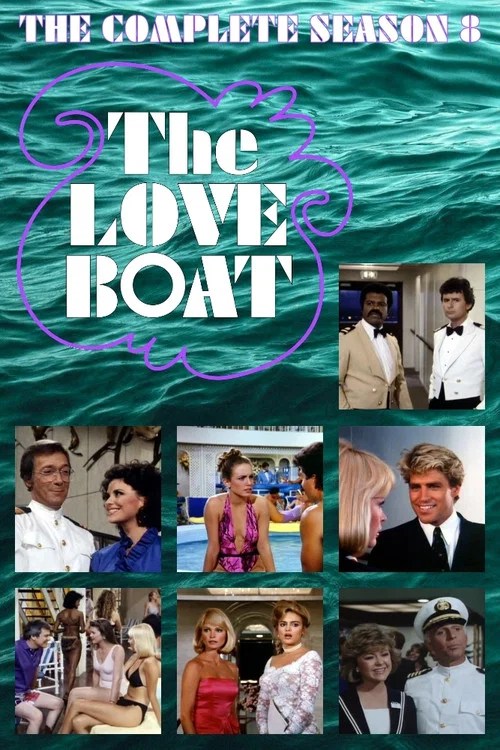
This week, a familiar passenger returns.

Episode 8.8 “Aerobic April/The Wager/Story of the Century”

(Dir by Ted Lange, originally aired on November 3rd, 1984)

April Lopez (Charo) is back!

After appearing at least once during each of the The Love Boat‘s first six seasons, Charo was absent during the seventh season.  She finally returns in this week’s episode, which sees April being hired as the ship’s aerobics instructor.

And that’s fine, I guess.  Charo brings a lot of energy to the role, as she did in her previous appearances on The Love Boat.  That said, it feels a bit like everyone is just going through the motions this time.  Previous April stories featured her looking for love, trying to make it as a performer, or helping to raise a family.  This episode basically just features her chasing around the members of the crew and demanding that they exercise.  She does leave the ship with a passenger (played by Gordon Jump) but it’s hard not to feel that the relationship won’t last.  We’ve seen April fall in love many times but she’s always single whenever she returns to the ship.

While April is forcing the crew to exercise, wastrel Brandon Summerville (Ben Murphy) bets his wealthy brother, Clayborn (Charles Siebert), a million dollars that Clayborn will fall in love during the cruise.  And Clayborn does fall in love!  But it turns out that Brandon actually hired Anne Loring (Mary Kate McGeehan) to seduce his brother so that Brandon could win the bet.  Anne really does fall in love with Clayborn and she confesses everything to him.  Clayborn doesn’t care.  He thinks that Anne showed good business sense and now he’s more in love with her than ever.

Finally, journalist Harold Fleming (Ralph Bellamy) is convinced that passenger Sarah Webster (Dorothy McGuire) is actually the long-missing Amelia Earhart.  Sarah insists that she’s not.  Eventually, Harold and Sarah fall in love and agree to disagree.

This was a bit of a silly episode.  None of the stories carried much weight but Ralph Bellamy and Dorothy McGuire were both charming, two old pros giving it their best.  Otherwise, this was a pleasant but fairly forgettable cruise.  Not even Charo could liven things up.

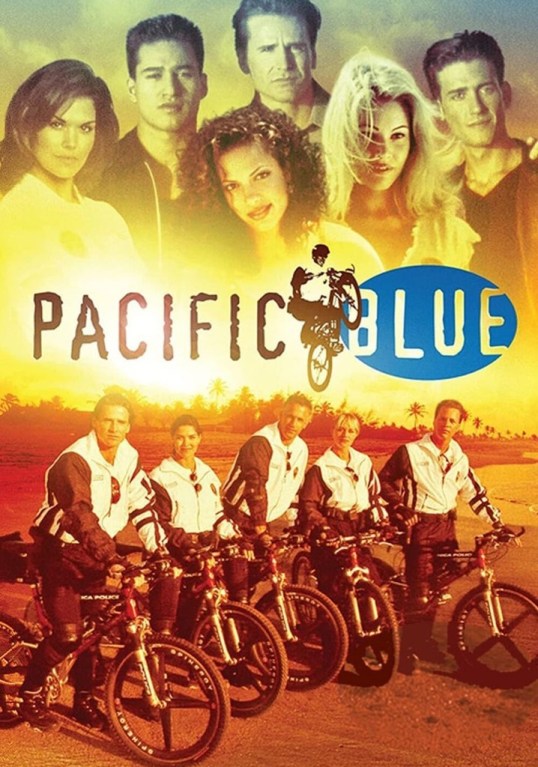
Late Night Retro Television Review: Pacific Blue 4.16 “Juvies”


Welcome to Late Night Retro Television Reviews, a feature where we review some of our favorite and least favorite shows of the past! On Tuesdays, I will be reviewing Pacific Blue, a cop show that aired from 1996 to 2000 on the USA Network!  It’s currently streaming everywhere, though I’m watching it on Tubi.

This week, Pacific Blue embraces the melodrama.

Episode 4.16 “Juvies”

(Dir by Jim Davidson, originally aired on February 28th, 1999)

Crazed narcotics officer Perry Marcus (Roger Floyd) is back!

This time, he’s forcing a group of juvenile delinquents to set up the most dangerous drug dealers on the beach. After Adrian (David Scott Lago) and Maurice (a very young Aldis Hodge) convince a dealer to step out of his limo, Marcus guns the man down and then has Maurice plant a gun. Marcus loves to kill drug dealers, but he’s also willing to kill cops who object to his methods.

Jamie is shocked to see her little sister, Jennie (Crystal Celeste Grant), running with Adrian’s gang. Jennie hasn’t seen Jamie since they were in the foster care system together and Jamie shot their abusive stepfather. Jamie wants to save Jennie from the gang life, but she also has to deal with Internal Affairs officer Susan Jessup (Holly Gagnier). Jessup, an insane nymphomaniac who used to date T.C., threatens to reveal that Jamie shot her stepfather unless Jamie helps her build a corruption case against Chris Kelly. Jessup is still in love with T.C. and wants to get his wife in trouble. Jessup is also sleeping with Perry Marcus and warns him that Jamie is threatening to expose all of his extralegal methods.

Got all that?

This episode of Pacific Blue made even less sense than usual, but it was entertaining because Roger Floyd and Holly Gagnier both went totally over the top in their performances. They understood the assignment and left not a single piece of scenery unchewed. While the regular cast is busy trying to look tough while wearing bicycle shorts, Floyd and Gagnier are totally embracing the melodrama, and it’s exactly the approach that this silly episode needed. The end of the episode suggests that Marcus and Susan are going to be recurring villains. I certainly hope so!

One final note: keep an eye out for Greg Grunberg, who shows up as the lawyer who gets the juvie gang out of jail.

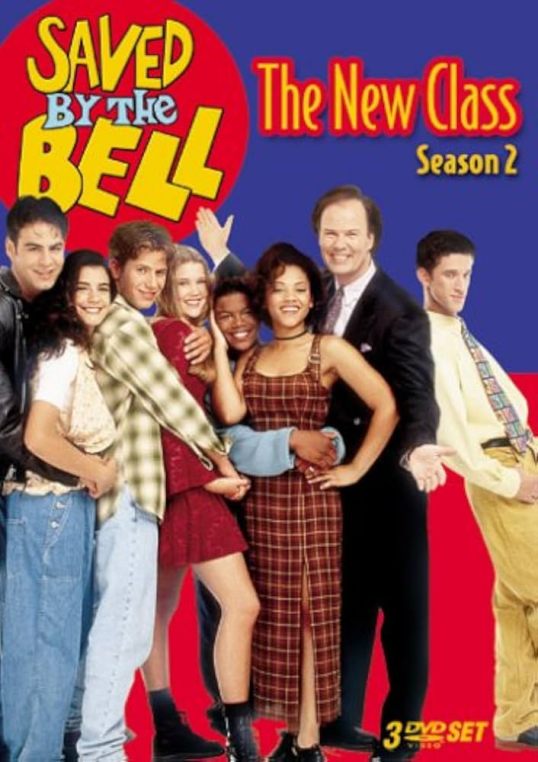
Retro Television Review: Saved By The Bell: The New Class 2.15 “A Perfect Lindsay”


Welcome to Retro Television Reviews, a feature where we review some of our favorite and least favorite shows of the past!  On Tuesdays, I will be reviewing Saved By The Bell: The New Class, which ran on NBC from 1993 to 2o00.  The show is currently on Prime.

This week, while everyone is dancing, Lindsay is starving.

Episode 2.15 “A Perfect Lindsay”

(Dir by Don Barnhart, originally aired on October 29th, 1994)

TV’s “hottest show,” Club Jam, will be holding a dance contest at the school!

Brian asks Rachel to be his partner and is overjoyed when she says yes.  (As I watched this episode, I had to remind myself that it was supposed to be taking place before the country club episodes, which explained why Rachel and Brian were not dating.)  However, when Rachel sees that Megan is going to be dancing with some guy named Kent (Adam Bonfiant), she says that she and Brian don’t have a hope of winning.

Oh, don’t worry, Rachel.  Brian has a plan!  Brian tells Kent that the way to win the contest is to offer Belding a bribe.  Because Kent is apparently an idiot, he does just that.  Mr. Belding gives Kent detention and Megan dumps Kent as her dance partner.  Fortunately, Bobby needs a partner.  Unfortunately, shortly after asking him to be her partner, Megan discovers that Bobby can’t dance.

Meanwhile, Screech shows up at the Max and demonstrates his dance moves.  It’s extremely cringey but the audience goes nuts.  Dustin Diamond is so spastic and uncoordinated that the whole thing just feels cruel.  I really wanted to step into time machine so I could travel to 1994 and shout, “They’re not laughing with you!”

Lindsay, meanwhile, fears that she’s fat.  When Megan and Rachel mention that the camera adds 40 pounds, Lindsay has a fantasy where she dances with Tommy while wearing a fat suit.  The audience laughs but Lindsay not amused.  She skips a meal, which leads to both Tommy and Rachel theorizing that she has anorexia.  When Tommy says that the dance contest isn’t worth risking her health, Linday dumps Tommy as her partner and instead teams up with Kent.

During the dance contest, Lindsay suddenly starts to feel faint.  She has to go to classroom to rest her head on a desk.  Brian gives up his chance to dance with Rachel and goes with Tommy D to help out Lindsay.  Lindsay says she’s fine and then she faints.

With everyone else in the classroom, Megan and Bobby win the dance contest!  It turns out that Megan only needed a week to teach Bobby how to dance like a pro.  After the contest, a smiling Lindsay apologizes to everyone.  Bobby nods and says, “Go eat something.”  Lindsay happily trots off to do just that….

,,,,which is actually not how anorexia works at all.  I mean, I appreciate the fact that the show was trying to warn its viewers about eating disorders but suggesting that anorexia can be cured by simply telling someone to go eat is really kind of irresponsible.  This episode focuses on Lindsay not eating while ignoring why she stopped in the first place.  Including a fantasy sequence where the audience laughs at Lindsay wearing a fat suit probably did more to promote anorexia than Bobby saying, “Go eat something” did to prevent it.

Oh well.  At least Lindsay didn’t sing I’m So Excited.

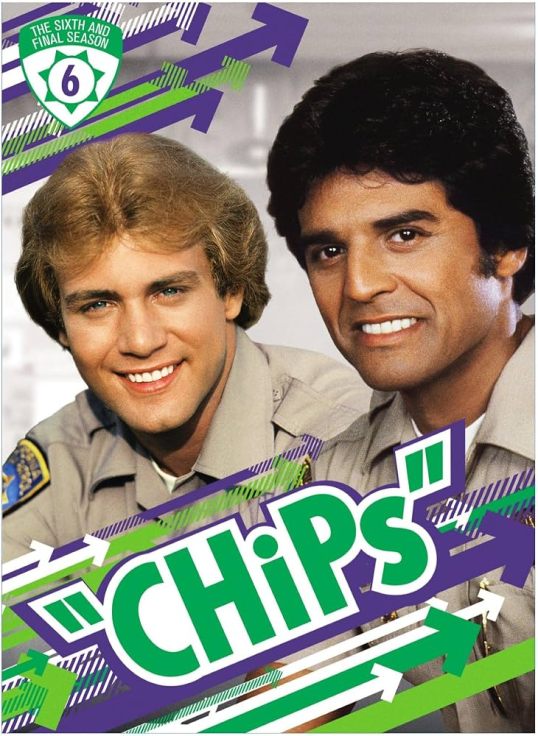
Late Night Retro Television Review: CHiPs 6.5 “Speedway Fever”


Welcome to Late Night Retro Television Reviews, a feature where we review some of our favorite and least favorite shows of the past!  On Mondays, I will be reviewing CHiPs, which ran on NBC from 1977 to 1983.  The entire show is currently streaming on Prime!

This week, we meet the future of the Highway Patrol.

Episode 6.5 “Speedway Fever”

(Dir by Chuck Bail, originally aired on November 7th, 1982)

This week, we meet Bobby’s younger brother, Bruce Nelson (Bruce Penhall). Bruce is both a world motorcycle speedway champion and a student at the Highway Patrol Academy. He hopes soon to be riding a motorcycle in the name of the law, just like Bobby and Ponch.

Unfortunately, Bruce has a hard time following orders. He likes to show off when he’s riding his motorcycle. He’s a good driver and a good shooter, but he’s struggling at the Academy. And when things start to get too tough for him, he decides to walk away from it. It’s an impulsive decision that he regrets. Can Ponch and Bobby talk the head of the Academy into giving Bruce a second chance? Of course they can! Ponch and Bobby can do anything.

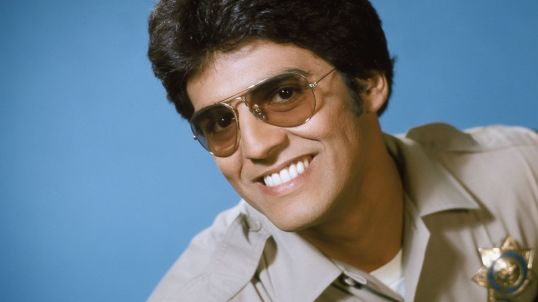
Bruce Penhall was a real-life speedway champion. The footage of Bruce Nelson winning his race is actually taken from one of Penhall’s actual races. Judging from this episode, Penhall was a likable, if somewhat stiff, actor. In fact, watching this episode, I couldn’t help but notice that Bruce Penhall had better chemistry with Erik Estrada than Tom Reilly did. One gets the feeling that the purpose of this episode was to introduce Penhall as a potential replacement for Reilly. If nothing else, Penhall brought a good deal of earnest energy to his performance and provided quite a contrast to Tom Reilly’s rather spacey acting style.

This episode wasn’t entirely taken up with scenes of Penhall racing. There were two storylines. The more annoying one featured three 16-year-old girls (one of whom was played by Moon Unit Zappa) who would hitchhike and then use a water pistol to rob whoever picked them up. The girls introduced themselves as being from the Valley and spent the entire episode saying stuff like “For sure!” and “Gag me with a spoon!” (I’m not kidding; they said that more than once.) Frank Zappa’s “Valley Girl” played on the soundtrack whenever the girls showed up. It was kind of embarrassing all around. Between this episode, the Moloch episode, and the UFO episode, this season appears to have found CHiPs desperately struggling to stay culturally relevant.

As for the other storyline, it featured two motorcycle-riding thieves who were robbing couriers on the highway. One of the thieves was Bruce’s best friend, Ray (Robert Romanus). What a coincidence! Romanus, of course, played Mike Damone in Fast Times at Ridgemont High, which was probably still in theaters when this episode aired. He gives pretty much the same performance here that he gave in Amy Heckerling’s film. In the end, this episode left you wondering just how Mike Damone eventually ended up going so bad.

The episode ends with Bruce not only winning the world speedway championship but also returning to the Academy. It looks like the Highway Patrol is getting some new blood, and not a minute too soon!