Lisa’s Oscar Predictions for November!


oscar trailer kitties

Have you heard the news?  Apparently, Steve Jobs is shaping up to the be one of the biggest box office bombs of all time!  Over this past weekend, it went from playing in 2,000 theaters to playing in 424.

Myself, I have to wonder why anyone thought Steve Jobs was going to be a huge financial success in the first place.  Isn’t this the third Steve Jobs biopic to be released in as many years?  None of them have made in money.  It may be time for people of a certain age and certain economic class to admit that not everyone is as fascinated by Steve Jobs as they are.  I haven’t seen Steve Jobs yet so I better get out to a theater this week or else I’ll have to see it in a dollar theater and I always seem to have a bad experience at those places.  In the mean time, be sure to check out Leonard’s review!

Anyway, with Steve Jobs crashing and burning, I’m dropping it from my list of Oscar predictions.  Sorry, Steve Jobs.  Sorry, Danny Boyle and Kate Winslet.  Don’t worry, Michael Fassbender — you’re still on my list.

Anyway, here are my Oscar predictions for November.  Be sure to also check out my predictions for January, February, March, April, May, June, July, August, September, and October!

The_Martian_film_poster

Best Picture

Bridge of Spies

Brooklyn

Carol

The Danish Girl

Joy

Love & Mercy

The Martian

The Revenant 

Room

Spotlight

Best Director

Lenny Abrahamson for Room

Todd Haynes for Carol

Alejandro G. Inarritu for The Revenant

Thomas McCarthy for Spotlight

Ridley Scott for The Martian

Best Actor

Matt Damon in The Martin

Johnny Depp in Black Mass

Leonardo DiCaprio in The Revenant

Michael Fassbender in Steve Jobs

Eddie Redmayne in The Danish Girl

Best Actress

Cate Blanchett in Carol

Brie Larson in Room

Jennifer Lawrence in Joy

Carey Mulligan in Suffragette

Saiorse Ronan in Brooklyn

Best Supporting Actor

Paul Dano in Love & Mercy

Robert De Niro in Joy

Benicio Del Toro in Sicario

Idris Elba in Beasts of No Nation

Mark Rylance in Bridge of Spies

Best Supporting Actress

Joan Allen in Room

Elizabeth Banks in Love & Mercy

Jane Fonda in Youth

Rooney Mara in Carol

Alicia Vikander in The Danish Girl

mara_blanchett_carol

Here Are The Winners of The 2015 Hollywood Film Awards, Whatever The Hell Those Are.


The_Martian_film_poster

Oh my God, y’all — the Hollywood Film Awards were held on Sunday and a bunch of potential Oscar contenders were honored!  Which all leads to one very important question:

What the Hell are the Hollywood Film Awards?

As I pondered that question, I realized that I had vague memories of sitting through the Hollywood Film Awards last year.  The ceremony was broadcast on CBS and it was distinguished from other awards shows in that there were no nominees.  Instead, only the winners were announced.  It was so amazingly dull and I can remember watching it and thinking, “Awards season has finally jumped the shark.”

(And this was even before Sasha Stone and Jeff Wells had their annual breakdowns…)

Anyway, the Hollywood Film Awards for 2015 were given out on Sunday and I’m assuming they weren’t televised.  (I was busy watching A Student’s Obsession anyway…)  You can find the winners below.  For the most part, it’s a pretty boring list (and why give out awards in November?) but it does allow us an early glimpse into some of the films and performers that are contending for Oscar gold.

Here’s the list.  Along with a gif of a kitty showing just how excited he is over Awards Season…

YAY! AWARDS! I'M SO EXCITED..I'M SO EXCITING...I'M SO ... SCARED!"

“YAY! AWARDS! I’M SO EXCITED..I’M SO EXCITED… I’M SO … SCARED!”

Career Achievement Award presented to Robert De Niro by David O. Russell.

Producer Award presented to Ridley Scott (“The Martian) by Russell Crowe.

Director Award presented to Tom Hooper (“The Danish Girl”) by Amber Heard.

Actor Award presented to Will Smith (“Concussion”) by Jamie Foxx.

Actress Award presented to Carey Mulligan (“Suffragette”) by Jake Gyllenhaal.

Supporting Actor Award presented to Benicio Del Toro (“Sicario”) by Reese Witherspoon.

Supporting Actress Award presented to Jane Fonda (“Youth”) by Laura Dern.

Breakout Actor Award presented to Joel Edgerton (“Black Mass”) by Johnny Depp, Dakota Johnson.

Breakout Actress Award presented to Alicia Vikander (“The Danish Girl”) by Armie Hammer.

New Hollywood Award presented to Saoirse Ronan (“Brooklyn”) by Ryan Gosling.

Ensemble Award presented to “The Hateful Eight” by Quentin Tarantino.

Breakout Ensemble Award presented to “Straight Outta Compton” by Ice Cube.

Comedy Award presented to Amy Schumer (“Trainwreck”) by Selena Gomez.

Breakthrough Director Award presented to Adam McKay (“The Big Short”) by Steve Carell.

Screenwriter Award presented to Tom McCarthy, Josh Singer (“Spotlight”) by Mark Ruffalo.

Blockbuster Award presented to “Furious 7” by Kurt Russell.

Song Award presented to “Furious 7” (“See You Again”) by Vin Diesel.

Animation Award presented to Pete Docter (“Inside Out”) by Amy Poehler.

Cinematography Award presented to Janusz Kaminski (“Bridge of Spies”).

Composer Award presented to Alexandre Desplat (“The Danish Girl,” “Suffragette”).

Documentary Award presented to Asif Kapadia (“Amy”).

Editor Award presented to David Rosenbloom (“Black Mass”).

Visual Effects Award presented to Tim Alexander (“Jurassic World”).

Sound Award presented to Gary Rydstrom (“Bridge of Spies”).

Costume Design Award presented to Sandy Powell (“Cinderella”).

Make-Up and Hair Styling Award presented to Lesley Vanderwalt (“Mad Max: Fury Road”).

Production Design Award presented to Colin Gibson (“Mad Max: Fury Road“).

"Yawn. These awards are boring..."

“Yawn. These awards are predictable and boring.  You disappoint me…”

A Few Thoughts On The Martian…


The_Martian_film_poster

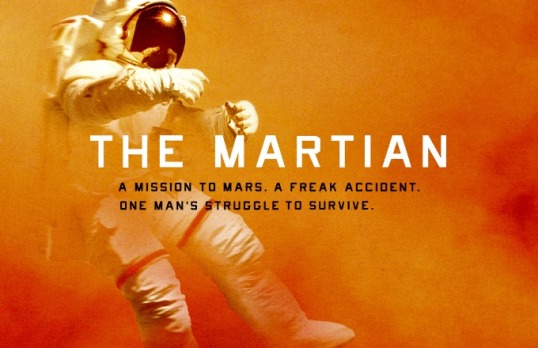
I’m a few weeks late in reviewing The Martian, largely because I was on vacation when it was first released.  When I finally did see The Martian, it was at the wonderful UEC theater in beautiful Russellville, Arkansas.  As opposed to my experience when I saw The Green Inferno, the theater was packed and, throughout the entire movie, it was obvious that the audience absolutely loved what they were seeing on screen.  They laughed, they applauded, and it was obvious they had a great time with the movie.

And why not?  After the commercial failures of both The Counselor and Exodus, it’s obvious that director Ridley Scott was not going to take any chances with The Martian.  There’s not a single scene that is not specifically calculated to keep the viewer as complacently satisfied as possible.  Telling the story of how botanist Mark Whatney (Matt Damon) gets stranded on Mars and must figure out a way to survive until he can be rescued, The Martian is such a positive film that its total lack of cynicism almost gets overwhelming.  The end result is a film that is a 100 times better than Exodus but never as interesting or challenging as The Counselor.

In fact, as I watched The Martian, I kept thinking about another film about a man stranded out in the middle of nowhere, Into The Wild.  The main character in Into The Wild spent his isolation contemplating the meaning of life and finally reaching some sort of spiritual peace before starving to death.  Mark Whatney, on the other hand, spends his isolation recording a snarky video diary and listening to classic disco songs.

And, before anyone gets offended or accuses me of being a film snob, allow me to say that I enjoyed The Martian.  I thought it was an entertaining movie and I especially loved the soundtrack.  But, at the same time, one can enjoy The Martian and still acknowledge that there’s not much going on underneath the crowd-pleasing surface.

Looking back on the film, I find it remarkable just how little we learn about Mark Whatney.  We hear at one point that he has a family but we really don’t learn anything about his life on Earth.  In a way, he’s a bit like Robert Redford in All Is Lost.  Except, of course, Mark Whatney talks.  He talks a lot.  Fortunately, Mark is played by Matt Damon, who is a great talker.  If I think that The Martian is entertaining but also a bit overrated (and I do), I also think that Matt Damon deserves every bit of praise that he’s received for his performance.

Interestingly enough, The Martian not only features Matt Damon’s best performance but it also features Jessica Chastain’s worst.  Chastain plays Commander Lewis, who is in charge of the Mars expedition and who take it upon herself to bring Mark Whatney home.  And really, this should have been a great role for Jessica Chastain but, for the first time that I can remember, she gives a performance that just isn’t that interesting.

Then again, there’s really only one interesting character in the entire film and that’s Mark Whatney  (though I would have liked to learn more about the astronomer played by Donald Glover, who gives an appealingly eccentric performance).  This is Matt Damon’s film and it’s best moments are the ones where Mark deals with life on Mars.  In fact, there’s a part of me that almost wishes the majority of the NASA scenes had been left on the editing room floor and almost the entire movie had just been Matt Damon on Mars.

In the end, I did enjoy The Martian.  It’s a good film that some people are insisting was great.  (Of course, a lot of that is because it’s trendy to be into science.  Fortunately, Mark Whatney isn’t as much of a pompous blowhard as Neil DeGrasse Tyson, nor is he as creepy as Bill Nye.)  Some people are even suggesting that The Martian is the new Oscar front runner and maybe it is.  (After all, it’s not like there was much going on below the surface of Birdman either.)

But for me, in the years to come, the main thing I’ll remember about The Martian is the totally kickass soundtrack…


The Martian Arrives With An All-Star Cast


TheMartian

Ridley Scott, master filmmaker with a talent for visual storytelling, has had an uneven string of films the last decade or so. His last couple of films have either been underwhelming or divisive. One thing that hasn’t failed him has been the look of his films which continue to be great.

His last film, Exodus: Gods and Kings, wasn’t what one would call a great film. One could even say it wasn’t even a decent one. Hopefully, his latest will break his prolonged streak of misses and get him back on the hit column. This film is the adaptation of the Andy Weir best-selling novel, The Martian.

Ridley Scott has Drew Goddard’s screenplay adaptation to work with not to mention a star-studded cast led by Matt Damon and Jessica Chastain (the inclusion of the latter already makes this a must-see for one of the site’s writers). From the first released trailer we seem to be getting a film that brings back memories of Apollo 13 and Cast Away.

The Martian is set for a November 25, 2015 release date.

Quick Review: Exodus: Gods & Kings (dir. by Ridley Scott)


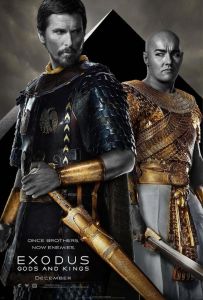
Exodus-Gods-and-Kings-Poster-Bale-and-EdgertonOkay, let’s face it.

After Cecil B. DeMille’s 1956 epic “The Ten Commandments”, it’s pretty hard to come up with another story about Moses that comes as close to it. I’ll admit I have a personal love for 1998’s The Prince of Egypt.  Ridley Scott makes a great attempt in his new film “Exodus: Gods and Kings”, but it comes off feeling like the result of having one person relay a story to you through 3 other individuals. By the time the story reaches you, it’s no longer the same tale.

This is a hard review to write with regards to avoid spilling details.

Exodus follows the story of brothers Moses (Christian Bale – The Dark Knight Trilogy) and Ramses (Joel Edgerton – The Thing, The Great Gatsby), sons to the great Pharaoh of Egypt (John Turturro). Both brothers are seasoned warriors, but with the passing of Pharaoh, a truth is brought to light that forces Moses into exile. During his time away, he finds God and makes it his mission to free his people. Ramses refuses to listen to reason, and some drastic measures are taken to help convince him.

That sounds great on the surface, but it’s the execution that’s flawed. And this is Ridley Scott of all people. I loved Kingdom of Heaven and moderately enjoyed Robin Hood, but I just didn’t completely feel like I was invested in this film.

Biblical tales are tricky. Stick too close to the source material and you can have a heavy-handed story that says what it should, but could bore some audiences. Take too many liberties, and you can have audiences excited, but leave some upset or shocked at what’s presented (like with Scorsese’s The Last Temptation of Christ). Here, the liberties are taken to a place where most of the movie doesn’t even require Moses to be in it. The argument could be made that the other films did this too – that the acts occurred with Moses as a harbinger of what was to come. Exodus makes it more of a difference of opinion on how to handle Ramses. Moses elects for a more battle hardened strategy – let the people fight for themselves. This left me wondering where they found the time and freedom away from the Egyptian Soldiers to learn what they did.

On the flip side of the coin, God decides to handle it Their own way. This leaves our Moses in a position where he’s at odds with the Almighty, a sharp contrast to the Moses that followed the Word to the letter. To an audience that can’t help but make comparisons, it’s way off, though it’s supported by the theme that one shouldn’t say things just to placate others and that they should follow what they believe. What came before basically said..”Okay, I don’t know what your plan is, but you’ve shown me your wonders, I believe in you and you’ll guide me right.” Exodus says..”Okay, you’ve got a plan I’m not too cool with, so…uh…just give me a chance to save / warn the people before your wrath comes down.”

There were four writers on board for Exodus. Both Adam Cooper and Bill Collage worked together on Brett Ratner’s “Tower Heist” and Jeffrey Caine is known for “The Constant Gardner” and “Goldeneye”. Steven Zallian (Moneyball, The Girl With the Dragon Tattoo, American Gangster) was the fourth. I’m thinking with all those fingers in the pie, the movie was bound to go in a different direction. Again, it’s not terrible, just different.

The casting for Exodus is okay. The strongest performances go to both Bale and Edgerton, and I’ll state here that I had more fun watching Edgerton on screen than I did with Bale. I haven’t seen him play the villain like this since The Guardians of Ga’Hoole and he does a decent job here. Bale does well, but it’s like watching Batman again. Not saying he’s typecast because of it, but seeing Christian Bale yell is almost expected in a movie these days. Reunited with her Aliens director, Sigourney Weaver has about 10 to 15 minutes total of screen time in the film, and Ben Kingsley might have the same amount. Aaron Paul spends most of his time making that stare he does when he see something incredible. There’s not a lot for any of these actors to chew on, but they try their best with it.  Both Indira Varma (Game of Thrones) and Ewan Bremer (Jack the Giant Slayer, Trainspotting) are on hand as Ramses’ advisors. They don’t really count too much in all this.

Visually, the effects for the Plagues are very good. I honestly think those segments were the best in the entire film. The rest, I’m not so sure. The Red Sea sequence, when it happens, it done in such a way that the mysticism is just about sucked out of it. I’m sitting there hoping for a big reveal and found myself asking if that was it. Perhaps it was the angle where I was sitting or the theatre I saw it in, but it wasn’t as clear as it could be. It seemed like I was watching a 3D version of the film (I went for the regular one). The fight sequences were also done very well, many of which were similar to Ridley’s Robin Hood or Gladiator. Also note that at 154 minutes, it’s a long film. I pulled my iPod Nano out of my pocket twice to check the time.

As for the kid factor, I would say that teens and older can see this. There’s quite a bit of violence early on, along with some bloodshed, but nothing too extreme. In terms of sexual situations, there really aren’t any.

I think overall, my expectations for what this could be were larger than the final product. Had I never known of any film prior to this, Exodus would have more of an impact for me. As it stands, I’d watch it again, but probably when it hits Cable.

Trailer: Exodus: Gods and Kings (Final)


Exodus Banner

Ridley Scott has been hit-or-miss (mostly misses) of late and response to the trailers and news about Exodus: Gods and Kings doesn’t seem to be helping.

Yet, despite all the indifference to Scott’s upcoming Biblical epic (and calls of whitewashing) I am quite intrigued about this take on the Book of Exodus. Will it have the pageantry of Demille’s The Ten Commandments (both of them)? Or will it be another CGI-overload? Or will it be a piece of entertaining pulp a la Gladiator? I guess we will find out this Holiday season.

Exodus: Gods and Kings is set for a December 12, 2014 release date.

Trailer: Exodus: Gods and Kings (Official)


Exodus Banner

Ridley Scott has been instrumental in bringing back the sword-and-sandal epic when he unleashed Gladiator to audiences everywhere in the summer of 2000. Since then he has made many films which range from black comedy to historical epic right up to horror and a war film.

With Exodus: God and Kings, Scott returns to the sword-and-sandal epic but now with a heavy dose of the Biblical as he adapts the Old Testament Book of Exodus. A film working on the same scope and scale as Cecil B. Demille The Ten Commandments released in 1956, this latest adaptation of Moses, Ramses and the exodus of the Israelites from Egypt looks to put the epic back in 2014.

With each passing year, more and more of Scott’s films have taken on the unavoidable sheen of the CGI as his visuals attempt to recreate time and places of Earth’s past. For some, Scott’s been more miss than hit with the last couple films yet they all remain visual feasts and Exodus: Gods and Kings looks to continue that streak. Whether the film will be good storytelling will be something that’s still to be decided.

Exodus: Gods and Kings is set for a December 12, 2014 release date.

Let’s Play Catch Up With The Trailer for Exodus: Gods and Kings


Here’s another trailer that came out while I was busy Embracing the Melodrama.  I’m not really sure how I feel about Exodus: Gods and Kings.  The trailer looks good and epic and all that but what’s the deal with all of the”sword and sandal” films coming out this year?  Not only do we have two Hercules films, Pompeii, and the 300 sequel, we also had Noah and now we’ve got Exodus coming out.  Last year, we saw a spate of end-of-the-world films.  This year, we’re seeing films that are meant take place at the beginning of the world.  Anything to avoid dealing with present, I suppose.

Incidentally, I still say that Ridley Scott’s previous film, The Counselor, was far better than most people realize.

Film Review: Someone To Watch Over Me (dir by Ridley Scott)


Last night, my BFF and I were searching for a movie to watch.  As we were looking through what was available on demand, we came across a film from 1987 called Someone To Watch Over Me.  The film was described as being a romantic thriller about a “happily married cop who becomes infatuated with the wealthy and beautiful woman he’s been assigned to protect from a death threat.”

“This sounds like it might be good,” I said, “Plus, it’s directed by Ridley Scott and he’s good … sometimes.”

“Who’s in it?” my BFF asked.

“Tom Berenger.”

“Who?”

“He was in Inception.”

“Who did he play in Inception?  Was he the rich guy or was he one of Leonardo DiCaprio’s friends?”

“Neither.  He was just kinda there.”

Anyway, whether it was the Inception-connection or the fact that my friend was tired of listening to me obsessively read the description of every single film that was available on demand, we decided to watch Someone To Watch Over Me.

And you know what?

It’s no Inception but Someone To Watch Over Me is still a fairly entertaining little film.

In Someone To Watch Over Me, a youngish Tom Berenger plays Mike Keegan, a New York cop who has just been promoted to detective.  When wealthy socialite Claire Gregory (Mimi Rogers) witnesses a murder, Mike is among the detective assigned to guard her.  Though the resolutely blue-collar Mike and the sophisticated Claire come from different backgrounds, they both find themselves attracted to one another.  For Mike, Claire represents the type of lifestyle that he can only dream of.  For Claire, Mike is the opposite of the pretentious and vapid men that usually surround her.  Unfortunately, a sinister gangster is attempting to kill Claire and Mike’s down-to-earth wife Ellie (played by Lorraine Bracco) will kill him if she ever finds out.

Now, let’s make one thing clear.  The plot of Someone To Watch Over Me is just as predictable as you think it is.  As you read my summary, you probably guessed every single thing that happens in the film.  There are no surprises and there are no twists.  Everything in the movie plays out exactly the way that you’re expecting it too.

And yet, as predictable as it was, I still enjoyed Someone To Watch Over Me.  One reason was because of a scene in which Ellie reacts to Mike’s self-serving apologies by punching him in the face.  Lorraine Bracco — who is great in this film — throws that punch as if the fate of every woman on the planet’s self-respect depended upon it.  When she strikes out at her husband, it changes the film.  It’s no longer a film about romance.  Instead, it becomes a film about adultery.  Even while the film itself tries to play up the romance between Claire and Mike, both Ellie and Lorraine Bracco refuse to be pushed to the side.  After sitting through so many films that feature women nobly stepping aside so that their significant other can find happiness with his “true love,” it was refreshing to see Ellie call Mike out on his sanctimonious bullshit.

Secondly, I enjoyed Someone To Watch Over Me because it truly is a time capsule of the time when it was made.  I was born in 1985, which perhaps is why I’ve always been fascinated by 80s films.  If nothing else, they give me a chance to see what was going on in the rest of the world while I was busy learning how to walk.  Someone To Watch Over Me was released in 1987 and everything about it — from the fashion to the celebration of wealth and glamour to Ridley Scott’s artfully composed shots of New York at night to the vaguely cokey vibe given off by some members of the supporting cast to the landline phones — made me feel as if I had stepped into my own personal time machine.

So, in the end, Someone To Watch Over Me is not exactly a great or even a memorable film.  However, I’m still glad we watched it.


Defending the Counselor


The_Counselor_Poster

(Spoilers Below)

The Counselor was one of the most anticipated films of 2013.  After all, it was based on a screenplay by the Pulitzer-prize winning novelist Cormac McCarthy and it was directed by Ridley Scott.  Its cast included such stars as Michael Fassbender, Javier Bardem, and Brad Pitt.  The film’s two trailers promised a return to the thematic territory that the Coen Brothers explored in their Oscar-winning adaptation of McCarthy’s No Country For Old Men.

And yet, when The Counselor was released in October, the reviews were scathing and audience response was reportedly terrible.  Writing for Salon, film “critic” Andrew O’Hehir suggested that The Counselor was not only the worst film of 2013 but the worst film of all time.

And you know what?

For not the first time, Andrew O’Hehir was wrong.  The Counselor is not the worst film of 2013.  Instead, it’s one of the best.  It’s a film that will be studied long after more acclaimed films have been forgotten.

Why is The Counselor so hated?

It’s not an easy film to love.  In fact, the film is rather brave about alienating its audience and refusing to allow for the crowd-pleasing moments that viewers have come to expect from even the most prestigious of films.

In order to truly defend the Counselor, it’s necessary to know the plot of The Counselor.  Needless to say, everything that follows constitutes a huge spoiler so, if you’re one of those types, feel free to stop reading now.

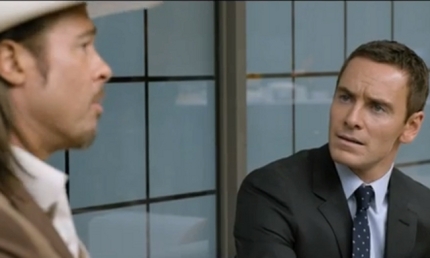
Brad-Pitt-Michael-Fassbender-Counselor

Okay, still here?  Here’s a condensed version of what happens in The Counselor:

The Counselor (Michael Fassbender) is an honest lawyer in El Paso who has never broken the law and is engaged to marry the beautiful and saintly Laura (Penelope Cruz).  For reasons that are never explicitly stated (but, as I’ll explain below, are obvious to anyone who is willing to look for the clues), The Counselor agrees to help his clients Westray (Brad Pitt) and Reiner (Javier Bardem) smuggle a huge shipment of cocaine into the U.S. from Mexico.  However, Reiner’s girlfriend Malkina (Cameron Diaz) steals the drugs and frames the Counselor for the theft.  As a result, Reiner ends up getting executed by the Mexican cartel, Westray is beheaded on the streets of London, and the Counselor ends up hiding out in Juarez, Mexico, sobbing as he looks at a DVD copy of a cartel-produced snuff film that features Laura being murdered.  The end.

Yeah, it’s not exactly a happy film.  And yet, it’s a film that sticks with you, a portrait of a shadowy underworld that is fueled solely by greed, paranoia, and masculine posturing.  Ridley Scott makes good use of the South Texas landscape and the talented cast creates a memorable gallery of rouges.

And yet, The Counselor is getting some of the worst reviews of the year.  What’s especially interesting is that the things that so many critic cite as flaws are actually the film’s greatest strengths.

The Counselor

Consider the following common criticisms:

1) The film features some of the most overly articulate drug deals of all time.

This is the most frequent complaint that I’ve come across concerning The Counselor and there is some validity to it.  The Counselor is a very talky film.  The film’s first hour is pretty much made up of The Counselor having three conversations, all about the same thing and all reaching the same conclusion.  Cormac McCarthy’s dialogue is, perhaps not surprisingly, rather portentous and florid.  The Counselor does ask the audience to accept a world where even the head of Mexico’s most powerful cartel is given to going off on long philosophical digressions.  The Counselor is one of those films where nearly every line seems to have a double meaning.

That said, I think that those who attacking the film’s dialogue are missing the point.  This is not meant to be a naturalistic film.  Instead, it’s a heavily stylized B-film that uses its sordid story as a metaphor for dealing with deeper issues of greed, masculinity, and the changing mores of American culture.  Much as every line of dialogue has a deeper meaning, so does every pulpy plot twist.  It takes a while to adjust to McCarthy’s dialogue but, ultimately, that dialogue serves to remind us that the film has a lot more on its mind than just telling the story about a drug deal gone bad.  The combination of overly articulate dialogue with primitive violence and desires encourages us to look under the film’s surface.

2) The film’s plot is predictable.

This may be true but I think that’s actually McCarthy’s point.  From the start of the film, the Counselor is continually warned that things could potentially go very wrong.  Despite these warnings, the Counselor still gets involved in Reiner’s drug and, through a combination of hubris and fate, he loses everything that he loved.

The Counselor’s downfall is not meant to be a surprise.  Instead, McCarthy’s point is that the consequences of our actions are usually obvious but we, as human beings, chose to live in denial about just how little control we actually have over our own fate.

TheCounselor-Diaz-Cheetah-Tat

3) Ridley Scott’s direction is stylish but ultimately empty.

This argument goes that, while Scott manages to capture some gorgeous images of the Texas/Mexico border, those images ultimately don’t add up to much.  The idea goes back to a charge that is frequently leveled against Ridley Scott as a director, that he’s all style and technique with little substance.  (Interestingly enough, this is the same charge that is often made against the Coen Brothers.)

In the past, I’ve been critical of Ridley Scott.  (For proof, check out my reviews of Robin Hood and Gladiator.)  However, that being said, I think that, with The Counselor, Scott does a good job of visually interpreting the concepts at the heart of McCarthy’s script.  My mom was from South Texas and I’ve spent enough time down there to understand just how perfectly Ridley Scott manages to capture the combination of beauty and harshness that one finds along the border between Texas and Mexico.  In Scott’s hands, the emptiness of the Texas landscape serves as a perfect parallel for the emptiness of the lives of the majority of the film’s characters.

Speaking of which…

4) The motivations of the Counselor remain a mystery.

Why does the Counselor get involved in the drug deal in the first place?  Many of the film’s critics have complained that the Counselor’s motivations remains a mystery and therefore make it impossible for audiences to sympathize with the character.

Nothing could be further from the truth.

What these critics are failing to realize is that the Counselor’s motives are obvious every time that he appears on-screen.  The audience has to be willing to look for them.  The audience has to be willing to think and that, of course, is asking quite a bit of some viewers.
The-Counselor

While the Counselor hints that his reason for getting involved with the drug deal is so that he can make enough money to provide a good life for Laura, his actual motivations are far more selfish.  One need only see the Counselor in his perfectly pressed suits or in his sleek but sterile home to understand exactly who the Counselor is.  He is a character who has made his living by defending those who break the law but who has never had the courage to actually flaunt the rules himself.   He is a man who lives in a self-constructed prison of ennui and associating with Reiner and Westray gives him a chance to escape from his conventional existence.   He is a character who spends his day profiting from the crimes of others but, because he can go home to his beautiful home and his beautiful fiancee, assumes that he’s somehow detached from the consequences of the actions of his associates.

The Counselor starts the film as an unemotional, blank-faced cipher, a man whose entire identity is based on his job title.  (Indeed, we never learn once learn or hear the character’s actual name.)  The only time that he shows even a hint of human depth or emotion is when he’s with Laura.  He’s a man who, in many ways, is dead on the inside.  It’s only after he gets involved with Reiner and Westray that the Counselor starts to show any signs of life until, by the end of the film, he literally cannot control his emotions.   The Counselor frees himself from his stifling and conventional existence at the cost of everything and everybody that he loves.  In his pursuit of freedom, he simply moves from one self-imposed prison to another.

5) Particularly in its portrayal of Malkina, there is a strong streak of misogyny running through the film.

This is a point that I’ve seen made by several critics and it’s one that bothers me as both a feminist and as a female who happens to love genre films.  Just because a film features a misogynistic character does that therefore make the film itself misogynistic?

The majority of those who claim that The Counselor is anti-female often point to the character of Malkina.  As played by Cameron Diaz, Malkina is a hyper sexual sociopath who manipulates and destroys everyone else in the film.  Even though he’s obsessed with her, Reiner also claims to fear her and he has several conversations with the Counselor in which he cites her as proof that women cannot be trusted.

However, just because Reiner says this, that doesn’t necessarily mean that the film agrees.  In fact, as should be obvious to anyone who is actually willing to pay attention to the film, Reiner is portrayed as being a fool who, ultimately, is just as delusional as the Counselor.  Reiner, Wainstray, and the Counselor all exist in a hyper masculine environment.  For all of their posturing and macho talk, it’s also obvious that none of them are capable of truly dealing with women.  Wainstray can only bring himself to acknowledge them as potential sexual partners while the Counselor both idealizes Laura and uses her happiness as an excuse to pursue his own criminal enterprises.  Reiner, meanwhile, is both attracted to and terrified of Malkina.

the-counselor-ferrari-diaz

In perhaps the film’s most infamous scene, Malkina removes her panties and then grinds against the windshield of a Ferrari while Reiner watches from inside the car.  Some have argued that, with this scene, the filmmakers are equating Malkina’s sexuality with evil.  I, however, would argue that this scene shows that Malkina — alone of all the film’s major characters — understands the fact that all of the men in her life are essentially boys who are either incapable of or unwilling to grow up.  Malkina uses her sexuality not because she’s evil but because she’s intelligent enough to use every weapon at her disposal to make sure that she will be one of the few characters to survive to the movie’s conclusion.  By the end of the film, it’s obvious that Malkina is both the strongest and the most intelligent character in the film.

There’s an interesting scene towards the end of the film in which the Counselor, who is hiding out in Juarez, stumbles across a group of protesters who are holding pictures of young women who have either been killed on or vanished from the streets of Juarez.  Since 1993, over 4000 women have been murdered in Juarez.  The majority of those murders are still unsolved, with many blaming the Spanish tradition of machismo.  The feeling of many is that “good” girls stay home while “bad” girls get jobs in the city and are often  murdered as a result.  And, since the victims shouldn’t have been pursuing a life outside of domestic servitude in the first place, why waste the time trying to win them any sort of justice?  For the past decade, brave activists have put themselves in danger by daring to demand justice for the dead of Juarez.  When the Counselor stumbles across their rally, it’s a brief moment in which the real world and the cinematic landscape come together.

It’s also a scene that serves to remind us that the film’s characters are living in a hyper masculine world, one that embraces the concept of machismo without understanding or caring about the consequences of that destructive  culture.  The Counselor’s horrified reaction to the rally is the reaction of a man who has finally been forced to confront the evil of which he is now a permanent part.

6) The film’s ending is depressing.

Complaining about Cormac McCarthy writing a depressing ending is a bit like getting upset at a cat for purring.  It’s what McCarthy does and anyone with any knowledge of his work has no right to be shocked that the film ends on a note of hopelessness.  Much as with No Country For Old Men, The Counselor ends the only way that it can.  It may not be a happy ending but it is, at least, an honest ending.

The Counselor may not be an easy film to like but it’s definitely a film that deserves better than to be dismissed as the worst of 2013.

Counselor-Bardem2