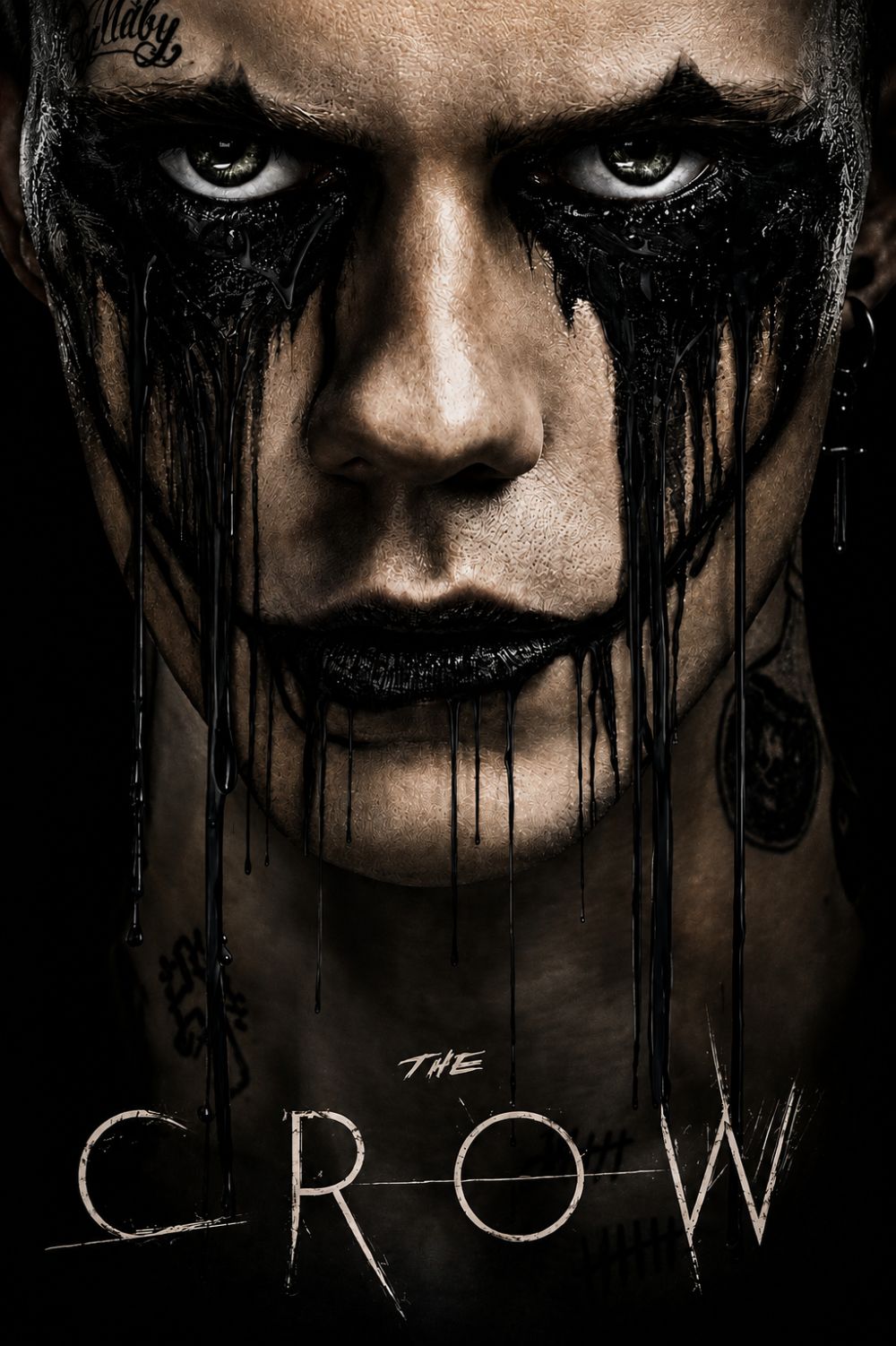
Review: The Crow (dir. by Rupert Sanders)


“When someone you love dies, you will know emptiness… You will never forget, and you will never, ever forgive.” — Eric Draven

The Crow is a remake built around a reasonable idea—returning to James O’Barr’s graphic novel rather than photocopying Alex Proyas’s 1994 cult film—but Rupert Sanders’s 2024 version never discovers why this material matters beyond its tattoos, bruises, and black eyeliner. It arrived dead on arrival with critics and audiences alike, not simply because it was measured against a beloved predecessor, but because it offered so little of its own identity. The film is dour without being haunting, romantic without generating much chemistry, and violent without making its revenge feel especially cathartic.

Sanders’s film stars Bill Skarsgård as Eric and musician FKA twigs as Shelly, lovers brutally murdered after stumbling too close to the secrets of criminal impresario Vincent Roeg, played with sleek, vaguely supernatural menace by Danny Huston. Eric awakens in a liminal afterlife, is granted a path back to the living world, and returns armed with supernatural endurance and a need to avenge Shelly. The fundamentals are familiar: love is destroyed by violence, death cannot sever that love, and vengeance becomes a darkly mythic expression of grief. Yet The Crow continually confuses the bare outline of that story with the emotional force that made it endure.

The production’s troubled history almost feels encoded in the finished movie. A new Crow film spent more than a decade trapped in development hell, cycling through different studios, directors, screenplays, and potential stars. Relativity Pictures held the project for years; Sony eventually became involved; various versions had names such as Bradley Cooper, Luke Evans, Jack Huston, and Jason Momoa attached at different stages, alongside filmmakers including Stephen Norrington, F. Javier Gutiérrez, and Corin Hardy. The project repeatedly stalled under changing rights arrangements, creative disagreements, and the general instability that often turns a familiar title into an endlessly recycled pitch deck. A fresh production effort was announced in 2020, but the Sanders version did not actually begin shooting until 2022 in Prague.wikipedia+2

That prolonged development makes the final product feel less like a passionately argued reinterpretation than a compromise that survived by default. Every era of the project seems to have left a trace. There is a prestige-minded desire to make Eric and Shelly psychologically damaged and contemporary. There is a franchise-minded urge to expand the supernatural mythology. There is also a music-video impulse toward body art, club scenes, fashionable misery, and sharply composed violence. None of these ingredients are automatically bad. But Sanders never finds a way to make them cohere into a world as tactile, strange, or emotionally immediate as the one Alex Proyas created in 1994.

The suspicion around the remake was understandable from the beginning. Most people involved in the original film have either expressed mixed feelings or outright disapproval about revisiting the property. The 1994 The Crow is not merely another cult favorite awaiting intellectual-property renewal. It is permanently linked to Brandon Lee, who was killed in an on-set shooting accident during production. The completed film became a memorial as much as a comic-book adaptation, and its emotional impact cannot be separated from the knowledge of what happened to its star.

The strongest objections have come from James O’Barr and Alex Proyas. O’Barr, writer and artist of the original graphic novel, has questioned the need for a remake for years, once calling the idea of remaking a then-15-year-old film “kind of ridiculous.” Proyas, meanwhile, has been even more direct. He argued that The Crow was not simply a movie because Brandon Lee died making it, and that the 1994 film should remain part of Lee’s legacy. When the new film’s reception turned hostile, Proyas called it a “cynical cash-grab” and mocked the lack of financial reward supposedly waiting at the end of it. The tone of those comments may strike some people as harsh, but the remake never makes a convincing counterargument.

To be fair, Sanders does not ask Skarsgård to imitate Lee. That is one of the film’s better instincts. Skarsgård’s Eric is physically slight, heavily tattooed, insecure, and visibly wrecked by the life he has lived before death. He is not a supernatural rock-and-roll avenger in the same way Lee was. Instead, he resembles a wounded, emotionally arrested young man forced into a mythic role he does not fully understand. It is a potentially interesting angle, especially for a story about grief turning someone into a monster.

But the screenplay, credited to Zach Baylin and William Josef Schneider, does not give that approach enough shape. Eric is vulnerable, then dreamy, then brutally efficient, then mournful again, depending on what the scene needs. The film treats emotional instability as character depth, but those are not the same thing. A character can be fractured, contradictory, and self-destructive while still possessing a recognizable inner life. Skarsgård does what he can with the material, bringing real physical discomfort and sadness to Eric, yet the movie seems more interested in how his pain photographs than what it reveals.

The same issue affects Shelly. FKA twigs has an immediately magnetic screen presence, and the film wisely spends much more time on Eric and Shelly before their deaths than the 1994 film did. In theory, that should be a major advantage. If the viewer sees the relationship develop, then Eric’s return from death should carry more emotional force. Instead, the early sections feel like a montage stretched into an act: rehab, drugs, late-night intimacy, mutual confessions, music, dancing, sex, and shared trauma. The movie repeatedly tells us that these two are soulmates, but it rarely gives them the specific dialogue, humor, disagreements, or small gestures that make a romance believable.

Their relationship becomes a collection of poses. The camera understands that they are beautiful, sad, damaged people; the script never quite proves they are deeply connected individuals. That is fatal in The Crow, because Eric’s entire mission depends on the audience accepting that Shelly is not merely the woman he loved but the person who made life worth returning to. The movie substitutes trauma bonding for intimacy, assuming that shared wounds automatically equal love.

Huston’s Vincent Roeg is similarly underwritten. Roeg is introduced as an elegant criminal figure with occult powers, someone who preys on young women and sustains himself through a diabolical bargain. It is a significant departure from the relatively grounded gangland evil of the 1994 film, and it could have opened the door to something genuinely grotesque. Instead, the mythology grows more complicated while the villain becomes less interesting. Roeg speaks in the familiar language of immortal bad guys who are convinced that cruelty makes them profound. He lacks the memorable theatricality of the original film’s antagonists and the unnerving specificity that a character like this needs.

The remake’s expanded mythology is perhaps its biggest miscalculation. O’Barr’s original premise has always been powerful because it is so direct: a murdered man is allowed to return, guided by a crow, because love has been violently cut short. It is gothic, but it is simple. Sanders’s version adds a network of afterlife rules, soul exchanges, purgatorial spaces, and supernatural transactions. The more the film explains, the less mythical it feels. Grief does not become larger through lore. In this case, it becomes bogged down in mechanics.

Visually, Sanders has moments of genuine flair. The film’s strongest sequence comes late, when Eric tears through an opera house during a lavish performance. White costumes are stained red, the setting’s exaggerated grandeur clashes with Eric’s raw violence, and the action is staged with a sense of grotesque spectacle. It is the one scene where Sanders’s instincts as a visual stylist really connect with the source material’s heightened pulp melodrama. The sequence is bloody, theatrical, and almost absurd enough to become exhilarating.

Yet it arrives too late and feels disconnected from much of what precedes it. For large stretches, The Crow is subdued to the point of visual anonymity. Its darkness looks digitally smoothed rather than dreamlike. Its city does not have a personality. Its criminal underworld feels interchangeable with any number of slick streaming thrillers. The 1994 film’s Detroit-like nightmare city was impossible to separate from its mood: rain-slicked streets, scorched interiors, industrial rot, grotesque criminals, and an unforgettable goth-grunge soundtrack all fused into one singular aesthetic. Sanders’s movie has better technology but far less texture.

The soundtrack, in particular, exposes the remake’s uncertainty. The 1994 Crow became inseparable from its music, which drew together alternative rock, industrial, metal, and goth influences into an extension of Eric’s world. The 2024 version clearly wants to speak to a newer generation through contemporary pop, electronic, and melancholy club sensibilities. There is nothing wrong with modernizing the musical language, but the choices do not build a coherent subculture around the film. They play as individual selections rather than part of a living, breathing atmosphere.

This is why the remake’s negative response was so predictable. It was not doomed merely because it remade a movie people love, nor because any new Eric Draven would inevitably be compared to Brandon Lee. A remake could have justified itself by drawing more deeply from O’Barr’s graphic novel, creating a truly different visual language, or foregrounding the grief at the center of the story with more honesty. Sanders instead gives us a film that is constantly signaling pain while remaining emotionally remote.

There are fragments of a better Crow scattered throughout: Skarsgård’s willingness to play Eric as fragile and unglamorous, twigs’s spectral intensity, and the opera-house massacre’s gleefully excessive bloodshed. But those fragments never combine into a whole. The Crow has the eyeliner, the tattoos, the wounds, and the bird, but it never finds the heart beneath them. The original film endured because it turned loss into a piece of feverish gothic pulp. This remake turns loss into an aesthetic, and that is not nearly enough.
Review: Frank Herbert’s Children of Dune


“To know the future is to be trapped by it.” — Leto II Atreides

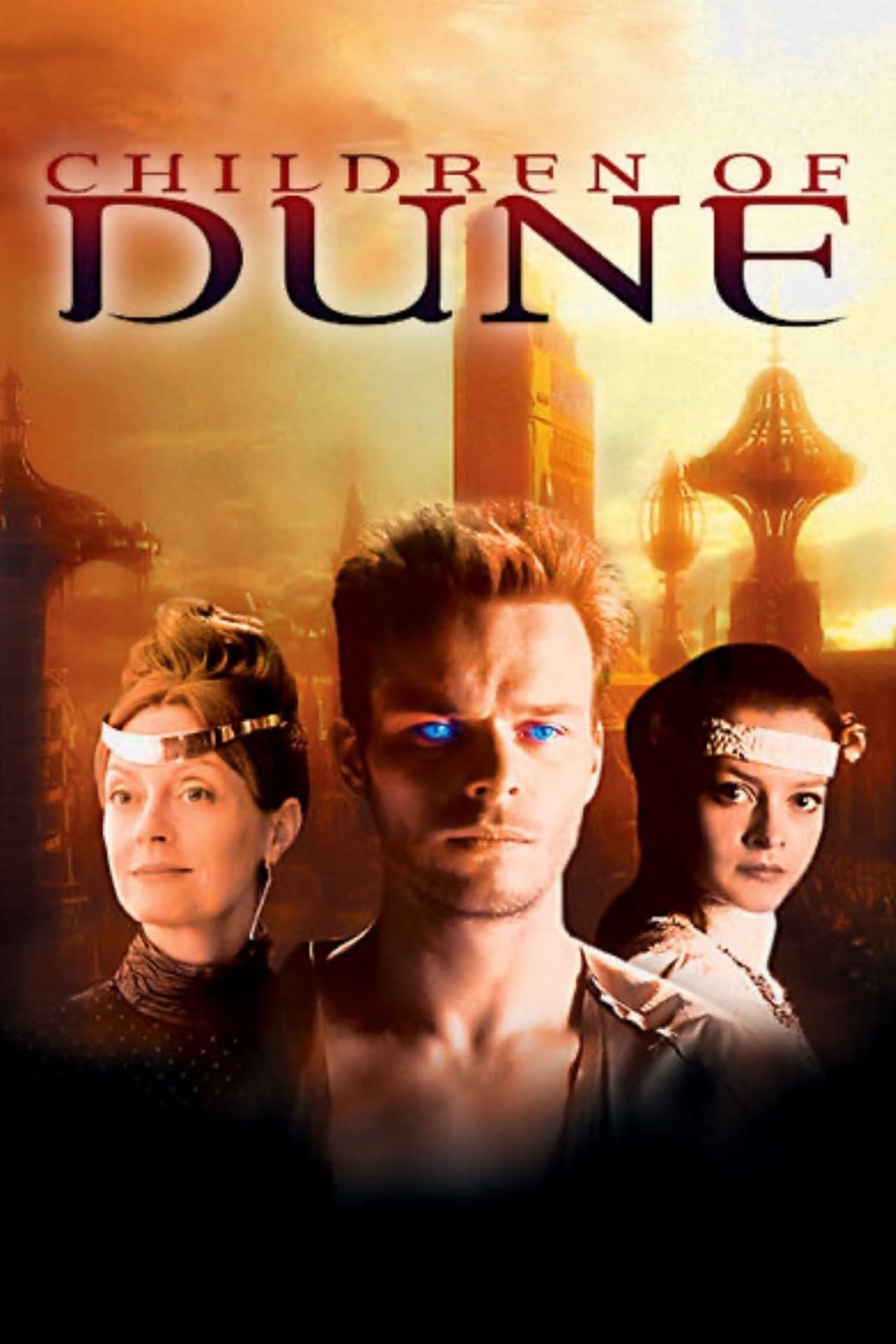
Children of Dune is one of those sci-fi miniseries that feels a little rough around the edges, but still manages to hit with real ambition, atmosphere, and a lot more emotional weight than its modest TV budget might suggest. It is based on Frank Herbert’s Dune Messiah and Children of Dune, aired on the Sci Fi Channel in 2003 as a three-part miniseries, and it serves as a continuation of the 2000 Frank Herbert’s Dune adaptation.

What makes this version stand out is that it doesn’t just try to retell a story about desert politics and giant worms. It digs into legacy, prophecy, religious fanaticism, and the terrifying cost of being treated like a messiah. That sounds heavy, and it is, but the miniseries keeps moving with enough drama, betrayals, and strange mythic energy that it rarely feels static.

The opening section works especially well because it immediately reminds you that Paul Atreides’ victory was never a clean one. By the time the story gets going, his empire is already rotting from the inside, and the series makes a strong case that power on Arrakis is always poisoned by something, whether it is politics, faith, or the sand itself. The shift from Paul’s once-legendary rise to the unraveling of the world around his children gives the story a tragic tone that fits Herbert’s universe perfectly.

A big reason the miniseries works is that it understands Dune is not really about flashy action, even though it has some. It is about ideas, and this adaptation is willing to spend time on them. The show’s best material comes from the way it frames religion as both weapon and trap, especially once the myth of Muad’Dib starts consuming the people who worshiped him. That theme gives the whole thing a haunted feeling, like everyone is living inside a prophecy they do not fully understand.

The cast does a lot of heavy lifting, too. Alec Newman brings a wounded, exhausted quality to Paul that fits the role well, and his scenes carry real sadness because he feels like a man who has seen too far and cannot unsee it. Jessica Brooks, James McAvoy, and Julie Cox all help ground the family drama, while Susan Sarandon brings a cold intensity that gives the political side of the story some bite. Even when the dialogue gets stiff, the actors usually sell the material better than the script itself does.

One of the most interesting choices in Children of Dune is how it treats the twins, Leto II and Ghanima, as more than just plot devices. Their importance is obvious from the beginning, but the series gradually builds them into the real center of gravity. That works because the story is partly about inheritance, and these kids are inheriting not just a throne, but a nightmare of destiny, expectation, and manipulation. The series knows that the most dangerous thing in this universe is not a blade or a bomb, but a future someone insists is already written.

The production design is another area where the miniseries earns a lot of goodwill. It has that early-2000s TV look, sure, and some effects are clearly limited by the era, but the sets, costumes, and overall visual imagination give it a strong sense of place. Arrakis feels harsh and ceremonial at the same time, which is exactly what it should feel like. The costumes also help sell the political divide between factions, making the whole thing look more like a living empire than a generic sci-fi stage.

There are moments where the miniseries feels very theatrical, almost to a fault. Characters occasionally deliver lines with so much seriousness that the show risks sounding like it is declaring its themes instead of dramatizing them. That said, this is also part of the charm. Children of Dune is not embarrassed by its own scale or its own weirdness, and that confidence helps it pull off material that could easily have collapsed under a more self-conscious approach.

The pacing is mostly solid across the three parts, though it does have the usual miniseries issue of compressing a very large story into a limited runtime. Because it covers most of Dune Messiah in the first installment and then adapts Children of Dune in the later parts, some transitions feel abrupt and some developments move faster than they probably should. Still, the adaptation largely keeps its focus, and it is impressive how much story it packs in without turning into total chaos.

If there is a weakness here, it is that the miniseries can sometimes feel like it is working harder to explain the mythology than to make you feel it. Herbert’s world is notoriously dense, and this version does not always smooth that out for viewers who are not already familiar with the books. A newcomer could easily feel like they have been dropped into the middle of a dynastic collapse with very little hand-holding. But for a follow-up to Frank Herbert’s Dune, that density is more of a feature than a bug.

The best compliment I can give Children of Dune is that it respects the seriousness of its material without becoming completely lifeless. It has the courage to be grand, strange, and a little mournful all at once. Even when the execution is uneven, the miniseries understands that the heart of this saga is not a simple battle for power. It is the burden of seeing the future and realizing it may be worse than the present.

As a sequel, it improves on the sense of scale and emotional consequence from the earlier adaptation. It feels less like an introduction to a universe and more like the tragic fallout of one. That makes it a more satisfying watch for viewers who want Dune to feel like an epic family tragedy instead of just a sand-covered political thriller. The fact that it does this on TV, with all the limitations that implies, makes the achievement even more impressive.

In the end, Children of Dune is a flawed but memorable miniseries that succeeds because it commits to its own strange seriousness. It may not be sleek, and it may not always be easy to follow, but it has ideas, mood, and a genuine sense of doom that suits Herbert’s universe. For fans of the books, it is one of the more interesting screen adaptations because it is willing to lean into the philosophical and tragic side of the saga rather than sanding it down into something safer. For everyone else, it is still a fascinating piece of early-2000s sci-fi television that swings bigger than most shows of its era.

Review: Frank Herbert’s Dune


“Mercy is a word I no longer understand.” — Paul Atreides

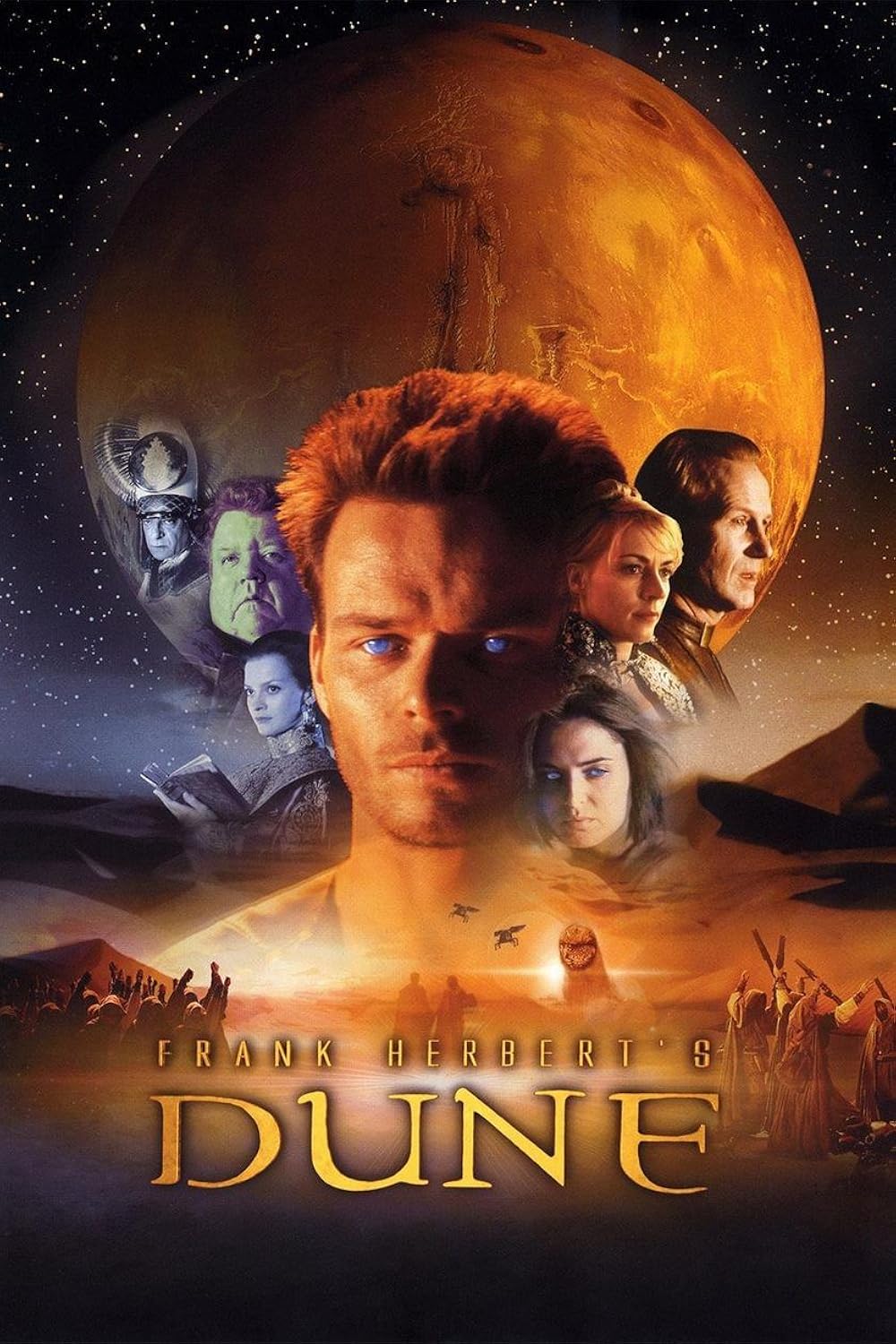
Frank Herbert’s Dune, the 2000 Syfy Channel miniseries, stands as a scrappy yet heartfelt attempt to tame the untamable beast that is Frank Herbert’s sprawling sci-fi epic Dune. Clocking in at nearly four hours across three parts, it doesn’t pretend to be the cinematic knockout punch of Denis Villeneuve’s Dune: Part One and Dune: Part Two, nor does it dive headfirst into the psychedelic rabbit hole of David Lynch’s notoriously bonkers 1984 film. Instead, it carves out its own lane as the faithful workhorse adaptation—the one that prioritizes stuffing in every major plot thread, faction rivalry, and philosophical nugget from the novel without apology. That dogged completeness earns it major points from book purists, even if the early-2000s TV production values leave it looking like a glorious mess next to today’s blockbuster standards. It’s the version you revisit when you want Dune’s full political chessboard laid bare, rough edges and all.

Right from the opening narration, you sense this miniseries is playing a different game. While Villeneuve hooks you with those thunderous sandworm roars and vast desert expanses that make Arrakis feel like a character unto itself, and Lynch blasts you with industrial-gothic sets and nose-plug close-ups that scream “weird,” the Syfy take eases in with expository voiceover and sweeping shots of Caladan’s misty nobility. The budget screams made-for-TV: thopters wobble like cheap models on strings, sandworms shimmer with dated CGI that wouldn’t pass muster even in 2000, and interstellar travel feels more like a quick fade than a hyperspace spectacle. Yet there’s charm in the earnestness—the ornate costumes drip with imperial excess, from House Atreides’ regal blues to the Harkonnens’ sickly pallor, capturing Herbert’s baroque universe better than Lynch’s fever-dream excess or Villeneuve’s minimalist severity. It’s alien and opulent without trying to reinvent the wheel visually, letting the story’s inherent strangeness do the heavy lifting.

What truly sets this adaptation apart is its unhurried commitment to Dune’s core as a tale of interstellar realpolitik, not just laser swords and monster chases. The miniseries luxuriates in the scheming: extended scenes of Bene Gesserit whispering manipulations across generations, Emperor Shaddam IV plotting from his golden throne, and the Spacing Guild’s monopoly stranglehold get room to breathe. Lynch crammed this into a frantic 137 minutes, resorting to on-screen crawls and “the spice must flow” explainers that border on parody, while Villeneuve elegantly implies much of it through mood and subtext, trimming for pace. Here, the trap closes deliberately—Duke Leto’s honorable doom unfolds with all its tragic inevitability, Paul’s Fremen transformation simmers with ecological and messianic tension, and the Baron’s depravity feels like a rotting empire’s symptom. It’s talkier, sure, but that density mirrors the novel’s heady mix of ecology, religion, and colonialism, making the good-vs-evil surface hide a much murkier power grab.

Faithfulness is the miniseries’ superpower, and stacking it against the films drives that home. Lynch’s Dune is a directorial fever dream—brilliant in bursts (those Guild Navigators floating in spice tanks are iconic), but it mangles the timeline, invents “weirding modules” and pain boxes that Herbert never dreamed of, and caps with a cheesy resurrection and empire-toppling finale that feels like fanfic. Villeneuve’s duology is a masterclass in restraint and awe: Part One builds unbearable dread through silence and scale, Part Two unleashes Paul’s holy war turn with chilling clarity, but both demand sequels and sacrifice chunks like Thufir Hawat’s full betrayal arc or the ecological long-view for runtime efficiency. The Syfy version? It hits about 90% of the book’s beats in one self-contained package—Paul drinks the Water of Life, rides the first worm, unites the tribes, all while fleshing out Yueh’s guilt, Gurney’s survival, and Irulan’s expanded role as a scheming narrator who spies on the action. Smart tweaks like inner-monologue voiceovers clarify the mental gymnastics without Lynch’s exposition overload.

The ensemble punches above the production’s weight, delivering performances that ground the sprawl. Alec Newman’s Paul Atreides evolves from callow youth to burdened Kwisatz Haderach with a steely intensity—more seasoned than Kyle MacLachlan’s wide-eyed innocent in Lynch’s film or Timothée Chalamet’s introspective minimalist in Villeneuve’s, but convincingly haunted by prescient visions. William Hurt’s Duke Leto radiates quiet nobility, a paternal rock that Oscar Isaac matches with fiercer charisma but less screen time. Saskia Reeves’ Lady Jessica is a coiled operative, mastering the Voice while Rebecca Ferguson brings feral maternal fire and Francesca Annis floats as an ethereal priestess. Ian McNeice’s Baron Harkonnen oozes grotesque glee, echoing Kenneth McMillan’s scenery-chewing blimp but with slyer malice; Stellan Skarsgård’s version chills as a tactical monster sans the floating fat-suit camp. Chani fares best as Barbora Kodetová’s fierce Fremen equal, outshining Lynch’s rushed Sean Young and edging Zendaya’s mythic close-ups with raw tribe loyalty. Even bit players like Robert Wisdom’s Idaho shine brighter than their film counterparts.

Directorial choices by John Harrison emphasize theatricality over cinema flair, turning court scenes into operatic standoffs that suit Dune’s ritualistic pomp. Princess Irulan’s upgrade—from bookend quotes to active imperial intriguer—adds a vital scheming perspective Lynch ignored and Villeneuve teases for later. The gom jabbar test throbs with intimate terror, Fremen sietches pulse with cultural depth, and the final duel crackles despite modest effects. Pacing lags in spots—the Atreides downfall stretches, subplots like Feyd-Rautha’s gladiatorial intro feel obligatory—but that thoroughness lets overlooked gems like the dinner-table tensions and spice-blow ecology lectures land fully. Brian Tyler’s score swells bombastically, aping Zimmer’s primal dread without the subtlety, yet it propels the saga forward.

Flaws glare under modern scrutiny: effects age like milk (those ornithopters!), editing chops unevenly between threads, and some line deliveries veer stagey next to Villeneuve’s hushed precision or Lynch’s unhinged energy. It lacks the 1984 film’s quotable weirdness (“The sleeper must awaken!”) or the recent epics’ IMAX transcendence, feeling more like a filmed audiobook than immersive event cinema. Still, that scrappiness fits Dune’s prickly soul—ornate yet precarious, cerebral yet visceral. Herbert crafted a warning about heroes and empires; this miniseries trusts you to unpack it, preserving the unsettling texture the smoother films sometimes polish away.

Revisiting after the others clarifies its niche perfectly. Lynch’s Dune is the cult oddity—fractured, visionary, endlessly memeable despite narrative chaos. Villeneuve’s saga is prestige sci-fi at its peak: disciplined, subversive, a slow-burn symphony begging Part Three. The Syfy miniseries? Your completist’s deep cut—comprehensive, unpretentious, ideal for dissecting the guilds, houses, and prophecies on a rainy weekend. Constraints hobble the spectacle, but the ambition to honor Herbert’s labyrinthine blueprint shines through.

Ultimately, Frank Herbert’s Dune miniseries claims no crowns as the ultimate adaptation—that debate rages between Lynch’s deranged heart, Villeneuve’s cool mastery, or the book itself. At around 1150 words, it’s a worthy underdog: earnest, exhaustive, and true to the novel’s tangled genius. Fire it up if you crave Dune’s unfiltered intrigue over heart-pounding visuals. It respects the spice’s full flow, worms and all.