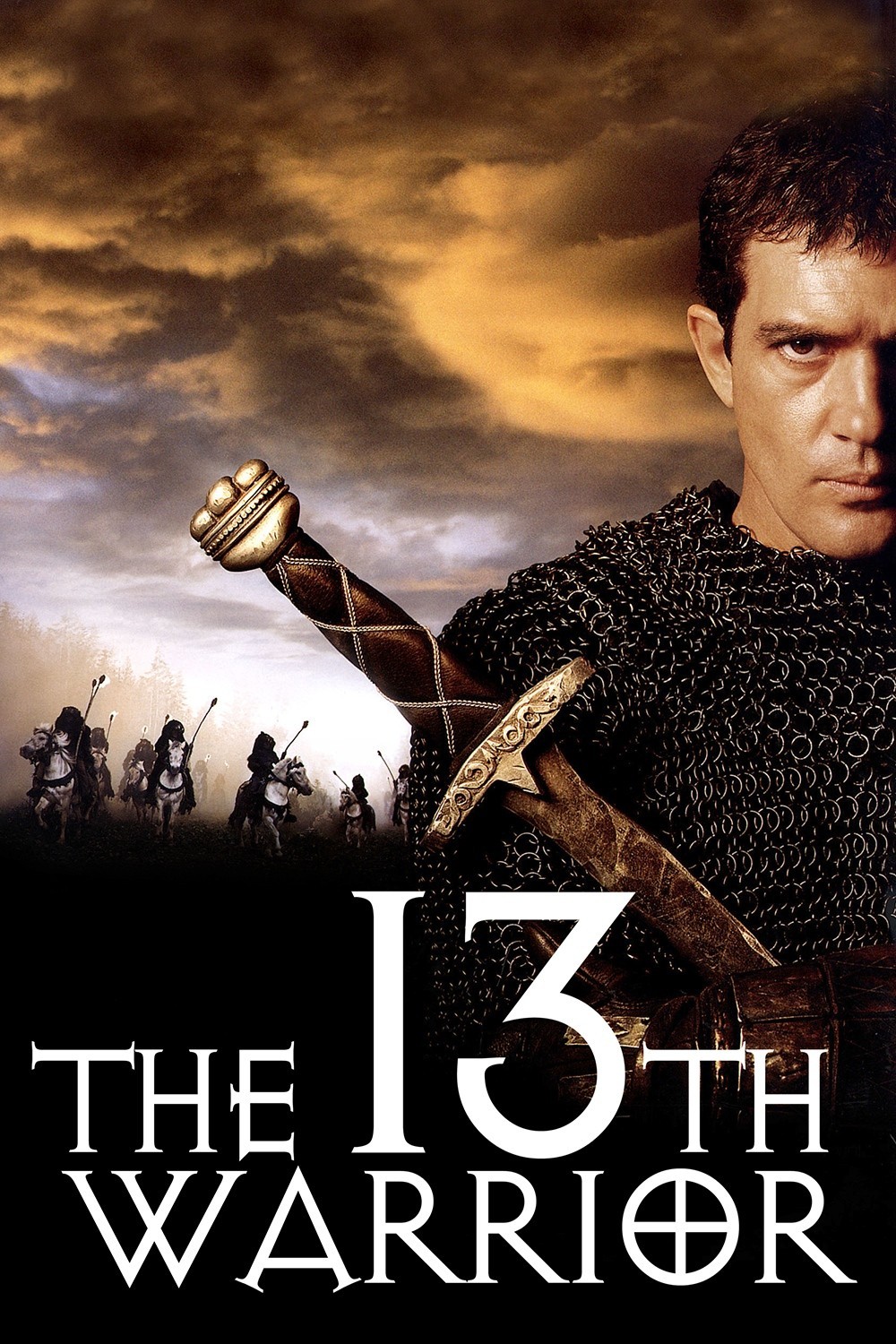
Guilty Pleasure No. 130: The 13th Warrior (dir. by John McTiernan)


“The All-Father wove the skein of your life a long time ago. Go and hide in a hole if you wish, but you won’t live one instant longer. Your fate is fixed. Fear profits a man nothing.” — Herger the Joyous

Few films wear the scars of a difficult production as visibly—and as entertainingly—as John McTiernan’s The 13th Warrior. It is messy, truncated, occasionally incoherent, and visibly caught between two competing creative visions. Yet it also has an atmosphere that many more polished historical adventures lack: wet forests, torchlit halls, thick fog, blackened skies, grim Norse rituals, and a band of warriors who look as though they have spent their entire lives sleeping in armor and drinking themselves toward an early grave. It is not a great film, but it is an undeniably entertaining one—and one of the more fascinating guilty pleasures of the late-1990s blockbuster era.

Loosely adapted from Michael Crichton’s novel Eaters of the Dead, which itself plays with the historical legend of Ahmad ibn Fadlan and folds it into a rough retelling of Beowulf, The 13th Warrior begins with Antonio Banderas as Ahmed ibn Fahdlan. Ahmed is an Arab court poet and diplomat banished from Baghdad after an indiscretion involving a powerful man’s wife. He is sent north as an ambassador, where his refined manners, education, and cultivated worldview put him in immediate contrast with the brutal, loud, heavily armed Norsemen he encounters. The movie gets a surprising amount of mileage out of that culture-clash premise. Ahmed is initially horrified by the Vikings’ hygiene, manners, food, and casual relationship with violence, while the Vikings regard him as an odd, under-equipped foreigner who seems far too elegant to be useful in a fight.

The story kicks into gear when a group of Norse warriors is summoned to aid a distant village terrorized by mysterious attackers known as the Wendol. According to prophecy, thirteen men must go—and the thirteenth cannot be a Northman. Ahmed, despite having no real desire to be involved in this nightmare expedition, becomes the required outsider. From there, the film turns into a lean survival-horror adventure: the warriors travel into an isolated northern settlement where people are being abducted and mutilated by enemies who seem to emerge from the darkness itself. The Wendol wear animal skulls, move through the night like ghosts, and are initially presented less as a human army than as something ancient and supernatural.

That eerie buildup is easily the best thing about The 13th Warrior. McTiernan, the director of Die Hard, Predator, and The Hunt for Red October, knew how to make hostile environments feel dangerous. The village is surrounded by dense woods and oppressive mountains, while the interiors are lit by fire, smoke, and shadows. The film often feels as if it is taking place at the edge of the known world. Even when the plot becomes shaky, the mood holds. There is a genuinely creepy quality to the Wendol’s first attacks, especially when horns sound in the distance and figures descend from the hills in the rain. The movie may never fully sell the mythology behind its villains, but it absolutely sells the fear they inspire.

Banderas is a somewhat unconventional choice for Ahmed, and his casting has always been one of the film’s stranger elements. He brings charisma and physical presence, but the accent situation is obviously all over the place. Still, he makes the character’s gradual transformation satisfying. Ahmed begins as a man who sees himself as superior to these crude northerners, only to discover that their apparent barbarism is paired with courage, loyalty, humor, and a practical intelligence he had underestimated. His evolution into a capable warrior is predictable, but it works because Banderas plays the early discomfort well. The famous moment when Ahmed learns the Norse language simply by listening around the campfire is absurdly accelerated, but it is also one of the movie’s most memorable scenes. It tells the audience, with no subtlety whatsoever, that he has crossed into their world.

The supporting cast gives the film much of its appeal. Vladimir Kulich’s Buliwyf is the quiet center of the group, a noble warrior king whose death is basically foretold from the moment he appears. Kulich has the right imposing, mythic presence for the role, and he makes Buliwyf feel like a living folk hero rather than just another stock Viking chief. Dennis Storhøi, Tony Curran, Richard Bremmer, and the rest of the warriors are not always given much individual development, but they create a convincing sense of companionship. Their banter, drinking, ritualized insults, and battle-ready camaraderie help the group feel like a unit with a history long before Ahmed arrived.

The action is another mixed but memorable part of the experience. McTiernan’s best films are often celebrated for their clarity of geography and movement, but The 13th Warrior is much murkier. Some of that is intentional: fights take place at night, in rain, amid smoke, fire, and chaos. But some of it also feels like a byproduct of an uneven post-production process. The movie is often too dark, too quickly edited, and too vague about what is happening from one beat to the next. Even so, there are flashes of real power. Ahmed forging a sword from a Viking weapon is a solid transformation moment, while the climactic infiltration of the Wendol cave has the pulpy appeal of an old adventure serial filtered through mud, blood, and 1990s studio excess.

The behind-the-scenes drama is arguably just as intriguing as the movie itself. The 13th Warrior became infamous for going significantly over budget and for the creative conflict between McTiernan and the studio. The reported disputes centered on the film’s tone, pacing, and specific scenes, with the studio evidently concerned that McTiernan’s version was too dark, too strange, and too inaccessible for a massive summer release. This was not a minor disagreement over a few trims. It became the kind of production struggle that leaves fingerprints all over the finished film. You can feel the tension between a moody, almost horror-driven historical fantasy and a more conventional action-adventure picture trying to break through the same material.

Michael Crichton, the author of Eaters of the Dead and a major force behind the project, eventually stepped in to oversee reshoots and re-editing. That fact alone makes The 13th Warrior unusually fascinating. It is not every day that the author of the source novel takes such a direct role in reshaping a film after its original director has already completed his work. Crichton reportedly pushed for a more straightforward, audience-friendly version, trimming and restructuring the movie in ways meant to clarify the story and increase its commercial appeal. The result is a film that often feels like two versions grafted together: one a grim, unnerving tale about outsiders confronting an almost prehistoric terror, the other a compressed heroic adventure about a reluctant man discovering his warrior spirit.

That conflict helps explain why the finished movie can feel so abrupt. Characters appear and disappear with little explanation, the Wendol mythology is only partially developed, and the final stretch rushes through material that could have supported a longer, more coherent climax. The film is barely over 100 minutes, yet it sometimes feels as though an entire half-hour of connective tissue vanished somewhere between the shoot and the theatrical cut. This is especially frustrating because there is clearly a richer movie buried inside the existing one. The setting, the central premise, the cultural collision, and the supernatural ambiguity all deserved more room to breathe.

Still, those flaws are part of why The 13th Warrior has endured as a cult favorite. It is easy to imagine a cleaner, more successful version, but it is also difficult to imagine that version being as peculiar or as memorable. The finished film has a strange, bruised personality. It carries the weight of a troubled production, but it also has enough great imagery, strong atmosphere, and old-fashioned adventure momentum to overcome its rough edges. It never reaches the level of McTiernan’s best work, and it is certainly not the definitive cinematic take on Beowulf. But as a cult, guilty-pleasure fantasy adventure, The 13th Warrior delivers more than its reputation might suggest.

Previous Guilty Pleasures

  1. Half-Baked
  2. Save The Last Dance
  3. Every Rose Has Its Thorns
  4. The Jeremy Kyle Show
  5. Invasion USA
  6. The Golden Child
  7. Final Destination 2
  8. Paparazzi
  9. The Principal
  10. The Substitute
  11. Terror In The Family
  12. Pandorum
  13. Lambada
  14. Fear
  15. Cocktail
  16. Keep Off The Grass
  17. Girls, Girls, Girls
  18. Class
  19. Tart
  20. King Kong vs. Godzilla
  21. Hawk the Slayer
  22. Battle Beyond the Stars
  23. Meridian
  24. Walk of Shame
  25. From Justin To Kelly
  26. Project Greenlight
  27. Sex Decoy: Love Stings
  28. Swimfan
  29. On the Line
  30. Wolfen
  31. Hail Caesar!
  32. It’s So Cold In The D
  33. In the Mix
  34. Healed By Grace
  35. Valley of the Dolls
  36. The Legend of Billie Jean
  37. Death Wish
  38. Shipping Wars
  39. Ghost Whisperer
  40. Parking Wars
  41. The Dead Are After Me
  42. Harper’s Island
  43. The Resurrection of Gavin Stone
  44. Paranormal State
  45. Utopia
  46. Bar Rescue
  47. The Powers of Matthew Star
  48. Spiker
  49. Heavenly Bodies
  50. Maid in Manhattan
  51. Rage and Honor
  52. Saved By The Bell 3. 21 “No Hope With Dope”
  53. Happy Gilmore
  54. Solarbabies
  55. The Dawn of Correction
  56. Once You Understand
  57. The Voyeurs 
  58. Robot Jox
  59. Teen Wolf
  60. The Running Man
  61. Double Dragon
  62. Backtrack
  63. Julie and Jack
  64. Karate Warrior
  65. Invaders From Mars
  66. Cloverfield
  67. Aerobicide 
  68. Blood Harvest
  69. Shocking Dark
  70. Face The Truth
  71. Submerged
  72. The Canyons
  73. Days of Thunder
  74. Van Helsing
  75. The Night Comes for Us
  76. Code of Silence
  77. Captain Ron
  78. Armageddon
  79. Kate’s Secret
  80. Point Break
  81. The Replacements
  82. The Shadow
  83. Meteor
  84. Last Action Hero
  85. Attack of the Killer Tomatoes
  86. The Horror at 37,000 Feet
  87. The ‘Burbs
  88. Lifeforce
  89. Highschool of the Dead
  90. Ice Station Zebra
  91. No One Lives
  92. Brewster’s Millions
  93. Porky’s
  94. Revenge of the Nerds
  95. The Delta Force
  96. The Hidden
  97. Roller Boogie
  98. Raw Deal
  99. Death Merchant Series
  100. Ski Patrol
  101. The Executioner Series
  102. The Destroyer Series
  103. Private Teacher
  104. The Parker Series
  105. Ramba
  106. The Troubles of Janice
  107. Ironwood
  108. Interspecies Reviewers
  109. SST — Death Flight
  110. Undercover Brother
  111. Out for Justice
  112. Food Wars!
  113. Cherry
  114. Death Race
  115. The Beast Within
  116. Girl Series
  117. Gone in 60 Seconds
  118. Swordfish
  119. Marked For Death
  120. The Internship
  121. The Angry Red Planet
  122. 2012
  123. Old School
  124. No Escape
  125. In Death Series
  126. Alligator
  127. Little Annie Fanny
  128. Wicked Wanda
  129. Congo

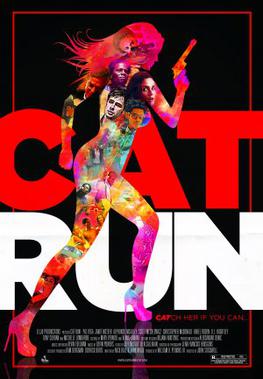
Insomnia File #44: Cat Run (dir by John Stockwell)


What’s an Insomnia File? You know how some times you just can’t get any sleep and, at about three in the morning, you’ll find yourself watching whatever you can find on cable? This feature is all about those insomnia-inspired discoveries!

If you were having trouble getting to sleep at 3 in the morning, you could have turned over to Showtime and watched the 2011 action film, Cat Run.

So, here’s what you get when you watch Cat Run.  You get:

  1. A few beach scenes
  2. Some stylish action sequences
  3. A nearly incoherent plot
  4. Lots of naked people
  5. Two bumbling heroes
  6. A prostitute with a heart of gold, a young child, and an encrypted hard drive
  7. A cold-as-ice female assassin played by a distinguished, Oscar-nominated performer
  8. Massive and sudden changes in tone as the film goes from comedy to action to comedy again
  9. Sex
  10. Violence

In other words, Cat Run is a John Stockwell film.  As a director, Stockwell specializes in making unpretentious films, ones that usually feature beautiful people doing stuff on the beach.  He makes the type of films that will probably never win an Academy Award (though Kirsten Dunst perhaps deserved a nomination for her performance in Stockwell’s Crazy/Beautiful) but which are still occasionally entertaining if you’re in the right mood for them.  (Seriously, just watch Stockwell’s In The Blood and then ask yourself why he could make the perfect Gina Carano film while Steven Soderbergh couldn’t.)

Cat Run takes place is Montenegro.  The prostitute is named Cat (Paz Vega).  The encrypted hard drive contains footage of a politician (Christopher McDonald) killing a woman at an orgy.  The two bumbling detectives who help her out are named Julian (Alphonso McAuley) and Anthony (Scott Mechlowicz) and they occasionally get a funny line or two.  The assassin who is sent to take care of Cat is Helen and she’s played by Janet McTeer.  Helen is coldly efficient and ruthless killer but she has a difficult time tracking down Cat.  That’s the way it always goes, isn’t it?  The bad guys are always super competent until the movie begins, at which point they suddenly can’t shoot straight.

Anyway, Cat Run is not a particularly memorable movie but it has its entertaining moments.  It’s hyper stylish and the cast seems to be having a good time.  At the very least, you get the feeling that everyone probably enjoyed spending their days off in Montenegro and good for them!  McTeer, not surprisingly, steals the film but Paz Vega has some good moments too.  All in all, this is an enjoyable film that doesn’t have a hint of ambition.  It is what it is and what’s wrong with that?

Previous Insomnia Files:

  1. Story of Mankind
  2. Stag
  3. Love Is A Gun
  4. Nina Takes A Lover
  5. Black Ice
  6. Frogs For Snakes
  7. Fair Game
  8. From The Hip
  9. Born Killers
  10. Eye For An Eye
  11. Summer Catch
  12. Beyond the Law
  13. Spring Broke
  14. Promise
  15. George Wallace
  16. Kill The Messenger
  17. The Suburbans
  18. Only The Strong
  19. Great Expectations
  20. Casual Sex?
  21. Truth
  22. Insomina
  23. Death Do Us Part
  24. A Star is Born
  25. The Winning Season
  26. Rabbit Run
  27. Remember My Name
  28. The Arrangement
  29. Day of the Animals
  30. Still of The Night
  31. Arsenal
  32. Smooth Talk
  33. The Comedian
  34. The Minus Man
  35. Donnie Brasco
  36. Punchline
  37. Evita
  38. Six: The Mark Unleashed
  39. Disclosure
  40. The Spanish Prisoner
  41. Elektra
  42. Revenge
  43. Legend

Outlaw King Official Trailer


Outlaw King

Who here has seen Braveheart?

I’m quite sure that a huge number of people have seen Mel Gibson’s second film as director which won him two Oscars: for Best Director and Best Film. While his career has seen it’s major up’s and down’s, he still has done some great work behind the camera as a director.

Now, what does this all mean to this new Netflix Original film coming out this year called Outlaw King? The answer is not much other than both film share a particular historical character in the Scottish king Robert the Bruce. In Gibson’s film he’s a supporting character whose motivations could be seen as very pragmatic and bordering on the villainous.

Outlaw King, by Scottish director David MacKenzie (who directed the great Hell or High Water), will tell the story of the legendary Scottish king Robert the Bruce who won Scotland’s independence from England where William Wallace ultimately failed to do.

I am going on a hunch that Outlaw King will treat Robert the Bruce in a more sympathetic light than how Gibson’s film portrayed him. This time around we have Chris Pine in the role of Robert the Bruce.

As seen in the trailer, it looks like Netflix’s several billion dollar spending spree has come not just luring prominent filmmakers and producers to the streaming site but also allow them the resources to make a film as lush and beautiful as any made under the remaining big studios.

Let’s hope Outlaw King is more on the level of Mudbound and less like Bright.

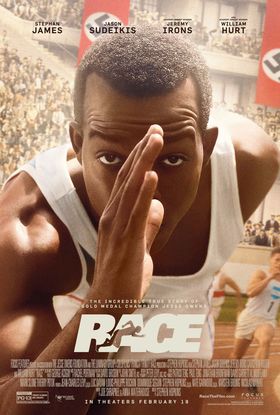
Playing Catch Up With The Films of 2016: Race (dir by Stephen Hopkins)


race

Do you remember Race?

It came out in February of this year and it was kind of a big deal for a week.  I think everyone was expecting it to be a big hit, just because there’s never much competition in February.  Race is a biopic of Jesse Owens, the African-American runner who sets world records and won gold medals at the 1936 Berlin Olympics, defeating a legion of Aryan athletes while Adolf Hitler watched from the stands.  Not only is that a compelling story but 2016 was also an Olympic year.  Eddie The Eagle had already been a success due to the Olympic connection.  Add to that, Focus Features promoted the Hell out of this film.  In they weeks leading up to its release, I saw commercials for it on a nearly hourly basis.  The reviews, when the came, were mixed but generally positive.

I’m not really sure how Race did at the box office.  According to Wikipedia, on its opening weekend, it was sixth at the box office.  Apparently, the film only had a budget of five million and ultimately made a profit of $20,000,0000.  I guess that would make it a success.  All I know is that it seems like, for all the hype, Race just kind of came and went.

In fact, I didn’t see Race until about two months ago.  It’s one of those films that’s not really great but it’s certainly not bad.  It’s pretty much the epitome of being adequate.  It was well-made and generally well-acted.  Director Stephen Hopkins occasionally struggled to maintain a consistent pace (Race is over 2 hours long and feels longer) but he still did a good job filming the scenes of Owens of running and competing.  In the role of Jesse Owens, Stephan James was well-cast.  You not only believed him in the dramatic scenes but he was also believable as a record-setting athlete.  He had some great scenes with Jason Sudekis, who was surprisingly believable in the role of Jesse’s coach.

With all that in mind, why didn’t Race make more of an impression?  I think that, too often, Hopkins allowed the film’s focus to wander away from Jesse and the inner conflict he felt as he won medals for a country where he was treated like a second-class citizen.  There were too many random scenes of Jeremy Irons and William Hurt, playing Olympic officials and debating whether or not to boycott Hitler’s Olympics.  During the second half of the film, Leni Riefenstahl (Carice van Houten) showed up and we got a few scenes of her trying to film Jesse’s triumph at the Olympics despite the interference of Nazi propaganda minister, Joseph Goebbles (Barnaby Metschurat).  All of these extra scenes are supposed to set Jesse’s struggle in a historic context but they’re unnecessary and distracting.  All the context that the film needs can be found in the fact that Jesse was a black man living in America in the 1930s.

For the most part, Race is uneven but occasionally the film delivers a powerful scene or two.  One of the most powerful parts of the film comes when Jesse, after setting world records and being proclaimed as a hero across the world, is informed that he still can’t enter a New York club through the front door.  As well, the scenes depicting Jesse’s friendship with German jump Luz Long (David Kross) are poignant.  In fact, they’re so poignant that I initially assumed that they were fictionalized for the film but actually, Jesse and Luz Long did become good friends during the 1936 Olympics.

Race is uneven but it’s not bad.  Stephan James gives a good performance as Jesse and, if nothing else, the film provides a worthy history lesson.

Horror Film Review: The Presence (dir by Tom Provost)


The Presence opens with nearly 20 minutes of near-silence.  We watch as an unnamed and emotionally unstable woman (Mira Sorvino, who is literally listed in the credits as having played The Woman) arrives at an isolated cabin.  As she settles in for what is obviously a very needed vacation, she goes about her business without saying a word.  This is because she believes herself to be alone.  However, those of us watching know that this isn’t true.  She is sharing her cabin with a silent and initially passive ghost (Shane West) and, though she can’t see him, those of us in the audience can.

Eventually, the silence is broken as other visitors come to the cabin.  There’s the boatman, Mr. Browman (Muse Watson).  There’s the woman’s boyfriend (Justin Kirk)  who unexpectedly shows up to ask the woman to marry him, a proposal which visibly upsets the ghost. Finally, there’s the Man In Black (played by Tony Curran).   Though the woman cannot see the Man In The Black, she can hear him when he whispers dark thoughts into her ear.

The ghost, however, can see the Man in Black.  The Man In Black offers the ghost a proposition.  If the ghost kills the woman’s boyfriend, the Man In Black will allow the ghost to leave the cabin.

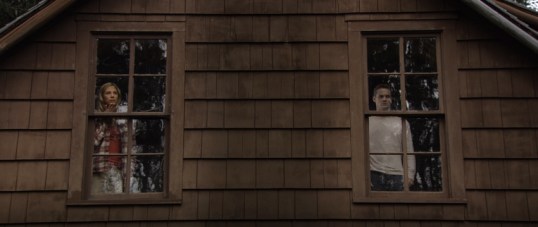
First released back in 2010, The Presence is a film that got (and gets) next to no love from the critics and from the type of people who specialize in leaving snarky comments over at the imdb.  However, I rather like it.  Director Tom Provost makes the risky choice to emphasize atmosphere over easy scares.  The end result is a film that is full of striking images but which requires a bit more patience than most audiences are probably willing to give.  When I think about The Presence, I think about the sight of Shane West passively watching Mira Sorvino, obviously wishing he could reach out but knowing that he cannot.  It’s a haunting image, one that perfectly captures both the fear and the pathos of a good ghost story.

And that, ultimately, is what The Presence is.  It’s a good ghost story and what better time for a good ghost story but Halloween?

presence3

Review: The Midnight Meat Train (dir. by Kitamura Ryuhei)


There’s a certain number of books when I was much younger that I thought would’ve made for some great horror films. They were the early works by Clive Barker. Short stories collected into several volumes aptly dubbed his Books of Blood. While several short stories from these volumes were adapted to film in the intervening years most were not worth the time to watch them. So, lo and behold that when I finally saw the latest short story adapted from these collections I was genuinely surprised at how well-made and entertaining it turned out to be. The Midnight Meat Train by Japanese filmmaker Kitamura Ryuhei was a fine piece of horror filmmaking that dripped in atmosphere and a growing sense of existential dread right up to it’s very surprising end.

The Midnight Meat Train is quite a simple story when one really breaks it down to it’s component parts. It’s a crime thriller wrapped in the bloody layers of an extreme horror film. There’s a certain noirish quality to it’s storytelling as we see the film’s protagonist in Leon (Bradley Cooper). He’s a photographer struggling to find the inspiration for his next set of photographs and decides to wander the train stations at midnight to find that inspiration. It’s during one visit at night that he begins to suspect that he might’ve come across one of the latest missing persons who might’ve become a victim of the so-called “Subway Butcher”. The film shows his growing obsession in finding out if the urban legend of this so-called serial killer is actually true.

His mental state only deteriorates as the reality about the “Subway Butcher” (Vinnie Jones in one of his best roles to date) catches up to the truth on one midnight ride on the subway train. His witnessing of the killer at work brings him into a hidden world the rest of the city seems unaware or incapable of acknowledging despite the hundreds of people who go missing year in and year out for almost a hundred years. His girlfriend Maya (Leslie Bibb) and best friend Jurgis (Roger Bart) soon become drawn into Leon’s nightmarish situation and must confront the very boogeyman who has begun to haunt Leon’s waking life.

The film is Kitamura Ryuhei’s first Hollywood film and it doesn’t diminish the talent for some creative visuals he earned while directing horror and genre films in his native Japan. He makes great use of the nighttime setting and the stark environs of the subway trains at midnight to give The Midnight Meat Train an almost black and white look punctuated by vivid splashes of visceral red during the many inventive killings by Vinnie Jones’ mute Mahogany character. Kitamura showed that he was able to squeeze as much as was possible from a script that was average at best. Especially considering that the script had to adapt one of Barker’s shorter tales.

The performances by the ensemble group led by Bradley Cooper ranged from good to excellent with the aforementioned Vinnie Jones leading the pack. Even Bradley Cooper as the tormented protagonist Leon handled the role well. I’ve never warmed to Cooper as an actor as he always came across as a smirking douchebag in almost every role he played prior to this one. He quickly shed some of that reputation for me with his performance in this film and continues to do so with every one since this film. The smirk is still there but he has managed to drop the douchebag aspect of it. I also must point out a nice turn by veteran genre actor Tony Curran as the train conductor who exuded a sense of the otherworldly and a character who held the answers to the questions brought up by the film.

Since this is a horror film one must mention it’s horrofic aspects and this film fills it’s quota of horror. The scenes where Jones’ Mahogany dispatches the unwary last riders of the train at midnight were shot extremely well and with some visual flairs Kitamura has gained a reputation for. There’s nothing cartoony about these kills unlike other slasher films of it’s type. The kills are done in a brutal fashion as meat tenderizers smash into skulls and backs. Then there are the dressing of the kills which gives meaning to the film’s title. The only part of this film which seemed so out of place, but was necessary in the film’s overall narrative was the make-up effects in the end of the dead-end tunnel where Leon finally sees the truth of why Mahogany has been killing passengers on the subway train. It’s here that the film’s budget shows. At least Kitamura was smart enough to film these scenes in very low light to hide some of the zippers and laces on the costuming.

Overall, The Midnight Meat Train was one horror film in 2008 that deserved to have been seen by more people. It’s a shame that the handling of this film’s distribution by Lionsgate bordered on the criminal as it failed to be screened  by many theaters which led to it’s failure in the box-office. This was a horror film that delivered on the goods without pandering to the torture porn crowd who had begun to dominate the scene due to the popularity of the Saw franchise. Kitamura’s first work in America showed that he brings a fresh new voice to Western horror. The film also ends up becoming the best of all the Books of Blood short story adaptations and shows that Barker’s earlier grand guignol writing phase could be adapted well to the bigscreen.

Here’s to hoping that the failure of this film in the box-office (Again, I say fuck you Lionsgate) doesn’t keep other up-and-coming horror filmmakers from tapping into Barker’s volumes of short stories for their projects. There’s horror gold to be found there and Kitamura’s The Midnight Meat Train was one gleaming example of it.

Scenes I Love: 13th Warrior


Cavatica didn’t know where I borrowed and changed the chant in the beginning of my ThunderCats post previous to this one so I decided what better way to answer his question than using one of Lisa Marie’s favorite past features in the blog. I always did enjoy her “Scenes I Love” posts since it showed that even a bad film could have a redeeming quality with that one perfect scene that redeems the rest. Or it could be a scene that just reinforces just how great the rest of the film truly is.

So, my first attempt at “Scenes I Love” happens to be from the final battle in John Mctiernan’s epic tale of an Arab chronicler becoming sword-brothers with a band of Viking warriors and their king, Buliwfy. I love this scene for the reciting of the Viking Death Prayer by the few defenders left at the end of the film. Buliwfy, the Viking king, begins the prayer to be followed by the rest then finished by Ahmed Ibn Fadlan (Antonio Banderas) just in time to stand fast against a charge of the inhuman “Eaters of the Dead” (really just a remnant tribe of neanderthals).

That prayer is very powerful and with Jerry Goldsmith’s rousing music providing a proper background it’s definitely hard for one not to pick up a sword or axe and stand fast against the incoming horde.

The original Viking Death Prayer

Lo, there do I see my Father..
Lo, there do I see my Mother
And my Sisters and my Brothers..
Lo, there do I see the line
Of my people back to the beginning..
Thay do bid me to take my place among them..
In the Halls of Valhalla,
Where the Brave may live forever.