Hellboy: Seed of Destruction (by Mike Mignola) Review


“Imagine the good this boy could do. I know what he is, what he might grow into, maybe even what he’s meant to be. But I also see what he can be. He just needs a little guidance and someone to set a proper example.” — Trevor Bruttenholm

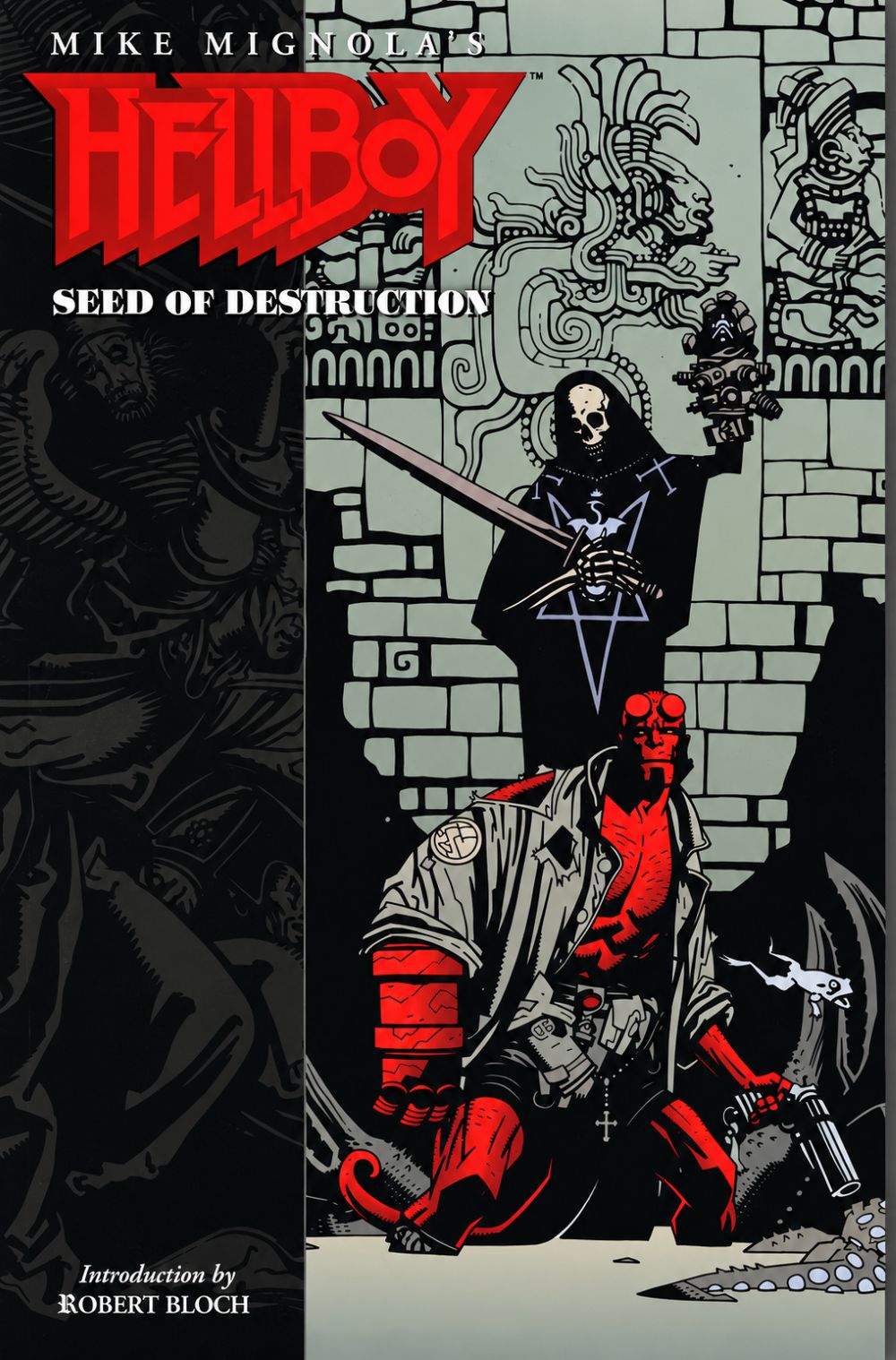
Mike Mignola’s Hellboy: Seed of Destruction is more than the opening chapter of a popular comic-book universe. It is a foundational work of supernatural adventure, combining pulpy monster fiction, wartime conspiracy, Gothic imagery, Lovecraftian apocalypse, and a surprisingly human story about identity and free will. First published as a four-issue miniseries in 1994 and co-plotted with John Byrne, the graphic novel introduces Hellboy with striking confidence. The mythology already feels vast, the visual identity is fully recognizable, and the title character arrives as one of the most distinctive heroes in modern comics: a cigar-smoking red demon with a stone right hand, a sarcastic sense of humor, and a stubborn refusal to become the monster everyone expects him to be.

The premise is immediately compelling. In the final days of World War II, Nazi occultists conduct an elaborate ritual intended to summon a weapon powerful enough to alter the war’s outcome. The ceremony is overseen by Grigori Rasputin, who is reimagined here not simply as the notorious Russian mystic but as a servant of ancient, world-ending forces. Allied soldiers disrupt the ritual, but instead of the apocalypse the Nazis hoped to unleash, they discover a small red-skinned demon child transported to Earth. That child becomes Hellboy. He is taken in by Professor Trevor Bruttenholm, founder of the Bureau for Paranormal Research and Defense, and raised not as a weapon or scientific specimen, but as a son.

That decision gives Hellboy: Seed of Destruction its emotional center. Hellboy looks like the obvious villain of his own story. He has red skin, filed-down horns, a tail, cloven feet, and the massive stone right hand known as the Right Hand of Doom. He appears as though he should stand alongside Dracula, Frankenstein’s monster, or Satan himself. Yet Mignola’s central idea is that origin does not have to determine destiny. Hellboy may have entered the world through an act of evil, and powerful supernatural forces may expect him to fulfill an apocalyptic role, but he chooses another path. As an adult, he works for the B.P.R.D., investigating paranormal threats and protecting humanity from the very kinds of monsters he might be expected to join.

The main story takes place decades after Hellboy’s arrival and begins when a death close to him forces the past back into the present. The loss gives the investigation a personal urgency and propels Hellboy toward the hidden truth behind his own origins. As he follows the trail, he becomes entangled in a conspiracy involving Rasputin’s return, surviving Nazi occultists, forgotten rituals, buried secrets, and the terrifying possibility that Hellboy himself may have a role in an event far greater than any single monster attack. The plot steadily expands from a personal mystery into a threat with apocalyptic implications, but it never completely loses sight of Hellboy as a character caught between the person he has chosen to be and the fate others want to impose upon him.

Hellboy is joined by fellow B.P.R.D. agents Abe Sapien and Liz Sherman. Abe, an amphibious investigator with a calm, analytical nature, provides an effective contrast to Hellboy’s bluntness and impatience. Liz, a pyrokinetic woman whose connection to fire comes with emotional burdens of its own, brings a more vulnerable and tragic element to the team. In this first volume, they are not yet as richly developed as they would become in later stories, but their presence establishes the B.P.R.D. as something more interesting than an ordinary superhero team. These are not polished celebrity heroes in colorful costumes. They are unusual, damaged, and often isolated people employed to confront dangers that the public cannot know exist.
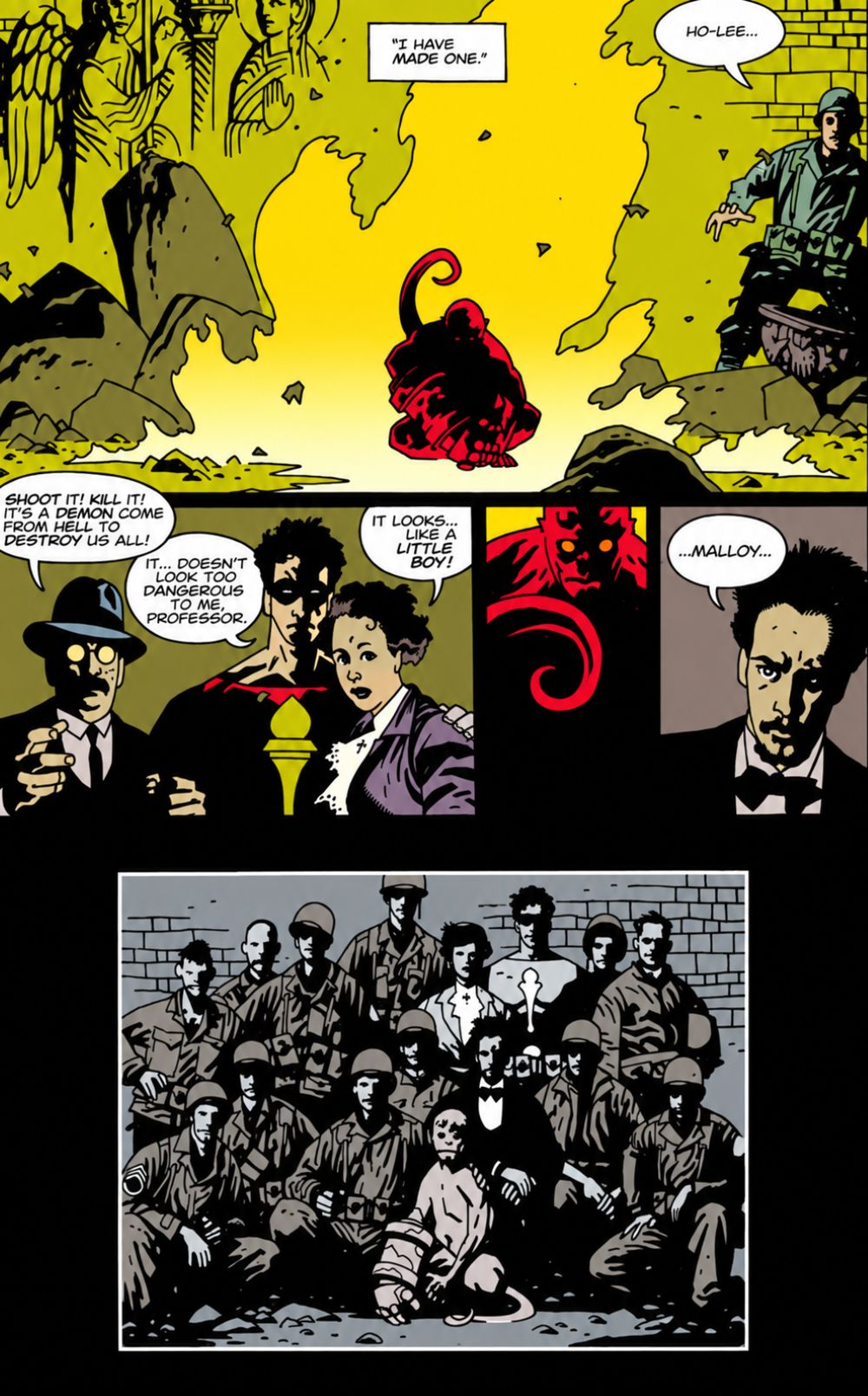
Mignola’s art is the graphic novel’s defining achievement. Even among the strongest comics of the 1990s, Hellboy: Seed of Destruction feels visually singular. At a time when much of mainstream superhero art emphasized intricate rendering, oversized muscles, and hyperactive action, Mignola worked through silhouette, shadow, stark design, and carefully controlled negative space. His figures are often blocky and stylized, but they are never lifeless. A few lines can convey fear, exhaustion, anger, or resignation. A large black shape can become a doorway, a corridor, an abyss, or a threat the reader cannot fully see.

Mignola does not use darkness merely to make the comic look moody. His shadows are active storytelling tools. Characters disappear into them, monsters emerge from them, and entire environments seem to exist only partially in the light. A seemingly empty room can become frightening because its far wall is swallowed by blackness. A frozen landscape can feel ominous because it leaves its characters exposed beneath an enormous blank sky. His layouts often evoke old pulp-horror illustrations, German Expressionist cinema, Gothic architecture, folklore engravings, and vintage monster movies. Rather than presenting a sleek modern superhero world, Mignola creates a universe that feels ancient, secretive, and half-buried under centuries of superstition.

The color work deepens that atmosphere. The pages use earthy browns, faded blues, icy whites, sickly greens, and vivid flashes of red to create a world that feels both dreamlike and decayed. Hellboy’s red skin makes him instantly recognizable within Mignola’s compositions, especially when he stands against a field of black shadow. He often resembles a burning ember in a world of darkness: visually connected to the supernatural realm around him, yet refusing to be extinguished by it. That visual contrast captures the character’s place in the story. Hellboy belongs to the darkness in a literal sense, but he continually chooses to stand against it.

The writing is more exposition-heavy than some later Hellboy stories, but it serves an understandable purpose. Hellboy: Seed of Destruction has to introduce Hellboy, the B.P.R.D., Rasputin, the Nazi occultist threat, the supernatural cosmology, and the significance of the Right Hand of Doom in a relatively short space. John Byrne’s scripting helps organize the material and gives the narrative forward momentum. Certain explanations have the recognizable rhythm of early-1990s genre comics, but the story’s atmosphere remains strong enough that the mythology rarely feels like a dry information dump. Mignola and Byrne create the impression that readers are seeing only a small piece of an immense occult history, one filled with ancient gods, forgotten disasters, and forces that have been waiting in darkness for centuries.
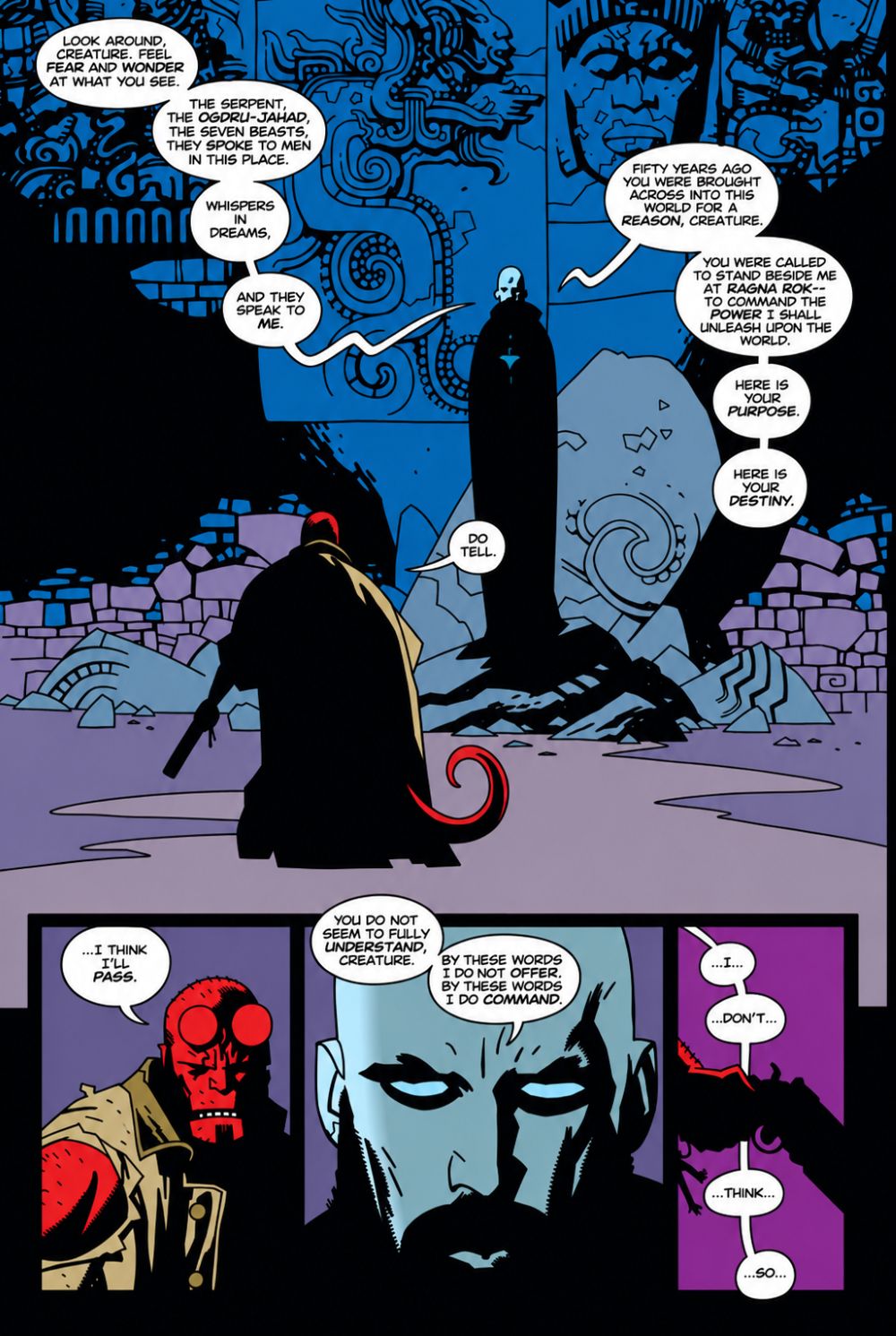
The pacing is deliberate rather than relentlessly action-driven. Mignola allows scenes to breathe, lingering over ruined architecture, old artifacts, empty corridors, haunted chambers, and moments of tense silence. The dread accumulates gradually. When action erupts, it tends to be sudden, heavy, and physical. Hellboy is not an acrobatic hero who glides through combat with effortless grace. He breaks through doors, trades blows with monsters, absorbs punishment, and keeps moving forward. His heroism has a blue-collar quality. He treats fighting the impossible as difficult, unpleasant work that nevertheless needs to be done.

That quality makes him especially effective within the story’s Lovecraftian framework. Traditional cosmic horror often centers on human helplessness in the face of forces too vast, ancient, and indifferent to comprehend. Hellboy: Seed of Destruction preserves that feeling, particularly in its suggestions of ancient beings and apocalyptic forces beyond normal understanding. However, it gives readers a protagonist willing to confront that terror rather than collapse before it. Hellboy cannot necessarily understand every supernatural threat, and he cannot erase the ominous circumstances of his birth, but he can refuse to cooperate with the fate laid out for him. His defiance is not naïve optimism. It is a hard-earned, practical moral stance: he will not let anyone turn him into a weapon, and he will not stand aside while innocent people are endangered.

The relationship between Hellboy and Bruttenholm gives that moral stance its weight. Bruttenholm represents the compassion that allowed Hellboy to become something other than an instrument of destruction. He does not deny Hellboy’s demonic origins, but he refuses to treat those origins as a permanent verdict. Their bond lends real emotion to the graphic novel without overwhelming it with melodrama. Mignola’s best moments of feeling are often restrained, expressed through silence, body language, or a brief line rather than a lengthy speech. This restraint suits Hellboy himself. He is not a character who easily verbalizes grief, fear, or tenderness, but those feelings are present beneath his rough exterior.

The graphic novel also has an important place in Hellboy’s larger cultural legacy because it served as the basis for Guillermo del Toro’s live-action film Hellboy. The adaptation draws from the comic’s wartime origin, B.P.R.D. framework, Rasputin-centered occult threat, and larger supernatural mythology, helping bring Mignola’s character and visual world to a wider audience. Even so, Hellboy: Seed of Destruction stands firmly on its own as the original expression of that world: darker, quieter, and more reliant on the power of shadow, silence, and graphic design than any adaptation could fully reproduce.

Hellboy: Seed of Destruction is not entirely flawless. The exposition can occasionally be dense, and Abe and Liz are not yet given the emotional complexity they receive in later Hellboy stories. The book also has the understandable burden of establishing a great deal of lore in a short opening arc. Yet those limitations are minor beside its achievements. Mignola creates a complete aesthetic universe from the beginning, one populated by ancient horrors, occult conspiracies, cryptic prophecies, and damaged people trying to do the right thing in a world that often seems hostile to human life.

Ultimately, Hellboy: Seed of Destruction remains a landmark graphic novel because it places mood, design, and character above conventional superhero spectacle. It is not simply about a demon punching monsters, even though it delivers that pleasure exceptionally well. It is about a creature born under the shadow of evil who insists on defining himself through his choices. Hellboy’s greatest strength is not his stone fist, supernatural durability, or ability to survive encounters with horrors beyond human comprehension. It is his refusal to become what he was made to be.
Review: Frank Herbert’s Dune


“Mercy is a word I no longer understand.” — Paul Atreides

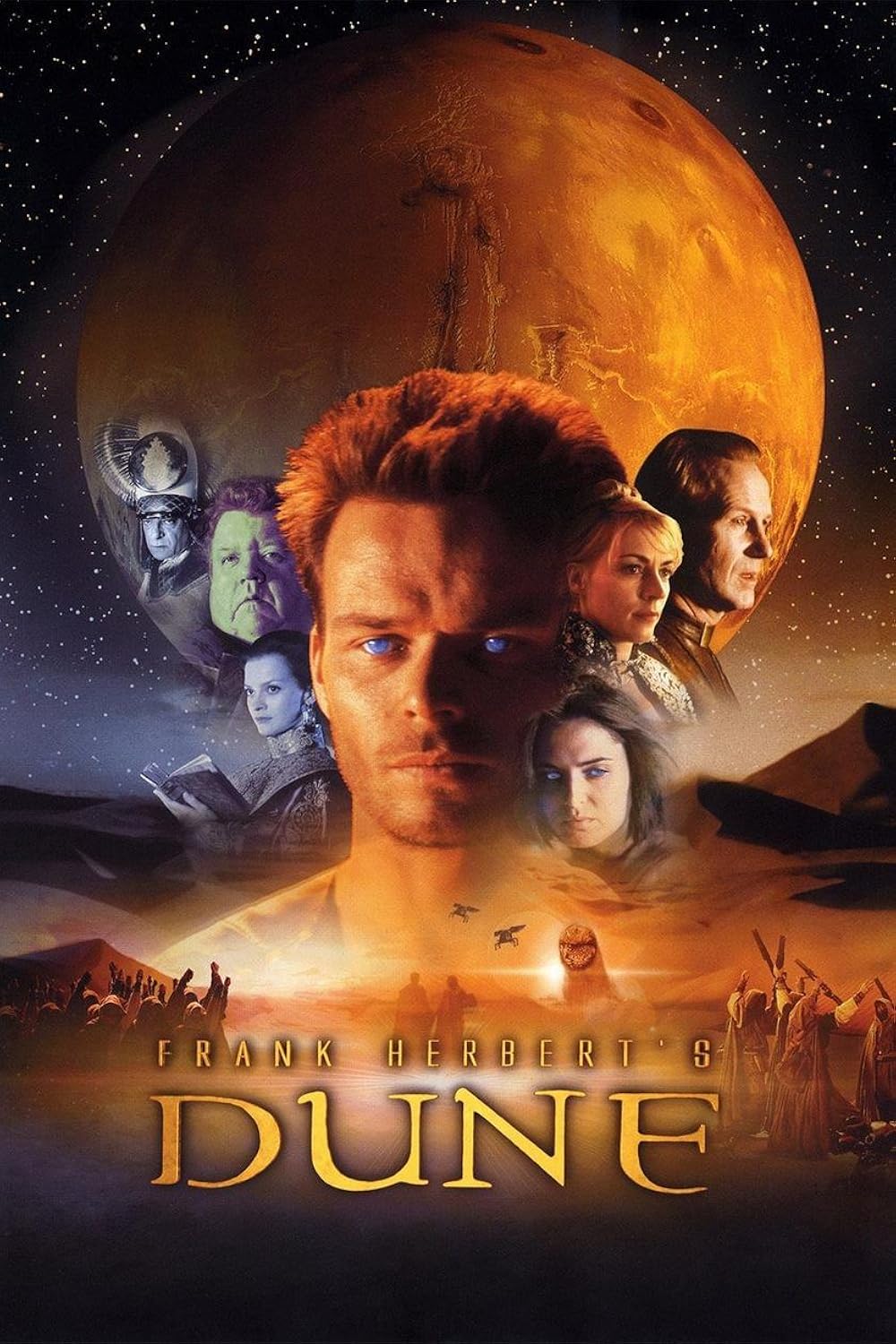
Frank Herbert’s Dune, the 2000 Syfy Channel miniseries, stands as a scrappy yet heartfelt attempt to tame the untamable beast that is Frank Herbert’s sprawling sci-fi epic Dune. Clocking in at nearly four hours across three parts, it doesn’t pretend to be the cinematic knockout punch of Denis Villeneuve’s Dune: Part One and Dune: Part Two, nor does it dive headfirst into the psychedelic rabbit hole of David Lynch’s notoriously bonkers 1984 film. Instead, it carves out its own lane as the faithful workhorse adaptation—the one that prioritizes stuffing in every major plot thread, faction rivalry, and philosophical nugget from the novel without apology. That dogged completeness earns it major points from book purists, even if the early-2000s TV production values leave it looking like a glorious mess next to today’s blockbuster standards. It’s the version you revisit when you want Dune’s full political chessboard laid bare, rough edges and all.

Right from the opening narration, you sense this miniseries is playing a different game. While Villeneuve hooks you with those thunderous sandworm roars and vast desert expanses that make Arrakis feel like a character unto itself, and Lynch blasts you with industrial-gothic sets and nose-plug close-ups that scream “weird,” the Syfy take eases in with expository voiceover and sweeping shots of Caladan’s misty nobility. The budget screams made-for-TV: thopters wobble like cheap models on strings, sandworms shimmer with dated CGI that wouldn’t pass muster even in 2000, and interstellar travel feels more like a quick fade than a hyperspace spectacle. Yet there’s charm in the earnestness—the ornate costumes drip with imperial excess, from House Atreides’ regal blues to the Harkonnens’ sickly pallor, capturing Herbert’s baroque universe better than Lynch’s fever-dream excess or Villeneuve’s minimalist severity. It’s alien and opulent without trying to reinvent the wheel visually, letting the story’s inherent strangeness do the heavy lifting.

What truly sets this adaptation apart is its unhurried commitment to Dune’s core as a tale of interstellar realpolitik, not just laser swords and monster chases. The miniseries luxuriates in the scheming: extended scenes of Bene Gesserit whispering manipulations across generations, Emperor Shaddam IV plotting from his golden throne, and the Spacing Guild’s monopoly stranglehold get room to breathe. Lynch crammed this into a frantic 137 minutes, resorting to on-screen crawls and “the spice must flow” explainers that border on parody, while Villeneuve elegantly implies much of it through mood and subtext, trimming for pace. Here, the trap closes deliberately—Duke Leto’s honorable doom unfolds with all its tragic inevitability, Paul’s Fremen transformation simmers with ecological and messianic tension, and the Baron’s depravity feels like a rotting empire’s symptom. It’s talkier, sure, but that density mirrors the novel’s heady mix of ecology, religion, and colonialism, making the good-vs-evil surface hide a much murkier power grab.

Faithfulness is the miniseries’ superpower, and stacking it against the films drives that home. Lynch’s Dune is a directorial fever dream—brilliant in bursts (those Guild Navigators floating in spice tanks are iconic), but it mangles the timeline, invents “weirding modules” and pain boxes that Herbert never dreamed of, and caps with a cheesy resurrection and empire-toppling finale that feels like fanfic. Villeneuve’s duology is a masterclass in restraint and awe: Part One builds unbearable dread through silence and scale, Part Two unleashes Paul’s holy war turn with chilling clarity, but both demand sequels and sacrifice chunks like Thufir Hawat’s full betrayal arc or the ecological long-view for runtime efficiency. The Syfy version? It hits about 90% of the book’s beats in one self-contained package—Paul drinks the Water of Life, rides the first worm, unites the tribes, all while fleshing out Yueh’s guilt, Gurney’s survival, and Irulan’s expanded role as a scheming narrator who spies on the action. Smart tweaks like inner-monologue voiceovers clarify the mental gymnastics without Lynch’s exposition overload.

The ensemble punches above the production’s weight, delivering performances that ground the sprawl. Alec Newman’s Paul Atreides evolves from callow youth to burdened Kwisatz Haderach with a steely intensity—more seasoned than Kyle MacLachlan’s wide-eyed innocent in Lynch’s film or Timothée Chalamet’s introspective minimalist in Villeneuve’s, but convincingly haunted by prescient visions. William Hurt’s Duke Leto radiates quiet nobility, a paternal rock that Oscar Isaac matches with fiercer charisma but less screen time. Saskia Reeves’ Lady Jessica is a coiled operative, mastering the Voice while Rebecca Ferguson brings feral maternal fire and Francesca Annis floats as an ethereal priestess. Ian McNeice’s Baron Harkonnen oozes grotesque glee, echoing Kenneth McMillan’s scenery-chewing blimp but with slyer malice; Stellan Skarsgård’s version chills as a tactical monster sans the floating fat-suit camp. Chani fares best as Barbora Kodetová’s fierce Fremen equal, outshining Lynch’s rushed Sean Young and edging Zendaya’s mythic close-ups with raw tribe loyalty. Even bit players like Robert Wisdom’s Idaho shine brighter than their film counterparts.

Directorial choices by John Harrison emphasize theatricality over cinema flair, turning court scenes into operatic standoffs that suit Dune’s ritualistic pomp. Princess Irulan’s upgrade—from bookend quotes to active imperial intriguer—adds a vital scheming perspective Lynch ignored and Villeneuve teases for later. The gom jabbar test throbs with intimate terror, Fremen sietches pulse with cultural depth, and the final duel crackles despite modest effects. Pacing lags in spots—the Atreides downfall stretches, subplots like Feyd-Rautha’s gladiatorial intro feel obligatory—but that thoroughness lets overlooked gems like the dinner-table tensions and spice-blow ecology lectures land fully. Brian Tyler’s score swells bombastically, aping Zimmer’s primal dread without the subtlety, yet it propels the saga forward.

Flaws glare under modern scrutiny: effects age like milk (those ornithopters!), editing chops unevenly between threads, and some line deliveries veer stagey next to Villeneuve’s hushed precision or Lynch’s unhinged energy. It lacks the 1984 film’s quotable weirdness (“The sleeper must awaken!”) or the recent epics’ IMAX transcendence, feeling more like a filmed audiobook than immersive event cinema. Still, that scrappiness fits Dune’s prickly soul—ornate yet precarious, cerebral yet visceral. Herbert crafted a warning about heroes and empires; this miniseries trusts you to unpack it, preserving the unsettling texture the smoother films sometimes polish away.

Revisiting after the others clarifies its niche perfectly. Lynch’s Dune is the cult oddity—fractured, visionary, endlessly memeable despite narrative chaos. Villeneuve’s saga is prestige sci-fi at its peak: disciplined, subversive, a slow-burn symphony begging Part Three. The Syfy miniseries? Your completist’s deep cut—comprehensive, unpretentious, ideal for dissecting the guilds, houses, and prophecies on a rainy weekend. Constraints hobble the spectacle, but the ambition to honor Herbert’s labyrinthine blueprint shines through.

Ultimately, Frank Herbert’s Dune miniseries claims no crowns as the ultimate adaptation—that debate rages between Lynch’s deranged heart, Villeneuve’s cool mastery, or the book itself. At around 1150 words, it’s a worthy underdog: earnest, exhaustive, and true to the novel’s tangled genius. Fire it up if you crave Dune’s unfiltered intrigue over heart-pounding visuals. It respects the spice’s full flow, worms and all.

Scenes I Love: Band of Brothers


Band of Brothers

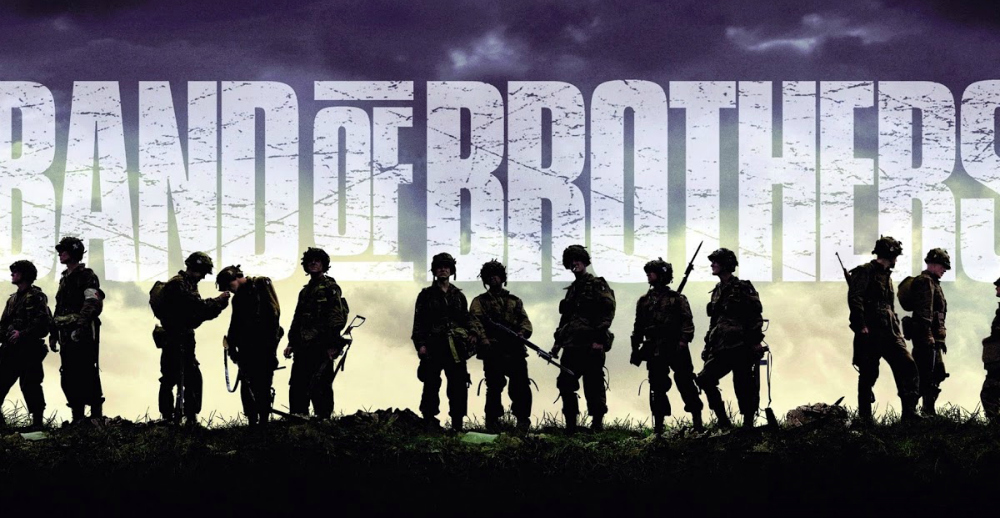
Band of Brothers is a 10-episode series from HBO that should be shown to every school kid across the nation.

I don’t subscribe to the notion that the youth of today have become lazy, too dependent on their electronics and don’t appreciate what the generations before have accomplished (though they’re more than willing to point out how past generations have ruined their future). Today’s generation and the generation before it grew up with cynicism when it comes to the concept of heroism and sacrifice.

They’ve more than earned that right because their government and those tasked to serve and protect them have failed often enough (though their successes in serving and protecting rarely gets mentioned). While I understand the cynicism and doubt of the current generation and the one before it, it doesn’t change the fact that most of those who lived in the so-called “Greatest Generation” did their duty with honor and tried to make the country prosperous for the generations to come.

That’s why the scene which affected me the most from Band of Brothers wasn’t one of combat, the quiet solitude before battle or the camaraderie exhibited by those who served and fought together for what they thought and believed to be a just cause. No, the scene which hit me the most closed out the series and comes from Maj. Richard Winters. He quotes a passage from a letter he received from one of his men through the years. The letter was from Mike Ranney and in it were words that best signifies why we celebrate Memorial Day and why we should continue to honor and pay respect to this “Greatest Generation” who are gradually leaving us for good.

Horror Scenes I Love: Salem’s Lot (Part 3)


This particular scene was my third favorite from Tobe Hooper’s Salem’s Lot.

There’s much to love about this scene. It’s a very claustrophobic sequence with our protagonist Ben Mears (played by David soul) left in the morgue by his friend Bill Norton for just a few minutes. The scene itself gradually builds in tension as Ben realizes that at any second the body on the morgue table could get up. The word vampire rarely gets uttered during the first third of the series, but Ben suspects the worst and he knows that he’s ill-prepared to deal with his fears if they bear fruit.

There’s a definite tv network quality to the way the scene is shot, but Hooper milks the creeping dread and terror with each passing second as Ben creates a makeshift crucifix and begins to chant random Bible passages as a way to bless his home-made icon. When his fears have been confirmed there’s not a sense of relief that he’s not crazy, but one of sheer terror.

This third joins part one and part two of my favorite scenes from Salem’s Lot and when witnessed as a set should give an idea just how terrifying and underrated this mini-series adaptation of the classic Stephen King vampire novel really is.

Horror Scenes I Love: Salem’s Lot (Part 2)


sddefault

“Look at me teacher.”

Those were some of the most terrifying words I’ve ever heard growing up. It’s all because of one scene from the tv mini-series which adapted Stephen King’s vampire novel, Salem’s Lot. It was a scene in the novel that terrified me as a young boy reading King for the first time.

I’ve always been gifted (or I sometimes say cursed) with having a very overactive imagination. This is why horror has always been such a fascinating genre for me. Even where the horror is all up in one’s face with it’s gore and messy aftermath my mind’s eye would make things worst or just constantly play it on repeat in my head days after the film has ended. It’s even worst when the horror comes across less through gore and more through atmosphere and built-up dread moving towards a jump-scare or something more insidious.

This particular scene is my second favorite from the Salem’s Lot mini-series. The first one I had posted a couple years back which just barely lags behind this one for third. What made this scene so effective despite it’s tv-style production was Tobe Hooper’s direction. Despite working with the censorship inherent in broadcast tv, Hooper was able to create a palpable sense of dread as the old English teacher Matt Burke senses a presence up in one of his house’s rooms. It was the same room where one of his former students had passed away in his sleep.

As the audience we already have an idea who or what is in that second floor room. Matt Burke has an idea as well, but his morbid curiosity wins out as he decides to investigate. Yet, despite such a lack in judgement he does come armed with a crucifix in hand. The way the scene builds and builds as Burke climbs the stairs and hesitating before opening the door to the room was almost too much to bear.

The reveal of his former student, Mike Ryerson, back in the room sitting in the rocking chair as one of the undead only increases the horror of the scene. His snake-like mannerisms was a new take on the vampire behavior. It’s not the usual silk and lace bloodsucker we grew up watching. This was a vampire that behaved like a predator beguiling it’s next prey. From the way Ryerson (played by Geoffrey Lewis) hissed his words and undulated his body as he stood to face his former teacher was disturbing at the very least.

Just writing about it and seeing the scene for the umpteenth time still gives me the shakes.

Scenes I Love: Salem’s Lot (Part 1)


Stephen King’s novels and short stories were mined relentlessly during the late 70’s and through the 80’s and the early 90’s. For the most part the film and tv adaptations of his work were adequate and passable. Some were downright awful and made one wonder if King was just trying to cash as many of his work for licensing paychecks or if he really thought the studios who purchased the rights would actually do a good job adapting them. One such studio which seemed to have done a very good job adapting one of King’s greatest works, Salem’s Lot, was Warner Brothers who adapted the classic vampire novel to become a mini-series for CBS.

I never saw the mini-series when it first aired in 1979, but I did see it a few years later when it re-aired on TV and then many more times on VHS and then on DVD. Tobe Hooper directed the hell out of this mini-series and turned what was a very complex modern retelling of Bram Stoker’s Dracula into a 3-hour mini-series that was both gothic and downright terrifying despite the restraints of TV.

While the mini-series does seem dated now it still retains that creepiness, foreboding atmosphere and scares which made Hooper’s Salem’s Lot one of the better King adaptations. The scene which will always stick with me and still gives me the chills whenever I watch it is when Danny Glick’s younger brother visits him in the hospital. This scene is just downright scary whether watching it as a 9 year-old or one in their 30’s.

The Pacific (HBO Mini-Series)


HBO’s 10-part mini-series in 2001 adapting historian Stephen Ambrose’s best-selling book, Band of Brothers, was a hit and success with both critics and the general audiences. The book and the series detailed the life of members of Easy Company of the 2nd Battalion, 506th Regiment of the 101st Airborne Division during it’s campaign. A campaign which first began during training in Toccoa, Georgia then moving on to the Allied training in the UK before participating in some of the bloodiest battles of the Allied Western Front Campaign: Normandy, Operation Market Garden, Battle of Bastogne and finally the taking of Berchtesgarden and Hitler’s Eagle’s Nest.

The mini-series was known for it’s historical accuracy and attention to battlefield detail. Band of Brothers owes much of its visual and film-style to Stephen Spielberg’s (he was one of it’s exec. producers with Tom Hanks being another) WWII epic, Saving Private Ryan. The heavily washed-out color stock gave the series an almost black-and-white quality with just the sudden splashes of color like red and orange to highlight blood and fire. When it came to the battles the series set the bar quite high with Ridley Scott’s Black Hawk Down and Spielberg’s Saving Private Ryan being the only two to match it in technical mastery.

The series has become a yearly staple comes Memorial and Veteran’s Day in the US. I could always wake-up on those two holidays, turn on The History Channel and see a Band of Brothers marathon. Easter has it’s DeMille The Ten Commandments and these two holidays celebrating the sacrifices of soldiers, living and dead, have their BoB.

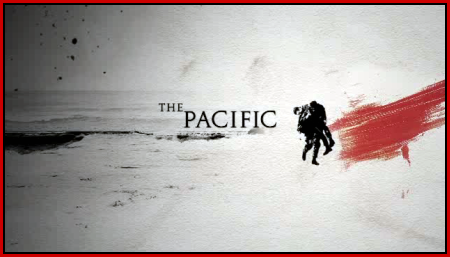
It’s now 2010, HBO Steven Spielberg and Tom Hanks go for round two with another 10-part WW2 mini-series simply titled, The Pacific. This second series will move from the European Theater of Operations over to the Pacific. Like the first mini-series, The Pacific will tell the story of the war from the eyes of a couple men on the ground. This time the men are Marines of the 1st Marine Division and through the eyes of some of these men we see WW2 fought in the Pacific and despite being fought in the same war it distinguishes itself for it’s sheer brutality. Audiences will learn such hallowed names such as Guadalcanal, Peleliu and Okinawa.

So, March 2010 people who enjoyed Band of Brothers should definitely tune in to HBO and watch it’s bookend series: The Pacific.

The Pacific Trailer

The Pacific Trailer 2

The Pacific On-Set Featurette