Today, the Shattered Lens wishes a happy birthday to the one and only Sigourney Weaver. Seen here with Jonesy the Cat, Weaver will always be best-remembered for bringing to life Ellen Ripley and totally revolutionizing both horror and science fiction!
Today’s song of the day comes from Jerry Goldsmith’s iconic score for Alien.
“The All-Father wove the skein of your life a long time ago. Go and hide in a hole if you wish, but you won’t live one instant longer. Your fate is fixed. Fear profits a man nothing.” — Herger the Joyous
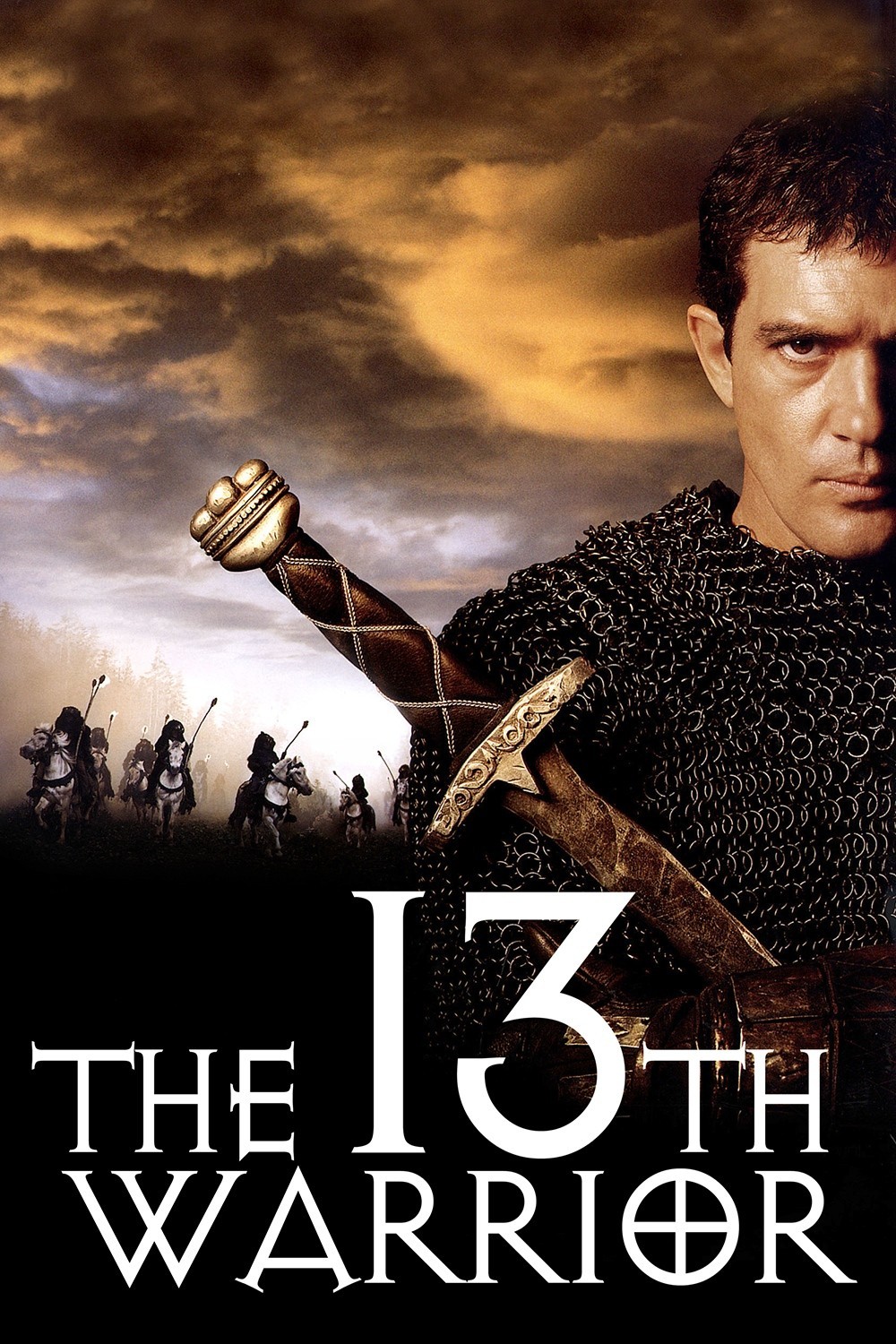
Few films wear the scars of a difficult production as visibly—and as entertainingly—as John McTiernan’s The 13th Warrior. It is messy, truncated, occasionally incoherent, and visibly caught between two competing creative visions. Yet it also has an atmosphere that many more polished historical adventures lack: wet forests, torchlit halls, thick fog, blackened skies, grim Norse rituals, and a band of warriors who look as though they have spent their entire lives sleeping in armor and drinking themselves toward an early grave. It is not a great film, but it is an undeniably entertaining one—and one of the more fascinating guilty pleasures of the late-1990s blockbuster era.
Loosely adapted from Michael Crichton’s novel Eaters of the Dead, which itself plays with the historical legend of Ahmad ibn Fadlan and folds it into a rough retelling of Beowulf, The 13th Warrior begins with Antonio Banderas as Ahmed ibn Fahdlan. Ahmed is an Arab court poet and diplomat banished from Baghdad after an indiscretion involving a powerful man’s wife. He is sent north as an ambassador, where his refined manners, education, and cultivated worldview put him in immediate contrast with the brutal, loud, heavily armed Norsemen he encounters. The movie gets a surprising amount of mileage out of that culture-clash premise. Ahmed is initially horrified by the Vikings’ hygiene, manners, food, and casual relationship with violence, while the Vikings regard him as an odd, under-equipped foreigner who seems far too elegant to be useful in a fight.
The story kicks into gear when a group of Norse warriors is summoned to aid a distant village terrorized by mysterious attackers known as the Wendol. According to prophecy, thirteen men must go—and the thirteenth cannot be a Northman. Ahmed, despite having no real desire to be involved in this nightmare expedition, becomes the required outsider. From there, the film turns into a lean survival-horror adventure: the warriors travel into an isolated northern settlement where people are being abducted and mutilated by enemies who seem to emerge from the darkness itself. The Wendol wear animal skulls, move through the night like ghosts, and are initially presented less as a human army than as something ancient and supernatural.
That eerie buildup is easily the best thing about The 13th Warrior. McTiernan, the director of Die Hard, Predator, and The Hunt for Red October, knew how to make hostile environments feel dangerous. The village is surrounded by dense woods and oppressive mountains, while the interiors are lit by fire, smoke, and shadows. The film often feels as if it is taking place at the edge of the known world. Even when the plot becomes shaky, the mood holds. There is a genuinely creepy quality to the Wendol’s first attacks, especially when horns sound in the distance and figures descend from the hills in the rain. The movie may never fully sell the mythology behind its villains, but it absolutely sells the fear they inspire.
Banderas is a somewhat unconventional choice for Ahmed, and his casting has always been one of the film’s stranger elements. He brings charisma and physical presence, but the accent situation is obviously all over the place. Still, he makes the character’s gradual transformation satisfying. Ahmed begins as a man who sees himself as superior to these crude northerners, only to discover that their apparent barbarism is paired with courage, loyalty, humor, and a practical intelligence he had underestimated. His evolution into a capable warrior is predictable, but it works because Banderas plays the early discomfort well. The famous moment when Ahmed learns the Norse language simply by listening around the campfire is absurdly accelerated, but it is also one of the movie’s most memorable scenes. It tells the audience, with no subtlety whatsoever, that he has crossed into their world.
The supporting cast gives the film much of its appeal. Vladimir Kulich’s Buliwyf is the quiet center of the group, a noble warrior king whose death is basically foretold from the moment he appears. Kulich has the right imposing, mythic presence for the role, and he makes Buliwyf feel like a living folk hero rather than just another stock Viking chief. Dennis Storhøi, Tony Curran, Richard Bremmer, and the rest of the warriors are not always given much individual development, but they create a convincing sense of companionship. Their banter, drinking, ritualized insults, and battle-ready camaraderie help the group feel like a unit with a history long before Ahmed arrived.
The action is another mixed but memorable part of the experience. McTiernan’s best films are often celebrated for their clarity of geography and movement, but The 13th Warrior is much murkier. Some of that is intentional: fights take place at night, in rain, amid smoke, fire, and chaos. But some of it also feels like a byproduct of an uneven post-production process. The movie is often too dark, too quickly edited, and too vague about what is happening from one beat to the next. Even so, there are flashes of real power. Ahmed forging a sword from a Viking weapon is a solid transformation moment, while the climactic infiltration of the Wendol cave has the pulpy appeal of an old adventure serial filtered through mud, blood, and 1990s studio excess.
The behind-the-scenes drama is arguably just as intriguing as the movie itself. The 13th Warrior became infamous for going significantly over budget and for the creative conflict between McTiernan and the studio. The reported disputes centered on the film’s tone, pacing, and specific scenes, with the studio evidently concerned that McTiernan’s version was too dark, too strange, and too inaccessible for a massive summer release. This was not a minor disagreement over a few trims. It became the kind of production struggle that leaves fingerprints all over the finished film. You can feel the tension between a moody, almost horror-driven historical fantasy and a more conventional action-adventure picture trying to break through the same material.
Michael Crichton, the author of Eaters of the Dead and a major force behind the project, eventually stepped in to oversee reshoots and re-editing. That fact alone makes The 13th Warrior unusually fascinating. It is not every day that the author of the source novel takes such a direct role in reshaping a film after its original director has already completed his work. Crichton reportedly pushed for a more straightforward, audience-friendly version, trimming and restructuring the movie in ways meant to clarify the story and increase its commercial appeal. The result is a film that often feels like two versions grafted together: one a grim, unnerving tale about outsiders confronting an almost prehistoric terror, the other a compressed heroic adventure about a reluctant man discovering his warrior spirit.
That conflict helps explain why the finished movie can feel so abrupt. Characters appear and disappear with little explanation, the Wendol mythology is only partially developed, and the final stretch rushes through material that could have supported a longer, more coherent climax. The film is barely over 100 minutes, yet it sometimes feels as though an entire half-hour of connective tissue vanished somewhere between the shoot and the theatrical cut. This is especially frustrating because there is clearly a richer movie buried inside the existing one. The setting, the central premise, the cultural collision, and the supernatural ambiguity all deserved more room to breathe.
Still, those flaws are part of why The 13th Warrior has endured as a cult favorite. It is easy to imagine a cleaner, more successful version, but it is also difficult to imagine that version being as peculiar or as memorable. The finished film has a strange, bruised personality. It carries the weight of a troubled production, but it also has enough great imagery, strong atmosphere, and old-fashioned adventure momentum to overcome its rough edges. It never reaches the level of McTiernan’s best work, and it is certainly not the definitive cinematic take on Beowulf. But as a cult, guilty-pleasure fantasy adventure, The 13th Warrior delivers more than its reputation might suggest.
Congo is the kind of movie that makes perfect sense as a guilty pleasure because it is always hovering just above the level of complete nonsense, yet it has enough energy and conviction to remain enormously watchable. Directed by Frank Marshall, the 1995 film turns Michael Crichton’s jungle-thriller premise into a sprawling mixture of monster movie, treasure hunt, corporate conspiracy, technological anxiety, and old-fashioned adventure serial. It is loud, messy, often ridiculous, and loaded with moments that should not work at all. But that is the pleasure of Congo: it commits so completely to its bizarre material that the movie becomes difficult to dislike.
The setup is wonderfully overstuffed. A corporate expedition disappears while searching for a legendary diamond mine in the Congo, apparently after encountering some mysterious, deadly force. At the same time, primatologist Peter Elliot is preparing to return Amy, a gorilla he has raised and taught sign language, to the wild. Amy has recurring dreams—or perhaps memories—of a strange jungle city, and she communicates through a glove that translates her signs into a robotic voice. Before long, Peter, Amy, corporate representative Karen Ross, Romanian explorer Herkermer Homolka, and a mercenary guide named Captain Munro Kelly are all headed toward the same lost city, where diamonds, ancient ruins, and murderous white gorillas await.
That synopsis alone explains why Congo has developed such a devoted guilty-pleasure reputation. It is a movie where satellites, laser weapons, genetically engineered guard apes, corporate greed, sign-language research, volcanoes, and ancient African mythology all exist in the same story without anyone pausing to question the sheer overload of it. The movie treats every development with sincere urgency, even when the audience is watching Amy the gorilla say “Amy good gorilla” through a computerized voice device. It is impossible not to admire the confidence. Congo never winks at the audience, never admits that its premise is wild, and never cuts itself down to a more manageable size. It simply keeps adding more adventure-movie ingredients until the whole thing becomes strangely hypnotic.
Laura Linney’s Karen Ross and Dylan Walsh’s Peter Elliot are meant to anchor all of that craziness, but they are also among the film’s blandest elements. Linney is a talented actress, and she brings a professional focus to Karen’s corporate mission, but the character is written in such functional terms that she rarely feels like more than the person carrying the plot’s technological and business-related exposition. Karen is competent, determined, and occasionally vulnerable, but she never develops a particularly distinctive personality. Linney plays her with a seriousness that fits the film’s overall tone, yet that seriousness can make her feel oddly distant. She is there to make sure the satellite plot, the diamond plot, and the rescue plot keep moving, rather than to provide much spark on her own.
Walsh has an even tougher assignment as Peter. He is essentially the emotional center of Amy’s story, and the film needs the audience to believe in his paternal, almost codependent relationship with her. But Peter is such a mild, generic protagonist that he often gets swallowed by the movie’s more eccentric ideas. Walsh is not bad, exactly; he is simply too subdued for a film filled with volcanic eruptions, killer gorillas, and Tim Curry speaking every line as though he is announcing the end of civilization. His performance has a sincere gentleness that helps the scenes with Amy, but it also makes him feel like he wandered in from a quieter, more conventional family adventure. When the movie becomes bigger and stranger, Peter’s personality does not expand with it.
That blandness becomes especially noticeable because Ernie Hudson and Tim Curry are having such an obviously fantastic time in their roles. Hudson plays Captain Munro Kelly with the relaxed confidence of someone who knows he is the coolest person in the room. Munro is a professional guide, a fighter, a pilot, and a survivor, but Hudson does not turn him into a grim action-movie cliché. He gives the character humor, charisma, and a reassuring calm under pressure. Whenever the group faces another disaster—whether it is hostile terrain, dangerous animals, mercenaries, or the increasingly unhinged situation inside the lost city—Hudson makes Munro feel like the one person who might actually know what he is doing.
Hudson’s performance also gives Congo a sense of fun that the central characters sometimes lack. He has an easy screen presence, and he seems to understand that the film works best when it leans into the pleasures of a grand, pulpy adventure. Munro is not a particularly deep character, but Hudson makes him memorable through timing, attitude, and sheer likability. The movie becomes livelier whenever he takes charge, whether he is negotiating with people in the field or calmly reacting to another completely absurd revelation. If Karen and Peter are the story’s functional leads, Munro is the character who gives the audience someone to enjoy following.
Then there is Tim Curry as Herkermer Homolka, who delivers what can only be described as a masterclass in hammy, scenery-chewing entertainment. Curry does not merely play Homolka; he devours the role with a kind of operatic enthusiasm. Every line is delivered in his grand Romanian accent with the force of a proclamation, and every gesture suggests that Homolka believes he is the hero of the greatest expedition in history. Curry appears to be enjoying himself so much that it becomes infectious. He is not interested in realism, restraint, or subtle characterization. He is there to make every scene larger, louder, and more theatrical.
Homolka is already a ridiculous figure on the page: a pompous explorer with a famous family name, an exaggerated ego, and a dramatic flair that makes him seem less like a real adventurer than a flamboyant villain from a lost serial. Curry recognizes that the only correct way to play him is at maximum volume. His performance turns every bit of dialogue into an event. He gives the impression that he has spent years preparing speeches for this exact jungle expedition, waiting for the chance to announce his discoveries to the world. Even when Homolka is making selfish or foolish decisions, Curry makes him too entertaining to hate.
The contrast between Curry and the more restrained leads is one of the reasons Congo feels so odd. Linney and Walsh approach the material with a level of seriousness that suggests they are trying to preserve some emotional credibility. Hudson and Curry, by contrast, seem to recognize that credibility is not really the point. Hudson brings a cool, knowing charm, while Curry turns the movie into a one-man theatrical spectacle whenever he appears. Neither approach is necessarily wrong, but the difference creates a tonal imbalance. The film’s heroes feel flat because its supporting players are so much more alive.
The killer gorillas, of course, are another major source of the film’s guilty-pleasure appeal. These are not normal gorillas defending their territory. They are pale, vicious creatures bred to protect the diamond city of Zinj, and they attack with the exaggerated menace of monsters in a haunted-house ride. The effects have not aged gracefully. The suits and animatronics are visible, the movements can be stiff, and the creatures are often more amusing than frightening. Yet they remain memorable because the movie gives them a distinct, nightmarish look: white fur, glowing eyes, sharp teeth, and sudden appearances from dark corridors or jungle fog.
Frank Marshall directs the action with enough pace and polish to keep Congo from collapsing under the weight of its own silliness. The jungle setting, the ruined city, the expedition equipment, the satellite imagery, and the volcanic finale all give the movie a bigger sense of scale than its reputation might suggest. It feels like a genuine studio blockbuster from a time when Hollywood would spend serious money on an unapologetically strange idea. The film is not elegant, and it is certainly not believable, but it is never boring for long.
As a conventional adventure movie, Congo is uneven. Its African setting is often treated as a vague, dangerous backdrop, and its plot is overloaded with enough corporate jargon and techno-babble to distract from the more entertaining monster-movie material. But as a guilty pleasure, it is hard to beat. The movie is too bizarre to be generic and too sincere to feel cynical. Laura Linney and Dylan Walsh may be stuck playing bland characters at the center of the chaos, but Ernie Hudson and especially Tim Curry make the journey worth taking. Curry’s performance alone is a treasure: a joyous, magnificent display of overacting that turns Congo from a merely strange blockbuster into something genuinely unforgettable.
“What is light without dark? What are you without me? I am a part of you all. You can never defeat me. We are brothers eternal!” — Darkness
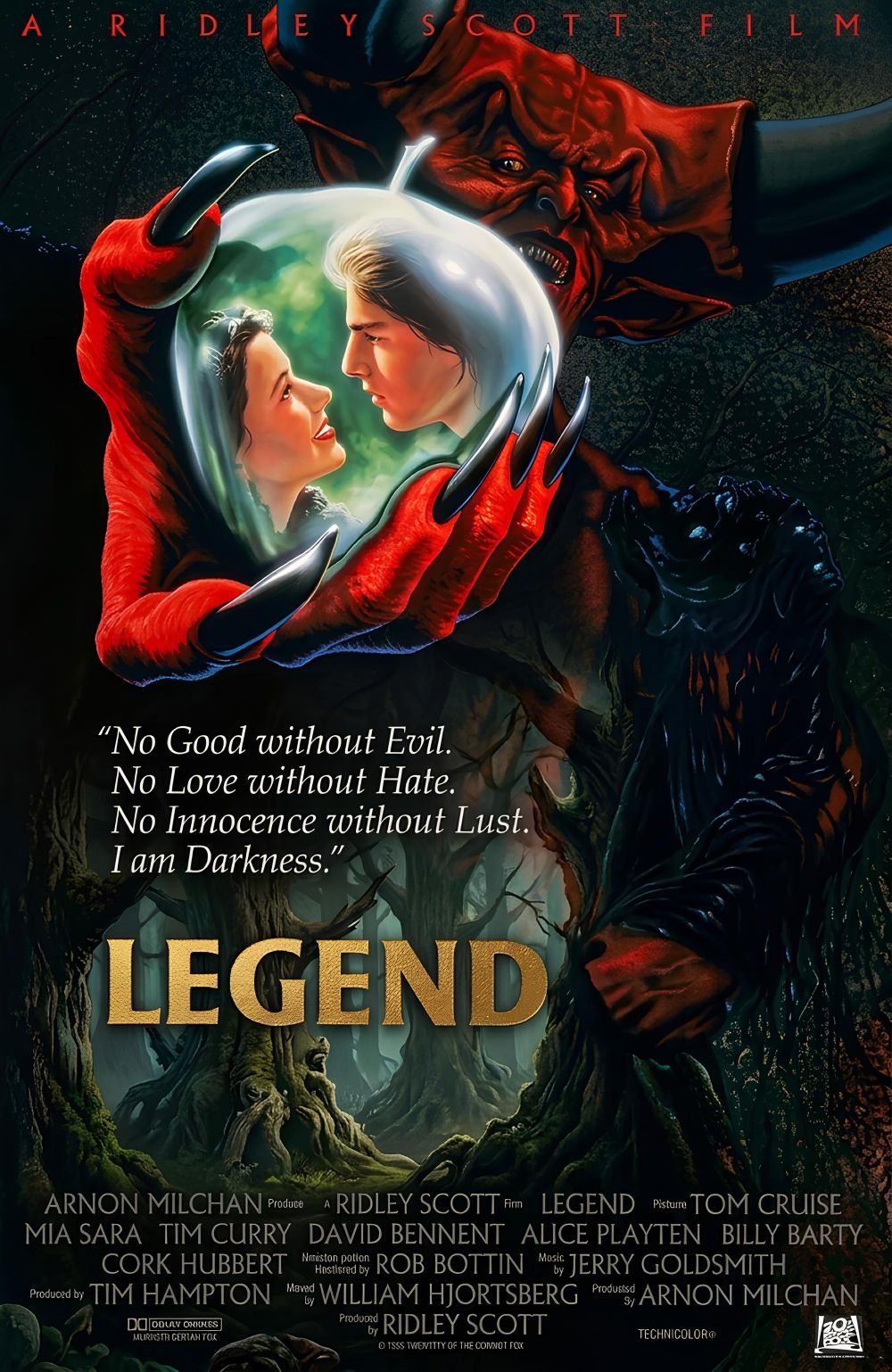
Legend is one of those films that feels like it should be a masterpiece even before it begins. It has Ridley Scott behind the camera, an extravagant fantasy premise, elaborate practical effects, striking production design, and a cast that includes a young Tom Cruise, Mia Sara, and Tim Curry. Released in 1985, the film arrived as a dark fantasy event that had been heavily anticipated, especially because Scott had already earned a reputation for visually stunning films. Alien and Blade Runner had established him as a director who could make entire worlds feel tactile, mysterious, and overwhelming. The idea of Scott applying that sensibility to unicorns, goblins, forest sprites, demonic lords, and fairy-tale mythology was exciting on paper. Unfortunately, while Legend is often gorgeous to look at, it becomes an uneven mess that is only saved from becoming a major disappointment by Tim Curry’s performance as Darkness.
The setup is familiar enough to sound almost deliberately archetypal. In a magical forest, Jack, played by Cruise, is a woodland boy who lives in harmony with nature and has fallen in love with the innocent Princess Lili, played by Sara. The world’s balance is tied to a pair of unicorns, embodiments of purity and light. Darkness, a devil-like ruler who wishes to plunge the world into permanent night, sends his goblin servants to kill the unicorns and take one of their horns. Lili’s fascination with the unicorns sets the tragedy in motion, and once one of the creatures is slain, winter and darkness descend upon the land. Jack must rescue Lili, restore the horn, defeat Darkness, and return light to the world.
There is nothing inherently wrong with a simple fairy-tale plot. In fact, Scott’s strongest instinct in Legend is treating fantasy with a sense of visual seriousness. The forest does not look like a clean studio set built for children; it looks damp, overgrown, foggy, and vaguely dangerous. The trees loom like ancient creatures, shafts of light break through the branches in painterly bursts, and even the beautiful areas of the film carry an eerie quality. Scott and cinematographer Alex Thomson create images that often resemble illustrated storybooks poisoned by a nightmare. The film’s environments are its greatest achievement. Whether it is the glowing forest, the icy wasteland after the unicorn’s death, or Darkness’ fire-lit underworld, Legend makes a serious effort to create a fully realized fantasy space rather than simply dressing actors in costumes and placing them in generic medieval scenery.
That visual commitment is why the film remains so fascinating despite its flaws. You can pause almost anywhere and find something worth admiring: a strange creature in the background, smoke drifting through a cavern, an enormous set textured with roots and stone, or a costume that looks handmade rather than mass-produced. Scott’s eye for atmosphere is undeniable. The film has an unusual physicality, too. Its magic is created through prosthetics, makeup, puppetry, matte work, and elaborate sets, so even when some effects have aged, they retain a handmade charm. Modern fantasy often has the advantage of digital flexibility, but Legend has the kind of tactile design that makes its world feel like it has dirt under its fingernails.
Still, visual beauty cannot completely compensate for a story that never finds a consistent rhythm. Legend often feels less like a fully developed narrative than a collection of spectacular images and half-formed fairy-tale ideas. Characters appear with little introduction, emotional shifts happen abruptly, and major story developments can feel rushed or strangely underexplained. The theatrical cut in particular carries the sense that important connective material has been removed. There are moments when the movie seems to expect emotional investment simply because the images are grand or the music swells, but the script has not done enough to earn that reaction.
Jack is also an unusually bland hero for a film that needs a strong center. Cruise was still early in his career, and there are flashes of the screen presence that would soon make him a major star. He is physically committed and looks believable racing through forests, climbing ruins, and confronting danger. But Jack is written as a generic pure-hearted fantasy protagonist, and Cruise never gets enough material to make him feel specific. He is brave because the story says he is brave, romantic because the story says he loves Lili, and destined to save the world because that is what these stories require. He does not have much inner conflict beyond the expected guilt and determination.
Lili is similarly underwritten, although Mia Sara does bring a dreamy, otherworldly quality to the role. The film wants her to embody innocence, temptation, and romantic idealism, but it does not give her much agency until she becomes corrupted by Darkness’ influence. Her transformation into a dark bride is visually memorable, especially in the elaborate black gown and makeup, but it also highlights the film’s habit of prioritizing imagery over character. The sequence is beautiful, eerie, and loaded with gothic fantasy appeal, yet Lili’s emotional journey into that role feels more decorative than dramatically convincing.
The supporting characters are more colorful but not always more useful. The dwarfs, elves, and forest companions give the story occasional energy, particularly the sarcastic fairy Oona and the armored dwarf Gump. Yet their presence can make the film feel tonally scattered. Sometimes Legend wants to be haunting and mythic; sometimes it wants broad comic relief; sometimes it drifts toward romantic melodrama. Those modes do not always blend. The result is a movie that can move from an ominous demonic ritual to a goofy side-character exchange without establishing a stable tone.
Then there is Tim Curry, who walks into the movie and immediately makes every other problem less important. His Darkness is one of the most iconic fantasy villains ever put on screen, and it is not difficult to understand why. The makeup design alone is astounding: massive horns, red skin, cloven hooves, muscular proportions, and a towering silhouette that makes him look like a medieval illustration of Satan brought to life. But the design would be nothing without Curry’s performance. He does not merely hide beneath the prosthetics; he gives Darkness a voice, posture, and seductive intelligence.
Curry plays Darkness as both monstrous and theatrical. His deep, measured delivery turns lines about night, desire, and evil into something genuinely alluring. He understands that the character should not simply roar or sneer. Darkness is persuasive. He offers Lili beauty, power, and escape from innocence, which makes him more interesting than a villain who only threatens destruction. His scenes with Sara have a strange, almost operatic energy, mixing horror, seduction, and camp in a way that fits the film’s most ambitious visual impulses. Curry makes Darkness feel ancient, vain, cruel, romantic, and weirdly funny all at once. He gives Legend its pulse.
The famous confrontation between Jack and Darkness should be the film’s crowning achievement, and visually it almost is. Darkness’ lair, lit by flames and surrounded by infernal architecture, gives Scott room to indulge his talent for monumental images. Curry’s villain towers over Cruise, making the hero look small and vulnerable. Yet even here, the fight is more memorable for its atmosphere than its dramatic construction. It is a good example of the whole film: rich in aesthetic invention, less persuasive as storytelling.
The music also reflects the movie’s fractured identity. Different versions of Legend are associated with different scores, most notably the Jerry Goldsmith score and the Tangerine Dream soundtrack used in the American theatrical release. The Goldsmith material feels more classically mythic and orchestral, while Tangerine Dream’s electronic music gives the film a distinctly 1980s dream-pop atmosphere. Both have their supporters, and both alter the experience considerably. That split feels appropriate for a movie that has always existed in multiple forms and competing moods. Legend is never quite one thing.
In the end, Legend is a flawed cult fantasy rather than a lost masterpiece. Its reputation rests largely on its imagery, its practical craftsmanship, and Curry’s towering performance, not on the strength of its plot or its emotional depth. Ridley Scott clearly wanted to make a dark fairy tale that felt ancient and sensual, but the finished film too often gets trapped between mythic grandeur, children’s fantasy, gothic romance, and broad adventure comedy. It is an uneven mess, but it is a beautiful one. And every time Tim Curry’s Darkness enters the frame, Legend briefly becomes the extraordinary film it was always trying to be.
“In the field we had a code of honor: you watch my back, I watch yours. Back here there’s nothing!” — John Rambo
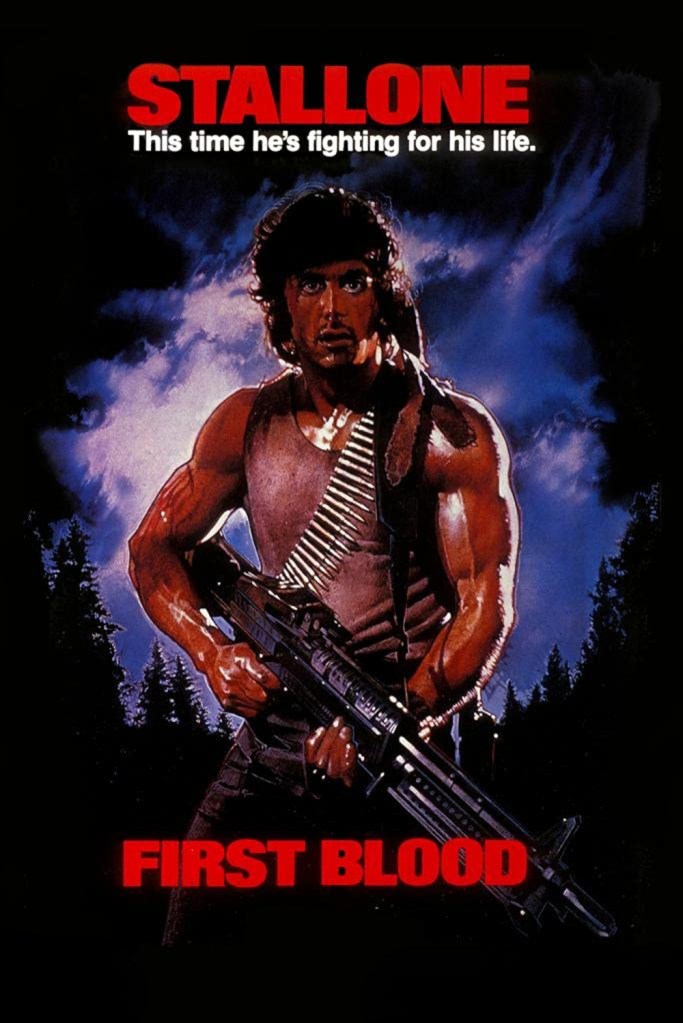
You sit down expecting a brainless 80s action flick, and instead you get a meditation on trauma, bureaucracy, and the American wilderness. That’s First Blood for you. Directed by Ted Kotcheff and released in 1982, this is the movie that introduced the world to John Rambo, but don’t go in hoping for a body count or one-liners. What you actually get is a lean, gritty, and surprisingly sad drama about a guy who just wants to eat a hot meal and ends up accidentally declaring war on an entire small-town police force. And honestly? It holds up to this day. The film is adapted from David Morrell’s 1972 novel of the same name, but if you’ve read the book, you’ll notice some serious tonal differences right away. Morrell’s novel is bleak, brutal, and deeply nihilistic—a product of its era’s raw disillusionment with Vietnam. Kotcheff and Stallone sanded down some of those rougher edges, not to sell out, but to make Rambo a more sympathetic figure. The bones are the same, but the spirit is just a little warmer, and that choice changes everything.
Let’s break down the plot, because it’s deceptively simple. Sylvester Stallone plays John Rambo, a former Green Beret and Vietnam War hero who wanders into the town of Hope, Washington, looking for a fellow soldier he served with. He finds out the guy died of cancer from Agent Orange exposure. That’s the first gut punch. Rambo, already drifting and clearly struggling with PTSD, just wants to grab some food and keep moving. But the local sheriff, Will Teasle (a perfectly cast Brian Dennehy), takes one look at Rambo’s long hair, army jacket, and tired face and decides he’s a vagrant who needs to be run out of town. From a structural standpoint, Teasle isn’t a cartoon villain—he’s a classic dramatic antagonist: a rigid, small-town authoritarian who sees drifters as a threat to his orderly world. That realism makes the whole thing sting because you can almost see both sides. Almost.
When Teasle tries to escort Rambo to the city limits, Rambo walks back into town. That’s his big crime. He gets arrested, and at the station, the deputies start pushing him around. One of them, a veteran deputy named Galt (played with sneering menace by Jack Starrett), is the real problem here. Galt isn’t some young hothead. He’s an older, seasoned deputy who’s clearly been in his role for years, and he’s become entitled on the power of his badge. You can see it in the way he leans into the booking process, the casual cruelty in his eyes, the way he treats Rambo like a stray dog he’s finally allowed to kick. During the shaving scene, as deputies try to clean Rambo up after the arrest, Galt is the one who holds Rambo down, restraining him while another deputy wields the straight razor. He’s not waving the razor himself, but that almost makes it worse—he’s the enforcer, the guy who pins you in place while someone else does the dirty work. It’s a veteran cop who knows exactly how to exert control without getting his own hands bloody. That makes Galt far more chilling than some screaming bully. He represents the rot of unchecked authority, the way small-town power can curdle into casual sadism over time. And that whole humiliating process—being held down, having a straight razor brought to his face—triggers a full-blown flashback for Rambo. Then something clicks. Rambo explodes, beats down half the station, and escapes into the nearby mountains.
Now the hunt begins. Teasle calls in the State Patrol, the National Guard, and eventually his old mentor, Colonel Trautman (Richard Crenna), who knows exactly what kind of animal they’re chasing. Trautman warns Teasle that Rambo isn’t just a drifter; he’s a trained killer with a “purple heart, a silver star, and a congressional Medal of Honor.” And here’s the core irony: Rambo doesn’t want to hurt anyone. He just wants to be left alone. But the chase escalates, people die, and by the end, you’re not cheering for the hero to win—you’re hoping he gets some peace.
From an analysis perspective, where First Blood really earns its stripes is its restraint. The action sequences are tense but never escalate into cartoon violence. Rambo uses the forest like a ghost, setting traps, crawling through mud, and surviving on raw squirrel meat. He doesn’t mow down dozens of cops with a machine gun. In fact, the only person he kills is Galt, who falls to his death while hanging off a helicopter because Rambo throws a rock at the chopper. And Rambo immediately looks horrified. That’s the key. Even Galt, as entitled and cruel as he is, isn’t a villain Rambo wants to execute. The kill is accidental, a desperate act of survival. The movie takes its time showing how the very skills that made Rambo a hero in Vietnam—his survival instincts, his aggression, his ability to turn anything into a weapon—now make him a monster in peacetime America. The local cops are out of their depth, but aside from Galt, they’re mostly just scared men doing a job. Nobody else is pure evil. Just broken systems and broken people.
But let’s talk about that novel, because the comparison is crucial for understanding the film’s choices. David Morrell’s First Blood is a much darker animal. In the book, Rambo is more feral, less a wounded hero and more a walking death sentence. He kills multiple cops, not by accident or in self-defense, but with cold, tactical efficiency. The novel has no Colonel Trautman to serve as a moral anchor—Trautman is there, but he’s just as ruthless. And the ending? Devastating. In Morrell’s version, Rambo and Teasle essentially murder each other in a final, bloody standoff. Trautman finishes Rambo off with a shotgun blast to the gut. There’s no catharsis, no plea for understanding. Just bodies and regret. The tone is nihilistic to the core: the system destroyed these men long before the first page, and there was never any hope. Kotcheff’s film pulls back from that abyss. It keeps the violence lean and mostly off-screen. It gives Rambo that famous final monologue where he sobs about his friend dying next to him, about protesters spitting on him, about not being able to turn off the war inside his head. That scene isn’t in the book—not like that. The movie says, “This man is suffering, and maybe he can still be saved.” The novel says, “This man is already dead, and he’s taking everyone with him.” Both are valid responses to Vietnam, but the film’s slightly toned-down approach is why Rambo became an icon instead of a footnote.
From a performance standpoint, Stallone gives the work of his career here. Forget the grunting one-liners of later sequels. In First Blood, he barely speaks, and when he does, his voice cracks. Watch his eyes during that final monologue. After Trautman finally talks him down, Rambo dissolves into a sob. “Nothing is over!” he screams at Trautman. “You don’t just turn it off!” It’s raw, uncomfortable, and genuinely moving. You realize that the whole movie has been one long panic attack for this character. The Rambo that pops up in Rambo: First Blood Part II is a cartoon superhero. The Rambo here is a guy who needed a therapist and a hug about thirty years ago. That vulnerability is the film’s great deviation from the source material. Morrell’s Rambo never asks for understanding. Kotcheff’s does. And that small shift in tone—from nihilism to wounded humanity—is what elevates the film from a grim exploitation picture to a legitimate character study.
On the technical side, Ted Kotcheff’s direction is patient and atmospheric. He shoots the Pacific Northwest like a character—vast, wet, dark, and full of hiding places. The chase scenes are grounded, with long takes and practical stunts. When Rambo jumps off a cliff into a tree and lands with a thud that sounds real, it hurts. There’s no CGI safety net. Jerry Goldsmith’s score is mournful, with lonely woodwinds and a simple, haunting main theme that never pumps you up for a fight. It just makes you sad. The movie even has the guts to end on a downer—but not as brutal as the book’s. Rambo surrenders, crying in Trautman’s arms, and the final shot is him walking away in handcuffs into the rain. No freeze-frame high five. No sequel tease. Just rain. And yet, compared to the novel’s blood-soaked finale, that rain feels almost like mercy. That’s tonal balancing at its finest: the film acknowledges the darkness without drowning in it.
Of course, the cultural memory of First Blood has been completely buried by its sequels. Most people under thirty know Rambo as the muscle-bound machine gun guy from memes and video games. But the original is closer to a western like The Deer Hunter meets a paranoid 70s thriller like The French Connection. It’s a movie about a country that used its soldiers and then discarded them. Teasle represents the willful ignorance of middle America—“I don’t care about your war” is basically his attitude. And Rambo represents the bill coming due. Galt, as that entitled veteran deputy, represents the everyday cruelty of those who’ve held power too long and forgotten what it’s for—the guy who doesn’t need to swing the blade because he’s the one holding you still. That theme hits even harder today, decades later, when veterans are still fighting for basic support and stories of badge-heavy misconduct still dominate headlines. The novel took that theme to its logical, horrific conclusion: no survivors, no lessons learned. The film pulls back just enough to let you breathe, and that one small change turned First Blood from a bleak cult artifact into a mainstream classic. You can argue which version is more honest. But you can’t argue that Stallone and Kotcheff made the right call for the screen.
First Blood rules. It’s a rainy, sad, surprisingly smart action movie that will stick with you longer than any explosion-fest. It’s also a masterclass in adaptation, showing how a slight shift in tone—from nihilistic to wounded—can transform a story without betraying its core. Brian Dennehy is perfect as the stubborn but not evil sheriff. Jack Starrett makes Galt a quietly terrifying portrait of bureaucratic sadism, a veteran deputy who’s learned to love the leash and the privilege of pinning a man down while someone else does the cutting. Richard Crenna brings real weight as Trautman, a father figure who knows he helped raise a weapon he can no longer control. And Stallone acts his soul out. When he whispers “I could have killed them all” in the final scene, he’s not bragging. He’s confessing. That’s why First Blood is a classic. It’s not a recruitment poster. It’s a eulogy—just a little less hopeless than the novel that birthed it. Four stars, easily. Just don’t go in expecting explosions every five minutes. Go in expecting to feel bad, and you’ll leave feeling like you watched something real.
Today, the Shattered Lens wishes a happy birthday to the one and only Sigourney Weaver. Seen here with Jonesy the Cat, Weaver will always be best-remembered for bringing to life Ellen Ripley and totally revolutionizing both horror and science fiction!
Today’s song of the day comes from Jerry Goldsmith’s iconic score for Alien.
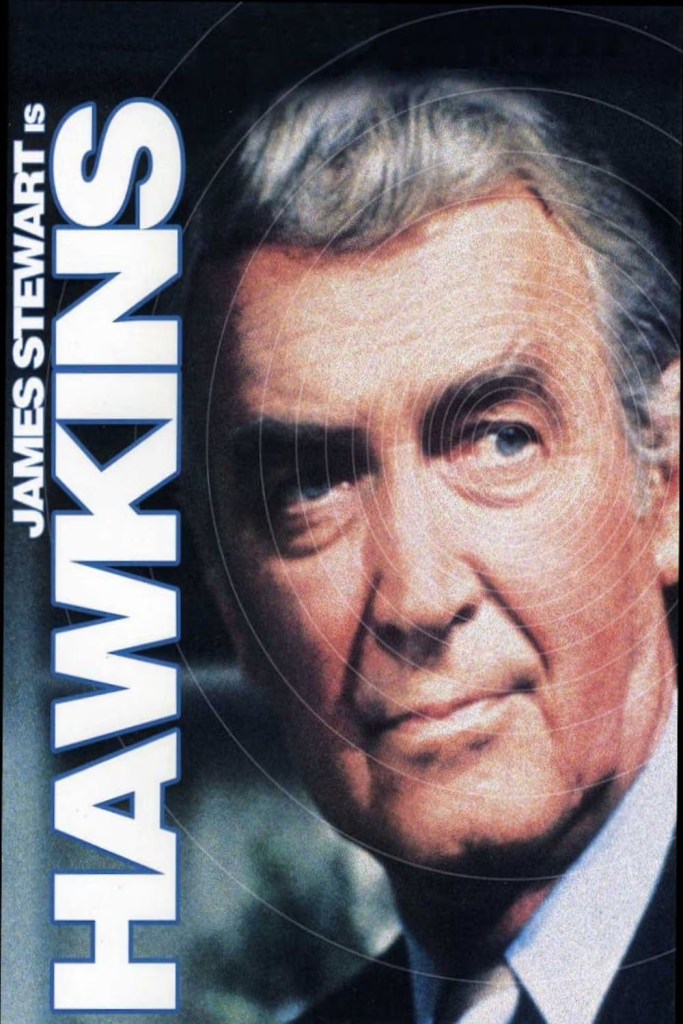
In this pilot episode of the TV-Movie series HAWKINS, Jimmy Stewart plays Billy Jim Hawkins from the fictional town of Beauville, West Virginia, who just happens to be the best defense lawyer in the business. A former prosecutor who changed sides, he has a perfect record for getting his clients off. Billy Jim gets a call to come out to Los Angeles when an heiress, Edith Dayton-Thomas (Bonnie Bedelia), is charged with the murder of her dad, stepmom, and stepdaughter. Billy Jim and his team, which is basically just his cousin R.J. Hawkins (Strother Martin), set about getting to know all the people in her life. There’s the family lawyer Carl Vincent (Robert Webber) who’s been dipping his hand in the family till while also carrying on an affair, much to the chagrin of his wife Vivian (Antoinette Bower). There’s Edith’s aunt Julia (Kate Reid), who doesn’t seem to have a very strong opinion of her now deceased brother in law and was seen arguing with him on the day of his murder. And there’s Edith herself, whose diary would indicate that she hated her dad and her stepmom so much that she wanted them dead. She also just happens to have the reputation for being a little strange and / or crazy. The evidence seems to be stacked against Edith, but Billy Jim doesn’t get to charge those extremely high legal fees for nothing. If anyone can get to the bottom of the case, it’s him.
I’ll just go ahead and say that Jimmy Stewart and the character of Billy Jim Hawkins are a match made in heaven. Any person who has seen him in the classic Otto Preminger film ANATOMY OF A MURDER (1959) knows how great he is at playing a down home defense attorney. He excels in the role, and he’s reason alone to invest in the DVD collection from Warner Brothers Archive like I did several years back. It’s so fun watching him question people in his easy going, slow talking, country boy way which almost always leads to the discovery of exactly what he needs to know. And Strother Martin is perfect as his cousin and associate, one of 174 first cousins, according to Billy Jim himself. You see, one of the interesting things about Billy Jim’s family is that he’s one of 14 kids, with 52 nieces and nephews to go along with all those first cousins. That’s some fun character history for a guy like me, whose mom is one of 15 kids, and I also have tons of first cousins. Stewart and Martin are a perfect duo, and their sharing of different theories as the episodes progress make up some of the best scenes. Add to Stewart and Martin a solid group of guest stars in this episode including Bonnie Bedelia (DIE HARD), Robert Webber (THE DIRTY DOZEN), Kate Reid (THIS PROPERTY IS CONDEMNED), and Antoinette Bower (THE EVIL THAT MEN DO), and you can’t help but have an entertaining show. There’s never any doubt that Stewart is going to uncover the murderer, but the fun of course is in seeing how he puts all the clues together.
HAWKINS: Death and the Maiden is the first of eight “Hawkins” TV movies starring Jimmy Stewart in 1973 and 1974. The character of Billy Jim Hawkins is a clear pre-cursor to the character of Matlock that Andy Griffith would have so much success with a little over a decade later. In a strange move at the time, CBS chose to alternate HAWKINS on Tuesday nights with a series of SHAFT TV movies. Imagine wanting to watch SHAFT only to turn on your TV to discover Jimmy Stewart and Strother Martin solving murder mysteries, or Vice-Versa. Conventional wisdom suggests that this release strategy was probably confusing to the respective audiences for the shows based on their vastly different demographics. I personally think they both sound awesome, but I can see how pairing such different shows in this way could have been a problem for the ratings. Regardless of its short lived tenure, if you’re a fan of Jimmy Stewart, you need to watch HAWKINS. Each episode is a joy to behold.
The late composer Jerry Goldsmith was born 96 years ago today. Over the course of his long career, he composed many classic film scores. He was nominated for 18 Oscars and won for his score for The Omen.
Today’s song of the day comes from Goldsmith’s score for 1968’s Planet of the Apes! Listen to this and try not visualize Charlton Heston being chased by a bunch of gorillas on horseback.