Review: The Crow (dir. by Alex Proyas)


“If the people we love are stolen from us, the way to have them live on is to never stop loving them. Buildings burn, people die, but real love is forever.” — Sarah Mohr

The Crow is one of those films whose reputation has become inseparable from the tragedy surrounding it, yet reducing it to that tragedy misses why it has endured so powerfully. Alex Proyas’s 1994 adaptation of James O’Barr’s graphic novel is a revenge story, a gothic romance, a comic-book nightmare, and an MTV-era industrial-rock mood piece fused into something singular. It is not flawless, and its storytelling is often more archetypal than psychologically deep, but that directness helps its emotional force. The movie does not ask viewers to untangle a complicated moral puzzle. It asks them to feel the enormity of a love violently interrupted, and then to watch that grief return from the grave with black feathers, white face paint, and a very personal sense of justice.

The premise is almost mythically simple. On the night before their wedding, musician Eric Draven and his fiancée Shelly Webster are murdered by a gang of thugs who break into their Detroit apartment. A year later, on Devil’s Night—the annual pre-Halloween ritual of fires and chaos that hangs over the film’s ruined cityscape—Eric rises from his grave, guided by a crow, to hunt down every person responsible. The classic revenge-movie structure is there: identify the killers, stalk them, punish them, move closer to the figure at the top. But The Crow distinguishes itself by making revenge feel less like triumphant macho fantasy and more like an extension of mourning. Eric does not become a cool killer because pain has made him stronger. He becomes an avenging specter because he cannot accept a world in which Shelly’s final moments are left unanswered.

Proyas directs the film like a fever dream built from wet asphalt, broken glass, empty tenements, and perpetual night. The Detroit of The Crow barely operates as a realistic city, but realism is not the point. It is an expressionist landscape, a metropolis that seems permanently trapped between a crime scene and a graveyard. The production design gives the movie its extraordinary visual identity: towering shadows, alleyways lit by flame, apartments that look like mausoleums, and a skyline that appears to have been abandoned by daylight itself. This is Gothic cinema filtered through comic-book panels, German Expressionism, punk fashion, and the darkly romantic visual language of early-1990s alternative music videos. It has been imitated constantly, sometimes lovingly and sometimes clumsily, but the original still feels unusually tactile. The grime, rain, fire, and shattered architecture have physical weight.

That sense of atmosphere is helped enormously by the soundtrack, which operates as more than a collection of era-specific needle drops. Songs by The Cure, Nine Inch Nails, Stone Temple Pilots, Pantera, and others create a sonic environment around Eric’s grief. The music gives the movie a pulse that is melancholy, furious, and seductive all at once. For many viewers, The Crow became a gateway text for a specific kind of 1990s gothic-alt identity: black clothing, industrial textures, romantic despair, and the conviction that heartbreak could be transformed into style without becoming trivial. Its aesthetic influence is obvious, but it worked because it was attached to an actual emotional core rather than simply a pile of cool images.

Brandon Lee is the center of that emotional core. His Eric Draven is handsome and charismatic, obviously, but the performance’s real strength lies in its shifts of tone. Lee can play Eric as tender and playful in the brief memories of his life with Shelly, then turn him into a creature of eerie stillness and explosive violence. He delivers some of the film’s most famous lines with a theatrical flair that could have become silly in another actor’s hands, but he never entirely loses the sense that Eric is broken underneath the black leather and corpse-like makeup. When he says, “It can’t rain all the time,” it does not land merely as a quotable gothic slogan. It is a declaration of faith from someone trying to recover one small piece of warmth from an overwhelmingly cruel world.

Lee’s death during production makes that performance almost unbearably charged. He was accidentally shot on set during the filming of a scene involving a prop firearm and died at age 28. The production had to regroup, rewrite and restructure parts of the film, and use a combination of body doubles, careful editing, visual effects, and previously filmed material to complete Eric’s story. That practical disruption is visible only in limited ways in the finished product; remarkably, The Crow generally feels cohesive rather than patched together. Still, the tragedy affected more than the logistics of production. It fundamentally changed the public’s relationship to the film. Eric’s resurrection, his grief over a stolen future, and the repeated imagery of a dead young man returning to finish unfinished business all acquired a terrible real-world resonance.

That connection could easily have overwhelmed the movie, turning it into a morbid curiosity. Instead, it made the film feel elegiac. Audiences did not merely see a fictional tragic hero; they saw Lee’s final completed role, an image of an actor whose life had ended before the public had a chance to see where his career might go. The contrast is particularly painful because Lee’s work here suggests enormous range and movie-star potential. He is not just doing martial-arts action or inheriting the legacy of his father, Bruce Lee. He is creating an icon of romantic anguish and dark humor. The public reception of The Crow therefore carried an unusual mixture of admiration, grief, and protectiveness. Its cult status was built partly on its style, soundtrack, and comic-book mythology, but also on the feeling that viewers were witnessing a final gift from an artist taken much too soon.

The supporting cast gives the film much of its flavor, especially because Proyas treats its villains as grotesque figures in a corrupted fairy tale. David Patrick Kelly’s T-Bird is nervy and cruel, Michael Massee’s Funboy has a sleazy unpredictability, and Angel David’s Skank brings a wild, cartoonish energy to the gang. Rochelle Davis, playing Sarah, provides something vital in the opposite direction. She is not merely a child sidekick; she represents the lingering human connection between Eric’s former life and his revenant existence. Her scenes with Eric remind us that he is not simply a supernatural executioner. He is still someone capable of care, humor, and memory.

But Michael Wincott’s Top Dollar is the film’s true villainous masterstroke. Wincott has one of cinema’s most instantly recognizable voices: smoky, velvety, sardonic, and faintly predatory. As Top Dollar, he makes every line sound like it has been exhaled through cigarette smoke in a cathedral. He is not a conventional crime boss in the realistic, procedural sense. He is a decadent king of the city’s underworld, a man who appears to have converted criminal power into a private religion of violence, ritual, and spectacle. His lair, his manner, and his relationship with his half-sister Myca all push him beyond ordinary gangster territory into something operatic and mythic.

What makes Wincott mesmerizing is that he does not overplay Top Dollar’s eccentricities. The character has plenty of theatrical material to work with—occult touches, ominous speeches, a penthouse filled with weaponry and strange décor—but Wincott approaches him with a serene confidence. He rarely seems rushed or rattled, even as Eric systematically destroys his organization. That calm makes him more intimidating. Top Dollar understands the city as a machine of corruption, and he sees himself as the person with his hands on the controls. Wincott’s performance gives the villain intelligence, sensuality, and a distinctly sinister elegance. He is evil, certainly, but he is never bland. In a movie full of striking images, his voice alone becomes part of the visual texture.

The action in The Crow is effective precisely because it avoids pretending that Eric’s vengeance is a balanced fight. For much of the movie, he is invulnerable, and the violence plays like supernatural punishment. The standout set pieces—Eric’s assault on the gang’s hideout, his confrontation with T-Bird, and the final tower sequence—have the heightened, almost ritualistic quality of comic-book action rather than the grounded impact of a crime thriller. That can make some of the antagonists feel less like people than targets, but again, the film is working in the language of myth. Eric is a ghost walking through the consequences of someone else’s cruelty.

If The Crow has a weakness, it is that the love story depends heavily on fragments. Shelly is more an emotional presence than a fully developed character, preserved in Eric’s memories as warmth, laughter, music, and suffering. Yet the film understands that grief often works that way. We do not always remember a person as a complete biography when they are gone; sometimes we cling to specific gestures, rooms, jokes, songs, and images. The flashes of Eric and Shelly together are deliberately idealized because they are being recalled by a man who has lost everything. The movie’s romanticism may be blunt, but it is sincere.

More than three decades later, The Crow still works because it is a film of conviction. It believes in the visual poetry of rain and ruins, in the melodrama of eternal love, in the power of a memorable face framed in black-and-white makeup, and in the possibility that a soundtrack can become part of a movie’s mythology. Brandon Lee’s death will always remain a heartbreaking part of its history, and it is impossible to watch the film without feeling that absence hovering around it. But The Crow is not remembered simply because of what happened behind the scenes. It is remembered because Proyas, Lee, Wincott, and the rest of the cast made a pulpy revenge tale feel like a dark romantic elegy—one that still takes flight every time the crow returns to the skyline.

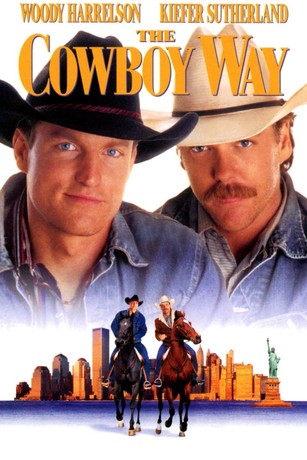
Brad reviews THE COWBOY WAY (1994), starring Woody Harrelson and Kiefer Sutherland!


Happy 59th birthday, Kiefer Sutherland!

Sutherland portrayed my favorite TV character of all time, when he spent 8 seasons playing Jack Bauer in my favorite TV series of all time, 24. Raylan Givens (Timothy Olyphant) gave him a solid run for his money when I got around to watching the JUSTIFIED series a few years back, but I still believe Bauer edges him out. Another of my favorite shows when I was growing up was CHEERS. And a big reason for that is Woody Harrelson. CHEERS ran from 1982-1993, so when it started I was nine and when it ended I was twenty. I literally grew up on the show. I thought Harrelson’s portrayal of the dim-witted, but lovable and sweet character, Woody Boyd, was so funny. I remember being happy when he started making movies and had some solid success. I’ve always enjoyed THE COWBOY WAY, the film that teamed up Harrelson and Sutherland, so I decided to revisit the 1994 action-comedy on Kiefer’s special day. 

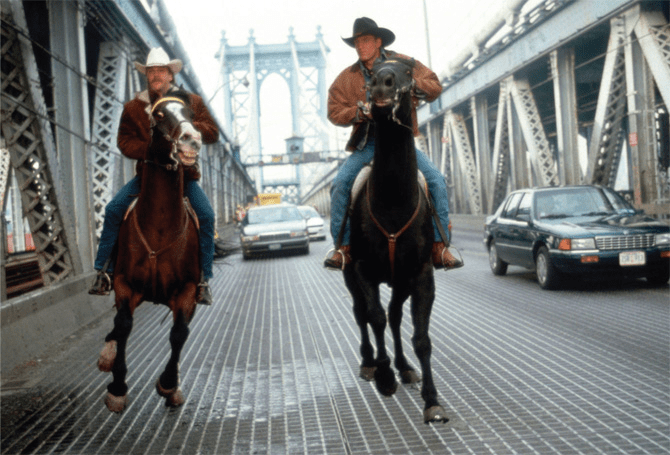
IN THE COWBOY WAY, Woody Harrelson plays the somewhat dim-witted and overwhelmingly carefree Pepper Lewis, while Kiefer Sutherland plays the more responsible and extremely serious Sonny Gilstrap, two lifelong friends and rodeo champions from New Mexico. The story kicks off when their long-time friend Nacho Salazar (Joaquin Martinez) disappears after going to New York City to pick up his daughter Teresa (Cara Buono), who has been smuggled into the U.S. from Cuba. Pepper and Sonny decide to head to the big city themselves to track down Nacho, and soon find themselves taking on the murderous human trafficker, John Stark (Dylan McDermott), who murdered Nacho and is forcing his daughter to work in a sweatshop. With only their country boy common sense (well at least Sonny’s), their exceptional rodeo skills, and the help of an empathetic NY cop ((Ernie Hudson), Pepper and Sonny will do whatever it takes to find out what happened to Nacho and save his daughter from a life of modern day slavery.

THE COWBOY WAY is silly and unrealistic at times, with shifts in tone that will make your head spin, but I still love it anyway. This type of action-comedy was commonplace in the 80’s and 90’s, but you don’t see movies like this much anymore. I’ll admit that my personal nostalgia, as well as my lifelong appreciation of Sutherland and Harrelson, plays into my enjoyment of the film. It’s a movie that leans into the once popular formula of outsiders from the country being looked down upon by city slickers, and then proving themselves to be more than capable. Think CROCODILE DUNDEE, but without the romance. This is the kind of movie that is trying its best to give us a good time for our box office dollars. Many in Hollywood have forgotten how to entertain, and it’s such a breath of fresh air to watch movies that exist solely for that purpose, even when they’re not perfect. 

As is often the case for me, the cast of THE COWBOY WAY plays a big factor in my enjoyment of the movie. Woody Harrelson is certainly over the top as the irresponsible New Mexico cowboy, but he’s also funny at times and more than capable of handling the action scenes. Kiefer Sutherland’s cowboy is the exact opposite, he’s serious, extremely responsible, and very capable. If nothing else, he needs Harrelson’s character in his life to help him remove the stick from his ass at times! Ultimately, it’s their relationship and banter that carries the film for me. Dylan McDermott is good as the sleazy villain, but if you’ve seen many 80’s and 90’s action movies, he’s pretty much exactly what you’d expect. As a fan of spaghetti westerns, I also enjoyed seeing the genre stalwart Tomas Milian pop up as McDermott’s soon-to-be ex-boss. It’s not a big role but this movie buff appreciated it. Finally, Ernie Hudson is just so likable as the kind-hearted and helpful horse-mounted cop. I like to think that he and Kiefer’s character kept a John McClane / Sgt. Al Powell type relationship going after the events of the movie.

Ultimately, in my opinion, THE COWBOY WAY may not be a great movie by critical standards, but it is a fun movie. If you’re in the mood for 90’s era action-comedy, featuring a great cast, fun stunts (e.g. men on horseback taking on New York City traffic), and a little Travis Tritt on the soundtrack, then you’ll probably have a good time with this one. 

Retro Television Review: St. Elsewhere 3.3 “Two Balls And A Strike”


Welcome to Retro Television Reviews, a feature where we review some of our favorite and least favorite shows of the past! On Fridays, I will be reviewing St. Elsewhere, a medical show which ran on NBC from 1982 to 1988.  The show can be found on Daily Motion.

This week, the nurses go on strike.  Fire all of them!, I say.

Episode 3.3 “Two Balls and a Strike”

(Dir by David Anspaugh, originally aired on October 3rd, 1984)

It’s another depressing few days at St. Eligius.

When negotiations break down, all of the nurses — except for Shirley Daniels — go on strike.  Led by Nurse Rosenthal, they march out of the hospital and join a picket line in the rain.  Triumphant music plays on the soundtrack  Rosenthal gets on her bullhorn and announces that anyone making deliveries to the hospital will be crossing the picket line and not showing solidarity with the union.  Honestly, though?  Screw the union.  It’s a hospital!  It needs supplies.  There are people dying inside of that building and they’re not even going to have the dignity of clean linen because of Nurse Rosenthal and her stupid union.  And another thing …. Rosenthal is the head of union at St. Eligius.  So, why isn’t she marching in the rain and carrying a sign?  Why does she get to stand in the doorway and shout at people?  Get out there and suffer for your union, you British commie!

Obviously, the show wanted me to be inspired by Rosenthal and the union.  Whenever it switched over to the picket line, triumphant music started playing.  I’m with Nurse Daniels on this one, though.  Daniels didn’t vote the union so why should she have to suffer in the rain?  She stays on the job.  “Good luck,” Rosenthal tells her, “you’ll need it.”  And all I can say to that is that at least Shirley Daniels isn’t deserting the hospital’s patients.

While the nurses are on strike, Dr. Canavero is attacked by a hulking man wearing a ski mask.  Canavero is able to fight him off.  Westphall and everyone else at the hospital immediately assumes that the man was Peter White but Peter has an alibi.  He was in radiology when Canavero was attacked.  So, is there a new ski mask rapist haunting the hospital?  The first ski mask rapist storyline was pretty disturbing, especially since Peter got away with it.  I’m not sure I want to go through a second one.

Dr. Craig and Ellen went to couples therapy.  As usual, Dr. Craig got annoyed with the whole thing.  There’s really nothing more fun than watching Dr. Craig get annoyed.  No one gets annoyed better than William Daniels.  Still, it seemed to do Dr. Craig and Ellen some good, with Ellen making plans to go to Hawaii and Dr. Craig acknowledging that he’s not always the easiest person to deal with.

As for Dr. Westphall …. he spent most of this episode depressed.  Westphall is always depressed.

This is my final St. Elsewhere review for 2025.  Retro Television Review is taking a break for the holidays, so I can focus on Awards Season and Christmas movies!  St. Elsewhere will return on January 9th.

Retro Television Review: St. Elsewhere 3.1 “Playing God, Part One”


Welcome to Retro Television Reviews, a feature where we review some of our favorite and least favorite shows of the past! On Fridays, I will be reviewing St. Elsewhere, a medical show which ran on NBC from 1982 to 1988.  The show can be found on Daily Motion.

Today, we start the third season of St. Elsewhere with some new opening credits!

Episode 3.1 “Playing God, Part One”

(Dir by Bruce Paltrow, originally aired on September 19th, 1984)

The opening of the third season finds that St. Eligius is just as depressing as it’s ever been.

Fiscus leads a group of new residents, including Dr. Elliott Axelrod (played by new series regular Stephen Furst), through the hospital.  Fiscus comes across as being an arrogant jackass.  I guess that’s the appeal of being a second-year resident.  You get to look down on all of the first-years.

Jack is still dating Clancy (young Helen Hunt).  When Clancy tells Jack that she’s pregnant, he’s shocked when she says she’s planning on getting an abortion.  Jack proposes to her.  Clancy says she’s not ready to get married and she’s not ready to have a baby.

Dr. Craig is still yelling at Dr. Ehrlich.  Dr. Ehrlich is still annoying the nurses.

Speaking of the nurses, they’re going on strike!

Three firefighters (one of whom is played by Erin Hudson) are injured while on the job and are rushed to St. Eligius with severe burns.  Luckily, plastic surgeon Bobby Caldwell (Mark Harmon, without that terrible mustache he wore during season two) is on call.

Dr. Peter White is working in a shady clinic and is still suing for his right to be a resident.

A traffic accident leaves one nun in a coma and apparently brain-dead.  Sister Doemnica (Michael Learned) wants to take her off life-support.  Westphall (Ed Flanders), who seems even more depressed than usual, disagrees.  It looks like there’s going to be some conflict about this.  For once, I’m on Westphall’s side.  I’m believer in hope.

Auschlander is still battling his cancer.

In other words, it’s another day at St. Eligius.  The third season premiere did a good job of re-introducing viewers to the hospital.  The snarkiness of Fiscus’s tour nicely balanced all of the more dramatic moments in the episode.  If anything has me worried, it’s the possible return of the loathsome Peter White.  How is the hospital going to deal with the return of a man who they all know is a rapist, even if he was somehow acquitted?  I guess we’ll find out.

Going Berserk (1983, directed by David Steinberg)


John Bourgignon (John Candy) is a man of many talents.  He’s a limo driver.  He’s a drummer.  He is an occasional actor, having starred in Kung Fu U. for his friend, director Sal DiPasquale (Eugene Levy).  John is also improbably engaged to Nancy Reece (Alley Mills), the daughter of Congressman and presidential candidate Ed Reese (Pat Hingle).  As the wedding approaches, John deals with a number of things.  He chauffeurs around a group of Spanish Beatles impersonators.  He finds himself handcuffed to a fugitive (Ernie Hudson) who dies at an inopportune time.  A cult leader (Richard Libertini) attempts to brainwash John into assassinating Ed, though the process might just turn John into a “schmuck.”

Going Berserk was John Candy’s first lead feature role and it was obviously designed to play to Candy’s popularity as one of the stars of SCTVGoing Berserk doesn’t gave a plot as much as it’s a collection of skits, some of which work better than others but all of which are held together by Candy’s comedic timing and amiable presence.  Going Berserk is disjointed and wildly uneven but it’s also frequently funny and that is a testament to Candy’s talent.  Even an overlong parody of The Blue Lagoon raises a smile because John Candy is just so committed to playing out the joke.

Going Berserk also features several familiar faces, like Richard Libertini, Pat Hingle, Ernie Hudson, Dixie Carter, Kurtwood Smith, Paul Dooley, and two of Candy’s SCTV co-stars, Eugene Levy and Joe Flaherty.  I especially liked Levy’s performance as the sleazy director who blackmails his way into filming the wedding.  Going Berserk was frequently stupid but, more often than not, it made me laugh.

Film Review: The Jazz Singer (dir by Richard Fleischer)


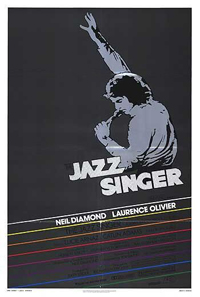
In the 1980 remake of The Jazz Singer, it only takes the film seven minutes to find an excuse to put Neil Diamond in blackface.

Of course, the film was a remake of the 1927 version of The Jazz Singer, which featured several scenes of Al Jolson performing in blackface.  In fact, Al Jolson in blackface was such a key part of the film that it was even the image that was used to advertise the film when it was first released.  Back in the 20s, Jolson said that wearing blackface was a way of honoring the black artists who created jazz.  (As shocking as the image of Al Jolson wearing blackface is to modern sensibilities, Jolson was considered a strong advocate for civil rights and one of the few white singers to regularly appear on stage with black musicians.)  Regardless of Jolson’s motives, less-progressively minded performers used blackface as a way to reinforce racial stereotypes and, to modern audiences, blackface is an abhorrent reminder of how black people were marginalized by a racist culture.  You would think that, if there was any element of the original film that a remake would change, it would be the lead character performing in blackface.

But nope.  Seven minutes into the remake, songwriter Jess Robin (Neil Diamond) puts on a fake afro and dons blackface so that he can perform on stage at a black club with the group that is performing his songs.  The group’s name is the Four Brothers and, unfortunately, one of the Brothers was arrested the day of the performance.  Jess performs with the group and the crowd loves it until they see his white hands.  Ernie Hudson — yes, Ernie Hudson — stands up and yells, “That’s a white boy!”  A riot breaks out.  The police show up.  Jess and the three remaining Brothers are arrested and taken to jail.  Jess is eventually bailed out by his father, Cantor Rabinovitch (Laurence Olivier).  The Cantor is shocked to discover that his son, Yussel Rabinovitch, has been performing under the name Jess Robin.  He’s also stunned to learn that Yussel doesn’t want to be a cantor like his father.  Instead, he wants to write and perform modern music.  The Cantor tells Yussel that his voice is God’s instrument, not his own.  Yussel returns home to his wife, Rivka (Caitlin Adams), and tries to put aside his dreams.

But when a recording artist named Keith Lennox (Paul Nicholas) wants to record one Yussel’s songs, Yussel flies out to Los Angeles.  As Jess Robin, he is shocked to discover that Lennox wants to turn a ballad that he wrote into a hard rock number,  Jess sings the song to show Lennox how it should sound.  The arrogant Lennox is not impressed but his agent, Molly (Lucie Arnaz) is.  Soon, Jess has a chance to become a star but what about the family he left behind in New York?  “I have no son!” the Cantor wails when he learns about Jess’s new life in California.

I’ve often seen the 1980 version of The Jazz Singer referred to as being one of the worst films of all time.  I watched it a few days ago and I wouldn’t go that far.  It’s not really terrible as much as its just kind of bland.  For someone who has had as long and successful a career as Neil Diamond, he gives a surprisingly charisma-free performance in the lead role.  The most memorable thing about Diamond’s performance is that he refuses to maintain eye contact with any of the other performers, which makes Jess seem like kind of a sullen brat.  It also doesn’t help that Diamond appears to be in his 40s in this film, playing a role that was clearly written for a much younger artist.  Still, when it comes to bad acting, no one can beat a very miscast Laurence Olivier, delivering his lines with an overdone Yiddish accent and dramatically tearing at his clothes to indicate that Yussel is dead to him.  Olivier was neither Jewish nor a New Yorker and that becomes very clear the more one watches this film.  It takes a truly great actor to give a performance this bad.  Diamond, at least, could point to the fact that he was a nonactor given a starring role in a major studio production.  Olivier, on the other hand, really had no one to blame but himself.

Still, I have to admit that ending the film with a sparkly Neil Diamond performing America while Laurence Olivier nods in the audience was perhaps the best possible way to bring this film to a close.  It’s a moment of beautiful kitschThe Jazz Singer needed more of that.

October True Crime: The Grim Sleeper (dir by Stanley M. Brooks)


It’s not known, for sure, how many people Lonnie David Franklin killed.

A residenct of Los Angeles and a former enlistee of the U.S. Army who was given a dishonorable discharge after doing time in prison for taking part in the gang-rape of a 17 year-old girl in Germany, Franklin was convicted of 10 murders but he was suspected of much more.  His earliest known murder was committed in 1984 and he was apparently very active up until 1988.  Then, much like the BTK Killer, Franklin appears to have taken a break for nearly two decades before returning to his murderous ways in 2002.  (It could be just as likely that Franklin was still killing but his victims were either not discovered or he was never linked to the crimes.)  Franklin’s murders didn’t get much attention, with the police not acknowledging that they were dealing with a serial killer until 2007.  Some of that can be blamed on the fact that many of Franklin’s murders were committed before DNA testing became a commonplace thing.  However, it has also been acknowledged that Franklin escaped detection because he targeted black women and tended to prey on sex workers, neither one of whom were a priority for the LAPD in the 80s.

2014’s The Grim Sleeper stars Dreama Walker as Christine Pelisek, the journalist who first reported on the existence of the Grim Sleeper and Ernie Hudson and Michael O’Neill as the detectives who investigated the murders and ultimately arrested Lonnie Franklin.  Franklin (played by James R. Baylis) only appears briefly in the film.  As The Grim Sleeper was made before Franklin had actually been convicted and sentenced to death for his crimes, the film does not actually state that the police arrested the right man.  Indeed, the film discusses very little about the man who was arrested for the crimes.

Instead, the film focuses on Pelisek and her attempts to get someone to take her seriously when she argues that there’s a serial killer on the loose and that the public has a right to know.  At first, everyone is skeptical of her claims.  Her editor tells her that she doesn’t have enough for a story.  The police tell her to mind her own business.  Her fellow reporters order her to get coffee.  The only people who really support Pelisek’s attempts to uncover the truth are the families of the victims, some of whom have spent over twenty years waiting for someone to tell them what happened to their loved ones.

The film is at its best when it focuses on the pain of the families, all of whom feel that they have been ignored and forgotten by the people who are supposed to be protecting them.  It’s at its least interesting when it focuses on Pelisek and her efforts to be taken seriously.  (Deama Walker has given good performances in films like Compliance and Once Upon A Time In Hollywood but she’s miscast here.)  Though flawed, the film honors the memories of those victimized by the Grim Sleeper and it reminds viewers that no one should be forgotten.

As for the real Grim Sleeper, he died suddenly while on Death Row.  The cause of death has never been released but he died in March of 2020, around the same time that COVID was spreading throughout the nation’s prisons and I’ve always assumed that he was an early fatality.  Regardless of the cause, the Sleeper met the Reaper and will never awaken again.


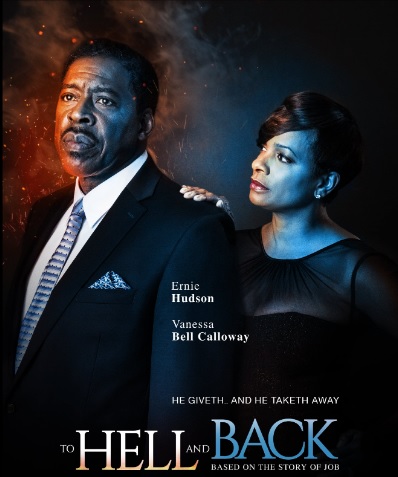
October Positivity: To Hell and Back (dir by Christine Swanson)


The Book of Job is a bit of a Biblical Rorschach test.

Job is a prosperous man who always obeys and give thanks to God.  The Devil claims that Job’s faith is only due to the fact that he’s successful and has a large family.  The Devil boasts that, if he’s allowed to ruin Job’s life, Job will respond by cursing the name of God.  Instead of asking the Devil what he’s doing outside of Hell, God says, “Go ahead, just don’t kill him.”  The Devil kills Job’s family.  The Devil kills all of Job’s servants.  The Devil takes away all of Job’s wealth and afflicts Job with terrible sores.  Job’s friends tell Job that he should blame and reject God but, because Job refuses to do so, he is rewarded with a new family and even more servants.

Some people look at the story of Job and they see it as being a story about the importance of having faith, even in the most troubling of times.  Job refuses to surrender his faith and he is rewarded.  Even though Job cannot understand why bad things are happening to him, he refuses to surrender to despair and anger and puts his faith in the idea that God has a plan.

Others look at this story and see Job as a pawn in some private game between God and the Devil.  Job keeps his faith and is ultimately rewarded but his family and his servants still all die.  Job may be rewarded but why should he have to suffer just to prove a point to the Devil?  Indeed, what is the Devil doing in Heaven, debating with God in the first place.  I mean, the Devil got kicked out of that place.  He’s in Hell for a reason.

The 2015 film, To Hell and Back, is a modern-day retelling of the Book of Job.  Joe (Ernie Hudson) is a successful businessman, a man who built his company up from nothing and who now lives in a mansion with his wife (Vanessa Bell Calloway) and his five children.  Joe gives money to worthy causes and he is never without his Bible.  God and the Devil are heard in voice-over, debating the sincerity of Joe’s faith.  God agrees to allow Joe to be tested.  One tragedy after another befalls Joe and his family.  One son is killed during a burglary.  One daughter commits suicide.  A car crash leaves another daughter dead and another son in a wheelchair.  Joe’s company is driven into bankruptcy by a lawsuit while the last of Joe’s sons leaves to start his own company.  Abandoned by even his wife, Joe grows ill and soon finds himself homebound.

Even if the film leaves us wondering why God would hurt someone just to prove a point, To Hell and Back is a well-directed and well-acted film.  Ernie Hudson gives a heart-breaking performance as Joe, a man who always tries to do the right thing and is basically punished at every single turn.  Joe definitely deserves better than to just be a pawn in a cosmic waver but at least Ernie Hudson gets a chance to show off what a good actor he can truly be.

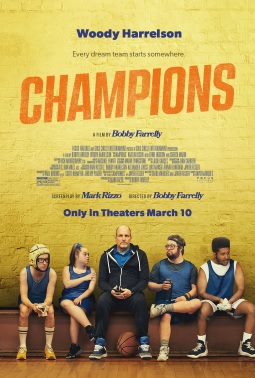
Film Review: Champions (dir by Bobby Farrelly)


In Champions, Woody Harrelson plays Marcus Marakovich.

Marcus is a basketball coach.  He believes that he has the talent and the ability to be a coach in the NBA and he’ll tell that to anyone who will listen.  Unfortunately, Marcus also has a reputation for being self-destructive and temperamental.  He has sabotaged his career with too many public fights.  As his friend and fellow coach Phil (Ernie Hudson) tells him, Marcus knows everything about basketball but he doesn’t know how to connect with the players.  Marcus is so concerned with winning that he never gets to know the people that are playing for him.

Of course, Marcus has more problems than just his inability to connect with players.  An on-court brawl leads to Marcus losing his assistant coaching job.  A drunk driving incident leads to Marcus landing in jail.  Phil bails him out but Marcus will still have to do community service to avoid serving time.  Marcus is assigned to spend the next 90 days coaching The Friends, a basketball team made up of players who have learning disabilities.  Though at first reluctant, Marcus doesn’t want to go to prison and, after a rough start, he and the Friends start to bond.  Marcus becomes a better coach and the Friends become a better team and soon, it looks like they might even be playing in the North American Special Olympics Finals in Winnipeg.  Along the way, Marcus also falls for Alex (Kaitlin Olson), the sister of one of his players.

Champions is a heartfelt film that suffers from the fact that there’s really not a single surprising moment to be found within it.  As soon as Woody Harrelson shows up as a hard-drinking and cynical basketball coach who is looking for one more chance to make it to the NBA, most members of the audience will know exactly what to expect.  It’s not a shock that he eventually bonds with his players.  It’s not a shock that he falls in love with Alex nor that he eventually calls Alex out for using her brother’s needs as an excuse to not get close to anyone.  It’s not even a surprise when Cheech Marin shows up as the cheerful manager of the rec center where the Friends practice.  And it’s certainly not a surprise that Marcus’s work with the Friends leads to him getting an offer from an NBA team, an offer that might not be as altruistic as Marcus wants to believe.  (The team is mired in a scandal and feels that hiring Marcus would bring them some good publicity.)  Marcus is faced with a big decision and the choice that he makes won’t surprise anyone.  At one point, Marcus specifically mentions the film Hoosiers, as if the simple act of acknowledging the fact that Champions isn’t exactly breaking new ground will somehow make up for the film’s predictability.

That doesn’t mean that Champions isn’t a likable film, of course.  It’s a crowd pleaser.  The actors playing the Friends actually are all learning disabled and the film portrays them all as individuals with their own unique personalities and abilities.  It’s hard not to get excited for them when they succeed on the court and the film refuses to use any of their disabilities for cheap laughs.  The film’s heart is in the right place and there’s always something to be said for that.  But, as I watched Champions, I became very much aware that this was a film that I wanted to like more than I actually did.  It was hard for me not to compare Woody Harrelson’s well-meaning but self-destructive coach to the similar character than Ben Affleck played in The Way BackThe Way Back worked because it took a familiar character type but then allowed that character and the story to go in an unexpected direction.  Watching Champions, it was hard for me to not wish that the film had been willing to take a few more risks.

Retro Television Reviews: Fantasy Island 1.4 “Family Reunion/Voodoo”


Welcome to Retro Television Reviews, a feature where we review some of our favorite and least favorite shows of the past!  On Tuesdays, I will be reviewing the original Fantasy Island, which ran on ABC from 1977 to 1996.  The entire show is currently streaming on Tubi!

Smiles, everyone!  We have two very strange fantasies this week and a few memorable guest stars!

Episode 1.4 “Family Reunion/Voodoo”

(Directed by George McGowan, originally aired on February 18th, 1978)

Finally!  After four weeks of trying to figure out how exactly the island works, I finally watched an episode that explained what Tattoo’s actual job is.  Apparently, Tattoo is an accountant.  It’s his job to keep track of how much money the island has in its treasury and to order stuff for the resort.  It’s also his job to rent things for the fantasies.  This episode, he mentions that it’s not cheap to rent a bear.  Mr. Roarke gives him a slightly disapproving look but no matter.  Tattoo’s correct.  Bears are not cheap.

As for the fantasies, they’re both kind of strange in this episode.

The more peaceful of the fantasies involves Tony (Tom Fridley) and Ann (Kathy Kurtzman) and their desire for their parents, Harry (John Gavin) and Evelyne (Juliet Mills), to get back together.  The fantasy involves tricking Harry and Evelyne into returning to the summer camp where they first met and having them fall in love all over again.  (Yes, it’s The Parent Trap, all over again.)  Unfortunately, Harry and Evelyne are accompanied by their new significant others, Stuffy McBorington (David Hedison) and Slutty LaGolddigger (Mary Frann.)  Actually, I guess those weren’t really their names but they might as well have been.  Fortunately a sudden rain storm and a visit from the expensive bear convinces Harry and Evelyne to dump Stuffy and Slutty and give love another chance.  Yay!

Meanwhile, on the other side of the island, Mr. Roarke has recreated a Haitian rubber plantation!  Jane Howell (Lauren Tewes, who I’ve also been watching on The Love Boat) is an amnesiac who might be the daughter of the plantation’s owner.  She, her adoptive parents (Howard Duff and Marjorie Lord), and her fiancé (Gary Collins) spend the night at the plantation.  However, it turns out that they’re not alone.  Mr. Roarke has also brought over a voodoo priest (Ernie Hudson!) who is determined to drive Jane mad!  It’s a really weird story that ends with not one twist but two.  It’s also an effectively creepy story, which makes it all the stranger that it’s paired with a light-hearted Parent Trap homage.

To me, the most interesting thing about this episode is that so many of the guest stars were veterans of the horror (or at least, the supernatural) genre.  The Family Reunion storyline features Juliet Mills (Beyond The Door), David Hedison (The Fly), and John Gavin (Psycho).  (Interestingly enough, David Hedison played Felix Leiter in two James Bond films while Gavin would have played Bond in Diamonds are Forever if Sean Connery hadn’t agreed to return to the role.)  Meanwhile, Voodoo features Lauren Tewes (who appeared in Eyes of a Stranger and Twin Peaks: The Return) and Ernie Hudson (Ghostbusters).  It’s an interesting mix of actors and it’s fun to see them all wandering around the island at the same time.

I enjoyed this episode.  Family Reunion was agreeably silly while Voodoo was creepy and melodramatic.  Add to that, Ricardo Montalban seemed to be having a genuinely good time as the mysterious Mr. Roarke.  He made the island seem like a fun place to visit, even with the bears and the voodoo hijinks.

Next week, more fantasies!  And more smiles!