Review: The Crow (dir. by Rupert Sanders)


“When someone you love dies, you will know emptiness… You will never forget, and you will never, ever forgive.” — Eric Draven

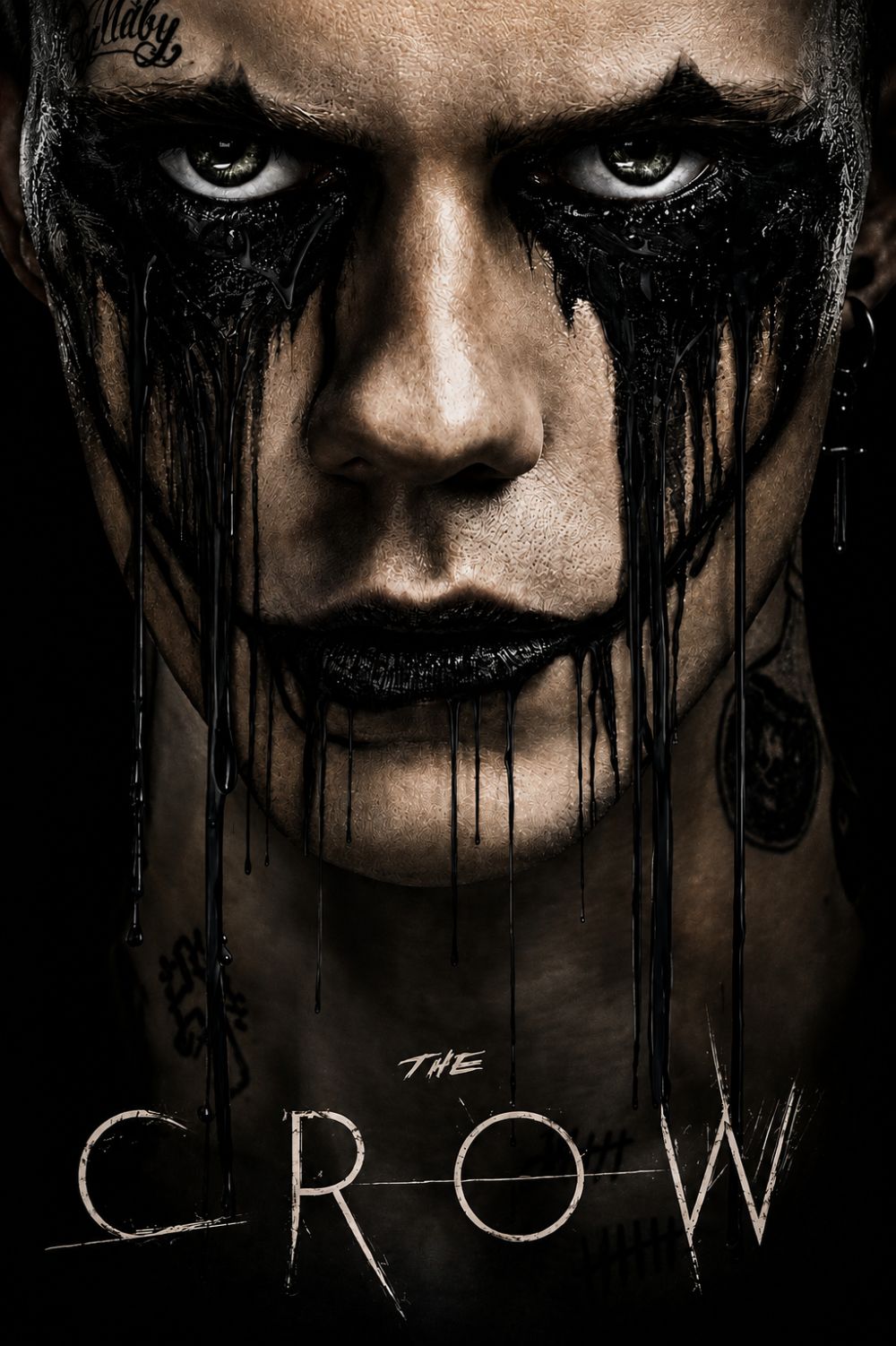
The Crow is a remake built around a reasonable idea—returning to James O’Barr’s graphic novel rather than photocopying Alex Proyas’s 1994 cult film—but Rupert Sanders’s 2024 version never discovers why this material matters beyond its tattoos, bruises, and black eyeliner. It arrived dead on arrival with critics and audiences alike, not simply because it was measured against a beloved predecessor, but because it offered so little of its own identity. The film is dour without being haunting, romantic without generating much chemistry, and violent without making its revenge feel especially cathartic.

Sanders’s film stars Bill Skarsgård as Eric and musician FKA twigs as Shelly, lovers brutally murdered after stumbling too close to the secrets of criminal impresario Vincent Roeg, played with sleek, vaguely supernatural menace by Danny Huston. Eric awakens in a liminal afterlife, is granted a path back to the living world, and returns armed with supernatural endurance and a need to avenge Shelly. The fundamentals are familiar: love is destroyed by violence, death cannot sever that love, and vengeance becomes a darkly mythic expression of grief. Yet The Crow continually confuses the bare outline of that story with the emotional force that made it endure.

The production’s troubled history almost feels encoded in the finished movie. A new Crow film spent more than a decade trapped in development hell, cycling through different studios, directors, screenplays, and potential stars. Relativity Pictures held the project for years; Sony eventually became involved; various versions had names such as Bradley Cooper, Luke Evans, Jack Huston, and Jason Momoa attached at different stages, alongside filmmakers including Stephen Norrington, F. Javier Gutiérrez, and Corin Hardy. The project repeatedly stalled under changing rights arrangements, creative disagreements, and the general instability that often turns a familiar title into an endlessly recycled pitch deck. A fresh production effort was announced in 2020, but the Sanders version did not actually begin shooting until 2022 in Prague.wikipedia+2

That prolonged development makes the final product feel less like a passionately argued reinterpretation than a compromise that survived by default. Every era of the project seems to have left a trace. There is a prestige-minded desire to make Eric and Shelly psychologically damaged and contemporary. There is a franchise-minded urge to expand the supernatural mythology. There is also a music-video impulse toward body art, club scenes, fashionable misery, and sharply composed violence. None of these ingredients are automatically bad. But Sanders never finds a way to make them cohere into a world as tactile, strange, or emotionally immediate as the one Alex Proyas created in 1994.

The suspicion around the remake was understandable from the beginning. Most people involved in the original film have either expressed mixed feelings or outright disapproval about revisiting the property. The 1994 The Crow is not merely another cult favorite awaiting intellectual-property renewal. It is permanently linked to Brandon Lee, who was killed in an on-set shooting accident during production. The completed film became a memorial as much as a comic-book adaptation, and its emotional impact cannot be separated from the knowledge of what happened to its star.

The strongest objections have come from James O’Barr and Alex Proyas. O’Barr, writer and artist of the original graphic novel, has questioned the need for a remake for years, once calling the idea of remaking a then-15-year-old film “kind of ridiculous.” Proyas, meanwhile, has been even more direct. He argued that The Crow was not simply a movie because Brandon Lee died making it, and that the 1994 film should remain part of Lee’s legacy. When the new film’s reception turned hostile, Proyas called it a “cynical cash-grab” and mocked the lack of financial reward supposedly waiting at the end of it. The tone of those comments may strike some people as harsh, but the remake never makes a convincing counterargument.

To be fair, Sanders does not ask Skarsgård to imitate Lee. That is one of the film’s better instincts. Skarsgård’s Eric is physically slight, heavily tattooed, insecure, and visibly wrecked by the life he has lived before death. He is not a supernatural rock-and-roll avenger in the same way Lee was. Instead, he resembles a wounded, emotionally arrested young man forced into a mythic role he does not fully understand. It is a potentially interesting angle, especially for a story about grief turning someone into a monster.

But the screenplay, credited to Zach Baylin and William Josef Schneider, does not give that approach enough shape. Eric is vulnerable, then dreamy, then brutally efficient, then mournful again, depending on what the scene needs. The film treats emotional instability as character depth, but those are not the same thing. A character can be fractured, contradictory, and self-destructive while still possessing a recognizable inner life. Skarsgård does what he can with the material, bringing real physical discomfort and sadness to Eric, yet the movie seems more interested in how his pain photographs than what it reveals.

The same issue affects Shelly. FKA twigs has an immediately magnetic screen presence, and the film wisely spends much more time on Eric and Shelly before their deaths than the 1994 film did. In theory, that should be a major advantage. If the viewer sees the relationship develop, then Eric’s return from death should carry more emotional force. Instead, the early sections feel like a montage stretched into an act: rehab, drugs, late-night intimacy, mutual confessions, music, dancing, sex, and shared trauma. The movie repeatedly tells us that these two are soulmates, but it rarely gives them the specific dialogue, humor, disagreements, or small gestures that make a romance believable.

Their relationship becomes a collection of poses. The camera understands that they are beautiful, sad, damaged people; the script never quite proves they are deeply connected individuals. That is fatal in The Crow, because Eric’s entire mission depends on the audience accepting that Shelly is not merely the woman he loved but the person who made life worth returning to. The movie substitutes trauma bonding for intimacy, assuming that shared wounds automatically equal love.

Huston’s Vincent Roeg is similarly underwritten. Roeg is introduced as an elegant criminal figure with occult powers, someone who preys on young women and sustains himself through a diabolical bargain. It is a significant departure from the relatively grounded gangland evil of the 1994 film, and it could have opened the door to something genuinely grotesque. Instead, the mythology grows more complicated while the villain becomes less interesting. Roeg speaks in the familiar language of immortal bad guys who are convinced that cruelty makes them profound. He lacks the memorable theatricality of the original film’s antagonists and the unnerving specificity that a character like this needs.

The remake’s expanded mythology is perhaps its biggest miscalculation. O’Barr’s original premise has always been powerful because it is so direct: a murdered man is allowed to return, guided by a crow, because love has been violently cut short. It is gothic, but it is simple. Sanders’s version adds a network of afterlife rules, soul exchanges, purgatorial spaces, and supernatural transactions. The more the film explains, the less mythical it feels. Grief does not become larger through lore. In this case, it becomes bogged down in mechanics.

Visually, Sanders has moments of genuine flair. The film’s strongest sequence comes late, when Eric tears through an opera house during a lavish performance. White costumes are stained red, the setting’s exaggerated grandeur clashes with Eric’s raw violence, and the action is staged with a sense of grotesque spectacle. It is the one scene where Sanders’s instincts as a visual stylist really connect with the source material’s heightened pulp melodrama. The sequence is bloody, theatrical, and almost absurd enough to become exhilarating.

Yet it arrives too late and feels disconnected from much of what precedes it. For large stretches, The Crow is subdued to the point of visual anonymity. Its darkness looks digitally smoothed rather than dreamlike. Its city does not have a personality. Its criminal underworld feels interchangeable with any number of slick streaming thrillers. The 1994 film’s Detroit-like nightmare city was impossible to separate from its mood: rain-slicked streets, scorched interiors, industrial rot, grotesque criminals, and an unforgettable goth-grunge soundtrack all fused into one singular aesthetic. Sanders’s movie has better technology but far less texture.

The soundtrack, in particular, exposes the remake’s uncertainty. The 1994 Crow became inseparable from its music, which drew together alternative rock, industrial, metal, and goth influences into an extension of Eric’s world. The 2024 version clearly wants to speak to a newer generation through contemporary pop, electronic, and melancholy club sensibilities. There is nothing wrong with modernizing the musical language, but the choices do not build a coherent subculture around the film. They play as individual selections rather than part of a living, breathing atmosphere.

This is why the remake’s negative response was so predictable. It was not doomed merely because it remade a movie people love, nor because any new Eric Draven would inevitably be compared to Brandon Lee. A remake could have justified itself by drawing more deeply from O’Barr’s graphic novel, creating a truly different visual language, or foregrounding the grief at the center of the story with more honesty. Sanders instead gives us a film that is constantly signaling pain while remaining emotionally remote.

There are fragments of a better Crow scattered throughout: Skarsgård’s willingness to play Eric as fragile and unglamorous, twigs’s spectral intensity, and the opera-house massacre’s gleefully excessive bloodshed. But those fragments never combine into a whole. The Crow has the eyeliner, the tattoos, the wounds, and the bird, but it never finds the heart beneath them. The original film endured because it turned loss into a piece of feverish gothic pulp. This remake turns loss into an aesthetic, and that is not nearly enough.

Review: The Crow (dir. by Alex Proyas)


“If the people we love are stolen from us, the way to have them live on is to never stop loving them. Buildings burn, people die, but real love is forever.” — Sarah Mohr

The Crow is one of those films whose reputation has become inseparable from the tragedy surrounding it, yet reducing it to that tragedy misses why it has endured so powerfully. Alex Proyas’s 1994 adaptation of James O’Barr’s graphic novel is a revenge story, a gothic romance, a comic-book nightmare, and an MTV-era industrial-rock mood piece fused into something singular. It is not flawless, and its storytelling is often more archetypal than psychologically deep, but that directness helps its emotional force. The movie does not ask viewers to untangle a complicated moral puzzle. It asks them to feel the enormity of a love violently interrupted, and then to watch that grief return from the grave with black feathers, white face paint, and a very personal sense of justice.

The premise is almost mythically simple. On the night before their wedding, musician Eric Draven and his fiancée Shelly Webster are murdered by a gang of thugs who break into their Detroit apartment. A year later, on Devil’s Night—the annual pre-Halloween ritual of fires and chaos that hangs over the film’s ruined cityscape—Eric rises from his grave, guided by a crow, to hunt down every person responsible. The classic revenge-movie structure is there: identify the killers, stalk them, punish them, move closer to the figure at the top. But The Crow distinguishes itself by making revenge feel less like triumphant macho fantasy and more like an extension of mourning. Eric does not become a cool killer because pain has made him stronger. He becomes an avenging specter because he cannot accept a world in which Shelly’s final moments are left unanswered.

Proyas directs the film like a fever dream built from wet asphalt, broken glass, empty tenements, and perpetual night. The Detroit of The Crow barely operates as a realistic city, but realism is not the point. It is an expressionist landscape, a metropolis that seems permanently trapped between a crime scene and a graveyard. The production design gives the movie its extraordinary visual identity: towering shadows, alleyways lit by flame, apartments that look like mausoleums, and a skyline that appears to have been abandoned by daylight itself. This is Gothic cinema filtered through comic-book panels, German Expressionism, punk fashion, and the darkly romantic visual language of early-1990s alternative music videos. It has been imitated constantly, sometimes lovingly and sometimes clumsily, but the original still feels unusually tactile. The grime, rain, fire, and shattered architecture have physical weight.

That sense of atmosphere is helped enormously by the soundtrack, which operates as more than a collection of era-specific needle drops. Songs by The Cure, Nine Inch Nails, Stone Temple Pilots, Pantera, and others create a sonic environment around Eric’s grief. The music gives the movie a pulse that is melancholy, furious, and seductive all at once. For many viewers, The Crow became a gateway text for a specific kind of 1990s gothic-alt identity: black clothing, industrial textures, romantic despair, and the conviction that heartbreak could be transformed into style without becoming trivial. Its aesthetic influence is obvious, but it worked because it was attached to an actual emotional core rather than simply a pile of cool images.

Brandon Lee is the center of that emotional core. His Eric Draven is handsome and charismatic, obviously, but the performance’s real strength lies in its shifts of tone. Lee can play Eric as tender and playful in the brief memories of his life with Shelly, then turn him into a creature of eerie stillness and explosive violence. He delivers some of the film’s most famous lines with a theatrical flair that could have become silly in another actor’s hands, but he never entirely loses the sense that Eric is broken underneath the black leather and corpse-like makeup. When he says, “It can’t rain all the time,” it does not land merely as a quotable gothic slogan. It is a declaration of faith from someone trying to recover one small piece of warmth from an overwhelmingly cruel world.

Lee’s death during production makes that performance almost unbearably charged. He was accidentally shot on set during the filming of a scene involving a prop firearm and died at age 28. The production had to regroup, rewrite and restructure parts of the film, and use a combination of body doubles, careful editing, visual effects, and previously filmed material to complete Eric’s story. That practical disruption is visible only in limited ways in the finished product; remarkably, The Crow generally feels cohesive rather than patched together. Still, the tragedy affected more than the logistics of production. It fundamentally changed the public’s relationship to the film. Eric’s resurrection, his grief over a stolen future, and the repeated imagery of a dead young man returning to finish unfinished business all acquired a terrible real-world resonance.

That connection could easily have overwhelmed the movie, turning it into a morbid curiosity. Instead, it made the film feel elegiac. Audiences did not merely see a fictional tragic hero; they saw Lee’s final completed role, an image of an actor whose life had ended before the public had a chance to see where his career might go. The contrast is particularly painful because Lee’s work here suggests enormous range and movie-star potential. He is not just doing martial-arts action or inheriting the legacy of his father, Bruce Lee. He is creating an icon of romantic anguish and dark humor. The public reception of The Crow therefore carried an unusual mixture of admiration, grief, and protectiveness. Its cult status was built partly on its style, soundtrack, and comic-book mythology, but also on the feeling that viewers were witnessing a final gift from an artist taken much too soon.

The supporting cast gives the film much of its flavor, especially because Proyas treats its villains as grotesque figures in a corrupted fairy tale. David Patrick Kelly’s T-Bird is nervy and cruel, Michael Massee’s Funboy has a sleazy unpredictability, and Angel David’s Skank brings a wild, cartoonish energy to the gang. Rochelle Davis, playing Sarah, provides something vital in the opposite direction. She is not merely a child sidekick; she represents the lingering human connection between Eric’s former life and his revenant existence. Her scenes with Eric remind us that he is not simply a supernatural executioner. He is still someone capable of care, humor, and memory.

But Michael Wincott’s Top Dollar is the film’s true villainous masterstroke. Wincott has one of cinema’s most instantly recognizable voices: smoky, velvety, sardonic, and faintly predatory. As Top Dollar, he makes every line sound like it has been exhaled through cigarette smoke in a cathedral. He is not a conventional crime boss in the realistic, procedural sense. He is a decadent king of the city’s underworld, a man who appears to have converted criminal power into a private religion of violence, ritual, and spectacle. His lair, his manner, and his relationship with his half-sister Myca all push him beyond ordinary gangster territory into something operatic and mythic.

What makes Wincott mesmerizing is that he does not overplay Top Dollar’s eccentricities. The character has plenty of theatrical material to work with—occult touches, ominous speeches, a penthouse filled with weaponry and strange décor—but Wincott approaches him with a serene confidence. He rarely seems rushed or rattled, even as Eric systematically destroys his organization. That calm makes him more intimidating. Top Dollar understands the city as a machine of corruption, and he sees himself as the person with his hands on the controls. Wincott’s performance gives the villain intelligence, sensuality, and a distinctly sinister elegance. He is evil, certainly, but he is never bland. In a movie full of striking images, his voice alone becomes part of the visual texture.

The action in The Crow is effective precisely because it avoids pretending that Eric’s vengeance is a balanced fight. For much of the movie, he is invulnerable, and the violence plays like supernatural punishment. The standout set pieces—Eric’s assault on the gang’s hideout, his confrontation with T-Bird, and the final tower sequence—have the heightened, almost ritualistic quality of comic-book action rather than the grounded impact of a crime thriller. That can make some of the antagonists feel less like people than targets, but again, the film is working in the language of myth. Eric is a ghost walking through the consequences of someone else’s cruelty.

If The Crow has a weakness, it is that the love story depends heavily on fragments. Shelly is more an emotional presence than a fully developed character, preserved in Eric’s memories as warmth, laughter, music, and suffering. Yet the film understands that grief often works that way. We do not always remember a person as a complete biography when they are gone; sometimes we cling to specific gestures, rooms, jokes, songs, and images. The flashes of Eric and Shelly together are deliberately idealized because they are being recalled by a man who has lost everything. The movie’s romanticism may be blunt, but it is sincere.

More than three decades later, The Crow still works because it is a film of conviction. It believes in the visual poetry of rain and ruins, in the melodrama of eternal love, in the power of a memorable face framed in black-and-white makeup, and in the possibility that a soundtrack can become part of a movie’s mythology. Brandon Lee’s death will always remain a heartbreaking part of its history, and it is impossible to watch the film without feeling that absence hovering around it. But The Crow is not remembered simply because of what happened behind the scenes. It is remembered because Proyas, Lee, Wincott, and the rest of the cast made a pulpy revenge tale feel like a dark romantic elegy—one that still takes flight every time the crow returns to the skyline.

Review: The Crow (Original Motion Picture Soundtrack)


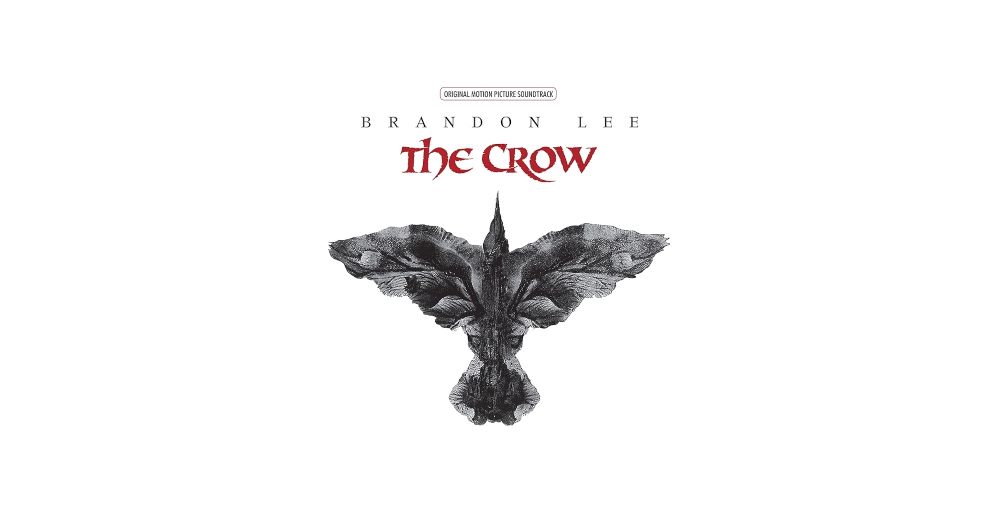
The Crow (1994) soundtrack stands as a cornerstone of mid-90s alternative rock, capturing the gothic essence of Alex Proyas’s film through a masterful blend of original tracks, re-recordings, and covers from the era’s heaviest hitters. Released on March 29, 1994, by Atlantic Records, this 14-track album clocked in at 63:50, peaking at number one on the Billboard 200 and earning triple platinum status with over three million copies sold in the U.S. alone. Its success wasn’t just commercial; it encapsulated the raw, brooding spirit of grunge, industrial, and post-punk at their commercial zenith, turning a superhero revenge tale into a sonic monument for disaffected youth.

Opening with Burn by The Cure, the album immediately plunges listeners into the film’s shadowy heart. Written specifically for the movie, this six-minute epic pulses with Robert Smith’s haunting vocals over swirling guitars and tribal drums, evoking Eric Draven’s resurrection and transformation. It’s a high point, perfectly syncing with the scene where Brandon Lee’s character applies his iconic black-and-white makeup, the song’s fiery intensity mirroring the crow’s vengeful rebirth. The Cure, fresh off their own chart dominance, deliver a track that feels both timeless and tailor-made, its gothic romance aligning seamlessly with James O’Barr’s original comic influences—like the page devoted to their earlier song The Hanging Garden.

Stone Temple Pilots follow with Big Empty, a mellow, blues-drenched lament that didn’t appear in the film’s body but bookends the credits. Initially, the band offered Only Dying, but after Lee’s tragic on-set death, they swapped it for this brooding gem, its introspective lyrics about loss resonating deeply with the movie’s themes of grief and redemption. Scott Weiland’s vulnerable croon over swirling psychedelia captures the quiet despair of Detroit’s rain-soaked nights, making it a fan favorite that lingers long after the album spins.

The pace shifts with Slip Slide Melting by For Love Not Lisa, a grungy alternative rocker that underscores the T-Bird gang’s Devil’s Night revelry. Its sludgy riffs and anthemic chorus fit the criminals’ bullet-swallowing bravado, though the track’s mid-tempo grind can feel formulaic amid the album’s bolder moments. Similarly, Rollins Band’s Ghostrider—a cover of Suicide’s 1977 punk staple inspired by the Marvel antihero—thunders in with Henry Rollins’ barked vocals and aggressive guitars. Heard as Top Dollar learns of the pawn shop arson, it injects punk fury, but its raw energy sometimes overshadows subtler nuances.

Nine Inch Nails’ take on Joy Division’s Dead Souls elevates the covers further, Trent Reznor’s industrial edge amplifying the original’s post-punk chill. Guiding the crow to its first target, Tin Tin, the song’s droning synths and pounding rhythm evoke inescapable fate, a nod to the comic’s Joy Division obsession—chapters titled after Atmosphere and Atrocity Exhibition. It’s a standout, bridging 80s goth roots with 90s aggression, though purists might prefer Ian Curtis’s spectral delivery.​

Helmet’s Milquetoast (often stylized Milktoast) brings math-rock precision, its staccato riffs and Page Hamilton’s yelps embodying mechanical rage. Less tied to a specific scene, it slots into the album’s industrial undercurrent, offering tight songcraft but lacking the emotional punch of neighbors like The Cure. Pantera’s The Badge, covering Poison Idea’s hardcore punk original, ramps up the metal as Top Dollar executes Gideon. Dimebag Darrell’s searing solos and Phil Anselmo’s snarls deliver brutality, fitting the film’s climax, yet the track’s extremity can alienate non-metal fans.

For Love Not Lisa’s inclusion feels slightly redundant after their opener, but Slip Slide Melting at least varies tempo. More intriguing is My Life with the Thrill Kill Kult’s After the Flesh, a re-recording of Nervous Xians from their nightclub cameo. Grooving with hip-hop beats, distorted samples, and sultry spoken-word, it pulses with sleazy underworld vibe, capturing the film’s seedy underbelly.​

The Jesus and Mary Chain’s Snakedriver adds shoegaze haze, Jim Reid’s drawl weaving through feedback-drenched guitars. Not featured prominently in the movie, it evokes serpentine cunning, though its dreamy wash occasionally drifts into monotony. Medicine’s Time Baby III, an evolved version of their film performance with Cocteau Twins’ Elizabeth Fraser on ethereal vocals, shimmers with shoegaze bliss. The original Time Baby II plays in the club, but this iteration’s Fraser guest spot adds haunting fragility, a brief respite in the aggression.

Rage Against the Machine’s Darkness—a reworking of their B-side Darkness of Greed—fumes with Zack de la Rocha’s righteous fury over Tom Morello’s jagged riffs. Soundtracking Albrecht and Sarah’s hotdog stand chat, it critiques urban decay, aligning with the film’s anti-corruption bent, but its preachiness might grate on repeat listens.​

Violent Femmes’ Color Me Once brings folk-punk twitchiness, Gordon Gano’s manic energy suiting the gothic whimsy, though it feels like an outlier amid the heavier fare. Closing with Jane Siberry’s It Can’t Rain All the Time, co-written with composer Graeme Revell from a film quote, the album ends on poignant hope. Its orchestral swell and Siberry’s tender delivery reunite Eric with Shelly’s spirit, shifting from vengeance to catharsis—an emotional anchor that ties the chaos together.

As a cohesive whole, The Crow soundtrack triumphs as a film companion, each track meticulously synced to amplify Proyas’s visuals: from the gang’s swagger to Draven’s flights of fury. Hits like BurnDead Souls, and Big Empty propelled it to cultural icon status, introducing casual listeners to acts like STP and NIN while honoring goth forebears. Commercially, it mirrored the era’s alt-rock boom—albums by The Cure, STP, and Pantera had topped charts—crystallizing a moment when industrial and grunge converged.

Yet balance demands critique: as a standalone album, it falters. The reliance on covers (GhostriderThe BadgeDead Souls) showcases reverence but rarely innovation, with some feeling like scene-setters over standalone statements. Lesser lights like Milquetoast or Snakedriver blur into a wall of distortion, lacking memorable hooks. Pacing sags mid-album, the industrial barrage overwhelming subtler gems like Time Baby III. Female voices—Fraser, Siberry—provide welcome contrast, but the male-dominated roster reflects 90s rock’s bro-ish tilt.

Thematically, it excels: rain, resurrection, and romance weave through lyrics, echoing the comic’s poetic vengeance. O’Barr’s Joy Division fandom shines, while custom tracks like Burn and It Can’t Rain All the Time feel organic. Post-Lee’s death, the album gained mythic weight, Big Empty‘s swap a somber tribute.​

In 2026, with vinyl reissues etched with crow motifs, it endures as a time capsule—flawed, ferocious, unforgettable. For fans of the film, it’s essential; for alt-rock purists, a thrilling if uneven ride. Its legacy? Proving soundtracks could outshine the screen, raining darkness and light in equal measure.

Lionsgate takes on The Crow in a new Trailer!


As it’s been 30 years since Alex Proyas’ The Crow was released, a remake was inevitable. From Rupert Sanders (Ghost in the Shell), this version of The Crow has Bill Skarsgard (John Wick 4) taking on the role of Eric Draven, who is brought back to life when he and his girlfriend Shelley (FKA Twigs, The King’s Man) are brutally murdered. Aided by a Crow, Eric searches for vengeance and it looks like Danny Houston (30 Days of Night) may be Draven’s main target. The look of the film seems to be a mix of DMC: Devil May Cry with some John Wick classic shooting action sequences. That’s not entirely a bad thing. It’s a new story for a new generation. The writers on board here are Zach Baylin (Gran Turismo) and William Schneider, who has the upcoming Return to Silent Hill.

The Crow releases in theatres this Summer.

Live Tweet Alert: Join #ScarySocial for The Crow!


As some of our regular readers undoubtedly know, I am involved in a few weekly live tweets on twitter.  I host #FridayNightFlix every Friday, I co-host #ScarySocial on Saturday, and I am one of the five hosts of #MondayActionMovie!  Every week, we get together.  We watch a movie.  We tweet our way through it.

Tonight, at 9 pm et, Tim Buntley will be hosting #ScarySocial!  The movie?  1994’s The Crow!

If you want to join us this Friday, just hop onto twitter, start the movie at 9 pm et, and use the #ScarySocial hashtag!  I’ll be there tweeting and I imagine some other members of the TSL Crew will be there as well.  It’s a friendly group and welcoming of newcomers so don’t be shy.

The Crow is available on Prime!

See you there!

Song of the Day: Big Empty (by Stone Temple Pilots)


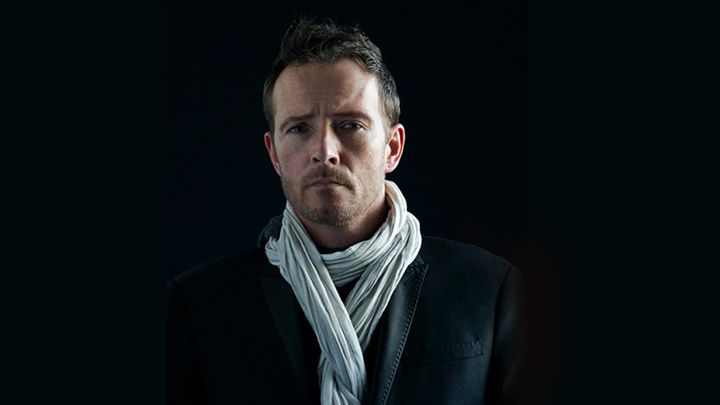
720x405-Scott2

Tonight the music world found out that Stone Temple Pilots and Velvet Revolver frontman Scott Weiland passed away at the age of 48 while on tour in Minnesota.

The years after graduating from high school was a chaotic time for me. not knowing what role I had for myself moving forward and afraid of the world beyond the regimented, secured, but understood confines of high school. While I enjoyed the freedom of being a young adult after graduating in the summer of 1991 the reality of it all was that I wasn’t that far removed from still being a teenager a couple years later.

I call these my adrift years.

From this time in my life I was drawn to the music that every young adult trying to leave his teen years behind. Whether it was hip-hop, metal and, the genre of the era, grunge, I was listening to it. While I wasn’t as huge a fan of grunge as the rest of my contemporaries of the time I did gravitate to a couple of the titans of the genre: Soundgarden and Stone Temple Pilots.

It was with Stone Temple Pilots that I was introduced to one of my favorite frontman of my Adrift Years: Scott Weiland.

Weiland encompassed not just the brooding, alienation that made grunge such a popular genre of music during the 1990’s but also had a touch of the wild and dangerous aspect of what made rock frontmen so-called Rock Gods. He was the Axel Rose of grunge. An enormously talented vocalist, but one who was also scandal-bound with his off-stage drug use and self-destructive behavior.

Scott Weiland helped make those years adrift during the early 1990’s with his singing. It’s a shame and a loss to the music world that like other rock legends before him his early years battling his inner demons would take him away too soon.

Nothing epitomizes who Scott Weiland was to me better than the song “Big Empty” which was the first single off of their second album Purple.

Big Empty

drivin’ faster in my car
falling farther from just what we are
smoke a cigarette and lie some more
these conversations kill
falling faster in my car

time to take her home
her dizzy head is conscience laden
time to take a ride
it leaves today no conversation
time to take her home
her dizzy head is conscience laden
time to wait too long
to wait too long
these conversations kill

to much walkin’, shoes worn thin
too much trippin’ and my soul’s worn thin
time to catch a ride
it leaves today, her name is what it means
to much walkin’, shoe’s worn thin