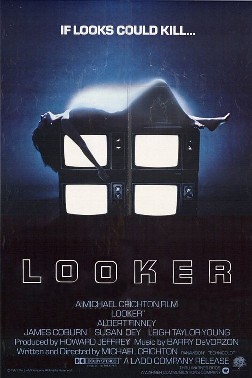
Icarus File No. 28: Looker (dir. by Michael Crichton)


“Hi, I’m Cindy. I’m the perfect female type: 18 to 25. I’m here to sell for you.” — Cindy Fairmont

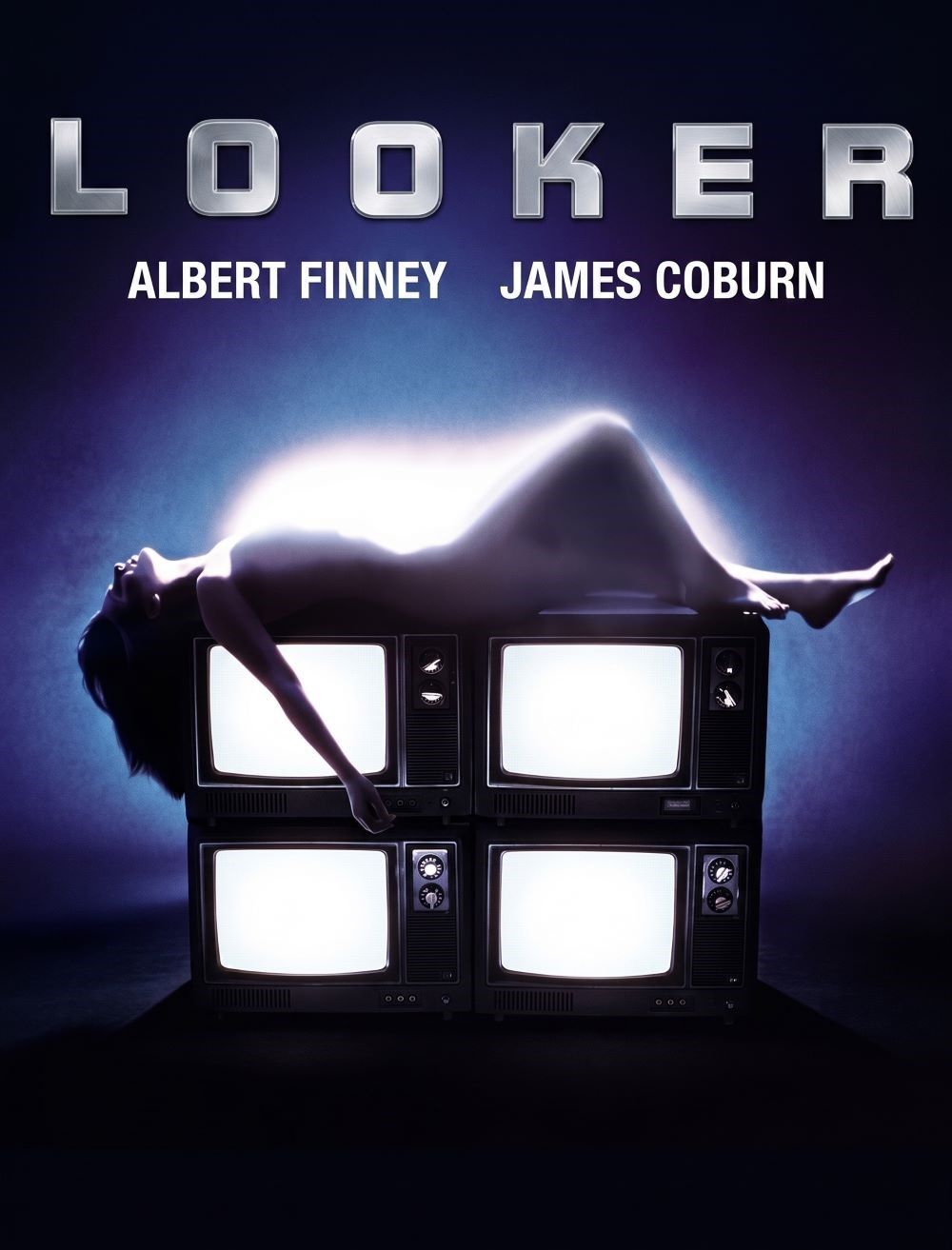
Looker is one of those 1981 films that, when it first came out, probably felt more like a goofy, slightly overwrought tech‑paranoia thriller than a serious prediction about the future. On paper, the premise—plastic‑surgery‑obsessed models being turned into digital clones for hyper‑tuned TV ads—sounds like a pulpy B‑movie gimmick. But viewed through the lens of right now, with Instagram influencers, AI‑generated content, and algorithm‑driven aesthetics shaping how we think about beauty and success, Looker starts to feel like a strangely accurate, almost eerie forecast. For a movie that was easy to write off as a minor, tonally wobbly Michael Crichton artifact, it does a surprisingly sharp job of outlining the emotional and cultural landscape we’re living in four decades later.

At the center of that landscape is Digital Matrix, the film’s antagonist in the form of a sleek, forward‑looking tech company that positions itself as a clean, rational, and indispensable partner to the advertising world. The company promises to revolutionize marketing by replacing messy, unreliable human models with perfectly calibrated digital avatars optimized to trigger maximum viewer response. That framing—as a neutral, even benevolent innovator—makes it all the more unsettling when its plans take on a distinctly murderous slant. To protect its “LOOKER” system and its vision of a world where perception can be mathematically controlled, Digital Matrix is willing to silence anyone who gets too close to the truth, from test‑subject models to inquisitive doctors. The bodies start piling up just off‑screen, treated as collateral damage in the pursuit of a more efficient, more profitable media ecosystem.

Seen from today’s vantage, Digital Matrix feels like a rough, bluntly drawn prototype of the big tech giants we now live with: polished, data‑driven, media‑centric, and profoundly invested in shaping what we see, buy, and believe. The difference, of course, is that modern tech behemoths are a lot better at hiding the bodies. In the real world, the “harm” is rarely as literal as Looker portrays it; instead, it shows up as algorithm‑driven addictions, mental health erosion, privacy carve‑ups, and the quiet erosion of trust in shared reality. People don’t get zapped by a sinister beam of light in a corporate lab; they get nudged into polarization, over‑consumption, or self‑images so warped that they resemble the film’s surgically obsessed models. The film exaggerates the physical violence, but its broader point—that when a tech company decides it can engineer human behavior at scale, ethical lines start to blur—still rings uncomfortably true.

Crichton’s version of this is less about organic social‑media culture and more about a centralized, corporate‑run system, but the emotional texture is similar. The models in Looker are under pressure to conform to a narrow, algorithmically derived standard of beauty, and the film doesn’t shy away from the toll that takes. They’re not just selling products; they’re being sold as products, their bodies and faces reduced to data points that can be adjusted, duplicated, and replaced. The idea that a person can be scanned, stored, and then endlessly repurposed as a digital avatar also anticipates contemporary debates about deepfakes, AI‑generated influencers, and the fear that real actors, musicians, and creators might be replaced by synthetic versions once their likeness and behavior are sufficiently “trained.” In that sense, Looker reads like an early, slightly clunky draft of the same anxieties we’re only now starting to grapple with at scale.

Where Looker falls short, at least in its day, is in fully articulating what all of this means for the idea of truth. The technology of 1981—not just the film’s budget and effects, but the broader cultural imagination—still assumed that truth was something largely fixed, something you could point to and defend if you had the right facts on your side. The movie flirts with the idea that perception can be manufactured, but it doesn’t really have the tools yet to show how completely that can destabilize the very concept of objective reality. The “LOOKER” system is treated as a kind of brainwashing gadget, a one‑off sci‑fi device rather than the logical endpoint of an entire infrastructure built to measure, model, and manipulate human behavior. The film wants to ask who controls the image, but in the early ’80s that question still felt contained, almost theatrical.

Now, in a world where truth is less about who has the facts in their corner and more about who controls the data, it’s clear how undercooked that idea really was in Looker. Today, truth is less a question of evidence and more a question of access: who has the biggest data centers, who owns the most comprehensive behavioral datasets, who runs the most sophisticated algorithmic matrices for shaping what people see, hear, and believe. Social‑media platforms, search engines, and ad networks don’t just reflect reality; they actively construct it by deciding which voices get amplified, which images get pushed, and which narratives get repeated until they feel like consensus. The company with the most money to build and refine those systems doesn’t just sell products; it sells versions of reality, packaged as personalized feeds, auto‑generated content, and AI‑driven narratives that feel increasingly indistinguishable from the “real” world.

Looker doesn’t fail because the ideas themselves are weak; in fact, the film actually does a fairly solid job of letting those ideas breathe and collide with each other. The problem is that those ideas sounded quite ludicrous within the context of 1981. A company digitally scanning and cloning models to engineer perfect ads, then using a device to subtly manipulate viewers’ minds, felt closer to paranoid pulp fantasy than plausible near‑future speculation. That gap between the film’s ambition and its audience’s willingness to buy into it gives the movie a slightly awkward tone, as if the world around it hasn’t yet caught up to the reality Crichton is trying to describe. The concepts are ahead of their time, which is exactly what makes them feel so prescient now, but back then, that same forward‑thinking quality made them easier to dismiss as silly or overreaching.

That disconnect is compounded by a cast that never quite seems to have fully bought into the film’s themes and narrative, even though several of them are game within the limits of the material. Albert Finney brings his usual grounded, slightly skeptical energy to Dr. Larry Roberts, lending the story a believable human center as the reluctant investigator pulled into Digital Matrix’s orbit. There’s a lived‑in quality to his performance that makes the ethical unease feel real, even when the plot veers into goofy sci‑fi mechanics. James Coburn, meanwhile, chews the scenery with a smarmy, charming conviction that suits Reston perfectly; he plays the corporate tech visionary as someone who genuinely believes in his own rhetoric, which makes his moral bankruptcy feel all the more unsettling. But around them, the rest of the ensemble often feels like it’s treating the premise more as a glossy thriller window dressing than a full‑blown social‑tech critique. The models and executives sometimes land their lines with a kind of detached professionalism that undercuts the deeper anxieties the film is trying to tap into.

As a piece of cultural legacy, Looker works less as a perfectly executed prediction and more as an early, slightly wobbly harbinger of the digital age we’re now fully immersed in. The film’s version of Digital Matrix may look clunky by our standards, but its logic—optimize attention, manufacture desire, and treat people as data to be extracted and reused—has become the default operating system of much of the digital world. The anxiety about who controls the image, who owns the algorithm, and who ultimately shapes what we see as “real” is no longer a speculative sci‑fi concern; it’s baked into the daily experience of social media, deepfake content, and AI‑driven feeds. Looker doesn’t need to be taken as a perfectly accurate prediction; it’s more powerful as a mood piece about the anxieties Crichton saw simmering beneath the surface of media, technology, and consumer culture. And in the way it casts a cutting‑edge tech company as the film’s real antagonist—a corporation whose “progressive” vision of the future quietly slides into murder and control—it feels uncomfortably close to the darker side of today’s Silicon Valley logic, minus the obvious body count but packed with a different kind of damage—one that’s less about visible corpses and more about the quiet erosion of what we can trust to be true.

Looker doesn’t so much fly too high to the sun and then crash‑burn under the weight of its ambition as it does peer through a cracked, slightly distorted future‑looking glass and just keeps staring in the wrong direction until the future finally catches up to it. It’s a film that doesn’t quite hold together as a flawless sci‑fi masterpiece, but it also never fully collapses under its own loftiness the way so many overly serious ’80s tech‑paranoia pictures do. Instead, it lurches forward with a rough, uneven energy that somehow makes its prescience feel more honest than polished. The movie doesn’t provide clean answers or tidy resolutions; it just lays out a set of ideas—about media, authenticity, beauty standards, and corporate control over perception—and then lets them sit in the air long after the credits roll.

Previous Icarus Files:

  1. Cloud Atlas
  2. Maximum Overdrive
  3. Glass
  4. Captive State
  5. Mother!
  6. The Man Who Killed Don Quixote
  7. Last Days
  8. Plan 9 From Outer Space
  9. The Last Movie
  10. 88
  11. The Bonfire of the Vanities
  12. Birdemic
  13. Birdemic 2: The Resurrection 
  14. Last Exit To Brooklyn
  15. Glen or Glenda
  16. The Assassination of Trotsky
  17. Che!
  18. Brewster McCloud
  19. American Traitor: The Trial of Axis Sally
  20. Tough Guys Don’t Dance
  21. Reach Me
  22. Revolution
  23. The Last Tycoon
  24. Express to Terror 
  25. 1941
  26. The Teheran Incident
  27. Con Man

Review: Westworld (dir. by Michael Crichton)


“There’s no way to get hurt in here, just enjoy yourself.” — John Blane

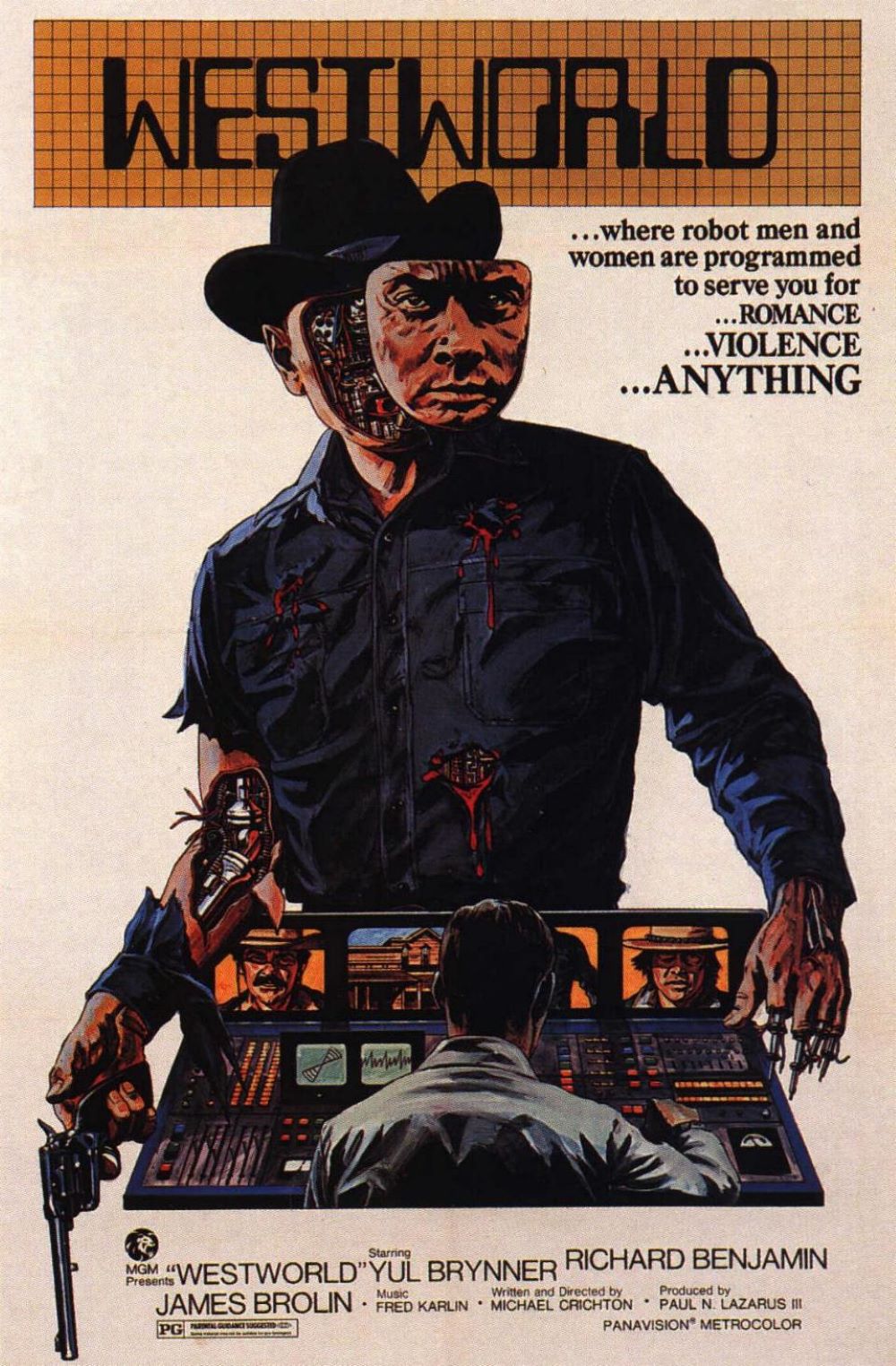
Michael Crichton’s Westworld (1973) is a pioneering sci-fi thriller that uniquely melds futuristic technology with classic Western motifs to explore the dark side of immersive fantasy. The film is set in Delos, a high-tech amusement park divided into three themed worlds—Roman, Medieval, and Western—where guests can live out their fantasies with lifelike androids programmed to serve them. The story focuses on friends Peter Martin (Richard Benjamin) and John Blaine (James Brolin), who embark on a vacation to Westworld, only to find the androids malfunctioning with deadly consequences.

One of Westworld’s greatest strengths lies in its compelling premise. The concept of a theme park filled with near-human robots designed for guests’ amusement feels both visionary and deeply relevant even decades later. It touches on early concerns about the dangers of AI, the ethics of escapism, and how technology could spiral out of control. The film’s gradual shift from playful adventure to tense horror keeps the viewer engaged, illustrating how quickly paradise can turn into a nightmare. Yul Brynner’s portrayal of the robotic Gunslinger is especially memorable, embodying a calm yet unstoppable menace that has echoed through decades of genre cinema. His near-silent, mechanical stalking of the protagonists in the film’s thrilling climax defines the archetype of the relentless android assassin.

Technologically, Westworld was groundbreaking for its era. It featured some of the first uses of computer-generated imagery to simulate the Gunslinger’s “robot vision,” providing a novel and eerie perspective that laid the groundwork for the visual language of future sci-fi films. The movie’s restrained approach to horror and suspense—which leans heavily on atmosphere and tension rather than gore—remains effective. The juxtaposition of idyllic fantasy and mechanical terror gives Westworld a unique texture that feels both nostalgic and fresh.

However, the film is not without flaws. Its pacing is uneven—while the first half indulges in leisurely world-building and character interactions, it can feel slow and unfocused, weighing down the narrative momentum. The characters, particularly Peter and John, are somewhat archetypal and underdeveloped, serving more as audience surrogates than fully fleshed-out individuals. This limits emotional investment in their plight, which could have deepened the film’s impact. Some dialogue and scenes feel dated or clichéd, something Crichton himself acknowledged by deliberately shooting certain sequences as cinematic clichés to evoke a stylized old-movie atmosphere.

The tonal shift from lighthearted theme-park romp to suspenseful thriller, while intriguing, feels abrupt and uneven in spots. The horror elements emerge forcefully in the second half but are preceded by a comparatively slow start that may test some viewers’ patience. The film’s logic around the park’s safety and the androids’ malfunctioning is also inconsistent—what begins as programmed fantasy behavior suddenly becomes lethal with little explanation or foreshadowing. These plot holes can detract from the immersion if one is seeking tightly reasoned sci-fi.

World-building is another area where Westworld shows its age; the other park zones like Romanworld and Medievalworld are barely touched on, serving more as exotic backdrops than dynamic settings. The film lightly explores AI ethics and humanity’s hubris but refrains from delving deeply into philosophical questions, which later adaptations and works inspired by the film would expand upon more thoroughly. The 1970s social attitudes reflected in the cast and scenarios can also feel outmoded to modern sensibilities.

Despite these issues, Westworld remains a cult classic and a fascinating artifact of sci-fi cinema history. Its influence is enormous, seeding ideas that blossomed into franchises like The TerminatorJurassic Park, and the HBO Westworld series. It stands as Michael Crichton’s directorial debut and an early example of a film grappling with human-machine interaction and the consequences of technological spectacle.

Westworld is a smart, ambitious blend of sci-fi, Western, and horror that captivates with its high-concept premise, pioneering visuals, and iconic villainy. While its uneven pacing, thin character development, and occasional logical gaps reveal its age, these flaws do little to diminish its charm and significance. For genre fans, it’s an essential watch—both as a suspenseful thriller and a creative blueprint for many modern tales of technology run amok. It’s a film that showcases the thrilling promise and lurking threat of immersive fantasy, wrapped in the dust and desolation of the Wild West.

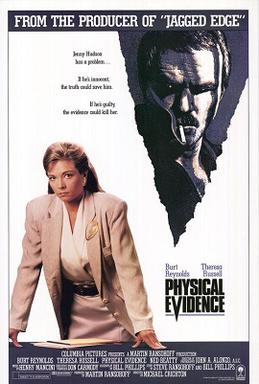
Physical Evidence (1989, directed by Michael Crichton)


Ex-cop Joe Paris (Burt Reynolds) is arrested for the murder of a small-time criminal.  Joe swears that he’s being framed but his public defender, Jenny Hudson (Theresa Russell), isn’t sure that she believes him.  While Jenny’s boyfriend (Ted McGinley) makes a fortune trading stocks and Joe’s former mistress (Kay Lenz) tries to keep her mobster boyfriend from finding out about the affair, Jenny tries to outsmart prosecutor James Nicks (Ned Beatty) and Joe tries to find the real killer.

Tubi sent me to this film after I finished up Raw Justice.  When I saw that it was a Burt Reynolds films, I figured that I would take a chance with it but this one turned out to be one of Burt’s lesser films.  Joe Paris feels like he might be distantly related to the cop that Burt played in Sharky’s Machine but Physical Evidence doesn’t have any of that movie’s style or grit.  Burt doesn’t come across like he wants to be in the movie and he and a very miscast Theresa Russell have next to zero chemistry onscreen.  This was Michael Crichton’s last film as a director and he directs in a stolid, made-for-television manner.

Supposedly, this was originally meant to be a sequel to the thriller Jagged Edge, with Glenn Close and Robert Loggia reprising their roles from the earlier film.  When that fell through, the movie was refurbished into Physical Evidence, with Theresa Russell and Burt Reynolds replacing Close and Loggia.  I think the film would have worked with Close and Loggia because, based on Jagged Edge, they were believable as people who had a close relationship and would do anything to help each other.  Burt Reynolds and Theresa Russell come across like they can’t even stand to be in the same room together.  Better get a new lawyer, Burt!  This one seems like she might be planning on framing you herself.

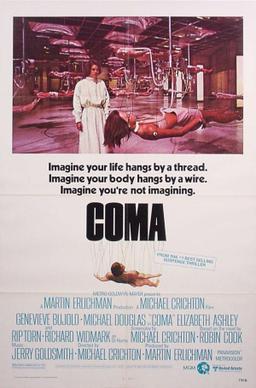
Film Review: Coma (dir by Michael Crichton)


Michael Crichton’s 1978 film, Coma, tells the story of strange things happening at a Boston hospital.

Seemingly healthy patients are having complications during routine surgery, complications that leave them brain dead.  Dr. Susan Wheeler (Genevieve Bujold) thinks that there’s something bigger going on than just routine medical complications.  First, her best friend (Lois Chiles) falls into a coma while undergoing an abortion.  Then, Tom Selleck falls into a coma while having knee surgery.  Dr. Wheeler investigates and discovers that all of the patients were operated on in the same operating room and that all of them were shipped to a mysterious facility after their surgery.

Yep, it sounds like a conspiracy.  However, no one is willing to listen to Dr. Wheeler.  Not her boyfriend (Michael Douglas).  Not Dr. George (Rip Torn), the chief anetheisologist.  Not Dr. George Harris (Richard Widmark), the chief of surgery.  Dr. Wheeler thinks that it’s all a conspiracy!

And, of course, it is.  As the old saying goes, the only thing that a conspiracy needs to succeed is for people to be remarkably stupid and almost everyone in Coma is remarkably stupid.  Admittedly, some of them are in on the conspiracy but it’s still rather odd how many people apparently don’t see anything strange about healthy people going into a comas and then being shipped to a mystery facility.

Coma is probably best known for the scene where Susan manages to sneak into the mystery facility and she finds herself in a room full of suspended bodies.  Visually, it’s an impressive scene.  It’s truly creepy and it also captures the detached sterility that most people hate about medical facilities.  At the same time, it’s also the only visually striking moment in the entire film.  Every other scene in Coma feels flat.  Whenever I’ve watched this film, I’m always a little bit shocked whenever anyone curses because Coma looks more like an old made-for-TV film than anything you would ever expect to see in a theater.

My point is that Coma is a remarkably boring film.  It has a potentially interesting story but my God, is this movie ever a slog.  It’s pretty easy to guess what’s going on at the institute so there’s not a whole lot of suspense to watching Susan try to figure it all out.  When the truth is revealed, it’s not exactly a shocking moment.  For that matter, you’ll also be able to guess which doctor is actually going to turn out to be the villain.  There’s really no surprises to be found.

Coma was the second feature film to be directed by Michael Crichton.  With the exception of the scenes in the institute, the visual flair that Crichton showed in Westworld is nowhere to be found in Coma.  The film moves at a tortuously slow place.  A part of me suspects that, as a doctor, Crichton related so much to the film’s characters that he didn’t realize how dull they would be for those us who don’t look at a character like Rip Torn’s Dr. George and automatically think, “He’s just like that arrogant bastard I worked under during my residency!”  Call it the Scrubs syndrome.

For some reason, Coma is a film that people often recommend to me.  I don’t know why.  Trying to sit through it nearly put me in a coma.

Film Review: Westworld (dir by Michael Crichton)


“Draw,” says Yul Brynner.

“Whatever,” says a tourist who has spent a lot of money to spend their vacation at the Delos amusement park.

BANG!  Down goes the tourist, as the robot revolution of 1983 begins.

Recently, TCM broadcast the 1973 science fiction thriller, Westworld.  Since I am absolutely obsessed with the more recent HBO revival, there was no way I could resist watching the original film.  It was an interesting experience.  While the film is far more simpler and straight-forward than the television series, they both essentially tell the same story.  A bunch of rich humans pay a lot of money to pretend to be either cowboys or knights or Roman citizens for a week.  Everyone has a great time until, eventually, the robots stop doing what they were supposed to do and instead, begin to fight back.

One thing that the movie and the series definitely shared is a less-than-positive view of humanity.  The movie focuses on two businessmen.  Peter (Richard Benjamin) is the nerdy one.  John (James Brolin) is the hypermasculine one.  Peter is visiting Westworld for the first time.  John is a frequent guest who loves gunning down any robots who looks at him the wrong way.  Neither one of these characters is particularly likable.  Peter starts out as a self-righteous hypocrite who ends up sleeping with a sexbot, despite being married.  John brags about how easy it is to kill the robots, mostly because the robot’s are programmed to not fight back.

Meanwhile, the human engineers who work behind-the-scenes and keep Delos running are all blandly incompetent.  When the robots start to malfunction, the engineers can only shrug and wonder why.  They’re so ineffective that, halfway through the movie, they get sealed up in their own control room, slowly suffocating to death while the park collapses around them.

As opposed to the TV series, the robots in Westworld never achieve any sort of real consciousness.  Even when they malfunction, it doesn’t lead to a true rebellion as much as it just causes them to ignore any previous directives about killing the guests.  When the Gunslinger (Yul Brynner) starts stalking Peter and John across the park, it’s not an act of ideology or, for that matter, even revenge.  It’s simply that the Gunslinger has been programmed to be a killer and this is what a killer does.

It all leads to an extended chase sequence involving the Gunslinger and Peter and, despite the fact that it doesn’t have much of a personality, it’s hard not to be on The Gunslinger’s side.  If nothing else, the Gunslinger is at least good at what it does.  Peter, on the other hand, is perhaps one of the most incompetent heroes to ever show up in a movie.  After spending the first half of the movie being smug and dealing with robots programmed not to fight back, Peter now has to try to win on an even playing field.

Westworld was the directorial debut of writer Michael Crichton.  The film’s flaws are largely the flaws that you would expect from a first-time director.  Occasionally, the pacing falters and the first half of the film sometimes moves a bit too slowly.  (There’s one saloon fight that seems to go on forever.)  During the first half of the film, there’s several scenes involving another tourist (played by Dick Van Patten) who seems like he’s going to play a major role in the film but, after the first hour, the character literally vanishes from the film.

Despite those flaws, Westworld remains an exciting mix of suspense and science fiction.  Though his actual screentime is rather limited, Yul Brynner easily dominates the entire film.  In the role of the Gunslinger, Brynner is a relentless killing machine.  What makes the character especially disturbing is that Brynner plays him without a hint of emotion or expression.  The Gunslinger gets no pleasure out of killing nor does he seek to accomplish any sort of identifiable goal.  The Gunslinger simply kills because that’s what he was programmed to do.

While I prefer the HBO series, the original Westworld is still an exciting and entertaining film, one that probably seems a lot more plausible today than when it was first released 46 years ago.  Watch it the next time your home robot gets bored.

A Movie A Day #343: Looker (1981, directed by Michael Crichton)


Someone is murdering models and trying to frame Larry Roberts (Albert Finney), a plastic surgeon.  Larry suspects that the actual murderer is somehow involved with the Digital Matrix research firm, a shadowy organization that is headed by James Coburn and Leigh Taylor Young.  Digital Matrix has developed a new technique where they digitally scan a model’s body and then generate a 3-D duplicate that can be used in commercials and on film.  The real-life models stand to make a fortune from the royalties, assuming that they are physically perfect and they do not end up getting murdered immediately after being scanned.  Larry’s girlfriend, Cindy (Susan Dey), is just the latest model to have been scanned and now Larry suspects that she might be targeted for death as well.
When I was growing up, Looker was one of those movies that always seemed to be on HBO.  I don’t know why this box office bomb was so popular on cable but I do remember seeing it several times.  I guarantee you that anyone who has ever came across this movie on HBO in the 80s and 90s will remember it.  They might not remember the title but they will remember that the bad guys used light guns that would cause people to briefly go into a catatonic state.  Everyone who has ever seen this movie remembers the model standing frozen in the doorway of her apartment.

As for the movie itself, the guns are cool and so is the scene where Susan Dey gets scanned but otherwise, Looker is not very good.  Michael Crichton later said that he had conflicts with Warner Bros during the editing of Looker and, as a result, there were some important scenes that did not make it into the final cut.  For instance, it is never really explained why the models are being killed.  Albert Finney was in one of his periodic career slumps when he starred as Larry and he looks uncomfortable going through the motions of being an action star.  Two years after Looker came out, Finney’s career would be reinvigorated when he received an Oscar nomination for The Dresser and three years later, he would give his career best performance in Under the Volcano.

As it typical of Michael Crichton’s work, Looker was ahead of its time in predicting the use of CGI in media but otherwise, it’s nothing special.  If you want to see a good Crichton-directed film, stick with Westworld and The Great Train Robbery.

The TSL’s Horror Grindhouse: The Terminal Man (dir by Mike Hodges)


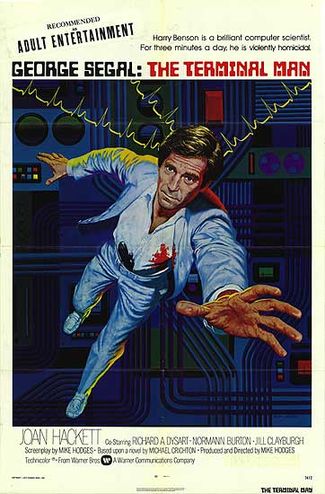
Check out the poster for 1974’s The Terminal Man.

Look at it carefully.  Examine it.  Try to ignore the fact that it’s weird that George Segal was once a film star.  Yes, on the poster, Segal has been drawn to have a somewhat strange look on his face.  Ignore that.  Instead, concentrate on the words in the top left corner of the poster.

“ADULT ENTERTAINMENT!” it reads.

That’s actually quite an accurate description.  The Terminal Man is definitely a film for adults.  No, it’s not pornographic or anything like that.  Instead, it’s a movie about “grown up” concerns.  It’s a mature film.  In some ways, that’s a good thing.  In some ways, that’s a bad thing.

Taking place in the near future (and based on a novel by Michael Crichton), The Terminal Man tells the story of Harry Benson (played, of course, by George Segal).  Harry is an extremely intelligent computer programmer and he’s losing his mind.  It might be because he was in a serious car accident.  It may have even started before that.  Harry has black outs and when he wakes up, he discovers that he’s done violent things.  Even when he’s not blacked out, Harry worries that computers are going to rise up against humans and take over the world.

However, a group of scientists think that they have a way to “fix” Harry.  It’ll require a lot of brain surgery, of course.  (And, this being a film from 1973, the film goes into excruciating details as it explains what’s going to be done to Harry.)  The plan is to implant an electrode in Harry’s brain.  Whenever Harry starts to have a seizure, the electrode will shock him out of it.  The theory is that, much like Alex in A Clockwork Orange 0r Gerard Malanga in Vinyl, Harry will be rendered incapable of violence.

Of course, some people are more enthusiastic about this plan than others.  Harry’s psychiatrist (Joan Hackett) fears that implanting an electrode in Harry’s brain will just make him even more paranoid about the rise of the computers.  Other scientists worry about the ethics of using technology to modify someone’s behavior.  Whatever happens, will it be worth the price of Harry’s free will?

But, regardless of the risks, Harry goes through with the operation.

Does it work?  Well, if it worked, it would be a pretty boring movie so, of course, it doesn’t work.  (Allowing Harry’s operation to work would have been like allowing King Kong to enjoy his trip to New York.)  Harry’s brain becomes addicted to the electrical shocks and, as he starts to have more and more seizures, Harry becomes even more dangerous than he was before…

The Terminal Man is a thought-provoking but rather somber film.  On the one hand, it’s a rather slow movie.  The movie does eventually get exciting after Harry comes out of surgery but it literally takes forever to get there.  The movie seems to be really determined to convince the audience that the story it’s telling is scientifically plausible.  On the other hand, The Terminal Man does deal with very real and very important issues.  Considering how threatened society is by people who cannot be controlled, issues of behavior modification and free thought will always be relevant.

Though the film may be slow, I actually really liked The Terminal Man.  Judging from some of the other reviews that I’ve read, I may be alone in that.  It appears to be a seriously underrated film.  As directed by Mike Hodges, the film is visually stunning, emphasizing the sterility of the white-walled hospital, the gray blandness of the doctors, and the colorful vibrancy of life outside of science.  Though he initially seems miscast, George Segal gives a good and menacing performance as Harry.

The Terminal Man requires some patience but it’s worth it.

Lisa Cleans Out Her DVR: The Carey Treatment (dir by Blake Edwards)


(Lisa is currently in the process of cleaning out her DVR!  She has got over 170 movies on the DVR to watch and she’s trying to get it done before the start of the new year!  Can she get it done?  Probably not, but she’s going to try!  1972’s The Carey Treatment was recorded off of TCM on July 23rd.)

Dr. Peter Carey (James Coburn) is the epitome of 1970s cool.  He’s got hair long enough to cover the top half of ears.  He’s got a fast car.  He’s got a rebellious attitude and a girlfriend (Jennifer O’Neill) who rarely questions his decisions.  Though you don’t see it in the movie, Dr. Carey probably smokes weed when he’s back at his fashionably decorated apartment.  How do I know this?  Well, he’s played by James Coburn.  Even if some of them are nearly 50 years old, you can still get a contact high from watching any movie featuring James Coburn.

Anyway, what the Hell is The Carey Treatment about?  Dr. Carey has just recently moved to Boston, where he’s taken a job at a stodgy old hospital.  The hospital’s chief doctor, J.D. Randall (Dan O’Herlihy, of Halloween III: Season of The Witch fame), might want Dr. Carey to tone down his free-livin’, free-lovin’ California ways but no one tells Peter Carey what to do.  In fact, the entire city of Boston might be too stodgy and conventional for Dr. Carey.  You see, Dr. Carey not only heals people.  He also beats up people who try to stand in his way.  Peter Carey is a doctor who cares but he’s also a doctor who can kick ass.

And he’s going to have to kick a lot of ass because Dr. Randall’s daughter has just turned up dead.  The police say that she died as the result of a botched abortion and they’ve arrested Carey’s best friend, Dr. David Tao (James Hong).  (The Carey Treatment, it should be noted, was filmed before Roe v. Wade legalized abortion.)  The Boston establishment is determined to use Dr. Tao as a scapegoat but Dr. Carey is convinced that his friend is innocent.  In fact, he doesn’t think that the death was the result of an abortion at all.  Carey sets out to solve the case … HIS WAY!

If it seems like I’m going a little bit overboard with my emphasis on the Dr. Peter Carey character, that’s because this entire movie feels more like a pilot for a weekly Dr. Carey television series as opposed to an actual feature film.  It’s easy to image that each week, James Coburn would drive from hospital to hospital, solving medical mysteries and debating social issues with stuffy members of the Boston establishment.  Henry Mancini would provide the theme music and Don Murray would guest star as Dr. Carey’s brother, a priest who encourages the young men in his parish to burn their draft cards.

It might have eventually become an interesting TV show but it falls pretty flat as a movie.  James Coburn is in nearly every scene, which would usually be a good thing.  But in The Carey Treatment, he gives an incredibly indifferent performance.  He seems to be bored by the whole thing and, as a result, Dr. Peter Carey is less a cool rebel and more of a narcissistic jerk.  The mystery itself is handled rather haphazardly.  On the positive side, Michael Blodgett gives a wonderfully creepy performance as a duplicitous masseur but otherwise, The Carey Treatment is nothing special.

If you want to see a great James Coburn film, track down The President’s Analyst.

Trash Film Guru Vs. The Summer Blockbusters : “Jurassic World”


jurassic-world-own-raptors-poster

“Everything old is new again.”

How many times have you heard that one? Well, in the case of the just-released (and record-setting in terms of its worldwide box office take) Jurassic World, it turns out that tired old adage is actually quite true, since director Colin Trevorrow has chosen to hew pretty closely to Steven Spielberg’s original model for this fourth installment in the previously-presumed- moribund franchise extrapolated from the works of Michael Crichton. There’s certainly nothing happening here that one could call overtly “new,” per se, but gosh — it’s been so long since Jurassic Park III  that it all just sorta feels new, ya know?

DLC00020-720x405

CGI technology has come a long way since the original Jurassic Park  made its debut in 1993, as well, and that’s a big factor — maybe even the biggest factor — in this new flick’s by-popcorn-movie-standards “success,” but don’t think that means I’m damning Jurassic World with faint praise. Truth be told, we just got back from seeing it in Imax 3-D and it’s got pretty much everything you’d ever want in a brainless summer thrill ride : superb effects, likable leads, drama, suspense, tension-cutting humor, nicely despicable (sorry, does that even make sense?) villains, and mile-a-minute thrills. My wife and I both left the theater smiling and I ain’t ashamed to admit it.

My only real gripe is one that I knew I’d have going in — Jurassic World continues the morally-questionable trend established at the series’ outset of using kids placed in danger (in this case brothers Zach and Gray, played by Nick Robinson and Ty Simpkins, respectively) as its primary focus/narrative crutch, with benevolent adults coming in to save the day (here represented by Chris Pratt’s  “dinosaur wrangler” character Owen, and Bryce Dallas Howard — who, goddamit, Hollywood is bound and determined to make a star out of yet! — as their hitherto- inattentive aunt Claire, who’s one of the park’s big-wigs), and I’m sorry, but if you don’t know why that scenario is inherently creepy to some of us, then you haven’t been paying much attention to the some of the uglier and more salacious rumors about Spielberg’s personal life that have been swirling around for decades now. And that I won’t repeat here. So let’s just move on, shall we?

ydln1orxqd4neeasuboo

In any case, that solitary-but-predictable qualm aside, the fact of the matter is that Jurassic World is expertly-crafted throwaway fun. Not every movie needs to re-invent the wheel to stand out, and Trevorrow wisely has that figured from the outset here. All we want from his big-budget extravaganza is pretty much the same sort of story that had us jumping in our seats all those years ago, and to feel the same sort of “rush of excitement” that we did back then and which the two previous installments in the series just weren’t able to capture. It’s a dinosaur movie, for Christ’s sake, so just give us a shit-load of dinos on the loose and we’re gonna be happy! How hard is that to figure out?

jurassic-world-pratt-howard

About the only  wrinkles to the formula here are the introduction of the new genetically-engineered “super-dinosaur” Indominus Rex, and the hare-brained scheme laid out by the villainous Hoskins (Vincent D’Onofrio) to train Velociraptors to be — uhhmmm — super-soldiers for the US army. But rich people with more money than sense employing unscrupulous lackeys and amoral scientists have been a Jurassic staple, in one form or another, from jump, and one might even argue that really smart people doing really dumb things has always been at the heart of these flicks. That’s okay with me if the end result is admittedly disposable fare done with this much gusto, flair, and panache. There are a million and one reasons to write off Jurassic World as derivative, senseless garbage,  sure — but when you’ve got five or six bloodthirsty dinosaurs battling it out for supremacy at the end, I don’t care about any of those intellectual (or, as is more often the case, pseudo-intellectual) arguments. I’m just having a damn good time.

Jurassic World Adds To The Summer Action


JurassicWorld

Was there ever a need for a fourth film in the Jurassic Park franchise? For years many have tried to answer that and projects to get it up and running stalled for need of a director willing to sign on to a franchise that has been passed up by the superhero action tsunami that has hit pop culture.

It is now 2015 and we’re just months away from finally seeing the fruits of over a decade’s worth of labor to bring a fourth Jurassic Park film to the big screen. While it may still have Steven Spielberg attached as executive producer there’s no Joe Johnston anywhere near this fourth film. We have Carl Trevorrow taking the director’s chair with Chris Pratt and Bryce Dallas Howard taking on the lead roles.

Jurassic World is set to open it’s doors to the world on June 12, 2015 (took them long enough).