Review: 100 Bullets Vol. 2 – Split Second Chance


“Asking questions is free… but the answers—they can cost you your life.” — Agent Graves

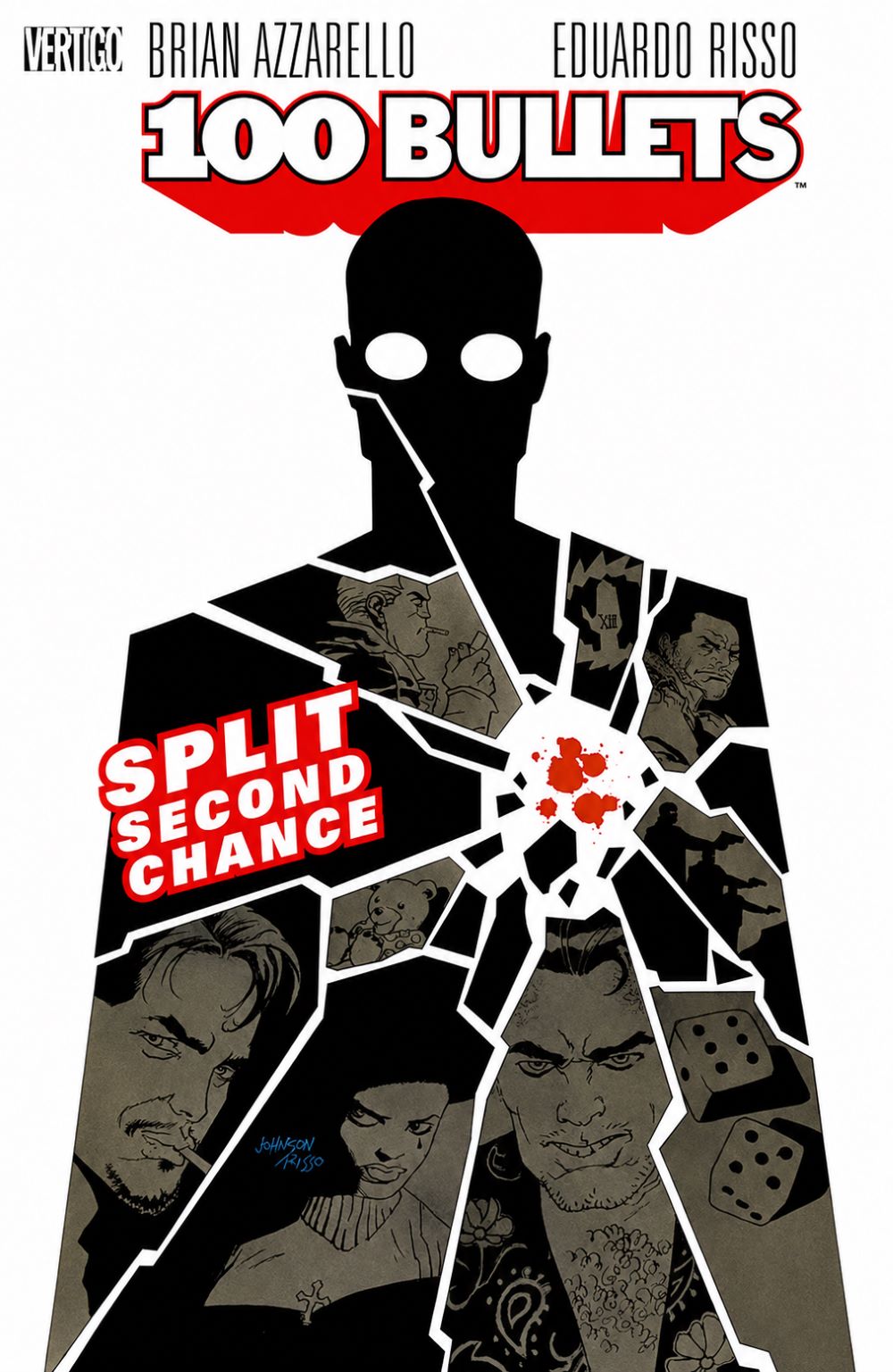
In the first volume of 100 Bullets, Brian Azzarello and Eduardo Risso laid down a stunning thesis for their magnum opus: a world where the wronged are offered the ultimate temptation of consequence-free vengeance. That volume, First Shot, Last Call, functioned as a potent thematic introduction, establishing the series’ central moral quandary through self-contained stories. With Split Second Chance, the creative team makes a crucial pivot. This collection, gathering issues #6-14, successfully preserves the gritty, anthology-style explorations of revenge while beginning to weave a much larger, more intricate conspiracy that feels poised to consume everything in its path. If the first book was a promise, this second volume is the first, gripping step toward its fulfillment, even if it occasionally stumbles under the weight of its own ambition.

The volume opens with “Short Con, Long Odds,” a two-part story that initially feels like familiar territory. We are introduced to Chucky, a small-time gambler fresh out of prison, who is approached by Agent Graves. As before, Graves offers incontrovertible proof of a betrayal and the tools for retribution—this time against Chucky’s childhood friend, Pony, who has seemingly built a successful gambling empire on his partner’s misery. What makes this story stand out is its focus on the petty, desperate world of gambling. Risso’s art is especially potent here, capturing the sad, seedy underbelly of street-corner hustles and back-alley games. The story’s conclusion, which unfolds off-panel, is a masterclass in implication, leaving the reader to piece together the grim aftermath. It is a solid entry that reinforces the series’ core premise, but its real purpose becomes clear retroactively as the larger plot comes into focus.

This is the volume where the series’ title begins to earn its meaning. Agent Graves is no longer just a cipher; he is revealed to be a man with a history, and Split Second Chance doles out those histories with deliberate, tantalizing precision. The most significant revelation comes in “Day, Hour, Minute… Man,” where we learn about The Trust and the enigmatic Minutemen. This arc peels back the curtain, suggesting that Graves and his associate, Mr. Shepherd, were once part of this shadowy organization before faking their deaths to escape its clutches. The introduction of Lono, the chilling hitman from the first volume’s “The Samurai,” becomes far more significant. His meeting with Graves is charged with a dangerous, unspoken history, confirming that Graves’s “gifts” are a part of a larger, more personal agenda. The plot is thickening nicely, and the promise of a sprawling, interconnected narrative starts to feel exhilaratingly real.

However, it is in the standalone stories that Azzarello’s writing truly shines, showcasing his ability to extract raw, human emotion from his noir framework. The standout is undoubtedly “Heartbreak, Sunnyside Up,” a single-issue story that follows a hard-working diner waitress named Rose. Rose’s life is a grinding cycle of poverty and worry for her runaway daughter. When Agent Graves appears, he doesn’t just offer her a gun and a target; he delivers a slow, agonizing explanation of how her daughter became a heroin-addicted prostitute after being molested by her own father. It is a moment of pure, unflinching tragedy. The brilliance of the story lies not in the revenge itself, but in the horror of the revelation. Azzarello forces the reader and the character to sit with the unbearable truth, making the subsequent act of violence feel less like empowerment and more like a desperate, last resort. It serves as a powerful reminder that “sometimes evil is closer to home than we think.”

“The Right Ear, Left in the Cold” offers a fascinating twist on the formula by introducing Cole Burns, a deadly assassin living undercover as a neighborhood ice cream man. This story introduces the concept of the “sleeper agent,” a tool that Graves and Shepherd can “reactivate” for their own ends. Cole is a more capable and cold-blooded protagonist than the average victim, which makes his story less about moral choice and more about professional obligation. Yet, it deepens the mythology, showing that Graves has an entire network of operatives at his disposal, further blurring the line between righteous avenger and puppet master. His ultimate task of retrieving the briefcase from Dizzy Cordova in the final arc, “Parlez Kung Vous,” masterfully ties this new plot thread back to the series’ very first protagonist.

Throughout it all, Eduardo Risso’s artwork remains the series’ undeniable and consistent anchor. His style, which perfectly captured the cold, deliberate mood in the first volume, continues to excel in Split Second Chance. Risso’s panels have a cinematic rhythm; his compositions are economical yet expressive, using deep shadows and stark contrasts to build a world that feels dangerous and morally unstable. He excels at conveying unspoken tension and character attitude through posture and expression, a vital skill for a noir story where much is left unsaid. While some readers may find the depiction of female characters hyper-sexualized, Risso and colorist Grant Goleash unquestionably create a visual language that is sleek, uneasy, and unmistakably noir. The story’s pace may occasionally lag, but the art is always arresting.

100 Bullets: Split Second Chance is a more challenging and rewarding book than its predecessor. It sacrifices some of the first volume’s focus and self-contained impact to lay the foundation for something much grander. This is the volume where the series starts to earn its reputation for dense, interwoven plotting. It is a work of deliberate, intricate world-building that asks the reader to be patient and pay close attention. It is not without its flaws—some stories feel more like necessary setups than complete narratives, and the unrelentingly grim tone can be exhausting. Yet, the moments of genuine human tragedy, like Rose’s story, and the thrilling expansion of the central mystery make Split Second Chance an essential step in the journey. It confidently expands the world of 100 Bullets, deepening its mythology and proving that this is a saga built for the long haul.

100 Bullets Volume Reviews
Live Tweet Alert: Join #FridayNightFlix for Kickboxer 2!


As some of our regular readers undoubtedly know, I am involved in a few weekly watch parties.  On Twitter, I host #FridayNightFlix every Friday and I co-host #ScarySocial on Saturday.  On Mastodon, I am one of the five hosts of #MondayActionMovie!  Every week, we get together.  We watch a movie.  We tweet our way through it.

Tonight, at 10 pm et, I will be hosting #FridayNightFlix!  The movie?  Kickboxer 2!

If you want to join us this Friday, just hop onto twitter, find Kickboxer 2 on Prime, start the movie at 10 pm et, and use the #FridayNightFlix hashtag!  I’ll be there happily tweeting.  It’s a friendly group and welcoming of newcomers so don’t be shy.

See you there!


Song of the Day: Deep Down by Ennio Morricone


Danger: Diabolik (1968)

Since today is Mario Bava’s birthday, it only seems appropriate that today’s song of the day should come from one of his films.

From Ennio Morricone’s score to Mario Bava’s 1968 film Danger: Diabolik, here is Deep Down!


Scenes That I Love: The Opening of Mario Bava’s Black Sunday


Since today is the birthday of the great Mario Bava, today’s scene that I love comes from one of Bava’s best films.  Here is the wonderfully atmospheric and ominous opening of 1960’s Black Sunday:

4 Shots From 4 Films: Special Mario Bava Edition


4 Shots From 4 Films is just what it says it is, 4 shots from 4 of our favorite films. As opposed to the reviews and recaps that we usually post, 4 Shots From 4 Films lets the visuals do the talking.

112 years ago today, the most important Italian filmmaker of all time was born.  Today is Mario Bava’s birthday!  And, as we often do here at the Shattered Lens, it’s time to celebrate with…

4 Shots From 4 Mario Bava Films

Black Sunday (1960, dir by Mario Bava)

Kill, Baby, Kill (1966, dir by Mario Bava)

Lisa and the Devil (1972, dir by Mario Bava)

Shock (1977, dir by Mario Bava)

Music Video of the Day: Dirty Black Summer by Danzig (1992, directed by Anton Corbijn)


This video was directed by Anton Corbijn, the Dutch photographer who directed videos from Depeche Mode, U2, and Nirvana.  (He was the director behind the video for Heart–Shaped Box).  Corbijn has since gone on to direct feature films as well, Control, The American, and Most Wanted Man.

Long before Hugh Jackman got the role, Glenn Danzig was considered for the role of Wolverine in a potential X-Men feature film.  I think he would have rocked that roll.

Enjoy!

Late Night Retro Television Review: Hunter 1.14 “The Snow Queen: Part Two”


Welcome to Late Night Retro Television Reviews, a feature where we review some of our favorite and least favorite shows of the past!  On Thursdays, I will be reviewing Hunter, which aired on NBC from 1984 to 1991.  The entire show is currently streaming on Tubi and several other services!

This week, the story of the snow queen comes to a close.

Episode 1.14 “The Snow Queen: Part Two”

(Dir by Richard Colla, originally aired on March 30th, 1985)

The second part of The Snow Queen saga opens with a stylish action sequence.  As Huey Lewis sings I Want A New Drug on the soundtrack, we watch as both Molinas (Dennis Franz) and Hunter approach, from opposite sides, the boat where Sally LaPone is hiding out with one of her friends.  Molinas is approaching the boat so that he can murder Sally for the mob bosses in New York.  Hunter, on the other hand, is approaching the boat to try to save Sally’s life.  The guards that surround the boat have no idea what’s going on and they end up getting into a gunfight with both Molinas and Hunter.  Molinas, being the sleaze that he is, pretends that he drew his gun to help Hunter as opposed to killing Sally.

Meanwhile, at a club, a smitten Vic Terranova (Dennis Farina) pushes McCall, who is working undercover, to take the stage.  Shots of McCall performing are mixed with shots of Molinas and Hunter shooting people and Sally once again escaping.

Molinas wants to kill Sally while McCall wants to use Sally’s testimony to take down Terranova and his drug-fueled empire.  Hunter wants to stop Molinas from killing anyone else and Sally just wants to be left alone.  The episode does a good job of switching from one character to the next, capturing the desperation of everyone involved.  One especially memorable sequence features Dennis Franz showing Sally’s pictures to a group of teenagers outside of a punk club.  Just from the reactions of Franz and the punks, one gets the feeling that the sequence wasn’t actually scripted.  There’s a gritty authenticity to the action in this episode and it makes for compelling viewing.

Of course, this is an episode of Hunter so everything does eventually lead to another shoot out.  Both Vic and Molinas go down in a hail of bullets and it’s actually kind of a shame.  Both Farina and Franz did such a good job in these two episodes that it’s unfortunate that their characters won’t be able to return in the future.  Franz, in particular, was brilliantly sleazy as the loathsome Molinas.  If only he hadn’t pulled that gun on Hunter, Molinas could have been one of those recurring villains that audiences would love to hate.

Still, all things come to an end and, since this is Hunter, they end in gunfire instead of arrests.  Sally survives but the final shot of the episode reveals that she’s been traumatized beyond belief by everything she’s seen and experienced.  McCall’s hope was that Sally would get immunity in return for testifying against Vic.  But, with Vic dead, Sally really doesn’t have any leverage that she could use to avoid jail.

Seriously, this was a dark episode!  But it was a compelling one and I’m glad that, for once, Hunter showed that not everyone just shrug off violence and move on.  Not everyone is Rick Hunter.

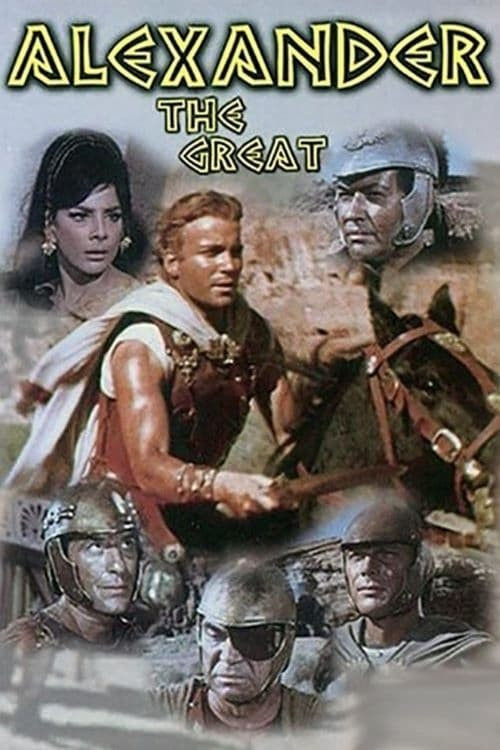
Retro Television Review: Alexander The Great (dir by Phil Karlson)


Welcome to Retro Television Reviews, a feature where we review some of our favorite and least favorite shows of the past!  This Thursdays, I will be reviewing Alexander The Great, which was filmed in 1963 but didn’t air on CBS until 1968.  The show can be found on YouTube!

This week, we take a look at William Shatner and Adam West in Alexander The Great, a pilot that never became a series.

Episode 1.1 “Alexander The Great”

(Dir by Phil Karlson, originally aired on January 26th, 1968)

Greek leader Alexander the Great (a very blonde William Shatner) is determined to defeat the forces of King Darius and conquer all of Persia.  But, before he can fight his latest battle, he has to rescue his kidnapped best friend Cleander (Adam West), calm the nerves of his mentor Antigonus (Joseph Cotten), and deal with two insubordinate generals (John Cassavetes and Simon Oakland).  Only then will Alexander be ready to defeat the fearsome, beheading-obsessed Persian general, Memmon (Cliff Osmond, wearing a truly horrifying wig and fake beard).

This hour-long episode features a lot of talking, a lot of scheming, and one good battle scene.  Unfortunately, that good battle scenes becomes a lot less impressive once you discover that it was lifted from the 1959 film, The Giant of Marathon.  As for the scheming, it’s not really a surprise when the generals plays by Cassavetes and Oakland reveal that they’re planning on assassinating Alexander during the battle.  Both characters are so obviously villainous that their very presence amongst the ranks will lead most viewers to doubt whether Alexander is truly the tactical genius that everyone seems to think he is.

For most viewers, the main appeal of Alexander the Great will be the chance to see William Shatner and Adam West playing best friends.  This pilot was made before Shatner was cast as Captain Kirk and West as Batman.  While West gives a relatively sober performance as Cleander, Shatner shows that he had all of his famous acting tics long before he boarded the Enterprise.  Shatner delivers every line as if he’s expecting to be handed an Emmy at any moment.  The halting cadence is present.  The overly dramatic punctuation is present.  The habit of telegraphing every line and emotion by moving his head is present.  This is the type of performance that feels more like William Shatner imitating himself than actually trying to play a character.  Today, we’re all used to William Shatner poking fun at his reputation so it’s always a bit jarring to watch something like Alexander the Great and see just how seriously Shatner used to take himself.

Alexander the Great ends with Alexander achieving victory over both Memmon and his own duplicitous generals.  He buries Antigonous, who was earlier murdered by the mutineers.  And then, with a big smile on his face, Alexander hopes on his horse and rides off with Cleander and his surviving generals.  Watching Shatner riding his horse, it becomes obvious that, had this pilot become a show, it would have been a western that just happened to take place in ancient Greece and which featured togas and mini-skirts instead of chaps and hats.

This pilot was shot in 1963 but it was rejected by the network and shelved.  In 1968, when West was Batman and Shatner was Kirk, the pilot was taken out of storage and aired as an episode of an anthology show.  Needless to say, it didn’t lead to a series.  Adam West later poked fun at the pilot in his autobiography, saying that it was the greatest waste of an hour ever made.  I think West was a bit too hard on the pilot.  It’s not terrible as much as it’s just bland.  No production featuring not only Shatner and West but also Joseph Cotten, Simon Oakland, and John Cassavetes has a right to be this mild.

One does wonder how, if the pilot had become a series, it would have deal with Alexander eventually drinking himself to death.  Imagine what Shatner and West could have done with that!

Guilty Pleasure No. 125: In Death Series (by J.D. Robb)


If you’ve ever wondered what would happen if you mashed up a gritty police procedural with a futuristic New York City and a slow-burn romance that somehow never gets old, J.D. Robb’s In Death series is your answer. Now 62 books deep and still going strong, this series is a masterclass in how to take well-worn tropes—brilliant but emotionally closed-off detective, deadly serial killers, found family, and a romance that simmers across dozens of books—and make them feel fresh, addictive, and weirdly comforting every single time. It’s the kind of series you can binge like comfort food, but with a side of cybernetic enhancements and murder so creative it’ll make you side-eye your toaster. And yes, it’s absolutely a guilty pleasure—but not because it’s badly written or because Robb has lost her touch. It’s a guilty pleasure like that extra slice of pie you know you shouldn’t have but can’t resist, or buying a lottery ticket despite the astronomical odds. You know it’s not good for you in the grand scheme of things, but dang it, it feels good in the moment.

The series kicks off with Naked in Death, where we meet Lieutenant Eve Dallas, a homicide detective in 2058 New York who’s all sharp edges and zero patience for nonsense. She’s the kind of cop who’d rather work a double shift than talk about her feelings, which is convenient because her past is a landmine of trauma she’d prefer to ignore. Enter Roarke, the Irish billionaire with a shady past, a face that could melt glaciers, long black hair, deep blue sea eyes, and an Irish brogue that could charm the pants off a saint. He’s the billionaire playboy whose dubious criminal past built his legitimate business empire, and he’s the perfect foil to Eve’s law-abiding, no-nonsense demeanor. Their dynamic is the heart of the series and the ultimate embodiment of the “opposites attract” trope. Here you have two diametrically opposed characters—a by-the-book cop and a former criminal turned businessman—who somehow end up being perfect for each other. Their push-and-pull of trust, loyalty, and simmering tension is what makes their relationship so compelling. Robb (a pseudonym for Nora Roberts) takes her time with Eve and Roarke’s romance, letting it develop over the first handful of books in a way that makes their eventual partnership feel earned. And even when they’re officially together, their relationship keeps evolving—through marriage, career shifts, and the occasional murderous ex-lover trying to ruin their day. It’s the kind of slow-burn romance that makes you sigh happily every time they share a quiet moment, even if you know it’s all a little ridiculous.

What’s wild about In Death is how effortlessly it blends its genres while still finding new ways to retell similar stories. The sci-fi elements are often window dressing—hover cars, androids, and off-planet travel exist, but the focus is always on the murders, the investigation, and the people solving (or committing) them. The police procedural side is where the series shines, and Robb’s ability to take familiar setups (a killer targeting a specific demographic, a conspiracy within the police force, a cold case resurfacing) and twist them into something fresh is impressive. You’d think after 60-plus books, the well would run dry, but Robb consistently finds inventive angles, whether it’s the method of murder, the killer’s motive, or the personal stakes for Eve and her team. The supporting cast is a huge part of the charm, too. There’s Delia Peabody, Eve’s former rookie turned trusted partner, whose growth from wide-eyed newbie to seasoned detective is one of the series’ most rewarding arcs. Then there’s Captain Ryan Feeney, the gruff but lovable former cop turned consultant, whose gruff exterior hides a heart of gold (and a love for old-school tech). Even the villains often have depth, with motives that range from tragically relatable to straight-up unhinged.

But let’s talk about the tropes, because In Death has them in spades—and yet, they never feel lazy. Eve and Roarke are the poster children for the “opposites attract” trope, and it works because Robb gives them enough depth and chemistry to make their connection feel real. Eve is the classic “genius detective with a dark past” trope, but Robb gives her enough nuance and growth that she never feels like a caricature. She’s stubborn, yes, but she also learns—slowly—to let people in, to trust her team, and to accept that she doesn’t have to carry the weight of the world alone. Roarke, for his part, could easily have been a one-note “rich love interest” character, but instead, he’s a fully realized partner who respects Eve’s independence while also being unapologetically protective. Their relationship is built on mutual admiration and a shared sense of justice, and it’s refreshing to see a romance in a long-running series that doesn’t devolve into drama for drama’s sake. Even the recurring themes—like Eve’s struggle with her abusive childhood, or the way her job constantly tests her emotional boundaries—are handled with a deft touch that keeps them from feeling repetitive.

The series isn’t without its quirks, though. Some of the later books can feel a bit formulaic, with Eve and her team solving cases in a way that starts to resemble a well-oiled machine. And let’s be real: the number of times Eve gets into physical altercations with suspects who are way bigger and stronger than her, only to come out on top, starts to stretch credibility after a while. But these are minor nitpicks in the grand scheme of things. The real magic of In Death is how it makes you care about these characters, even when the plots start to blur together. There’s a comfort in returning to Eve’s world, where you know you’re going to get a solid mystery, a few laughs, and a healthy dose of heart. The series also does a great job of evolving its characters over time. Peabody’s rise through the ranks, for example, is a slow burn that pays off in satisfying ways, and even side characters like Dr. Morris, the medical examiner, get their moments to shine.

Another standout feature of the series is its ability to balance tone. One minute, you’re knee-deep in a gruesome murder investigation, and the next, you’re laughing at Eve’s sarcastic inner monologue or Roarke’s dry humor. The dialogue is sharp, the banter is frequent, and the chemistry between the characters—both romantic and platonic—keeps the pages turning. And while the sci-fi elements might not be the most hard-hitting or innovative, they serve their purpose: creating a world that feels just different enough from our own to be intriguing, but familiar enough to be relatable. New York in 2058 is still New York, just with more gadgets and a few extra layers of bureaucracy. It’s a world you want to escape into, even if you know it’s all a little indulgent.

At its core, In Death is a series about resilience. Eve’s journey from a traumatized orphan to a woman who’s found love, purpose, and a sense of belonging is the emotional backbone of the series. And while the mysteries are often the driving force of individual books, it’s the characters and their relationships that keep readers coming back. Robb’s ability to weave together sci-fi, police procedural, and romance into a cohesive, engaging whole is no small feat. It’s a testament to her skill as a storyteller that a series this long can still feel so vibrant and alive, even when it leans on familiar tropes. In a genre landscape where so many series fizzle out after a few books, In Death is a rare beast: a long-running saga that manages to stay fresh, fun, and deeply satisfying, book after book. Whether you’re here for the murders, the romance, or the sheer joy of watching Eve Dallas evolve, there’s plenty to love—and plenty more to dive into. And if anyone judges you for binging 10 books in a row? Well, they clearly haven’t experienced the simple joy of curling up with a new In Death novel and letting the rest of the world fade away.

Previous Guilty Pleasures

  1. Half-Baked
  2. Save The Last Dance
  3. Every Rose Has Its Thorns
  4. The Jeremy Kyle Show
  5. Invasion USA
  6. The Golden Child
  7. Final Destination 2
  8. Paparazzi
  9. The Principal
  10. The Substitute
  11. Terror In The Family
  12. Pandorum
  13. Lambada
  14. Fear
  15. Cocktail
  16. Keep Off The Grass
  17. Girls, Girls, Girls
  18. Class
  19. Tart
  20. King Kong vs. Godzilla
  21. Hawk the Slayer
  22. Battle Beyond the Stars
  23. Meridian
  24. Walk of Shame
  25. From Justin To Kelly
  26. Project Greenlight
  27. Sex Decoy: Love Stings
  28. Swimfan
  29. On the Line
  30. Wolfen
  31. Hail Caesar!
  32. It’s So Cold In The D
  33. In the Mix
  34. Healed By Grace
  35. Valley of the Dolls
  36. The Legend of Billie Jean
  37. Death Wish
  38. Shipping Wars
  39. Ghost Whisperer
  40. Parking Wars
  41. The Dead Are After Me
  42. Harper’s Island
  43. The Resurrection of Gavin Stone
  44. Paranormal State
  45. Utopia
  46. Bar Rescue
  47. The Powers of Matthew Star
  48. Spiker
  49. Heavenly Bodies
  50. Maid in Manhattan
  51. Rage and Honor
  52. Saved By The Bell 3. 21 “No Hope With Dope”
  53. Happy Gilmore
  54. Solarbabies
  55. The Dawn of Correction
  56. Once You Understand
  57. The Voyeurs 
  58. Robot Jox
  59. Teen Wolf
  60. The Running Man
  61. Double Dragon
  62. Backtrack
  63. Julie and Jack
  64. Karate Warrior
  65. Invaders From Mars
  66. Cloverfield
  67. Aerobicide 
  68. Blood Harvest
  69. Shocking Dark
  70. Face The Truth
  71. Submerged
  72. The Canyons
  73. Days of Thunder
  74. Van Helsing
  75. The Night Comes for Us
  76. Code of Silence
  77. Captain Ron
  78. Armageddon
  79. Kate’s Secret
  80. Point Break
  81. The Replacements
  82. The Shadow
  83. Meteor
  84. Last Action Hero
  85. Attack of the Killer Tomatoes
  86. The Horror at 37,000 Feet
  87. The ‘Burbs
  88. Lifeforce
  89. Highschool of the Dead
  90. Ice Station Zebra
  91. No One Lives
  92. Brewster’s Millions
  93. Porky’s
  94. Revenge of the Nerds
  95. The Delta Force
  96. The Hidden
  97. Roller Boogie
  98. Raw Deal
  99. Death Merchant Series
  100. Ski Patrol
  101. The Executioner Series
  102. The Destroyer Series
  103. Private Teacher
  104. The Parker Series
  105. Ramba
  106. The Troubles of Janice
  107. Ironwood
  108. Interspecies Reviewers
  109. SST — Death Flight
  110. Undercover Brother
  111. Out for Justice
  112. Food Wars!
  113. Cherry
  114. Death Race
  115. The Beast Within
  116. Girl Series
  117. Gone in 60 Seconds
  118. Swordfish
  119. Marked For Death
  120. The Internship
  121. The Angry Red Planet
  122. 2012
  123. Old School
  124. No Escape