Late Night Retro Television Review: CHiPs 6.7 “This Year’s Riot”


Welcome to Late Night Retro Television Reviews, a feature where we review some of our favorite and least favorite shows of the past!  On Mondays, I will be reviewing CHiPs, which ran on NBC from 1977 to 1983.  The entire show is currently streaming on Prime!
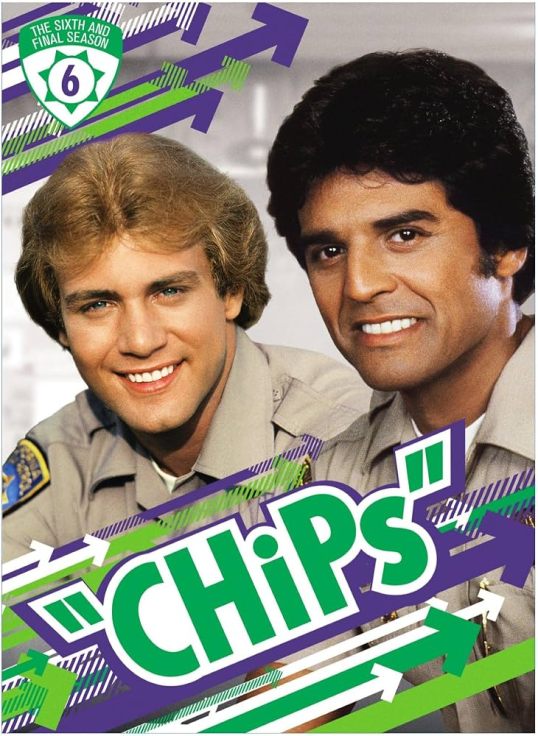
This week, it’s Balboa Day!

Episode 6.7 “This Year’s Riot”

(Dir by Richard A. Colla, originally aired on November 28th, 1982)

It’s Balboa Day weekend, and that means the beach is going to be full of drama and bikinis.  (Full disclosure: Before this episode, I had never heard of Balboa Day before.  I guess it’s a California thing.) Ponch and Bobby are assigned to keep an eye on things on a small island off the California coast. When an irate homeowner pulls a shotgun on teenagers who keep trespassing on his property, it’s up to Ponch and Bobby to talk him down before someone gets hurt. When a wealthy woman (Julie Newmar) tries to establish a nude beach, it’s up to the Highway Patrol to tell everyone to put some clothes on.

Meanwhile, Doc (Gary Morgan) is selling drugs on the beach and causing trouble. He even sells some to Grossman’s socially awkward nephew, Russell (Robbie Rist). Luckily, Ponch is there to chase Doc down. When Doc makes it onto a barge, he thinks he’s escaped. He grins and mockingly waves goodbye. Ponch rides his motorcycle off the dock, glides through the air, and lands on the barge.

“And he calls me a hot dog!” Bobby says, watching.

And really, that’s all Bobby can do. It’s certainly not as if Bobby or any other member of the Highway Patrol would have been allowed to take down the episode’s main villain. That’s not how things work when Ponch is around. When Larry Wilcox said that he was tired of the producers always favoring Erik Estrada and left after season 5, the producers could have taken that as a sign that the show didn’t always have to be exclusively the Ponch Show. Instead, they appear to have learned the opposite lesson. During the sixth and final season, the series is more about Ponch than ever. Of course, in the role of Bobby, Tom Reilly isn’t exactly the most convincing cop in the world. He comes across as a bit spacey, like a California beach bum who somehow got through the Police Academy. Larry Wilcox was always believable as a cop. When it came to riding a motorcycle and looking manly while writing tickets, Wilcox could easily keep up with Estrada. Reilly, on the other hand, always seems like he’d rather be surfing.

Ponch gets the bad guy in this one and makes the beach safe for people of all ages. Seriously, is there anything Ponch can’t do? As for the episode itself, it was bland but likable, largely because of the beach scenery. Robbie Rist is best remembered for playing Cousin Oliver on The Brady Bunch. He’s even more annoying as Russell here. Not only is he rude to his uncle, he’s also dumb enough to take drugs before trying to go sailing. What a dummy. It’s a good thing this is the Ponch Show and Ponch can do no wrong. Otherwise, Russell would have been in a lot of trouble.

Next week, Ponch falls in love.

Late Night Retro Television Review: Hunter 1.15 “The Beach Boy”


Welcome to Late Night Retro Television Reviews, a feature where we review some of our favorite and least favorite shows of the past!  On Thursdays, I will be reviewing Hunter, which aired on NBC from 1984 to 1991.  The entire show is currently streaming on Tubi and several other services!

This week, someone is killing criminals in Los Angeles and, for once, it’s not Rick Hunter!

Episode 1,15 “The Beach Boy”

(Dir by Richard Colla, originally aired on April 6th, 1985)

A Hawaiian drug lord is angered when five Los Angeles drug dealers decide to stop dealing his product.  So, he sends his main assassin — Wes “Beach Boy” Kapano (Brett Clark) — to L.A. to kill all five of them.  Hunter and McCall find themselves in the strange position of providing productive custody to the dealers while trying to stop Kapano.

This was a typical “chase-em-and-shoot-em” episode of Hunter.  Dee Dee even managed to get shot for the second time this season.  (And, once again, it didn’t seem to actually hurt her.  “I’m fine!”)  For the first season, at least, Hunter kept things simple.  In between the flirtatious Hunter/McCall banter, there would be at least one car chase and three shootings.

What sets this episode apart is that Hunter and McCall are protecting drug dealers.  While McCall makes it clear that she doesn’t actually care what happens to the dealers, Hunter’s feelings are a bit more ambivalent.  He’s been chasing the dealers for so long that he’s developed a grudging affection for them.  When one of them is killed while helping the police, Hunter’s actually upset about it.

The other thing that sets this episode apart was Brett Clark’s intimidating turn as the assassin.  The Beach Boy, as he’s called, doesn’t waste too much time with conversations.  He doesn’t brag about how clever he is or go to a lot of trouble trying to fool anyone.  Instead, he just shows up and starts firing.  He wears a bulletproof vest, as well.  McCall shoots him twice and he barely flinches.  He’s a scary dude!

That said, Hunter still manages to kill him.  How many people have been killed by Rick Hunter so far?  I’ve lost track.  Most officers are suspended after a shooting so that the shooting board can rule whether or not it was justified.  Hunter is always back on the streets within an hour of killing someone.  Considering how quick he is with a gun, I probably wouldn’t want to tell him he was suspended either.

Much like Hunter and McCall, this episode was brutal and efficient.

Late Night Retro Television Review: Hunter 1.14 “The Snow Queen: Part Two”


Welcome to Late Night Retro Television Reviews, a feature where we review some of our favorite and least favorite shows of the past!  On Thursdays, I will be reviewing Hunter, which aired on NBC from 1984 to 1991.  The entire show is currently streaming on Tubi and several other services!

This week, the story of the snow queen comes to a close.

Episode 1.14 “The Snow Queen: Part Two”

(Dir by Richard Colla, originally aired on March 30th, 1985)

The second part of The Snow Queen saga opens with a stylish action sequence.  As Huey Lewis sings I Want A New Drug on the soundtrack, we watch as both Molinas (Dennis Franz) and Hunter approach, from opposite sides, the boat where Sally LaPone is hiding out with one of her friends.  Molinas is approaching the boat so that he can murder Sally for the mob bosses in New York.  Hunter, on the other hand, is approaching the boat to try to save Sally’s life.  The guards that surround the boat have no idea what’s going on and they end up getting into a gunfight with both Molinas and Hunter.  Molinas, being the sleaze that he is, pretends that he drew his gun to help Hunter as opposed to killing Sally.

Meanwhile, at a club, a smitten Vic Terranova (Dennis Farina) pushes McCall, who is working undercover, to take the stage.  Shots of McCall performing are mixed with shots of Molinas and Hunter shooting people and Sally once again escaping.

Molinas wants to kill Sally while McCall wants to use Sally’s testimony to take down Terranova and his drug-fueled empire.  Hunter wants to stop Molinas from killing anyone else and Sally just wants to be left alone.  The episode does a good job of switching from one character to the next, capturing the desperation of everyone involved.  One especially memorable sequence features Dennis Franz showing Sally’s pictures to a group of teenagers outside of a punk club.  Just from the reactions of Franz and the punks, one gets the feeling that the sequence wasn’t actually scripted.  There’s a gritty authenticity to the action in this episode and it makes for compelling viewing.

Of course, this is an episode of Hunter so everything does eventually lead to another shoot out.  Both Vic and Molinas go down in a hail of bullets and it’s actually kind of a shame.  Both Farina and Franz did such a good job in these two episodes that it’s unfortunate that their characters won’t be able to return in the future.  Franz, in particular, was brilliantly sleazy as the loathsome Molinas.  If only he hadn’t pulled that gun on Hunter, Molinas could have been one of those recurring villains that audiences would love to hate.

Still, all things come to an end and, since this is Hunter, they end in gunfire instead of arrests.  Sally survives but the final shot of the episode reveals that she’s been traumatized beyond belief by everything she’s seen and experienced.  McCall’s hope was that Sally would get immunity in return for testifying against Vic.  But, with Vic dead, Sally really doesn’t have any leverage that she could use to avoid jail.

Seriously, this was a dark episode!  But it was a compelling one and I’m glad that, for once, Hunter showed that not everyone just shrug off violence and move on.  Not everyone is Rick Hunter.

October True Crime: Swearing Allegiance (dir by Richard Colla)


“Greenish brown female sheep,” the two lovers at the center of 1997’s Swearing Allegiance often tell each other.

It’s their code and only they understand what it means.  It’s not that hard to figure out.

Greenish Brown = Olive

Female Sheep = Ewe

Olive Ewe.

Say it out loud.

I love you.

That seems cute until you really think about it.  David Graham (David Lipper) and Diane Zamora (Holly Marie Combs) are high school sweethearts in Texas.  They go to different high schools but they’re totally in love (or they say).  David is planning on attending the Air Force Academy in Colorado.  Diane is entering the Naval Academy and she hopes to someday be an astronaut.  Diane is so convinced that she and David are going to be together forever that she loses her virginity to him.  David, for his part, seems to be a bit of a lunkhead but he leads the ROTC with an intense determination.  They’ll tell anyone who asks that they’re going to get married and be together forever.

And yet, neither one ever really tells the other, “I love you.”  Instead, they speak through code.  It’s cute.  It’s the sort of thing that I used to do when I was like 12.  But when you’re nearly an adult and you’re still saying, “Greenish Brown Female Sheep,” it suggests that you might not be as ready for life outside of high school as you think you are.

One night, after a teary David confesses to Diane that he cheated on her with one of his teammates on the school’s track team, Adrianne “A.J.” Jones (Cassidy Rae), Diane snaps.  Instead of dumping David, she tells him that the only way they can make things right is by murdering Adrianne, which is what they proceed to do.  They almost get away with it.  With the police focusing their attention on the wrong guy, David and Diane leave town for their respective colleges.  David and Diane swear to themselves that, from now on, they are going to live with honor and loyalty….

This made-for-TV movie was based on an actual crime that happened outside of Mansfield, Texas in 1995.  For years, the crime itself lived on as a cautionary tale that was told to teenage girls (including myself) in order to keep us from sneaking out and sneaking around.  Interestingly enough, in 2005, Zamora’s attorney said that the prosecution deliberately withheld evidence that David Graham had been lying about having sex with Adrianne Jones as a part of twisted scheme to keep Diane from breaking up with him.  I don’t know if that’s true or not but I do know that, whatever may have happened between Adrianne and David Graham, she deserved better than to be murdered and then turned into a cautionary tale.

One thing I do like about the film is that it is clearly on Adrianne’s side.  Cassidy Rae gives a sympathetic performance as Adrianne, playing her as a genuinely nice person who fell victim to David and Diane’s toxic relationship.  David Lipper is a bit blank-faced as David but Holly Marie Combs is appropriately intense as the obsessive Diane Zamora.  The film actually aired before the case went to trial, which shows that, even in the 90s, there was always a thin line between tragedy and entertainment.

Zamora and Graham are currently both in prison.  Zamora took a polygraph in 2007 but the results were tossed out when it was determined that she was trying to alter her breathing to fool the machine.  As Zamora now claims that Graham alone was responsible for killing Adrianne, I imagine they’re no longer speaking about greenish brown female sheep.