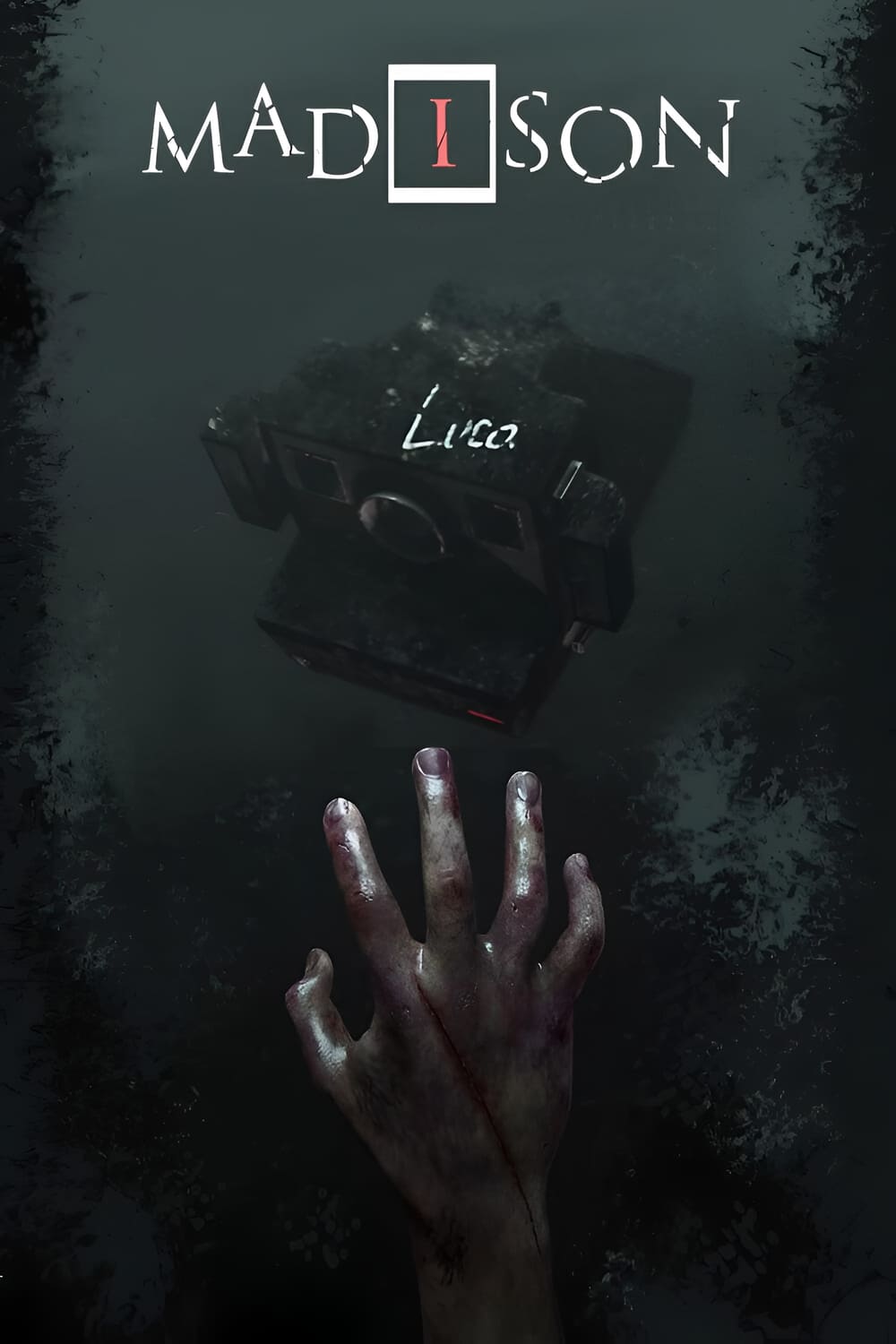
“At the moment of first contact, it is already too late.” — Father Thomas
MADiSON has a knack for making you dread the next room while giving you just enough reason to step inside anyway. Released in 2022 by Bloodious Games, this first-person nightmare puts a camera in your hands and sends you into a house where practically everything seems determined to ruin your evening. It isn’t especially interested in reinventing supernatural horror, and some of its puzzles make being trapped with a demon seem less annoying than being trapped without clear instructions. Still, when its atmosphere, sound, and scares come together, MADiSON delivers something genuinely unsettling: a haunted-house experience that understands how vulnerable curiosity can make you.
You play as Luca, a young man caught in a horrifying situation involving his family, a demonic presence, and a serial killer whose influence hasn’t ended with her death. The opening establishes distress before offering much explanation, which suits a game built around uncertainty. Rather than giving you a comfortable overview of the situation, MADiSON makes understanding what happened part of the ordeal. Its story develops through exploration, recordings, and disturbing discoveries, with the supernatural mystery pulling you farther into danger instead of toward reassurance. The setup works because investigating the house and participating in something sinister gradually start to feel uncomfortably similar.
Veteran gamers will recognize the camera-centered premise, especially anyone familiar with the Fatal Frame series from the early 2000s. Like those games, MADiSON leans heavily on a camera as your means of interacting with the supernatural. But that is where the similarities end. Here, the instant camera drives investigation and puzzle-solving, revealing information that isn’t otherwise visible and triggering changes in the environment. That gives an ordinary action an unpleasant double meaning: you need the camera to make progress, but using it can also bring you closer to something you would rather leave alone. You’re not just asking what might appear in the picture; you’re wondering what taking the picture might have done to the room around you.
That relationship between looking and provoking is where the game finds its strongest identity. Plenty of horror games make players inspect threatening spaces, but MADiSON gives that inspection a tangible ritual. Raise the camera, choose the shot, and discover whether your curiosity has paid off or made things worse. Its photographs connect the supernatural material to the actual puzzle-solving rather than leaving the camera as a decorative gimmick. The result is a useful tension between wanting answers and fearing the process of obtaining them. Even when the surrounding horror imagery feels familiar, the camera helps make engaging with it feel more personal and less passive.
The house itself does a lot of the heavy lifting. MADiSON belongs to the strain of horror associated with P.T. and Visage, where domestic spaces become threatening through repetition, uncertainty, and the feeling that familiar surroundings can no longer be trusted. Its confined layout gives you plenty of opportunities to revisit places that have already made you uncomfortable. At its best, that familiarity becomes a weapon: recognizing a room doesn’t necessarily mean feeling safe inside it. At its worst, however, the same compact environment becomes a source of tedious navigation. There’s a fine line between dreading another trip down a corridor and simply wishing the game would let you get there faster.
The audiovisual presentation generally keeps that line from collapsing entirely. Detailed horror imagery, tense sound, and aggressive scares give the environment a nasty sense of presence. The game knows that an unseen threat can make an otherwise uneventful walk feel loaded with possibility. It also knows how to puncture that anticipation with a sudden shock. The jump scares are a major part of the experience, so anyone hoping for an entirely restrained, slow-burning approach should adjust their expectations. MADiSON wants to get a physical reaction, not just inspire thoughtful unease. Fortunately, its stronger shocks have an oppressive atmosphere supporting them rather than existing as isolated bursts of noise.
Still, the game’s enthusiasm for frightening you can become excessive. There’s a difference between keeping someone on edge and constantly reminding them that the next loud interruption is coming. Its more aggressive audiovisual choices risk making the horror feel pushy, particularly when exaggerated camera movement and awkward interactions are already demanding attention. The problem isn’t that jump scares are automatically cheap; a well-timed one can be hugely effective. It’s that tension needs room to develop, and mechanical irritation can interrupt that development. When the player starts thinking about getting the cursor into exactly the right position, the supernatural threat temporarily loses control of the scene.
Puzzle-solving is the other major ingredient, and it produces the game’s biggest split between satisfaction and frustration. MADiSON uses an old-school structure in which objects, clues, and obstacles may appear well before their purpose becomes clear. That can make the house feel interconnected and reward attention to details encountered earlier. The camera also gives some puzzles a distinctive supernatural twist. But the distinction between an intriguing mystery and an arbitrary roadblock isn’t always maintained. A good puzzle makes you reconsider the evidence; a weaker one makes you reconsider whether you’ve missed an interaction prompt. Too often, the game risks replacing productive uncertainty with aimless experimentation.
That matters especially in horror because confusion has a short shelf life. Initially, not knowing what to do can intensify the feeling of helplessness. After enough unsuccessful attempts, though, fear starts giving way to impatience. Slow movement, repeated routes, and unclear solutions compound one another, making stretches of MADiSON feel less like an escalating nightmare and more like a haunted escape room with uneven instructions. Interestingly, that awkwardness can occasionally work in its favor by making events harder to predict. But unpredictability is more effective when it feels deliberately controlled. The game doesn’t always convince you that its friction serves the horror rather than simply getting in its way.
Narratively, MADiSON benefits from committing to its demonic material. It doesn’t need to transform every frightening image into an elaborate psychological metaphor to justify itself. There’s an appeal to its relatively straightforward interest in possession, occult rituals, and malignant forces. The story provides a reason to keep investigating without becoming the sole attraction, while its familiar genre ingredients give the camera and environmental design something immediately understandable to work against. The downside is that familiarity limits the sense of discovery. Horror veterans will recognize much of its vocabulary, even if the game can still arrange those recognizable pieces into some effective, unpleasant situations.
Ultimately, MADiSON is a strong horror experience wrapped around a sometimes aggravating adventure game. Its camera mechanic gives the fear an interactive foundation, its house sustains an oppressive mood, and its best scares have real bite. The puzzles, pacing, and interaction issues prevent it from feeling consistently assured, however. It’s easiest to recommend to players who enjoy supernatural horror enough to tolerate a little fumbling between the memorable moments. Anyone who needs elegant signposting or dislikes aggressive jump scares will have a rougher time. For everyone else, there’s a compelling nightmare here—one that repeatedly makes finding the next clue feel like opening a door you already know you shouldn’t.

