I woke up to the tragic news that Glen Hansard, lead singer of the Frames and the star of The Commitmentsand Once, was killed earlier in a motorcycle accident. He was 56 years old. In America, he’ll probably always be remembered for his enthusiastic and heartfelt speech after he was on Oscar for Best Original Song. I’ll always remember him for Once, one of the most wonderful romantic films ever made. Nearly 20 years after seeing the film, I still listen to the soundtrack.
“The fact is, we all started out as someone’s little angel. And a place like this forces us to become warriors or victims. Nothing in between can exist here.” — “Bottles”
Shot Caller (released in 2017), directed by Ric Roman Waugh, is a gritty, morally complex crime drama that dives deep into the brutal world of prison gangs, redemption, and the blurred lines between justice and survival. Clocking in at just over two hours, it’s a tense, character-driven story that doesn’t shy away from the harsh realities of its setting, delivering a raw and unfiltered look at life behind bars and the psychological toll it exacts.
The film follows Jacob Harlon, played by Nikolaj Coster-Waldau, a successful businessman whose life spirals out of control after a DUI accident leaves his best friend dead. Sentenced to prison, Jacob is thrust into a violent, hierarchical world where survival means adapting to the rules of the Shot Callers—high-ranking gang members who control the prison’s underground economy. The film’s title itself is a nod to this brutal hierarchy, where every decision, every move, is dictated by those at the top. As Jacob navigates this treacherous landscape, he transforms from a naive new inmate into a hardened, strategic player, adopting the moniker “Money” for his financial acumen. His journey is as much about physical survival as it is about the psychological toll of losing his identity and grappling with the moral compromises he’s forced to make.
What makes Shot Caller stand out is its unflinching portrayal of prison life. Waugh, who also co-wrote the screenplay, doesn’t romanticize the violence or the characters. The film opens with a visceral, almost documentary-like sequence of Jacob’s first days in prison, where he’s immediately targeted by a white supremacist gang. The brutality is shocking, but it sets the tone for a story that refuses to sugarcoat the realities of incarceration. The prison scenes are claustrophobic, the tension palpable, and the stakes feel painfully real. Waugh’s direction ensures that every punch, every stab, every whispered threat carries weight. There’s no glorification here—just the cold, hard truth of a system that chews people up and spits them out. Even the brief but chilling appearance of Holt McCallany as The Beast, a high-ranking Aryan Brotherhood member, leaves a lasting impression. Though his screen time is limited, McCallany’s performance is unforgettable, exuding a quiet, menacing authority that underscores the danger lurking in every corner of the prison.
Nikolaj Coster-Waldau delivers a career-best performance as Jacob. Known to many as Jaime Lannister from Game of Thrones, Coster-Waldau sheds his noble, charismatic image to embody a man broken by guilt and reshaped by circumstance. His physical transformation is striking—he bulked up significantly for the role, but it’s his emotional range that truly impresses. Jacob’s arc is one of the most compelling aspects of the film. Early on, he’s a fish out of water, a man clinging to his old life and morals. But as the story progresses, we see the gradual erosion of his principles. The moment he finally snaps and fights back is a turning point, not just for his character but for the audience’s perception of him. By the time he’s released from prison, he’s almost unrecognizable—both physically and psychologically. Coster-Waldau makes you believe every step of this transformation, and it’s a testament to his skill as an actor that you’re rooting for Jacob even as he makes increasingly questionable decisions.
The supporting cast is equally strong. Omari Hardwick plays Shotgun, a high-ranking member of the black gang who becomes Jacob’s reluctant mentor. Hardwick brings a quiet intensity to the role, balancing threats with moments of unexpected humanity. Lake Bell plays Jacob’s wife, Kate, and her performance is heartbreaking in its restraint. Kate’s struggle to hold her family together while her husband is in prison is a grounded counterpoint to the chaos unfolding behind bars. Jon Bernthal, another standout, plays a prison guard with a morally ambiguous role in Jacob’s journey. Bernthal, as always, brings a raw, simmering energy to his scenes, making his character’s motivations feel authentic, even when they’re not entirely clear.
The film’s pacing is deliberate, almost methodical. Waugh takes his time building the world and the characters, and while this might frustrate viewers looking for constant action, it pays off in the long run. The first act is heavy on exposition, introducing the prison’s power structures and the various factions at play. But once Jacob starts to find his footing, the story picks up momentum. The middle act is where Shot Caller really shines, as Jacob’s alliances and rivalries become more complex. The film’s climax is a high-stakes heist that feels both inevitable and earned, a culmination of everything Jacob has learned—and lost—during his time inside.
One of the most interesting themes in Shot Caller is the idea of control. The title itself refers to those who call the shots, but the film constantly questions who really has power in this world. Jacob starts as a man who thinks he’s in control of his life, only to have that illusion shattered. In prison, he learns that control is a fragile, often violent thing, constantly shifting hands. Even after his release, he’s not truly free—he’s still bound by the rules of the criminal underworld he’s now a part of. The film suggests that in a system as broken as this one, no one is ever truly in control. It’s a bleak message, but one that feels authentic to the story being told.
The cinematography, by Dana Gonzales, is another highlight. The prison scenes are shot in a way that emphasizes the claustrophobia and tension of the environment. The color palette is muted, with lots of grays and blues, reflecting the cold, harsh reality of Jacob’s new world. The action sequences, when they do occur, are brutal and realistic, with a handheld camera style that puts you right in the middle of the chaos. There’s no glamour to the violence here—it’s messy, desperate, and often over in seconds.
If Shot Caller has a weakness, it’s that some of its themes and plot points might feel familiar to fans of the genre. The story of a man falling into the criminal underworld and struggling to escape isn’t exactly new. What saves the film from feeling derivative is its commitment to authenticity and its strong performances. Waugh’s script also avoids easy answers. Jacob isn’t a hero, and the film doesn’t pretend he is. He’s a flawed, complicated man making the best of a series of terrible situations. The ending, without spoiling too much, is bittersweet and ambiguous, leaving you to ponder just how much of Jacob’s old self is left—and whether he can ever truly escape the life he’s been drawn into.
Another aspect worth praising is the film’s soundtrack. The score, composed by Antonio Pinto, is understated but effective, using a mix of electronic and orchestral elements to underscore the tension and emotional beats of the story. The use of silence is also notable—there are moments where the absence of music makes the violence or the weight of a decision hit even harder.
Shot Caller is a film that lingers with you long after the credits roll. It’s not an easy watch, and it’s certainly not for the faint of heart. The violence is graphic, the language is harsh, and the themes are heavy. But for those willing to engage with it, the film offers a gripping, thought-provoking experience. It’s a story about survival, identity, and the cost of redemption. Ric Roman Waugh has crafted a prison drama that stands alongside classics like The Shawshank Redemption and American History X, even if it doesn’t quite reach their lofty heights. What it lacks in originality, it makes up for in execution, with stellar performances and a relentless commitment to its vision. In a world where crime dramas often glorify the outlaw life, Shot Caller is refreshingly honest. It doesn’t ask you to root for Jacob because he’s a good guy—it asks you to understand him, flaws and all. And by the end, you do. You understand the choices he makes, even if you don’t agree with them. That’s the mark of a great character study, and Shot Caller delivers on that front in spades. It’s a film that will leave you thinking, long after the final shot fades to black.
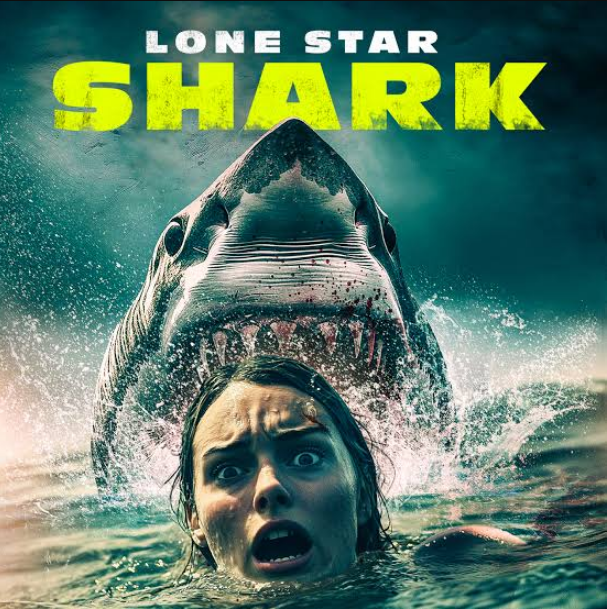
There is cocaine. There are shark movies. There are shark movies that appear to be written whilst on cocaine. Maybe the writer is a straight up teetotaler; in which case, he has no excuse for what he brought forth. Alex Magana is horrible, but you get what you signed up for: smiling woman- there’s a smiling woman. His movies are terrible, but they deliver- terrible terrible stories. Lone Star Shark was like watching a big box store of jumbled ideas with Great Value props.
This movie clocked at 65 minutes and had the following plot threads: relationship on the skids, mental illness, sibling suicide, computer hackers, random parable quoting evil people in suits, a ghost, repeated discussions of couples weekend day trip planning, and a paper mâché shark. There was nothing to indicate that there were even in Texas; so, that was not one of the many many plot threads. It also took near a third of their 65 minute runtime to get on the water. The water was a pond- a small pond. For some reason, they were docked on shore and you could see that from the camera angle, but they kept shouting how they had to swim across the “lake”. Why? Just get out and walk home. It’s not like the paper mâché shark that was basically a poorly made pinata (credit to Lisa for seeing that) could’ve followed them home.
I guess that I will stick to the shark plotline because the others were just a mess. There’s a paper mâché pinata shark in a pond that has a really hard time eating people. I think that the time on the water was – at most – 40 minutes. The movie had no idea what it was and the shark was really an add-on the many story lines that were like a bowl of mixed up spaghetti. There’s not a lot to say about this strange movie.
2024’s Shark Warning opens with two boys playing on the beach. They’re brothers, and their uncle Ron (David Chokachi) is supposed to be watching them. However, Ron is more interested in having another beer than in watching his nephews. He walks away while they’re playing in the water. As soon as Ron leaves, a shark pops up and eats one of the kids. Well, these things happen up north….
Twenty years later, Alan Rogers (Andrew J. Katers), the brother who was not eaten, returns to his hometown. It’s been a rough few years for Alan. He’s haunted by the death of his younger brother and the sight of that shark. Alan says he’ll never forget that the shark had a scar above its eye. Still, Alan feels like it’s time for him to come back home and start doing something with his life. Of course, the first thing he does is punch out his Uncle Ron.
Ron says that he deserved to be punched, and he tries to reconnect with his nephew. Alan doesn’t want to have anything to do with Ron, but when a shark with a scar above its eye starts to eat the locals, Alan and Ron have no choice but to team up to get revenge!
Now, you may be asking why, after being absent for 20 years, the same shark would return to one particular fishing village. Well, blame the Mayor (Rebecca Ritz). The annual fishing festival is approaching. If the festival isn’t a hit, the town will go bankrupt. Unfortunately, the fish are being kept away from the village by a dam that was apparently built to keep the shark out. The Mayor pays someone to blow up a small portion of the dam so the fish can get through, but, unfortunately, the shark gets through as well. You just can’t trust small-town mayors!
You really have to feel bad for sharks. It’s true that sharks look fearsome and they’ve got those teeth that can pretty much bite through anything, but for the most part, sharks just swim around and eat whatever they run into. They don’t stalk people for years, despite what the movies tell us. Sharks are predators, but they’re not particularly mean-spirited about it. If you leave a shark alone, it will probably leave you alone as well. Even the Soul Surfer girl forgave that shark that bit off her arm because she knew it was nothing personal.
Unfortunately, due to the movies, people have a totally warped view of sharks and their personalities. That’s certainly the case with Shark Warning, which gives us a rather mean-spirited shark. That said, it’s an entertaining-enough film as long as you’re willing to accept the fact that it’s essentially just a low-budget remake of Jaws. It’s an Asylum film, and that pretty much tells you all there is to say about it. If you know, you know.
I did appreciate that one of the characters was named Lisa. Played by Angela Cole, Lisa owned the village’s most popular bar and sighed with frustration when her sister (Lauren Pike) decided to ditch work so she could go hang out at the beach. Both Cole and Pike were convincing in their roles. Even more importantly, from my perspective, is that I got to hear my name while watching the movie. That’s always nice. As for the rest of the cast, David Chokachi — who my sister and I nicknamed “The Bulge” when we last binged Baywatch (if you know, you know) — wasn’t particularly convincing as someone who had ever felt the slightest bit of angst, but he was still likable as Uncle Ron. I will give a shout-out to the actors who played the townspeople, especially the guy who failed to consider that the shark might bump his boat and break his bottle of strychnine. A real shark would never do that, but this is an Asylum shark!
In the end, the shark was definitely the hero of the film, and that’s the way things should be.
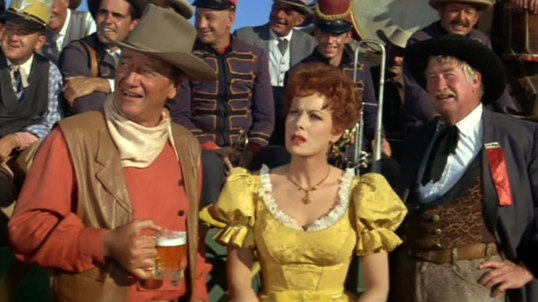
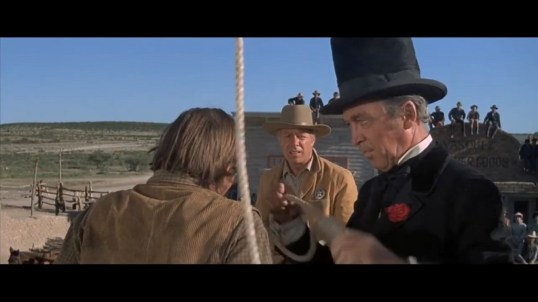
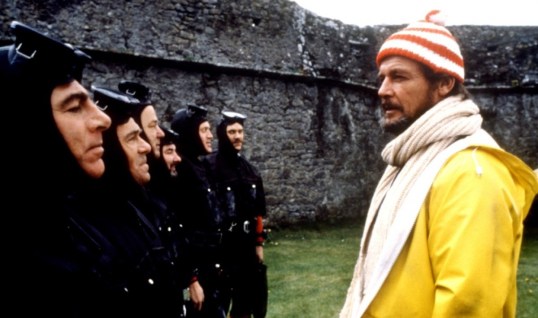
4 Or More Shots From 4 Or More Films is just what it says it is, 4 shots from 4 of our favorite films. As opposed to the reviews and recaps that we usually post, 4 Shots From 4 Films lets the visuals do the talking!
Today, the Shattered Lens remembers director Andrew V. McLalgen, born 106 years ago on this day. It’s time for….
4 Shots From 4 Andrew V. McLaglen Films
McLintock! (1963, dir by Andrew V. McLaglen, DP: William H. Clothier)
Bandolero! (1968, dir by Andrew V. McLaglen, DP: WIlliam H. Clothier)
Hellfighters (1968, dir by Andrew McLaglen, DP: William H. Clothier)
Ffolkes (1980, dir by Andrew V. McLaglen, DP: Tony Imi)
“It is not the strongest of the species that survives, nor the most intelligent, it is the one that is most adaptable to change.” — Sophia
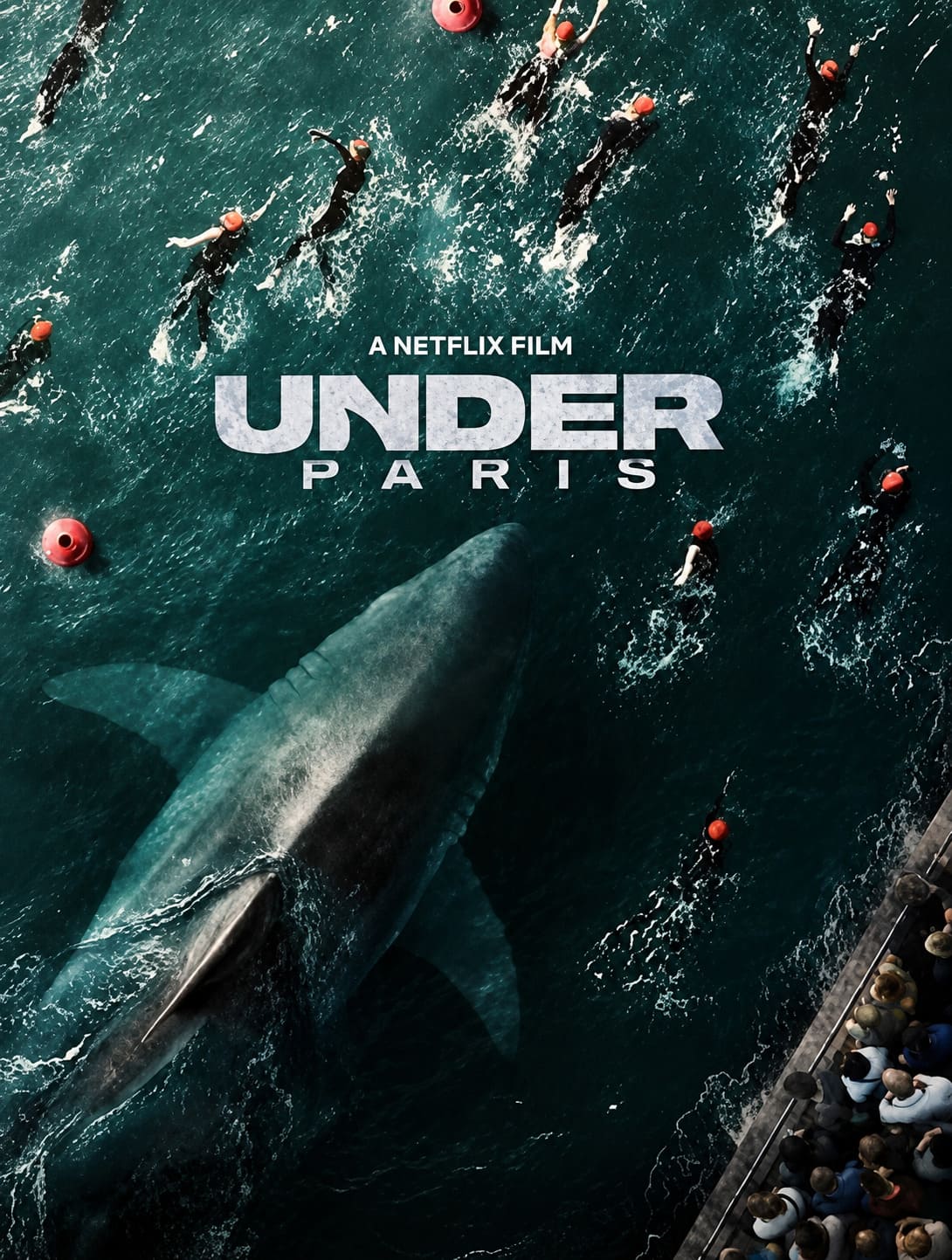
Under Paris is one of those movies that grabs you by the throat and doesn’t let go—literally, in this case. Directed by Xavier Gens, the mind behind gritty, high-octane thrillers like Frontier(s) and The Divide, this creature feature dives headfirst into the claustrophobic nightmares lurking beneath the City of Light. And let me tell you, if you’ve ever romanticized the Parisian catacombs, this film will cure you of that real quick.
The story kicks off with a team of scientists exploring the unexplored tunnels under Paris, only to stumble upon something that definitely shouldn’t exist. What starts as a routine expedition turns into a fight for survival when they realize they’re not alone down there. The creatures in question are blind, feral, and terrifyingly fast, with a taste for human flesh. It’s The Descent meets Tremors, but with a distinctly French flair. The film wastes no time setting up its premise, throwing the audience into the dark, cramped corridors where every shadow could be a predator. The tension is palpable from the jump, and Gens doesn’t bother with slow-burn scares—this is a full-throttle horror ride.
What makes Under Paris stand out is its commitment to practicality. The creatures are brought to life with a mix of practical effects and CGI, and for the most part, it works. The designs are grotesque yet believable, with elongated limbs, jagged teeth, and a primal way of moving that makes them feel like something out of a nightmare. The practical effects, in particular, give the creatures a tangible weight that CGI alone often struggles to achieve. When they’re on screen, you believe they’re real, and that’s half the battle in a monster movie. The sound design deserves a shoutout too—the way the creatures communicate through clicks and hisses is unsettling in the best way, adding to the immersive dread.
The characters are, admittedly, a mixed bag. The cast is led by a group of scientists and urban explorers, each with their own quirks and backstories, but the film doesn’t spend much time fleshing them out. This is a survival horror flick, not a character study, so don’t expect deep emotional arcs. That said, the actors do a solid job with what they’re given. The standout is probably the team’s leader, whose growing desperation as the situation spirals out of control feels authentic. There’s also a refreshing lack of the usual horror-movie stupidity—most of the characters make decisions that, while not always smart, at least feel human. They panic, they argue, they try to rationalize the irrational, and it makes their plight all the more relatable.
The setting is a character in its own right. The labyrinthine tunnels under Paris are a horror fan’s dream—narrow, dimly lit, and filled with the kind of eerie silence that makes every distant noise sound like a death sentence. Gens and his cinematographer make the most of the claustrophobic environment, using tight camera angles and rapid cuts to keep the audience on edge. There’s a sequence early on where the team’s headlamps flicker, plunging them (and us) into total darkness, and it’s a masterclass in building tension without relying on jump scares. The film also does a great job of playing with sound, or the lack thereof. In the quiet moments, all you hear is the characters’ ragged breathing and the distant, unsettling skittering of something inhuman.
If Under Paris has a weakness, it’s that it doesn’t always know when to slow down. The pacing is breakneck, which works for the most part, but there are moments where a little breathing room would’ve helped. Some of the CGI, particularly in the wider shots, can look a bit rough, though it’s never bad enough to pull you out of the movie. And while the creatures are terrifying, their backstory is a bit thin. The film hints at a larger mythology—something about evolution and isolation—but it’s never fully explored. That’s not necessarily a dealbreaker, but it does leave you with a few unanswered questions.
All that said, Under Paris delivers exactly what it promises: a tense, visceral, and often downright terrifying descent into madness. It’s a film that understands the assignment—give the audience scares, gore, and a sense of dread that lingers long after the credits roll. Gens has a knack for blending horror with social commentary, and while Under Paris doesn’t dive as deep into the latter as some of his other work, it’s still there in the margins. The idea of something monstrous lurking beneath the surface of one of the world’s most romanticized cities is a potent one, and the film doesn’t shy away from the metaphorical implications.
In the end, Under Paris is a must-watch for horror fans, especially those who appreciate their scares with a side of action. It’s not a perfect movie, but it’s a damn effective one. It’s the kind of film you’ll want to watch with the lights off, the volume up, and maybe a friend or two to clutch onto when things get really intense. And trust me, they do. Xavier Gens has crafted a creature feature that’s as brutal as it is brilliant, and it’s a testament to his skill as a director that, even in the darkest, most chaotic moments, you’re never quite sure what’s going to happen next. Just don’t blame me if you start side-eying manhole covers after this one.
Today is Hong Kong film star Donnie Yen’s 63rd birthday. The first time I remember seeing him on screen was in Yuen Woo-Ping’s 1993 film IRON MONKEY. He kicked butt then and he’s still kicking it to this day!
Celebrate with me by watching this clip from the martial arts classic!
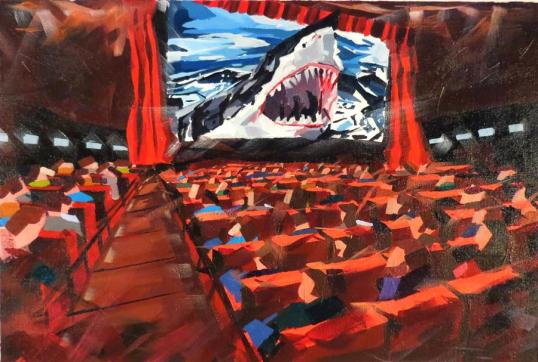
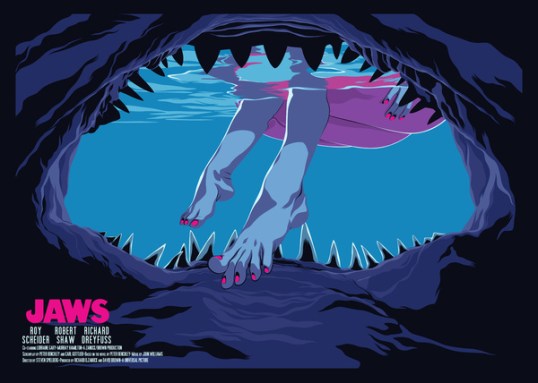
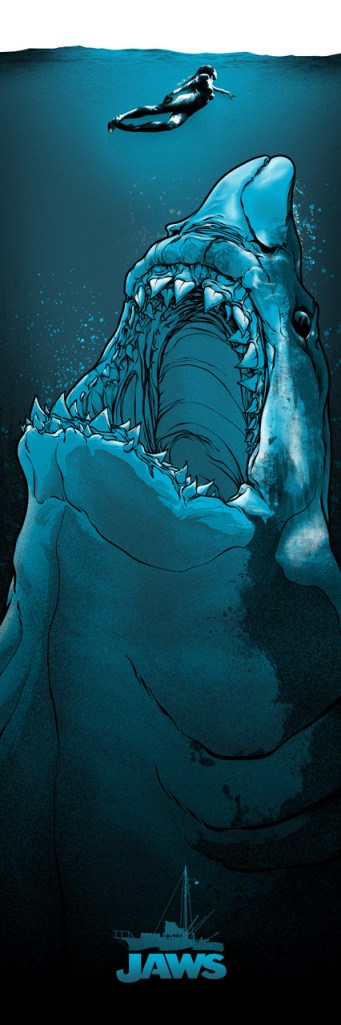
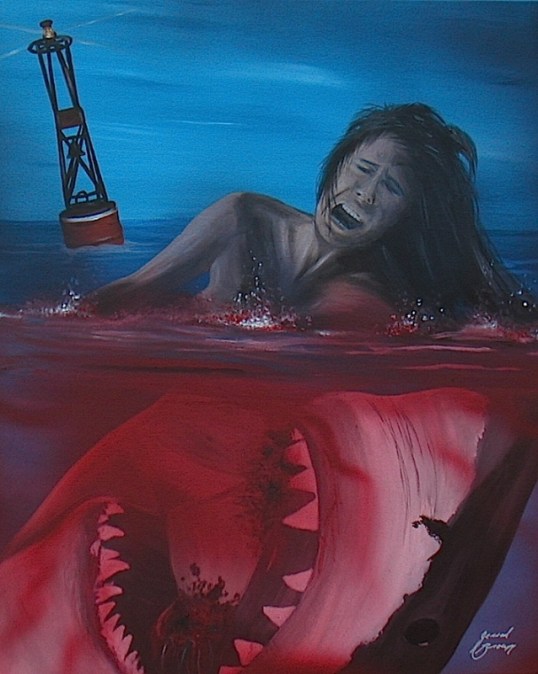
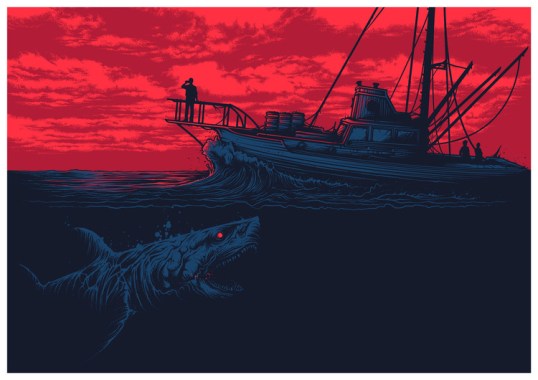
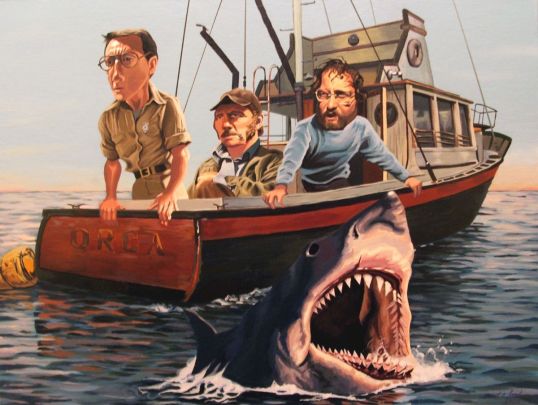
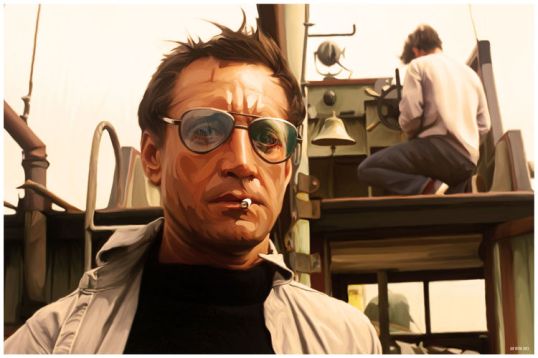
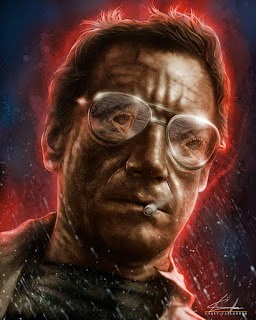
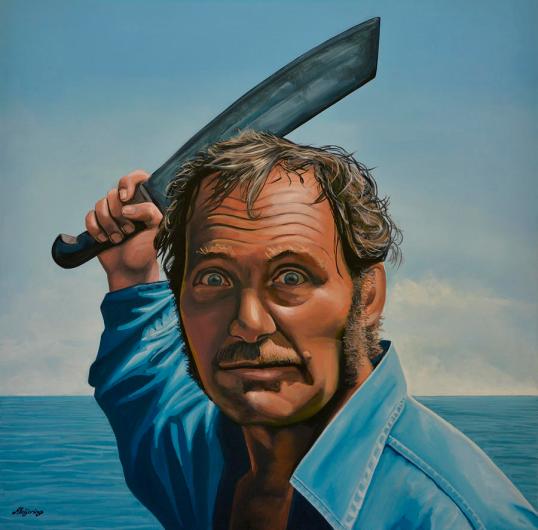
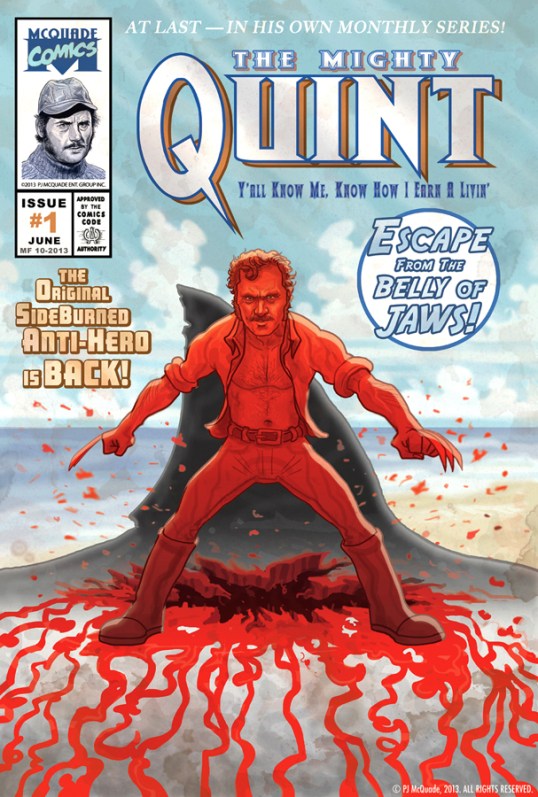
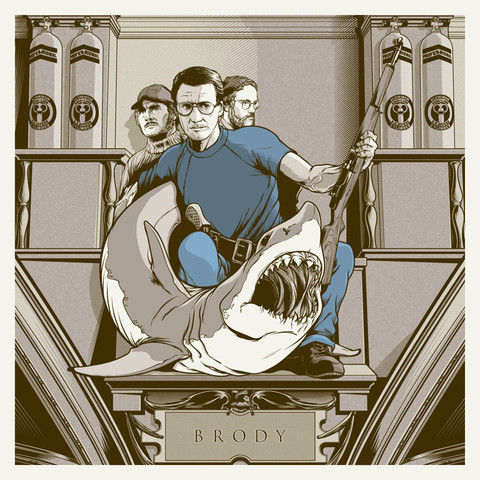
Earlier today, my sister asked me if I could put together some posts to help celebrate Shark Week. I thought about it and I decided that the best way to start Shark Week would be to pay tribute to the film that is responsible for our nation-wide obsession with sharks! Here, for the first day of Shark Week, is some images inspired by the film that started it all!
If you were walking along the beach and you noticed that several bikinis had washed up on shore, what would you do?
Me, I would probably think to myself, “That’s weird. Maybe I should get off this beach because it seems like there’s something strange happening here.” What I would not do, under any circumstances, would be to pick up a bikini and decide to wear one of them.
I mean, that just seems like common sense. You don’t wear bikinis that randomly show up on the beach for much the same reason you don’t dumpster-dive for new underwear. It’s gross. And seriously, if you’re going to the beach, you should have bought and packed a bikini before you left. It may be cheaper to just wear whatever you find buried in the sand, but sometimes it’s worth spending a little money to look good.
Like I said …. IT’S COMMON SENSE!
Unfortunately, none of the characters in 2025’s Bikini Shark have a shred of common sense. When two women come across some bikinis on the beach, they promptly put them on. Later, when another group of women happens to find some bikinis in an isolated house, they also put them on. Soon they’re breaking out into terrible rashes and, even worse, they’re being pursued by sharks that somehow have the power to live and move on land. For all the time everyone spends talking about how sick they’re feeling, it never seems to occur to anyone to just take the cursed bikinis off. Then again, no one seems to think it’s odd that there are sharks somehow making their way into the kitchen.
The villain here is Truman Sullivan (Tyler Winchcombe), a wealthy man who owns a company that makes bikinis. For reasons that are never really that clear, Truman has lost his mind and is convinced that the only way to save the world from destruction is to sacrifice women to sharks. So Truman designed some bikinis specifically to attract sharks. But why did he also design the bikinis to cause the wearer to break into a terrible rash and start throwing up? How does that fit into saving the world? Truman is one of those villains who insists that the sacrifices have to happen quickly but who, at the same time, kidnaps one potential victim and then spends what seems like an eternity monologuing. Hey, Truman, are you trying to save the world or not?
Bikini Shark is a British shark film. It takes place in Essex and features one of the most depressing beaches that I’ve ever seen. The acting is subpar. In the role of Truman’s mother, Kathi deCuoto often appears as if she’s struggling to deliver her dialogue without laughing. If there is some charm to be found in this film, it’s due to the CGI sharks. They’re cute in their way, and it’s hard not to smile at the sight of them “swimming” over dry land. Otherwise, the best that can be said about this film is that it lives up to its name. There are bikinis and there are sharks.
Seriously, though, don’t wear clothes that you just happen to find on the ground. If there’s any lesson that I hope you take from this review, it’s that.