Review: For a Few Dollars More (dir. by Sergio Leone)


“When two hunters go after the same prey, they usually end up shooting each other in the back. And we don’t want to shoot each other in the back.” — Col. Douglas Mortimer

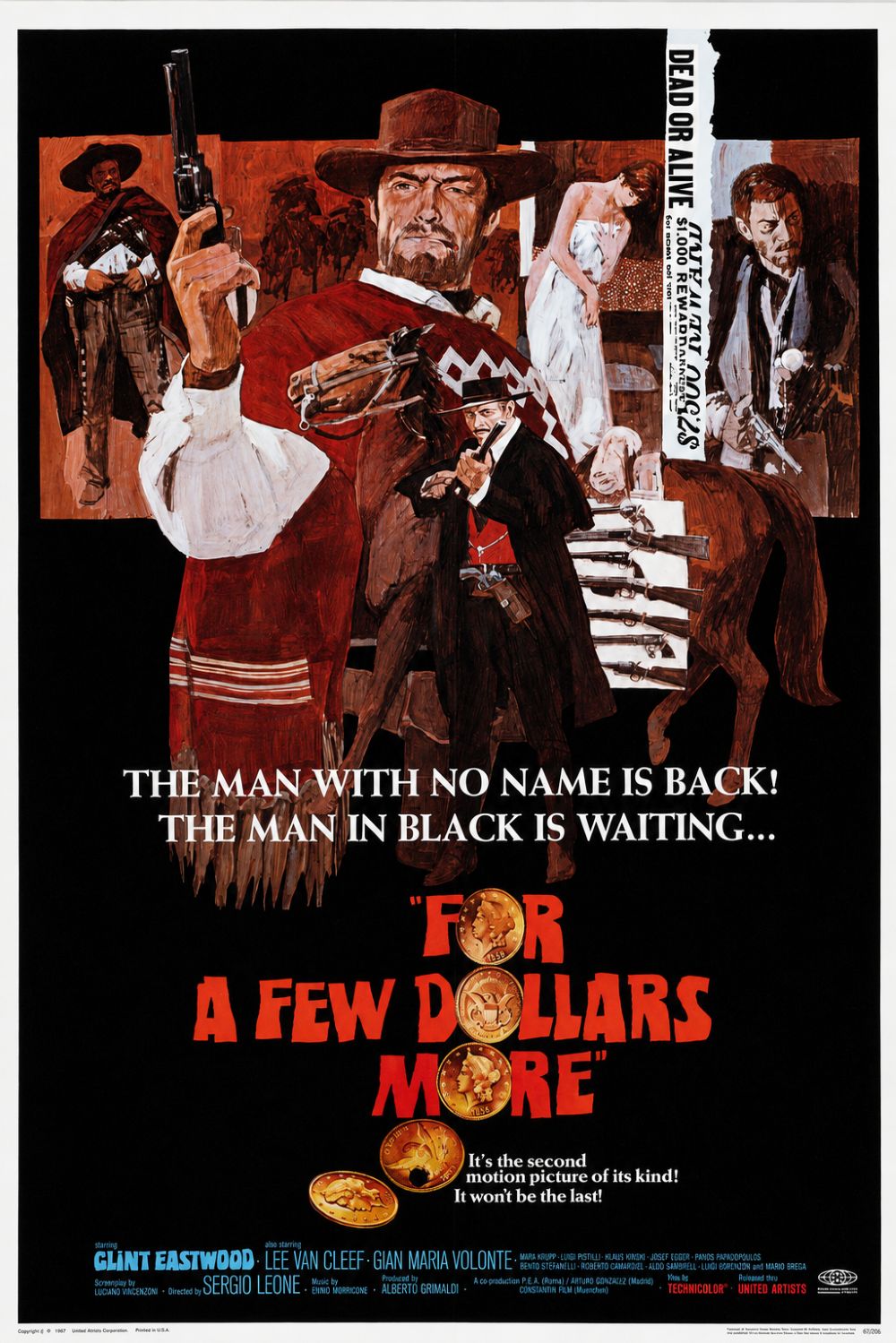
For a Few Dollars More is the moment Sergio Leone’s western style starts to feel fully formed: larger, stranger, more emotionally bruised, and far more confident in its ability to turn silence into suspense. Released in 1965, it serves as the second leg of Leone’s “Dollar’s Trilogy,” following A Fistful of Dollars and preceding The Good, the Bad and the Ugly. It shares the earlier film’s basic ingredients—dusty towns, morally compromised gunmen, crooked institutions, and Ennio Morricone’s unforgettable music—but it is not simply a bigger repeat. Leone takes the stripped-down revenge-and-gold framework of the first movie and gives it a darker emotional center. This is a western about obsession, damaged masculinity, and a world in which violence does not restore order so much as expose how little order existed in the first place.

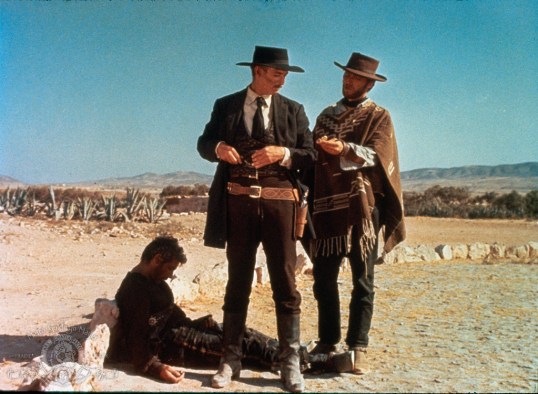
Clint Eastwood returns as the Man with No Name, although he is called Manco here, and he is still the same lean, poncho-wearing opportunist viewers met in A Fistful of Dollars. He moves through the film with that familiar mixture of cocky calm and barely concealed menace. Manco is a bounty hunter, collecting rewards for dead criminals with an efficiency that makes his work feel almost casual. There is comedy in his early scenes, especially in the way he manages an absurdly large number of wanted men, but the humor has a sharp edge. Manco is not a conventional hero. He is charming because he is capable, because he has style, and because Eastwood knows exactly how little effort the role needs. A squint, a pause, or a hand resting near a gun does more than most full pages of dialogue.

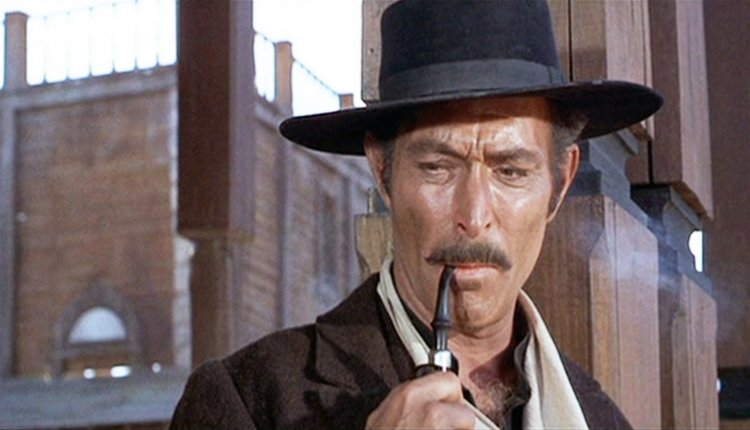
The major difference is that this time Eastwood is not alone at the center of the story. Lee Van Cleef enters as Colonel Douglas Mortimer, another bounty hunter, and his presence gives the film its real dramatic charge. Mortimer is older, more formal, and more openly haunted than Manco. Where Manco seems motivated largely by money and survival, Mortimer carries himself like a man pursuing something much more personal. Their relationship begins as a rivalry, with both men circling the same targets and testing one another’s abilities. Leone gets a lot of mileage out of the contrast: Eastwood is loose and youthful, Van Cleef is rigid and calculating; one looks like he has wandered in from the wilderness, while the other has the manner of a retired officer who never truly left the battlefield.

Their eventual partnership is what makes For a Few Dollars More so satisfying. It is a buddy movie in the least sentimental sense possible. Neither man becomes especially warm or expressive, and their bond is built less on trust than on mutual respect for professional competence. They know the other is dangerous. They also know that the other may be necessary. Leone stages their alliance with a kind of deadpan amusement, particularly when Manco and Mortimer try to outdo each other with increasingly elaborate shooting demonstrations. Those sequences are entertaining because they are absurdly masculine, but the film never lets the spectacle become completely weightless. In this world, skill with a gun is not a sport; it is a qualification for survival.

The villain, Gian Maria Volonté’s El Indio, pushes the film decisively into darker territory than A Fistful of Dollars. Volonté had already played a memorable antagonist in Leone’s previous film, but El Indio is far more unsettling than Ramón Rojo. He is not merely greedy or power-hungry. He is psychologically ruined, driven by trauma and by a sadistic need to revisit it. His recurring pocket-watch motif, paired with Morricone’s chiming melody, becomes one of the film’s great inventions. The tune begins almost innocently, but Leone gradually turns it into a signal of dread. Every time El Indio opens the watch, it feels as though time itself has stopped and everyone nearby has been sentenced to wait for death.

The backstory tied to El Indio is where the movie reveals just how much more disturbing its narrative ambitions are. Leone and his screenwriters introduce subjects that are much uglier than the genre’s usual tales of outlaws and frontier justice: rape, suicide, and the lingering horror of sexual violence. The film does not handle these ideas with contemporary sensitivity, and it is not interested in exploring their victims with the depth they deserve. Still, their presence changes the atmosphere. El Indio’s trauma is not abstract; it is tied to a violent violation and the suicide that follows it. That history does not humanize him in any easy way, nor does it excuse him. Instead, it explains the repetitive, self-destructive pattern of his cruelty. He is obsessed with an event he cannot undo, and he converts that obsession into violence against everyone around him.

That theme of obsession runs through nearly every important character. Mortimer’s pursuit of El Indio turns out to be rooted in a personal wound that has shaped his entire life. His bounty-hunting career, disciplined exterior, and almost mechanical precision are revealed as part of a long-delayed act of vengeance. Manco, meanwhile, is obsessed in a different and less tragic way: with winning, with money, and with proving that he cannot be manipulated. Even the gang’s massive bank robbery has an obsessive quality. It is overcomplicated, theatrical, and clearly more about El Indio demonstrating power over his men than about securing wealth. Leone’s characters do not simply want things. They become imprisoned by them.

The plot itself is fairly direct, though Leone fills it with enough betrayal and shifting alliances to keep it lively. El Indio and his gang target the bank in El Paso, using a jailbreak as part of a larger scheme. Manco and Mortimer separately infiltrate the group, both pursuing the reward on El Indio’s head while working toward their own goals. From there, the film becomes a tense contest of patience. Leone is never in a rush to deliver a payoff. He lets scenes breathe, often lingering on faces, boots, hands, doorways, and empty spaces. In another director’s hands, this could feel slow. Here, it feels like the movie is daring the audience to notice every tiny movement before the gunfire begins.

That visual patience is one of Leone’s greatest strengths. For a Few Dollars More is full of faces that feel weathered by the landscape around them. The film’s close-ups are almost confrontational, catching sweat, stubble, suspicious glances, and flashes of fear. Leone makes the human face as important as the wide-open Spanish locations standing in for the American West. He also understands that scale works best through contrast. A showdown can begin with an extreme close-up of a man’s eyes, then pull back to reveal two tiny figures facing each other in a vast, empty space. The result is both operatic and intimate.

Morricone’s score deserves equal credit for making the movie feel larger than life. The music is less a background element than another character in the story. Whistles, bells, guitar, percussion, and that eerie watch melody give the film a sound unlike the traditional Hollywood western. It is playful in some moments and nightmarish in others. Most importantly, it makes the climactic duel feel like the culmination of everything the film has been building toward. The final confrontation is not just about who draws first. It is about memory, guilt, revenge, and whether a person can ever truly escape the worst moment of their life.

If A Fistful of Dollars was Leone proving that he could reinvent the western with attitude, For a Few Dollars More is him demonstrating that the formula could carry genuine darkness. It is still stylish, funny, and gleefully exaggerated. It still has impossible gunplay, swaggering antiheroes, and scenes designed purely to make the audience grin. But beneath all that is a colder film. Its violence is tied to trauma. Its men are defined by grudges they cannot release. Its most memorable villain is terrifying not because he is invincible, but because he is already spiritually broken.

Eastwood remains iconic, but Van Cleef is arguably the film’s emotional anchor. His performance gives the story weight without ever becoming melodramatic. Volonté, meanwhile, creates one of the great spaghetti-western villains: volatile, wounded, cruel, and unforgettable whenever that pocket watch begins to play. Leone would go even bigger and more ambitious with The Good, the Bad and the Ugly, but For a Few Dollars More may be the trilogy’s most focused character piece. It takes the sparse coolness of its predecessor and adds scars, grief, and a genuinely haunted sense of purpose.

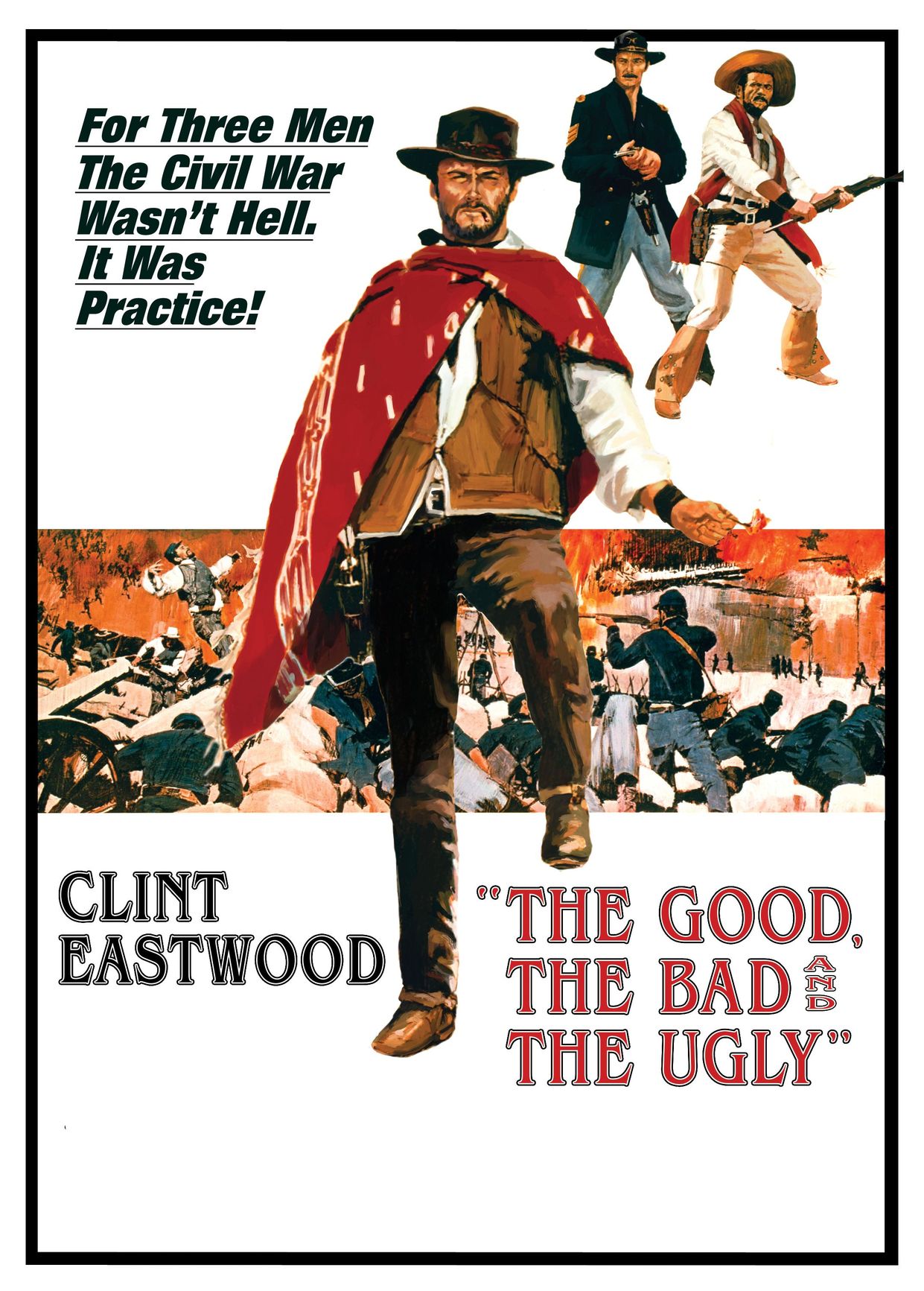
The Adventures of the Man With No Name: A Fistful Of Dollars, For A Few Dollars, The Good, The Bad, and the Ugly


Originally, Sergio Leone envisioned none other than Henry Fond as The Man With No Name.

The year was 1964 and Sergio Leone was searching for the right actor to star in the movie that would become A Fistful Of Dollars.  The film, which reimagined Akira Kurosawas’s Yojimbo as a western, centered around a mysterious, amoral gunslinger whose name was unknown.  Leone needed an American or a British name to star in the film so that it could get distribution outside of Italy.  Leone had grown up watching Henry Fonda movies, all dubbed into Italian.  He later said he wanted to cast Fonda because he always wondered what Fonda’s voice actually sounded like.

After realizing that a major Hollywood star would never agree to star in a low-budget Italian western, Leone then offered the role to Charles Bronson.  Bronson read the script and said it didn’t make sense to him.  Leone went on to offer the role to Henry Silva, Rory Calhoun, Tony Russel, Steve Reeves, Ty Hardin, and James Coburn.  Everyone was either too expensive or just not interested.  Finally, it was actor Richard Harrison who, after tuning down the part himself, suggested that Leone offer the role to Clint Eastwood.  Eastwood, then starring on the American western Rawhide, could play a convincing cowboy.  Leone followed Harrison’s advice and Eastwood, eager to break free of his nice guy typecasting and hoping to restart his film career, accepted.  The rest is history.

Eastwood would only play The Man With No Name in three films but, in doing so, he changed the movies and the popular conception of the action hero forever.

All three of the Man With No Name movies have been reviewed on this site.  But, since today is Clint’s birthday, I thought I’d take a look at how these classic films are holding up, over 60 years since the Man With No Name made his first appearance.

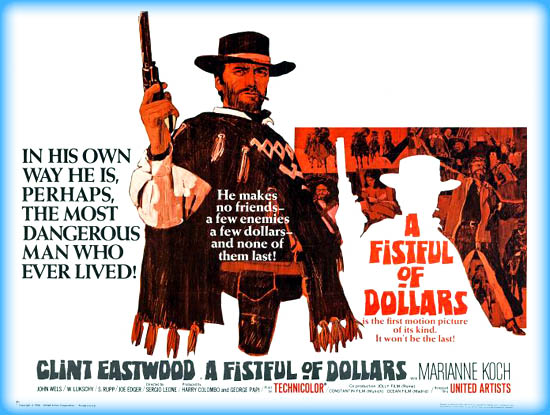
A Fistful Of Dollars (1964)

Having now seen both this film and Yojimbo, it’s remarkable how closely A Fistful of Dollars sticks to Kurosawa’s original film.  Interestingly, it’s clear that Eastwood patterned his performance of Toshiro Mifune’s in Yojimbo and yet, at the same time, he still managed to make the role his own.  The Man With No Name rides into a western town, discovers that there are two groups fighting for control of the area, and he coolly plays everyone against each other.  Whether it’s planting the seeds of distrust, exploiting an enemy’s greed, or being the quickest on the draw, the Man With No Name instinctively knows everything that he has to do.  Even when he’s getting beaten up by the bad guys, The Man With No Name always seems to be one step ahead.  Today, a western in which everyone is greedy and looking out for themselves isn’t going to take anyone by surprise.  But if you’ve watched enough westerns from the 40s and 50s, you’ll understand how unique of a viewpoint Leone brought to the genre.  Eastwood’s amoral gunslinger was such a surprise that, when the film aired on television, a scene was shot by the network in which Harry Dean Stanton played a prison warden who released The Man With No Name (seen only from behind) on the condition that he clean up the town.

For A Few Dollars More (1965)

For A Few Dollars More finds The Man With No Name working as a bounty hunter and teaming up with Colonel Mortimer (Lee Van Cleef) to take down El Indio (Gian Maria Volonte) and his gang (including Klaus Kinski as a hunchback.)  This is my least favorite of the trilogy but that doesn’t mean that For A Few Dollars More is a bad film.  Being the least of three masterpieces is nothing to be ashamed of.  Eastwood and Van Cleef were two of the best and it’s interesting to see them working together.  El Indo is a truly loathsome villain and the members of his gang are all memorably horrid.  If it’s my least favorite, it’s just because I prefer the wit of A Fistful of Dollars and the epic storytelling of The Good, The Bad, and The Ugly.  Speaking of which…

The Good, The Bad, and The Ugly (1966)

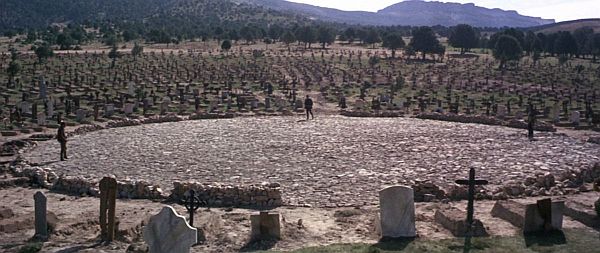
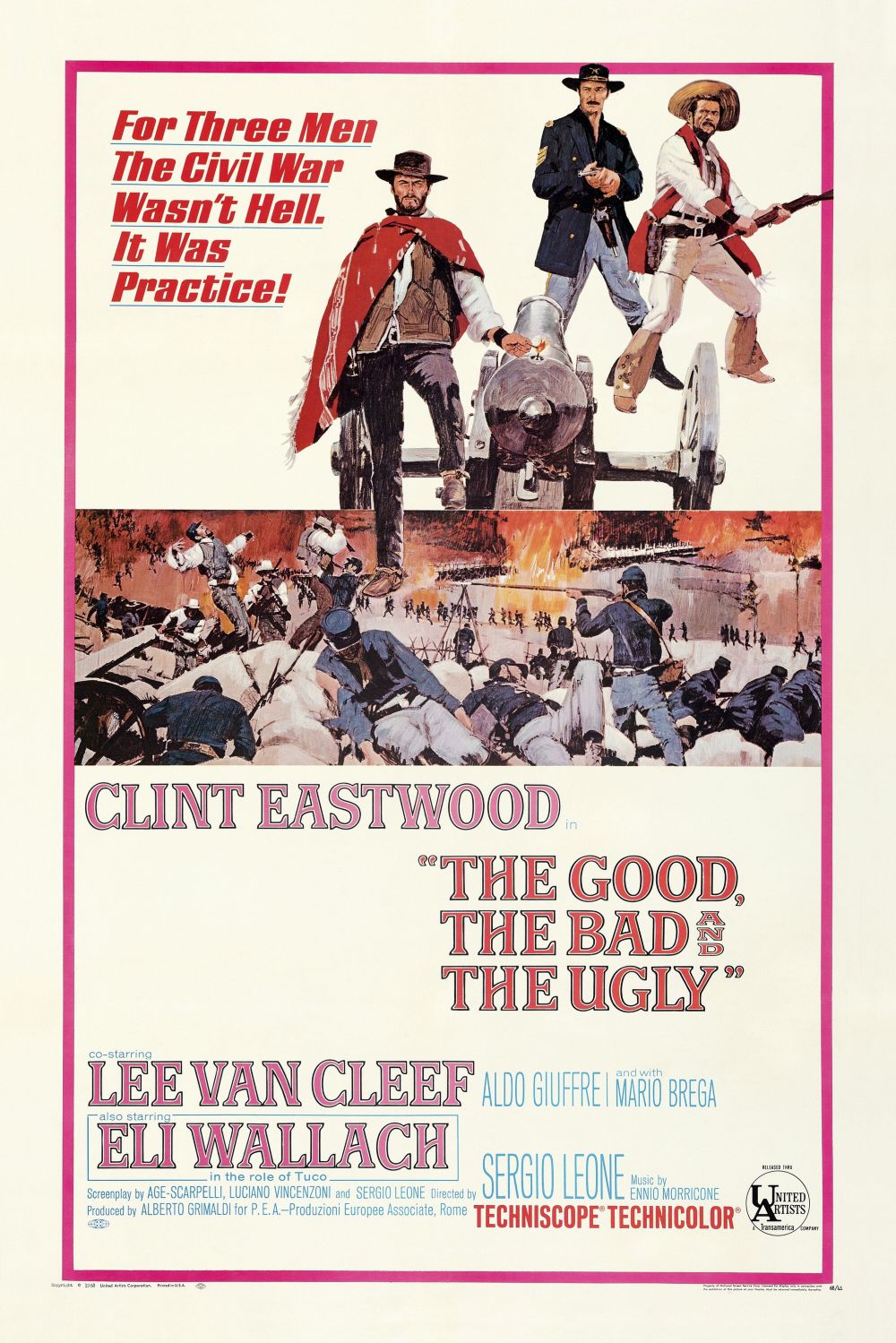
This is it.  The greatest western ever made, an epic film that features Leone’s best direction, Ennio Morricone’s greatest score, and brilliant performances from Eastwood, Van Cleef, and especially Eli Wallach.  It’s hard to know where to start when it comes to praising The Good, The Bad, and The Ugly.  It’s a nearly three-hour film that doesn’t have a single slow spot and it has some of the most iconic gunfights ever filmed.  Leone truly found his aesthetic voice in this film and that it still works, after countless parodies, is evidence of how great it is.  I appreciate that this film added a historical context to the adventures of The Man With No Name.  (Personally, I think this film is meant to be a prequel to A Fistful of Dollars, just because The Man With No Name is considerably kinder in this film than he was in the first two movies.  The Man With No Name that we meet in A Fistful of Dollars would never have gotten Tuco off that tombstone.)  The Good, The Bad, and The Ugly takes place during the Civil War and, along with everything else, it’s an epic war film.  While America fights to determine its future, three men search for gold.  The cemetery scene will never be topped.

American critics did not initially appreciate these films but audiences did.  Clint Eastwood may have been a television actor when he left for Italy but he returned as an international star.  And, to think, it all started with Sergio Leone not being able to afford Henry Fonda.

4 Shots From 4 Films: Special Clint Eastwood Edition


Clint Eastwood in Revenge of the Creature (1955)

4 Shots From 4 Films is just what it says it is, 4 shots from 4 of our favorite films. As opposed to the reviews and recaps that we usually post, 4 Shots From 4 Films lets the visuals do the talking!

Today is Clint Eastwood’s 95th birthday!

Though Clint famously had to go to Italy to really get his film career going, he’s gone on to become an icon of American film.  While his early films were often criticized as glorifying violence and of being reactionary, his later films have — more often than not — been meditations on aging, moral ambiguity, and what a lifetime of violence does to a person’s soul.  He’s a filmmaker whose legacy will be rediscovered and probably appreciated in the future.

Here are….

4 Shots From 4 Clint Eastwood Films

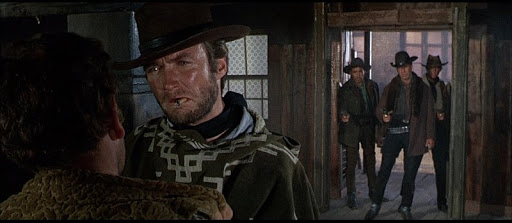
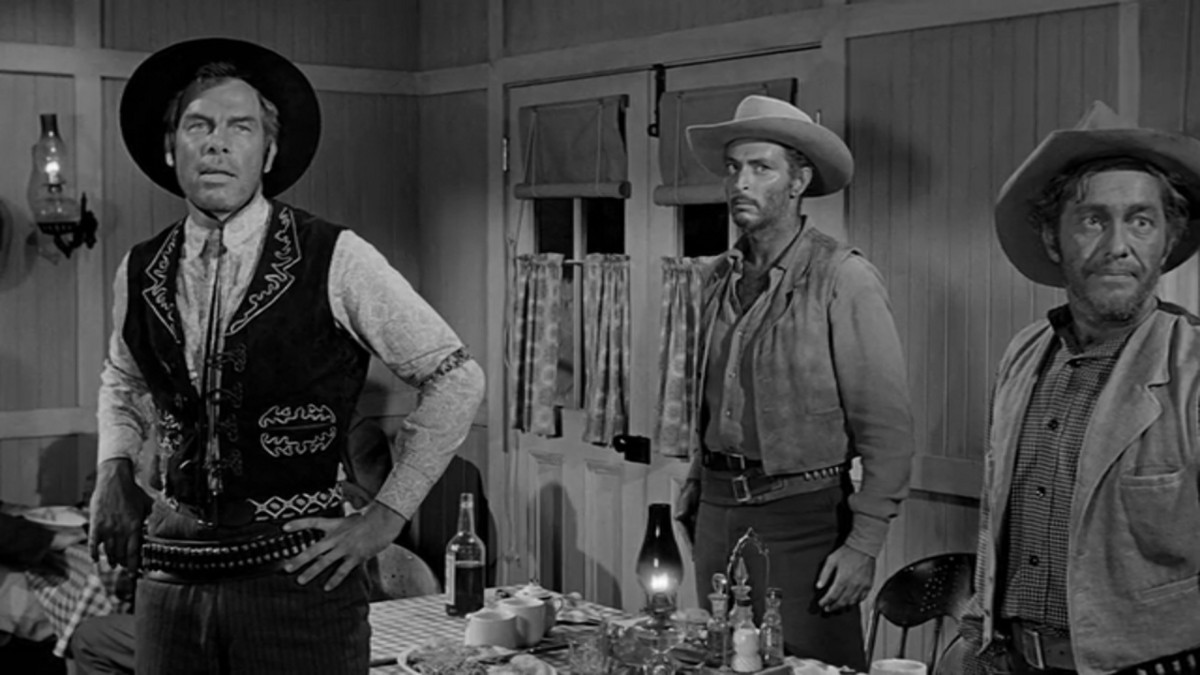
For A Few Dollars More (1965, dir by Sergio Leone)

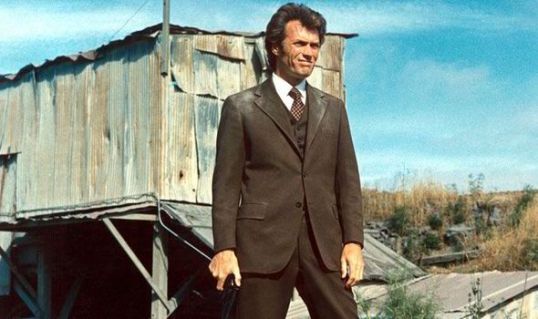
Dirty Harry (1971, dir by Don Siegel)

Unforgiven (1992, dir by Clint Eastwood)

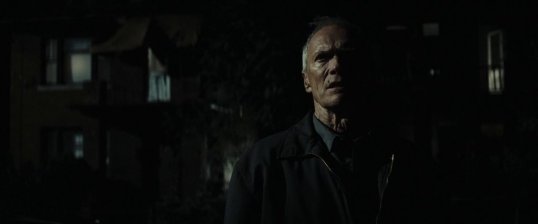
Gran Torino (2008, dir by Clint Eastwood)

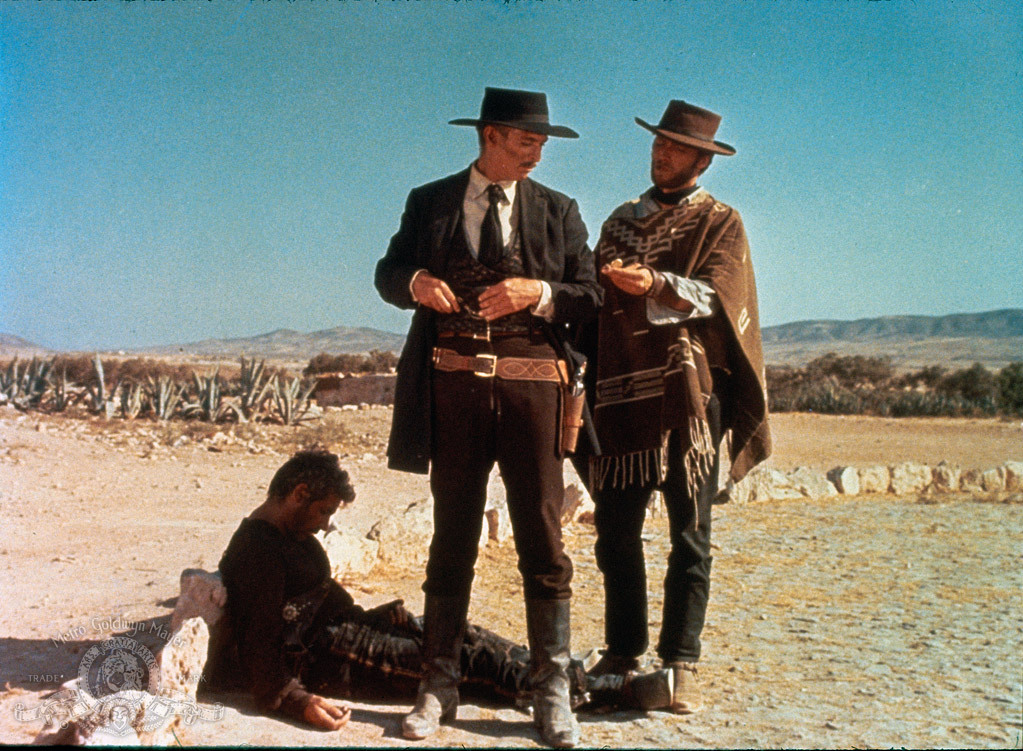
Scene That I Love: Lee Van Cleef, Clint Eastwood, and Klaus Kinski in For A Few Dollars More


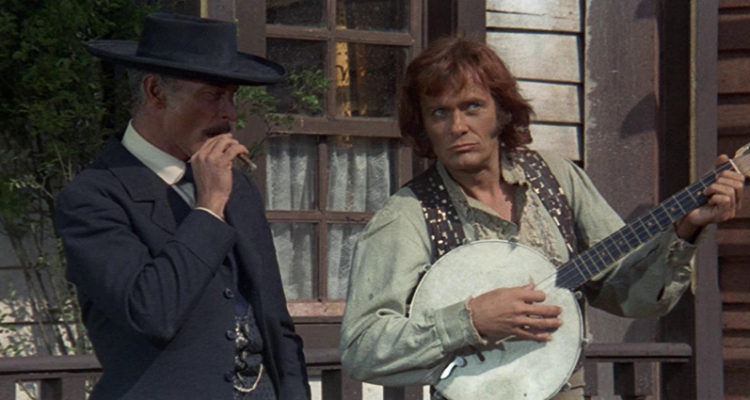
In 1925, on this very date, Lee Van Cleef was born in Somervillve, New Jersey.  In honor of what would have been Lee Van Cleef’s 100th birthday, here he is with Klaus Kinski and Clint Eastwood in For A Few Dollars More.

There’s not a lot of dialogue in this scene but when you had actors like Eastwood, Kinski, and Lee Van Cleef, you didn’t need a lot of dialogue to make an impression.

Scene That I Love: Lee Van Cleef Meets Klaus Kinski in For A Few Dollars More


In 1925, on this very date, Lee Van Cleef was born in Somervillve, New Jersey.  In honor of what would have been Lee Van Cleef’s 97th birthday, here he is with Klaus Kinski and Clint Eastwood in For A Few Dollars More.

There’s not a lot of dialogue in this scene but when you had actors like Eastwood, Kinski, and Lee Van Cleef, you didn’t need a lot of dialogue to make an impression.

4 Shots From 4 Films: Special Sergio Leone Edition


Sergio Leone (1929 — 1989)

4 Or More Shots From 4 Or More Films is just what it says it is, 4 shots from 4 of our favorite films. As opposed to the reviews and recaps that we usually post, 4 Shots From 4 Films lets the visuals do the talking!

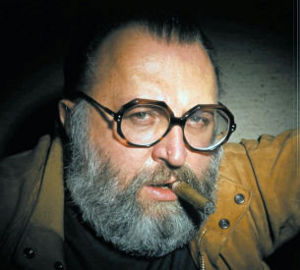
93 years ago today, Sergio Leone was born in Rome, Italy.  The son of actor/screenwriter Vincenzo Leone and silent actress Edvige Valcarenghi, Sergio was born into the Italian film industry.  He began his career in the post-war rebuilding period, working as an assistant to Vittorio De Sica and, as an assistant director, for American films that were shot in Italy.  (Albeit uncredited, he worked on two Oscar-nominated Biblical epics, Quo Vadis and Ben-Hur.)

After making his directorial debut with The Colossus of Rhodes, Leone went on to direct the films that would change the face of international cinema.  Though he was hardly the first director of Spaghetti westerns, he was was the first to achieve far-reaching acclaim.  With the Dollars Trilogy, he made Clint Eastwood a star and Eastwood has often said that the majority of what he knows about directing, he learned from working with Leone and later Don Siegel.  Leone went on to direct the brilliant Once Upon A Time In The West and Once Upon A Time in America, two epic visions of American history that, sadly, were not initially treated well by their distributors.

Though Leone is only credited with directing eight films, his influence cannot be underestimated.  As both a visual artist and a cultural and political commentator, his films continue to influence directors to this day.

For that reason, it’s time for….

4 Shots From 4 Sergio Leone Films

For A Few Dollars More (1965, dir by Sergio Leone, DP: Massimo Dallamano)

The Good, The Bad, and the Ugly (1966, dir by Sergio Leone, DP: Tonino Delli Colli)

Once Upon A Time In The West (1968, dir by Sergio Leone, DP: Tonino Delli Colli)

Once Upon A Time In America (1984, dir by Sergio Leone, DP: Tonino Delli Colli)


Song of the Day: The Main Theme From For A Few Dollars More by Ennio Morricone


Continuing our tribute to Ennio Morricone, today’s song of the day is the main theme from 1965’s For A Few Dollars More.  If Sergio Leone’s version of the old west was as a mythological landscape, Morricone’s music was always the perfect soundtrack.

Previous Entries In Our Tribute To Morricone:

  1. Deborah’s Theme (Once Upon A Time In America)
  2. Violaznioe Violenza (Hitch-Hike)
  3. Come Un Madrigale (Four Flies on Grey Velvet)
  4. Il Grande Silenzio (The Great Silence)
  5. The Strength of the Righteous (The Untouchables)
  6. So Alone (What Have You Done To Solange?)
  7. The Main Theme From The Mission (The Mission)
  8. The Return (Days of Heaven)
  9. Man With A Harmonic (Once Upon A Time In The West)
  10. The Ecstasy of Gold (The Good, The Bad, and the Ugly)
  11. The Main Theme From The Good, The Bad, and the Ugly (The Good, The Bad, and the Ugly)
  12. Regan’s Theme (The Exorcist II: The Heretic)
  13. Desolation (The Thing)
  14. The Legend of the Pianist (The Legend of 1900)
  15. Theme From Frantic (Frantic)
  16. La Lucertola (Lizard In A Woman’s Skin)
  17. Spasmodicamente (Spasmo)
  18. The Theme From The Stendhal Syndrome (The Stendhal Syndrome)
  19. My Name Is Nobody (My Name Is Nobody)
  20. Piume di Cristallo (The Bird With The Crystal Plumage)
  21. For Love One Can Die (D’amore si muore)
  22. Chi Mai (various)
  23. La Resa (The Big Gundown)
  24. Main Title Theme (Red Sonja)
  25. The Main Theme From The Cat O’Nine Tails (The Cat O’Nine Tails)
  26. Deep Down (Danger Diabolik!)
  27. Main Theme From Autopsy (Autopsy)
  28. Main Theme From Investigation of a Citizen Above Suspicion (Investigation of a Citizen Above Suspicion) 
  29. Main Theme From A Fistful of Dollars (A Fistful of Dollars)

4 Shots From 4 Films: Special Clint Eastwood Edition


Clint Eastwood in Revenge of the Creature (1955)

4 Shots From 4 Films is just what it says it is, 4 shots from 4 of our favorite films. As opposed to the reviews and recaps that we usually post, 4 Shots From 4 Films lets the visuals do the talking!

Today is Clint Eastwood’s 90th birthday!

Though Clint famously had to go to Italy to really get his film career going, he’s gone on to become an icon of American film.  While his early films were often criticized as glorifying violence and of being reactionary, his later films have — more often than not — been meditations on aging, moral ambiguity, and what a lifetime of violence does to a person’s soul.  Though Eastwood has fallen out-of-favor with a few critics as a result of the speech he gave at the 2012 Republican Convention (Film Twitter, to the shock of no one, had a particularly over-the-top reaction to it as many of them discovered, I guess for the first time, that not every artist is a Leftist), he’s a filmmaker whose legacy will be rediscovered and probably appreciated in the future.

Here are….

4 Shots From 4 Films

For A Few Dollars More (1965, dir by Sergio Leone)

Dirty Harry (1971, dir by Don Siegel)

Unforgiven (1992, dir by Clint Eastwood)

Gran Torino (2008, dir by Clint Eastwood)

4 Shots From 4 Films: Happy Birthday Lee Van Cleef!


Lee Van Cleef in The Good, The Bad, and the Ugly

4 Shots From 4 Films is just what it says it is, 4 shots from 4 of our favorite films. As opposed to the reviews and recaps that we usually post, 4 Shots From 4 Films lets the visuals do the talking.

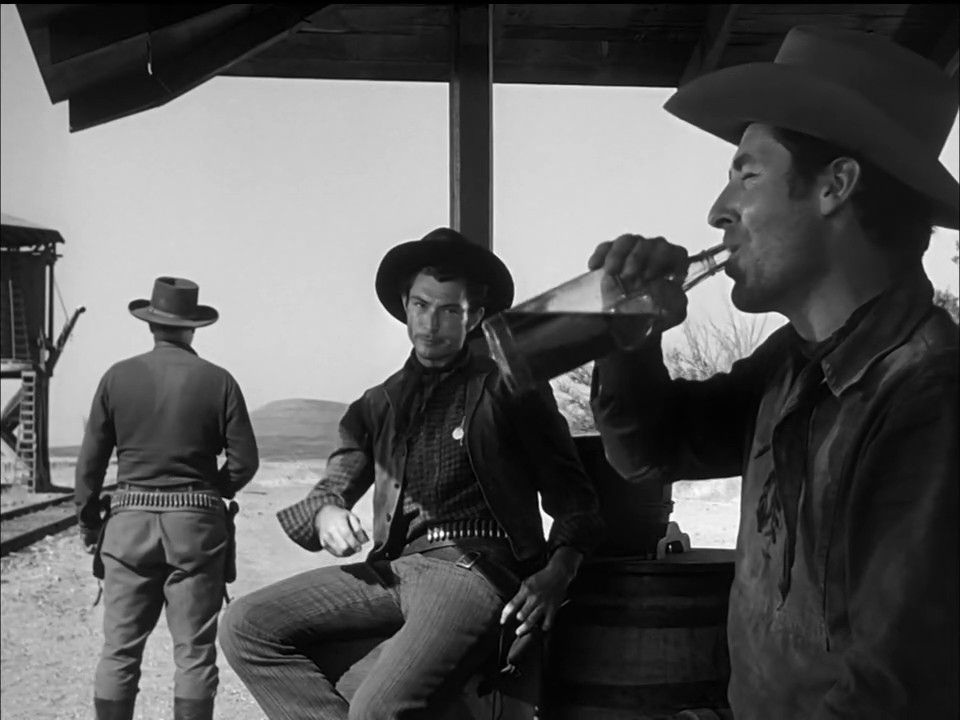
Today is the 95th birthday of the great, late Lee Van Cleef!  Van Cleef got his start playing western outlaws in Hollywood westerns like High Noon and The Man Who Shot Liberty Valance.  In the 1960s, Van Cleef did what many American actors of the time.  He went overseas to find better roles and bigger paychecks.  A series of roles in Spaghetti westerns made Van Cleeef one of the biggest stars in Europe and it also made him a timeless film icon.

In honor of the career and legacy of Lee Van Cleef, here are 4 shots from 4 films.

 4 Shots From 4 Lee Van Cleef Films

High Noon (1952, directed by Fred Zinnemann)

The Man Who Shot Liberty Valance (1962, directed by John Ford)

For A Few Dollars More (1965, directed by Sergio Leone)

Sabata (1969, directed by Gianfranco Parolini)


The Dollars Trilogy Pt 2: FOR A FEW DOLLARS MORE (United Artists 1965)


gary loggins's avatarcracked rear viewer

faf1

After the huge international success of his A FISTFUL OF DOLLARS , Sergio Leone was red hot. Another Spaghetti Western was hastily written by Leone and Luciano Vincenzoni (and an uncredited assist from Sergio Donati), but FOR A FEW DOLLARS MORE is pure Leone, from the visual style to the bits of humor interspersed between the violence. Clint Eastwood returned as The Man With No Name, paired this time with veteran Western heavy Lee Van Cleef as the beady-eyed Colonel Mortimer.

faf2

Eastwood’s character (briefly referred to as ‘Manco”) is a fast-drawing bounty hunter. He’s interested in the $10,000 reward for escaped killer/outlaw Indio. Mortimer is also interested in Indio, but has another motive: a young Indio raped his sister, resulting in her suicide during the act. The two meet up in El Paso, where Indio plans to rob the bank’s estimated one million dollars, kept in a secret cabinet. Manco and Mortimer engage in pissing contest…

View original post 389 more words